242: Overcoming Addiction to Resurrect Your Life with Brittany Jade
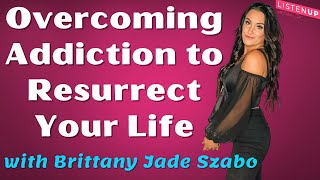
This is a YouTube video titled "242: Overcoming Addiction to Resurrect Your Life with Brittany Jade" featuring an in-depth English podcast interview recorded before March 15, 2021. Natalie Jill, a fat loss expert and lifestyle coach, hosts the episode where she interviews Brittany Jade about her personal journey through addiction, recovery, and family struggles. The conversation covers Brittany's early onset of alcoholism, her relationships, relapse, custody battles, and eventual path to sobriety, providing a raw and honest look at overcoming addiction and rebuilding life.
Hi, I'm Natalie Jill, fat loss expert turned lifestyle and high performance coach. Welcome to Listen up the podcast. On this podcast I do what I do best. Taking complicated information that is relevant to us now and breaking it down simply with actionable steps you can implement to level up your life. I also regularly interview some of the most inspiring and courageous men and women on the planet who at their worst learned how to achieve success greater than anything they ever, ever dreamed possible. Creating everything from nothing. If you are new here, I encourage you to go back and listen from episode one when this podcast was previously called Leveling up for the Full Transformative Experience. Today I can't wait to chat with Brittany Jade. I actually met her from TikTok recently, my new addiction. And I was scrolling TikTok and I happened to see a video from her and it was such just in the 15 second video that it was. I could feel so much from her on what she'd been through. The gist I got was that she had had a marriage, had kids and got things went a different direction, fell into the drinking aspect of things, her marriage ended, she lost custody of her kids, things were spiraling in a very different direction and she has since mended it and has put her family back together. And I thought, I've got to know more than this 15 second video. I've got to know who you are, what happened, how you did this, how you were able to mend and create even stronger families. So Brittany, thanks so much for being here today and talking with my audience. I can't to dive in.
Hi Natalie. I know, I'm so excited to be here with you. Thank you so much for asking me to be a part of this.
So take me back before the storm, before things fell apart, what was going on in your life? Tell me about that.
I feel like where we start is, you know, I started drinking at a very young age. By the time I was 19 it was very clear that alcohol was a problem for me. Alcohol and drugs, specifically cocaine at that time. And so I went to treatment for my first time at 19. I went twice then and I actually met my husband in sober living after that when we were 19. So had but I really wasn't ready to get sober I don't think then. So we still drank and used and it was very rocky beginning of a relationship, but we just went with it. We were young and in love. We didn't really care what anyone had to say. We knew what was right and we just did our own thing.
Let me ask you Brittany, because I want to. Before we even jump in, I have so many questions I want to ask you. But how does it even happen that you're 19 and this is going on because there's people listening that they can't even fathom it or they don't understand. Was it you said you had had this ongoing issue? Did it start as a young teen? Did it start as a kid? Like, where did that start? And where do you think? Like, that happened with you, where it doesn't happen with some other kids?
Yeah, so I started drinking at 13. And I don't really know why I started drinking that early, to be honest. My dad was an alcoholic, so I grew up with him. Alcohol was around. It was very easy, accessible for me. And I just started at a young age. And I kid you not, I started drinking alcoholically at the age of 13. Like, I drank to get back up drunk. From the very beginning, it was almost like, you know, because we think of addiction, you know, know, as a disease. And I truly believe that this was something that I was born with. And I didn't know until I picked up that first drink that it was going to be a problem like that. But it's so my. When my mom tells the story, you know, about me, she literally, she. The first time I drank, she's like, I could see it in your eyes, Brittany. Because she grew up with. She was like, I just knew that it was going to be a problem.
That's so scary. Like, you know, gosh, that's so scary because there's a lot of kids that have an alcoholic parent or they have it in their family and they don't even know what they don't know yet. And then it goes down that rabbit hole. So when you were doing that at 13, did you, like, know what was wrong? How were your parents around it? Were you hiding it from them? What was the story you were creating from 13 to 19? Around it?
Yeah. I mean, I was always very rebellious. Like, I would sneak out, you know, But I was always a good kid, too. Like, I was pretty popular in school. I had a lot of friends. I did sports. But I was also a big partier. So, like, it was known, but it wasn't like, oh, it was a huge problem. I mean, even in high school, though, it came to a point where I couldn't even do sports. Cause I had gotten in trouble for being at too many parties. So I was into gymnastics. It was really important part of my life. Like, that was my dream goal, to be an Olympic gymnast one day, like that got thrown down the whole. Because of alcohol. So it was like it slowly started making, you know, progression.
But it sounds like nobody was triggering it as this big red flag because you were showing up, you were functioning. You were, like, showing up and as a high performer in other areas.
Yes.
Did your parents okay it. Did they say this is okay or normal, or were you hiding it from them?
So I was. I was definitely hiding it, but they knew about it at the same time. And I've always been just this really stubborn person. And my parents have always been like, brittany, no matter what we said, you are always going to do what you wanted to do. And, oh, my gosh, I just, like, pray to God that my children do not end up like me. Like, anything but. Anything. But I was. I was really hard on my parents. And then my dad actually got sober when I was 15.
So you watched that happen? You literally watched that happen and you were still doing it?
Yes. Yeah, I was still. I was still doing it. And it's. But it's so weird because my dad did it. Like, the way I've gotten sober is so differently. What he did, he literally quit cold turkey. He doesn't work any sort of program. Nothing like he was able to do that. Whereas me, I. It's. You know, it's been like a freaking journey for me to get it.
So I have another question before I ask. How you even ended up in rehab that first time. Did you. So, because for somebody that's not an alcoholic or doesn't have a problem with drugs or alcohol, I think some people look at it from the outside, like, oh, it's just people partying, or it's just, like, their way of checking out. Can you speak into that a little bit? Because I think there is a difference between somebody just wanting to party and, like, they feel like they need it.
Yeah. Yeah. I mean, it's okay. So addiction, alcoholism, like, it's definitely a progressive disease. Like, it didn't start out right away where I felt like I needed it, you know, but it was weird because when I would have one drink, I felt like I couldn't stop. Like, I've never been able to just have one drink and stop. I mean, I tried really hard towards the end because I wanted to make sure. I tried anything to make sure I was not an alcoholic. But I am an alcoholic. I always have been.
So. So it was like, would you have a conversation in your head when you saw it someplace? Like, okay, I shouldn't have this. Cause once I start, I'm not going to stop. Like, would you sort of fight yourself with that?
Yeah. I mean, it changed throughout the years because of its progressiveness, but, you know, at. I feel like a lot of my friends were drinking how I was, like, back when I was younger, like, they were getting. They were being crazy. Like, I was, too, and drinking the same amount and blacking out at a very young age. But as I got older and more mat was definitely, like, I would have to really try to control it.
Okay, so what ended you up in. In rehab at 19, like, looking to change this when you met your husband?
Yeah, so I was in. I've only been in two serious relationships my whole entire life. And the first one, you know, ended when I was 19, and we were together for four years. And it. It. That's when things got really bad with my drinking. After we broke up and I had moved to a new, new city, I started cosmetology school. My drinking was pretty bad. I got evicted out of my first apartment for having this huge party. Ended up moving into a drug house. I didn't even know it was a drug house. And that's when I started using.
And the drug house, Brittany, by the way, because some people. A lot of people listening don't even know what that is.
Yeah, I mean, it was literally just like. So the house that we lived in had three floors. A guy on the top. We rented the middle floor, me and two other girls, but with the guy on the top floor, he was a meth addict. And the guys on the bottom floor, they were coke addicts. And it was just like. It was very known that there was drugs around. We were all doing it.
And so it almost becomes normalized. Like, you're just. Your whole environment. Is that. So it's like, oh, everybody does this.
Yeah. Yeah. And a couple of the guys were like, like, professional entrepreneurs that we were hanging out with. And it was just like, okay.
Like, yeah, it totally became normalized.
Yeah. And then I got. When I would drink, I would black out, and I would go crazy, turn into this other person. And so I ended up getting arrested one night for just being crazy and loud. I think I punched a hole in the wall, which I'm like, not. Not an aggressive person at all. I've really never gotten to a fight. But, like, when I'm drunk, I turn into this monster. And, yeah, I got evicted from that. And that's when I think my parents, you know, they sat down, had an intervention with me with some of my friends, and they're like, you to go to treatment at this point, but it's really. I don't think you can tell a 19 year old to get sober if they really don't want to. And I was so young that I just didn't get it.
So looking back now, and I'm so curious because I have so many more things as we take you along your journey here. But do you, what do you advise a parent that's seeing their, their 19 year old or 18 year old at this? Because I. What you just said, they have to almost take ownership in it and want that rehab. What does a parent do on the sidelines?
I mean, I think, you know, my, my, my mom did a really good job about doing this. Just being supportive, getting my friends involved, you know, letting them, letting it known to be known to me that it was a problem to them, but that they were going to support me. They loved me, they wanted to help me. But it's so hard because, like, you know, if you have a loved one that's struggling with addiction, like, no matter how hard you want them to get help, like, ultimately that has to be their decision. And I did make that decision to get help. I don't think it really sunk in as to how serious this was for me and how bad I really needed it.
So you were maybe doing it more for them. Like they, they need me to do this. I know they care. So I'm going to go. So. So you went in. It sounds like you went and sort of like half committed. Like I'm going to do it to check it off the box, but I don't really know that I'm ready to get sober.
Right. Like example, I made sure to tell everyone that I was only there for cocaine. I was only a cocaine addict because I wanted to make sure that I could still drink alcohol when I got out.
Interesting. Okay. Okay, so you go to rehab, you meet your husband, and it sounds like he's sort of on the same page as us. Like he's there because he maybe had to also.
Yes. Yeah. His, his drugs are very different than mine. His was like pills and marijuana and mine was like alcohol and like uppers and. But yes. Okay, so we're living at 19.
So then you get out and it sounds like you're sort of codependent on each other. So you're basically enabling each other.
Yep. Yeah. Yeah, pretty much. I mean, you can't be in a relationship in sober living. So we both got kicked out of sober living.
Oh, because you ran a relationship. Interesting. So you.
Okay. And so I'm from Wisconsin. And so I had flew out to California to go to treatment in Palm Springs and then came to San Diego in Del Mar, where I met him, and sober living. So that's how I got here in the first place. So we get kicked out, and we end up, like, literally being homeless at 19 for a little bit. We had started kind of drinking again at that point, and things got out of control. We ended up moving into, like, a party house. We really needed a place to live. We moved into a party house with a bunch of other couples. I started drinking vodka all day at 19 again while he was going to work. And another thing that would happen to me when I would drink is I wanted to die. And so that was. I'm not sure if it was because I really wanted to die or if it was very attention seeking, like, my behaviors when I would drink. So I had an incident that wound me up in the hospital. And then when I got out, it was very clear that whatever I was doing in California was not working. My parents were like, brittany, you got to come back to Wisconsin. So I went back to Wisconsin, and literally the next day he called me and was like, can I move there? And I'm like, sure, but you're gonna have to live with my parents and me. So he literally came with a suitcase at 19, moved to Wisconsin with me.
Your parents sound very understanding and amazing.
Yeah, yeah. I mean, I put them through a lot, for sure. I'll just say they're very happy to have me finally in a good place.
On the other side. Yeah.
But I finally got here.
So in comes their daughter. With the drugs and the alcohol going on, it sounds like you knew something's up. Like, you just weren't really fully ready and committed to get clean yet. And now you bring the boyfriend with you, with your parents, and then what happens?
Yeah, I mean, we. We kind of drank for a little bit. It wasn't like. It wasn't super, super bad. But then. And then we cut off everything and we were. Oh, did we cut off things then? No, no, no, no, no. We pretty much. Okay. So then at. We lived together, we moved into a couple houses together. And then by the time we were. We're 21, we got engaged. And then at 22, we got married. And then we had a sober wedding, but we weren't sober. It's so funny. We had no alcohol or wedding. Everybody thought we were sober, but, like, we went out on our wedding night and drank.
So was it kind of still, like, in that acting stage where, like, I'm Gonna let my parents and everyone think that?
Yeah.
Good. Okay.
Yes. And because we were like, our parents, you know, they pretty much paid for a whole wedding. We were not financially. Well, at that point, we were super young, and so we just were kind of like, doing things to please them. What was that like?
Because I would imagine that almost felt like a double life. Like you're trying to act a certain way, but really deep down, you guys are in pain hiding this.
Yeah, it was. It was not a good feeling. You know, I think that's what makes me be so honest of a person as I am today, because for so long, I feel like I almost, like I hid stuff and I wanted to be honest and.
Yeah, yeah. It's so interesting because you guys can't see her as I'm interviewing her, but she's. First of all, she's like, drop dead gorgeous beautiful. Like, you would never guess that, like, she was struggling with all of this. Like, she. You look so put together and like, so. So I can only imagine what that must have felt like. You're leading this double life like that.
Yeah, for sure. After we get married, though, we do quit drinking. We decide, you know, I'm going to be honest. He's always had this very controlling behavior, and most of it came down to because of alcohol. Because I was crazy when I would drink and he didn't trust me when I would drink. He didn't trust other people. And so I get it now, you know, why he was like that. But we decided we were going to totally quit drinking. And so we were sober for about a year. And then I got pregnant with our first.
And was marriage good with you guys when you were sober that year, or was that hard? Because I know a lot of your relationship was based on the partying and all of that. So was that an awkward year that year?
Yeah. No. So, I mean, after that year, we were actually sober for three years. We didn't have a drink, nothing. And we look back on that time and it was by far the happiest time of our entire lives. You know, we were really good. It was hard because I don't think, like, we didn't have a lot of friends. It still wasn't very healthy because we were so codependent on each other. We didn't have friends, we didn't have hobbies. We were literally just together all the time and obsessed with each other. But we were really happy during that time. First time parents. And we were like, the first time parents, like, did everything perfectly. And, you know, our daughter Was. We were so, so happy.
Okay, so. So you have. So how many kids do you have now, by the way?
Three.
Three. So you have all three kids, I'm assuming, while you're sober. Is that correct?
Okay. And during that time, we also moved back out to California. So we came out to California. We have all three kids. And so the second time around, though, I get that I got pregnant with twins, so. And I love being pregnant. It was a hard pregnancy and everything, but I loved it. And it was about. The twins were born, they were about three months old, and I was like, you know what? I took three years off of drinking. Like, I just went from one to three kids. Like, this is so, so stressful. I have no help because my family's all back out in Wisconsin. You know what? I think I'm gonna start drinking again.
Tell him this. Or is it just a decision in your mind on your own at this time?
He had already started drinking a little bit. And you know, he. His thing was never alcohol. And so it really wasn't. Didn't come off as me as a pro, as a problem. And so we had decided we were gonna set like a two drink max, you know, for a while. And we did that for a while and that worked. And then eventually, like, I found out he was sneaking more, and then I started sneaking more. And then, you know, fast forward four years, you know, wow. It was definitely progressive. Like, you know, for a little bit we did a two drink max and then we started drinking only on the weekends. Like, and then it was, you know, by the time it turned into every night drinking. And then even after that, he never was a day drinker. But it got to the point for me where I had to start drinking during the day. And it just seems people probably think, like, why would you just start drinking during the day? And it is so weird because it never, like, phased me. It never was like, should I have a drink or not? Like, I never had time to really question that in my mind. It was always like, I'm having a drink.
Interesting. And it's, it's. I get that it's a real disease because, like, it's so bigger than just a decision, I think. I mean, and I don't know about, you know, a lot more than I do about recovery and alcoholism, clearly, but I. From the outside, from what I do understand, like, you can't help it. Like, it's. It's an addiction. Like, you have one, you keep going, and it's like calling to you, it's speaking to you. So what happened? How bad did it have to get with you guys? What happened?
So, I mean, once the day drinking started, then that's when it was, you know, that's when our marriage really started going downhill. You know, he was upset at my drinking and I was upset at him because he was so controlling and wouldn't let me do anything. And, you know, I was a stay at home mom and I never had a break. And we had stopped doing things together as a family. And all we would do is rush to get the kids to bed so we could start drinking. And it became really unhealthy. You know, that's. By the time like my kids were, my twins were about two. And in May of 2019, you know, I noticed some behaviors of him, some, some, some anger issues and that I addressed them with him and they, and they weren't getting better. We had started going to therapy, but that's. Ultimately we decided that like we were thinking about, I was thinking about separating.
If you had asked both of you and him at the peak of the worst, if you had asked both, what would you have said you wanted or what you felt?
I think when it was at the worst, I needed him to be there for me with what I was going through. But I think we were both in denial of just how bad it had gotten. I mean, it was to the point where, you know, I'm not one to call him an alcoholic or an addict. He doesn't identify as one. But he couldn't take the alcohol out of the house. His thing was, well, I don't have a problem with it. Why do I have to take it out of the house? And I just, I couldn't stay sober with alcohol in the house. And then also it was never like, Brittany, let's get you help, let's get you treatment, let's take you to a meeting. It was always, what can I do to punish Brittany? Like, let's take this from her, let's take the kids from her, let's kick her out, let's leave her homeless. I just, I needed him to be there for me and, and he wasn't.
So it sounds like in your mind you needed support, understanding and love. Like that's what you're craving. And. But because you're not getting it from there, you're turning more and more to alcohol because that makes you feel complete there. And then he's seeing that behavior and his way of supporting and loving that he knew was to control more. So it sounds like that's. It was just this interesting dynamic that you were feeding each other?
Yeah, pretty much. Yeah. We were as toxic as toxic gets, for sure.
So what? So you end up getting a divorce, correct? Or did you end up separating?
It was me who wanted the divorce. I had told him for six months, hey, I'm thinking about divorce. Just. I just want to be let, you know. I'm looking into it. And his whole thing was he never wanted a divorce. Well, one night, I ended up drinking again. I took a bunch of pills. He watched me take them. He says he didn't watch me take them. And honestly, I don't even know who I was the one that was drunk. So my recollection is I remember him watching me take them. Anyways, I wind up in the hospital. And when I was in the hospital for those two days, he actually went and filed for divorce. And then when I got out of the hospital, he told me, and he kind of used it as, oh, but I can, like, change my mind at any time. And I was like, oh, no, buddy. You just did what I've been wanting to do for six months. And. But he ended up canceling it. So it never actually got filed. Okay. Paid thousands of dollars, you know, to go do it. And then I was like, nope, we're gonna do this together. And so we went to mediation, and we signed divorce papers together. That was. That was September of 2019.
Wow. And what did you plan for the kids at that time? And you ended up saying that he ended up getting custody. Did you want that, or did he fight you and take that?
Yeah. So we both have issues. My issue was my alcoholism. His issue was his anger issues, and we both had issues, and we had told each other privately, we are not going to bring this up with attorneys. We are not going to talk about your issues, and we're not going to talk about my issues, because then it's going to be a huge, huge ordeal. And so in mediation, we decided on 50. 50. We had it all set, and then, you know, he didn't want the divorce. And so all of a sudden, he decides to bring up my. My alcoholism issues. And the attorney was like, oh, my gosh, you guys didn't tell me all this. Like, this is way bigger than. And then.
Gosh, that must have been so painful, because even though it's, like, a real thing.
Yeah. I agreed to give up temporarily, give him full custody for 30 days so I could get sober. And at this time, I had moved out. I had started all over. I got my. My own place, you know, but. And all I had to do was get sober for 30 days. That's all I had to do. But I couldn't do that. There was no proof or anything that I didn't. But on the day that I was supposed to get custody back, he took me to court on ex parte. And I can't tell this story ever without not crying at this point. But, yeah, he took me to court on ex parte. I had pretended I was sober for that 30 days, but I definitely was not. I showed up to court an hour late by myself, with no attorney in my mind. I had done nothing wrong, but I was late because I was up till three in the morning drinking, and I had no idea what I was going into because I wasn't served papers. I didn't know that he was filing for sole legal custody, and no clue what was going on. I remember I had a lacroix can in my hand, like, at. Like, I was just a mess. And I walked out of there, and I thought everything was fine, because I literally. I literally said to the judge, I was like, your honor, I just want to make sure we're going back to our original schedule, me thinking that 50, 50 schedule that we had before. And she was like, yeah, what was ordered? And so I walked out of there. I called my mom, and I was like, mom, I did it. You know, everything's fine. And then all of a sudden, I'm on the phone with her, and I look down at the paper, and it says, supervised, not. It says supervised and unsupervised visits. And that's when, you know, I just realized that, like, I had lost custody. You think that, like, that would be enough for you to stop drinking? You think that that would be enough? But the first thing I did after that is I went and picked up a drink, and I.
Hurting really bad. I mean.
Yeah.
And that's all you knew at that time?
Yeah. I mean, that whole day was just a blur. And I'm so glad, you know, one of my best friends came and picked me up that day because she's like, you're gonna kill yourself for sure. And she talked me into going to detox the next day because I had tried to stop drinking so many times on my own, but I couldn't do it. It was the point where I would get physically sick, and I'd had seizures at home by myself. Just Brittany withdrawals. So I knew I had to be medicated when I was coming off alcohol.
What does that mean, to be medicated when you're coming off alcohol? What does that what does that mean?
So alcohol withdrawals are the most dangerous. Are the most dangerous drug to withdraw from. You can have seizures, you can have hallucinations. You can have something that's called delirium tremens, where it's like our delirium, tremors, dts. It's. You see things and, you know, I had all that. You can literally die from alcohol withdrawal. So the next day, that was November 13th, that I lost custody. And the next day, November 14th, I emptied my bank account. I checked myself into a detox, paid out of pocket. And when I went into detox, I mean, this is just. This just is. I don't know how much I was drinking. People always want to know how much I was drinking. I have no idea. But when I walked into detox, I remember walking into detox. Everybody said I was still talking. Everybody says, you know, you were drunk, but, like, you were with it. My blood alcohol was a 0.457. And that is, like, legally dead.
Wow.
So everyone was just shocked. Like, that's how much I was drinking to have that high.
Body was just expecting it. Now it was just part of you.
Yeah. Yeah. So that was November. I stayed in detox for two weeks. And that's all, you know, it empty my bank account. That's all I could afford. And, you know, I just spent like $10,000 getting. Moving out, getting my own place. I had to buy everything brand new. He didn't let me take anything from the house. So I had just gotten started over all on my own for a month. Then this happens. Now I can't afford my condo anymore. And so I have nowhere to go but back with him. And I didn't want to, but. And it's like he took the kids for me, you know, saying I was unfit to parent. And you know what? I really was unfit to parent. But you wouldn't let someone move back in with you if you really thought they were that unfit. But anyways, he let me move back in with him, and I. You know, I was really, really unhappy, though at that time, there was a lot of, like, emotional mental abuse going on to me. A lot of gaslighting. He was always telling me, you know, I was crazy, and, you know, to. I really was crazy.
You know, it's interesting with. It's interesting with gaslighting because I'm very familiar with. With gaslighting. Being around narthe narcissist my whole life, you know, I get it. But it's also interesting because sometimes what we take as gaslighting it's like, it's actual truth, but we don't want to accept it. Do you think that looking back on some of that.
Oh, my gosh, yes. I mean, it's. It took me a long time. It took me a year of sobriety, really, to like, fully see it. But, yeah, I blamed a lot of stuff on him, you know, but he didn't know what to do in that situation. You know, he would call me crazy. He would tell me I needed a magic pill. And it's so funny, but I think he was in denial, too, of my addiction. And so literally, it's.
It sounds too like. I know people that tend to have that go to control to help people. Like they. In their own mind, they're trying to help people, so they go to control. He could not control you. He could not.
You were.
This was like, beyond him. So I can imagine this was just what was creating this huge fuel between you two.
Yes. Yeah. Yeah. So I moved back in with him and I was very, very unhappy. It was probably the lowest point. Like, I had just gotten sober. It was probably the lowest point I've ever been in my entire life. I was putting on this. Nobody knew about. Nobody knew about this. No one knew. I lost custody. I didn't tell anyone. I was living a very fake life on social media, posting pictures of our happy family, just happy as can be. But I was so, so low. Not happy, trying to stay sober. But eventually, I mean, I had started seeing this guy that I had met in detox, like, hanging out with him, which was just. I was back living with my ex husband, but I was hanging out with this other guy. It was just a disaster. And the guy who I was hanging out with was a heroin addict.
Oh, gosh.
And we, you know, getting sober, too. We were going to meetings together, but before you knew it, we were snorting this pill. Anything to make it a little bit different. And he was prescribed Suboxone, which is you take when you're a heroin user to get off it safely. And like, heroin users don't get high from it, but if you're not a heroin user like me, you get very high from it. So I started taking that. And I mean, that's something that you'll start nodding out by. So then it became very clear to my husband that something else was going on with me. You know, she was. She's using something else. Because I've never been. I've always been the drunk girl, you know, I've never been like the nodder outer, but sure. And Found out about the guy and we got into a huge fight one night. The cops got called. I called the cops, he called the cops, they came, they're like, we have to arrest one of, one of the two of you. And at that time, oh, wait, I'm going to actually go stop a little bit before that. In January of 2020, I had almost 60 days sober from alcohol. But I would, I, like I said, I started like secretly, you know, using all the other stuff. I ended up relapsing on alcohol really bad in Mexico. I'm a photographer. I went there to shoot a destination wedding. Had an absolutely terrible relapse. Like drink super heavily for four days. I don't even know how I survived that. And when I got back, I thought I wouldn't go through withdrawals with only drinking for a couple days. But I went through the worst withdrawals in my life. I went to a full blown psychosis where I was seeing and hearing things for about 24 hours. It was the craziest experience of my entire life. I thought it was God talking to me. He had me reading through the Bible. So crazy. But I finally snapped out of it and told my husband, God, take me to the hospital, something's wrong. I packed him beg for the behavioral health unit. I'm like, I'm going to the psych ward for sure. But the doctor was like, no, you're on day four, alcohol withdrawals. I'm like, I've had alcohol never this bad. He's like, yeah, these are very intense when it can get to that point. And then shortly after that, you know, I stayed sober from alcohol, but was still secretly using the Suboxone. And I was prescribed Valium from the ER for my alcohol withdrawals, which is a benzo. And so I started abusing Valium. I was prescribed it, but I was taking a lot more. I was getting more. And so on February 1st, when they had that, that's the day of 20. So this all is just coming up on a year now. You know, February 1st of 2020, we get into a fight. We both call the police. They have to arrest one of us. They arrest me for being under the influence. They said I was on heroin and meth. And at that point, at that time, my life, I had never tried heroin, heroin or meth. I was just absurd. I like had them draw my blood. I had to spend 12 hours in the drunk tank sober. I was very manic, though, because I was on the Valium, just like I had my brain. Like, when you get sober, it takes A long time for it to go back to normal. And so I was very, very messed up. My mom and I joke about it, though, because, like, the alcoholic that had to spend 12 hours in the drunk tank sober. I've been to the drunk tank many times, but never sober. And when I got out the next day, he basically kicked me out of the house. And so what. What I know now, obviously I would know who to call. I would have good people, you know, to call if anything ever happened. But at that time, I wasn't strong enough in my sobriety to call the good people in my life. So I called the guy that, you know, that heroin addict guy. And then I found out that my husband had filed a restraining order on me for something that that guy had said. Wow. So I was left homeless. And that is when I started using heroin and meth every single day. And thankfully, that only happened for about a week and a half because it destroyed me. It was absolute mess. I honestly, I don't even remember what it's like being high on those things because I was using so much that I was just completely out of it. I ended up Odin and woke up in the hospital on February 8th last year. And I had two options in my head. I was gonna just go over the border to Mexico and disappear. Like, I had no idea at that time. I couldn't even call my kids. And, like, I was a stay at home mom. So me without my kids, even for that short time, it just seriously seemed like life could not go on. Or, I mean, my other option was I could get on a plane and go back to Wisconsin and stay with my parents. And.
So, Brittany, the thought of, like, okay, so the thought of turning to things like heroin and meth and was. And I want just for people that are listening to grab this, because not everybody has been there, do they? Is it because you were doing anything to get out of pain? Was that like your only. Was that. Is that what that is for people?
Yeah, I was trying to numb anything that I was feeling. I didn't want to deal with life. I didn't want to. I wanted to. I wanted to feel different. I wanted to escape reality. And I think at that point. And at that point it was. I just didn't care at all. I was just such a low place.
So would it be kind of like a dream state? Like, you just check. Like, when you go to sleep at night, you check out. Is that sort of what that those drugs do for people? Like, it just lets you not deal with life?
Yep.
Okay.
Yeah. Exactly.
So what would you, would it be those moments like you're thinking about your kids, you're missing your kids, and you're like, I can't do anything about it, so I'm going to use. Is that okay?
Yep. Yeah. Yes.
I can't even imagine how hard that must have been. And so what changed? What shifted that then? Because this was just a year ago. What was that?
I got sober and then I started. Then all of a sudden I was like, I need to get an attorney. We were calling attorneys and a lot of the attorneys said it was gonna be three to five years before I saw my kids again because of the restraining order that was on me, the type of, of restraining order. And I think it's so crazy that I was able to stay sober through all that. Like, I remember though, telling my mom, I was like, mom, if I get. If it's really going to be three to five years, like, I'm so sorry, but I'm like, I'm gonna tell you now, I can't do it. I can't. I. She's like, Britney, you know, people in the military, like, they go away. I'm like, no, mom. Like they choose that. Like, I can't.
I get that as a mom. I get that as a mom.
Oh yeah. That was the hardest part of my life. And I was just getting sober. I was that time, you know, I was using more than I was drinking. And so I was able to come off everything cold turkey. Like it was not easy, but I just withdrawed and at my parents house back in Wisconsin. But it was. That was, you know, the hardest part of my life point in my life. And then after 28 days, the restraining order, we had our court date. And so my mom and I flew back to California here, had our court date and we got the restraining order dropped. And so I got to see my kids that day. Oh my gosh. Well, my daughter, that day I went to her school and surprised her and I have a video of it. But you know, she was told during that time, like Wylan, my husband, he didn't know what to tell the kids. So all he had really said was like, mommy was gone. Because he honestly was not for sure if I was ever going to come back. Yeah, there was a couple point when I was out there homeless and using. I took one picture of myself and it's because he had asked me to send him a picture. And after I sent him that picture, he said, he went to his work and he said, just so you know, like, I Might have to be taking some time off soon because I'm pretty. I'm pretty sure my wife's gonna die. Oh, wow. You know, it's just like, I put. Yeah. For him to really think that I was gonna die, because I was. I almost did. But, you know, I got. I got to see my kids that day after 28 days, and all of a sudden it was like, but, Mom, I have no money. I have nothing. I have no home. Like, how are me and the kids going to do this? And she was like, I'm going to stay. So she just literally, like, left my. Left my dad. I mean, they're still married, but she left my dad her whole life in Wisconsin, her job, everything, and stayed here so we could.
Your mom just loves you so much. You can tell.
Yeah. And she. She really believes in me. And so she was like, we're gonna do this. And. Yeah, it's just been a year now since then, but I've, you know, obviously stayed sober ever since.
How did you do it, Brittany? How did you get yourself to stay sober? And is this like an ongoing. How do you commit to making this happen? Is it. Is it truly one day at a time? Like, I would imagine you still crave it or think about it or what. What keeps you going? Because there's also people listening now that are addicts, that are in this. Like, what.
What.
What do you do now?
Yeah. So, I mean, it's. It's up to the point where, you know, I am very confident in my sobriety. But we do take this. We really. We do take this one day at a time. Because I also know that, like, I'm very confident, and I say I will never have another drink again in my entire life. Like, you couldn't pay me a million dollars to take a sip of alcohol. Like, that's how much my sobriety means to me. But that also doesn't mean that at any second, like, that could change just like that, because it has happened. I've seen myself relapse without even thinking about it. I would just go and just drink. And, you know, that time is gone, so it's definitely been. It's been a lot of work. You know, I work a 12 step program. I got sober during the pandemic too, so nothing was open. I literally sat in front of Zoom, went to meetings, you know, every single day. That helped me a ton. And then really, just like, working the steps through that program has really helped me be able to forgive myself for the things that I had done. Like, that's One of the reasons I'm able to live with myself and tell my stories because I've been able to find that forgiveness within myself. And then eventually I was able to find forgiveness and other people who had hurt me too. Like, for example, my husband. Because we had. When I first got sober last June, we had. Well, yeah, and then spring, early summer, we had tried to see if we could reconcile things, but I was only three months sober. And at that point too, like, my brain was still kind of whack. We weren't sure if I had more mental illness or not. So I was prescribed all these medications and my brain was very imbalanced still, and I wasn't sure if I wanted to or not. He needed a yes or no answer at that time. And so I said, the only answer I can give you is no then. So we went. No contact for six months. It got really nasty. We were court ordered to only speak through a messaging system. It was really bad. The kids were so confused. No co parenting going on whatsoever. And then around Thanksgiving, we randomly started talking again. And we had got to a point where we were kind of like, we got to suck this up. We got to get along for the sake of the kids, like, let's see how we can do this. And, and since then, you know, we. It didn't happen right away, but all of a sudden we just like. He's done a lot of work on himself too, like a lot of therapy. It's crazy because it was always all my fault. And I've done a really good job with taking ownership for, you know, my whole role in all of this. And I needed for him to do that too, for his role. And he really has. And what it came down to is, you know, he didn't know what to do in that situation.
That's what's coming up for me. I mean, as you're telling the story, I'm like, there's two people participating in this. And it sounds like he only knew how to go to control and you only know to go to using. It's like there was just. And that wasn't going to work together. What do your kids know now? Like, how do you talk to them about it? Or do you talk to them better? Or how will you talk to them about all this?
Yeah, I'm pretty. I'm pretty open with my kids. You know, they. They've. They've been in some of my videos for the most part. They understand addiction as, you know, mommy was sick. They know that it was from beer and alcohol. My Daughter. And we think of alcohol as an allergy. So my daughter knows that I'm allergic to alcohol, so it's something. If I drink it, I get sick. But, you know, my boys, they don't. I don't think they never once mentioned my previous past actions, but my daughter definitely.
How old's your daughter now?
You just turned eight.
So she's aware? Yeah, yeah.
She was six when I got sober. She was very well aware. She was with me a lot more incidents where I remember being, you know, drunk and like, for example, her and I just went to Texas on a girls trip last weekend. And the last time before this time, I had flu. I got blackout drunk with her on an airplane.
Oh, gosh. Yeah.
I don't even know how I didn't get arrested because I literally remember the flight attendants waking me up. And she was five at the time.
Wow.
I was. I cannot believe that I. They didn't arrest me, but when we were getting. I was wondering if she had remembered that. You know, there's a lot of things that I just. I really hope that she doesn't because. But she brought it up. She's like, she. I could tell she was scared to be on the airplane, and I asked her, what's wrong? Remember last time you were on the airplane, you fell asleep and when I tried to wake you up, you started yelling at me. And I was like, yes. And so I just explained to her, you know, that mommy was sick and they know I go to meetings. I do a lot of work on myself so that I can be better to make sure that I don't get sick ever again.
Wow. Gosh. Quite a journey you've been through. Quite. I commend you so much for sharing all of this and for being so committed to the work and. And I mean, it sounds like literally everything you have turned around is so. Because you love your kids so much.
Yes.
And because you. You want the best for them. Wow. So how do you stay in the work now? Like, do you use aa? Do you use something else? Like, what do you do and what do you recommend for people?
Yeah. So, I mean, okay, so I started sharing my story on social media simply to hold myself accountable because I was too embarrassed to tell people that had a problem. And that's why I would relapse. I'd go hang out with the same old people, be too embarrassed to tell them. And I drank. So this time around I was like, whatever, I'm just going to announce it to the world. And so I started sharing my story simply to hold myself accountable. And it's so crazy what it has turned into now. You know, I, you know, I've built this whole TikTok following and social media following and I actually now am. I work for a treatment center and I run a live chat and I help other people get sober too.
That's beautiful. I love that you turned your pain into a purpose. That's so cool.
And then I also do aa. Yes, too. That's kind of. I don't know, it's. It's hard. AA is like not really meant to be talked about outside much of aa, but like even my sponsor doesn't really want me to mention in.
You know, it's so interesting. I've heard that from so many top I've interviewed. I don't know enough about it to know why, but I've heard that before.
Yeah. And so my sponsors only mentioned it, but I'm like, you know, what if it can help someone? Like, you know. So what I usually say is I work a 12 step program instead.
Yeah. I wonder, do you know why they don't like people talking about it? That's interesting.
It's just, it's an anonymity thing. But you're allowed to break your own anonymity.
So I see. Because they don't want you to tell about other people in it or like who else is doing it.
And then another big thing is people don't want. Okay. So if people go, try to get sober and go to AA and it doesn't work, people don't want them to be blamed. Okay, didn't work for me. Blah, blah, blah, blah.
But you feel the 12 step program has helped you?
I do, yeah. I really, really do. And I needed that. I don't go to as many meetings as I do anymore, but I still try to do like at least one a week and still be of service. And yeah.
I have a couple, a couple like final questions for you will help others. Okay. So my first question is, if somebody's listening right now and they are an addict, like they, they're in it, they know and they're in the place where you were kind of hiding it and not sharing and they're trying to keep it all together, what do you advise for them? If you were to give them just a quick piece of advice, what would you tell them?
I would say to tell someone that, you know, that you have a problem. That could be a friend, it could be a doctor, it could be. You could literally call the AA hotline and tell them or even you could tell me. I have a live chat link in my bio on TikTok and Instagram where you can reach out. It's a 24. 7 live chat. I have two people that help me run it because I obviously can't be there all the time. But you can reach out through there.
That's amazing.
You need to tell someone.
To tell someone. What would you tell a parent of children right now that their children, kind of like your mom was dealing with their children are struggling with this. What advice would you give them?
You know, my mom did a really good job of, like, always support. Supporting me and without enabling me. So you can't. It got to a point where she was a little bit enabling at times. But don't enable them, but also don't alienate them. Whereas, like, what my husband kind of did, he like, cut me off from the. From the whole world, like, you know, that I was not what I needed.
What does that mean? Like, how can you help me? With an example I'm trying to wrap my mind around, like, how do you. How do you help and support without enabling? Like, give me. Can you give me an example of what.
Yeah. So what you could do is just basically let them know that you. You know, what's going. It's. Their addiction is a problem to you. Like, tell them it's concerning to them and that they would really like for them to get help and whenever they are ready to accept help, that they will help them.
Got it?
Yeah.
Okay. So you're not. You're not taking them out buying drinks or looking the other way, which is like enabling would be looking the other way, like, acting like it's not an issue. But I like that approach. Okay, that's. That's really good to know. And then are you worried at all about your kids with this now?
Yeah, I really am. You know, the chances. One in three, One for sure of them will end up. It's one in three. If you. If you have an alcoholic addict parent, one in three kids will end up.
Wow.
As well. And so, you know, one of my kids will. And that's hard, you know, to think about that because, like, I started drinking at 13. My daughter's 8, and I already see a lot of characteristics in her that. That I had. So I guess, you know, when it does come to that time, I think them growing up with me in sobriety and me and aa, I think, you know, they'll always know that if it is a problem, you know, I.
And you never know. Brittany, Some of those things that were Traumatizing. Looking back on, like, when you mentioned that the airplane ride when she was five.
Yeah.
My hopes for you and your daughter is maybe it impacted her so much that she's turned off to it. You know, like, it could create the opposite. She could say, I don't ever want to go down that road. So maybe, Maybe that was a blessing in disguise if that happened.
The way she talks about alcohol, it's. She's very disgusted. She doesn't like it. It's gross. So, I mean, my kids already associate alcohol with that, so. Yeah.
So you might have given him a gift there. Yeah.
Yeah.
Well, gosh. Well, thank you so much for sharing your whole journey here. I know it's not easy. I'm proud of you. I don't even know you until now, but I think, think, gosh, you've been through so much and how you showed up and just commend you for really standing up for your kids and working this through and even putting your family back together around this. I think it's incredible.
And I got to tell you this, you're not going to believe this. Guess how much money our divorce has been.
How much?
A hundred thousand. Oh, my gosh. And now we just put it on pause.
Wow.
We haven't told our attorneys yet, but that might be.
That may have been the best therapy payments you could have ever made, basically.
I know, I know. And it's like everyone, it's like, you're so dumb. And it's like that's part of our story.
You're not dumb. It's your. It's your. It's your family, it's kids, parents, you know, it's. And if you're committed to sober and working through it, I think it's amazing. Like I said, your video caught my attention on TikTok. Your little 15 second video told the whole story. I thought. I commend you because so many marriages don't get repaired like this. And I think you're. It's incredible for your kids.
Yeah. Thank you.
Yeah. Well, thank you so much for doing this today. Thank you, Brittany.
Thank you so much for having me.
Thank you for taking the time out of your day to listen in as my guest today. If you found this episode valuable, please share it with friends and on social media. I don't advertise this show, so I rely on word of mouth and reviews to get it out in the world. The biggest thank you that you can give me is leaving me a review and a nice one. I hope.
Hope.
By the way, this is how others find these episodes. If you do leave me a review, be sure to message me@supportataliejill fitness.com with a screenshot of your review because I would love to send you a free digital download of my DSR journal as a thank you. And please don't forget to connect with me on social media at Natalie Jill Fit on Instagram and Facebook.
Sam.










