Are Mammograms Hurting or Helping Cancer? What About HRT?
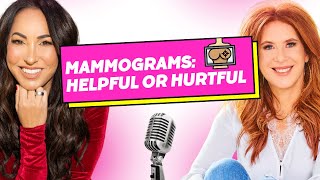
This is a YouTube video titled "Are Mammograms Hurting or Helping Cancer? What About HRT?" featuring a detailed interview between Natalie Jill and Dr. Jen Simmons, a breast surgeon and functional medicine doctor. Recorded in 2024, the conversation covers breast cancer detection, hormone replacement therapy (HRT) safety, mammogram effectiveness, alternative screening methods, and the impact of medical industry practices on women's health. Natalie Jill leads the discussion, asking critical questions and sharing personal experiences, making the content an informative dialogue on women's health and cancer prevention.
Today we're talking about breast cancer and detection of it and what's the right things to do to find it, to prevent it. Also, can we do bioidentical or HRT when you've had breast cancer? And can this make your odds greater that it can come back, or can it help prevent it? I've got Dr. Jen Simmons here today. She's the perfect one to be talking about this. She's a trained breast surgeon, and she spent 17 years as Philadelphia's top breast surgeon. She's got a thing or two to say and to share about this. Thank you so much for being here today.
My pleasure. I've been so looking forward to this conversation. So really, really, let's dive right in because it's such important information and it's just not out there. It's just not available enough. And people still have so many questions and still feel uncomfortable. And so. But I want to. What I want to make sure is that people feel really comfortable and confident in the decisions that they.
So good. I'm going to jump right into some of the hard questions because I already know what goes through my audience's minds when I have different people on. So the first question I'm going to just jump right in and ask because we've done so many episodes about hormones is do hormones. Does hormone replacement therapy increase your odds of getting cancer again or even getting cancer, or does it help prevent it?
Yeah. So it's a great question, and it's the one on everyone's mind, right. Because I think that the, the benefits of hormone replacement are out there pretty much. People know that they feel better, they feel younger, they act better, their mood is better, their weight is better, everything, everything that they can feel is better. And then I guess the question is for the not suffering. They have kind of shied away from this because the worry is that, you know, if I'm not suffering and I have an increased risk of breast cancer, why even bother? So that's why I am so intent on getting people the right information. Because for even the people that are asymptomatic, you're not having hot flashes, you don't notice sleep disturbance, you don't know notice mood disturbance, you don't notice a loss of libido or vaginal atrophy or urine leaking or any of the things that really bring people in to the doctor to get hormone replacement. I need you to know that you're still undergoing cognitive decline, you're still undergoing cardiovascular decline, you're still getting significant bone loss. And these Three things will make your life shorter and less tolerable. And so for everyone, symptomatic or not, you need to be considering hormone replacement. Now, if the reason why you're not considering is because you think that hormones cause cancer, I can tell you with 100% certainty that when we look at the data, when we look at all of the data across the field, the stuff that happened before the Women's Health Initiative and stuff that's happened since, and I'm sure that you've had people on your show already who have spoken about the Women's Health Initiative and have spoken about the fact that a retraction paper was presented in 2017 that said that there is no increased risk of breast cancer or cardiovascular disease with hrt. And the HRT that they were talking about, there is not bioidentical hrt. Yeah, the HRT that they were talking about, there are a family of estrogen like compounds and a family of progestins. Not progesterone, but progestins.
Like what's in synthetic birth control, correct?
Yes. Like what's in the birth control pill. And even then, even then, we are not seeing an increased risk of breast cancer. Now let's talk about what we are seeing. A decreased women who are on hormone replacement have a decreased risk of both the initial incidence of breast cancer on the development of breast cancer, and if you do get breast cancer, you do better. And if you have breast cancer and you go on hormone replacement, you have a decreased risk of recurrence.
Wow. So why do so many people. And doctors are telling people, One of my best friends who's super knowledgeable, she's scared to death because she says, I've got, my mom had breast cancer. It's in my family. She's like, I can't do it, it's estrogen. So. And her doctor tells her this.
So it's a complex issue. Let's start with in 2002, when the women's Health Initiative was released to the.
Press.
Generations of doctors heard that. That's all they heard. And that bell was never unrung for them. So decades of doctors have practiced in that indoctrinated space. Now we can talk about why that happened.
And.
And I'm happy to talk about why that happened. Why I believe that happened.
Yeah. Why do you.
I wasn't in the room when it happened. But we have heard quotes from the primary investigators who said that one of their purposes in doing the study was to end the runaway train of hormone replacement. Why would they want that? Why would they want that when, you know, 18 million women, which was 40% of the menopausal population. Population was on hormone.
I remember my mom being on it and having. Yeah. Like she loved it. And then they had to stop cold talking.
Well, so overnight, 80% of prescribers stopped prescribing and overnight 80% of women who had been on hormone replacement were no longer overnight.
Crazy.
So listen, unfortunately the way that the medical machine works right now is that the. They want to prescribe things that beget prescribing. More things.
Yeah. So for like antidepressants and birth control. Like that's.
Yes.
I can't tell you how many women in my communities, they go to their doctor. It's so frustrating. They're educated, they understand, they want hormone replacement, they understand what's going on. And their doctor shoots them down and says, you need an antidepressant and you need birth control pills. It drives me bonkers.
Yep. So think about it from the perspective of the pharmaceutical companies because I don't think the doctors are that diabolical. And I'm not trying to say that every pharmaceutical company is diabolical. However, you know, history speaks for itself and we've seen a lot, a lot, a lot of very bad, dangerous and hurtful behavior within the confines of the pharmaceutical industry.
Yeah.
So I mean, all you need to do is look at the. What happened with Vioxx, look at what happened with. Which was a non steroidal anti inflammatory which was released in the late 1990s, early 2000s, which they knew that it caused cardiovascular disease and yet they released it into the population and touted it as the next best thing for pain. And I don't know how many people had heart attacks as a result or. You don't need to look much further than the OxyContin story.
Oh yeah, crazy.
Most of us know the OxyContin story. And if you don't know, there are a number of amazing documentaries, documentaries out there which you must, must, must watch. But the bottom line is that they.
Kn.
When they released OxyContin, its addictive propensity, and yet they did it. And they continue to up the dose and continue to up the dose. So that if you want to read the story of the Sackler family, it is out there. There are many different versions. Some of them are fictional, some of them are not so fictional. But the bottom line is that, you know, the Sacklers put that out there when they knew how dangerous it was. So we, you cannot necessarily trust that these pharmaceutical companies are doing the best thing for you because in the end what they are about is profit, of.
Course, like any, like a lot of businesses. So I, I understand and I don't understand because it's like there's, there's both sides of that. When you. So if you, I want to go back to the estrogen in a minute for the cancer. So if you personally had breast cancer and they said told you it's estrogen positive or whatever it, would you still be on your hrt?
Yes.
You would. Okay, that's what I wanted to know. As a doctor, you would say, I'm still on here.
So what we have to understand is that first of all, if you believe that estrogen causes breast cancer, then you also at the time, same time have to fundamentally believe that women were put on this earth to get breast cancer. Right. It's a ridiculous notion. But what is our dominant hormone? It's estrogen. Right. Estrogen is the hormone of life. And when you stop making estrogen, when your ovaries shut down, that's actually when we all really undergo accelerated degenerative change. It's when we really start to die. When you look at the incidence of breast cancer, I mean, although we are seeing it now in younger women and that has been true since 2021, I'm not going to say anything more about that, but that we had something happen to us collectively as a world that is causing breast cancer to be seen at younger and younger ages. But before then I would have said that breast cancer in young women is still a rarity and it's still true today. However, breast cancer in women who are postmenopausal, not so rare. So I am quite accustomed to measuring hormone levels and I can tell you that measuring hormone levels in a woman who is postmenopausal, they're barely detectable. Barely detectable. And yet this is when we see the preponderance of breast cancer. So if you believe that estrogen causes breast cancer, why don't we see it in the estrogen rich states?
Why don't. So much. Yeah, like why aren't all pregnant women getting it?
Or like pregnant women, they have 10 times the amount of circulating estrogen. Why are we not seeing it in that population?
Right. It actually makes more sense the other way that you don't have it. And now there's the problem. Okay, so let me. When we first before we started hitting record, because I share everything with my audience, they all, they all know I was till I shared with you that I was taking biased because My estrogen was super crazy low and the bias was just not working for me. Like, I, I was that the weird person carrying it in my purse. Like, we're like, we were just flying back from Europe and I, every time I get a hot flash, I, to put it back on, it was like I was metabolizing it quick. So I switched to what I thought was good was the patch. And you said, we'll talk about that. So I'm just curious, like, do you have a preference on types of estrogen that people should use? And why do you like one over the other? And adding to that, how important is it to be doing progesterone also or to testosterone when you're doing the estrogen?
Yeah. So for you to say that you used topical biased and didn't have all your symptoms, relieved says to me, we weren't, we just weren't meeting all your needs. So, first of all, I never give estrogen alone, ever. I always give estrogen along with progesterone, always. Because they work in combination with one another. They are complimentary with one another. Estrogen is your on button. Progesterone is your off button. We need a balance. We need a balance. And so people often perceive that the estrogen isn't working because they don't have the balance. They don't have that other piece.
For me, I had the balance. I have the balance for me, but I know, but I don't like, somebody messaged me when I shared this yesterday stories and they said, my doctor told me I don't need progesterone without, I'm thinking, of course you need it with it, like you need, of course you need it.
And then, you know, maybe there's an issue with absorption if you're not getting the right dose. Maybe there's an issue with absorption. Maybe you need to try a transmucosal formulation. Maybe you need to do both transdermal and transmucosal and then make sure that the progesterone part is right and make sure that the testosterone part is right. Yeah, because we need all three.
Yes.
And we're fooling ourselves if we think that we're ever going to get that harmonious place without doing all three.
So assuming people are doing all three, if they get this and they want all three, do you have a preference on if it's creams or it's the trachea, the lozenge or a patch, or is it very individual for people?
So estrogen should never, ever be delivered orally, ever. So I don't do the trochees that I don't, I don't do any forms of oral estrogen. And the reason is if you give people oral estrogens, the things that we say are the dangers of estrogen replacement are all associated with the oral forms.
Wow. Good to know.
Hypercoagulation, the inflammation. We don't see inflammatory markers go up with transdermal or transmucosal.
So that's the patch or the cream. So with patch or the cream.
That's the patch or the cream. We do not see an increase in inflammatory markers. However, if you give someone oral estrogen, you are going to see increase in inflammatory markers, increase in coagulation factors. You're going to see all of that happening. And you're also asking the liver to do a double duty. Because when you take oral estrogen, it goes through first pass in the liver and then it, and then it gets released into the bloodstream and then it has to come back in and be detoxified. Our livers are dealing with enough.
They deal with a lot. Yeah.
They are really dealing in our world.
Today with forever chemicals and BPAs and the list goes on.
That's exactly right. So I try to not challenge the liver when I don't have to challenge liver. And I don't want to add anything to anyone that is going to increase the amount of inflammation that they have to deal with.
Makes sense, right?
We have enough inflammation in our lives. There's no lack of inflammatory stimuli in our world. We don't need to add more.
Well, I will share. For those of you that are following my hormone journey, I mean, I'm on all of them on progesterone, progesterone, testosterone and estrogen. For me personally, the cream was not doing it, the bias, but the patch. So far it's only been two days, but I haven't had a hot flash. So I feel like there's something with the steady release that's, that is working for me. But I'm, I admit that I'm on it and I'm proud to be on hd. I will be on HRT the rest of my life. Which brings me to the next question. What if somebody did not go on HRT right when they were in perimenopause or hit menopause and now they're like five, ten years past menopause and they're like, well, I want the benefits. Can they start it or is there a point that it's just too late to start it?
Yeah. So there's pretty good data that There is no point in someone's life where they're not going to get benefit.
Wow. Good to know.
Hormone replacement.
So you're 62 and you've been in menopause for 10 years. You still can benefit.
Now, I'm not saying that there isn't an approach that needs. You need to carefully approach these people and make sure that you're working with a hormone literate physician or provider. Because I think there's a lot of providers out there that are doing it really well that are not physicians. But you need to work with a hormone literate provider. Who knows what they need to look at first. For instance, I'm not really starting someone on hormone replacement until I've had a full workup and until I've made sure that they have the other pieces in place. Because like everything else, there's no magic bullet. Like, you have to be on a nutrient dense diet and you have to be eating the right way for you and you have to be staying away from inflammation. So we're looking at your environment, we're looking at your sleep practices. You know, it's one thing if you can't sleep because you don't have enough progesterone, it's a whole other thing if you can't sleep because you're addicted to watching Netflix at night.
Right.
Your phone at night or, you know, there.
Or you have a blood sugar thing going on because you're eating too much sugar at night or.
Yes. So there are lots of behaviors that are self sabotaging people's ability to do what they should be doing.
So good.
So you have to make sure that the other pieces are in place. And, and then if they are, I think that hormone replacement is as long as it's bioidentical and done by a hormone literate provider who is going to continue to test, continue to make sure that you're in safe ranges. Because just having symptom relief doesn't mean that you're in the right place. And having symptom relief only correlates with a proper hormone dose a minority of the time, if you can believe it.
Makes sense. Wow. Wow. Okay, my next question. I want to pivot over to mammograms versus thermography because this is another very controversial topic and I'm confused on it too. And I will share that. I was on the whole train of, no, I'm not doing mammograms. I've heard too many bad things and then I'm great. I personally was grateful that I had one a Year and a half ago because I had max out a deductible in a hospital stay. And I thought, I'll just do all the tests and then on that mammogram. Now granted, the mammogram could have been the thing ruptured it. But I found that I had a breast implant rupture, which was a gel formed implant. So I now have explanted. I don't have implants anymore. But the mammogram started that for me. So it's not that it helped me with cancer, but it helped with that. And I've also had two guests on that found their cancer through a mammogram. So it's confusing to me and I know to my audience, like, like, how effective are mammograms really? Have we just been told that we need to do this? Are there better methods? And what are the risk of doing mammograms if there are some?
Okay, so I'm going to start from the beginning with the mammogram story. And I know that there are so many people like you that are grateful that a mammogram got them to, to a certain place. And I'll say that.
You, you, you.
Would have gotten to that place regardless if you needed to get to that place, you would have gotten to that place.
And yeah, like a breast ultrasound confirmed it. And there's other ways too, to find it.
Yes, there are other ways. So the, the people that are helped by mammogram, actually helped by mammogram are very few and far between. So let me start off by saying that the mammographic screening program, which started in the 1970s, started with the best of intentions. It truly did. And it was based on this platform, this foundational belief that breast cancer growth is both linear and predictable. And so you have a breast cancer that starts small, grows to some critical size, at which point, if you find it before that critical size, you can prevent metastasis and you can save both lives and breasts. And it's a lovely, lovely theory. Just doesn't happen to be true. So breast cancer growth is neither linear nor predictable. And breast cancers are what they are from the very beginning. So if it's an aggressive process, it's going to be an aggressive process from the very beginning. And it almost doesn't matter when you find it. And if it's not an aggressive process, it's never going to be an aggressive process. And it also doesn't matter where you find it. So when we look at the populations that screen as compared to the populations that don't screen. And we know this from the Swedish studies, with equal access to care and access to the same care to they both, both groups had access, access to equally good care. The population that screened and the population that did not screen died at exactly the same rate from breast cancer. Survival is exactly the same between the screening group and the non screening group. The major difference between them is the screening group got treated for a lot more breast cancers because these were cancers that were picked up on screen that never needed to be treated.
What do you mean by that? Tell me what you mean by that.
Here's the problem with treatment because not all breast cancers need to be treated. A lot of them are going to be subclinical. And we can specifically talk about the 40,000 women in this country, in the United States every single year who are diagnosed and treated for dcis. Ductal carcinoma in situ. This is not breast cancer and yet it's treated like invasive breast cancer. And what happens when we treat women with our current medical, conventional treatments for breast cancer is we shorten the duration and lessen the quality of their lives.
What is DCIS before we get to.
Cis doctor Carcinoma insight you these are cells that have undergone some transformation, but they are contained within the ducts of the breast.
So what do do with those when you have them? What's the right thing to do with them?
The right thing to do with them is to figure out why you have cellular transformation and fix that. So ask the questions, what's happening in my environment? Because breast cancer, cancer itself, it's a normal response to an abnormal environment. And there's some environmental shift taking the, the local environment and shifting it from the chemistry of joy, which is where our cells are, are happy and, and living harmoniously and changing it to this stress chemistry. And when your cells are living in stress chemistry, they transform, they go into survival mode. That's what, that's what any cancer is. It's a cell that's gone into survival mode. It's just reproducing because it about quality. It just wants to stay alive. And the same way that can happen, that same process can reverse. But it takes a conscious movement in order to do that. It takes recognition as to what is happening in your environment in order to shift it back in order to tell your body that it's safe. And this is true of any cancer of any organization. But when we treat women for dcis, when we treat women even with invasive breast cancers that don't need to be treated, women whose cancers would have never become clinically relevant. And we know that because we saw that in the Swedish studies. We saw that the incidence of breast cancer was not the same. And that's because it's not that the populations weren't the same. They were. They were the same populations, but that not all breast cancer progresses to the point that it needs to be treated.
So a bunch of people that you.
See in the data.
So if I'm hearing you correct, a bunch of people that feel they have it and they share, they've got breast cancer. They've been diagnosed. What they actually have is this dcis. And now they're going through the whole. No, that's not what I heard. Okay, so.
So some people truly. Some people have dcis, some people have truly invasive breast cancer. But what we make no attempt to do in our current paradigm is to say who does and doesn't need to be treated.
Got it.
So no matter how many mammograms we do every year, the exact same number of women die of their disease.
Wow. So that's when you hear it's not saving lives. That's what you mean by that. Like, it might be finding something, but it's not changing any kind of outcome.
That's right. That's right.
Wow.
And the thing is, if it were not saving lives, but saving breasts, then it would still make sense. Right. If we prevented women from having to have mastectomy, then you could still accept that risk, because the risk of having a mammogram is not zero. We are causing. Causing thousands of breast cancers every year because we're radiating women every year. So some of those women would never have gotten breast cancer but for the fact that they're getting mammograms.
Wow.
Now, the rebuttal to that often that I hear is that, well, they found a cancer on my first mammogram. Okay, that's true. It's not the only cause of breast cancer. And I could rattle off like, a hundred causes of breast cancer. Right. Radiation isn't the only one, but it is one, and it is a big one. And the more mammograms you have in your life, the higher your risk is of getting a breast cancer. And the people that are most vulnerable are these women, who we call the dense breasted women. And I'll tell you the reason why. Before 2012, when we were just doing the 2D mammogram, kind of everyone was exposed to the same amount of radiation when they got the mammogram. After 2012, as people started to change over and get 3D mammogram. The digital breast tomosynthesis, the amount of radiation that you get is adjusted to the size and the density of your breast. So there are women who are getting 10 times the amount of radiation because they have a dense breast or because they have a large breast. And this radiation is additive over your lifetime time. So there are some women who are getting an enormous amount of radiation. And we have to remember this pool that we're talking about, the screening population, these are healthy women. These are healthy women. These are not symptomatic women. These are not high risk women necessarily. These are healthy women, and we are putting them in danger and putting them in harm's way. And we're doing it without evidence that there is benefit for them. Because we are not saving lives. And as we've learned, we're not saving breasts. Because what happens is when you get a breast cancer diagnosis, fear takes over. And though. Though the data does not demonstrate an increased survival with mastectomy over lumpectomy, women automatically go to that place, just take it off. Because I don't want to have to deal with it again. And they don't understand people. I know that that's. That's not what precludes dealing with it again. And so if, if we truly informed our women and if they could hear it, because it's nearly impossible to hear it when you're filled with fear. And one of the biggest problems in this whole world, in this whole situation, is that women get a diagnosis and they are so rushed to make a decision, they feel like something needs to happen right now. And one of the major reasons why I wrote my book and what. And the opening part of my book, the Smart Woman's Guide to Breast Cancer, is the first thing we all need to do is take a breath, take a pause. You have time. You do not need to make a decision today, this week, this month. You don't. And you are better off if you consider all of these things. Learn, educate yourself. Because the truth is that the treatments for breast cancer are not benign. Treatments for breast cancer. A woman who was treated for breast cancer, invasive or not, has two to three times the risk of dying of cardiovascular disease than a woman who was not. This is a huge number, especially knowing that women are already exponentially dying more of heart disease than breast cancer at every age beyond 30, exponentially more. And yet women are so filled with fear over breast cancer. Instead of focusing on heart health, which is what we all need to and should be doing.
What do you suggest for detecting, do you even suggest checking? Like, do you suggest self checking? Do you suggest thermography? Do you, what do you suggest?
So, first of all, I firmly, firmly believe in self breast examination. I think that everyone ought to know what their breasts feel like, what their breasts look like, so that if there is a change, they're able to perceive the change. And if you find something that is something that should be investigated, that is something that has clinical relevance. And I believe in investigating clinical relevance.
Right through a mammogram or through a biopsy or through. Doesn't matter that point.
At that point it doesn't matter because we're not talking about the normal healthy population. At that point you have an issue. And so there is a risk benefit ratio that makes sense, but it doesn't make sense in the asymptomatic woman. It doesn't.
Right.
There's just no benefit there. It's all risk. So I believe in self breast examination. I also believe that screening ultrasound, because there are so many women that want to do more, right. Like self examination is just not enough enough for them. They want to do more. They feel like they need to be more proactive. So I believe in screening ultrasound. Screening ultrasound is not universally accepted. It's generally not paid for by insurance because the way that the insurance model is built is they don't want to have to pay for ultrasound unless they have to. So what that looks like is go get a mammogram, which is very, very inexpensive from the insurance point of view. And if the mammogram says you need an ultrasound, okay, I'll pay for it. But what they're hoping to do is get out of paying for an ultrasound. So that's why so many people who go seeking a screening ultrasound get shot down by their insurance time and time and time again. And the doctors actually don't really support them. First of all, it's, I can tell you, having lived and worked in that system for decades, that it's a hard. You like, it's very hard to fight city hall. They are, yeah. The amount of thought that goes in is nearly zero. It's like talking to a broken record. All they're doing is looking at a checklist. They are not considering the person in front of them. It's, it's, it's such a difficult, subhuman.
Popular opinion that I, I don't even have, I refuse to pay medical insurance anymore. I use a health share. I'm rather pay out of pocket and have a share for emergencies. But I just it's to me, it doesn't cover anything that I want to get done.
Well, you know that, that is part and parcel to the problem is that we have, we have made insurance our health care. Right.
Yeah. And they shouldn't dictate treatment.
That's not what it should be at all. Right. Insurance should be for emergencies. For unanticipated emergencies.
That's right.
Like you break your leg or you have an appendicitis or something like that. But you shouldn't be using your insurance to go see the doctor. And you certainly shouldn't be using it for health maintenance. Right. Health.
I'm not a fan of insurance treatment at all.
Yeah, this system is so, so, so broken. So, you know, ultrasound is one option, but if you want to try to get your insurance to pay for it, you're going to have a hard time. Time. Thermography is a great, great, great tool, just not for screening for cancer. We have to learn to use these tools for what they are. So thermography finds a heat signal that's associated with inflammation. And it is an awesome tool. And I use it all the time in my practice to find inflammation. But not all breast cancers, because some of them are so slow growing, not all of them are going to incite an inflammatory response. So it is going to miss. Yes. Breast cancers. Now, can I argue that the cancers that it misses are probably not meaningful? Probably. Right. But are there certain situations where it does pick something up years before it becomes clinically relevant? Yeah. And in those people, what I use thermography for is. Okay, a bell was wrong. What do we need to optimize? Where do we need to intervene to kind of turn this process around? So I use it as an indication that we have work to do. And I think that that's exactly what it's supposed to be used for. But the most exciting thing I think on the horizon is that there is new FDA cleared imaging to screen for breast cancer without pain, without compression.
Really?
That it's fast, that it's safe, it's radiation free, it has 40 times the resolution of MRI.
Wow. So what is this and how do we get it?
So I'm opening up first center on the east coast in July. My center is called Perfection imaging. And except that perfection is spelled with a Q in the middle. So it's P, R, F, E, qt, Ion imaging. There are a couple of imaging centers already open on the west coast. So if you're in California or you're in Arizona, you already have access to these. I'm working as hard and fastidiously as I can to bring it.
What's it called?
It's called, the test is called QT imaging.
Okay, qt, as you're saying, they have them in California and they have them in California.
I live and there's one in Scottsdale, right where I live. This, this will replace mammogram, ultrasound and mri.
Can we go on our own and pay like cash to do something like that?
It's all self referred. You do not need a referral. You do not need anything other than the desire and ability to go there and get studied. I get asked all the time who reads it. It's read by a board certified radiolo that has specialty training in breast imaging and now has even more training in reading these studies. So any breast imager can't read these studies, but any breast imager can train to read these studies.
Now does that testing work for all areas of your body or is that specific for breasts?
So this particular machine only images the breast. The whole body imager, I think is in the plans, but it won't be for years until it's FDA cleared and available. But until then, you know, we have an awesome option to. To screen the breast.
Yeah.
And I think that that's really important because breast cancer occupies a lot of head space for a lot of women and it is preventing women from living their best life, from having their best health. And they're making decisions that really don't suit them in the long run. They're making decisions to have more surgery, that they need, more treatment that they need than they need. And they're walking around with a lot of fear. And I want people to know that you can do everything right and still get breast cancer and you can do a lot of things not so right and not get breast cancer and everything in between. And for all of us, what our goal should actually be is to every day not live in fear of disease, but live in the pursuit of health. So good. And if you don't feel like you have your best health, then work to get there because you should feel great. And if your doctor is telling you that it's normal to be tired, that it's normal to gain weight, that it's normal to lose your libido, that it's normal to have aches and pains, that it's normal to leak urine, that it's normal to have brain fog, that it's normal to be forgetful, you need a new doctor because none of those things are normal. And even menopause is Though it is a natural process, there's nothing normal about it. And we need to stop thinking that because however many hundreds of years ago, no one survived much beyond menopause, that we shouldn't actively treat menopause. Now, that's just wrong. It's just wrong. And where we started in the beginning, that even if you're not symptomatic, even if you don't have the brain fog, even if you haven't lost your libido, even if you're not having hot flashes or difficulty sleeping or mood changes or any of the things that we normally associate with the change in life, I can assure you that you are undergoing cognitive decline, that you are undergoing bone loss, that you're undergoing cardiovascular decline. And these are the things that make you have a heart attack, get into congestive heart failure, end up in adult diapers, fall, lose your balance, lose your mind, end up in a wheelchair, end up in a nursing home. This is what happens. Whether you're symptomatic or not. Not. This is what happens. And the way to prevent it is to make sure that you are working with someone who is hormone literate, because the literacy ends up being so important, especially as you age and, and make sure that you are doing everything to give your body what it needs to live long, but live well. Right? We want to live as long as possible and die young, because dying old and, and sick, that sucks.
So you don't mean age wise, you mean feeling young. I'm imagining you're saying, that's what I'm taking now. She's not literally saying, like, you want to die at 21. She's like saying, you want to be. You want to be. Be a. You want to be feeling glorious at age 85. You want to feel. Yes, yes.
As my friend J.J. virgin says, I want to live to 100 and be relevant. Yes, right. She wants to be alive and well at 100. And the way she's looking, she's going to do it. She's going to do it.
You know, I'm, as. I'm asking you these questions, which I, I'm loving interviewing you and I'm learning a lot here. But, you know, I, I tend to think. Think what, what listeners think. And, and I know there's some people listening that are triggered right now. They're like, wait a minute. No, I. Because you're, you're holding on to what your doctor told you or what you've been told or what you. And what I've. The one, the biggest thing I've learned in midlife. And, and I'm almost 53, so I'm. I'm not like this big expert on it, but I'm in smack in midlife, like interviewing people with this, living with it, running communities with, with women here. The biggest thing I've learned that helps us age, optimize and age well is being a detective and being super curious. And we have to ask these questions. And if we don't ask the questions and we don't open our mind to changing beliefs that we've held, that's the demise, that's the danger zone. And I'm so convinced of this now. And especially, like, as I'm asking these questions, you know, my old way of asking questions, I'd be like, well, is this going to offend somebody? Is this. And I. What I realize is you have to ask those hard questions. We have to challenge everything. And if, just if you're getting mammoth mammograms just because you've been told to get mammograms, like, why ask why if you ultimately decide to get one. Awesome. But just do the detective work first. Don't just listen to my insurance data.
Ask for the data. Because we've known since 1978 that they don't save lives.
That's crazy to me.
The Cochrane Report that came out of Switzerland, when we know that in this country it's very hard to objectively get data because industry is so infiltrative in what we see and what we don't. And it is so in control of the narrative and the stuff that they don't want you to see doesn't get published or it gets put into obscurity. But you can get the Cochrane Report and see that Switzerland has banned screening mammograms. Yes, they have banned them because they are not good for people.
I didn't know that Switzerland actually banned them. That's crazy. That's.
Screening mammograms are no longer done.
Wow.
Because it's not good for the population. And in countries where the, where everything is not controlled by industry, they're able to make these population decisions that are actually good for the population. Whereas so much of what happens to us is driven by industry.
I saw this so loud and clear in Europe. I'm like, why? Like I'm, you know, we just got back from Europe and I'm thinking, there's hardly any obese people. People are act the food. You didn't. Your stomach doesn't hurt after eating. Like, why is everything tastes better? Why is. And you really, if you follow that money and you follow that, you see that like there's a vested interest in keeping citizens healthy. Where we, in our country, in the United States, unfortunately, that's where the money's made on sick care. Not, it's not a healthcare, it's a sick care.
Yep. And you know, the machine is very much by design in that, you know, that you get put on one medicine that begets another medicine that provokes another medicine that has another symptom that, that they prescribe another medicine. And you know, this is very intentional because the machine works really well that way.
Way. And let me ask you this, because there's going to be somebody listening that h. Some. You've just been diagnosed with breast cancer. You're in freakout mode. You're in, and you, the first thing you said is this is not urgent, like take some time and research. But what do you want that person listening to know from you? Yeah.
So the first thing you must, must do is pick up my book, the Smart Woman's Guide to Breast Cancer. Because this is every single thing that you need to hear right now.
Okay.
And that's available on Amazon. And I, I, I spent the last 18 months of my life very thoughtfully putting that together because I know, you know, I, I spent 17 years as a surgeon before I left and became a functional medicine doctor. I only became a functional medicine doctor and an integrative oncologist because I became a patient.
Yeah.
Because for the first time in my career, even though I come from a breast cancer family, I mean, I come to the breast cancer space so naturally and organically. And I really, I, my aim from the very start, from when I was a young girl, is that I wanted to change the way that we diagnose, treat breast cancer. I always wanted to make an impact in that space. And it's only when I became a patient that I said, wait, am I really going about this correctly? Is this really the right thing to do? Are we really doing the right thing by these people? And it wasn't until I became a patient that I really understood what informed consent meant. Because we talk to these women about breast cancer and we talk in terms of five year survival. Survival. Five years. Tell a 39 year old with four kids about a five year survival. Okay. It's a ridiculous question to ask, a ridiculous answer to give. Am I going to live? And you talk to them about a five year survival. I mean, it's crazy. It's crazy. And so these women make these decisions based on a five year Survival. And no one talks to them about what's happening 10, 15, 20, 30, 40 years down the line. But if you're Talking to a 39 year old, how dare you not talk to them about what's happened 20, 30, 40 years down the line? How dare you not talk to them about that?
Oh, God.
So the information needed to go out there and, and I made sure I did that. And, you know, the best thing that you can do for yourself is collect the information. I heard something. I have a breast cancer group that I run and we met today and one of the women shared with me what her oncologist said to her. And I was so horrified by it. She said, you know what, what is it that you want everyone to know? And she said, well, if I had my druthers, no woman would do any research. They would just come in and listen to my recommendations and follow them. And I, I mean, I honestly. And I'm getting that feeling right now like I got physically ill. Like I have, have this visceral feeling, like I kind of want to throw up a little bit. And I have that feeling in my stomach when something's really wrong. You know, that feeling that you get. I'm embarrassed for my colleague in the medical oncology space. I'm sickened by the fact that anyone would feel that way, that anyone would say, you should remain ignorant. That's horrible. And that's the last thing I always want people to say, why? And if I'm not giving them a why, leave me, leave me, go find out why do I feel a good decision? Unless you understand why and unless it's really going to benefit you, don't you.
Feel a good doctor too, is going to be open to the patient and what they are thinking? And because I think there's that, there's that that you're. The patient actually knows deep inside what's going on. They know. They have a knowing. So listening to that actually could help the care, I would imagine, 100%.
But this goes back to your curiosity, right? Like, we all need to be curious. And I say all the time, if you're not embarrassed by something that you did six weeks ago, six months ago, then you're not learning. Like, I'm embarrassed by things I did six weeks ago because I'm constantly learning, you know, like, I read two books a week, I take courses. I mean, I am constantly, constantly learning and trying to apply what I learn, but also remaining curious. Now a major, major problem, and this was evidenced really well in Kelly Turner's books, Radical Remission and radical hope is that that when Dr. Turner set out to discover why people had a radical remission, why these people recovered despite being told by their medical oncologist or their physician, you know, people with end stage cancer who recovered or people with Ms. Who were like so debilitated and recovered. And when you go to talk to their doctors and ask them, like, what's the X factor? Right. Where's the magic? The doctors are totally uncomfortable and they don't want to talk about these people. And they say things like, you know, we don't talk about them because it creates false hope, like it was some miracle and that you couldn't explain it. And actually they do have factors in common. They all radically changed. The way they ate, the way they moved, the way that they slept, the way they thought, their environments, their. Their purpose. They did all of these things to help themselves. But doctors are totally uncomfortable with that because they can't take any credit.
That's right.
And they only like to talk about the things that they can intervene in. And so what we all have to remember is. And listen, if you feel driven to go to that conventional medical space and take that conventional treatment, please know that you're doing so with my blessing. Because I believe that if you believe it's going to work, it's going to work.
I think that's.
Now, if you don't believe it's going to work, you should be walking away. But if you believe that this is the thing that's going to work for you, then go and do it. All in. In for sure. All in. But what we have to all remember and know is that health happens at home. Health doesn't happen in a doctor's office, in a medical oncology suite, a radiation oncology suite, any kind of therapeutic center. Health happens at home with what we do every day. And it's what you do most that matters. You don't have to be perfect, but it's what you do most that matters. And health happens at home.
So good. Gosh, I'm gonna have to have you back on. There's so many things you explained so well and so many things that we covered here. Thank you so much for being on today. This was super informative, you know, Gosh. Okay. Where first of all, you said they can get your book on Amazon. Is that where you want them to go for the book?
Yes, my book is on Amazon. It's a smart woman's guide to Breast Cancer. But you can also find it on my website. Website, which is Real Health MD and there, there's a page for my book, a page that talks about the programs. I, too, have a podcast. It's called keeping abreast with Dr. Jen. We're going to have you on real soon. And there we talk about all the things that drive health. So if you liked hearing this, you can catch my podcast. We release a new episode every Monday. And then the imaging center, the that we talked about, that revolutionary new imaging that will open in July in the suburbs of Philadelphia. That's perfectionimaging.com and the perfection is spelled with a QT in the middle. And then you can find me on all the social Media channels. I'm Dr. Jen Simmons, and my Jen has two ends.
Thank you so much. Thank you.










