Feeling Like a Stranger in Your Own Life? Here's What's Actually Happening
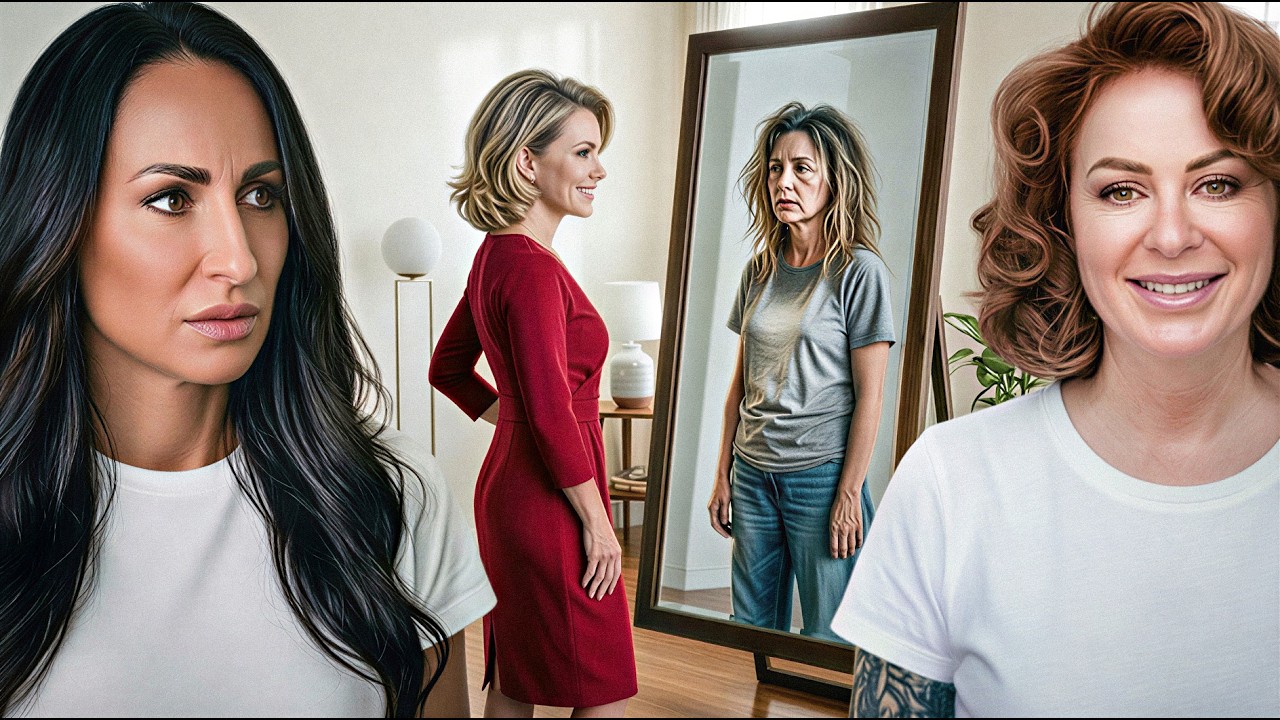
Star Monroe, a somatic psychotherapist, explains why women in their 40s and 50s feel like strangers to themselves: lifelong conditioning that silenced their authentic voice. She shares her recovery from cocaine and alcohol addiction, and offers concrete tools like journaling, movement, and keeping promises to yourself to reconnect with who you actually are.
Chapters
Some of us hit our 40s and 50s and something really shifts. We look in the mirror, we don't recognize the woman looking back. Not the body, not the person, not the energy, not even our voice. Because we've been the wife, the mom, the friend that shows up. We've been holding it all together. And somewhere along the way, that woman underneath all of that got quiet. And the quieter we started to feel like we have lost ourselves. And I want to share that it's not that we've lost ourselves, it's that most of us were never fully allowed in the first place to be ourselves. We were trained to be agreeable, to be likable, to shrink, to accommodate, to be everything for everyone else except the one person staring back in the mirror. And when we get into midlife, this feels like a depression, a setback, a place of being lost. And it doesn't have to. Today's guest is Star Monroe. She's a self-identity expert, a somatic psychotherapist, and an author who works with women on exactly this. The crisis, the version of us that we abandoned at age 15, 20, 30, just to stay safe, to stay loved, to stay chosen. So the conversation we're going to have today is we're going to talk about why so many of us wake up in midlife feeling unrecognizable to ourselves, and the difference between rediscovering ourselves and finally meeting ourselves for the first time. We're going to talk about how to stop performing and actually living in a body that's also changing and in a season nobody handed us a manual for. If you've ever had that thought of feeling lost, thinking there's something more, this is the episode for you. Thanks for being here, Star.
I appreciate you. Thank you so much. I'm excited for this conversation.
So I recently met Star. She's a new friend. I met her when I was at Shaleen Johnson's Camp Be More. We were both speakers there, and I saw her backstage in her beautiful red dress with her hair reminding me of 1920 glam. That's really what— and just stunning beautiful. And in midst of her study, her stunning glam beautiful, she's covered in tattoos, which I also caught my attention because I thought, "Well, I love this." She's expressing herself, she's unique, and she's just stunning. Like the kind of woman that walks in a room and all heads turn. You can't help it. And when you start talking to her, she is very, very captivating. And I had no idea, Star, by the way, your age. I had no idea. And I asked Chalene later, I said, "How old is Star?" And I learned you were my age or pretty close to it. I'm 54. I think you're—
55.
55. Okay. So similar age, but you look ageless to me. And I don't mean that as in trying to look 20. You just look ageless and you really are captivating and your message was so strong. And I just thought, not only do I need you to be my friend, but I need to interview you and understand where this comes from. So I can't wait to chat with you right now.
Thank you. Thank you so much. I really like that about being ageless because, yeah, I'm not trying to be anything other than myself.
Yeah.
Really, like, I'm embodied in who I am. And who I am is a cornucopia of all past versions of me. No version of me gets left behind. So what you see is like this wholeness. Of me. Like, I really love who I am.
Yeah. And just to set the tone here, and I've got a lot of questions I'm going to dive into here because you're just brilliant at what you do. But so I just met her. This was my experience of when I, when I met her. But also just recently, she publicly, publicly shared a facelift journey. So she shared that publicly. No shame. Proud and owning it. Pretty incredible. She also moved. She lived in Turkey. She is not from United States and she picked up and moved on her own, not really knowing what she's walking into, to the United States. She's exploring. She landed right now in Florida. She's traveling around, figuring out things, but she is bold and she is not afraid to share things and step into new versions of herself.
Yep. Yeah. I'm definitely being challenged right now to relinquish. I was journaling this morning and it was like that there's Underneath all my writings is like, there's a portal. That's a good word. There's a portal for a new evolution of me. And so I can really feel that right now being in America.
I'm gonna ask you some things before I get into sort of the meat of this with everyone, 'cause I wanna know a little bit more about who you are and where this came from. Because quite honestly, I don't know anybody else like you. I have not, I don't have another friend or person I know that made that kind of impression on me in a moment. Like just, I remember meeting you backstage and it was such a strong impression. Has that always been you? Who were you 10 years ago?
Well, if I go back even further to when I was 16, so that is like going back a long time ago, I was always told I was scary. Like I was sort of scary. I had this big energy. And so I've always had this big energy around me. I haven't known what to do with that energy. And over the years, I mean, for the majority of my life from the age of 11 up until mid-40s, I let, or let's say early 40s, led a life of destruction. So that big energy, because I didn't know how to manage it, which is what I've really learned the skills to cultivate, how to manage my energy, which I believe is what you're feeling when you're with me, is that energy got spouted out into all sorts of addictions— cocaine, alcoholism, toxic relationships. I spent all my money, I had to declare myself bankrupt, eating, self-loathing. So I come from a history of really terrible, like ruins, like the ruins of me. And I've built myself. I've healed myself and I continue to heal myself. And I build myself upon, as I said, all past versions of me, I bow down in reverence to them because I wouldn't be the woman I am today without them.
So when you say all of that, I just got chills around that. So if I'm understanding correctly, you knew you were meant for more. You had this big amount of energy and personality and you wanted to express yourself, but somehow along the way you were told that's that's not okay. Or, and so you were, were you self-soothing with these things?
So I first, my first, so in all, because, because I went back into school in my 40s, trained as a psychotherapist, and they went down that track. Where I track it back to is I was never taught it was safe to be me when I was a little girl. It was never safe to be me. I always had to be quiet, sit in the corner, and I was left to my own devices. And so if I expressed any emotion If I expressed anything, whether that was gleefulness or tears or anger, I was put all the way down and said, stop doing that, that is not acceptable. And so as human beings, all we want is to— we want to be loved by our caregivers, our mum and dad, and we want to belong. So I learned very early on to mask my vulnerabilities, my expression, my emotions, and And then there was like this kind of, I didn't turn into a good girl and a people pleaser. I turned into the ultimate rebel. And it was like really for many, many years, it was like, fuck you, that fuck you energy. And I see this with midlife women because a lot of midlife women have been in the good girl, people pleasing kind of identity. And to come out of that, they swing and they end up being the bad bitch. You know, that fuck you energy, I'm not gonna do this anymore. Neither are helpful. Neither are helpful on their own, and there is a balance. So what I've been learning for the last 10, 15 years is to come back to me and to go, do you know what, it's safe to be you, it's okay to be us. And so that's what I've been doing, and that's why I see that in other women. And then we can lean on to all these identities that we've learned over the years. The good girl is useful in situations, the people pleaser is useful, the bad bitch is useful, the is useful. And so it's learning that these are all parts of us, not us. There's something deeper within us. So I've been coming back to this wholeness of who I am.
I don't want to skip over the self-destructive part that you mentioned. So you had this F you attitude, which makes total sense, especially when you're having to mask and not truly express yourself. When you mentioned the drugs, was that a form of checking out or self-soothing, or what was that, do you think?
All right. I was married. I've been married and divorced twice, married in my 20s. I call my 20s my domesticated years. And I don't know how, but my husband at the time was trying to control me. I'm pretty uncontrollable. I hate being told what to do. But he kind of was controlling me, and I thought that was how we had a marriage. Eventually that broke down, and that fuck you energy really came out into my 30s. And I kind of found another side to me. And it's like I found kind of this beauty or this kind of like, oh, I look good. And I kind of did my hair and I started going out. So men started noticing me. And so I started to go out a lot. And then along with that came drugs. And cocaine at the beginning made me feel invincible. And then if I fast-track 7 years down the line, when I was doing 2 grams every single day, I was doing it on my own. I was hiding in a cupboard. At my house doing it, but I was a high-functioning addict and alcoholic. I ran a huge business. So on the front end, I was like running this pole dancing academy. I was a showgirl. I was running a Pilates studio. So I come from the fitness arena, but behind the scenes, I was destroying myself at night. Yeah, so it was like this real kind of mix.
You know, so I don't know much about cocaine, and I don't want to make this too much about it, but you, What you just said really hit something with me. There's somebody that's very important to me in my life that had a struggle with cocaine for a little while. And one of the things they had told me was that exactly what you just said, it made them feel invincible, like anything was possible. And that just struck a chord with me because I want to lean into that for a minute because do you think there's a way for us to feel that without that? Or help us understand that part.
Yeah. Because as I'm answering you, I'm also hearing your other questions that I'm, I'm not kind of not touching on. So it's like, why did I do it? So it was fun. It was, it was a way of having fun that I hadn't had fun. It was naughty. It was like, it was kind of like risqué. And so the rebel in me really liked that. And then underneath, if I peel back all the layers of why I did it, it was connection. I didn't have connection. And I don't want to cry because I put my makeup on, but I didn't, I didn't have connection with me. And because I didn't have the connection with me, I didn't have the connection with the people around me. And so, so the drug became my way of masking those really painful feelings, like painful feelings that— I live a sober life now. I don't drink, I don't smoke, I don't do anything. And the brutality of feeling all these emotions is— I'm gonna say the word exquisite— it's exquisitely painful and pleasurable at the same time because I get to feel it. I just didn't have the capacity or the bandwidth to feel that, that I wasn't connected. Yeah. And that's what I was seeking. And so I had a connection to the drug. I had a connection to the whole ritual of getting the drug and the drug dealer and then feeling high and then feeling bad and then the shame spiral. It was like, it's the whole thing was an addiction, but underneath it was, it's connection. I truly believe addicts are seeking connection.
My really good friend, Joe Polish, who runs an addiction treatment center, he has always said that addiction is a solution. Addiction is a solution. And he makes a point to say, when we shame people dealing with addiction or we look down, we have to understand that they're hurting and the addiction is their solution right now. And that really did change the way that I can have compa— I want to have more compassion for people that struggle with that.
That is how I have navigated my way out of being an addict from cocaine, from alcohol, from food, from self-loathing. And the way that I've done it is I've met myself where I'm at over and over again and go, do you know, like, say, like, for years I've wanted to stop drinking. I'm like, okay, I see you. So awareness, consciousness is needed. I see that you're drinking. I know that you want to stop drinking. And you're not right now, it's okay. It's okay. You're gonna stop at some point. When I was doing drugs, um, and I used to hide myself in the cupboard, and my voice— like, I've been led by this deeper inner voice all my life— it said to me, you're not okay, but you're going to be okay. And so it's like, it's really meeting myself where I'm at, because being hard on myself— and I know there's so many women out there that resonate with this— being hard on myself, being like horrible, tearing myself down never got me anywhere. No. Learning to be compassionate, treating myself with reverence and grace has got me everywhere. It's got me like, yeah, to the— where I am. Oh my gosh.
Makes so much sense.
Yeah. Yeah.
Okay, wow. I'm glad I asked you those things first because I didn't understand that whole backstory. It's funny, I wrote down like specific questions I want to ask you, but now this is like changing even where I want to go with those because I have so many more questions based on that. But I'm going to start here. So, okay, most women in midlife, at least my experience of women in midlife, I hear this over and over again. They hit, whether it's their late 40s or their 50s, I went through this myself in my early 50s for sure, is this feeling of I don't recognize my own life. Like, help us, like, what is actually happening underneath that belief set or that feeling that hits us in midlife?
Well, it's all about identity. So, and again, if I go back to human needs, like basic human needs, like it's in our ecosystem, it's in our wild body. We want to be loved, we want to be needed, and we want to belong. And so we will find ways of doing that. Also as well, take into account the indoctrination of rules and regulations that come from our generational lineage, our mum and dad, our peers, our friends, society, social media about what it means to be— and I'm doing air quotes right now— a successful, a lovable, a good woman. So when we get older, what happens around 40s, 50s, it's because time is ticking, right? Time's ticking. And you're like, oh, I'm not 30. Because at 20 and 30, you can get away with it, you know, like, I'm still young, I've still got time. You hit your 40s and you start questioning it. And what starts happening is there's your soul, your deeper genius, higher self is, I wanna, tapping like, hey, I'm here and I'm gonna call attention to you. Like, I'm gonna make everything uncomfortable in your life so you do something different. And what's happening is they're shattering, there's two things, shattering of your egoic identities that you've built over the period of your life that have been indoctrinated by everything around you. And what's coming through is who you really are. And so what, I'm working with a couple of clients at the moment, and so it— this client is really— she has a great life. My clients have great lives, but there's something missing. It's like there's something missing, and what's missing is this connection with themselves, with who they are, with their bodies, with their aliveness, with their desires. So that, for my— because I've been working with midlife women for many years, so that is what I have seen over and over again, and women lose ourselves. It's really easy to get lost in life, to get lost in family, to children, to business, to relationships. And it requires intentionality and consciousness to stay connected to yourself. Well, you've got to find yourself first, so you've got to come back first. You've got to like create the path first, right? You've got to maintain that connection. Which is awesome.
I remember as you're talking, I'm remembering back to being in my 20s and I had a boyfriend who was a lot older than me. And for 5 years I was in a relationship with somebody who was definitely very controlling. And I was 5 years with him and every one of my interests were his interests. So basically like I didn't know what my own interests were. I had made his life, his interests, my interests. And I remember very clearly when we broke up being really lost, like, who and what do I like? What do I even— what are my interests? And I remember that feeling. And I kind of put that away and my life's evolved, many boyfriends after that. I have my real husband now. I had to start a marriage first, right? So two marriages. But I still come back even though I don't feel like— I feel like my husband and I now, we have very different interests in a lot of ways. I don't feel that it's My life is based on his interests. But I still see where I have those questions where like maybe you had one— I had one career, I had a mom to a young kid and now she's older. Like how I still have that question pop up of who am I without this thing? So like years ago it might have been the boyfriend. Now the question is more if I don't have that career or if I don't have this, I'm not raising a child, it's coming back up. Does this make sense what I'm even saying?
Yeah, yeah. Who am I? It's a big question, who am I? Because our ego, our conscious mind, loves to latch on to identities so then it gets all its answers. I live in the mysteries of life, so I really love to live underneath, like, who am I? And then, I mean, I wrote a word down, I want to come back to it for this conversation. But how amazing if we can learn the art of leaning back from that question, who am I, who am I, and not let our conscious egoic mind rush to answer it because the egoic rational mind wants answers now because it does not like feeling uncomfortable. And we're in an epidemic of a society that doesn't like to feel uncomfortable. You know, we will do anything and everything not to feel uncomfortable, yet the uncomfortability is where growth is. It's where our evolution lies. So the maybe— there's an invitation to when we go, who am I without this? Because I've certainly been asking myself this question as I've moved to America, because last year I reconnected with my adult son, and I were estranged because for many reasons, and I invited him to come and live to Turkey with me, um, to rebond, to start a new relationship. So for most of last year I was mother, and then we had, we rescued 4 cats, and then I was looking after 4 cats, and then I had a facelift, and now I'm like here, and I'm like, who am I? Yeah, who am I without all of this? And so I'm in this, and so what I do, yeah, I hear the rush of uncomfortability and this part of my brain that wants to fix it, and then I'm like lean back, trust the answers will find you, trust the answers will find you. We need to become a vessel for what is for us. I mean, I can keep unpacking all of these things some more. And so for me to become a vessel is that I have to become aware of my mind that doesn't shut up. It never shuts up, it's always going. And trust that, you know, the answers will find me when I'm clear. So maybe that's meditation, maybe that's walking. I go to the gym, like work out in the gym for a good hour 'cause that clears me up and trust the answers are gonna come and find me. The other thing as well, more practical that we can do to slice in with that is we need to consciously decenter everybody that we've put on a pedestal. So anyone that we think is more important than us or that has higher kind of authority over us, we need to get the ladder, climb up and knock them off and stand them there ourselves. So that means I've done a lot of work around decentering men because a lot of my, uh, worth was wrapped up in whether men liked me or looked at me. Um, yeah, and so it's decentering your mother, your father, your friends, decentering the people online. Like, be a conscious consumer online. So I'm always aware when I'm online, why am I online, what am I seeking? Otherwise our brains are like sponges and we just take on everybody else's information. And especially when we're in flux state of who am I? Oh my God, when, when we're in that flux state of who am I, that's when we need to quieten everything down, come off the distractions— social media, TV— and really come into our own world of taking really good care of ourselves, because otherwise we're going to get influenced by everything outside us. And I work on the basis that we know. It's that practice of connecting to that knowing, which is at the crux of my work. And then there's nothing more dangerous than a woman who knows who she is, knows what she wants, and will ask for it, and is okay whether she gets it or not. Like, there's nothing more dangerous because no one can sway her. So I believe there's this big uprising in midlife women that, that's coming through, like women who No. And I feel that's what they're being called to, pulled to embody, to learn the skills of that.
Everything you said was so powerful here. You have me really thinking that I feel like human nature is to have certainty. This is what's coming up for me, that we want certainty. So we're like, what is the thing? What is the identity? What is— So we latch on our whole lives like, oh, I'm so-and-so's girlfriend. Oh, now I'm so-and-so's wife. I work for this company. I'm a mom to these 3 kids. It's like these the certainty of who is my role. And when that gets disrupted, I think that— and I know you say midlife reckoning versus midlife crisis, and I love that. It's this, okay, well, who am I? And we've all been method actors our whole life. You're a method actor. We're being a role. So what you're saying is very logical. That makes sense. But why is that so hard for us? I heard that. I'm like, she's not wrong, but I'm still going to pick up my phone and scroll. Why is that so hard?
Because we don't like not knowing that, right? So hang on, let me just rephrase that because it's going to be easier to digest. Okay, there's a part of us that does not like not knowing. Okay, and then when you look at that part, that could be made up of lots of different parts. So we are made up of all the versions of us that, that came before us today. So let In my history, I've been the perfectionist, the all or nothing, the good girl, the people pleaser, the bad bitch, the rebel, the mother, the father because my ex-husband walked away and left us. I've been the survivor, the thriver. All of these parts come in. I'm also my mother because she, I grew up with her voice. So why is it so hard? Because we don't like uncertainty and we haven't got any patience. And so my work lives in the mystery. My work lives in the mystery of life. And gosh, even just saying that, just can you allow yourself to live in the mystery of life? And some people may feel like a resonance to that and some people are like, "Oh no, no, no, I need to know." And that's okay. That's okay. And for me, I used to want to know. I was a control freak. I was a massive control stick, and I still find myself being controlling around certain things. And yet I see it, and I'm like, oh, I understand why you're controlling. So yesterday I was organizing my cutlery drawer, and all the knives and forks had to be like in a certain way. And I was like, this is what I do. I was like, oh, I see what you're doing. You're feeling uncertain right now, and you— when you organize the knives and forks in a certain way, you can bring a sense order to this uncertainty. Oh, I see what you're doing. I see you putting the Post-its in a certain way on the desk. Oh, I'm sorry, I love you. I— and this is how I talk to myself. I'm like, I love you, I see what you're doing. So in uncertainty, I will do weird and wonderful things, right? And I know that. I know my quirks. I know how to sell. And that's me self-soothing myself. So There's lots of things, ingredients I call them. So one is that we don't like uncertainty. So there's building this capacity to be able to sit in uncertainty. And that is not gonna happen through a formulaic way. It's gonna only happen by you living it and someone holding space and guiding you through it who's been there, right? Because if someone hasn't been here, they can't guide you. They can tell you the formulaic. I've lived it. Like I had, a super successful business that was going strength. I was going to take it to a million dollars at the beginning of last year, and I was hooked on that, and that was my identity. I was like, oh yeah, I'm going to be a multi-millionaire, so I'm going to do this. And then my son came back into my life. My intuition said George needs to come back in, you need to build the bond. And so I chose George and I shut the business down like I shut the business down.
Wow.
And like, I was like, oh, I'm no longer that woman. So like, I spent all of last year like moving through that, soothing my nervous system, practicing patience, because I've been— and I'm indoctrinated online to think that the next answer is just gonna come and find me just like that, because when I want it. But it doesn't happen like, like that. Life is messy, it's uncertain, it's wildly unpredictable. And so it's that willingness to be able to sit and not know the answer and yet carry on with life. Go to the gym, eat well, get your sleep on, take your supplements, talk to your loved ones, and just hold the space. And still I'm in this unknown space now, like I've thrown myself into another unknown space. And coming back, so this is why we had that, the drug conversation and the alcohol conversation years ago. Years ago, I would drink. Years ago, I would sniff a whole fucking gram of cocaine because I could not handle not knowing. Years ago, I would go shopping. I would go and throw a couple of grand at clothes, right? I can feel myself wanting to do that here because I've got shops. In Turkey, I didn't have any shops. I lived in a village. So I can feel myself, oh, I want to go shopping. I'm like, no, it won't make anything better. It's not going to make anything better. You need to sit with this. And it's okay, it's safe to be here. So what I'm doing is sitting in the unknown, trusting. There's a mantra. So my first tattoo on me is karma. It looks like llama, but it's actually karma. And so karma, karma. So what I thought—
C-A-L-M-E-R. No, karma.
C-A-R-M-A. It's my English accent.
Karma. Okay, you just spell it different. Yeah, we spell it Kate with a K. Okay.
No, it is. It's Kate.
It's karma. Okay, got it. Karma. I thought you said calm, but it actually could be calmer too.
It could be.
Calmer like calm, zen.
Karma, karma as I thought it was what goes around comes around, but there's a deeper meaning to it. Karma is I show up every single day keeping the promises I make to myself. You spend a year just doing that, your life is going to transform. The second part—
Say that again. I want to understand this.
I don't want to interrupt you. Okay, so there's 4 parts to the deeper meaning of karma. I show up every single day keeping the promises I make to myself.
Mm-hmm.
So that in itself, I could spend an hour, 2 hours unpicking just that line. The second line is, I go to bed at night recognizing that I've done the best I can do. How many of you listening right now go to bed going, oh, I could have done more, I should have done this, I didn't get that done? No, you've got to recognize what you've done. It changes the wiring, the chemistry in your brain. Then here's the big one that I am continuously learning: I release all expectations of what the future may hold. How the fuck do I know what the future will hold? Because life is unpredictable. Uncertain, wildly chaotic. And I trust— the more I trust myself, the more I trust life. I trust that the right people, circumstances, and events will come into my life when the time is right, when I am ready to receive them.
Wow. Yeah, that's— I love that.
So what—
okay, everything you're saying makes so much sense. And I feel like we as women, like Everyone listening, we're going, that's logical, that makes sense. But it is so uncomfortable to not fill that void and to grab the phone, to check the email, to be okay without people pleasing, to say the no.
Help us with how. How do you— I'll use an example. I'll use an example from me and tell me if I'm going down the wrong path, just stop stop me and I'll find another example. Okay, okay. So to this, I wrote my book, My World Love Affair. I wrote about it in this, but there's, there's a process. So about 2 or 3 years ago, I was in Turkey and I wanted to take my business to the next level. And I was, I was like, oh, you're gonna have to take yourself really seriously. You're gonna have to take yourself seriously and you're gonna have to take your business seriously, like double down on that. So that means I had to clean up my act. And 2 of those acts that I were doing that were muddying the waters with me. So it was this recognition and this ownership that these aren't serving me anymore. And, and when I'm talking to your listeners, you know what you're doing that isn't serving you.
You know.
So two— one, drinking. I was drinking a couple glasses of wine every single night. And the other one is I was dating men that really weren't interested in me, that didn't value me, and I didn't— I wasn't interested in them, but I was getting my kicks on Route 66, you know. I was getting my validation. So The way— I mean, the way I did the men was I was like, first of all, I have to recognize that this habit is no longer serving me.
Okay.
And then I have to be able to sit with that without trying to fix it or get rid of it, because that's not going to work. That's our egoic mind again at play. And yes, and anyone that's been on a diet or done a great exercise regime for 12 weeks knows that it works. We— you can use willpower to move yourself a little, but it doesn't sustain. So what I'm looking at when I change anything, everything has to be sustainable. I have to be— if I'm going to make a change, then I need to figure out how this is going to be sustainable, how it's going to become me. So I started to become aware that I was really using men to validate me, to get my worth. And so I noticed that I was walking in the treadmill in the gym And this thought went through my head that if I wasn't conscious, I would've ignored, I would've missed it. But I was walking and I was like, "I wonder if he's looking at me over there." And I pressed the stop button on the treadmill and I was like, "What the fuck did you just say to yourself?" So I'm having this inner dialogue. I'm like, "Oh, oh, I'm hooked." And it was like this big revelation that I'm still hooked. On being validated from a man. Like, it was so silent, I didn't realize it was running the show. It was, it was like this quiet thought. So I got off the treadmill and there was a mirror there, and I was like, bitch, you have to stop waiting for men to see you to say that you're valuable, that you're worthy, that you're attractive. You have to see yourself. And so then I looked in the mirror and I was talking, like, having this whole conversation with myself in this gym. And so that was the recognition It was like the recognition of that. And it was that pattern that was running the show. So what I'm— my skill is with my clients is they're living, they're working at this level. I can hear what is going on underneath. Like, I can hear what is going on underneath what you're really saying, and I'll pull that out. So like the thread that I did with myself. So I can't bullshit myself, right? I try and bullshit myself and gaslight myself. I can't because I can hear it. And so that is the recognition of it. And then that meant from that day on that I, I said, okay, I'm not going to date anymore. I'm going to be consciously single and I'm going to manage whatever comes up. And I'm still consciously single. I think I must be on 3 or 4 years now since this happened. Um, but it means that Even now, so, so if I fast-track to when I am in Tampa, so I'm around a lot more men, I can still hear that voice. I wonder if he's looking at me. I wonder if he's interested in me. And so I do it the same. I'm like, oh, I hear you, I hear you, I hear the part that wants to still— it's wired in me, hot-wired in. And it's like, it's okay that we have that. It's like, I recognize you, I see you. Like, I'm used to seeing myself. So it— what it means is we have to recognize the pattern first. We have to reckon— sometimes we can't even recognize it. We think that— we think a symptom is a problem and it's not. We think it's something else. So it's digging underneath and finding out what it is. And so for me, underneath all of that is I was brainwashed to believe that my worth, my validation, came from external markers of men, of saying like, you're attractive. And that's something that it shifts when we get older because men— don't get me going down the men track— but a lot of men will ply into younger women. All right, so again, it's like that whole thing that we've been indoctrinated into. But again, it's recognition, and then it's that decision that I'm going to do things differently, and then upholding yourself to that decision. And it's no good taking something away without putting something there. And so for me, I think my focus went on my business I think I was like, I'm going to build my business now and bring all my energies in and teach this on. And that's how a lot of my work gets integrated into me because I teach it on. But also it really is this willingness to be more intentional, to be a conscious participant of life and to call and to like, you have to watch yourself every single day because Because it's so easy to be seduced by the path of the least resistance. Oh, I'll just text this guy. It doesn't matter. No, it does matter. It matters. There's nothing is inconsequential. So it's all the tiny things that we think we can get away with and we can't.
So what you're saying is landing and resonating for things like people pleasing or bad dating practices like you said, or even doing work that's not the right thing for you. So that lands and makes sense. How do you take that and apply it for some of those smaller self-destructive things? For example, the checking the cell phone all day long, the spending hours scrolling social media, or maybe you are— I'm just trying to think, like watching TV.
Got it.
Got it.
Right. Okay. So first of all, you got to figure out why you're doing it. Why you're doing it. So with the men, I got a dopamine hit for that. When men looked at me and they kind of, um, they gave me attention, I got something from that. I felt good. When I drunk wine, this was what I really unpicked. The couple of glasses of wine that were nothing, it was my way of having fun. It was who I was. I identified as a woman who had two glasses of wine. It also relaxed me. It was my evening ritual, so it gave me relaxation.
You wind down.
Yeah, wind down. So you've got to understand, if you want to change— so is it you're going to pick your phone up? You've got to understand, why am I picking my phone up? So just ask yourself that question. That's a good one to start. Like, why am I picking it up? To start off with. And so what you're doing is you're introducing a new pattern into it. Now, depending on how open these parts of you, all these parts of you are, you could get the response saying, well, I don't know. And you go, okay, all right, I hear you. And let's think about it, shall we? And it depends, like, because I'm, I'm, I'm a rebel. Like, there's a rebel in me that lives within me. I have to really take care of her. I don't like being told what to do. I can't even tell myself what to do. So I have to go, well, why are we picking the phone And sometimes it's just as easy as it's a habit. It's like an ingrained habit that I'm doing. Oh, well, you could put the phone down. The thing is as well, do you want to stop looking at your phone? That's the big one. Do you want to do— and then you go, do you want to stop looking at your phone? Mm, don't know. You have that conversation and then you go, well, if you do want to stop looking at your phone, it's like a flow diagram now.
Yeah.
What do you want to do instead? What do you want to do instead? And the answer sometimes could be, no, I quite like wasting my time on my phone, or actually I'm looking for something. Okay, that's fine. But if it's something— oh, I was reading something the other day and it said, is this next decision in your life going to— and this decision could be picking the phone up, this is so good— is it going to make your life more simple or more complex? Because simplicity, that's what I learned in Turkey, a simple life. And it's very easy not to have a simple life in America, I tell you that right now. It is crazy in this country. And so I've always— I felt myself getting swept up with it all, and I have to keep returning back to me. And I go— and so the question for me, every time I want to buy something else for my home, every time I, I don't know, I want to do something or go somewhere, I'm like, is this decision— and can you hear the space that I'm going to create?
Yes.
Is this decision going to make my life more complex or more simple? And you have to wait. Now here's another tidbit that I've teach everybody, myself included. You have to wait and go past the egoic mind's initial response, because this This is on defense. This is running on your programming. And if you want to do something different, you've got to go underneath. So allow this to answer and then run it through. Allow the, the question to sit with you. Like we say, who am I? Allow it to run through your body. You've got 7 wisdom centers in your body. You've got your head, which is one, throat, heart, stomach, pelvis, bones, legs. Like, allow all of them to come on board and join the conversation, because otherwise you're only going to get— this is what we always say, yeah, what we've always got. So is this, is this decision going to make my life more simple and more complex? And the amount of times I'm like, oh, more complex. Wow, that's good. But good, I'm already— I've already washed my brain that a simple life A simple life is an elegant life. Run that through. A simple life is an elegant life serves me. Like, I thrive in a simple, elegant life. Simple. I don't—
What does that mean? Simple, elegant life?
Okay, so simple means— it's so good because it's literally the opposite. Here, Turkey and Tampa are the complete opposites. So Turkey, lived on the side of a mountain, had a car, lived with my cats, and 2 grocery stores. No choice.
No choice.
No choice. Like, I knew what I was gonna eat all the time. There was no really deviation. Restaurants, Turkish. If you like Turkish, go to Turkey. I hardly any clothes stores, uh, didn't have Amazon. Didn't just think about that. Don't have Amazon. I didn't order anything online, didn't have anything sent to me in the post because I was like, no, I don't, I'm not going to tell anyone my address. So I kind of lived a little bit off the grid. So come here, I'm like, oh, I get Amazon again. Oh baby, Amazon, my little friend. So I came and I had an apartment with nothing in it. I came here with nothing, so I had to furnish my apartment. And so as I'm coming to the end and completing that project, I'm finding myself scrolling online looking at women with swanky luxurious homes selling their stuff, going, oh my God, you just need this, you just need that, you just need this, you just do that. And so I get really addicted into that, to think that I just need another marble tray, I just need another candle, I need this travertine lamp from Amazon. And I, I caught myself in it the other day and I was like, like, what the fuck are you doing? Like, what are you doing? Please stop. And I literally— I was— I think I was standing in my lounge. I was just like, please just stop, just stop. And so it's catching myself within that, and I'm like, stop buying stuff now. Look around and get rid of anything that is surplus to requirements. Anything that is surplus to requirements. You don't need those perfectly matched books on the side. You don't need this, you don't know that. So I'm quite firm on myself. I'm not— it's not— I'm not being horrible, but I know with less stuff I have more space. And so that more stuff, it's— we live in a capitalistic, consumeristic society, so it's extracting yourself from that. Where are you being pulled along? There's 3 ways of living: bumbling, letting everyone else pull you along. You're online thinking, oh, that influencer's got the answer. That's that's what I need for my home, that trampoline lamp. Um, you're getting pulled along. There's intentionality. There's also like you're walking along carrying all your past baggage that you haven't dealt with.
Yeah.
And you want to clear that. That's an ongoing job and move through life deliberately intentional. But you've got to know what you want. And so for me, my medicine is space. My medicine is space and simplicity. However much I I try to gaslight myself into, oh well, I just want this and I just want that. And my sister, I'm in her house right now, she has a glorious home and she's an interior designer and she has everything. And I just like go, but that's Jackie. Yeah, that's Jackie's life and this is your life. And so it's really easy for me to get lost in other people and want what they have. So I have to, oh, come back to myself. How do I come back to myself? Love, walk, sleep, gym, journal.
It's so interesting what you just said about space because it's not just the space with our stuff. What I'm realizing when you're talking is that the reason we get clarity when we're on vacation or if we're hiking is because we're not around all the stuff, not all of our accumulation. The reason we get space to be creative on our schedules when we don't have a lot jammed on our schedule is because of space.
You're right.
We've built this life of stuff on our schedule, in our brains, on our phone, in our rooms. I feel like that is another form of addiction and hiding and not knowing who we really are. We just become our stuff.
You've got it. Yeah. So if you come back to the conversation around midlife women, who am I? Who am I without all this stuff? Who am I without all the busyness, without the appointments, without every everything. It's like, oh yeah, whoa. But honestly, that's where your magic lies. That's, that's the mystery. That is what's going— that a quote that has, I would say, led me in my life is by Rumi: follow what lights you up, you will not be led astray. How can you follow what lights you up when you're bombarded by 50,000 things all the time? So If I look at my sister Jackie, she's 37, so I'm nearly 20 years older than Jackie. She's busy. She's got 2 young kids. She's got a husband. She's got 2 amazing businesses. She's busy all the time. I look at her and I go like, but I'm like, I don't live like that. I untrained myself from that a long time ago because I had 3 nervous breakdowns from being busy all the time. I'm like, being busy is not who I am. Spaciousness, the spaciousness in your, in your house around you, but also spaciousness in your mind, because that's the clear signal to come back to you. And in here lives your knowing, lives your wisdom, lives your desires, and that is yours to live. There is nobody here on this planet Earth that's going to live the life like you. When you follow your desires, which I believe, Natalie, what you were saying, like, when you met me, like, it was like, oh, she's different. Like, and, and I— it's because I follow my own light. And it's not easy. I'm not going to sit here and go, oh my God, it's easy breezy lemon squeezy. It's hard. It challenges me. It asks more of me than me following the crowd. And yeah, and There is nowhere else for me to go now. This is my path. This is who I am. And to kind of guide other women to do the same.
The other thing that stood out to me about you when I met you backstage is typically when a speaker is backstage, we're either preparing to go on stage or we're talking with somebody else or we're on our phones. That's just a pattern. Everyone's either on their phone talking. You were just sitting on the couch smiling. You were not scrolling your phone. You were just being. And I remember noticing, I'm like, wow, she's taking up a lot of amazing energy and space in a good way, but she's not doing anything. You're just there being. Is that a new thing? Did you have to teach yourself that?
No, I've taught myself that because everything I'm saying, there's no judgment in anything that I'm saying. I've lived like that and it didn't work for me. I was superiorly busy. I was hooked on the next thing, the next thing, the next thing, the next thing. So I've been there and lived like that. And it's taken me years of unbinding myself, unraveling myself from the patterns, the wiring that I've been indoctrinated in to come back to this knowing that's always been there wanting to lead the way. And I think I was saying to my sister or saying to someone, I am happiest because I don't have a TV at home. I don't. I bought a 7-foot mirror instead, right? So I won't have a TV. And the amount of times recently I wanted to switch the TV on, but I'm like, oh, I haven't got a TV. So I sit there and I'm used to sitting and I overlook a field with loads of cows in it. So I just watch the— and I watch the animals. And I'm used to being— yeah, I am. I'm used to being— it's, it's—
wow, that's amazing.
Yeah, it feels good to me.
Yeah.
And here's the thing, so I'm sorry to interrupt you, but I would love to add this. The other thing as well is that as I've been traveling, I'm finding me. I've been fine. I call them iconic role models, people that spark you awake. I've never found anyone like me because I've 'People who live like me, like, who are like in the present moment, mindfulness, they're all kind of hippies,' or they— and I'm like, 'I like that about you, but I'm not just that.' And so I've never— I wanted someone who was glamorous but also was being, and I truly believe that's what I bring. I bring this— like, I am glam. I mean, I mean, I can look completely feral as well most of the time in Florida because of the heat, but I'm glam, but I'm also here, I'm present. And I feel that that's missing. I never had that as a guiding light when I was finding my way.
Wow. So when you think about a woman in midlife, we covered a lot here. Where do they start? Where should they start? Because they came into this episode maybe saying, okay, you're making a lot of sense now, they are going to be done with this episode and they're going to move on with their life, they're going to pick up their phone, they're going to go back to people pleasing, and they're going to not still feel fulfilled. So help us with like some steps, like what should they do first?
So what keeps coming up for me, and I'm not sure whether this is the correct thing, first thing that I need to say, but we'll see where it takes us. You've got to want to do things differently. You've got to want. No one's going to come and hand it on a plate. No one's going to do it for you. Listening to this podcast, yeah, it's great information, but unless you take action on it, nothing's going to change. So you've got to want it. So when I hit my 40s, I realized I was doing 3 things the same, the same patterns: shitty boyfriends, eating and binging, and drinking and stopping, drinking and stopping. And I just went, I can't live like this anymore. I just can't live like this anymore. And I'd read loads of books there's a certain kind of woman that's going to want to do this work. I was going to say there's a certain kind of woman that's going to want to follow the pull of this work. And I'd always been reading books about women who had transcended their demons and are living a life where they feel whole. So I knew there was another way.
Okay.
I just didn't know how to do it. And so the mantra becomes— became and still is— I will find another way. I will find out how to do it. The answers will find me. I will find the right teachers. I will find the right gurus. I will find the right guides. I will find a way. So it becomes this— you've got to want it. You've got to want something, because it's really easy to take the path of least resistance. I run a Pilates studio for 20-odd years, right? The amount of times I was looking at these people doing the exercises going, you've got no fucking idea what you're doing, because Pilates is an inner job. You've got to hold yourself together. You've You've got to think about it. It's a thinking woman's exercise. And so I think most people are just walking through life not thinking. You've got to think. You've got to be conscious. You've got to want more and then find your— this is what I did at Camp Be More— find your iconic older female role models, women that inspire you, that open you up, that expand you, that go, oh my God, there is another way. And then like follow them because maybe even get obsessed with them because that's what I've done over the years, got obsessed with people. And but then go, what is it with that woman that she's doing that I'm not doing that I need to do? And then of course, over the years, I have never done it on my own. I've always hired people, worked with people. But it comes down to you've got to want to do things differently. Find your iconic older female role models. And then, I mean, I wrote some things down here because I knew you was going to ask me. It's like there's a voice inside you there's a voice— you call it what you want, could be God, goddess, inner knowing, intuition. Like, what are you doing to connect to that on the daily? You need to do something to connect to that. I journal. I have a very specific way of journaling I've learned over the years. It could be that you go out for your morning walk and you listen to the birds and you just say hello to this, this voice inside you and go, please tell me— oh my God, this is like— is this morning, right? Please give me a sign and, uh, and I'll follow it. Because everyone— because people listen to their intuition, their inner guidance, but they don't act upon it. If you don't act upon it, nothing's going to change. So this morning I was walking, I was feeling— I was just feeling down. Yeah, I was like, why am I here? Like, what am I doing with my life? And I walked around the lake. And then all of a sudden this crow— I know, I looked up and went, give me a sign, show me, help me. And then all of a sudden this crow— my son loves crows— started to like caw, caw, caw, caw, right, right next to me. And so I'm looking up the spiritual meaning of crow. It's like, yeah, you're in this transitional time, and it's like you really need to look after yourself. And I was like, oh yeah, now, now this is how this could go the other way. Oh, that was nothing. That that Chrome measure. Oh, that's, that's ignoring my inner knowing. We are connected to Earth, we're connected to the cosmos. We are— we need to amplify our connection because it's all there to help us. So one, gotta want to do things differently, find your iconic older female role models, and two, have a connection with your intuition, listen to it, act upon it.
So good, so good. I love— I, you know, I've really practiced acting on intuition for many, many years. And I'm— whenever I do that, it does not lead me wrong. Whenever I've acted on logic, um, not intuition, it's always led me astray. We talked earlier before we started recording about both of us where we moved, and I told you I loved California and I ended up moving to Arizona and just never felt right here. But I think back to what prompted that move, it was not intuition, it was logic. Like, oh, we have mold. Oh, my husband wants to move. It was like, it was all logical. Medical decision. And that's never felt right. And we're actually going to be moving back to California. And I'm very happy about that because that's where I feel like I belong. But again, that's also intuition. And just full circle on that intuition comment, I was in San Diego recently just visiting my daughter. And on an intuitional moment because of a conversation her and I were having, I texted, not even called, texted my husband and said, "I've decided." You have to want it. "I've decided I'm going to get an apartment here." and I'll just go back and forth. I didn't even tell him he had to come because I knew he didn't want to. I said, I will go back and forth. It was an intuition response, and that text prompted him to say, well, we can move back and we'll find a house. So it's like, so when we don't go to logic— if I go to logic, I'd be like, oh, I'll wait till I'm back home, I'll talk to him. It's like, we do need to act on intuition, I believe, in all ways.
Yes, yes. That, that for me is, is like, I call myself a desire-led woman. That's a desire a led woman. You're led from within. Like, yeah, yes.
And I think, I think we do that a lot. I know I've— because I've heard from so many women, they'll say like what you said, maybe like you said you ran a Pilates studio. Many women listening, they've been running a business or they've been in a— and they're thinking, that's not really me anymore, but, but I've always done it. But their intuition's saying, but there's something else, but there's something else. And then they're going back to scarcity and saying, but I've always done it.
Yep, yep. It's— I remember years ago, because I've changed jobs so many times and businesses and Just because you're good at it doesn't mean that you have to keep doing it.
Oh, so good. So what do you want to tell the woman that just heard that? They're like, yeah, but you don't understand, all my money comes from that, or, but my this, but that. What do you want them to know? Because then we go to scarcity.
No, that's fine. All right, so that's— so own that, right? Because I've lived, I've lived in survival for many years. I, I had no money. I had a lot more money about a year and a half ago than I do now. So I have to really honor how I work. So I like a budget. I like to know— actually, I don't really know where my money is coming from. It's a new skill I'm learning. I'm like, money finds me. I'm like, money finds— and it always does, actually. So I've trained myself into that.
But like, okay, for example, let me just take— I want to hear these two practical things. Like, one, you said you ran Pilates studios for two decades. You moved on to a different chapter. How did you do that when logic was saying keep the Pilates studio?
So So, so back then I umbrellaed everything. So with the Pilates studio, I knew I wanted to go into therapy, so then I trained as a therapist whilst I was doing the Pilates, and then I transitioned out of Pilates into therapy. And that's how—
followed intuition, but you blended it with logic.
Yes, so blended it. Yes, and that's what you want to do. Like, these 7 wisdom centers, they all have a voice. You need to sit them at the table. No one is more important, then you need to see— it's called negotiation. You've got to be able to negotiate with yourself. So yeah, it's like finding out what works for you. Now I'm a little bit more kind of, I don't know, like there's no, there's no safety there. I'm just like, okay, just trusting that life is gonna find me. But it's taken me a long time to get here, and I'm not going to tell someone to do that who hasn't lived like that or kind of is in that way of thinking, because for me, years ago, that doesn't work. Work. So no, umbrella it. Like, listen to that intuition and transition out, go forth, and then you'll pull you. And then, then here's the other thing. See, our ego thinks, oh, if I listen to my intuition, it's going to give me all my goodies. I'm going to be happy, I'm going to say yes, well, I'm going to be peaceful, I can rest. No, no, no, no, no, no. You— we become who— to get to that next piece, it's the becoming of who we are is our evolution. Then we get there, then we need to integrate. This is again what we don't do enough of because we're too fucking busy. We need to integrate this new version of us. And then there'll be another desire and another desire and another desire. And what a beautiful way to live, to think that. And, and that gives you a finger up at aging, going, oh, that it's at the end. No, darling, like, there are so many desires inside you waiting for you to access and to live. And that's what gives you that aliveness, that fulfillment.
So good. So good. So if I heard that correctly, just like, so that was the Pilates example. You also said you had a business a year and a half ago that you were on track, you were chasing like, this is going to be so successful, this is amazing. And then your intuition said, nope, I got to take the time with my son. I'm not going to go in that path. So you walked through that again. So did you do that same thing? Was it blending and umbrellaing? Nope. What happened? So what'd you do there?
I've never done this before in my life. I closed it down. You just closed it down? Close it down, said goodbye to nearly half a million.
Wow, totally different, like totally different thing that you're doing now.
Um, my business will always have the same elements. Okay, it is an evolution of me. And so where I found myself with that business that was doing really well is I got lost in it. I wasn't being me, I was being a version of me. Women love that. I mean, I was making a ton of money. Women love that, but it wasn't me. So I was like, there's an incongruence. And so for all my life, I've been fighting to be me. There's a business that's giving me the revenue that I've always wanted, but I'm like, it's not me. I could—
I couldn't do it.
That was bold. Oh, that was super bold. Scary, scary. And so I think, yeah, last year really had to sit with all my stuff around money. Me. Yeah, that was hard.
Any regrets?
No. My only regrets are what I've done with my son, but I'm— and I'm mending them now. I'm doing things different. Business, I, I would have burnt myself to the ground and probably have another— I probably would have had another nervous breakdown if I carried on with that business. I would have— I wouldn't have been me, and my only purpose on this planet is to be me.
I love that. There's so many examples in multiple religions, but also in in non-religions around like being surrendering to what you think you want right now for the something bigger that you know is going to be. I'm picturing a meme with Jesus actually. There's like a little kid holding a teddy bear and behind Jesus's back, he has a bigger teddy bear. And the little girl's like, "I don't want to give up the small teddy bear." And he's like, she doesn't know that there's a bigger one behind there. And I think of so many examples just in my life where scarcity or logic had me act on something smaller. Something. And then there was the real thing I wanted was right around the corner, but I now didn't have room for that because I was filling it with these smaller things out of logic. So I do think it is scary for women to take that next leap of faith. But as you said, it is that big work, that journey in figuring out who we actually are.
You only get one life. You get one life. I've spent— with the Pilates studio, I spent a lot of time with my elders. Others. Like, I used to work with women in their 70s, 80s, 90s. Um, I'm very close to my mom. Like, I know what old age looks like. Um, and my mom said to me today, she goes, you don't want to be like me because there's, there's no, there's nothing, there's no future in it. And I'm like, you get one life. And so for me, with the business, I was really hooked on money. I was like, money was— it became a status symbol. Like, and so I've unhooked from that. So now I've— because if it goes back to identity, if I am only thinking I'm acceptable or I have value when I'm earning XYZ, or when I'm a size whatever, or I look a certain way, then I'm going to limit myself. I'm going to limit myself to what is available. And so as I'm talking to you, I know what I'm doing is I'm shattering all the illusions of who I think I am so I can be me. And I don't know what's coming my way. I've got no idea. I don't know what's coming my way. Do you know what I do know though? I can handle it. I can handle whatever comes my way. And honestly, that is not sexy, but I tell you what, it's the skill every woman needs to have. You need to be able to handle whatever comes your way and not be floored by it, or get pulled down onto your knees, kiss the floor, cry, have your pity party and then get back up and carry on.
Wow. Star, what do you wish I had asked you that I didn't?
I'm obsessed about cats. I've never been— I've never been obsessed about cats. It's so weird. I've always been a dog person. So we had a dog, King Charles Spaniel. He passed away in 2020, and then we rescued these cats last year, and I'm obsessed with cats. Like, I have never experienced love like I—
wow—
have experienced with these 3 cats. One passed away, so there's— they were 4 and then there were 3. I have never experienced love and a connection. I'm gonna cry because those cats— and so I, I figured it out how to get them to England to be with my son, and they are, they're with my son, okay, because my son and I rescued them. But there's something in there about— I don't really know what's coming my way, but I kind of feel like like maybe at some point I'll have a cat sanctuary.
Yeah, well, it's interesting that you use the word feral a lot. I don't know if you know, notice that, which is a cat word, like feral cat. So it's almost like your alter ego of some sort. Like, cats are truly just themselves. They're very present. They're themselves. They're not trying to people-please anyone. Certainly not.
That's why I love that cat. I love cat energy. It's like you do what you want, you please yourself, which I really think women, you need to do that. You need to please, please yourself. Be selfish. I was talking to someone the other day in a cafe, met a new friend, and she was like, oh, I don't want to be rude. And I said to her, be rude, be rude. I said, because I said, people will get away with murder. I said, I don't let— I don't let people get away with anything. I said, I will pull people up. I will, I will, because I don't have that polite gene in me. I'm just like, you— this customer service, you blank stares. I'm like, hello, you're there, are you serving me? And so I'm like, no, be rude, be inconvenient, be encourageable. It's all this stuff that we've been taught to be, how to be women. Men, men could be rude, men can be arrogant. No, be rude.
And do it with your hair done and your beautiful red dress and get away with it. I love it. Star, thank you so much for being here. Where can people find you? Where do you want them to go?
At the moment, I am resting. I am filling up my own cup. Up. And the best place to find me is going to be Instagram. I'm @missmsstarmonroe on Instagram. And at some point I am returning. There's a new business evolution coming. And at the moment I'm taking really good care of me, finding my routine.
So good. Thank you so much, Star. Thank you.
Thank you.










