Is it ADHD or Normal Midlife Symptoms with Dr. Lauren Noel
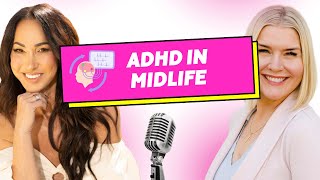
Natalie Jill talks with Dr. Lauren Noel about telling ADHD apart from normal midlife changes in women. They cover how hormones affect dopamine, what medication actually does, and practical ways to manage symptoms when you're not sure what's causing them.
I always would get trouble for daydreaming, talking too much and trying to do my own creative thing and moving. So it was always like, Natalie's fidgeting, Natalie's not paying attention, Natalie's daydreaming, Natalie talks too much. It was like those four things. And I constantly would hear from teachers. If you'd only apply yourself. Welcome to midlife conversations. I am really looking forward to this conversation today because not only do I have one of my very, very dear friends on, but she's a fellow adhd, so she's just like me with that. Even though I think we have different types of add, we're going to talk about that. She's a naturopathic doctor. She specializes in hormones, women's health. She can help a whole gamut of things. But because she is ADD herself, she fully understands this. And she's got an interesting take on how hormones can play a role in ADD and specifically how ADD symptoms can even worsen in midlife or be brought on in midlife. So I'm going to be asking her a lot of questions about this today. This should help give you clarity if you've ever wondered if you were adding, if you wanted to know what you could do about it. I got so many questions for her today. Thank you so much for being here today, Lauren.
Oh, happy to be here. I'm excited. This topic, I know is so important for women to hear about and they aren't hearing about it. So I'm very passionate about this.
And just a quick, funny story, all just. Lauren's my good friend. We. It's. I'm recording this right now. It's 9:11 Pacific time. We were scheduled for 9 to 10:30 for this interview. And at 9:02 she was not on. And I texted her and said, are you coming? You come? I texted like five times. Then I called her. She's like, hey, what's up? I'm like, are you coming? She's like, oh, we're scheduled at 9:30. No, we're scheduled in. So we already started the tone in Trudy. True education matter. I love it, Lauren. But here we are.
Here we are. And I actually, when it happened, at first I got, you know, the usual, what's wrong with me? I can't get my ish together, all that. And then I said, you know what? This is perfect. This is the perfect way to start this particular topic interview. So, so great, great. So I want to.
Let's start first with ADHD versus add. I want to know when you learned that you have it. And I'm just going to. I'm going to tell a little bit about my journey with this. To begin with, I was that student. And I bet we have some of this in common, Lauren. But I was a student in school that I always would get in trouble for daydreaming, talking too much, and trying to do my own creative thing and moving. So it was always like, Natalie's fidgeting, Natalie's not paying attention, Natalie's daydreaming, Natalie talks too much. It was like those four things. And I constantly would hear from teachers, if you'd only apply yourself. If you'd only apply yourself. I'm still triggered by that. When someone says, if you just apply yourself, what about you?
Yeah, it's. It's interesting because it was. It was kind of mixed. I had some teachers who got me and they delighted in me and they loved my brain, and they just were in that camp. And then I had the other teachers, specifically. I'm not going to call her out because she. I think she follows me on social media now, but one of my teachers in elementary school, I have it permanently seared my name on the chalkboard with multiple checks next to my name because she couldn't stand me. And I was that kid in class. I was the one that was cracking up with the boy in the corner because he's eating glue. And it was the funniest thing. And it's like that's what my brain was getting excited about at that moment. So she couldn't stand me. Yeah.
So my parents told me I had a learning disability. Like, I don't. Which is funny because my parents were really believed in me. And they always say, you can be anything you want, but they were like, you're learning. You have a learning disability. So it was. I would always. I would get, like, the special class for the learning disabled, which is so interesting because I have zero belief about that now. Like, I. And you would think that would have affected me for the rest of my life, but it didn't. But I. I always viewed it as. It's a gift, not a challenge. I don't know even how I intuitively knew that, but I knew if I was interested in something, I would excel, and if I wasn't, I couldn't pay attention. And I didn't like that the system tried to fix me and make me be interested in things I wasn't 100%.
That's so true. Yeah. It's like I historically would get straight A's and classes. I was excited about and other classes I would fail and I'd have to retake them. And I'm a doctor now, and I failed multiple classes. So 100%.
And I feel like I thought this is. I'll say this, I'm going to get. Somebody's going to hate on me for this. I don't care that when Penelope, my daughter, was in school because she's got the same thing with her. She's 80 and I love it. It makes her super creative. But when a teacher would start that I was the one that would tell a teacher, maybe they shouldn't be so boring.
I mean, it's kind of true if you can get your. You have to be able to cater to the different learning styles in your class, period. So some teachers can handle it and some teachers can't. And it's not the child being broken.
So. And I think about, like, my daughter was in Catholic school when she was little and she had this one teacher that was teaching religion and a lot of the kids weren't doing amazing in it, but my daughter excelled in that one particular class, like, because she was super loving how the teacher taught. Like, she was really interested in how the teacher taught.
So.
And she still to this day remembers that teacher because of how she. Interesting she was.
So where.
Let's. I want to back this out and we're going to talk a lot about midlife and how this affects us later. But when. When did this become in your research and what, you know, this thing that has to be treated for all kids with medication. Like, where did that even come from?
Well, ADHD was first discovered in the early 1900s and mainly was done research on boys. It wasn't until the late 1900s and early 2000s that girls were brought into it. So there's been that big difference. But early on, there were stimulants that were used to help treat these symptoms. And I actually think that a lot of it is. Is geared towards having these children fit in society because, you know, once education becomes standard, became standardized in the 1900s and exams came out and you had to fit the bill, that's where these particular kids really struggled to fit into that learning model. And that's when stimulants came around. So. And I'm not into stimulants.
Tell me that about a stimulant too, because I think there's different. There's obviously different types of add, and I think not everyone has the kind where they need a stimulant. Like, I know for me, a stimulant Actually would create the opposite issue with me. It like it doesn't stimulate me more, it calms me down if it's like it does a different thing. So what.
Yeah.
Help with that. Like does everyone benefit from that or. And what does it do for people?
Yeah. So people with ADHD have less dopamine than the average person. And so if you imagine, let's say the average person has their dopamine here and ADHD is down here and they take a stimulant that brings them up to here and they just feel normal, they feel balanced.
Okay.
Unfortunately, low dopamine can make someone feel very anxious actually. And because they're, they're just running like a chicken with their head cut off, they're trying to keep up and all of that. So then once they have that higher dopamine level, then they feel competent, they feel more calm, they feel like they can kind of be on an even playing field.
Which explains that opposite feeling I get where I don't get ramped up. I just feel normal.
Exactly. And that can happen with coffee for some. That can happen. You know, it's, it's interesting. Like chaos can be very calming for those with adhd. Yeah, it's just, it's very like I'm in my zone. I mean, because that brings up the dopamine level to a normal level and it's like I'm made for this. That's how it feels. But the day to day stuff that stresses us out, we. We just don't get that dopamine rise from that. And that's why it's super difficult to keep up with the day to day and be on time for interviews.
Let's talk more about this dopamine thing because I've become increasingly aware of the dopamine deficit that I personal have and noticing that I don't know how to just be still like being. It's. It actually will make me anxious and sad if I am just sitting here. Like I just. That doesn't work. And this is. And what I'm wondering. And if you've seen this too, I actually think cell phones have made the dopamine problem worse. 100% crutch to get it real quick.
100%. Those with ADHD have a higher likelihood of addiction because we get that much needed dopamine hit. And that absolutely includes the phone. Everybody's a little addicted to their phones. But if you go into it grabbing your phone with low dopamine and you're finally getting that you cannot get off your phone, it's hard to get off of it. That's why I have locked boxes all around my house with timers on it. It's like, I can't do this. It's like I just, I feel like a slave to this device. So I'll throw it in there, put a timer on it, and it's like, wow, I can just relax now. I don't have that thing pulling my attention. But then it'll get replaced with something else. So you have to be careful.
So I noticed. So add the ears typically have. It's a, like different zones. Like I'm not interested and I'm bored or I'm in it and I'm hyper focused.
Exactly.
Extremes help us understand that. Because I feel that the reason I've been successful in certain areas, and you too, I know, is because I can hyper focus and fixate on what I want to learn. What I want to learn is the key. Not what someone's telling me to learn, what I want to learn. But if I'm not interested, I'm almost. I'm just bored.
Yeah. Yeah. That's really important to know that about yourself and not that you're screwed up and that you just can't get your stuff together. Because that's really true for me. I mean, I loved medical school. Starting a practice by year two, we were crushing it. And we had only been open for a few months, year one. And it was just based on that passion, that dopamine, and that's exactly what it is. But doing that for someone else with adhd, that might have been the death of them because they wouldn't have been excited about it. So I followed the passion. You know, I knew like I, I chose naturopathic medicine and I never changed my mind because it's this, this umbrella of like endless possibilities of what I can do. So it works for me, you know? Yeah. So. Yeah. So you just really, you have to see what works for you. What happens with adhd, it's not that you don't have enough attention, it's that it's misguided or misdirected attention. Or maybe it's perfectly directed. But we're just trying to fit in with society. You know, I have a different view on that, but. But it's misguided directions. So you can hyper focus on something you're excited about and then make it to where you know you can't focus on anything else. And getting interrupted with that is the most painful experience. In my. Yeah, my experience. Right. When you're hyper focused Oh, I. Shifting focus to other things is just really challenging.
Yeah. And I know that's put a strain on my relationship at the times because I'll be. If it takes so much to get in the zone, like, I'm like, I'm not interested. Not. Then I'm like, focus. And I could be editing a video or whatever it is, and I'm focused on researching something. And then my husband comes in, he just wants to give me a hug. Like he's just being nice. And I'm like, you know, I. I snap. And I don't mean to, but I feel it's grace. That hyperfocus.
Yes. Yes. And I. That's why I love certain resources that really show how ADHD affects relationships and being able to, you know, tell your partners. Like, I'll.
I.
There's so many times I'll be on my phone or on a computer, and all of a sudden I look over and I realize someone's been talking to me for a while and I'm like, what? I was like, hey, just get my attention. Like, be like, hey, Lauren. Lauren. Huh? Oh, okay. You're. You're a human and you're there. I forgot you existed. And I forgot. I didn't know you were talking. You know, I know. It's that object permanence. You forget people exist and you don't hear it.
That's funny. That's so funny. Lauren, who is. Who's listening? And as we're recording this right now. But she's my. She's my right hand and a different Lauren. And she. I told her, I said, I can tell when you're mad at me because you say Natalie. And she's like, no, I'm not mad at you. I'm just trying to get your attention. Figured that out subconsciously.
She gets your brain. She gets your brain. She's worked with you long enough. And that's the beauty of people who stick with you. Right?
She says she stick with Natalie. And I think that's also key. You have to have someone that speaks you.
I say that to my assistant. I say that to my assistant all the time. I was like, you get my brain. And she's like, I love your brain. I'm like, thank you for letting me, you know, because. Yeah, you feel so much negative. One thing I want to say about adhd, that's huge. And I just want to make sure on this interview that people feel a hug, a virtual hug, because there's so much self shame around this too. It's like, why can't I get my stuff together, you know, like, I'm. I'm so messed up. And the data on this is staggering. By age 12, people with ADHD have heard more than 20,000. More like, negative feedback than the average person. 20,000 more words of negative feedback. And so just imagine how that affects someone's identity.
So, Lauren, how does. Because I watched this take people into two divides. Again, I keep giving these two extremes, but that's kind of what it is. It's like this extreme modes. So we. We both had that. I. I know I had that before age 12. I know you had that. We had this extreme, like all these things want. What makes somebody go down the. I'm gonna. I'm the lazy. I can't do anything. Your parents are now worried about you, all the things or you become super successful. Because a lot of very successful entrepreneurs with adhd or what makes that divide?
Well, I think it comes down to understanding your brain. So for girls, we're diagnosed like a fifth of the time that boys are. So it's way less that we're diagnosed. So there's just the lack of understanding of the brain. But for girls, a lot of times that hyperactivity isn't in the body, it's in the mind. So the brain is really, really active. But on the outside, they look like they're daydreaming or ditzy or just like, airhead, you know, Because a lot of times there's, like, in social situations, too, there's a hard time, kind of. At least there's a lot of processing issues for those with adhd. So audio, auditory processing and things like that. So it can be hard to be in social environments. And then so because of that, you have to mask and play. Like, for me, a lot of, like, playing charm or charisma to just kind of like. You know what I mean? So I had to mask in those ways.
Comedy was your thing, I think.
Exactly. Comedy and just quirky stuff. And sometimes it's because my brain is quick and I can think of things. But a lot of times it's. Deep down I'm like, I don't know what the hell this person's saying. And I'm trying to. And I'm reading their body language, so I'm mirroring them, because what I do get is the emotions of what they're saying, because I'm really good with that. And so I'm there with them and I'm listening, but the details aren't. Aren't getting it, you know, so that's A side thing, but. But again, you know, for girls, they can appear to be aloof or daydreamy or whatever, or, you know, you might see a kid or a teenager. So I know. I'm sure a lot of moms are listening where it's like, they can't get off the couch. They can't get off their phone. It looks like they're lazy, but they're not enjoying themselves. They're not just kicking back, like, in a vacation vibe. They are stressed out in their mind, there's so many things they have to do. They are so overwhelmed, so they just are shutting down in paralysis.
I described it. My husband is the opposite of adhd. And I know you've attracted people opposite of ADHD in your world, too. And what I have tried to explain to him, it's kind of like his brain is like this nice, organized filing cabinet. Like, he can. This is not urgent right now. This can take time. Like, put. He, like, files it all. My brain is like. And the only way to clear the brain is to, like, do the thing right then, like, urgent, like, get. Or it just creates this extra overwhelm. What do I mean? Is that something you've experienced? Do you experience that?
Totally. Quick starter. I'm like, I'll do things instantly, right away. Like in our group chat with our girlfriends, you'll notice. Like, as soon as somebody's like, let's go here. I'm like, I've booked the reservation. It's at this time. It's that time. I'm arranging it for other people. But if it's for my own thing, that's very different. So. But yeah, right away, I get things done quickly. And I think that's why my business was successful so quickly, is because I had to get into, like, get stuff done mode right away. Otherwise it would have gone out of business. So I thrived on that high pressure. So I think having, like, deadlines for yourself is really important. That's why I did well in school, because I did well with structure and deadlines. So for a lot of these folks, as soon as they get out of school, they start flailing because they can't keep their stuff together. They don't have that structure to help, you know, help them finish things, follow through on things, which is a big struggle.
Talk to me about hormones and how this affects our add, because I. I'm guessing. I don't know. Lauren, I'm waiting because you're the expert on this. I'm guessing that probably worsens for teenagers with hormone fluctuations and Then again, in midlife.
Yeah, definitely. I find, because this. I'm treating the demographic of midlife. For a lot of these women in midlife, they finally get a diagnosis when their child gets diagnosed. So they. They're noticing, man, my kid's having issues that take them in to get evaluated. And as they're beginning valuable, they go, whoa, this sounds familiar. This sounds like me. And also, sometimes there isn't a child. That's the reason. But it could be that the demand for being a mom or the demand for performance in midlife exceeds the ability. It exceeds the brain's ability to keep it all together. So, like, executive function, that's the part of your brain and the prefrontal cortex that helps you to plan tasks and execute and also to help, you know, dampen emotions. It allows you to think logically. These systems become overwhelmed in the brain. When women go through this. This stage of life, estrogen is dopamine boosting. So wait a minute.
Say that again. Confusing. So because we're declining in estrogen.
So you're.
Is it. So you're saying it's when you have the right amount of dopamine. Is that why we feel present focused when you're ovulating, like, you're. More.
Exactly, yep. And that's why, for a lot of women, they feel fantastic when they're pregnant, actually, because their brain is flooded with estrogen. I know. I felt like a million bucks when I was pregnant, so. And then also, postpartum episodes are way more common in women with ADHD because their estrogen tanks, and then they can't keep up with the demands of having a baby at that point. So postpartum anxiety and depression and psychosis and these things can happen more for neuro.
Well, that's a total light bulb moment for me, because I know after I had my daughter and I was having massive hot flashes, they probably had that huge estrogen tank. And I definitely had postpartum depression. I never connected.
I did, too. I had to be hospitalized for a week when my son was two months old. So, yeah, I had major sleep disturbances. So. And, you know, there's a bunch of symptoms and comorbidities that women with ADHD deal with, too. But. But, yeah, postpartum is. Is. Is really a big one. So that's why for women, they'll notice that their symptoms get worse right before their period, because that's when your estrogen is the lowest. And it's like, I just can't. My house is a wreck. I can't finish things at Work. I can't be on time. Feel like I'm. And I say this. I'm like. Feel like I'm walking through mud. Yes. And then all of a sudden the estrogen or all of a sudden your period happens. You're like, hello, world. I've emerged from my cave of fog.
Wow. So this is relevant even if someone's not ADHD or AD or add. Because I would imagine even with those drops, you're gonna. That's when people say they're foggy head or los. That what that is? Is it that drop in dopamine?
Yep. Yep. You're walking into a room and forget why that. That's definitely something that's driven by dopamine. So once women get their estrogen balanced in midlife, then it's like, wow, my house is clean now. I'm finishing things at work.
Yeah. Oh, my gosh. Okay, what can we be doing? If this is somebody listening, you are either ADD or you have this low dopamine. How do we get dopamine up naturally without having to go to a stimulant? And I just want to. Can I share my experience with stimulants really quick?
Because y.
So about. Gosh, it was probably seven or eight years ago. There's some point in my business that my ADD was so bad that it was driving my husband nuts. I remember this. And we went. I went to go log on to my email one day. We were traveling, and my email was gone. Like, I couldn't find my email. And I'm like, brooks, can you help me find my email? And he's like, your whole website's gone. Like, what do you mean, my whole website's gone? So he logs on to GoDaddy, where you host your websites, and he's like, your website domain was expiring and GoDaddy sent you, like, literally 300 notifications. You probably deleted them and never responded. And now your website's gone. Like, literally my website, my whole business, gone. So we had to go buy back my domain. And that put my husband and me in, like, this huge, stressful, like, strain. It was our biggest fight ever about my add. And it brought me back to childhood trauma about being told, you're not paying attention, all this stuff. So it all came flooding back. So I said in that heated thing, I will see a psychiatrist. I've never been. I'd never been on medication. I went to a psychiatrist. They prescribed me Adderall, very low dose. And it. I don't know what it did for me, to be honest.
With you.
Like it made me, it zapped my creativity. It made me hyper focus on things that weren't important. Like I remember organizing my Dropbox, organizing like spending hours on spreadsheets like I hate like stuff that does not really matter. But I was like, and I'm thinking this is great. I'm super focused. And for that one year that I was on that, I lost my creativity. I would get anxious, more anxious. I would hyper focus on the wrong things. It was, it was really bad. I also wouldn't want to eat. It was like, it was like just not good for me. So intuitively I knew I needed to stop it. And the psychiatrist could tell me, I need a higher dose. You need a higher dose. You need a higher dose. You need to hire. Until he brought me so high that I almost passed out a few times because it would get heart palpitations. So I cut that off cold turkey. I went and had a brain scan and I did not do stimulants, that kind of medicated stimulants since then. And, and I always have been told like there's other things I should try. I've been scared to, I've been scared to because of that. So I think I self treat in some weird ways and I'm curious your perspective on that. What can we do if we don't want to do the extreme prescription or is there something we don't know about yet? And then what is a proper way to self treat? I know it's a big question. Sorry.
No, it's. No, it's good. And I guess to close out the topic of the medication part, it's I'm not anti meds. It may have been the wrong med, it may have been the wrong dose. That said, there's so much more to the picture and I don't think every person with ADHD has to be on stimulants. There are different types. There's the hyperactive, there's the inattentive and there's the combined type. So you know, one may work better for one person and not for somebody else. But if you know philosophically and let's say someone's tried a bunch and they just don't want to be on meds, there's definitely things that can help. So exercise is the most important thing for people with adhd. It is.
Why and why I neatly do that for that reason.
Why? Well, because two reasons. Number one, it increases blood flow to the prefrontal cortex. That's the part of the brain that's not getting the Blood flow. That's how I was diagnosed with adhd. I got a brain scan, I got evaluated, and the prefrontal cortex part was, like, kind of cold. There wasn't blood flow going. Yeah.
Did you do the amen clinic scan or something else? That's what I did. I did the same thing.
Yep. And it showed that for you?
It showed me off the charts. ADD and I. But they understood I didn't want to do the medic. I was just traumatized from the medication experience.
100. 100. So I think a big reason why you've been so successful is you've honed in on things that help your ADHD naturally, which includes exercise. So. So exercise increases blood flow to that part of the brain. It also increases dopamine. So it's helping to raise your baseline for what you need. So I, you know, I think especially, you know, cardio or whatever is going to increase that blood flow, that circulation. That's super important for anyone with adhd. Sunshine, you have to get your butt outside. You have to get sunshine. Sunshine actually activates amino acids in your body. They help your body assimilate into your cells. So you need amino acids, especially for adhd, in order to make dopamine. I mean, you are making some dopamine. So let's maximize your body's own production of dopamine. So, sunshine, okay, the sunshine helps your body to make dopamine. So because of how your body assimilates amino acids, you also want to make sure that you're checking micronutrients and addressing anything that's deficient that helps to make dopamine. So we know the cofactors for dopamine are going to be B6. I see that deficient all the time in people with dopamine. I mean, with adhd, magnesium, that's really essential as well, and also zinc. So those are three really important ones. And omega 3s. So making sure you have enough omega 3s, not too many omega sixes. Your brain's made of fat. You need good fats. I know you know that. I know your listeners know that. So give your body the building blocks to make your own dopamine. Why make it harder for yourself? Not, you know, not eating a bunch of sugar? Because that's going to deplete your body's dopamine storage. You're going to get a spike and a crash.
How did that directly affect your dopamine sugar?
I mean, it stimulates the part of the brain that creates dopamine. It's. It's a drug It's a stimulant. Any, anything that is a stimulant can be something that people with ADHD use. So you have to cut out artificial stimulants. You know, things that are going to stimulate with a spike and a crash. Those are things that are. Make your ADHD a lot worse because you're going to get a spike and then your, your low baseline is going to get even lower. You'll be more, you'll be more likely to be addicted to other things. If you're, you know, if you have one addiction, you're going to be more likely to have other ones. So, you know, helping your brain to just function optimally without those things that will actually curb those cravings for yourself. So let's say you're addicted. Exercise. You won't be likely, as likely to have other addictions.
So let's talk about cell phone addiction for a minute because I am very clear that I have an issue with that. Because I, and I know it's a dopamine thing. And I, I put, I move things to f. I put them in locks, I put them in timers. It does not matter. It's a natural thing for me to, like, want to pick up and look at something. Pick up and look at something. How do you break something like that? Because someone telling me, just stop. Doesn't work. I know I will actively leave my phone places when I go for a walk. Like, there's play times around. I'm gonna go out with my husband. I just leave the phone at home, leave it in the car. I don't want to have it near me. What is the right way to do that and would you rebound from something like that?
I think that you're managing it as best as you can with your unique brain. I really do. I think the key is making your, your phone as boring as possible. So taking off apps that make you really, you know, sucked into it. I mean, I uninstall Instagram probably at least like once or twice a week. Once or twice a week, I'll uninstall it because I'm like, get your stuff together. Get off the couch. You know, you can't look at this anymore. So I'll turn it off. I'll put it in lock boxes.
I don't know if there's a way.
To make that struggle not there completely, because it's such an easy, quick sip of dopamine. And it can be like drinking from a fire hose. However much you want. You got it right there. So, you know, I Again, I think, I think doing the self care things that you do, your sleep, your exercise, eating. Well, you know, the draw to your phone would be worse if you weren't doing those things. I know it's probably hard to imagine that, but it's not like what you're doing isn't working. It is helping. So setting timers. You know what I like to do is I'll say set a timer for 10 minutes or 20 minutes, however long I need to focus, and it pops up and it's like, turn the thing off. You just have to. You have to train yourself to not ignore timers. It's really easy to ignore timers.
Oh yeah, I do all the time.
So you could sit, you could have double timers. Say you're going to turn your phone off in five minutes and then it'll pop up. You're going to turn your phone off in one minute and another one. Turn it off now. Maybe write something on it. Come on, Natalie, don't ignore me. Yeah, like talking to your future self.
What about. Okay, this is something I've asked a bunch of ADD friends lately and no one else experienced this but me. So I'm wondering if you've heard this with patients, if you've experienced it, if it's just a me thing. I also experience extreme boredom sometimes out of for and I. There's no explanation. I have a whole to do list of things I could do. I have lots of interest, but sometimes I just feel this like intense boredom. And my husband always says, you don't do downtime well, you don't do. He always like, and I don't. I'll start doing a handstand in the living room. I just can't. I just don't.
I.
What is that?
Well, you are experiencing low dopamine for your own brain. And that moment, the way low dopamine feels is like painful boredom.
Okay, interesting. So this is not uncommon.
No, it's not uncommon. It's painful boredom. And it's like you need to do freaking something because your brain is just like starving for something that it needs that other people are feeling and you're not feeling. So yeah, boredom is real. I feel boredom when I start to maybe try to clean my house or like do the dishes. Like I can't do one more dish right now. I'm so freaking bored. So I'll call people and they'll be.
Like, rather go solve a problem for someone.
Yeah, yeah, call. So what I'll do when I'm feeling that way, I'll Call somebody. And next thing I know, my house is clean because I've just been talking and I forgot I was cleaning. So I'll go into autopilot mode. And that's. I love when that happens. I love talking to people. I love using people for when I clean.
Yeah.
So that listening to a podcast, sometimes I'll hop onto different stream streaming platforms just to listen to people have conversations like that. For some reason, does it. It. I love when someone's just sitting in the room with me. So that's a great strategy is using. Using body doubling, having someone just there.
This is a great idea. So explain that a little bit better because this is like, this is becoming a little bit of a trend that you can use. Explain what that means.
Yeah, yeah. So, you know, for a lot of folks with adhd, there's. There's an excitement around having people with you, as long as it's someone that doesn't drain you. So there's certain people that I love being around, and they're just so pleasant for me to be around, and it lifts my mood, it ups my dopamine, and. And for some reason, pairing that with doing a task is a beautiful combination because you're getting that dopamine and you're doing the task at the same time. So it's a really great way to make it easier for yourself. There's a great app that I found that I think it's called Dubby. I want to say it's short for doubling, like body doubling. And it's for folks with adhd. And all it is is a video that's on of a couple their ADHD love. I love them. If you have adhd, follow their account. They have great tips for people, you know, in relationships who deal with this. But they have this app that's literally body doubling. They're doing their laundry while you do your laundry. They're doing their dishes while you're doing your dishes. You're, like, in it with them.
So you're like, on the phone with them. You're on FaceTime or. How does this work?
No, you're not. It's not. It's not live. It's recorded. So it's just on their app. They have a ton of different. Different tasks and chores and stuff like that.
So you like. You mean, like. So you like, pull up somebody else doing laundry, basically, and then you do laundry while they're doing it.
Exactly. How does that.
Why does that work? Why does that.
Because. Because it's like you're hanging out with them. While they're doing it, even though you're not actively talking to them, they're talking as they're doing it, kind of sharing about, you know, their struggles doing it. And it's like you just feel like that sense of camaraderie that you're doing this with somebody.
Have you used it?
I have.
That's wild.
And then I, and then I forget that I have the app. Then I just call people because it's out of sight, out of mind. Right. So you can have one resource that works geniusly and then you're three months later. Oh yeah. Why did I stop doing that thing? I forgot it exist.
So this explains probably when you said about the boredom when the year that I did do Adderall, when it would wear off because I was on the short term one. Like you would take it for work and then stop. Then I would have this extreme rebound of boredom.
That's the drop off. Yeah, that's the, that's the crash that happens with, with these stimulants a lot. And there's ways to help prolong it. You know, you can use just, I mean, making sure you eat. That's a big reason why these medications will kind of peter out real quickly because your metabolism is burning it so quickly. So at least like forcing yourself to eat if you are taking them can help extend them longer. And even adding in some exercise like in the afternoon, that can help to prolong it. So there's strategies for that.
How often do you recommend stimulants for patients versus trying to go about it natural ways?
Well, there's not one, one solution for, for everybody. So for one patient, it might be microdosing every day is the way that works for them. Because stimulus, microdosing a stimulant every day and then rounding it out with more supportive care. So exercise, nutrition support, maybe get some meal kits that are already made. You don't have to think about cooking. There's ways to make those things easier. Targeted supplementation with certain B vitamins, herbs, maybe using hormones. So it's a great way to round it out. And then just doing that micro dose every day, that might work for the person because maybe.
Yeah, explain microdose, because not everyone knows what that means.
Yeah, so let's say you know, something like Vyvanse, for example, you know, full dose, maybe like 30 milligrams or 50 milligrams. Well, maybe 10 milligrams will be enough to give you a little bit of that support. Where, you know, it's like, Dr. Amen says for those who need stimulants, it's like putting on glasses, like prescription glasses. You can see clearly finally. So it's enough to where it clears things up enough. And then using the other things helps to, you know, like support the dopamine more without the stimulant.
You know, for someone that wants to microdose, because I know that was not, maybe this is part of the problem. When I did this, whatever it was seven or eight years ago, microdose was not an option. So the, the pills came too strong. Is this something you do through a compounding lab? Is this something that's more common now?
Yeah, you can do their compounding, but also you can just, you know, kind of wiggle open the capsules and maybe pour half out, you know, drink that and then the next day take the other half. So, but, you know, it's important to work with your, your doctor on all of those little, those little details.
So how do you advise people listening that maybe they are not add, but they have a kid who is, or spouse that is, or co worker. How do you, what advice do you have for them on how to best support and interact with them so they also get what they need? So not, not just making it about the person with ADD at all, but how does that spouse. What do they need to know? So it just can be supportive both ways.
Yeah. So I would say first step is educate yourself about it. When you learn about this condition, then you get a bit less frustrated because you understand what is going on internally with that person. You don't take things as personally because it can feel like a personal attack sometimes. Like, this person doesn't respect me. They're lazy. I'm doing everything. You know, that can be the perspective from those partners or from parents. Just like, why can't they just do this? It's so simple. Why can't you just pick your clothes up off the ground? Why can't you just, you know, like finish cleaning your room? Like, why can't you do the dish? Like all these things really add up and create resentment. So if you learn about it, then you're able to understand it and it puts it into perspective. Their brain is not like your brain brain. It's not like your brain. It's different. So just respect the fact that it's different and respect the fact that there's things they're good at that maybe you're not good at. So everyone has their own, you know, superpowers. So I would say first step is to learn about it. The second would be to look at ways that you're not getting your own needs met and think about how you can do that for yourself. Are you taking time to, you know, get out of the house, or are you bogged down with all the household chores? You know, do something that makes you happy. And I would say, too, when you do communicate with your ADHD loved one, do it gently because they take things a lot harder. We know that folks with ADHD have a lot more rsd, so rejection, sensitivity, dysphoria. We identify with rejection. We feel it intensely so much more than the average person. So just try to tread lightly and be kind about it. And instead of, why can't you get this together? Why can't you do that? Why can't you just maybe from, like, come from a place of understanding and, like, how can we do this together? Let's do it together. Let me help you. And, you know, so I would say that's. That's what I would say. I mean, obviously, I'm not a partner of someone who has adhd. I'm the person who has it. So it's hard speaking from my perspective, but that's what I've seen with. With other people is, you know, just try to learn about it, not take it personally and be understanding.
I will say that's what's definitely worked for our marriage with me and Brooks. Like, he. It's a forever thing. Like, I'll leave cabinets open. Like, he called, like, Natalie, like, you. I can tell you're in the kitchen. You started everything. But then, like, all the cabinets are open. And what's really interesting is we don't even do well with clutter or disorganization, but we create it.
So, yeah, so it's like.
So there's that. But I will say what's helped us is Brooks really learning about it and not trying to change me. And then also, he really does look for the strengths in add. Like, he loves my creativity. He loves my quick start. He loves, like, the. Some of the things I do there. So finding the gratitude in that. And then I've had to work compassionately for what he needs to. Like, he really likes structure and order. So that has helped me. I might not always see the open cabinets, but I am more aware of it. I will say it's not fixed, but it's. I'm more aware because it's important to him, too.
Yeah. Just the other day, Eric and I were at a beach party, and he arrived later than I did. When I arrived, I had things that were, that are in the car. I needed help with bringing down, so I left them in the car. So I said, okay, well let's, let's go to the car together. So we walk like a solid 10, 15 minutes and we get to the car and the driver's side door was left open. Not even unlocked open. Yeah, I opened the door. When I got out, I went to the trunk. I realized there's too much stuff for me to carry. I shut the trunk and then I continued to walk around the car. And then I went to the beach thing. I didn't even shut the door, so. And he didn't beat me up about it. He's just like, like kind of shaking his head and sort of laughing a little bit. And it's like we had humor around it and then we just kept it moving. But just imagine if you're with a partner, that's like, what's wrong with you? Like, why, why can't you remember to do something so basic? You could have had the car stolen, Some of you taken the car. You're so irresponsible. I mean, just imagine the difference of.
How I'm saying that literally brings me back to childhood and hearing those things. Like I can, I still get like, I'm in trouble. I'm in trouble. I'm in trouble. I will tell you, even worse than that is people that dismiss ADD and say it's not a thing. Like that drives me nuts. No, I'm not saying to have victim mentality around add, like there's some stuff we can own with it that's super powerful. Like you are, can be more creative, you can be all this. But that whole someone telling you it's not real is total gaslighting.
It's total gaslighting. And as soon as they actually learn about it, they are, they are eating their words because they see that it's, it's so real. I've had, you know, in relationships where someone would say that in the beginning, like, oh, everybody has add and I'm.
Like, just not everybody doesn't have a little bit of adhd. No. Everybody might have a little bit of boredom, a little bit of not focus, a lot of interest, but there is a different wiring. I get worried, I get worried about the long term effects of having this dopamine chase and the long term effects of not being able to shut my brain down. I like, for me, I love sleep because it's the one time I can do it. But for me, sitting there in a quiet meditation, it's just not, doesn't work for me. And I'm 52 years on this planet, I've not been able to do it. I can get into a zone, walking in nature and listening to worship music or do like, there's other ways I can do it. But what do you know, health wise, long term with this? Like, are we going to create a bigger problem with dementia or brain problems? I just, I worry about that long term effect of the dopamine trace.
Yeah, no, it's a, it's a good point you bring up. And there, there is more of a risk with, with dementia, Parkinson's, Alzheimer's, for folks with adhd. And then if you bring genetics into it, like I have the APOE3.4 mutation. So I mean I'm, and I, and I have family members who have died from dementia and Parkinson's, AIDS and Alzheimer's. So it's fantastic. I just have like this great stack of cards that dealt me, dealt to me. So I would say the best thing is the things that we just talked about. Maximize your hormones, get your deficiencies checked, get your nutrition in, check your exercise, your sleep. Those are things you can do. You can get those things dialed in. And I can't say I've seen studies saying people who did this versus didn't do it. What's the disease risk? Because no one's going to fund that study. But I would say with confidence that it would significantly decrease your risk.
Do you think that is it more important to fix the dopamine deficiency or is it more like what is the priority? Like do you like spend time figuring out, is it the hormones, is this to fix that deficiency or is it to living with it? Or is this the question even making sense? I'm just trying, I guess I'm thinking priority, someone just hearing a lot of this for the first time, what do they try to fix first?
Yeah, you're like, should we just fix this or just manage it? Right? So I think it's, I think it's a beautiful hybrid of the two. I think you, you don't want to try to fix it because your brain is unique and it is really good at certain things and you want to maximize those. That said, the things that are difficult, that come with the condition, okay, how can we work to manage those and to do it in a way that life is still fun because we're, we're fun seekers, we love fun. We're really good at that. So it's like, okay, are we gonna like just wreck our lives trying to fit in this Square box when we're around Peg or whatever the thing is, or are we going to realize that we're. We're a little bit in our own world, but how can we play with the other world at the same time? You know what I'm saying? Yeah, like stay in your. In your playground of your skills and your areas of genius. But, you know, you do have to visit that other world from time to time to pay your bills and to get things done. So that's where these other things can make it manageable. You know, if we lived in a neurodivergent world, there wouldn't be any need for any stimulants because.
Explain what you mean by that.
Yeah, there'd be a world of creativity. There'd be a world of love, dreaming and visions and fun and I mean, maybe the world would burn down. I don't know.
That feels fun, though, the way you just described. I'm like, I like that world. I would like to explore and be. I think this is what, you know, I think of some of my friends, personalities with ADD and myself. I've got people in my audience who are like, oh, we love that you move and you travel a lot. That's like, it's a need for me. Like, I need to explore and be curious and do new topics and learn. Like, that's a drive for me. And I know that is for you as well.
So thank God, too. Thank God that that's a need for you. Thank God that you have to fulfill on that. Otherwise it's like you're. It's like you're in pain. Like you. You'll explode if you don't do those things, because those are gifts in you. That's amazing.
I feel seen, I feel heard, Lauren. I feel seen at work right now.
That's what that I. That's one of the things I love the most. We're working with patients who have this. They finally go, oh my gosh, there's nothing wrong with me. I'm just very unique. And it's only 5 to 8% of people. It's not the majority of people, really. Less than 1 in 10 people actually have diagnosed ADHD. Like, actually have. And actually of those 5 to 8% of people, it's estimated a lot of them don't even know they have it. So it's not the majority. It really is not. Your brain is not the majority of people. It's the vast minority.
Now, I know most of my audience is midlife, but some listening have a grandkid or A child that is definitely this. What do you recommend school wise? Like, how is the. And I'll tell you how. What I did with my daughter. But I'm curious your professional opinion. What is the best learning environment for them.
Can you tell me first what you did with your daughter? Yeah.
So my first thought was. And me and her dad put her in Catholic school initially because I was like, structure. Structure. Everyone says structure. Okay, that worked a little bit, but it scared her. It, like, literally. I think it gave her trauma, like, about greed and. And I never wanted her to care about braids or anything her dad did. I never wanted to care about care because I know what that was like. I have an A plus if I was interested and a D if I wanted, which is like an extreme thing. So what we learned for her was homeschool's best because she can study and work on her own when she's interested. She happens to. I don't. I don't fight what she likes. Like, she is a night owl. She wants to work at night. She loves to create. She's a music artist. She creates. She spends so much time there. That's her genius. And she is doing a school, but she does at homeschool on her own time in the subject she's interested in. We get the core, but she helps pick them. So it's very. It gives her a lot of freedom around that. So a lot of people won't agree with that. That's what worked for her, and that's what I wish I had had for me.
We're. We're so similar. I was raised in. In a lot of, you know, I. I liked the structure of how I was raised with the school I went to, but it was very, very strict. There's a lot of shame. It was, you know, very religious and, you know, I'm a Christian, and I. I've had to really develop my own version of. Of. Not my own version, but my own relationship with God. That's. That's unique to me because he made my brain. He made your brain? Yeah. Be the same as. As someone else, so. So I liked some of it, but it wasn't a good fit for me in a lot of ways. My son is 5. He definitely has ADHD. I don't even need to get him like. Like, officially evaluated. Like, I made him.
He came from me. I know it's the same thing.
And it's highly genetic, too. Highly genetic. My. My mom, I'm pretty convinced she had it. You know, I think there's other people in the family. So. So I'm doing the same. I'm having him in homeschool. He starts kindergarten in the fall. It's a homeschool, like, collective kind of hybrid model.
Yes.
So that's what we're gonna do.
Now.
Not everyone has resources to do that. So let's say, you know, you're listening, your kids are in the public school system or in a private school, and maybe you're working. You can't, you know, you don't have the resources right now to do that. Well, talking to the teacher, having your child evaluated and, you know, diagnosed officially, if, if, if it's something you're suspecting, and then I would say, you know, getting some holistic support. Someone that's just going to have more tools than just meds, and then having a conversation with your. With the teacher and just letting them know, and hopefully if they're a good teacher, they'll listen and they're going to be open and flexible. And if not, then maybe look at other teachers, other options for school.
So my experience with teachers and I, for what it's worth, is some teachers are amazing and fully understand this and support and teach different learning styles. I had some bad experiences with my daughter and teachers and things that they said and I'm. And. And it's their belief there. It's like, fix, go fix. They want us to fix it so they can listen to your boring stuff. And to me, that is, like, not acceptable because that is not why I don't believe that we're schooling kids to fit them into this uniform. Everyone does like this robot. So maybe you, as a parent, listening, that's how you feel. I want. Want my child. I want kids, our future generations, to be creative thinkers. I want them thinking outside the box. I want them exploring and learning. So to medicate someone and force them to just sit there and memorize multiplication tables, I think that's a bigger issue.
Yep. They're not a lab rat. They're. They're a unique being. I, I totally agree with that. I remember I went to a homeschool conference that was super cool. And there was a lady who was speaking, and she had like, 13 kids, and she homeschooled all of them and like, oh, my gosh, you're amazing. And she just talked about the ways that she tailored it to each kid. She had one child that she was sitting there with him, and he just wasn't getting the math homework. He just wasn't getting it. It was taking like an hour, two hours, just for basic Stuff that was really easy for the other kids. And one time she discovered. She walked away and went to go do something, came back, and the homework was done. He did it on his own. And she's like, how did you do that? And he just did it. And. And so she tried that in the future. She walked away. And what she saw was he would get up and he would move around, and he was, like, getting under the table, and he was doing this and doing that, and. But he ended up doing the work, and he got it done quickly because he was moving, and that's just how he needed to do it. So that's perfect example.
And I'm watching. Like, it's just funny as I'm interviewing you, we both fidget. Like, we're both like. Like. But that. And I think that's a trait, too. Like.
Well, I mean, I'm. I'm laughing, thinking about this, too. I do an Instagram live every Wednesday morning with my new pushing coach, with our. With my practice. And she's sitting there the whole time. Her hair is done.
Yeah.
She's looks like she's been preparing for this for the whole morning. I come on and disheveled. I have my robe on. I'm drinking something. I'm walking around because I'm still, like, figuring out where I'm gonna sit and do it. And. And I actually think it helps people to stay engaged because they're like, where is she now? What's she doing now? Yeah. So I talked with Christy about it later. I was like, oh, gosh, like, what? She's like, no, I think it's a good thing. But it's just so funny. If you guys look at it, it's. It's comical. The difference in just our styles of how we.
Totally. Another funny difference, I think, with ADD and not add. Like, and I'll use my husband because he's, like, extreme. Not. Not adhd. He's like, the opposite of it is. Anytime I've got something in my brain, I talk about that filing cab. But it's different. Different. It's like an urgent topic. And I'll say, hey, I have a question about this. Or, I need this. Like, I need it right now. And he'll say, let's. Let's find a time to sit down and talk about it. And I'm. Every time he says it, I'm like, that's literally the worst thing you could say. 1. I don't want to sit down and talk about it.
It.
And I don't want to find a Time later. I want to know it right now.
As you're saying this, I'm like. As you're saying it, I'm like, what's the thing? I'll look it up right now. I'll do it for you.
Like, what do you mean? We'll sit down and talk about it. No, there's no.
Because then later, you don't even want to know about it.
No, then I'm over.
It's not even interesting. Yeah, now you're over it. You're on.
I don't want to talk about it. Next Friday at 3? Exactly. Right. I'm interested right now.
So he.
So he's learned I should have him do an episode about, like, living with people with adhd. This would be perfect. Because the other thing that that goes with this is that he's learned if I have an idea, we're doing her idea. Because if I have the idea, that's the energy.
Right.
Then I have. If you ask me to do my idea six weeks from now, it's gone.
Yep. It's not even a good idea anymore. Six weeks later, like, in my head, I'm like, like, what was that?
So he stopped fighting me on that. Like, if it's especially in business, like, if this is your idea, he doesn't try to tell me a different idea, because that's not the idea I'm excited about.
Did you have a lot of different hobbies that you were like, okay, I don't want to do that anymore.
All the time. Yeah. And so I would say I'm not a quitter, but it's not true. I'm a quitter when I'm not interested.
Right. If I'm interested.
But no, I've. I think I've tried everything. I think I did everything.
What are the different hobbies that you've abandoned?
Well, let's start as a kid. I mean, I was ice skater, gymnastics, ballet, jazz, t every. Clarinet, piano. I did everything. Horseback riding, rollerblading, I did everything. And then as an adult, I think that's maybe not as much, but I'm an explorer now. I loved. I need to travel. I need to see different things.
Yeah. And if you don't, you feel depressed. Right. Totally landlocked.
I think I need to move a lot too. Like, apparently, I move every couple of years. I think it's part of it.
Yeah, I know. I remember someone asking me, like, what makes you really happy? Like, what puts you in a good mood? Mood. I'm, like, going to a conference and, like, sitting in the front Row. And learning something like, that's my ultimate high.
Wow.
I love it. I just, like. It delights me. I come home with a smile on my face again. That's my dopamine. That might be hell for someone else. That's not mine. You have to chase your own dopamine. What's your. What's your creation?
Probably creating. Like, I love creating. Like, I will get lost in editing a video. I don't. I won't want to get into it because I know it's gonna take a long time, but I get into it like it's. It's fun or coming up with a fun, creative concept, or I even like social media reels, like, coming up, recording podcasts, learning. I like learning new topics this way, like being on interviewing you, asking new questions. That's fun for me.
Yeah. You know? Yeah. And you brought up something like the task part. Like, starting a task can be really hard, but once you do it, you get in the zone and, you know, I'll be like, why didn't I start this, like, six months ago? Once. Once I actually start? Because usually it's fun or even really easy to do.
Can I ask you a tough. I'll ask you a tough personal question. If you don't want to answer, you don't have to. But this is. This is Lauren, a year ago, lost her. Lost her spouse. And I know Jason was super helpful with your add. Like, super helpful. How did that trauma. Because not just losing your spouse, but also losing the support system. What did that create, and how did you find normalcy in that? I know it's a big question.
Well, I think if it weren't for the GoFundMe and for people helping me, I probably would have, like, lost my house and lost my business, because everything was so hard to manage, so hard to keep up with. I remember feeling just paralyzed on the couch because, you know, again, going back to your executive function, that's. So the same part of the brain that does things around the house was the same part of the brain that helps to calm my emotional response to my husband dying. So obviously, my emotional response was maximized at that time. And there's no way I could have kept, you know, kept up with anything aside from that. So the house was complete chaos.
Right?
I. I wouldn't have any. I wouldn't have had any food, but I had a meal train. People delivered food to me. 57 meals. I love that. It was 57. I love 57. 57 meals were delivered every day, you know, for. It was almost two months. Months. And because of the GoFundMe, I was able to take time off work and pay my bills and everything. But without it, it would have been. I don't even know. It's hard to even say what it would have been for me.
So have you learned things from that? I'm just curious because you. That was a support system. That was something that was, like, super in place for you. What advice do you have now from what you learned from that experience? Like, what have you had to figure out for yourself or learn to put in place so you don't have to navigate that again? I don't even know if that makes sense, but I'm thinking Jason was such a support system. What do you do when that's gone? Like, how do you. What advice would you give for somebody? Because there are somebody listening now that's stuck in that.
Yeah, totally. Well, some of the tricks that Jason would do didn't work for my brain when I tried to continue to do them. So I had. I kind of had to go back to how I operated. Like. Like, there's the version of Lauren when I'm in a relationship and I'm supported, and there's the version of me when I don't have anybody like that. And when I don't have anybody like that, I still have to figure it out. I still have to function. So that's when I do things in a way that works for me. So, like paying my bills. Everything is on autopay. If something's not on auto pay, I will repeatedly not pay it. I'll get late fees. I'll go to collections. I've done that a million times. Times. I just put it in place.
I put. I don't put the whole thing on autopay, but I put. I definitely put like a huge chunk on all my credit cards. That's automatic. So I just know that's always going to be there.
Exactly. I can't tell you how many times I had to have my dad bail me out of credit card debt two or three different times. Now. I don't know how, by the grace of God, I have no credit card debt, but that, you know. But now I pay it off every month. And even if I feel like I'm going to almost overdraw my banking account, I will pay it off every month because all it's going to take is like a month or two of not paying it. And it's like I can't get on top of it again. So. So. But I do auto pay I auto save. If I didn't do that, I wouldn't have any money to my name. So I have that go to, you know, life insurance policy. I've been doing that since my early 30s. So over 10 years I've consistently saved and that I'm very proud of. Like, I feel like people, they're like, okay, you saved, like, no, I saved. That's crazy. It's really good. Yeah. So I, I tried to. Sometimes my house still gets very chaotic. You know, I haven't figured this out for myself. I definitely haven't. You know, it goes through spurts where my house will be super, super clean or totally chaotic. But I do have people coming every two weeks to clean my house. So it's never really, really dirty. It just gets very messy.
So the best way to clean my house, I've noticed, is to have people come over. If someone's coming over, I'll say that social pressure.
And plus, you have a quick deadline too. So, yeah, all of a sudden it needs important, but it has to be like today. If they're like, I'm gonna come over on Friday, I won't plan things enough to have it. Goodbye, Friday. It's one of those overcome one over tonight. It's like, okay, cool, yeah, Turbo mode.
This is so helpful today. Lauren, I love, I love talking with you because it makes me feel normal. Hopefully somebody, everybody listening. If you finding yourself in this, it helps you feel a little bit more normalized because it's not an abnormal thing. I think it's actually gift. If someone wants to work with you, they want to find you. How do they find you? And do you take clients outside of California where you're based?
Yes. Yeah. So there's, I would say there's the doctor Low. If you want to learn more about like my online content, all of that stuff, you can go check out the podcast Dr. Low Show. I haven't done a. There's. I kind of forgot I have a podcast, if I'm being honest. So I gotta remember I did have.
My YouTube channel, Lauren. I'm about to restart it. I literally forgot I had a YouTube channel.
Like, I have done almost 400 episodes and I've done it for over, like, for 13 years. I've had a podcast. I'm like, oh, yeah, I have a podcast. I gotta do that. I mean, when Jason passed, like, everything just totally whatever. So I'm gonna get back to it. But there are many, many, many recorded episodes that are so good, that are about all these different topics. I haven't done a lot on adhd actually, I need to do that. So that would be, you know, if you want to learn more about this content, follow me online. I'm very active on Instagram and then if you want to be a patient patient and have me do some lab work and get to the root of things and help you. I'm a really good. This sounds cocky. I'm a good doctor and I'm good especially with patients dealing with this stuff because I get it and I have a very like organized, systematic mind when it comes to you. When it comes to me, not so much. So personal struggles for me have no bearing on my ability to help people. And so I feel very confident that anyone dealing with this, I can, I can really help you. And I work with patients all over the country. So it's all virtual. I had an in person clinic for, for 10 years. It's been virtual for for three years. The math is not mathing, but amazing.
We recorded this podcast live. I invited my membership in to to listen in and to ask questions after. If you want to be a part of my live podcast where you can listen in before we release the episode and then also beyond to ask my guest experts your own questions that we don't record that part for the podcast, but we have it for the membership. You can go to midlife conversations.com live. Again, it's midlife conversations.com live. Thank you so much, Lauren, for being here.
All right, thanks guys.










