Is Your 'Clean' Skincare Actually Toxic? Stop Buying This!
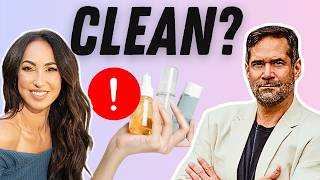
In this interview, host Natalie Jill (54, in menopause) talks with natural‑health researcher and organic‑skincare entrepreneur Brian Vaisley about the hidden toxicity in many “clean” personal‑care products. They compare the EU’s strict bans (over 1,300 ingredients) to the US’s minimal bans (11), explaining how the US regulatory system relies on industry self‑regulation. They describe the concept of “toxic load” – the cumulative burden of chemicals absorbed through the skin, which is the body’s largest organ. Specific harmful chemicals discussed include parabens, phthalates, formaldehyde, synthetic fragrance, oxybenzone, triclosan, sodium lauryl sulfate, petroleum‑derived ingredients, and others, noting their endocrine‑disrupting and carcinogenic potential. The conversation highlights bio‑individual differences in detox capacity, illustrating how some people experience symptoms (fatigue, sinus issues, skin flare‑ups) while others do not. Practical labeling tips are offered: avoid vague terms like “fragrance,” look for trustworthy certifications (USDA Organic, ECOCERT), and be wary of green‑washing. Brian introduces his USDA‑certified organic line, Purity Woods, explaining its ingredient philosophy – using natural actives such as maple‑leaf extract (a plant‑based “Botox”), astaxanthin, tremella, camu camu, amla, aloe, and cocoa butter to support elastin, collagen, hydration, and antioxidant protection. They discuss the pros and cons of common actives like mineral oil, retinoids, and niacinamide, recommending cautious use, especially during menopause. Natalie shares her personal strategy of “cycling” products and reducing toxic load by starting with deodorant, then expanding to skincare, emphasizing reduction over perfection. The interview ends with a call to consumers to read labels, prioritize certified organic products, and recognize that any reduction in chemical exposure benefits health.
Chapters
The European Union has banned over 1,300 ingredients from skincare. Wanna guess how many the United States has banned? 11. Today, the natural health researcher who has spent 25 years on this tells us the truth about what is actually in our clean products, the ingredients hitting our hormones harder in menopause, why our skin is absorbing way more than we think, and what to actually look for on a label. Now, I'm 54. I'm personally in menopause. Like every woman my age, I've spent years trying to figure out what to actually put on my skin. And before we even start, I wanna be really honest with you. I am not one of those women who's 100% non-toxic at all. I still color my hair, that's not gonna go away. And I am not one of those women who is going to preach to you that we have to be all toxic-free. There's still products in my bathroom that are not clean, and I am not here to preach perfection. But I do take seriously toxic load, and that's the cumulative pileup of everything we put on our bodies and in our bodies every single day. And that is the lens that I look through. Reduce where we can, be smarter where we can, not perfect. So today we're gonna dive deep onto this specific topic because here's what I have learned. Your skin is an organ, the largest organ actually in our body, and it's absorbing whatever you put in it. The European Union has banned over 1,300 ingredients in personal care products, and the US has banned only 11. So what we are actually putting on ourselves, and at midlife when our hormones are already shifting, I want to know what's this doing to us. Today's guest has over 25 years researching exactly this. Brian Vaisley is one of those most respected voices in natural health and longevity. He is the founder of The Art of Aging with over 500,000 members. He's hosted summits with the top natural health MDs in the world and in the country, heard by over 2 million people. He's also the founder of Dirty Woods, the USDA-certified organic skincare line, and he's going to tell us what to look for, what to avoid, how to stop being fooled by the word clean on every single label. Brian, welcome to Midlife Conversations.
Hi, Natalie. Excited to be here. Thanks for that kind introduction.
Well, first of all, I've noticed that anyone that becomes sort of an expert in alternative health, in natural or alternative, usually they are a product of their own trauma. So their own dealing with illness or trauma, and they were— they sort of were underserved by Western medicine and had to go become their own detective. And what they learned, they— it becomes their truth and they want to share with others. Found that. And I've also found that, um, anyone that worked in the pharmaceutical side, they tend to come out the other way on that side too, where it's a business. And we do need pharmaceuticals for a lot of instances, but then it also still is a business. So the goal there, health, or is it solving symptoms and making money? You know, I don't, I don't know. I'm just saying that, that, that is not uncommon. So skincare, and I, first of all, I love how you just said anti-aging to you. Is about the myths versus like actual reversal of age. I like that. So thanks for explaining that. I want to sort of start with the EU banned over 13,000 skincare ingredients, US only 11. What is that about? Like, I— that's, that's crazy, right?
Well, that's, that's a great question, really. So again, so thank you for pointing out, for decades now I've been immersed in, in the research, and this is one of the biggest little-known healthcare issues of our time. The extent to which in general a lot of people have heard, uh, you know, how overexposed we are to toxins, really, unfortunately, in so many directions we turn to this day, but specifically in cosmetics and personal care products. It's very unknown still the extent to which these can and do harm us. So the average woman uses about 12 personal care/cosmetics a day, which contain an average of 168 different chemicals. Wow. And when we talk about the beauty industry, we talk in billions of dollars how much it's worth. But the reality is the companies that are the giants behind that are really part of it are the chemical companies. And again, here we can get political, but I'll just say they are an incredibly powerful lobby and group in the United States. And it's not going to change, in my opinion. I'm not trying to be, you know, Debbie Downer here. It's just the facts. So it has to become buyer beware. Yeah, obviously, if elsewhere, like in the European Union, really over 40 countries, they've banned 1,300 to 1,700 different chemicals and we've only banned 11. There's a problem, right? Without getting too boring, real quick history. Industry, back in 1938, the FDA basically told the cosmetics industry, self-regulate, you're on your own, we trust you guys. Well, it's been a wild west, uh, increasingly since that time. Now, I will say this, they will not intentionally, obviously, put ingredients in these products that harm anyone in the immediate sense, in most cases, because it's too easy to trace. But the problem is also not one single ingredient, it's 168 different chemicals on average in these products that women are using every single day. It's the compound effect. You're not going to eliminate all these, but believe me, it's low-hanging fruit when it comes to a lot of cosmetics and personal care. You can easily make changes that have a monumental impact on your health and well-being by, by, by switching out. And so you could make choices again about reducing the use of these products that have so many different chemicals in them.
What's your, like, why do you think the EU cares and has made such a stance on this? And this is not just on skincare, this is in food too. And like, it gets confusing. And I know my listeners, they fall on two sides of this too. Like, and I don't know the answer. I mean, is it— some people will argue, well, you know, they're just— it's much more strict, but these things aren't really harmful. Or then we heard the other argument, well, it's all money and US doesn't care if we get sick. I don't— what's your opinion? Like, what is your belief set around that?
Right. What a great question as well. You know, not just the European Union, but a lot of other Western countries in some regards are more advanced in certain regards than we are in terms of the, you know, attention to and the collective mindset around health and wellness. They're more advanced when it comes to cause. We are very focused and long have been because of the medical establishment that exists here on treatment. Basically, not nothing wrong. And there's some benefits and downsides to all of this. We're excellent if you get emergency care, you know, but we're not very good at prevention and paying attention to it. It's also not very profitable. Again, I am not opposed to capitalism in any way, shape, or form, but that has a lot to do with it too. We, you know, we, from the very start, pretty much here have been a very, you know, capitalist-focused society, you know, to make, to make money basically. And I could talk about the pharma industry, I won't go there, but you alluded to it. It's all about profit. It's all about making money. That has its benefits, but it also has its drawbacks. It takes a focus off cause and it takes a focus also off of some responsibility for better or worse. We have to take care of ourselves. We have to take control ourselves. Others are— if we let them take the control, they're doing these things. And I do equate it to fast food in the case of personal care products and cosmetics. And what I mean by that is we all know by now Although we didn't once believe it, by the way, collectively. But today we know, okay, fast food, not good for you. And yet so many people eat it knowing that. Yeah. Why? Because it's engineered to taste in the moment really good, to be really satisfying, to have short-term results. And then we feel guilty because we know that's not good for us, what we just did, you know, midterm, long-term, even, even, you know, later in the day. In many cases, it's going to drag us down. These ingredients that they use are for their benefit. The artificial chemicals that they use are for their benefit. It makes it a whole lot cheaper. And some of these ingredients actually have short-term effect, just like fast food does. Oh, wow. You know, in the moment, in an hour, in a day, in a week, my skin is smoother.
Yeah.
We're not really thinking about the long-term impact of these things. So again, there— if we had numbers like, okay, they've banned 1,300 elsewhere and they've only banned 600 here, there would be a good argument. You know, but the gap is so wide and it's a known fact, for example, that formaldehyde, which just finds its way in, you know, various forms in these products, we know that's carcinogenic and yet it's in these products. We know that phthalates, which are very common in skincare and other products, we know they are endocrine disruptors. In other words, hormone disruptors. In fact, you know, there's over 200+ known endocrine disruptors that are allowed in these products. Now, the argument that the industry makes or would make is that they're in such minute amounts. No worries. Okay. I've really dumbed down the argument. But, but the problem again is that if I used deodorant one day in my life only, that would be a valid argument. If I put skin, you know, some anti-aging cream on my face once every month, that would be a good argument. But again, it's the effect of a dozen or more personal care products a day containing a large volume of all these different chemicals, many of which are known to be unhealthy. It's the compound effect, day after day, year after year. It's death by a thousand cuts. It's the fact that they do, as you, you know, noted at the start, penetrate into our bodies. A lot of people think of skin as not an organ. They think of it as somehow some garment or clothing. No, it eats. Just like you put food in your mouth and you eat, your skin eats. And a lot of these, uh, the— if the molecules are large enough, and in most cases they are with product that we put on our skin, they penetrate into your body. And in some places I will say this and then I'll pause. I would rather eat some of these products out there than put it on my skin. Why? Because when you put something in your mouth, you've got multiple levels of filtering going on. You've got the caustic gastric juices that destroy a lot. You've got the liver. You've got, you've got layers of filters when you put something in your mouth to try to get the toxins out. You have very little, almost none, when you put stuff on your skin. And some of it indeed does go down to the blood, shoots around the body, gets stored in the organs, and then it's, it's a cause behind so many mystery symptoms that so many people have and wonder, what's the source? Why do I have sinus issues? Why do I have weird skin outbreaks? Why am I short of breath? So many different symptoms are associated with chemicals. I'll pause there.
Yeah, no, that makes sense. So we, you know, we always hear skin is our organ, um, not just a covering, but I think you just helped connect the dots more because I think we hear it but we don't fully understand it. And this reminds me of the whole, the sunblock controversy. So just just not to go completely on a different tangent, but I think people that hear don't use sunscreen or sunblock, they automatically go to, you know, well, I'm gonna get skin cancer in the sun. And, and the argument is never— it's not really about the sun, it was about the chemicals in this stuff. So when you look at like a lot of commercial sunscreens, the chemicals in there are so potent and so powerful that the argument is that that is creating a bigger issue than what the sun is creating. So I'm not challenging or saying right or wrong, but it's not so much people are looking at it as, no, this is ridiculous, everyone's saying you'll get sunburned now, but it was the chemicals because your body does absorb that. I know one of my very first experiences with connecting skin to health was I was using Hydroquinone, am I pronouncing that right, years ago, that bleaching cream on my face years ago. And I had high liver numbers and I couldn't figure out why my liver numbers were high and it was that. Taking that out stopped that. And that was the first kind of connection to me like, "Wait a minute, why are my liver numbers high because of that?" Well, my body's trying to clear it and it's overloading. So that, that's sort of how I connect. And now that's actually a product that's pretty regulated and warnings on it about causing cancer. When you hear the skin is an organ, not just a covering, can you walk us through like what we need to be aware of with products that like, what are some of the big toxic things that we're putting on there that we need to be aware of? Because it's getting in there, right?
So the skin is an organ. The skin is also very specifically one of the key pieces of your immune system. Think about that for a moment. So it's, it shields you from, it's doing hard work already because it's trying to shield you from all of the germs out there, all of the invaders that exist. Even if we weren't in such a toxic world, there's a lot of bacterial and parasitic, et cetera, et cetera. And it's, its job is always on to try to defend. It's the frontline. Now, when you put essentially, you know, so many chemicals on or near every single day, day after day, you are really taxing your immune system. You're making the job twice as hard. It's trying to keep stuff out, you know, in general anyway. And now you're putting stuff on it that's making it work even harder. You know, so there's all kinds of arguments and there's science to back it that I could really geek out on. And I do. And I have for years that demonstrates that these products are one of the biggest little-known health issues of our— still of our time. I mean, it's much more widely known now than it was 10 years ago, I tell you that. But it's still widely unknown. So the skin also, by the way, has a microbiome on it. And we learned about, you know, in recent years, especially the gut microbiome and how vital that is to health. Well, guess what? Your skin microbiome is also vital to your health. And the microbiome on your skin does not appreciate a bunch of caustic artificial synthetic chemicals. I'll put it this way, too. About a third, I think it is, of these chemicals, at least, guess where they come from? They come from petroleum. And really, if we back off and just say, hey, common sense, common sense dictates that petroleum does not belong inside of our bodies. We're not meant to eat petroleum, but that is again what we are doing when we apply these chemicals to our skin that are all there again, not for your benefit. They're there to preserve the product on a shelf for years. They're there to make it mix easier, to make it smell better in some fake way. They're there as plasticizers. I mean, there's a million reasons that these artificial artificial synthetic chemicals are there. None of them have to do with you or your health. It's for their benefit. But what happens is you— again, I, I, I mentioned this, I'll state it again— if the molecules of in these chemicals are small enough, they can penetrate your skin. They go to the deeper layers of your skin and inside your body. Again, what does common sense say? Oh, artificial things do not belong in your body. Artificial things do not belong on any organ in your body. And the funny thing is we have been so, I guess I'll say, trained to think of our skin as something different than our brain, our heart, our lungs. And I say to people, all right, would you just randomly, if someone handed it to you and you could somehow get there, would you just randomly put a bottle of, you know, of some cream on your heart or your brain directly? And most people are like, are you crazy? Well, then what are you doing? You don't— you know, these are loaded with chemicals. So you could see that because all you got to do is turn around these products in many cases and try to pronounce a lot of the words, etc. there. Parabens, phthalates, you know, sulfates. I mean, I can go on and on, you know, with the list. The problem is I can go on and on with, with the list, which makes it very intimidating and almost overwhelming to people because again, we're talking 10,000 total different chemicals allowed for use in cosmetics and personal care products where at least 1,600, 1,700 of those are banned or seriously restricted elsewhere. They haven't even gotten to testing a lot of the other ones elsewhere. By the way, and only 11 bands here. But the point is, that's a lot of restriction when we really get down to it. And it can almost stifle people in there. So it can almost be like, well, what do we do? You know, because we can't use anything if we're— but that's not true at all. Nature still knows what it's doing far more than any human being in a lab coat, including when it comes to giving us ingredients that do whatever you want those ingredients to do, eliminating the appearance of wrinkles, fine lines, age spots, Nature does provide, trust me on this, done the research. I can start naming specific natural ingredients and they work in many cases better than the synthetics. Okay. It's not like we have to avoid this.
Well, I want to get, you know, this is super helpful. I want to, I want to get sort of tactical here with like, so let's talk about petroleum for a minute. So that's like Vaseline, for example, and Aquaphor, right? Those are petroleum-based.
Vaseline.
And we hear like, like women put it on their heels or they'll put on— because so what is happening when you're doing something like that? So you're putting it on and like you said earlier, you're getting this immediate, my skin feels softer or whatever it is. But you're saying that's actually seeping through your skin and creating an issue, especially in sensitive parts of your skin.
So if you're putting on your heels, less worry there. That's, that's some really tough skin. But down, you know, down there on those heels. But the thinnest skin on your body is right here by your, uh, beneath your eyes. Okay. It's, it's paper thin almost. And anything you put there, you don't want to put. The closer it gets to these sensitive places, your whole face for that matter, but especially the skin right around there, the more concerning it is because it can easily penetrate quickly, deeply. And also think about what's behind that— your brain, your eyes, you know, I mean, in those cases. So it's got to do with things like, you know, like that as well. So I would really caution, you know, with the face especially and with thinner skin under the arm. Arms is a very serious place, you know. So deodorant, be very cautious with that. It's pretty thin skin down there. For women, it's close to the breasts. And there's argument on that front. But again, what I would ask is, is, is this is the same argument. I've been around 25 years this, and earlier on I was, it was very green, but I was watching the arguments. 25 years ago, those who I helped were more so on the microphone than myself, right? And where I was the one gathering some of the research and information for them, and they were having similar discussions about food. And there were a lot of people who were very resistant. Ultra-processed food can't be that bad. Sugary foods, if it was, why would they allow it in products? It's the same argument. And then they were calling, you know, some of these, I guess I'll call them pioneers, quacks. They were saying, no, you're crazy. If it was so bad, why would they allow it? Why would it be? And they were having the same argument. This is one thing I want people to remember. Whatever you apply to your body is food. Okay, so when you're pushing your grocery cart down the cosmetics and personal care aisle, it's no different than when you're pushing it down the produce aisle and any other aisle in the grocery store, right? That is largely going into your body. And do you really think that nonstop feeding your body chemicals that are artificial is beneficial in any way? No. Do you think that it's not going to have a negative— because it's just almost common sense logic here.
Yeah. And I'm thinking, I just keep thinking about it's toxic load. Like we just, we said earlier, you said earlier, but also it depends on the individual. And this is, we're also bio-individual. And I think what happens is there's definitely some people, they, their bodies are super efficient. They have great detox pathways. They clear things fast. So for them, they could probably eat processed food and apply toxic chemicals and not have a health issue. So there, people always pull out those that. Well, my grandfather, blah, blah, blah, or whatever. I think there are people that— then there's people I know like me who I do not have good detox pathways. My body absolutely feels toxic load downstream gets blocked. So that's where toxic load is even more important. So you listening, anyone listening, you know which camp you fall into. Like, you know, if you're the type of person who's easily affected by things or not. I'll tell you, I can pretty much put any product in or on my husband and he just, for whatever reason, he will not have a reaction. But me, on the other hand, it'll make me tired. Like, I feel all those things. So, I think that's also bio-individual. If you are that person in midlife going, "What the heck is going on?" trying to figure this out, this is another thing we have to eliminate. I'll tell you, any friend I have, every— actually, every friend I have that's had any kind of chronic illness, they have completely switched to non-toxic. It's like their mission that they're going to only use non-toxic. Why are they innately doing that? They must realize something there that's connected.
Right, right. The doctors are finally catching up. I mean, it takes a while. You know, a lot of the more open doctors who are more integrative health will tell you— they'll be the first to tell you— in medical school, we never learn all this stuff. We don't learn about nutrition. We don't learn about toxic, you know, toxicity in products or our water or the air inside homes or anything like that. They don't learn any of that. But now they're, they're, they're, you know, not just the pioneers, the MDs who are leading the way, but others are now starting to make this normal. So the message is starting to get out there, reduce your toxic load. And this is why when somebody does become chronically ill, they are often, not always yet, but often getting that message straight from the medical practitioners themselves. You really got to reduce. That should be a signal to everybody. It's probably a wise move to reduce, reduce in your, in your skincare products and your cosmetics, to reduce in the air inside your home and in your water, especially those three areas. You know, the tap water are very, very, very important because these things are are breathing in constantly. Obviously, we're drinking, you know, water and showering in it, and we're applying these products to our skin. Those are the 3 areas that would really stress to anybody to reduce. And again, it gets pretty easy these days when it comes to products because there are so many far cleaner, healthier options out there that work wonders. We'll lead into Purity Woods with that, I'm sure. But regarding— you're right, I do want to say you are generally right because is of most of health we're seeing is not genetics. We can even change the expression of our genetics. That's called epigenetics, right? So we can change our genetic expression, but some lucky people are born with a genetic expression that makes it much harder to get sick from certain— in this case, we're talking toxins, right?
Totally.
And that's why you always— and you have for ages heard the story of my grandma smoked and drank till she was 106.
And McDonald's.
Yeah, right, right.
And used Vaseline as her skincare. Care.
Yeah, yeah, those are the exceptions, but they are out there, right? And it's surprising because I, I, you know, there's, there's 3 levels. There's a level most people are at today where they're just overusing all these toxic-loaded products without knowing this. And then there's the level that I say, listen, at least try going to this level. Cut, cut out the use, if you can, of cosmetics and personal care for a few weeks. Really try to almost eliminate as much as possible, or drastically reduce. Watch how you feel. Yeah, a lot of people who actually have gone through that challenge, as I've called it, they're surprised that, oh my God, all of a sudden I don't have the headaches that I had. All of a sudden I don't have the fatigue that I had. We hear this all in anxiety. So what I would ask people is, do you have symptoms of any sort that you're not clearly explaining? I would bet that it has to do with toxic load. Yeah, reduction is a good move. And I'm talking anxiety, like I said, sinus issues, brain fog, as they call it, moodiness, irritability. And certainly, please, if you're going through, for example, menopause or perimenopause, you don't need any more challenge from, you know, from chemicals to your hormone system. You know, so I would say it's especially important at that— any time, really, to pay attention. If you're, if you're a parent with young kids, super important. If you're going to get pregnant or pregnant, super important. So really, it's important at many times, you know, but those are some key, key times to really focus on this.
So I, when I was going through my explant and leaving a house with mold, I went real strict, like for a year, like completely, other than hair color. Hair color was the only thing I didn't give up. We can talk about that later. But I, you know, gave up nails, all my skincare, completely non-toxic makeup, everything. I went strict, strict, and I think it did make a big difference. I do have a kind of a strict list right now, and I wanted to ask you about these things. This is kind of like my definite do not use list. List. It's not 11,000 ingredients, but I'm going to read them off kind of quick, and then I want to have you sort of elaborate and help us here. But parabens, phthalates, formaldehyde, synthetic fragrance. So I don't use perfume or any kind of synthetic fragrance. In fact, I threw away like all my good perfumes and anything scented. I like that. Oxybenzone, triclosan. Am I pronouncing that right? Triclosan. And then sodium lauryl sulfate. Did I leave any out or anything that I said there that you're like, these are— no, those aren't as worrisome?
Oh, first of all, these are worrisome. And there's a good list to start with. But, you know, I mean, I'm being halfway tongue-in-cheek. Yeah, you left out a good thousand.
And that's the problem.
But those are—
I forgot hydroquinone and petroleum. Sorry, those are like— all of those are kind of like— those are, those are things that are just in like most cosmetics. That's why.
Yeah. That's the problem. Like you said, petroleum. Well, you cut out one-third of the 1,000 alone with that because so many are derived from that, but you can't possibly know them all. So triclosan, very interesting there. They banned it in 2016 from hand soaps because there was a big fight, but they didn't ban it from anti-aging creams and other products. And I'm like, all right, if you're not going to use it on your hand, but you're allowing it on people's skin. People's faces. That says something alone here in the US. I'm talking about, right? Sodium lauryl and laureth sulfate, you mentioned. These are what— again, these ingredients are like fast food. They do cool things that make you— wow, that must be working. What those ingredients that you just named do, they're what create lather in soaps, in shampoos, etc., right? And people equate—
that's why natural— yeah, that's why the natural aren't lathered.
Yeah, they put that in there because they want people to think this is really working. It's got nothing to do with anything except the lather and the fact you named it. So let me jump into, you know, the approach I take to this because there are so many ingredients that you actually want to avoid. I mean, you did name some good ones, and if you're going to start somewhere, those are very common and can be quite, you know, destructive, frankly. So those are some good ones to watch for, but still you're leaving out a bunch, right? So what do you do? Well, you named one that is my lower-level test. Or let me put it this way, if I see the ingredient on a product, I put it back, and that is fragrance. You stated that outright. And if I see that word, or the, the variations— sometimes they get very generic and they call it scent, sometimes they get very French and fancy and call it parfum. Parfum, scent, but fragrance, they're all the same thing, right? And what that is is a secret formula. That they don't have to divulge legally because it's their secret formula for the artificial scent that was created. But what EWG and some other organizations found is there could be dozens to hundreds of ingredients hiding behind that one word, and they don't even have to tell you what those ingredients are legally because they'll claim it's their secret formula to get the awesome fake musk scent, strawberry scent, berry, whatever the scent may be, which we've also come to associate with, oh, it must be working because because it has this fake pretty smell. Okay, so we don't even get to know what it is, but I could tell you based on research, it's usually not good what's hiding in there. It's usually some of the worst ingredients. So when I see that fragrance on a product, I put it right back. It's so darn— it's relatively easy, I'll put it this way, to give it a nice smell naturally. You don't even need to do that. But they're— my words, and I would stand by it, and I could, you know, I could have arguments and prove it— they're hiding in there that they don't want anyone really to know about, right? So if I see that, I put it back. Then there's, there's, there's even more cheats. There's, there's the, the biggest cheat of all is to look for certifications that are trustworthy, okay, that do a lot of the heavy lifting for you. Now, it's not the only one, but one of them here in the United States is USDA certified organic. Very very hard to achieve with all of Purity Woods products. I can tell you it's very hard because I make sure that all of our products at Purity Woods— the Age Defying Dream cream, all the products— are certified organic. What that means is that I could tell you anything and it's not got a thing to do with what I tell you. It's an independent process that's very strict, and it certifies that not only are there no synthetic ingredients used at all,. But even the ingredients that are used in the case of our products, all some very powerful plant ingredients, were all raised organically. No pesticides, herbicides, no synthetic fertilizers. So it's one of the most prominent. And, and nothing's perfect. Nothing is perfect. And I will be the first to tell you that. But it's one of the most prominent and trustworthy certifications to look for when you see that on a label, you know, and it's increasingly you'll find not just in anti-aging skincare like we specialize in, But you'll increasingly find that on other cosmetics and personal care products as well. Please patronize those companies because they've done the hard work to make sure it's free of things that you would otherwise want to worry about. So look for that elsewhere in the world. You know, ECOCERT is like a European equivalent of that. And then some states have some certifications and, you know, but you want to look for these trustworthy certifications. In my view, USDA certified organic is the best. Best, you know, to look for.
I have a lot of more questions for you, like getting into like what we actually should look for. But I want to— I don't want to skip a few ingredients that I definitely use, and I'm dying to know your opinion on these.
I don't know.
Are you sure? Yeah, no, I really do want to. And because I've told women to use these things too, so I want to— I want to— and I've kind of justified as well, it's not as bad as some of those bad ones, you know. But, but I want to know. So I'm going to tell you what they and then we're going to kind of go back to them in whatever order you want. But I want to tell you why some of them first. The first one is mineral oil. And I'll tell you, like, for example, one of the symptoms in menopause is itchy ears, itchy inner ears. And it is like the most annoying thing. And hormone replacement does not touch it. So, one of the things that I found solves it is literally putting mineral oil in my ears. So, that's like an example of one. But I'm going to list them out first. The other one, retinoids. And being thinking like there's a natural version, you know, version of it. So that was one I wanted to know. Uh, niacinamide, that's like a more, more— I thought more natural bleaching, skin lightening. So I want to know about those three things specifically.
Yeah, so again, I'm not a genius on every single chemical, but I will say two of those that you named are, my opinion, are not all that concerning. Um, you know, other, other peers of mine might, might argue harder against I don't think mineral oil in moderation is, is a terrible thing. Okay. On your skin. I think you mean nicotinamide and same, you know, same reaction to that. Now retinoids, let me, let me focus on that. Referring to retinoids, retinol, right?
I don't know the difference. Like one's, I think, stronger than the other.
It's a form and retinol, they're all related, right? And the thing is, they're also all— this is surprising for many people— they're all synthetic. Retinol, retinoid, it's, it's a synthetic form of a vitamin A, right? And yes, it has some powerful anti-aging effects. Now, the problem often reveals itself in the common symptoms, okay? And, and very common symptom with a lot of people when they apply retinoids, or, you know, retinol, is, is rashes and redness, you know, dryness. Wow. Yeah. And that, that's your body saying not really good. I mean, you know, not really good. By the way, I will also note this: every single ingredient under the sun, including natural ingredients, someone somewhere has reactions to it. It could be aloe vera, it could be anything that, you know, that most of the time for almost everybody is really good. I will say that. But retinol has that effect on a lot of people, and that alone should be a common sense sign to people this might not be the best thing. I personally wouldn't use it. And I— and if people do use it, and I have loved ones that do, um, I would just say don't use it. Try not to use it for too long because it weakens the skin. It makes you more susceptible. Frankly, it could make you— now I'm being very careful with my words, but it could make you more susceptible to skin cancer.
Okay.
It breaks down, you know, the, um, the skin. This is why if you do have redness and rashes, what's going on is it's, it's kind of, in a sense, weakening the skin. So I'd be a little more cautious cautious with, uh, and I know I'm crushing a lot of people, or maybe some are like leaving right now because retinol is so popular. It's so popular. But, you know, again, there's great, you know, natural alternatives, uh, to, to things like retinol. There's great natural alternatives, um, to a lot of things. Um, you know, tremella is— it's derived from a snow mushroom, uh, you know, and it's exceptional, exceptional for like your skin in terms of moisture and, you know, creating a situation where it helps to eliminate wrinkles in your skin. Is this the second? Yeah.
Yeah.
Well, I would— I know I want to—
I want to know. Yeah. No, no, I absolutely want to. I want to ask you that because we need a solution here. And but let me kind of frame this up as so if you were to look in my bathroom right now, I have so many skincare products, like ones that doctors told me to get. Ones the company sent me, ones that I on my own, like my bathroom is overloaded with them. And this is what I want to say first before I set the frame here and ask you about solutions. The year that I went completely natural and I was just on my own, I threw away everything that had anything questionable. My skin looked the worst that it had ever looked that year I did that. No, because I didn't— what I know now, what I thought I knew then was, okay, natural is out. I'm going back to the junk products for my skin because it looked terrible. However, what I didn't understand is the difference between quality of natural products. I was just thinking, "Oh, I bought it at the grocery store and it says all natural. This is good." I understand that's not the case now. When I first got your line, which I've been using, I was a little skeptical at first because I'm thinking, "What?" That was my experience before. But I'm impressed. Nothing Not only has nothing bad happened, it actually feels really good. So I can't say I've gone completely only to that, but it's definitely getting worked in. So I want to understand more about this. So help us, like, first of all, Brian founded Purity Woods, which is an all-organic line, and it's great. It actually smells good too, and it's nothing synthetic. But can you help us understand those ingredients? Because whether someone tries Purity Woods or is just on their own starting to look through things, like, what are these things that actually can help and not make our skin look worse?
Right. Yeah. And you did hit the nail on the head. It's just like, again, I'll equate it to eating. So if someone went all plant-based, right, you could still be incredibly unhealthy. And many people are who do that because it's about what you choose. And plant-based could mean Cocoa Puffs, right? I mean, that's probably all plant-based, I think. And, and, and if you're eating Cocoa Puffs, it's not going to do very good for you, you know what I mean? And things like that, right? So you've got to choose wisely. You've got to, or, you know, or find sources that you trust that are doing that for you. I also mentioned a lot of times, you know, when people do quit something, you know, where there's a lot of toxins being fed, not usually a year, but there is a period where it's a negative adjustment at first, you know, detoxing. You could, a lot of people can feel some negative symptoms for quite some time. Skin is a very responsive organ. By the way, I'll say this is actually a beautiful thing. It's also. Probably the most responsive organ, the fastest to respond to positive change. Meaning when you do switch away from things that were negative for your skin and your body, or you're in a neutral state and you start using things that are truly healthy and good for your skin, your skin is quick to respond much faster than your brain or other organs might be, you know, to positive change. And so you will see some fast results in many cases. Now, everybody is different, like you pointed out earlier, but many people, when they switch, for example, to the Age Defying Dream cream that we have, they— I hear this all the time— fast differences, fast differences. Now, I'm not going to make that claim for anybody that it's overnight or 3 days. In some cases, people have said they see that, but it is typically pretty darn fast that you start seeing the reduction in lines and the reduction in wrinkles and certainly the reduction in age. Like, you know, the appearance of age spots, you know, fading and things like that. Why? What's going on here? It is about the right ingredients, ingredients that have fact behind them. I'll tell you, one of the superstars in our entire— almost every product in our line that people are surprised to hear about is maple leaf extracts.
Okay.
Red maple leaf extracts, other maple leaf extracts. A lot of jaw drop on that. So back in 2018, a study was done at the University of Rhode Island that showed that maple leaf extracts have unique compounds, compounds including a 17, I think, that are not seen elsewhere in nature, at least not yet, that actually block the activity of elastase. Block elastase. What's elastase? Elastase is the enzyme that is responsible for the breakdown of your skin's elastin. In other words, it's, it's avoiding one of the key, key causes of wrinkles. Okay. So that alone is powerful. And there's also shown, by the way, that the sissim maple leaf extracts have some of these, including many of these compounds have a powerful effect against age spots or liver spots, as some call them. Right. That's just one single example. There are a lot, there's a lot of knowledge you know, especially in recent decade, decade and a half about the power of certain natural ingredients. Another one is astaxanthin. That is also like the maple leaf extracts that is in our Age Defying Dream cream. My words, it's the closest thing I know to a true miracle ingredient. Astaxanthin is derived from red algae, which is plant-based. Red algae is the same thing that salmon eat and flamingos by the way, that makes them pink. Okay. And so it's derived from that astaxanthin, and it has shown extremely powerful effect against UV-damaged looking skin, weathered looking skin like nothing else out there. And a lot of, a lot of people, especially those of us who are in our 50s and 60s and 70s and 40s even, we, we didn't do the right things when we were younger. We, we went outside and we tanned all the time and we put put in some cases baby oil on and tanned on mineral oil. Yeah, we have a lot of UV damage that has a lot to do with, you know, skin that should look younger. And this is a powerful, powerful, you know, thing to— astaxanthin to apply that helps with that. Those are just two examples. I could pause here because I will geek out for hours. By the way, but I'll pause.
Well, here's what I noticed about your line, kind of an aha for me. So when I first switched to all natural when I was doing my experiment, I didn't even know what I was looking for. So, I would go to basically the natural grocery store and I pick up a bottle and say, "Oh, it has 1 ingredient or 2 ingredients. It must be natural. It's just an oil or it's just this." But, the epiphany I had looking at your ingredients because you have a pretty steep list of ingredients even though they're all natural, there's a lot. It reminded me of you're going to try to get healthy so you read that blueberries are superfood and you decide you're just going to eat blueberries. But then, you don't feel so healthy because all you're eating is blueberries. Berries. But if you have a big super salad with all kinds of fruits and vegetables and nuts and seeds and protein, you add all the things that you want and you eat variety, then you actually will feel healthier. So, that was sort of my epiphany with skincare that I was not doing that. I was like, "Oh, just go natural, must just use castor oil," or I was just picking an ingredient. So, when I was looking at your line and I was trying it, I'm like, This feels different, but that made sense to me. It's like a salad. It's like the big antioxidant salad. It's— you've basically combined all the research and the things that you learned. So it's not just read it and it's 2 ingredients. It's still, you know, 30 ingredients, but it's all those things combined. Has anyone ever noticed that or said that to you? Was that part of the thought process?
First of all, I knew you were brilliant, and that shows right there. That's a beautiful analogy. That's brilliant. Not many people recognize that.
I didn't until just recently. Just to be—
well, I don't care. It's still brilliant. You recognized it. Yes, it's actually a mistake a lot of people make. Again, you said it with diet. So we're going to continue that comparison because this really is a diet. You're feeding your skin literally, and these things are going into your body. Otherwise, they would just sit there and not have any effect. Right. So when you eat, you're right. A lot of people focus on 1, 2, 3, 5, maybe 10 different foods maximum. We've recently learned and heard at least 30 different foods per week, you know, healthy foods, right, of a different variety are what, what the ideal is. And so it is with the things you're putting on your skin. Now, several of those ingredients, yes, they are all natural. And you'll see there again that the whole everything is organic. It's all organic, certified organic, meaning someone else certified it. I could speak to, you know, I'm blue in the face. Someone else is certifying those, you know, those are done the right way. Right. And some of those are for shelf stability and things like that. That's nature's stabilizers and preservatives. But most of those ingredients are there to address the key components, different components of what makes for healthy, young-looking skin. So let me quickly go through what those are. Yeah, let's talk about the Age Defying Dream Cream, because I've already said, you know, the maple leaf extracts are in there, the astaxanthin is in there. So the Age Defying Dream Cream, still our number one bestseller. Like over 200,000 bottles sold. I've never seen the kind of love I— and I've been around many other types of products from different organizations— I have for that particular product. Why? Well, each of all those ingredients do indeed have a purpose. They wouldn't be in there otherwise. And they address the key components that make skin look young or prematurely old. What are those? So I mentioned one, elastin. It's a protein. The other one, a lot of people have heard about the other protein. Is collagen. Collagen and elastin are two key proteins. The breakdown of them contribute to skin that looks wrinkled, loose-looking skin, you know, things like that. So you want to address both those two proteins, and you can with natural ingredients. Very much so. I mentioned one, the maple leaf extracts. Nothing out there that I know of is better for the elastin component. What do you do for the collagen? You, you, you feed your body And a lot of people have heard of this one because it became popular in the last 10, 12 years, right? Is eating collagen, right? But even better than that is supporting your body's ability to make collagen. This is the primary way we do it. And you want to do that through your mouth for other reasons, because collagen is important for your, you know, joints and ligaments and all that. But it's also key to your skin. So you feed your skin some key ingredients that are sky high in what? One of the things you want are sky high in vitamin C. Vitamin C is a key way to help your body produce more collagen. So several of the ingredients in the Aged Fine Dream Cream: camu camu berry, amla, which is revered in, in Ayurvedic medicine, also known as Indian gooseberry. That's how you'll see it on the label. Super sky high in vitamin C. These are addressing the collagen component. And then the other component, this one most people or many have heard of, is the moisture and hydration. Hydration. A lot of people, as we get older especially, you know, we need to hydrate even more, not just through our mouth but also through what we consume through our skin. So it's got some of the Age Defying Drink Cream, some of nature's best moisturizers and ingredients that lock in the humidity, the water, the moisture, like aloe vera, you know, the one that everyone probably has heard of, which is, you know, cacao butter, cocoa butter. And so it's got those 3 components. And then it's the other component are the antioxidants. Antioxidants. I mentioned one, astaxanthin. And, and so this product has over 25 ingredients, as you pointed out, because it's addressing all these key components.
And like a superfood salad, it works, right?
Exactly. It's like the salad and not just the blueberry, or not just the, you know, the kale, or the—
yeah, no, that makes total sense for me. So, okay, so a lot of my women, me included, we have some products that we're just— we're not gonna get rid of. We know, like the hair color, not good for us. But we were like, it's not going. Like, I'm going to still— and I, and I'm definitely one of those people too, but I've lessened. So my question is, can we use natural, like, use your line but still keep in those things, or is that not a good idea? Like, obviously it's not the ideal because you would say no, just use this. But if they're like, I am not giving up the retinoid, or I'm not giving up whatever, can you do that with this?
Oh, of Of course. And many people do that. And then they, then they do see, you know, what happens oftentimes is they see results. You know, they see results. Our Age Defying Dream Cream is often the, you know, the first place people start because most have heard of it. An equally powerful product in our lineup is something to use at night called Age Defying Night Cream. Not, not too different. Exceptionally great product too. But what happens is that people start using products and I'm not even going to just plug our or organization. I will say this to everybody, please consider patronizing our organization, but if you don't, consider patronizing, becoming a customer of any of the good companies out there who are doing the same, who have certified organic skincare, certified organic cosmetics and personal care products and makeup in other ways, and, and have a strong reputation behind it. There, I, I'll say this too, there's a lot of junk, but there are other good organizations who are doing the hard work like we do to put the best stuff that we know of, that research has found into these products so they work. So what happens is, oh my gosh, that actually does work because it's natural to be a little skeptical of anything, right? We've been trained for years that artificial equals good in this sense. So, and then people gradually move more and more. Any reduction you make in toxicity is a darn good thing. Trust me on that. And so sure, of course, if you reduce and you eliminate, you know, one and use the Age Defying Dream Cream more frequently or you move it, alternate it in with one, you're making a positive step in two directions. Number one, you're going to see results on your skin, you know, from the product, but you're also going to feed your body less toxins. I mean, so of course it's a great thing to do. Just like you can't always— if we got two great air purifiers in our home, right, you're still going to have sections of your home that don't have as pure of air because it can't do the same work throughout the home. And then you're going to go outside or to other indoor environments where It's also polluted inside. It's a matter of reduction. There will be no perfection in, in our world anymore when it comes to toxic load, but any little counts. And actually, this is quite more than just a little. People are surprised at how much of a big step they are taking when they even eliminate one product and replace it with another while using their other that they like currently.
So what I'm currently doing, y'all, if you want to know, is I'm cycling. So I basically have I have Purity Woods line as my— this is like, okay, this is the staple clean one. And then I have a few of the other ones that some of you have heard me talk about before that I have as well. And I go through, I do cycles. So, I'll do a few weeks on and then go intense on another one and then back. So, I'm rotating like that. I haven't figured out the best way whether I just switch it every day or every few weeks, but I've been playing with cycling it. The same way I actually do with supplements, by the way. I don't always stay on the exact same formulations all the time. Like, I cycle. Same way I do with food. Like, I'll eat the same certain meals and then I'll cycle in some other things. So, so that's what I'm doing. But I will say, of all the clean lines, like, I'm, I'm impressed with yours. And I, I really am, because I, like I said, I first just went to the grocery store and was like, oh, I'll just buy an oil, or I'll just buy this. I didn't understand this whole superfood concept and And when I first got yours, I was like, I don't know, but I'm actually impressed. I think it's good. So just kind of to tie this in a bow, I just want to make sure anyone listening, the takeaway is not to go completely nontoxic. The takeaway is to reduce toxic load and to tune into your body and say, okay, what do I need to take seriously? For me, the first thing I did was change out deodorant. I started there, and then go, what do I need to change out and start noticing your cosmetics, your skincare. Like, if it smells like something, what is that coming from? Like, I can tell you, I'm so grossed out, by the way, by people that wear Bath and Body lotions. Y'all, when you go to natural, that synthetic smell from that company is so overpowering. Like, I could— I'll be hiking and I'll— somebody will walk by with that, like, whoa, that— do you not even realize? I think once you start doing more natural, you start really noticing the synthetic. I don't know, do you notice that, Brian? Like, you really know synthetic else. It's wild.
It's easy to detect these days for me, 100%, right?
Yeah, it starts smelling chemically, like it's, it's weird. So I would say— so, so anyways, somebody's mad at me now because they love Bath and Body Works, but, but just start, start paying attention and reading ingredients. Throw things away that are, we know are, are toxic, and stick with the— I must not give up. Like, I am not giving up my dark hair dye right now. Not giving it up. I know it's terrible for me, got it, but that's like my one, that's my thing. But I will give up other things. So we look at that. Anyways, anything that I left out that you want me —make sure I wish I had asked you that you— that I didn't bring up that's important? I do. Oh, I had a note here. You had one that was a plant-based Botox ingredient. What was that?
Well, I would say that's, that's the maple leaf, uh, that's— and I didn't come up with that. That, that's what the researchers, you know, called it when they discovered the red maple leaves, you know, the action. They said it acts like a plant-based Botox, and I don't even know, like, I'm allowed to use that phrase, but that's what they Okay. Yeah, because it really, I'm telling you, I mean, it's, there are several ingredients that I would say, man, these things are close to miracle ingredients. Like I said, astaxanthin is one of them. That's in the Age Defying Dream Cream. To some extent, amla, which is why it's revered in Ayurvedic, is, but this certainly is red maple leaf extracts. I've just maple leaf extracts in general because of these compounds. I mean, if you went to Purity Woods and you looked at, you know, the Dream Cream, you will see we look at this stage, we— there's thousands of comments from people, feedback, you know, now over multiple years of people saying, man, I've been doing this stuff for ages and nothing's worked like this. It could be any of the ingredients in there, but I bet my money that there's 3, 4 ingredients, including the maple leaf, that are doing that for people, that are helping them eliminate fine lines and wrinkles. And they've been using even the artificial stuff out there, you know, and they're like, wow. Yeah. I mean, again, I I stand by this. Nature is still way smarter than any man in a lab coat or woman in a lab coat anywhere. And it knows it's, it's, it's got solutions far more than any human being does for pretty much everything out there. And that's certainly the case, but I will public service announcement that you made, and I'm going to repeat it. Just be careful. If you don't choose Purity Woods, do be cautious of what you do choose. You do want to make sure it's, it's as clean as possible. It's good to look for those certifications like certified organic, because even if something says— we didn't talk much about greenwashing, but it's very common today, right? And so I want to state this to people. A lot of companies are aware that the public is becoming more and more intelligent and educated on this, and that, you know, that people are looking for those clean, safe, natural, truly natural ingredients. But there— but some companies are taking shortcuts and trying to trick trick people because it's so unregulated. They will do things like this. There could be one organic ingredient amidst 55 synthetics, and they will scream on their label organic because they can. And so I would say to people, don't trust— don't trust the marketing, okay? Look for those certifications, the independent. Turn those things around. Look for that word fragrance on there, which is a dead giveaway in so many cases that we talked about earlier. Put it back. If you see a bunch of science-y sounding words, and especially if you see fragrance or parfum or scent, you know, things like that, if you don't see a certification, because a lot of companies are still tricking people because they don't want to go— it's, it's hard work and it's also less profit, to be honest with you. I run a company, I know it's not easy making something that's certified organic and that is truly plant-based that really works. It costs us more money. I— and yet you'll see our products are right there in line with other are, you know, not quite luxury, you know, it's a good deal. I mean, trust me, it's— we have— I'm speaking of good deal, we probably have a really good deal going for everyone listening here. Yeah. But yeah, but please be careful of getting greenwashed, you know. That's why it's so important to hear, I guess, I hope, the kind of information.
Yeah, the packaging, I think, fools us with people because you'll see— that's the thing, you can— I mean, heck, you can go into Target and buy something loaded with chemicals, but it's in like a green and white bottle and you're like, oh, it must be organic.
And they'll say one thing like paraben-free. Yep. Okay, fine.
But phthalates and a million other things you want to avoid in it.
But it is paraben-free. So it's not false, but it's misleading.
Totally. That makes sense. I think we see that with food too. Well, y'all, I'll put this in the show notes. But if you want to go to— if you're driving or you want to come back later, it'll be in the show notes. But it's also if you go to puritywoods.com/NatalieJill, and if you put my name, Natalie Jill, you can save up to 38%. off each bottle of Dream Cream, uh, the lowest price you'll find anywhere. So I'll put all of that in the show notes. Thank you for the work that you're doing and for taking a stand. I know it's not easy running a company with all these rules and regulations to make sure it's safe for us, and, and I appreciate that. I really do honor more and more companies really taking this seriously. So thank you for that.
Thanks for a great conversation. By the way, also free US shipping, you know, puritywoods.com/NatalieJill. So yeah, good deal including free shipping right now. And, uh, like you said, up to 38% off. So yeah, check it out. And like I said, please consider being our customer. If not us, good companies like ours out there that are trying to do the good thing. And thank you for you putting a spotlight on this. I, I really appreciate it, Natalie.
Thanks, Brian.










