Microdosing GLPs, Ozempic, Semaglutide for Metabolic Health with @drtyna
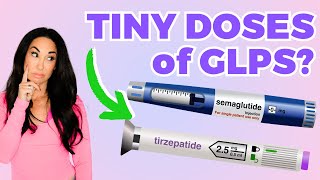
This is a YouTube video titled "Microdosing GLPs, Ozempic, Semaglutide for Metabolic Health with @drtyna" recorded in September 2024. It features a detailed conversation between Natalie Jill and Dr. Tina Moore discussing the use of GLP-1 agonists like Ozempic and Semaglutide beyond weight loss, focusing on metabolic health, hormone balance, and microdosing strategies. The discussion covers the science behind these peptides, their broader health benefits, dosing considerations, and the importance of lifestyle factors such as strength training and hormone replacement therapy, particularly for midlife women.
Today we're talking Ozempak and semi glutide and all of the peptides that we're hearing about because they're not just for weight loss. I want to go deeper into this conversation. I've got the Expert on this, Dr. Tina Moore. We've been following her for a while. She is amazing. I love her for speaking the truth, for being innovative, for being out there. She does not worry about what other people think about her. She shares the truth. And she is very cutting edge when it comes to some of this. Thank you so much for being here. Today on Midlife Conversations. Dr. Tina Moore, I can't wait to talk to you.
Yes, thanks for having me. I'm so glad to finally connect with you. Been a big fan for a long time. So glad to be here.
Likewise with you. And we were talking before we hit record that. I just love that she is a thought leader and shares things as she learns them and comes at things from a place of giving back and teaching and educated. She's not worried about what someone's opinion of her might be, what might be a trending thing. She's really into looking for the truth and how she can help people, especially women, which is why I wanted to have her on. I want to start with some basic questions about some. And I don't even know if I'm pronouncing it right. Semaglutide or semiglutide or whatever it's called.
Yeah, either or. Yeah.
And Ozempac and GLP1s at their core. Like, what actually are those? Let's start with that.
Sure. So these are GLP1 agonists. They are meant to mimic our natural GLP1. So we make a molecule endogenously inside our bodies called GLP1, and it is secreted from the L cells of our gut, and it is secreted in the brain in certain regions. There are receptors for this. It's a peptide. It's a signaling peptide hormone. And there are receptors for it all throughout the body. Another example that folks might be familiar with so far as signaling peptide hormones go, is insulin. So these are signaling peptide hormones, not sex steroid hormones like we would think of with estrogen and testosterone. But they act very much like hormones inside the body. And Ozempic, also known as semaglutide in the generic name Wegovy, is also semaclutide. They're just two different names for the same product for two different uses. One is for type 2 diabetes, one is FDA approved, and one is FDA approved. For weight loss. And then we have Manjoro, which brand name of it? The generic name is Tirzepatite, so folks might be familiar with that one. Anyway, these are agonists that are basically. Semaclutide is bioidentical to the GLP1 peptide in our body. It's not a drug, it's a peptide. And it's been tweaked a little bit because natural GLP1 has a very short half life. It's in and out of the system very quickly. It's produced and used or produced and degraded very quickly. You know, pharmaceutical versions just have a little tweak on them to stay stay in the body longer. So there's a longer half life of several days versus hours. So that's it in a nutshell.
Okay, These have been around for a long time and we obviously our body already is making them. So where has this disconnect come? Where they all of a sudden it's trendy or. And I don't know enough about this yet, but in my theory it was being used for type 2 diabetes. It was being used for other things. And was it sort of an accidental find that it helps with weight loss? Like where did this become sort of a trend that people are using it for weight loss?
That is a good question. It was accidentally found to be helpful for type 2 diabetes as well. It was initially years ago discovered and being studied for neurodegeneration and it just happened to be helpful for type 2 diabetes. So it got co opted that way. The big pharmaceutical companies are basically co opting it because the delivery system is injectable. And we've got lots of other peptides on the market that were prescription only up until November of 2023. We lost a lot of them, but there are some that are in oral form that are available over the counter as supplements. So it's a peptide in this, this group of peptides called incretins. And essentially for 20 years it was being used successfully and safely. Millions of prescriptions written now. Semaclutide and tirzepatite are newer versions, newer generations of this same class of peptides, GLP1 agonists. And it was used safely and effectively. Somewhere in the last few years the discovery of efficient weight loss showed up and started getting talked about and all hell broke loose. The entire world decided to go crazy over it. And this vilification and really what got me interested over a year ago and really deep diving and studying these was the fact that I was just hearing what sounded a Lot like propaganda from all camps. The minute the word weight loss came onto the scene and I was like, huh, that's interesting.
It's such an emotional topic, weight loss. And I know being in the fat loss space that anytime there's anything that could be used as an aid, it kind of creates this weird divide and propaganda that either this is the thing, this is it, or the opposite where this is cheating and this is, it's sort of villainized. And I've never seen it happen as intensely as I had as I've seen it happen with this and this group of peptides. It's nothing I've seen like to this extreme before. And it's interesting to me because we don't villainize. Like take something like this is kind of a weird example, but when diet sodas came on the market or something like that, that was, we, we know bad things about the artificial sweeteners and everything, but it wasn't this crazy, like you're cheating because you have diet soda or. It's bizarre how this has come to this really big divide of people's opinions on this.
Well, another example is high blood pressure medication. In most cases, high blood pressure is a lifestyle induced illness or pathology and pathological function. We're not vilifying people for being on high blood pressure meds. We don't give them hell for that and shame them. So, yeah, it's been a really interesting phenomenon. And since I've been talking about this, you know, I've discovered lots of potential uses outside of weight loss and lots of data to support it. And yet every time I bring it up on my social media platform and I, you know, I don't have the audience size you do, but I have a sizable audience audience and I start sharing about it for Parkinson's, for Alzheimer's, like the studies that are happening. And immediately there's a whole slew of people that jump to the word weight loss, even though the word weight loss or the term weight loss is nowhere in my post. You know, it's nowhere. And everybody has to go into that. This, you know, I really just want to tell all these folks the eat less and move more crowd that think that that's it, that's 100 it 1980 called. They would like their old outdated, you know, theory back because that's a piece of the puzzle. But really what we're talking about is metabolic pathways and mitochondrial health. At the end of the day, that's a huge player. Hormones are a huge player. All of these pieces matter what the quality of the nutrients that we're taking in significantly matter. So there's so much to this. There are genetics and epigenetics at play in several people. And so, and generationally we know that when a mother is just bathing in insulin due to insulin resistance and dealing with obesity and type 2 diabetes or even pre diabetes, and she gets pregnant, that fetus is now bathing in insulin and is epigenetically marked to have a significant increased risk for obesity and type 2 diabetes in their life. So these kids are being born really, you know, with the odds against them. So it's just an ignorant standpoint to have to be like, oh, just eat less and move more. This is the easy way out. You're being lazy.
So I want to get into with you. The reason I wanted to have you on so badly is all the reasons that we need to be looking at this for microdosing outside of obesity. But before we transition into that. I know so many people, they only know this for obesity. So I want to talk through, like, who is this actually for? Like, I know there you say there's different categories of people, like, who do we look at when we're looking at these peptides? Who ideally are they for?
I would say that they're for anyone who needs them. And I mean that in a broad brushstroke because if I'm looking at a patient, everybody's coming in as an individual with individual needs, and there are individual reasons why those pathologies are presenting. As a naturopathic physician, I am less interested in the disease and what it's called and, or the symptoms. I'm more interested in literally the root cause. And when you hear about root cause medicine that was appropriated from naturopathic medicine.
Yes.
Well, that's what we've been doing for decades. And we are the OGs. Right. Functional medicine basically just put an algorithm to what we do. So at the end of the day, I am looking at short term and long term treatment goals for patients. Right. Like what do they need right now? Sometimes that means we usually first and foremost, metabolic disease is what we're dealing with at the root of most conditions. So this has been going on for decades. Back 20 some years ago, I was testing everybody for metabolic dysfunction and their lab markers when they would come in the clinic and I was getting shit from my colleagues, my naturopathic colleagues, saying, oh, doctor, Dr. Tina thinks everybody has metabolic disease. And I'm like, because everybody walking in my door seems to have some version of it. They're on the path. This is a path Totally a continuum, right. And you get to, Frank, type 2 diabetes way down the line, 15, 20 years down the line, and that is a disaster. That is such a metabolic dumpster fire to be in. And yet there's so much that could be done during that decade or two. I was just going to say. So at the root is metabolic disease of most conditions that we see. Heart disease, high blood pressure, cognitive decline, PCOS, hormonal imbalances. @ the root of that often is a metabolic piece. And so this is where I apply GLP1s at various doses to help heal, because it literally regenerates, heals and is anti inflammatory. It's not just a band aid. So I'm trying to heal metabolic pathways at the end of the day. So that's why I say it really could be for anybody who needs it.
So I have such an interesting theory about what you just shared about. You said that you were told that everyone has metabolic dysfunction, that it's in your practice. That's all that you're seeing. That's what comes in. I have a theory about that. So when I was, gosh, 25 years ago, I didn't know I had celiac, which is an autoimmune. And I remember having all these weird symptoms that presented. And every regular GP I went to, a regular doctor, I went to would say the same thing. They say, let's not look at all the symptoms, let's just do one thing at a time. So, oh, you've got heartburn, let's give you antacid. Oh, you have something, your stomach, go have a colon. Like, they kept everything was treated separate versus whole, which made me in turn want to work with naturopathic medicine to understand root cause. Like, no, wait, all this ties together. So I have this theory that a lot of people that are early on hearing these things and it's not adding up in their brains, they tend to gravitate more towards naturopathic to, to understand that. So I think it makes sense that you would see that in your practice, because someone that hasn't experienced that, it's almost like the gaslighting by the doctor, they may not be drawn to that because they don't even know that they need to go down that, that road.
Can I add to that? Yeah. I don't, I don't even think in this day and age that most doctors know to look for it or emphasize it. And data from 2018 that was published in 2021 showed that 93% of US adults are cardiometabolically busted So I was right. Everybody does have metabolic disease. Yes. Yeah, it just took a while for it to all catch up and for them to actually, and these are people that are actually being tested. So we're sitting in a particular pickle as a species and I'm looking for anything I can to pull the lever on how, along with all the non negotiables that you and I preach all the time on our platform. The, the nutrient dense meals, the sleep, the circadian rhythm, all of that. And we have tools available to us that I am interested in using.
So full transparency for those of you listening. My ears had really perked up listening to her because my family genetics are all the worst things. I mean, metabolic dysfunction to the nines, like the type 2 diabetes, the autoimmune, the dementia, all of it, it's in there. Gestational diabetes, like all the things so. And my dad died at age 49 of a heart attack. So every single thing in my genetic makeup says to me, you're going to have, if you do not have all these things under control, metabolic dysfunction. And I can see that on my lab work because I do all the right things that you just mentioned. They have not presented in that way and I don't want them to. I don't want them to. So when I started hearing and listening to you about how this could really help protect my ears perked up. What stopped me from going down the road so far on my. I'm not, I have not done it yet is the opinions of others because this is such a crazy topic about using GLP1, using Ozempact, that, oh, you must be cheating. And I, and I feel that that would dismiss me with what I do and I'm just being real. And I know I'm not alone on this. I've talked to other educated people in the health field about this. So that's what I want to dive into with you today.
Yeah, for sure. Well, first of all, it's nobody's business what you're doing in your medical life, so you can do whatever you want.
Yeah, I know that logically. Don't have to tell them.
I know we're online and so we're transparent. I've been really transparent about using them because I got interested in the neurocognitive benefits personally. That's what I started studying it for. I, my podcast producer, I have a podcast and my producer was like, you got to do a show on Ozempic. And I said, well, I'm not going to talk out my ass I have to talk with some authority. So I have to go, I got to research it, right? So I go into research mode, which is like my favorite mode, that's like my Dr. Tina superpower. And I start finding all this information and all this data that has nothing to do with what the mainstream narrative was and all the click baity title, you know, headlines and all the influencers. The fact that like mainstream media and the functional medicine community were lining up on something was sure enough for me to be like, something's wrong here. These don't add, these don't add up. These, this is like water and oil. So I start looking into it and I immediately go top down. Because my background's in regenerative medicine. I did regenerative injection therapies for 20 years in clinical practice and so anything that has to do. I'm a chiropractor as well as a naturopathic physician in Oregon. So we. There are fake NDs out there by the way, just so people know there are fake NDs. They're all over Instagram, they have huge accounts, some of them. They are basically bonafide health coaches that got a certificate, put Dr. In front of their name and put nd behind it. Wow. Then there are those of us who actually went through medical training and sat for North American boards and are licensed in whatever state we're in. So big, big difference there.
Yes.
And so I can prescribe in Oregon, I can prescribe virtually anything. I have a full formulary aside from a few random drugs that I can't. But otherwise I've been using prescription medications as needed for a long time. And the way that I see it is we use the minimum dose of whatever medications or peptides or hormones even that are needed whilst really optimizing the person's overall lifestyle. So the lifestyle piece is non negotiable but sometimes people need a leg up. And here's the deal. The impacts on the brain, the anti inflammatory impacts on the brain have such a profound downstream effect on all other systems. That's why I first look there. Because if we can impact what's happening in the brain, calm down the microglial cells, calm down the inflammation in there, they're actually neuro regenerative. So we are regenerating healthy brain function, increasing bdnf, which is like miracle grow for the brain, we're going to be turning down pain, we're going to be calming down the metabolic dysfunction, we're going to be calming down cardiovascular dysfunction. So even though these sit on receptors throughout the body that I can quickly ramble through the fact that we're having a direct impact on the central nervous system in the brain in such a profound way. It's, like, really exciting, the data coming out in animals and humans that I was like, dude, I'm sold. I'm gonna try this because this is huge for chronic pain that I'm in. My autoimmune disease, the brain fog I was having due to perimenopause mixed with a nice dose of COVID So I was really kind of in that. Like, there's a lot of people struggling post viral illness, any kind of illness, with cognitive defects, not really realizing it. Like, give someone a bad bout of the flu, they're gonna come out of it the other side with some brain fog. So for me, that's what I was trying to address directly. And I did have a good 15, 20 pounds packed on due to the stress of pushing back against the narrative these past few years. And it just melted off. And I went down to my fighting weight. Like, I'm back at my 20, 19 weight. I do not have your abs. I would have to do a whole different.
You're pretty darn fit, though. You are pretty darn fit. If you look at her Instagram, she's very fit.
But I'm not. You know, my body composition isn't like, I still have a belly, is what I'm trying to say. And I share this because it's important for people to understand that in a metabolically optimized person, this microdosing strategy that I've. I've come up with really is. It's allocated for those who are already doing all the things.
Yeah.
If we want to use a very tiny dose of these peptides, which is basically what I concluded my hypothesis was, what if some people are functionally deficient? Meaning we're. We. We see functional deficiencies in different hormones as well.
Yeah. Like thyroid, you could be deficient in T3, you could be deficient in estrogen.
And it has sometimes little to do with what's being synthesized by our organs. And more to do what's happening downstream in the periphery. Right. Like, what's happening at the receptors, what's happening in conversion pathways, what's happening out there? And so GLP1, if it's being made in the gut, a lot of people, I would say most of the people that walk in my clinic throughout my entire career, like, had some level of gastrointestinal dysfunction. Inflammation, leaky gut, ibs, ibd, you know, the inflammatory bowel diseases, like Crohn's and ulcerative colitis that go undiagnosed for decades and just look like mysterious, you know, symptom pictures. And so these folks, guts linings are pretty much trashed. And so are they even making enough GLP1 out of their L cells? This is where I start thinking about a functional deficiency. And that got me thinking. Well, I. And also in the brain, if we've got chronic stress eating up, literally eating up certain regions of our brain, then due to excessive cortisol etc and inflammation, et cetera, then maybe we're not making as much GLP1 in the brain as we should. And if it's being made in the brain and being received in the brain, it's probably pretty important. Outside of just appetite suppression and slowing gastric motility, like, there must be a lot of other things going on there. And that's when I started digging. But all that to say my hypothesis was if I supplement a tiny dose of this, and the dose is different for everyone, so I can't get into specifics about, you know, this many milligrams. It depends on the person sitting in front of me. But if I were to address that functional deficiency, what would happen? And so I started trying it out in a handful of patients. Now my practice is closed and I just have a very small patient base at this point because.
So don't message her asking to take for you as a patient.
Yeah, I closed down my big brick and mortar right before COVID Thank God, because I was in Oregon. That would have been a mess. And the interesting part though is that I have a lot of colleagues utilizing this now since I've been talking about it, I've got hundreds of thousands of followers who are giving me feedback. I'm getting hundreds of messages constantly from people, thousands at this point, telling me their experience. So I'm getting. I think I'm in a particular position to get feedback that I wouldn't otherwise if I was just little old me in my clinic, no matter how big the clinic was. So it's been really interesting. But things I'm hearing from folks, folks, I went on GLP1s and I was able to go off all my antidepressants. I went on GLP1s and I quit gambling. I went on GLP1s and I quit drinking. I went on GLP1S and all of my inflammatory arthritis went away or the pain symptoms went down. I have one patient, I put on a very tiny dose who has Crohn's, an older woman, and she's frail and I did not want to make her. She's. I shouldn't say that she's quite robust for her age, but there's always frailty brewing as you age. Right. So and with Crohn's and you know, her ability to eat only select foods because she has to be very careful, I didn't want to induce any weight loss and all of her joint pain went away. That is secondary.
That's amazing.
Common secondary symptom picture to Crohn's right, is like body wide joint pain. So reversal of pcos. On and on and on. Not only am I seeing in the folks I'm working with, but in. I'm sort of acting as a consultant for so many. There's so many influencers doing this right now and there's so many folks that you wouldn't think of. Guys in the strength and conditioning community. All types of different people.
No, literally, like everyone I know in the health space, I think me and one of my friends we were talking about earlier, like the only ones I know not doing it.
Yeah. Because they're messaging me so I'm, I'm hearing feedback from them. So I'm gathering a ton of data points and information and, and really honing my strategies. I teach all of this inside of a course that I have. But anyway, all that to say it's been really, really interesting this past year because this is all I've been doing. And the impacts of this peptide are so varied and extensive and I think, think even the data is showing a lot of it. But I'm, I'm starting to put things together that I think it's very, very exciting and I don't think we've even scratched the iceberg.
I have so many questions that just pops in my brain for this. I want to start with how it gets confusing for midlife women. Like we. And I've had so many amazing experts on, on various topics. So I can have an episode and all of a sudden everyone's like, it's my thyroid or it's, I must be low in estrogen or it must be, you know, maybe I need berberine.
I don't know.
There's like, there's just so many. Or maybe it's just digestive enzymes. I'm not getting enough of my protein process. So it gets very confusing. Is there kind of an order that you take people through? Obviously, I'm not even talking about like the nutrition and the workout that's obviously important. Hydration, water movement, eating unprocessed Foods. But how does somebody know where to start? Like, should they be dealing with their hormones first?
Should they clean up their gut first?
Should they jump right into this? Like, it's, it gets confusing.
It's a lot. This is why I love GLP1s because the more that I study them and the more I realize what metabolic pathways that they hit and how they impact, like AMPK and SIRT1 and all of these different mitochondrial boosting and mitochondrial biogenesis pathways and metabolic pathways, the more I'm realizing that GLP1s are actually a really beautiful place to start.
Okay.
But you have to get strategic because there's a hierarchy. I dive deep into this in my course because I'm trying to get doctors and other health professionals and the general public to really understand the hierarchy. But generally speaking, we could try to clean up the gut all day, but the gut's not going to heal. And if the body's not in healing mode.
Right.
So sometimes we need to actually give the body a leg up. GLP1s actually shift the microbiome in a really favorable way. And so a lot of folks are reporting that their IBS diarrhea is going away or their IBS constipation is going away, or they're able to. A lot of folks telling me who have celiac that they are able to now eat foods they weren't able, they were not able to eat before.
Like they can actually eat gluten with. Wow.
Well, we, we shouldn't, we shouldn't be eating gluten. But it's.
But like ancient grain foods or things like that. Like, I've. Like, I' can have fermented sourdough, but I'm like, I've never tried that because I'm celiac.
Well, it's more of like, you know, someone like me who goes traveling because I'm. I come from a long line of celiacs and I have not been formally diagnosed, but I'm very sure I've been. I've been gluten free for decades and I can do sourdough now. Not that I should. And also it doesn't destroy me when it happens. So you get accidentally gluten, as you know, when you travel and you accidentally get gluten. It used to be like, oh my God, I'm stuck in my hotel room, full lymph nos. Everything, everything's terrible. Not. Not the case so much. So there's something happening there that I think is healing up the gut lining, which is wonderful. Like you said, we have to be doing the strength training and eating right and all that. But the eating can get really orthorexic. Like we. Yes, really in a bad place. You can't eat anything or tolerate anything. Then you just become consumed, all consumed with your food and it becomes this massive job all day long. And that's really exhausting too. So anything that I can give the patient to kind of ease that up and make that transition a bit easier, I'm all for. And I think GLP ones may have a there. Then we go into. In my head I'm looking at adrenal thyroid progesterone and then estrogen and testosterone. It's kind of a toss up which one I go for first. But I address those in that order and that's a bit of a comprehensive treatment program. You know, I don't encourage folks to try this on their own. Like find someone. And not every doctor who is a health coach or I'm sorry, a functional medicine doctor, like a holistic doctor understands hormones that we did not get this training in school, specialty training.
So especially optimal levels. They don't know enough about optimal levels with women.
And with women in middle age, I feel very strongly that that drop in estrogen, that happens and it happens so quickly sometimes like you're going along just fine. Everything's glorious.
Doesn't happen to mine too. Tank just like went to like 20 on my labs.
I was like, wait, I think stress is a huge player there if that is not addressed. And we actually have a small study showing that women on HRT who use semaglutide had better outcomes. Really? Yes. So. So the perfect triad in my. As a 50 year old woman, I have been living this lifestyle for decades. I have been using hormones very slowly. And at. Here's the thing, physiological doses, not pharmacologic, physiologic dosing looks very different for everyone. And it's a touch of the hormone. I've been doing that since my 30s. I'm not messing around. Like I was. I wanted to slide through menopause, not get slammed by it totally. And I trained for it. I started in my late 30s, early 40s, really building muscle so that I could be prepared. I mean that's critical. So the magic triad in my head is strength training. GLP1s at the appropriate dose, which is not happening with the standard dosing. When you go to your GP and you say, hey can I get on Ozempic, they're going to look at you like you have three heads. And like if you say I want to microdose it, they're not going to know. And the starting dose of these peptides is way too high. I'm talking a fraction of that dose for some people. And then hrt, like, yeah, those are the three in my book. Those are my non negotiation triangle.
That's triangle.
I would not try to go through middle age without those three.
That makes sense. And the strength training thing, I'll. I'll share with my own stuff. Like I was always teaching body weight and I've been very strong with. My body weight's pretty intense. It's pull ups, chin ups, things like that. But even me. But I've transitioned a lot to like really working on heavy weight training because I'm seeing that. I mean, now that I'm almost 53, I'm like, okay, this is changing and I can see the change and I want to put that heavy muscle on. So I think that's great advice that you just shared. Anyone listening? We've got to start adding that muscle. Muscle for that reason.
It's heavy strength training. And there's something to the central nervous system hit. It's a hormetic hit if we will not get it if we don't lift heavy enough. So there's something about that central nervous system hit and that hormetic hit and hormesis. For the audience listening is these bouts of strategic stress that allow the body to compensate. And when we do that, we stimulate pathways like AMPK insert 1 and PGC1 Alpha. And not to get sciency, but those are the pathways that really dial in your mitochondrial health and your metabolic health. So those and your bone health too. Right.
That's gonna know that helps to pull and create that bone strength.
But we are way too comfortable. And as we age, we kind of get. And I see this with men a lot as well. They're like, well, I worked my ass off my whole life, so I should be able to relax now. I'm like, no, this is actually when we have to get to work. Yeah, this is the time if we want to age well and we want to be 80 years old and having hot sex and hiking and doing all the fun things we want to do with our partners. Right. So the heavy lifting, it's. It's heavy. And I think this requires a coach or somebody that can have eyeballs on you initially, especially if you have orthopedic issues. I took care of orthopedic faults. Like that's what I did for a living. And you can really get yourself into trouble because this is a skill Set like doing a heavy deadlift is a skill.
Yes.
So allocating dollars there and considering appropriate dosage of GLP1s. Here's the thing with hormones right now online. We've got, you know, and I'm excited for it. There's a. There's several influencers with huge followings that are really laying down the need for estrogen. These OB GYNs that are really making it known that hormones are safe. Safe, they're effective and they're needed. And I'm very excited for that. But I will tell you this, going back to the hierarchy, if you put estrogen into a. Or testosterone for that matter, into a metabolic dumpster fire, which is, I'm sad to say it, and it's not judgmental, like that's most the women in our age cohort are metabolically really in a pickle.
Yeah.
And they're carrying excess adipose and they're really in this cycle. I know they're trying. It's not for lack of trying. This is where the eat less and move more nonsense. Like, let's. Let's get rid of that for a minute. Because I know these women are working their butts off. They're listening to us, they're doing all the things and they just can't move the needle. You put estrogen in that system and I think it can act very aberrantly and start going down pathways. We don't want it going down. And so I'm not keen on putting estrogen on top of metabolic dysfunction. We have to get that cleaned up. And I think that's where GLP1s really shine. They really clean up the playing field for folks, folks. And they start to heal that metabolic pathway. And we can start to add the hormones that I are absolutely necessary. So do I give it first, do I give it later? I usually do the others. Adrenal, thyroid, progesterone, all very safe. But we do need some estrogen because as our estrogen wanes, we become metabolically. You let me put it this way, a hundred percent of women will move towards metabolic dysfunction at different paces. When their estrogen drops down. A hundred percent, we will all become less insulin sensitive.
So your A1C starts changing your blood sugar, your responses change, your insulin's changing, your cholesterol's changing, all of those things.
The whole thing goes to hell in a hand basket. And those walking into menopause metabolically fit, optimized and actively exercising on the regular seem to have some level of protection against this drop and this descent into metabolic Dysfunction. But even for myself, it happened. I was doing all the things and next thing I know I'm like, I'm getting insulin resistance. That's what that £15 is that you wake up with. Like what just happened?
Yeah, that's literally what happened to me. And you and I have very similar, if we look like rewind the same injuries, all the things, we have a, we have a very similar pat. Even the adhd, we've got a lot of that must be genetically related somehow. But there's all these things and same thing happened with me when my estrogen tanked. There was a direct correlation to my labs changing on other things. And I thought, okay, there is all that metabolic genetic stuff that I was worried about. It's. It showed up as soon as my estrogen tank. So what I didn't do, and I'm learning from you right now is I did add estrogen. But what I didn't think through is what you're talking about, about right now and why that might be important to pair that. Now when you talk about micro dosing and I want to, I know that you can't give like actual amounts for people because it's very unique for people. But I want to talk about a little bit about like what is actual dosing that most doctors are giving people and what, what is that for? And then if some kind of comparison of like what a microdose is, I don't know what we can use as an example, but I want them to see this.
Sure. So in the standard formatting of, of the way this is dosed in the allopathic community, the initial. These come in pens, they're pre filled pens and the dose is predetermined. You can't change it, you can't lower it, you can't dial it down. So you get what you get. And so the initial starting dose of samaclutide, for instance, is 0,25 milligrams.
Okay.
And then the studies and the data showed taking that up to 2.4 milligrams. And that happens very quickly, that that ramp up happens. They almost double the dose dose basically every month, every four weeks, and they ramp you up to 2.4 milligrams. I think that is way too high for most people. And I don't think that most folks need to go there, period. Even folks that are really, really, I mean, if they're severely overweight, I'm talking severe. But I've even got the one patient I have on it directly for weight loss. Everybody else, I Put it on, lost a little fluff and got down to their fighting weight. But the one patient I'm actively a type 2 diabetic, I am actively trying to get a lot of weight off of. I still only have him at less than half of that and it's been a year.
So I'm very one. One point something. One point one.
Very, very low, low and slow. So he needs more because, you know, a small touch of this stuff wasn't going to touch him. It wasn't going to do anything.
Yes.
And the more metabolically unsound people are, I'm realizing they need more. They need more of the peptide. But those doing the work and doing all the things don't. And so when I say that microdosing is reserved for metabolically sound people, I mean it. And I'm seeing this clinic and I'm hearing this from so many people. I tried your microdosing.
It didn't work and it wasn't enough for them. And they didn't have the other things in place.
Well, what did it not work for? Is the first question. What were they trying to do with it? Like, what were the short term and long term goals? But more importantly, like, yeah, what, what are, what else are you doing? So I say, are you strength training? And they go, no. And I'm like, well, then get out of here.
Like, that's right.
Get out of my dms. Because that's like key.
Like, that's like somebody even saying that they're strength training but not having protein. I'm like, well, you can't get out of here. It's not the same.
No, we don't get to pick and choose. And then I'll say this, this kills me. This is so common with my audience. They'll say, Dr. Tina, I've been listening to you since 2020 and I'm doing all the things you say because I'm really simple. I'm like, eat more meat. Deadlift, go for walk, get your sleep dialed in. You'll drop weight. Like, you might not get perfect body composition, but you'll drop weight. And they're like, I've been doing everything you said and I've lost 60 pounds, sometimes 80 pounds. I mean, I have helped since 2020. I'm sure you have too. Like, a lot of people lose a lot of weight. And. And then they say this part, and this part kills me. They say, now I'm going to start strength training. And I'm like, oh my gosh. Like, that's first because we got to Talk about the muscle loss piece. We'll come back to it. Okay, But I want to answer your question. So this is a pen. This is what a 3cc syringe looks like, basically. Okay, so, like, let's just say the red. It's convenient. I happen to have a red one. Yeah. Let's say this top part is the needle. And let's. I mean, needles aren't that long, but let's say the bottom part is the 3 MLS. This would essentially be almost full at top dose of semaclutide. The starting dose of semaclutide would be somewhere here, like less than a centimeter down on this red. And I'm doing a fraction of that.
Like, so a tiny, tiny bit.
I'm putting that in an insulin syringe and doing a tiny bit of it. And it really depends on the person and what we're going for. So I think.
So if someone is doing. If someone like me or like you were. We have the metabolic markers, but maybe we're doing all the things to, to control that. So we're. We're not obese. We're not. We don't have a lot of the uncontrollable stuff. But you're starting to see the markers go up is do you expect markers to start coming down on your labs? Like. And when you say metabolic, I'm thinking you're talking about your blood sugar, your heart markers. So I don't know what else I might be missing there. But would, like, your cholesterol marker come down and your plaque marker come down? Would your blood sugar levels come down?
If you're doing it, appropriate things start to regulate. Yes. So we start to see declines in serum insulin fasting, serum insulin, hemoglobin, A1C, different inflammatory markers. Yes, that. Because what you're describing is I just was talking to a woman this morning, actually on Instagram. She's in her 60s. She's. She looks like you. Like, she's super lean and fit, and she has got crazy blood sugar happening, crazy, crazy pre diabetes markers happening on her labs. And I'm like, I feel you. I get it. So we're literally doing everything right, and we're still having this phenomenon happen. And we're on the bioidentical hormone replacement. So that really drives home. My point is that once that estrogen falls off the cliff, we're looking at an uphill battle. I hate. I do not know how to put it any other way, unless you're engaging every day as if. And I'm not Saying, fight your body. I'm saying, accept it and let's work.
Because figure out what we need to do.
If we don't, then we're in trouble. And the GLP1, someone like you. Someone like me, it's just the touch, and that is so potent. And a little bit too much is a lot too much in a metabolically optimized person. And then we get your average. You know, maybe I would say more women than not probably listening to us, might be like, maybe anywhere between 15 to 30 pounds overweight, and they're still doing all the things, but maybe their markers are actually really starting to jump up a bit. And it's frustrating. And I hear from them, they're like, I'm literally doing everything right. Dr. T. It's not working. So we want to make sure that we are meeting them where they're at. And I really think a lot of these women probably need. Need that third, you know, second and third leg of the. Of the table, which is the hormones, and a touch of GLP1 would sweeten the deal. Well, you're.
It's making sense because if you keep going down the rabbit hole and like, but what caused that? But what caused that? When you said earlier that doing the microdose of GLP1s could help seal your gut, it could help help regulate your blood sugar. It helps do all those things. I think back to, like, my own blood sugar journey when I started having crazy blood sugar and cleaning up my gut. Health, health, parasites, all that is what fixed that for the time being. But what. How you have me thinking is, well, but did I have to get to that level? Could something like this have helped boosted my own gut health? Or so it sounds like this is. People are doing all these other things that are kind of band aids for it, which they're great things. They will help, but this thing would just help everything work better. Am I saying that right?
That is my hypothesis. That is my hope. That is what I speculate based on the data, based what I'm seeing in clinical impacts, based on what I'm hearing from other people, because it also improves our inflammatory markers. It improves our. It sits on our immune cells. It, quite literally, there are GLP1 receptors on our immune cells. And so my thinking is if we can modulate and improve the immune system, not boost, because a lot of us autoimmune girls don't need boosting. We need modulating.
Yeah.
Then, you know, parasites, in many cases, I just got to say, not to go off target here, but parasites in Many cases are symbiotic and commensal. They're not. There are. Let's. Let's put it this way. In countries where there's lots of worms in humans, there is very little amounts of autoimmune disease.
Okay.
The parasites can be somewhat symbiotic with us. And I've seen. I used to always kill, kill, kill the parasites. That was my big thing when I started in practice. And never. Do they ever stay away completely.
No, you always do it once a year. You have to keep going back to it.
They always come back. And. And secondly, I would see their auto. Their immune system start to get very activated, potentially in some cases. Really? So the dampening and the modulating of the immune system that's happening from the Paris. It depends on the parasite. Of course. It depends on their symptom. Picture I had a terrible amoeba that was just destroying me and I was literally like running water through my bowels every day. I was so sick after a trip to Mexico. Now that's something I needed drugs for. Cut it. Like, I had to really go full bar on the herbs and drugs.
Yes.
Because that was killing me. But when it comes to the things that we're hunting, it's like a craze right now on social media. It kind of drives me bonkers. Anyway, I digress. So, yes, in someone who needs a little bit more help with the weight loss and the metabolic healing, they probably need a little bit higher dose. I still think in those folks, though, that if they're doing all the things actively, then they probably don't need to even go up to that standard starting dose. It's the standard starting dose. So in these cases, and I've been accused of being a big pharma shell, but I'm like, yo, I'm not even talking about you. I've never prescribed a pen. I'm talking compounded. I'm using compounded peptide so that I can play with the dose and give the patient in front of me what they need to move the needle. However, we're trying to move the needle.
Any downside to doing the micro doing if it's done properly?
I have seen none. Except I will say in some cases there is an impact of GLP1, and it's in the literature, there's an impact of GLP1 on the parasympathetic nervous system. Most people are telling me that their anxiety is going down okay. And that they feel much better and much calmer on it. However, there is a subset of people I'm hearing from online telling me that they got crazy crippling anxiety. Now I don't know what they're starting to. I don't know what they're starting with, though, generally speaking, when people, Because a lot of people are going around, a lot of doctors right now saying, oh, I'm microdosing. And when I ask them how they do it, they're just starting people at the lowest dose and keeping them there. And they're calling that microdosing. That's not what I'm talking about. I'm talking about a totally different strategy. But yes. So that's still maybe way too high a dose for those folks. And they're getting driven into anxiety and side effects. I'm not seeing any side effects. I'm not seeing nausea, vomiting, any side effects at all when I keep the dose low enough and we just go low and slow. Now, if they have the desire to lose weight and that dose is maybe mitigating their mood and they're, you know, helping tonify and protect their cardiovascular system, but it's not helping them lose weight and they think they need to bring the dose up, I usually can find other things they're not doing regularly that makes sense. The answer isn't always to crank up the GLP1 dose. I also am hearing from some folks saying that their heart rate variability tanked out and that their heart rate went up. And those are. We want the opposite. Right. We always want a lower heart rate and a higher heart rate variability. And we wear our, you know, aura rings, wearable devices to check that. So that is concerning. And the data I found is around the impacts directly on the sympathetic and parasympathetic nervous system. And they don't entirely have it figured out. But for those folks, I don't have an answer. And I say, you know, maybe it's not for you.
Yeah. Because not everything is for everybody. So this is why you have to work with a good practitioner that's monitoring all this too. But I would say the same thing with like treating your thyroid like you could have an adverse effect there or treating your hormone like they're all. There's always. Not everybody is cookie cutter. Right. You don't have to pay attention to, to, to all of those, those things.
Yeah.
Now what about. I've, I've always thought for, and I'm talking about weight loss now, not for what you're talking about, but we've been told that it could slow your gastric emptying, it could create your insulin needs to depend on this. Now to use this.
So.
So there's a. Could be a rebound effect. Do you find that with the microdosing? Could. Does that put you at risk going under anesthesia? Like, there's a lot of things that are at risk at the higher levels.
Yes, at the higher levels. So again, for folks listening, imagine what I said about the dose. I think a lot of people are being overdosed, quite frankly, and if we were to overdose people on insulin, they would die. And so a lot of the horrific side effects we're hearing about are on these standard doses. And very rarely are people kept at the starting dose. They're usually cranked up because that's what the data shows. So that's what doctors are doing. I think doctors are starting to get savvy and realize not, you know, we need to do more individualized dosing, but they're still dosing people up pretty high. So that's something to consider when we talk about side effects is. I think that's a dosing and management issue. Yes, it can slow gastro. Gastric motility. And they say to go off of it for a few weeks before you have surgery. Although I just came across an article yesterday and I revisited it because I opened it up a few weeks ago. And it looks like they're not that concerned about the slowing of gastric motility as we've been led to believe. So I'll. I have to get more information. There. There is a problem, I would say, and a concern for everyone, which would be if you have a history of biliary disease. So if you have gallbladder, if you have gallstones, be very careful because the other thing that's happening, happening is folks are being dosed up to appetite suppression, but not just subtle. I like to get people in control of their eating. I like to do up to control. I don't dose up to suppression. I want people eating if their appetite is being completely crushed by the dose, which a touch too much can do. I literally just had it happen with a patient who was trying to bring up their dose a tiny bit so that they could get better control over their desire for alcohol, and they ended up destroying their appetite in the process. And I'm talking a touch. And this isn't someone I'm microdosing with.
So this is like stimulants would do like, like sometimes stim.
Do that to somebody a little too much. Yeah. And so he, he gets real flat. His affect gets a bit flat and he doesn't want to eat, he doesn't want to drink. Alcohol, but he kind of doesn't want to do anything. So we don't want that. We don't want that. Anyway, if you crush your appetite and you stop eating or you eat very, very low calorie and a lot of folks out there, I think we're seeing in the news these horror stories. I'm wondering, you know, are these folks used to crushing chick fil a and greasy stuff and then they just decide to eat less of that because their dose so high they don't have an appetite. So they're like, I'm just gonna eat a tiny bit of the potato chips instead of the whole bottle bag. Your gallbladder gets real sludgy and sludgy gallbladder is also very common in your obese middle aged person. It's not especially women, right. And so they're already kind of sitting on the edge of biliary sluggishness or stasis and then you crush their appetite, they stop eating. It gets real sledged up, they form stones, they throw a stone into the pancreas and we get pancreatitis. That is a concern. Although in the big studies looking at like cardiovascular function and all these other things, interestingly, when they look at all of the side effects, side effects, pancreatitis is pretty low on the list of. And in fact in the select study, which was the big one at the end of last year for cardiovascular health, the control group had more pancreatitis than the treatment group. So it's just a concern I want to put out there because if you think about it, you know, if you think about like the physiology of things, we just don't want to be sludging up an already sludgy gallbladder. Right. But that's a, again, a dosing and management issue. I get, I say this because I get a lot of questions from folks saying, oh, I have had a history of gallstones, is this for me? And I'm like that. That's a question to ask your doctor. That's about risk tolerance and that's about working with somebody who's really willing to be intimately involved in your care and go slow and low.
What I'm also hearing, I want to just make sure I'm, this is what I took, what I'm taking from this. I want to make sure this is what you would say too. And I don't have this wrong, but I would imagine if you're working with a doctor that understands this, you still probably don't want to do everything at one time. Because then you don't actually know what's working. Or are you saying you do want to do it all? Like, if you're going in, like, I'll talk. I'll use me as. For example, I'm working on optimizing my hormones right now, so I'm definitely taking a bioidentical hormone replacement. I'm also going to be starting T3 because I've got low thyroid function. Would you, if I was gonna do something like this, would do you recommend you kind of tirate. Do things at different stages? Do you do it all at once? Like, I just, I get a little confused on what to tell people there or what they should be looking at stages.
It takes a smart doctor to do this, though. Most doctors don't understand what you and I are talking about. I know maybe where you live, there might be a more savvy group because you're kind of in a job of, you know, nature, good nature.
Plus, you're friends with my doctor, so we know that she knows what she's doing.
Yes, but for the general public, this is taught. That's why I created this course, because I go into this in detail and it's like, based on this, on this, on this. No, we don't want to do it all at once because if something is going sideways, we don't know what's working and what's causing side effects. Right. We don't know what's mucking up the system.
And so don't treat your adhd, your thyroid, your hormones, and this at one.
Time, like, you gotta do this is where I really think, though, that GLP1s are a beautiful place to start for people. They really are, because. Because it cleans up the playing field. And then I get. If I had had these when I had a big, huge practice and I was, you know, seeing tons of patients every day, I would have been using these a lot. Because we can turn down pain, we can get their head clear. That's the other part. There's dopaminergic pathways being impacted, there's reward pathways being impacted by these peptides in the brain. And it gives people the onus of control back. And so things get clearer. And when your insulin signaling clears up up, your estrogen picture gets clearer and your thyroid picture gets clearer. So estrogen receptors, for instance, estrogen will bind the thyroid receptor and then you're functionally hypothyroid, but you're not really, you know, it's, it's, it's all of these little messy things. So Again, I go through, I look at gut health, adrenal, thyroid, this is the order progesterone. And then I hit them either with estrogen or testosterone. And this is a process. It takes time. There's a lot to explain on it. So that's why I'm really. This course that I created is more for doctors than it is for the general public. But I'm letting the general public in because I have a lot of smart people.
Yeah.
That follow me and I want them to understand because when you know, like someone like you, you're so educated, you can go into your doctor and have these nuanced conversations because you know your. So doctors are open to that. Right. If you find a good practitioner in the functional medicine, the good doctors are.
So people have a misleading thought that the good doctor is darn open to that. But actually the, I find that the good doctors, the ones that I want work with are the ones open to those things because I'm not looking to just be the my. Your normal on your labs. I'm looking for optimal ranges. You know, you all, when you, when they talk about lab ranges, they're taking the average person and looking at average ranges. If you want to be optimal, I would, I want to know what somebody optimal is, what are their ranges? So my experience with finding. And I've been through so many different doctors but the good ones that I work with now, they're very open minded when I say, hey, can you look at this or can you consider. They're not shutting me down and saying stay off Google because that's not, you know, and you want a doc, you want a doctor that actually listens and collabs like that. And it's going to be in partnership with your health, I believe.
Absolutely. And you know, labs are not the end all be all. We run labs because A, they're motivating for patients to see something objective on paper. B, they cover our ass as clinicians. But C, most importantly I, so my, like I said, my background was mostly in regenerative medicine. I had to be doing bioidentical hormone replacement in there because you can't regenerate someone's tissues if their hormones are tanked out and their, their metabolic health is a mess. So, so we had to do it all. And the point being is I was dosing to symptom relief and then I was using labs to make sure that we were staying safe. It's a very different way of doing things. I don't, Yeah, I don't make my decision about What I, what treatments I want to apply based on labs and an undereducated or somebody like, I mean, for instance, this is not to diss the functional medicine community, but these docs are allopathic doctors. First traditionally trained and then they go through, you know, a couple weekends of training and now they're functional medicine doctors. But they're still, still really paradigm. There's not always a paradigm shift. And so they'll run a bunch of. This is so common. I hear this from people all the time. My functional medicine doctor ran thousands of dollars worth of labs and then gave thousands of dollars worth of supplements because they're matching a supplement to a lab value. Whereas yes, a good doctor who knows their will be like, I understand my physiology. And based on that, I would assume you're exhibiting all of these thyroid symptoms and I want to give you a trial of thyroid hormone. And we're going to use labor labs. We've got good clinical indication and we want to use labs to make sure we're keeping you safe. And we're going to monitor you very carefully. It's. And then you just titrate up slowly. It's always slow and low. All of the things I do, slow and low. And you end up with a patient who feels good. We're using labs to make sure we're staying safe. Things are going down the right pathways and it's just a simpler way of doing it.
So important. Because I'm so tired of hearing like because of a cholesterol number because of that there. It's not looking at the whole picture. So I'm glad you said that because you need a doctor that's looking at the whole picture, how you're feeling and really taking their time versus just saying this is the thing. So we must treat that without understanding all the things because take the A1C for example. What you're talking about could be huge for blood sugar. It is huge for blood sugar. But so many people are being just put on metformin automatically. Like here's metformin.
Yeah, yeah. And metformin actually can be a awesome longevity tool. But they're usually getting again over to dosed.
Yeah.
So it's, you know, it's the dose makes the poison in GLP1s in so many medications. I want to be sure, just so we don't forget that we talk about muscle because I know your audience cares about this, the muscle loss piece. I know that's on everyone's mind. And we had a couple big influencers say, you know, the Real issue is the muscle loss. Well, I haven't seen any muscle loss and in fact when you look at the data around how GLP1s work in the body, they are actually protective, anti inflammatory and healing to muscle. And they may have a bit of an antibodies metabolic impact in the sense that they help really help perfuse the muscle with vasculature and that brings in the delivery of amino acids so that we get muscle protein synthesis. So you know, you know like you'll pump up your glutes before you go out. You get the pump right. And you get that. And that's one of the reasons I like cardio. I used to hate cardio. I used to think it was all about strength training. But I like cardio because car cardio actually helps perfuse your muscles muscles with microvasculature. Right, right. You get further reaching microvasculature. So that's better for the muscles to get blood and nutrients in. That's how GLP1s act on the muscle. The reason we're seeing the lean mass loss, all those studies are looking at lean mass loss. Muscle is part of your lean mass. It's not all of it. And that's the, the percentages of lean mass loss are totally on par with what we see with really low calorie diets.
So severe caloric restrictions, they're not eating, they're just.
And bariatric surgery, they lose you know, anywhere between 20 to their lean mass. And that's, you know, that's super common. Right when.
Yeah. Because you're not eating.
Yes. So folks are potentially, I mean maybe we have a dosage and management issue. Maybe we're not giving the patients enough support in those cases and they're not getting enough education around prioritizing their protein macros around strength training. Starting getting patients to strength train is like pulling teeth. So I understand we also have to look at patient compliance. Maybe again folks are just eating a couple potato chips instead of the whole bag. They're not eating nutrient dense food. They're not really prioritizing, prioritizing nutrient dense calories. So it's not the peptide though, it's.
That makes sense. It's the habits that are coming from it and the dose. Yeah. So I know, I know many people doing this. I know some that are doing the microdosing and having fabulous results. I know I also know somebody that was having a big struggle with their weight and was literally doing all the right things and so they're doing a higher dose and it's working amazing. They have not lost muscle. They look incredible because they coupled it with the great habits. And then I do also know somebody who lost a severe amount of weight and, and lost the muscle and had all the negative side effects. And so I see all the spectrum. And I think what you said really is coming together for me that it's going slow and going slow. It's having somebody that really understands dosing and it's the whole picture. It's not just that, it's all the habits that go along with it.
Yep. And your friend who didn't do it. Right. The problem there and what I'm very concerned about, why I totally understand why some folks are melting down online about this, is because they're watching their loved ones waste away in front of them like ghosts. That person went in. So metabolically dysfunctional muscle. So muscle in the type 2 diabetic or those who are dealing with metabolic syndrome, this is pathologic muscle. It's marbled with fat. It's inflammatory. Insulin resistance starts in the muscle. So these folks, you know, as Dr. Gabrielle Lyon says, not all muscle is the same.
That's right.
And so well trained skeletal muscle is an entirely different gift to the body than pathologic muscle that is being devastated by metabolic dysfunction. So those folks are already sitting in a pickle. They are malnourished. You know, I always say that Americans are like overfed and malnourished, unfortunately. And then they get put on these whomping doses of GLP1s. They're not counseled appropriately, or maybe they're not being compliant. They're not strength training, they're not eating protein. They waste away. And now they've lost a ton of muscle. And so they started metabolically quite crippled and they are going to end up metabolically devastated.
Wow.
And when that peptide gets taken away, so now they're free frail. You know, they're over here in the frailty camp, which puts you at high risk for everything. I mean, that was probably the driving factor over the past four years. Poor outcomes over the past four years was frailty. We have the data to show it. So now they're in this sort of sarcopenic wasting, frailty state and the peptide gets taken away because insurance coverage runs out and now they are just screwed metabolically. So that is a terrible outcome. And this is where I'm hoping that doctors are starting to catch on and why I'm so grateful to people like you for having me on your podcast, because I'm trying to get this message across that at whatever dose you know, like for your one friend who's on the higher doses, a micro dose for her quote unquote was probably the starting dose, the standard starting dose and that was appropriate for her. And so I'm hoping that doctors are realizing that we have to do personalized dosing. We don't just have to follow the study. Less is oftentimes more and the other factors are absolutely critical and non negotiable along with the GLP one.
So I'm a huge fan of people being their own health detective. I call it health detective. Like we cannot just rely on. My doctor just said this and we can't rely on Google. We have to be listening, learning, researching ourselves. I think this is critical. I know that your course addresses a lot of this equips people with the education. You said it's mostly practitioners but you let others in. Can people join at any time? Is this something that you only do certain times of year? And how do they find that?
No. So it's, it's open year round. I have a free four part video series that anybody can access and it's really informative. Dive deeper into a lot, a lot of the big scaries. So a lot of the big, you know, the thyroid cancer risk, the pancreatitis, all of that we talk about that, that I talk about all the systems of the body and how it impacts that and then I talk about how the dose makes the poison. That is on my website, it's free, it's at drtina.coM-R-T-Y n a anybody can go there. It's forward slash ozempic, uncovered. If you want to get technical amazing. You can just find it there. From there it'll lead you into my paid program where I am desperately trying to get my clinical reasoning that the way I've been practicing in clinic for the past 20 years, I, I'm just adding GLP1 as a tool in a comprehensive tool belt. And so I'm trying to lay out that whole tool belt inside this program so people understand or have a better I touch on it all. I don't. It's not like let me teach you how to be a doctor 101. It's just a further explanation of a lot of the great points you brought up here which is we need to be addressing gut. We need to be living an insulin sensitive lifestyle. We need to be exercising and this is why. And just a deeper dive into the GLP1s and the science behind all of it and hormones. There's a great module on hormones in there because. Because I totally agree with you. If people are not educated and they are not empowered through knowledge, we are kind of a sitting duck in today's medical system. And it terrifies me and it is the driving factor of why I went to medical school so that I could help my family and keep myself safe. Because it's crazy. And even just having a basic understanding of nutrition is absolutely essential to navigate this world. So I'm with you.
Before people message you and say can you take me as a patient and where do I, how do I find a doctor in my area?
What?
Because you don't take new patients, what do you want them to know about finding a doctor for this? And if they're in your course, does that help them at all? How, where do they go for that before they message you?
I actually just made a video that is sitting on my website up at the top it says find a doc and it's a 20 some minute video about what I would look for if I were looking for a good doctor.
Super helpful. Okay, that's great.
I hope it's helpful and actually I'd love for you to listen to it and tell me if you have any feedback that I could add to it because I really want to make this a good resource for people and, and that's separate from the free content. I've also got like 10 hours of podcast episodes sitting on my website all about in the OIC series just breaking down, breaking down studies and most of.
The doctors I've had on of late. So if you, if you're listening to a doctor I've had on recently on here, most of them are like open to this type of. So I, I attract those types of doctors so like any of those names would could be potential good ones to reach out to. But I highly encourage you to go to Dr. Tina's website, watch the four part video series. I'm going to watch it. I have not watched it yet. I'm going to, I want to see that.
OK good. You'll like it.
And if you want to go deeper the course and then also look at that her video that talks about what to find a doctor in a doctor. I'm going to watch that as well. Thank you so much for being here today. This was super helpful. Thank you.
Yes, thanks for having me. Super fun.










