Natalie Jill's Fitness Story
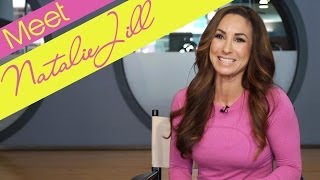
This is a YouTube video titled "Natalie Jill's Fitness Story" created on April 22, 2014, featuring a detailed personal narrative by Natalie Jill. In this content, she shares her journey from corporate America to becoming a fitness and nutrition expert, discussing her passion for helping others achieve their health goals, her experience with celiac disease, the importance of functional fitness, and her philosophy on wellness and mindset. The video is a monologue focused on fitness, nutrition, and personal growth.
Social media is such an interesting thing. I know it is a crowded space and there are a lot of people on social media sharing information, putting things out there. But I feel that what attracts people to certain social media pages over another is valuable content. So it's more about what's in it for the person following it. And I look at it as if I'm sharing something. Is there value to this? Is this going to help somebody? Is it going to make them happy? Is it going to motivate them to try fitness? Is it going to motivate them to have better habits? I don't like things that make people feel bad. So when people ask me about my social media and hey, what's the trick? Or how did you build it? Or how did you get this many people on it? I really feel it's because they like my information, they're finding value in it versus me just trying to trick them and make a number grow. So I was in corporate America for a number of years and that's what I knew, but I was never passionate about what I was actually doing with them. I was working mostly with dental implants for a number of years, which I quite frankly just wasn't that interested in dental implants. But what I loved about what I was doing was helping other people reach their goals, whether it was doctors and getting them to make their practice do better, or whether it was sales reps at my company helping them become stronger, better people and reach their goals. I always loved the goal achievement aspect and fitness and nutrition was always my hobby. I always studied it, I always practiced practice it on myself. That's what I loved. That was my passion. And what I took from corporate America was that ability to help people achieve their goals and applying that towards health and fitness and working towards helping people become their best them. I was always interested in fitness and nutrition. It was something that I was drawn to and liked. But what really made me passionate about it was when I was diagnosed with celiac a number of years ago. And that was the first time I really looked at how food translates to how you feel in your body. I always knew that food impacted your weight, but I didn't understand how it could impact symptoms, disease prevention, even reversing something. That's when I first really got into it. And then I realized I had a knack for it. I would be able to talk somebody through what was going on in their life, whether they were tired or depressed or feeling hungry all the time or had pains. And I started to be able to relate food to how that could help them. And same with fitness. So it became this hobby that I felt I had a strength for with helping people with it. I don't like turning people away, but there is only so much time and a day to work with people, and that's always been a challenge for me. And if I take on too many clients at one time, next thing you know, I don't have time for myself or my goals. So through my programs, through my online modules, through my E products, through my DVDs, I'm able to reach more out to the masses. And that's what I always wanted to do. I'm able to reach a lot of people on a bigger scale with information that's easy for them to understand and affordable. That was the other big thing. There's so much information out there, and it can be so confusing. And it doesn't have to be this crazy, overpriced stuff either. It just needs to be something that the masses can reach. And that's how I got around being able to reach more people, because I can only physically talk to so many people in a day. So there's a very clear type of person I love to help. And then there's the ones that I have to think, can I help them? I don't know. The ones I love to help are anybody that wants to help themselves first. That has to be the first step. Whenever somebody says to me, I've tried everything, nothing works for me, you know, what are you gonna do different? That mindset right there makes me a little nervous because I don't know if they're in a position to want to help themselves. But anybody that is truly open to helping themselves, those are my favorite clients. Those are my favorite people to work with. Really, you can accomplish anything when you've got that mindset. So whether somebody has £100 to lose or £5 to lose, or whether they're just learning about food to feel better, it's the ones that truly want to help themselves that I really want to help. But my favorite people are the ones that I've helped make a huge difference with with their weight. Because there's a lot of people that have these cosmetic things, you know, I want to lose five pounds, and that's great, I can help you. But it's the people that have £100 to lose 50 plus pounds that have really struggled. It's such a rewarding feeling to know, wow, I helped you. I helped you do this. And I'm watching them, their confidence go up, their energy go up. And those are my favorite people. I've been told I'm a weight loss expert and I love that. But I really feel what I'm more emotive, I'm more an expert at is helping people become their best them. I don't love the whole people comparing to others. When someone says I want my body to look like this or I want my shoulders to look like that, I don't like that. I want people to work on being their best them. And I love to help people figure out what that is for them. What does that mean to them, to help them become their best them. The weight loss expert part comes in because I feel that I really listen and understand people and I get to the bottom of what's causing the problem. Not just throwing, just do these things. When you look at my programs, I really take people through the thought process and I have them answer some questions about themselves and really look at that first before just following a plan. Because it's really critical that they understand what's going on, that I understand what's going on, and then finding a solution that's going to work for them. All my programs are gluten free. And that's for a couple of reasons. The first reason, the obvious one, is I'm a celiac myself, which means I can't have anything that is made with gluten. And gluten is the protein found in wheat, rye and barley. I can't have that. I'm not going to share things that have that in it. But the bigger reason for that is I'm a huge fan of an unprocessed food diet. It's critical for everybody to be on an unprocessed food diet. And when you look at unprocessed foods, that means anything that once grew, that's in its most natural state, that has not been altered, that stuff is gluten free by nature. All of that, fruits, vegetables, proteins, yams, sweet potatoes. There's a lot of foods good for you, foods that are gluten free by nature. And I feel through my experience and my own research that that is the best thing for anyone to do. Not just for weight, but for overall well being, for staying and feeling young, for fighting and preventing symptoms related to disease. An unprocessed food diet is best. And you cannot have gluten on an unprocessed food diet. It doesn't work. That is not natural food. As far as does everyone need to be gluten free? I would say everyone needs to be on an unprocessed Food diet, therefore, y feel that that means that gluten free is best. So functional fitness is a term I've used a lot. I know a lot of trainers use that. But functional fitness to me means you're using your body the way it's meant to be used. And I love to use the example of isolating yourself on machines. When you walk into a lot of gyms, they have these crazy contraptions of machines where they isolate your whole body and keep everything stiff. So you can isolate one bicep or one quad muscle, and everything else is not moving. That's, to me, is not functional because that's not real world. We don't go around during the day working one bicep at a time or one quad at a time. It doesn't work that way. And by isolating things to create this perfect physical appearance, you could create imbalances and injuries. So I feel when we can mimic real live movements, what we do with our bodies naturally, that is best for our body. So everything I teach, everything I do falls into that category of using your body as it's meant to be used and being functionally fit. And when you do that, pain goes away. You don't have these imbalances, and you're overall more healthy and fit. So for years I would have this lower back pain. And it really got worse after I had my daughter and I attributed it to wearing high heels my whole life. I really didn't know. And it reflected in different places. I could feel it in my lower back, but I'd feel it in my hips sometimes. And it was just this constant nagging pain. And I used to work out all the time on the equipment that isolated you. And I used to do this run all the time. And I'd wear the shoes with the huge inserts and cushions. And I never knew why my back was really hurting. And then I finally had an MRI and I showed that I had arthritis on my lower back. I just was told that that's just what happens. You get older, you get lower back pain, don't wear heels, take pain medicine, take anti inflammatories, have a shot. I even got went so far as to having a cortisone shot in my joint to hopefully alleviate this pain. And none of it helped. None of it helped at all. And it wasn't until I started really understanding functional training that I was able to change and stop my pain. Because what I learned was that it's not the injury always that's causing the pain, it's the stuff going on around the injury. So you can have arthritis in your lower back, but if everything is functional around it, if you've got that muscle development around it, you're not going to feel that pain. So I always had abs and I thought, well, I have a strong core. But no, I didn't, I didn't have a strong core. And it took developing that core strength and fixing my anterior pelvic tilt that made the pain stop. And now I am pretty much 99% pain free when it comes to my lower back. And that is from making sure I stick to that functional fitness, those routines that don't aggravate that pain and I keep those muscles strong around it. So everything I teach helps that. And that's what helps so many people deal with pain. So everybody always asks me about my ring training because I post some videos on my rings and it's something I like to do and that's, it's a fun hobby thing I taught myself, actually my friend Ari introduced it to me initially and now I've taught myself to, to learn to do more with that because I'm a fan of functional fitness training. I'm also a fan of progressing and using your own body weight. And what is so great about the rings is you're able to use your own body weight, but it's because of the circle and the way you're gripping it. You're throwing off your grip and challenging your core and stability and your balance a little bit more. So it makes it more challenging and it helps you progress to be functionally fit. So I love the ring and you can really do anything on those. I love to do pull ups and push ups from them and working on handstands from it and dips, but it just takes you a step further and helps you progress more. As far as some of the things I post about doing these flips on there, they call it skin the cat. It's not as hard as people think it is. It looks cool and everything, but once you've got a strong core and you're working on your strength, it comes pretty easily. So my age is always this, this big thing. And I used to toy with, do I share my age? Do I not share my age? And I love to share my age because I want people to know that over 40 doesn't mean you're done. It doesn't mean you're done. It is doable to be your best you, no matter what your age is, whether you're 90 or you're 20, it doesn't matter. You should strive to be your best. You to me, I share it now because I want other people to know that, that it could be positive. And I truly feel that yes, I might look 42, but people think I'm younger or they might think I look younger sometimes and it's really because of my fitness and the way I take care of my nutrition and take care of my overall health that way. But it's a little bit more than just looking a certain way. It's can you feel a certain way too? And over 40 doesn't have to be anything negative. So my motto for a long time was excuses or solutions, you decide. And that was the motto I wore really proud and I thought, gosh, you know, everyone has excuses. It's what you choose to do. How do you. That makes them either break you or it makes you a better person and it makes you overcome them. So I really felt that excuses or solutions, you decide was a great motto. The problem with it was a lot of people get offended by it because they don't understand that yet and I would not understand why they were offended. And now I do, though I understand that sometimes when you're at rock bottom and you really don't know where to start, you don't want to be told, get over your excuses. You just, you don't know any better yet. So I changed it and I stand behind my new motto and I think this one's going to stick for a while and that's truly be happy, be healthy, be fit. Because everybody from where they are can work towards being happy, healthy and fit on some level. Everyone can. And there's nothing negative associated with it. And I want everyone to strive towards being happy, healthy and fit. And the excuses or solutions you decide, although I still have that there, I still live it to some way that's something for later. That's once you've grasped those baby steps first and you're on board and ready to do that.










