Neuroscientist Reveals The Real Reason Sleep Gets Worse With Age
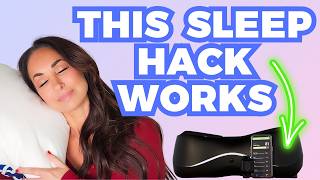
This is a YouTube video titled "Neuroscientist Reveals The Real Reason Sleep Gets Worse With Age" created in February 2025. It features a detailed English conversation between Natalie Jill and Dr. Dan Cohen, a neurologist and sleep technology expert. The discussion focuses on the challenges of sleep quality decline with age, especially deep sleep, and explores innovative solutions including a personalized sleep enhancement device called Soul Tech. They cover topics such as sleep stages, frequency-based brain stimulation, and the limitations of common sleep trackers, providing an in-depth educational and practical perspective on improving sleep health in midlife and beyond.
Why does sleep tending seem harder and harder as we get into midlife? And is it hormones disrupting it? Is it something else? And what can we do about it? And how do we stay asleep? And if we're not staying asleep, what do we need to do to get more effective deep sleep and delta sleep? And why is that important, especially for midlife women? Today I'm really excited in midlife conversation to dive in with Dan Cohen, who's an M.D. he's an M. Expert in sleep technology. He's also a neurologist. And we're going to be talking all about sleep, how we can change it, how we can correct it, and this amazing device called Soul Tech, which actually can transform your sleep. Thank you so much for being here today, Dan.
Oh, my pleasure, Natalie.
So let's talk about sleep. I mean, this seems to be a favorite topic, especially with my midlife women or a lack of. Of sleep. What's going on here? Why does this seem to be so challenging as we age for so many people where we're feeling like we're just. We're not falling asleep, we're not staying asleep. We don't feel rested after sleep.
Well, probably the biggest reason this happens. Well, it's not even probably. It. It is the biggest reason, and that is most people don't realize that the most important stage of sleep is deep sleep. It's also called delta sleep, or slow wave sleep, because the brain waves are really slow. But this stage of sleep is something we lose as we get older. But I'm not talking about when you don't start to lose this when you're 50. You start to lose this when you're 25. Okay, so this is something that deteriorates gradually over your lifetime. And by the time you're 70 or 80, you're lucky if you have any.
Wow.
Right. But even by, you know, you talk about midlife people, people, you know, you've lost 60 to 70% of your deep sleep by the time you're in your mid to late 40s.
Oh, my gosh. Okay, let's back up for a minute here because this is concerning. But what is deep sleep compared to REM sleep or delta? What is the difference with all of these?
Okay, there are generally a few stages of sleep. You know, you're awake and you go to bed and hopefully you fall asleep pretty fast. And so what happens is before you fall asleep, you move into drowsiness. And I think everybody knows what that feels like because you're kind of awake, you know, kind of asleep. And then you kind of drop off. Right. Typically you drop off into what is called light sleep. And of your total sleep time, light sleep is half okay. And one of the problems with the way light sleep is defined, it's everything from drowsiness all the way down to deep sleep. Okay. For in terms of non REM sleep. So it's 50% of your total sleep sleep time. And so it varies tremendously from person to person because you could be in light sleep that's just, you know, after drowsiness versus light sleep that just hasn't achieved delta sleep.
Yeah.
And so people need to look at even light sleep and say, is the quality of my light sleep deep enough?
Okay.
Let alone deep sleep, which also has gradations. So, you know, when we move into light sleep and then hopefully we transition very quickly into deep sleep. But as we get older, we spend so much more time in light sleep and we get so much less deep sleep that sleep in general feels much less restorative.
Yeah. You know, it's interesting, when I started getting interested in this a few years ago, I would notice from my trackers, and we're going to talk about trackers in a little bit and why they're not necessarily as effective and they're, they're just give us data, they're not helping to fix anything. But when I first started tracking things, I used to wonder why I would get so much sleep in bed. So the clock would say I've slept eight hours, nine hours, even 10 sometimes. But I would wake up feeling tired or not rested. And when I started noticing I was having a lot of REM sleep or light sleep, but I was getting very little deep sleep, like 10 minutes sometimes like very, very little. And it's my understanding that it's that deep sleep that is the restorative. And the more you get of that, the less you maybe need overall. Is that correct?
Absolutely, that is definitely the case. I mean, let's look at deep sleep and what deep sleep does.
Okay.
Okay. First of all, you know, when you're young and you really need a lot of deep sleep, it's in part because you're so active and you're active and when you're with all that activity, you get breakdown of cells. They need repair and they need regeneration. That all happens during deep sleep. And even as you're older, you still need that repair and regeneration. Again, if you don't get deep sleep, you don't get that level of repair and regeneration. And this might surprise you. Deep sleep, you know, during that stage you even get DNA repair.
Wow.
All right. Not just cells, but actually the DNA within cells. And so when you think about things like cancer, there's an abnormality in your DNA that can start to proliferate and form, you know, a tumor. Right?
Yeah.
In addition, your immune system, which helps to fight cancer and other infections, the functionality of your immune system is dramatically impacted by lack of deep sleep. So people are much more resistant to illnesses when they get enough deep sleep.
What is the enough. When you say enough, like what is that enough amount? Like I notice right now for me and I just started experimenting with your device, so we're going to talk about that, that in a little bit. But right now with, if I do all, if all the stars align and all the things are right, I get about 90 minutes. Is that on the low end? Is that a good amount? Like what is the right amount for us to be getting?
You're doing pretty well. If you get that amount.
That's amazing.
I mean, if you get that amount on our system, I can't speak to other wearables, but that's pretty good. Okay.
Okay.
You know, if you're sleeping eight hours and really asleep during those eight hours, then you'd expect to get about two hours of sleep. And so you, you know, if that's the case with you, you're getting eight hours of real sleep, then you've lost some. But you know, at your age you're going to have lost some.
And I'm not at eight hours, I'm more like at the seven, seven and a half now with about 90 minutes of deep sleep.
Well, that's what I know. That's pretty good.
That's really. Okay. Is that the amount? Like is there a gauge? Like if you were to say in optimal to see, you know, 90 minutes, two hours, if there's under this amount, that's kind of the alarm where you have to fix it.
Well, it really depends on age. Okay. And look at where you would like to be. We like to call that ideal normal sleep.
Okay.
If you're going to measure yourself against a normal 20 year old, then you'd like to see about an hour and 45 minutes to two hours of deep sleep.
Okay. Okay, that makes sense.
Okay. But remember, most people as, as they get older, they're not as active as they were when they were 20. So their body actually doesn't require as much. However, it does require a certain amount to maintain all these other functions that we talked about. So it's really helpful if you get at least an hour you know, preferably more. We consider, you know, ideal normal sleep to be an hour and 45 minutes or more.
Okay, that makes sense. Okay. Now, why do some people get such a small amount before tracking this? Like, I know when I first dove in again, I thought I would sleep all these hours, but it was so low. Is this something we're genetically wired to get? Is it lifestyle things? What are the things that typically are getting in the way of us having this really solid, great deep sleep?
Well, a lot of it has to do with cell loss. You know, we lose brain cells as we get older. Okay. And the production of deep sleep is fairly complicated. All right? A lot of people think that because we measure sleep, you know, typically the brain from the cortex, a lot of people think, well, that's where sleep is, therefore it must start there. But it doesn't. Okay? Deep sleep, all sleep stages start deep in the brain stem, the primitive part. So think about the spinal cord as it comes up into the skull, and then it differentiates into what's called the brain stem. So the medulla, the pons, the midbrain, these are very, very primitive structures that evolved, you know, 5,600 million years ago. Right. They're present in amphibians and reptiles, okay? And so we have that, and sleep actually is initiated in the brain stem. Okay? Now, so let's say the brainstem says, okay, it's time to go into deep sleep, all right? So it sends signals up to another part that's just above the brain stem called the diencephalon, and that ends up having to do a lot of interplay with the different nuclei within that structure. And then that area has to coordinate activities from the thalamus up to the. The cortex and these loops, because there's 20 different nuclei within that structure. And then it coordinates from front to back to produce these delta waves. All of that coordination takes about five minutes, okay. Just to get to that point. So when you think about not just the time, but all the neurons involved with going from the brainstem to the thalamus to the intrathalamic nuclei to these thalamocortical loops, there's a lot of brain cells involved because it covers your whole particle area. All right? Well, when you look at brains as they get older, you've lost those cells, all right? You've lost fewer of those cells in the brain stem, but you've lost a lot of these cells in the cerebrum and the cerebral cortex. They have to be grown back, you know, and fortunately, with our technology, we stimulate that Part that initiates this, so it sends the northbound signals. And when it gets there, if all the cells aren't there, it says, hey, time to grow them back. Okay. You've probably heard of neuroplasticity.
Yeah, of course.
Okay. That's what happens. So when you start doing a new activity, new circuits grow. Well, this is like a new activity because you haven't done it in a long time. Okay. Yeah, exactly. You have to grow it back. Is it any different than growing muscle? You have to exercise to get muscle.
Back, and you have to be consistent and you have to practice, and it takes time.
So what our system does is it says it knows. Our system knows the frequency in the brain stem to basically cause that to resonate and produce delta sleep.
Okay, let's talk about that. I'm going to talk about your system, but I also want to talk about what else people are using. So, for example, a lot of us wear the ring. Like, I've got a ring that I've worn that tells us data. And many people I know wear watches that tell us data. And a lot of us, like, I love the data. I love getting it. My, my big issue with the data is it can stress you out because you get. You see all this data and you're like, okay, well, what. Great. What do I do about it? Like, great, I'm getting no deep sleep. What do I do about it? Or, great, I'm getting this, but what do I do about it? What are thoughts on all those. Those trackers?
Yeah. You know, I don't want to say anything bad about them because there's nothing bad about them. All right? They're okay, but you're right, they're limited. I mean, you know, some of my friends say, yeah, my tracker's sitting on the floor in the corner because all it did was make me annoyed. It made me feel bad, but it didn't do anything to fix me.
Yeah, I've had those days. I know my, My ring, that with my deep sleep, not so much with my hrv. That's been a thing with my ring. Like, okay, it's telling me this, but what. What do I do to fix it?
Yeah, yeah, yeah, that's the problem. I mean, when we started out, we didn't start out with making a tracker. You know, we started out focused on the therapy. You know, how do we make people better? And then after we made the discoveries that we made so that we could actually do that, then I actually called the different tracking companies and I said, hey, you know what? We can Work out a deal where your tracker can give us the information.
And then.
And then we could have your tracker tell our generator what frequencies to put out for that person.
Okay.
Basically, they were like, huh, what?
Because they were worried about the tracking, not the fixing necessarily.
Right. And they, they just. Some of them just didn't get it.
Yeah.
Then. And then when I talked to some people that did, I said, but I need this kind of data because you guys don't put out the level of sophisticated data that I need. And they said, no, we can't do that because it would hurt our battery life. And I said, all right, fine, we'll develop our own. So. So we had to develop a tracker to. Basically, it was secondary now.
Yeah.
Real time. Right. And then because we needed to look at the nervous system, heart rate variability, and the way everything works in the language of the nervous system. The language of the nervous system is frequency.
Okay, I have a lot of questions about frequency. But before I get into that, because I know that's a complicated topic that I really want to process and bring down so we can all understand it, what are some of the ways before we talk about frequency that people traditionally were advising to help with deep sleep? What's coming up for me is I know we've looked at like, supplements, like taking maybe specific magnesiums, or there's different supplements we can take to help with sleep in general versus deep sleep. I also know a lot of talk about regulating your cortisol and your melatonin. So are we winding down and getting away from blue light? What are your thoughts on those things in general? And were there some ways that you would look at that we would naturally bring this in. And then I want to get into the frequency conversation and why that's important.
Yeah, those things generally do little things here and there. I mean, even melatonin, which is the best known sleep aid, that is good for helping you fall asleep, but principally when you need to time adjust. So when you're flying east and you need to, you know, fall asleep when you're, you know, your clock is saying, wait a minute, I'm still at an earlier time, but it's late enough where I need to go to sleep. So I want to stimulate the pile.
So instead of waiting for your body to produce it, it's saying, okay, it's nighttime now, let's get it going.
Right. And so that's really what melatonin is best.
Okay.
To time adjust after you've flown east. In particular, what about when we look.
At, like, magnesium or other Sleep supplements?
Well, they don't really do much for sleep itself. Magnesium is better for muscle cramps. And, you know, some people that have periodic leg movements and sleep will benefit from that. But generally it's not going to change the dynamics of your sleep architecture or your sleep stages.
Now, when you look at progesterone, because a lot of women are on hormone replacement, I know that's going to come up. What about progesterone? And I know I cycle progesterone, and when I take it, it does help me fall asleep, but it does not help us stay asleep. So I'm assuming your answer with that, too, is also, these things help with falling asleep. The beginning, the drowsiness part, is that accurate?
Yeah. You know, I mean, the way you have to think about it is the brain regulates the timing of the release of all these different hormones. And so when your sleep gets screwed up, all of that timing gets screwed up. And therefore, it affects, you know, the way your body functions in general, particular different aspects. And that impacts sleep.
Yeah, it makes sense. Okay, so talk to me about frequency, because when we hear frequency, to me, it's something we can feel. I can feel it. I can feel when I change a frequency on things. I've had a hard time explaining it to people. So help us understand what that even means when we say, let's change the frequency.
Okay, well, think about the nervous system and how it evolved. You know, if you think about jellyfish, okay, what did they have as a nervous system? They only had these peripheral nerves, and it flapped this bell and propelled them through the water. Well, you know, you and I both have. Everybody has peripheral nerves, the nerves in our arms and legs. Okay? Now, those nerves don't really convey a frequency. They either fire or they don't, but they. Otherwise, the surface of those nerves operates at what's called DC direct current. So there is a conductive pathway, but there's no frequency associated with it. But then as you move up into the brainstem now, different areas have to regulate the function of nerves below them. Right? So when, because of that, and they have supervisory functions, they have to operate at faster frequencies to do multiple things, to multitask. Okay. And so the higher you go, the. Basically, the higher the frequencies are. So when you look at brainwave, you'll see frequencies everywhere from, you know, all the way as low during delta as, you know, 0.5 hertz, but it goes all the way up to, let's say, 40 hertz. So 40 cycles per second.
Okay.
A lot of activities. So when you think about, you know, when I say 40 cycles per second, what that means is think of a sine wave that's going up and down 40 times per second, right? And like alpha brainwaves, people have heard about alpha, you know, that's on average 10 cycles per second. You know, the faster brainwaves are when you think like beta, you know, 13 on up, you know, to, let's say, 40. So now you're doing a lot of processing. And all the different areas of the cortex are communicating with one another, so there's lots of activity. But when you're down on these primitive functions like sleep, you know, we're dealing with frequencies that are like, zero, two cycles really small. So it takes five seconds to have one cycle.
Sorry if I'm making these really basic questions. I want to make sure I fully understand this because we use the term frequency in a lot of different ways. So, for example, if we look at music, music has different frequencies. So I know, like, for me, it's calming to listen to music in 5, 28 Hz. Is that the same kind of thing we're talking about here, or is this something totally different?
Well, air. I mean, when you talk about sound frequencies, now you're getting vibration, okay, in the air, and then it hits the tympanic membrane and then the middle ear bones, Malleus inca stapes, and then the inner ear mechanism. And ultimately that gets transferred to different frequencies and it gets communicated into the brainstem and that interprets it. Your brain has learned to interpret what it gets, you know, related to the frequencies that are in the air. Okay, not exactly the same frequency. It's. Well, it's not the same frequency. So, you know, your. None of your brain operates at 528 hertz. Okay, that's, that's off the chart. But, you know, we hear sounds, you know, from 20 all the way up to, you know.
So when someone's talking about a sound frequency, what you are talking about is how your brain is operating. So the sound frequency might be a certain frequency, but it's what your brain is hearing. And then your brain. So you're talking about different numbers here. Do I have that accurate?
Different ranges? I mean, yeah, very, very, you know, sensitive people that have perfectly normal hearing can hear up to 20,000 cycles per second, but that's the air. But that ends up translating into. When the brain finally hears it, it hears it at maybe 10 cycles per second because different areas of the brain register that, you know, that sound differently.
So that's sound frequency. So let's Talk about environmental frequency, like putting something like the Soltech device under your bed or how does that work?
Okay, we know the frequencies of the brainstem that cause different stages of sleep.
Okay, okay, I'm following.
So what we do is we know that if we work at those frequencies, let's say 0.2 cycles per second.
Okay.
And that signal is going to move up what are called the glial cells, which are part of the nervous system. More than half your nervous system is composed of these cells. And these cells regulate the amount of sodium and potassium that are surrounding the nerve. And so if they resonate at these frequencies of 0.2, then those nerves that normally operate at that level will be more likely to fire. So we can stimulate those areas or enhance their function by doing that, by working at their language. It's. I'm talking to them because they'll respond at that frequency.
So that would make sense. So this is where I. Again, I'm sorry, I'm going. I'm doing deep here because I want to make sure I understand this. So that makes sense to me. When you see somebody with like contraptions all over them, and you see them, they have something on their brain and somehow that's making sense. But how does it work when you have something in your room or under your bed or how is that working? Because are we not seeing something or how does that actually work?
Well, we use a magnetic field, and we have different magnetic field frequencies, and those changes in magnetic waves interact with those glial cells I mentioned and communicate that to the different parts of the brain. In addition, there's what our National Institute of Health calls the biofield. Right. Which is, in essence, it is a field around the body that is responsive to magnetic energy. And so that will pick it up and also communicate with the brain.
Okay, I got a weird question here. Maybe it's not weird to you. Does this explain why we would feel different in different places in the world? Like, if you're standing at an ocean versus if you're standing on a mountain. Like, is that also related to frequency and how we feel?
It's generally not frequency based. It can be depend if there's an environment there that produces those frequencies. But in general, the earth produces a lot of frequencies and you're. And they're generally broadly distributed. Typically, if you're in a particular environment, your senses get activated in a way that either pleases you or doesn't.
Okay, so it's different. But with the magnetic stuff, how else has this maybe been. Have we experienced that in our lives. If maybe, like, people aren't familiar with using this for sleep. Where else have we experienced magnetic frequencies?
Generally, you don't. You experience maybe electromagnetic frequencies that can be harmful, but they're much higher than the frequencies we use. For instance, the FDA considers the frequency we use to be so low that it's. Safety is not a question.
It's not an okay. So how does this actually work, y'? All? I actually got a Celtec device. I placed it under my bed, and I've been sleeping with the watch on. So I've got questions, too. And I. And I'm noticing how it tracks things. What I. What's interesting to me is not just that it's tracking things, it will change my sleep. Now, I'm aware this has to work over time, but I wanted to interview Dan right now because I'm so curious, like, how is this working out? And you're probably like, it's just. It's just working. But I'm trying to connect the dots of, like, how is it working? Like, how is it reading you underneath your bed? And how is this magnetic stuff working?
No, no, they're very good questions. In essence, the wearable, you know, we have a wrist wearable.
Okay.
And it's picking up the typical signals that, you know, your ring picks up, for instance.
Yes.
All right. It does a more sensitive analysis because it looks at heart rate variability in both the time and frequency domain. So we can look at the actual frequencies that you're operating at, which is really, really important for us. So let's say you've fallen asleep, you've moved into light sleep, and now you're starting, you know, you're heading down, okay. Towards deep sleep. The wearable says, hey, she's moving down into deep sleep or towards deep sleep. Let's give her this frequency range because we know this is what she's used to to move into deep sleep, into delta sleep. And so that then impacts your biofield and your glial cells. And it makes it much more likely that that part of the brain that produces the delta sleep will be more active. And so it takes you down. It's supple. It's like a supplement that's specific for that time. We call that real time sleep stage enhancement.
Okay, this makes sense because I was wondering when I got it. So y', all, when you get it, you place it under your bed by your feet, and you wear this watch. But it says you need to wear the watch for five nights to first. So I was like, well, what's it doing with the first five nights? But now I'm hearing you. So what it's doing is it's testing you. It's understanding your body and what your body does naturally. And now it's saying, okay, if this is how you are getting into deep sleep, let's turn that up. Is that accurate?
Yeah, it's doing a couple of things. You know, one is, and the most important thing it's doing is it's determining. Like for delta sleep, for instance.
Okay.
Where do you operate at delta sleep? Even though the range is really, really small, for delta sleep, you may operate at one end and I may operate at the other. I need to meet you where you're at. Okay, all right. Otherwise I'm not going to help you. So the range that we found for delta sleep, for promoting Delta sleep is 0.15 Hz to 0.26 Hz.
Okay.
Very, very tiny. But you may operate best at 0.17. And so we'll give you a little range around there because that's where you're going to respond. I may operate best at 0.24. Okay. So during those first five nights, we're determining where you operate so that when we know you're moving into deep sleep, we know what personalized frequencies to provide for you.
And then it's setting those frequencies. Now, is this an issue when someone like, so, like, for me, the first thing I thought of is, okay, well, this is great. It understands me now, but I travel a lot, so I can't exactly always have this with me. Does that matter? Can you do it when you're at home and. Or does it have to be something that's an every night consistent situation?
No, what we found is that as long as you've been using it and you've restored a lot of the cells.
Okay.
Okay. When you go away for a little while, not a problem. However, if you're away for a week, you're going to start to notice that you're not sleeping as well. If you're away for three weeks, it will have a significant effect. The good news is because you've restored a lot of those cells. If you've been using it for months and it took months to restore those cells, then your sleep will improve. Right. Right away when you get home.
Got it. So it becomes kind of like your, your own comfy bed, your own weighted blanket, your own situation at home. It's like, it's. You're going to still sleep better at home, and it's Just one of those added things to your bed, basically. It's another thing. But you're improving overall. And if I'm hearing you correct, when we improve our deep sleep, we require less sleep and we restore repair DNA. We heal a lot better than. If we don't repair our deep sleep, that's problematic. That's how we escalate disease and DNA breakdown and all these other issues. Is that correct? Yes. So the goal is. Goal is repair it. Now, is there any contraindication like, so with your device, for example, I know there's a watch, and the watch has two lights on them. And is there any issue with that light affecting your sleep the other way?
No. I mean, again, all the wearables have those same LEDs, you know, so they're just for measurement purposes, but those frequencies are not a problem.
And if you're super sensitive like me, what I did is I on the watch because I. I wake up to everything. I have to turn. I turn my ring tracker off, too, at night, because I don't want. So what I did is I put one of those. You know, when you work out, like those armbands, I just put one of those over.
Exactly.
So that I don't see it.
Right. Yeah. Abusers who do that.
Oh, really? Okay. So we're not. I'm not alone with that. Got it. Okay. Yeah. So what are some of the results that you've seen with people on this device? Like, how has this changed their. Their sleep patterns and their. Their life and their health?
Well, this has been very gratifying. I mean, we did research for many years, and every time we ran into a problem, we had to make a discovery to solve it because nobody had done this before.
Sure.
So I. I don't want to even tell you how long it took us to figure these things out. You'll think we're really stupid.
I don't think you're stupid. I'm. Think I'm feeling dumb for not understanding. You know, I'm trying to understand frequency and really, really go another level here. So. I'm impressed that you figured this out.
Yeah. So, in essence, we've been very gratified because we started and we tested it with a. An internal, internal group. And actually the. One of the first things we did was we took it into a sleep lab.
Okay.
Because I, frankly, I couldn't believe it. So there was a guy. I mean, you probably don't know this, but I pioneered the field of automated sleep diagnosis.
No, I know. You invented the first sleep disorder diagnostic equipment.
Yeah.
That's amazing.
In the mid-80s.
Yeah, you're legit. This is. That's why I wanted to. I couldn't wait to talk to you.
And one of the researchers I worked with back then, you got to remember the field of sleep medicine was. This was the beginning of it. And so there weren't that many. There were only 300 sleep labs in the world at that point. And one of the experts that I worked with, Dr. Martin Scharf, was a guy who had hundreds of publications. He was already very experienced, and I've known him for years. So I called him up and I said, hey, Marty, I. I said, I got something I want to show you. Can you line up some patients that we can test? And so, you know, right away we went to the lab and, you know, he asked the same kind of questions that you've been asking. What. What are you doing here? And I said, well, let's see what you know, I'm not going to tell you. And then, you know, we started up. We. We had people that slept all night and then come in for a nap study in the morning, so they shouldn't fall asleep and they definitely shouldn't go into deep sleep.
Okay.
Okay. And so, and so we literally set them up in a sleep lab, I mean, with all the wires and everything, with the video cameras and. And then we watched the recordings while they were happening, and we could see the patient, you know, with the monitors.
Yeah.
And he had two quick observations. He said, boy, and he says, whatever you're doing, you're doing it naturally. Because people, when they move into natural sleep, they have what's called slow rolling eye movements when they fall asleep. Not rapid eye movements during REM sleep, dream sleep, but slow rolling eye movements. And it comes in little bursts of like two to three seconds. And he says, boy, you're producing a lot of these and you're producing them in, you know, five, six second bursts, not two, three seconds. So this is like you're putting them to sleep in a hyper drive state where you're really forcing the issue. And he said, I mean, at the time, you know, that we did this, this was a guy who'd been doing this for 50 years.
Wow.
And we showed this in four consecutive cases. He says, I've never seen this once, let alone four out of four. He says, you've got a biomarker that shows how this is working. And then the other thing he noticed right away was, you know, these people have been in there for an hour and they haven't moved. So People are so restful that they don't move as much. So he thought that was pretty strange.
That's pretty wild.
And then the other thing he noticed was that, hey, you know, three out of these four people went into delta sleep after a full night's sleep. So they should never have gone into delta sleep in the first thing in the morning. Yeah, he thought that was really strange. So then we knew, okay, this worked. But then as we continued to test more and more people, we found that, you know, what we needed to do, like this five night calibration. Because what we learned is that, you know, we were giving these frequencies that were in the middle of the range.
And.
And then I ran into some people where it wasn't working and I was really confused. I said, no, no, it should work. And then I put my white, you know, coat on, played doctor, and started to talk to these people. And I said, you know, tell me about yourself. And, you know, I, I didn't do a physical exam, but I took a detailed history. And what we found is that some people, particularly those people with ptsd, for instance.
Okay, okay.
Where they were so used to, they had been traumatized at a young age. And so those people were hypervigilant. So when I sat with them, you could see that they were kind of looking around, scanning the environment for potential danger. They only felt comfortable when they could scan the environment. They were acting, they were operating more towards a sympathetic fight or flight mode, part of the autonomic nervous system at that low range. And so I realized, oh, we have to do this calibration process so we can meet these people where they're at. Okay. So that was one thing we had to overcome. Another was you mentioned earlier in this interview that, well, you know, you get older and you don't sleep as well. You wake up and it's get back to sleep. And so it's like. Well, I was reading. Could give you like a sleeping pill at that point. Just a little dose.
Yeah, because that's what happens. Because no matter what we do to fall asleep, it's like you still, you wait, you're waking up at the wrong times.
Right. And even if we gave you delta sleep, that gives you sleep inertia. So you sleep longer and in bigger blocks, but you still wake up. You know, whether it's go to the bathroom or really okay.
Or with midlife women, we hear the three in the morning time all the time.
Yeah. And so we had to give. We created what, what are called back to sleep frequencies. So we gave some Some very low cortical frequencies to affect that part of the brain that would awaken. So all of these little things we do during the night when you need it again, that's the real time sleep stage enhancement. So we know, you know, it's like we're watching you totally with our wearable and we say, oh, she's doing this now. Give her this. So about, yeah, we make about 40, 45, sometimes 50 adjustments during the night where the wearable sends a signal, a Bluetooth signal. It only takes a fraction of a second. So your entire night, you may have 2 seconds of Bluetooth exposure, you know, but it sends that little blip to the generator under your bed and says, hey, she needs these frequencies right now.
Okay. This is why I'm so glad I'm asking you all this, because I was so excited about the device. I didn't understand it. So I was like, okay. Because now understanding it makes me want to use it every night when you don't. When I didn't understand it, I. I didn't understand. I was like. But it sounds, it's like having your own personal sleep study expert in your room, really, because it's monitoring your sleep and it's adjusting as you go, so you're getting that literal, real feedback, so you get to actually fix your sleep. Which is wild to me.
And that's what we wanted to do. We wanted to be able to, you know, unlike the other wearables, we weren't interested in tracking your sleep except for the fact that we needed to track your sleep to know how to treat your sleep.
It makes sense. It makes total. You know, I think about all these things that we get to help us with our sleep, right? Every single one of them. And like none of it's customized. Like none of it. I mean, whether. And I. Look, I'm a huge fan of different supplements and I have ones that I swear by for, you know, all of it. But nothing is really, truly customizable. And then I think of things like even weighted blanket or nothing's customized towards us. So what I love about this is you're getting like that real time feedback and like we just shared with the rings and that which I wear to all the tracking things. And you're getting the feedback but not what to do about it. So that's the difference here. I'm just starting to like really understand this frequency thing. So I feel like people use frequency a lot, but if I'm hearing you correctly, it's used for different things. But you're talking Specifically about our brain and the frequency it needs during sleep. And the magnetic field that you have figured out that will actually interact and change that. Is that accurate?
Well, the magnetic field essentially contains those frequencies.
Contains them. Okay.
Okay. And so that gets transmitted to you and ultimately impacts that part of the nervous system that it's speaking to. So, for instance, we use different frequencies when you enter REM sleep.
Okay.
Okay. So we. Again, it's like, oh, she's moving into REM sleep. Let's support that. Okay.
Because that's important too. You want REM sleep too?
Yes. Yeah. The nice thing about. Remember, we don't have to worry as much about REM because people do not lose that with age.
Yeah. I get too much of it sometimes I get wild dreams.
Right. And so we'll. We'll support that to an extent. But then what we do is a lot of people wake up out of rem, so when we see you're getting a little higher, we go, eh, I don't know. Let's. Let's not support that anymore. Instead, let's start bringing her down.
Now. This goes under your bed so the mattress doesn't get in the way of this.
Oh, no. Magnetic field permeates all that stuff. Even if you have metal framing, that's not really.
Okay. Wild. And it doesn't matter if there's two people. Do you. If you have two people, would you use two separate units for each person?
I would imagine if you use one, it'll affect mainly the person who's using the wearable.
Oh, but it'll affect the other person too, but not. It's not tracked to them, so it's not. It's not based on their data.
Before we put in all these refinements, it used to affect the second person more because it was less specific to the one person.
Wow.
Okay, that's. So now it. It still gives them some benefit, but it's okay.
Got it. But you would have it. So with couples, though, you would say, if you both want to do this, you should actually have your own device with your own wear.
My wife and I, you know, we have one on each side.
Yeah, that's amazing. So next you'll have to come up with the travel one. So we don't have to disrupt when we travel. We need a little small one. Right. So when we travel, we've got a secondary.
It's hard because we have two different magic magnets in there because we have to regulate the dose. And again, this is interesting because the dose is not the amount. So it's not the strength of the magnetic field. It's spending more time at your frequency. So remember how I said we use a little range?
Yep.
For you, for your frequencies. Well, one magnet's going from the top of that range to the bottom, the other magnets going from the bottom to the top. So we are always spending some time very, very close or right at your frequency.
This is cool. So you're not just a neurologist and inventor. You're like a full. Like. No, you actually. You're like a full inventor. Like, you are a detective that invents things for sleep. What got you so excited about sleep to begin with? Like, this has been your whole world. I mean, obviously you were the first one with doing diagnostic equipment, and you've helped with sleep. What was so interesting to you about this? Where? Did you have your own sleep struggle?
No, I used to sleep perfectly. When I got older, I came to need this a lot.
So then what made you so interested in all this?
Well, actually, I did not have a primary interest in sleep.
Okay.
My primary interest was the mind versus the brain. And. Okay, actually, we.
What do you mean, mind versus the brain? What do you mean by that?
Well, the ego versus the higher mind. I was always interested in that kind of stuff.
Okay.
So I wanted a background in neurology so that at least I knew what the brain was and what it did.
Okay.
What part of the mind comes from the brain versus the rest? So that was my principal interest and why I went into neurology. And then for this technology, for instance, we didn't start with the idea of making this for sleep.
What was it for?
I wanted to solve what I consider medicine's biggest problem.
What's that?
Chronic stress.
Oh, okay. I like that. Okay.
I mean, one of the things they taught us in medical school was 75 to 90% of all medical conditions are either caused by or made worse by chronic stress. So I would ask my professors, why aren't we treating chronic stress as the primary pathology? And they had good answers. They said, hey, look, this comes from the part of the nervous system that we can't get at. We can never play with electrodes there. We'd probably kill the patient if we did. And because this is such an old part, remember, this is a same part of the nervous system that produces sleep. It's all part of what's called the autonomic nervous system in the brain stem. All right? It regulates stress and sleep. I'm sure you've heard of the sympathetic division.
Yeah, of course. I Like, I live in the wrong one. I. I feel the cortisol all the time. Okay.
Okay. All right. And then there's the parasympathetic.
Uhhuh.
Which is really nicknamed rest and digest. And the other sympathetic. Fight or flight.
Yep. Okay, so. So you were studying stress, and you were understanding about parasympathetic and sympathetic. And so then you assume correlated that sleep would help you with that parasympathetic.
No, I knew we had to stimulate the parasympathetic. It's like a seesaw.
Okay.
Right. When you have stress, sympathetic is up and parasympathetic is down. I needed to reverse the seesaw, so parasympathetic was more active, so I needed to stimulate the parasympathetic division. And then as I did that, I said, you know, this is the same thing as sleep. I might as well pay attention. And we might as well the right frequencies for the different stages.
Okay, so then could those frequency. I'm jumping to the conclusions here, but could this also just help with stress in general? Like, why not? Like, if we're living in the wrong place, like, why couldn't you just have one in your office while you're working? Could that frequency help with that?
We have a lot of people who do that.
Really? So you could use it while you're awake with that for that? Same to help with that?
Yeah.
Okay. That's wild.
Oh, yeah. Well, here, you got to hear this.
Yeah.
You'll get a kick out of this. We made a predicate device, and the predicate device was a lounge with vibroacoustics, which caused great relaxation.
Yeah.
But people had to commit three hours a week to reduce their stress considerably. Stress? People won't do that.
Yeah, because they're too stressed thinking about the three hours of time.
Right, Exactly. And so. And we tested it with 50, you know, holistic practitioners, and we saw that that's exactly what happened. So I walked away from that experience very disappointed, and I said, my God, you know what? We need to create a device that's like the equivalent of multitasking meditation so that it does it to you.
Yeah.
Turn it on. So we worked on this project to solve chronic stress, not sleep. We knew it would do sleep too, but our goal was treat chronic stress. But the public, the US Public, is so keyed into sleep right now because they think that they are operating at their normal stress. They don't know what it's like not to have stress.
Yeah, because we have a dopamine problem and we have a. It's there's a lot happening there and we've learned to live in that flight or our flight. But you actually just really got my attention here. Now this is super interesting to me. A lot of especially midlife women who this is compounded and now we're living in dopamine nation and now we have chronic stress and cortisol. So when I was first starting to talk to you, I'm going, okay, the rest part, the deep sleep so important for repair there. But I'm seeing a bigger level and layer here where we've got to adjust this in our life in general. And like you said, most of us are not taking the time out to meditate or to get us in that state. So if your device could actually help us just by it being next to us and us, you know, functioning that change that. That's huge. That's enormous.
Yeah. That was what I wanted to do because that would take care of. And we saw that. We worked for a decade and a half on that premise.
Yeah.
And just to see what the results were. And the results were phenomenal because of all the stress related illnesses.
Yes.
Everything start to get better.
Everything's related to that.
Right.
Well, now I'm going to need to put the device in my desk because now I'm thinking this is huge.
Well, well, you know, and Natalie, I mean one of the things that's important is to just check in periodically on your body when you're using it because you end up feeling this subtle vibration.
Okay.
Start, start to realize it when you are more relaxed. And so for instance, if your feet are by this, you'll start to feel it in your feet, but over time you'll start to feel it throughout your whole body. And that's when you know, boy, am I, I'm really relaxed now. And you can get to a point where there is no stress.
So if I'm hearing it correctly, just having the device next to you can help with that. And you wouldn't. So the wearable part, the watch with it or what you're wearing, it's not, it looks like a watch. It's not a watch. Wearing that is really to track with you, but if you didn't have that on, you would still get the frequency. Is that accurate?
Yeah. Well, and there's part of the app that is just designed for stress and meditation.
Right.
It's that at the very bottom. Yeah.
And I'm guilty of not using that yet, but I'm going to starting today. Clearly.
Yeah.
Because now I pick.
Yeah. You can Pick the kind of, you know, what do you want? You want relaxation? Do you want to take a nap? Do you want medicine? Yeah.
Wow. Okay, well this was more eye opening than I anticipated. So this is incredible. So okay y', all, if you're probably like what the heck? Where do I get this vice? What are you even talking about here? I'm talking about the soul tech device. But if you go to midlifeconversations.com forward slash soul tech s o l t c so midlife conversations.com soul tech I will have everything links there for you. So you can view this, you can find it, you can get it, you can experiment. So when I got it I I wore it for five nights to track. I didn't fully understand how it was adjusting. Now I'm clear so I'm going to be super consistent and I'm going to report back down because this is amazing. I was waiting to really have this conversation with you but I am all about anything that's going to help us age well and you all this is like a total perfect age optimizing tool because not only is it helping us with our sleep which we all need help there, we've all and as Dan said, it just gets worse as we age. So we've got to nip this. It's how we're going to stay healthy and recharged and heal and repair. But I'm going to start playing with this for what you just suggested just for that whole sympathetic parasympathetic because I know some of you listening can relate to what I'm saying where we're in that constant flight or flight which we think is making us successful and ambitious and all that. But it is destroying our health. It is dangerous for us. We don't want to live there.
Well, you know, the statement stress kills unfortunately is true.
I know. And I Dan, I am not a great spokesperson for this because I feel like I've got a lot of health things down that is something I have not mastered is that you know, I really actively have to work at getting to that calm. And so ladies, if you're listening and you're like I hear you, you're my people but we're going to figure this out out together. And so Dan, thank you for the work that you do and for and this is such an incredible creation and I can't wait to even deep dive and experiment with this more and report back because I think this is incredible technology. Thank you.
I'm so gratified when I hear all of our users tell me their stories because I've heard a lot of weird ones that we can't discuss because they. They involve things that we don't have approval for yet.
I'll bet. I'll bet. Well, this is amazing. Thank you so much, Dan. Thank you, thank you.










