Overcoming Excuses | Natalie Jill and Brooks Hollan
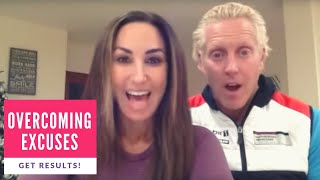
This is a YouTube video titled "Overcoming Excuses | Natalie Jill and Brooks Hollan" created on December 31, 2018. It features a conversational discussion between Natalie Jill, a licensed master sports nutritionist and functional fitness trainer, and her husband Brooks Hollan, a high-performance coach. They talk about overcoming excuses, mindset shifts, personal growth, and strategies for breaking free from victim stories to achieve greater success. The video includes personal stories, coaching advice, and audience interaction, focusing on motivation and self-improvement.
Hello. Hi, everyone. Hey. I've got a big topic for you tonight. And I persuaded my happy husband to come on and talk about this, too, because he knows this subject all too well. I'm going to be talking about overcoming excuses because we all have them. We all have them. And I'm going to share some tips on how you can overcome them. Start looking at them different. So thanks for jumping on. If you're watching us, let us know where you're from and your name especially. I'm on Instagram and Facebook right here and I'd love to know, especially on Instagram, your name because I can only see the little screen name thing. So would love to know your name so I don't have to call you, like car lover 22 or what's wrong with Car Lover? Well, you know, I want to know their name. It helps. It helps.
So.
Hi, you guys. Hey. For those of you new to my page, I'm Natalie. Jill. I'm a licensed master sports nutritionist and functional fitness trainer. And I kill fat for a living. But not just the fat on our bodies, the fat. Those false assumed truths between our ears that we tell ourselves. And who I focus on is women, especially women in their 40s and 50s that are ready to start aging in reverse and leveling up their life. So as much as I love talking to all of you, you're all welcome. You ladies are my focus because I'm 47 and that's what I deal with. And then guys are welcome and they can talk to you. They can talk to you. In all seriousness, everybody's welcome. That's what my focus is. So a lot of these topics apply especially to you. So if you are a woman and you're in your 40s or 50s, I would love to know that, too. So tell me your age.
Tell me.
Tell me that you're on so I can talk specifically into you. Because a lot of the topics I've been covering lately are really geared towards you all, towards you all. So thanks for joining us. And for those of you that don't know, this is Brooks. He's my husband, but he's more than my husband. Tell him what else you are. Tell them what else you do.
Why don't you tell him?
You tell him. What do you focus on?
I do a lot of high performance coaching.
Yeah, that's it? Just high performance coaching? You got to make it sound a little more exciting than that.
It is exciting.
What kind of coaching do you do? Who do you coach?
I coach a lot of entrepreneurs, executives. But I'm almost full, so that's why it's all good.
But you also coach women.
Yeah.
And what do you do with those?
I have a group of 10 women right now.
Yeah. And what are you helping them with?
Helping them have huge breakthroughs.
Yeah, he's helping them have. That sounds riveting right now. We're going to make it a little more exciting than that.
Yeah.
Okay. So the topic I want to share with you guys tonight is about extreme. Because my slogan for many of you that don't know is actually excuses or solutions, you decide. And that's been my slogan since I started this business several years ago. And what you guys don't know is that a few years back, I actually stopped using that slogan. I stopped saying excuses or solutions, you decide. And I changed my slogan at the time to happy, healthy, fit because some people were offended by excuses or solutions, and they were offended by it because they said, I have these serious excuses. This stuff is wrong with me. And they wanted me to be more understanding and nice to that. And I made the mistake of listening to that and saying, okay, you're right. I won't offend so many people. Let's be happy, healthy, fit. But what happened was people stopped getting those kind of serious results because the people that were following me weren't the ones that accepted that about excuses. So I've completely changed back to talking about that. And that's what I want to speak into tonight, because here's the deal with excuses and my clients, if you're on. You all know that I talk about this. Whenever we validate excuses, we're doing a disservice to people. When we validate excuses, we're basically saying, I'm enrolled in your excuse, and what you're saying is wrong with your life right now. And what we do is we make it so there's absolutely no chance of improvement. When we validate an excuse, there's no chance of improvement. So to me and to what my clients have learned, I am not looking at somebody in their highest possibility when I validate an excuse. In fact, that's the opposite of coaching. It is. It's getting enrolled in a victim story. So something could absolutely be wrong with someone. It could be absolutely wrong. But we can get enrolled in why they're stuck there and it needs to stay there. Or we can see them in a bigger greatness, in a higher possibility, and we can not not get enrolled in that excuse and instead look for solutions. So I'm really adamant that's the case. And I love it. Somebody just wrote excuses are like, I'm not going to say the bad word. But he said excuses are like a holes. Everybody has one. Yes, but the difference is most people walk around as people pleasers. Fully, fully just acknowledging and saying, yes, I'm enrolled in your excuse. I'm enrolled in your excuse. And that does not help people get better. It never helps people get better when we just invalidating their excuses. And actually I shared a post earlier on social media where I was doing chin ups and pull ups again. And what's interesting is that I used to do a ton of chin ups and pull ups. Those of you who have been following me for years know that I used to constantly be on the rings doing pull ups and chin ups, doing them all the time. And then about 14 months ago, I had an injury and I ruptured a disc in my back. Not because of the pull ups or chin ups, it's just from degenerative disc disease and years and years of wearing high heels and all kinds of things. And many of you women my age can relate to that. But what happened is I ruptured this disc. I ended up in emergency surgery and I had actually lost using my right leg for a while. And when I recovered, things were not the same. So I have, if you can picture those of you that understand back and anatomy and disc between L5 and S1, I have pretty much no disc anymore. It had ruptured out. And I have massive degeneration in just that disc. So for me, anytime I'm in like a sitting position or an L sit, I get a lot of pain right there. A lot of pain. Despite working my core and everything else. But what happened was I started accepting that excuse and thought, I can't do chin ups or pull ups anymore. I can't do these things. I shouldn't find a workaround. And I'm pretty good at enrolling people in excuses, just like we all are. Right? So what I shared today was that it's very easy to enroll people in your excuses, but that stops you from going greater. It stops, stops you from achieving something beyond that. So we're not doing a favor for anybody by being enrolled in their excuses. And we're also doing terrible things for ourselves by falling victim to those excuse stories and staying stuck in those. It does not help us elevate it. And here's the thing, if you don't like what I'm saying, especially here's the thing about it, there's nothing to lose by believing in a greater possibility Things aren't going to get worse. But when you get stuck on an excuse and you're determined to convince everyone why your excuse is valid, you are absolutely stuck. You are stuck, and there's no reason to go further. What do you got to say about that? You're not talking much.
You're doing great.
What do you have to say about excuses? Because you gave me a little pep talk this morning.
Which pep talk?
Brooks gives me pep talks all the time, so. Even me, who doesn't get enrolled in excuses, I come up with excuses. And that's why it's important to have someone in your life that also doesn't let you get into a victim talk.
Very true.
Yeah. Would you like to share some of your excuses that you've overcome?
Like which ones?
Any of them.
I have so many that I'll pick one. What will you tell? What's one that you want me to talk about?
Well, I've been talking a lot. Tell him he's got to talk about your excuse for not getting started on things. Procrastinating.
Yeah. I had a huge. Perfectionism, procrastination, which basically crippled me for over 20 years.
You gotta talk louder.
Okay. No. So that was. That was my thing, the perfectionism, procrastination, which is what I use as an excuse. And really, at the root of that, just, you know, it's a deeper worthiness issue.
So if. When you were procrastinating on something, if you'd have a lot of reasons why you're procrastinating, you could tell me or anyone else why you're procrastinating. We would have believed you. Right?
Yeah. It was easy. It's really easy to enroll everybody else in your victim story and your woe is me. Because there's always evidence. Because that's how the mind works. It goes back and it gathers evidence so that you're right about your story or whatever is holding you back.
Yeah. So when someone would buy into that, like, if I were to say, I get it, I get why you're procrastinating, did that help you move forward?
Well, it just keeps you procrastinating. But then, like, somebody else, you know, cool. There. I'm right. See? I'm right doing it.
So a lot of times with our excuses, what happens is we get to be right, so you get to be right. So you say, I have an injury, I have an illness. I'm old, I'm tired, I have whatever. And then we convince other people that that's the truth. And what happens is we get to be right. And we get to stay comfortable because now we have a reason to not go for something greater.
I just don't know if everybody can see but flops his nose right down here. Like, he keeps nudging me.
Can you see that?
Constantly.
So he's like, for those of you on Instagram, you can see flops right now. Here. Can you see flops now? They can't see. There we go. There's flops down there.
He's my boy. Literally, he's never farther than 2ft away from me at all hours of the day.
Are you making an excuse, Brooks, not to talk to Facebook and Instagram right now?
No, I just let him know because he keeps nudging me.
I'm just playing. Cause we're talking about excuses. Yeah. So excuses, you guys, excuses. It's super easy to get stuck on them and enroll other people in them. However, it doesn't help us get better. So what I'm going to suggest, because the first step is recognizing it. So when you look at, like, maybe you've let yourself go at the end of the year and we're getting into 2019, maybe it's not didn't turn out the way you wanted this year, maybe you let yourself go, maybe you didn't go for those goals you had last year. Maybe you didn't make the amount of money you wanted to make this year. Maybe you didn't. Whatever it is. But what I want to invite you to do is instead of blaming why that didn't happen on whatever you were blaming it on. Your illness, your injury, your boss, your friend, your husband, whatever it is, there's no possibility when you do that. There's absolutely no possibility when you make that blame and you convince everybody else why you were right about that. There's no possibility to get better. As soon as you're able to get out of that victim story, take accountability and say, okay, I'm not going to get enrolled in these excuses, and I'm not going to enroll others in my excuses. Instead, I'm going to find some type of solution. What's amazing is it actually happens for you. You actually start to be able to get the support. You find a solution. And here's what I also want to share. Especially if some. If one of you are listening and you're thinking, well, I have a legitimate excuse because somebody I know, some of you are listening, going, I have a legitimate excuse. I swear, mine's real. Mine's real. What happens is you get to be right and you get to be Comfortable by having that. But there's literally no possibility when you don't even look. And here's the thing. It might be harder for you, it might take you longer, it might take more research, it might take getting a different support system. It might be changing friends, it might be taking action that you're not comfortable doing. But here's the thing, it does work. It does overcome things. You are able to find a solution when you do that.
Totally.
Why are you on here right now?
You just keep turning to me.
Because I'm waiting for you to ask. Drop some knowledge, babe. Drop some knowledge. Gotta drop some knowledge. Share about your excuses.
Well, I did another perfectionist and procrastination. But I mean, I think I had big excuses years ago. I was $32,000 in credit card debt, less than $5,000 to my name. Everything I owned in the world was in a 10 by 10 storage unit. And yeah, that was kind of like my rock bottom.
But talk about the victim story that comes behind that. So when you were there.
Well, I was thinking I blamed my dad, I blamed the military, I blamed every situation, you know, but that was when I finally had to look at myself.
But here's the interesting thing.
Action to change it.
When you blamed your dad and the military and everyone else, you probably enrolled people in. Why? That was true, right?
Oh, it was easy to enroll everybody because you have you. That's how the brain works. You collect data and all this other information.
Yeah. So now being from that place, what could. What do you wish you could have told your friends to handle that with you? What do you wish you could have told people to talk to you? How should they have talked to you so they didn't get enrolled in the victim story?
I don't know that it would have mattered in the end. It's like you got to reach that point to where the pain of where you are in life outweighs the pain of doing the work to make the changes. Because people can tell you stuff all day long, but until you're ready, your subconscious, your ego is not going to let you make those shifts. So usually it's all about pain. So once the pain of where you are in life. So I see you on here like there are 50 years.
Well, yeah.
At what point is the pain you wait till you're 60. I mean you are, you're at where you're supposed to be at and you can make that decision any point. It's just a lot of times we think stuff's going to happen. I remember when I was 20, like 40 seemed like a freaking eternity away. So by 40, you'll have your millions of everything figured out. Then you get to 40 and you realize you don't have shit figured out. And so then it's like you got to start looking at yourself. And that's where you start doing the work.
Yeah. That's awesome. So we have a rule. When we go into an excuse or a story, we let ourselves have a pity party for a few moments and then we call each other forth. And it doesn't always look pleasant and happy and comfortable at all. But that is what works. So if you are not doing that for people, if you are validating excuses, if you are enrolling people in your excuses, there's literally no chance to get better. There's no chance to get better. So the first step is really, truly recognizing that that's what you're doing and making a decision that you don't want to do that for others, you don't want to validate that for others, but that also you don't want to accept people validating that for you because there's no chance to get better. And I also want to share that this is different than compassion. You can have compassion for somebody going something. There's very real things out there. There's absolutely very real things out there. You could have a legit illness, a legit disease, an injury. All of that is very real. You could have really lost your job. You could be really in a financial hardship. All of that could be really possible and true. You can have compassion for that. And you could still say, I'm not going to let this stop me. I'm going to find a solution. I'm going to find a workaround. And what I'm sharing with you is that by putting that stop on it and saying that this is it, this sucks. It's an excuse. And I'm just going to enroll everybody in my excuse. And why I can't. There's literally no possibility. You might as well just completely give up. So it doesn't hurt. It doesn't hurt to look for a solution. It doesn't hurt because you can always get better from where you are right now. You can always get better from where you were yesterday. I'm gonna definitely take some questions. Let's see. Hi, Tori. I see you live outside your comfort zone. Yes, Tori, exactly. Because it's comfortable to stay in victim mod. It is so comfortable to stay there. But it doesn't get results. It doesn't get results.
And the real reason you Stay there is because that's the way the brain works. The brain is like a phenomenal search engine, but it only looks in the past. So anything that you're wishing for that you haven't accomplished yet, it's in the unknown zone. So the brain's always going to go to the past to look for excuses. It's going to. Well, it's going to look for evidence so that it gets to be right.
Yes.
And so if you have a constant story, I mean, that's why, that's what I help you a lot with, is really slotting the patterns. And honestly, a lot of those patterns have gone on for decades and usually they've been multi generational because, you know, we learn from our parents. So we pick up their patterns, their bad habits, those types of things. You see how they keep showing up. But it's really just the psychology of, you know, how the brain works.
I do want to share today. I'm going to take a bunch. I see a bunch of questions coming. I'm going to definitely answer these questions in a moment. I want to share that many of you don't know. Many of you do know that I have a podcast called Leveling Up, Creating Everything From Nothing. And on that podcast, I specifically interviewed people. I've done 45 interviews so far, and I believe there's about 30 that are live right now. 45 interviews of people that overcame massive hardship, like crazy ridiculous hardship excuses that anyone would have been enrolled in. People that were homeless, people that were massively abused, people that were paralyzed. I've interviewed people that had these incredible hardships and instead of getting enrolled in their victim story, they decided to change their mindset and look for a solution. And they all overcame it. Like people that were living homeless and created wealth over hundreds of millions of dollars. One woman I interviewed, she was paralyzed. She was an Olympic athlete. She was paralyzed. And she was told by many doctors that she would never walk again. And she retrained her brain to be able to walk. She's a walking paraplegic. It's just so many great examples of people that made a difference by changing their mindset and looked for a solution and did not get enrolled in their own victim story or their own excuses and stopped convincing others of their excuses. They literally have to go, la, la, la, la. I'm not hearing the excuse. I'm not hearing it. Okay, I'm gonna take some questions. So Heather's saying, brooks, this is definitely for you. Okay, so I've had the exact same problem. I'm a Huge procrastinator. I don't see how you've changed that though. I recognize my procrastination sickness for 20 years. What's the solution? Just saying find the solution is not helping me. Please tell me specifically what you did because it sounds like I have the exact same problem as you do. Can you share some steps that you did? Thanks, Heather, for asking that.
It's really hard to do so just through a Facebook Live because obviously there's lots of steps. If there was just as simple as clapping your hands three times and the procrastination goes away. It's not. But really a lot of the root of procrastination is into the perfectionism which really ties back into. It's really uncovering the root cause, which is at the root a deeper self worth. It's a worthiness issue and it's really a matter of going back and changing that programming and changing the belief sets that happened around it. Because in the end, one good way to look at it is really procrastination or perfectionism. It's really selfishness because basically we're not sharing our gifts, our info, because we hide behind it needs to be perfect before doing anything. But really that's what keeps us, you know, that way we don't have to do anything because there's a big fear that it wouldn't be good enough. And that's where the root is, the worthiness and the not good enough. So if you want, you can really try to go back. And sometimes it can be tough because a lot of times these things started, you know, things that you don't even remember because that's also the brand. It's going to be buried. And sometimes, you know, I've done a lot of work going back, regressions, going back to uncover some of these early type things. But you can start catching yourself. And as tough as it is, just pushing through that, you know, that initial. The initial discomfort to take action.
Yeah.
And just like the more resistance you feel like it's really in these situations that should be the guiding force when you start. Because I did that. Like I've filmed Natalie for thousands and thousands of videos over the years. Like, I didn't actually talk to the camera and do my first one until like June 1st. You can go back to my Instagram and see like when I first started doing my own videos. So I totally get. Because I. I mean, I've been there. Yeah, Natalie's got like 3 million social media followers and I think I have like 1800. So again, because I hid for seven years. Perfect. And all this, you know, all that stuff. So I totally get it. And that's one of the things, like a lot of people that I coach, because I can totally relate to them, but I also know how to go back and get to the root cause and change that programmin so that it can be overcome.
I hope that supports you, Heather. I know it's a bigger question, but I hope that supports you. I do want to give you a couple little tactics, too, that we definitely practice. And this took. This was not an overnight thing for Brooks or myself. This took us years of studying this, getting help, researching, learning, practicing on ourselves, getting our own coaching, and as we've coached other people, really fine tuning this. But. And then it was interesting is when I started leveling up podcasts, it was like, it was so cool to see that theme with all of these massively successful people, that they had these same steps. They might not have been defining them that way, but they were. So I'm gonna share a few steps with you, and then I'm sure, Brooks, you can add in a few as well.
Yeah, mine's a little different. Hers, but I mean, at some point, just like, you know, Tom Brady, Michael Jordan, everybody out there that's great at whatever it is has a coach like Tony Robbins, even though he's coached millions of people for 35 years, he has four coaches. So you always have to have somebody that's helping you look in your blind spots. You know, we're getting close to the Super Bowl. You know, Tom Brady, as good as he is, he still has, you know, multiple people that are. That are coaching him. And it's the same thing with these things otherwise. Because the mindset that got you into a problem is not the mindset that's going to solve that problem. So that's why even, like large companies have a board of directors. Like, you have a really smart CEO, but you're going to have a board of directors with different viewpoints that are going to have different life experiences, different belief sets that you can look at problems differently. So, I mean, I've invested well into six figures on coaching, mentorships, masterminds, programs, things like that.
And let me clarify, it's not because we had an extra six figures just laying around. It's never. It's not. Nobody ever has that extra money just laying around to invest into things. But it's not about that. It's about investing in yourself. It's really not about investing into a coach or a mastermind or a mentor. And it's about making that decision, deciding and investing in yourself.
Like, I remember when I was laying on like my air mattress and I was just, you know, in debt. And I remember seeing this, like this genius network. There was like $25,000 for three meetings. I thought it was like the dumbest thing ever. I was just like, how can people pay that much? Because I was just mentally, I was like, I just want to make $36,000 a year to keep my head afloat. But that's the thing is like, you know, I ended up becoming a member of that several years later. But it's like, you see the price for stuff, it's not for them. Like, that price is for you. Because that's usually the first breakthrough is really investing in yourself. And I'll ask everybody out there, like, how many of you, you can just leave a comment, have a book that you've bought that you haven't finished reading, or maybe you haven't even opened it to start reading it. So if you're like me, I'm sure you have a couple. And there's a reason why, because, you know, books are 14 to 20 bucks. But if a book was $3,000, how many books would you have left? Would you have, you know, not finished reading or left completely unread? Yeah, and that's the thing. It's just like, you know, what you're paying for is because the discomfort of the action that, you know, your coach or whoever's gonna have you take is usually, usually the discomfort of wasting that much money. And I tell you all the time, with like Tony Robbins, you can go buy his book for 15 bucks. You can go to a seminar with 12,000 people for like three grand. A seminar with 6,000 people for like six grand. Or you can be in his coaching for 100 or for one on one for a million dollars. But it's not like the more you spend that he gives you the secret. The difference is when you pay Tony Robbins a million dollars, it's the same thing that's in his $14.95 book. But you have a 6 foot 8 guy basically grabbing you by the jugular. And at that point you'll probably do what he says because you invested a million dollars in it. You invested in yourself. So it's like that's the big secret. This information doesn't change the more you spend. It's just the more you spend, you're probably finally going to take action on all those things.
Yeah, absolutely. And I do want to share, I promise a few Things that you can actually start implementing right now. And Brooks and I have both done this. Absolutely. But the first one is literally making a decision, just deciding, just deciding that you are done with the excuses that you're done with whatever it is that you're not happy about with right now and decide that this is the time it's happening for you. Literally make the decision. Because sometimes we just think about it, we wish for it, but we still say things like, I'm gonna try, I might, I'm gonna consider. But literally making that, putting that line in that stamp and saying, I decide, I am making a decision right now. This is happening for me. Whatever that is, this is happening for me. And that's something we both have definitely done. And we do first with our clients. And then the second thing is making a declaration about it. Like, tell somebody you're doing it, don't keep it to yourself. And then celebrate quietly at the end of the year, if you did or you didn't make it, tell people that this is happening. Act like it's actually it's done. Like this is happening. I'm going for this goal, this is what's happening and it's done. And then getting really clear on that vision and what that goal is. Like, what is it that you actually want? And being super clear on it, like, what is it that you want? Visualize it, like, what is it? I want to be healthy. I want to be fit, I want to be confident. I want to be living here. I want to be with this type of relationship. I want to be working for this type of person. What is it? So many times we ask people, what is it that you want? And they just say, I want to be happy. But they don't get clear on what it is that they are asking for or what it is that they want to go after. And without that really clear decision and vision, it's very, very hard to make that happen. And then drop the excuses and I call them self imposed stops or false assumed truths. It's those things that we're telling ourselves on why we can't have a vision or goal happen. It's saying things like, I'm too old, it's too late, I'm too injured, my time has passed, I'll never find anyone I can trust. Those are all self imposed stops and they're all excuses and they all stop us from possibility. You approve? I love it. I love it. All right, let's take a few more questions. Let's see. I have. Yes, hi. Let's see. I'M gonna take some questions. Heather, she lost the question earlier. Oh, I got it. Awesome. Awesome, Heather. Thank you. Let's see. Jennifer, I was diagnosed with Ms. In July. I lost so much of my muscle mass and energy. I'm trying so hard to get back in my routine. It's so. Okay, Jennifer, I want to clarify, first of all, I'm sorry that you're diagnosed with ms, and I know that could be extremely rough. I want to share with you this, though, just a few things. Just even in what you just wrote, when we say try, when we say try, it's not a declaration or a decision. Trying gives us an out. It gives us an out to quit and not find a solution. So be really aware of your language. As soon as we say, I'm going to try anything, it's like, hey, try to pick up this piece of paper. If I'm not. If I'm just trying, it's not going to get picked up. If I'm going to pick it up, I'm going to pick it up. So watch your languaging on that. And also, just because things are easy or hard doesn't make them right or wrong. So nobody's saying things will be easy, but you can change your mindset around it as soon as you decide it's going to happen. Things might be harder for you, they might take longer, they might be more challenging. All of that is true. Fine. And you can still get results when you decide and you declare that it's possible. But when we listen to those feelings and we let ourselves get enrolled in the victim story of I have a diagnosis, I've tried everything, it's hard. Then we're putting a stop on it. So it really is a decision. So, Jennifer, it's a decision. Do you want to fall victim to it or do you want to be that success story that has amazing success even with that diagnosis? It's all a choice. It's all a choice. Let's see. How do you find what your passion is? Amy? Hi, Amy. Amy, it's deep diving into that question. It's deep diving into your driving car motivator and your vision. If you're questioning, how do I find what my passion is? Start with what you don't want it to be. What are you not happy with? Start with that first. What don't you like about your life? What do you want out of your life? Start with that first. And then let yourself dream and fantasize about someplace else you can go. Like, what would you want? And what we tend to do wrong with fantasizing and envisioning a future is we go to the. How we go to this. Like, but how will I do it? Or like, Brooks mentioned getting stuck in the past and getting really stuck on what didn't work before. And then we stop ourselves from daydreaming and dreaming big. If you can let yourself literally just dream, like it's a dream, like you're sleeping, like, what would it. If anything was possible, what would that be? And stop your mind from going to the hell. That's a really good first step. Anything to add that?
Yeah, I mean, are you asking about, you know, how to find your passion or your purpose? Because they. They can overlap, but they could also be different things. So, yeah, there's definitely some. I mean, there's definitely some exercises that I have to go through to. To do both of those. But really, the goal is, you know, figuring out your purpose because, you know, that, to me, is more powerful than just finding your passion. A lot of people can be passionate about something, but it's not necessarily their purpose. And your purpose is what will drive you and fuel you. And that's where you're. That's where the motivation, that's where the commitment. That's when you know you'll be powering through everything. So really try to focus on your purpose. And I'd say one of the biggest keys with that is your purpose is usually hidden inside your pain somewhere.
Oh, that's good.
So, like, I never under. I didn't understand this for the longest time, but, you know, your pain will, through that, will become your purpose.
Yeah, absolutely. Yeah. Can you share your story about Naval Academy and I'm sorry, SEAL training?
I can't do that on another one?
No, I want you to share it. They want to know, share your story. This is big. This is a big one for me.
One of the Cliff Notes was. I mean, the first 21 years of my life was just, you know, kind of an upward trajectory. By the time I was 10, I was ranked fourth in the nation in swimming. I was working with Olympic swim coaches. I worked with Michael Phelps's coach for three and a half years. I went to the Naval Academy, qualified for NCAA's Olympic trials. I was one of 15 guys competing or one of 52 guys competing for 15 spots to be. To go to Navy SEAL training. I got one of the spots, got out to SEAL training and was doing great, got through Hellwake, did everything. But I got 13 days till graduation. I got dropped from SEAL training, and that basically set me on A two decade plus tailspin where like my confidence just everything was gone. I couldn't complete anything.
What was your pain?
Well, what it came down to is I never understood, you know, how your pants, like what I didn't make it like because I always thought people I want to hear from the best, like, who's number one. Like nobody cares about number two. I mean, nobody remembers who got second place in the super bowl last year. Like, and so that was always my thing is everything had to be perfect. Everything had to be 100 cent. Like, you know, being first was only that matters. I didn't understand how, you know, I never got this like your pain can become your purpose, but really through, through that pain and through those 20 years, like I see it crystal clear now what it's allowed me to do with coaching and as far as being vulnerable, being able to relate to people and helping men and women, you know, overcome like the way that I was living. And the same things I was dealing with, really helping them to not take the 20 year route or even a, you know, eight year route of once I actually started working on it, like I can really go back and you know, quickly, let's get to the root cause. And then through that time we've gotten like, science has gotten so much better at like actually figuring out how the brain works. So it's not just a bunch of like woo woo hippie stuff now. Like, you know, look at what we can do with our iPhones. You know, we can stream like we're streaming video around the world right now where that used to take like three trucks and literally millions of dollars used the technology. Everything's gotten smaller and faster and better, which has allowed them to go into the brain and see how new neural patterns are created and formed. And really that's what a lot of this stuff goes back to. It's not just wishful thinking, it's not just thinking positive, but there's actually formulas and ways to go back in and actually reprogram the brain.
Yeah. Oh, Shalene just said, hi Chalene. Yeah, and I wanted him to share that because he mentioned about the pain turning into purpose. And Brooks at that time never understood that that would be his purpose. And what that's turned into is him being just this rock star coach of understanding people with this pain.
Yeah, I want to answer this. They said, you know, were you looking for something or. I wasn't being selfish. Like it wasn't intentional selfish at all. What it was is I didn't think I was good enough. I didn't think I was worthy. I didn't think, you know, it wasn't anything like I was being selfish or holding out. Like, you know, I didn't get my way. I don't want to play. It was a total, like, you know, I'm not good enough to play. And so, like, I just would hide. I would be like, well, it's not going to be perfect. So I wouldn't do anything. So it was definitely. I mean, that's. It's definitely where that belief set came in. Like, I wrote a book, how to Professionally Improve Fred, and I was like, it's not going to be good enough. It set on my hard drive for, like three or four years. And then after I'd met Natalie, she saw it, like, got it in front of somebody, and they basically had it published inside of 10 days on Amazon. It was an Amazon bestseller. But the thing is, even with every time I gathered evidence, like, look, you are good enough. Look, this book was good enough. It didn't matter because I still hadn't done the work, the emotional work down in the belief set and that type of thing. That's the thing. We can gather all the evidence in the world, but if we don't have that internal belief set, it doesn't matter. You know, like, you can look at, like, Kate Spade. I mean, she's selling handbags on every corner of the planet, you know, but she wasn't happy. Robin Williams. I mean, the list is long of athletes, celebrities. They've got millions of dollars, they have freedom, they can do whatever they want. You know, they made everybody else happy, you know, but themselves. And so it was kind of the same. You can gather all this evidence, but if you still don't believe it, you're not gonna have fulfillment.
Yeah, yeah. So pain into purpose. Pain into purpose and talking about it, that's another thing, is not hiding it and not taking it out as judgment on others or. But actually being able to do that work and go there and acknowledging where that's coming from.
Yeah, I was trying to read the questions. There was a question, see if there's. There was a couple that came in.
So Sarah said, I did the jumpstart nine years ago, and even you being a coach, I noticed how far you have even come. So thank you, Sarah. Thank you. Awesome. Definitely going to take some more questions. If you have more questions, I do want to share because we have some spots left. Want to tell them about Breakthrough Weekend, what's happening, and how they can apply and talk to you on the phone because you can talk to Brooks on the phone if you apply what's happening?
And you get three days. You get three full days live in our house in here in Southern California. And in addition with that, you're gonna get three months of small group coaching. And that's where part of this process will be like getting through, you know, these. These things that are holding us back. So really it'll be a combination of coming out here to the house for three days with Natalie and myself, and there'll only be 10 people in that. So it's, you know, it's a small, safe, intimate container. So it's not like it's a big room with, you know, a couple hundred people. You know, we're gonna basically, we get a lot of work accomplished in a short period of time.
So basically, what was my absolute favorite thing to do, my favorite thing to do of everything that we do is eat See's candy. Well, that too. My second favorite thing to do is See's candy. My first. My favorite thing to do in my work environment is to work one on one with people in groups. I absolutely love it. Even though I know I reached many of you on Facebook, live here, Instagram live through virtual trainings and all that. There's nothing like being in a closed space for three days with people. What happens, the transformation that happens during this time, we call it Breakthrough Weekend because it's so powerful. We've done three. These will be our fourth and our fifth coming up and the only two that we're doing this year. It is incredible, just a transformation. What happens at these weekends is when you have an actual experience where you are put in an environment with other people on those same goals and you are with us and you are in an environment away from your family, away from technology. You are literally in there working on yourself. Transformation is lasting. You have these huge breakthroughs and it lasts. It's like this quick start planning to everything you want to work on. So what happens is when you come to Breakthrough Weekend, you spend the first night with us. We have our really amazing chef, by the way, an amazing chef that comes and cooks. He's incredible. And he's good looking. Don't tell Brooks. He's very good looking. He's fun to look at, but he teaches. We have a great dinner together and we get really set in our intentions for the weekend. And then what happens is we go deep into vision. So Brooks and I personally help you figure out exactly what your vision is. And we're good at this. We're good at getting to the root of your passion. We're good at getting to the root of your purpose and really figuring out what your goals are. And those next two days are all about breaking through the stuff that's holding you back and sealing the deal to move forward. So it's not just that weekend together. You form new friendships with a new tribe. There's three months of coaching with Brooks and I together. And because I know some of you are like me and want to start things right away, we give you immediate access to my full body reset program, so you're able to get started on all of your goals and everything right away. So if you think at all that this is an opportunity for you, we're only doing two this year, only two. And we're only having 10 women at each, then definitely apply. There's no obligation applying. You just go to. And I'm going to type it on Facebook and we'll. If someone wants to type it on Instagram, I can pin it. But you want to go to www.natalie chill fitness.com apply. Going to write it right here. And you want to fill out an application. And we're asking a few questions on there so we can get to know you a little bit better. And we have some dates to choose from, and we've got a lot of applications to go through. We're only accepting 20. So when we look at it, if it's the right match, if we think you might be the right match, Brooks is going to call you. You're going to call him, right? You're going to call them, right? I will fix it. I'll fix it. I will fix it. There's four W's.
Yeah, let's put four W's.
Okay, I got it fixed. You're gonna call them. What's gonna happen when you call them? What are you talking about?
We're gonna talk about their application, their vision, and, you know, the things that are holding them back so that we can have a breakthrough.
Yeah. So no obligation to do it. But I would love. Thank you, Amy, for writing that. I'm gonna pin that right there. Thank you. So, yes, all you do. There's no obligation apply. See if it's the right match. And then we're gonna go through the applications. We're only having 10 women each, so you're not going to want to miss this. Some of the women that have been to these, it's. It's unbelievable what's happened to them. I think back to, like, Nicole, even Nicole is an entirely different person than when she before she came to Breakthrough. In fact, I'm gonna grab a picture of her. I'm gonna grab one on my desk. Talk to them. You can talk to Brooks. Talk to Brooks. I'm gonna grab these pictures. I gotta show them.
Here. I'll take some questions while Natalie's running. Let me check, see if there's any. Kathy, understand the elite athletes mindset. That's awesome. Because your husband, you know, he coached many Olympians. Awesome. Yep. There's the link. Any other questions? I'm trying to check both of these. Not as good at this as Natalie because I'm newer to actually being on the camera. Jennifer said Breakthrough was fabulous. Wait, there was no Cease candidate? Yeah, there was no Cease candidate that week. And that was a joke because it was the holidays. Natalie got in a box of Cs and she attacked it like a rabid dog.
Don't be ratting me out.
And then she blamed me because I didn't hide it good enough.
Okay, guys, I'm going to show you these. This is really cool. Ok, this is Terri. She was at my first breakthrough. This is when Terri met us. This is her now. But what you don't see, it's not just this weight loss. It's the breakthrough and how she's now 50 and just an entirely different person. An entirely different person. Now here's the thing. You can follow a diet, you can follow a plan, I can give you workout routines. But if we don't get into the deep stuff holding you back, this type of thing doesn't happen. And last, you become a new person from that. Show you another one. This is Nicole. That was Nicole when I met her. Okay. This is her now. An entirely different person. Not only did she lost a lot of weight, her confidence came back, her income went up, everything about her life changed. But it's because of that experience. It's because when you're in an environment where you're surrounded and only working on yourself, it's a whole different experience than just reading a download or watching a video academy. This is transformational. It's life changing. Show you another one. This is Amanda when we met her. This is after she completed the process through Breakthrough. Same thing. Amanda's a doctor, she knew this stuff. But being in that experience, allowing herself to have fun again and to be with like minded women on that same mission, she changed her whole life. Another one I want to show you. This is Karen. Same thing, also 50, whole different person. So when you go to these, not only do you have your own personal transformation but you start thinking differently, you start acting differently. You have new friends that are in your tribe supporting this new way of thinking and not accepting those excuses from you. They see you in a higher possibility just as we will to elevate you to that next level. Yeah, thanks. Oh, Jennifer. Hi, Jennifer. Yes, Mindset is critical. Not just eating. It's definitely not just eating and exercise. It's those experiences. It's that whole way of changing things. Here's the thing, you can be an entirely different person this time next year by changing two things, your thoughts and your actions. If you start thinking differently and start taking different actions, you can be an entirely different person in a year. An entirely different person. The key is, how do you do that when you don't take yourself out of the current environment you're in and surround yourself with the right people? How do you do that? Anyways, thank you, Amy, for adding that. I just pinned it on Instagram. If you are all thinking about this, we're gonna be really narrowing this down this week. If you're at all thinking about it, fill out the application. There's no charge, there's no obligation to fill out the application. Fill it out.
It's quick. It's a simple Google. You're just clicking. There's a couple things you can type, short answers. It's really pretty straightforward.
We'll get the notification, we'll look through it, and you might be getting a surprise phone call from us. Anyways, thanks you guys. If we miss any questions, make sure you add them on and we will be checking these threads and we'll make sure we answer them. Thanks guys for joining us. Bye.










