Reduce Metabolic Markers and Boost Cardio VO2 Max in 5 MINUTES
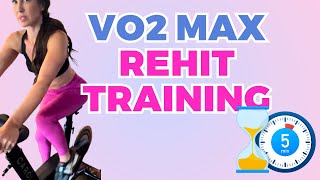
Natalie Jill and Ulrich Demfler, co-founder of Carol Bike, discuss how five minutes of reduced exertion high intensity interval training can improve VO2 max and metabolic health. The bike uses AI coaching to personalize workouts and boost cardio fitness and muscle strength with minimal time investment.
Imagine if you could increase your cardio capacity 12% in eight weeks. And what if you could reduce your metabolic risk 62% in eight weeks. You could reduce your blood pressure, your blood sugar, your cortisol spikes, you could lower your triglycerides. You could do all of these things in a short amount of time. Would that spark your interest? That certainly sparked mine, combined with the idea of how the heck do I work out? How the heck do I get my cardio and workout? So do the things I know would be good for my health. When I'm used to being in an outdoor climate and I'm in a very hot climate all of a sudden. Many of you have followed my journey, living in San Diego for 20 years and now living in Scottsdale, Arizona. And one of the things I've definitely ranted about on social media and even on this podcast is that I'm an outdoor girl. I'm somebody used to working out outside, getting my cardio in. I love the hikes, I love to bike, I love to do all the things outside. And it's been very challenging with six months being very, very difficult. So I dove into looking at different indoor options that would give me these amazing results, but also be something that I could enjoy cardio wise without having to be outside. And I shared that I was looking at different exercise bikes and I found the winner today. I'm very excited to have the co founder of Carol Bike. I have so many questions for him. We were chatting a little before we recorded. His name is Rick Dam. Did I say that right?
Ulrich Demfler.
Okay, well, thank you for being on the show today. I want to talk. I have so many different things I want to ask you about and I want to get into why I chose this bike as well. Because my listeners are following along. A lot of them own a peloton, they're considering bikes, they're looking at different options. Your statistics grabbed my attention and the fact that it was so versatile. So I want to start with just sort of some basic stuff on why this type of training is so important. Because there's a lot of confusing information when it comes to cardio and hit training, when it comes to metabolic health and what we should be doing, weight control too. So can you help us with that to start?
Yeah, of course, of course. So first, cardio training is really essential. It's one of the big pillars alongside resistance training and mobility training. But certainly cardio is super important. So your cardiorespiratory fitness, and it's measured in V2 max is maybe your most important health marker. And to illustrate that, and there's big, big studies on this with many, many thousands, tens of thousands of participants, that low cardiorespiratory fitness actually causes more avoidable, avoidable deaths than smoking, diabetes and obesity combined. So it's not just the most important predictor for life expectancy. It is so by a big margin. And so cardio is something that everybody ought to be doing. The sad truth is just very few actually do enough of it. So the recommended guidelines is 2 and a half hours, 150 minutes of moderate intensity exercise or 75 minutes of vigorous intensity cardio exercise. But if you look at it, 95%, 95% of Americans do not reach those levels, do not get enough cardio exercise.
When you say those numbers, 2.5 hours, 75 minutes, you mean in, in a sitting and in one session, in a, A week. Okay, yes, I have some questions and I'm going to get really basic here because, and I apologize, but I know a lot of my listeners, they won't know what these things are. And I want to get really specific here. So when you say VO2 max, what does that mean?
So it's a measure for your cardio fitness, and it is how much oxygen you can burn, how much oxygen you can metabolize while you're exercising. And that depends on kind of how good your lungs are, how strong your heart is, and like your cellular health. So like the mitochondria, the powerhouses in your cells, how functional they are, how many you have of those. So it depends on oxygen delivery, the heart, oxygen consumption, the mitochondria, the powerhouses of your cell. And it is just such a fundamental health marker. Yeah. By far the strongest predictor of your life expectancy, your lifespan, your health span, and fortunately also one that you can really do something about it. So within a really short period of time, you can make a big difference there and basically achieve a great improvement that will make you live longer and better.
So many of my listeners were in. We're in midlife. And we grew up in the years of the 80s and the 90s when we were cardio queens. We did a lot of cardio, we did a lot of aerobics, we did a lot of StairMasters, we did the whole cardio seam. And we have, over time, and I'm guilty of it too, shared some negative things that can go wrong with traditional cardio. And many have abandoned it, like for. In. In change, for weight training, for. And not doing any cardio. Can you speak into that at all and how what you teach is a little bit different than this.
Yeah. So if we go back to why so many of us are not getting enough cardio, the first thing to, to realize is and there's like survey after survey that shows that very clearly that lack of time is the main perceived barrier. There's a bit of a dispute whether that's a real argument or whether people just use it as a convenient excuse. We believe lack of time is real. There's like trillion dollar companies that compete for our time. There's like it's called the attention economy for a reason and they're brilliant at it. Be that Meta, Instagram, Facebook, TikTok, Netflix. There's just so much on offer and they're really, really good at getting our time. We're not sleeping enough. And so exercise is something that you know, gets lost unfortunately. And so we feel there's a really strong need for very time efficient exercise. So that's one thing, it's just finding the time. And then also what is the right ex exercise for you? And there's, there's different arguments, different people make different arguments. But it's very clearly, I think if you have a limited budget of time for exercise, you should get your cardio as quickly and efficiently done so that you can do also strength training. You can build up muscle mass and cover all those bases that maybe traditionally, Certainly in the 80s, I don't think many women would have been seen lifting weights. And that attitude has just changed and rightly so. And then when it comes to long cardio, so very long runs and so on, they do first can be counterproductive for building and maintaining muscle mass can create maybe too much stress for the body in terms of cortisol. And so there also like there's an additional benefit from having time efficient exercises like the main workout on the Carol bike rehab, which I'm sure we'll talk more about. But it's very, very short and it stands for reduced exertion high intensity interval training. So it is really at high intensity, it's at maximum intensity, but it's so short that the level of stress you exp your body to is really quite minimal and it's very well tolerated and doesn't stress your body and the recovery time is short. And so that's a form of cardio that works for many.
Yeah, I want to talk about rehit in just a minute here because so anyone listening that's been in my programs, they've heard me say that I personally that what I Like about cardio, being outdoors that is like hiking, a fun bike ride, walks. Every day is more the mental thing. Like I just like being outdoors. I like moving my body, I like standing moving more than I do sitting. So just that being active in general. I've spoken out about doing long, drawn out cardio sometimes because I think many times women especially, they do long, long cardio, just sweat, be out of breath, trying to burn calories. And what I find is we can be counterproductive there where number one, we make ourselves hungrier. And it's just like you're just basically burning more calories to be hungrier. And we also can tap into to losing muscle. So I've talked a lot about the difference between just enjoying your cardio versus being in this like calorie chase. And then when it comes to anaerobic type of cardio, like getting your. And what I mean is like without oxygen, getting your heart rate up for shorts amounts of time. I think it's extremely effective for your heart, for your health, for all the things that you mentioned, also for preserving muscle, for getting your biggest bang for the buck. However, I've seen with women, especially in midlife, this could be dangerous for their cortisol. It could be dangerous for creating more stress. When I got the Carol bike, I realized quickly, this is something different. It's like an in between thing. It's something different. It's not this place where it would break down your muscle, cause injury, spike your cortisol. What is that? How did you figure this out? And I'm assuming this is what reheat is. Could you dive into that? Because this is a unique area.
Yeah, no, absolutely I can. So REHAB stands for Reduced Exertion and that's really important. Reduced exertion, High Intensity Interval training. And many people will be familiar with hiit or High Intensity Interval training, which is clearly effective for building endurance and cardio fitness. But it's also, at first, it's not that time efficient. If you do six, eight, ten intervals that are like one or two minutes, or if you do four times four minutes, that's a popular protocol. So you're quickly 20, 30 minutes busy with your workout and the rate of perceived exertion is very high. So it becomes really mentally quite difficult for many people to do that. And this is not just us. We're building really on decades of research and we're working with the leading exercise scientists and they have over many years titrated back and back, like, what is the minimum effective dose of high or maximum intensity Exercise that gives you really good benefits, that gives you like the best results. And they figured out that two 20 second sprints. So this sounds incredibly short. Yeah. But that two 20 second sprints are enough to create a really powerful training stimulus. Like a really to trigger a very powerful adaptation pathway to make your body fitter and stronger. And so a rehab workout, so it can be done in as little as five minutes. The most you spend on it is about eight minutes. Just under nine minutes is a very mild warmup, very casual. And then 20 seconds, you push to your limits, you go really all out. But because it's so short, it's doable. So you will feel like this is a workout. Yeah. Your heart will go up, you will breathe heavily. You do the first sprint, you have three minutes or up to three minutes recovery. A second sprint, three minutes cooldown, and you're done. And you get the same health and fitness benefit as you would get in a 45 to 60 minute Jong Y'.
All. I thought this was too good to be true. I, I honestly did. Like, I. When I started reading about it, the reason I chose this bike initially was I was looking at peloton, because everyone has peloton. I just wondered about my personality because I thought I like being outside. I don't know if just watching a screen and doing that, I like being outside. And I also knew, like, I like doing that for my longer workouts. And then I also knew my personality. I like to get in there and get out. Like as far as if I'm really like pumping up the intensity or if I'm in the gym, I'm not in the gym for long hours. Like I, that's. I'm like a 20 minute workout girl. So what healed to me is that the Carol bike can do both. Like you, it has these preset AI programs which we're going to get into in a minute, which is really cool. It works with your body. You don't have to think. You don't have to think at all. You pick your music you like, you plug in some stats and it reads your body basically and prompts you through this in a very short time. But it's also cool because you don't have to use the programs. Like if I want to just put it in front of a window or a TV or watch a peloton or watch something else, I can do that with the bike. So it's more versatile. So I, we put the bike in here. You'll appreciate this, Ulrich, because you know, my husband, he's a Huge workout guy. He's like a competitive swimmer for years. He's always telling me I'm not intense enough. Like, he's intense and he's kind of look at me like, what is this? So he tried it first when we got it and it kicked his butt. He couldn't believe it. A 10 second sprint and then he kept going. So he's at the 20 now and he's like, this is hard. Holy cow. He's like, this is a hard workout. So then I got on and tried it and I thought, this is too good to be true. It walked me through the prompts. The workout was over before you know it. And it's like a great workout. You feel it, it's wild.
No. So that is really kind of listening to me. And I could go now into all the science and the biology as to how it works. And you may believe me or you may be left with a bit of skepticism. Once you've tried it, you will absolutely understand how it can be so efficient and effective because it is a proper workout. So it's not completely a free lunch or some magic pill. No. You, in those two 20 seconds, you push hard and you push. Yeah.
And you can't cheat. It catches you.
And the bike, it does everything for you apart from pushing. Like it coaches you through the workout. It applies your optimal resistance at the optimal time really rapidly. So it makes it as easy as and as simple as possible to perform that workout. But very clearly you will feel, wow, this is a really effective workout. Now. Now, the thing is, why, certainly I feel it's so doable and I'm probably the person who's done more of those than anybody else. I think I must hold the world record for that is because it is so short. The light at the end of the tunnel is so close and so near. So if you do a 20 second sprint, the first 10 seconds feel quite, you know, quite all right. And then it's five seconds, it gets harder, and then the last five second gets quite hard, but you know, you're almost there. And it's literally, how should I say? You're done before the pain kicks in. So that makes it very doable. Whereas if I go for a run, for example, do that also from time to time. If I go for a 5k run and I want a reasonable time, I have to push myself every single step. Every single step. And so the mental drain is much harder for me, Whereas this is something. I know exactly how it feels. It's five minutes, I'm done. And it's just part of my routine and I don't have to think about it at all. And it's just a great way to start my day.
So the other thing that really I learned from this, you know, you've heard what hiit training as, you know, like our high intensity. And you've heard like tabita, like different types of training where you get your heart rate up, you go as hard as you can, and then you stop. And I think we've all tried to do that on our own. And it just. What this bike taught me was I wasn't doing that right, because, okay, for example, you do the before the sprint, you're in warmup mode, and it's telling me I'm actually warming up too hard. It has like a little line on it, so it'll tell you like, if you're going into the red or if you're in the right amount. So what I learned quickly was I was jumping too quickly into a higher intensity, which is why then the high intensity felt almost too hard, right? So because it was like I wasn't warming up correctly. Then what it also showed me was that in my breaks, like in between a sprint or in between this high intensity interval, that I was not breathing correctly and I was not going slow enough because it, it reads your body and it will tell you slow down, it'll tell you longer, shorter breaths. And I had to really work at that. I was like wanting to breathe harder or breathe faster or pedal for. And it really showed me, no, you were not actually doing a real rest. So it's starting to click with me why this works. Because I don't believe we were actually following the science on our own. This forces you to follow the science.
Yeah, exactly. When we came across the research about rehab, we literally fell in love at first sight and thought like, oh, we must do this ourselves. Bought myself a normal exercise bike and thought, okay, I can do that by myself. And it was quite a terrible experience. But then we got to know some of the leading researchers in this field and performed under their guidance, the workout in their lab. And they had special, like lab equipment, fairly expensive, 10, $15,000 that was operated by a second person. So you had a lab technician, like you're a coach next to you who would apply the right resistance, who would coach you through the workout. And then, yes, it was actually a really good experience. And our thought was, wow, we've got really great research there, but no practical application. And out of that kind of realization, Carol Bike was born that could we Put basically all the research and the lab technician into a package that works for normal people, for normal consumers and just make it as simple as possible to perform basically lab grade, scientifically validated, super efficient workouts at home.
Yeah. What do you know about hrv heart rate variability?
Yes, I do know about it. Of course this is not one of the metrics that we track it. We have built it in to the personalization this may come still, but that is in progress.
So the reason I'm asking that is a lot of us wear trackers. Like I wear an aura ring which tells me my hiv. And one of the things that's bothered me as of late is my HRV was declining like so, getting lower and lower. And I understand the OURA ring is not the only way to check your hrv. And there's. It could, there's challenges on if that's accurate or whatever it is. But I did notice adding the Carol bike in my HRV is improving. So I wanted to get your thoughts on that. And like anything you have to share around that and why that happens.
So what I hypothesize and actually I have my OURA ring not on right now, but I have one at home and I track it as well is just the level of stress you put your body under. So, so HRV is a good metric to look at how well recovered you are and how much stress your body is under. And so the Carol bike and rehab on a Carol bike obviously creates that short stress that creates a really powerful training stimulus. But it doesn't have this because it's reduced exertion. You recover very quickly from it. And so that I think is a very logical explanation as to why your HRV would be improving. Now the thing that I thought when you asked that question is, and this is basically our R and D stage is can we further personalize our workout based on our users hrv? And so that's something we're working on. But it's at release yet.
Yeah. Now how important is it to use the heart rate monitor? Because I know you could have the option to use a heart rate monitor with this. I know my husband's put it on and I've been not so great about it. How important is that with this?
So we recommend it. And every bike comes with a heart rate monitor. It comes with either a chest belt or we have also an armband as an accessory. Many women prefer the armband because it's just easier to wear if you don't have the armband. We'll send you one, it is a very useful thing for two or three reasons. So I think the main thing is because then after each ride you get your fitness score, which is a proprietary score that tracks your VO2 max and so gives you after each ride a metric how your fitness has improved. And people like that. So my mother, she's 81 and has some mobility issues. She doesn't walk that well anymore, but she can use the bike and she uses, is religiously every other day. And that helps her to maintain her cardio fitness in the best possible shape. And then she texts me after each ride, her scores.
Oh, that's awesome.
So that, that, that gamification is just something that.
Yeah.
And direct feedback now, I should say the benefit you get is actually so strong you will feel it like you.
Yeah. Oh, I felt, I feel it like, there's no question. I feel it like, that's why I thought this is. You're onto something here. And I'm a hard nut to crack. Like, I'm not easily impressed with these things. But this was. You feel it like, it feels like I did a big, long, intense workout that I, you know, I remember the feeling from years ago, but I didn't. It's so wild. It's like, wait, that was eight minutes. And why do I feel this good?
And also in everyday life? So one of the, I mean, literally this, I've heard this so many times now that our users tell us, wow, I'm flying up the stairs now. So that just everyday, like activities of everyday living become easier because you have the energy, you have the fitness to do it. So if you have, you know, after only eight weeks, this 12% improvement in fitness in VO2 max is very substantial. To put it in context, we lose after the age of 30, on average, 10% of our cardiorespiratory fitness per decade. So in only eight weeks, you can reverse that by more than a decade. So that's very noticeable. It's not subtle.
No. So this is an interesting thing that it's teaching me too, is I, until I did this and had it tracking me, I think I had a misunderstanding of what you're supposed to feel like doing high intensity training. So I would like. I told you I wouldn't recover. Right. I wouldn't do the breathing. Right. I wasn't. And I was pushing too many intervals too many times. So then you're really. That's what's creating this cortisol problem and the adrenal fatigue and all this. I believe that's what's Creating the problem. It's not these two 22nd. This is what, this is also teaching me because I right away got nervous. I thought, oh my gosh, I've got so much travel coming up, I'm not going to have my bike with me. But what it's telling me is I'm learning a different way of doing this. So when I don't have the bike with me now I feel confident like, oh, I can do, I can kind of mimic it on whatever else I'm doing in the times I don't have it with me.
Yeah, absolutely. And it's not just you who's learning new things about hiit and how to do it as a scientist as well. So one really interesting and almost hard to understand thing fact appears to be that if you do more sprints or longer sprints, you don't get more benefits. And in fact, here's to be. So that's what the data suggests, that more or longer sprints deliver actually less benefits. And that is very unusual because in exercise, in working out, usually if you do more is better. This almost applies to anything, but it doesn't seem to apply for reheats. So if you do more sprints, longer sprints, you get less benefits. And nobody understands exactly why that.
No, when you do it though, you feel. So what I want you all to hear. I know I'm repeating myself here, but women, ladies, listen to this. This is definitely my experience like this. I, I was that person that did sprint. I mean 10 years ago, that was my whole, my workouts. I would sprint and sprint I like. And then we hear that it's hurting our bodies, but that's why it was that type. It was the overdoing of it. It was the excessive doing too short interval like this that is very productive for us. It could help us. So it's not counterproductive. So I understand why people, you know, get all an up in arms about some like orange theory or whatever. They're saying it's hurting your. But that's different. That's. It's a lot. It's. It's a lot, a lot. This is not. So then my question is because I'm watching my husband because he's got that mentality, I got to do more, I got to do more. And he's feeling it. So I caught him on the bike twice yesterday. Like he did it in the morning, he did it at night. Is that okay or is that counterproductive?
So it's not what we recommend. We okay. And also you don't have to do it twice a day. So in fact three times a week is that's our recommendation.
That's three times a week. Okay.
If you have so for example every other day, five to ten minutes, you're fine. In fact, for just the fitness benefit, two times per week seems to be enough for metabolic health. So if you concerned about, you know, staying healthy, not getting Things like type 2 diabetes, three times a week is better because they're. The one is a bit longer lasting effect, the other is a bit shorter lasting effect. So two to three times per week. Now because it is so short, you're entirely welcome if you want to do it every day because that's your routine, you can. There's no downside.
There's no downside to that. If you just do this short every.
Day, twice a day. I don't know. That just feels a little bit to me.
I told him that I'm going to play this for him. He, he's like more is because that's.
Definitely no need to do it twice a day and I would probably give myself 24 hours. And here's also like a really important thing to appreciate because so you don't get fitter during the exercise and that's true for any exercise, you get fitter in the recovery periods between exercises. So and therefore.
So it's the same with weight training. I mean you would say that about weight training too.
Absolutely. So you need the recovery in between where your body builds and where it gets fitter and stronger. And therefore if you over train and just don't give your body the recovery time as well, then that's yeah. Is not helpful.
So when you improve your VO2 max, it also is going to make it easier for us to do other things. So for example like I love to hike and I've noticed in my age it gets harder and harder and harder. So like for me this is more on the extreme, more extreme level that will improve that. It'll make my hikes easier. But I think just even doing like housework or going for a walk around the neighborhood, when you start improving this, all of that gets easier. Like you said, you notice walking up the stairs will get easier. So that's the importance of doing this, is to improve that. I mean, I don't know about you all listening, but I plan to live a long time. But I want to be mobile and you know, have my cardio. I don't want to get tired walking. I want to feel empowered. So this is getting more and more important to me to Pay attention to that.
Yeah, absolutely. And no, it's so true. And as we started off the conversation, it is the most important factor for lifespan and health span. And then coming from that is also like quality of life and what you're still able to do at different stages. Our family, we love hiking and like probably the highlight of my summer was like a big hike, Germany's highest mountain with three generations, with my kids and with my father and he's 82, that's a long hike. And he was for sure the oldest person on the mountain. Was a great achievement for him. And like his training definitely included the Carol bike. He also did hiking. Kind of this whole thing was like a nice objective to work towards. But the paral bike for both my parents, my mom and my dad is just such an effective tool to maintain their cardio fitness even at that stage, at that age.
Okay, makes sense. That's the next thing I was going to ask. Is there anyone that should not be doing this?
This is literally with all exercises. If you have pre existing conditions, consult with your physician before you start. And we cannot give other recommendation. Really, that's, that's almost impossible. Having said that, it is a very safe and well tolerated exercise. You start like shorter sprints. Because most people, I mean literally I.
Started with 10 seconds and that was plenty.
Yes, exactly, exactly. Because most people after the age of 30 just never sprint. Like we don't know what it's like to sprint. It's something you do when, unless they're.
Running for an airplane or something like running missing our gate. And then we're like, whoa, that was hard.
That is true. Yes, that's, that's the one situation. But mostly it's something that you do when you compete in younger years in sports and so on. So you start with shorter sprints so you actually see how your body reacts and how well you tolerate it. And then you work yourself up to those two 20 second sprints, which are still very short, but yes, intense. And we do have given very careful thought as to how to make this exercise as safe and as well tolerated as possible. And like a bike, a stationary bike is in itself already one of the safest forms of working out of exercise. Much safer than a treadmill, for example. There's a lot of features in there to make it. Yeah. As safe and as well tolerated as possible.
So I have like many of you listening. My knees hurt as I'm aging, especially walking. I love to hike and going downhill. It's like a whole thing. And so working on that But I notice my knees do not hurt on the bike at all. I think it's very.
You have less impact on the joints.
Less impact, yeah. So if you have knee issues, I feel like this is a good alternative option often. I'm also working on strengthening my knees, but that. That is something. This seems to be pretty common, especially in our 50s. I hear a lot of women like myself have that going on with our knees. It could be quite humbling. But the bike, you don't feel that there. And what I also notice from those sprints and the way the AI is, and I'm gonna ask about the AI in a minute, how that works. But your quads definitely gonna work out from this. Your quads, your hamstrings, your glutes. Like, I feel like I had a leg workout when I'm off the bike.
Yeah. And in fact. So there we have both our own data shows that and research data, the scientific data shows that, like, quite the opposite. You' losing muscle, you're building strength. Because even though it's so short, the forces that you exert are relevant for strength training. So in the first eight weeks, we see on average an improvement of 15% of leg strength. So because it is, you know, at you push yourself momentarily to your limits, you create a very, very powerful training stimulus. And those are like the. Your largest muscle groups. So it really matters for, you know, your muscular health, for your metabolic health.
So I have a huge. I have a lot to say on that. I think that part of why women have and men lower back pain is we have some amount of degeneration as we age. That's just natural. Like, everybody's going to have some type of degeneration. Some of us feel it, some of us don't. But my whole thought is if we can take those lower disc out of the equation, we won't necessarily feel the pain. And the way that we take the lower disc out of our equation is by strengthening your core, which I've talked about for years, like adding planks and core strength up, but also making sure you have very strong glutes and legs. So when you do long bike rides, draw, you know, you're not necessarily targeting those muscle, but in this sprint format, the way that the AI is reading it and creating intention, you are working your glutes, your hamstrings, your quads. So you do help create that. So I feel even if people think like, hey, bikes hurt my lower back, I think this is actually going to help with lower back pain because of strengthening those muscles.
Yeah. It's highly plausible. Yeah.
Okay, talk to me about the AI. Where does that play? Because AI is a buzzword right now. People love AI for all things, you know, for on their use in it. How is AI helping us on this bike?
Yeah. So maybe coming back to how it was done in the lab. Yeah. So you had a lab technician next to you. He would put you on a scale and then kind of take a sharp look at you and assess kind of your fitness levels and determine what is the right resistance for you to perform those sprints, then apply the resistance at the optimal time, coach you through the workout. And so we wanted to take all of that, basically pack that lab technician into the technology. And we can do that because we have more data on rehab rides than anybody else. So we have now 30,000, over 30,000 riders, millions of rides. That's a very large data set. So we know what an optimal ride looks like, but not just in a generic sense, but for somebody exactly like you. And therefore, when you start and you tell us a few things about yourself, we can make a very good estimate as to what the perfect workout looks like for you. And then as soon as you've done the first ride, we can look at your performance and how you've performed during those sprints, how quickly you've reached your. Your peak power. And if it's your peak, you can only hold it for, like, a brief second, and then how fast you fatigue during the sprint. So, you know, you. You slow down, it's hard, and you fatigue. That's normal. You have to. And because we know what optimal looks like, we can then adjust from workout to workout and make it so as you get fitter and stronger. Like, first we can find your optimal starting position, and then as you get fitter and stronger, we can adjust the workout and keep it challenging for you and make sure you don't hit a plateau or hit a plateau as late as possible. That is like, one of the core features of our AI to basically create an optimal personalized workout every single time to make sure you get maximum benefits.
So good. So good. Okay. I obviously, I didn't even know I needed an exercise bike until I started diving into this. And as I shared at the beginning, when I lived in San Diego, I just was always like, oh, I'm outdoors. I don't need to do this. But knowing what I know now, I would still have had this. Like, I didn't understand the science. I didn't understand this whole idea of rehit. I was really in these two black and White camps of cardi. Too much cardio bad, you know, and too much hit training bad. I didn't understand this. The science actually right here and this middle ground. So I'm fully on board with this now. So I do have a question for people. Like, I'm going to obviously tell people where they can get the bike. And I'm a huge fan, and I'm. It's literally in our living room. It's in our living room. Like, it's. It's in our. It's not in a special gym. Like, we put it in our living room. It looks cool and we want to make sure we're using it. And it's also cool because I can wheel it in front of a window. I can wheel in front of tv, I can put it outside if I want. Like, you can move this thing. It's easy to move. Even I can move it. It's easy to move and it doesn't take up a crazy amount of space. But my question is, based on what we're talking about. What do you want people to know in general? What do you want them to take away from this for their workouts, whether they're using the bike or not? What do you want them to know now?
Yeah. So one thing that there is such a trade off between, like, quality and quantity. So if you even a very, very short effort, if you push to your limits, and I think similar for strength training, I would. So when I. I lift a lot of weights as well, I think it's better to have like one really good set where you, you know, lift heavy.
And you actually lift heavy, like, push yourself, go to.
I would call it, go to failure and work as hard as you can rather than have like three, four, like, moderate junk sets.
What we get guilty of doing, a lot of us get guilty. We get caught up in the three sets of 12, and like, we've been doing this for years.
Rather like push one's hard and rather. So there's something about quality versus quantity. That's one thing. The other thing I think that's really important for everybody to understand is that. But exercise is something you have to do on a continuous, on an ongoing basis. You need to develop a habit, a routine of exercise. Because in many ways, exercise is like a diet. Yeah. If you, if you go on a crash diet, you can lose a lot of weight really, really quickly. But if you then stop the diet, many people, most people just put the weight back on. That's just what it is.
Totally true.
And the same thing applies to Exercise as well. So you can build a phenomenal amount of fitness in a very short period of time. But once you stop training, the training effect, the loss of that fitness is as fast, if not faster, than you've gained it. Now, I'm sorry to say that I wish it was different, but I didn't make the rules. That's what it is. So you have to find something that fits into your life and that you can do, or you don't have to do it every day, but that you can do every other day no matter what. So whether you're busy or you have visitors or this and that, you need to find something that you can stick to. And we believe having like a really short and efficient workout is a really good way to achieve that, even as a backup option. So you said that you enjoy outdoors, but you will not always have time for like a long outdoor bike ride or outdoor hike and then having a really.
It's also 120 degrees in Phoenix.
Yes.
So it's just not amazing.
Light, extra challenge. Exactly. Yeah. Yeah.
It's not amazing, but I do like that, you know, it's gonna start cooling off here soon and we can wheel the bike literally outside by the pool, which is kind of cool. Like, I like that we can move it at different places. So. No. This is fascinating. You actually really blew my mind about the size because sometimes I feel like I'm a know it all sometimes. And I thought I knew all the things about working out and cardio. And I honestly, like, I had this really black and white thinking about cardio for weight loss and. And then also hit training. But this whole rehit concept is pretty revolutionary and you found a way to not just explain it, but to create a device so we don't have to think about it. Because I think you all listening if whether you try his bike or not, if you were just to go try rehit on your own, I guarantee if we were to put AI on you, you're not doing it right. Because I thought I nailed it until this bike was telling me I was not. I was not. I was not resting properly. I wasn't recovering properly. I definitely was not pushing myself hard enough during the sprint time. And my breathing was definitely incorrect. Like this whole, it prompts you like, breathe in, hold it, breathe out. It's like, it's foolproof and it helps.
So much with the recovery as well. Yeah. So that this is important component like because the sprint obviously very intense and you stimulates your sympathetic nervous system. So that's kind of A short moment of stress, but then the mindful breathing brings you back to a calm state and, and activates the parasympathetic nervous system and gets your heart rate to calm down much faster than, than if you weren't following that. So it's an important part.
So I love it. So you taught me a number of things. One, you taught me I can like an exercise bike because I was really like, resistant. I'm like, I need to because I don't want to be outside. But you taught me I can like one. And I, and I more than like it. I love it. You taught me a different way of looking at metabolic health and workouts. And even in my fat loss programs, you know, I always tell women the mindset piece is first, then the nutrition. But like, you have me really rethinking this important component of working out. And I was also falling into the reasons women didn't want to do the cardio. And you have me looking at this difference. So thank you for that. Like, you're literally changing all of my workouts and how I'm going to be sharing with women because of this. And also, I just think you, you made a really cool bike. You kind of disrupted the normal, like what's out there on the market and it's, it's really cool and it talks to you. It's wild. It's like a little friend that you have in your living room. So I love it. I absolutely love it.
Thank you so much.
For those of you that want to learn more, I'm going to have a redirect link. If you go to midlife conversations.com forward/carol bike, it'll redirect to their site and easy to find. Also, coupon Natalie Jill will be set up so you can have a discount on it. They also have an option. Is this an. I think it's an option for everyone because I had like a white glove delivery situation where they brought it to me already assembled. What? What? Because that's an objection that a lot of us have. I don't want to put something together that's kind of cool.
So, yes, that's, that's an optional extra that. A service we gladly offer for those.
Who want it, which is worth it because you don't have to build anything or put it together. It just comes like assembled. They deliver it to you. It's so wild.
Yes, yes, yes, yes. It's actually also not that difficult. It's easy to build as well. But no, it's a, it's a nice touch.
Well, I have a difficulty building anything, so, so it's my, it's my block. Like when it comes in, I have to assemble something. You know, not everybody has like the handy husband. I have a handy husband, but not everybody does that have a handy husband and, or somebody to help.
And that's all right. That's, that's why we have.
I, I like it. I liked that it was like just, it got wheeled in and it was just there. It was nice. So, so it was amazing. So thank you so much. So again you all link everything up in the show. Notes midlifeconversations.com forward/carol bike. You can use Natalie Jill for discount. Check it out. And thank you so much for being here and being on the show and educating us about this and for the science around this. I'm, I'm really excited about, I can't wait to look at my, my lab changes and how what changes on me because of it.
Yeah.
Thank you.
May I say one thing?
Yeah, of course. Please.
For those of your listeners who have like, still a tiny doubt whether it's right for them because we do offer, I think an industry leading, we call it risk free trial. So if you want to, if you purchase a Carol bike, you have a full 100 days.
Really?
Whether, yeah, whether, whether you like it, whether you can stick to it and whether you feel and see the difference. And frankly, if it's not for you, you can also just give it back or refund.
Okay. So it's a risk free, basically risk free situation. That's amazing.
Yes.
Nothing to lose but the realizing we.
Make some pretty big claims and so we are confident in them. But for people to, you know, make up their own mind, this is something just to make it easier and to assure, give a reassurance to our customers and.
Yeah, that's, that's amazing.
A good additional thing.
Yeah, that's a huge. And it says a lot about you as an company and the integrity there because they do have some big claims. So thank you for that and thank you for being on the show. Thank you.
Thank you so much. That was a real pleasure. Thank you.










