Shocking Benefits of Spirulina and Chlorella for Energy and Mitochondria in Menopause
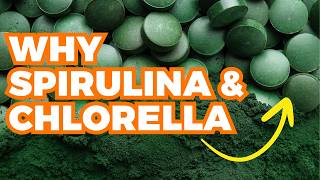
This is a YouTube video titled "Shocking Benefits of Spirulina and Chlorella for Energy and Mitochondria in Menopause" featuring a detailed conversation between Natalie Jill and Catherine Arnstadt. Recorded in 2025, the discussion focuses on women's health, particularly perimenopause and menopause, mitochondrial health, and the nutritional benefits of algae such as spirulina and chlorella. Catherine shares her personal journey inspired by her sister's breast cancer diagnosis and explains the science behind algae's role in supporting mitochondrial function and overall health during aging. The video is an informative interview blending personal experience with scientific insights.
When peri or menopause start to kick in, everything starts to change. With us women. We get foggy head, we can't sleep, the night sweats may be hot flashes. We even hear about bone loss, memory problems and our body composition changing. So much is going on. And when we start going down the rabbit hole of what we can do, we either hear, you have to accept it all, it's part of aging, or you can fight it all. But you've got to go on HRT. Now, whether you choose HRT or not. And you all know I'm personally a fan of that. I've talked about HRT on episodes here. Whether you choose to go on that or not, we still have another component that we've got to take seriously and that's our mitochondrial health. This is really, really important. When our mitochondrial health starts to decline, this seems to line up with declining estrogen and it creates a whole host of other problems. Today I have Katherine Arnstadt on and her journey into the fascinating world of all of this, especially algae, which we're going to talk a lot about today, began in 2008 when her younger son, sister, somebody super important to her, was diagnosed with breast cancer and advised by her oncologist that an alkaline diet would improve her healing. When that came about, Catherine left her 25 year corporate career to help her sister identify exactly what food she'd have to eat, what she'd have to focus on to create this alkaline environment. And this led her into many, many years of research changing, creating her whole focus around how can she. She developed the most alkaline, chlorophyl rich, high protein, nutrient dense food in the world. When Catherine learned that algae was the thing, this could have vast healing properties that were documented in tens of thousands of studies, this became her whole world. This has become Catherine's obsession. She's helped so many women with this groundbreaking discovery that she figured out all of her research. She's taken this so seriously. She now has her PhD in Natural Health and she is super excited to share how this really ties into perimenopause and menopause. So you're in for a big treat today. Thank you, Katherine, so much for being here today.
Oh, thank you for having me. Yes. Women's health. As a fellow female and I started the company because of my sister, women's health has always been my number one. And I tell people, you know, we don't have an expiration date on our forehead like pieces of fruit might. And so when you get to a Certain age, the society tells us, do you just suck it up and, you know, life deteriorates and that's the way it is. And I'm here to tell you, no, it's not the way it is. It's the way they tell you the way it is. But like a lot of things, you lift the hood, you'll find some solutions. And one of them we're going to talk about, which is algae, because it has nutrients in it that are critical to take you out of that downward spiral and put you back on an upward spiral so you can have a great second half of your life. I tell people it's never too late to feel gr. So we're going to talk about that.
I want to hear, I want to hear about your sister's journey a little bit because this breast cancer is a big topic with women. Many of my listeners have had it or they know someone close to them that's had it. And this was not necessarily on your radar until your sister's diagnosis?
Oh, not at all.
Can you talk to us a little bit about that and when you first learned about this and the information that you were given and what pushed you down this road?
Yeah, well, and I also want to, if we can do a little segue into breast cancer because spirulina algae, which we call ours energy bits, it's called a blue green algae because it has two pigments in it. The one you've heard about called chlorophyll. The other one you probably haven't heard of called phycocyanin, which is spelled P, H, Y C O C Y, N, I, N. I'll talk about this later. But it's proven to kill cancer cells and it's only in blue green algae. It's way better than methylene blue and which doesn't have these kinds of properties. But anyways, back to how I got started on this. I have, I'm actually Canadian. I've lived in Boston, Massachusetts for 35 years, although recently moved to Massachusetts or to Miami. And I mentioned the Canada thing. I only have two sisters left alive in my family and very close to them. And so my baby sister, when she developed breast cancer, like I was on board, like in a nanosecond to help her. And fortunately, her oncologist was a woman. And I mention that because women tend to be a little bit more open to nutritional issues or solutions than men. No offense, men, but women are. And it was in Canada. So when she told my sister to have an alkaline diet, that newsworthy news breaking because it would never have probably happened here in America. And what did that mean? Well, I dug into the research and I found a couple of things. First of all, alkaline foods are primarily plant based foods. And it's because of the chlorophyll and the phytonutrients that are proven to build your immune system. And she was going through chemo, so her oncologist wanted her to have the strongest immune system possible. But I also found out there was a German scientist by the name of Otto Warburg who won a Nobel prize back in the 40s for discovering that cancer cannot exist in cells if they are slightly alkaline. There's a scale of 0 to 14. And so as long as your cells are slightly, you know, just over seven, it means new cancer cel not take place. Because when they're slightly alkaline, that indicates there's oxygen in the cell, the cell is healthy, the cell is communicating with each other and so it can fight off cancer cells. So those are the two main reasons. I believe my sister's oncologist wanted her to have an alkaline diet. So I dug onto the Internet, learned all these things. I knew nothing, just like you may not know anything. I was an mba, I had, I was doing international business. Nothing to do with nutrition. But I love my sister and I'm a good researcher. So anyways, I learned all this stuff.
When people hear alkaline right away, I think they go into these two camps and I just, I want to help understand this. They either think alkaline water, like first of all, what does that even mean? And then they think I must be a vegan. Help us understand that those two things.
Yeah, well, you know, the alkaline water is a bit gimmicky, quite honestly, but foods that have an alkaline effect on your body will you slowly integrate into your cells. But the best way to get your body, your cells alkaline is with algae. There is nothing more alkaline than al. Not a single food with more alkalinity than algae. And you get so many benefits. Our tablets have one ingredient, but they have like literally a thousand benefits. So depending on what you're looking for. Yeah, so the alkaline water is helpful, but it's a very, very incremental small amount. And the other thing is, it's not just the cells that need to be slightly alkaline. Your blood needs to be even more alkaline. It needs to be 7.34, I believe it is.
Okay.
And the reason for that is that your hemoglobin, which are the red blood cells, iron atom in the middle. And that iron atom is what carries oxygen. So you want your hemoglobin to be round and to be able to move through your blood vessels. Well, when your blood gets too acidic, those hemoglobin cells that have a negative charge on them so they don't stick together. Have you ever held a magnet up? 2 magnets, and you know how they repel one another so that there's a negative charge on your hemoglobin so they repel one another so they can stay round, hold the iron atom and carry the oxygen. But when your blood gets too acidic, it strips off that negative charge. So now the blood clumps. It can't hold oxygen very well. This contributes to fatigue. It can't get into the tiny capillaries. This carries, causes fatigue. And your body is so intelligent, it knows you would die if your blood got too acidic. So what does it do? It pulls out alkaline minerals from your bones, from your organs, from your cells to neutralize that acidity. But when that happens over and over and again, that contributes to osteoporosis, it contributes to decre, increasing your immune system. So this is the other reason I believe she wanted my doctor's, my sister's doctor wanted her to have an alkaline diet. And there's paleo people, carnivores, you don't have to eat plants to get alkalinity. Take algae tablets, spirulina or chlorella. There's no lectins or oxalates. So if you're carnivore, boom. A lot of people go carnivore because those are sharp proteins that cause damage to your stomach lining and can lead to autoimmune. There's zero carbs, so if you're fasting, it doesn't interfere with a fast. Or if you're keto, if you're vegan, it doesn't matter what diet choice you have. Paleo people, they're following an ancestral diet. Well, you're going to. Well, guess what? Algae was the first life on earth, not just the first plant. You don't get any more ancestral than algae. So if you really want to change your alkalinity, taking algae tablets every day is the easiest. Food based. Food based, not a supplement. Way to do it. And it works instantly.
Okay, I got, I got a lot of questions here, so. And a lot of things coming full circle in my brain. So ye sounds to me that. And again, I'm Jumping to huge conclusions here, but maybe all the trend around alkaline water or the, even the thought process around going fully vegan, maybe it's stemming from this. It's like people heard alkaline and they jumped to this, oh, I must put a lot of vegetables in, not have meat or I must have alkaline water. Is that kind of where that first came from that you think?
Well, I don't know. I think the vegan thing also stemmed from the. A lot of people having a political choice of not wanting to eat animal protein. But the problem is, and Dr. Stephen Gundry wrote a book called the Plant Paradox, some plants, they have what's called anti nutrients. Unfortunately, it's just the way it is, which means they aren't good for you. For example, kale and spinach. Please stop eating kale. It is loaded with lectins and oxalates. So are almonds, by the way.
What if somebody doesn't have an oxalate or electin issue though? Like, what if they don't have that?
Well, you know, you can if you want to, but if you do have a sensitivity, they're very, very. Those are the two plants that are.
That'S where that comes from. If they don't have kale or almond. It's the oxalate.
Yeah, it's the oxal.
I eat both of those, by the.
Way, but I don't have an oscillator and I used to, but I don't anymore because I, I did find I had, was having some stomach issues. So. And everyone's different. You know, there's fodmap, that's another dietary thing. These are special kinds of sugars that don't get digested properly in your lower intestine and cause massive bloating and fermentation. So. And that turns out that I'm a FODMAP person. So I have to stay away from certain foods that. Because my lower intestine just doesn't like them. So everyone is individual. And again, I'm coming back to the fact that algae is for everybody because it doesn't matter. It doesn't have. It's not a fodmap. It's. It doesn't have any carbs, it doesn't have any lectins or oxalates, but it has the highest protein in the world, the highest chlorophyll in the world, highest concentration of nutrients, a thousand times more nutrients than any other food in the world. It's spirulina. Doesn't even have a, any cellulose wall, so it has zero fiber, so it gets absorbed instantly. So you can give it to your newborns, you can give it to your kids, you can give it to your pets, your grandparents. It's literally the perfect food. And it has. Has medicinal, healing properties that virtually nobody outside of Asia knows about. Which is why I want to talk to you about this issue with menopause and perimenopause. Because there's a lot of people don't understand what's happening to their bodies. So I want to help people understand what's going on, because if you understand what's happening, it's less scary. And I say it's sort of like having a recipe. I don't cook much, but if I was, let's say I wanted to bake a cake, I would definitely need a recipe because I can't throw stuff together. And in the recipe are certain things that are needed. So I want to help you with your recipe for good health as you address perimenopause, because one of the ingredients in your recipe. Absolutely slam duck, no question whatsoever, especially if you're female, should be algae. Okay, Carolina. And chlorella algae. And I'll explain why in a few minutes.
Okay, I'm going to ask you about all that, but I want to back up just a couple of notches first, because I want to make sure I'm fully following and understanding here. So let me ask first, and I promise I'm going to get into the. I want to have the science and the recipe and all of that. But why first is this not talked about? More like why when someone is. Before you even talk about perimenopause and menopause and what's happening there, why is algae not talked about? More like why do we hear, eat vegetables, eat protein. Like, why does this conversation not come up? And I guess this is what you found in 2008 with your sister when you were researching this.
Yes, yes. And I was by myself for the first five years asking myself the same question. If this stuff is so great, why don't I already know about it? And here's the answer. It's not grown here, not for mass consumption. 99% percent of algae, spirulina and chlorella are grown in Asia. We're talking Japan, Taiwan, Korea, India. And so you don't drive where breast cancer is lower.
Right. By the way, I just.
Breast cancer, obesity, longevity is the best. It's crazy. They take the Japanese, for sure. They take chlorella, algae every day. The industry started in Japan in 50s and 60s. So it's a major food crop there. And by the way, algae is everywhere. It's in the lakes, the rivers and streams, but it's grown as a, a food crop hydroponically in fresh water. So yes, there's algae in the ocean, but if you go to Target Whole Foods or you buy from us, I can promise you it's grown in, in water, not the ocean. So number one, it's not grown here like it is in Asia. So in Asia you can't ride your bicycle to school or drive to work in a car without driving by an algae farm. It's just everywhere.
Here we drive by that breast cancer is so much lower. And in Asia, and we've been told a lot of things like maybe it's because of the high fish diet or because of soy but if I'm hearing you, it might be because of algae. That might be the big reason that.
We'Re a very, very big reason. And so one of the things I want to do is grow it here in Mat for mass consumption in Florida. Because growing algae isn't like growing broccoli or carrots. It's more like making wine. So number one, it is affected by the angle of the sun. And this is one of the reasons why Taiwan is the gold standard for the highest quality algae. It's also a very industry there. So they're very protective of it and make sure that all the standards are set. The other thing at wise like wine is the production process determines the outcome and the quality of the wine. We're known at Energy bits for having the highest quality algae because of our production processes. And one of the big ones, which you'll find out why this is so important in a minute, is we do not use high heat to dry the algae. We grow it in fresh water that's triple filtered and then we air dry it and then we into a powder and then we press them into these little tablets that we affectionately call bits because they're bits of nutrition, nothing else in it. But almost every other algae company if you they're lower priced, they cut corners because they need to sell more to make money. And one of the corners they, they cut is they use high heat to dry it because it allows them to dry it faster so they can get to market quickly. But what happens is high heat deactivates and kills very critical nutrients including enzymes and pigments. And so sure you're getting the some chlorophyll and you're getting some protein, but it's like Buying a really beautiful looking car for. At a great price and then you lift the lid and there's no engine in there. So the lower priced algae will not give you the full benefit that we're going to talk about today, particularly from this critical antioxidant that will bring you back to life after you hit many perimenopause and menopause or bringing you like back to life after your estrogen has dropped because it protects your mitochondria and restores your mitochondria. And we've done clinical trials to prove it. As you're going to find out, your mitochondria are your. Your number one goal and keeping them healthy. Number two will determine everything about your health and your longevity.
Everything.
So. But people don't know this. And so this is why I try to help them understand.
Yeah, I'm gonna have.
And this particular nutrient is called superoxide dismutase, which is an enzyme is found in the highest concentration in spirulina and the second highest in chlorella. But it can only be if it's been unheated. So you can get it raw, you can get frozen.
You can't just go grab a supplement that says this because we don't know how it's prepared. Catherine, now I have a list of like 50 from everything you just said that I'm so. I'm trying to try to stay focused. I'm going to try to stay focused here and not get off on a tangent. But I really want to understand. Okay, I'm going to back up for a minute. What happened with your sister. So your sister was diagnosed, you learned. I've got to put her on alkaline. She had breast cancer. What stage was she in? How did you did this help her? What?
It was very early stage, so we were lucky. She caught it very. But they did go through the whole chemo and I just gave her a lot of. My sister's very private and she hates the fact that I even talk about her being the inspiration. So I mean I didn't monitor. She lived in, up in Canada, so I wasn't there. I was in.
Okay.
In America. And she didn't want anybody there, you know, lots of times. And I'm like this too when I'm sick. I mean, I just want to be. I want to hide until I get my energy back. So I was not intrusive. I wasn't, you know, monitoring. She, she asked for my help. I gave it to her and then, you know, I waited to see, you know, if I could be of more assistance in the process of helping her. This is when I learned about plant based diets. This is when I learned about alkalinity. And this was 16, 17 years ago. People weren't talking about plant based nutrition like they do now. And I saw the science, I read it for two years and thought, well, this is really powerful stuff. I think somebody should tell the world about it. But I had no nutrition background, but I still thought I'm going to do something. I, I can't stand by. So I enrolled myself in a place called the Institute for Integrative Nutrition to get a health coaching certificate. That was. And I graduated in 2009, so we're talking a long time ago. And then I taught plant based nutrition for a year at hospitals and corporations. And this is what truly led me to algae. Because I was trying to get people to eat more vegetables because I'd seen all the nutrients that were available in them, protective nutrients. But everyone said, oh man, I hate vegetables. Or they take too much work or they give me gas or I throw them out because they go bad or my kids won't eat them or my husbands won't eat them. So I thought, okay, I need to find a way to get the nutrients of vegetables into people in a way that was effortless, easy, not expensive, didn't go bad, yada, yada, yada. So I just a revisit to everything I had found for my sister in the previous year just to see what was there like were the attributes. And when I got to algae, that's when the miracle happened. It's the most alkaline food in the world. NASA has endorsed it for 50 years. They say that has a thousand times more nutrition than any other food in the world. World. The United nations has endorsed Feralina for 50 years as the answer to world hunger. Because there's nothing in the world with more protein than spirulina algae. There's a hundred thousand.
Is it a complete protein? When you say protein, it's exactly protein.
So it's a complete protein. It has the nine that your body can't make. It's a complete protein.
Wow.
And it's eco friendly. It's bioavailable. It's instantly bioavailable. Unlike animal protein, that can take days.
What does that mean? Instantly bioavail. What does that mean, instantly?
Spirulina is not even a plant. It is a bacteria. So it has no cellulose wall for your body to break down to get access to all the 40 vitamins and minerals and the high concentration of, of protein, as soon as you take it.
You'Re getting the nutrients, is that correct?
If you chew it, it's absorbed instantly, sublingually through your mouth and gets into your bloodstream. If you swallow it, and I will admit most people do swallow the spirulina because it's very CHEWY because of that 64 protein, it only takes minutes. This compares to animal protein, which can take days. Because animal protein, your body can't absorb protein, okay? It can absorb amino acids. So animal proteins all bound up with aminos and it can take two to three days for your body to break down all those bonds so that it can absorb the aminos. Collagen is in what's called peptides, which are smaller clusters, three or four aminos. But algae protein is already in aminos, so there's no work for your body to do. It just, it's already there. And, and because spirulina is a bacteria, it gets absorbed so high bioavailability. So and with animal protein, maybe you'll eat 50 grams of protein, but because if you don't have the factors and co factors by the time your body absorbs it as aminos, you may only get 10% of as amino. So you ate 50 grams of protein, but you only get 5 grams of amino. When you eat algae or swallow algae, spirulina in particular, you get 5 grams of Aminos. With 30 tablets and you get 5 grams of Aminos. It's a hundred percent bio.
And how many point nine. How many tablets do you need for that?
Well, 30. Well, that's 30 tablets. Now we recommend, and we're going to the two different algae and what they do for you and when to take them in the quantities. Spirulina, we generally recommend in the morning because spirulina gives you energy, satisfies your hunger, improves your focus. It also, as you're going to find out, has this nutrient in it called SOD that protects your mitochondria. But basically in the morning you're tired and hungry and you want energy. So that's when you would take spirulina and chlorella. So this is an energizing algae, which is why we call it energy. But it's not a stimulant. There's no caffeine chemicals or sugar, just pure nutrition. Chlorella is a wellness algae, as we called it, recovery bits. It helps you recover your health and it attaches to toxins, lead, mercury, radiation, glyph, pesticide, alcohol.
Looks like a binder.
It's a binder. And it also has what's called chlorella growth factor that speeds up the growth of your cells. It has the highest chlorophyll in the world, which kills bacteria. This builds your gut health because it has fiber. This stimulates peristalsis, which is known as a bowel movement, which you need to get rid of the. I call it the junk in your trunk. So you can take it any time of day, but generally before bed, because when you are sleeping, that's when your body goes through a detox repair cycle. So generally spirulina in the morning, generally chlorella at night, although you could take either one any time of day, it doesn't matter. But definitely spirulina in the morning, energy bits in the morning, definitely chlorella at night. Now, quantity wise, if you just want to have a maintenance effect and fill nutritional gaps and just make sure you have your. I call it spirulina, your nutritional insurance. For that reason, 10 tablets is plenty. That will give you all that you need. And same with chlorella. 10 in the evening will give you the immune health benefits benefits. However, if you want to protect your health or recover your health, 30 is a better number. Or have it spirulina for lunch. It's only one calorie, by the way, so you could have 30 calories and you wouldn't be hungry for like three or four hours. If you're on people that are fasting.
This is like huge.
So if you're fasting, this is absolutely a game changer for fasting. You don't get hangry. If you're on GLP1, this is a game changer. This will keep your protein levels high. This will. You're not hungry, but we want to be sure you're getting the nutrition that you need. And same with chlorella, you can take 10, but you need 30 for the detox benefits, 30 for the peristalsis. Because most people, if you're on medication or you're eating too much carbs or you're eating too much dairy, you're probably constipated. If you're traveling, constipate. This eliminates that problem.
So, Catherine, I love you about, I love everything about you. But first of all, you guys, if you're watching her on video, you can see her. She is the most energetic woman I think I know. I ran into her recently at a conference. We were both out of her documentary we were both in. And I was like, gosh, I'd only met you before online and when I you in person, I'm like, this woman is so full of life. But I just want to point out she is so excited about her company and her product. The reason why is not because she's a salesperson. It's literally because this has changed life. And you're so passionate. And I love the conviction and passion because this is like, this is your world. It's, it's. I love to see. It's. Your energy is contagious.
I had a lot of. Nobody else is telling you no. I know. You're like, we didn't know about Shia or Kiwa or Collagen or Bone bro until someone told you.
And it's amazing.
The Asians be the only ones benefiting, benefiting from this. This is probably where the. I should tell you, I'm going to be 70 next year.
You guys have to see her. She does not look like she's going to be 70.
This is my hair. No extension. My teeth. There's no wow. This is my skin. No Botox. Everything moves. I poop well. I sleep well. I have energy. I travel. I only have millennials working for me. I'm a hardcore baby boomer.
You have more energy than anyone.
This stuff, we need this. And I need you to understand it so that you know that it's not smoke and mirrors. There's science behind it, but nobody. The scientists like to talk to each other. They don't talk to you or me. I love your past 10 years researching this. So you didn't have to. So I just want to help people understand why this is a foundational food. Every single person in the world needs to be taking this. Absolutely. I love you.
You live and stand by. And I wish we could all learn a little bit from you on this because I think so many people are very. They're hesitant to share their conviction or their passion. And this is in every. Every area. This is not just nutrition. This is like somebody's religious belief, somebody's political beliefs, somebody's belief about their exercise. Just anything. Like, I think that people worry so much about they're going to offend somebody or they. They don't want to speak their passion. And so I want to just acknowledge you for that for a minute because.
Thank you.
I actually love that about you. Like, you, You're. This is so your conviction and you will not be silenced. And I love it.
I will not be stopped either. Well, because you know what? What? It's not about me. It's about algae and it's about everyone. We are In a crisis, we're in a nutritional crisis, we're in a health crisis, we're in a mental health crisis. And all the research I've read, I know it sounds crazy, but algae solves all of that for us. And so somebody has to tell you about it because scientists don't even know that it contains these nutrients. It's crazy.
And I love that she went and got her PhD, literally, because she was probably. You were probably sick of people going, well, I need to hear. Hear from somebody who this. Or whatever.
Right.
So I just love this about you. Okay, I've got. I want to bring this back to. There's two very specific topics I want to tie this into, because these are the big interests right now of my audience. I want to talk about perimenopause and menopause, but I also want to talk about where mitochondrial health fits in. And I've had other guests on about mitochondrial health. And I'm still going deeper here because I don't think we all understand it the way that we need to. And this is very important for us to understand mitochondrial health, like, what that is and how does peri and menopause is. Affect this and what can we actually do about it? Help us here?
Yeah, absolutely. Okay, so they're very related. What's going on when you hit perimenopause, this deterioration in your health and the brain fog and the fatigue and everything. So.
And help explain even what mitochondria means. Because I want. I want to really. If you can help us get really basic here, because I think a lot of people talk over my listeners, and I want to really help everyone understand how this works.
Absolutely. So the way I describe mitochondria, think of them as the lights in your building. Like in an office. Office. You can't do any work if you don't have any lights. So, hey, when the light bulb goes out, you just call maintenance and they come and replace the light bulbs and you keep working in your body. The light bulbs are your mitochondria, but they're even more than that. They're the electricity that keep the lights on. So clearly, as you want your lights to be on as long as possible and as bright as possible, because what these mitochondria do is they generate this electricity for your body that's called cellular energy. It's also known as ATP. Now, when I talk about cellular energy, we're not talking about. About energy to run to the store or to have a great workout. It's that too, but it's for your neurotransmitters, for your lymphatic system, for your digestion, for your heartbeat. Everything in your body requires this thing called cellular energy, also known as ATP. And your mitochondria make it for you. Now, the problem is, well, you know, when you're younger, you have endless energy and your mitochondria, look, are working great. But as you get older, what happens is you have fewer and fewer mitochondria because the they get damaged, just like you have less and less melatonin, which is why off you have a hard time sleeping as you get older. This is the same thing with estrogen. As you get older, you have so. And the reason why these things start dropping after the age of 30 is here's why. We have lived on earth for 2 million years and we always died at 30 until about 150 years ago. Our biology, our evolutionary biology thinks that we're shutting down at 30. And it just the way it is, it's not going to change. It's just everything starts to slow down because the nature and our biological systems know why. You were born, you were should have had children by now, and now it's into retirement and you're slowly getting ready for death. So. But we have found a way to live longer, but our biology doesn't know that. So all these things that we had when we were younger start to slow down. And one of the things that slows down is an antioxidant that you've probably never heard of before called super peroxide dismutase, also known as sod. Now when you have this, just like you have lots of other things like glutathione and melatonin and estrogen from the moment you're born. But just like a lot of other things, at the age of 30, your body starts slowing down the production of it. And what does this superoxide dismutase do? Well, it protects your mitochondria from free radical damage. I just want to segue. What is a free radical? A free radical is a molecule that has what's called an unpaired electron in its outer orbit. Nature loves harmony and so it likes things to be balanced. So if you have a single electron, it's seeking to be balanced. And so what that molecule does is it will steal an electron from a neighboring molecule, so it's balanced, but now the other molecule is unbalanced, so it steals from another one and now it's unbalanced. And this is what leads to tissue damage and disease. Good news is there's these things called antioxidants that have extra electrons in their outer orbit to donate a free. An extra electron to free radical. Radical to calm it down so it doesn't have to steal from somebody else. Think of it like the kid who would come to school with extra lunches for their friends. Everybody gets fed, everybody gets happy. And so normally that's what happens with antioxidants. The problem is the mitochondria have a second inner membrane. They have a regular lipid membrane like all the other cells, but they have a second inner membrane. If we have time, I'll tell you where that came from. But that inner membrane is impenetrable by virtually all antioxidants. Vitamin C, vitamin E. I mean, you could eat a room full of blueberries, not a drop of antioxidants will get into that inner membrane. Really?
Because no matter what, even people juicing them or condensing, that's still not going to work.
Doesn't matter what it. There's only a few that can get in there. Melatonin can get in there, Glutathione, chlorophyll, and this one called superoxide. Dismiss. By the way, all the things that can get into the inner membrane of the mitochondria are in algae. And I'll steal a punchline, I'll tell you later on. It's because your mitochondria, proven in science, evolved directly from algae. Okay, wow. First life on Earth. We'll get to that.
Yeah, don't skip that part. I've got to hear that part too. That's wild.
Yeah. So here you've got your mitochondria, by the way. They have their own DNA, and their DNA is located exactly where all this cellular energy is produced. This stuff called ATP. But what nobody tells you is a byproduct of ATP are free radical radicals. And there is one very damaging free radical that's produced only in the mitochondria, called superoxide. And why is it so damaging? Because it has three unpaired electrons, not just one. Three. So here you have your mitochondria that are generating all this important cellular energy for you, and yet they're being bombarded by free radicals every single nanosecond. Because they're located where the ATP is produced, which. And the byproduct of free radical radicals. The good news is your body, Mother Nature came up with a solution. It created this stuff called sod Superoxide dismutase that basically neutralizes the free radicals and turns them into harmless water and oxygen. The Way I describe it to people is think of it. Let's say you get stuck in a rainstorm, but you have one of those big golf umbrellas. You pop that big golf umbrella, you could have a whole family under that golf umbrella. You didn't stop the rain, but you stopped getting wet.
Okay?
That's what superoxide does. It doesn't stop the free radicals, but it stops the mitochondria from being damaged because it neutralizes the free radical into water and oxygen. So this gulf umbrella, you have this gulf umbrella in all of your mitochondria from the moment you're born until about the age of 30. And then like a lot of things, after 30, your body slows down the production of this stuff called superoxide dismutase that neutralizes that damaging free radical called superoxide. So by the time you're 40, that big gulf umbrella that was protecting your mitochondria is now about the size of one of those city totes umbrella. So your poor mitochondria, the reign of free radicals, never stopped because they're a natural byproduct of ATP. But now your mitochondria are getting a few hits because there's not as much superoxide dismutase. Your golf umbrella isn't as big anymore. So it's, they're starting to get damaged and they're starting to die. By the time you hit 50 or even before then, this is when we're in menopause there, that golf umbrella, which reduced to a size of a totes umbrella, is now the size of a cocktail umbrella. And then none. Now your mitochondria are getting damaged and dying every single nanosecond. And it's again, the free radicals never stopped. But your protection has stopped. Stopped because your body no longer is making this sod that acts as a golf umbrella to protect your mitochondria. This and when you have fewer mitochondria and damaged mitochondria, nothing in your body works your neurotransmitters, you have more fatigue, you have metabolic health issues, you have problems sleeping, you have problem everything. Because think of it this way. If you had a dinner party and everybody was happy, but you forgot, oops, you forgot to get the dessert. But you did have one cookie left over from yesterday. So share that one cookie with all of your guests. Everybody gets a bite. Nobody's terribly happy, but it is what it is. Well, think of it this way. When you don't have enough superoxide dismutase, so you don't have enough, your mitochondria are protectant, so they're dying, so they can't produce enough cellular energy. It's like having fewer. You have all these body parts, like all your guests that need cellular energy and nobody is getting enough, so nothing works properly. And as you notice, as you get older, older, the cellular energy just drops even more. And so you get. This is when Alzheimer's, dementia, cancer, all these chronic illnesses start kicking in. Why? Because your mitochondria, your lights have gone out. Literally the lights have gone out because you have fewer mitochondria. And by the way, and this is the link to estrogen, estrogen also acts as an antioxidant for the mitochondria. So when you hit menopause, like everybody, men and women at age of 4, your body is not producing superoxideasentase. Everybody starts to see chronic disease kicks in because your mitochondria are dying and they don't have enough energy. But women get double hit because they lose the estrogen at the same time, which was also acting as an antioxidant for the mitochondria to protect them. And so we get twice the decline as men because we've lost the two most important, important protections that we've had all of our life. This is why women suffer more depression and anxiety. Because you have the highest concentration of mitochondria in your brain. There are 2 million mitochondria per cell. So when your mitochondria start dying, as they do at the after the age of 30 and 40 and certainly after 50, the first thing that you have issues with is your brain. And there's a great book by the name of Dr. Chris Palmer called Blank on the Energy, Pure energy. And he's a psychiatrist and he is at the Harvard Medical School. And all diseases that he's studied as a psychiatrist all come down to damaged mitochondria. And we've even done some of our own clinical trials with veterans who had post traumatic stress disorder because the inflammation is so high and your, your neurotransmitters are damaged. And so when we can get the superoxide dismutase back into your body. And this is where the punchline hits. Spirulina has the highest superoxidis mutase in the world. You can't even get superoxidismutase from any or supplements, period. Nobody knows that you can get it from, from spirulina, but it's also an enzyme. So if it's been, the algae has been dried with high heat, it's deactivated so it's like buying that car with an engine.
This is where it gets a little confusing for mitochondria. Like, it's okay, just kind of the same way gut health was. Gut health is not a trendy topic. It's an important topic. But it kind of had its day where a lot of people were talking about gut health, and now I'm realizing everything's about mitochondrial health. Like a lot of people catching up that mitochondria is important. This gets really confusing for people. Like how to can they repair it, can they fix it, can they avoid decline? Like, and then we hear that everything from things like CoQ10 or polyphenols can help. And then you hear extreme supplements like NAD shit could help. But then you also hear things like red light or infrared or just natural sunlight. So it's very confusing to people. Okay, my first question to this. Let me tell you the questions that you can help me how to answer these. Can you actually repair damaged mitochondria or can you just avoid them getting further damage? And where do all these. There's a million. It seems like there's a million supplements out there. Right. And things like. Also red light too. Like, where does those play a role? And then obviously I understand what you're saying about algae, but is that like in addition to these things, is it instead of how, like, it just gets very confusing?
Sure. Well, in life and in business and you know, there's. There's this thing called the 8020 rule that 80% of your benefits come from a small group of whatever, and then 20% come from a large number. If you're in business, you focus on the few clients that are. Represent 80% of your business. And you know, and then you got the other one. So same thing with, with algae and your mitochondri. 80% of your benefits are going to come from taking spirulina or chlorella, but only if they are unheated, because you have to be sure that that superoxide dismutase is going to be active and be able to work. Think of it this way.
And you're saying most of the supplements with that are heated, is that correct?
Virtually.
Okay.
Any supplement, any dried powder uses high heat to mix it.
Got it. So it's not going to work. So you're taking your green powder with that. It's not going to work. You're not going to get that going to be deactivated.
Sorry, I wish it wasn't the way, but it is. What, and even 90%, 95 algae tablets, same thing. If you buy a cheaper version, I can almost promise you they used high heat because it's a company that sells lots of products and so they're just getting the stuff out there as fast as they can. And they don't even understand the science. Nobody has done a deep live like I have. And the I was motivated to do this because I had to find out a why did algae work so well and why did ours work so well? Right. So I finally found out. So sod. The superoxide dismutase will give you 80% of the benefits, benefits that you need to protect your mitochondria from damage and revive them.
That's number and revive. So basically bringing back the ones that are not back.
Turn your lights back on. We want to turn your lights back on. That's what your mitochondria are. They are your lights that generate cellular energy that keep your body working. Just like in an office, you have lights and you can't do any work without lights. Your mitochondria are the lights that keep your body working. They're the electricity and the light. The lights. So whatever we need to do to turn those lights back on, that's what you want to focus on. And this antioxidant called superoxid. Here's the thing, there are 25,000 studies in the PubMed scientific papers proving that this sod, superoxide dismutase, stops inflammation, prevents Alzheimer's, prevents heart disease, prevents cancer. The list is endless. 25,000. The thing is, but people don't know that you can get it from algae.
So is one of the reasons when people say that when. Okay, and I know I don't want to get off too off track here, but like is one of the reasons why when we do HRT and add estrogen, it's because you're helping to slow down this mitochondrial decline. So when people say like that's helping get back is that one of the things that that helps with is that.
I don't actually don't know much that much about hrt the estrogen is the true benefit is balancing the hormones that are no longer being produced because you, it's. You don't have your eggs. So okay, so I think hormone replacement there's therapy is to bring to balance out the hormones. There could be. I honestly don't know whether the hormone replacement estrogen replaces the benefit. But again it's that it's in that 20 category.
Okay.
I want to do the least amount of work to get the most amount of benefit and that is superoxide dismutase. That is when you look at like.
CoQ10 or polyphenols or red light or all the things I mentioned, you're saying that's more in the 20.
Correct. And here's the thing, you get all of that in the algae anyways, so maybe this is a good.
So you don't do any. So when you. For you personally, because, I mean, obviously you're aging extremely well and we want to learn from you and your. Your energy's off the charts. So do you not do any of those other things for mitochondria? None of it.
I take no medications. I take no supplements other than vitamin C because there's very little vitamin C and algae, but that's it. I take nothing. Nothing.
And do you use things like red light or infrared or any of that?
I do. I do use red light. Not consistently, but. But I'm a big proponent of red light. I'm a big proponent of saunas. I'm a big proponent of sleep. I'm a big promoter of movement. I'm a big promoter of chlorophyll and CoQ10. But. And this is why I want to explain how the exact way this energy is actually being produced. Okay. If you take away the mystery, then it's not as scary. And if you understand something then, then now you' body needs. And then you'll start to understand why algae gives you everything you need. And it's the smallest addition for the maximum benefits.
Okay, show us this.
Show us this.
Yeah.
Okay, show us all. So you've all seen a relay race, right? We have a runner with a baton and they run a relay race and they pass the baton to the next runner. That runner runs a distance pass and they hope to win. So the way that the energy, this cellular energy called ATP is produced is very similar, except instead of a runner, you have these molecules that are embedded in your. The mitochondria. Inner mem. Brain.
You guys watch on YouTube. If you're listening to this, go to my YouTube channel because I want you to see these images she's holding up.
So instead of the runner, you have these molecules. And instead of a baton, what they do is they pass electrons to one another. Now there's four molecules, but there's two, what's called helper molecules. One is a helper molecule, cytochrome C, which I'll tell you about in a minute. And the other helper molecule is CoQ10. So anyways, let's talk about the electrons. So when you have Algae. So the. The key is to get these electrons moving as fast as possible so that they can cross the finish line and generate ATP. Okay. The problem is as your mitochondria get damaged, because here's another of those little molecules. See how close they are together? So when they're. You have a healthy mitochondria, they can pass the electrons very efficiently to one another, so you get maximum ATP cellular energy. Okay. And by the way, that little helper molecule that I mentioned, CoQ10, it is sped up by the blue pigment that's in spirulina, which is one of the reasons why spirulina gives you energy, because it speeds up this molecule called cytochrome C so that you get more electrons moving faster, so you get more ATP. By the way, when I talk about energy, we're talking about cellular energy. It is not a stimulant. A stimulant is like coffee, caffeine, or sugar. It's like putting paper on a fire where you get a burst and then a crash. Cellular energy.
Because you're not actually creating energy. You're borrowing from it. You're just creating it.
You're moving energy.
It's like fake for a few minutes.
Yeah, yeah. This is actually cellular energy. This is creation. This is like putting a log on the fire. Very steady, and it's at the cellular level, so the blue pigment speeds up. Helper molecule. This is why spirulina gives you energy. But bottom line is, when you have a healthy mitochondria, those little molecules that are like your runners can pass the electrons very easily and generate lots of energy. Perfect. And there's not much spillage because the electrons have actually moved to where they should go and create energy. All right, so what happens when your mitochondria start getting damaged? And by the way, carbs have so many more free radicals being released, and they. When they leak out, they become free radicals. So when your mitochondria get damaged, look what happens. It expands. It expands. So now those molecules, your runners, are far apart from one another. They can't make the pass. Just like if a runner in a relay race dropped the baton, they can't make the pass. It has two impacts. If they can't make the pass, the electrons aren't being transferred, so you have less ATP because the electrons aren't being transferred. So this is one of the reasons why a damaged mitochondria doesn't generate as much energy. Number two, those electrons that were supposed to be passed from one of the runners to the next don't dissipate, disappear. They leak out into the mitochondria and become free radicals. Now the flood of free radicals is even bigger, causing the mitochondria to expand even more. Until eventually it gets to a process, it's called necrosis, where it basically explodes.
But I want to, I gotta ask it, and maybe it's dumb question, but I ask things that come up in my brain because I'm thinking they might come up in somebody else's. So when you say free radicals, is that, that the same thing as oxidative stress? And if not, how is that different?
Basically, yes. Free radicals cause what's called ros and inflammation. So the free radical is a molecule that has the impact of inflammation, which is this state of the mitochondria expanding with not being able to create cellular energy. Because remember, when you aren't able to create cellular energy, then the mitochondria isn't functioning properly. So there's, the communication isn't working. It's not being able to provide body with what it needs from a cellular energy. It's not cleaning up.
There's a process which is what oxidative stress is too, right? So it's kind of the same thing. It sounds like it's the same thing.
There's a process called autophagy.
Okay?
When you have a healthy cell, it knows when it's time to sort of, you know, clean stuff up. Just like, you know, if you have your mother in law coming over, you clean up your house, everything looks good. Or at spring you do cleanup while your cells are constantly going through that process called autophagy. But if they're struggling because they're sick and they can't generate enough cellular energy and they're overloaded with free radicals, nothing gets done. Particularly in your brain, you have neurotransmitters and they aren't getting to their destination because there's too much tau protein being gathered on the outside of the cells. Because the clean, your brain has its own immune system. And the cleanup crew isn't able to remove the tau. So now the towel is gathering on your neurotransmitter. So now they can. Everything comes down to mitochondria, damage and disease. And it's all because if too many carbs overload this chain. You know, I saw there's a video you can get online of Lucille Ball, a comedian back in the 50s and 60s, and she's in this little video clip of her, she was working at a chocolate factory and the chocolates are on the conveyor belt and she's supposed to take the chocolates and put them in a box, but she can't keep up with them. The conveyor belt keeps bringing all these chocolates. So she starts throwing them in her mouth and throwing them over her shoulder, and it's kind of chaos. So when you have too many carbs or you have too many free radicals, that's sort of what's happening. Your ATP process can't keep up, and so it just spills all these electrons out that become free radicals that then cause more damage. And it's a downward cycle. Because the way that to clean that up is to get some superoxidis mutase back in there. Because these free radicals are called superoxide in the mitochondria. Remember, they're the ones. Ones with the three unpaired electrons. Yeah. So the superoxide dismutase is what you need to restore all that damage. Here's an actual picture, a photo of a damaged mitochondria. See all the gaps? That's where all the, the molecules couldn't make the pass. This is a healthy one. Everybody's all connected and whatever. So superoxide is dismutase is what does that. For anyone?
Like, okay, and I want to actually. And we're going to. I still have questions for you, but for those of you that are like, I've got to try this. What? What is this? If you go to midlife conversations.com forward/energy bits and I'll also link it in the show notes. But midlife conversations.com forward/energy bits, I'll link it in the show notes. Or if you just go to their website and you add in energy bits dot com. Yeah, yeah. Energy bits dot com. If you use coupon Natalie Jill, it'll give you a discount and that she'll know you came from the podcast and all the things. But first of all, how long do you need to take these Tilt starts actually getting results. Do you actually feel something different? And like, you consider this more a food versus a supplement, right?
It's absolutely food. The FDA considers it food. The United nations consider food. It is food. It's an agricultural crop. This is what people think it's a supplement. It's not. It's. It's grown hydroponically in fresh water, pressed into a powder, and then we are dried into a powder without. We dry it without high heat and then we press it into tablets. So we call our algae tablets, which are about the size of baby aspirin, bits, because they're bits of food. There is Nothing. Nothing else in there. Absolutely nothing. It's a hundred percent spirulina. That's energy bits or 100 chlorella. So it's one of those weird people.
That likes the taste of it. Catherine. Like I, I know like some people don't but I like you can whole if you don't. I actually, I. But I'm weird. I like crave green things. So.
Yeah, yeah, I like it. I love them. I eat them all day long. The chlorella tastes great. I put sea salt on both of them. Sea salt. Oh, they're delicious with sea salt. Oh yeah, or pistachio nuts or macadamia nuts.
You like snack them like a nut or.
Yeah. And put them in your trail mix. Ben Greenfield used to tell us. Tell me he would mix it up with popcorn. His wife having the chlorella with popcorn. I mean just get this stuff in you and in terms of how soon will you notice it? Within 10 minutes Spirulina will get. Because it has no cellulous walls so it gets absorbed. That's why I say it's 99 bioavailable. If you have 10, you might not notice too much, but you will notice if you 30 within 10 or 15 minutes, your brain fog will be gone, your hunger will be gone. It's not a.
Okay, well those two things alone make people excited.
If it's going to stop like a calorie. I urge people to take the spirulina for lunch even or have the 30 for. For breakfast. It's only 30 calories, but you can.
Do it with food, right? Like you could have your regular food instead of food.
And with your Natalie Jill discount code, best value are the large bags. There's a thousand tablets in a bag. But I use that quote from NASA that says one gram of algae has the same nutrition. Nutrition is a thousand grams of vegetables. So I did the math and one bag of a thousand tablets has the same nutrition as 551 pounds of vegetables. To give you a visual, that's about 30 grocery carts of nutrition right here. And it never goes bad. We have to put an expiry date on it, but it's about three days.
Oh, so if they expire you can still eat them. I didn't know that.
Yeah, yeah. Never. Yeah, never go bad. Never goes bad. But here's the other thing. A full bag is normally $130 and you go, oh, it's too much, much money. But with your discount it comes down to 104. And I'm not, I'm not trying to pitch them. I just want you to understand the value. No, you. You are.
She is. It's okay because you're passionate and you believe in it, so I respect that.
But if you took 10 a day, which is, you know, your basic maintenance amount, it works out to a dollar a day. You can't get a coffee for a dollar a day.
No.
And there's so much nutrition. This replaces your fish oil, your multivitamin, your CoQ, 10, your biotin, your collagen. This is more collagen than collagen. Powder, water, what? So it can replace a lot of things. And then chlorella has highest chlorophyll in the world. 500 times more than arugula, 25 times more than liquid chlorophyll. You never have to eat a vegetable again if you don't want to, because it gives you the fiber, it gives you the. The peristalsis, it pulls out all sorts of toxins, a binder. But it's very affordable. And the things that I endorse and that I follow myself are either free or almost free. And what are they? Sleep. Oh, my God. Sleep is the number one thing that you can do for yourself. I would put algae as number two.
Okay.
Sunlight and movement. Well, I should say red light, which comes from either sunlight or red light. And movement.
So sunlight or red light.
Yeah, yeah. Those are the things that are very foundational. And the only thing that you had to pay for would be the algae. At a dollar a day. Why wouldn't you? You shouldn't be asking yourself, why would you take algae? It's like, why wouldn't you? If you could stop mitochondria damage, turn your lights back on, help you not even either have brain fog or remove the brain fog, help you get your metabolic health back, help you get your energy back. We NHL teams, Olympic teams, they use the spirulina for energy because it gives them so much focus and energy on the ice. Or triathletes. We have people doing 100 mile races with just the spirulina. I mean, really, you can't. You can't argue with that. And the hundred thousand studies doesn't hurt either.
No, this is good. So on my show here, Catherine, I feature so many different topics for midlife women, especially. Like, I love to go into. I feature a lot of things because it can get very confusing for us out here. And I don't feature a lot of things to confuse people more. I feature a lot of things because I want people to hear the Same information that I'm hearing and then make the best decisions that resonate for them. If I'm hearing you correctly, though. And I just want to kind of tie this in a nice bow because I want to make sure I didn't miss anything here. If someone were to ask you why you're aging well, because you are. I mean, my gosh, you're in your 70s, you look frickin fantastic. Your energy is off the charts. You guys can hear it even talking to her. And I saw her in person. So if you were to like look back and go, like, how were you aging before you even like discovered this and then versus now, I wanted to ask you that. And I'm going to keep going, going because I have a couple more things I want to tie back.
Yeah, well, I have two sisters. One's older, one's younger, and I look younger than the younger one. So I was just aging normally like everybody else. I mean, I had a relatively healthy life.
But you were always healthy. You always did like healthy habits. You're into that.
It's the algae. It made me feel weird for a while because I thought, this is weird. I'm just not aging. I'm not aging. All my friends are in their 30s and 40s. My age group are all retired, they're on the golf course. You know, it takes energy to live. And so they just don't have the energy to live and to do things. So there is no question that my vitality.
Sure.
Cornerstone of my vitality is the spirulina and chlorella. Because I've been taking a lot every single day for 16 years. And I also don't eat sugar because I can't digest it. I very, very. I have a very clean diet, but I had a pretty clean diet before the algae.
This made, this made a difference.
So.
And if I'm also hearing you correctly, you're not telling people they can't do other things. Like, I'm not going to give up. There's a lot of supplements that I love and use and we'll keep doing and have it. So you're not saying give that up. You're saying just please listen and add this in.
Just. Yeah, it will uplevel everything. If you take it before a sauna, it will the body be restored in the chlorella. Take the chlorella after the sauna. Because saunas, your body removes toxins four ways through breath, sweat, urine and bowel movements. And so chlorella heals, helps with all that. Take it before red light Therapy. I didn't get a chance to talk about this, but they found out that when you have red light, either from the sun or red light therapy and chlorophyll, the chlorophyll, the CoQ10 molecule, gets recycled in that electron transport chain. So it speeds up the generation of ATP, so you reduce inflammation, you have more cellular energy. So you want to take it before. Before I generally say the spirulina just because it gets into your body faster. Take it before a cryo or cryotherapy or a cold plunge. When you are in a cold plunge, your body thinks it's dying because it's so cold. So it pulls all the blood into your core to protect the core. So if you have spirulina, which has 40 vitamins and minerals, the highest chlorophyll in the world, the superoxide dismutase, it's going to nourish the core on all your organs while the blood is there. And then it also acts as a. Is a vasodilator, which means it opens up the blood vessels when you step out. So everything gets rushed out and it gets rid of all the, what I call the junk in your. In your cells, your junk in your trunk. So it's very effective. So it works really well with all your other hacks, with all your other devices, with. It doesn't matter. But keep in mind, you don't get. And we didn't even talk about phycocyanin, which is the blue pigment proven to kill cancer cells. And I have talk about.
Wait, talk about that because I don't want to skip that. And I want to talk what you. And you also mentioned methylene blue earlier. Can you just talk about both those things? You said blue pigment, but I thought of methylene blue. Now talk about that. And then what is methylene blue? And why is this better than that?
I have to admit I don't really know much about methylene blue, but it's very trendy.
And people you mentioned earlier, though, this was like a better. That's why.
Yeah. People keep saying, is it like methylene blue? Methylene blue is produced. Chlorophyll is part of nature number one.
So methylene blue is like. It might as well have a prescription. It's synthetic. It's something you're making. Correct.
It's a synthetic headache. Correct. The blue pigment is only found. It's called phycocyanin. That's how you spell it. P, H, Y, C, O, C, Y, A, N, I, N. And I Want you to know how to spell that, because I want you to go on Google and Google phycocyanin and cancer treatments, and you'll see the same kind of reports that I've been seeing. Here's an example of one. They put cancer cells in a petri dish and they dyed them purple. And then they put some phycocine, the blue pigment from spirulina, into the petri dish. And after 24 hours, the cancer was virtually gone. By the way, the cancer treatment, the chemotherapy companies use phycocyanin in their cancer treatments now. They don't tell you. And the way that this, why this is happening, why the phycocyanin kills cancer cells. Well, I'm going to tell you how. Remember I talked about that electron transport chain in different little molecules that move the electrons along that create ATP. ATP. And there was a helper molecule called cytochrome C. It's like having a Tesla in the middle of your electron transport team. So in a healthy cell, that little helper molecule moves the electrons along faster. This is why spirulina, one of the reasons why spirulina generates energy because it has that little fun little helper molecule that moves it along so you get more energy. However, here's what's so fascinating. The pig pigment in the spirulina can tell if the cell is healthy or not, and if it's not healthy, which means if it's what's called a senescent cell, which is basically a zombie cell cell that's subdivided so many times it can't do anything but doesn't die. So if it's a senescent cell or a cancer cell, the blue pigment in spirulina, which you can't find anywhere else in the world, ejects the cytochrome C molecule molecule, which releases something called cap azes, which kills the cell. Boom. Kills the cancer cell. This is why I call spirulina algae intelligent food, because it knows what to do in your body and you have to be intelligent to take it.
So, okay, that's pretty reason enough that.
I'm convinced why we not do it. Yeah. And. And I have found research papers that show that if the phycocyanin has been exposed to high heat, it deactivates it.
Another problem with most of the algae, when you buy these other things. So we so people getting these ingredients in things like greens powders, but it's high heat, so it's inactive. It's not going to work.
Yeah, that's why places like the Hippocrates Institute, which is a very well known 50 year old healing center in Florida, gives their patients raw spirulina every single day. When they take patients with stage three, stage four cancer and they have like a 95% healing rate, they also give them red light and massage and, and lots of other healing modalities, but they always give them spirulina because of, I think a, the blue pigment that kills cancer cells and the superoxide dismutase that brings the mitochondria back to life. Same with the Gershon Institute. Same thing. So health is all about giving your body what it needs and what it and taking away what it doesn't. And so I like to tell people spirulina is what gives your body what it needs and nourishes it. And chlorella takes away what it doesn't need. And I came up with the analogy. If you ever go on a holiday and you get room service and you're nourished for the day, that's like, well, that's sort of like spirulina gives you everything you need for the day, nourishes you, get you on your way, you got the energy, your hunger's gone, just like spirulinas. And you should take it in the morning, come back into your room later in the afternoon. Beds are made, the garbage is taken out, everything's clean. I thought that's sort of like chlorella. It's housekeeping. It takes all the junk in your trunk, kills bacteria, gets rid of the stuff, stuff that your body doesn't want, just like housekeeping. So if you need a way to think about them differently and how they do different things, think of spirulina as room service and chlorella as housekeeping.
Got it. Oh, gosh, Catlin, this is so good today. Okay, y', all, I know there's a lot of information here. If you're listening to this on the podcast, definitely watch. Go to my YouTube channel. We'll link that below too to watch this video because she held up a lot of graphs and where she really helps. I've had to see this a few times to really understand and process. And so it's clicking for me. She did. She's very generous to give us all a discount if you use coupon Natalie Jill, we'll link it up in the show notes. If you can also go to midlifeconversations.com forward/energy bits or you can go directly to her website energybits.com.
Yes. And we write a blog every. Every month, so it's full of information. Everything is science based. I don't say anything that's not science based. We have a. We're very active on social or Instagram, particularly energy bits.
And you're on a mission for this anyway.
I'm on a mission to help people. I mean, it's a gift to us from Mother Nature and back to the. You know, why the mitochondria evolved from algae. There's a. The science has proven that the first life on Earth, what's called a cyanobacteria and spirulina is a cyanobacteria. So it was all by itself. And before the cyanobacteria, there was no oxygen on Earth, so it was an anaerobic cell. And it, it was just gas and water, but it released oxygen as a biology byproduct of ATP. So after a billion years, larger cells could grow that were aerobic, but they weren't generating ATP as well. So what happened was the large cell absorbed the original small cell, which became your mitochondria. But this is why your mitochondria have that inner membrane. It's left over historically from when it was by itself. When it got absorbed, your body put another. A lipid membrane around it, which is what all your cells are. But this is why I tell people, when you take algae, your mitochondria are going, it's family. Where, like, yeah, like, where you been? Where you been, buddy? Get in here. Help us clean up our act. Help us get our lights back on. And because one of those critical nutrients found in the spirulina is this stuff called superoxide dismutase. I know it's a mouthful and you've probably not heard it before, but trust me, the scientific human community knows all about it. And everyone's racing to try to figure out how to generate more of it. And you don't have to race anywhere. Just get spirulina energy, bit spirulina and you're. You're good to go. It's the 80, 20. We'll give you 80, 80% of the benefits from this one small little addition to your life. Keep all your other, you know, things that you're doing, they'll still be good for you, but this will dramatically make an impact. And I'm, you know, I know just a sample size of one, but it certainly seems to be working for me.
So awesome. Thank you so much, Katherine. Thank you so much for what you do and for sharing all of this today. Thank you.
Thank you, Natalie. Thank you.










