The Food Pyramid Scandal: Why Nutrition Science Got It Wrong for 30 Years
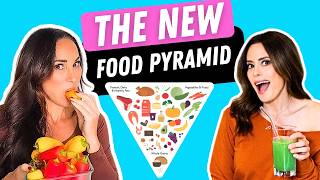
In this hour‑long podcast, licensed master sports nutritionist Natalie Jill and registered dietitian Keri Glassman examine the evolution of U.S. dietary guidance—from the 1990s food pyramid, through the 2011 MyPlate, to the newly‑flipped pyramid – and why each change has sparked controversy. They trace the original pyramid’s focus on calories, low‑fat, high‑grain diets, its neglect of insulin, blood‑sugar, and food quality, and how those flaws contributed to rising rates of obesity, diabetes, Alzheimer’s, and other chronic diseases. The hosts discuss how the new pyramid flips the hierarchy, emphasizing unprocessed whole foods, high‑quality protein, healthy fats, and limited refined grains, sugars, and ultra‑processed items, while also noting gaps such as limited guidance on fiber, lean protein, and beans. Throughout, they explore the tension between public‑health policy (SNAP, school meals, hospital food) and individualized nutrition, the role of food industry marketing, and the politicisation of guidelines. The conversation expands to current hot topics: seed‑oil controversy, black‑and‑white diet mentalities (carnivore, vegan, etc.), and the rapid rise of GLP‑1 medications, weighing their therapeutic potential against misuse and the glamorisation of eating disorders on social media. Natalie and Keri repeatedly stress the need for nuanced, evidence‑based advice, personalisation, and a focus on real‑world practicality rather than ideological purity or political agendas.
Chapters
We're going to talk about the food pyramid and nutrition myths and what has changed and why food health seems to keep missing the mark. Now, before you come at me here, I'm Natalie Jill. I am a licensed master sports nutritionist. However, I've got one of my best friends on Kerry Glassman, who is a registered dietitian. So I wanted to do this conversation together with her. I thought that was important because typically nutritionists and registered dietitians, they seem to have, like, these different products perspectives on things. Carrie and I have almost identical perspectives on a lot, and that's unique. So we're going to be talking, sharing, we'll have a few little differences. But I wanted to start with the idea of this, the food pyramid and why it's been turned upside down. Why is this creating such chaos with some people and such pause and happiness with others? Like, what's that all about and what's the truth? And is it going to change again? So this conversation is not Natalie dictating at you. It's not going to be Carrie dictating at you. We just want to have a conversation over a cup of tea while we're podcasting. So, Keri Glassman, I'm so happy to have you back on and take one of our chats live on a podcast.
I am always so happy to chat with you. It is always so good to be here with you. So, dietary guidelines. Not the sexiest topic, but certainly a hot topic these days.
I know.
I have to say, I think the dietary guidelines are the hot, hottest they've ever been this time around. I know. Seriously, if dietary guidelines were ever hot, they are hot in the year 2026,
which is so weird to think about because, like, some of the stuff that we're going to talk about, you and I have been saying for decades, like, this is not new information to us, but all of a sudden, it's new to a lot of people. And to some people, they all of a sudden are saying it's pseudoscience or whatever. And I want to talk about that, too, because I know, like, you have many books. I'll tell you my, my first book, Seven Day Jumpstart, Unprocess, your diet was literally almost identical to what the new food pyramid is. And I wrote that years ago. Like, it published over a decade ago. So to me, I'm just staying in my lane here, and all of a sudden it's become political.
Oh, absolutely. Well, it's so funny. So I. So I went on CNN when these first came out, when the Dietary guidelines first came out. And so Kenny, who, you know, my boyfriend, said, so what's the deal with them? Like, what's, what's new with them? What's the big deal with them? And I said to him, I said, I'm going to read you the first paragraph of the dietary guidelines. So I read it to him and he said, okay, yeah. And I said, what do you think? And he said, that's kind of what you've been saying for years. And I said, exactly. If you just read the first paragraph of the dietary guidelines, it's pretty much what any registered dietitian, nutrition coach, nutrition professional has been saying. Eat real food, nutrient dense whole food, reduce highly processed packaged foods. Right. It is really basic, smart, common sense, as they say, information in there, I mean, guidelines.
Yeah, you would think, you would think. So I want to first establish, when I reached out to Carrie and said that we have to do this conversation, I want to first share. We're not going to be talking about right or wrong because we don't believe in right or wrong. It's like, this is what we believe, this is what we share. And you, you do you with the information you get. It's also not about politics. We are not talking about politics because that's not our care in this conversation. And it's truly about. We want to understand how nutrition guidance has evolved and why it feels like whiplash sometimes. And I wanted to acknowledge that even nutrition professionals, like, we're taught different things at different times. Like I, I, you've seen that, Carrie, like over and over again. We're, it's taught, it changes over the years. Something's changed.
Yeah, absolutely. Well, first of all, you know, that's something I've been saying all the time. I always say nutrition. One of the things that's so interesting about nutrition, one of the things that I love about nutrition is that it's a new science. It's only been studied for 100 plus years, I believe. I mean, it's really a new science. So there's new information every single day. So what I always say when it comes to nutrition, we want to take the good old research and the good new research, combine that together, and then always consider the individual that we're giving that we're using that research on. Right. So there could be good new research and good old research, but it might not make sense for a specific individual's lifestyle. Right. So you always have to consider the individual first and then consider the different research because sometimes there might be new research that's Terrible new research. Totally. And the old research might be better, but oftentimes there is. There's great new research out there. So we're always going to be learning more and we have to consider the new research out there and it's a good thing to change and to change our opinions as we learn new information. But as you know, there is a lot of information out there that is tried and true. I think, like, you know, like someone like, fruits and vegetables are always going to be good for us. I don't see a time, I don't see a time when there are dietary guidelines ever not recommending fruits and vegetables.
Well, unless you're strict carnivore, then that might be the case.
Well, maybe you're not having them or maybe there's a reason you can't have them. But as a whole, I don't see overall general guidelines ever not recommending fruits. Fruits and vegetables. Right. That's what I'm saying.
So I want to talk a little bit about the history and some of you are interested in this, some of you are not, but I want to, I just want to.
We, we.
I wanted to start with that because some of you were like, why is this even a topic of conversation? Well, first, the food pyramid was actually introduced decades ago. I believe it was the early 90s. Is that when the first food pyramid came out? I don't even. Is that. I think it was early.
I think, I think it's the early 90s. I know it, I know it. At the 2011 was. When was it 2011? When we had. We was. When it went away.
Yes, when it went. I believe if my. Okay, if I'm understanding and remembering correctly, it was like early 90s. Yeah. And they picked the shape kind of as like a way that would be really visual for people to go, okay, more, eat less, which easy pyramid. Right. And I remember it being very, very heavy on grains and pasta and bread and rice, which carbs. But there's lots of carbs. Fruits and vegetables or carbs too. But it was very, very heavy on that. And I remember seeing that fruits and vegetables next, then it was like protein and dairy a little higher up. And then fats and oils were at the very, very, very top. Used sparingly, it said. And when it was designed this way, I remember the focus was really about. The conversations were about calories, it was about affordability, it was about fear of fat and cholesterol because we really did come off of a very high fat fear time. Remember?
We.
Everything was like fat free and Be be aware. And we had very limited understanding at the time as a whole of insulin and blood sugar. It was not being talked about the way we talk about insulin and blood sugar now and public health goal. My understanding at the time was about preventing deficiency, not optimizing health. Am I remembering, I mean, tell me what you remember. That.
Yes, that the last point you just said that as far as the public goes, yes, it was about preventing deficiency. It was absolutely not about optimizing health, especially the way we think about optimizing health and health span now. And it also, the overall goal is absolutely more about, yes, fat and reducing the risk of cardiovascular disease and linking fat to cardiovascular disease. And that was why there was that emphasis on, okay, so let's reduce fat and specifically saturated fat. Well, if we're going to reduce fat, then we have to get calories from somewhere else. So let's get calories from grains. And then they didn't really distinguish much between the types of grains.
Yes.
So then there was, and that's why there was all of these. Then there was more refined grains. And then we saw. And then manufacturers jump in and then they start saying, oh, this is low fat. And then that's where there's that marketing halo. So it's like the guidelines come out and then the, and then the marketers and the food manufacturers come in and kind of take those guidelines and run with it and mark it based on what the guidelines say. So the guidelines come in and they're like, have all these grains. Grains are better for you. Less fat, we want to lower cholesterol. Those are sort of like the overarching, like theme of that old school pyramid. And so then from a marketing perspective, again, like, that's why cereal companies, it's like, hey, you're supposed to have all these grains and this cereal is low fat and all that. So that's when that like low fat fat free time period came in. And then we know what happened from there.
Well, and we were also told, you remember we were told to have 6 to 11 servings of whole grains a day, but the pitcher didn't separate whole grains. Well, first of all, I think 6 to 11 is an excessive amount of whole grains in a day. First of all, that's a whole another topic there. But, but then to also not distinguish the difference between bread, pasta, whole grains, because all or sweet potatoes or baked potatoes, like, or white potatoes, it's like all lumped into one big chunk.
They actually didn't do a good job distinguishing between whole grains and not at all terrible grains. Yeah.
So they say have six to 11 servings. And people think, well, I'll have six to 11 servings in my Cocoa Puffs. They, I mean, you laugh, but they did that.
Right, exactly. And people. And also, let's also not forget that most people don't even know what a serving is to begin with.
True, true.
Right.
So the result, what I saw, well, one, just confusion or dismissing. People just dismissed. But hunger increased, diabetes absolutely. Increased weight increased. Like, we saw this incredible rise in all diseases. And there's a lot of reasons for that. But I think there's a big correlation, too, with the rise in diabetes, the rise in Alzheimer's, the rise in cancers, the rise in everything correlated with this messaging of more, More and more grains,
more starches and inflammation. Because all, all these inflammatory diseases, right? Increasing. I mean, inflammatory diseases. Right. Everybody's increasing calories, increasing weight, inflammation in the body. I mean, it was a huge, huge, huge problem.
So then and around. It was around 2011, I know they didn't change the pyramid, but they tried to replace it with something called MyPlate, which was also confusing because the people still talked about the pyramid. It didn't know that it was really replacing. But my plate was introduced and what that was. It was just like a plate. It was socially super simple. And it was. It was divided into sections. It had half fruits and vegetables, if I remember correctly, one quarter protein, one quarter grains. And then dairy was like, on the side.
Yeah, exactly. So it did a better job. Here's the thing with my plate. My plate definitely did a better job as far as, like, it looked more like how we eat as far as, like, you know, and I do think there are. Whether you're a nutrition coach or a dietitian, I mean, some people, when they're teaching people and educating people how to eat, they sometimes draw a plate and explain, you know, what their plate should look like. I have never used my plate. Actual, like us, you know, the actual dietary guideline, my plate as an example. But, you know, I understand how some people do use a plate as a visual. So in theory, it made more sense. I don't think the exact myplate itself was perfect by any means. I don't know many people that used it, so. And also, like, if you ask anybody if they know about it, no one knows about it. Like, people still, like, when people think about, oh, how are we supposed to eat? People still refer to the pyramid. And I don't mean the new pyramid, I mean the old pyramid.
People still the back of everything back of every cereal box had that pyramid.
People still remember the old pyramid. No one even knows about my plate. So, yes, they tried to go in a direction with these. With the newer dietary guidelines, not the latest, but these ones, like you just said in 2011, they tried to go in a direction that made it a little bit more understandable for people to actually apply the nutrition information. And again, they use that visual. It was maybe a little better as far as being a little more applicable. It was by far not perfect. I mean, first of all, they still didn't address quality of food. They still didn't address, you know, like, they still. There was no emphasis on packaged, processed foods. They still didn't address, like, the refined grains and sugar, still wasn't addressed enough quality, you know, types of healthy fats wasn't addressed. I mean, there's a lot. Still a lot of issues, I think, with the dietary guidelines then. But I do think they were trying to move in a direction that was at least maybe a little more usable for nutrition professionals to educate.
So when you.
I don't think they were great, though,
because what I think I am very aware of is there's a very big difference. And I. And people might not like this, but there is a difference between when you're trying to address public health versus personal health. And I really learned this when I interviewed Jenna Jessica Nerdick on my show. She really pointed that out to me and made a lot of sense that public health is very different than just personal health. Now, you want to try to bridge it, but we have to be really practical about people's education, the money where they're finding things, availability of foods. All of that makes makes sense. But we know that. That there is literally no. There's no disputing that unpro. If you just take away all the rules, but you just say if you eat a primarily natural, unprocessed food diet, and I'm not even talking yet. If you're carnivore, you're a vegan, or you're whatever, you just eat primarily unprocessed, natural, real foods.
That.
That is ideal. Why do you think, and you're much more in the space of this than me, because of the whole background as a registered dietitian, why does that seem to be argued a lot? Or why does this seem to get overlooked? Like, literally looking at, like, a school lunch or hospital food. Why is it so processed? What is your take on it?
Are you saying why is it so processed? Like, why is it overlooked? Or why are people arguing both questions I guess that those guidelines are extreme.
Like one is, is unprocessed. Do you think of that? I mean, I know that's what we personally do, but do you think that's an extreme overstatement for people? And if it's not an extreme overstatement, I know it's a lot of questions in one. But why do like hospitals and cafeteria, especially hospitals, why do they continue to serve these like highly processed meals? And I'm just curious your thoughts and why are registered dietitians so many times trained on that it's okay, like it's okay to have your sugar free, fat free jello or help me with that? Because I see if I, if I argue with anyone, it tends to be a registered dietitian and I, and then I, that's why I always tag you.
It's extreme. I, I know. No, it's, it's extremely frustrating because I am, you know, I'm your, I'm on your team here. I mean I think like, and we know that. Okay, so there's, there's a couple different, there's a couple different components here. We know that if you have two people in a hospital and you feed them a processed diet or a whole food diet, you know that the person with the whole food diet, it is, it's going to be a healthier diet. It is, they're going to have less, less inflammation. I mean for, for a variety of reasons. Right. So why, so why do they continue to have like, why are there processed food? So, so the argument could be, well, it's, it's expensive, it's not affordable. It's not, it's not possible. There's not. I mean, and that, that's going to be a big part of the argument, right, that it's just not affordable. It's not, it's not accessible. It's not realistic for hospitals to have access to all, you know, to, to these foods. And if they're not able to, you know, access them, they're not able to. There isn't that staff to make this fresh food every day. It's not, it's not possible. Right. So they're, so they do the best they can. So we could still argue that, well, there could be more minimally processed, maybe it's even organic frozen vegetables versus highly processed types of foods. Right. So maybe there could be. There, there is an in between there.
But Carrie.
But there's another.
Yeah, let me ask you this really real quick. What you said. People are going to argue it's not possible. I'm going to call BS here and then just again, and I'm not a government person, I don't understand here, but the amount of money that people pay for pharmaceuticals, for hospital stays. What, what do you mean it's not possible to. Why can't some of that money be towards Whole Foods? I'm not understanding.
No, I mean, I, I agree with you.
Yeah. It just. To me that argument seems ridiculous. We're just not allocated money in the right places.
No, absolutely, I agree. No, it doesn't, it doesn't make sense. I mean, it's the same way. I mean there's like, it's the same when you look at schools, like you look at certain schools, I mean, and you look at schools in Europe, I mean they have like, most schools in Europe have beautiful lunches with Whole Foods and real meals and lunches every day. They just, they allocate funds differently than we do for school lunches here. It's just funds are allocated differently. And then, but then people will go a step further and say, you know, well, the science isn't there to say that if someone is eating a diet of this, that that is actually going to change that their, you know, the outcomes. And, and then, you know, but it's like, well, have you actually. The science isn't there because maybe we haven't done that exact study.
How would you possibly do a control
study on that to do that exact study?
And how would you do a control study on that?
How would you do that? Exactly. But certain. Right. And certain studies aren't done because no one. If like the, the certain food companies aren't going to study like the, the comp. People aren't going to pay for certain studies to prove that. Like, do you know what I'm saying? Like, it's not, it's not to their, it's not to their benefit to prove, to prove that. Right. Do you know what I'm saying?
Yes. Okay. My spidey senses always go up when I see somebody talking online and saying how like fat free, sugar free, fake whatever is. Is healthy for us or like and they like they want to die on that hill. And I don't understand it. I just don't. Because it's not poisoning you at a crazy. Unless you're eating a crazy high dose. I don't really understand. I do. It's so interesting that, and I'm talking before we even turn this food pyramid upside down. This is like five years ago, the same argument before it had anything to do in the government, like why people would Die on that hill.
Yeah. So this is what I think happens, okay? So what I think happens is. And in the world of the Internet, what I think happens. And this makes me crazy. I think you have people out there, let's just use, let's use Diet Coke as an example. You have people out there saying like something really extreme about Diet Coke. Like, Diet Coke's gonna kill you. One sip of Diet Coke's gonna kill you. And let's say it's somebody that maybe doesn't have a degree, doesn't have this. And they might, maybe they're really knowledgeable about Diet Coke too, but they don't have a degree. And they're this, and they're saying all this information and it's really dramatic anyway, they're putting that out there. Then you have someone over here, maybe it's a dietitian, maybe it's a doctor that has a degree over here. And they, and it just, it makes them so angry that you've got someone out over here on this other side putting out this like fear mongering, extreme information. So instead of falling over here in the middle and saying, listen, this information is actually not proven. What they're saying, you're not going to have a sip and die. This isn't this. But these are studies that have really shown Diet Coke really isn't great for you, isn't great for you because of this. And I would always recommend, you know, bubbly water if you want something carbonated and I'd rather you have water, but if you have a Diet Coke once in a blue moon, you're not going to die. Do you know what I'm saying? So instead of going there, they like to go to the other extreme to almost kick this person over here, you know, off the, off their high horse. And they like to like, they like to squash them and say, actually I love Diet Coke and Diet Coke is actually okay. And there are no studies to show that. So it's almost like the person over here, the person over here becomes even more polar. So then it becomes this polarizing conversation when really what I like to say is like, no, health professionals, don't come in and like, because you might not agree with this person being extreme, don't come in and try to make a point that Diet Coke is good for you. That's not helping. That's not helping the masses out there. You can still say you don't like it. You don't have to agree that it's the poison that this person is saying. But don't come in and say, it's good for you. It makes me crazy that. So I'm always like, anyway, yeah.
No, I love that perspective. So this is happening.
I see that happening, by the way, a lot online.
So more often than not with me, I don't post extremes. I'll post something, like, about unprocessed food, something very, like, neutral, like. And it's usually about what I do. It's not even about telling other people what to do. I'll say, like, this is what I eat for lunch.
This is what.
Because people ask me, what, how are you 54 and have abs and are your fit and whatever. What do you eat? So I'll say, okay, this is what I eat. I share it.
Yeah.
So I'm not saying, go eat this. You're bad if you don't. And every single time I do it, Carrie. Every single time, there's always someone that's. They're always an rg, a registered dietitian. They will jump on my post and tell me that I am not as educated as them because they are a registered dietitian. This happens, you know, because I tag you that they are a registered dietitian. And I am gonna. I am providing misinformation, and this is confusing people. And they go on a tangent, and it's always their credentials. Okay? And to me, they can believe whatever the heck they want. First of all, I'm not trying to fight credentials here. No, I'm not a registered dietitian. Do I have a Bachelor in Science and Healthy Human Performance? Yes. Am I nutritionist? Yes. Do I have freaking life experience, not just with my own health, but helping hundreds of thousands of people? Yes. Can I share what I eat online? Yes. So that's the part that I always get, like, what the heck with this piece. That's where that came from.
Yeah. Yeah. No, I. Believe me, I. I get it. Because I've seen you. I've seen you do that. And you also share it from a perspective of you're not giving these absolutes or, like, giving these. No, you really. Again, like you said, the way you share it, it's pretty straightforward. Like, you're.
You're empower. I want to. Empower.
Yeah, yeah, exactly. Exactly.
So, okay, so I got on my little tangent there. But I have so much respect for registered dietitians, by the way. Most of them. But it's. It's those. It's the comments like that, that I'm like, what? Like, where is that coming from? Yeah.
Yeah.
Okay. And why does it bother Me, Like
I just said, like I just said, I get so crazy when I, when I see people. Like, it's almost like I'm like, you're so worried about, like, making that point that I'm a dietitian or I'm a doctor, like, and going against this person that might be saying something wrong, that you're literally giving people bad information out there or, like, just to prove the point about like coke or something. I'm like, that's not good. You're not helping anyone by just trying to, like, like, I don't know, stand on that soapbox.
So I want to go through what the new pyramid actually means and what we believe. But I want to start with, I, I personally feel that it's what we do the majority of time, not what we do all the time. 100% perfection. So, like, for me, I would say 95% of the time, I'm eating a natural, real, unprocessed whole food diet. There's another 5%. I don't know what the heck I'm eating. I mean, I might grab a handful of Reese's Pieces if I want to. It doesn't matter. But it's what we do the majority of the time. What about you? When you look at food.
Yeah. I mean, I 1000% agree with you. I like that. I like that. I don't know what the heck I'm eating. It's like, it could be whatever. It could be. It could be. I don't even know what it is. I don't know what those ingredients are. No, I mean, I'm with you exactly. I don't think we don't. The goal isn't. This is what I always tell people when I'm helping people, like, especially individuals. If I'm helping an individual. I say the goal here is if I'm going to help you make a shift in your diet, I want to help you do something that you're going to be able to do 360 days a year. And the reason I say 360 days is because it's the point of. Is it something, if it's something that you're going to force yourself to do for the next week, that then there's no point. If it's something like. But there's never going to be anything you're going to do every day. I want you to be like, a certain day you're going to wake up and have that chocolate croissant. A certain day you're going to maybe have that donut right? There's always going to be a day that's totally off. But what is that delicious healthy breakfast that is easy enough for you to make, that is healthy for you as an individual, that is affordable for you, that you know that tastes good for you, that is like the right macronutrients for you, like what works for you 360 days a year. Do you know that you can get in all things? So that's how I like to think about it. And that's how I eat. The way that I can eat, that I have access to foods, whether I'm traveling, whether I'm home. That's quick enough, easy enough that I like enough, that I don't get sick of. That works for me again 360 days a year and those other times of the day, like of the year, who knows what I'm eating, just like you.
This reminds me, I recently posted this thing online and I started, I started the sentence with I believe because I never say this is what you should do. I say I believe. So it's again making it like this is what I do if you want the information. Awesome. And I said I believe that getting natural real sunlight. And then I shared why I think it's beneficial to have more natural real sunlight than fake led. I didn't say like as I'm talking to you Carrie, I had LED lights staring at me. So I didn't say I don't ever have LED lights. I said I I like natural real sunlight. And this guy with his PhD chimed in and fully attacked how what I'm saying is going is misleading people. There is acts absolutely no science that good. The sunlight is good for us and that LED is going to mess up our cortisol arts. Like he, I mean this guy was going on and I had fun with him and I kind of responded back and he, he was saying that I hadn't read his research. So then I actually went and looked at his research. You know when you get and I don't have a Ph.D. but you know, when you go get advanced education you're learned to look at studies and with a really objective eye and look at the source of a study and the, the mass, you know, decision on a study. So if a thousand people study the same thing, there's one odd opinion. You kind of throw out that one odd opinion and you're looking at the masses.
Right?
He was the one odd opinion. But I, I couldn't help to wonder like why is he so set on people not getting better sleep or getting real? Like what was that About. So I just wanted to finish the loop on that. Like, if someone's listening to this, not that they would be, because they probably wouldn't listen if this is them. But if you're listening to this and you are that person that likes to go dispute. So I want you to kind of check your intention. Like, is your intention to actually help people or just try to bump the person talking off a pedestal or something? Because what, what exactly happening there?
What's the point?
What's the point? Yeah, so anyway, I got on a little tangent there.
Well, always. Because when you're putting information out there, it should be to help people. It shouldn't be just to be knocking some, knocking someone down there. It should be to be helpful, right? Yeah. I'm always putting, whenever I'm putting information out there, I'm like, I want this to be helpful to people out there. It's not just to like, I'm gonna prove a point to this person. Yeah.
Like, I don't, I don't, I really don't care what people do as far like if somebody doesn't. If they want to eat Reese's peanut butter cups all day long, more power freaking to you. Go for it. If your health is amazing because of it and you have a six pack because of it, you really should write a book because that's wild. I think it's incredible. But if you want to know what most the people that I know that are healthy having, you know, really aging well into their 50s, 60s, beyond thriving healthy. Like what are they doing? That's what we're sharing. So take that information if you want. Okay. The food. What I like about why they turned the food pyramid upside down is they took something that people already knew and they just literally flipped it upside down. And the main points on it, if you, if you have not seen it or you haven't dove in, are really what we're talking about. Unprocessed, minimally processed foods for the base. So that's a very broad topic. But you're saying real natural unfoods, vegetables, high quality protein, healthy fats are leaders in there. Whole food first, not looking at targeting exact macros, which I like. And then refined grains, sugars, ultra processed foods, they're not eliminated, they're just moved to the top as like use these more sparingly. Now what I saw with this is lots of positive. And I'll tell you why I saw. They're reflecting blood sugar science. They are reflecting society being full. I can never say this word right. Satiety Satiety. Satiety, Satiety. It's reflecting more healthy research.
Stay more satisfied.
Yes. Reflecting more protein research, because we have a lot more about how protein is really, really critical for muscle and longevity. It reflects hormonal health, especially like not having cortisol and adrenal issues. And to me, I looked at that as a really metabolic sound pyramid. That's what I saw.
Yeah, absolutely. So I talked to registered dietitian Jacqueline London about this recently. We did a live on it, actually. And a point she made about it. Well, a couple points. Well, one point I'd made was that I said one thing I like about the food, the dietary guidelines, right now is that we're talking about them a lot more. Kind of. Like I said when we started this conversation, I said, I think they're, like, the sexiest they've ever been because we're talking about them. And the fact that we're talking about them, that's a good thing. But one thing she was saying about the pyramid itself was. And when they. Because, you know, people were. We started the conversation because we were saying how, you know, there were people out there saying, well, we haven't, you know, criticizing it, saying, well, we haven't used the pyramid since 2011. So flipping it like that doesn't even make sense because we haven't used them since 2011. And we were both kind of like, now, why is that a critique? Like, why are we even using that as a critique? Why are we starting there? That's not really the point. And actually, the reason we're using the pyramid is because no one even knows what my plate is. So going back to the beginning of our conversation, no one even knows what my plate is. People actually remember the pyramid. But the reason I'm bringing this up is she made the really good point that aside from the fact that you were just saying, like, the flipping of it makes more sense, like, even from a health standpoint, she made the other point that flipping it was also like this. The drama of it. I love that drama of, like, we are just flipping it on its head. We are making this, like, big change in the way we look at food. Now, when you really dissect it, is it that much of a change? It's not even that much of a change. It's the most change we've ever had with the Dietary Guidelines, for sure. It's the most movement we have had, which is amazing, but it's not even that much change. But it is good progress forward. But the drama of the flip is Actually really pretty valuable as far as getting people to like, take a look at it, which is really a great thing. We want people to like, think about what we're eating. So I loved that point of it. So I just wanted, I wanted to bring that up here again. Yeah, it was a great point she made. Okay, so I agree with so much of what you just said. I love that again, kind of what I, what I talked about at the beginning, that the main big broad strokes of it, whole real food, nutrient dense food and less processed food. That's amazing. That's what we all should be aiming for. They made such a great point about, again, dramatically reducing processed foods. They've never discussed that to this extent at all. They've never made that point like that. So I thought that was huge. That's something I say to people every single day. So I love that that point was made. I love again, you know, vegetables were obviously discussed throughout. I love they talked about eating vegetables throughout the day. That was a great point. Exactly what you said about, you know, protein that they increased protein from, you know, from the 1.2 to 1.6, from the 0.8, which was excellent. We know that protein, the 0.8 grams.
Yeah.
Per kilogram of body weight was too low. That was again, that was just to meet basic needs, not for optimal health. And we know that protein is critical for maintaining muscle mass and muscle we know critical for optimal aging. Need it for blood sugar stabilization, for overall metabolic health, bone health. So we know, you know, again, the protein points is super important also for satiety, like you mentioned. So which obviously helps also with maintaining weight. So love everything they did with protein. The one thing I'll say with protein though, and I love that there's even, you know, they talked about red meat in there. The one thing I think they could have focused on a little bit more was talking about lean protein. I don't think they focused on lean protein enough and I think they could have focused a little more on fish. So I wish there was like a little more discussion of that. So love the protein recommendations. Just wish they emphasized lean a little bit more. That was my only thing there.
So I have, I have some, A few things that I thought, okay, well they could have done this too. And I'll share those. However, I still like what they did because they had to keep it simple. The more you add, for example, the, the per body weight, like, I'd love that to be per ideal body weight because like, for instance, if you're 100 pounds overweight, you don't want to be eating crazy amount of protein for, for your current. So it's, it's ideal weight. I also, it's interesting. The people I see critiquing it are either because they've made a political. So got it. Like, which I can't stand that that's even a thing. But because they made.
That's driving me crazy. Like, this is not political.
Like, I don't know how our food came political. So.
Yeah. And. Well. Right. And there's so many people that I feel like we're looking to just take a stab at it and looking to critique it just because they hate Trump administration. That says nothing. Like, come on, people. Like, let's, let's. This cannot, like, we're, we want to make people healthy here. Like, this cannot be about whether or not you like Trump or not. But.
Okay, so there's that. And then I see. Okay, then you'll have a lot of vegans will critique it because they say not enough beans. So they don't like that. There's no beans. There's no. And I will say, from a longevity standpoint, I don't know how you feel about beans. I don't put beans as a primary source of protein. I think of beans as more in the grain category. They act in our bodies that way and they happen to have some protein. So yes, they're high fiber. We need fiber. Yes, they have some protein, but they act in our body a lot like grains do. So I actually lump them in any of my programs or books as more like starchy carbs. So I. But I understand why a vegan saying that, but what are your opinions there?
No, So I do the same for you. I do for people that eat animal protein. I, for the most part put them in, like you said, more as like a carbohydrate source that just happens to have more protein or as you know, in a. Again, as just a plant protein meal. Because I don't necessarily, even for many people that have animal protein, you don't necessarily have animal protein in two meals a day. It just depends on the individual. Right? It really depends on the individual and what they can handle. But I have no problem. I know what you're saying. The way they mentioned it, someone was saying, well, there's no picture of the beans. They mentioned it. They just don't have a big picture of it. I don't really have a problem with how they did that. I think also if you're vegan, you know, you have to add you, you're going to have more beans and legumes. Like, that's more of your. Of your protein sources. So I didn't really have such a problem with that. I think they could have discussed it a little bit more. But that's like really critiquing. Yeah, they could have discussed it more. I mean, I feel like that kind of falls into the same category of what I was talking about with lean protein. We could have gotten a little more specific. They could have added a little more in there. But it does kind of fall into another category of one thing. Again, if we're critiquing. And I think there's a lot of, like, so many great things. This is where I'm just saying, if we're going to critique, there's a few things I would critique. And one thing is I do think they could have discussed fiber a little bit more.
Yes.
Which I thought was really odd that they didn't, because they discussed a very big positive was they discussed gut health in the microbiome and fermented foods, which was amazing. And I'd never seen the microbiome been discussed before and the addition of fermented foods. And I thought that was a fabulous addition to the dietary guidelines. So I loved that. And they. So they discussed that, but then they didn't really. I feel like there could have been a stronger fiber conversation, and that could have come up more in the fruits and vegetable section, and it could have also come up in the legumes section.
So this is so interesting because we're talking all these little nuances, and I could go on, even, even your comment about fermented food, I could. I could say something different there. We're like, okay, so if you have a healthy gut biome and you add fermented foods, it's freaking amazing for you. If you have a very unhealthy gut microbiome and you add fermented foods, it could be a freaking nightmare. So it's like, again, these are all, like, nuances, right? Same with fiber. If you have not pooped in eight days and you add a bunch of fiber, you're going to have some serious problems. We got to. So it's like there's these levels of things, right? So, yeah, I agree with everything you said. I still stand. I still love what they did because I think they're taking the most important concepts and they. They made it easy to understand. What I'm worried is going to get missed is I think people are dismissing it because they're saying, because it's under this administration, we don't trust it or we don't believe it. And I. That like you said, that drives me crazy.
Me too. No, I totally agree with you and I'm okay that they simplified it. I mean, it's 10 pages. It's really easy to read. I think it's great they simplified it because again, remember that these dietary guidelines are also. They're meant to be these guidelines that set the parameters for things like SNAP and WIC and military bases and schools. And also then like I said before, like food manufacturers and you know, use these guidelines for marketing and they end up, you know, they're not necessarily used for, you know, individual nutrition needs. Individual nutrition needs need to be, you know, are. Individual need to be done with like personalization through, you know, through a coach, through a dietitian or through working with an online program or, you know, on your own, doing your own additional research. So we have to remember that we have to be personal. And they did mention that. They mentioned in there that they need to be personalized anyway. I don't know why I just. No, I brought up something you just mentioned. Something you just mentioned. I wanted to. I was going another direction there. I don't know.
There's a couple things that are not mentioned at all that I want. I want to talk about. Just get like have a real conversation with you about. I'm just, I'm even curious where you stand on these things too. I think there's a few things like really changing in our food world. Just like we had the years of fat free and then sugar free. I think we are in this weird time of a black and white thinking where people think they have to eat a. Like I must be carnivore, I must be vegan, or I must be like it's like this black and white zero seed oils or whatever it is. And we shared earlier, both of us, about this black and white thinking that it's really what you do more like 95% of the time. And it's not about being precise and exact. But that being said, some of these are really hot topics, like seed oils. I have strong opinions there. I'm curious what you think when you hear people and the sphere of seed oils all of a sudden, oh, this
is such a big topic. It's so funny. We actually do you remember I shared for one of your communities a whole thing on ye oils once and it's funny because it came up in my community recently and I actually shared with them this like 20 minute video that I had done for your community. I shared with mine because I was like, there's this whole thing on it. So this is a whole thing. But okay, so what I'll say about seed oils is I got. Yeah, this. Because this is such a. This is really a big hot topic. Okay, so there's a very big. And remember that die whole Diet Coke thing I said about like the how getting so polarizing. This is the perfect example of that. I think people on both ends of the spectrum when it comes to seed oils, if you actually listen to them really closely, they're not on like if you could see me, I'm like, if you can see what I'm doing, like here and here, they're actually this far apart. They're really saying the same thing. And what I mean, there is people. Okay, so when you're eating seed oils, for the most part you're having highly processed oils. So whether you're having sunflower oil and safflower oil, you're having it in the form that is highly processed, using unhealthy chemicals to process it. Okay. It's a poor quality oil. That oil is generally. Is not healthy for you or you're having it, or it's being had in a fried food in a restaurant. So which is even worse for you? Or you're having it in a highly packaged processed food, which is also worse for you and has other unhealthy chemicals and products and foods and nutrient, not nutrients, ingredients in it for you and other other things like even sugar in it for you. So it's also even worse for you. That's generally where and how you're getting seed oils for the most part. That's why they're unhealthy for you. So that is why. And we're also getting too many of them. So we're getting lots and lots of these seed oils, which is okay, so we're getting too many of them and we're getting them in all these wrong places. Now you take a seed oil like that and then, then. But now let's say you take. So that, let's just use sunflower oil example. But then you take something like a sunflower oil and you have an organic cold pressed sunflower oil that you're using in your kitchen, drizzling on or drizzling in a salad or something dressing, a salad dressing that you're making that you're not even cooking or heating and putting onto an oil, using that because you love that in this one specific recipe. And you use that once in a While that is a very different way of using a seed oil, that seed oil may have some health benefits for you in that way, but that is very different. Right? It is a very different way of having it. So for the most part, the way we are consuming seed oils, yeah, they're really unhealthy for you and we should try to get those out of our diet because just by taking seed oils out of our diet, we're going to be getting rid of fried foods, we're going to be getting rid of a lot of packaged processed foods. And then in our kitchen, if we get rid of seed oils, we're getting rid of a lot of highly processed, unhealthy oils and we're going to instead avocado oil, which is going to be healthier oil for you, we're going to have olive oil which is excellent for you and get cold pressed olive oil which is healthier for you. If going to. You're. You can also get by the way, a poor quality olive oil. But it's easier to get a high quality olive oil. So then you're going to, it's easier to go for these higher quality oils, but it's not. But a high quality seed oil very different than the way we're getting them. So yes, in their good, higher quality form, they're not as bad for you as like the way we're getting them. It's more the form we're getting them in. So. But on their own, are some of these seed oils terrible for you? And if you took out some of these other oils and replaced them with some seed oils, like if you had some saturated fats and you replaced them with some healthier seed oils, would that be better for you? It could be if you're replacing them with healthier ones, but not if you're just replacing them with these highly processed seed oils. So anyway, it's all. Yeah, I mean that's, we could go on and on and on about that. So but for the most part, the easiest way to think about it is try not to have your ultra processed packaged foods. Try not to have your fried foods out. Try not to, you know, in a restaurant, you know, if, in a restaurant, if you don't know what they're consuming, like, you know, you try to eat the healthiest you can in the restaurant and you probably, you know, do the best.
Exactly how I feel like at home,
when and when you're home, buy high quality oils.
So at home I. We cook with olive oil or avocado oil.
Yeah.
So that's what we use those. That's the main things when we are out. I am not worried about it. I'm not going to ask them to make sure that my fish has zero seed oils. I feel like people sound like a ding dong asking for that. I'm just being real. So like if you, if you are cooking at home the majority of the time your one time eating out and your one meal is not the problem. Now if you're having a basket of fried foods in canola oil, that's a whole different story than you've got a little bit of cereal they happen to put your grill your fish with. I'm just, that's the thing. Also eating pumpkin seeds, eating sunflower seeds. People are now saying that they don't want those because they think that that's seed oil. And I think that's just gotten ridiculous. I know my husband was looking through a lot of our foods. Like this has, you know, sunflower. I'm like, that is fine. It's like an odd. That is, it's like a tiny, tiny bit pumpkin.
No, but pumpkin seed is a whole real food. You're getting good nutrients in there. Yes, that's different. That's not a highly processed seed like you're getting. That's a whole seed. That's a whole food with nutrients in it.
So what I'm saying I mostly avoided would be like a cottonseed oil or canola oil or these highly, highly processed. And what's interesting is people are going to be in for a little bit of rude awakening when they've just bought processed snack foods because they say that they're now cooked in beef tallow. It's still a process snack food. So that's great that it's beef tallow but you're still eating a highly processed, high caloric food.
Yeah, it's kind of like you're worrying about. I'm trying to think of a good analogy here. It's like it's like you're worrying about like. I know I'm not thinking of a good analogy right here, but it's like, it's like what you're saying. It's like you worrying about like, like the, the, like the doorknob on the. You know what I mean? Like you're worrying about like the doorknob when like there's like this whole like huge like house to worry about. Do you know what I'm saying? Or like, like, like you have a whole house. You've got it like a six bedroom house to worry about. And like you're obsessing over like, like a doorknob or something or like a screw. Like, like if you're worried about like that one thing that you should be worrying about all the other food, like you're, you're eating throughout the day and all like the vegetables and the fruits and the whole food and everything you're eating and you're worrying about this one packaged food like, well, maybe you shouldn't even be buying potato chips in the first place. Do you know what I mean? Like, you don't really even need potato chips in the first place. Or take some, or take a potato and slice them and, and you know, bake some potatoes if you're that worried about it and make your own potato chips.
Yeah.
You know what I mean? Like, or just like don't, don't obsess over it. Like, it's not really going to make such a difference.
So this has nothing to do with food. But I do want to ask you, we've talked about GLP before, but how do you think GLPs are going to affect food and how people eat and snacks and just, I'm just curious your take in general about what's happening with GLPs.
Oh, I mean, I just, I think we're just going to see the whole industry, I mean it's going to just grow and grow and grow. I mean we're going to see GLP medications are going to be more and more widely available. I mean, we just saw a pill was just approved, so, which had been approved for diabetes but is now approved for weight loss. So I think we're going to see it become more widely available. So we're going to see more people on it. I think we're going to see there's going to be more research done on them. So we're going to see more benefits, I think. So we're going to just again, see more people on it. So we're going to see more benefits. Okay, so. So then I think as far as food goes, I think we're going to see. I think we might see restaurants start serving smaller portions. I could see that happening. I think we're going to see a lot of foods start marketing GLP1 friendly. We're gonna see all kinds of marketing terms come on. Like, you know, and that could be everything from. Because they've got fiber in it, because they've got protein, like whatever they are, there's gonna be all kinds of whatever kind of terms, however they wanna, whatever they wanna consider GLP1 friendly. I guess they think we're gonna see a lot of, a lot of the food products start marketing GLP1s. But I think restaurants again might be starting to serve smaller portions. I said that I'm trying to think what else are we going to see. But I just think the whole, I mean it's just going to keep.
Are you pro them or are you. Do you think they're a good thing? Do you think they're not a good thing? I'm curious.
Oh, I'm not. I'm. I think they're absolutely an incredible tool. I don't think they're something that are right for everyone. I think they are an incredible tool tool when they are the right tool for the right person in the right situation.
So I feel similar. I feel for. First of all, let's talk about obesity first. I think obesity has been an incredible credible crisis in our, in our country. And I think for, for that, for obesity. I think they're life changing and I don't like that so many people are speaking up, trying to stop them or when we know that it's changing the life like dramatically. And I personally know some people, I have a family member who. She ate perfection. She works out all the things. She genetically was overweight and it was a huge struggle in her life and but she, I want you know, she did all the things. And her doing a controlled level of GLPs with supervised by a doctor has been literally life changing for her. Her lab markers are normal. Her weight has normalized. Like she doesn't, she didn't get like super anorexic skinny. She doesn't look like she's not gone too far. She's still eating. She's eating protein, she's eating fiber. It's been life changing for her. So I think that's incredible. I also think that the tiny doses or the small doses under doctor supervision, not under an influencer, selling it to you online under doctor supervision when you are including that for things like pre diabetes or even diabetes, autoimmune inflammation, all kinds of things that you were not able to control before. I think that there is something to be said about that too. As long as you are eating correctly and being very mindful of doses. I'm very concerned that the pharmaceutical industry only gives one dose. It gives like that big pen which is too high of a dose for most people, especially if they don't need it for the weight loss. The concerning thing. I see. The very concerning trend.
I see.
And Carrie, I don't know if you've Seen this, but it's really big on TikTok right now is people really glorifying eating disorders with GLP. So you'll see a video, somebody like stir frying a syringe and a bottle going, what's for dinner? This. Or I saw a video the other day, this girl, and it had gone totally viral. This girl said, yes, I've lost my hair, yes, my skin sucks, yes, my nails, but I'm a size 6. Like. And people are applauding that. And what. So the, the all of a sudden this glamorization of let's not eat and eating disorders, that is crazy to me. I'm very concerning.
Yeah, horrible. It's horrible. And the thing that scares me, like I said when you asked me what I thought about them, as I said that I think JLP ones are an incredible tool in the right situation for the right people, like I said. So the flip side of that is in the wrong situation, people that are using them the wrong way or in the wrong situation. So people that don't need to lose weight or, or are abusing them and are not eating properly, like, I think like if you're, if you're using them, you like you'd. We're talking about your, your family member, they're still eating and getting in the right amount of food. You have to eat a certain amount of food so you're getting in adequate nutrients so that you are a properly fueled person and you're getting the right nutrients for your bone health, for your brain health. So I worry about skin health, hair health, like you just mentioned some, that person losing hair. So when someone is, when people are abusing them and not eating, they're at risk for all kinds of. I worry about malnourished weight and then, and they're malnourished and they're going to have. I worry about again, women that want to lose, let's say 10 pounds and then they lose, but they're not, they're not eating. And so because they already were eating a healthy diet, so in order to lose 10 pounds, they're not eating at all. And then they're at risk for osteoporosis and fractures. So then what I'm worried about is that they're going to have hip fractures later on and then that puts you at risk for death. I'm worried about them having poor brain health in the future and cognitive decline. So there's a lot of, there's a lot of risk there. So I just think that if you go on one, you have to. You don't want that. You want the benefits of them to. Absolutely. To be benefits and to be additive in your life as benefits. You don't want that to all of a sudden have these benefits. Okay, now you're thinner, but you have all of these other issues, Right? So you want to be thinner and healthier, not thinner and unhealthier. And I've seen that a lot. I've seen people become thinner and unhealthier, and that's just terrible.
This is the wild thing that I've seen. So in the 90s, we are very aware of the 90s and the early 2000s of this huge skinny culture. And you could even go back to 70s. I remember being a kid and for my mom and, like, just the whole idea of diet tab and being. The advertisements were all slim, slender, slim. So in the 2000s, people definitely abuse things. I remember people using ADHD or add meds to try to get. But they never went on. They didn't go online saying, wow, I'm taking Adderall. And I'm. It's like, it wasn't glamorized. Right. It was kind of this hush thing for the few people that had the actual disordered eating. But now what I'm seeing is literally this glamorization of it. And what's really wild is five years ago, you had people talking about body positivity. That has gone away. I don't see any body positivity talk anymore. Now it's this bringing back this super skinny waif. Like, it's wild to me. It's part of why I didn't do my January launch. I was like, I don't want to even talk about weight loss right now because it's such an interesting, bizarre topic.
Yeah, you're. You're so. You're so right on. It's. It's. It is. It's interesting right now. It's a. It is. It's like a. It's definitely an interesting time in the weight world. I mean, we even see it in Hollywood. I mean, look, in Hollywood, look at, like, when you look at people in highway, even, like the Golden Globes, you see people. It's like, everybody. Everybody's lost so much weight. There's no. I mean, there's. It's definitely interesting. And so, like I said, I think GLP1s are great for the right situation. They are a great tool, but they are definitely being abused, in other words, in other ways. And, yeah, it is scary because of social media. Like, anything else, it's just. It just exacerbates anything happening. Like, you said that the. That time, like the tab time. Right. Like, it was. It was more like hush, hush, like this. Yeah. You know, it.
Like you didn't tell people you were taking Dexatrim. It just like, did it.
Well. Right. Or it spread quietly through neighborhoods. It wasn't like, glamorized on social media and went and go viral. Right. Like, we didn't have social media. We didn't have that. So you're right. It's just everything is exacerbated now. And it is. It's kind of scary and it is. It is wild. Like this. The pendulum really swung from body positivity to like, yeah, let's all. Let's all get ultra skinny again.
There's a really funny. I don't. I'm not really a big watcher of south park, and I don't know if you've watched this one, but that you. You guys, anyone listening, you have to go find it. You can find it on YouTube on the south park show. It's south park, the end of obesity. It's probably about a year old. It is so freaking funny. Car, you gotta watch it. It is so funny.
I haven't seen it.
It's literally all this. It's making a spoof of all of this. It is hysterical. Like all of a sudden, all the. All the moms at school pickup. I'll have abs and a crop top because they're all on deal. I have to go watch the shot. It's really freaking funny. It does a whole spoof on insurance and just GLPs in general. And it even makes talks about the body positivity movement. It's. It's so slammed on. I think it's a year old. So those writers were just genius with this. But it's such a funny, funny watch. It's. You have to see it.
I gotta go see it.
It's so good. Well, gosh. Well, I love that we just talked about all this. If you're still with us. Thanks for listening in on our chat with our. About all of our opinions about all of this. But, you know, this came up. This has come up a lot for me recently because of my book 10 years ago, which was literally unprocess your diet. And I've been asked to do a lot of things in the movement, but I don't want to, particularly because I don't want to really get into politics. But unfortunately, I. That's so. I hate that it's that because I love talking about food. I just don't want to be in a politics box.
I know. Well. And it's crazy that this. That I really. I've never seen anything like it with dietary guidelines that come out. And. And like I said, I had this conversation with Jacqueline London, and we talked about this, too. We're like, it's so crazy how this year, when they came out, like, right away, people were ready to attack them and critique them.
Oh, yeah.
And we were like, they're the best they've ever been. Of course we can critique them because there's always going to be things that are not perfect about them. There's always going to be, but they're probably the best they've ever been. And people are just looking to critique so hard because they just don't like the administration. And, like, that is not what this is about. Like, keep it out. Like, keep politics out of this.
They won't, though.
Just. It's crazy. I know. I know. It'll stay there.
Yeah. So keep it out.
Keep it out of our comments, friends. Whoever's listening, keep it out of our comments.
We'll get some fun comments, I'm sure. Well, thank you, Carrie, as always. So good chatting with you before. Carrie and I have had many conversations before that we typically air on both of our podcasts, so I will link below our past conversations if you want to hear more of our opinions on things when the two of us chat. Thank you for being here with us today. Thank you.










