The Simple Digestion Hack That Changed My Midlife Health
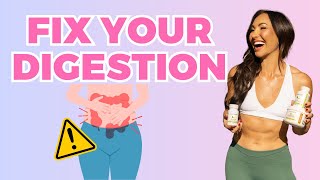
Natalie Jill talks with Wade Lightheart, co-founder of Bioptimizers, about digestive health in midlife. They cover enzymes, probiotics, and hydrochloric acid, with Wade sharing what actually changed his own digestion and wellness.
What if I told you that adding enzymes and improving your digestion could change and transform your health in midlife? This is something that has become increasingly important to me. It's the one thing that I make sure I'm doing in all of my meals. I have recently partnered with Bioptimizers because I am truly a huge fan of their product line. So many good things. And I love talking with the founders. And I've got Wade Lightheart on, who is a co founder of Bio Optimizers. And I wanted to have him on direct because I want to go a lot deeper on the topic of digestive enzymes. So many times we have people say that you get everything you need from your food. You don't need this. Our bodies are supposed to do that. And Wade, I've personally watched enzymes transform my life. So I've got a lot of questions for you and I want to really open up this conversation. So thank you so much for being here today.
Oh, my pleasure. And I love talking about this topic because it's so vast and very easily to get confused. So I think we're going to eliminate a lot of that potential confusion today.
So especially with midlife women, the topic around protein comes up a lot like, we need to be adding protein. And I believe that. I believe, you know, we want to have muscle, we want to keep muscle and protein feeds our muscle. It's absolutely important. We've got to have more of that in us. However, I also believe it's not so much what we're eating and how much we're eating, it's what we're actually digesting. And I wanted you to dive a little bit deeper into that and your perspective. And even more interesting, you're a vegan for years and years. Is that accurate? I have that right?
Yeah. I haven't eaten meat since 2001.
Wow.
I don't apply as any, any type of food cult or anything like that.
But yeah, no, I don't think you that way. But it's just, it's important to note because people are concerned about not getting protein as a vegan, you know, all of that. And I think this has part of that topic goes with that.
Yeah, I mean, obviously being a performance athlete in a muscle building world, it was very unusual to be on a plant based diet. So that was really odd. And in order to do that, I used enzymes in order to make up the difference. And I'll explain the mechanics a little bit as we get into this.
Yeah, that's amazing. So let's start with what happens to our enzymes in our body. It's my understanding that after the age of 35, we stop producing as many much of our own and it keeps declining. Help shed some light on that, like what's actually happening there.
Okay, so we're going to start at the basics and then we're going to kind of build from this. About this topic from enzymes. So enzymes are literally involved in over 25,000 biochemical processes. They are catalysts, basically they accelerate a variety of chemical activities inside of the body. You know, everything from digesting your food, running your brain, I always say it's from thinking to blinking requires enzymes. And if you are classically trained in nutrition like I am, and studied exercise physiology and all this stuff, you'll see about two paragraphs in any nutrition book on enzymes and then just kind of brushes over it. Yet they're so interrelated. And almost all of the food companies in the world, almost all the chemical companies in the world use enzymes to produce specific results that they want. Enzymes are classified into several different categories and so there can be confusion. So we're going to get that out of the way right away. So there are say plant based enzymes, so something that you would get like bromelain and papain. So every single food that you can find has enzymes presence in catalysts. And when you eat the food, you get the enzyme. So when a tiger eats a zebra, it gets the enzymes of the zebra. When a bear eats a fish or a berry because it's an omnivore, it will get the enzymes from that. If you're a horse or a cow, you would get the enzymes along with that. And with our understanding of food science, we just look at the calories, the macros, the protein, the vitamins, minerals, whatever, but we don't actually look at how do we actually absorb and utilize it. And enzymes are involved in the first part. There are animal based enzymes. So we have regular plant enzymes and we have animal based enzymes. And they will work in a very small ph range and have very specific purposes. Okay. And then you have what's called systemic enzymes. And systemic enzymes are enzymes that aren't involved in the digestive process. So that might be something like nattokinase, you might have heard recently as a great enzyme. In order for, you know, a variety of heart related issues.
Together that both of those together I started taking.
So those are systemic enzymes and what that means is that you don't eat those with food.
Right.
And then you would take them for specific purposes and they have all these metabolic benefits. So when you take them, and then there is another category of enzymes which are called cultured enzymes. So cultured enzymes is kind of like the Olympics of enzymes. In other words, they'll be anywhere from a hundred to a thousand times more potent or powerful than an enzyme that you would find in any single food that you'd be in extraction. And the reason that is is because they grow them. You know, sometimes it's a fermentation process, sometimes it's off a mushroom, sometimes it's off a bacteria culture. There's a variety of different ways to spending depending on the type of enzyme it. And then by controlling the mediums, you can produce essentially super enzymes. And that's a cultured enzyme. That's what we are involved in. And the best companies in the world around enzymes are culturing enzymes for specific reasons. Enzymes fall into basically four categories when it comes to digestion. You have amylase enzymes which break down carbohydrates. You have cellulase which breaks down plants. You have lipase which breaks down fats. And you have protease which breaks down protein. And they'll be like hemicellulase and they'll be very derivatives of those. But those are the basically the four categories that people would be most receptive to or most important. Now how does this all relate to digestion? How does this relate to protein? And you know, like so, so what happens when you consume food? All animals consume their food in a raw state. Animals don't cook.
Sure.
Problem when you do not eat raw, raw food for your natural diet is that at 114 degrees all of the enzymes become cooked.
Right. Which is when you're pasteurizing, you're doing that too. Right.
Like when you pasteurization, irradiation, cooking, microwaving, all of these elements that we use to preserve food. Because if the enzymes are present, the food will rot in the store quicker so they need to irradiate it so that apple stays.
That makes sense. Is this kind of where the idea of like a raw food diet came in? Is that the initial. Okay, yes.
So I did a raw food diet for two years and I think I'm the only raw food person that's ever competed at the world championships in bodybuilding. But that's beside the point. I went in when I started learning about enzymes. I'll tell you exactly what happened. In 2003 I was trying to do a meeting a plant based diet with a meat eating and mentality. I did was successful and got to the Mr. Universe contest. After the Mr. I felt terrible, by the way. It was rotten. I didn't feel very good. And that's the difference between a performance and health. Looking a certain way does not mean that you're healthy. Sure, those are not connected. They can be, but they're not. They could be different. You know, a lot of high performance athletes, Lance Armstrong had cancer and things like that, you know, so after that Contest, I gained 42 pounds of fat and water in 11 weeks because I was eating a completely enzymatically deficient diet. And I was subsequenting, you know, products very hard to break down and digest and absorb and utilize. And I met a doctor. His name was Dr. Michael O'. Brien. And you can read about Dr. Michael O' Brien in a book called, called Come Alive by Bernard Jensen. So Bernard Jensen was a legendary nutritionist, and him and Michael were friends. And then unbeknownst to most people, Bernard got cancer, metastasized the bone. He was 84 years old and 78 pounds. He was ready to die. And they had been friends and they brought Michael in. No one wanted to sign the death certificate. They brought Michael in and he supercharged Jensen with massive amounts of enzymes and massive amounts of proteolytic probiotics and some tocotrienols and stuff like that. And eight weeks and one day later, he was back up to 114 pounds and, and cancer free. That's the power of cultured enzymes in a super excessive state, in a dire state. Now, I'm not saying that to cure things, but you can read about it and come alive about what's possible. There's also the Dr. Gonzalez protocols, by using proteolytic enzymes for a variety of things, over 12,000 patients. So I was fascinated by this. And when I met Dr. O', Brien, he says, wait. I said, how did this go wrong? I'm at the pinnacle of health. I'm at the pinnacle of performance. What don't I know? And he says, you learn to build the body from the outside in. I'm going to teach you how to build the body from the inside out. And so I started using enzymes and probiotics, optimizing my digestion, because my digestion had been wrecked. And that's what was leading to the weight gain that was leading to the joint pain, that was leading the brain fog that was leading. All of a sudden I was like 31 years old. I was like, this should be happening. I also went on a raw food diet for that same reason. That makes six months later, I got my body back, I got my brain back. I never felt better. I took four years working with, I think it was 15,000 clients Matt and I did around the world to perfect those aspects in performance diets. And that's when I went back to the world championships again. And in 2007, knocked it out of the park. Felt great. Didn't have the blowback. I said, okay, I figured this out. Now I'm going to take it to the world. And we've been doing that ever since that time.
Okay. I never heard. I had that whole backstory. I love that. That's good to know.
Yeah. So I'm telling you this or sharing this with you because I'm going to lay out why this is so potent and why almost no one thinks about it. There's a fellow, you can write this down. His name was Dr. Edward Howell. And this is so relevant to our world today. Well, he saw some research from a fellow by the name of Dr. Pottinger, and it's a famous study called Pottinger's Cats. And basically this. Dr. Pottinger took these cats and he fed some a raw food diet, some a cooked food diet, and then he did some with cultured enzymes.
Okay.
And it turns out that the ones that were fed a raw food or cooked food diet died sooner. Okay. They didn't live as long. And by the third generation, because when you have cats or animals, you could. By the third generation, they lost the ability to procreate. They had strange genetic mutations and three, their normal sociological behavior was completely dysregulated. They did not act like cats anymore. They were totally different. How Saw this and said, I want to experiment if I could replicate this on a bunch of other species. So he did rats, he did cats, he did dogs, he did monkeys, he did all this sort of stuff. Same results. When they had a raw food diet, they live their normal lifespan, and when they supplement it with cultured enzymes, they lived longer.
You're just, you're, you're making me. I mean, I know I don't want to take. Go off track of what you're doing, but you're making me realize why with our pets, we've said raw food diet is the healthiest for them. Like, because that's how they would eat in the wild anyway.
Correct. Because it's not about the, the nutrients that they're getting from the food that might be enriched, it might be enhanced. They might be. What happens is if you take the pancreas of a human today, it's three and a half times larger by body weight than any other Species, because we eat the most amount of cooked food, and that means our liver has to produce these enzymes, store them in the pancreas, store them in the gallbladder, and they become released. So the lipolytic enzymes out of the gallbladder, the amylytic amyloids out of the pancreas. So diabetic conditions, skin conditions, issues, metabolizing fats, things like that, that would be around the gallbladder. And then, of course, proteolytic enzymes, number one, they have very powerful functions around the liver. But the biggest source of gas, bloating, that discomfort in your guts and all that sort of stuff in autoimmune conditions is undigested proteins leaking into your blood from the digestive system. And so what happens in your body has an immune system response.
Like, I'm a celiac. That's basically what happens to me with gluten, Correct?
Correct. So when you go through digestion, and I'm going to break down the digestive process of more enzymes, and why using cultured enzymes can be extremely powerful for a variety, and why it is, why the mechanism of how this works. And this is not telling everybody, you got to go on a raw food diet. I'm not doing that. I see the benefits of pasteurization, radiation. I love all the modern technology. I love that we can go to the grocery store. You don't have to go hunt. Like, I'm not here to, you know, say, we all got to go back to the lane.
You don't have to all be homesteading.
Yeah, no, exactly. What I am saying, though, is when you are eating, going back to those animal studies, when you're eating cooked food or radiated food or pasteurized food, your body has to produce the enzymes to digest the food. And that's why your doctor will say, well, your body produces those. Yes, but at what cost? What's the cost of that? Well, you've probably heard that digestion takes up most of your energy requirements. Well, why does it take up energy to do that? Because your body has to produce enzymes. Now, the normal state of digestion is you taste, touch, feel, sense the food. That creates a salivary response. Your nervous system goes the rest. Rest and relax. You masticate the food. Your body starts to determine what enzymes need to be reduced. At this point, the food goes down the esophagus into the upper cardiac portion of the stomach. This is where the enzymes present in the food are supposed to start breaking the food down. At 30 to 60 minutes, the hydrochloric acid starts to be produced by the body. This will change the PH of your food. Some of those enzymes will become activated, some of those will be deactivated, depending on the ph range. Okay? This is very critical because most enzyme companies or enzyme formulations just throw enzymes. They don't look at the ph. They don't look at why you might need three or four different proteases or lipases, because they're going to become active. Now, key amino acids are spun off at that point. Now, if you don't have that first stage of digestion now, when the food comes out of the, the stomach after 30, 36 minutes, and it's going to spend a couple hours in there churning or whatever, depending on the, the bulk and the, the volume and what the source of the food was. Your body takes bicarbonate buffers, which is a fancy name for alkaline minerals like magnesium and calcium, and buffers that acid so that you don't burn holes in your intestinal. Then the food goes into the intestinal tract and that's where your bacteria cultures. This is called the microbiome. Easy way to remember this is you got 10% good, 10% bad, 80% opportunist. It's like people at the shopping mall, right? You got some shoppers, you got some people, you know, looking, you know, kind of just looking to see what's out there. But then you've got 80% of the people that might be one of those categories, but like, oh, my God, the Bon Marche has just gone half off. I'm in. Like, I got to have this, right? So it's the same thing with our diets are oftentimes when we travel, we'll see disruptions in our diet because we're faced with different bacteria, different types of food, and there's a response. So your microbiome is changing all the time. And then the final stage is the elimination phase, which is where the rest of the remaining of the food gets turned out. This is all controlled by what's called peristaltic contraction.
Okay.
And out of some cases, people who have a dislodged disc in their spine or out of whack can stop their peristaltic contraction. But otherwise, you know, that might be 2% of people who have digestive issues. 98% of people, it's. They don't have the right enzymes, they don't have enough hydrochloric acid, and they don't have enough probiotics. Now. Yeah, you wanted to ask?
No, I was saying it's. It's just I've Played with so many supplements in my life. Like, I've been through all the phases with different supplements, and I. I am a fan of supplements, but I'm super picky on, like, what I actually think is important or not important. And I swear, enzymes, probiotics, and HDL have, like, literally changed my life. Like those. If I could only have three supplements, it would be those three things. Because I used to wonder why. And I noticed it because I eat so well. Like, I. I eat that unprocessed diet and I am a celiac, so I don't do gluten or wheat. And I also was. I don't. I rarely do dairy unless I know it's raw or it has things intact. But I would start to notice that for no reason, I would be bloated after meals or tired after meals. I'm like, why? Where's the bloating coming from? I didn't have gluten. I didn't have, like, what is that? And then I. Or I would go, why am I so tired? And I didn't fully understand that. And then going through, like, cleaning up my gut and everything. Even when I cleaned it up, it would still come on sometimes. And it's one of the biggest complaints I have from women, by the way, in my programs, they'll say, I'm tired in the afternoon, I'm tired after my meals, or the bloating. So when I learned this about enzymes to start, that was life changing. And you all. There was a demo my friend Doug showed. I have a friend Doug, who owns another company, but he showed me. He took these two puddings. Wade, this was cool. I don't know if you've seen this. He took two Hershey's puddings, like, junk puddings, and he took a spoon for both of them. And he was stirring. I'm saying, hey, this is your digestion. And in one of them, he opened and put digestive enzymes. And the other one, he didn't. And he stirred it for a few minutes and then he turned it over. And the one with digestive enzymes, it, like, poured out like liquid. And the one that didn't have that, it was clumpy. And that visual really helped me understand what's happening when we break down our food now. You couple that with other things. Most of us do not have strong gut biome. Like, we. We don't. We think we do. I didn't know I had leaky gut. And I did as healthy as we can be. You could have still have leaky gut or gut issues. We need a good balance of probiotics, so I wasn't taking them regularly like I've learned to do through you. And then hcl, I want you to go a little deeper into that. I know we're talking enzymes, but explain what hydrochloric acid is. And because that is my understanding that if you want to prevent getting some parasites, some infections, you want hcl, because that's what helps kill whatever is not supposed to be there. And then the probiotic creates the environment that you're the good stuff thrives in, and then the enzyme breaks things down. Do I have that right? Am I explaining that right?
You do. You. You got. You got. You got that down very well. So hydrochloric acid serves two distinct purposes. One, to disinfect your food from bacteria, viruses, parasites, bugs, whatever you happen to eat that we wouldn't. You shouldn't have. Okay. And then the second aspect. So it's one of the first defense mechanisms of your immune system. And then the second thing that it does is it changes the pH to activate some enzymes and deactivate others. That's the two functions that hydrochloric acid has.
It changes.
Simple and easy.
Okay.
Yeah. There's a simple. There's a simple test that you can do to see if you have enough hydrochloric acid. As we get older, we tend to not produce as much. The other thing is you can have an H. Pylori overgrowth.
Yeah, that's another common thing I've seen.
Yeah, yeah, that. That will. That will disrupt your hydrochloric acid. You start getting heartburn and heartburn reflux.
Yep.
And I'll explain why that happens. And then the test that you can do is really simple. You take a half teaspoon of baking soda, stir it into 4 ounces of water, stir it all up on an empty stomach, drink it. If you burp in five minutes, you've got enough hydrochloric acid. If you don't, you don't have enough. And usually you would start on maybe like a hydrochloric acid tablet or capsule with each meal. You know, with each meal, do that for about 90 days, is usually how much. And then you can oftentimes cut it back. Because if it's an H. Pylori overgrowth, that HCL will start beating that down.
Wade, do you have to take it? I've heard different trains of thought on this. So you said take things with your meals. I've heard that you want to take hydrochloric acid at the end of your meal. Because that's when your body is already releasing what it has. Is that accurate? How important is this?
That's the optimal situation. If you were to, if you, in a perfect world, you would take the enzymes before you take the hydrochloric acid. You know, you take enzymes like 20 or 30 minutes before. Oh, 20 or hydrochloric, you take the hydrochloric acid right after. And then you would take probiotics, you know, in the morning, in the evening.
Oh, so you don't take them with your food, the probiotics?
Well, you could. You can. Okay, so depending on the quality of the enzymes and the quality of the probiotics is going to determine whether they're going to survive the hydrochloric acid. With many of the brands out there, they, they're just not potent enough or resistant enough because they're using a plant based enzyme, an animal based enzyme. And if you add the hydrochloric acid. So I know this because we have a lab in, in Bosnia. We have just under 20 PhDs and master's students who actually recreated the digestive system that this, the, the test is called the infogest. And they can see if those enzymes become activated or reactivated in the lower intestinal tract. Do they survive the hydrochlorics? Same with probiotics. What do they produce? What kind of foods they live on? So we're doing all these experiments really cool. To find out what these little guys do. We actually feed the bacteria and the bacteria feed us. That's. We're really not feeding ourselves. It's the bacteria that's feeding ourselves. It's just crazy. So it all comes down to conversion. So. And different probiotics will go in different mediums. The big issue for most people is they don't have proteolytic probiotics. In other words, what does that mean? It breaks down protein. Because undigested proteins in your intestinal tract is where most of the problems. The gas, the bloating, the leaky gut, all of that is proteins that don't break down. Some of that is due to.
This is in the pro. I want to make sure I'm understanding this is in the probiotic. Not.
Okay, that's if you do like a P3. So L. Plantarum OM is one of the few strains of proteolytic probiotics that actually eat and consume protein. The other thing that they do is they identify, and you can see this on the patent, they identify viruses, for example, will have a protein coating that the P3M will go eat It.
Wow.
And that renders it neutral. Right. So you can look at the patent. I can't go into details because I don't want.
That makes sense, though. I didn't. I never had that explained to me. This is another interesting thing I figured out with your stuff. And I thought this was, like, not normal. I'm like, well, maybe this is how your digestive system is supposed to work because it's TMI for anyone listening. But I will literally, if I do your stuff and eat my food, I will go to the bathroom, like, literally 30 to 45 minutes after, like. Like a dog. Like, I eat and I go. And I thought at first, like, that's not normal, but it actually. That's how we're. Our digestion should actually work. Am I. Is that correct?
Yes. So this is the surprising part because you'll go to your doctor and he'll say, oh, you know, you say, oh, I have three bowel movements a week. And they're like. And he's like, oh, that's normal. It's different for different people. But that's because he or she is having three bowels.
And it's based on averages. So that averages of everybody. That's. Yeah.
Basically, if you put a pound of food in, there should be a bathroom experience within a couple of hours.
See? Okay, Then I knew that. I was like, this is what's. It's. It's creating the right environment in your digestion so your food processes quick through your body. You take what you need, and then the rest goes.
And here's an interesting fact. You can take enzymes on an empty stomach and you will not find them come out in your stool or come out of the body.
Wow.
So what happens? Your body will reabsorb them. And I have a belief from. And this is. This is from anecdotal clinical experience of 20 years, is that your body will take excess enzymes and convert them into systemic enzymes that will run into different families. So I believe. And how. I believe this is. When I was running my clinic in Vancouver, I would see people with skin issues. Right. You know, and. And I would give them a course of a high dosage of lipase, and their skin conditions would go away. And I would see people that had problem digesting proteins and. Or they had neurochemical imbalances. They couldn't produce enough neurotransmitters. I give them proteolytic enzymes, and all of a sudden, you know, 30 days later, 60 days later, they start feeling better. Yeah, I don't feel that bad. Mood anymore, whatever. And then I also would monitor people with blood sugar issues and we'd give them amylytic or amylase based enzymes and they would have lower blood score readings on the same types of food. And so I'm like, oh, okay. We're actually seeing that the body's not working so hard. We're not releasing all this stuff. This stuff's not leaking into the system because of the use of these enzymes. And same thing with plant matter. A lot of people can't break down plant matter because they don't make the cellulase, just like gluten. People are tolerated. Gluten. It's an enzyme called dipeptidyl peptidase 4 DPP4. And some people, about 25% of the population produce it. Now everybody else doesn't. So when they have gluten, it's a problem. Also, if you look at herbicides, pesticides, fungicides, all antibacterial agents, that we're kind of antibacterial crazy. All of this disrupts our enzymatic function in the bacteria in our gut, so it further accelerates. And then you got preservatives and you got dyes, and you got all these different food additives and chemicals. And all of these make your body work harder. So when you feel tired after eating, I call it the Thanksgiving dinner syndrome. You know how like everybody after Thanksgiving dinner has like, you're eating all this great food. It's wonderful. You think, well, if I'm eating all this energy, shouldn't I be able to go out and run a marathon and go exercise? Or why is everybody diving for the couch? And if you don't get the couch, you're on the floor and the drools coming down your face. And then like you wake up an hour later and you're like, I gotta go back and get another piece of pie. Well, that's because you didn't have enough enzymes. Your body shunted all the enzymes out of your brain, out of all your organs, put all the blood to digest in this food and bring as many enzymes. Your liver goes into overload. Your body has to shut down to trying to digest this food. Your body is extracting amino acids out of your intestinal tract to feed the enzymes because it didn't get. It didn't get broken down earlier. So it's got to make complete proteins. Even though you eat eight complete proteins, it's not broken down. And so your body just goes down. And what's interesting is the number one of the highest day for Heart attacks is the Thanksgiving Day and the day after.
Really?
Yeah, it's, it's a very, it's a bizarre statistic.
You think because your body's just overdrive on the, on the.
That's right. The body's overloaded, the liver gets contaminated. That shunts up to the heart and the heart if the person's predecessors kicks off. Wow, very interesting. So all that to say that what we did under the guidance of Dr. O' Brien and then we kind of optimized that is the easiest way to break that cycle of digestive distress is to use a combination of enzymes, hydrochloric acid and probiotics. If you do that test I just told you about, and that's right, you know, you burp in five minutes, you don't need the hydrochloric acid. Cut that out. And then you pick an enzyme that's best for your diet. So we developed enzymes specific to diets. I'm dietary agnostic. My business partner is a keto guy. Half the team's paleo people, you know, I'm a plant based guy. I'm the way on the road. A lot of people do. If it's your macros, I. It doesn't matter. The mechanism of what works for you is the same. But you may have a microbiome, a genetic proclivity or a diet that is more supportive to one of those type of diets than others. And that's why nobody, everybody's different. But you're different because of your genetics, you're different because of your microbiome and difference because of the enzymes present. So what we created is a universal system that would break down just about any type of food. That's our mass times, it's enzymes for the masses. Hydrochloric acid, P M Will just digest about anything.
Yeah.
And then if you go into specific type diets, we have tailored enzymes. Like we have a capex for keto diets, we have veg zymes for people on a plant based diet, we have gluten guardian for people who want to, you know, occasionally go out and have some pasta or some pizza or family and friends, you just take a bunch of.
But would you. With a celiac you wouldn't tell to do that, would you? Just no.
With celiacs you're going to have to be much more sensitive. And I would say though, if you're in that state, microbiome breakthrough, game changer. It's a combination of specific. It's an egg yolk extract that's combined with these different types of bacteria that rebuild the gut lining.
That gut film, it basically fixes leaky gut, right?
Correct. 24 hours. It's done when you can feel it.
So I start my 24 hours.
Yeah.
That's all it takes.
It's ridiculously good. So I just take a scoop of it every morning. First thing in the morning. Yeah. Yeah. Or.
I didn't know.
You know how you eat the other thing, too, if you feel a little inflammation or a little heat coming on, you know, like, you eat something, you're like, oh, that's not feeling good. I just go to the. I just go to the fridge and I take a. I take the microbiome Breakthrough. And you can either dump it in water and stir it up and pour it down, because the water will go right there, or you can eat it.
Oh, wow.
It's like frosting.
Okay.
It tastes like frosting.
Well, I don't know if it tastes like frosting, but that's okay. I'm gonna. How do you make it taste like frosting?
Well, I just eat it right out of the can. The vanilla. I take the. I just take it, scoop and put it in my mouth. It tastes like vanilla frosting.
Okay. I. Maybe I need to try it that way.
Because I try it that way. It's. It's. It's really good.
So talk to me about how many that you should be taking and, like, what's the difference between taking, like your enzyme and just any digestive enzyme? Help me with that first. And then. And how many should you be taking of all these things? Oh, and one more question. Sorry, I didn't dump them on. Make sure I get them all out there. The other thought question is, do we stop our own production by supplementing with this?
No. What your body will do. We'll start with the last one. So that's a common myth. Keep in mind that we are supposed to be consuming exogenous enzymes with everything that we eat.
Okay.
And I will refer. Don't just trust me on that. There's a book called enzyme nutrition by Dr. Howe and food enzymes for health and longevity by Dr. Howe. And he, he demonstrates all of the science and all the mechanisms behind that is. So you can understand why that's important. So.
But you're basically saying, because if we ate food in its raw, natural form, you would be having those enzymes. So if we're not having them, we're just adding it back in. So that's not going to stop your body from creating what it needs. Okay.
Yes. Now, Howell believed that you had an enzyme bank account and that that became depleted over time. And the real aging and degenerative process was basically as your enzyme pool starts to diminish, it starts cutting off non essential componen. I'll give you a couple examples where I noticed this. So if you go to the NFL football, the person who takes probably the most amount of damage and causes them is a running back. In the NFL history, there's only like three or four running backs in all of history that have been able to produce better after the age of 28. And Howell identified that most people stop producing proteolytic enzymes around 28. Now proteolytic enzymes are, are so responsible for building muscle, recovering from damage, recovering tissue. And an athlete like that explodes and it's very explosive, very fast switch, a lot of muscle, a lot of damage, they're getting hit every play, all that sort of stuff. So they, they don't last that long because of that. Interesting enough, when I was coaching high endurance based female athletes, you know, way back in the day when I was a trainer and got into this whole thing, I would notice that when the women had their first child, they could get back to their top levels. When they had their second child, only about 80% would get back to their top level. And then after three children, almost none of them were able to hit the high end levels of performance again. I believe that the woman was not only giving up her reserves and minerals and is that the enzymatic activity to grow the child was critical in disrupting that process. Okay, so that she enough enzymes. And so again so the enzymes are running her metabolism, enzymes are breaking down the fats, enzymes are involved in the Krebs cycle, enzymes involved in running your brain and running your muscles and running your tissues and stuff like that. And most women will have, will experience this at a certain point. Why does your hormone shut down at a certain level?
Yeah, I was gonna say. Well yeah, as you were saying that I'm like it sounds like our ovaries and eggs, you're given a certain amount of supply and then it runs down. And it's the same thing.
Correct. Now I have personally witnessed, I haven't facilitated. I have a lady that she works with, this took people, women who could not have children, put them on a regime of exogenous high levels of enzymes, high levels of probiotics. Plus the systematized like targeted based on their genetics and epigenetics of the elements that they're minning. And within six months to a year they're coming back and having children again. So I believe that there are mechanisms in her body that shut down reproduction.
Okay.
I think sperm counts, one of the reasons they're down, I think that there's an enzyme issue around that. And the reason why I believe that is because I've worked with a lot of different men and when they start taking exogenous enzymes, they start noticing that their sperm count goes up and sperm mobility goes up. So I've just. These are just anecdotal.
Yeah.
You know, you guys are on this.
Call and I can tell me, I.
Can talk about those things because literally.
You can tell me any of this. But I. Because I actually feel it in my body, like taking the stack. It's that, that's why I'm a believer that how important this is. Because now if I'm out and I'm gonna go eat and I carry them with me because if I don't have them with me, I'm almost like, I. I just know how different I feel eating without them versus with. And I don't know that I would have noticed it too much before I added it in, but I'm like, wait, I feel more energized, I feel lighter. I don't have a bloating ever versus how I used to feel after eating, like a heavier meal where I could feel more. And that's the difference. That's what. The only thing I changed. That's the difference. How many should we be taking? I think you, you gave me like a 3, 2, 1. But what do you actually do?
Yeah, so 3, 2, 1 means three enzymes, one hydrochloric acid and two P. Throw them with every meal. If you have digestive issues, I think just that's a good start for a regular meal. If you're going to like, you know, like I took my parents out last night to a fine dining restaurant. It was a six course meal, so I did five enzymes.
So if you're eating more, you'll do more?
Basically, yeah. If I'm just having a little snack, I might just take one enzy or something like that just to make sure it's good. But I have done advanced programs for people who are. There's so many people that have digestive distress and I'm going to share with you. If you got digestive distress, I suggest doing five enzymes with each meal and twice a day, five enzymes on an empty stomach and do the P3M four in the morning and four in the evening. You don't even have to bother at the meal. And then if you fail on the hydrochloric acid test that I just said that you don't burp in the first few minutes, do a hydrochloric acid 30 minutes after you take the enzymes before a meal.
So two questions to go deeper on that. I just want to make sure I'm understanding. So you said if you have distress, you would recommend five enzymes. How many times? With every meal, or what was five.
Times a day for 90 days?
Five. Five of them. Five times a day.
Yeah.
Okay.
And the reason why that is is because oftentimes what happens is you have a buildup of mucoid plaque in the body. The body. Also your. Your pancreas and your lipase and your gallbladder and your liver are working overtime, and that's sucking the energy. So why you feel tired after those meals or you don't have the energy, you don't have to get up, is because your body is spending so much time digesting. That's why a lot of people, when they do fasting, they go through three days or so where they don't feel that great, and then all of a sudden they get this great big boost of energy. Why? Because their body is not spending all the energy digesting the food. And this frees up your own metabolic enzymes to go start fixing everything else. So keep this in mind. So what is the big mechanism here? If you are taking enzymes in with your food, you stop requiring to produce enzymes for your food, so your body takes what it's producing and starts fixing your brain and fixing your organs and fixing your other things. You know, and I've seen this over and over and over again. High dosages of enzymes. I've taken as. Don't do this at home. I've taken a thousand enzymes in a day to see if they were.
Oh, my gosh.
Yeah, just to see if there was a tolerance level that something would go wrong. It didn't. I felt kind of high, to be frank. I like. It was pretty. Feeling good. But I don't recommend that. You'd have to own the company.
You need a lot of bottles to take.
Well, that'd be very.
There's 250 in my bottle right here.
Yeah, yeah, yeah, yeah. I'm not suggesting that, but I believe it's important for me as someone who owns Economy and advocates, is that I've got to test everything to see what's going to happen. And. And so my clients around the world don't have to. So, yeah, that's. That's that part. Now, what was the other Question I get so excited about. These questions are so good. Good.
What is the difference between. Because it's very easy, I want people to take enzymes and probiotics and hdl. But it's very. Help me explain, like, why I like your brand because I like you and I like, I like your partner and I like your company and I like what they're doing for me. But, like, why? How is yours? I just want to break down, like, what are the features and benefits different, like in your enzyme versus somebody else's, or your probiotic versus somebody else's, in your HCL versus someone else's?
Yeah, we've got a variety of reasons. First off, all of our products work independently and they work even better synergistically.
Okay.
And the reason, one of the reasons that we have a competitive advantage in the marketplace is we're one of the few supplement companies that actually has a microbiology lab. If you get into the supplement space, what happens is there'll be a trend in the market as a bunch of players will, will go to a producer, they'll get a white label production. I call it a mishmash of maybes. Maybe it works, maybe it doesn't. I don't know. They base their formulations on what's called a lab assay, which will demonstrate it has 80% of this or 50% of this or 20% of this. It doesn't have any contaminants, but they have no idea if that's biologically active, if those ingredients work. And it's not intuitive. And so you need to go beyond the lab assay to see, is those compounds active? Do they work in the intestinal tract? Do they cross over the barrier? What happens to the probiotics? What do they produce when you take it? What elements can you add to it? So, for example, there's certain trace minerals that if you add to these formulations, it explodes the efficacy. So in recent testing, the number one brand on store shelves today, which has been around for 30, 40 years, something like that, we're 2400% more potent because if you take mass times, there's 17 different enzymes in it. Each one of those enzymes. We've tested out a million different ways to get the best supplier, the best product, the best, the best effectiveness, and then you stack that between everything. So let's say it's 10% better than the market here, 20% market here, 30% here, 5% here. All of that adds up so that your compound is multiple times better than if it's just a single straight up enzyme formulation. And so that's what's given us advantage and one of the reasons why our company has been exploding with growth. We're going to be in Inc. 5000 the third time this year. That's the fastest growing companies in America because there's so many people suffering from digestive issues and they don't know what to do. There's so many people that are getting sick with every bug and they don't think it's their food. And they're like, they've tried all the diets. They tried it fasting, they tried it this. They try a bunch of probiotics. They try. They're. They're taking the right action, but they have no way of discerning the efficacy of the quality of the product.
And I think a lot of people literally just go on Amazon. They're like, digestive enzyme. And so that's. You don't know what you're getting. And I. And I'll share from my perspective because I have an audience size. I get hit up all the time with just random companies or also people that want me to white label their stuff. So it's like I. There's just. There's so much out there. It's very confusing to know, like, what the good products are like. That's why I'm asking, too, because it's very hard. It's hard to. To know what to do and what to. We just hear enzyme. Like, oh, we just need enzymes.
I would not have known this had I not had my own digestive problems and met Dr. Michael O'. Brien. I wouldn't have been able to sort this out. Out. We wouldn't have been able to prove this out if we didn't have the microbiology lab that does all the research, you know, with the PhDs that are way smarter than me and live their whole lives on this sort of stuff. But Matt and I also made a commitment a long time ago because we were guys that were always buying supplements. We were athletes, and we were spending all our money on it. We said we just wanted a company that builds the best products in the world. And we never rest on our laurels. No matter how good a product is, we. We still keep searching. That's why Mass Times is our fourth version.
Okay.
I think now we've got.
Oh, so you're updating it based on what you're learning. That makes sense.
Yeah. Yeah. Because new things come to market. That product's been around for 20 years.
Wow. But you've changed what's happening in There based on what you learn.
Yes. And then the final thing is our product. If somebody takes our product and it doesn't work for them, we just give them their money back.
Yeah. Well, I will say, and this is. You didn't tell me to say this, but it literally works for me. There's very. The supplements that I endorse, any supplement I endorse, like it literally is something I take and it works for me. And that's why I even update my. I have a supplement guide and I update it regularly if I learn something new, works better or whatever. But these, my husband too, like we take these with every meal now. It's like it's just changed how I think about this. I didn't know that about the HDL test. I probably should test that versus just taking them all the time. I didn't know that. But I'm also thinking kind of precautionary. Like I, I had parasites before so I want to like avoid that. So that's why.
Yeah, the ACL and parasites. There are naturopathic doctors that do high dosage of hcl. So I, I did that. I had a parasitical infections in Bali one time it eating my eye. Oh, it's terrible. I almost lost my eye and I had a naturopathic doctor guide me and I took a whole bunch of these really bad smelling Chinese herbs and I was doing like massive dosages of hydrochloric acid and was able to correct it in about three days. But I almost lost my eye. Yeah, I could have lost my eye. And fortunately I was able to mitigate that using.
Glad you figured that out.
Yeah, I was really lucky.
I have also heard if you take too much hcl, you will and you will create heartburn. Is that true?
That is a potential possibly. So let me explain heartburn and acid reflux. So if you don't have enough, which is actually most of the cases, not too much, which is ironic. Okay. What happens is when that food goes into the upper cardiac portion of the stomach, if you don't have enough hydrochloric acid in there, the food starts to ferment and it creates a gas and that pops your esophageal sphincter open and whatever acid you do have in there starts to splash up and create this heartburn and acid reflux. So the standard, you know, remedy for that is to go take some antacid, okay. To coat the, coat your intestinal tract, coat your, that or you take, you know, one of the prescription medications, a purple pill and all that sort of Stuff. Now if you look at the literature on that stuff, those are to be done, be taken for only for four to six weeks. And you're supposed to go off them. And people are. Because if you're disrupting that hydrochloric acid that makes you more susceptible to bacteria, infections, parasites, bugs, whatever is coming around. And you're also further disrupting your digestive system. So now you've got more undigested food in your intestinal tract, more opportunity for.
Leaky gut, more opportunity for acid production. So you're stopping your hcl production to avoid the symptom, you're not getting the root cause. And now you're allowing in more issues to your gut.
And here's the facts.
Wow.
12% of the emergency hospital visits today are gastrointestinal related issues. 25% of the population, almost 100 million people a day are taking some form of digestive aid or reporting digestive distress. Excuse me. And a quarter of those are on prescription medication permanently for digestion. That's how serious things are getting.
Well, you have me thinking about literally my mom right now. Because my mom had this. She had a distended stomach that I noticed. And she's super healthy, like she does all the everything. And I was like, mom, something's going. And it wasn't visceral fat. I knew that with her, like something's going on with your gut. And it was. She had sibo, she had all these things. But she's been on one of those acid prohibitor, like one of those for years.
Proton pumps or whatever.
Yeah, for decades. So of course that makes sense to me. That's allowing stuff in.
Correct.
I would imagine your rate of sibo, everything would go up. When you're doing.
Everything goes up. Because now what happens, any undigested food in your intestinal tract now becomes a potential toxin. Because those opportunist bacteria that we talked about, they're going to start feeding on it and multiplying and that's when you start producing indol and skate. All that makes your brain fog. So a couple ways to test. If you wake up in the morning and you have bad breath all the time, or you get those crusty eyes like the crust coming out, or you have brain fog, there's a good chance that you have some sort of dysbiosis in your gut.
Oh my God.
Correct it up to do that. So, you know, and once you clean up your gut and yeah, generally I would, I would suggest people, if you have a lot of digestive distress, you get a lot of gas, blowing, bloating, flatulence, constipation, or diarrhea. They're all actually symptoms of the same thing. Take 90 days, go on a high dosage of enzymes, so 5 mass times everything, and 2 probiotics with each meal. Do that for 90 days. Be very conscientious of your diet. Don't go off that for 90 days. And that'll be enough time to reboot your digestive system. And if you want to really boost it up, take the microbiome breakthrough first thing every morning.
That coats your stomach, coats your.
Coats your intestinal tract. And 30 days, you'll feel better. 60 days, you'll feel great. 90 days, you'll be like, okay, wait.
I even think you'll notice at your first meal, like, honestly, like, I. That's how much. I mean, I really notice a difference. I never felt anything about breakfast, but you get into lunch and I have big salads, whatever. I notice a huge difference when I take stuff. When I take.
Yeah. Well, I don't like to. I don't like to oversell it, but you're right.
Is there any downside, like, to take, like, is this. Or any. Anyone could do it? Like, no medicine, like, does this. Is this dangerous? If you're taking a prescription, like, could that help but break that down? We're like, what do we need to be aware of?
So a couple things. If you have gastritis or an ulcer, okay. Do not take proteolytic enzymes. Okay.
Okay. That's the PRM3. That's the.
Okay, well, the mass times. Do not take that. And the reason is, is that what you have is a perforation in the intestinal lining and the stomach lining, and then the. And then the enzymes are going to start just breaking down and they're going to make that. They're going to accelerate that.
Do not do it if you have an ulcer. Okay?
Correct. Correct. That's. That's.
What about any medications? Like, people on different medications you would.
Want to check with your doctor. Usually it's not an issue, but. But, you know, I can't make any distinctions on prescription medication. So just say, hey. You just go to your doctor and say, hey, I'm taking these enzymes. Is there any.
But you're not aware of? Like, there's a contraindication with things. Like, you don't. You're just saying check with your doctor because everyone's situation's unique. Okay.
Correct. Correct.
Yeah. This is fascinating. I'm like, I'm so convinced about your enzymes. Full transparency you all I do partner and promote bio optimizers because I do believe in their product line and I just want to the ones that we talked about today is, is if you go to buy optimizers B I optimizers.com forward slash Natalie Jill. You'll see we listed out these specific products because they're the ones that I actually take and just full transparency like I am very honest about what I actually take. There's in fact we're not going to mention it. There's one product that Wade sells that I'm sure is the greatest thing since sliced bread. But I have there's another company that makes something that I like better and I talk about that. So I when I told them I would could partner with them and speak about this, I said I'm only going to share and talk about the ones that I actually personally use and love. So that's, I just want to tell you all I really do use and love these. I carry them like to dinner, to lunch. My all my friends had them last night at dinner. I'm like take these with your meal. Like everyone's taking these with their meal. So huge fan but so bioptimizers.com forward slash Natalie Jill. And then I have a discount code too. If you use Natalie Jill the discount code, you do save some more on that. Wade what about some I'm missing that you want to make sure people know about enzymes because this is so helpful today.
I believe that the missing link to health, energy and vitality. I also believe that they reduce the degenerative conditions of aging not directly, indirectly by freeing up your metabolic enzymatic production. And that was what Dr. Howells talked about. That's what also he mentioned in Food Enzymes for Health and Longevity. And if you look at the longest living populations of the world, number one, they have great social cultures. I think that's a really key element. But number two is almost all of them eat some type of fermented food.
Yeah.
So what's really unique to that? And if you look at fermented foods, they have bacteria and those bacteria produce enzymes. And so I think that affects your immune system. For example, I've been taking P3M for 20 years. In those 20 years I have been sick once when I feel something coming on, I just load up the. I load up P3OM and I make sure that I didn't know we could do that.
I'm going to start doing that.
Yeah. It's really like you get a little sore throat, a little sniffle. I just Take a handful. And the other thing is on the P3 Ohm. I got to mention this. Food poisoning. It's undefeated. You get food poisoning. Take, take, take 10 of them right away, okay? Take another 10. 30 minutes later it'll be gone.
Because you're basically changing your terrain. You're like going, no, I'm putting the good stuff here, so you're going to get out the bad stuff.
I have saved many wedding parties that were in Mexico a bunch of times by the people are all messed up and I was just literally going around and just bringing. I, I. When I go to a, when I go to a wedding in Mexico or an event or like an executive event, I actually take extra bottles because I know there's probably with those buffets and the heat and all that sort of stuff, it's likely there's going to be some food poisoning going and all the booze and all that stu stuff. And so I just go around and I'm like, I'm just handing them out like candy. And people are like, what is this stuff? It makes me feel better. So they go from feeling terrible. An hour later, you're feeling totally normal again, which is really remarkable. And it's a fun thing to do. And I feel grateful I get to do that.
So good. We're going to wrap this in a second here, but I want you all listening to know a couple things. Number one, I do something and actually we're recording this live right now with Wade, and I've got my 365 members on listening. And what I do is when I wrap the episode for YouTube and the podcast ask, we pause the recording and then I let the members, they can ask all the questions they want direct. So if that's something that you're interested in attending a future live recording, if you go to midlife conversations.com forward/live. Again, it's midlife conversations.com forward slash live. You can find out how to join in on live episodes and you can also hear past live ones with the questions that were asked after for the after show. If you're watching this on YouTube, make sure to subscribe so you're notified of future shows. And if you're listening to this on the podcast, make sure you hit follow so you're always notified about future shows shows. Thank you so much today, Wade, and stay on in just a minute for the after party.










