The Truth Behind Pre-Washed Veggies | Natalie Jill
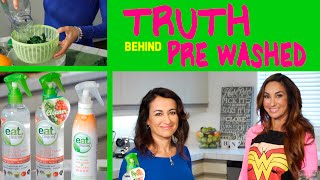
Natalie Jill and Maria from Eat Cleaner discuss whether pre-washed vegetables are actually clean and how to properly wash produce to remove pesticides and bacteria. They demonstrate washing techniques and explain why a specialized produce wash works better than water alone.
Hi guys. Natalie, Jill here back on Unprocess yous Diet. And today I've got my friend Mareia from Eat Cleaner. Thanks for being here.
So good to be here.
And we're talking about an awesome topic today. It's because I did not realize this and I'm sure many of you don't, but how clean or how dirty is the food that we're eating, especially fruits and vegetables and whether it's organic or not organic, like how dirty is it? So Maria has an amazing company. Really dirty and a very interesting story of why you started your company. If you could share.
Yeah.
How that started. Definitely.
Thank you. Well, I have a background in holistic nutrition and I'm a chef. And you know, I've always been really into ways to get people to eat more fruits and vegetables because they really should be about half of our diet.
Yes.
And my dad is an environmental scientist and he said to me, you know, do you really understand what's on that produce? I mean, bacteria and pesticides. And now they're covering it with wax and it's traveling and it's touched by 20, 30 different sets of hands before it ever gets to us. Oh, and by the way, it's traveling around the world now and a lot of it is not getting inspected. So we put our heads together and we created the Ecleaner Wash. And it's the only patented all natural wash that is lab proven to remove up to 99.9% of the pesticide residue, wax and bacteria from your fresh produce. Plus it helps your produce last longer.
So I've seen products that clean vegetables and fruit and I've heard some people say, well, all you have to do is really wash it. You can put soap on them, rinse it in water. That's enough. Talk to me about that because how does somebody know if they're really cleaning their fruits and vegetables?
Why? It's a great, great questions. Because we're told that we should just rinse with water. But based on all the lab data we've done, even if you go to the FDA's website, it will tell you that water is not that effective. So what are we left with? We're left with produce that's been covered in a layer of wax. So imagine if it hasn't been washed properly, which these beautiful strawberries, they're picked and packed in the field. They're never cleaned before they actually get to us. And.
And we have no idea who's touching or handling these. Yeah.
And there was just an outbreak just recently where There was a salmonella outbreak and it was all because the produce wasn't washed properly and it was sprayed or treated with animal manure. So that can happen in the field very easily. Can also happen just by somebody not washing their hands and touching it in the grocery store.
And water will not rinse that off.
Water is not that effective. Based on our lab research, we're seeing about 30 to 40% effective. Sometimes upwards of 70%, but still, that leaves a lot.
Okay, so let's. Before we show like actually what is on our fruits and vegetables, because this is crazy when you guys see what is actually on this stuff. I had no idea why is. What is wrong with something being on our food? A lot of people say, well, gosh, we have immune systems for that. Your body cleans it. Let's talk about that. What can happen if you've got food with something on it, contaminated?
Well, let's start with the portion of the population that's really got to watch it because their immune levels are lower. And that's pregnant women, children, and people with autoimmune deficiencies like me.
I have one.
Yeah. And that's what happened with my dad. My dad had cancer. And that's really what fast tracked me to want to bring this product to life is I had just had a child and my dad had cancer. And I was thinking they should be able to eat fruits and vegetables and not have to worry about what's on there that can cause illness. So that's 60% of the population, a little bit more in the US alone. So right then and there, their risk of foodborne illness is a lot higher. But then you think about everybody else. I mean, a good friend of mine got sick and was paralyzed and hospitalized after a foodborne illness outbreak. I've had many friends who have had, you know, hospitalizations and other really severe side effects. So you think anybody can get sick? You don't have to be in a position where you're compromised. Your immunity is compromised. But then again, the food that we're eating should be good for us. Fruits and vegetables should be at the corner of our diet. Leafy greens are the number one cause of foodborne illness. Apples are the number one sprayed crop. Up to 53 different pesticides is reported by the Environmental Working Group. So if you can take a step to remove a lot of that and you can do that effectively with our product, why not?
Three questions that I have right away, and I'm sure they have the same questions. Organic versus non organic. Does that help us at all? That's one question.
Yeah, organic doesn't mean that it's necessarily free of bacteria. Organic means it's grown without chemical fertilizers and pesticides. Doesn't mean that the potential for animal manure to be used or fertilizers that would carry bacteria isn't there. In fact, your risk goes higher.
So now if somebody is using non organic fruits or vegetables and because of price or whatever reason, can they rinse off the pesticides with this product?
Well, we're lab proven to remove over 99% of what's on the surface. There may be a little bit that is endemic, which means it's taken in through the roots. But sometimes some of that wears off over time. So you also have a shelf life issue around the pesticides. For the most part that is worn off by the time you ingest it. It's really what's on the surface because of what's been sprayed recently.
So for somebody that money has been an issue with organic, this could be something that could potentially help them.
Definitely. I mean if they're eating organic, they still need to wash it properly too. I really want to emphasize that because of handling bacteria and also you've got to think a lot of the time organic doesn't last as long and our wash will give added shelf life. So you can bring your produce home, spray it, put it back in the refrigerator and it will help it last up to five times longer.
That's huge. And that saves money right there.
Yeah, absolutely.
Fruits and vegetables last longer.
Well, it's the biggest complaint I hear is I want to eat more fresh fruits and vegetables but it goes bad.
Before I can even get to it.
So ours is the only one on the market that's formulated to do that.
Now talk about pre washed lettuce because that's a big one. Pretty pre wash lettuce. Is it clean?
Did you hear about the mouse that was just recently found in a bag of pre washed?
No, I did not.
Yeah, well if you google it online you will see frogs, you'll see cockroaches, you'll see mice.
I'm not having pre washed lettuce, all kinds of stuff.
So I know that they tell us not to rewash it again, but I'm telling you I would rewash it again just because a lot of the times those produce washes, washes are just clothes, chlorinated water.
Okay, so I want to see what happens here. I want to see what show because you showed this to me before and I could not believe it. I want to show what actually happens when we clean stuff properly. And I just want to show you guys too. She brought me a wonder Woman. Wonder Woman apron. So I'm not saying I am wonder Woman, but you haven't seen us in the same room. That's all I'm saying.
You wear it well. You wear it well. Okay, so Natalie, I want to show you the difference between grapes and blueberries because you're gonna see a huge visual difference. But let me. You wanna see a magic trick? I'm known for this magic trick. Okay, so I'm gonna cut the broccoli in half.
This is not wash or rinsed.
This is not washed or anything. No. So you've got your two pieces of broccoli all from the same stock. And what do most people do? They take it, they rinse it under the sink, right? Yep.
Just shake it out.
And what happens?
Probably wipe it with a paper towel and it gets stuck on the back.
The water just kind of beads up. Right. It doesn't really do much.
Right.
Okay, so. So that's one half. Now let me show you what happens with the E cleaner. So we take our bottle and this is a brand new bottle we just came out with. You get 50% more free. You spray the top, Just give it a quick spray like that and instantly you see the color difference.
Oh my gosh.
So you can see the color difference there. But look at what happens. You take the water and it runs right through.
Wow, that is pretty cool.
No beating up of water. And you know why is because the product is actually getting under the surface to really clean, not just rinse. And you can see how that water is just beaded up on there and just sitting there. But we've really like penetrated the surface to break through what's on there.
That's a huge difference.
Cuts through wax, all that junk. Okay, so with the grapes. So I'm gonna take some water again. Just normally you would rinse it, right? Give it a quick rinse, if that at all. Do you know about only about 50% of people even rinse their produce?
No, I just shake it under the water and wipe it with a powder towel with all kinds of chemicals, all.
Kinds of stuff that you don't want to eat. So there's our rinse. Now we'll do the same thing with the Eat cleaner. And instantly you can see the difference in the color. Look at how much brighter and shinier those get. Uh huh. Now we're gonna leave that on for a couple of minutes and we'll give it a Quick rinse. And the one really important thing that I want people to understand is you're not gonna change the way the food tastes or smells. I think that's usually a question we get is like, does it alter the flavor? In fact, it actually makes the flavor better. Because what you don't realize, and as a chef, this is something I always teach people, is mouthfeel. You don't realize that sometimes that grittiness or that dryness that you're tasting is actually not what the fruit, you know, the fruit and vegetable is supposed to taste like. So it will taste better, it will smell better, it will last longer. It'll be more visually appealing because we eat with our eyes first. So about a minute went by, cut the time, but. And this is a great way to wash your produce is put it in a little strainer basket like this. You shake it off, and you're ready to eat.
That's as quick as you do.
That's as quick as it is. And look at the difference.
Holy cow.
You can see a massive difference. You want to try? Yeah, give it a try.
I'm not eating the dirty ones anymore, though. It tastes like a super fresh grape. You can't taste anything, right?
So that's how easy it is. And then if you weren't ready to eat these, you could just wash them like we did, blot them off, and put them back in the refrigerator in a sealed container, and you're ready for the week.
So, okay, show me the strawberries. I'm dying to see that, because I know that is one of the dirty, the dirtiest ones.
Yes. And look at all the stuff that came off there. So we've got our strawberries. And remember what I mentioned to you. These are picked and packed in the field. So please, whatever you do to all your followers, please do not sample these in the store or the farmer's market. There's all kinds of junk on there.
Never again.
Never.
I'm wondering how I've survived this long, to be honest with you. Like, I can't believe I've been eating all this without washing them.
Well, and the thing is, a lot of the time people will say, well, I've never gotten sick, so what's the big deal? Well, these toxins and bacteria can build up in your system. And you were asking me, well, okay, what's the little bacteria? Some of us have higher resistance than others. So I may eat these and not get sick, but you might. And vice versa. You just never know.
With any compromised immune system, you're gonna Feel it worse.
Exactly. And you can see the difference there, even just in the sprayed ones. So again, you would let these sit for a couple of minutes. And strawberries in my house do not last. We wash them and we set them out in a basket and they're gone. They just look too good and they taste too good. Again, give it a quick rinse and look at how bright and shiny and beautiful. If you're on the go, we have these wipes. So if you're traveling, you can take it to go. All you have to do is take the wipe and clean it. And apples are the number one most sprayed product. So. So you really want to make sure you wash these well. Clean these. Even if it has a peel, so oranges, melons, you still want to clean the outside before you cut it or peel it because you can transfer all of the bacteria and the pesticide residue to the inside.
Do you need to rinse after you do this?
Nope, you don't need to rinse it. And again, I would definitely recommend doing this for organic or commercially grown because again, you've got produce that's sitting out there. You don't know who's touched it. So nice and pretty and shiny and ready to eat.
Last one, I want to show the kale another big. Everyone's so into kale lately these days.
Kale and all leafy greens. I mean, you see all these ridges in the dinosaur kale. This is a hotbed for bacteria. Not to geek out, but that's where a lot of the bacteria sits and settles, is in all of those little ridges. So what I would do is I would take your kale or your lettuce or whatever it is, just, just chop the ends off and then cut it up into bite sized pieces. We'll take some and put it in our basket so it's easy to clean. Take the spray and again, you've got a huge visual difference. I don't know if you can see that, but yeah, that's just in how much brighter and shinier it is just from spraying. And again, if you were to just rinse this, here's the difference. Because a lot of people will say that, well, what about rinsing it? You still don't get the same color. So you take that, you leave it on for a couple of minutes and then you take your water and rinse. I don't know if you can see that, but it's literally like turning our bowl kind of grayish green colored.
Okay, I am never again not using these. That is so nasty. I would have eaten all that before.
Yeah, yeah. And when you're buying, like, really dirty greens that have a lot of, you know, dirt and filth on them, I mean, the. The bowl will literally turn brown and you'll see some bugs crawling around. Sure of it.
I'm totally grossed out. I'm totally buying this.
That's the difference.
Where do people get this?
So you can find us at. At some retail in Southern California. We're in Stater Brothers, Albertsons, and Whole Foods, but we're online@eatcleaner.com and on.
And I'm gonna put an information below exactly where you can find your website. And that's awesome.
And I'd love to give your followers a code for 50% off. Yeah, that's awesome.
We'll put that down below as well. So you've got all of that. Thank you so much for being here. It's great. I am changing everything about my fruits and vegetables. I. I'm, like, disgusted with what I've been eating now. Thank you, Maria. I hope you guys found this as informative as I have.
Bye.










