Why Eating Clean Isn't Enough Anymore (The Soil Problem No One Talks About)
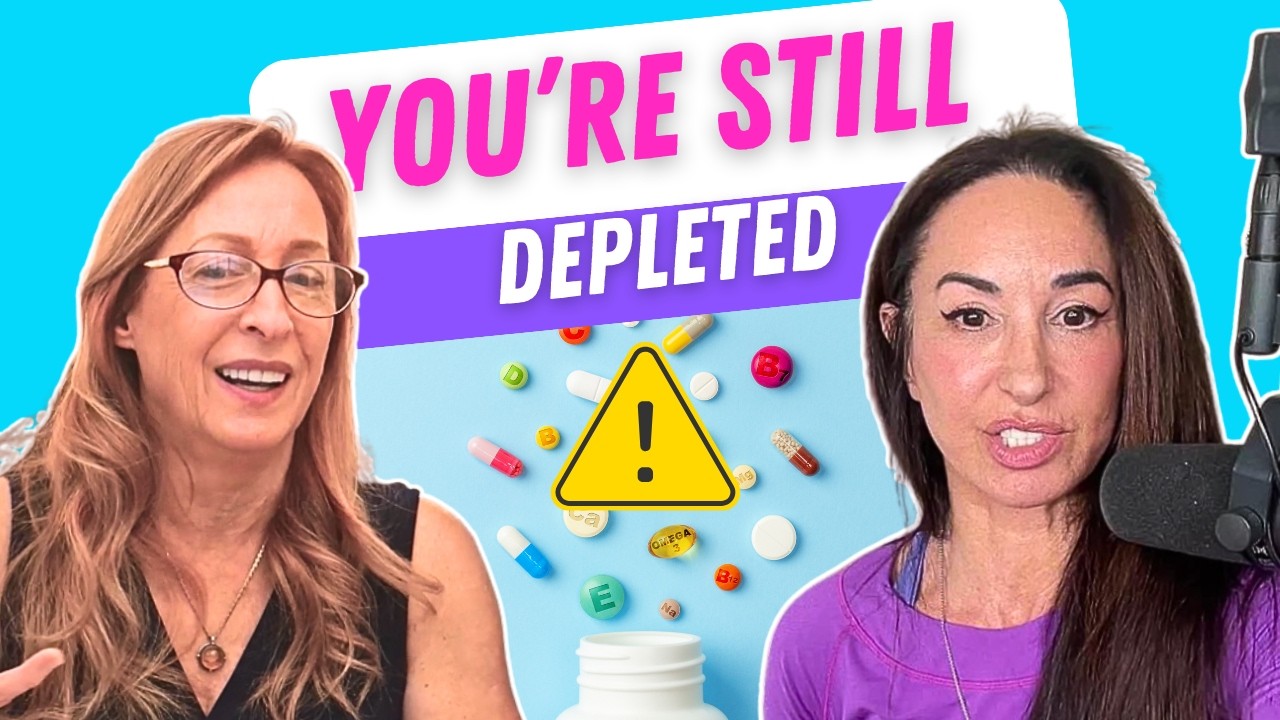
Natalie Jill interviews mineral physiologist Caroline Allen about why clean eating isn't enough: modern farming has stripped soil of 70+ micronutrients. Minerals work in tiny balanced ratios, not large doses, and most people can't get enough from food or water. Mineral deficiency drives fatigue, brain fog, cramps, and hormonal issues in midlife women.
Chapters
Most of us, we think minerals and vitamins are basically the same thing, but they're not. Vitamins are organic compounds that give your cells instructions. Minerals, they are inorganic elements that actually carry out those instructions. Without minerals, vitamins, they can't do their job. Now here's the problem: trace minerals, they're disappearing from our soil. We cannot get them from the food that we eat. Modern farming has stripped the land of 70+ microminerals that our body needs to function. Magnesium, zinc, selenium, chromium— these aren't optional. These are cofactors that activate enzymes, balance hormones and help our body absorb everything else that we're eating and taking. So when your supplements aren't working the way you expected, it's not that they're bad, it's that the delivery system is missing. You're putting gas in a tank but there's no engine to burn it. Today's guest, Caroline Allen, she's a mineral physiologist and founder of Beam Minerals, and she's going to break down the difference between bulk minerals and trace minerals and why deficiency is so widespread and how adding this foundation changes the way that everything works and will help us feel better in perimenopause and menopause. Welcome to the show, Caroline Allen.
I'm so glad to be here.
Thanks for having So, first, a little bit about how I found you, how we even met, I want to share with the audience. I learned about minerals a while back and I never really understood them. We always hear, "Take your vitamins and minerals. Take your vitamins and minerals." I don't think I fully understand what minerals were. When I first learned about them, I started using BEAM Minerals. This is before I ever met you, before I ever was working with BEAM as a sponsor in any capacity. And, I instantly noticed how I would feel different adding Complete Minerals in, like having them in my life. And it wasn't like a, like a caffeine buzz or something you, you feel as this big burst. It's just a subtle, oh, my body has been craving, it's been, been missing these. So I on my own had learned about BEAM Minerals, started using them, and then later was connected to you and had you on the show and ultimately did some sponsorship work even with BEAM. And I still till this day use their minerals. But I love that Caroline just wrote a book really deep diving called The Mineral Reset, just really to educate us all on this, because this is a piece that has been left out of the conversation so many times, so many times. So Caroline, if you could take us back, I know you had this sort of bathtub moment, as you call it, what your life was looking at at 50, what was happening?
Yeah, you know, what was happening for me is I had had a whole bunch of different chronic issues, including inflammation in my gut. So I'd been gluten-free for 7 years or so, but could never get over the bloating and the elimination issues. I had a lot of inflammation in my mouth with bone loss in my teeth, bad periodontal disease, been to multiple dentists trying to heal that problem. I had a mold exposure event, so I was dealing with continual sinus infections that came back every 6 to 8 weeks. I mean, it was horrific. I also didn't sleep at night, so I really struggled. I would wake up 3, 4 times a night. I'd always been an insomniac, but as I went into perimenopause, it got way, way worse. And then I just really struggled with brain fog to the point where I actually had to leave my corporate career. And I was in the high-tech industry doing these large corporate, these large software development projects. And it was very intense and I literally just could not do it anymore. And that was when I was introduced to minerals myself, and they radically changed my health.
So as you describe some of that, that you were navigating, it's not far from how a lot of midlife women feel. Like we hear this all the time, and it— there seems to be this easy button process of, of like, they hear these things and the easy button that I'm talking about is either the just accept it, it's your age, or it gets lumped into a different easy button. Like, oh, it, it must be HRT. You must do HRT, or it must be your thyroid. It's like this, it's just this one thing. And What I've learned from you is it goes like so far beyond that. Like you're not against those things, but it goes so far beyond that. Can you sort of speak into that and where that idea of mineral deficiency came from?
Yeah, and actually where it goes is it goes underneath that. So at that time that I was telling you about, I was doing hormone replacement and actually I have Hashimoto's. I was taking thyroid, but I was completely out of balance, trashed energetically, physically, mentally, emotionally. You know, I was just at the bottom. I hit my— My, my moment in the bathtub was like sitting in the bathtub with washcloth on my face, just like going, how am I going to go on? Yeah. So, and so many women hit that, particularly, you know, things crop up in perimenopause, especially with women who've had children, because when a baby grows in your body, the way that it grows is by taking all of the nutrients from your body. And then women struggle to get replenished after because they don't even know how or what to do to get replenished. So the thing about minerals is that minerals are the foundation. They are the bottom. So, and I'm gonna give you a little bit of a contextual framework so you can understand it. So if you look around, like let's say if you're in a room, you're in a room, but you know, some people listening might be in a car, they might be walking. If you look around you, all of the structure in the entire universe is minerals. It's actually all minerals. All of the structure in your own body is minerals. That's how foundational and fundamental minerals are to everything. But the other thing about them, you know, there's lots of conversations today about the macros, you know, focus on carbs, fats, proteins. But what runs, what runs the macros is the micros, the micronutrients, the minerals. You can have all the macros you want, but if you don't have the micronutrients, which not only are the fuel for energy generation in your body, but are utilized in every single biosynthesis process in your body, all of the hormone, the ways that hormones are utilized in your body, all of the ways that thyroid works in your body, all of the way that cortisol or, you know, your adrenal function, all of the metabolic function, energy generation in your body, they all require minerals. And it's like, you can live without vitamins, you can, you can live without a lot of macros for a long time, but you will actually perish in a few hours.
I'm going to ask a really basic question, but I think it's important because we hear vitamins and minerals lumped into the same term. Like, just, I just remember growing up, you hear, take your vitamins and minerals, take your vitamins and minerals. What is the difference between vitamins and minerals? I know that's a basic question, but I want to start there.
It's a great idea. If you think about the periodic table that you, you know, might have encountered in high school, or, you know, that thing that you kind of went, oh yeah, unless you're into physics, you're into chemistry or biology, you probably kind of came and went. But there's a list of all these elements. Now, those are all minerals. Now, not all of those minerals does your body utilize, but they are all existing. In your body. Almost every mineral in the periodic table is part of your body, even if it's a minuscule amount. So vitamins are actually, they are nutrients. They are a different class of element, but minerals are the foundational elements. They're actually, each mineral is an atomic structure. Actually a structure of, you know, like, certain elements that are put together and create chromium or create selenium or magnesium or et cetera. Each one has a particular molecular structure. These particular, these, there's about 18 to 22 minerals depending on who you're talking to that your body utilizes and it utilizes for them for all sorts of things. Now there's what I call the macro minerals, the ones that we all hear about in those like electrolyte stick packs, the magnesium, potassium, sodium, calcium. Those are the minerals that your body uses a lot of. And then there are the micronutrients, and the micronutrients are things like copper, selenium, chromium, you know, et cetera. And then some that many people have never heard of, like molybdenum, boron.
Yeah, I've never heard of that one.
Yeah. So, but these are, the thing about these minerals is they're not like nice-to-haves. You have to have them. Like your body absolutely has to have them.
So if you, when you hear the word trace, like you hear trace minerals versus minerals, what does that mean?
Yeah. So when you take a pill of, let's say magnesium or calcium, let's say, let's say you've got some bone health problems and you think, oh, I better take calcium. That whole concept of taking a concentrated calcium pill and putting it in your system and expecting your system to be able to utilize that, it's a complete misunderstanding, a complete misunderstanding. So trace minerals, actually, to really understand this, what we have to do is look at the body in a different way. So we're, we're taught to think of our body as parts and pieces and systems and tissues and, you know, juices like blood and serum, all these things, right? But actually, every part of your body is made of cells. So your body is actually a cellular ecosystem. It works a lot more more like a forest than it does a car. Now, in the model of thinking of myself, my body, like a car, I'm going to take it to the gas station, or actually, if something's wrong, I'm going to take it to the mechanic, the doctor, and they'll tell me what to do, or they'll fix it supposedly, you know, or they'll tell you, no, I can't get rid of it, I don't know what's wrong, you know, or we have no answer for you, or we, you know, we go to the gas station, we fill up the gas tank, we fill up the oil reservoir, the windshield wiper fluid, etc. But the body doesn't work like that. Like, not in the— not at all. It works more like a forest. So if you took a wheelbarrow of calcium and put it on a forest floor, the cellular life in that area wouldn't thrive because it's a concentration. So the misunderstanding about minerals is that you can solve a deficiency with a concentration of minerals. This is the difference between minerals that are measured in milligrams or trace minerals. So trace minerals are very, very small amounts of minerals. They're measured usually in parts per million instead of micrograms or milligrams, and they're provided in balanced ratios into the ecosystem, your body. And when you provide tiny micro amounts of balanced ratios of minerals continually over time to an ecosystem, the ecosystem relaxes and it goes, I've got everything I need every single day, all day, at every moment.
You know, as you said that, I just had this complete aha moment. Maybe I'm completely disconnected here, or maybe I'm onto something. When you said that, what it made me think of is two things. One, homeopathy, how homeopathy is a small amount of like, right? And then also I thought of frequencies, which I love frequencies and energy. So thinking how this idea of a tiny amount is intelligent and we don't necessarily need this crazy abundance or overabundance of things. And I would say even with supplements, I feel that it's gone a little too far with people doing a huge amount versus a tiny trace amount. Is that weird what I just said, or is that resonating? I don't know.
That is absolutely what I'm saying. And I'm literally getting goosebumps as you're talking because I'm so grateful that you really like suddenly saw the difference. So the thing we have to recognize, and this is what I'm really laying out in the book, in the Mineral Reset book, step by step, is helping people to shift their entire paradigm of thinking. Because if you think about your body like working like a forest, meaning it doesn't want a big change, it doesn't want a tsunami, it doesn't want a fire, it doesn't want, you know, an earthquake. It just wants small, Incremental changes over time.
Wow.
And so now you take out your supplements and you start looking at them and you go, wow, maybe, maybe all these things are overwhelming my ecosystem, just even in my gut microbiome.
Yeah. And it's almost like we're forcing it with too much. It's like a fire hose versus just the small subtle suggestion.
Yes. And the beautiful thing about minerals is when you start supporting with minerals on a, on this foundational level with these balanced ratios, which is the really important thing because minerals don't work alone. So if you throw a whole bunch of calcium in your gut, your gut says, oh, I've got to balance this, and it actually pulls magnesium and phosphorus from other places in your body to try and balance, or else it, it actually will just work really hard to eliminate the excess. And it's interesting, I read a study recently about the more calcium you take, the less bioavailable it becomes. Wow. Yeah. So you take— if you take 500 milligrams, it's a certain amount of bioavailability. If you take 1,000, it's actually lower. A lower amount gets into your bloodstream because your body says, I've got a, I've got a huge concentration of this powerful substance, calcium, and I need to act, I need to eliminate most of it.
So it's almost like you start taxing other body parts, other things, other resources to deal with that overabundance where if you just had the tiny amount, it would have helped make that copy or help with the process. I'm following. Cause it, you know, it's, this took me a long time to wrap my mind around homeopathy and frequency. So, This is making a lot of sense to me. What's interesting is you're literally one of only two people I've ever interviewed or talked to a deep conversation on minerals. So it's just not talked about enough. And I think that's wild. Why do you think it's so not talked about?
Well, you know, I think, I think there's a couple reasons. One is that minerals is a very complex subject. And again, coming from the perspective that we want to give people a pill for every ill, You know, we want to like, you have this problem, so take this. You have bone health, calcium. You have this problem, let's take this. And minerals actually don't work that way. And I just think that, I mean, it's taken me 10 years to learn all this about minerals, to understand them, and then to develop a conceptual framework that's really clear and simple for people to understand. So I just, I just, it's the same, like the gut microbiome many years ago. For sure. To, you know, help people understand what the heck is that.
That makes a lot of sense. Help us understand, so many women listening to this, they eat clean, they eat healthy, they eat in abundance. We, you know, we talk about phytonutrients and really balancing your food and having an abundance and a variety. Why, when we eat abundantly like that, are we still mineral deficient? What's happening?
Yeah, it's actually really a sad fact. That our food that we eat today, that we buy at the grocery store, even if it's organic or even if it's at the, at the farmer's, you know, stand. Yeah. It does not have the nutrient density that foods that our grandfather ate did. So, and it's substantially different. I mean, substantially. Like, you cannot eat today enough volume of food to get all of the micronutrients that your body needs. It is actually not possible anymore. And there are many, many studies about this. We've got scientific research that compared foods grown in the 1950s, food in 1999, showed significant mineral deficiency. And it's for— so let me explain why it's so— because when you— once you understand it, you can't unlearn it. That makes sense. So when a plant grows in the soil, The way that it creates all of its structure and also the way it generates the energy to grow is by pulling minerals from the soil. So it absorbs minerals from the soil into its roots and it uses those minerals in its growth pattern. And that's the same if it's a small pea shoot or a huge California redwood tree. It— it's— the minerals are key components of its growth. Now, what we have done— in nature, the plant grows, it dies, and as it decomposes, it actually delivers all of its mineral content back into the soil. But what we've been doing for years— I mean, this has been a problem since 1936 when a man actually brought a whole— they did a whole session in Congress about mineral depletion in the soils during the whole Dust Bowl issue that we had. Midwest, and they've done basically nothing about it, but actually made it worse with glyphosate. So when you grow a plant in the soil and then you cultivate, you harvest it, you take it away from where it was grown, you eat it, you dispose of its waste far from where it's grown, those— that mineral content never gets back into the soil. So literally the foods that grow now, they use all these fertilizers, etc., which increase their carbohydrate value, but they're still very low in nutrient or substantially different in nutrient density. So some people say that to get the same nutritional nutrients from an apple that your grandfather ate, you'd have to eat 6 or more. Oh my gosh, it's that bad. Yeah, it's substantial.
That's so wild because we hear— okay, so we always hear, when we hear soil depletion, is that what that means?
That's exactly— so that's why I like to connect the dots for people. It's like, well, why, why are our soils depleted? Because we've been taking them out. It's like a bank account. You just keep taking money out without putting money back in, and that's what we've been doing for literally hundreds of years in many cases.
So, okay, so we've been taking it out, so it's, it's depleting. How is now glyphosate and things like that making the problem worse?
Yeah, so when those— remember when I talked about the plants decomposing?
Yes.
When those plants decompose and they become more minerals for other things to grow, the thing that creates those these mineral complexes, which actually are humic and fulvic, that are actually created— they're created via a microbial process. So in 1 tablespoon of soil, of healthy soil, there, there are millions, maybe billions of microbes.
Wow.
Millions or billions. Okay, so it's— and so this soil isn't dead, it's alive. It's completely replete with microorganisms and microbes doing their process. Now, when you spray glyphosate on the plants and on that land, it kills the microbial life.
Wow.
So now you have soil that not only does not have the minerals, but has no way to generate minerals from even the plant life that's left on the field and is decomposing.
So the glyphosate is sounding like a double-edged sword because you're— not only are we— because we're hearing about how it's toxic for us, so we're having the damage there, but you're saying there's a whole other problem that we haven't really even addressed, that it's also killing what's going— the healthy things that we need from the soil. Did I hear that right?
Exactly. So, and in regen farming, they're learning ways to regenerate pieces of land that are literally like dead. And it is possible. And one of the ways that they do that is with humic and fulvic. They put humic and fulvic onto the soil, preferably in a liquid way, not powdered, because then it's very bioavailable to the soil. And you can do that if you have a backyard garden, you can use humic and fulvic to replenish your soil so that your plants that are growing in there will have actual minerals. Yeah.
Okay. When you are— when somebody is mineral deficient, I know we touched on this, but I want to like really help everyone hear this and understand like what happens when you're mineral deficient. I mean, we hear about cramping, for example. Like, we know cramps, we associate it with potassium. We know that. Or we— and magnesium, that's a whole million gazillion things within magnesium. But like, what is actually happening when we're mineral deficient?
Well, it's actually— there are many things that are happening. But so we'll talk about energy energy generation first. So your entire body is made of cells, we determined that, and inside your cells are these energy-generating units called mitochondria. And those mitochondria are fueled by two things: minerals— and it's not just one mineral, it's a whole set of minerals— and amino acids. Now, many amino acids come from the outside of your body, but your body also has amino— creates amino acids internally as well. Endogenously. So minerals all come from the outside of your body. So when your body doesn't have the basic fuel to turn into energy, it cannot generate enough energy. So a cramp— let's just take a cramp. A cramp is literally the cells in that local area cannot generate enough energy to release the muscle. They've used all their energy to tighten the muscle, and then they have no more energy available to release the muscle. Now, if you let it sit for a while and you massage and you bring some more blood flow through, it will eventually release because you've brought more minerals, which fuel mitochondrial, uh, energy generation, which now creates the energy to release The cramp.
Okay. So I don't think I ever told you this, Caroline. I meant to tell you this when I ran into you in person. This is actually pretty wild. So the company that Caroline founded before she even wrote this book is called Beam Minerals. And Beam Minerals is a fulvic acid and a humic acid. So I do both, but she also has a topical spray. So I ruptured a disc in my lower back many, many years ago, 8 years ago. And I had a disc replacement ultimately a year ago. But for the last 8 years, because when I ruptured that disc, I actually had nerve damage and had foot drop on my right leg. Every now and again, my right outside of my calf will cramp and it's usually in the middle of the night and it'll wake me up like this crazy painful cramp. Now, I can trigger it if I'm wearing heels. If I wear heels for a long time, it'll trigger it. Or sometimes if I've just been traveling or dehydrated on any level, this cramp is so painful, it'll wake me up and my husband would have to really work. So, I have that, the spray minerals, literally next to my bed now. And, I started spraying that before I go to bed. And, I also, if I've not in the middle of the night and I've gotten that cramp, I'll spray the topical minerals. It stops the cramp. And, I never in a million years would have believed that because I'm like, "What? This is a topical spray. What kind of voodoo is this? Why is that working?" Yeah.
That is such a great— and, for anyone out there who's listening who has cramping, I'm telling you this is a game changer. Why?
'Cause it's water and it's minerals.
So this molecule called fulvic.
Okay.
It is a tiny, tiny, tiny molecule. It's much smaller than a cell. So if you hold your hand in a fist and you think of a head of a pin, head of the pin is a fulvic molecule. It's so tiny. Now that tiny, tiny molecule carries a full spectrum of minerals that your body needs. A full spectrum, but it also is a delivery system. So, and it will be it because it's ionic when it's in this liquid form, meaning that it's already at the component size ready for absorption from any tissue that it touches.
Mm.
Any tissue that it touches. So when you spray it on from the outside, it absorbs directly into those cells and becomes bioavailable, like within a minute.
Well, it has absolutely stopped the cramps. And if I don't— if the cramp comes on when I've not used it recently, I spray it on and it does stop it, which is mind-boggling to me. Now I'm starting to understand. But I also— so just how I use that spray, I use it— it's like, it's— you remember the movie My Big Fat Greek Wedding when they spray Windex on everything? I, I now spray your minerals on everything, literally everything. I carry them with me everywhere, but I get out of the shower, it's the first thing I do, spray everything. When I wash my face, and I, I spray my face, like, it is the first thing always that goes on my skin. I was just putting under her arms. But I do have a question. There, there's so many different ones, like Happy Mineral. Like, is it all the same thing, or why are some called like Happy Minerals or Boo Boo? Or I just use the general one.
Yeah, so this one just has no scent. Okay, unscented. The Happy Lights has bergamot in it. So about bergamot is bergamot, the scent of bergamot, for most people, not everyone, it actually triggers the release of endorphins.
Oh, so it's the scent that, okay, that makes sense.
When you smell it, so it's actually incredible for people with anxiety, depression, panic.
Yeah.
It changes the neurotransmitter wash in the body within like 5 to 7 seconds. It's really cool. So, okay. I didn't know.
That makes sense.
Uberlites has more of a lavender. It's actually a mix of a blend of essential oils that are incredible for bug bites, bee stings, burns, any kind of scrape. And so we call it Boo-Boo Lights because it's like for all the boo-boos of life.
That's fine. Okay. So that makes sense. So, but I also take the minerals, like I drink them. So is it, do people need to do both or is it different things that it's helping with to do both?
Yeah. So, so we talked about the fulvic molecule. It's that tiny molecule that's delivering minerals directly into your cells and not just one or two, but like all the minerals in a balanced ratios. So, and then there's the humic molecule and the humic is what makes my glass here. I'm holding up a glass of dark colored liquid, and it's, um, that's what has— that's the humic.
Got it.
So humic is really different. So it's much larger than a cell. It hangs out in your bloodstream and in your gut, and it's an incredible binder.
So for people that don't know what binder means, can you explain that?
I'm totally— I, I totally will. So imagine a Velcro ball. It's very, very sticky on the outside, and it travels through your gut, it travels through your bloodstream, and it picks up biowaste, toxins like glyphosate, nanoplastics, viral stuff that's left over when you have a virus or bacteria. It just— it literally— those things will cling to it. Heavy metals, incredible remover of a mediator of heavy metals. And ultimately, this molecule, it's like the Velcro ball with all these things stuck to it, gets so heavy it falls out of solution. Like if you, you mix some powder into a glass and you let it sit, that precipitation that happens, that's what happens. And it literally just leaves your body through all the elimination channels.
So is, is Fulvic, I think I know this to be true, but correct me if I'm wrong, that a lot of binders you're not supposed to take with anything else. Like you're supposed to take it away from other supplements, but with Fulvic, you can actually take it with anything. Is that accurate? Did I miss that?
Yeah, you can. So the Fulvic, which is, is, I almost think about Fulvic, which is that tiny molecule. That's about nutrient uptake. Intake. That's the thing that brings nutrients into your cells. It also actually grabs biowaste, toxins, etc., that are inside your cells and carries it out. So it's also— it's this intercellular transporter. That tiny molecule can go in and come out of your cell, and it has some amazing properties that allow it— like chemical properties that allow it to do that. So yeah, that's the whole big molecule. Molecule. And the— so the humic molecule is this binder. It's the thing, the Velcro ball that gathers things. The interesting thing about it, it's really being studied worldwide, is a lot of binders are just, you know, they pick up anything, and so you do have to take them away from other things. The interesting thing about, uh, humic is that it's actually an intelligent binder. So let's say you took a whole bunch of magnesium and you had actually an imbalance of magnesium in your system, it will bind to that magnesium all the way up till the point where it no longer— there's no longer a concentration where you've hit balance and it will stop binding.
Oh wow. Okay, so take extra. Yeah, yeah. So this is why we call it an effector mod, um, which is why it would be better than taking like a charcoal or something that's a lot more— that makes sense too.
Exactly, exactly.
Okay. So before I move on to a bunch of questions I have about mineral deficiency, I want to go a little deeper there. Where do we— do you have to take minerals from something like BEAM, or like where else do people get minerals? Like, could you strategically get it from specific foods, or like how does that work?
Yeah. Well, first of all, you cannot get enough minerals from the foods you eat. You just cannot eat enough volume. And also, one of the other big problems for people nowadays is drinking water that has no minerals in it. So if you have a reverse osmosis filter in your home, distilled, like people do, distilled water, buying bottled water from the store that's either filtered or distilled, um, that water has no way actually to get into your body and it actually goes straight through you. And when it goes— when you put empty water, and we call it empty water, into your body, it actually gathers minerals and then goes straight through. So it's, it's actually, it's lowering your mineral replenishment in your body by drinking.
Okay, wait a minute. I want to go a little deeper here because this is making a lot of sense now. So think about like fitness people, fitness.
Yes.
They do— right before they're competing, they'll do distilled water. And this is all— this is giving me an aha moment here. And the reason they're doing distilled water is they're trying to get every drop of water out of their body so they can look leaner. They don't feel good, but it makes them look leaner because they are mineral depleting, which is why they feel like crap, but they Is that, am I saying this accurate? So when you're doing—
That's exactly right.
Okay, so when we go and buy purified or distilled filtered water, you could actually be dehydrating yourself.
That's exactly right. And depleting your mineral stores.
Wow.
So lots of people, they're like, oh great, I'm gonna go get that reverse osmosis filter, put it under my sink, and now all the water in my house is filtered or whatever. It, you know, and it's great. And then a couple months in, they're like, wow, I feel like crap. Yeah, what's going on? Like, I just— I don't feel good. And it's because you're drinking empty water now. So it's absolutely important that you remineralize your water if you're drinking filtered or distilled water.
Okay, so this is also making sense now. While you'll— we'll see marketing for things like a copper water filter, because what it's trying to do is say, oh, you're putting copper back in your— now I'm getting it. Okay, so, but you're not getting all the complete minerals, you're just getting— you're getting a little bit of that one. Oh wow.
Yeah, and it's a nice idea to do that, or even, you know, there's like, like mineral injection things that you can buy, and they have 3 or 4 or 5 minerals. But what you really— I mean, the best thing would be to take this spray and spray a couple sprays in that glass of water.
So just a couple sprays could, could really—
yeah, I mean, really, you'd probably take our Electro— I mean, every time I fill a glass of water, I just just throw some minerals in it. Yeah. You know, just not always the— I'll just pour a splash of our electrolytes. The beautiful thing is it's not going to change the taste of your water. It actually makes it taste better.
Carolyn, I'm a water weirdo, just to get you an idea. So, okay, so we buy mineral water in a glass jar that comes, but then I add your minerals and I restructure it in my Quantum Block. So I'm a— I not only am I mineralizing, I'm making sure it's alive. I'm that weird water freak.
So, and that's, you know, just, you know, we start with that water in our minerals.
Okay. Can you overdo minerals? Like I know you said when you do like the pills that are huge, but like, could you overdo Be Minerals, for example? Is there a way?
You know, what I say is because you're putting minerals in, in the balanced ratio. So this is actually really a cool thing. So do you know that the ratio of minerals that your body needs at a cellular level is the same? At a cellular level that a redwood tree needs.
Really?
Because all cellular life on the planet evolved together. We all evolved from the same single-celled organisms that needed a certain ratio of minerals. So isn't that— it makes sense. Yeah, we're actually part of the Earth's ecosystem. We're not separate.
You know what this is— I'm like loving this conversation because I'm realizing why I was so drawn to you and your topic, because because I love energy and frequency and I love homeopathy. So it's like now it is all, I wish I had had this kind of conversation with you before 'cause it's really resonating here with me on all this.
The thing is minerals are frequency. You know, this is, you know, just seeing when I, you know, went and kept going down and down the rabbit hole, what I recognized is, do you know all frequency on earth and in the universe is carried via mineral. Minerals are the free— if you have no minerals in your body, if you're very mineral depleted, you can't carry a frequency, which is why you go to do PEMF, as an example.
Uh-huh.
They want you to— they use a lot of the PEMF people, they say take— they have B minerals there, they have a shot of electrolytes, and then you do the PEMF because you will feel the frequency because it's literally the carrier.
Wow.
Okay. Absolutely.
Okay, wow. Okay, I didn't know that. Perimenopause and menopause, what is actually happening to our minerals? Like, when our estrogen starts dropping, are we absorbing less? Like, what's changing there?
Well, of course there's a whole bunch of things that are changing relative to production of your hormones and also utilization of your hormones in your body. Really, minerals are underneath all that. So So, um, what I say is if you start out depleted in minerals, which most women are, especially if you've had children, then you go into perimenopause where now you have a sea change event. So your whole body is learning to operate in a completely new way. And even if you do HRT, you know, all of the processes that occur, the biosynthesis processes that occur with estrogen, progesterone and testosterone, um, as an example, require minerals. They require a whole bunch of different minerals. So if you don't have those, your ability to utilize the, the— even if it's HRT— to utilize those hormones is just drops dramatically. As you age, one of the things that happens is mitochondrial function in the body becomes less. It's just a natural thing. So, what do you need? More fuel to provide for the energy that you're— that for the mitochondria that are still active.
Hey there, if you're finding value in this episode of Midlife Conversations, I would really appreciate it if you would hit that like button and subscribe. And when that little bell pops up, you want to hit that. That way you are notified of all new episodes so you don't miss a beat. Also, you subscribing and liking helps others find this content, and this allows me to keep growing, keep getting amazing new guests for you, and to keep sharing. How is hair and minerals connected? I know you speak in the book about hair loss and how— what— how the connection there. We automatically assume hair loss goes with lack of estrogen or low thyroid. Talk to us about minerals and hair.
So here's the thing about hair. Your body doesn't need it. So when you have a system that is struggling to generate enough energy for your most basic and important critical systems, it's going to say, forget hair, that's not important. Forget, you know, your nails. And even your skin will dull. You'll start having all sorts of these low-level chronic symptoms, and those are your body's ecosystem saying things aren't good here. So I always say, if you're losing— if you see a lot of hair in toilet— in the— not toilet, the drain.
You never know, it could be the toilet.
You see a lot of hair in the drain. Yeah, yeah, I think something's off.
Yeah, you know, I even— when you think of things like alopecia, that's an autoimmune, like something's off. Or even when you think about people that go through traditional cancer treatment losing hair, like you have to wonder what that is. Like, makes sense what you said, your body body doesn't need it. So, it's getting rid of that first, or it's not going to protect that first. So, it's always going to be a trigger for something. And, what concerns me is when people go and use some of the chemical hair replacement stuff. There's some natural ones I like, but there's some— then, you already have a health issue going on and now you're adding another chemical on top of it. So, I've got questions about that.
Yeah. And, that's what I call the whack-a-mole problem.
The whack-a-mole?
Whack-a-mole. You fix this problem over here and another problem— jump, you know, pops up. Oh yeah, because you're not thinking of the whole system going, oh, I'm losing hair, this is a sign. What is it a sign of? My body doesn't have enough energy to keep my, my hair follicles healthy.
Wow. Yeah. Um, when you— when I interviewed you over a year ago, you had told me that if I just did minerals, like if I just got that in balance, I would really crave or need less supplements, less other things. I do believe that to be true now. What's your experience with that? When people have the right mineral balance, when they nail this, do they— can they go on less supplements? What happens?
Yeah, you know, it's— and again, I'm not against supplements. And, you know, I take my vitamin D, and I take my fish oil, and, you know, I, I take a few, you know, I think I take zinc and I do HRT, you know, but I don't have a fistful of pills that I take every day.
Yeah.
And what I always recommend is to people is if you're, if you're tired— people are tired of taking so many supplements and not really feeling the difference, you know. They don't like— if they drop something out, do they really feel the difference? That's what I always So, and actually, what I'm— I'm actually going to be doing a program, um, starting May 30th called the Mineral Reset Program. And what I'm going to do is take people through a process of really documenting what is all the stuff they're doing and what kind of mineral support are they providing, and then help them learn to figure out what, you know, how to get the minerals into their body and track their progress. What I've seen again and again and again with people is once you start supporting from underneath, a lot of these other things that are— you're putting in on top aren't really needed.
That makes sense. Yeah. Can you— like, you mentioned that you, you really can't overdo that, and I want to understand that because, like, for example, when I order my original B minerals, it came with like a little shot glass and it said like how to measure each one. Do you have to do that way?
Yeah, you don't have to. So, and this is sort of the advanced, so the advanced way, when you start out, you start out with the shot glass and it's half an ounce of Electrolyze, which is our fulvic product, and half an ounce of MicroBoost, which is our, our humic product. And in fact, even if you're a very sensitive person, maybe you have autoimmune, Lyme, long COVID, some of these things that have, or mold exposure that have made your system very sensitive to detox, you might even start way slower with the humic product because, okay, It can cause detox responses in people the first time that, or, you know, in the first few days that they use it, if they have those things.
Caroline, I don't know if you knew this about, or not, but after I've had, after the experience with the leg cramp, but then also some surgeries that I've had. In fact, I did a cosmetic upper and lower bleph surgery, like about a year ago. And I made this little recovery guide after, and I put all the beam in there, because that was something I also did recovery, I was spraying on it. And then my husband recently had, not a cosmetic thing, but he had a surgery to fix his breathing. And I was there with his bandages, like spraying the minerals on. He's like, "What are you doing?" I'm like, "I've got to get the topical minerals in you." It's effective. It helps with healing.
Well, I'm telling you, I was just reading literally a new scientific article that came out just in the last few months about fulvic and its wound healing capacities. Actually, it's actually being studied. Heat all over because it has incredible— it definitely speeds up wound healing.
Why do you think so many people dismiss the idea of smaller, like, like homeopathy or trace minerals or frequency? Like, why does that tend to get into the woo-woo category for people?
Well, maybe they can't figure out how to make enough money with it. You just generally ask, follow the money trail.
Wow, that's an interesting— I mean, it's not a, you know, the reason perspective.
I haven't gone big money route is because there aren't the— I mean, making our product that tastes like water.
Yeah, you're right.
That's a closely held secret because, you know, lots of other fulvic and humic products and they taste terrible.
You— I'm telling you, and one other person, Barton Scott, you probably know him, are like the only two people I have ever interviewed or talked to about minerals. I'm like, why is this such a gap here? It's that— that is interesting. It makes sense. And then, that's it. So, it could be a marketing thing.
Well, Barton and I are bringing the— we're bringing the message.
Do you know him?
Oh, yeah. Barton's a good friend.
Yeah. Okay. So, yeah, you two are like the only ones that— I mean, Barton's whole story was his mom had died and he really— when he dug into what was going on, it was mineral deficiency.
Yeah. I've met him. I did never meet his mom, but I met his dad. We got him on minerals.
Yeah. And he said— Barton's funny. He's like anytime he meets somebody, he'll be like, "They're deficient." this. There's— if it's like a mind reader when it comes to what they're deficient in. Um, yeah, he pulls that out. Why did you write this book? I mean, you didn't need to. Like, you— she wrote The Mineral Reset recently. It's a great book, y'all. Um, you have this successful company. Um, you didn't need to write a book. Why did you think it was important to educate people around this?
Yeah, well, I actually— I wrote the book because my own personal experience with minerals Minerals was so life-changing, turning from somebody who's deeply struggling with my health and kind of getting ready to give up on life to being extremely vibrant, thriving, you know, excited about living. And I really said to my business partner, I'm like, now we've brought the products to bring the information, because I really saw that no one was talking about minerals. No. And that it was a lot probiotics, you know, 15 years ago, nobody really understood them. They're like, huh, I don't know what that is. Now there's a case in the grocery store, you know, where you get all these probiotics. And I'm like, I'm waiting for the end cap with Beam Minerals, you know, where it says like, are you mineral deficient? Everybody goes, yeah, I think I am.
Yeah.
Like, because they finally like, ding, ding, ding, you know, they understand it. Enough people are talking about it and bringing it to the mainstream. And I wanted to do it in a very, very— there's, there are a lot of books about minerals. They are tomes. They're super thick.
No, they're like science. They're like science books. They're textbooks. They're not, not like periodic table books. They're not.
Yeah.
And they're not interesting.
Great book called Nutrients, and it talks you through every nutrient and what it is in the body and how— yeah, who's going to read it? Yeah. I wanted to help people like actually understand and their body.
Yeah. This, you know, I want— what do you wish I had asked you here? Because I— you've answered a lot of questions and connected dots. What did I forget to ask you? What do you wish people would ask you?
I think it's like, what's possible when you get mineral replenished?
What is possible? Like, what— tell us what your life looked like after you figured that out.
Yeah. Well, I think about that model that I described where, you know, if your body needs 1,200 watts of electricity and you're only generating like 800 or 600. Just imagine, imagine waking up in the morning and having energy, like extra energy, and going on through your day. And at 2 o'clock goes by, 5 o'clock, and you're still energized. You're not like feeling that heavy brain foggy, like, cloud around your head feeling. You're able to sleep through the night. Just imagine for people who struggle to sleep through the night. I mean, I was an insomniac all my life. Almost every night I sleep through.
That's incredible.
And that's really why I wrote the book, because so many people think that they're not, you know, strong enough, they don't have a strong-willed enough, they're not, you know, they don't have enough intention, or, you know, all this mental stuff. And I'm like, what if all you have to do is like get some minerals in you Yeah.
You know, I'm glad I'm interviewing you right now because it's definitely given me a lot of connecting the dot pieces here. But one thing I've been talking about recently on the show is this idea of upstream and downstream. Let me explain what I mean by that. So many things are designed to ramp us up, like even a lot of the mitochondrial supplements, like ramp us, more energy, more energy. And it's putting in this overload of inputs. And downstream, is what I'm actually fascinated by, things that are lessening, things that are helping us detox better, things that are helping us regulate our nervous system more, things that are more supportive. Let me give you an example what I'm talking about here. Like sauna to me, infrared sauna is supportive downstream. Red light actually is the opposite. It's a little bit, it's more upstream. So not saying no to red light, but there's a difference there. And then when I look at things like all these biohacks, so people adding in like NAD or NMN, Like, well, CoQ10, even all of those things are energy input, right? And I have this theory that the more we actually focus on the downstream and how do we eliminate what we don't need and help just gently support our bodies with what we do need, the more we can thrive. And I don't know if I explained that well, but the reason I think I've gravitated so much towards like Lila Quantum and frequency and why I've been so intrigued by this mineral conversation is all of that is supportive of what I just explained.
I love that. I think you said it very well. And, and this is the thing. Nature's been around for millennia solving problems so that cellular life could thrive on this planet. And one of the very, very useful tools that nature provided was humic. And folding. They are ecosystem tools designed for delivery of this most fundamental material into your body, into your cells, all the way into your cells, so that your cells can generate energy, all the biosynthesis. I mean, I just think more and more— I mean, I, I think biohacking is great because people take responsibility for their own health. And then it can go astray because we start doing things that we want to try and impact the body instead of support it from underneath.
I don't actually love the word biohacking. I like saying age optimizing. And I've been lessening what I— like, my house can look like a biohacking center sometimes. Like, I have so many different things I've tried, but I have done less and less, and I'm looking for the more supportive things like hydrogen or the sauna, even red light where I used to sit 40 minutes, that's a 5-minute thing for me now because the 40 minutes was too high of an input and I didn't know why I felt wired after.
That's why.
So, it's a little too much. Well, I love what you're doing. Y'all, in the show notes, I'm going to link a couple things. One, her book, The Mineral Reset. And as I always tell you all listening, if I recommend a book on here, it's because I actually read it, because I actually know the author, because it's good and I know what they stand for. So, I always say, don't just get one book, get 3. Because you want to give them to some of your friends too, so you can all be reading and talking about the same thing. I'm also going to link up BEAM Minerals, who is not sponsoring this episode, by the way. This is not a sponsored BEAM thing. I just genuinely love their minerals. And Caroline, it was because of her that I— that they came about. They are amazing. I use the topical and I use both of the drink ones. I just add them into my water morning and night, and I do the spray throughout the day and at night, and it helps with cramping. I keep it in my gym bag, all the things. I'll link that. Do you want them to go to a special place for the book, or just where do you want them to find the book?
Um, a great place to go is to mineralresetbook.com.
Okay, mineralresetbook.com.
And it's a great place because when you order the book from there, you're not only just going to get the book, you're going to get some other really important bonus content that's going to be— help you to access the book more easily, etc. And you can also join the— if you're interested in joining the Mineral Reset program, you could do that through there.
Thank you so much for the work you're doing and for helping answer all my questions. Thank you so much.
Thank you so much. It's lovely to be with you.










