Your Cholesterol Number Is Not the Problem — A Heart Surgeon Explains What Actually Is
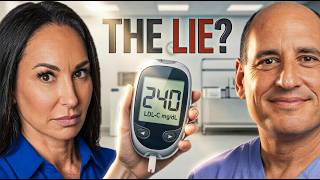
In this interview, host Natalie Jill speaks with Dr. Philip Ovadia, a board‑certified cardiothoracic surgeon who has performed over 3,000 open‑heart surgeries and personally reversed his own metabolic disease. Dr. Ovadia argues that the conventional focus on LDL‑C numbers and statin therapy is misguided because the absolute risk reduction from statins is only 1‑4 % and because LDL particles vary in size and atherogenicity. He explains that insulin resistance, chronic inflammation, and small dense LDL particles are the true drivers of atherosclerosis. The conversation covers the shortcomings of low‑fat, high‑carb dietary guidelines, the benefits of real, unprocessed foods, and the evidence supporting low‑carb/keto/carnivore approaches. Dr. Ovadia reviews advanced lipid testing (LDL particle size, ApoB), alternative medications (ezetimibe, PCSK9 inhibitors, GLP‑1 agonists), and the limited utility of statin micro‑dosing. He advocates for coronary artery calcium (CAC) scans as the “mammogram for the heart,” discusses the role of carotid intima‑media thickness (CIMT) and CT angiography, and outlines the five core metabolic health metrics (triglycerides, HDL, blood pressure, waist circumference, fasting glucose). Inflammation markers such as CRP, MPO, and homocysteine are highlighted as under‑utilized. The interview also tackles common concerns about fiber, phytonutrients, and antioxidants, concluding that they are not essential on a carnivore‑ish diet but can be included if desired. Dr. Ovadia stresses patient empowerment, the importance of finding doctors who consider metabolic health, and promotes his telemedicine practice (ifixhearts.com) and upcoming book “Stay Off My Kitchen Table.”
Chapters
So your doctor put you on statins, but the actual risk reduction? 1 to 4%, not the 30 to 40% that you were told. Now, a heart surgeon who has performed over 3,000 open heart surgeries is here to explain why and what exactly we should be doing instead, is what I feel has been missing from the conversation. We are told continually that our cholesterol is too high. I hear this from women all the time, put on medications, and heart disease is still the number one killer. Something is just not adding up. My guest today has performed over 3,000 open-heart surgeries, and he says the vast majority of those patients should have ended up on his table never. They shouldn't have ended up there. He's a board-certified cardiothoracic surgeon who personally was almost 100 pounds overweight while operating on other people's hearts. So he went through his own journey. He lost the weight, he reversed his own metabolic health, and now he's on a mission to keep all of us out of the operating room. He also wants us to stay out of his kitchen table, and he's gonna explain explain that. And we're gonna go deep today— the food system, seed oils, what to actually eat, the statin lie and confusion around that, genetics, all of that. Dr. Philip Ovadia, welcome to Midlife Conversations.
Thank you, Natalie. Really excited to be here with you. Love this, uh, conversations that you're having out there with your audience, and that was a great intro. I can't wait to dig into some of the details of what you talked about there.
So I want— this is such a personal topic to me, and you are the third cardiologist that I've had on my show. This is personal to me because my own father died at age 49 of a heart attack. We had zero warning. He was not overweight, he didn't drink, he didn't smoke. It was a shock to us. We knew he had high blood pressure, that was about it. Uh, now this was many, many years ago, but it really shaped my whole interest in health and fitness. And you know, I'm 54 years old and when I surpassed his age, it was really, really weird for me. Really weird. And I have all those genetic markers I've shared on my show before. I have that really high genetic cholesterol, LDL, and I've myself have been confused over the years. What is the right thing to do? Is it statins? Is it Repatha? So this is personal to me, and it's also really important for me to do this on the show because this is still the number one killer of women. They tend to think it's cancer. It is heart disease. And we are getting very very confusing information on how to eat, what to take, what not to take, all of it. So this is really, really personal to me. So I'm going to kind of back up with you a minute. You've performed— personally, you— over 3,000 open heart surgeries. So what point was it for you that you realized, wait, something's wrong, my patients don't need to be here?
Yeah, you know, great, uh, question. And really there's two aspects of this, uh, that intersect my personal journey and my professional journey. So on the professional front, uh, I think back, and this is kind of, uh, ironic, I guess you would say. I, you know, finished medical school, knew I wanted to be a surgeon, and went into the training to do so. And then as you get into the training, most people, they pick a particular area of surgery to specialize in, and I was fascinated by heart surgery. I love the technical aspects of it. I love the physiology of the heart, all of it. And I went to my mentors, and this is, uh, early 2000s, and I said, I'm going to be a heart surgeon. And they said, Phil, you're an idiot. Don't do that. Heart disease is being fixed. It's being solved. We have statins. There's going to be nothing left for you to do in 20 years. Here we are 25 years later. I am busier than ever as a heart surgeon. There is actually a shortage of heart surgeons in this country. And so, you know, that's something that over the years, right, I would always think back of and I'm like, well, when's this coming up? Because heart disease is not getting better. It's only getting worse. Now, at the same time, throughout my early life, you know, going back to elementary school, high school, I was obese. Fast forward college, medical school, I become morbidly obese and I become pre-diabetic. And about a decade into my career, you know, I was a young father and I'm thinking about all of this and I'm saying, I'm following the advice that I had been taught to give my patients. It's not working for me. It's not working for them. What's going on here?
What was that advice that you were following?
Well, the— what we've all heard: eat less, move more, follow the food pyramid. Eat a low-fat diet, right? All of that. And, you know, again, wasn't working for me, not working for my patients. And that led me to start asking some different questions, started coming across different information, and started— really, the basis of it was, you know, it's not necessarily how much you eat, it's what you're eating, right? And this led me to low sugar, low carb, ultimately to a carnivore diet. And I lost nearly 100 pounds, have been able to maintain that weight loss now for 10 years, which is very different than in the past. I'm sure a lot of the women in your audience went through the cycle, right? Okay, I track my calories, I lose 20, 30 pounds, and then, you know, 6 months later and all the weight is back and more. And I had gone through that same cycle many times as well. So, you know, coming across low carb, low sugar, ultimately keto carnivore, kept the weight off, reversed my prediabetes. And then that led me to start asking some different questions about what is this disease that I, you know, have dedicated my career to fighting against? Why are so many people ending up on my operating table? What can we do to stop it before it gets to this point? And here we are, you know, now 10 years into that journey and take a much different approach to heart disease in general now. And doing everything I can to not have people end up on my operating table.
Okay, I have a lot of questions here, so bear with me. So this is very confusing for a lot of people, and I'm going to explain why for a minute. First, we're told we have to be eating low-fat, super high fiber, but really, really low fat. I remember that from this— my gosh, the '80s, '90s— for heart— looking at the Pritikin diet and how to reverse heart disease, we're told that. And I mean, I watched my dad literally die doing that. But then we're— we're— it's— we get confused because we're told, like, on one end, I interviewed Joel Kahn recently, um, and he talked about the research behind being a vegan, and he stands behind that. And then I hear you say something like, well, carnivore is better. This is confusing for people. Is— what is the right thing? And is it individualized, or how do you know what to do?
Yeah, and that is very much what I see out there as well, right? People are confused. I've had, uh, conversations, I've done podcasts with Dr. Khan. And, you know, I like to focus first on what do we agree on, right? And I think at a high level, right, what Dr. Khan and I agree on very much is eat real food. Yes, right? All of this processed food— low-fat food, by definition, is processed, right? It's not the way it occurs in nature. We have to manipulate it, and that is not stuff that we should be eating. The processed oils, right? The processed fats. Again, not something that our bodies know what to do with. We did not evolve eating these foods. So I think at a high level, eat real food is the basis, right, that both doctors—
which is what I teach. Yes, unprocessed, natural, real foods. So I think that is definitely in common.
And I think if we start there, we see great improvements over, right, what is our current food environment, which is a heavily processed environment. Lots of processed carbohydrates, lots of processed fats. And so, you know, we start to see some agreement there. Now, the balance between, okay, real food— that can be animal products, that can be plant products— I think there is some room for debate there. I think there are successful ways to do both. But when I look at the totality of the evidence, I always kind of fall back on we evolved as human beings eating animal products. So So I can't see how those become harmful to us. And, you know, and again, we can go into some of the data behind that. But ultimately, I think that animal products, animal proteins, and animal fats are essential parts of the human diet. And, you know, this is what I go into a lot in both of my books, both Stay Off My Operating Table and Stay Off My Kitchen Table. We really start to get into the information that people need to figure out what's going to work best for them. And I think this is another key concept.
When I interviewed Joel Kahn, I just want to bring this part up because this was what he said, something interesting to me. So he, he brought up studies, he brought up why he felt a vegan diet was strongest, but he said if you are eating meat, it's most important it's how it's cooked and the kind of meat. He was very concerned with how we were getting oxidative, oxidizing our fat, how we were burning it, how we were. So he said if you're gonna do it, it's the kind, and that's how you cook it. Do you feel strong about that?
[Speaker:JOSH] So there is a little bit of concern there, but I think it's a very minor issue. Yes, you shouldn't be burning your food and eating it charred. Doesn't taste good, first of all, but there are some, you know, potentially negative consequences from that. But whether or not you eat your meat rare or medium rare or even, you know, maybe medium well, no, I don't think that's a major health concern. And I don't think that we need to be, you know, looking towards the lean meats, that people always talk about. Again, as human beings, we evolved eating fatty meat. And many anthropologists, for instance, Bill Schindler, who wrote the foreword to my new book, talk about it was the fat in the meat that allowed us to evolve, increase our brain size, right, which is a very key reason of how we evolved as human beings. So low fat should be off of everyone's table off of everyone's minds. We ran that experiment and it failed miserably. Over the past 70 years, when we have lowered our fat intake and lowered our saturated fat intake as a population, our health has worsened. So we ran the experiment, it failed. It's time for new thinking, and I'm excited to see that there is new thinking, new discussions around this.
I hope you don't take this next question as a challenge. I'm really genuinely trying to ask and understand and learn. I think we're so bio-individual. And I, I'm fascinated by DNA. One of the things I know about my own personal DNA is I don't process saturated fat well, and it's, it's really evident with how I feel, it's with how my markers change. How much do you believe in on that, or is that a myth that I've, you know, learned and decided— I'm not offended either way— do you believe that we're bio-individual and our DNA plays a role in some of this?
I think there is some individuality, but I don't think it's a major factor. And, you know, part of my concern around what you just went into, right? You said, okay, my genetics show that when I eat saturated fat, my markers move a certain way, right? And with the question I get back to is, are the way that those markers moving actually harmful or not, right? There's this preconceived notion, and this most comes up with LDL cholesterol, right? And if your LDL—
that's what I'm talking about.
Yep. If your LDL cholesterol goes up when you eat saturated fat, that's a bad thing. And the reality is, is that the science shows us otherwise, and we can dig into some aspects of different studies. So that is the question that I come back to when people talk about, you know, the influence of their genetics on their health. And listen, it's not that genetics are meaningless. It's just I think sometimes they get overinterpreted. And, you know, the biometrics that the genetics end up maybe changing your response to the foods. We don't fully appreciate, right, some of the things that we think of as bad may not be bad.
Okay, this is where we really get mixed messages here. So I was of the mindset— I'm 54 years old— that we need LDL, that it's— if my LDL personally is going up and I'm lean, my A1C is low, everything else is great, my coronary artery scan was zero, I'm of the mindset, well, my body must be producing it to protect my brain or to protect other areas. Then what happens is I hear other— not anyone I've interviewed specifically, but I'll hear other generally like more Western medicine, allopathic cardiologists say LDL is proven to be bad. We know by reducing LDL we are reducing heart disease. I'm being told that I'm crazy not to address this, and I get confused. I get, I get bought scared. So Help me with your perspective here. And if you could help with any science or research to back this up, because I feel like I hear the opposite.
Yeah. And the opposite has been the standard, right, of care for a long time now. And again, I go back to, like I said earlier, how's that been working out? You know, what is happening to heart disease with this approach? And it's not getting better and it's getting worse. But here's where the science— right, here's the nuance. Of the science that, quite frankly, most cardiologists, most doctors don't understand. All LDL is not the same. We can measure, right, differences in LDL particles when you do what's called an advanced lipid test.
Yep.
And you can see that LDL is actually a family of particles that range from small to large in terms of their size and distribution. And it turns out that those small LDLs, yes, those are what we call atherogenic. They get involved in plaque. The large LDLs are non-atherogenic. And when you just look at your basic lipid panel and it just tells you how much LDL you have, you don't know, do you have a lot of the small or do you have a lot of the large? And the, the, um, what we call discordance in medicine, the fancy term, but the confusion becomes you can be making errors in both direction. So you can have someone that has a high LDL, but all that LDL or most of that LDL is large LDL, and therefore it's not going to be harmful. You can have someone that has a low LDL level, right? And your doctor is very happy, but it's mostly small LDL, and that patient is still at risk. Those patients end up on my operating table all the time when you know how to look. But because most doctors just stop at the LDL level, or, you know, the fancy cardiologists today will talk about your APoB level suffers from the same problem. If you don't know what type of LDL/ApoB you're looking at, you're getting an incomplete picture. And you may be giving that patient advice that just isn't applicable to them.
If you have a higher LDL and you have the small particle size or that ApoB that you're talking about, so you have the— so you are doing the advanced test and you are having that. Is there ever an amount where you say, where you say this is a concern? And we need to use medication to reduce it?
So certainly, yes, it's a concern. What I would say is medication isn't the best way to approach that problem. Okay, because why do you have those small particles? You have them primarily because you're insulin resistant. You have them because you have inflammation. So what if instead of just putting you on a medication which does a fairly lousy job— you cited those statistics in your opening, uh, kind of monologue there— 1 to 4% absolute risk reduction. What if instead we reverse the insulin resistance, we get rid of the inflammation by changing the way you eat, and now those small particles become large particles, right? Whether or not they're small or large particles is not, you know, a fixed, you know, genetically determined or otherwise. It is a response to what you're eating and what your lifestyle is. And you can change that. So if you change it, so now you have large particles, now you don't need the medication to lower it because it's no longer harmful.
So I'm a science experiment of one. I am certainly not the study here. I'm not science. But I will say that me, to support what you just said, when my A1C moved from 5.7 to 4.9, my particle size changed. So I literally saw that. So the question that I, I have to, because I'm not the doctor, is I'm still I still battle this conversation though when I'm having my— because when people see the LDL and say, nope, you should do this. So, but I am that proof. Again, it's just me, but I am that proof that my A1C changing drastically changed my particle size. I went from the wrong size particle to the right size. LDL still stayed the same, but that changed.
Yeah, yeah. And it's not just you. I see this in practice all the time. The problem is, uh, Most doctors don't see this, and they don't see it for two reasons, right? First of all, they don't see it because they don't test the particle sizes. And second of all, they don't see their patients lowering their A1C levels, right? Remember, type 2 diabetes, prediabetes— these are thought to be progressive diseases that you can't really— all you can do is put patients on medication and try and keep it under control. But those of us in the metabolic health space Right. We are now routinely seeing patients that undergo that same shift that you underwent and even more dramatically, starting with A1Cs of 8, 9, 10, getting down to a normal A1C below 5.6, getting off of medication. And that shift in the particle sizes is almost universal. I really have to struggle to think of a patient that had a dramatic lowering in A1C and their particles did not get larger. So it's very predictable. And again, you're fixing what is actually the problem, which is the quality of the cholesterol. And once you do that, the quantity, the amount of cholesterol, we're getting more and more evidence that it is not meaningful.
Are you ever— and I— so this is just leading to more and more questions, I'm sorry, but are you ever, ever for a statin in any situation?
Yes, a patient that is insulin resistant has inflammation and isn't going to address that, then a statin is going to have a small benefit. Like you laid out, those statistics were accurate. There is a trade-off, like with all medications, there are side effects, uh, that, uh, over the long term become concerning. But yes, if a patient is not going to do what needs to be done to address their insulin resistance and their inflammation, you're better off with lower cholesterol. Now, here's another interesting problem with statins. When they lower your cholesterol level, they disproportionately lower the large particles compared to the small particles.
Wow.
So what I see in patients on statins is that their LDL level might be, you know, within the guidelines, we'll say, low, but they still have a very large percentage of small particles And that is why they are still at risk. This is why, as a heart surgeon, I routinely see patients that have been on these medications for decades, and their LDL level has been in the, you know, guidelines in the well-controlled range. And yet they're still ending up on my operating table with advanced heart disease.
Okay. You had said if they're not willing to change, what if they are willing to change? Like, let's say they get their A1C down, their lifestyle changes, they're lean, and you're still seeing this high LDL. With the wrong particle size, would you then ever recommend a statin for that person or no?
So I probably wouldn't recommend a statin. I think there are better options today for lowering your cholesterol level.
Okay.
But I still want to know, why do you still have these small particles? Right. There is always a reason why the small particles are predominating. And this gets into some of the other things right, that might be happening in that person's world. Maybe it's not the food you're eating, but maybe you're being exposed to something else toxic in your environment— mold, heavy metals, other things that promote inflammation. You know, it always causes me to want to dig deeper because in a healthy state, when you are insulin sensitive, you shouldn't have a predominance of small Okay.
Before we go into what to do and all of these things, I want to kind of finish the loop on medications. I have some more questions there. Sometimes what I'll hear instead of doing a full dose of statins, you'll hear for somebody to microdose them. So take like 5 milligrams, call it twice a week or every other— like, is that doing anything? Is that a better option than a full statin if you had to choose? Have you heard of that?
Yeah, we really have no data to support that, right? This comes from the desire to avoid the side effects of the statins. The statins. And the side effects of the statins are troublesome. We have the short-term effects such as muscle, you know, issues that a lot of people— that's a significant concern. But, you know, the one that's most concerning to me is, um, after 3 years of being on a statin, your risk of developing insulin resistance and type 2 diabetes goes up significantly. And if type 2 diabetes and insulin resistance are the primary drivers of heart disease. Um, that is a trade-off that I'm really not willing to make. So people say, well, if I just take a little bit of it, maybe I'll avoid those side effects. Maybe you do, but the reality is we have no data on it. That has never been studied. Um, and today, again, we have different options for lowering cholesterol. Okay, so if we're having that conversation with someone and the decision is they think they want to lower their cholesterol, there's going to be benefit to lowering their cholesterol. I'm typically going to be bringing in some of these other alternatives that we have that maybe don't have the same side effects.
Two more medications I want to ask you about. This idea of ezetimibe. Am I pronouncing that right? Zeti? What is that? And is that some— I know some doctors prescribe it with statins. Some say you could do it instead of. They say it's safer. What is your take on that and what's that supposed to be doing?
Yeah, so ezetimibe— Zetia is its brand name here in the US— that is working on a different aspect of cholesterol. So statins, they block the production of cholesterol within the liver. Ezetimibe blocks the absorption of cholesterol at the level of the intestines, and so that's how it's lowering cholesterol. Now, in general, the lowering of cholesterol that comes from Zetia is weak compared to statins. And that's because it turns out that the cholesterol that we eat in our diet has very little effect on what our blood cholesterol levels become. But because of that different mechanism of action, it avoids a lot of the side effects that are concerned with, you know, statins. And the reason that it oftentimes gets prescribed in addition to a statin or in addition to another medication is because it doesn't do a very good job at lowering cholesterol on its own. Now, you know, and again, this is going to get very nuanced, right? But someone like yourself, who you start eating saturated fat and you're— you have a hyper response, right? And this is now a described phenomena called lean mass hyper responders. And shout out to Dave Feldman, who has done some amazing work on kind of figuring all this out. Zetia might be more effective Right, because it is that dietary saturated fat, dietary cholesterol that's driving the blood cholesterol response. And so in patients like that who I deal with a lot, Zetia may turn out to be more effective than a statin. So that's a little bit of a nuance.
What about PCSK9 inhibitors like Repatha? I understand it drastically reduces almost LDL too low, but if someone actually has that gene, like I have that gene and some of my listeners do, Does it make sense for that person? And what is it doing?
Yeah, so here's the data on PCSK9 inhibitors. The, the trial that led to their approval, it's called the FOURIER trial, right? And they took large groups of patients, couple of thousands of patients in each of two groups. Almost all of the patients in the study, important to understand, were on statins and then either had PCSK9 inhibitors added or —did not—had a placebo injection. What we saw was cholesterol levels lower dramatically—70, 80, 90%. Really? I have seen patients with LDL levels in the single digits. Wow. On these medications. Not only was there no difference in overall mortality during the study, there was actually more deaths in the group getting the medication—wow—and getting the placebo. Did not reach statistical significance, but concerning to see. So why did the medication get approved? The medication got approved because it basically did lowered non-fatal heart attack. Wow. And did a better job of statins alone. Now, again, going back to the context of our discussion, they did a sub-analysis of this study where they pulled out the patients who were metabolically healthy, not insulin resistant, and those patients showed no benefit to the medication. Um, so again, the real underlying problem here, what we really need to shift this conversation to, is not cholesterol, it's insulin resistance, inflammation. These are the driving risk factors for heart disease, and we need to start addressing those instead of being distracted by this cholesterol issue. That makes sense.
I want to close the loop on that, then we're going to go into exactly what you said. On Repatha, my other concern with it is it's not the same as any other medication. It's injection, and it's like a one-size-fits-all injection, whether you're a 300-pound man or a 100-pound woman, and it's in you for 2 weeks. So that scared me in itself, like what is that doing when you're doing this injection? It's, it's, it's my understanding that it's actually blocking something. It's doing something different. I just want to make sure I'm explaining what that is to people.
Yeah. So the difference between a statin that stops the production of cholesterol and a PCSK9 inhibitor, what it does is it— so we have these receptors on our liver for cholesterol. Yeah. And so cholesterol gets recycled in our body. It's supposed to get back to the liver. right? And reabsorbed. These receptors get turned over, right? They're always breaking down and making new ones. What PCSK9 does is— so what the PCSK9 inhibitors do is they stop the breakdown of the receptor. They slow the breakdown, I should say. So you end up with more receptors on your liver and more of the cholesterol gets pulled out of your bloodstream. So that's the difference between how they are acting and statins are acting. So PCSK9 inhibitors are not blocking the production of LDL cholesterol. They are increasing the reabsorption of those LDL lipoprotein particles, uh, and pulling more of them into the liver so that they're not hanging around in our bloodstream.
How do you feel about coronary artery scans? Are you for them? Are you against them?
I think coronary artery calcium scans are one of the most useful useful test. I recommend them for everyone. Uh, again, it's great talking about all these blood metrics, but what we care about is, is plaque forming in your arteries or not? So let's look at the plaque in your arteries, right? I, I always, uh, you know, uh, make the reference to cancer, right? Yes, we have some blood markers that can indicate whether or not you might have cancer, right? But no one's going to go tell a woman don't get a mammogram, just get this blood marker checked, right? Um, the CAC scan, the coronary artery calcium scan, is the mammogram for the heart. If we're interested about plaque in the arteries, we need to look at plaque in your arteries, and the CAC scan is the best screening test. It's not the end-all be-all, it's not the only test you might need, but at least let's figure out— someone like yourself, right, you have this high cholesterol that we're worried about, Well, if you're not forming plaque in your arteries, why are we worried about it, right? So you get that CAC scan. If it's zero, great. Get another one a few years later, make sure it's staying zero. Uh, and if it's not zero, let's talk about why it's not zero, and let's see what we can do to stop it from getting worse over time.
How many years apart should you be getting them? Call it after 50, like, and is there a concern around the radiation? Because you said nobody's telling you not to get a mammogram. That's not true. We do have a whole bunch of people saying don't get mammograms, don't get coronary artery scans because of the radiation scare. How much do we need to be concerned there?
Yeah, so the amount of radiation from a CAC scan is pretty low. Uh, it's on par with getting a chest X-ray done. Okay. And it's on par with the amount of radiation you get exposed to if you take a cross-country flight. So it's not what I consider to be an excessive amount, and therefore I think the CAC scan should be repeated over time. The trend is very important, as is the absolute number. Like 2 or 3 years? Yeah.
How many years?
Well, it's going to depend on how old you are and what your score is. Okay. If you have a zero score and you're in your 50s or 60s or beyond, I generally say you could probably wait 3 to 5 years to repeat it. Okay. If you have a non-zero score, I want to see one year later what that score is. And then depending on that, maybe we space out over time, right? But for my patients who come to me with a non-zero score, our goal is we're going to make whatever changes we're going to make in our diet and lifestyle. And one year later, I want to see, is that score still going up or not? Okay. So I get them as frequently as yearly on some people and other people, like I said, it could be 3 to 5 years if you're older you know, above 50 and you have a zero score.
Now, when I had had a zero coronary artery scan, I had done a Cleerly, which showed a little bit more, but it was just like showing a possibility. So I know Joel Kahn had suggested I do the thing on your neck. I don't remember, I'm going to mess up what it's called, where it's like an ultrasound on your neck, which showed a 10% blockage. What is that test? And what does that mean?
Yeah, so that's what's called a carotid intimal medial thickness. So CIMT scan. And this is another way of looking at plaque in the arteries. Now the problem is, what's happening in the arteries up here in your neck is not always the same as what's happening to the arteries in your heart. I think this, the CIMT, is a great complementary test. But I don't like to substitute it completely for we're not going to look at your heart. Okay. I think they can go together. They both give us information about plaque in the arteries. but they're not exactly the same thing. The third thing you mentioned, the CLEARLY, or what's called a CT angiogram. This is a more detailed scan, shows us not only— so the limitation of the calcium scan we talked about, the CAC scan, is we're only seeing calcified plaque. There is non-calcified, what we— some people will call soft plaque, and that's what the CT angiogram shows us. A lot more detail, Great information, but it is higher radiation, and it's also a more expensive test, so that limits how much we're going to use that. But it is a test that I recommend often to people. Reality though is if you have a zero CAC scan, um, yes, you might have some soft plaque, but it's not going to be significant enough amounts to really pay attention to. So I don't always recommend the CT angiogram.
This CIMT scan was pretty inexpensive. They can even come to your house sometimes. What does that even mean? Like, like, I know when I told him it said 10%, he said that's like more like a 10-year risk. Is that accurate? Or is this— what should everybody do?
Yeah, so I would say the same thing as a CAC, right? It's in line with having a low CAC score, and it means your risk over the next 5 to 10 years is pretty low. But you do want to know about the trajectory of it. Again, get it repeated, let's say year, 2 years, 3 years. You're right, it's an easy test. It's not radiation, it's ultrasound, so, uh, you don't have that concern. The biggest downside of the CIMT test is it is very what we call operator-dependent, right? So the person is holding this probe against your neck, and if they're holding it at different angles, the plaque can look different. So the results I don't find as reliable. So more subjective. Yeah. And so it's a little bit more subjective to how the person did the test. And that's my biggest concern around it. Okay. But I agree, it's a great piece of complementary information. And, you know, you could repeat it in a year or two and you can see, is it still 10%? Is it down? Is it up? And that might give you some further guidance on, you know, what you're doing.
I'm going to ask you about how we should be eating our supplements to make to be our insurance policy. But there's two things I did see. Skip that I want to just make sure we touch on. There's two other big markers that tend to be red flag markers for heart disease. One is high triglycerides, and what— like, what does that actually mean? And then also high blood pressure. So those— I know those are very different things, but can you explain what those are and when they can be concerning?
Yeah, so, um, it turns out that those two things that you mentioned are fi— are two of the five basic measures of metabolic health, okay, which is another word for insulin resistance, essentially. So when people are insulin resistant, their triglycerides go up. Uh, high blood pressure is, uh, the root cause of most high blood pressure is insulin resistance. So it's another metric of, uh, are we getting insulin resistant? Um, so the goal for your triglycerides are to keep them under 150 milligrams per deciliter, which is what we use here in the U.S. And then another useful metric can be the ratio between your triglycerides and your HDL cholesterol, right? People will remember HDL is the one that we actually want to be higher, you know, commonly referred to as good cholesterol. But, you know, if the ratio between your triglycerides and your HDL is lower, uh, that's an indicator that you are less likely to be insulin resistant. So high HDL, low triglycerides is what we want to see. And when it's moving the other direction, high triglycerides, low HDL, that's an indicator that you are insulin resistant.
Okay. What about blood pressure? Yeah.
So blood pressure, you want that to be lower, obviously. And then the final 2 of the 5 basic measures that we use are your waist circumference, um, and your fasting blood glucose.
It's so wild to me that there's all these things and people are so hyperfocused on LDL. Like, that's like, where did— why is that? Like, why is LDL this hyperfocus? And then this idea of statins when it's, it's, it's just like everything you're saying and the same with the other two cardiologists I had on here. There's just not— where are they making up this data? Where is it coming from that they think everyone should be on statins? Yeah.
So it is a combination of poorly done science. To start with, combined with the pharmaceutical companies got involved. And, you know, I'm not like a big conspiracy theory type person, right? I don't think this was some evil, you know, plan by someone sitting behind the scenes. But it was just, you know, one thing led to another. There was some misunderstood, poorly done, in some cases maybe bordering on fraudulent science that was done. And yes, that happens. You know, the scientists want to advance their careers and sometimes they end up fudging things. And that then, you know, the pharmaceutical company got involved and, you know, here we are. And again, like I said earlier, it's not that there is no benefit to taking statins. It's just that those benefits get largely overstated and the downside gets understated, underappreciated. And people just don't get told that there is an alternative way to manage all of this. Right? Yeah. And again, insulin resistance is a much bigger risk factor for heart disease. Uh, I, I did a talk, uh, probably about 4 or 5 years ago where I looked at every study that compared insulin resistance to elevated cholesterol as a risk factor for heart disease. And universally throughout those studies, insulin resistance is a bigger risk factor. Yeah. But the thing is We don't have the simple prescription for take this medication and fix your insulin resistance. Well, I'm wondering about that. Just got ignored.
Yeah, I'm wondering about that though, like with GLPs because so, well, like metformin. Well, first we've got the natural idea of berberine. I know we're going to talk more about like food and specific things, but then metformin was getting popular. But now with the, with GLPs and even microdosing them, is that going to change that conversation? Do you think?
It is starting to change the conversation. What's interesting is GLP-1 medications. Have been shown, uh, to lower heart disease risk. GLP-1 medications don't lower LDL cholesterol. They actually trend towards raising it, uh, when you look at the studies. And yet they're improving heart disease. And why is that? Because they're improving insulin resistance. So you're right, GLP-1 medications are starting to shift this conversation a little bit and starting to bring insulin resistance into the focus. Because they do target insulin resistance.
Okay, so, okay, so let's, let's get into the eating stuff. And the reason I think I was hesitating to get to this part is I think a lot of my audience listening— not everyone, but a lot of them listening— are educated when it comes to insulin resistance and eating low glycemic. And, uh, so, so a lot of them listening— and I can speak for a lot of the listeners— they're like, but I am doing that, but I, I'm not insulin resistant, but I still have these high numbers. So I wanted to make sure I covered all of that first. Then now I want to get into kind of like what should you do and what if you are doing all that and it's still not moving?
What's not moving? I guess what's not moving.
Okay, so great, great reframe. So your blood sugar is moving, everything is good there, you've got great A1C, you've got good insulin numbers, you've got good fasting blood sugar, all of that is good, but your heart markers aren't moving. And if I'm hearing you correctly, it doesn't really matter. If you're doing all those things, then you're saying if you have high LDL, you got to forget it. If you have all these other— if none of these other things are in the way, is that what I'm hearing?
Yeah, I think that's kind of the summary. Right. And it's a very important caveat. You know what you said, right? The, the hemoglobin A1c, the insulin resistance markers, the inflammation markers, all that need to look good. But in that context, the high LDL does not mean what most doctors think it means. And we're starting to get more data around this. And I wish we had the great study that clearly demonstrated this. We have lots of little aspects of other studies that demonstrate it. I mentioned earlier Dave Feldman, Lean Mass Hyperresponders. He recently led and completed a trial. It was called the Keto-CTA trial. So they took 100 patients who had high LDL cholesterol, astronomic LDL cholesterol, I'll say, by the standard, uh, thinking. Uh, they were all on low-carb diets. They had all been on low-carb diets for at least a couple of years, and they did those advanced CT angiograms on those patients one year apart. During that whole year, average LDL cholesterol level was somewhere around 250. And what they found was— that's mine, by the way. Mine's exactly that. Yep. So what they found was that the LDL cholesterol level had no predictive value as to what happened to your plaque over that year. Wow. Um, now what I want people to understand from this study is, yes, there were some patients that their plaque got worse over time, but there were also a lot of patients The majority of the patients, their plaque did not change. And there were some patients that got less plaque over that year despite having that very high LDL cholesterol level. But again, your LDL cholesterol level was of no predictive value as to whether or not your plaque got worse over time. So what I take away from—
yeah, why are so few cardiologists saying this? I don't— it's just because they have—
this study did not get published like I feel it should have been in the New England Journal of Medicine or Lancet, the big trial, the big journals. Um, it has largely been ignored by the cardiology community because they don't want these questions asked. You got to understand, if you spent your entire career telling patients one thing and now there's evidence that that may not have been the correct thing, that is very hard for doctors to appreciate. And again, you know, there is a lot of money behind the cholesterol hypothesis. The pharmaceutical companies, the American Heart Association, right? They have spent 50 years telling people this is the truth. And now we are starting to get evidence that it might not be that simple. Right? And again, we're not out here saying you know, you were completely wrong. What I'm trying to say is there's some nuance to this, and there are people who this high LDL is not a concern for. So let's treat those people appropriately instead of fearmongering them and scaring them off of diets that have had amazing results on their life, right? They've reversed their diabetes, they've reversed their high blood pressure, they lose weight, they feel great. And they go to the cardiologist and get scared out of doing it for no good reason.
It's infuriating. And then you tell— and I know I have listeners, they're going to go tell their doctor, I don't want to be on statins. And then they get the lecture and then they start questioning. So it's, it is, it's a whole thing. It's, you know, as you're talking, I'm thinking, you know, my dad, even though he didn't drink, he didn't look overweight, he absolutely had crazy high triglycerides. They were in the 800s. You know, I have— mine are not even like 50, not even. He had very high blood pressure. I do not. I don't know what his insulin or A1C or any of that was, but I'm sure it probably wasn't good. So it is wild. So it's— I'm assuming it's pretty darn rare that you'll see somebody get heart disease or that LDL was their only marker.
Yeah. Well, so what we need to understand though is, right, has it always been that way? So I'll tell you what commonly happens within the patients that come to see me, right? They've gone the first 30, 40, 50 years of their life, right? And they've done standard American diet and then they hear about low carb, right? And they go on the low carb diet and they get all these great results that they've talked about, that we've talked about. And then they get, right? They've never heard about a CAC scan before. No one's checked their insulin resistance before. So they go and they get all this testing done. And lo and behold, you know, their CAC score is not zero, right? Have some plaque in their arteries, right? And now, you know, their doctor is telling them, oh, well, obviously, it's because your cholesterol went up, right, and ignoring the 30, 40 years of insulin resistance before that. And so now we're trying to figure out, okay, how do we move forward? And that, again, you know, becomes a confusing situation. Because, you know, I can guess, I can look at the person, I can look at maybe some of their old lab values and say, well, you likely were insulin resistant, but no one ever tested for it. Yeah. And so, you know, we got the CAC scan, let's calm down, keep doing what you're doing. Sure. And then let's repeat it in a year, right? And if it's not getting worse, which is what oftentimes happens within my practice, then we're like, okay, this was the old damage. We can't necessarily undo it. Sometimes we do see CAC scores going down some, but, you know, we can't necessarily undo it. But as long as we stop it from getting worse, you're going to be okay over the long run.
There's a couple markers we did not talk about, things that you— but you mentioned it earlier about inflammation, like C-reactive protein or even MPO, which can, I know, be related to dental infections. How much do you pay attention to those? And I don't feel like doctors are paying enough attention to them.
Especially MPL. Yeah, so I pay a lot of attention to them, uh, C-reactive protein. And again, this is actually something that's starting to change. Uh, there is a medication— and again, I hate to go back to pharmaceuticals, right? But it kind of demonstrates to us— there is a medication that is now approved to help prevent recurrent heart disease in patients that have heart disease and elevation in their C-reactive protein level. Right. So we know that inflammation is important in heart disease. Now, again, I don't think the best way to address that is with a pharmaceutical. Let's look at what you're eating and your lifestyle and let's try and bring the inflammation down. Myeloperoxidase, MPO, another great metric that you mentioned. Homocysteine, another one that is very underappreciated and underutilized. But the bottom line is when my patients in my practice, we do a very deep dive on the labs. We get a very extensive lab panel. And, um, what surprises people is it's not actually all that expensive, a lab panel. Um, it can be done at reasonable cost. And yes, it gives us a lot better information about what is going to be happening within your arteries and, uh, how your, you know, overall cardiovascular health is.
Let's talk about how you want people to eat, and where does fiber— I want— I especially want to know where fiber and phytonutrients fit into it, because I know you lean more towards carnivore. Uh, you say you're carnivore-ish. My concern when I hear carnivore, or even keto to some extent, is lacking phytonutrients and antioxidants, and then also fiber. So I'm curious your thoughts on all of that.
Yeah, so fiber has been shown to be a benefit when it substitutes for processed food, essentially, in the diet. Fiber in and of itself does not have any demonstrable health benefits, um, and in the context of a carnivore diet or a very low-carb keto diet, fiber is not essential. So that's my take on fiber.
Any caveat, like if someone's not going to the bathroom or they're like— to me, like, so I— the reason I bring up fiber, and I'm thinking of all different things that I interview on or teach. So we talk about like hormones and detoxing and gut health, and I want people going to the bathroom every day because if we're not going to the bathroom, we're recycling stuff. So anything there, or is— are you like, well, that's really nothing to do with the heart? Like, help me understand that about the fiber.
Yeah, so what I would say about that is yes, if you're putting a lot of toxins into your body right? You want to be moving them through and not having them absorbed. So in the context, again, of a processed diet— okay, more fiber, keep it moving through, makes sense. But if you eliminate those toxins, if you're not eating that, we don't need the fiber to keep it moving through. And in fact, on, you know, carnivore diets especially, people move their bowels less often, and that gets confused with constipation, which is a problem, But the reality is, is your body is using more of what you're eating and there's less waste. Yeah. So we have to clear it out less often. So no, I don't think fiber is essential to the human diet. And, you know, people on carnivore diets do just great with that. Got it. Okay. Phytonutrients, similar thing, right? You said it, antioxidants. Well, if you're not doing the oxidative damage, you don't need the antioxidants. And again, carnivore diet is a very low inflammation diet. We're not consuming vegetables and seed oils, which are the things that are oxidizing in our body, and therefore we don't need these antioxidants, uh, if you're just not causing the oxidation in the first place. Now, I'm not saying that either fiber or phytonutrients are necessarily harmful to us, but they end up not being necessary. Okay.
So I'm disagreeing not based on anything of medical background other than me just being a girl with a mic and my opinion. I feel, and I hear what you're saying about if you're eating processed foods, but I just feel that we are getting so many toxins in our environment, like just living, just, you know, so to me, I think it's important to be having those antioxidants and to have fiber just to move things along. Again, just my opinion, not based on any specific study, or— so that's just where I, I love eating meat, and I love all of that. I just get concerned about being like, when someone says they're extreme carnivore, they're extreme that—
I worry about those things. Yeah, well, I mean, and what I would say is, you know, again, we have the evidence, right, of people who have been doing these carnivore diets for long periods of time without fiber, and their health is great. Now, I don't disagree with you, we live in a very toxic environment. And ultimately, if someone says, okay, I want to do a mostly carnivore diet and I want to add a few fibrous veggies in, I'm not going to argue with that. You know, like I said, I don't think that these things are necessarily harmful, uh, with maybe a few very specific exceptions. But I also do not think they are necessary. Okay. And again, think back to human evolution, right? We went, you know, the vast majority of our existence as human beings, we were not like on this constant, uh, hunt for fiber and vegetables. We maybe had them sporadically as we encountered them, but we were on largely carnivore diets, and we didn't have heart disease to any significant degree. We didn't have these things that we worry about today. And so I oftentimes go back to that sort of evolutionary record as a source of guidance for us.
When you said you're carnivore-ish, like you're not extreme carnivore, but you lean towards that, what, like, what does a typical day of eating look like for you?
Yeah, so a typical day of eating is carnivore, right? So today, for instance, you know, my food intake will be ground beef, cheese, yogurt, and some eggs. Okay. And that is a very typical day for me. Maybe I substitute steak for the ground beef, right? I do eat seafood, I do eat other thing— other meats besides beef, but that's the majority of my diet.
Vegetables and fruit, you won't have any? Vegetables or fruit?
Well, I just don't find it necessary, and it's not something I necessarily enjoy, you know, or seek out on a daily basis. Do I occasionally have a handful of blueberries mixed in my yogurt? Yes. I occasionally have a piece of a baked potato with my steak when we're eating out. Yes. Um, but, you know, for the large part, I am carnivore. Now, what I— right, so a lot of people in the carnivore community think that vegetables are actively harmful to our health. And this is something I push back a little bit against. For most people, I don't think vegetables are harmful to our health. There are some people that vegetables have a negative effect on them, and this is because of— you mentioned phytonutrients, right, which are put out there as a positive thing in vegetables. But a lot of vegetables also have things called anti-nutrients. These are things like phytates. These are things like oxalates, uh, that can be damaging and harmful to some people. And there are some people that, you know, when they eat the vegetables, that is keeping their gut inflammation, driving their leaky gut, that is driving their autoimmune conditions. And that those people do need a strict carnivore diet to be able to heal those things. And we see lots of people that have been able to successfully heal those things with strict carnivore diets. So what I ultimately want people to understand is carnivore diets are a perfectly healthy and valid dietary option. Like I said, doesn't mean everyone needs to do it, but people shouldn't be scared away from doing it because of all the things that we've talked about throughout this program.
Why can't there be a happy medium? So for example, like, I, you know, I, I think about everybody I've interviewed And I, like, I listened to Joel on the vegan, I listened to you more carnivore, complete opposite. But you, like you said, there's a few common grounds on unprocessed, but what's wrong with the, the, the middle ground? So like, for example, I, I eat a ton of vegetables, a ton, and I get in about 30 grams of fiber a day. I, I work for that, but I also eat meat at every meal. So I have eggs, I have steak, I have, uh, shellfish. I, I mean, I'm eating But so I do, it's a combination and I do the, I add in a lot of olive oil, I add in fish oil. So what is, what do you say to that? Is, where do you think about individuality with that? Like, so to me that's like I'm doing kind of a middle ground of all of it.
Yeah. And I think if your metrics are looking good, which from what you've shared so far, they sound like they are, I would tell you keep doing exactly what you're doing. And so this is individual. Individualize, right? Ultimately, each one of us needs, um, be looking at those right metrics, right? Understanding them correctly. And if whatever you're doing is working well— and for me, that means you're not insulin resistant, you don't have inflammation, you know, plaque levels in your heart are looking good and not getting worse— then yes, keep doing what you're doing. And if that's a mix of meat and vegetables, great. If that's meat only, Great. And, you know, I'm not necessarily anti-vegan, but I do have some concerns. And we go a lot into this in my new book, what the concerns are around a vegan diet. Because even Dr. Kahn and the other vegan advocates will admit, right, you cannot get all of the essential nutrients that you need from plants. You have to supplement. Yeah, the same is not true of a carnivore diet. I do not routinely recommend supplements to people on carnivore diets. We are getting everything we need from the meat. Uh, and you know, a mixed diet like yours with a lot of meat and some veggies, right? You're going to get everything you need from those meat, uh, from the meat. And so my concern around the vegan diet is it's an incomplete diet for human beings. Yes, we might be able to work around that over the long term though. I have my concerns.
So there is a couple few things that I want to point out that pretty much, well, all three of you would have said that when I interviewed you about heart disease, uh, all three of you said no to processed foods. So you have to be really mindful of that. All three of you said it must be a low sugar diet. I did not hear anyone say why we should be adding sugar. So it sounds like sugar is just really dangerous and detrimental all the way around, um, for insulin, for blood sugar, for all of that. All three of you were not against like fully medication. Actually, it's not true. Uh, Wolfson is definitely against medication, But it sounds like you and Dr. Khan are not against it. You're just like, wait, why are we doing this? Like, what is the reasoning? Is it really necessary? Did we figure out all the natural things we could do first? Did we look at what's actually creating and causing this? That's what I'm hearing. So I like all of that. Um, and I also like this, uh, what you're bringing up about just not jumping to that. Like you said it a few times when I asked you about each thing, I asked you about, uh, Zeti, I asked you about Repatha, and you said, but why? You, you kept saying, but why, why do we need that? Like, what's causing it? So I think that's also common ground. And I don't want to overlook these inflammation markers. Like, I know I learned a lot about MPO this year. I'd never heard of it before. I hadn't been tested for it. And that's a serious one linked to usually dental infections and things like removing old root canals and, and stuff like that. It sounds like you have a very strong awareness around that as well. And I think— so what do you want people to— what do you wish I had asked you? What do you want my listeners to know from this conversation so they can feel reassured and get on the right track?
Yeah, so I think the most important thing that we haven't really covered, which maybe alluded to a little bit, is if your doctor isn't serving you, if your doctor isn't helping empowering you to be healthier, go find another doctor. Yeah, right. We are fortunate that in our modern environment, right, we are not just stuck with the doctor who happens to be down the street from We are not stuck with the doctor who our insurance company tells us, this is the doctor you should be seeing. And, you know, listen, I, I understand the predicament that most of my colleagues as doctors are in, right? They've been educated a certain way. They are now working and trapped within a system that says you can only do things this way. You can only tell patients this. These are the tests you need to get. And this is how you need to react to those tests, which is usually prescribing a medication, and they are locked within that system. But you, the patient, are not, right? You have options. And if all the doctor can say is, this is what my guidelines say I need to do for everyone, time to find a new doctor. And patients should not be shy about that. This concept of the doctor is always right and you gotta listen to the doctor I love when patients challenge me. That's great, right? I love conversations like we've had where, you know, you've pushed back on some things. That's what I want as a doctor, right? And then my role as the doctor is to help the patient understand, you know, this is, you know, these are the options, and which way do you want to go? It's not for me as the doctor to say, this is what you absolutely must do, and, uh, if you're not going to do it, you're You know, you're killing yourself and I can't work with you. And, you know, all of this stuff that goes on, unfortunately, way too much within our medical system. Yeah, it should feel collaborative.
And I— but I, you know, this is such an interesting topic because even like I'm— I consider myself very knowledgeable when it comes to health topics. Like this has been my life's work and I've interviewed some of the best of the best minds and I still feel pushed against the wall around statins sometimes. Like, I've literally questioned, like, should I be thinking about them, or even Repatha? So if someone like me who has this much knowledge around this is— and has access to experts still gets pushed around that, I can only imagine what most people are feeling. So this is like a really important conversation, and I feel like we've just gone through this. Women have gone through this with hormone replacement. This has been really big with hormone replacement where We were all told to do it. And then 20 years ago, a study that was flawed convinced everyone we were going to die if we took it, how awful. And now we're back to needing hormone replacement. You can't even get it. It's like backordered everywhere. So it just feels like it's just one of those— it's another topic that's just creating a lot of confusion. And we do get a lot of doctors that have godlike complexes that tell us that we're dumb because we're asking about that, that we all should be on statins. So it's, it's frustrating.
Yeah, it's very frustrating, you know, and HRT is a great example. Right, of something that we got very wrong. So why are we so convinced that cholesterol isn't the same thing, right? Yeah. It, you know, again, I think back to medical school, and one of the things they told us over and over in medical school was half of what you learn will be proven to be incorrect by the time you finish your career. But doctors just forget that. They, you know, and why are we so convinced that cholesterol, right, is can't possibly be something that we've gotten wrong. Yeah. And doctors and, you know, scientists and, you know, health experts, you know, in quotes, influencers of all kinds that are not willing to question it, right? That is one of the biggest red flags to me. We should be able to question this. And, you know, if cholesterol hypothesis is correct, right, then it will hold up to that question. Yeah. But we're starting to see more and more ways that it does not hold up to that questioning. And just saying, well, no, I'm sure it's correct because this is what we've said for the past 50 years, is not acceptable for me as a doctor and should not be acceptable to, you know, you as patients out there.
Yeah, it's really— it's, it's what— well, I mean, you've sort of reassured me to not mess with it for a while. I mean, my thought process is I will do a coronary artery scan every few years. I will stay on top of it. But I'm— I don't have any of those other risk factors. That's my choice. I respect everybody else listening, their choice. I know my, my family doesn't agree with my choice because they all think we all need to be on statins, and that's, that's their choice. That's— I have a, I have a different opinion there. Well, gosh, this has been fascinating. Now, you had mentioned before we started recording that people can work with you from all over the place. You have a telemedicine where you've got doctors and nurse practitioners that you've trained as well as yourself. And you also have a brand new book coming out. Can you share a little bit about that and how to— and also how to work with you?
Yeah, so the book is called Stay Off My Kitchen Table. You can go to stayoffmykitchentable.com and preorder it. It's going to be coming out at the end of July. And like I said, it goes into a lot of what we talked about. It really focuses on nutrient density, bioavailability, you know, getting into some of the things that we touched on like gut health, and why this helps direct us towards, you know, what is the best thing for me to be eating ultimately. You know, obviously it's a follow-up to my first book, Stay Off My Operating Table, but it's also a little bit of a play on words, stay off my kitchen table, as what should stay and what should be off your kitchen table. And we go into the meal plans and the recipes and all of the tools that people need to be empowered and change your diet to change your health. So very excited to get that into the hands of people, and it can be pre-ordered now. And then for anyone that wants to work with my team and I, like you said, we are nationwide telemedicine. We can see people everywhere. Just go to ifixhearts.com as the website, or on any of the social medias, I'm at iFix Hearts, and, uh, we can connect. And help you out there.
One final thing I want to say that I actually really admire about you and Wolfson specifically is how adamant you are about your beliefs. And what's interesting to me is why would you do that unless you really believe that? Because you do get a lot of controversy. You do go against the grain with a ton of people saying that you're wrong, that statins are a thing. And so I just wanted to sort of acknowledge that because Sometimes people say, well, why would someone be saying that? Well, if it's your truth and you know it to be true, and this is what you've seen working on 3,000 patients, you know, patients, I just want to acknowledge you for sharing that truth. It's, it's scary because it does go against the grain and you do get the opinions.
Yeah, thank you for that. And yes, the reality is, is that the simpler path for me would have been just keep being a heart surgeon, just keep my nose down, you know, plenty of work. And, you know, to be quite Frank, it, it pays very well. Yeah, right. I had a very good life as a heart surgeon, and I didn't need to get into all of this. But, you know, ultimately my role as a doctor, right, is to serve the patients in the best way that I can. And what I realized is just doing surgery on them was not doing that. Surgery might be part of the answer ultimately, right? Unfortunately for people who don't get this information in time Right? Surgery can be life-saving, life-extending, and improve the quality of life, but ultimately it doesn't change the underlying process. And getting at that root cause and getting at that root cause early enough that people can avoid the surgery, that's, you know, the mission that I'm on, and that's what I'm going to keep doing.
Thank you so much. Thank you for being here today.










