Your Mouth Is Making You Sick: The Truth About the Oral Microbiome
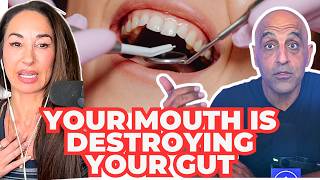
In this Midlife Conversations episode, host Natalie Jill reunites with Dr. Pedram Shojai, author of The Urban Monk and a doctor of oriental medicine, to explore how nervous‑system dysregulation, stress, and cortisol intersect with the oral and gut microbiomes—especially for women in their 40s‑60s+. Natalie shares her personal journey of root‑canal removal, microbiome testing, and repeated patterns of oral‑biome imbalance linked to stress. Pedram recounts his own shift from meditation‑only solutions to a microbiome‑centric view after a documentary project and personal health crises. Together they explain why the oral microbiome has been ignored by dentistry, describe the ecological model of microbiome health, and detail pathogenic oral markers (the red and orange complexes such as Treponema denticola, Porphyromonas gingivalis, Tannerella forsythia). They discuss how antiseptic toothpastes, mouthwashes, and over‑the‑counter botanicals often kill beneficial microbes, while short‑term, targeted antibiotics combined with deep cleaning, laser therapy, and subsequent reinoculation can reset a dysbiotic mouth. The conversation covers family cross‑contamination, the need for at‑home oral‑biome testing kits, and how test results guide personalized treatment plans, including when to involve dentists, functional‑medicine doctors, or use oral probiotics, ozone, or water‑pik. They connect oral dysbiosis to systemic issues—endotoxemia, leaky gut, hormonal changes during menopause, heart disease, LDL, blood‑sugar spikes, anxiety, sleep apnea, and brain fog—arguing that treating the mouth is a prerequisite for fixing the gut and nervous‑system symptoms. Practical take‑aways for listeners include swapping out harsh toothpaste/mouthwash, flossing with non‑plastic floss, tongue‑scraping, using water‑pik, avoiding indiscriminate ozone or hand‑sanitizer‑type agents, and seeking an oral‑biome test via midlifeconversations.com/oral. The episode ends with a call to action for women to get tested, understand their microbiome data, and work with Pedram’s tele‑medicine team for personalized, ecologically‑based interventions.
Chapters
Today we're going to be talking all about the biomes, oral biome, gut biome, all of it. And I want to tell you how this episode came together because it's one of those moments where it just feels like it's so meant to be. So years ago, I met Pedram Shojai, and he is the one who wrote The Urban Monk. And his book was all about stress and nervous system and modern overwhelm. And at that time, and our conversation was really, really impactful when he had that book launch. Now fast forward recently, I had lost touch with Pedram. I don't even know how we lost touch, but I was in a group coaching session with my community and I started sharing how I'd been going really deep in this oral health understanding. I shared I'd recently removed a root canal. I was into microbiome testing and oral biome testing and how every single time I look at the data, the same pattern kept coming up. Nervous system dysregulation is tied directly to disrupted biome. Now after that call, it was interesting because my coaching group had said, where do I get an oral biome test? And I didn't know, I didn't have an answer. And she, one of the members in my group, happened to send me an email from Pedram. She said, have you heard of this test? And I thought, well, this is interesting. No, I haven't heard of it. And two, I haven't talked to Pedram in years, which prompted me to reach out to him. We had a great conversation, and today I'm bringing it back full circle. We're going to be linking stress, nervous system dysregulation, the oral and gut biome in a way that you have not heard for women in midlife. Now, if you're a woman in your 40s, 50s, or 60s and above, you've been dealing with stress, cortisol, nervous system, you're going to want to lean into this conversation. Because nervous system work alone is just not enough, especially if our biome is a mess. And throwing just supplements on top of it, have never tested and don't even know what you're navigating, that could actually make things worse and have them linger a lot longer. So my guest today, Dr. Pedram Shojai, he is the Urban Monk. He's a New York Times bestselling author. He's a doctor of oriental medicine and one of the leading voices in stress and nervous system work. And he has come full circle in this conversation, and I'm so glad our paths are crossing again. Thanks for being here.
It's good to be back with you and you're singing my song right now. I'm very excited to have this conversation.
This is so wild how we basically got connected again. I mean, this is just goes to speak to how things work. It's so wild. I mean, I really had been diving down this rabbit hole here and every time nervous system dysregulation came up, I think most people don't connect the dots with oral or gut biome. They treat them as totally separate things. You included years ago. When you wrote "Urban Monk." Yeah, yeah.
This was not part of that thesis. You meditate, you get better. But if you look at the proof, not everyone can meditate. So are they just really bad at this or is there something else we're not looking at? So a good scientist digs.
So if you could speak into that for a minute, because who you were when I met you years ago, you did believe that. You thought anyone can just meditate. This is sort of the thing that we're all missing. It's gonna fix everything. And you really shifted how you teach that and what you practice there. Tell us what happened there.
Yeah. So circuitous path, as they all are, right, is I had done a 10-part documentary series, you know, on the doctor side of my world on the microbiome back in like 2019 and went to all the labs, interviewed the, just the, the who's who of scientists talking about this incredible story that's breaking science open. And I was just like, man, this is, this is incredible. This is meaningful. This has really changed my perspective on medicine. And all the while I'm kind of compartmentalized doing the monk stuff over here, the doctor stuff over here. And we went to Portugal one summer and, you know, I bit into that narrative that, oh, their gluten is fine and, you know, you're fine when you're on vacation. So I kind of went weapons free, if you will, on gluten and dairy and had the gelatos and all of it. No real GI symptoms to speak of. So I don't— I don't get punished in that way. A little bit of joint pain. It's like, okay, you're on vacation, you can relax. I came back, Natalie, and I couldn't sleep. And I'm a guy who studied with the Dalai Lama. Like, I know how to meditate. I know how to calm my mind. And I'm lying there going, this isn't mind chatter. What is this? Right? And in Western medicine, if the baby is crying, you just go over there and put a pacifier in its mouth. Or, you know, a crass example, you go shake the baby and like tell it to shut up because the symptoms are loud and you just try to shut them up.
Yeah.
In traditional medicine, you go, why is the baby crying? So I'm sitting here with this vast knowledge of microbiome in my head, listening to this chatter, and I go, God, it's, it's got to be coming from my gut. And so because I couldn't sleep, I just got up and got on PubMed, different room so my wife can sleep. And oh my goodness, there are reams and reams of studies clinically indicating, you know, so endotoxemia, gut dysbiosis, leaky gut syndrome to what? Anxiety, depression, insomnia, all of it. And so triggering safety signals and neuroception, triggering immunological activation, triggering inflammatory cascades. And I'm just like, what? So obviously I put that to practice in this guy's body, and within a week or two, I'm sleeping again, no problem. But at this point, the cat's out of the bag. I can't I can't unsee this. And I just started following it down. And because my wife's a dentist, as these studies start rolling in, I just start putting all these other studies on her desk being like, honey, have you seen this?
Yeah.
And she went to a top 3 dental school and she's like, I don't know what any of this is. They don't teach this stuff. And so finally I'm like, no, you need to read this. And she— her eyes widened up and she said, this is incredible. What? And so it's just— it's brought us full circle into this area of microbiome interconnected systems and medicine all having to tie in together in a way that's meaningful. You can't meditate off some of this stuff. So why? Why is the baby crying?
You know, it's interesting. As soon as women talk about elevated cortisol or stress, the traditional things we hear, especially in midlife, are all those initial things. You know, you must do more sound bowls, do some yoga, meditate, breathe. But as you just said, when there's something driving it underneath and it's not just literally in our heads there, we can't even get to the state to do that.
That's exactly it. And, you know, I am— having been a monk guy, you know, I've probably shamed a few hundred people into that, just being like, you're not working hard enough, right? And shame on me, because after knowing this, there is absolute— just, I— you just keep pulling on these threads, you go, oh my God, there's a scientific basis to this. Her nervous system is dysregulated. Her immune system is exploding. It's like if you have a TSA line at the airport and everyone's just kind of, you know, trudging along trying to get to their flight and some scary looking dude jumps the line and runs and everyone tackles him. That was, you know, that was, that was eventful. And while that was a story you tell, you know, later on, but what if that happens 7 times that day? They shut down the airport.
Wow.
Right? And so that's what happens when you, for instance, in my case, eat honeydew and have an IgG reaction that I didn't know about. So I had all these food sensitivities that I didn't know about. There's a 72-hour latency period. So 2 days ago, we're at some breakfast place and there's some honeydew on the side of my plate. Today I'm cranky. Was it because my daughter was sassy to me? Was it because I didn't have enough coffee? Was it because what? I'm 50. Right, and so good luck putting it together. And so all of this traces back to the gut, the gut lining, the inflammatory cascades, all of it together needs to be looked at. And so I've, it's really revolutionized my practice of medicine and my personal development practice of just really having an authentic look at where people are coming in from, and not just assuming that they can relax.
My first connection with understanding, like really understanding at least the gut side before even oral biome and nervous system was after a recent trip to Bali. I had a massive histamine reaction in my body. Like I was getting hives out of nowhere and I just could not control them. And the pattern I started noticing was when I would eat, no matter what I ate, whether it was low histamine or not, I would eat, within 30 minutes my heart would start racing. I had this cortisol surge. And then right after that, I would break out in hives. And it was the first time ever I connected what is happening in my gut after I'm eating this food that's now making this nervous system reaction. So this is where, like, when I peel back the layers where this start— I started really looking at this. I had heard gut and cortisol. I didn't understand it until that actually happened. I don't know if you— did you have a similar experience with that where you could connect it that way?
Yeah. One of the things that I started really getting into, neuroception and interoception and just all these kind of perceptual pathways that the body uses to communicate. The problem is my body doesn't speak English. It speaks anxiety. It speaks fatigue. It speaks insomnia. So learning to listen and say, hey, where is this coming from? Instead of like, boo, go away, is really the difference between functional medicine and kind of the conventional model now where we just play whack-a-mole, making things, you know, just shut up. And so, yeah, your body is telling you something. I don't feel well. Okay. What did I just do? What did I do in the last 24 hours? What did I put in my mouth? What did I breathe? Was I in a moldy room? Do I have a toxic exposure? Am I around a human that makes me feel unsafe? There's a lot of things that could trigger this, but you just go back, you play detective and you go, okay, well, it's kind of started after breakfast. All right. What was on my plate?
Yeah. You know, so many times, especially women that are listening to my show in perimenopause or menopause, now we start having this estrogen decline, and I feel like it starts to really cascade, like things start to show up even more. Have you heard that, that like it starts really getting highlighted at that time?
Yeah, there's a few areas. First of all, you have the natural decline. Then secondly, there are dysbiotic bacteria that crowd out the estrobolome. There are— there's a lot of conjugation of the microbiome taking care of hormones. In the gut. And if you are carrying the wrong players, you're not getting the butyrates, you're not getting the conjugation, you're actually getting the, the downstream lipopolysaccharides and things that are really pro-inflammatory and toxic to your body. And so the word endotoxemia, if your listeners haven't heard of it yet, 80 to 85% of chronic disease is now being pointed back to endotoxemia. What does that mean? Internal poisoning. With what? Fragments coming off the wrong bacteria, jumping leaky gut, getting into the bloodstream, and the body goes, whoa, this guy's not supposed to be on this side of the TSA line. Yeah, full frontal attack. So you start developing plaque, you have immune activation, the whole system, like what you were talking about, like a mast cell activation. The whole system gets upregulated and says, I'm under attack. This isn't supposed to be in my bloodstream. So it's just the body's doing exactly what it's designed to do, is defend itself. Shame on us in medicine for just not understanding that well enough, right? And now that we do, shame on anyone who doesn't read a book and isn't practicing this in their practice, because this is an absolute revolution in our understanding of medicine.
So what happens when someone doesn't look at this and they instead just do something like, oh, I'll just take Xanax for anxiety, or I'll take something to sleep better. Take us down what happens when you sort of ignore that and take that approach.
Yeah, I would say the next part downstream is the next system that can be compromised. If you have a tendency in your family to say, have neurodegenerative disorders, then hey, maybe that's what you get next. If you have a tendency to be anxiety or anxiolytic, then it's like, wow, you're starting to get more and more anxiety, then that could turn into tension headaches, that could turn into migraines, turn into panic attacks. I've seen blood sugar dysregulation, I've seen diabetes, I've seen heart disease. We've actually, there's a couple experts in this field that we hired and brought on team that have been working with the top cardiologists in the world, just tracing oral biome to cardiology. Yeah. And longevity of the heart, longevity of the brain. It basically goes to the next place that can break easiest. And that's the next thing that breaks. And you just go and you kick the can down the road 5 years, 10 years. Then they start throwing hormones at you, then they start throwing some medicine at you. Then there's medicine for the medicine. Now you're on 12 pills. And unfortunately, that's where a lot of people end up coming to me. Right. And so I got a lot of work to do to dig them out. But if you're already feeling this, you can save a whole hell of a lot of hurt by getting on top of it now.
Yeah, it seems Because I feel like we start just like you said, the whack-a-mole. It's like, okay, here's this symptom, let's do this for this. But then there's another symptom that pops up because of it. So your body keeps finding a way to break through and show you these things is what I'm saying.
It's primitive. And that's where I think functional medicine has really created a space for itself. And there's people all over the world now starting to practice functional medicine because it's all about swimming upstream to find the root cause.
Yeah.
Why? Why is this happening? There's no mysteries. Like in science, you, you dig, right? You just keep digging until you find the answer. And the people that are like, oh, I don't know, take this, they're just being lazy, or they're in a model that doesn't pay for that kind of care. And so they just, they're like, listen, I got, you know, I have 7 minutes with you and you've already wasted 3 of them. What pill should I give you? And that's a very dismissive way to handle human suffering.
I also think a lot of Doctors, they're in the insurance-based model. They're doing what they learned in medical school. So it's not about intention, it's a— they didn't learn. And then there's the time restriction. So I think what happens is they're just looking at masses and saying, well, we know how to cut this symptom out. Or so it's like this, you know, I, I remember, my gosh, I was— when I was in my early 30s, uh, when I was first diagnosed with celiac way years ago, I remember going to my doctor who I'd been to for years. He was like a general internal medicine doctor, and I was telling him all my symptoms. I was listing like 20 symptoms. And he said, "Natalie, you're telling me too many symptoms. We're going to look at one thing at a time and treat it independently." And he sent me like, "Oh, for that symptom, we'll go to this doctor. For that, we'll go to here." And that was a big epiphany for me of like, wait a minute, this is backwards because all of the symptoms are telling the story. I was celiac. We didn't know that yet. But most doctors are thinking just symptom, treat, symptom, treat versus all the things.
In and of itself, that story is basically Exhibit A of why this model doesn't work. Yeah. People are so hyper-specialized that they cannot see the forest.
That's true.
And the forest is the ecology and the medicine of the microbiome and the medicine of functional medicine is an ecologically based medicine. It's like, okay, here's one bad bacteria. Let's just keep nuking it. That's not how it works. We want to support the commensals. We want to support some of the better bacteria that we know are healthy for us. And then they crowd out the bad— they take care of the bad players on that street. And so the entire model has shifted to an ecological model. And people that are doing it right, they are thinking in terms of multi-systems. They're thinking about looking upstream.
Makes sense. So, okay. So when you look at nervous system, stressed out nervous system, and you look at disrupted biomes, so oral and gut, do you— what do you think comes first? Is it the stressed out nervous system that kind of causes that, or is it the other way around?
6s, honestly. Um, I, you know, everyone's different, everyone's taken different hits in their journey, and some people have eaten bad food and glyphosate and, you know, kind of earned their way into a dysbiotic state. I went to India to do a yoga retreat, got really sick, and took Cipro because it saved my life, and then I had to start over. So people have a million different ways. Some people are going through a really bad divorce and that's when their symptoms started. So that was a nervous system orientation, right? And then we know very clearly that once you have that level of stress, the secretory IgA of the gut comes down. That is the cop inside of the gut that beats back the bad guys and helps manage that. And so take the cops off the streets, the robbers are having a good time. And so that's directly correlated with vagal tone and stress levels and cortisol levels.
Makes sense.
All of it. There's a lot of levers and dials, right? But all of it you have to look at. And if you don't, in an ecological way, it's not like, oh, okay, this is because, you know, you eat this way. No, it's all of it.
It's all of it together. Yeah. Can you— most of my listeners know this, but I just want to go backwards a little bit. Can you explain microbiome, especially the oral one? Because we've learned a lot about the gut, but we've not had this talk about oral. Can you explain it like you're talking to a teenager? Like, what is that? And why have we not looked at that?
I think part of why we haven't looked at it is because that's been the domain of dentists, and dentists, you know, for the most part, have been trained to drill and fill. Um, the microbiome is the ecology of bacteria, viruses, nematodes, parasites, even just the, the milieu of life that lives inside of your GI tract. And what is amazing and shocking to me is it's the same set of pipes. Where does the gut start? At the mouth. And so for some reason, everyone just started looking from the, the, the xiphoid down, and that became the entire science of gut medicine and microbiome science. And as the studies on oral microbiome started to come out, it's just irrefutably linked. And we're at the point now— I'm, I'm the keynote at a bunch of dental conferences. I'm not even a dentist. They're like, we need you to share your data. Because it is incredible what we have missed. And if you don't sample the oral microbiome with the gut microbiome and a couple of other things that I like to see, you just don't have a clear picture and you're throwing darts in the dark.
Makes sense. Makes sense. So what are some things that you see that like everyday women are doing to their mouths that they think are healthy, but they're actually harming this oral biome more?
Yeah. First off, I would say if you're buying the traditional kind of name brand detergent-based toothpaste and mouthwash, they're just too antiseptic and they are killing the good players. And what we now know about the microbiome is the, the whack-a-mole era is over. It's not about killing germs, it's about creating an environment that supports the good bugs. That then support a healthy microbiome in the mouth, in the nasal cavity. Like, again, the mouth is also connected to the same pipes that go through the nose to the ear. Like, this whole set of pipes has an ecosystem in it. So if you just start killing things, the things that come back are usually nastier players if you're not very careful about how you inoculate. And so I've seen people use you know, the chemical sprays. I've seen people, you know, even the Banaca sprays or chewing gum. All of these things have an effect on the microbiome of the mouth. And so we— and, and, you know, I don't want to speak out of turn because my wife's the dentist and we have the number one oral hygiene expert who's been training dentists around the world that we hired onto our team because I was like, you're brilliant, I need you here. Um, and so they, they're very, very adamant about the types of products that people need to use. But, and this is a big one, if you test your oral microbiome and you find— we find in the test the Red Complex in particular, I don't care what you think you're doing. We've tried all of the botanicals and the supplements and all the stuff. I have plenty of data. Some of these folks just need antibiotics for 2 weeks. Yeah, when they go in for a deep cleaning and get some laser done to get that stuff out of the mouth. And then we reinoculate, and then we replant, and then we bring them back. But what, you know, and I'm hippie dippy at heart, right? It's like, oh, I don't want to put people on antibiotics. The data doesn't lie. The bugs don't die, right? And so it's a mix of metronidazole and amoxicillin. I mean, it just depends on the case, but some of these cases actually need a hard reset, especially in the mouth. And then we come back and we reinoculate and things go right.
You know, that got my attention when you said that yesterday because I have all those things. I sent you my report, you saw. I have all those red things. I have those things in my mouth. I've done all the natural things, removed old root canal, I've fixed crowns, I've removed amalgam fillings. I'm using all the natural stuff. And when you said that, I thought, why are we so scared? Why have we become so against and so scared scared short-term antibiotics?
Short-term antibiotics saved my life in India. They saved my life in Peru. I'm the guy that eats the street tacos and, you know, it's a little brash with, you know, the risk, but I have more than enough data to go toe-to-toe with anyone on this and say, prove to me that the botanical or the oregano oil actually takes care of this, because I have pre and post data on these mouths. I wish it did. I don't want to put people on antibiotics. You know, it's— there's a, there's a price to pay for that. But if we have some nefarious players that we just need out of the mouth, we got to do it. Why? Because you're swallowing 1 to 2 liters of saliva a day. You're swallowing trillions of bacteria. So if you have, say, a root canal that went bad, you have a cavitation, you have gum disease, and these guys are living in these crevices in your mouth, you gotta get them out because they're just replicating and you're swallowing that stuff. So I came to this by saying, oh my God, why is this red complex in this person's gut again? Where could it have come from? Duh, she's swallowing it. It's in her mouth. And so, and one of the things that I think has just been really underreported is everyone's now— not everyone— smart people are talking about leaky gut and why it's so bad and all that stuff, you know, podcasts and, you know, where people are into this stuff. But what about the leaky gums? If you have leaky gums and you eat some food, you have automatically exposed that food, whatever those particles are, to your bloodstream. Wow. Your body has no choice but to create antibodies. Your immune system has no choice to say, whoa, this guy's already on this side of the TSA line. And so bleeding gums are also a very big red flag for downstream autoimmunity, downstream inflammatory cascades, all of it. It's all, it's all the same pipes. It's all the same bloodstream, right? How are we not looking at the mouth and saying, wow, why, why have we overlooked this?
Hey there, if you're finding value in this episode of Midlife Conversations, I would really appreciate it if you would hit that like button and subscribe. And when that little bell pops up, you want to hit that, that way you are notified of all new episodes so you don't miss a beat. Also, you subscribing and liking helps others find this content, and this allows me to keep growing, keep getting amazing new guests for you, and to keep sharing. Do you think the way that you said that with oral biome— well, I have a lot of questions here, but let me start with this one. Do you feel that same way about gut? So a lot of times, you know, and I've had many guests on my podcast talking about this, where we do a gut biome test and that's also mostly fixed through herbs and supplements and things like that. Do you also feel if someone shows microbes or parasites that they should also do antibiotics for that, or does that different how you feel with that versus oral?
It's really case dependent. I am very, very clear with all my patients that they're an N of 1 and that I need to see what their particular situation is. The broad strokes answer that I'll give you on that is H. pylori is pretty dang tough to take out with botanicals. And sometimes someone who has, uh, H. pylori— now there's a lot of antibiotic-resistant H. pylori, there's a lot of bugs that are, that are tougher to beat, but H. H. pylori is one that we consider. And like, I have doctors in all 50 states, I have dentists in all 50 states. Like, I have access to do it. Yeah, I'm reluctant to drop the bomb, but sometimes with people with high H. pylori in particular, um, especially if they have an oral thing going on too, then we just kind of make it a cocktail, right? Like, let's just— let's, let's tactically take out the bugs that we want. But just in terms of philosophy, microbiome medicine has really moved into a place of saying let's support the ecology, let's build the gut lining, let's build back the mucin layers, let's do all this stuff and the, and the environment will take care of it. But there are absolutely critical cases where people have been suffering for a very long time. You know, I— we see people with Crohn's disease, we see people with all of it, right? And there are cases where it's like, look, let's hit it hard. Yep. And then let's reinoculate. Makes sense, right? And that ends up saving months right? Because people just have a certain amount of energy, you know, supplements cost, everything costs money, right? So you want to, you have to time it based on what they have as well.
That makes sense. Do you think that oral microbiome health sort of sets the tone for the gut, or is it the other way around, or is that also kind of a chicken and egg conversation?
Yeah, it's a two-way street, and I've seen it go both ways, right? And so the way I like to think about it is what's the difference, right? So we have different bacteria in the mouth than we do in the stomach, which is highly acidic, than we do in the small intestine, than we do in the large intestine. But if you look at it as a continuum of the same pipes, right, from rooter to tutor, then you just have to say, okay, what are the colonies that do best in which area? Yeah. And how do we optimize? And a lot of that is phytonutrients and fiber and all, you know, all the things that we already know to eat right. But how do optimize for the right balance in the mouth that then becomes the right balance in the stomach that becomes the right balance. And, and there's a lot of nuance to that, right? Because I can't tell people— people coming in now even more so, like it used to be people in their 50s and 60s, now it's people in their 40s. There's so much enzymatic insufficiency. People are— look, the environment's toxic. We are all being compromised on a mitochondrial level, so we have less energy to work with. And these digestive enzymes are just expensive energetically to synthesize. So I'm seeing a lot of patients in their 40s that are just not building enough HCl, enough lipase, and so they're having a hard time breaking down their foods. What happens when you have a hard time breaking down your food? It sits there, it rots, bad bacteria begin to thrive. So there's a lot of elements that start in the mouth, like chewing, and saliva that need to be there, then go to the stomach with the acid that needs to break it down. And then as it starts moving down, you have pancreatic enzymes that come in. You have, you have a whole symphony that happens around the breakdown and the extraction of nutrients from food and calories from food. Um, and there's a lot of areas where things can break. And so it's a long-winded answer to your question, but again, If you think of it as a continuum, then there is no mouth versus gut. It's all the same. It's all—
It's just that we've been ignoring this mouth-oral connection. I mean, I don't— You are the first one other than my dentist when I— because I was removing root canal and all that— that has brought up oral biome. Like, I could not find somebody else. And when I started talking about it with my audience, I've had numerous people saying like, where do I get an oral biome test? And I didn't have an answer before. Like, it was like, Well, I don't know, because no one does it, which is so wild to me.
Yeah, it was actually— it was a problem I had to solve because we started looking at this and saying, we got to recommend it, right? And my wife's, you know, she's licensed in, I don't know, a few states, but she's not licensed in all 50 states. And I have an audience all over the world. And so I'm like, I don't— I don't know how to help you. And finally I said, I got to be better at this than that. And so we ended up creating an opportunity to let consumers do it on their own because there weren't enough dentists that even understood what we were talking about. And so if you live in some town in in Oklahoma and you go, you know, one guy in town that maybe knows this, but he's a 6-month waiting list. It's hard. Yeah. And so, you know, having access to these tests and having access to this science usually takes about 15, 20 years. And in medicine and in dentistry, I think it's even slower because I can't tell you the inertia I've run into in the dental industry where folks are just like, I haven't heard of it, so it must not exist. I'm like, man, read a book. Yeah, read a book.
I want to walk through some of these markers. And before I started recording today, you all, I sent over— well, I sent you an old one, but it hasn't changed much in the last year— an oral biome test of my own that I had had years ago. And him and his wife sort of walked me through what those things meant. And I want to, I want to talk about these because a lot of these are super linked to heart disease. They're linked to things showing up in our blood work that we haven't put together. And if we're not looking at this and we're only treating gut and through blood work, we're only like looking at that. We are missing this whole piece of the puzzle. Can you like give us a— I know this is not like your specific zone here, but just even a general idea of like what we're looking at in oral biome?
Yeah, we have certain species that are nastier than others. And, you know, we try to kind of break them down into like a red complex, an orange complex. They all have, you know, these big funky names. That are really hard, like our— like Perforomus gingivalis. PG, right? And so there are species that are aberrant that we know are just nasty. You don't want them in the neighborhood. So like, uh, T. denticola. Yeah, T. forsythii.
So, so TD and TF, these are both red complex, way off the chart ones. Me personally, y'all, I have these totally off.
Yeah, I'm looking at yours, but I don't want to— like, I'm not in a position to tell anyone your labs, but if you say it, it's— it's I don't care.
I'm good.
Yeah.
So mine are both off the charts.
You can do it. I can't. Yes. So, you know, you have both TD and TF in this lab, and I think this is an older one, but still—
Yeah, I'm looking at my newer one. It's still elevated.
Yeah. And so these lead— one leads to heart disease. One is absolutely— both of these absolutely need antibiotics. Like, I know no ifs, ands, or buts about it. If you weren't put on antibiotics for this, My bet is we rerun this test, you're going to have probably both of these still. They're just nasty bugs.
You're saying if you don't do antibiotics, you're saying so even despite—
If you haven't, like to this, to date, like I just sent you a kit because I want to see a fresh sampling, right? My bet is both these guys are still there.
So that'll be interesting, y'all, because I had literally since this test, I had root canal extracted, old root canal extracted. I had an old crown removed. I'm taking all natural supplements. I feel better, like I don't have a high cortisol surge, but it'll be interesting to show that those numbers are still elevated because we can't kill it through natural stuff, unfortunately.
Yeah. So I'll give you a rundown. Um, like, so we have the Purple Complex, which is really aggressive for periodontal disease. PG basically, uh, becomes friends with white blood cells. TD by itself needs dental treatment. And so when you have TD, you absolutely need to go in for a deep cleaning, ideally with a laser that targets the red complex while on a cocktail of antibiotics. So you do it at the same time?
You do it while you're taking the antibiotic?
Great. Yeah. And that's been our biggest friction point is, you know, calling people's dentists and saying, hey, we're doing this, we need you to play along. And some of them are like, are you crazy? What, what are you talking about? And so then we put our site— we send them a stack of science and put our smart people on the phone with them. And I'd say still like 1 out of 5 is like, I haven't heard of it, so it's not true. And I'm like, hey, I'm I'm sorry, you gotta change your dentist.
Yeah, that makes sense.
This is, yeah, this ostrich move doesn't work. TF, when I see TF, I think airway. That is a mouth breather. And so these are the people that end up with sleep apnea issues. These are people that end up snoring. These are the people that wake up with bad breath.
So here's what's wild about this. I wanna share this piece too. I told you this on text. So I actually am not a mouth breather. I'm a definite nose breather. However, my husband is a mouth breather that just had surgery to fix his nose. So these are, these go back and forth. So for example, he could be the driver of that one, and now I have it. And the same thing as the other one, I could be the driver of that. So just because when you— you can't rule them out and go, well, I'm not a mouth breather, because you're getting it from somewhere. And once you have it, it's just— you've got to get rid of it.
We've actually had this in multiple cases where I'm like, okay, I need to test your family. Yeah, because it is very easy to cross-contaminate with the family in your house, even if it's like glasses and cups and forks and stuff, right? The stuff lives in your mouth.
Yeah.
And so it's a big deal. I've had couples co-treat because of—
So like, for example, if I end up doing antibiotics for these, I would have my husband do them too because we'd have to at the same time.
Yeah. Yeah. Well, I would test him to make sure he doesn't have— like, I don't put anyone on antibiotics that doesn't need to. But if he ended up with the Red Complex, which, you know, likelihood—
Yeah, his match is mine. His is higher there.
Then he needs to do this with you or else you just got to stop kissing his mouth, right? Like, it's, it's a, it's a whole thing. It's a whole thing. P.I. is another one. P.I. Is screaming to me silent abscess, old root canal. Yeah. So if you still have that bug— and I know you've done some things since this, right— is you will see this 9 times out of 10. You're like, when you have this bug, it means that it's living in a really deep pocket that has not been fully resolved in the mouth, right? And so, and there's a few others, like there's— we find yeast in people's mouth, we find, you know, good players that we look for. And there's a few like SM that has very high carries risk, right? So people who get cavities all the time. And so we're actually in a place where, you know, obviously, like, I'm lecturing, I'm supposed to go fly to the ADA in a month. Like, we're talking about a lot of this and saying x-rays are so 5 minutes ago. Yes, you need x-rays at a dental office. Yeah, but if you're not doing salivary screening, you're missing all this information. Like, the dentist should be the front line of medicine. Yeah, like, this is, this is an absolute tragedy that we're not grabbing this information on everybody before it becomes disease.
It's crazy. And then some of them change. Like, I'm looking at a test from a year ago and a year and one now. Like, for example, like the implant one, mine was off the charts high. Well, it's not high, it was in the yellow, and now it's in the zero on my most recent one. So some things can change, but not some of these, the serious ones, like you said, the red complex and the orange complex.
Yeah, yeah, yeah. Like, if you— and you had mentioned you went in for some dental work to clean up like an old— yeah. So yay, you know, pat your dentist on the back. That is a successful treatment. The problem is if you don't get them all, you are still creating a dysbiotic environment and you are still, you know, a year from now, maybe downstream, going to a place that is unhealthy.
Makes total sense.
Yeah. And, you know, again, I think that doing it right is way more efficient than doing it over. Yeah. And, you know, call me crazy, but like, you know, sometimes you just got to hit it hard and get out and give people their lives back.
Makes total sense. Okay, so for midlife women that are feeling things like, okay, this is maybe not resonating with them yet, but they've been maybe struggling with other things like weight or brain fog or sleep, like things that are— they think are just menopause related. What do you want them to know about this?
If you haven't looked at food sensitivities, if you have not looked at gut permeability and the microbiome, oral and GI— and GI, we like to use GI Maps. Like, they're, they're very good tests out there. Like, I'm not like, you know, the, the lab, right? So pushing the fish. There's some very good tests. We use the best tests. But even like for sleep people, I, I look at toxicity, I look at cortisol hormones, and I look at the microbiome in the gut. And I've been able to resolve multi-year, very, very complicated insomnia cases by cleaning up the systems, just because no one's looking at these places where the body is screaming. Yeah, right. The baby's crying. Why is the baby crying? And so if you're not looking at— if you're suffering from some downstream thing and some guy is throwing Ambien at you, yeah, or Prozac at you, or just saying, well, you need metformin because your blood sugar won't stabilize— I can't tell you how many people have come off of their blood sugar and their heart meds after a time. And obviously, like, we work with their primaries and they adjust down, um, just by healing their microbiome.
Yeah, that was— I had that story years ago where my blood sugar was super high and it was literally my gut. Like, at least working on gut brought my blood sugar down. So clearly it's not fully been resolved because I've got this oral stuff going on, but that was the— that was a definite aha moment for me, that blood sugar and gut can be very connected versus just taking it— metformin, or doing what it is that you need to do, you know, what you think you're doing for that. That's not necessarily the answer.
Yeah. And again, like, just is if you think upstream versus downstream. Why is my blood sugar fluctuating so much? Why is my body not being able to be resilient? And when you ask those questions, you have, you know, it's a bit more difficult because now you got to like examine your life and your environment and your, maybe your marriage and maybe your relationships. And, you know, like there's, there's things that open up like macros there because your body is reacting to something. It might be your food, it might be the mold behind that wall. But like when you start finding the root cause of things and resolving it there, then it's not just the blood sugar. It's like, oh, the headaches went away. I'm sleeping better. I have more morning energy and my bowel movements are normal again. Huh? I didn't treat you with 4 different drugs. I just fixed a problem.
Yeah. What are— and I'm going to talk to everybody in a second about how to even get a test, because that was one of the big reasons I wanted to have Pedram on is I love that he's got this easy-to-do test that I'm going to be walking through too. I'm going to share how to get that. Aside from the test, which we're going to talk about in a second here, What are some easy, like, swap recommendations you want people to start doing right now, like, while they're even waiting for a test, or like, what do you want them to know? Like, for me, I've learned not to do the mouthwash, the traditional toothpaste, or like, help us with a little bit of help there. Like, what can we start doing?
Yeah, stop putting napalm in your mouth, right? Stop nuking the good bugs upstream. I think that flossing is essential. Use a floss that doesn't have the plastics and the, you know, the yuck in it. There's a lot of synthetic flosses out there, and there are a lot of synthetic chemicals that don't belong in the mouth or in the body. So start there. Brush thoroughly daily. But also, I mean, very few people I meet actually brush or scrape their tongue, and the tongue is a place where bacteria thrive in the mouth. And so just tongue scraping, I've seen work miracles in people's health, like inflammation.
Do you do that daily, tongue scraping?
I do. I mean, I'm married to a dentist, so like, I don't really have much give.
What about Waterpik versus floss or both?
Listen, I come from a family that has had periodontal disease. My dad's had a lot of stuff, and so I saw it coming. And my wife's like, listen, here's— this is your— I Waterpik every night.
Yeah, me too.
Why? Because you can't afford to fester germs in your mouth. Yeah, right. It's, it's like 3 more minutes, right? It's not that big of a deal. I turn it into a meditation, but it cleans— it cleans everything out and creates an environment. And then we use oral probiotic sprays. Like, we have a whole thing that my wife does because she's an expert in this, but we have all these really amazing tools now that are available to us. And there's been a ton of science on lozenges and oral bacteria. So like, we look at what bacteria are high and low in particular mouths and say, hey, this person needs this lozenge. So it gets very specific on what I may need versus you.
What about ozone? Like, I know I'm using an ozone gel now. Are you a fan or not a fan of ozone?
Is there a fight or not, right? So the question becomes, am I a fan of ozone if there are red complex or orange complex species that I got to beat back? Yeah, let's get after them. Let's get it done and let's win the war. Mm-hmm. But am I a fan of ozone during a peacetime economy?
Not as much.
Interesting. Let's—
yeah, why? Why?
Why? And let's—
because it's just—
just because the essence of what we now understand about the microbiome points more clearly to saying, if I take control of the mouth and kind of get the bad players out and reintroduce the right ones, my job is really just to support the right players living there and thriving. They're going to take care of everything. And if I start doing ozone, I'm indiscriminately killing friends as well.
So that's the way you would—
and so I think there's a time and a place.
So you would look at like hand sanitizer the same way, like a hand sanitizer is going to kill the bad guys but also the good?
Yeah, it's like triclosan for the mouth, right? Like, I think, I think there's a targeted approach for ozone that is absolutely relevant, but I think again, what is the intent here? Am I on the therapeutic treatment, like, you know, 2-week aggressive clean out the mouth stage, or am I now, you know, planting seeds and tilling the soil and making sure the right players are thriving? Because when that's happening, ozone's not helping our friends.
Yeah. So in your data and your research and everything that you're learning, I just want to kind of put this in a nice bow, make sure I'm not missing points here. We've been missing this big piece with oral and gut, but especially oral. We've been missing this whole piece, and you really can't fix your gut biome if we're not addressing oral. Nervous system, you're also saying like, unless we address those two things, we're not truly going to conquer and fix the cortisol dysregulation or nervous system problem. We're not really getting to root. And then removing things and fixing dental infections is great, and you still have to be more aggressive versus just removing and just doing herbs, if I heard you correctly, because you're just saying like you would love to believe that it's just herbs, but it's just too deep.
If it worked, we would know about it. And so at the end of the day, I'm a scientist. Yeah. And I just— proof's in the pudding.
Yeah.
And so we've tried all the herbs, we've tried it, and not just our clinics, right? It's just I have thousands of doctors across the world that are comparing data. It's just— it's just not working. Yeah, right. And so what do you got to do to solve the problem? That's the answer.
So is it— is it like it's never working or it's just too low of a rate, like too low stats?
I've just never seen it effectively get the job done. And I've seen people take So here's the problem, Natalie, is it's like the long drawn-out war that depletes your resources and also kills the friendlies. Yeah, right. And so you're going to take 6 months to take some oregano oil and some, you know, topical gels and do all this stuff. People have the attention span of a goldfish.
I'm doing all that by the way right now. I'm literally doing all that.
Yeah, but like you're a health and wellness influencer who like lives and breathes this stuff. Most of our patients are just like, I give you a week. You know what I mean? Like, people just don't have the stick-to-it-ness to even do it. And the ones that have, the data still isn't that impressive.
Yeah, it's like you might lower it, but it's not totally eradicating it. And so then we still have—
you got to get the job done because if it still lives there, it's like a jack-in-the-box. It just jumps back out. Then what's—
and so some people are going to say, well, then why can't I just do antibiotics proactively? Like, talk to us about that. Like, what would happen if they didn't test and they just did that?
Yeah. I mean, there's a price to pay. So I am begrudgingly giving this counsel for the people that have the red complex. We don't even— there are some use cases that our dental team will do it for the orange complex, not for the green, only when necessary, because the antibiotics are also wiping out your good players. So now we got to go— yeah, we got to go retail all the fields and it's a, it's a fair amount of work. But if I have the nefarious players that I can't route out, I'm just going to drop the bomb and start day zero now because 2 weeks from now we're rebuilding.
That makes total sense. So y'all, I'm going to hook all this up in the, in the show notes with any other resources. But also, if you're listening while you're driving or whatever, if you go to midlifeconversations.com/oral, I will redirect that to where you can get this test to do at home. I think knowledge is power. I would not be scared of a test. I think, you know, so many times, Pedram, I featured people like around DNA testing or gut testing, and I'm just such a test test fan. And some people look at tests as, I don't want to know. I think— look at it as a guidebook. Like, I would rather have the information and know because it doesn't mean doomsday to me. It means I've got power, I've got control. I can— because it, like, just full transparency with my stuff, y'all. I'm— gosh, I share my whole life here on— I've shared it with everybody. But like, I look at my lab sometimes like a report card and it frustrates me. And then what happens is a Western medicine doctor will say, oh, they'll give you like just the prescription. We've never actually fixed the root, root, root. Like, I believe one reason I haven't been able to really annihilate my MPO, which I have a high MPO and a higher LDL, is literally there's an underlying thing I just have not figured out yet. And I'm not willing, me personally, to go— I'm not judging anyone who does this— to just go on a statin or just and ignore this. Like, I want to figure out, and I'm determined, like, what is that thing? So to me, that testing gives us more knowledge and it gives us the power to be a better health detective and to really take back our health and understand. So I love that you've created this because I did not know where to send people before for a test.
You know what, I'm thankful that you're pushing this message because I can't— like, I could scream from the rooftops and not enough people hear it. This is an incredible, incredible public health step that is just starting to turn into the dental community and all of it. But this, this is going to revolutionize the way we treat everything. Yeah, because we are finding upstream drivers. Just in the example of, like, say, your LDL. Why is that baby crying? Yeah, the body throws cholesterol to combat inflammation. Why is there inflammation? Oh, there's bacteria that are having a party behind a tooth in the mouth.
Now, I'm not against— for anyone listening, I am not against lowering LDL. I know the research there. Like, I know we need to lower LDL. My concern with people that just go focus on lowering LDL with with, um, a statin is now you don't have the protection that your body was giving that— making the LDL for. So your body produces that LDL in defense, which is now protecting your brain and other areas. So as soon as you just address with a statin knocking down that LDL— believe me, I've interviewed so many doctors ad nauseam— we now have a fake result on our blood, and we don't actually— we never hit the root cause. So yes, we have to lower LDL, but we also have to not just throw a statin on it, we've got to know where it's coming from. That's my personal belief. I'm not saying I'll never, ever, ever address it the other ways. I just know that to me there's something else that's driving that.
And I appreciate that perspective because a high LDL is dangerous and it can kill you, so you take care of it. But a crass example of this is, you know, I take Advil every time I have a hangover from drinking tequila. So I'm just going to keep taking Advil so I could drink tequila. And then one night I forget to drink tequila and I don't need the Advil. Right. And so eventually the downstream need for a medication because of something I'm doing upstream resolves itself. So, yeah, if you had a really bad headache right now, the Advil might really change your day. But that isn't the resolution. Totally. What is the problem upstream?
Yeah, I turned 55 September 2nd, and so my number was if I don't have this figured out by September 2nd, I will actually have to do something there. But I'm like determined that there's something that drives that. And that's my— that's what has been my obsession. I think I'm getting closer and closer and closer because I'm seeing this whole connection with oral biome. But I want women to test this. Can you just tell us the process? Like, so someone, they're like, they go get an oral biome test. What happens now? What does this look like for them?
Yeah, so kit gets shipped anywhere in the US. It's hard to do this internationally. It's still, unfortunately, kit kit gets shipped to saliva. You put the saliva, you put in the mail, send it back. Our team gets it. Our dentists review it.
So you do the test at home? You just do it at home with saliva?
You do. It's just, it's, it's a box. It's boom, you know. And so it just comes in the mail. You, you, you get it, you, you spit in it, you send it back. Our oral team reviews it, and then you get on with one of our experts who have been trained in counseling on this and say, look, here's what we found and here's what we would recommend based on that. Now there's a certain subset of people At that point, it's like, you know what, we need to look at your gut. We need to look at, you know, food intolerances. So it can kind of bird dog over to other areas. But you'll have a choice.
It's not like you have to.
It's a choice.
You have a consult, you understand, and then you can take from there what you want.
Yeah, you will. You will know definitively what's going on in the mouth. And then from there, they will recommend further testing if you need it, or they will just say, you know, here's, you know, and they have all sorts of nontoxic solutions and all the stuff that our oral health team has that they recommend instead of of the, the garbage, but it's all based on a personalized plan with what you see coming out of your mouth. Yeah. And to me, it's just a no-brainer. You need to know. And look, if it comes out everything is hunky-dory, great, go about your life. But if you find something significant, you could really turn the dials on things in your life that have been bothering you, that have been seemingly unrelated. And that's where I think a lot of people find their aha.
So if you do find something on the test and they have this consult, are you— have the people that can actually help them treat to is what I'm hearing. So whether— so they can take the information or they can work further with you to do that. Is that it?
Yeah, we, you know, and I, and I had to do this just because there's just not enough good people in the country. Literally, there's not enough functional medicine doctors. There's not enough dentists that understand any of this. So then I had to hire a team and have a telemedicine unit developed to go 50 states because we didn't know where to send people. And it was really— it was sad. People were just like, okay, we found the problem, but now nobody could help me. So it took me a couple of years to kind of fit all the pipes together and make it all work so that we can now help people at scale.
This is great. I'm so— because my— literally so many people have messaged and they're like, well, my dentist doesn't know what this is, or they don't— you don't even have to convince your dentist now. You can just literally do the test yourself, have the call, and then you'll be equipped with the information. This is so helpful.
And I want to say something there to be inclusive. We have dozens of dentists that we engage with every week saying, hey, here's a protocol for Mary. And, you know, 4 out of 5 of them will basically be like, oh, that's it. What are you talking about? And then we end up putting them with the top dentists in the country. I'm not a dentist, I'm a dentist trainer, but we have people that can train them and bring them up. So I've been part of this big initiative to help that entire industry wake up to all this science. And, you know, I'd say 1 out of 5 of them are just like playing ostrich and don't care. Those are the times when we're like, listen, you might need to find a new dentist. But for the most part, we're finding dentists physicists that are really like excited about this science too, because it actually brings them front and center in healthcare in a way that it makes them more relevant.
Makes total sense. Well, thank you so much, Pedro. I'm sure going to have to have you back. I'll have more questions. I know there's some people on your team I want to interview to go deeper on this topic, because this is— I'm in a learning mode here, and I think this is not talked about enough. Then I'll keep you all posted on my test, and if you go and get this test Please let me know too. I'm so curious what you're finding and learning, and please share this with others that need to hear this. I will link everything in the show notes, but once again, it's midlifeconversations.com/oral. I will redirect to the test to get started. Thank you so much, Pedram, for being here today.
What a pleasure. It's been great catching up with you.










