#ScrewTheW2 - Episode 040: From UPS Driver to Turnkey Investor!
CJ Calio left his UPS driver job to become a turnkey real estate investor. He talks about why he quit his W2, the obstacles he hit, how his wife shaped their investment approach, and what he'd tell others chasing financial freedom.
Foreign.
Hello and welcome back to another great episode of hashtag screw the W2. And have another great guest joining us actually from Reno, Nevada. CJ welcome to the show.
Hey, John, thanks. It's a pleasure to be on your show.
Yeah, thank you. Thanks for coming on. I'm glad we were able to make this work. So now, you know, first question I always ask my guests, can you maybe take us back in time? What was your, you know, previous W2 job? You know, what was it like? What was maybe an average day for you?
Oh, yeah, man, it's been, we're coming up on four years.
Okay. Hey, always the same for me.
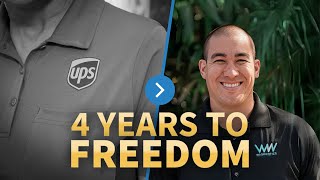
Awesome. Good minds attract for me. My profession prior to where I'm at today was a UPS driver. And that, that was something that I stepped to at the age of 19 and I found myself in a, in what I thought was the best situation for my life. Good union jobs, steady work, well paid profession, good benefits, good medical, good retirement, whole, the whole gambit that I was raised to try for and right worked my way through the ranks. I started off as a part timer who loaded the trucks and did all the dirty, dirty work for the drivers as they started their day. And I became the youngest Hawaii driver at the time to be a full time UPS driver at the age of 21. And I just continued to grow and get more proficient and more productive as a UPS driver. And I became somebody around the safety ranks. I operated as somebody just under the president of the safety committee and my days were long and inconsistent and it was never a shortage of all right, am I going to get my 40? It was always like, where am I going to cut it off?
By what day am I going to hit 40?
Exactly. And then there's this fun time of year, some people call it Christmas.
Ah, yeah.
For us, it starts for you.
I don't understand just a little bit.
And it may have played a little part into why I chose to do what I do today. And, and yeah, so the work days are very exciting in a fact where you don't know what you're going to get. Every day is unique. You have the monotony of doing deliveries. However, it's never to the same person, never to the same business, never in the same weather climate. And it was exciting, it was fun and I found myself content in that.
Okay, sounds good. Now with that obviously said, every day is a little different. And you know, that little teeny tiny holiday called Christmas, you know, might cause the activity levels to go up a bit. But was there like one specific moment or you know, maybe even like a series of moments of that you realized, hey, this is a great, you know, union job, benefits, pay, et cetera, et cetera, but I need to get out of here. There's something different or what was that moment like for you?
Absolutely. It's very vivid. So one particular wonderful Christmas we were preparing for and we, we weren't ultimately, we weren't prepared. It was like a Christmas out of I punnett out of hell. It was just, this isn't real. How are we processing and moving this much stuff? And this one Christmas in, in general, we were, we were so short staffed that I was working seven days a week. I wasn't seeing my wife, my kids, my family. So that whole joy of the season around being those you love, being around those you love, and having those memories you cherish and being able to wake up with your kids all excited and stuff was, was something I, I only got to live through through my dreams. And it took me four or five months to work through this season, which typically would end right after Christmas because there's nothing after that. It carried into February of the following year and during that, that time frame, with the amount of hours and days I was spending away, missing my kids in the morning, missing my wife in the morning, coming home so late that they're sleeping and it's just this, it. It just sucked. If I were to put it worse, it just sucked. And it came to the conclusion, can't picture myself doing this for 40 more years. You know, it's just not something I, I enrolled or Lifestyle is great. I was comfortable, I was content until I wasn't. And this was that moment, this is that pain point that gave me that aha, like, there's gotta be another way. So after that Christmas, me and my wife had that serious conversation around how am I able to leave, still be able to maintain this lifestyle that we've worked so hard to have and achieve and be able to have the time, freedom to now choose in or out of these types of situations.
Gotcha. No, makes sense. Yeah. So once you, you know, had that realization, like you said, it sucked just not seeing your kids, your wife, and working these just ungodly hours and you realize, you know, I can't do this for the next four decades. What was your, you know, what was like, the next step? What were your steps to, you know, get out of the rat race, as I call it?
Yeah, that's a great question. And it's not exactly where I thought I'd be, where I'm actually, at today, my initial thoughts was I didn't think about it. It really wasn't even on my mind. It was almost like I was just wanting to run away from this uncomfortable situation and then, then telling myself this, this myth that I'll figure it out. And my wife is opposite. She's the planner. She's like, we're going to plan to succeed. Not plan and fail. Not plan and fail. So her thought process through this 3, 4, 5 month period where I wasn't home, she began researching, what are opportunities, what are some ways we can replace that income so CJ doesn't have this opportunity again. And for me, I stepped into just pure emotion around rage, frustration, anger, depression, and made that compulsive I want to quit statement. No plan. So when we had this serious conversation as a couple after the season died down, she brought up real estate. Okay, she. She was tracking and following those that are successful, those are wealthy, those who are rich, you know, whatever title label you want to choose and notice that majority, if not all of them had some level of real estate in their portfolio. And that intrigued her and it led her down this path of let's go into this cash flow type of investment strategy, producing those streams to replicate income. Being me all emotional in the moment, I said, no, no, I don't know real estate. I'm not an agent. I don't have trade knowledge. I'm. That is like the most uncomfortable thing you could throw in my direction. So being the loving husband I was, I said, you go, do you. All right, I pivoted. I went opposite, which is intriguing now that I look back. She was my biggest supporter. She was 100% on board for me to leave, and I chose to distance and resist that option purely out of scarcity, fear, the limiting belief mindset. And I chose into what I thought I knew I was, I was capable of doing. So I pivoted to startups, I pivoted to businesses that I could create, I could run, I could do. Okay, that only takes you so far. And for most who have tried startups or know someone who has, majority of them don't succeed.
Exactly.
I went through like eight or nine of them and I came out six, nine months later, more exhausted, more frustrated, more angry, more depressed, more money spent with no return to leverage, and, and, and more humbled is what I take it as. It was a season I got to grow in, and it humbled me in a sense where I came to that conclusion. Like I stated, why am I resisting my biggest supporter? So tail between the legs, a little head, a little down, more calm and emotionally checked in. I came back to her and said, let's try this. It scares me. I'm gonna be completely honest with you. You're Talking about investing 2,3000 miles away from where we currently live in Hawaii. And I, I, I got to be real. I don't, I don't know if this is real. And I trust you enough that you've been putting in all this time and effort for over a year looking into this, and she's been dripping on me in this entire time. Let's just try. Let's just try. Let's just try. So I became a big supporter of her. And that, that's kind of where the shift happened to where it started, this wonderful train of momentum.
Sure. No, it sounds good. Just out of curiosity, you know, you said you had that shift and your wife was researching real estate. Where or where or what was your first real estate investment?
Yeah. So once I got on board, we started going to networking events and really fine tuning our strategy. We wanted to adopt and commit to, and she found buy and hold rental properties with cash flow, streams of income as, as an interest, and through networking and meeting new people and getting more informed around the lingo and understanding the things that I, I thought I'd never know by simply being immersed in networking spaces, leveraging podcasts, leveraging YouTube, putting all this free information that's out there into practice was our goal where we finally pulled the trigger. So we ultimately did, did all that free training stuff and got enough confidence in and said, you know, okay, turnkey seems to be something we're capable of. We have cash, we're mortgageable. It seems like the right play to just get our toes wet. We don't have to do any work. It should be that turn the key cash flow thing.
Right.
And we ended up buying our first property out in the Midwest through a turnkey provider.
Cool. Yeah. And I can attest to that. I've invested with turnkeys as well and currently invested in five states. And people, people are like, do you have any regrets doing it? It's like, yeah, I didn't start sooner, but I can't go back in time. So once you made that pivot and shift, once you got past, well, these startups aren't really working. That wasn't the directions. And then you went from the turnkey and then that first turnkey property from that point to when you were able to leave your W2 job, how long a time was that.
Was four years. From the day we started.
Wow. Okay. Yeah.
And it became just under five years when we got my wife out, too.
Oh, nice. Congrats.
Yeah. And it wasn't on the docket. You know, she was satisfied with her position and her job and. And just from consistently churning away and becoming better at our strategy and staying really focused, too. Discipline, too. We found that we, as a team are amazing together, and we work. We both have our unique capabilities completely opposite of one another, which then fills the void of what one is lacking, the other steps into.
Yeah.
And we. We were able to leverage that and just build this beautiful momentum as a strong married couple and create that. Okay, well, we got you out, cj. How do we get Jazz out and in within a very short time frame? After I left, she was out, too.
Wow. That's awesome. Yeah. Yeah. My. You know, I. Like you said, I left my W2 about four years ago. Eventually, hopefully, my wife is able to as well. But, you know, like you said, she's very happy, very fulfilled with her career and where she's going, so it's, like, not a rush or urgency at this point. So with that, do you. I know you said it was about four years, but do you remember the exact day or, you know, time that you went to your boss and say, you know, here's my resignation letter, or, how did that play out?
Yeah, it was funny, because UPS driver, it's a position that there's a waiting list to become one.
Okay.
Full timer. And when. When I chose out, I. I've accum. I accumulated a lot of leave. Right. And we were able to bank some things and so forth. So I let them know. They are like, we'll see you again next time. You know what I mean? I'm like, no, no, really, I'm not. And. And I told him that I was leaving in January of 2019.
Okay.
And. And. And I was like, I'm out this year. My anniversary is here. I'm going to burn all the leave from that point out, and then I'm never coming back.
Sure.
And literally the week after that, I broke my arm in a softball game.
Oh, jeez.
And I went out on. On off the job disability, which there's nothing unless you have insurance. I wasn't making anything, and I was still satisfied because now I got, like. I got, like, six months to just continue practicing what it's going to actually be like when I step away. And it was, like, the most beautiful transition for me to set me up for just walking away, because I came back for a Week just to say my goodbyes to all my friends and all my customers, which to me, my customers and my. My co workers were. Were my world. Right. So just out of respect, I got to go back and say goodbye. And then I left, and I never came back. And it was a period of time after I left that they're like, so, you sure you want to do this? So you sure you don't want to come back? You know, there's this time of year called Christmas that's coming back up.
Yeah.
Thank you. I'm good. I'm good.
No, I'll figure out something to occupy my time during then.
Right. And the funny thing is, I lived on my route, which was a cool thing. I used to be able to come home for lunch and stuff, and. Okay, real good friend of mine took over my route, and during Christmas, almost every single day, I just come out with my coffee or tea or whatever. I was drinking the wine. Just like, have a great day.
Yeah, great. Cheers.
Good luck. Cheers. And it's cool to see him now. Stepping into getting started.
Okay.
Now, four years later, in some of the things we're doing and just getting informed. Knowing that I've been out for four years, it is possible, you know, a lot of the coworkers and mostly the bosses were thinking, I will see you back in six months.
Right? Yeah. Yeah. That's almost kind of a motivation right there. It's like, no, you're not. I'll prove you wrong.
Yep.
So now, you know, obviously, we kind of touched on, you know, the low points, being away from your, you know, family, the long hours, working late, et cetera. But, you know, if there's, like, some positive spin to this, are there any regrets or anything you do miss from your W2 job when you left back in 2019?
Yeah, it was the connections with the people I love, my customers, and. And what I. What I come to realize is that I believe everything happens for a reason. That's my belief, being in the position I was, where I got to deliver, and the way I performed at a level of excellence. I was one. One that would wait for somebody to come to the door when they got their package, and I greet them, and I just have conversations. And I feel I've taken that. That context to what we do today, where it's really about your connections with people. When you're intentional with. It just means the world to other people because there's so, so much in today's world where it's so quick to. Okay, hi. Bye. There's no Real connection developed. And my, My, my beautiful moments with my customers, especially when I left, I looked back and I must have had, like, a hundred random people in my phone that had my personal number that would call me when there's an issue and continue to after I left, that I kept in touch with for the most part. And obviously time over time, people move, people change numbers, and I've slowly lost touch with a lot of them. But there was just so much outpour of love when I left that I just genuinely felt that those connections that I made, that practice of being intentional with people, really set me up for success in what I do today.
No, no, it makes sense. And yeah, I can definitely feel you there. When my previous W2, I spent 12 years in copier and office equipment sales, so everyone had my cell phone and I still had calls, you know, six months after that. I can't print, I can't scan. I can't copy. The machine's jammed. It's like, well, I help you, but I don't work for the company anymore. Sorry. What's been the CJ with that? You know, or actually now, past four years since you left your UPS job, what's been the maybe best thing or what's the brought you the greatest, you know, joy or satisfaction of leaving your W2 and the journey you've been on now the last four years.
Gosh, if I, I. It's being able to choose, okay, the, the freedom of choice around what I'm setting my clay right. I was given a start time with no finish time. That's how UPS works. You start here, you finish when you're done. It's up to you on how you want to do that, and you get done when you get done. And now my days are around. Here's what I set up for the week. I get to spend time with my kids. I get to spend time with my wife. I get to choose into this much time for the business or investing or being on shows with you, John. You know, I get to choose that. And that choice of not needing to change exchange time for money, it's just been a huge, huge win for me.
Yeah. Yeah. Times the one thing we never can get back. I. We don't know when our end date is, but we know there's a finite amount of time. But there's, you know, the time we're talking or recording this, you know, the Fed keeps printing trillions of dollars out of thin air so we can always get more money. We can't get more time back.
100% agree.
Now for anyone listening and you know, it doesn't have to be a, you know, a copier salesman or a UPS driver. You know, just anyone out there might be listening to this. You know, maybe they're in a similar situation. You know, I can't stand my job, I can't stand my boss, the long days, whatever the case is. But you know, maybe they don't have a great support network. Maybe they just feel stuck. Like well, my parents only ever got to this level. I'm probably stuck in this job as well. What advice would you have to those people that feel that are stuck, that they're unable to break free from the W2.
Two things come to mind. Vision. Create that vision. Have that target of what you've achieved. So when we do vision, we talk about things we've already accomplished. Tense. This is where I am, what I've created, what I have. And the time frame between now and then is irrelevant. Whatever that works for you. It's more of believing in that as attainable which then allows you to re engineer it or walk it back in creating those plans and action steps. And you'd be surprised on how much you actually know you're capable of doing once you have a target.
Yeah right.
And having that in mind then comes down to this concept of the how to. Most people start with that but no, no target in mind which leads you in in that of a rat race in my opinion on that hamster wheel circling, getting so exhausted and tired, but not not seeing any results versus I'm going to create this because my vision states I've left my job. So back to my story. My vision initially was in 10 years I will leave my job. I did it in four, my wife did it in five. And it we contribute a large part to we have everything we need in us. It's just now believing it and applying it in the steps that we are committed to taking. So people that are stuck tend not to it should included me at the time. Acknowledge that I am capable of committing one hour a day reading a book, one hour a day watching a podcast, one hour a day networking with strangers. That makes you uncomfortable. However they have what I want and they're doing what I want to do. You know, so being willing to have that vision which then creates the steps which then puts you in the opportunity of now take action. You can set up for success. And it does take time. It is. This is a journey. It's not sprint right yet. To pace yourself according to what you claim you want and create that there's no limitations to what's in the future. You can't. Robert Kaki once said, you can't lie in the future. It hasn't happened yet. Y, I, I don't recall who said. But what I, I believe it's Henry Ford. Whether you think you can or you think you can, you're right either way.
Exactly.
So why not be right about your vision? Why not be right about what you claim you want the most in life and, and design, what you're willing to do to achieve it?
Exactly.
That would be my starting point for those who feel stuck, those who are in a position, whether similar to mine or not, and just feel lost, sit down quietly in a, in a space and really get clear about what do I. Where, where, where do I see myself in 5, 10, 15, 20 years? What do I have? What have I achieved? What am I doing? And then now you have a starting point to build a plan off of.
Yeah. No. Great advice. I appreciate you sharing that. So, as we wrap this up, C.J. and again, I want to thank you for your time, for coming on my show and educating and sharing your story with my listeners. I call this the unscrewed moment. Where going into 2023, where can people find you, Learn more about you. Are there any projects you're working on or anything you're excited about as we're going into 2023 here I am excited.
For what the shift of opportunity is going to look like and what we do in real estate. You know, it's, it's the, it's the Warren Buffett thinking around be fearful when everybody's greedy.
Yeah, when everybody's fearful.
And prior to 2023, everybody was greedy around low interest rates, abundance of qualifying. And now that things have shifted to numbers that haven't been seen for many, many years, if not decades, people are now being fearful, which then means there's opportunity somewhere. And I'm excited to step into that opportunity and really capitalize on leveraging what I've worked so hard in, growth and creation and now applying it in a slightly different manner in this new season in real estate investing.
Cool. Yeah. No, I, yeah, I can appreciate that. And, you know, just like you said, with everything changing, you know, we've got spoiled low interest rates, and now they're high interest rates. And people come to me almost every week. It's like, well, gee, what are you investing in? It doesn't make sense to get real estate. It's like, how about be the bank? I do a lot of private lending I do fractional trust deeds. It's like interest rates are up 12. I'd rather be the lender, not the borrower. Right.
There's always opportunity.
Exactly. So. Well, I appreciate your time, CJ thanks for joining us. And I look forward to having you back on the show.
Appreciate it. John, thanks again.