A short filmed interview/documentary-style piece in which Dr. Adam Perlman tries a 60-minute flotation (sensory deprivation) tank session at Glowspa. The video explains what flotation therapy involves (water heated to 93.5°F, high Epsom salt concentration), describes benefits claimed (reduced stress, anxiety, pain; improved sleep; aid for meditation/mindfulness), and records Dr. Perlman’s anticipatory claustrophobia, the float staff’s instructions, and his positive post-float reflections.
Hi, it's Dr. Adam Perlman. We're here at Glowspa Glo Spa is a flotation tank spa. You can get sensory deprivation or what's called rest. Rest. Using a flotation tank can decrease stress, can decrease anxiety, can decrease pain, actually can improve sleep quality. But I have to say that I'm a little bit anxious about doing this because I have a little bit of claustrophobia. I noticed that when I had to get into an MRI machine once. So here we go. I'm gonna for it. All right. I'm Adam.
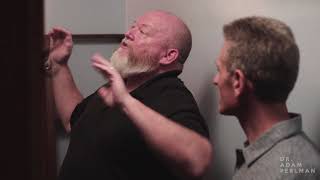
Hi, Adam. Nice to meet you. My name is Steve.
Can you tell me a little bit about what I'm getting myself into?
Yeah. Well, you're going to be floating in our float tank today. And it's a 60 minute service. 10 inches of water heated to 93.5 and 1100 pounds of Epsom salt in here. So it's going to be very relaxing, nice and peaceful for you.
Looking forward to giving this a try.
That's great. We like to tell everybody here, you know, we're about doing nothing. And so you're gonna get a chance to do 100% nothing.
And we're gonna do it for 60 minutes, right?
60 minutes. It takes an extra effort to make time for ourselves. We're really good at giving to everybody else, but it's hard to give to ourselves.
All right, I'm excited. Let's do this.
We'll get you started.
Okay. All right.
So this is your float tank.
Okay.
Okay. It's eight feet tall, eight feet long, and four feet wide. So it's roomy and spacious. There's multiple types of float tanks. This is just what we call a float room.
Okay.
When you lay down in the water, I'll tell you to float with your arms up over your head. Like, this is probably gonna be the most comfortable for you. Because of the rotation of our shoulders.
Now, I know it's only 10 inches. I don't see support from my head. Does it just sort of float like.
So there's a noodle in the door for you.
Oh, okay.
Okay. So it's twice as dense as the Dead Sea. We all carry stress in our bodies in different places. A lot of people carry it in their neck and shoulders. Some people carry it in their hips. And we've just found in talking to everybody, that most folks go into the float and they don't realize it, but they're trying to hold themselves to float and they don't need to. And that creates tension in their neck and Shoulders. So I say you have to learn how to relax and just hang in the water.
All right. There's no lock.
There's no lock on the door. Yep. And so you're 100% in control of everything that's going on with this. I like to tell everybody we don't take hostages. Okay. You're 100% in charge. This is what I say is training wheels for meditation. I've tried to meditate a hundred times, and I can't not hear the birds, or I can't not feel the breeze, or I can't not hear the clock tick. Getting into a float tank forces all those other things away, and it leaves me with just myself and that ability to try to learn how to do meditation.
All right, well, like I. Like I said, I'm looking forward to it. So I guess I'll go shower and change.
Yeah, shower, and we'll get you going.
Awesome. Thank you.
Yep.
All right, here we go. I wore a bathing suit so we could keep our G rating, but once I'm in there, I'll take the bathing suit off. Steve had told me they recommend that you don't wear clothes when you're in here. So here we go. See you in about an hour.
This is a way to try to be mindful and try to figure out. Figure things out that we all kind of take for granted, which is time and time to reflect. When you're off, be off. And you need to do a better job, because if you let all the stuff that's going on continue to build up, it just wrecks you. The more you float, the easier it is for when you're out walking around in public to go, you know, what I need today is I need a float. We know we need to get our car fixed. We know we need to get a haircut. We know we need to go to the dentist, but we don't know when we need to float. And the only way that's going to happen is to give yourself some time in the tank. So what'd you think?
Wow. I feel unbelievably relaxed physically and mentally. It's kind of surprising that when you close your eyes and then you open them again, it's just as dark. Right. I mean, it's like a different sensation the first time that happens. At one point, I tried a little bit of just sort of meditation. And what's interesting, focusing on the breathing. That's pretty much all I could hear. And so it was a lot less distracting. It was a different experience, really. As close as I ever get to my mind not really thinking about anything, which that's not usual for me. My eyes are open and you're looking, but you really can't see anything. It almost looks like it goes on forever. And I had this sort of Neil DeGrasse Tyson moment. I felt like this is almost like looking off into the ethos, where it felt like it sort of could go on forever and ever. But it was good. It was really good. I'll be back. Thank you very much.