A recorded lecture (YouTube) explaining physiological and neurological benefits of exercise: how muscles produce ATP and use oxygen, causes of fatigue and soreness, muscle microtears and repair leading to strength gains, bone loading and osteoporosis prevention, and exercise effects on the brain (increased blood flow, neurogenesis, release of BDNF, serotonin, dopamine, and endorphins). The speaker also reviews exercise recommendations (commonly 150 minutes/week), short-bout activity benefits, and the importance of strength training for maintaining activities of daily living at advanced ages, citing a 1993 NEJM study showing strength gains up to age 101.
Questions this video answers
150 minutes per week.
1993.
101.
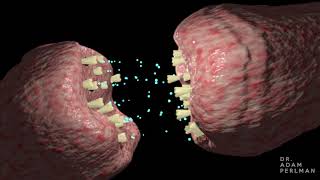
So, first of all, we just all exercised, and our bodies, our muscles, right, needed energy. They needed to use glucose, sugar. And the other thing is the main sort of energy for the body is something called ATP. You've heard of ATP. So that's made within cells, within mitochondria, which really, you can think of it almost as like there's an assembly plant within the cells that make ATP and that fuels our energy and certainly fuels the muscles. And one of the things that we need to make ATP, not surprisingly, is oxygen. Right. So what happens when we start to exercise? We start to breathe hard, our hearts start to pump, we start to bring more oxygen around the body to our muscles so that we can continue to exercise and we can continue to make more energy. Without sufficient energy, what tends to build up is sort of the byproducts of that process, which is lactic acid. Right. And so most people have heard of lactic acid. Actually, it's a little bit. And I'll talk more about this later, I'm talking a little bit about why we fatigue. But it used to be thought that that was maybe related to lactic acid. And the latest science is that it's probably not lactic acid. Lactic acid may be related, though, to why we do get sore, perhaps. And so I think there's still really figuring out exactly, you know, what the side effects of lactic acid are. We also get sort of micro tears or micro trauma to the muscle, and it's sort of the repairing and rebuilding of muscle. We kind of overcompensate, and that's how we get bigger. You know, if we're lifting a lot of weights and, you know, we get in, the muscles heal, and as they heal, they're sort of stronger than they were before, is kind of one way to think about it. Obviously, while we're exercising, then we're working, you know, multiple organs. We're working our lungs, we're working our heart, we're working our joints and our bones, and we actually put five to six times the amount of our body weight as pressure on our bones while we're exercising. And that's important, too, because exercise is one very important way to keep the bones healthy and to avoid a weakening of the bones, which can happen, particularly later in life, called osteoporosis, which can make you prone to fractures and other problems, obviously, with the bone. The other important organ that also gets increased blood flow and sort of exercised, if you will, when you exercise is the brain. And we don't maybe always think about the brain when we think about exercise, but there's an increase in blood flow. We actually make more brain cells when we're exercising. We also release various neurotransmitters. Serotonin, dopamine. These are things that some of you may have heard of. These are related to a number of processes in the body, but also related to things like depression. So antidepressants. One class are serotonin reuptake inhibitors. Those are things like Prozac and Zoloft. Those are things that help us have more serotonin for our nerves, so to speak, and help people that are suffering from depression. And this relationship is probably one of the reasons why as actually exercise, regular exercise can be protective for depression. Right? This is a whole neurochemical reason why the brain actually though kind of recognizes exercise as sort of a fight or flight response, as a little bit of stress. It doesn't know necessarily, I mean, you know, consciously, but the brain doesn't know whether you're, you know, doing one of those exercises that Brian just put us through or actually in a fight with Brian, you know, and, and so what it does is it ends up creating or releasing this protein called bdnf, which is a brain derived neurotropic factor, which is a very important protein for the brain. It's protective, it's reparative for the brain. It's also sort of a reset switch. And it's felt to be one of the reasons why you sort of feel kind of clear headed a little bit after exercise, maybe not right after, but a moment or two after, a few moments after, and you tend to feel more at ease. And probably another reason that we feel a little more at ease is that exercise also releases chemicals called endorphins. Some of you may have heard of endorphins. Those are sort of our body's natural pain controlling chemicals. So that's a really important thing. And that not only can lead to sort of decreased pain, but also a sense of really euphoria or you know, feeling good after the exercise is also probably related to this release of endorphins. Just, just wanted to say one thing about how long to exercise and I think there's a growing body of literature there. Certainly, you know, right now there's sort of these standard recommendations around 150 minutes per week, but probably less if there's more intensity. There's some interesting research looking at short bouts of exercise, even for a few minutes, but repetitively throughout the day is still being able to get some benefits. There's certainly benefits to doing things like just getting up from your desk and walking a little bit, you know, every 20 or 30 minutes or so. And, you know, again, a growing body literature on the benefits of just staying physically active. I'm a strong believer, though, that we need some formal exercise in our routines throughout the week. That when you look at some of the literature on what it takes to maintain your quality of life later in life, certainly you want to be aerobically fit and you want to be able to be flexible enough to tie your shoes, but much later in life, it's about maintaining what we call activities of daily living. And so we get into our 80s and 90s, it's about, can I get out of a chair? We've all seen people a little later in life where it's sort of they do one of those, right? And yes, it's nice to golf and it's, you know, maybe somewhat protective to walk regularly, but it's really that strength exercising that you do at this age, at any age, and even later in life that's going to help you to maintain that quality of life. And just sort of a quick digress. One of the things that got me particularly interested in this whole area was a study I read back in the 90s. I think it came out in 93 in the new England Journal of Medicine. It was a study out of Hebrew rehab. Up until that point, the early 90s, we didn't really know whether or not you could continue to build strength at any age. You know, maybe as a part of the aging process, you reached a point where the muscles just no longer were able to get stronger. And so this study, I think the oldest person in the study was 101, and they used strength machines. They also did not only assessment of the strength with, like, testing, but also did CAT scans of the muscle. And they showed that at any age, or at least up to 101, you could build strength, you could build muscle mass. There was also a nutrition group and a control group. And what was really neat is that although nutrition is very, very important, and that could be maybe the next talk with a doc, nutrition later in life wasn't enough. It was really that strength training that allowed you to maintain the quality of life later in life. So, you know, again, you don't have to exercise formally every day, but certainly having some strength stretching, some strength training, and some aerobic exercise, I like to say, at least three times a week in your routine, I think is particularly important again, for everyone. My biggest thing is you need to become the expert on you and also make sure you're exercising safely and those kind of things, too.