Aaron Ross talk at Coloft: "Create Predictable, Scalable Revenue"
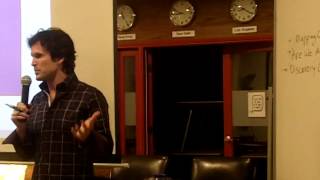
Aaron Ross, who built Salesforce's $100 million outbound sales engine, breaks down how to scale revenue predictably. He maps three lead types (Seeds, Nets, Spears) to different funnels, argues for splitting salespeople into specialized roles like prospectors and closers, and shares concrete tactics like mapping calls and short email templates. Most startups fail at sales by hiring reps too early and pretending their broken process works.
Chapters
feedback and essentially learning, we also try to do some educational sessions such as tonight. And tonight we're honored to have the man behind Salesforce's $100 million inbound sales team— outbound, sorry. Big difference. Yeah, big difference, right? Still $100 million. That's the number. And he's also a best-selling author of Predictable Revenue. So without further ado, Aaron Ross. Nice to meet everybody, and thanks to whoever's early here who said hi, and I got to chat with a bunch of good people. But I'd also like to thank Anna Young here, who's been my original cheerleader, that's what we call it. So if you're starting a company, everybody needs a cheerleader or a first follower. And Anna was mine, so thank you. It's made a huge difference in my life and business and Cobblestorm and everything else. Thank you, thank you. I'm gonna use a mic because I don't really want to raise my voice. And let's make sure I've got my slides here. So I'm gonna do just a brief introduction about myself, very brief, because I know we want to get to sales, revenue, $100 million. But as Avesta said, I'm author of a book called Predictable Revenue. It's the number one spot on— it's been pretty consistently the number one book on Amazon.com in its category. Oops. I remember, I mean I believe everybody has a message to share. And I didn't think I started, I didn't feel that calling to write a book until I was at Salesforce.com. I was probably early 30s. And then finally after 5 years of baby steps, you know, put the book out. And just been really happy to see the reception. We have all 5-star reviews. Someone said that it was the most marked-up business book he'd ever read or bought. And I've just been very happy to see how useful it's been to people. Now having said that, I like to have fun. So even in the, I don't remember in the book, I know in the book or the consulting or teaching we do, I always say you gotta bring humanity to sales. Authenticity, integrity, it's really important. Now while I'm not gonna talk about that a lot tonight, other than mentioning that. And I really do believe that as salespeople or CEOs, the more that you can bring yourself to your work, the better, right? Because it helps bring trust, rapport, and you feel like yourself. You don't have to pretend to be someone else. You don't have to pretend to be a salesperson or a CEO. You just be yourself. So a lot of people don't like guns. I didn't. I mean, I never really knew about it. I love guns. My wife got me into it. This is my Christmas present. I also like motorcycles. And actually, just for fun, this is pretty short. Let's see if I can do this. I had some clients come down for— I do also some life coaching called Unique Genius. If this comes up, I'll play it. Here we go. If you're not a gun fan, Karen Butler, one of the world's top shooters. So that was my bachelor party. I got married about a year ago, and now about a month ago had a new daughter. Pari. So obviously I like to sleep together a lot. One of my favorite, one of the favorite times of my life is just having her sleep on me or we can take a nap together. And here's, we have, it's my wife and 2 kids. We have 2 kids from my wife's prior marriage and then I say Pari is my first from scratch. And I'm very lucky. I really appreciate the work I do. I mean, obviously I get paid to help people. And I also get to spend a lot of time with my family. So, all right, to the hot coals and sales stuff. You'll see this sketch a lot in my work whether it's online. This is sort of like a logo. I don't really have any logos, but if there was one, this would be it for now. And anyone who's actually had a company or been in sales will empathize with this because what happens is you start a company. And the yellow part is the organic growth you get from getting customers through word of mouth. You ask your investors, you ask your friends, you might send out a tweet or something, twit, and you get your 5 or 10 or 20 customers. And then, okay, I got a great business. Or maybe it's 100 customers. Or it could be whatever it is. You've been growing organically. People coming to you and then you decide, all right, time to ramp up our growth. Either because you take investment, because you want to grow for some reason, there's lots of reasons why you want to. And when you start to try to, you start hiring salespeople or spending more on lead generation or doing more marketing and you realize that, you hit these hot coals that, you know, just things don't work well. You've been growing at 50% a year for let's say you grow at 20% a year organically and you want to grow at 50% to 100% a year. All right, let's just double our stuff. And you do it and you fall on your face. And you have to go through these hot holes while you're figuring out how do you go from organic growth towards being able to grow proactively, where you have some predictability or some control over how fast you grow. Because when you start a company you're sort of flying by the seat of your pants.. And if you get through the hot coals and you figure out, and it could say, kind of an equation for how you grow. If you spend $1,000 in some sort of area, you're gonna get $10,000 in revenue back. Then you can get to the upward growth, upward to the right arrow. And so that's what I help companies, have helped companies do, both with the book and we do consulting and teaching and so on. So that's, this is the scale. ABC. This is one other sketch. Oh, by the way, I used to be, I used to think of myself as an engineer and then I realized, wow, I'm actually an artist too. I started doing these sketches when I was probably about 35. Once I, the part that I didn't tell you about was this sketch, I helped Salesforce get through with part of it, an area where I started there in 2002 and I built their— created a new kind of outbound sales process and team. And we helped them add $100 million in the first few years. But more importantly, it gave them actually control over how fast they could and wanted to grow. So for example, if they wanted— if they needed to add another $10 million in revenue, they could say, "Well, we need to hire 5 people here and it'll take them 3 months to do X and and then we'll get X millions of dollars of revenue after a year. And I learned all these lessons that I'll share here in a sec. And why I went to Salesforce, because I had been a CEO of a company called LeaseExchange, and that company failed, went out of business. We raised $5 million, spent it all, and one of the many reasons that it failed was because I, CEO, didn't know anything about sales. I could sell, right, because if you're passionate about something you can sell, whether you're hiring or raising money or finding customers, but I didn't know how to build a repeatable scalable sales process organization. So, I said, "Alright, I'm gonna go to salesforce.com to get my MBA in selling." And I did. So, went to Salesforce, I was there 2002 to 2006. I left Salesforce, traveled a bit, joined a venture capital firm. I was there as an EIR, entrepreneur in residence. I was getting paid to figure out what kind of company I wanted to start. And along the way, I realized, wow, I can do anything I want to do. Okay, well, wow, I really don't want to start a tech company. Why do I want to do this? And go through 5 to 7 years of stress. I don't know what I want to do, but I know I don't want to do that. And after that I realized I did, I didn't know what I wanted to do but I knew I wanted to be able to work with great people, work on what I wanted, when I wanted, from where I wanted and to always feel good about my work. So fast forward a few years, what that led me to do was to teach. And you know, you could say consult and so on but really I call myself a teacher and author. I love doing it. I love teaching. It's really fulfilling. I get to make money at it and I have a great team of people. I have two partners. So again, the presentation I'll share is really both from lessons learned at Salesforce.com and then working a lot with lots of other companies or just having friends who've started companies and either done well with sales or fallen on their face with sales. Now one of the things that I've learned too, going back to this sketch, is You can have a great product, so this is more revenues up and time is to the right. If you have a great product, and I'm guessing most of the people here are product or technical, as I was, and you may or may not know a lot about sales. And I think a lot of product people are afraid, can be afraid of sales.. But what I would encourage you to do is just to learn about it. Because if you have a great product, yeah, you could do well. But if you have great sales and marketing with a great product, you'll do even better with a lot more peace of mind. And really when you hit out of the park with like a salesforce.com or Zappos or Google, that's when you have customers who trust you, customers where you really work for their success. So I call these the three layers. Now this is really more where we talk about tonight, sales and marketing, just a few tips. Before I get to that I'm gonna share a few common startup mistakes. Learned through a lot of loss, a lot of blood, sweat, and tears, whether my own or other people's. The first again, I haven't shared this presentation with an audience yet, because you're earlier stage I think most of the people I talk to or work with, I put in some some earlier stage tips. Alright, so one of the most common is that a mistake is hiring salespeople before the founders have figured out how to sell. Again, oftentimes you might be an engineering or product founder, scared of sales, so I'm just gonna hire a salesperson. That is a rough mistake. Another is getting stuck in the jargon echo chamber where the language you use to describe your company is understood between you and your coworkers, or you and some people in the industry, but no one else understands what the hell you're talking about. You know, our scalable next-generation social media widget platform with the Twitter comments API, blah, blah, blah. They call that the echo chamber. Another is creating a commission plan before you actually have any sense of a track record on sales or any kind of sales process. You know, and a good friend of mine, I heard him recommend, he's very successful CEO right now, and he was giving some advice to a young entrepreneur. "Yeah, you got a product? Okay, just find some salespeople and tell them you'll pay them half of what they bring in." No! Founder's gotta figure it out first. "Yeah, okay, then you hire a salesperson or two, pay them bonuses until you get a sense of what the hell you're selling and how it works, and then later put a comp plan together." together. Also unrealistic expectations. I mean, this is sort of part of being in a startup and trying to raise money, but I'm not necessarily a fan of raising money. I think it's a lot smarter to not raise money, at least until you don't need it. Unrealistic expectations with yourself, with investors, with employees, with customers, these will, are very, very painful. And alongside that is the idea of pretending everything is great. We're having a great time here in the startup. It's not stressful at all. Bullshit. And then part of the, again, part of this is there's a denial of reality that often goes along in startups. And so you have things that are working and you try to grow by doing more of what's not working. So whether you have salespeople that aren't selling, hire more. Or maybe they're, a common one in sales is, Someone's not making quota and so they make— the manager says, "Make more calls." Okay, my current calls aren't working so I should make more of them. That's rocket science. All right, so these are more for fun but they really are true. So let's talk about getting to your first million in sales. The first— there's 5 key ideas here I wanna share. The first is the idea of sell ideas, not stuff. You're passionate about what you're doing, you've built a great Facebook social widget, next generation scalable architecture, Java something or other. Wow, I got this Java— And what people hear— Actually, I need to grab that Far Side cartoon. Is anyone fans of the Far Side? It's a little before your time, but there's a cartoon where there's an owner See? Greg knows what I'm talking about. There's an owner and a dog. In the first half of the cartoon, the owner is saying, "Hi, Ginger. Great job fetching, and I'm going to stay here." He's talking to the dog. And then the second part of the cartoon, the dog is there with a speech bubble, and it just says— it's like what the dog hears— "Blah, blah, blah, blah, blah, Ginger," which is the dog's name. "Blah, blah, blah, blah, blah, Ginger." So your customers here, blah blah, blah, blah, blah, blah, blah blah blah. When you talk about your product. So you need to sell ideas, not stuff. And an idea is not a feature, it's not a benefit. So a feature is, I don't know, API integration or whatever it is. A benefit would be save time, save money. An idea is bigger than your product. An idea is something that will help them no matter what product they use. An idea, so for example, salesforce.com sold the idea of on-demand. Yeah, of course they're trying to sell Salesforce, but it's the whole, just the idea that you should use web-based services instead of installing software. That's an idea. That's bigger than Salesforce. Or the idea, I think a lot of people have sold the idea of green, or the idea of giving back, or I sell the idea of predictable revenue.. And for example, one of the topics I'll talk about is specializing. Well, actually, I'm selling the idea of sell ideas, not stuff. So you want to sell ideas, not stuff. And this, for people who don't know you, this at least is something that they can hold on to. Oh, you mean I should— how about this? If someone here was a writing coach, you wouldn't want to sell your writing services. You would want to sell the idea that people should write. Or that people should write books. Whether they use you or not, you should sell that idea. You know, there's a lot of bloggers who sell the idea that people should start their own businesses. Or what's his name, Peter Thiel. I can't remember the stuff, I mean, Peter Thiel is a famous investor. And he sells the idea that everyone should start a business or that now you don't need to go to college. You should start a business. That's an idea. So again, the point is an idea is bigger than yourself. It doesn't matter what product they use. Let's say you sold the idea that, what's, people should drive cars. If you're a car salesman, that people should drive cars. Again, it shouldn't matter whether they drive your car or someone else. And why it's good is because again, you want them, you wanna teach them something. And they don't care about your stuff, but if you can teach them something, an idea that's helpful to them and they buy into, then they're gonna trust you, they're gonna be more interested in your stuff. The second idea is first sell it yourself. Alright, so as a founder, for any of the founders in here, for anyone who's or wants to be, you know, it's very tempting to think you build a product and then you hire someone else to sell it. But the founders need to sell it first themselves, because you're not gonna be able to hire a salesperson who's gonna be good at all or tell them what to do unless you've actually done it yourself first. At least 1 sale, 5 sales, 10 sales, something. So you figure it out first. Now obviously you could have a technical founder, a business founder, but by selling it yourself first, even if you have to wait on raising money, it takes longer, you will have the experience and knowledge to make much more effective decisions around hiring, around selling, teaching, everything, marketing. You know, by interacting with customers you're gonna have a much clearer sense of what does it really take, what kind of product do you need to build, and what kind of tools do you need to create to make your salespeople successful. I know it can be very nerve-wracking for a lot of founders to sell, especially again if you're product or engineer. It's really important. It's so common, actually one of the most common fatal mistakes in startups is, especially if you raise money, like is any— has anyone here raised money or has a company that's raised money? Okay. How many, if you were there in the early days, or actually how many people actually started the company and that raised money. Let me see. Okay. How many of you, it's probably about 15, in the early days after you raised money, maybe before, hired a big name VP of sales who then flamed out? Anybody? There's a few hands, right? Very common. It's actually, there's something called the sales learning curve which has studied the phenomenon. You know, it's very common because again if you don't understand how to sell it yourself, you don't know how to hire the right people. Okay, the third idea is people like to buy from people. I know it's very common, again, especially for product technical entrepreneurs, and you see Google wants to automate everything and there's all this marketing automation, sales automation. How much— can I just automate it and I'll just collect money? It's a very tempting thought, or I want to automate lead generation and just— I want to automate lead collection. I want to automate this. Like, people like to buy from people. You have to have, at least at the beginning, involve people in your process, yourself first, and then hire salespeople if you need to. You have to figure it out how it works before you can automate it. And I think too, a common mistake is waiting, is not wanting to hire salespeople or not understanding the value of salespeople. By hiring a salesperson. If again, if you're a technical founder that tends to wanna do everything with engineering and salespeople make you nervous, salespeople can be incredibly valuable to your company. It's people who are talking with your leads, talking with your customers. Who's gonna know more about what makes your product successful? That is incredibly valuable. Salespeople are, well, good ones, so valuable. Involve people in the process first. Even if you want to automate something, let's say you want to automate how your leads are managed. Well, have someone there, the person handling them first, figuring out what works, what doesn't, and then figure out how you can improve that and automate it. And again, as people are more busier and overwhelmed by all the technology out there and options, one thing that cuts through the clutter are people. People. So if you have a great salesperson, they will make a huge difference in not only helping you convert more sort of leads and opportunities, but giving your customers a great experience. So I think a lot of salespeople tend to have a bad rep from the past, unfortunately. I mean, especially in technology, it's good and bad. But they're some of the most valuable people in the company. Now the fourth is lead generation drives sales. If you don't have a predictable flow of leads, you're not gonna be able to generate predictable revenue. That should make sense. You know, the conventional wisdom with sales is that, you know, to grow revenue you hire salespeople or you spend on advertising. You know, there's different— but these days is truer than ever. It's, if you have predictable lead generation, you can generate predictable sales. So if you have a startup and you're trying to figure out your sales process, don't forget that even more important is your lead generation process. So I'm gonna talk a bit about leads here. Hold on. Okay. So before I get to the fifth point about specialization, Here's the simplest way I've ever found to describe some different types of leads. It's called seeds, nets, and spears. And what I found, this is back in 2007 or so, I had some friends, I was doing some consulting, advising, had some friends and so on. And VPs of marketing, CEOs, and VPs of sales would struggle with presenting, it was basically agreeing on lead projections and presenting them to the their boards. Because what would happen is— oops, sorry. You know, when you start off as a company, you ask your— you have relationships, you ask your friends and so on, and you're getting leads, these— they call them seeds, right, from word of mouth, public relations, or past relationships. The seeds you planted maybe 10 years ago, right, you went to someone, you went to college with a guy 20 years ago, planted that seed. Now they're relevant some way to your business. This is how you start your— most businesses start through word of mouth in some way. So that type of lead— let's say you're in business for a year and you've done $1 million. You had 1,000 leads and you did $1 million. It's very common for you or your investors to say, all right, let's double our growth. We wanna do $2 million next year, so let's do— we need 2,000 leads. Wrong, because these leads are very different than nets and spears, which are the ones that you're going to start to spend more money on to grow. So nets are marketing programs, you're casting a wide net, just can see what you get back. It could be internet marketing, it could be webinars, there's all kinds. It tends to be more quantity over quality. And then spears are when you have salespeople who are a person who are actually calling on a targeted list of some kind. It could be business development, it could be sales, outbound sales, targeted sales. So spears, seed nets, and spears. All three types are really important. You may, depending on where you are in your company's lifecycle, you may focus on one or a different one at different times. Seeds are the best way to start a company. Spears is the best way to grow it in the short term. And nets are, it's like the long-term sustainable, you know, lead generation that you need to do nurturing, thought leadership and so on. I think it's hard to do good lead generation with nets in terms of generating leads that actually buy, but it's really good for nurturing and educating. So again, spears is the best way to sort of drive short-term growth. So going back to the boardroom, the point is all three types have different funnels. So you're gonna have the highest, high close rates, fast close sales cycles here with SEEDs because they're based on relationships, they trust you already, word of mouth. You know, you don't need to be very clear about how you describe what you do. You don't need to be very concise. You don't need to have a very well-designed product. They're gonna be more likely to beta test with you. But then once you get past and you need to grow to that and start to target those customers that don't know you, your messaging has to be clearer. Sales cycles are longer because they don't know you yet. This thing needs to be here. And so you're gonna have lower conversion rates. From the people you talk to to people who buy, it's going to take longer. And so you have— this is why you have to think about your lead generation projections and processes differently for each type of lead, right? Now, go back, the fifth point here is you need to specialize your salespeople. People. And conventional wisdom is you hire a salesperson and they do all their own prospecting. So you hire a salesperson and they start out by basically— they might get a few leads coming to the website but they really have to generate their own business. Now, this is something that I don't know, let's say 90% of— maybe 95% of sales or salespeople believe because it's what used to work was to That was the way things worked. And I'm selling an idea that you need to specialize and you need to have different sales reps do different things. So instead of your sales per one salesperson closing business and doing their own prospecting, you have different sales roles where you have some sales reps or say one sales rep doing prospecting and passing leads, opportunities to someone who's gonna close. You have different roles, like an inbound person who's, all they do is just respond to leads coming in through the website. And you specialize your salespeople. And you could have a lot more different types. By the way, this is all, this is in the book and it goes into a lot more detail in the book and I'm sure I've done stuff on blog posts and so on. So the, these sketches and like this and this you can get from the book or online from places. You don't need to like write it down if you don't want to. So, again, I'm selling the idea of specialization and that even if you have one person you can start to specialize because you can specialize their time, like by day or by afternoon. You know, I think a lot of early stage companies say, "Well, we don't have enough, we're too small to specialize. You know, we only have 5 salespeople." All you need is 2. So very commonly, and after the CEO— after founders learn how to sell something, you hire either someone to help prospect to generate leads for the founder, or you might hire a closer to help close deals. But those next first— the next two hires are gonna be these two roles typically. Someone to close and someone to prospect. So if you have a team of two salespeople, let's say 3, one is a founder and 2 other salespeople, one's a closer, one's a prospector. Or if you have a company that just has a ton of inbound leads, your first 2 hired salespeople might be someone to respond to all the inbound leads and a closer. You don't need 10 or 50 salespeople to start to specialize. Don't wait. It takes time to figure out what each role should do and how to do it. You know, how— what's the process to get an inbound lead in and passed over? You know, how do you prospect? How do these guys close? All that stuff takes time. So start sooner rather than later to figure it out. You need to beta test it. I guess that would be another tip if I expanded the tips on what to do is you have to beta test all your sales processes just as you beta test your product. So I'm going to move over to the whiteboard. And, uh, yeah, because I want to open up to questions here too. Actually, Michelle. Thanks. Are you suggesting that these 3, uh, 4 different steps are 3 different people or 2 different people, at least in the minimum? Yeah, so partly because again, this This topic usually ends up taking, being like a very discussed part of presentation. So this is the point. Okay, so you're saying, your question is, am I saying that all these should be different people? Is it 2 people or 3? What's the minimum number of people you're saying? I mean, assuming, you know, like if you're a small startup and you're just getting going, you know, obviously like, I mean, I guess I could just use us as an example since I'm talking about myself. I guess I'm asking a question about myself. I'm more of a business co-founder, so I'm doing most of the sales myself, and we're considering bringing on another salesperson just because there's so many things to do as a founder. We don't get enough sales in. Okay. So what are the— like, how many people is this? Okay, so you're basically the only salesperson right now? Myself and my co-founder, we're both— okay, and you're both closing? Yes. Okay, so right now you've got This is the— let's call it the closer role. And are you guys— how are you getting your leads? Prospecting or you have stuff from the site? We're prospecting, you know, conferences, cold calls, whatever. So I like real examples versus hypothetical. All right, so you You're doing, it says out, outbound prospecting. So the next person you hire, and by the way, are you overwhelmed with deals to close? We're overwhelmed with people to follow up with for sure. So your next hire should be someone who just does outbound prospecting to take that off the shoulders of you and your co-founder, and you and your co-founder should just close. And maybe 10 or 20% of your time could be prospecting to like a small number of key accounts, but you want to totally separate those responsibilities. Okay, so let's say that, and then 6 months you start getting a lot of inbound leads, then you might hire someone to just do, to respond to those inbound leads. By the way, for this role is outbound prospecting or inbound lead qualification, Oftentimes by the titles, the title of this role is often called sales development rep. The title of this role is often market response rep. They do not, again, they don't close business. They're just either, this guy is prospecting, warming them up, hey, making sure there's a good fit, maybe scheduling an appointment for the closer, maybe attending a first discovery call. With the closer, but they're not closing, they're just passing it to the closer. So typically, for example, with outbound, again, this is, I would say, you know, two of our, mine and our specialties with the predictable revenue business is doing outbound, creating this outbound process, teaching it, and also sales management. So I also spend some time and answer questions about how you outbound.. But for example, this, there's 3 types of calls this outbound rep will do typically. You know, mapping calls, never do cold calls, right? This is a waste of time. And so there's something called mapping call you could do where you, you're basically like a Columbo. Does anyone, who knows Columbo? Not everybody 'cause there's probably some younger people here. I just turned 40 in December. So I have to start asking questions. Do you remember, who remembers, you know, what was Reading Rainbow? Or Richie Rich? You know, Saturday morning cartoons, Dungeons and Dragons, Richie Rich. Yeah. So there's a mapping call. So Columbo, the best way to call into a company, and by the way, if anybody wants, I just created a training, I'll have my assistants email an email here at the end if you want this training on mapping calls, I'll just send it to you. But forget cold calls, the best way to call into a company to find out the right people and so on is to be basically like Columbo, you're investigating, it's like an investigation call. And I call it mapping call because you're mapping out who is where. And for those of you who don't know Columbo, he's a TV show, I don't know, '70s maybe, and he was Peter Falk, The guy, the actor, he's famous for— he was a detective that was very— he played the dumb card. I don't understand. But he was very persistent. You want to be pleasantly persistent. You know, I say, I got one more question. I don't understand. I got one more question. And you keep asking questions. At some point, he catches the crook. And the crook would be surprised. That Columbo was so dumb, right? So you don't wanna be dumb. If you're calling into a company, you don't wanna be dumb, but you wanna be non-threatening, pleasantly persistent, not pushy. You wanna be a lost lamb, not a bulldog. People like to help people. Actually, it's all right, this is a mapping call. There's 3 types of calls that are sort of key calls. Mapping call, an are we a fit call, and then a discovery call. These are the 3 key ones that outbound reps would do. So mapping call, you know, I'll just tell you how to do it basically because we're all friends here. Call into a company, call the 800 line, and this will work with pretty much any company. You can have a 90-something percent success rate with this kind of call versus if you're doing cold calls, it's probably 90 to 95% failure rate. Does anybody make a lot of cold calls? All right, I don't know. If you had to guess at a failure rate? Yeah, it's pretty bad. All right, pretty bad. And it's a pain in the ass. It's very demoralizing. You gotta like put on your game face, all right? "Give me that phone! Arrr!" You know, it's just not sustainable. That's why people burn out. With mapping calls, it's a very friendly, authentic, simple approach. And so it's a lot more— you can actually have fun. You know, I like discovering stuff. And so it's more sustainable. You can make a lot. They're very effective. So you call an 800 number, ask for the president's office. Because you wanna get the assistant to the CEO or the assistant to a top executive. You don't wanna get past the gatekeeper. You want the gatekeeper, right, because their job is to help people like you figure out where to go. Their job, well, plus they know a ton of information about the company. And part of their job is to defend their executive, but only from people who, only from jackasses, right? Right, who are trying to sell them stuff. That's not you. You're not trying to sell anything here. Your job is to investigate, not sell. You have no agenda except to find out information. And so it's a lot friendlier and easier. So you call in a number, you ask for the Office of the President, and then you basically have a short conversation with that executive assistant. Say, well, hey, I'm just trying to do some— This is the best question ever to use on the phone. Sometimes I forget that this is— if you take one thing from tonight, take this question. For anyone you ever call who's not expecting your call, it's really simple. Just call them, they answer, you say, "Hey, oh, did I catch you at a bad time?" Or it might be, "I'm Aaron Ross with Predictable Revenue, but I'm sorry, did I catch you at a bad time?" It works like a charm. I put a whole page in the book about it just because it's so important, this one question. And what happens is when you ask that question of someone who doesn't expect your call and doesn't know you, it really diffuses the tension because they're thinking, "Who is this and what do they want?" before they even answer the phone. It's like permission to talk. And so by asking that, they're like, "Okay, yeah, that's not a good time, but what do you need?" So it diffuses that pressure and tension. They're more open to even having a conversation. That's always the first step. Any of these calls, and if it's scheduled, you still ask, "Is this still a good time?" But pretty much every call you ask, "Did I catch you at a bad time?" Did I catch you at a bad time? And they'll say no or or, "Yeah, it's a bad time, but what do you want?" And then you ask, "Well, I'm just doing some research on your company to see if there's a fit or not because we have a reason, like we have a lot of clients like you or I saw you in the news." There's some reason you're calling. "You know, could you help me out for a bit, for a minute?" People like to help people. If you ask for help, you'll probably get it. If you try to play some trick, like, you know, Bob Jones please, they're just gonna put up their walls and defend against you. Just ask them for help. And then, and you're not, don't tell them what you do. Don't blurt it out. Don't say, again, I'm with a social media widget company and, you know, I'm looking to find someone to sell to. And honestly, that's how it sounds when you do record a call and you listen to it, that's really how it sounds, how people do it. So again, you just Very, very friendly, very honest. Tell them why you're calling. Just trying to find out if there's a fit. Not sure who to talk to. I could use some help. Can you please help me? I'm a lost lamb. I'm not a bulldog. I'm not trying to sell you something. So they'll, when you ask for help and you're saying, I'm not sure who to talk to, they'll ask, okay, well, what do you do? 'Cause you haven't told them. And then you have permission to tell them what you do. You haven't pushed it on them. And this goes back, remember the jargon echo chamber? People get caught up in social media widgets. When you do these calls, it's a great way to force yourself to figure out in simple English how to explain what you do to people. Even better is don't tell people what you do, tell them how you can help them. So Salesforce.com, instead of saying we're a CRM, Salesforce automation, gobbledygook, we really said, well, it's a system that helps you manage your sales contacts and accounts. Really simple. You don't need to tell them what you do in a lot of— they don't want a lot of detail. They're just trying to figure out where you should go. So keep it simple. Again, you do these kinds of calls, do a few, it will will really force you to get simpler, clearer, and more human about how you talk, how you tell people how you help them. So I love mapping calls and there's some other steps to close it out. It's a short call but it's like 9 steps. And again, it's a very friendly, simple, authentic human way to do it and very predictable. 90% of the time you have these calls you're gonna get some useful information because what you're leading to is just figuring out are we a fit or not? I'm not trying to Why would I try to sell you something if I don't even know if you are a fit? And yet people do. So the idea here is with the— when you have someone who's specialized and they're dedicated, it makes it a lot easier for them to take their time and be an expert in doing outbound or doing inbound or closing. Because these days there's a lot of nuances to getting this really, really right, really tight. Especially with outbound where you're talking to people who don't know you and so there's very little leeway for them, for you to, it's not making a mistake, but there's just, there's not much leeway for you to be off your game, right, to be pushy, to be needy, which most of you are, let's be honest, if you're selling something that most salespeople or founders are needy. I was. Sometimes I still am, I suppose. Alright, so it's really about how do you feel comfortable and friendly and honest. And again, I'm sure there's some study that's talked about what you communicate and how much is tone versus words. But most of what will make this a successful call and these others, especially the mapping call when you're first talking to somebody, your tone will be, is more important than what you say. Because again, I've listened to calls and you listen to calls, you can hear someone that has more of an aggressive tone. They're trying to, they're a salesperson. And what happens is the executive assistant shuts them down. The walls go up. You're trying to attack me, I'm putting up my defenses. But if you're nice, if you're friendly, honest, simple, ask for help, you know, again in a very friendly tone, I don't have an agenda, I'm just just trying to help you guys out too. You will get help most of the time, guarantee it. So we sort of started out with Michelle's question on who to hire and what, but the point is each of these different roles as you hire people, again this is account management or customer success, so this is on, it's called ongoing success. As soon as you have, you know, say 4 people, and you might have transitional stages where if you have, if you only have 2 people, yeah, of course you're gonna juggle some of this. But as soon as you have 4, ideally you might have 1 person doing outbound, 1 inbound, 1 closing deals, and then passing them off to someone who helps make your customers happy. And you have to specialize because unless you do, You're gonna have people who are multitasking and juggling and things are gonna fall through the cracks and you're not gonna be an expert at what you do. Your customers won't be as happy if they're— the person who's supporting them is also closing them. They're not gonna be as happy if the person who's responding to their inbound lead is also closing because they're not gonna get good service. Okay, let me actually do another question here. Yeah, so my question is, context for the question, whatever you've been saying really applies to us. So I'm a founder, did the first 10 sales, we raised capital 3 months ago, hired the first 3 salespeople, especially they're in the room right now, um, and going through exactly the same process. We're a social media widget company, anything. So, and we're going through the hot cold, so perfectly applied. If it was anything closer. So right now we're trying to figure out, is that the flow of roles you're talking about? Yeah. One of the questions I have is, how do you judge success? Because if one of these pieces is not working right in the puzzle, the closer— if let's say the outbound person is not doing the job right, the closer can't, you know, doesn't get enough leads. So if it's a flow process, it might affect the person down the line as opposed to everyone trying to, you know, do one job. And let's How do you know when to see what works? I mean, that's sort of the— All right, so the question is if you're starting, are you trying to specialize yet? Are you trying to have different, you have 3 salespeople, they're all doing everything? We're all doing everything, we're trying to go through this process. Okay, so if you, so the question is if you have, in this case, 3 salespeople and they're doing all this, but you wanna specialize, how do you, how can you tell when it's working or not, right? You know, honestly, there's different benchmarks. I think if you're good at process, you should tell, you should be able to tell that something's working, at least at a minimum level. Forget benchmarks and what other people do. You should be able to tell, okay, just look at it by talking, sitting down with your guys once you start to specialize. Is this person passing over appointments that are worth this person's time? You ask him. What's, is this person And he'll tell you or she'll tell you yes or no. Is this person passing over stuff that's worth their time, yes or no? You know, can you get any kind of visibility into how the process is working? You know, again, I could— here's a couple benchmarks which might help. An outbound— if you're in business-to-business, which is really what we're talking about here, If you have someone who's dedicated to outbound prospecting, they should be generating say 8 to 15 highly qualified opportunities per month. And by highly qualified I mean you have, you need to have a certain set of criteria to define what's qualified. And that criteria will be different for outbound than inbound. Different reasons. But that criteria, the criteria scenario, 3 main parts would be, for example, you're talking here with someone with— there's some sorts of power influence, right? They're— they've got— it's a VP or someone who has some power to do something. They have a need for what you have and they actually have a real interest. They may not have budget or timing, which doesn't matter as much because if you're talking to someone who's high enough, they can make it happen. You wanna sell as high as you can. Another common mistake mistake is selling too low. Actually, I'm gonna write that down because if I ever— I might update the sales book with a chapter for startups. So, by benchmarks, that's one. So generate 8 to 15 highly qualified opportunities. And actually you know that they're qualified later when you see that at least 20% of that pipeline should close. So if these guys pass for $1 million in qualified pipeline, you should generate $200,000 of revenue from that. That's like a benchmark for quality. And I'm sorry if some of you aren't salespeople and don't get some of the terms, but I say read the book too, it'll help. I do go through— the book really is written for non-salespeople. I was not a salesperson, and it's really simple, goes through this in more detail. And helps bring, you know, I don't like things that are too complicated, I just don't. People make sales way too complicated with like, so simplicity. In the inbound role, if you have someone who's responding to inbound leads, you know, back at this, there's so much variation but one sense is probably, let's see, a third of the leads qualified should, I'm sorry, a about a third of, a third of, sorry, of the stuff that's passed over, about a third of that should close. So if you're closing more than that, your pricing's probably too low. If you're closing less, your guy isn't doing a great job over here. Those are a couple benchmarks. You can ask me later for some more specifics. But I think, you know, honestly you should just be able to sense that something's working or not if you start to do it. Any other questions on specialization so far? If you were doing some type of, like, commission or bonus reward system, how would you portion out the reward to the closer versus the outbound? Like, in and out people on salary and then the close? Like, who— how would you split that up? Sure. Who's doing the most valuable work? Okay. Let's talk about commission for a bit, which is important. And I wanna say again that if you— you shouldn't worry too much about commission plans until you have some sort of track record that you know what you can sell. Use discretionary bonuses first. And by the way, the first salesperson or people you hire should be more like founder salespeople, entrepreneurial salespeople to help you figure it out. And if you— again, your first 3 people, let's say you raise some money, you have a product and everyone's excited to go sell, and you hire 3 people from Salesforce.com or Oracle, big company, big brand, a lot of support, those salespeople probably will not do well in a startup environment, right? So hire entrepreneurial salespeople as your first to help you figure it out. And going back to your question with commission, I'll just lay out a simple one. It's easier here because it's very well defined. Time, the outbound— somebody who's doing outbound should get half of their variable commission should be based on the number of qualified opportunities per month, the other half should be a percentage of stuff closed. Those things, the percentages totally depend on your deal sizes and lots of other stuff, so that's a longer conversation. But I would treat them separately. Don't— especially in early days, I wouldn't treat them as Okay, we can only pay 10% of commission total and we need to divvy it up. I would just try to figure out what's right for this person and what's right for this person, for them, and leave the high-level stuff. Don't try to figure out percentage of revenue and don't do board-level stuff, forget it. You need to make it work on the ground first with one person, right? One salesperson does their comp plan work for them, one outbound person So it comfortably works for them before you try to generalize it for like a board-level presentation, right? In terms of like, well, we predict our percentage of revenue— sorry, you know, uh, the percentage of revenue allocated for commission plans is X. I'm not getting too off the track into board-level stuff, but just honestly, even more important is involve these guys in the conversation. Help them design the plan. Again, I believe, I always had success at Salesforce where I helped my salespeople help me design the plan. I didn't design it and give it to them, you know, I asked them for feedback, I helped, they helped me do it, they reviewed it, it was a collaborative process. Totally transparent, fair, no one-offs. If you have, anyone has one-off sales agreements with salespeople, get rid of as fast as you can. Don't pay different salespeople different stuff. Pay different comp plans by role but not per person. If you have 5 closers, they should have the same comp plan unless they live in different parts of the country potentially, field sales. Sorry. All right. Yes. You mentioned a little bit about this but every one of these roles is gonna have a specific personality type. And when you're hiring, I think that's been one of my biggest challenges is to make sure that I'm hiring the right personality types for the role. What do you think is the personality type for each one of these? Okay, so the question was each role should have a different personality type, how do you hire appropriately for the role? You know, I really believe that You want to help people be as honest as they can about what they want to do. That's it. A lot of people want to get a job because it's a job, because it's at a hot company, because a lot of reasons that are extrinsic, which is they're going to get something out of it, like on their resume or money. Either the intrinsic, which is they might actually enjoy it. So as much as you can, try to investigate what what do they actually want to do with their lives too? What do they want to do? Where do they want to go? And find out what kind of career path do they want to follow with companies. You know, one of the great things about specializing is that you can easily, it creates a natural farm team system where you can hire someone in an inbound role, they do well, they get promoted to outbound, they do well, they get promoted to closing or some other place. So the nice thing is too, even if you do hire someone and they're not a great fit, fit for one role, they might be a better fit for a different one. I think you just gotta be honest about— the best thing is to hire them is for you and them being honest about if they're a good fit or not and not trying to fit a square peg in a round hole. I think that's probably the most common problem where you like someone a lot, like, "Wow, they could do great in outbound. I really think they could." And they want to too, but you ignore the red flags around, they wanna, they like taking care of their garden, I mean farmers, this is the metaphor. So, and then after you have, you know, I always liked hiring smart people who may or not have a lot of sales experience. Sales is not hard to learn by the way, it's really not, it's a lot harder, like I'd rather hire someone with market experience who wants to learn sales than someone who has sales experience but no market experience. And they have a natural aptitude and they have a path, they really wanna learn to do well in sales, right? It's not a stepping stone to something different. It's not a stepping stone to business development or something, right? They really wanna learn sales. You really want people who want to learn this stuff because it's not hard but there's a lot of stuff to learn to become expert at it. You know, it takes, especially whether it's outbound or in— inbound's the easiest, outbound and closing can take, you know, it takes a lot of there's a lot of expertise to do it well. I mean, it's great life skills too. So you just learn as you go. Can you talk about outbound prospecting by email? I'm glad you asked because actually that's— I mentioned that that is the core of— we call it cold calling 2.0, which is the process described in the book, but it really begins with the Spamming. Well, not in the commercial email. Yeah, sending email to people who haven't opted in, but with commercial email it's just called unsolicited. That's right. Yeah. So if I was gonna do a presentation just on outbound prospecting, you know what I'd say? The first thing to do is you have to have someone dedicated to it. It's just not gonna work that well if you have someone who's dedicated full-time to outbound prospecting. If you do it part-time, you'll get part-time results, but you need somebody who's dedicated, right, this role. The second thing I'd say is you want to follow a referral approach rather than a cold calling approach. Now the referral approach, as I mentioned, it can work with mapping calls. The idea is you're learning and then along the way you're talking to, again, an executive assistant and you ask them, well, who should I talk to? And they refer you to the VP of Marketing, and because you have an internal referral, that VP of marketing or VP of sales or director of whatever is gonna be much, much more likely to respond to you than if you cold call them. So you want internal referrals. It's very easy to get internal referrals with email as long as you keep it really, really short and sweet, right? No selling. You know, literally an email template might say, Hey, quick question. I hate to bother you or I hate to trouble you, but tell me who runs your sales and can you, and how to get in touch with them. And that's it. Literally that short and sweet. And you have to experiment, you know, I have a, not the same template doesn't work for everybody, but really it's about being short and sweet, something they can read on a BlackBerry. Just ask them for a referral, not selling, So not saying, "We've got a leading next-generation internet marketing platform that can generate a 300% ROI on your PPC investments." They don't know, they don't care. Because if you're emailing, let's say you do have an internet marketing gobbledygook and you wanna get to the VP of Marketing, you actually don't wanna reach out to them say first, you'd rather get a referral from the CEO to the VP of Marketing. Aren't they gonna be much more likely to respond. The CEO doesn't care about your jargon. He just, it's like, he wakes up in the morning, he checks his BlackBerry or iPhone, and he's like, just goes to his inbox, he just wants to refer, you know, he like delete it or pass it on, delete, pass it on. He doesn't wanna like think about it. Alright, so keep it simple, short and sweet, no selling, ask for referral, you will get referrals. The trick is, 'cause you know, I've had clients who from day one get a 10%, 20% response rate. You know, long-term average, you should get a 7 to 9% response rate if you do it well. So some clients start out, they get a 10% response rate right away, some get a 1% response rate. Usually the trick is if you're using jargon, if you're speaking in your terms, using your language, they're not gonna understand how to refer you. So we have a client right now, they do project management software and their email template says something like, "Hey, I hate to trouble you, but we— who runs your project management?" Something. And they sell to architects, right? But if I'm an archi— I'm not an expert architect, but if I'm an architect, I don't have someone who runs project management. I don't know, I have someone who runs client engagements or, is anyone an architect in here? I don't know, but I'm guessing the language they think in is not project management. So again, you have to adapt how you think and speak in their language before you're gonna get any kind of responses. But email, if I was gonna draw a funnel, which I will over here. Because it's— I don't think I have one online. It's easy to get. You know, an ideal prospecting funnel is— start at the top here— is all these round numbers. Say it's, you know, say Let's say you send 1,000 emails a month, all right, and you should get— I'm just gonna use round numbers— 10% response rate, so 100 responses. And then you have, you know, 5 conversations a day on CallConnects. So just conversation just means you talk to someone and you learn something useful. I never track dials, I mean, who cares about dials? 5 conversations a day and that leads to, you know, say like 15 to 20 discovery calls and that leads to, let's call it 12 qualified opportunities. And if that, and if your average opportunity is $50,000 and you're generating $600K per month in pipeline and if 20, in outbound, 20% of that closes, so per month you're generating about $120,000 in revenue, which is $1.4 million per year. So the point is, you know, again, if you don't understand what all these terms mean, the point is you can build an equation with outbound, with, you know, lots of kinds of lead generation, but in this case say outbound prospecting, and this equation goes, you know, creates your pipeline and then if you understand what your close rates are and average order size and so on, you can start to predict your revenue. The numbers actually, this is probably not too different than what Salesforce.com's, what our, you know, we did Salesforce where we might hire one person, so an outbound rep might cost let's say fully loaded $120,000 a year., but they end up generating, you know, more than $1 million a year in annual contract value. And that's like an annual, that was recurring, right? So one person each year might generate millions in total, you know, value. Sorry, question? So you had 5 conversations out of 100 responses? So actually, that's per day. Yeah, sorry, if I did this per month, actually this would be easier. Be 100 per month. Okay, just to keep it all consistent. I just wonder how you get 15 to 20 opportunities out of the 5. Yeah, that'd be a trick. You know, I always use the 5 conversations a day because just keeps it more like a daily drumbeat. But yeah, it's about 100 a month. Um, you know, again, the numbers might vary, but these are just rules of thumb. And that could be with only safety companies. It doesn't have to be 800 companies, it could be even far less. Yeah, yeah, especially if you talk to— because if you're targeting bigger companies, you're going to have to talk to a bunch of people at one company to scavenger hunt your way to who the right person is and what's going on. But the point is, no matter— even if you don't understand each step, is that you can create a funnel. And if you have the idea of predictable lead generation and a sales process that's somewhat consistent, you can start to great predictable revenue. Sales, even I think the idea of predictable revenue was new to people because everyone's so used to the scramble every month or quarter. When I was building my team I didn't want to scramble. It's like, well, I want some peace of mind. I'd rather have less, if I had to choose, less growth, more peace of mind. Which ironically though this led to more growth having some predictability with what we did. Back to the short emails. I've had two responses from those short emails and one of them is, "Hey, sorry to trouble you. Can you help me?" You know, the person who deals with this. And then they send back one line and said, "Well, who are you?" So then you write back and the response is, "Well, I'm this sales guy and here's my product." Social media or Facebook widget. Yeah, then they get back to you. So there's that one. Who are you? Then there's the response where they sort of email slap you and now you have this email. So you're like, okay, well it's this person. So now do you respond to that person and say, hey, the CEO just kind of slapped your email on me, or is that a referral, or are you still cold emailing that person? I've never had anyone forward like you're saying. Tell me again what the slap was. The, you know, like when it's just like the response is like an email address. Address? Like, hey, can you use your digital advertising? And you get a BlackBerry email back that has an email address. So that's a referral. Is that— so you say, hey, the CEO gave me your email address. Yeah, if that's the only two types of responses you've gotten, your email templates— it's actually not bad, it's better than luck, but there's something that's not as tight as could be in email templates. So with the— you will get three kinds of responses: negative, neutral, positive. So negative is, No, hey, we're not a fit, go away, whatever. Neutral is, who are you? In that case, yeah, you just respond. Again, remember the mapping call I talked about? Hey, just trying to be straight, non-jargony, just trying to see if we're a fit. You might include a little information that's like a credibility thing, like we have 1,000 customers or we were in the book or something. It's just enough to show you're not a, like there's There's something there, short though. And the positive responses, you should actually, you know, we get all the time actual referrals, you know, CEO refers you to VP Marketing, CCs them, like they're CC'd on it, here's some comments or something like that. And that is a really warm referral and you follow up with that person that they referred you to. And a lot of what you tell tell them whether you just get an email back or whether there's a receipt was, "Hey," you know, whatever the CEO's name is, you know, "John Thomas, John Thomas referred me to you as the best person to talk to about X." You know, "Feel free to talk Thursday at 9 AM." By the way, if you include a very specific suggestion on when to talk, Thursday at 9 AM, you're gonna get a much higher response rate because it makes it easier for them to respond, I think. If they don't know you, the more they have to think, the less likely they're gonna have— they're gonna respond. So if you say Thursday at 9 AM, it's like yes or no, easy. And chances are if they say no, they're gonna say, "No, but I'm free at 1." Right, there's a lot of— this thing is when people don't know you, there's lots of little nuances. You wanna get the details right because there's no trust there yet. And so it's the little things that can can make a big difference like, you know, a couple of words in your email template or, you know, follow-up template. The point is you can get, you know, high response rates, just keep experimenting. Really it's about experimentation. And you just said follow-up, so how long do you wait before you double pop somebody if they don't get back to you? You know, a couple of days, email them, give them a couple of days I think people are busy, you might call them if you have a number. And again, if you have a referral, you have a lot more license to approach them than if it's a cold call. And again, did I catch it, if you call them, did I catch it at a bad time? Yeah, but what do you want, how can I help you? You got 30 seconds, something. So that was part of the mapping call. Do you wanna elaborate on the other two? So I think we got time. Let me see what the other questions are. We have technically— sorry, I keep bumping this. Let me bring this up a little bit. We have till 9:00. Let me see, before I do those, let me see what kind of— let me ask you, you had your hand up first. What was the question you had? I just wanted to talk a little bit about inbound, right? So everyone thinks probably in this room that their product is very relevant, right? But the big challenge is credibility and getting people to sort of— you're in a nascent market. You send out an email. People don't really get it. Maybe they don't understand what it can do for their business. How can you be really concise, get them to read that email to really make sure that net effect is getting the most out of it versus just a lot of people getting emails that they don't really get. They're not understanding the business value. They sort of move on. It's almost like you want to prove your relevancy, but you also want to be very concise, right? Is there any sort of tricks to that? All right, so the question is if you're sending email to try to get people to respond to the email, how do you do it in a way which they're interested in it and they don't delete it? What's your name and company? Let's use a real example. Hi, it's Steven Smith and it's a social widget company. OK, Steven Smith. I'm not selling that. So if I mention a party, what do you do? Oh, so we make your social, your e-commerce site more social. We make your e-commerce site more social, OK? That's my line too, do a party. Yeah, OK. So to someone, to me it's like, I know something about social e-commerce. The problem is like what you were saying, what you were saying earlier is you want to sell an idea, right? Lots of that, what, you know. [Speaker:CHRIS] Well, let's break it, so making, this would be a great example for everybody, 'cause I did want to do some examples around selling ideas and that stuff. Making your e-commerce site more social is a benefit, is really a feature, right? There's features, which is we have, you know, and then there's benefits, and then there's Ideas, or whichever. Features, benefits, ideas. OK, so we make your e-commerce site more social. What's so great about that? Increased brand awareness, increased traffic, pure referral orders, things like that. Increased brand awareness and traffic. OK. They hear from everybody, we can help you increase your revenue and decrease your costs. So what is it different? What's so great about the traffic that you would bring them? Or how it would work? Well, because when you use sort of the social aspect of it, you're using friends, referrals, right? So the conversion rate is much higher, so you tend to convert better. And also, obviously, based on that same recommendation, they're more apt to traffic the website at the very least. OK. So there's an idea in here— there's really ideas around why should they care about social? Social, for some people they buy in. I think most people are still skeptical or too busy. So why should they care about— why should social be a priority? Regardless of your product, why should they even care about social? Why should social matter to e-commerce specifically? Because I think a lot of people might think of Twitter, social, and they don't really connect Okay, it's Twitter and e-commerce, like, well, how would that work? So what I would suggest, for example, is if you were gonna teach, if you're gonna give a talk like this to a room full of prospects, you know, what would you teach them? Not about your product, but if you were gonna just literally just teach them something that's gonna be of value, that they could walk away with, whether or not they used your stuff or not, what would you teach them? You go through that exercise, you'll come up with some ideas, you might start to use. Because it's really about teaching. The best form of marketing is education. The best form of sales is teaching. It's really because you're creating value for people. Ideally when you, if you're a salesperson, every time you talk to a prospect, this is why you wanna hire and develop business people who can sell rather than salespeople, but you want your people to be able to create value for prospects, which really means teaching them stuff they didn't know and challenging them on the way they're thinking. Pushing them on not knowing their business better, but knowing, you know, how can they improve their business, right? Oh, have you thought about this? Have you thought about that? Being able to have that conversation where they may not have thought about, maybe they thought about social, but they didn't really realize, they never took it seriously. How can you change their minds? What idea can you sell them that's gonna help them? Alright. So, I think too, for every company, the idea of Teaching is a great, whether it's an exercise or a reality, you teach through a blog or videos or so on. You can do your own teachings, you can bring in other experts. It's a great way to not only refine your value but also to bring in traffic and to educate your people and educate your audience. I'm teaching right now. I know, it's fun, I like it. I never knew I'd be a teacher, but here I am. So I asked you, Rich, you had a question? Yeah, one of the points you make in the book that I really like is about trying to disqualify a lead faster. Yeah. So the question is, in terms of the outbound, the mapping process, when you're not able to— so for example, if you call the— you're not able to get a CEO's email, you're not able to get information, is that the time where you should be disqualifying leads because you can't get them to provide that information? Talk a little bit about this. General disqualification. Okay, that's a good question. So basically I would say that it's what's the value, why should you disqualify faster, why, what does disqualifying mean? Yeah, well especially it's in early-stage companies it's a little tougher because you don't always know who your best customers are, you're still figuring it out. But let's say you get enough information to start to tell, okay, these kinds of customers are a good fit, these kinds of customers are, these kinds of customers close faster bigger, these just don't seem to close, it's a struggle with them, so I'm getting smarter about who I should talk to and who I should avoid. You know, again, when you're salespeople, big companies, small companies, we're with goals and comp plans and boards and investors, we, well, I don't have investors, but people tend to be more, they tend to be needy, right? I need to hit my number, I need to raise money, I need to get cash flow. I need to X, Y, or Z. And so that neediness tends to make people hang on to opportunities longer than they should because they want it to work. They hope it's gonna work, they want it to work. And they're not honest with themselves that, you know what, this is just not a good fit. And the faster you can be smarter about who, what kinds of customers are a good fit and which ones aren't, which ones are a waste of time, The faster you can, it's like the better you get at disqualifying, the more you stop wasting time with all these people who are just gonna never, who will never go anywhere with your business. So I think it's a very underused skill or approach or attitude. And in fact, that's why I like this idea of doing, for example, are we a fit emails or are we a fit calls, because it automatically helps take you out of that mindset of how How do I sell them something? Right? Because that's what cold calls are. I wanna call people and sell them something, not see if we're even a fit or not. So by having this label on a call or email, it helps change your mindset to again figure out, are we a fit or not? Because I don't wanna waste my time or yours if you're not even a fit. It's just that ability to let go, which is so important. Stop wasting time on stuff which is, you know, a waste of time. But I need to hit my number. Desperate. A lot of desperation, right? And the more desperate you are, the harder you hang on, whether it's a relationship or sales. I found your book just— I read the book a couple of times in the last couple of months, I just got it, but I found your book to be a great complement to Let's Get Real and Let's Not Play, Solution Selling. I mean, it's just very— don't be desperate. The high ground, right? Yeah? We have a couple questions. How about in the red shirt? Can you go through that magic diagram there for the numbers? Okay. Because I can't see the bottom. Yeah, I can read them out to you. As far as metrics are concerned, when you're talking about your metrics, do you care how long they stay on the phone? No. —any of that kind of stuff? No. It doesn't matter? No. Not for sale. I mean, no, I'm more quality than quantity guy. And the way, the best way to judge quality in the beginning is sit with them, you know, talk to people. Metrics, so quality metrics like reports only help after you've done the qualitative part around defining and coaching. Coaching is the best way to make it quality. So I never tracked number of dials a day, I never tracked amount of time on the phone, and even when I looked at reports on number of like conversations or metrics, I always just use data as more of a reference, never as the truth, because data lies like crazy. So let me go through this funnel one more time, and also I'll remind— I'll make sure I point out where the outbound person's role stops. And this— okay, so here's a very standard cold calling 2.0 prospecting funnel. Yeah, send— this is per month, so send 1,000 emails, and if you tweak your email templates, you'll get about, you know, say 7 to 10, 7 to 9% response rate So let's just call it 100 responses a month. Having 100 conversations a month, and again, a conversation is not a dial, it's not a long call, it's did I learn something useful that helps me further qualify or disqualify this account? Is that the 100 responses the same 100 conversations? Not necessarily, it just sort of works out that way, yeah. So these conversations should lead to, you know, in the teens of 15, 20 discovery calls, which is typically a call where you have the prospector potentially, and you've got a client, and you've got your account executive. So you've started to pass over, passing the baton from the outbound person to the account executive closer, and they're on that call together. Ideally, yeah. You want— So the closer does the discovery call? The closer would lead the discovery call typically. It's great to have the outbound person on it because it helps get a smooth transfer and it's a great learning opportunity for your more junior outbound prospector. You want it— your closer should be mentoring your more junior people as you go. Lone wolves, I'm not a fan of lone wolves. If you want a predictable, scalable team, lone wolves don't fit with that model. You can have a couple, but you really wanna hire a team, people who like to help people. So going back to your hiring question, I just wanna hire people who like to help people, 'cause they're gonna be more likely to help clients and each other in the team. You want a team that helps each other, not competes with each other. All right, so now, 15 to 20 discovery calls should lead to, let's say, about 12 qualified opportunities, which means that the account executive has talked with the prospect. This is probably the second or third or sometimes fourth call total. And they said, "Yeah, this prospect is qualified by your criteria." It's a person of influence, there's a need, and there's a desire. They're interested. Now just in terms of revenue metrics I put down here, you can start to do the math which is what's your average deal size, right? If you're getting 12 qualified opportunities, you multiply that by your average deal size to get your total pipeline created per month. In this case I just said $50,000, let's say $50,000 per opportunity is what we have. So 12 times $50,000, it means you're generating $600,000 of qualified pipeline per month. And by the way, if you're a founder, CEO, VP of sales, the most important metric, one of your most important metrics is tracking amount of new qualified pipeline generated per month. Because if you're getting that, you're gonna get sales. You can start to predict it. A rule of thumb benchmark is that with outbound, if you have, you know, good qualification and people are trained, you should close about 20% of what you generate. So again, if you're doing $600,000 in pipeline per month, you should close about $120,000 of that at some point. If you're doing this each month, after 12 months you generate $1.4 billion per year in revenue. Revenue. For any questions about what I just went through, I know some people are probably like, that's great, and some are like, I have no idea what he's talking about. Are you keeping that qualification based on the fiscal year, kind of a rolling fiscal year? You know, this is just rule of thumb, so there's a timing factor in here depending on your sales cycles, it could be totally different, but just saying over say a year or take. Yeah, question? Is there a group of leads somewhere in the funnel that falls into the follow-up plan and how do you handle those? So whether you're doing outbound or you've got inbound leads, you can group them in the nurture category. So again, if they're not— so you're talking with people and they might be a good fit in terms of their need, but they may not be a good fit now. So those types, again, they're gonna be a good fit someday. They're a good fit and they're gonna be a customer someday, you just can't say when. And those you might put into like a nurture bucket. In that case, whether you or your marketing team might send them information once in a while, check in once in a while. Did that answer your question? Yeah, I guess like the problem we're dealing with in my company is a lot of the leads kind of fall into that category, like maybe half of them. You've got your 25 that kind of close and they go through the funnel pretty easily. There's another 25% that kind of, you know, they're not going to close. And then there's a lot that kind of cycles in the system that we're just wasting a lot of time on. And we're just trying to figure out like how do we squeeze the right amount of business out of that group and kind of —compare with the other ones. [Speaker:CHRIS] Yeah, there's always gonna be a good portion that are just not gonna buy. They're just not. So I think again, just really refine, have the best process you can in terms of how you respond to them. Refine your— and you go back to sell ideas, not stuff. You wanna teach those prospects something. The best kind of nurturing is when you teach them things. It's not about talking, It's not telling them how great your product is, right? What's your product? It's a— it's basically a restaurant marketing card that we're doing. A restaurant marketing card, okay. So you don't wanna tell them how great your restaurant marketing card is necessarily. You know, what does the restaurant marketing card do? Help them bring in new customers? Yeah. All right, so you might wanna teach them what are some different ways to bring in new customers, right? Or what are some different ways to bring in new sales? What are some different ways to run your, to do marketing? You know, some of that has to be related to what you do, but not, it's not all about your product. They don't care about your product, most of them. They just want to learn. They want to learn how to do their jobs better. Your product might be part of that, but they want more than that from you. I know, shocking, but that's right. Actually, you haven't asked a question yet. I was wondering, when you said sell as high as you can, and I'm in a unique position where I manage caterings for big businesses, and so I actually sell to the administrative assistants that answer the phones. So how do those catering assistants sell to the big people? Are they the ones buying? Yeah, they're the ones that are ordering the G-drinks. Well done. So the question is, what if you want to sell high, if you're calling on the assistants of the owners, they're the ones who are buying, right? So you're wondering, should you talk to the CEO too? I mean, at that point, do you still want to go higher? Do you still want to reference from the CEO, or do you kind of just get right into it? Well, ideally if you're calling up people who don't know you, it's probably, it would be nice to get someone to refer you to them. But again, with an assistant it's a little bit different because their job is to talk to people like you guys. Referrals always help, always help. That's why too, even if you know who the right people are, so let's say you have a company targeting VPs of sales, even if you know who the right, who the VP of sales is, you don't wanna go to them first, you wanna get a referral to them 'cause you're, you know, there's been studies on, it's like their response rate goes from 30% to 70%. So I know it's like some huge jump because, you know, Bob, if I get a referral from Bob Smith, I'm much more likely, especially if the CEO refers you to somebody, you know, CEO refers you to VP of Sales, what do you think the chances are the VP of Sales will at least respond to you? It's really high. But again, in this case you might have a special situation where to call on people, you know, it'd be nice to get referrals but it doesn't sound like you need them unless— I mean, are you saying you're not getting enough sort of business you want? Is it a struggle? It's more about getting the value across which is what we're experimenting with, you know, how to get the message across. Yeah. But it's tough because they're the gatekeepers, they're not used— I mean, they're used to kind of fielding all the calls and then But they're also very sensitive. They're probably— the disadvantage, because I know there's a lot of advantages to being able to directly call them, but the disadvantage is they kind of sense when they're being sold to very quickly. So you have to really— and they're very based on relationships. OK. So yeah, I mentioned when I was talking about the mapping call around, hey, just want to find out if they're a good fit. This is my person. And again, don't sell. You know, again, there's a difference between being pushy and desperate and trying to sell selfishly rather than being friendly, investigating, and selling to make a difference. If you're really trying to sell them, to help them, that will come through with your tone and approach and they'll respond to that. So I would look at, you know, reports and record calls and listen to them, have other people in the office listen to them, because I think if you have other people listen to them, they'll spot, they'll be able to hear more, or you will, when the call, when the person goes defensive. What did you say and how'd you say it that they started, they went cold? Okay. Remember, did I catch you at a bad time? That really will make a big difference. I have two questions for you, Aaron. The first one is, What's the ratio that you have at Salesforce between qualifiers and closers? Do you have like one qualifier per closer? Does it depend on the business? In my company, it's like one-to-one right now, but I've seen other companies that sell similar products where they have one qualifier for two closers. What would you say a company would be successful? Yeah, well, good ratio. So the question was, you talk about prospectors? Yeah. How many qualifiers do you need to keep one closer? Yeah, okay, so the question was how many, say, outbound prospecting reps would you have compared to number of closers? So I would say you want to have one, a ratio like 1 to 1 to 1 to 3 is a good range. So 3 qualifiers to 1 closer or 1 qualifier to 3 closers? 1 qualifier, 1 outbound rep to 1 to 3 closers. Now it totally depends on how big the deals are you sell and other stuff, but that's average. Now some companies have had, say, 1 outbound prospector to 7 closers. And once you get past 3, it's really important to make this work. The relationship between the outbound prospector and your closers is really important. They need to know how to work together in a team, and as soon as you start to have more than 1:3 ratio, so 1 outbound rep supporting more than 3 closers, the relationships start to not fray, but they're just too scattered. So 1:1, 1:3. Honestly, again, the right number just depends on your economics, like how effective are you, how big are the deals. The bigger the deals you have, the more you can afford to have a higher ratio of prospectors to closers. Then the second question was, for the customer Customer success versus— if I were in customer success, we sell to a very technical audience. My customer success guy would be a hardcore nerd who loves to write about the difference between Python and PHP on his weekend versus a farmer who is more a guy who understands who to harvest in order to do the next upsell. But it's two very different characters. Which one of those two do you see doing the customer success? Okay, so you've got two types of people you could hire. Yeah, one would be great for company success because it's highly technical. Yeah. They love to connect to CTOs. So one type's a domain expert. Yeah, it's a domain expert who likes to talk to clients but not sell to them. Yes. And the other one would be like typical farmer, like as like a sales guy would know it, someone who just knows how to explain Like an extra on-call. Okay, well, so in the— okay, so there's, there's a role I erased which is account management or ongoing success. That's this here, sorry. Now this you can actually break down into a bunch of different sub-roles, right? Consulting services, services, customer support, customer success, account management. Now for your questions, the question is is if you have someone here supporting customers, would you rather have someone who likes to talk to them and make them successful but not sell or someone who likes to sell?