He Wrote The Sales Bible of Silicon Valley - Aaron Ross - Episode 100!
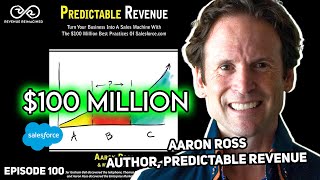
In this episode of the Bridge the Gap podcast, Aaron Ross—author of Predictable Revenue and former Salesforce leader—discusses how the outbound sales playbook he helped create has evolved. He reaffirms the enduring core principles of predictable lead generation, team specialization, and niche focus, while warning that many companies are now overwhelmed by channel saturation and chase quick‑win tactics. Ross stresses that success now hinges on deeper, more empathetic targeting, stronger relationships, and systematic referral programs, rather than volume‑based outreach. He critiques the common GTM mistake of scattering effort across too many initiatives and urges leaders to prioritize a few high‑impact levers. The conversation also explores AI’s emerging role as a utility that will accelerate existing processes but won’t replace the human elements of sales. Ross shares personal reflections on his mid‑life career shift toward writing, speaking, and partnerships, highlighting the importance of culture, personal well‑being, and aligning work with what he loves. The episode concludes with rapid‑fire personal questions, underscoring his focus on relationships, health, and continuous learning.
Chapters
Welcome back to another episode of the Bridge the Gap podcast powered by Revenue Reimagined. Today's guest is someone who quite literally wrote the book on modern outbound. Aaron Ross is the author of Predictable Revenue, a playbook that's influenced just about probably every SaaS sales org over the last decade. He helped Salesforce design and implement the cold calling 2.0 model that added over $100 million in recurring revenue. And since then has advised hundreds of companies on building scalable sales systems. But today we're not just going to talk about looking backward. We're not going to focus on predictable revenue. We're going to talk about what's changed, what parts of the playbook still work, what needs to be rethought, and most importantly, Aaron, where GTM strategy is headed next. Thanks for joining the show, man.
Sounds good. You guys are going to start off the laundry list. Like how many people today have said, oh, predictable revenue is dead.
It's so funny because people are trying to figure that out. It's just so much data, right? There's so much data out there. It's like, what do you put your predictability on?
Yeah, or the SDR is dead, or, you know, this is dead. Or, I mean, it's good, makes for good marketing. Some people actually believe what they're saying. And I think once you're older, you're like, nothing actually ever dies. Direct mail.
Repurpose.
Direct mail is still alive and kicking. Steak dinners.
Listen, we have clients that get some of their biggest deals from direct mail.
So it's just more channels, more stuff.
It's just different direct mail. You can't send the same crappy postcard that everyone sends. You got to stand out.
Yeah, it makes for a better controversy though if you say that something people are familiar with is dead.
So yeah, absolutely.
Well, it's funny. My wife's an interior designer and she says also, she's like, we did that 15 years ago and now it's coming all back. Like everything is all cyclical.
Yeah. Bell bottoms, '70s and then '90s is probably time for the bell bottoms to come back.
Exactly. Aaron, so you wrote the book that launched like 1,000 outbound teams. What do you think people still get right when they follow it and what is gonna happen when they miss the mark? Like you wrote the book and people followed it and they did really well and then they miss the mark. Like what went well and what didn't, what goes well and not go well in that process?
Yeah, well the thing is I think when people read, so the original book is Predictable Revenue, then there's a sequel called From Impossible to Inevitable. And when people read, especially the Predictable Revenue book, and, you know, or they used it and they're successful and then, you know, the world changes. And so there's a lot of these people who say, right, so the book was basically the key ideas were, you know, you need to have predictable lead generation in order to create predictable growth. And a lot of people here would be like, yeah, duh. But actually there's a time, it wasn't that long ago, when most SaaS companies or B2B companies wanted to grow revenue by adding salespeople. So again, um, so separating the closing and the selling, so specializing your teams, you know, predictable pipelines and lead generation, um, seeds, nets, and, you know, different kinds of leads. So there's these core principles. We can go through some of those. And what people would do is, right, we're gonna build an outbound team and we're gonna, you know, send email, make calls and have SDRs. And, you know, any kind of channel was a victim of its own success. Blogging, email, SEO, it's all the same. So of course, as every channel gets more flooded, and this is also for future channels, 'cause this is not just something that only happened in the past, like any channel, LinkedIn, they all get flooded. And so of course it's not something today, whether it's email or calling or LinkedIn, it doesn't pick your channel or direct mail, you just can kind of spray and pray. Like you actually could do that and get great results, 10 years ago. But now, and you need to just be better, more targeted, more insightful, like nothing new, more targeted, more insightful, more empathetic, which means you understand them more closely, you knowing where they are, what they look, what they're interested in, what they're, and that could have changed in the last 3 months or 6 months. And so the last bit I put on is that, you know, again, like AI, I think it's like, yeah, AIs can change all kinds of stuff. And there's some changes we don't know. What it hasn't done yet is create new kinds of work. We don't even know what that is yet. That'll happen. We don't know. And so, yeah, of course, people, "Oh, the SDR is dead and the BDR is dead and the XDR is dead." First of all, no, it's not. But the idea actually, the core principle, the thing is people confuse the tactics with the book with there's these core principles that were there. So, specialization of your team is a core principle. Right? You need more types of people, more types of jobs. You can do fewer things better, whether they're human or whether they're agentic, you know? So the SDR, and also not every company should do outbound. Not every company should do blogging or content. So it's like you have to know your business.
Can we pause one second? What you just said is so true. Not every company should do outbound. Aaron, you don't know how many people we speak to that the very first thing they say to us, we need to build outbound and we need to do it because we need to send out 40,000 messages.
Oh my God. I guess. Yeah, exactly.
To take a step back?
Well, okay, think about— they've got the pressure cooker of— let's say they have investors. Some don't, okay? Either there's investors, or maybe they're not— or the CEO, if they're not the CEO, or they've got social pressure, right? Compare and despair. Like, there's all that— we're living in a society of— it's like this swimming in basically like fake pressure. It's not even real, right? It's just all societal. Like, You don't have to grow 100% a year to get the funding, to get the thing. Like, you don't have to. It's this weird, like, rat— it's a new rat race. It's not the corporate rat race. It's the societal rat race or the SaaS rat race or the AI rat race. Where do you pick your rat race?
So it's the segment of like hypergrowth, like hypergrowth. Like, who's like—
is—
tell— show me one place where hypergrowth has ever worked. Like, you scale quickly if you're a unicorn, but by luck most of the time. It's not like you plan to hypergrowth.
Yeah. And you know what? You know what the thing is, like, if you do it and want to do it, great. Amazing. If you want to raise money, great. If you don't raise money, great. I think it gets caught up in people. It's like in the whole— they're like the— so the validation, the ego, and also like that addiction of success. Like money can be addictive in its way. And, you know, an ego and having to, you know, raise from a certain amount from a certain VC in a certain valuation, or hit a certain growth rate. If you're not doing that, you feel like a failure. Because all, especially for, it's not, it used to be mostly men, and I think it's, you know, by evening out, because if you don't hit that, and like these external factors of signals of success, then, you know, because we're not taught to grow up with some sort of inner self-confidence that is mostly disconnected from external validation. Like, come on, like, of course we all, and so again, it's like, I'm failing as a person if I don't have it. So there's this big tangled web around why people come in like, oh, I need to do say outbound, right? Because it could be I need to lose weight, gain weight, I need to get married or not get married or get whatever. I need to do outbound. I send all these messages because there's this pressure. And, you know, again, I'd be happy to tell people, and I don't even do outbound consulting anymore, um, it's like just don't do outbound, right? And see if they fight you on it. If they really need to do it, they'll probably, you know, figure it out. And then if they do need to do it. You know, when I was doing it for a long time, you know, a lot of these things, look, it's going to take you 6 to 18 months to see real revenue from it. Like, basically it's going to take longer than you want. You got, you know, you need to make sure you have the right people doing the right things and the right expectations. And yeah, you get, of course, you get all the stories. You know, people are always going to publish case studies that are the, you know, 1% success cases, right? That's the news, right? You get the unicorn and the Instagram case studies. You get the AI rants from $0 to $6 million ARR in 9 months because those are exciting, but that's not what most people are doing. So again, it's this distorted reality distortion that we all live in. You know, if you can kind of see that, it's like, how, um, are you the tail or are you the dog? If I get that right, you know, is it wagging you or are you wagging it? And so yeah, it's all this weird, you know, pressure. And I think what it does is I'm seeing even more now, whether it's outbound or not, it could be, you know, if I do work on boards, it's usually around go-to-market and growth, but there's a lot of companies that they ping pong around. Let's try this, let's try that. Or even within outbound, let's try these, try that, and let's try, you know, this kind of SEO. And because it's not working fast enough and so they switch and I don't know.
Before it works.
Yeah, well, that's the problem. Aaron, let me ask you, so if you were to sit down today and write kind of the 20 2025 version of Predictable Revenue.
Yeah.
What's the one thing off the top of your head that is in the first book that wouldn't make the cut today?
Um, okay, I mean, it's a good question. So, well, I would say like for the Predictable Revenue book, there was something that was not in that book that made into the second book, the From Impossible book, which was, uh, the very first chapter that was nailing a niche, right? So that was like, oh, like, you know, um, that's Online. Okay. So today, and I'm not planning on writing, I'm not going to write a book, although I'm talking to people about helping, you know, advising them on helping them think through it and write one. To me, you know, it'll be like where I, you know, I do speaking and I give talks and I have ideas in this area. But where I go to is there's these key principles that still apply. You know, people struggle with specializing your, you know, basically sales team, whether they're human or not. More jobs so people can do fewer things better. It's nailing a niche, which is you have to be even more insightful and more specific and more targeted. And these are not gonna, so AI will change lots of things. They're not gonna change these principles. So re-nailing your niche. Another was, again, it's like this rethinking how you're creating predictable pipeline 'cause the channels are always changing and their metrics are changing. And also what worked 6 months ago may not work today. So, it's kind of more though adaptive to it as well. Another is culture. To me, that's kind of reviewing the stuff that still is relevant or more so in an overwhelming world. The newer stuff, and I touched on this in the prior books, but really, I would expand on creating a culture like a growth culture, which is combining some level of challenge, which most people have, but with caring. I think what's missing in general is needed more than ever in both a hybrid/remote world and an AI-busy world is ways that you can connect with your team because how you do that will affect a lot of things, including their loyalty, their belief in the company, their belief in the product, and the way they treat customers, as well as your ability to grow them and their ability to contribute. So that would be a bigger section of focus. And the last one, which would be the newest part, which wasn't— I mean, I alluded to some of this in prior books. Even in Predictable Revenue, I had an example around how I worked with my team to have them help redo the comp plans, like a collaborative approach. But the newest section would be— I give this talk now. It's called Creating Predictable Revenue in an Unpredictable World. So, it touches on these things and to look for the future. I don't know where AI is going to take things. It's exciting, also scary. No one really knows. But one thing that will serve you well no matter what happens, the thing that is the most durable or can be are relationships. Now, those relationships can look like how you treat your internal people, how your relationships with your team. It can be your relationships that your salespeople create and have with customers. It could be your relationship with your market. You know what, that's, it could be doing a one-to-many or one-to-one, right? I've created a lot of relationships that are more one-to-many through books and things. It could be your, you know, a lot of companies are focusing on partner ecosystems, communities and partners. So there's a lot of ways you can take this and, you know, apply it to your business. But relationships to me, no matter what happens on the tech side, are gonna be things that help you have more durable success. I'd say relationships combined with some sort of systems equal durable growth. That's like the newest thing for the future.
I love that. Someone just asked me a very similar question on LinkedIn. Like, okay, so like if outbound is dead, which it's not.
Which it's not, yeah, of course.
And 100%, but where's the focus? And you know, my initial gut is relationships, go to network, you know, social selling, making sure that you're like fostering and nurturing those relationships. And I think going back to my old sales leader days, like a lot of people like to say, oh, I have a relationship. Well, what is a relationship? A relationship has to be bidirectional, right? A relationship isn't that I can, you know, oh, I have Aaron's cell phone number and I could text him and he gives me a thumbs up. A relationship is we can actually have a conversation and ask each other to help one another.
Yeah, it doesn't have to be bidirectional, but yeah, it can be.
Tell me more.
Well, I mean, there's lots of people I reach out to that I don't really know, but they know me. And they will refer me on. Or like, we're doing it— I have a friend, right? So I have a friend. Here's a good example where maybe the future— I met him through another sales guy. So he's a sales— he's got sales— he's an entrepreneur with a sales business in Germany, right? I'm in Europe. I moved to Edinburgh from Los Angeles, you know, 6 years ago. Um, just great guy. Like, we have a good time, like good friends. And we're like, we've kind of wanted to do something together, some kind of business together. And I've known him for like 2 or 3 years. Finally, we were like, okay, let's do an event in Munich. We'll just do it in like 6 weeks and invite some sales leaders and so on. And, you know, messaging people on LinkedIn about this event. And, you know, I'm getting a lot of responses and, you know, people, a lot of people say, hey, I, you know, I like this, your book, or I saw this. And like, they know me better than I know them. It's starting a two-way relationship, but started off as one way. So good point. Yeah. Very good point.
And is that one of the many you were talking about? So it's interesting because that is what's kind of happening at a macro level. Like people are trying to do one of the many a lot. Podcasts.
Yeah. Founder content.
Content.
Yeah.
I mean, LinkedIn is a great example. There's how many people you have, you know, hundreds of thousands of followers. Like how many people do you really know?
Right.
But you put something out there like, hey, I'm gonna be in Germany doing this event. And they're like, "Yeah, I'd be interested in seeing what's going on." Yeah.
And I think speaking of founder, so again, we can create one-to-many relationships through content, through events, through brand, through these things. It's fine. For me, and I watched some of these guys like Adam Robinson, he's obviously done really well. He's one of the Predictable Revenue is Dead guys. And there's some others, but I know that you gotta decide what's— the other thing that I would include too is you really gotta figure out, you know, how to stick to your core. I don't know if that's the right term, but you know, in a really busy world, it's like, you know, you as a person, whether you're an entrepreneur or a salesperson, it's like, how can you continue to figure out what you're the best at or really good at or wanna be really good at and kind of try to offload the things you're not great at. And for example, I'm not great at consistent content, right? The content treadmill that the LinkedIn, the founder-led content guys do, I just, I can't, I can't. That's not me. Book content, that's where I'm a book person. When I do content, it's usually towards books. If I'm meeting people, I'm thinking, you know, I like meeting people, but if there's more of a business context, like maybe they'd be interested in a book or refer the book or That's my lens. But I'm 53 now and even in those last 5 years, kind of really saw that. So, again, it's this thing, another part of the book is, it's a different version of specialization. It's more like each person in such a busy world where it's so confusing and there's so many demands on you from so many people, friends, family, teammates, customers, et cetera. How can you kind of continue to figure out what you can and should be really great at? And try to offload as much of the other stuff as you can.
People buy from people. That's why companies who invest in meaningful connections win. The best part? Gifting doesn't have to be expensive to drive results, just thoughtful. Sendoso's intelligent gifting platform is designed to boost personalized engagement throughout the entire sales process. Trust me, I led sales for a Sendoso competitor, and I could tell you no one does gifting better than Sendoso. If you're looking for a proven way to win and retain more customers, visit Sendoso.com.
Yeah, definitely. So let's, let's take a little bit of a shift. You've worked with tons of leadership teams, you've gone through a bunch of work. What's the, what's the biggest thing that you're seeing today that's not working? What's in the, in the go-to-market strategy, and where do they go look first? Like something's not working, it's a common pattern, where do they go first to like get that fixed?
Yeah, it's a good question. You know, I'm trying to think, you know, I'm on a couple boards and I've been on, uh, you know, I'm just thinking, you know, there's— I think first of all, there's so many different types of companies and challenges. Um, but I do think that one of a common theme is that there's so many, um, things that can work and things that you should be doing that people just get too scattered doing too many things. It's kind of like, well, marketing, is it a priority thing?
Is it a priority thing? Or is it like, not like putting the work in type of thing?
No, I think just trying to juggle too many balls. Because there's so many you feel like you need to be doing. And you feel like if I— it's the fear of— it's a version of, I think, usually the fear of missing out, whether it's driven by the investors to CEO, CEO to VP, whatever it's— could be sales, could be marketing, could be product features. It's just really hard for people to kind of zone in on like, what are these really, these few things we really need to do that are the most important? And remember, okay, they're going to take longer than we think they will to get really right. Right? Because as humans, we all think, oh, it'll take 2 weeks or 2 months or 2 years. In reality, it's 3 times that. So, you know, it's like really stick to that.
I wish more people knew that. I wish more people knew like, Just because you are a sales leader or you've done it in the past or you've done it somewhere else, like it's just different. Like you have to like go through the process, you have to evolve and figure out where the challenge is before you can fix it. And then you gotta give it time to get fixed.
Yeah. And I think something that's really been lost in the shuffle and I haven't gotten anyone to really zone in on this honestly. So I don't, I'm not sure why or, you know, so going back to this talk I gave about relationships and I have these examples I'm still kind of, but there's one example that is, I don't have a term for it, but it's kind of like customer, you know, refer, some sort of referral playbook. So here's, this is maybe people are so overwhelmed and so busy they can't get, I think this is a great idea and I don't know, I maybe just can't fit 'cause it doesn't fit their current playbook. But I'm like, okay. And I've had a conversation with a CEO, I'm like, dude, the number one thing you need to do is talk to customers and then ask them for referrals to other, customers. And there's ways to help with that, right? There's all kinds of tools to surface, you know, I'm going to talk to Bob and here's 3 people kind of like Bob I'm going to talk to. And he just, you know, he's overwhelmed, right? He just can't get it in his mind that that's like an incredibly valuable— and then meanwhile he's trying to do like SEO and even outbound. I'm like, don't, don't, don't do this stuff. Like, it's just not resonating.
Referrals are like, that's number one. Like, if you ever, if you have a referral in a conversation, That's interesting that they wouldn't take that handshake.
You think? Yeah, well, it's work. And I think so there's a couple things. One, I think it's when people are really stressed, they revert, their processing power goes down, and they can kind of only do what they've done before. It's like, think about all the salespeople or executives, you're like, ah, I'm not getting enough deals, I just need to like make more calls. My calls aren't working, I need to make more calls, or my emails aren't working, I need to send more email. So there's something about humans, like, because it happens often enough, almost like not their fault because it's just like the way we revert in a fight or flight towards doing more of the same thing. And it's like, it's the same process, the same result. Yeah, you know, it's, I mean, same, same in relationships, same in business. It's like, we're here, there's a human thing there. And like to do a new habit, a new process, a new thing is just by too, like, there's this big chunk of brainpower. And if your brain can fit this much in, It just, I don't know, like it slides off or something. But the, I'll tell you, the gist of it is I understand why referrals are not like very systematized and especially like B2B companies. Part of that is kind of me like promoting specialization because you have, you know, prospect, you know, there's SDR types and there's salespeople and then there's customer success or account managers. And so now you've got this misalignment of, incentive. I feel like a corporate person now. But the people who want, who need more meetings don't have the relationships with the customers who have the, you know, referrals. And so in my mind, if you said, look, we're gonna make this a priority, and so once either, I mean, people are basically signing, or 3 to 6 months later, once you've got some great results and they're, they're happy, um, have a conversation with them, you know. So the— there has to be some kind of teamwork aspect where revenue accountability people, talk with the customer success, the relationship owners, and say, look, let's jointly go to this customer. Say, hey, would you be okay? You've had some success. You know, if we, there's some other people that we think could benefit as well, can we ask you to make some intros to make it easy on you? Right. And it should be a live conversation, not some automated email because people don't, and they say hopefully yes. And then later they go back and, you know, again, you can surface, hey, here's two prospects this person might know, you know, would you mind making these intros? So it's more of like, you do need some teamwork and there's some new kind of metrics and there's new, there's a new playbook of some, it's not like that big a deal, but it is a different playbook with different stuff. So I think it's just hasn't clicked for people yet. And I don't have the right term for people to be like, oh shit, why aren't we doing this? Why are we doing, investing all this money in all these other channels, which might be working or may not, and we're just ignoring potentially the best one and the one positioned for the future. So that's my little soapbox.
No, I think it's, this has been something that has been talked about for 5 years, 10 years. Like when you first sign the contract, potentially you have the honeymoon period, like there could be references or referrals there. And then like you're saying, like 3 months in, you get like some success, like once you get the first success, like then you may want to have that second conversation. I think in many cases, the CS team who is now transitioning over the last 12 months into a more revenue generating organization is starting to do that, run that play. It needs to be probably built a bit more succinct, like maybe you run some AI to scrape their LinkedIn to find people that are in that in your, in your ICP and say, hey, can you make me introductions? Like, if you don't know anybody, here are a couple of people that I think would make good introductions, and they may know them or they may not know them.
Yeah. And there's, you know, I have a buddy creating something called Connect the Dots to help with that. And there's other companies who've tried this over the years. And, and there's a, there's one other aspect to this, which is, you know, it's not just a one-time thing. You need to be able to recharge the battery. Because if you ask for too many referrals, you know, maybe it's even 3 in 1 month, the person, it kind of, it's, it's, they call it batteries, like drains the battery. So there's this other aspect. But yeah, I don't, I don't know, I don't think it'd be that, it's not, you know, big a deal to figure out something that's going to work to help power that. Uh, me and me, it's one of these things where I might just need to have a couple case studies and examples for people. Oh, okay, wow, someone else did it. And it kind of makes it easy for me to understand how it would work and what to do. And now I can fit it into my little, like, you know, mental tunnel to make it work in my place, my company.
Aaron, what's next for GTM? So predictable revenue, let's get predictive go-to-market. What's coming down the pipe? You know, we know obviously AI is huge, but where is buyer behavior going to shift, call it in the next 12 to 24 months? And like, With AI, where are people going to miss out? Where is it being used wrong?
I don't know. Well, the first thing, AI is only— as a label, is only going to be around for, I mean, not necessarily that long. It's because it's going to be a utility like, you know, internet, electricity, and gas. Yeah, it's kind of the internet. When the internet first came out, it's, oh, it's an internet company. And then after a few years, it's like, well, it's just a company that is. So I don't know, you know, again, I think Time again, there's the obvious improvements, accelerations of things we're already doing. But there's all kinds of things that will be created that we don't really know yet. So once you have agent-to-agent buying and selling or researching, nobody really knows. And plus, no one really knows. It is true that the speed of the change that could happen in terms— and also including the job market, Could be ugly. Could— I don't know, um, more likely to be ugly than smooth because again, it's probably gonna happen so fast. It could happen so fast. And you ever talk about reading an article the other day?
The CEO of Anthropic was saying 50% of white-collar jobs, um, he believes could be taken over by AI, leading to like a 10 to 20% unemployment.
Yeah, I mean, maybe. You know, he also, you remember, he's got some sort of agenda in this too. It's not like he's, you know, it's like little, little one, right? And yeah, lots of people adapt. A lot of people won't adapt. I think too that the, there's always like the, the, you know, the tech people and the people who are already kind of like have money, whether they made it or, or inherited or got it some other place, like, oh, you know, there's going to have to be retraining and, you know, people just have to figure something out. You're like, yeah, that's a lot of like real people. Like, do you have any children, parents, sisters, brothers in that boat? You might take it a bit more seriously. Because no one's really giving a shit right now. That's what it seems like because the shoe hasn't really dropped and how that affects. But even more so, you know, the effect it's going to have on, you know, like the uncertainty already on society because everyone I talk to— I started after COVID, right? And after COVID, then there's the cost of living crisis, and then, I don't know, elections and AI. Everyone just has a sense, including executives, right? This one VP of sales told me like he's just a little bit terrified of how fast things are changing. And that sense of what no one knows is gonna happen next month. Like the floor could drop out, which maybe it will, maybe it won't, but that anxiety creates again, this reversion to, it's harder for people to make better decisions, longer-term decisions, the right decisions. They revert back to prior behavior. Give me the quick win. I just need like the 40, you said the 40,000 things right now for outbound. Like I need the quick win because this, that, the other. And it's like this, you know, this, yeah, this like almost regression towards, I'm just gonna turn in the crank, like, and if the crank isn't working, I gotta turn it harder. So I don't know how long, I mean, society will take to kind of adapt between, I don't know, because like, you got AI and you got robotics, like blue collar, who knows how much blue collar, you know, how many people drive for Uber with way, I mean, there's a lot of people aren't talking about that nearly enough. Who knows? So I'm going back to in relationships, who knows what all that stuff is gonna do? But if you're focusing on creating and building good relationships, whether you're gonna be looking for jobs, looking for funding, looking for customers, fill in the blank, just having a base level of mental health, community health, creativity, people to talk to, like that's gonna serve you. That's what I'm doing. Like trying to, how do I, do things that are interesting to me, that are, you know, feel creative with the right people. And I still have to make money. I got 10 children, I got a big family, and I didn't start at Salesforce early enough to retire a long time ago. So even then, it's rather than going back to, hey, how did I make money in the before? It's, you know, what feels right? You know, really to me, it's like more of an intuition because I don't feel like the things I do, I could go back and use, you know, a regression analysis and AI to predict from what worked in the past what's going to work for me in the future. But I can focus on what feels right, what's interesting, where are the gaps, and who can I do it with. And, you know, feel like I keep doing that, then it's going to keep working out.
What's next for you?
Good question. Um, so I'm going through— I've got like— I went through my own midlife crisis the last few years, right? So I had a, a business doing outbound in North America that I was just sick of doing the work. And part of that was the work itself. Part of it was it wasn't a good partnership, business partnership for the long term. So, had a divorce out of that, business divorce. And so, I've got this, you know, first it was this, well, I want to make money doing what I love, but I have no idea what that is. So, like, for me, like, what do I actually like to do? If I could do something, what would that be? And for like 2 years, I have no idea. And then over time, what I got more clarity is, oh, okay, what I actually really am drawn to and like to do are books. So that's writing, writing with other people, helping other people. So advising, crafting, writing new books. And the new books are a bit different. So one's called Income Operating System. Oh, title's got to change. Just how people can make more money. The other book's called Eat Shit and Grow, which is kind of crazy family stories from having and supporting a family of 10. So the new books and working on some others, again, talking to people about a new sales book, we'll see. So books, speaking, and partnerships, you know, works great for me when I have a really good partner, someone I trust. Like I've got a little business with a great partner in Brazil. It's amazing. It's kind of predictable revenue in Brazil. They're growing. Like our, the North American business was like declining. The Brazil one's growing, like doing great. A lot of the base, on things like culture, treating people well. It's not like the tactics. It's a lot of the soft skills, which lead to the right decisions for the big picture and right decisions for the tactical stuff. So I'm, you know, whether you call it ikigai, I'm on this path of making— I'm not making as much money now doing what I love as I did when I was doing really kind of full-time outbound stuff. But I'm on track and my plan is to make more money doing what I love. And again, I feel like I'm not totally locked into exactly— it keeps getting more clear. Then I'm making more money doing that, things I love to do, like to do, or even like to do, than I did doing the consulting. So, but I love that speaking.
I love that.
It's like this one, yeah, like this thing in Germany, that's— it's promising. I want to do some stuff with this guy, like And, you know, I've struggled like a lot of people having friendships over the— for a long time and just realize, you know, I do like having— if I have a business or project with someone who I like as like a friend, then it makes it easier to like maintain that versus being something else to do on top of all the kids and the things and the other.
So Dale, we need to be friends.
We have a business together, guys.
It's The relationships is very interesting. I think the pendulum will swing way back. Like I think the pendulum, like scale breaks everything. If we look at marketing automation, we look at cold outbound, we look at outreach and sales law, like scale breaks everything. And so we need to come back to the other side of the pendulum. Let's wrap this up a little bit. You up for a little bit of rapid fire? See what you like, what you don't like.
What if I said no? Okay, good thing.
What's the first app you check when you wake up in the morning?
Usually text, because if I have kids in the States, if there's some emergency or something, which there rarely is, but yeah, texts.
Early bird or night owl?
I don't know, you know, I haven't had a choice in either one or the other. So for so long, I have to get up early to get the kids to school and stay up late because, you know, people and other time, like kids and wives and things. Well, I like to talk late.
So what's, what's your favorite indulgent snack or food?
Coffee. Good coffee, snobby coffee.
Snobby coffee.
What's your favorite? Just like, I'm a big coffee guy.
No, I like, you know, I like, well, actually lattes or hot chocolate. So I live in Edinburgh. Best place is called Modern Standard, which is nearby. And yeah, so like, or hot chocolate where they don't use the powder, they actually melt like chocolate in, you know, it's usually like $25. So, you know, yeah.
So living in Edinburgh, Edinburgh is one of my favorite cities. I coincidentally had the best Thai food of my life in some back alley in Edinburgh, probably 15 years ago. But of all the places you've been, or maybe you haven't, what's your dream vacation destination?
For me, I actually don't know. I couldn't tell you because my brain can't get out of the mode of if I'm going places for work or with kids or some other things. So I've traveled a lot, So I don't know. I don't have— I don't think it'd be destiny. Oh wait, okay, probably go back to Yosemite. That's like— I had a— yeah, there's like a— I really love being there with some family, um, uh, 10 years ago. And there's— I've been a couple times, but that last time there's something that was really like special about it.
I love that.
Awesome. Let's, let's wrap it up. Um, if you were to Fix go-to-market today. What's one thing that you would tell people today, like, go do this? I think I know what the answer is, but let's wrap it with that.
Yeah, I think that'd be figure out how to create better, at least better relationships with your customers and ask them for more referrals. Love that.
I knew that was gonna be the answer.
If it wasn't that, I think it'd be everyone figure out how to You know, exercise and sleep more.
I love it. Aaron, thank you so much for joining the show. Thank you for all the knowledge you have given to the sales community. It was a pleasure to chat with you.
Hey guys, I feel like I'm just getting started too. I love it. That's the best part.
We could go another hour.