Belonging Within - Meet the Speakers
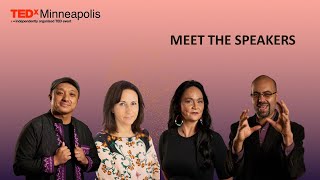
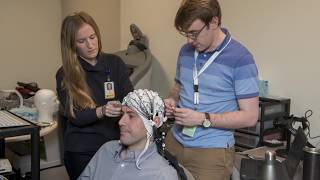
The YouTube panel "Belonging Within – Meet the Speakers" brings together four speakers—Alik Widge, Nicole, Tsasila, and Syke—moderated by Ariane, Ellen, and Anna Maria. The discussion weaves a common thread of belonging across diverse perspectives: Alik explains his work in interventional psychiatry, contrasting invasive brain‑stimulation approaches with electroconvulsive therapy and outlining the need for gentler, scalable neuro‑technologies. Nicole shares ten‑year outcomes of research on violence against Indigenous women, recent funding for Two‑Spirit trafficking studies, and policy advances such as Minnesota’s Missing & Murdered Indigenous Relatives task force. Tsasila introduces "Design Against Trafficking" and the "When Places Speak" exhibit, arguing that kitchen‑table spaces and design guidelines can foster community healing and prevent trafficking. Syke reflects on intergenerational hip‑hop, Hmong cultural revitalization, and the power of elders, describing how his curriculum and music connect youth to language and identity. The panel includes audience questions about technology availability, policy impact, and next steps. Speakers articulate future goals: Alik seeks business partners and grant support to prototype a new brain‑stimulation device; Tsasila plans two‑year stakeholder dialogues and activation events; Nicole aims to expand trafficking research and public‑awareness campaigns; Syke intends to deepen cultural research, complete a memoir, and continue graduate studies. The session closes with each speaker urging the audience to feel connected, hopeful, empowered, inspired, and to act toward inclusive, culturally‑rich communities.
Chapters
And I'm going to switch it to speaker view. So I'm going to start with a question for any of our 4 speakers. So feel free to take yourself off mute and jump in if you'd like to start answering this. Otherwise, I'll call on one of you. What do you all see watching these talks now all strung together? What did you see as common threads between them? What really struck you tonight? Thank you.
I can jump in. I think one of the things that really struck me was, you know, the theme that just the title, the belonging, really connected. Seeing, you know, I often think that people from other cultural backgrounds may have a stronger connection to their cultural identity You know, and that those of us that are Indigenous have, you know, because of the impact of colonization, have lost so much. And so to see that woven throughout and the thread of like really longing for that connection for all of us, right? Whether, you know, whether we're Indigenous or not, really wanting to connect to who we are and kind of what that core is really felt very powerful throughout. And all the ways of connecting, whether it's through feeling disconnected because we're having, you know, depression or because of addiction and other issues and cultural connection and how we connect with each other. And then, too, Syke, I love the elder, your grandma, I love the stories. So, you know, the storytelling and just the piece of connection really felt like a strong thread. Thank you.
Anyone else want to jump in on that one? What struck you watching the other talks tonight?
I mean, I'll notice that we were all talking about mental health, but in just very, very different ways from the sort of very, you know, technical neurobiological perspective I bring to the really, really like family communitarian perspective that especially Tesuha and Tusek bring that it, I mean, it points out, which is really, is that surprising in this year and all that we all have been trying to do to take care of ourselves and each other?
Yeah.
Yeah, great point. It was really interesting as we— since our team selects the speakers before we select the theme, when we were looking at what you four were going to be talking about, that was a thread we noticed right away and thought, huh, this is going to be really interesting to see how it unfolds. Especially since it is something, you know, we all have experienced in very different ways in the last 18 months, and yet common ways. LM, I saw that there were a couple of questions in the chat that you were monitoring. Do you want to ask one of those?
Sure.
Is there someone specific you want to start with?
Why don't we start with— I think there was a question for Alik, a specific one.
There was. There was. Alik, and this might resonate with you because I think it's something that I was asking you in the beginning, and that's how is your work similar or different than electroshock therapy? And that came from Elaine in our chat panel.
Yeah.
With stark reaction.
No, I mean, I get asked this a lot, right? Because electroconvulsive therapy is what people have heard of. And the analogy I use, because I use a lot of computer analogies, is if your computer or your phone or anything else is acting up, you could completely power cycle, close down everything, just pull, pull, pull the plug and bring it back up, and hope that clears out whatever was in the memory. Or you could find the one little part that's causing the problem and just tweak that. Close the one— close the one window, tweak the one setting, and leave everything else intact and operating, because it wasn't having problems to begin with. And that's the difference. Fact is, I mean, I— when people ask me that question, I always have to put in a plug. Electroconvulsive therapy is the single most effective antidepressant known to man— a man, woman, or non-binary, I should correct myself— known to humankind. It works better than medications. It works better than my technologies right now, though it's the sort of the yardstick to beat. But the problem is it's got tremendously difficult side effects because That's what it does. It resets the whole brain. People lose a little bit of memory from that day. They get really confused on treatment days. It's just unpleasant. And it requires anesthesia, which nobody really likes to undergo anesthesia. Compared to if we could just give things a little nudge, just be a lot gentler, that would be better. So this is— And I mean, which is the story of mental health. Antidepressants work, therapy works. It's just that They're effortful, they have side effects, not everybody can access them. So we just keep trying to do better and scale up, expand our services to more and more people and meet the unmet need.
Thank you, Alik.
There was one other follow-up to that, Alik, and that's, are these treatments readily available? There were folks who were telling me in the chat panel, they know someone who might benefit from them. So what's, where is it at?
Some things are available. There are definitely both invasive and non-invasive ways of doing these subtle electromagnetic adjustments to brain circuits, primarily in depression and obsessive-compulsive disorder, a little bit being tried in post-traumatic stress disorder. I can post a link in the chat to our interventional psychiatry clinic where there are a number of docs who are happy to talk with people who are wondering, is this right for me? We're trying to expand it. The stuff that I talked about, about changing brainwaves, that device hasn't been built yet. That's what I was talking, we have to build a completely new technology. It's gonna take us 3 to 5 years just to get it into basic safety testing so that the FDA would let us do pilot human trials. So that, the big stuff, it's gonna take us some time. But there are technologies available now, and we do what we can with what we have.
Where'd you want to go next, Ariane?
Wherever you, wherever you have, Ellen. I didn't keep track of all of them.
I got Post-it notes galore.
That's awesome.
Nicole, there was so many notices of love and what a gift these teachings are, tears, the idea of being valued and, and loved. What one main, one main question came from, what is the outcome of the work and the research? Was there a result from your study or is there something coming that is more of an outcome?
Yes, thank you for that question. You know, we're celebrating actually 10 years since we released the findings from that research, so And we are working on new research. I will say, since we released that research, we have seen those statistics in funding proposals and legislation and policy. And so, you know, we're really pleased that it did what we had hoped, was that it didn't just raise awareness, but it It added services and funding for services for a population of people who were not getting services prior. And so, you know, we have seen the, you know, the impact. Right now, we are working on research of prostitution and trafficking of our LGBTQ Two-Spirit relatives. So, for those of you who are interested, you know, feel free to connect with me. We are—
Thank you.
on the very beginning stages of designing that research and looking at questions, and, and then we'll start conducting interviews with people, and we're working with some, some new researchers this time. So, so we're excited, and we're hoping that, you know, this new set of research will also lead to an increase in services, some changes in policy, and some real effective change for our Two-Spirit relatives who are being impacted by sex trafficking and who are experiencing a lot of harm.
I noticed that Tsasila put a resource in the chat. Tsasila, can you tell us a little bit about that resource as well?
So, I want to thank Nicole for all the work that she's doing in violence against women and trafficking for Native women. And we've also started an effort, we call it Design Against Trafficking to rally designers to explore the role they can play in ending trafficking. And I have posted in the chat the link to the website that also includes a global exhibit that we call When Places Speak, which raises awareness about places caught in trafficking. So we're trying to share a different side of the story. Most of the time we tell this story from the victims standpoint, which is extremely important, and at the same time we want to add the places as a way to raise awareness and help people recognize that, hey, this is happening here in my neighborhood, in my community, not somewhere else, not on another planet. And we feel that the One Place Speak exhibit can do that. So you can see that, and you can also see design guidelines that you can employ in creating culturally sensitive homes for healing and for victims of trafficking and all these other resources as well. So, do that.
That's great. Can I mention what they had for Miss Tsula?
Yeah, I was just gonna ask that. That's great.
There was a big thread of people looking at their tables quite differently. And wondering, have I honored this table, or is it, you know, collecting dust, as you mentioned? What do you think of the current designs, Tisila, for homes and living spaces? Is there room for tables? Have they been replaced by peninsulas? Is there a modernization of this that's happened that tables should be in the forefront, or a way to get them to be?
Exactly. So a lot of the times now designers are turning to islands, which are also very helpful. But at the same time, what kind of connections can you foster with your family members if you're sitting at a line? That's the time when you get to see each other and connect through each other's eyes, right? And talk about what happened each day, the good, the bad things, and everything else that— all the conversations that can happen. And so that's the challenge. How do we create space in— especially in affordable housing, right? This is not as much of a concern in somebody who has the money and affords a bigger space, but in affordable housing, how do we make sure that we support health and well-being by allowing space for a kitchen table when we know it's so important? That's the challenge. Thank you.
Hey, I'm just gonna say a few things because I've been holding in. Hi, thanks, thanks everyone for joining us. And, you know, I just really want to say I really appreciate the TEDx team. They were very supportive, very, you know, genuine and really uplifting. Speaking for myself, I believe all of us, and it was a really communal environment. We were definitely more connected than— I mean, with the barriers of COVID of course, we couldn't get as connected, but definitely it felt that way when I came, and I felt very supported by the TEDx team as well as the other speakers. So thank you. And like, I just want to say, Alik, I remember you were, you know, every time I hit a line really well, I saw you, you're like, "Yeah!" You know, I saw your expressions. Yeah. And I really appreciate it. But definitely, I just wanted to say our connection is that interconnectedness, right, and between various cultures, and that we're telling some of our story, but we're also representing other stories of other people within our speeches. And definitely mental health and resiliency is a big connection between all the speakers that I saw. Thank you. Piti Chang asked a question about my parents because that I talked about my grandmother a lot. And I did have a pretty strong connection with my grandmother. This is a picture of my grandmother and I, right? And because we performed together, right? We had that connection. My parents, I think initially they were hesitant to understand what I do as a performer, as a hip-hop artist. I think that rap music, especially in the mainstream, has a negative perception, right? But I think that once my brother and I, who we performed together, we started performing for community, we started getting media, positive media attention, as well as getting paid to do shows, I think that that added more value. But I think what also added more value was that other adults, that were my parents' peers, like they would go to like a Hmong doctor or they would go to like, you know, a Hmong, you know, car mechanic. And they would say, "Oh, is your son Thu Saigaw and he's doing positive things?" And so one day my father came home and he's like, "I heard that you do positive things in the community." You know, I was like, "Yeah, the last," few years I've been doing it, but that's fine that you realize it now. And so I think since then my parents have been very supportive. Right, so if there wasn't my parents, it wouldn't be me. And so they definitely have been very supportive over the years, but it took them some time And so yeah, so that's me answering that question.
There's a good follow-up to Syke, that is, what's been the reaction to your teaching and your curriculum? Are you finding other students that maybe have the same story, have the same, or are finding an insight like you did? And what kind of stories are you hearing from the students?
Yeah, and I know some students, and a few of the teachers that I've worked with are here in this chat group. So thank you for having me and collaborating with me. I would say I related to some of the students' experiences when they say they felt they had a lack of self-esteem because they couldn't connect to their culture, they couldn't connect to their elders, They felt like they couldn't understand and helpless. So I felt that way too when I was in high school until I met my grandmother, right? And then, you know, her and I started talking and I got more comfortable. But, you know, I appreciate that there's programs and teachers out there that are supporting students and value bringing artists like me and as well as other artists into their classrooms to work with the students. Thank you. And I think that like it is— boosts their self-esteem. It does boost their mental health to have a stronger understanding of their roots and where they come from. And I think that that's something that I related to a lot with some of the students that shared their experiences.
Awesome comment in the chat. Do you want to speak that or are you good? I would love to hear that spoken.
Hi, I just wanted to respond to what Thusajk has just said, that, you know, I am a Hmong language teacher in the Twin Cities, and Thusajk has been working with my students for the last 3 years, and he just brings a different perspective, a different talent into the classroom, and the kids love him. They, they learn so much about what they don't know about themselves, and at the end, they're all writing poetry. They're all healing through every single lesson that he does with the students. So I'm just so grateful that Tsiyk has been a part of my program and that he continues to invest in our youth and is making huge changes with them. And so thank you so much, Tsiyk.
Yeah, thank you. You know, I just want to hit home that story with the Ojibwe elder. You know, we never— I shouldn't say never, but we did not think of ourselves as Indigenous people, but it was other Native people from Minneapolis, right? So a lot of us are in St. Paul, some of us are in Brooklyn Park, but, you know, us going to Minneapolis and connecting to a lot of the Native folks over there and them saying, hey, you know, we're similar cultures. And then it opened us to thinking that, oh, maybe we are also indigenous and there's indigenous identity that we connect with and indigenous people. And I think that just that fight to keep their culture and to, you know, with a history of people trying to take it away, our language and our culture, I think that that's really relatable. Thank you.. And so I just wanted to really like name that and really show my appreciation for the Native folks that have connected to us and really welcomed us in that way.
You know, it really struck me that all 3 of the 4 talks had at least one story mentioning an Ojibwe elder. I'm curious if there's any thoughts from any of you, the 3 of you that shared those stories of that thread, what is it that resonated so much across multiple cultures?
Arianne, if I can maybe pitch in. I wanted to also maybe reflect on the theme, and I'll try and tie it to your question. So I was thinking that the theme of belonging within, I think what came across from the four talks is this notion that belonging can be constructed as much as it can be deconstructed, right? So what are the factors or the parameters that come into place, right? So Nicole talked about sex trafficking and the erasure of identity and the erasure of history and the erasure of culture, right? So that's a form of deconstructing. And then there comes to Saeed, who goes into a classroom and inspires students and allows them to find their voice. And that's a form of belonging. And then it was powerful to me that Alik started this year's TED Talk, because again, I think it's important to know that there's a physicality of our brains and how does that impact our ability to belong. And then the other talks were more about meaning-making and how that ties into place in my case and the ability to come around and connect around the kitchen table. But overall, it's this notion of our ability to intervene. So as long as we know that belonging within is a process where it could be constructed as much as it could be deconstructed, then it gives us the power to come in and say, what is it that we can do to help alleviate some of the turmoil that comes from deconstructing of identity? And now your question was about Native wisdom and—
Well, yeah, it just struck me that there were 3 talks that had Ojibwe elders featured. So Beautiful reflections, Tesuila.
Mm-hmm, yeah.
Did you, Nicole, did you wanna speak on that, Nicole, or you don't have to.
I think one of the things I was thinking of actually was when Tesuila was talking about the kitchen table and the importance of the kitchen table. And when we first started organizing in our coalition, we used to have what we called kitchen table dialogues. And so we would, even in a conference of 150 people, we would serve, you know, 'cause we always hold it in tribal venues and we would have them bring out, you know, fry bread and we would get the tablecloths. We didn't care if it was a hotel, we would get the tablecloths and make it look like a kitchen table where we could really have those, discussions because so much of when we think about our ancestors, when we think about our relatives, when we think about our homes, much of the work and the organizing and all the important conversations that many of us are having, we're having at the kitchen table, right? And so how many of our grandparents and our aunties have sat at those kitchen tables and dreamed up big and beautiful things and dreamed up all the things that they want for their next generations, right? It's happened at those kitchen tables. And so when I think about, you know, kind of those threads of, you know, and this is, we're on Ojibwe land and Dakota land. And so it is, you know, it's not surprising that we have those connections, right? But then thinking about all the ways that we have story and—
Mm-hmm.
In those pieces, those connections that we have.
I just wanted to, you know, this is something I couldn't fit into my speech, but like in the ode to the Twin Cities, just growing up here in the Twin Cities and such a vibrant arts and nonprofit organizing, community organizing that, and I keep saying, I know it's TEDxMinneapolis and I can say, oh yeah, bro, forget about St. Paul. But I think it is the combination though, of St. Paul and Minneapolis because for me, me taking the bus to Minneapolis and meeting Native folks and then also being inspired by like a hip-hop artist like Tal Paul who raps in Ojibwe for one of the choruses for "Prayers in a Song." For me, I think that the Twin Cities always had like programs Schools always welcomed artists, spoken word artists, hip-hop artists into schools. And I think that, and there's funding for it too, right? There's foundations here that really support that. So for me, it's us really honoring, for me, I guess speaking for myself, honoring me growing up in the Twin Cities and being nurtured by the arts organizing community, by all the different cultures here. That I'm encountering is what made me who I am today. So I think that that's something that I just wanted to acknowledge.
I see that you've shared a link in the chat of you performing with your grandma. Thanks for that, Too Sike. We all can go bookmark it and take a look. I did want to come back. There was a question in the chat for Nicole about there's been so much press about the the Alito case, and how could we use this moment to lift up the stories of Native women and women of color who don't get the same type of attention without getting trapped in the oppression Olympics. At the same time, we don't want to give a pass to the dominant culture for ignoring the current crisis in many of our communities. I think that's been really striking with the press of this current case, and then, you know, the thousands of Native and Indigenous folks and folks of color who've gone missing, women of color who've gone missing in the same area with no press. Is there anything that you would want to speak to, Nicole, there of how we can use this moment to raise this awareness?
You know, I think— thank you for that question. I think it's really important that we're always uplifting the stories and the faces of all of our relatives, regardless of what community they came from. And what community they represent. I think, you know, thinking about the Gabby Petito case, and most of us have heard a lot of information, and the response has been incredible. And I hope we are building a community where we get that same type of response, regardless of what color skin we have and regardless what community we come from. You know, that's really when I say this is not about my community, this is about our community, because this is about all of us. And we deserve that. We all deserve those same responses. There's many women in Minnesota, Native women, who are missing right now and who have been missing for a number of years. Sheila St. Clair from Duluth has been missing for a number of years. JoJo Boswell has been missing for a couple decades. We can find those cases, we can pull those numbers up. There is websites, there are ways to find out who those are. And then I also want to say, you know, we have the Missing and Murdered Indigenous Women's Task Force here in Minnesota, which then led to the creation of permanent funding for the Missing and Murdered Indigenous Relatives Office, which— Mm-hmm. We are really excited to pass this last legislative session. And we also have the first-of-its-kind task force for missing and murdered Black women and girls. And so, I'm really excited to see the work that's going to be done by our relatives and how we can support that work and how we can work across communities to really elevate these stories and and not only elevate the stories, but also that it leads to change, that we have more responsiveness, that when someone goes missing, we also have the FBI that jumps in, and we also have communities everywhere, and all of you here are sharing it with all of your networks, that we really all engage together as community. So, thank you.
Thank you.
Okay, I'm going to ask a question of all of you. So I'll start with Alik on this one. What's next for you? So you've spent at least 6 months preparing for this talk amongst all of other things going on in your lives. What's next?
Yeah, I mean, wake up Monday. Take the weekend off, but wake up Monday morning and get back in the lab and keep building it. I— the honest answer is what's so important about this TED platform is our next step is we need to talk to the business community. We need to talk to the people who can help us spread the word that, hey, we're trying to change— we're trying to change the world by changing brains here. We're going to need a lot of help. And so that's what— I mean, that's what I'm grateful for is this opportunity to just kind of Spread the gospel a little bit, and hopefully we will have new people who want to join our team, and we will be able to just keep putting one foot in front of the other. So long— for at least for what we're trying to do, it's a long, long journey.
Yeah, that's great, Alik. Are you— do you have grant funding and corporate partners? And, you know, you mentioned a couple of partners, one in Switzerland and one in the state of Minnesota, in your talk. Are there others that you're, you know, exploring or seeking right now, or is this just a matter of continue on the path that you're on?
Well, we have got— we, you know, we have some grant funding. It's enough to get us to prototypes. It's not enough to get us to clinical trials. It's not. And so, yeah, we are definitely going to need partners. And I mean, also, there's a, there's a reality. I am, and I am I'm a scientist, I'm a doctor, I'm not a business guy. I have never actually taken a product to market. And so, you know, I'm gonna need help. We've been actively trying for a couple years to recruit the right kind of entrepreneurially-minded people to our team to help us take this next step, help us say, okay, well, here's your fastest way that you can actually start helping people Right? I mean, I don't want the clock to turn 2030 and me still be sketching around saying, well, maybe next year, maybe next year. I want to be able by that point to say, this is happening, this is real. Maybe it won't work, but I think it will. We're going to try. Yeah, my— well, what's next for real is that somebody here is going to have her bedtime once this Q&A is done. But that's longer. Longer term. Don't look at me like that.
All right, well, before he runs off to bedtime, let me ask one lighter question. Alik, this came through. I thought this was really interesting. Um, how did you get into this work, and is this what you thought you'd be when you were a child? Because it seems like quite the unique kind of role and profession. So how did you get on this path, and, and is it what you aspired to?
I mean, when I, when I was like in kindergarten or second grade, I wanted to be an astronaut. Now again, I mean, now you can buy that as long as you got enough money. So, so I might get there someday. The, the, but no, I, I don't know, I would say this is what this is. Maybe I didn't know this was exactly what I was going to do. But sometime around pretty much freshman year of college, I said, I, there was, you know, the theme of, hey, could we understand and control and fix our own brains has been part of science fiction for forever. And science fiction is one of the places where humanity expresses our dreams for who we might someday be, both our— both our— right, both our worst, very dystopian selves and potentially our best selves. And so looking at that, realizing that this is one of our dreams is can we use our own technology to make ourselves better? I just found that incredibly inspiring. And even as a freshman said, yeah, this is what I want to do. Then I bumbled around for a while because it was the '90s, it was the early '90s. Nobody understood as they do today that, oh, hey, actually all of health boils down to mental health because every organ in your body is controlled ultimately and wired back to your brain.
Yeah.
But so it took me till about, oh, I would guess 2007 to realize that, oh, okay, I've got all these cool brain engineering skills. This is the place they need to be used. But this is absolutely something that for more than 20 years, I've been hoping I would get to do. And so, yeah, I mean, day to day, the job is stressful, but year to year, it's pretty darn awesome.
Thank you.
Excellent. That's great, Alik. How about, Tesula, why don't you tell us what's next for you?
Well, the talk is about help to make visible those who decide whether we can have a kitchen table or whether we can afford a kitchen table, and those include designers, educators, policymakers, funders. So next, we are going to start dialogues around Minnesota to see and bring all of these different stakeholders together. I call them home mediators. And those are going to be more or less introspection dialogues where we look at our personal stories, what is it that brings us into this conversation, And then as a collective, where is it that the design disciplines could be stumbling upon when we're looking at addressing and supporting diverse ways of meaning-making? So that's the next step, bringing together all of those people around a table in introspection retreats for the next 2 years.
That's great. It'll be fun to share your research out once you have it published.
We're going to be coming up with a lot of different— we call them activation events around the Twin Cities, so we'll stay in touch and keeping you posted.
Yeah, for sure. Nicole, how about you? What's next for you?
Well, we have a little bit of money to start this research on trafficking of our Two-Spirit relatives, so We are in the very early stages of that work and excited for that. Excited is a weird thing to say about that topic, but we're looking forward to what we will learn and to the increase in resources and hopefully, you know, services and funding and really to address this issue. And You know, we are also celebrating our 20-year anniversary, so we have a number of really exciting things that we are planning this year, including we are going to be launching a— there was some artists that designed a song for us, and so we will be releasing that soon, and we have some amazing public awareness posters on featuring men, Indigenous men in our community that really have stood up and used their own voices, and it's their own words on the posters to really talk about what Native men's role is in addressing gender-based violence.
Mm-hmm.
So, we have a lot of really exciting things. Coming up. So I did post my— our website, and we will be posting things on there, and you can also connect to me directly through, through the website. So thank you, everyone.
One last little follow-up, Nicole. Um, the music that you mentioned really resonated with people. There was a lot of chatter on the chat about that and how moving that was, and so it's nice to hear that there's new stuff coming as well. But can you tell us the background of the Strong Woman that came up quite a bit.
Yeah, I wish my sister friend Guadalupe was still on here because she might have a little bit more of that history than I do. But we learned that song years ago from the Oshkigizhik singers up in the Fond du Lac area. And they were given that song from some women in Canada. And so, we sing it. There's no words. It's just all vocables. And we sing it at a lot of different events. And so do many other women and many other groups sing that as a way to really honor and lift up the voices of our indigenous women. Thank you.
Thanks for sharing that, Nicole. All right, Tusaik, what's next for you?
Hey, thanks. A lot of self-care, healing, and, you know, physical activity. I think that, like, I'm definitely looking forward to really, you know, developing myself and For some people know that I have entered grad school at UW-Madison. So thank you for those from Madison that have joined us too. And they have welcomed me. I'm doing well, just to let you know, Twin Cities. They're cool over there. There's a lot of Minnesota people here too in Madison, and there's a lot of Wisconsin people in Minnesota. So we do do a lot of exchange. Mm-hmm. I definitely wanna continue doing my work, deepen what I do in my research, in my content, even developing that memoir that I wanna do about my grandmother. My grandmother can freestyle. That curriculum that I said I started, I wanna further develop it working with Hmong language teachers, studying the diaspora because I'm in the, Master of Arts in Southeast Asian Studies. So there's definitely an international focus and thinking of Hmong people as a diaspora and as a nationless people and an understanding Indigenous identity and how that is significant. I think that is— and then how hip-hop has an influence on revitalization too across many different cultures. So for me, those are things that I really want to have a deeper understanding of, and then write articles, do speaking engagements. And I have an album out called Unified Worldwide, or Ntë Tey Koon Tey, which is in the Hmong language, but then there's translations, and it definitely has an intention to connect elders and youth. So not only does it, I'm trying to inspire young people to engage in their language, but honoring the elders. So, I think I mentioned that my grandma did pass away, and that's why I'm writing this memoir. But the two uncles that were also featured that play instruments on some of my songs, they both passed away this year too. So I think for me it's become very significant to continue to honor our elders and, and carry on their stories, because you never know when they can leave us. And I think that like for me, even though I am saddened by my uncle's passing away, I am also feel honored that I was able to collaborate with them. So it's— so intergenerational piece is something that I will want to continue to carry and hopefully support others who want to do these speaking engagement and platforms in the future too. Thank you. So thank you.
Okay, so I want to invite my co-host, Anna Maria, to ask a closing question. This is one she often asks our speakers.
Yes, I'm sending a virtual hug and gratitude to each of the speakers. This is beautiful work. And the last question is, so what do you want people to feel, think, or do after watching your talk?
We'll call on someone if nobody jumps in first.
Anna Maria, you and I had a lot of conversations about this. I think for me, and it's a good question, and I think my Answer's probably changed a few times, but for me, I really want people to feel that we're connected, right? Like, this is about all of us. And the more we can work on connecting to our shared humanity and how we show up for each other and the ways in which we show up for each other, the better community we will be creating together. And, and that's the world that I invite us all to lean into. So I thank you all very much.
Beautiful.
Thank you, Nicole. Who would like to go next?
I would say hope. I mean, at least for a lot of the patients I work with, they've been told by so many doctors, okay, you've exhausted everything there is, there's nothing, I just can't get you better, you're just going to have to live with it. And I mean, that's just not an acceptable answer. I think all of us have a loved one who's been told that, and we know, no, that just can't be it. And so this is what keeps us going. This is what keeps everyone in my lab going is knowing that we can tell someone, okay, hang on, there's something better right around the corner. Just give us a little bit of time to get it out of the oven.
Beautiful. Thank you, Alik Widgeon. Tesula?
I want people to feel empowered. The idea is that everyone can be a cultural enricher and help create communities where everyone can thrive. So in the talk, I challenge people to say to themselves, I am a kitchen table, and the kitchen table is neglected. Well, they can take that and take it to the next level. They can say, I am a home, and the home is neglected. I am a neighborhood and this neighborhood is neglected. I am a city and the city is neglected. I am the world and the world is neglected. And see what is it that they can do.
Beautiful. Thank you, Tossula. Empowered. Tussike.
Hi. Hey. I thought about Well, that story about me in elementary school, and I, you know, I had a lot of different experiences of people, you know, just random people telling me to speak English or to not forget about my culture and to like, oh, you're in America, don't, you know, speak your language, or you don't need to know your culture anymore. And it's not just white people, it's Hmong people have said that too. And so I think that really me learning about deepening my own culture actually was me learning other people about other cultures and making an effort to learn about other cultures and being inspired by them. And I think that that cross-cultural connection is important in that like now as an adult, I'm supported to learn my own culture and to collaborate with my grandmother. I think that to me, that's very powerful and that to celebrate cultures and to also in a way where it can inspire us ourselves. And I think that that's something that I want people to take away is that Even though I'm learning about my own culture, it's because I was inspired by other people in other cultures. And that also the intergenerational collaboration piece and never counting anyone out, like as disadvantaged as someone is, you never know what they can achieve. And so to believe in people. And so those are the things I would like to leave people with.
Thank you.
Beautiful. Thank you, too, Syke. So just playing it back. So connected, hope, empowered, inspired, supported, and celebration. Beautiful. Thank you all.
Well, I am so grateful to our 4 amazing speakers, to those of you who were able to join us live tonight, and to the team who made this happen, the completely volunteer team. Yeah, shout out to the watch parties. We got one in St. Paul, we've got one wherever Thong's party is. I'm sure we have some others. So thank you all so much for being a part of this, and let's keep the inspiration going. Once the talks are live on YouTube, please share them and help these ideas spread. Thank you. So I hope everyone has a good night. Thank you all so much.
Oh, thank you, LM. Thank you, Coach LM.
I just—
More from Alik
Healing mental illness through brain network stimulation | Alik Widge | TEDxMinneapolis
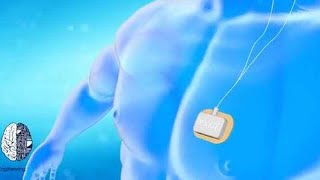
First-of-its-kind brain chip to treat mental disorders being developed at the U of M