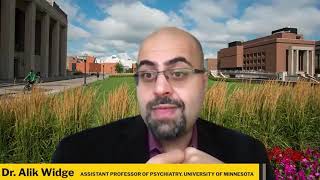
In this interview, Dr. Alik Widge discusses the current mental‑health pandemic—rising rates of depression, anxiety, and substance use—and the particular challenges faced by people in rural areas who lack access to specialized psychiatric care. He critiques the field’s reliance on developing new drugs, arguing that pharmacotherapy alone has reached its limits. Instead, Widge proposes a circuit‑based approach: using brain‑stimulation techniques to target dysfunctional neural pathways, leveraging the brain’s inherent capacity for change (neuroplasticity). He likens effective stimulation to a surgical joint replacement that provides lasting relief, suggesting that a similar “boost” could reset psychiatric circuits. Widge emphasizes that to achieve durable changes, researchers must understand the brain at electrical and computational levels, bridging basic neuroscience discoveries to clinical applications. Investing in such translational scientists promises not only new treatments but broader insights that could spark additional therapeutic innovations.
Chapters
We know now that we are in a mental health pandemic, particularly depression, anxiety, substance use. That is affecting our lives all over the state.
I grew up in rural Pennsylvania, which is a lot like rural Minnesota. I grew up on a farm where it was half an hour if you just wanted to get to town. So I really have a sense of exactly how challenging accessing medical care, especially the kind of specialized stuff that I do, can be.
We've been stuck in this mental rut of drugs are the treatment that work best, and we're just going to develop new drugs. As a field, we've seen that that has a certain limitation. What the work of Dr. Widge shows us is that we can take a whole 'nother approach to helping people who are vulnerable to mental illness by understanding what is not working well in terms of their brain circuitry, and then applying new stimulation techniques to help get those circuits working again. It's a fundamentally different approach from the drug approach.
A lot of what we're doing with our therapies is finding ways to say, okay, the brain has in it this capacity to change. Your brain probably knows at some level how to get better, but it needs some help. It needs a boost. Just like if you got really bad joint pain and maybe you need a knee replacement or a shoulder replacement and a hip replacement, and that's a procedure and you'd have to go to a hospital and get it. If it works, you're set for years. We want to bring that same kind of vision into psychiatric treatment.
Dr. Widge is one of those really unique and rare scientists. There's probably only a few in the entire world who's been able to take findings from basic science, fundamental science, and think about how to translate those to an understanding of the human brain.
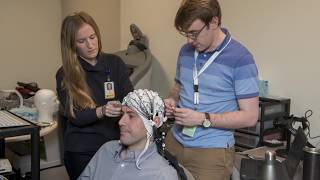
So if we really wanna do what I'm talking about, if we really wanna be able to make persistent changes in the brain, we have to understand the brain. We have to understand it at an electrical and computational level and how it works.
Moreover, when we invest in that kind of a research, and particularly in individuals like Dr. Widge who can move from the laboratory to the patient in the clinic, what we gain is not just a new set of treatments, but a new set of insights into a range of illnesses that help start to stimulate other kinds of new treatment approaches.
It's just a really good feeling. Like, it just is great to wake up in the morning, and my postdocs say this. Here, I know I'm working on something that is going to make a difference to somebody, and that's why I wanna stay.