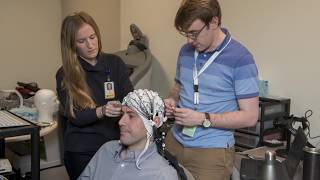
First-of-its-kind brain chip to treat mental disorders being developed at the U of M

In a news segment, Dr. Alik Widge discusses a new brain‑implant project at the University of Minnesota Medical School aimed at treating severe, treatment‑resistant mental health conditions such as depression, PTSD, and addiction. Patients in Widge’s clinic often exhaust dozens of medications and therapies without relief, highlighting a critical unmet need. The research team, funded by a $6 million National Institute of Mental Health grant, is developing a tiny implantable chip placed near the collarbone with sub‑cutaneous leads to electrodes on the skull. The device can monitor brain activity at millisecond resolution, detect when neural circuits become out of sync, and deliver a precise, low‑energy “nudge” of stimulation to restore healthy network dynamics. This closed‑loop, real‑time approach represents a novel mechanism of action that could directly reconnect dysfunctional brain circuits, offering new hope for patients whose disorders have not responded to existing treatments.
Chapters
More from Alik





Healing mental illness through brain network stimulation | Alik Widge | TEDxMinneapolis