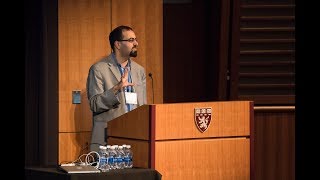
Alik Widge, a psychiatrist and biomedical engineer, describes how electrical brain stimulation can treat severe mental illness by restoring precise timing in brain networks. A novel implant reduces OCD symptoms more effectively than existing treatments by desynchronizing low-frequency brain waves across specific circuits.
Chapters
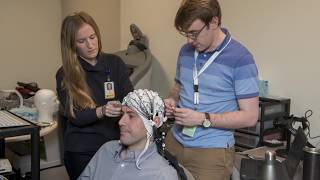
I'm Alik Widge. I am a psychiatrist and biomedical engineer at the University of Minnesota, and what I do is electrical and magnetic brain stimulation to treat severe mental illness. Your brain is made of many parts that need to communicate with really perfect timing, almost like impulses flying down a computer network. And that when that timing goes off or communication breaks down in specific parts of those networks, that that's what really leads to the symptoms of depression, to the inability to calm oneself down or stop being afraid of something in post-traumatic stress disorder. What we've been able to do with our BRAIN Initiative funding is work on both new methods for controlling brain networks and taking the methods we already had thought of and actually getting them into patients. One of the things we've been really interested in is the idea of these slow, low-frequency ups and downs, oscillations in the brain's electrical activity. Some people call them brain waves. And what we've been able to do is build methods for for changing how those waves sync up or don't sync up between different areas of the brain. We now have patients with obsessive compulsive disorder where we've been able to design a new kind of brain implant that does this desynchronizing of brainwaves across different parts of a loop circuit that's involved in OCD. And at least with the, with the early patients, it looks like this is working more effectively than anything that's been available for them to date. What the BRAIN Initiative's done that's unique is it just accelerated everything we were trying to do. We had ideas about how to fix brain networks that nobody was taking seriously, and it was really hard to get everybody we needed on the team, the right kind of mathematicians, the right kind of clinicians, the right kind of scientists. BRAIN created the incentive for all those people to work together. It got them interested in the kind of research we were doing. We are 10 years at least ahead of where we would have been if this funding hadn't happened. One of the exciting things about this funding is that it repeatedly says, look, we want the things that don't have lots of preliminary data. We want the things that— we don't want the things that everybody already knows are gonna work. We want the things that are completely out there and they might not work, But if they do, hey, that's going to change everything. So dream big and specifically dream big on the things that are going to have impact. And then number 2 is build your team. Every BRAIN grant that I've gotten, we've gotten because we had me representing the psychiatric side, able to talk to the engineering side, but we also had people from deep in the theory, whether it's theory of physics and how magnetic fields work or the theory of how the brain makes decisions. It's when you cross disciplines that the real magic, the stuff that's gonna change human beings' lives happens, and that's what this initiative, especially the second phase grants, that's what they're all about.