Alik Widge, a psychiatrist and biomedical engineer at the University of Minnesota, describes interventional psychiatry: using electrical stimulation of the brain or nerves to treat psychiatric conditions. The program trains residents starting in their second year and runs research on closed-loop deep brain stimulation that syncs with the brain's own rhythms to restore damaged connections.
Chapters
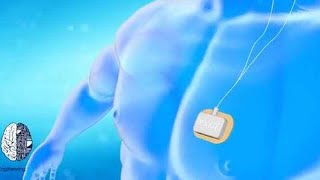
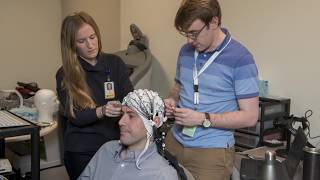
I'm Alik Widge. I'm a psychiatrist and biomedical engineer, and I lead a big chunk of our work on interventional psychiatry research and also training in interventional psychiatry here at the University of Minnesota. And obviously the first question when I say that is, so what is interventional psychiatry? And it refers to any attempt to try to treat mental disorders by really high-precision, direct modification of the electrical activity of the brain, or in some cases, the peripheral nervous system. And for us, that means a variety of technologies, including non-invasive ones like transcranial magnetic stimulation, and then invasive surgical therapies, including vagus nerve stimulation, or VNS, and my own work in deep brain stimulation or DBS. And so, in our program, really starting in PGY2 on up, you can work with us clinically, get to, and get to see these tools in action and how rapidly, in some cases, they can change patients' lives when nothing else works. And I think one of the exciting things about Minnesota is there's really no other program that can offer you this breadth of experience so early in your training. And these are tools that are going to be more and more a critical part of our psychiatric toolbox over your career. And so the sooner you get to know them, the better off you're gonna be. The other part, and of course it's the reason why I'm here, is that this is one of the best places in the country to get involved in research and be really at the cutting edge of psychiatric treatment. My colleague Ziad Nahas— Ziad Nahas. Has been involved in TMS and VNS research basically since those technologies were invented. He was one of the people who helped show that they had early clinical signal. Other colleagues, including Sophia Alba and our newest faculty member, Cedra Wilson, are working on developing new non-invasive TMS protocols that can really much more precisely and reliably engage brain circuits. And what that means for you as a potential resident is that it's really easy here to get involved with seeing patients who are maybe in participating in a clinical trial or clinical study, learning both the brain-based and behavior-based measurements that we take with them, and starting to dig in as a small scholarly project or just for your own interest into some of the theory and the mechanisms behind these treatments. And then in my lab, we do the same thing except we work primarily with invasive technologies, especially deep brain stimulation. Because one thing that neuroscience is increasingly teaching us is that mental illnesses are network illnesses. We know that they involve breakdowns in communication across regions of the brain. So what we're doing is developing new ways of delivering electrical pulses precisely in sync with the brain's own activity or its own rhythms in order to adjust those communication patterns and connectivity patterns back to the way they should be. In do— which in doing so, we get to leverage what I think is one of the coolest parts of being here. Just this incredibly rich base of engineering and neuroscience collaborators that make re— that make research possible. In my lab, we work with about 20 other different faculty across humans, across multiple animal species to develop not just the ideas and the practical clinical and preclinical testing, but also the mathematical foundations that underlie these next generation algorithms and that we have to develop to build the proof of concept that'll let us go towards patients. And I wanna be clear, Everything we do, we really do get to take it, if it works, into patients. One of the other great things about Minnesota is that this is the heart of the US medical device industry. This is where stuff goes from theory to practice. So we have collaborations with multiple companies that are leading to new devices or new paradigms that we think we should be able to launch into trials in the next couple years. And relevant to you, That means the state legislature sponsors multiple fellowships for students, for residents, for fellows who want to be part of neuro device, neuro intervention research, either more on the clinical or more on the engineering and commercialization side. So practically, meaning that whether you want to really nerd out with us and get deep into the math, or you're more interested in just focusing on the practical real-world patient care right now, We think we can offer you an experience here that nobody else in the country is gonna be able to.