Brain Stimulation & Mental Health with Alik Widge, M.D., Ph.D.
In the second half of the Secret Science Club Q&A, Dr. Alik Widge expands on the practical, economic, ethical, and future‑directional aspects of brain‑stimulation therapies for mental illness. He explains why most research has focused on major depressive disorder—primarily because of market size and funding—while noting the untapped potential for conditions like autism, OCD, personality disorders, and ADHD. He emphasizes the importance of considering patients’ broader life contexts (trauma, environment, diet) and acknowledges that stimulation must be paired with holistic care. Widge admits that rigorous health‑economic analyses (cost‑per‑QALY, cost‑effectiveness) are still missing and calls for collaboration. He discusses the long‑term vision of non‑invasive, possibly at‑home neuromodulation, and the ethical limits of patient‑controlled stimulation, warning of side‑effects such as euphoria, mania, and impulsivity. He addresses neuroethics, concerns about personality change and mind‑control, and the need for shared decision‑making. The conversation also covers potential off‑target effects of targeting cognitive flexibility, the possibility of treating ADHD, the dubious reliability of DIY tDCS/tACS, and the value of integrating stimulation with other therapies (biofeedback, talk therapy, medication). Throughout, Widge balances optimism about a future where network‑based, personalized neuromodulation complements existing treatments with a cautious, evidence‑based stance.
Chapters
Good evening, everyone. Hello and welcome to the Secret Science Club. I am Dorian Devins. I am Margaret Mittelbach. Welcome, everybody. And now it's our pleasure to introduce the Vice President of Neuroscience Within Society at the Dana Foundation, Kara Ramos.
Thank you, Dorian. Good evening, everyone. This is my— first time joining a Secret Science Club, and I'm so excited to be here. We're looking forward to a great talk tonight by Dr. Alik Widge on the important topic of mental health disorders and potentially life-changing treatments using brain stimulation. And it's a super special Secret Science Club since it's both St. Patrick's Day and Brain Awareness Week. So for those of you not familiar with Brain Awareness Week, it's a global campaign coordinated by us, the Dana Foundation, to foster public enthusiasm and support for brain science. Every March, our partners, including Secret Science Club, host activities that highlight the wonders of the brain and the impact that brain science has on our everyday lives. So if you're interested in learning more about your brain and how it works, I strongly encourage you to visit our calendar on brainawareness.org to find events planned through this week and beyond. Thank you. But for now, let's turn our attention to tonight's talk and our terrific speaker, Alik. So, Dr. Widge is an important— is an assistant professor in the Department of Psychiatry at the University of Minnesota. He holds an MD from the University of Pittsburgh and a PhD in robotics from Carnegie Mellon. He has a clinical practice in psychiatry and treats patients with a variety of conditions, including anxiety, treatment-resistant depression, and post-traumatic stress disorder. He is a self-described psychiatrist engineer and brings that dual perspective to bear on his research. In his lab, he focuses on the development of so-called closed-loop neural devices that I'm sure he will be talking about tonight, that sense the brain and respond in real time to regulate brain circuits involved in mental illness. Current technologies being developed include methods for restoring healthy brain function in circuits controlling decision-making, self-regulation, and mental flexibility. Disability. I'm so pleased that Alik is with us this evening to share his research with you all, and I will turn it over to you, Dr. Widge.
Excellent. Thank you, Cara. Let me just get the screen share up and running and slightly adjusted to compensate for some Zoom window moving. One moment. All right, we should be looking pretty good and somebody will presumably speak up and yell at me if it's not. So thank you, all of you who have logged on and are still logging on. And so tonight, just like the title and our hosts have said, I'm gonna try and take you on a journey about what we're learning about the brain's electrical activity, how it goes wrong in mental illnesses, and most importantly, how we can change that and directly change the brain electrically to try and treat these disorders. And so when you log off tonight, what I really want you to be thinking about is this idea that your brain is an information processing engine. And that what's going wrong in a wide variety of mental disorders is changes in the flow of that information in ways that make the brain not as able to do its job As we might want it to do, and that because those are disruptions in specific subcircuits, specific communication pathways within the brain, that the way to treat those more effectively might be to specifically have a circuit-oriented treatment. And that the best way to do that might be to directly interfere with, or I like to say, nudge the brain's electrical activity. And I'm going to tell you tonight about how we— how others have done that, how we're doing that, and where it's going, with the big point being, hey, this stuff can work. The problem is just that it's still expensive and difficult to do, and now we're trying to make it scalable so it can reach more people. And I'm going to conclude by showing you some of the ways that in my group we're thinking about trying to achieve that scaling by really rethinking what it means to make a psychiatric diagnosis and say that, all right, someone's got a mental illness and we need to treat it. And along the way, I'm going to try and suggest, as was hinted, how thinking like an engineer might help us understand— that might help us understand and maybe even fix the brain. So we're going to start by me telling you a little bit more about why I think this is a problem you should care about. I'm gonna walk you through some of what's been done over the past several decades, and then we're going to talk about how to make it more specific, more effective, and really where I think the next generation of these technologies is gonna go. So first off, the why. Very simple, because even with the pandemic that is hopefully finally winding down, the single biggest public health problem in America is mental illness. Because these disorders are the— are collectively the single biggest source of healthcare dollars in the country. We don't spend more on anything else. Everybody thinks cancer, heart disease, diabetes, Alzheimer's. Nope. It's depression, it's anxiety, it's PTSD, and of course it's addiction and the opioid epidemic. Mm-hmm. And the problem is that these are the biggest source of healthcare spending, but also our single largest cause of productive years of life lost to disability, because they often onset in the teens to 20s. And they do kill you, but they kill slowly. And so they just drag on people and their families and their loved ones for decades, because while we can treat them, we don't yet know how to cure them. And so why is that? Because the fact is— one, one point I always want to make before I launch into my, okay, here's how we're re-engineering things. The fact is, we have treatments now. We have medications. We have expert psycholo— psychologist-designed talk therapies, and they work. Fact is, at least half of people who get these things are gonna get better. Problem, that's half, right? There's the other half. We gotta do something for them. And the bigger picture is that treatments work, but they don't always stay working. Oftentimes people have relapses every couple of years, and that's incredibly frustrating for the patients because they feel like they're always waiting for when's it gonna come back? When's it gonna try and— when's it gonna try and bite me again? And the process of finding the right treatment for a given patient is often very trial and error. The many of you on this call tonight who've got lived experience with mental illness, either yourselves or a family member, know the process of, well, all right, here's my first-line medication, try this. How long? I don't know, about 6 weeks. Well, that didn't work. Okay, try this one for 6 weeks. Well, that didn't work. Okay, try this one for 6 weeks. And When you get to about your 4th or 5th one of those and your psychiatrist's saying, "Trust me, one of these is gonna work," it's easy for the patients to get pretty darn discouraged. Okay, so now why is that? Why is it that we have these treatments, they work, but not often enough and not for everybody? And the answer is because these treatments, aren't focal. When you think about something like giving someone a classic medication, pick a serotonergic antidepressant, what we're doing is really just flooding the brain with one neurotransmitter and hoping it gets it back into balance. Problem: these illnesses aren't exactly chemical. They're network. And you don't have to worry about exactly the labels on these figures. They're not important. The point is that if you open a Journal of Psychiatric Neuroscience published anytime in the past 10 years, every other article is going to be littered with diagrams like these, diagrams showing different parts of the brain and little arrows meant to say this communicates with that one communicates with that one. And then they're going to show you how that— how in the particular condition they're studying, or the particular subset of it, one of those networks goes wrong. One of those, one of those streets between two brain areas is too small and too potholey, or too wide and too much traffic's going that way and it's leaving— it's leaving everything else deprived, or just the overall wiring diagram has changed in ways we don't want. Mental disorders are problems of information networks in the brain. That's why you can't see them. If you put someone with depression in an MRI scanner, you cannot see the illness. That brain looks completely completely structurally normal. Everything that's going on is going on in the subtle bounce of electrical signals back and forth between about 15 different brain areas at once. So if we can take that as given, if we could say these are electrical and communication disorders, what do we do about it? And in fact, people have been trying to fix the brain's electrical activity for about half a century now, namely with one of the great granddaddies of psychiatric treatment, electroconvulsive therapy. Which, by the way, I also include this slide because if there's one thing I did— if there's one other thing you walk away from tonight, it's that this isn't what you maybe think if you've seen— if you've seen too much popular fiction. Actual electroconvulsive therapy looks a lot like this. The patient's asleep. They're under general anesthesia. Their muscles can't move. A doctor puts two little paddles up to the side of their head. The machine goes beep, and the patient's foot twitches. And that's it. They wake up, and they're definitely confused. They ask, where am I? What's going on? Because they're waking up from general anesthesia. But when we do that, we essentially give the brain a controlled seizure. It's almost like trying to hit the reset button on a computer.
Oh.
Two-thirds of people, at least in depression, are going to get better. And we keep saying to people, you know, this is the most effective antidepressant still known to the world. We need to use it more on people, but it does also have problems. You got to go under anesthesia repeatedly, several times in a month, and you got to have a psychiatrist and an anesthesiologist specially trained standing by there, and it does make people feel groggy, confused. It's unpleasant. And ultimately, it's definitely brain-based. You're changing the brain's electrical activity. But it doesn't focus in on one of these individual networks. It's just like medications. ECT is just hitting the whole thing at once and hoping that you get the target you were looking for. So it works, but ultimately is not going to get us where we want. Now, in the more modern world, since, oh, about 2010, give or take, give or take a couple of years, we've also had this transcranial magnetic stimulation, or TMS, available in pretty much every major metropolitan area in the country. And TMS has the advantage of being incredibly comfortable, safe, easy. You sit in a chair that looks a lot like the chair at your dentist's office. There's a little magnetic pulsing device that's held up to your head, connected to actually a fairly large power generator. This thing requires some serious capacitors. And what it does is it delivers a strong magnetic field that gets converted to a strong electrical field in the brain. Those of you, those of you who remember, who remember high school physics and right-hand rules, that's what we're doing. That's what we're doing here. It's, it's that good old right-hand rule. Magnetic field does this, current does that. And what we're doing is just upregulating a little bit the activity of one or two small parts of the brain. So highly targeted, meaning patient can be awake, almost never causes meaningful side effects, incredibly safe. You can use it in people who are pregnant, use it— can use it in people who have cardiac or kidney conditions and are not able to tolerate ordinary psychiatric medications. And it works. At least in the one thing it's— in the one thing it's really used for, which is treatment-resistant depression, about two-thirds of people are going to get better. And this is something I use every week, every day in my clinical practice, and it works. But we still got some problems. Number one, we pretty much can treat exactly one thing, major depression. Leaves a whole bunch of other psychiatric illnesses off the table. Number two, You gotta come to the office every single day, same time every day, for 36 weekdays in a row. That's about a month and a half. Now, first off, if you live anywhere outside a major metropolitan area, like, let's say you're the, you're, you're the approximately 50% of my state that lives in a rural zip code. You're not going to drive 1 hour each way for a half-hour appointment every day for a month. You just can't do it. Also, many people who are living with depression also are trying to live with jobs and kids and other things that make their schedules just not able to do this. And then it works great. But about half the people a year later have relapsed again, and they'll get better if we re-treat them. Which is great if you're the hospital system that says, okay, come on back, bye, every year I can re-treat you. But is really incredibly inconvenient for the patients. And in fairness, for those who have a copay, or when you're looking from the perspective of their insurance company, they just do not like this. They want something that really lasts, or at least could warn them when a relapse is coming so they could pre-schedule around treatment rather than having to do it while they're battling a depression. Which has led to the question of, all right, maybe the problem is we're trying to influence the brain from outside the skull. Maybe if we could actually get inside the skull, we could get a little bit more precise. And that leads us to the technology that I'm going to spend most of my time on, namely deep brain stimulation. So this is a deep brain stimulation, or as we refer to it, DBS device, originally developed for Parkinson's disease. And here's what we're looking at. There's a tiny wire about the size of the graphite in a pencil through a hole about the size of a nickel that's drilled by a neurosurgeon in a skull. Though the electrode has to be placed super precise— super precisely. Submillimeter precision. And then there's a wire, goes usually behind the ear, down tunnels about here, and then there's a little battery pack in the chest. What is, to all intents and purposes, a pacemaker. And what this thing is doing is just giving little electrical pulses all day and all night to one tiny little spot, about the size of maybe a lima bean, in the brain. Mm-hmm. And when this was first tried in Parkinson's disease and other tremor-related disorders, people who'd been practically frozen in place for years suddenly could move. They could dance. They could hold their grandchildren. People— I've been in the operating room many times when someone with essential tremor gets this and a hand that's been shaking and unusable for years is suddenly still. They break into tears. So, we knew we had a technology that could change the brain. And that led people to say, okay, we know it's safe because FDA approved for these other neurologic disorders. We know it changes brain circuits. We know psychiatric illness has, has problems in brain circuits. What if we tried this? And what if maybe— One of the things you can know, the deeper you go in the brain, the older you are in the brain. Evolution built your brain by starting at your brainstem and kind of stacking on layer after layer after layer till it got to the outer prefrontal cortex, the stuff that makes us people. And TMS can only hit that very outer part. So maybe something like DBS, which can get to those evolutionarily old parts of the brain, maybe it can do things that other technologies can't. So this was the idea. And about, again, about the early 2000s when this technology was really taking off in Parkinson's, people said, well, why don't we try it in patients with depression who've exhausted all their other options and who are just living and suffering and suffering every day. And when that was tried, some pretty amazing things happened in the first, in the first sort of 5, 10, 15 patient studies. So what you're seeing on this graph is a stand— is a set of standard depression rating scales, and this is how much the patients got better. Now, these are people who were very desperate. They had tried every medication under the sun. They tried electroconvulsive therapy. They tried talk therapy. They'd been in and out of hospitals. Nothing had worked. Electrode gets put in, stimulator gets turned on. Between 1 and 3 months, on average, half or more of their depressive symptoms were gone when nothing else had helped. The word miracle got thrown around an awful lot. This is conveniently about when I was graduating med school and thinking about what a young neural engineer might want to do with his career. I will admit that I looked at this and said, whoa, I gotta understand how the heck that is happening, and I gotta figure out how to use that in my practice. Now, we live in the United States. We have a Food and Drug Administration. They understandably say, "That's nice. Videos are not proof. Show me a randomized controlled trial." And many of you probably know about RCTs. The basic idea is half the people get the intervention, half don't, and you see if the half that get it get better.
Okay.
Problem. How do you do that when the intervention is having a physical piece of silicone, platinum, and titanium put into your body? It's kind of hard to build a placebo of that, right? Well, you can. What you do is everybody gets a device. Half of them it's turned on, half of them the doctor sits there in the room and binks on the little programming box that controls it. And pretends to turn it on. So when they did that, and this was a large industry-sponsored trial by Medtronic, one of the makers of these devices, and there was another one by St. Jude, now Abbott, and they both came to the same result. Everybody got an implant, half of them had it on, and they waited a couple months, and everybody got kind of better. And there wasn't really any separation between the people who were getting active electricity and the people who got a fancy medical device and a doctor just sat there and pretended to do stuff with it. Uh-oh, right? Well, maybe. This was a dark time when these studies were published, which was unfortunately right as I finished residency and was getting ready to say, okay, I want to learn about this stuff. A lot of people lost hope. But it so happened that in parallel with those studies, there was an academic study. Mm-hmm. And they did it differently. They gave everybody a stimulator and everybody got it on for a whole year, during which time the clinician did their best to dial it, to dial it in. So what I haven't told you yet about these systems is that they have a blessing and a curse. They're super programmable. There are multiple ways you can steer the electric field coming out of a deep brain stimulation electrode. There are 4 or 5 different settings about the electrical current you can tweak. There are— you can highly customize it. The problem is that exactly how to do that in order to get an individual patient better is not well known. And we have to do it mostly through the same trial and error we do with medications. It's, hey, let me turn this on. All right, I tried a setting, come back in 2 weeks, tell me how it did. All right, I tried a setting, come back in 2 weeks, tell me how it did. And that's how I do it even to this day in my clinical, in my clinical practice. And if you get lucky, and these folks got lucky, in a month or so you can dial it in, the patient starts to get better. But if you get unlucky, it can take weeks, months, sometimes even a year. So what this trial did was give their docs the full year to try to get it dialed in as best they could. And over that year, they pretty clearly saw one group of patients who got better. That's the— that's these light blue squares, what we call the responders. They got another group of patients, these orange triangles, who didn't get better, non-responders. Then what they did is right here, half at a time, they turn the device off, and the patient doesn't know whether it's on or off. When you do that, the people who got better from active stimulation, you take it away, they go right back to being exactly as ill as they were when they started. You turn it back on, they get better again. That is why— is why I still continue to study this.
This is—
this is why anybody still believes this works, is because if you can take the electricity away once you got dialed in and the patient doesn't know, they still get worse. We've known that for years because, hey, it's a battery-backed device, it's an electrical device, it's got wires, things sometimes break. And all of us have had experiences of a patient who comes in and says, I'm just— it was working and now I feel terrible. And we check the device with our little programmer and we say, yeah, that's because you ran out of battery about, oh, I don't know, I'd guess about a month ago. We need to get your battery replaced. So this tells us something. We know if we can adjust the brain's electrical activity in the right focal way, We can pretty consistently get about two-thirds of people better. And if you do that through an implanted device where it's continually giving them stimulation, you can keep them better long-term. If you do that through the non-invasive treatments, they've got to come back and get boosted back up every so often. And we can get people better even if they did not respond to all the cheaper, easier stuff. But We can't predict in advance who we're going to be able to get better and when and how. And in finding out, we usually have to spend somewhere between tens and hundreds of thousands of dollars. And doesn't matter whether you're in a socialized medicine healthcare system or privatized medical— healthcare system, they both want value for their money. And hey, spend a lot and I don't know what's going to happen. Does not work well for value-driven healthcare. It doesn't work well for the patients either. When I'm trying to tell someone, "Hey, I think you should have brain surgery," and they say, "Well, is it gonna help me get better?" I say, "Well, 2/3 chance, I'm pretty sure." Understandably, many of them say, "I'm not sure I'm feeling that desperate yet." So the question is, How do we get better on those numbers? How do we either predict in advance who's going to benefit, or how do we find a way to more reliably tune it to exactly what that individual patient needs and quickly without all that trial and error? And that's what I'm going to spend the rest of this next about 20 minutes, 20, 25 minutes telling you. Thank you. Is one specific way of doing that that we're working on in my lab, thinking about how to make people think more flexibly and how to do that by altering a specific rhythmic pattern within the brain. So for this first part, let's talk about something called cognitive flexibility. And more generally, let's stop talking about the word depression. 'Cause part of the problem is also that that word doesn't work. If you've ever cracked open the DSM-5, the quote unquote Bible of psychiatry, and looked at what it takes to get depressed, diagnosed with major depressive disorder, you gotta have 5 of 9 criteria. A sad mood, or if you're adolescent, an irritable mood, increased need for sleep, Or decreased need for sleep, just too agitated, can't get to bed. Increased appetite, craving carbs all the time, or decreased appetite and nothing tastes good and food just tastes kind of gray. And the symptom list goes on and on like that. And first off, notice how many of those things are, oh, well, it doesn't matter. As long as you deviate from the middle, you can go in either direction. There's my thumbs, either direction. And it counts. What that means is there are at least 500 different symptom clusters that can get you this one diagnosis of major depressive disorder, and it's real easy to construct sets of patients who have nothing in common with each other in terms of their lived experience. And that is a super big problem when your therapy is— I'm going to modulate this tiny spot in the brain about the size of a lima bean. And from there spread the activity to a bunch of other brain networks. Because what if you picked somebody from the wrong subset of patients? That treatment's just not going to work for them. That's problem 1. Problem 2, we don't even— even if you accepted that the 5 and 9 criteria work, we don't know how to tell that apart from other illnesses. So this little peacocky thing over here That is a slide from the field trials of the DSM-5, where they basically just rounded up a bunch of patients and saw what disorders they qualified for. That blue oval is depression. Over half the people who show up with major depression also meet criteria for at least one other disorder, i.e., we can't tell you whether their primary problem is in fact depression Or is it post-traumatic stress disorder? Or is it something in the addictions cluster, like alcohol use disorder? Is it something like generalized anxiety disorder? If we can't tell these things apart, again, these super precision treatments are not going to work. Imagine you're trying to get treatment for cancer, and the doctor's like, well, I can't really tell whether it's breast cancer, colon cancer, or lung cancer. Yeah. So I'm just gonna give you chemo for all three and hope one of them works. That is probably not something most people would wanna hear. Now, we think, and here's where the engineering comes in, that there might be a better way to do this. And when I say we think, I actually mean that a bunch of guys at the National Institute of Mental Health start promulgating this idea about the time I was a young researcher And I thought this was brilliant and adopted it and have been evangelizing it ever since. So the idea is this: why can't we tell these disorders apart? Because they have tremendously overlapping symptoms. And that means that maybe we should be going a level down and looking at those symptoms, those ingredients. Don't ask, does this person have depression? Ask—
What are the ingredients?
What are their emotions like? Are they super flat and just basically are kind of like, I don't know, nothing. I just don't feel anything, man. I'm just totally numb. Or are they super labile, crying all the time, just break into tears without even knowing why? Are they nervous and afraid to go out of their house and afraid to talk to people? Or are they more in the impulsive kind of seeking sensation, doing anything? ? And then most important for what I'm going to tell you, what about their thinking? Can they entertain new ideas, different ways of being, or are they stuck? And here's why stuck matters. Something I haven't told you yet is that for all the depression studies with deep brain stimulation I just showed you, there was a parallel set of studies in obsessive-compulsive disorder. Using the exact same devices and exact same brain target. And it worked almost exactly equally. So interestingly, does an older school approach actually destroying small parts of the brain? And that's weird. Because OCD and depression live in different chapters of the DSM. In this mode of thinking, they're totally different diagnoses. They don't live anywhere near each other. But if stimulating one tiny place in the brain treats them both about equally, equally efficacious, huh, kind of makes you think they might have something in common. And the argument is that one thing they have in common is stuckness and inflexibility. Yeah. And I think it's easy to see this in OCD, where someone is stuck on a specific thought or fear and stuck on the ritual, the handwashing, the asking for reassurance, the checking the door lock that they just feel like they have to keep doing till they get it just right. But people with depression get stuck all the time. They get stuck in that negative, why should I even bother, everything I do isn't going to work. So why should I try anything? Which leads to, I haven't done anything. I'm not trying anything here. I'm just sitting here. I suck. I'm terrible. I feel terrible about myself. Which leads to, I feel terrible. I'm not going to try anything. And they get caught in this vicious self-reinforcing cycle. This was described— this was the cycle Aaron Beck noticed back when he developed cognitive behavioral therapy. And so kind of the obvious question to ask was, What if what deep brain stimulation is doing is it's changing some network associated with cognitive flexibility, with being unstuck, and we're just basically putting some WD-40 on the patient's brain gears, getting them a little bit more able to be flexible, to try something different? In fact, that was one of the first things we were able to prove. Really simple study. Bring patients who already have a deep brain stimulator, who are already in those trials, into the lab. Have them do a simple laboratory test where the faster they can respond to incoming stimuli, the more flexible their thought processes are. Having their stimulator on makes them faster, makes them more flexible. Not a lot. It's like 5%, maybe 10 in some people. And I can prove to you that it's not just that their muscles are faster. It's not like Parkinson's where they can just bang the button faster, because I had— I tried that. I said, bang this button as fast as you can. No difference there. It's specifically when they have to make decisions and change their decision style on the fly. So that's interesting, because that made me ask a question. If that's true, if there's a subtle behavioral effect, how fast does it come on? Because remember when I said part of the problem is that with these— with this technology is that to tune it up, I have to turn it on and wait 2 weeks and see if the person got better. What if I could detect something about this responding faster to standardized laboratory stimuli, and I could detect it fast? And use it to autotune. So that's what we did. And I'll tell you that we didn't do this in psychiatric patients because we needed some laboratory equipment that you can't pack into an ordinary clinical-grade medical implant. So we did this with patients who are in the hospital for epilepsy surgery, but some of them happen to have electrodes that went kind of near the place where we would normally do deep brain stimulation. Mm-hmm. But because what they had was temporary electrodes that actually passed through their skin, were just dangling off their head, we could connect those up to laboratory— to a laboratory-grade neuroscience rig. And now we could say to them, all right, I want you to do the same cognitive flexibility test, but I'm going to do some fancy-pants math and watch in real time how fast you're responding. And if I see you're slowing down, I'm going to try to stimulate you at one of 4 different brain subregions within this brain target. And I'm going to see if that works. And if it is, I'm going to keep doing it. And if it doesn't, I'm going to try switching to a different site. When we do that, number 1, we can do it. We can auto-track. Auto-track. Tell within a few seconds to minutes whether the stimulation's working, and then turn it on just when it's needed. And when we do that, we can replicate the result of making people faster. And if we specifically do it when they're having what we would call lapses in cognitive control, aka their brain's kind of a little distracted or not quite able to get into that flexible state, if we just look then, And we just stimulate then, what we'd call a closed-loop therapy, the effect doubles. So not only is it possible to do this and potentially to autotune stimulation to get this effect, but if you can find right when the brain needs you to do it, right when the brain needs a boost, and give stimulation then, it's way more effective. So I want to—
I want you—
I want to Pause and try and get you to imagine what this would look like. It's a pretty different approach to psychiatry, because it's not what I do in my clinic every day, where someone comes in and says, Doc, I feel anxious, I feel depressed, I feel terrible. And I say, okay, well, let's do TMS. Let's take this— I want you to take this pill, and the symptoms will go away. You'll just feel better. Here, what I'd be saying to them is, well, tell you what I can do for you. I can give you this stimulator and it's not gonna make you feel better immediately. What it's gonna make you do is be a little more able to fight the disease yourself. It's gonna make you able to take Robert Frost's classic Road Less Traveled by. So once you have it, If you've got an anxiety disorder where the treatment is you work with the therapist to go face the things you're afraid of and explicitly go and confront them, you're gonna sometimes think, what the heck, I'll try it once, I'll go to that one appointment. If you've got an addiction, you'll say, uh, I guess one AA meeting isn't gonna kill me, but they'll get them all off my case. I guess I'll go. If you got depression, it's, well, I don't want to leave the couch. I could take a walk around the block. That's not too bad, I guess. If you can get people to take that first step and then take one more the next day and one more the next day, next thing you know, you're looking at recovery. And you're looking at something kind of beautiful, which is with all the current treatments, it kind of put the patient in a position of saying—
Yeah.
Hey, I have this disease, I can't do anything about it. And I need to go to the doctor and get my pills. And the pills are what does something about it. Here, that's not true. You do something about it. I'm just helping. I often use an analogy of an electric bicycle. I'm not gonna get you from point A to point B. But if you can't pedal there on your own, I'll give you a bike that you can— that'll make it easier, but you still got to pedal. And when you get there, you're gonna feel the tired and you're gonna say, "I did this, I pedaled this." Think how different that would be for patients to be able to say, "Wait, yeah, I got help, but me, I did this." Okay, so if that's an appealing vision, now how do we get this out of the lab? 'Cause what I said is you've gotta have fancy equipment next to the patient and they've gotta be doing a specific laboratory task, looking at numbers on a screen and pressing buttons on a keyboard. And that's all well and good, but we want them to do this in the real world. And that is where we're gonna get into the last bit of the talk, brain rhythms. So deficits in flexibility, like everything else, probably come from problems in specific brain circuits. And in fact, there's a sense of what circuits and what regions. There are a set— and again, don't worry too much about the acronyms, but there are a set of different regions and their connections. They're pretty strongly argued to contribute to the capacity, what we would call shifting or flexibility. And if we could understand how that worked and what the signature of them trying to engage but failing might be, Well, then we could just be just like the e-bike. We could detect when someone's struggling to pedal, and then we could give them a little bit of a boost. And this is where we start thinking about rhythms. Because up till now, I have shown you these kind of diagrams, and I've shown you these lines, and I've said these are connections. This is where the bits of the brain communicate. And I haven't told you how. Here's one of the ways people think, think the how happens. If you stick an electrical probe into any brain region and you just record the signals, you're going to see these sine waves— the activity of hundreds, thousands of brain cells firing together so that they produce this rhythmic up-and-down pattern. Looks a lot— looks a lot like a radio wave, looks a lot like a heartbeat. And then what you notice is that sometimes between two brain regions these waves actually sync up. One of them rises, the other one rises. One of them falls— sorry, one of them falls, the other one falls. They become what we call coherent. They stick together. And the theory goes that this is actually how the brain sets up communication channels. That if you got a single little brain cell firing its one little spike, its pulse of electrical activity, and trying to send it down to the other, If it fires that right when its first area is up at the crest of a wave, it's really excitable, it's really ready to fire. And that travels down along the wiring in the brain and hits its downstream counterpart right at the top of a wave. That downstream counterpart is listening. It's more likely to hear that little electrical impulse and respond with another of its own to pass the message on down the chain. The theory goes that if we can create this synchrony, this coherence across multiple brain structures, that that's actually what it means for two regions to successfully be communicating. Knowing that this theory was out there, we sought to link it to flexibility. We went again to those patients having surgery for epilepsy. Because something interesting happens in a lot of people with epilepsy. They don't know where the seizures are coming from. But they think if they could find that one spot in the brain, they could remove it. They could actually surgically remove epilepsy from the brain. The way they find that spot is they stick a bunch of temporary recording probes, literally hundreds of tiny little listening posts into the brain, and the person sits in the hospital for a week, waiting to have seizures so that just like radar triangulators trying to find aircraft, sonar triangulators trying to find submarines, the neurologists can listen and say seizures are coming from there, go there. Now in the meantime, the patients are sitting around in a hospital bed watching daytime TV waiting to have a seizure. If a young neuroscientist walks into their room and says, excuse me, would you be willing to just do some simple things, look at things on a computer, push some buttons for me? And let me record what's coming electrically out of your brain? Almost all of them say, "Sure, no problem." And it so happens that some of the best ways to triangulate seizures are to record from exactly the networks we're interested in for studying decision-making. So that's what we ended up doing, is taking patients who are undergoing this surgery and waiting in the hospital, and having them do some of our laboratory tasks where again they've got to flexibly respond to different sets of stimuli. But now we want to ask the question, could they— could we tell when they were trying to do it? Because I remember I said if you can tell when someone's trying to work hard but not succeeding and you give them a boost, the stimulation works better. We want to detect it. And so what we do is we look at the periods when they're just doing nothing they're resting versus the periods when they're attentionally dialed in trying to do these tasks. We look at the activity across many brain regions, and we try to build a classifier that can tell which state is their brain in. And you can do that. You can build that. It's at least 80% accurate in— sometimes up to 90% in some people. But you've got solid accuracy above chance in all people in all people we tested. But something super interesting. If you listen to any one individual brain region, you cannot classify. That gray line is chance. Patient performance was right around chance, just total guessing. You have to use exactly what I diagrammed here. Mm-hmm. You have to use the rise and fall, the synchrony of activity across regions. All the information about whether someone's trying to engage in that kind of mental flexibility I'm talking about, all of it doesn't live in any one brain area. It lives in the network. It is, as they say, in the cloud. And so, and it's in a lot of different connections simultaneously. So this now— this does 2 useful things. One, it gives us a signature we could try to detect for that sort of e-bike assist. But number 2, we can build this kind of wiring diagram. We can say these are the connections that light up when someone's trying to be flexible. So if you wanted to boost their flexibility, if you could boost the synchrony in some of these connections, especially the really heavy, thick lines that are the really important ones. That could be your best form of treatment. That could finally give you that targeted cold shot we want. We have built the technology to do that. It is possible to get two brain regions to come into sync when they don't want to be. The way you do it is you listen to one of them. You listen and watch this rise and fall. When you see one of them rising, You give the other a single electrical pulse, just a nudge, reset it, bring it back into tune with the other. The analogy I like to use is think of those conductors who are just listening to the orchestra and they suddenly point at that one musician to say, "Now you come in. Now you get back in tune with the rest of the orchestra." That's what we can do, except we can do it to brain area. In fact, for cases when we might want to jam communication, We can do the same. We have another protocol that'll break synchrony, and we can do it in specific frequencies. So just like with the radio, different brain regions communicate on different frequency channels, and we can pick one of those frequency bands, and we can either increase communication in it or decrease communication in it between a given pair of brain regions. And we think, is what we're working on now, that we can package that into the same form factor as those implants that I started by telling you about. We think, and I'm working with some engineers in Switzerland right now to make this happen, that we can take all of those algorithms, all the things that I told you require me to come up to a patient's bedside with a neuroscience rig that's taller than I am, shrink them down, to something that can run on less battery power than your cell phone. And it can just be this same therapy, going home, helping the patients, just being with them 24/7. And so that's where I want to close for tonight. By hopefully having convinced you that there's some merit to this idea. That if we can just alter brain circuits in highly specific ways, and we can understand what we are trying to do to those circuits, That we are on the cusp of a totally new way to treat mental illness. To potentially know what is the problem in this individual patient's brain and how to deliver treatment just to the part of the brain that needs it. And as I've just been showing you, exactly at the moment it's needed and not the rest of the time. But that getting there requires us to do this diagnostic rethink. Requires us to stop saying words like depression, addiction, PTSD, and start talking about a person with a flexibility network deficit, a person with an emotion regulation difficulty, a person with an impulsive reward-seeking problem, and to specifically correct those kinds of networks. Now, we've also still got a ways to go. That's some proof, we've got more. I've shown you tools for changing brain rhythms. We're still doing reliability engineering to make them work for every single person, every single time. We are working a lot still on animal models to show that reliability and get it and build the safety evidence from the FDA that we can let this try— let us try this in humans. And we are trying very hard. I showed you one example in cognitive flexibility. That was a low-hanging fruit. There's a lot of other dysfunctions that make up the average mental illness. And we need to build the toolkit so we don't just have a hammer. We got the hammer, the screwdriver, the adjustable wrench, the ply— the pliers, the socket wrench, everything we need for the next generation of psychiatrist. And then even if that works, hey, this is a radically different form of medicine. This is a form of medicine where the doctor is gonna actually be co-treating the patient with a smart little implant sitting in their body and tweaking their brain activity while the patient's at home. We're gonna have to train people for a new world of medical practice and one that's going to involve doctors who at least can speak engineer. And then, in fact, before then, now, we need to start thinking about equity because the fact is mental illnesses hit hardest if you're Black or brown or come from social— or from— or come from— or come from poverty. And yet you are least likely to be able to access clinical trials and fancy next-generation treatment if you're Black or brown or come from poverty. That is something we got to fix. We have to make these technologies accessible to all, especially as Dr. Ramos knows because she used to do— she used to work for this, because so many of them are supported by you and me, the American taxpayer. We got to make these— we've got to make these back— get these back to the people who paid for them. Thank you. With that, I'm going to thank our gracious hosts for letting me, for letting me take this 45-50 minutes of your time. I'm also going to thank a number of people, both my lab present and my, and key member, key past members of the lab who have helped create all these technological demonstrations, build these tools along the way, an array of funders, both government and especially some early private investors who really believed that ideas that were crazy, that when I said, let's totally rethink and blow up the diagnostic system and build brain stimulation for it, who were willing to say, yeah, sure, that sounds like a good idea. Here, have some money, go do some pilot studies. And a great set of collaborators across institutions who let me borrow a piece of their lab, take over chunks of their lab. in order to get all of this done. So with that, thank you.
So I will start off with one of the questions that was sent to me. Louis asks, how do you know that mental illness is the result of the mis-electric communication?
Oh, let's see. How do we know that? Answer, honestly, is a whole lot of different studies across animal models, in humans, repeatedly showing that there are patterns of electrical activity that when they're there, one behavior happens, and when they're gone, a different behavior happens, and that often a maladaptive one. And you see that in mice, you see that in monkeys, you see that in rats, and It's shown when we get these rare opportunities to record the human brain, we see it in people. And so it's— there's no one study. It's like all science. It's the collective accumulation of hundreds of tiny pieces of evidence that point us to a theory. Now, some of them, maybe there's also tiny changes in the wiring that connects two brain— to, for example, two brain regions at that very micrometer scale where neurons almost but not quite touch each other. There are definitely changes happening there. Some things like autism, you can actually— you can't see it, but there's a strong suspicion that that wiring diagram in the brain is physically changed, which leads to electrical change. So there's— there can be more in some cases. But we think ultimately, your brain's an electrical organ. The definition of you being brain dead is when it stops giving off electrical activity. Therefore, it's a pretty good bet that that's the right level to intervene at.
Okay, great. Thank you. I'm going to take one of the hands-up people. The first one we have is called iPhone. So I'm going to ask iPhone to lower their hand and ask their question and unmute themselves. And if you don't know who you are, iPhone— I guess iPhone has left. We'll go for Bob. Bob Welsh then.
Let's say someone who does not have access to a brain implant wants to do things, you know, everyday activities to improve cognitive flexibility and synchrony. What would you recommend?
What activities? Ah, so I think if I understand the question correctly, it's, hey, okay, Are there things I could do to train my brain? Just ordinary, everyday, or maybe not so everyday, but is there stuff I could do to just generally improve my mental flexibility? It's a great question. There is no, say, structured brain training program that you can just install as an app on your phone that is known and clinically proven to work for that. So honestly, right now, the best advice we would have is the same one you give people when they ask, how do I stave off Alzheimer's? How do I age healthfully? Do something new as often as you can. New restaurant, new place, new book of a genre you don't normally like, take a class, whatever it is that gives your brain some novelty and makes you say, try this, maybe it'll be— maybe it won't be so bad. That's your— That's your best bet.
Okay, great. Thank you. I, I'm going to move on to them. We have a question from Dr. T.V. Gopal in Chennai, India, who wants to know, are there any substances, consciousness methods that offset the technology implants to make them go to an undetectable state for a spell of time?
I— all right, I'm going to try, and I, I think I think the question is essentially, okay, is there a way that if somebody was taking the wrong or the right, depending on you look at it, perspective medication, ingesting the other chemical, could they change their brain patterns in ways that either produce the desired effect or fool the implant? Probably. I mean, that is completely unexplored. That's a, it's a great question, but the whole, what does a, can you detect what a given pharmaceutical compound does to the brain electricity? In a reliable way. That science is barely being done right now. So good question.
Okay, well, I'm sure Dr. Gopal thanks you. We have iPhone back up here. I'm going to ask to unmute. I see if they are working now.
Yes.
Hi, Doc.
Thank you.
So my question is the result of me having like— I'm really thankful that you talked about how diagnoses are kind of misleading in a way in how we communicate to patients what's wrong with them. I'm a nurse with like some psychiatric experience and just a lot of interest in psychiatry, and I always found it interesting that we kind of let patients into this feeling of learned helplessness when we tell them that they have a disease. And so I wanted to ask you, do you think it's advisable to communicate to patients to focus on the symptoms that they're experiencing rather than focusing on the diagnosis that a psychiatrist gives them? Is that— do you think that maybe that'll lend itself to better cognitive flexibility? Because then that'll kind of open their mind up to the possibility of getting better and increasing hope. I've been trying to restructure that in patients I communicate with now in my capacity as a nurse, where I just— I happen to have like a very niche job, but I'm talking to a lot of psychiatric patients in my day-to-day. Let me know if that wasn't clear. I hope it was.
No, that was clear. That's a fascinating question, you know. I think we try to do that in many ways, right? Even in your nursing work, you may have come across the idea of a strengths assessment, for example, or we'll talk about target symptoms for someone. And I absolutely agree that there is, right? All the— if you look at the dialectical behavioral therapists, they'll always say, okay, well, this is the life as it is right now. You have to accept that not everything about it is going to be quickly changeable. But what's the one thing you want to decide is maybe in your power to change today or this week or this month? And so I think that that idea is really aligned with my idea of target symptoms. It's the, it's the, hey, what do you want to work on right now? This is the— what is the piece that would bring you, bring you the most peace? I guess it's— or you use some homonyms. And so, yeah, I certainly think— and in our practice, we regularly try to give people a sense of, okay, Here's where I see is your strengths. Here's where I see is you're having problems. This is what I think we could do about it. Now, we're doing that still at the behavioral level. The electrodiagnostics are not ready for primetime, but I think it's where we could go. Yes?
Okay, thank you. I have a couple questions about the brain pacemaker. Well, one is asking if it's inside the chest or is an external device? And then Yen wants to know, DBS question, what's the rate of infection for the implant surgery?
So it is, there are people trying to build versions where everything inside would be completely batteryless and the battery would actually be outside the body, sort of the way some partially implanted hearing aids work. There's debates about whether that's a good thing or a bad thing. There's debates about whether people would find a wearable more or less stigmatizing, and more research needs to be done there. As far as infection rates, you'd be surprised, less than 1%, at least for infections that matter. So, I mean, so people get a little bit of redness in the skin and then they take antibiotics and goes away. One of the fascinating things— I'm glad they asked that because it is always fascinating to me that, of course, like everybody, people hear brain surgery, hole in the head, thing physically going into their brain. And they're like, oh my God, couldn't you die? And the answer is no. I know one of my postdocs always, always comes. She's like, I never knew it was possible to be so bored watching someone have brain surgery. It's so like, there's so little blood, so little of anything happening. It's just the surgeon sitting there and turning a tiny dial to move the little mechanical device that advances the electrode millimeter by millimeter. It's remarkably— it's, I mean, it really is when you learn about these things, it's remarkable how safe, simple, and relatively free of side effects it is to put something into the brain. You just would not believe that till you've seen it done and met the people who had it done and realized that Wow, if you didn't tell me you have a device and if I didn't know exactly how to look for that little bump where the wire is behind your ear, I would never know. You walk, you pass these people on the street, you pass them on the street, you never know.
That's amazing. We're gonna ask Natalie to unmute if she's there.
Yes, can you hear me?
Yep.
Okay, great. So I'm a psych professor here in New York. Actually, I think some of my students might be attending for extra credit. And my sister is a nutritionist and dietitian. I'm not on the clinical side of psychology. And so my sister runs this very comprehensive, multifaceted— because obesity is obviously a very complex issue as well. And the more she and I have talked over the years and we've learned about each other's fields, we realize how much there is in common. We know that there's a lot of commonalities, right, in terms of some of the cognitive issues we see across mental health, addiction, obesity. Some of the underlying neural circuitry is common as well, some of the behavioral aspects. And you did touch upon addiction very briefly in your talk, but what I was wondering was if you or anyone you know has maybe used any of these stimulation techniques as a possible therapeutic venue for something like obesity, which out of everything probably has the strongest sort of physiological ties back to the body, right? Because that's really where you see it, even if they do have kind of mental health issues. And if, if there is no work like that done yet, what do you see as the potential for something like this to also deal with something like obesity down the road?
So obesity is tricky. And I would say that because, you know, this has been a debate in the overweight obesity research letter, literature for decades is, is this an addiction to food? And, you know, the folks at the National Institute of Drug Abuse would tell you absolutely yes, and, and the National Institute of Diabetes and Digestive Diseases will tell you no. And so, I don't have a dog in that fight because I don't know the science well enough. What I will say, and I'm— and another way to say it is, maybe it is for some people, but for a lot of people it isn't. Where we do think there's something that could be done and I know there's a neurosurgeon formerly at Stanford, now at Penn, who's working on this— is eating disorders. Binge eating, bulimia, and especially anorexia. There is a ton of overlap between the brain circuitry and the behavioral signature of anorexia in particular, and anxiety and obsessive-compulsive disorder. And there is a lot of hope that the technologies were figuring— and those are folks who are your canonical example of they get stuck in a thought pattern and they just cannot get out of it. The "I need to be thinner and I need to control my weight and I absolutely must and I don't care because it's the only thing that'll make me feel good." Those are folks who are stuck. So if there's any— if there's a group of the sort of feeding and eating space that we think we can help, it's probably— it's probably there first and then Obesity is harder. It's much harder. It's much more multifactorial.
Okay, thank you. I have a kind of related question that Greg sent in. Well, not exactly, but a lot of what's been covered concerns mood disorders like anxiety and depression. Is there any evidence regarding flexibility and personality disorders, especially notoriously hard to treat ones like borderline personality disorder?
All right. I don't know why— I'm glad this internet didn't hiccup this much when I was giving the talk. Um, no, but I am definitely— I am definitely— so if I, if I heard you right, let me— tell me if this is right. The question was, are there— is there evidence for the— for this sort of approach in harder to treat things, especially— I heard you say borderline personality disorder, personality disorders, like Yeah, like borderline. Oh, I sure hope so. Um, I mean, that is what I know. I'm serious. Like, that's what got me into this work in the first place, was working with some of my borderline patients and seeing how much they suffered and how much they felt in days like prisoners of their own brains. And I still say to this day, I'm trying to set people free from the part of their brain that is trying to control them and make them do things they don't wanna do. So I think so. I think that the circuits of that specific disorder and of personality disorders are harder to map because many people who have them don't always agree that they have a disorder. And we've gotta— so it's harder, but it's— I think there's a ton of overlap. There's, again, a ton of inflexible thinking. The whole emotional mood swings, we've got some stuff I didn't have time to talk about tonight, where we're trying to look at circuits of emotional overwhelm and avoidance and fear and escape behaviors. One second, let me see if moving this door might help with the signal there. Tried one thing. Let's see, did that unfreeze me?
I didn't see that you were frozen.
Somewhat unfrozen. So I would say there are definitely technologies we're working on that could, I think, be applicable in that disorder space. It's going to take more time. They're much tougher nuts to crack. But yes, that's one of the places we need to go.
Okay, great. I'm going to ask Stav to unmute and ask your question, please.
Yes.
Hi, thank you so much for your talk. My question is, what about habituation of the brain to this stimulus, the artificial stimulus from the DBS? Is it a problem? And if it is a problem, are there solutions? I lost the first part of your question. Was there what from the DBS?
Habituation.
If you give the stimulus again and again, can there be—
Habituation. Can people get used to it?
Yes.
Yeah, the brain physically, right? Yeah. Yes, yes, absolutely. There is habituation of the brain to it. In clinical DBS practice, we are regularly having to turn the voltage up and try and recover benefit when it's lost. It is a problem. One of the reasons we're very interested in this idea of stimulation only when you need it and not at other times is because we think that if we do that, and we're stimulating far less often, it's going to be harder for the brain to notice it and habituate to it. So that's— thank you for bringing that up, because that is exactly one of the reasons motivating our work.
Okay, let's see. I'm going to take another one here. Tony asks, "What kinds of results have you had using these deep brain stimulation techniques with autistic patients? And with which patients, what diagnoses have you had the best success so far?" Ah, what a great—
so the short answer, Tony, is that this work really has not been tried in autism yet. There, I obviously, given the comorbidity between autism and obsessive-compulsive disorder, given the prevalence of repetitive and restrictive behavior in the autism spectrum, I think there are hopes there. It has just not been tried. And the reality is almost all of the work— there's a reason I kept telling you about depression. 90% of the work of these technologies, of all brainstem technologies, has been in major depressive disorder. And the reason is simple, because that's where the money is. Because that's the single most common mental health disorder. That is where— I mean, because ultimately, I'm a professor toodling around in the lab and in one clinic. If this stuff is going to make a difference to literally the millions of people who are living with these illnesses, it's gonna need a company. It's going to need a serious medical device distributor to pick up this work and disseminate it. Those companies, they want illnesses that lots of people have, so they want to see work in depression. Once we get that to work, that's when everything else, all the— what I would unfortunately agree are orphaned indications, the ones people never really want to pay attention to, and I absolutely think autism is there, person who mentioned personality disorders before was right on. Then once we have the technology, that's what we start doing is just knocking down the list one by one.
Okay. I'm going to ask Karina to unmute and ask your question. Is Karina there?
I am.
Oops, I'm going to try again. Unmute, please.
Here we go.
Hello? Can you hear me?
Can you hear me? Let's go. Yes?
Okay.
Sorry about that.
I don't know, technical difficulties on my end as well. Thank you so much for this presentation. I really enjoyed it. Question regarding the patients who— how important is it to look at the other aspects of such patients? Life, such as their emotional, familial, even dietary influences when it comes to these studies? Are you just focusing on— do you know what I mean? Because I tend to look at things holistically, and I know every— just like the brain, everything is interconnected from my standpoint. So, do you pay any attention to those aspects, where they come from, Let's see.
So if I, if I, if I heard that question correctly, it's essentially, okay, look, these folks, maybe they have an electrical circuit problem, but what about their family of origin? What about where they live? What about what they're exposed to in the environment? What about what their, what their diet is and their access to actual fresh, healthy, nutritious food? Doesn't that play a role?
Correct.
And my answer is, how do you think their brain circuits got that way in the first place? Right? I mean, so much when we hear someone say— when I say someone's got a disruption in an emotion regulation circuit, that often involves trauma. And that trauma can be environmental. That trauma can be familial. It can be inherited. It can be environmental exposure. So I look at the— and of course, if those factors are present, then it's like we're in a tug of war. I'm pushing on the circuit with one way with my stimulator, but their toxic environment is trying to push on them the other way and keep them sick. And you're absolutely right, until I acknowledge that there's a sort of another player in the room trying to keep my patient sick and say, okay, we got to fight that. I'm not going to win because I can only push so hard. Um, now that said, what I will tell you is that a lot of times, especially with what I'm talking about, when we are able to do one of these flexibility interventions, people get, get flexible enough to make changes. They get to the point where they can say, you know, I just realized living with my family is really bad for me. It's going to suck to move out, but I'm going to move out. they say, all right, I need to go back to school. I'm terrified of it. I don't know if I can work. I feel ashamed at how long I've been out of the workforce, but I'm going to try because I want my independence. Or I'm going to— some of them, I mean, some have given up. There are cases of people who've gotten a brain stimulator and then given up cigarettes. I haven't had someone go vegan on me yet, but I've definitely had people give up cigarettes. So there is— it absolutely Everything you're saying is right. And it's, I mean, I'm talking about one narrow piece of the problem, that's the technology, but yes, when I've got my doctor hat on, we are absolutely doing this as a holistic treatment. Mm-hmm, thank you.
Okay, thank you. I have a question next from Scott. I hope I'm gonna give this properly. I'm not reading it properly. It says, given the spend, even with a very costly intervention, it seems that value can be demonstrated. Have they done strong health economic outcome studies measuring dollar savings against spend? Your slide addressed a lack of endorsement from VC. Curious if studies have been done that matched HC saving against the cost of intervention.
Healthcare saving. Ah, oh my. You, sir, should email me if you actually know how to do such studies, because no proper cost-benefit analysis and asking the question, okay, what is the cost per QALY and what do we need to get it down to, whether it's QALYs or DALYs, before this actually meets Medicare thresholds, private payer thresholds, UK NICE thresholds? No, it hasn't been done, and it needs to be. Yeah. I mean, I've done some, like, rudimentary back-of-the-envelope stuff with an Excel spreadsheet that says, yeah, if we could get it to be about 80% effective, it would probably meet reasonable cost-effectiveness standards. But this needs real healthy econometrics. And no, they haven't been done. They ought to be. I would love to— I would— seriously, whether the questioner or anybody else who's listening has the right expertise, I, I, we would love to collaborate on that work.
Okay, economists, take note. We're going to ask Herb next to unmute and ask your question.
Yes. Okay. I'm interested in longevity research and treatment. I'm following that. And I'm wondering what the intersections are that you, you might see between your work and, and, uh, that, that field. And I want to suggest one area that's of particular importance. The, the longevity people say that, uh, yes, you can increase the lifespan, but it's really important at the same time to increase the healthspan. In other words, a healthy life. And that's where you really come in well, you know, because If you're up there in advanced age and you're going to be miserable, you know, you won't like it, and vice versa. Okay, go ahead.
So no, that's a— I mean, that's a great question, right? Like, could these technologies be used to increase the healthspan of just maybe people who are not living with a severe illness but want to be able to make changes in their lives, want to just be able to optimize themselves? Yeah, eventually. Um, I mean, so the real— the other reality, nobody's asked this question yet, but I'm just going to go ahead and answer it because somebody's thought it, they just haven't gotten to the top of the list, which is, can't you make a non-invasive version so I don't have to have a hole drilled in my head already? And the answer is maybe. You know, I present you a bunch of slides about network diagrams and figuring out what's going on, figuring out the right timing of the electricity to knock an oscillation up or knock oscillation down. We could probably do that noninvasively if we knew for certain exactly what worked, which is just like drug development, right? The first drugs for a condition, they're intravenous. Sometimes they even need to be injected directly into a target organ. And then, and then maybe they get injectables. And then eventually, when it's very clear that, oh yeah, you mess with this receptor, that treats that disease, it's great. Yeah. Eventually somebody figures out a clever way to make it into a pill. And that's what's going to happen with this technology. It's going to start with implants, but if we can prove those work— the physicists are working hard on new ways to modulate the brain every day, and somebody's going to come up with a non-invasive way to hit the deep brain. It doesn't exist now, but it will almost certainly in the next 10 years. And when that happens—
Uh-huh.
What I'm looking at, the way I think about it is it's sort of, we're racing towards this point in the future, that technology's racing towards the point in the future, and at some point we're gonna cross, and then we're gonna have something we can actually scale up big enough that, you know, my vision is someday this is gonna be something you can do at home, that you're gonna wake up and say, the same way as I wake up, I'm like, self, I need to be about 100% more awake, where's the coffee machine? Maybe you'll have a cup of coffee first, but you can say, self, today I want to be more emotional. I'm going to go to that concert and I really want to have all the feels. And you're going to turn up your emotion circuit. You're going to say, okay, man, I've got that presentation with the boss and the boss always drives me nuts. And I'm going to turn the emotion circuits down by about 20% just for a day so that I don't go off on him when he says something completely idiotic.
Right?
Think about the world where we have that little bit of ability to nudge ourselves to the best selves we want to be. I think the stuff we're working on can get us there. I think we— it's not in my lifetime. Next 5 years? No. Next 20 years? Yeah, probably. Technology moves fast.
Amazing. I'm checking in on you at this point because we have a lot of questions, and I want to make sure you still got time.
I got time. Apparently my daughter already collapsed and fell asleep.
Okay. All right. Very good.
Ariel—
How about you get to solicit donations? What's that?
Oh, okay. Ariel says, Ariel would love for you to comment on the Safe and Sound protocol used in somatic experiencing, which is a sound input, no biofeedback involved, and used to impact the middle ear and brain. I I think, to treat a variety of mental health issues.
Is that— I, with respect to Ariel, I'm going to respectfully decline because I've vaguely— this is not a pun, I'm sorry. I have vaguely heard of that protocol, but I just do not know enough about it to be able to give you a reasonable scientific comment.
Okay.
Well, it sounds fascinating, though. It sounds related to EMDR, which does appear to work. There's a whole— I mean, Right, this relates to my previous comment. Are there other ways to get this same effect in the brain by being real clever, maybe even going in through the sensory nervous system? Hell yeah, there are. We just haven't worked them out yet.
Okay.
Well, we're gonna go to Mitch and ask Mitch to unmute.
Hi, doctor, thank you so much for taking us to the cutting edge of, quote unquote, mental illness therapies. I really hope that you gain a lot of support in what you're trying to do, 'cause I see a lot of positive things would come out of it. My question, I have two questions actually. The first one is, and they're both brief by the way. The first one is, when I was looking at your slides, I couldn't tell whether or not DBS was contraindicated in any of these quote unquote, mental illnesses. And two, the part where you talk about people perhaps, you know, being able to stimulate their deep brain on their own, which would be great because that would take doctors— allow doctors to see a larger number of patients over time. But I'm wondering, is— Have there been any studies that have shown that overstimulation has had a debilitating effect on patients? Thank you so much.
Ah, great question. And those are actually both the same question. So you get credit. It's only one. It just sounds like two. So the short version is, to your question, oh, so wait a minute, is there a danger to just letting people Have total control over their own brain electrical activity? Yes, there is, because one of the known clinical side effects of deep brain stimulation as practiced today is euphoria and mania. In about half the patients I treat, at some point I make them kind of giggly, impulsive, pleasure-seeking. People start gambling with money they don't have. They proposition people who are going to slap them right in the face and who usually actually do, um, they get themselves into deep, deep trouble. And when I say we gotta turn that down, they say, what are you talking about? I feel the best I've ever felt in my life. And there— I'm thinking of some patients have been like, don't you dare! What are you talking about? You just don't want me to feel as good. You're just like my family who thinks like— they keep complaining I'm out of control. And so absolutely, total control over one's own brain is a bad idea for the same reason that just opening up random appliances in your house or random parts of your car or anything else and just putting random parts in there and seeing what they do is a bad idea. You are as likely to hurt yourself as you are to help yourself. And so I think this is interesting because there is going to be a doctor of the future whose job is to, in many ways, work with the patient, say, okay, what are your goals? Let's talk about how to get to— by the way, the answer to your contraindication question is, as such, in people with bipolar disorder or treat TBIs or anything else that's super— makes people super impulsive, it's a relative contraindication, but I proceed with great caution. So there's always going to be a role for doctors, and in many ways that's what so many doctors do right now. A good surgeon will say to you, Well, I can operate on this. Here's what you'll get out of it. Here's what you'll probably lose. Let's talk about whether that's a good idea. What are your life goals? What do you want to achieve from this operation? A good internal medicine doc will say, look, your blood pressure is 5 or 10 points out of range. I can get it down further, but it's going to take these 3 pills. Here's the side effects. It's going to reduce your risk of stroke by 10%. What are you more scared of, the side effects of the stroke? Yeah. What are your values? How old are you? What kind of life do you live? And you do what we call shared decision-making. So neurostimulation is going to be the same, not soon, but as it develops into a mature science, that's absolutely going to be part of how it integrates into society.
Okay, I think you answered just the next question I had here, so I'm going on to another. Eileen is asking, What are some ethical issues around a doctor having access to a chip in the brain?
What are you talking about? Trust me, I'm a doctor. No, what— so in all seriousness, there are a lot. There's a reason why the BRAIN Initiative has a whole funding section devoted to neuroethics. What's fascinating, I mean, because people always say, Well, what does this mean? Am I going to be myself? Am I going to be somebody different? Is this going to change my personality? It's very interesting because that's what everybody worries about. They also worry about, can you mind control people? Answer: no. Um, short answer is there is no technology known today or anticipated in the next several years that can like insert a thought or make you do what you really don't want to do. What did I say? I can, I can make someone move by 5%. I can make it so that if they kind of wanted to walk through that door but they weren't sure, they're more likely to say, "Oh, heck with it," and walk through the door. If they were sure they didn't want to go there, they ain't going anywhere near it. They're going in the opposite direction. And when we talk to patients— because we've done some work with ethicists, and they've gone without me in the room and talked to the patients and said, "Tell me about your experience." And what the patients consistently say is, Well, no. My family says I've changed, but this is who I always was. It's just that I couldn't talk. I didn't have a voice. The disease was talking instead of me. They talk— they use a lot of these narratives of being like prisoner to this like sort of imposter who's sitting there puppet mastering their body, and they finally got control again. And so it's that we write a lot about what it means to be your authentic self. Mm-hmm. But I also would say these are old questions. They came up when the antidepressants came up too. The people said, well, if I take Prozac, who am I going to be? Am I going to be me anymore? Am I going to be some happy zombie? Answer: no, no, you're going to be you. You're going to— you're going to be the self you feel like you should be if it works. And so it's fascinating to me because there's a lot of ethical fear, but then when you get right down to the people who have actually walked with the technology and lived with it in their bodies, almost universally, even when it didn't work, they say, yeah, this helped. It was— at least I got to try and I'm glad I did. So yeah, we did— there are— there are— and especially as these become non-invasive, consumable, et cetera, those issues will grow. On the other hand, right, I mean, This is a substance that— get back in frame, you stupid empty glass— this empty glass is a substance that alters my judgment. I should not go drive a motor vehicle right now. This is an ethical decision right here in this glass, and we have frameworks for thinking about those. We can apply those to neurotechnology.
I think that empty glass needs filling. Actually, that sounded, when you were saying that if you don't want to go through the door, you won't. It made me think it's a lot like hypnosis in that way, that they say people won't do— won't do what they won't do.
That's an interesting question. I mean, I think, you know, I have yet to meet a good hypnosis researcher who wants to be like, hey, can we collaborate? Can I hypnotize people and can you record their brains? Someday. That would be a fun study.
Yeah, I think it would be. Let's see what Lux has to ask. I'm going to ask Lux to unmute. Hi, thank you so much.
Thank you for your excellent talk.
My name is Lux.
I'm a young neuroscience researcher, and my lab focuses on neuronal ensembles. And I was wondering, just to get back to basics, what is it about introducing electrical stimulation in this way that leads to this ability to access more flexible thought? Is it on Is it simply stimulating the network? Is it chemical or electrical positive ramifications? Like, what about this particular intervention leads to these results?
Funny enough, that's the topic of my just awarded R01. So ask me in 5 years.
Oh, perfect.
No, I mean, in all seriousness, that's a great question to which I do not know the answer. I am re— that is where we are going right now, because right now I have a phenomenon. I have a behavioral phenomenon I can reliably induce, and I don't know. And getting back to that point about oscillations that I ended the talk with, I am pretty sure that if I knew mechanistically what does this do to the brain network anyway, I could more precisely and more reliably engineer it. And so— The answer is more recordings and more investigation to figure that out. And I'm not— I mean, I'm only half joking when I say ask me in a couple years because I am— we have people recording rats, recording monkeys, and recording people right now desperately trying to figure that out and trying to figure out what aligns across species.
Okay, thank you. Uh, let's see, we've got, uh—
Also, if you're a young neuroscientist, good. When you're immediate middle— when you're slightly less young neuroscientist looking for a postdoc or a new job, come and talk to me.
Ah, there you go. Nuno is saying, "What are the chances of treating a specific symptom, cognitive inflexibility, and it would interfere with other region-dependent functions?" Are there going to be off-target effects?
Is there such a thing as a free lunch? Almost certainly not. There is no such thing as a free lunch. What am I making people worse at when I make them more flexible? We don't know yet. And that is again, what it— directly relates to Lux's question. The other thread that's going on in the lab right now is we're doing the flexibility intervention and we're running people and rats through a variety of different behavioral assays, trying to answer that question. What else is it doing? Is it making people more impulsive? Is it changing their motivation? Is it doing something with how they just see the world? Is it changing their capacity to imagine the future so that they can imagine better futures? We don't know. Is it possible that it's making them bad at math? There are other brain stimulation interventions that make you smarter at learning words, but you have to get bad at math for half an hour as a result. So yeah, I— The brain definitely, if you push on one part, something else changes, and I bet you there's deleterious effects that I don't know about, and I would love to quantify those. So yep, stay tuned.
Oh, we'll have you back for that talk for sure. Ed is asking, uh, would this be a potential non-pharmaceutical way to treat ADHD? Because you saw in one— he saw in one slide that you had control and attention networks highlighted.
Yeah, maybe, though I would not encourage brain surgery for ADHD unless someone like stimulants work pretty well and there's non-invasive brain stimulation that we think is also going to be helpful in ADHD for affecting some of these same circuits. So general framework, oh yeah, attentional control is exactly one of the things we're targeting. I think actual deep brain stimulation surgery, that's going to be a little bit hard to justify. I don't know when we're scheduled to go to, but I might be running a little bit—
Sure.
It's entirely up to you. You've been very generous with your time.
Let's do one or two more, and then I think we gotta wrap it up for tonight.
Okay, all right. Here's one from Amy saying, "Thank you for a great talk. I'd love to know your thoughts about non-invasive DIY or direct-to-consumer brain stimulation devices for psychiatric problems or to enhance brain function. Any benefits or just quack medicine?" They are not quack medicine.
DIY tDCS works in the sense that it can change the brain. Now, will it change an individual person's brain in the way they want that treats their mental illness? Really, really, really, really hard to say. I mean, doing DIY tDCS or TACS, for those of you who know those terms, and if you don't, don't worry about it, basically put it— put it— putting electricity in through the scalp, doing those unsupervised without some expert neuroscientist guidance and hoping that it's going to get you better is exactly as good as going on your favorite, oh, Genuine Canadian Meds website, ordering whatever antidepressant comes up at the top of the list and taking it. They are the same. The tDCS is less dangerous. But it can work. There are clearly, right, you go read the subreddits, there are clearly people who works for. But it is super Wild West, not guaranteed to work for an individual, and not a substitute for the guidance of somebody who knows what they're doing. And I mean, look, I, I have absolutely— I have told patients to try those sometimes. I have worked with them pharmacologically while they were trying those therapies. They can have their place. They have some science behind them. It's not all voodoo., but it's also not at all well understood and should be, and should, as it should have a big old use with caution sticker on it.
Like many things, I think. Here's one that's actually, I guess it's two questions. It says, do you think even outside of electrical stimulation through whatever intervention, taking the network approach could improve treatment through more mainstream methods? And also, is there an opportunity to integrate some of the electrical stimulation interventions with biofeedback, or would the implant make that not useful?
Ah, very good. That's a great question. I mean, the short answer is yes. Integration with other forms of therapy, whether biofeedback, whether talk therapy, maybe even with the right combination of medications, is another place this field needs to go. I mean, I think this is a great place that, because this is, I think this is the last question, this is a good place to conclude, is, to point out that for everything I'm able to show you, which to me is pretty cool, I could actually make people kind of smarter. I can make their brains work better in people. That's cool. That's baby steps. That's like, okay, one person successfully went to the moon and came back. And you're asking me questions about what's going to happen when we have interstellar cruise liners. It's a— there is so much we still need to know. It's, I mean, it's honestly— Yeah. That's what I love about my job is that I get to be in on, if not the ground floor, at least the first floor of this amazing new frontier of what it means to be human and what we can do to make ourselves more who we want to be. And so we— yeah, we will need to integrate with other therapies. I mean, again, right, if you go and you say, I want to be stronger, I want to be faster, and you go to it, you go to an athletic coach, they'll say, okay, eat this, do this workout. I want you to do the— I want you, I want you to also try the following. I want you to try the following supplements. I want you to do the following interventions. They'll give you a complete program of 7 different things, not one. There's no one-size-fits-all. So the, the, the how do I integrate my work with that of so many others is one of the many fun things I'm looking forward to exploring over time. Um, What was the other part of this gentleman's question? There was a first part. I answered the second.
Is there an opportunity to integrate some of the electrical stimulation interventions with biofeedback, or—
That was the part I answered.
What was the other one? Yeah, okay, the first one was, do you think even outside of electrical stimulation, through whatever intervention, taking the network approach could improve treatment through more mainstream methods?
Oh, absolutely. I mean, There are plenty of people who would argue there's a future where the psychiatrist will select your meds or your talk therapy or anything else by saying, look, here's your brain network problem, let's find— let's try to find ways to change it. And they'll check in with you in a month and be like, hey, it's not changing the right way, let's do something else. I mean, again, I use a lot of analogy. That's how cancer treatment works. They try the first-line thing, they watch the markers in your blood. If it's getting better, they keep going, and if it's not, they switch strategies. Yeah, we need that for mental health. And we will get there. And soon. Sooner than I think maybe some of us realize. So this is, again, it's one of the reasons why this is just such a fun time. It's why I went into this field, is I get to actually see it become really capable of helping a whole lot of people.
Well, thank you so much for bringing your enthusiasm and knowledge to us here at the Secret Science Club. It was a Amazing talk, and of course the Q&A, fantastic. And your patience is much appreciated. Dr. Alik Widge, we loved having you on. We hope you'll come back. We'll make a whole new cocktail for you next time.
Excellent.
And we wanna thank also the Dana Foundation. You can go to dana.org and check out their website. You can also go there and find this talk. You can pass it along to your friends. And have them come and see it. And thank you very much to Kara Ramos for introducing and making this possible also.
More from Alik


Healing mental illness through brain network stimulation | Alik Widge | TEDxMinneapolis


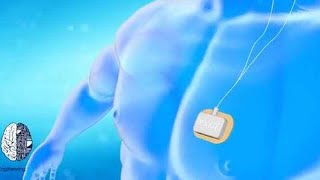
First-of-its-kind brain chip to treat mental disorders being developed at the U of M