How Raglan Signed 12 Clients and Launched His SaaS in 90 Days
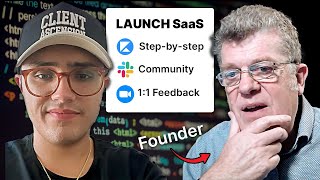
Raglan built and launched a SaaS called CGS Zone in 90 days while signing 12 clients. He shares his background in automotive and finance, how he found product-market fit, and the strategies he used through the Client Ascension program to acquire customers quickly.
That was the platform. It's called CGS Zone and we've now got something like 12 customers on there through Client Ascension.
What's going on, guys? Andre Haeckel Jr. Here from client Ascension. I'm here with one of our coolest students, just based on our off camera conversation we had up to this point all the way from the uk. Raglan, how's it going, my friend?
It's going fine. I'm not sure if I'm your coolest. I'm probably one of your oldest students, but.
Yeah, well, it's a neat position for you to be in. Right. So I think that's the first thing that's worth pointing out here, guys. Everyone knows Client Ascension is kind of like the college replacement for young entrepreneurs that are already, you know, showing product market fit with their agencies or with their services or whatever it is that they're doing with online business. And catching up with you here off camera for the past couple of minutes, your experience goes well beyond that. You talked about working in the automotive industry, you talked about working in the finance industry and then working in consulting for the last, I think you mentioned, 21 years. That's almost before I was even born. And so there's a lot of knowledge and wisdom, I'm sure that comes with that. And so I'm really excited for this interview specifically because it's unique in the fact that I've not really had the chance to talk to anyone that's gone through Client Ascension with as much experience and background as yourself. And so I think your perspective on your experience and how you've been going about the program is going to be awesome to hear about.
Excellent. Looking forward to it.
So awesome. If you could just get us started with a quick introduction of who you are, your background, and then we'll get into how you found Client Ascension and why you joined and all that great stuff.
Yeah. So in a nutshell, I was a nerd and got very into electronics and computing. So Steve Wozniak and Jobs were my heroes. My father was really enthusiastic, but it shaped what I wanted to do. So I went to university and I did electronics and computer systems. And then at the time, my dad was going through a few business downs basically. And although I always wanted to be an entrepreneur, I sort of took a different path. So I went into some of the largest corporations I could and I went into research and development, first in the defense industry, making missile guidance systems, and then I moved into the automotive industry. I joined the automotive industry at a really interesting time. So it Was cars were just going electronic before then. Everything was mechanical. The brake booster took vacuum off the engine, provide servo assistance. You didn't have all the sensors, everything was wired. There weren't data buses and things like that. And that was all changing when I went in. And they were very receptive to my defense ideas. And I remember saying, what could you do with a car if you could sense the environment? And then 1988, I wrote down everything. So collision avoidance, autonomous vehicles, the list went on and on. And then the company, much to my surprise, said, well, great, here's some money. Crack on, start developing these products. So over the course of the next 12 years, we developed an autonomous car, we developed adaptive cruise control, we developed a steering control system. And if you put them all together, the car drove autonomously. This was back in 1993 and we did 17,000 miles on European motorways with this vehicle. And everybody was just, you know, gobsmacked. And this was. I had an awful lot of PR exposure. And then quite quickly, because of that pr, certainly not because of my all round automotive experience, I was put in charge of automotive R and D, then basically became head of chassis Systems. My company was bought by the US firm trw and then I was in charge of chassis Systems. That was a team of about 1200 people with enormous commitment to putting all of these things onto the market. So my lane support patent is the basis of something like a $78 billion market. So intelligent driver assistance is just about on every single car. Now, a lot of people don't actually like it, but it was, that was kind of some of the cool things that we did. And if you take your hands off the steering wheel, it will follow, but then it will beep for you to put your hands on. But that patent was licensed by Tesla, by Google, by every car company, by every tier one automotive supplier and a whole load of other companies. So that was the pinnacle. But by then it was very difficult family life. So I was traveling all over the world. I had engineering centers in Germany, in Detroit, in the Midlands, in Japan. And nowhere was the right place to locate my family. And I actually had a car crash. I fell asleep at the wheel without getting any of that usual warning stuff that you get, you know, you normally feel yourself nodding off. This I just was out like a light. And I realized actually this lifestyle was not good for me. Just going from one airport to another. By this time I'd moved to Detroit. So we actually went back home, we moved to the south coast and I went into the financial Industry and the company I joined, they made ATMs, banknote sorters, bank counters, and they even made cash as well for about 123 countries. And I thought, that sounds pretty cool, I'd like that sort of quality control on the end of line with a big baggy jumper, you could just sort of scoop it up. But it was a very different industry, finance. There was much less love of the products and the technology. It was all about relationships with central banks and doing deals and things like that. And I wasn't really so well equipped for that back then. I was still an engineering nerd, fundamentally. And then in about 2003 I did a deal with the company and I left with a payout. They wanted to break up the research and development teams anyway, so it kind of suited everybody. And then I walked down the road and I thought, my God, what am I going to do now? I've got three children in private school, we had a nice house, we had a very high income lifestyle. And that went to zero. And quite quickly I was burning through cash trying to figure out what was I going to do when I grow up. So I drifted into consulting. And I had a good, a very big network. So I did consulting in defense, in automotive and in finance. And anywhere where firms needed technology help, I would support them. And these were big clients. So Toyota, Hyundai, BAE Systems, they're still a client of mine to this day. The list just goes on and on. Hundreds of clients I supported. And quite quickly it was clear that actually they needed way more help than just the technology. It was the management of technology, it was the strategy, how do you introduce it or whatever. So I sort of, I made a lot of money doing consulting for a number of years and then I started bringing on associate consultants and so on, but I never thought it was a proper job. So I wanted to get back to engineering. So I started my own engineering business. And before I knew where we were, we had 20 people on the books. We were in a four year lease on a science park. We were doing really cool projects. We were making robots for the Ministry of Defense, we were making smart signaling systems for Transport for London. But I was also doing work for General Motors and all over the world, companies making cool stuff. And then of course we were in a very bad place when the financial crash happened. And then I realized the problem with an engineering company is you have lots of assets, you have lots of people and they can't hunt for themselves. And I was ending up. I couldn't get more projects into the pipeline and yet, contractually, I had to complete all the projects that I had on the books and then lay off the staff as soon as they became available. So you can imagine how that made the projects go slow when people realized there was no future. And also I'd gone back to doing consulting just to pay the wages. So I got myself in a terrible mess, ended up putting a very big amount of money back onto the mortgage, trying to just manage my way through that. Came out the other side, 2013, and have very strongly been consulting ever since. I've totally repaired all the finances I've managed to put away. Personally, I'm completely fine now for the rest of my life and so will the children. But I still have that itch to create a startup. And I did do a few startups in the 2000s, and some of them were more successful than others. But I really wanted a startup that could actually get work towards creating a passive income stream for me. So about three or four years ago, actually, no, go back about 15 years ago, I developed a cloud platform for delivering consulting projects. So this was before at Lation and Trello and asana and Monday.com and this would allow me to have visibility over all the projects that we were delivering to people through my associates. And I only ever used it for my own purposes, not thinking it would be very useful to anybody else. So I then, you know, just thought, well, that's a handy tool. It's a really good project management system. And when Kanban boards came along, we added that. When all the different sort of project management features came along, we put them in. And then I was really mad when I discovered that Atlation raised half a billion to launch Jira and Trello. And then ClickUp raised $350 million to do that. And then Monday.com and asana. And then I realized, damn, I've missed that boat. And I had a platform for doing it all along. So about three or four years ago, I thought, I'd like to come back to that, but actually do something slightly different with project management. And also when AI came along, we piped that in as well, so it can now analyze all your documents and do all kinds of cool things. And the original premise was at the moment there's two worlds. There's training course where you just go through lots of videos and then there is a project where you do stuff and nobody has combined the two. So I thought, well, maybe I could go into the training market and encourage people to lay out the training material into a project format. And then it is all execution oriented. And I thought about that because all of the projects that I've worked on, the biggest delaying factor is waiting for the right expert skill to become available to do some of the tasks. And so my idea was if you put all the right guidance in there, then you could take a competent professional and you could make them a supply chain expert or whatever else you wanted to do. So when they are allocated to that activity, they can, you know, what is it I do? Well, you follow the guidance, then do the tasks. But also thought about it and I thought, well, AI can help generate the guidance, AI can generate quizzes. So you're in this situation where if you allocate somebody to a task on your project, you can then test did they understand the information and they were quizzed. Then when they did the deliverable, did it pass review and now they've actually turning that knowledge into action and then when they pass the review, did the project then go on and achieve the business outcomes that it set out to do? So you've got this complete traceability back to, from training to what is most effective. So I started developing this project and I've got some developers who I've been funding working on that. And while I doing consulting for very big corporations and then I suddenly started realizing I had that uneasy feeling that I hadn't actually achieved product market fit. This made great sense in my imagination, most things do, but it hadn't sort of had the hard sort of grounding in reality. And those two worlds are very demarcated training and project execution. So I then chose Client Ascension as I know that I can use Client Ascension and all their material to start developing the customer side of things and then I can start testing everything on customers and then pivot accordingly. And that's exactly how it's transpired. So a year ago I had what I thought was a good idea, plus I'd spent quite a lot of money developing it. Now a year on, I can taste what success looks like. I've got this very scalable platform and I kind of think why would you have a training platform like Kajabi if you could actually lay it out on a project with a dashboard and actually get the results that you wanted? What business owner, if they're funding staff training, they want the business results, they don't want the staff skills for them to just put it on their CV and go off and get another job somewhere else? So that was the platform, it's called CGS Zone and we've now got something like 12 customers on there. Through client ascension.
That's awesome.
I could have got way more, but I've been quite finicky because I've wanted to sort of bed things down slowly. And I'm actually now thinking because I'm building up all these sales funnels and I'm big, you know, so you've got all the. I went through the Facebook training, I went through the LinkedIn training. I realized actually the LinkedIn was very time consuming. Christian, my coach recommended you need to talk to Farooq. Farooq's now on the books. He's doing the marketing. I probably get a qualified brand new customer from LinkedIn every week now.
Wow.
I just had one this morning. So gradually we're beginning to get that traction. And when you develop something, it's so tempting to stick your head in the sand and just stay in your lab developing it. But you have to go and face the harsh reality of an indifferent market and we're not there yet. I had a wild goal of $50,000 per month by the end of the year and I'm not going to make that. And also at the same time I've been downturning the actual on site consulting that I've been doing for the big corporates and things. So that's coming down, but this is steadily coming up. But way more important than that is I'm changing the proposition according to the feedback that I'm getting. So for instance, I thought to begin with that what people would want would be the project management platform with the ability to put the training in and an analysis capability when any of their documents that they upload they can actually analyze that. They do want that. And I targeted consulting firms. But actually what consulting firms want even more is, is new clients. And so I've developed a project based on a lot of what I've learned from client ascension called the LinkedIn power connector for how to get new leads coming in from LinkedIn, how to set up Sales Navigator, how to set up your landing pages, how to set all of that up. And then also I put into the project platform my white labeled go high level as well. So any clients get all the go high level tools. And then last week I did a deal with Trey Smith. I think he's Frank Kern's cousin and so I'm white labeling some of his stuff. So his ability to generate sales funnels and books and things like that, that's really exciting because that's come exactly from client feedback. So they want the clients and then they want the project management to deliver to Those clients and they want the discipline of project management so they can oversee their associates, that they're actually doing the right things.
That's exactly it. That's exactly it. Wow. That's a lot of experience and knowledge and wisdom all bundled up into that one product solution that you're bringing in the market. So that's. That's super exciting, I guess. How has it been in Client Ascension? So, like you found service providers in Client Ascension, you've obviously shared this idea with other students and with other coaches in the program, especially Chris, who's helped you kind of framework the actual goals and game plan and action items to go and acquire customers for this. What have your interactions been like inside of the actual community, running this idea by students and coaches and having some of them even go as far as testing it?
So I'm a very poor community operator. I kind of. I've got a lot of stuff going on. But Slack has been brilliant because I can do it through the mobile phone. I use the videos a lot as a structure that works really well. I like the discipline that Christian Stoltz applies on me because I have a tendency to go after shiny things. And he basically just keeps saying, yeah, but this month you said you'd have the landing page, really, you know, no excuses. So I think that's been really useful. And then in the community, where I have got round to it, yeah, I've linked up with various people and probably my best buddy now in the community is Farouk and he's become part of my enterprise and his team in Northern Lebanon. But there's something else as well, which is very difficult. Client Ascension is fundamentally very entrepreneurial. I was delighted at the start. I attended Oren Claf's talk that he gave to you, if you can remember that, who wrote Pitch Anything. I read his book, oh, I don't know, 10 years ago, whatever, and suddenly realized, oh, that's where I go wrong, because he's all about a player and how do you do deals and how do you sort of. So it was like week one of being part of Client Ascension. You had Aaron Claff on a private workshop group and I was able to get a couple of questions in. And I think he's right in the ethos of it all, you know, sort of a real entrepreneur, but a deal maker. And I'm going to need those skills in a few years time when I come to sell this business, so. And then hopefully I'll do another one after that. But I always want to do the customer development part in parallel, you can't develop a product without doing that.
So true. That's so true. Awesome. And in regards to developing the product, getting clear on the target market, getting clear on things like pricing strategies or just the overall sales process, what calls or coaches have been most helpful to you so far?
Well, I learned a lot from Alex Riddle, although I think that's gone now. I learned a lot. Oh, crumbs. Nick Verge. Nick, first of all. So Daniel, that was cool. I kind of. I got it all. I've been a product guy all my life, basically. So, you know, the offer, the guarantee and all of that kind of stuff. It's very difficult to work out. How do you bootstrap yourself when you haven't got the case studies? When you haven't got this, you haven't got that. So I thought that was quite interesting. You're going to have to be more aggressive on the guarantee and then just gradually phase that out as you replace it with a load of proven case studies. So that got me going in the right direction. Then I watched, went through all Nick Verge's stuff and Nick Verge went and reviewed my offer and he said that's just way too abstract and complicated. He just made it real, basically. So that was cool. I took Nick Verge's questions and I stuck them into my system. So in the LinkedIn power connector, you've got questionnaires where you answer questions about your customers and your marketplace and then you just run his questions on it. And it will create a framework where you've got all the sales arguments organized by your offer, the guarantee, the proof points and all the various things like that, which is really helpful before you write a letter. So I sort of put that all into the AI. So I always start there. You know, every time I'm thinking of a new offer or a new landing page, I start putting in all the raw information. The market brief, which is what he talks about. The system will create an empathy map for me, so I kind of can visualize the avatar and then just gradually marshal all my thoughts. And also one of my customers is doing that and they're a recruitment firm and they did exactly that. And they got it to create a proposal for the Saudi government for. Well, it's a 6 million pound project, basically, so fingers crossed. We're hoping we might win that. But basically my system, using Nick Verge's questions as well as a few strategy frameworks, has created that. And they just think it's magic, this company. They just can't believe it. And when the client phones them up and they've got all the information and they've got all the background information like Saudi 2030 and all of the reports and somebody will say, well, what are you doing about digital health? And this company just goes and says ideas for digital health and it will just come and list them all, all out. And of course then that, that all got into the proposal as well. So I think, yeah, there's been a dissemination. I've gone through my six months at Client Ascension and I have every intention of now staying and playing the monthly amount to stay in this community and you've kind of got it covered in all. I mean I haven't even got round to doing the cold email yet. LinkedIn is providing more people than we can properly onboard at the moment. Because I am trying to prove the SaaS system as well as the. I'm not really doing this just to make short term bucks, I'm doing this to create something for the long term and it's more important engagement and learning from customers. I know that when I'm ready and all the sales funnels are working then I can just sort of ratchet them up. And that was probably be when I start the cold email campaigns as well.
That's awesome. Yeah, I mean that's kind of the beauty of the program as well. There's so many different ways you can go about taking action. Right. You can do the ads with Alex Riddle as you mentioned, you can do the VSL with Nick Verge, you can do LinkedIn outreach like with Jeremy and now with Farooq. You can do cold email. This week we're going to be going more into like doing Dream 100 outreach. We have a guest coaching call scheduled for that on Wednesday. It's just, it's non stop. There's just so much things you can always be doing and that's a fun part about business as well. There's never a dull moment and the fact that you're in it not just for a quick buck but to just do it the right way, onboard clients at a smooth pace, not overload yourself. It just makes me excited to see where this project goes for you. So what is your, your goal? Obviously to go fully into SaaS eventually. Where do you go from here?
Well, I think there's a couple of things. So going fully into SaaS, I will still get to that 50k dollars a month which I should be able to do through the SaaS, particularly with these new capabilities that I'm adding to the platform. But there are other tunes that, because I've been forced to engage with some of those clients early. So, for instance, the recruitment firm in my program, they're also a member of a network of 29 international recruitment firms. So I'm now on their communications panel to try and improve their communications and branding as a whole. So I fully expect all 29 eventually to come into the SaaS system as well. Engaging with clients, you suddenly find new ways of adding value. And then, of course, the other thing is, if a client buys from you a project template to do something, the next thing is they want, well, can I have some coaching with that? Great. And they like the idea of being able to do it themselves, but they often can't get the resources because they can't get them out of the day job. So the first thing is, could you coach us? And I can manage that really efficiently through my platform. But then the next thing they go is, well, we're not being able to resource this. Can you put some freelancers onto that? So I can do that now. So marketing Northern Lebanon, that's kind of the center of excellence that's growing out from Farooq's network. But also my client, which is the recruitment firm, they've got thousands upon thousands of interims on their books. So interim resources. And then I can then introduce the client to, look, here's some resources. Here's a project framework, and I'm there coaching it. And we can bring all of this together so that you get the right impact that you want. And, you know, these are bigger companies that I'm doing. You have to demonstrate you're not one man in a garage kind of doing this stuff when you're talking about Toyota or Hyundai or whatever. So I think, you know, what the Internet is enabling is this organization of an awful lot of freelance resources into something that's way more as a whole than the sum of the parts. And I think that's a trend that's going to carry on. I mean, the big four consulting firms, they're shedding people like Topsy at the moment. All of those people join alumni. I'm a PwC alumni. And then the next thing is, PwC will find they're competing with those people. So I think consulting is going through a lot of disruption. My platform and customer development through client ascension will help lead that charge.
That's exciting. That's exciting. Awesome. Well, thank you so much, Raglan. This has been an absolute pleasure. It's been so cool to hear your story from where you first started, where you got to now, how you use the program like client ascension and where you're going ultimately with building this SaaS and this product. So it's really exciting. I'm sure you're super excited to just continue building and learning from the community that you're in. And, yeah, man, it's got to be a lot of fun.
I mean, a message, perhaps, to older folk. So my wife wants me to retire. I've got the resources, but I won't really retire because I'll just trade my corporate bosses for a new one, which is my wife. And I'm just in no hurry to stop working because it's what's keeping me young at the moment. And I think, you know, so anybody who's older who's thinking of coming into this program, this is your second or third career opportunity. You certainly don't want to retire, because what. How can you retire from business? It is the lifeblood of so much of everything.
Amen. I love that.
Yeah. If there's anybody else slightly more mature, then steer them my way and I'll put them back on the tracks.
That's awesome to hear. That's awesome to hear. Well, definitely will. We had a couple of guys a little outside our ICP that have joined, but. But not nearly enough. And I think the community. You add as much value to the community as you get out of it, just because you're. You're there. Your presence. This interview alone, there's a lot of wisdom and golden nuggets in here. So I appreciate you sharing your time and your story with the audience. And guys, if you're listening, if you're inclined Ascension, be sure to reach out to Raglan in Slack as he's on his mobile. He has that app downloaded, and we'll see your DM there. And then Raglan. Where can everyone learn more about your SaaS? What's the website or where should they.
CGS zone.
CGS. What is it again?
Sorry, Zone. That's company growth success Zone.
Zone. Okay, okay, okay. CGS Zone. Awesome. All right, well, we got all that covered, and I'm excited to put this out into the rest of the community and have them to hear more about your story. So thanks again for the time.
Excellent. Well, thank you very much, Andre, and thank you for all the support that you've given me.
Absolutely. Thank you, Raglan. Great to talk. All right.
More from Andre
Russel Brunson, Client Ascension 2023 Event & ListKit Update - Members Lounge Special