The Best Marketing Agency To Start With $0
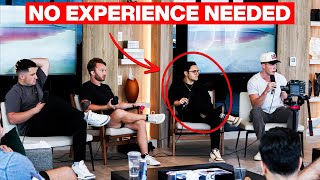
Lucas and Andy from Client Ascension talk with Andre Haykal Jr about starting a marketing agency from nothing. They cover hiring your first people, tracking metrics that matter, and what actually works when you have no budget to start with.
Welcome to the Sauce, the official podcast of Client Ascension, the premier online business coaching community. Every Friday, your hosts, Lucas, the head expert coach at Client Ascension, and Andy, a student success coach at ca, bring you exclusive interviews with the top coaches, founders and high performing students from within the Client Ascension community, as well as the latest info, tips and hacks on what's working in the online business space. Let's get into the.
What is up and welcome back to Client Ascensions the Source. I'm Lucas, the head expert coach and I'm here with Andy.
Hey guys.
And I'm Andy, the head student success coach at Client Ascension.
Yeah, today's gonna be a cool one. We got some interesting updates. So it's been a few shakeups CA and even more coming soon. So we just hosted the incredible legendary Dean Graziosi for his talk. The game has changed. It was absolutely fantastic. Really, really well done. I think the students got a lot, a lot out of it. We're looking to get some more guest coaches coming in asap. Always looking for new people that kind of have our experts in their industry to provide as much value as they can to the students. We just did a big visual overhaul to the Kajabi. Made it way cooler. I made it way cooler. And we have a number of other other things planned for the job I think are going to be really interesting for everyone. And of course, as we mentioned previously, we still have the Tampa event in October coming up. It's going to be fantastic. There are tickets available for that both on the all of the client essential founders Twitter pages and if you're inclined, Ascension, keep in mind you do get a discount. You can find those discount links in the announcements channel. I believe it's $500 off for some of the tickets. The there's both standard and vip. VIP is a definitely the move. It's. You can ask anyone. Check out Andre's YouTube channel. Sees just what those VIP nights are like. Students get a hell of a lot out of it. So getting into it now, I'm going to leave Andy to introduce our guests.
Yeah, guys, we have the man, the myth, the legend here, our co founder of client ascension, Mr. Andre Hakel Jr here. How are you keeping, brother? It's great to have you, dude.
I'm, I'm so pumped to be here today. I bet I've been a fan, I'm like a closet fan of, of this podcast, which is funny because I'm one of like the co founders, right. But like you guys obviously took the initiative to start this on your own. And I'm a fan, dude. And I feel like almost like. Like just I shouldn't be here, but I am and it's just really cool to be here with you guys. And I almost feel like I should have talked the entire podcast because I just enjoy. The audience can relate to this too. I just enjoy hearing you guys talk and chop it up. So anyways, yeah, it's a miracle yet.
Yeah. Yeah, it's shocking. Like I was saying, it was really funny when I listened back to the. The one we did with Connor recently on the email marketing pod. And there's like 10 minutes of just some email marketing. It's like we were all going red, holding it in. They were just like. And Ireland, Cornell, temporary. And it all just came out. Guinness.
Guinness.
Guinness. Yeah, they all came out. Drink. Yeah, it was great as well. Beautiful. Yeah. No, it's great, though. I hope you enjoyed the podcast. And we get a ton of like, talk to all the coaches and everything like that and get. We're gonna be getting some more students on very soon. I think Andy would do we have. We're say who. Yeah, but do we have some students booked in, I think, for a podcast next week? Yeah, yeah, we got two of our. Two of our shining stars. Our best boys are going to be on the. On the podcast. We're going to be great.
Yeah, yeah, that's.
Oh, it's going to be fun. So, Andre, you're obviously, you're the founder of Client Ascension, and for a lot of people that don't know the story, you know, when you were starting your agency with Dan and Christian at Knowledge X, you went into Cold Email Mastery. You met Daniel Fazio, and then all of you came together to create this client's edge. What I really, I think I'm most curious, how did that conversation go about what was the moment the four of you were together and you decided not to only make a program for cold email, but for business in general. Like, top, bottom, like, how did that conversation start and how did it become what it is today?
Yeah, just like anything else in business, there's always a lead up to the main thing that people know it for now.
Right.
It wasn't just like client essential was an idea and poof, overnight it happened to be what it is today. There was a lead up to it. And so when. When we were in Cold Email Mastery, Daniel actually had like a private telegram version of Cold Email Mastery called All Access Pass. And you just had to pay a little bit of a premium to be in there. And in that Group. I was just super active and in providing value to the point that Daniel, you know, started to notice and just reached out to me to be like, who the hell is this kid and why are you adding so much value to the community and just wanting to chat and see what's up? And so from that we came, we became boys, and we both respected the work that we each did very much. I had a really successful cold email agency and so I was able to help a lot of the guys in his program at the time. And then obviously he was just very successful with selling info products and running businesses. And then I also had Dan and Christian who who just had various skill sets and other facets of running a business. So we initially came to the conclusion that we should collaborate on another info product. So Daniel had Cold Email Mastery and nothing else after that. And I identified an opportunity to say, hey, I'm in Cold Email Mastery. And I would find it valuable if I had access to a product that showed me not just how to send cold emails, but also how to capture as much opportunities from the cold emails I now know how to send, meaning how to, how to book as many calls as possible from the positive replies. So we created info product called the Vault. That was Daniel's second best selling info product of all time after Cold Email Mastery. And right then and there we knew like, we were really good at working together, but we didn't want to do more info products because there's like a means to an end with an info product.
Right.
And Dan, Christian, I had background and experience in starting and running group coaching programs for other experts, not ourselves at the time, because there's nothing we could really teach in a, in a business coaching program at the time. And so we had a bigger vision of let's just go high ticket. What are we doing with our time with Low Ticket? And if we wanted to go high ticket, we have to kind of branch out from just doing cold email.
Right.
And it's also what helped us become successful in our own businesses. If we're only good at cold email, we would have nowhere near the same amount of success that we had with the agency, with the SaaS and or with the coaching program. The reason why what we did work was because we were good at all things in business. We're good at marketing, we're good at sales, and we're good at fulfillment. And we knew that most other businesses, especially from the Twitter space, were just focusing in on only one of those things and wondering why they can never get their business off the ground. And so just as like a takeaway for the audience, like if you're building a coaching program or if you're wanting to help people, help them based on what you did to help yourself. I think that should be like the premise and the requirement of every single coaching program is that what you teach is what you've actually done successfully. And that's exactly what Client Ascension was. It was just what are we doing in business right now that works? And it was delegating the responsibilities of all the things that are required to run a business. It's not just sending cold emails is also fulfillment, it's also sales processes.
Right.
And so we just taught that to other people because we were confident that it worked for them, because it worked for us. And so like to me that was the simplicity of a successful coaching program and how to get it off the ground.
Yeah, I think that's a very good point there. Like, you know, about the, it's something you've done yourself. You know, I think that that's one of the things that some people kind of jump into. Maybe there's some people you'll think like off the rip, having done nothing before, I'm going to start a course and it's like, dude, you haven't done it yourself. Like, how would you know? I was getting going to work, you know, So I think that's a really important kind of thing in the space is how much experience in doing what you're, what you're teaching. So yeah, it's great, it's great to hear that. You know, also, just reminder, you mentioned the vault there. You do get that for free if you join Client Ascension, you do get free access to the vault. So. But yeah, that's a toast.
The most valuable things we've ever put together. Like it really is because a lot of people send cold emails and then they fumble. I like to say they fumble at the 1 yard line, meaning they get the positive response and then they think their job is finished and it's like, no, like you still have to follow up on that person and get them to schedule in a call on your calendar. And that's where most people drop the ball these days is they fill up their inbox with responses but they can't convert any of them to a book call. So in on top of the vault, we also have Orey, our response handling coach Incline Ascension, who does weekly calls where we can go through actual responses and he'll like basically write the response for you based on what we know gets people to Convert. So it's a big area of focus in our community.
Yeah, absolutely.
One question, Andre, that we tend to ask most of the guys that we have have on is about kind of, you know, we've had Mario on Mindset, Coach, you've had Connor audio marketing. You know, a lot of these industries have kind of changed quite a bit since they started out. So I mean, you guys over, I'd say is one of your businesses, right, that you guys run. Is it, is it three you have now or is there more? Is probably more.
There's three businesses that we have right now.
Okay. You know, and they're all extremely, extremely successful. So if you were to start fresh tomorrow, kind of, you know, knowing what you know now, what would you do to like kind of set up and start operating a business?
Yeah, I think the first thing that you have to identify is an offer. Right. Like what is business at the core? It's get. It's providing a service or a product to help another person or the masses.
Right.
And so if you're sitting there identifying like, okay, what service or product can I offer that helps people? Usually it's something that again, you've done yourself to help either your own business or some other area of your life.
Right.
You guys have Mario on. I listened to that episode and he talked about how he got himself out of a very dark place. And that was before business was even a thing for him.
Right.
So. So he used that experience and that skill set to then create a business around it.
Right.
And it's the same thing that we've done. If you know my story about how we got in the cold email in the first place. I sent my First Cold Email 7 years ago to try to get someone on a podcast. I had no idea what lead generation was or what an agency was or what a sales process was. I was just trying to get someone on my podcast. And so because I found this channel that was effective in getting guests, high level guests like Neil Patel and Guy Kawasaki and all these really big names on our podcast as college students. No, no name college students, I could then translate that skill to other places that serve the businesses needs, such as lead generation.
Right.
And so if I'm starting a business, I want to identify what skill sets or past experiences I have that can serve other people and their needs and their pain points well. And then once I've identified what that is nowadays, at least in this landscape, and knowing what I know now, and having run a coaching program, an agency of sas, the first place I'd start is with an agency that's as productized as humanly possible. And so that's what I've been telling a lot of guys in client attention especially is like move towards productized businesses because they scale a whole lot easier and it's not easy to do. But if you can productize your service or your agency, you actually now have an asset or a business that doesn't require you to go out and start a SaaS. Because the reason we started a SaaS is because our agency was built in a way that wasn't really exitable. Like we couldn't sell that business because it wasn't productized. Every time someone signed on, there was a new system that we had to follow. And even if we wanted to sell it, we could sell it maybe for a 1 or 2x multiple. That's no fun. And so why do people get into business in the first place? It's to help people, but it's also to create enterprise or exit value. And we couldn't do that with the agency and we can't do that with client ascension. And that's not the point for either of those businesses. So that's why we brought in the SaaS company. So if I were to start over, I'd just do a productized agency that runs like an agency, but also like a SaaS and also mixes in coaching as well. And I'd go all in on just that one thing. And so I would take aspects of all types of models. I don't think you just have to stick to one. I think there's something that can be taken from each.
Right.
And an example of that could be like a content marketing agency, right, that makes YouTube videos for info, product owners and coaches and consultants. And so how do you productize that? Well, you make it really simple. Maybe you just do the thumbnails, like you're just a thumbnail agency, or maybe, maybe you're just the editing arm of the agency. How do you make it into service? Or, sorry, like a SaaS, you can build out a project management system that's so good with analytics and all these other things and make that part more attractive and automated so that it's not required for you to do the fulfillment most of the time. And then how do you make it coaching? Well, in addition to the service and the different tools, you give the person access to coach them on how to now get the most value out of your service. We did that at Knowledge X and it was game changer for us. Not only did we generate cold email leads for people. But we gave them an entire training and education platform that they had access to on how to manage their sales process after we did our job. And so a lot of guys incline ascension. They'll have a cold email agency, they'll get the person results, but that person turns because they couldn't close any of the calls that the agency booked for them. And that has nothing to do with the agency. Or at least that's the story you hear these agencies telling themselves. But that's not true. You could have controlled that by bringing in these other aspects of the different business models we run. So long story short, and you guys can cut me off at any time because I like to handle. But long story short, like we run all these different business models, but really if I'm starting from scratch, I'm running all different aspects of these business models to promote just one thing.
Yeah, I think you mentioned the term there. You said, you said control the different aspects. I think that's a very important part of. Part of kind of a lot of. A lot of deliver like deliverables as an agency. Right. Is that a. I see this a lot with like the. I think it's where the growth partner kind of model is so tough is because if you want that to be effective, as you said, you can't just get in the leads. You can't just, you know, like they don't have a sales training in place on a sales team, place where they have isn't good. You then have to control the sales outside of things, you know, and then like you, they. When it comes to fulfillment, you have to be kind of some sort of oversight in that as well. It's like you have to have a like deep understanding control over every kind of every part of the process in order to get a kind of larger end result. Which is why I think as you mentioned, like product services are definitely becoming more, more popular which are kind of more focused towards a singular aspect of that that you have full control over. You know, as I said, if you're going to do like a thumbnail agency is like you can control the obviously the design, the look and then the kind of metrics they're going to get as a result of these improved thumbnails and things, things like that. So yeah, just having control over as many parts of the agency as possible is definitely, I think a really key kind of takeaway from that.
Yeah. And dude, I mean, I would say the gross partner model is the last resort if I were starting out again, I strongly disagree with that model. For, for lots of reasons that we could get into on this podcast. But really, what is the growth partner model? Well, really all it is is selling a high ticket agency service that has really no defined deliverables, meaning that you're just charging high ticket to do everything that that client now wants you to do, whether it's all of their marketing or all of their sales or all of their content in social media. And so there is no definitions to what the scope of work is, which means you're a slave to that client. Yeah. And what gets people into the growth partner model is the fact that, oh, you have as little clients as possible with the same amount of revenue. If you had 100 clients with another agency. But it's just saying you have multiple jobs, you only have two or three full time jobs rather than having an agency that's productized and can run without you. Yeah. And so it's not about having more or fewer clients, it's just about having a business that, that runs like an actual business. Meaning it doesn't require you as the owner to be there at every single turn.
Right.
Running a productized business, you can have like we have with client ascension, over 500 students in the program and with our agency, over a hundred clients and with our SaaS, over 1500 active users and still run it like a business.
Right.
Like my workload has not changed since we've started any of those companies. It's just what I do in those businesses change. And those are all businesses, not side projects and freelancer gigs.
Right.
The growth partner model is just a, you're a glorified freelancer at that point. And the selling point again, where people get coerced into thinking the growth partner model is so attractive is like these big contracts. And all it is is saying, hey, this person signed $120,000 a month contract for me to be their client. But all they're saying is they agreed to 10k a month for a year. But how often have you got into a contract with someone that committed to a year but opted out because you couldn't fulfill or because they wanted to go in a different direction? How often does that happen? I know people in the audience watching this may have been in multi month contracts that didn't actually pan out that way. What's going to happen when that person wants to churn early? They're just going to turn. Well, you have illegal fees to fight it. No, never. And so I'm not really interested in playing that game of like selling people on the fact that they could get six figure clients by being a growth partner because it's misleading and it's also not going to get them to build any enterprise value, right?
No, no, no.
It's.
You're a glorified contractor, essentially.
Yeah.
You know, Andre, one question that I think is something that as well, when it comes to business owners again in the agency space and when it comes to like operating their business is really that threshold and that point of when, when they should probably make their first initial hire. And as someone who's scaled the team up to over 50 team members, like you know, say the guys at the kind of the core, beginning that 5k to 10k range, you know, do you think they're at that stage where they should make their first hire and you know, how do you, would you begin the team building process for even just a standard agency?
Yeah, yeah. And I love this question because now we're going in the direction of, okay, we already talked about the growth partner model. We already talked about all the different business models out there. Let's, let's get into building a real business, right? Like we teach in client ascension. A business that can run, and it's not to say a business that can run without you. It's just a business that can run in a way that doesn't require you again, to be at every, every turning point. And that can provide opportunities. Right? I just wrote my LinkedIn bio again this morning and I'm thinking there, like, how do I want to describe myself and why I'm in business? And the reason I'm in business is to provide opportunities for life changing experiences, not just to the customers and clients I work with, but also to the team members I work with as well. And again, I just feel as some of these business partners, you're not running a business that can create opportunities for team.
Right.
It just, it just does not work out that way. And so one of the things I'm most proud of with Client Ascension and List Kit and Knowledge X is the teams that I've built across each business, especially with you guys. Again, like I said, the start of this podcast, like, I'm a closet fan of this podcast and I have nothing to do with it, even though it represents my brand and one of my companies. And you guys are both leaders within this organization that I can trust with essentially everything that has to do with student success and client fulfillment. And there's a reason for that and there's a way that that has been structured.
Right?
You guys don't just show up and do Something random every single day. You guys have repeatable processes in protocols in place that you can follow and have confidence in working because we've seen it repeated over and over and over again. That's why client ascension constantly churns out case studies every single week. And it's the same story over and over again. It almost gets annoying, but it's the same thing over and over and over again. And that's proof of concept that this is a business that runs properly and has real value. And it's also why we've been in the game longer than anyone else. That's also one of the things I'm most proud about is client ascension. It might not be the most high achieving in terms of revenue in the fastest growth, but it's been around longer than anyone else and we've been around long to see people go up and people go down. But client ascension has been steady all along because of the way we've built it. So anyways, that's how we teach our students about their businesses as well. And so that's why you see a lot of client ascension businesses dominating the timeline on Twitter and other places. But to answer your question, Andy, about when is the right time to hire? It's hard for me to answer that question in a way that can relate to most people listening because the way I structured my business was I chose business partner first, right? So I can easily sit here and say, oh, I didn't hire until we got to XYZ amount in revenue. But that's because I had Dan who does all of the sales. I had Daniel who's a marketing genius, I had Christian who could play any role in the business at any time needed. So we all played different roles. So a lot of guys listening are probably on their own. Maybe they have one business partner, maybe not. So it's really hard for me to answer that question. And regardless of their situation, there's not a specific answer. It's not like when you get to 10k, that's when you need to start hiring or when you get to 25k, that's when you need to have three hires, right? I've seen different scenarios. My, my interpretation for when to hire, my signal for when to hire is when you have when something in the business starts to suffer because there's not enough time or resources to allocate to it. And so for example, if I'm a one man shop and I have so many clients that I spend all my time fulfilling the clients and so my marketing and sales suffers, I Need to hire someone to help. Either help with marketing and sales while I'm doing fulfillment or decide that I want someone to do fulfillment to so that I can do marketing and sales.
Right.
So as soon as something starts to suffer in the business, marketing, sales, fulfillment, right. Think of a business as those three functions working seamlessly together. That's when it's time to start hiring. Another way to look at this is when the work that you're doing yourself starts to suffer because you're spread too thin. That's when you should hire.
Right.
If there's some tasks that you're doing. For example, the best example I teach to Client Ascension students is when we ran a cold email agency. I spent so much time managing client inboxes to the point where there are so many inboxes to manage, I couldn't manage them all to the highest standard. And so, yeah, I'm getting the job done, but not to the standard that I had told my clients it would get done at. And so I knew I needed to hire. Same thing with Client Ascension. I'm doing account management. When students join, I'm following up, I'm making sure they're staying accountable. But now there's too many students, and I need to hire student success coaches to come in and, and take care of those students for me. And so the time to hire is when the quality of the work that you're actually doing is not meeting the standards you initially set, or when one function of the business or multiple other functions of the business is suffering because you're not able to dedicate enough time and attention to it. I always say it's a tough balance, though, because some people hire too early and some people hire too late. And so those are the signals you should go off of. But you should never hire or try to outsource just because you've hit a certain revenue level and feel now that you hit that revenue level, you can afford to, or it's time to hire. I just think that's the wrong approach.
Yeah, I completely agree. I've seen that a few times, just, oh, and hit 10k. So I'm just going to, you know, again, like a lead gen agency, for example, for cold email, it's just, oh, I hit 10k. Well, yeah, I'm going to, you know, hire an inbox manager now so I don't have to do that anymore. It's like, are you actually that stretched in to do that? Is that, does that make sense for you right now? Like, you know, it might only be, you know, if they're on like a retainer model. Might just be five clients. So yeah, five clients freely out of your bandwidth to inbox manage. Would you not rather scale and keep going and then maybe when you're at 14k with 8 clients then maybe look into an inbox manager. But even then, are you really that stressed in. Yeah. Something you go into it.
But yeah. 100. I think we often see as well some people hiring just for like just to fill a role that they think needs to be done. That likely could be like an automation, you know or like it could just be. Is not really that important. But they just like I think they just like the idea of being able to say yeah, you know, got a business this many employees or thing. I was like yeah, but you actually like need those people or how many are just kind of doing make work sort of stuff, you know. So yeah, 100%.
I actually learned this from Taylor Welch because we got in a position late last year with Client Ascension where we were overstaffed. We hired too many people. I got addicted to the feeling of bringing on new team members, providing a new opportunity, introducing new talent to the team. All those things I over hired and we became overstaffed. And what that does to a company is a really bad thing, which is it kills creativity and it causes confusion within roles and departments of what they're really there for.
Right.
It causes stepping on toes. And so I caution people against over hiring and hiring too fast and getting to a similar point where you're overstaffed and it starts with you as well. Like I think a lot of people have this pipe dream that like them as the founder or the business owner can sit back and kind of just chill where that's never the case. Like if you look at any good leader in business like Patrick Bet David or Gary Vee, like they are workhorses and they understand that it starts with that meaning the rest of their team is going to follow in suit to the amount that they are working. Whereas a lot of people have the wrong idea of thinking like hiring is just going to make it so that I can go, you know, on vacation this summer and be off slack forever and only be answering emails and spending four hours a week.
Right.
Four hour work week. And that's just not the case. Hiring is to provide opportunities to other people and then for, for you to level up within your organization. So if you feel yourself is not being creative because. And when you're, when you're forced to be creative is when you have too many things on your Plate.
Right.
If you don't have so much on your plate and you don't have a lot of things to do, you could just stay comfortable and kind of coast.
Right.
But when you have so many things to get done, with strict timelines and a team that's relying on you, you're forced to get creative to figure out how to get those things done. And so you should max out and stretch that out as far as possible before you decide to hire. And again, it starts with you. And so one of the things I had early on was like, you should run it until the wheels fall off and run it into the ground until it breaks, figure out where broken, why, and then bring in a solution to fix it.
Right.
Bring in the reinforcements. So that's the way I think about hiring.
Yeah, I think that's. I think you made a really good point as well there. And just in regards of like, you know, people have this idea that they're just going to hire staff and just coast. And I think it's that turning into that like almost influencer entrepreneur model that we see on Instagram. You know, guys working on a laptop on the beach. I only do, you know, I only work an hour a day type thing. And it's just like, wow, like that.
So misleading, bro.
So misleading.
It's like, again, I love to hear you guys talk, but there was just a lot that has to be said on this based on the questions that you're bringing to the table, which are great, but again, not to just bash the growth partner model. There's so many other examples out there like this, but every other model out there is selling you a pipe dream. That's just not realistic. And the one thing I pride myself about, what we do at Client Ascension is we're real with people, dude. We tell them it's not pretty, it's not sexy. You will have to work hard and long hours. That's what's required. And there's no other coaching program selling someone on the fact that this is not easy. It's not going to be easy. It's going to be very difficult.
Like, we see that. We see that as well with this, with the students that do really well. Sorry. Yeah, we see that with all the students that do really well.
I think people do well.
Yeah, the guys that are absolutely grinding, that are on every call, that are asking questions, that are implementing straight away, they're literally the ones you will see. Absolutely. Like just always in the WINS channel posting new screenshots and like the guys that, like you said Kind of. There have been cases of people coming in and seem to think it's just going to be like, either we do it for them or like, you know, it's just like a completely kind of easy sort of thing. They can sit back and chill and like, like they never do, do, do well. It's always the guys are going like, what do you need to do? Okay, great, I'm doing it. The next, like day or two, they're like, there you go, it's done. What now? You know, and those are the guys. Always crush it.
Yeah, yeah, yeah, yeah.
That's it. Guys show up every day from the front, right?
You lead from the front. People see the work that we're doing at Client Ascension and List Kit and Knowledge X and they know, like myself, Daniel, Dan and Christian, like, we're always pushing the envelope. We're not all of a sudden, because our businesses are doing somewhat well, taking a bunch of vacations and buying a bunch of toys and unnecessary material things.
Right.
That's never the goal of what we're doing. Our goal is to just continue providing more and more value to. And like you see that through our personal brands. And that's not even like, intended really. It's just who we are. I just get this feedback all the time. Like there's something different about Client Ascension and, and the guys involved. It's like it's not about selling a dream. It's. It's about living the dream that it is that's being taught within the program and in selling it accurately, not, you know, in a misleading way, which I feel like a lot of these programs have to do.
Yeah, no. 100%. 100%. You know, it's funny as well when we're talking about like people in the beginning of their business journeys as well. And this is one thing that goes really kind of operational and kind of like really into the data of things, but it's just the importance of tracking your metrics. Even at the, at the sole beginning of the. It's like, I'm generally a firm believer in this of like, if you're not tracking your metrics, you're not tracking how many cold emails you're sending, you're not tracking, you know, how many DMS you're sending, you know, you're not an accountable person, you're not actually doing your business, a service, you're not being accountable, you know, and Andre, I wanted to know your take on this as well. Like, you know, stressing this, the importance of even guys who are, to be who are thinking of starting their business. And even though they might only be making like $1,000, $2,000 a month with their business, they might think, I don't need to track it because I kind of know it. You know, how important is it to drag for even the long run just to, you know, create an actual trajectory of growth?
Yeah. Again, like, I think it's the, the reputation we set in the market for ourselves is we're business professionals. At the very beginning of any venture or company we decide to start day one, we show up as business professionals, which means we do things like a business professional does. This is not like a joke, right? This is not just a casual freelancer job. It's not a casual agency that's just off to the side, like, this is our career. And Daniel's been putting tweets out about this recently too. It's like most people in our space are just so foreign to, like, the concept of what real work looks like because they never had a job in the first place.
Right.
Eight hour work days, 30 minute lunch breaks.
Right.
Like, actually dialed in and dedicated to the work that they're doing. It's just such a foreign concept to people in our market.
And.
And I'm happy that we're at least ones that are educating people away from that misbelief.
Right.
And so tracking your numbers is just something that successful business professionals do. And so just because you're not at that level doesn't mean you shouldn't track your numbers. It's like, it's funny because people are like, I'm not there yet. And it's like, well, actually that's the thing you need to do to get there. And so you'll never get there because you're not doing the things that, that got the person there in the first place, such as tracking your numbers early on. And I think people think about tracking their numbers as like, as a way of like, oh, track my numbers to. So, like, hold me accountable to the things that I'm doing. But it's more so. So, you know, as a business owner, again, think about business as a machine more than anything else. If your business doesn't operate as a machine, it's not a business. Again, it's just a glorified freelancer job. Your business needs to operate like a system in a machine, meaning you should know the buttons to press or the inputs to give it to get a certain output. So a lot of people, they'll. They'll go into business, they'll throw a bunch of stuff at the wall. They'll sign some clients and then they won't even know why they signed the client. And then they'll start losing clients and they don't even know why they started to lose clients because they're not tracking anything. And so right in the beginning, you should track everything. Track how many emails you're sending, how many DMs you're sending, how many check in messages or reports you're sharing with your clients. Like there's things that need to be tracked. And that's one of the best things we ever implemented at Client Ascension. If you guys talk about it on some of your upcoming interviews with students, I'm sure they'll say the same. But those business health audits that we do, every single. And it's such a simple track. But I mean, Andy, you can speak on this as a student success coach. Like the business health audits, like, what are those?
Like, so the business health audits are a monthly conducted meeting where basically we take all of your facts and figures over the past month, tracking everything from your cold emails sent to your DMs, your sales assets posted to what's going on in your pipeline, to how many calls you had, how many calls showed up, how many deals you close. And the importance of all of this is that it identifies where any weak links in your business are. And it's also an accountability tracker of. It's like, you know you're sending cold email, but you're not doing DMs. Why aren't you doing DMs? Like is most unutilized and people don't realize when it comes to scaling their business. It's like cracking the code for all of these areas in your business, all these acquisition channels that you could be using. You can't just solely be reliant on cold email. It's a great barrier of entry. Begin your business. And one, but you can't be solely reliant on it. You need to test multiple times with your offer and the messaging in your offer of how to crack cold email. And then when you've cracked, you've cracked that code. Brilliant. Then you need to go with DMs. Like, it's shocking the amount of people that will go, Yeah, I said 100 DMs, no one responded. So I'm not going to do that anymore. And it's like, no, you're going to keep doing it until you get it right. Like, that's not how this works. You keep going until eventually it's like, okay, now I Know, if I send 300 DMS a month, I'm going to get three or four booked meetings. It's like perfect because sending those 300 DMS, as tedious as it can be, that is what's going to bring in three or four calls additionally a month. And if you can close one of them, the lifetime value of that acquisition cost essentially is extremely high. It costs you nothing to do. And then it's going to be the same with your organic content and building that Funnel and your YouTube presence and your sales assets. So you get inbound leads, you become a magnet then to your clientele, showing your authority in the space. So and then after that, then you're ready for like the likes of paid ads, you know, creating even longer funnels and even like a low ticket product to, you know, funnel even more clients in. And like that's the way you need to be going. You need to crack the code of all your channels. And that's what the importance of this business health audits are. That and to see if you are bad at sales and if you're bad at sales. Yeah, I got to bring you over to David and he's going to flog you.
So, yeah, accountability thing, right?
Absolutely.
On input. So business is a game of inputs.
Right.
Again, if you built your business in a way that it operates like a machine, it means that there are certain inputs and certain volume of inputs that if you put into the machine, it'll give you a specific output. And it's your job as the business owner or operator to figure out what those inputs look like and how to make those inputs work.
Right.
Like you're saying at the end it's not just about sending 100 and saying it doesn't work. Maybe you need to send 300 or 500 to get the outputs you're looking for. Or maybe the 100 you sent were. And so you need to improve the quality of your inputs.
Right.
And so there's no way to get visibility on that if you're not tracking your numbers religiously early on.
Exactly. But you need to face the music of it. And at the end of some of these BHAs, you can see like, oh, I actually thought I was doing a lot this month, but I wasn't. I was like, yeah, you really weren't. You know, you can again get yourself kind of mystified by all of these shiny object things you can do in a business that sounds fun to do but are not actually moving the needle in your business. Yeah, Business health thought it's our design so it's like you're going to face the music for accountability of your actions and you will see the numbers increase by the people that stay accountable and are tracking and are putting in the inputs that they need to, to actually move their progress.
It is crazy. Like, why do you think so many people know about client ascension? Like, it's in part due to myself and Daniel and Christian and Dan having, you know, personal brands. But it's, it's further represented in the market by the quality of the businesses that come from it, in the work that they do.
Right.
And I think that's a testament to like, what we teach in the program is like, again, we get them tracking their numbers and the volume of the inputs that they're doing and that shows up in the market. Like people come across client ascension agencies and they know where they came from because of the work that they do, because of the way that they carry themselves as business professionals. And so I think that's so important with tracking and knowing what works versus what doesn't work, and knowing that also you have a student success coach, essentially an accountability officer that's going to be there waiting for you to report your numbers. And one thing I love that we do is we survey our community at the end of every month so we know how people are sending, how many inboxes they're setting up, how many DMS are going out. And so if we see someone falling behind the rest of the crowd, it's really easy to just be like, yo, you only sent 1200 DMS this month. The community average, just the average, just 2,500. Like so if you just want to be average, you have to more than double your output. But if you want to be in the top 1% of this community, you got to send 10x to volume. And so to give people real data and real metrics is such an advantage.
Yeah, absolutely. So Andrew, I know you're a big like kind of organizational operations guy, right? You know, I was always blown away by, even when I first joined CA as a student, how quick you responded to DMs and stuff like that and just how on the ball you were with the, the community. And then, you know, as I started kind of working with you and seeing just how much stuff you were doing, I was absolutely mind blown by the sheer volume of kind of like day to day tasks you had. So, so my question is like when you're kind of running three businesses, you know, and you're so heavily involved in all of them, what does your day to day actually look like and like when you wake up to go to bed, like what does that sort of schedule like you have a set schedule do you kind of just do things that come up, like what's the plan there?
Yeah, it's, it's a little bit of both. I always reference this quote from Gary Vee, but he references himself as a firefighter, meaning he wakes up and he just puts fires out and he doesn't know where the next fire is going to be or where it's going to come from or how big it's going to be. But what he does really well is he handles it. And so I kind of look at myself as the same way. I kind of just solve problems as they come up in the business. And there are some things that obviously that are set in place like weekly meetings with specific departments and team members and with founders and in with students and whatnot. But a lot of my calendar my day is unpredicted because who knows what will come up. But the key to success there and being able to respond to problems proactively or reactively and not really knowing where my time is going to be allocated every single day is having a solid team of a players in place.
Right.
Like we have at all of our businesses. And the reason that's important is because there's core functions of the business that even if there is a major problem or a major fire that you have to put out, the other things, the day to day things that are supposed to be happening in the business should continue on to serve.
Right?
And so I can't do that if I'm putting out fires. And so I'm grateful to have a team of a players right across all the businesses, over 50 team members that can handle that. And so I rely on my team more than anything else. It's not like I'm managing multiple companies all by myself and I'm responding to every single problem and I'm in every single conversation. It's just not the case. I have an amazing team of people that I trust. Again, like you two leaders in organizations that can own specific parts of the business.
Right.
How Lucas owns the team of expert coaches. So even though we have 18 expert coaches at client attention, I know that if I ever needed to get in touch with them, I could go through Lucas rather than going through all 18 of them. Or like how Andy manages the student success coaches rather than going through each of the the sscs, I could just go through Andy and I know he's got that team organized and under Control. So it's having an amazing team, an expansive team, but also identifying and, and promoting leaders within that team as soon as needed.
Right.
As organizations and departments within the business get bigger and bigger, you need to establish leaders that you can trust. Louis has been another great one. Shout out to Louis. He's kind of been my sidekick for a very long time now, especially on more of the done for you service side of things. But my day to day is really just responding to messages as they come up from team members and then working on, you know, higher level projects that continue to take the business in the right direction. I do a lot of case study interviews, I ask a lot of questions, I talk to students. I think one thing most business owners miss, especially as they grow to a point that our businesses have grown, is they stop talking to customers. And I think that's such a mistake. And like one thing I always make an emphasis to do is talk to customers. So anytime someone joins Client Ascension, I personally DM them a week later asking how their first week in the program was they. And just through that process I've identified so many things in onboarding that could be improved.
Right.
As you guys have seen, because a lot of those things you guys also helped with and went on to implement. And then every month I survey the community of, of what's working for them and what's not. And so I have a really good pulse as to like where we are at as a community and where, yeah, the agency model is at or where cold email is at.
Right.
So we can stay ahead of a lot of these trends that people are now seeing and then struggling with and, and then also the team as well. Like talking to team members every single week. Andy knows this. I've been meeting with him every single week, one on one for over a year now. And, and we're just talking about students and what they're struggling with. And so I'm coaching Andy in his role and, and one thing that really stood out for me there in terms of a learning was when we did the book study on unreasonable Hospitality last year.
Yeah.
And he's talking about in that book, Will Geardra talked about in that book how you have this urge to focus on the customer as a business owner. But at some point you're going to have to give that up and focus on the team and trust that the team can then go out and serve those customers.
Right.
In the beginning it's easy to just focus on the customer because there is not so many of them. But when you have 1500 people using your software and over 100 agency clients and over 300 to 500 students at a given time in our coaching program. There's just no way I could make it all around as often as I need to. But what I can do is spend the quality time with my team, pour into my team so much so that they can then pour into all the rest of the students. And so there's got to be a hierarchy. And I think I've gotten really good at, you know, just playing my role and not again, the way it's managed as a machine.
Yeah, absolutely.
You mentioned they're like, surveying the students about. About things. That's something that even I've done on. On calls, you know, to just kind of like, even on my coaching calls be like, you know, is there anything outside of, you know, we're talking about here that you guys are struggling with anything? And, you know, one of the things came up is, you know, we. We. Our coaches produce a huge amount of content, you know, and there's a lot of. Of stuff in the program, and some of the students were kind of finding a bit tough to kind of get through that. So myself, Andy, have worked on a little project that we're going to be announcing soon, you know, that will hopefully streamline that whole process, give them kind of more of a. An easier flow through the whole initial stages. But, you know, it's that sort of like speaking directly to people, saying what are just the common things that I'm hearing that I think are really important. Another thing you mentioned there was being kind of in tune with the coaches, too. It's. It's 100%, from what I've seen that, you know, the. The market trends as things change, whether that's in the realm of cold email or if it's in, you know, social media, algorithms or things like that, there is always someone, a coach and ca. That has the inside track that is already like a step ahead of, you know, and it's like the first. The. The I usually see, like in our community first, the solutions to these problems that I eventually see a few months later on Twitter. If, you know, people like posting and retweeting about things. Oh, you do that for a while now.
Oh, yeah.
You know, like it's 100. It's great. I think just having that access to that, you know, the sheer amount of, you know, our coaches are all agency owners who are themselves dealing with these issues. They're finding the best ways around them and then immediately sharing with the community. So I think that's one of the big advantages we have.
Yeah, it's like the classic meme. Like, you see, and you're like, oh, that's cute, you know? Yeah. Yeah.
Do you know what it is, Dawn? It's. It's one of the things I think we were almost proud of being part of client ascension and coaching and client ascension is just the level of mentorship that we give to people. You know, for me in my role, the one thing that I'm most proud of is when, you know, again, I can talk to some of the. The older guys, like your Jordan Nelson's, and, you know, some of the guys are a little bit more refined and have a really, you know, already coming in with a pretty established business already. And I really enjoy working with them and helping them really scale and getting them up to the next, like, you know, 40, 50K. And that, for me, gives me a lot of purpose. But what I love is the mentorship of the younger guys, you know, like, you know, Erwin Cronk. And then, you know, like, he went to like 20k in like 3 weeks because he just jumped on a call me and just did what I told him to do. And he was like, oh, it works. And I was like, I know. No. And so on Sturdovant. Exactly. Brendan Tgalia is another one that's of.
Course, the golden boy himself. The golden boy, Aan, you know, is.
Like, like, yeah, it gives you so.
Much fulfillment and it gives you so much purpose, and it's the thing that, you know, drives me the most, you know, when I'm doing this job and like, again, Andre, working with you, like, again that first year of me and worked together, you were mentoring me every step. The way the one to one calls was really just, you know, a coaching call, a training exercise of, like, how to do this now to effectively, you know, manage these teams and manage these guys and, you know, help them scale their business. And I was always curious to know from you, like, because I know you seek mentorship when you are in the beginning phase. Who was your greatest mentor when it came to you and your business?
Great question again. Yeah, you got to practice what you preach, right? And so at an early age, I was super blessed to be surrounded by two great mentors and my dad, who was an immigrant from Lebanon that built a real estate empire in the US and so I learned a lot about business and really just common sense principles from him that. That I still reference back to. And my grandpa, who went a little viral on Twitter there, who exited multiple businesses for millions and millions of dollars.
It was so funny seeing those tweets. Like, like I saw you saw your father, I was like, oh, well, this explains. I don't, you know, like, so this explains it. That's how we do it.
Yeah, it's a cheat code. It really is. That's why I say I'm so grateful and blessed. Like, I, I've got a front row seat for my entire life up to this point, watching those two guys operate at just such a high level that it inspired me to obviously want to go out and do the same. And so at the very beginning, they were my two closest mentors and still to this day are my mentors. But even more recently, like guys like Taylor Welch, I really love his model and kind of the direction that he's been going in with his business. Cole Borden runs a really similar model to what we're building at Client Ascension as well. And I posted it publicly. I think I even hosted, I guess, coaching call on this. But like last year, we spent over a hundred thousand dollars on coaching programs and masterminds, and I think it's a cheat code for me specifically because I don't join those programs just trying to get information as a student. I'm also trying to research as another coaching business owner to see what do they do that we can apply.
Right.
So for end of month type forms, that's something we implemented in January because we saw Taylor Welch do it inside of his program.
Right.
So I wouldn't have had the idea for end of month type forms maybe as soon as I did if I, if I weren't in, in Taylor's mastermind or what we do on the sales team, learning all those things from, from Cole Gordon. And so I learned from others that I see doing it at a really high level, and I've always been that way. And I've always found different angles to get more value than the average person. Again, like when I go into a coaching program or even when I buy an agency service, I'm not just there to get the service. I'm also there to see what is their onboarding process. Like, how fast are they to get me time. The value.
Right.
A thing that we measure in agencies. How quick do I get the value? When do they ask me for a testimonial? Do they ask me for a testimonial? What questions do they ask me on the testimonial interview? What additional value do they provide outside of just their core services?
Right.
All of these ideas are valuable. In addition to what you're actually paying for. And so I've always taken that approach. And, and most recently, I've done this with events as well. And so we've hosted some pretty baller events here at Client Ascension. Like the one we, we talked about coming up in October will be the next one in like, I've had no experience hosting events ever until just recently. And in the first two that we did, we sold out over I'm your tickets for thousands of dollars. We did one internationally in London. That was a smashing success.
Right.
And the reason I'm able to do that is because I went to the events. I went to Gary Vee's event, I went to Myron Golden's event, I went to Grant Cardone's event. And I'm there of course, again to get the value and to learn from these guys. But I'm also keeping notes in a completely different area on how this event is being run.
Right.
And I showed Taylor Welch at his last event. Actually, we, we, we kind of bonded on this at his event in Colorado. It's like I, I showed him my notes on the event itself and the content and then I showed him another note in my phone that I took on how they operated the event and different things they did to make the experience just so amazing. And that note was longer than the one from the actual content itself. And he thought that was awesome. And it's something that he could relate to because he does, he does similar things. So I always learned from the greats, dude. I've never really come up with anything that's, you know, an Andre original. And so I credit all my success to these guys that I've just had the privilege of spending time with and being around.
Amazing. Amazing. You know, we usually kind of go into a wrapping up of these podcasts when I ask some of the other coaches, like, you know, what would you say to someone who's considering Client Ascension, but I mean, considering you're a co founder, I mean, it could possibly be a little bias. A little bias, maybe just a bit, but maybe I. Maybe more. So the question for you is, like, who is Client Ascension for?
Client Ascension is for a business owner that knows they're capable of more and wants to get there faster. I think the common mistake that or the common misconception that is out there in the market about Client Ascension and other coaching programs is I'll join when, right? Yeah, I'll join when I hit 10k a month or I'll join when I sign my next three clients rather than join now. So you can sign those next three clients or so that you can hit 10k a month with the business. And I've seen time and time again because one of the core functions I do in the business is I interview all of our successful students and I ask them the questions of when did you find out about Client Ascension? And then when did you join and why did you decide to join at that time? And there's countless stories but the common theme amongst all the stories is people join Client Ascension. The people that get the best results join Client Ascension when they are not necessarily ready or comfortable about that decision and join. And I just think there are so many people out there in the market that look at Client Ascension on the outside looking in and they're just thinking to themselves, man, I can't wait to be in a place to join that program. And a year goes by and two years go by and they're still looking from the outside in and it's because they're putting off the thing that will get them, the thing that they know they need to get to, right? And it's just such this, this, this mind trickery that you play with yourself of like I'll ask the girl out when I go to the gym more consistently, right? And it's like, it's like these things that you put off in life, you can, you can apply it to any other aspect of life and it's like the decision is never going to feel comfortable. It's always going to be pressure on and that's what you need. And that's why high ticket coaching programs in general work as well as they do is because you're betting on yourself. You're making a real bet in terms of a financial investment that might not look on paper like a smart one, but because of that you have to, you put yourself in a position where you're forced to make the most of it. And again, I've seen guys that join Client Ascension, they'll put it on a credit card or they'll invest everything that they have in their bank account or in their business account to join, knowing that they're going to put their ass on the line and do everything that's required of them to make it work. And so again, I think Client Ascension is a community of killers that want more out of life and want more out of business. I think is for people that have been playing the game of business in a way that's been unfulfilling and, and maybe non, not growing the way they wanted it to because there's Just not a model or a machine in place for them to have predictable scale because of what they've been taught by other programs. Whether it's again, the growth partner model or more of a freelancer model or some other pipe dream out there. Yeah, it's really for people that want more out of their business and maybe they're not so comfortable to make that decision now. But if that's the signal you're. You're facing, it's probably telling you something.
So, yeah, even speaking from it, from firstly, you know, I spent a year messing around essentially doing freelance work. I made more money within my first three months in CA. Within three months, I hit a 20k model on CA. Then I did in a whole year of trying to do it myself before, you know, because I didn't have that direction. I didn't understand how to formulate an offer properly. You know, I got on a call, Don shouted exactly what I did at me, and I just did those things. You know, it just works, you know, it just like, like everything. I was big joke that, like, I'm in charge of like our Kajabi learning platform and I've only gone through maybe like 10% of it because within the time it took me for, as a student to go through, I'd already started signing clients. Was like way, way farther ahead. You know, it's insane.
Accelerate, right? Like put, put it this way, if you can guarantee the result, like for say, Lucas wanted to get to 20k. That was always his goal with his agency. If he could, if he could know for certain that if he joined this program, he'd be at 20k in 3 months. How soon would he decide to join that program? Would he have waited a year to make that decision? No way. And the thing is, there's no certainty in life. So you always, especially in business, business is the ultimate form of putting your ass on the line and betting on yourself. And you have to be willing to do it. It's not just going to be one time that you have to do it, like joining client ascension. You're going to have to do it essentially every single day. When others are not willing to bet on yourself, you're always going to be the one having the bet on yourself. And so start that trend now if it's not been a trend already.
100, 100%. Listen, brother, thank you so much for joining us on the podcast today. It was genuinely a pleasure having you.
Thanks for having me again. I wish I didn't talk as much today.
No, no, dude, that was incredibly valuable, incredibly valuable.
I'm happy to hear. I'm happy to hear. But shout out to you guys, really, because a lot of things I talked about in this interview, it's like it's not possible without the leaders within the organizations that we've built. And so Lucas and Andy, you guys are absolute killers. I'm. I'm so blessed and grateful to have you as big of a part of our team as you are. And the audience, I'm sure, feels the same way. Getting to tune into this podcast and get some laughs out of it and just get to know you guys more and more.
Appreciate it.
Thanks so much, man. Really appreciate it, dude. Thank you. Right. We will see you next time, dude. Right. Thank you so much. Thanks everyone for tuning in and new episode out next Friday. Talk to you all later. Bye.
Peace.
You.
More from Andre
Russel Brunson, Client Ascension 2023 Event & ListKit Update - Members Lounge Special