As War with Iran Lurks in Wait, How Did We Get Here? w/ Dr. Arta Moeini
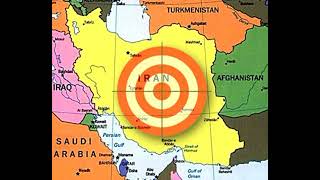
In this Parallax Views interview, host JG Michaels speaks with Dr. Arta Moeini, an international‑relations scholar at the Institute for Peace and Diplomacy, about the escalating risk of a U.S.–Iran conflict. Moeini explains that recent Geneva/Oman talks are largely posturing, with Iran offering limited economic openings while refusing to compromise on core sovereignty issues such as missile development and enrichment rights. He contrasts divergent diplomatic strategies: Turkey’s incremental, nuclear‑only approach versus Israel’s demand for a comprehensive package that would curb Iran’s regional power. Moeini traces the policy trajectory from the Obama‑era JCPOA, through Trump’s “maximum‑pressure” campaign, to the current back‑and‑forth between sanctions, sabotage, and limited talks, arguing that the U.S. seeks to exit the Middle East while still needing a reliable partner, a role Israel hopes to fill. He characterises Iran as a modernized, semi‑totalitarian state with sophisticated surveillance, indigenous missile and nuclear capabilities, and a population that is increasingly Western‑connected yet divided from the regime. The Iranian leadership, he says, views any concession as a threat to revolutionary dignity, making war a credible option to restore perceived strength. Moeini warns that a war would likely spiral, causing massive U.S. casualties, regional destabilisation, and severe disruption of oil flows through the Strait of Hormuz, serving primarily Israeli hawkish interests rather than American or Iranian welfare. He critiques neocon‑style war‑talk as Orwellian, suggesting that realistic, pragmatic engagement—potentially involving U.S. economic participation in Iranian nuclear and energy sectors—offers a better path, though he remains cynical about the current talks. The interview closes with Moeini directing listeners to his institute’s website, his digital magazine Agon, and his X/Twitter handle for further analysis.
Chapters
I'm JG Michaels, and this is Parallax Views. Hey there, Parallax Views listeners. Before we begin this edition of the show, I'd like to remind you that I need your support on Patreon at patreon.com/parallaxviews. One more time, that's patreon.com/parallaxviews. It is you, the listener, along with my one sponsor, Mike Swanson of Wall Street Window, that makes this show possible. So please, if you can, support me on Patreon. I'm not making as much money as other alternative media commentators, and I'm taking a different approach to a lot of other commentators where I really try to interview different people and pick their brain without telling you what to think. So if you appreciate that, patreon.com/parallaxviews. Kick me some spare change. Also check out Mike Swanson's wallstreetwindow.com for the best financial and trading news. I've had listeners make a return on investment from Mike's trading tips, and I believe if you subscribe to his newsletter, you can still get a copy of his ebook for free, The Two-Fold Formula: The Single Best Trading Pattern I Have Ever Used. So head on over to wallstreetwindow.com for all your financial and trading news needs. Now with that out of the way, it looks like we are very likely to be going to war with Iran. Uh, there's going to be strikes. It seems like something is going to happen within the next few days. I usually don't make predictions, but, uh, the air is tense right now. I've talked to people in DC, interacted with people in DC, and there is a sense that this is going to happen. So a few days ago, I spoke with, uh, Dr. Arta Moeini PhD about this and about how we got here. I'm sorry if I sound a little bit, uh, off, but I'm just very concerned right now with the point we're at in regards to Iran. Uh, anyways, Dr. Arta Moeini PhD of the Institute for Peace and Diplomacy, an international relations expert, joined me pretty impromptu to discuss how we got to this point with Iran and his views on why this will be a disaster for the American people, for Iran, even for Israel, and of course for the Trump presidency. This conversation was pretty impromptu and there were some tech issues that had to be worked out, but I think it's a conversation worth listening to. So without any further ado, let's get right to it with Dr. Arta Moeini PhD. Of the Institute for Peace and Diplomacy PhD. Welcome to Parallax Views. A guest that I've wanted to have on for some time now. A special thanks and shout out here to Christopher Mott for helping make this possible. I'm speaking with Arta Moeini PhD of the Institute for Peace and Diplomacy PhD. He's an international relations theorist, and we're going to be talking a lot about Iran. And I guess there's some talks in Geneva today. What do we know so far?
So this latest— first of all, hi to your audience. But this latest round of talks are just an ongoing sort of conversation that both sides have a lot of red lines around. And It's mostly, for me, I think it's mostly posturing. I don't see necessarily something coming out of it. But if your audience remembers back before the 12-day war in June, there were negotiations and nuclear talks before Iran was attacked by Israel and the war started. So those negotiations were frozen amid the ceasefire. So the recent pressure and ramping up of the pressure on Iran sort of brought back these negotiations from the dead. And there was a first round in Oman, which the two sides basically exchanged the parameters of the talks, whether it's going to be on a nuclear issue or not. It seems very, again, ambiguous whether or not, for example, the talks are only going to be restricted to the nuclear issue, or if we are going to have a much bigger talk that has to do with Iranian defense industry and missile defense and ballistic missiles, things that Israel really wants to be included. In these talks and in any eventual deal. But I don't think, again, that we are getting necessarily close to an agreement. The two sides met. Iran has offered another proposal, which this time involves much more opening to US businesses and trade in Iranian sectors, key Iranian sectors, including oil and gas. But again, I feel like the distance between the two sides on the red lines is very big, especially because Iran has made it clear that it will not negotiate on things that it finds ultimately fundamental to its sovereignty, including missile defense and its rights to enrichment. So Iran is willing, according to reports, to pause its enrichment, and enrichment is not ongoing at the moment. But now the US side is asking for the full dismantlement of the Iranian nuclear program, which is basically all of the enrichment facilities capability. And that's not something that I see Iran accepting. So I think we are on an unfortunate path to confrontation.
I wanted to talk a little bit here about the approach to these talks and whether different parties would like to see different approaches. What I mean by that is I know that Turkey's foreign minister a week ago was saying that the best way that the US should approach the talks is to focus on one issue at a time, be very incremental, focus on the nuclear deal, don't make a comprehensive package. Now, I think Israel probably has an issue with that. I think Israel wants like a sort of comprehensive package with this. So can you talk a little bit about how Israel plays into all of this?
Of course, the Iranian nuclear issue from a realist perspective has very little to do with American security. America wants Iran to have a deal with it so that it can sort of stabilize the situation for the Middle East and Israel. So Israel has always sort of And this has happened over a number of years. It has moved the goalposts. So the very idea of the zero nuclear enrichment was introduced very rather recently. Donald Trump signaled that he's willing to, that all he wants is for Iran not to have nuclear weapons. And Iran, especially under Khamenei's sort of viewpoints and the experience of Iran-Iraq War, has had a red line for a long time. Defeats many hardliners and realists in the Islamic Republic wanting a militarized nuclear program. He has declared a fatwa years back that has basically, you know, legally, morally, religiously, in Iran it's all combined, basically prevented Iran or forbid Iran from developing nuclear weapons or any weaponized aspects of the program. So, so Iran and the United States could actually talk about the fact of, you know, what would a credible, verifiable deal that doesn't have nuclear weapons look like? And Iran is willing to do that for the removal of sanctions. And, you know, it's even willing to kind of sweeten the pot by allowing the United States to be back in Iranian economy, something that hasn't happened for you know, basically decades, you know, 45 years at least, 47 if you want to go back to the revolution. So that is where we are. But the question that Israel has, Israel doesn't have the same interest on Iran that the United States has. The United States has, especially under Trump for a long time, wanted a comprehensive deal, but a comprehensive deal that amounted to basically Iran changing its posture towards the region and the United States. And, you know, Iran basically joins back with, you know, a more normalized relationship and a détente, or maybe even an rapprochement, normalization with the United States. I think that is what Donald Trump has wanted. And his way of going about that is maximum pressure and coercion, which has not really worked, to be honest, in one sense. But it has made Iran it has pushed Iran into a corner of having to decide whether or not to have a war or capitulate. And this is the thing, when you push too hard, again, the diplomacy becomes kind of problematic in the sense that it becomes more of posturing rather than real opening. From Israeli perspective, this is an altogether different question. It's a question of Iran historically being a regional power and Israel wanting to be the regional power. I don't think this is a matter of, intent. I think the Israeli doctrine, security doctrine, for good or ill, has changed after October 7th. Israel no longer looks at just what is, you know, how can we have necessarily a relationship or talk to someone that doesn't want to destroy us, but actually capability itself is the problem. So any country that has the capability to be a threat somewhere down the line is an issue. And so they take the Iranian rhetoric also very seriously because it helps their power projection in the region. So from an Israeli perspective, weakening Iran as an entity, as a country, has always, you know, it's not always in the sense of all of Israeli history, but has since Netanyahu came to office and over the past 2 decades has become the Israeli sort of model, and they have been trying to get the United States involved in their own wars. One way or another to get to use this opportunity where the relationship between Israel and the United States is still very close to change the security architecture of the Middle East, the power dynamic of the Middle East. And Israel right now, again, this is their analysis, believes that Iran is at its weakest point and it's ready for picking. Again, the question that the Trump administration has is whether or not that's something that they actually want to do, like, because they are in fact worried about other allies in the region that don't want the chaos that comes from a regime collapse, for example, or a Syrianized situation or a civil war, like all the things that happen when you get rid of a central government or central government collapses. Iran is a huge country, 93 million people, sits in the middle of the Middle East, oil reserves and many other things. So This is the worst-case scenario for everybody. And my analysis is that the Trump administration is very aware of this, and that's why they're trying their best to try to contain this. But again, war, once it starts, it can get out of hand and get out of your control. And the last thing I would say on this is some people believe that, well, we had this war once, nothing really happened. All the realists who were talking about doom and gloom were proven wrong. This is the most sort of like hawkish position that some like Max Abrams and others say, like, you know, realists were wrong because the war didn't go out of hand. Well, that's not the case because the 12-day war, Iran had a very different calculation about what that meant at the time. Iran was responding in proportional and measured ways to the Israeli attack because it thought that, you know, it can withstand and sustain and it didn't regard that conflict as existential. Well, the Iranian calculus has now changed. The Iranian calculus over the past 9 months has become very much bent to the realist strategic side of the Iranian political system, which basically says we are in a constant series of war. We have always been in a hybrid war since Trump got in office. That's an economic war, an information war, an intelligence war, and also a kinetic war. And unless we actually make a stand, their goal is to destabilize us and erode us every 3 to 6 months. That needs to stop for obviously a whole host of reasons, because a country can't function if it's turned into Syria. So the way for the Iranians to do that is to then actually put a line in the sand and actually, you know, do a little bit of a Trump Mad Men theory themselves and say that if you do anything to us, we will act as if it's our last breath. So the perception of weakness of Iran in Washington, plus the feeling of being cornered in Iran, is a recipe for a lot of escalation and disaster.
I want to get more into that. I also want to ask, so in terms of what I mentioned with Israel, Is this an issue for Netanyahu of our window of opportunity to deal with Iran is closing? You know, if the US gets this deal done by focusing narrowly on the nuclear issue and Trump goes off to deal with other issues or global priorities, then we're going to have to go at Iran alone. Is that the sort of concern that Netanyahu has.
Yes, that's a very good point. I think the Israelis are not idiots. The Israelis are tactically brilliant and they understand also the situation in the United States. They understand that they have lost anyone who identifies as left, progressive. They also understand that they have basically lost America First, the real genuine America First. And they have the boomers and they have, you know, some people in the middle. So the support of Israel is going downhill and has been for a while. So they probably, they still have control over US Congress through the Republican Party. But once this boomer generation is out of tenure, out of office, they're going to have a big problem. And so they probably see for themselves a window of 3 to 4 years, probably this administration, to actually, again, reshape the Middle East in the ways that they want because both the strategic direction of the United States is away from the Middle East. That's why Trump is interested in Iran in the first place, I believe. And so that's the first part. So America is going to be focused elsewhere, the Don't Row doctrine, economic competition with, and technological competition with China and other places, and more regional world by definition means all these things. So Why not piggyback on American power while we can, use it as much as we can, pound all of the enemies that we have, get rid of, you know, weaken them as much as possible, and put ourselves in a very good strategic position moving forward, you know, come 2028. You know, Israel will be the regional hegemon in waiting. All the other countries are weakened, which is why They're already starting to talk about Turkey. Now, Turkey is a whole story because first of all, it has historically had territorial claims and imperial position in the Eastern Mediterranean, but also it is a member of NATO. So it's a very different situation. But so every time, you know, what Israel doesn't understand is that this kind of projection of strength by weakening others can only go so far as long as America is there. Because again, you need to find a way to act like a normal country in a region and get along with your neighbors. If you don't, you're going to pay the price over time. Netanyahu is not interested in that. He has personal reasons for not being interested in that. He has hawkish reasons for not being interested in that. He has ideological reasons for not being interested in that. But I think, I've said this for a long time, I think Israel needs to act more in a pragmatic, realist way rather than in a sort of a force-first way, projection-first way. So, you know.
Now, in terms of Iran, can you speak to how we got here? Because how did we go from, you know, the Obama era where we had the JCPOA to Trump getting rid of it and everything that has come since. I mean, what's your analysis of how we've reached this point where there's a constant fear that this could escalate into a war or a military intervention?
How did we get here from 47 years ago? Or how did we get here under Trump?
How did we get here? I was thinking under Trump, but—
So again, I think Donald Trump came into office with a very different understanding of what US interest is. But also having a sense of like, we need to project strength. And if you show the might of the US military, we're going to get others to do basically what we want. But he also knows that there are limits to that. So he's willing to, for example, entertain China, entertain Russia. But if you're weak, he will pound you because that's an opportunity to show the sort of the the might of the American empire. At the same time, I think Donald Trump has long had a different view of the Middle East. He wants Iran and Israel to get along so that he can, as I mentioned, so that America doesn't have to be so involved in the Middle East. He doesn't want to be involved in the Middle East. His instinct is to draw down US troops. We just had troops withdraw from Syria. We have had, we basically are, you know, in the process of drawing down from Iraq. You know, our relationship with Iraq is, you know, now in kind of a limbo, with Nouriel Maliki in line to be the prime minister. And So it's a feeling of we don't really get much from the Middle East and at the same time we need this Middle East to be stable. And the reason it's not is because of the Israel-Palestine issue, which he has created the border of peace around it and the Iran-Israel conflict. So how do I solve the Iran-Israel conflict? Now, again, the instinct of Donald Trump is to make a deal, but then the Iranians are also an ideological state which don't want the sort of the, The very premise of the JCPOA was that we make this deal, which completely deconflicts us and puts us on a path to perhaps, you know, lowering tensions and doing business at some point. But that doesn't mean we have to normalize now. That doesn't mean we have to change all of our posture in the Middle East, all of that stuff. So it's, you know, very incremental step by step. Perhaps even too much for Iran's own benefit at the time. And that posture, which is basically the strategic posture of Iran under Khamenei, the second leader, supreme leader of Iran, has long sustained itself. Khamenei has basically sees himself as having inherited the revolution from the revolution's founder, and sees himself as, you know, in a very sort of mix of Islamist and leftist ideology as resisting the global hegemony of the ones who basically will force their way and are imperial powers and want to colonize you, basically. And so his entire philosophy has been we will resist. But that is an ideological also posture that he believes that ultimately if we resist long and hard, and then at some point we will be victorious. And I want to make sure that these principles of the revolution, these ideals of the revolution of resistance will go to the next generation when I die or I'm martyred. So it's a very kind of ideological, even theological view of the conflict. On top of that, though, there are Iranian national interests, such as the nuclear issue. Like, Iran needs to have nuclear power to compete with, you know, other middle powers, regional powers, countries that it considers it's equal in weight. And Iran wants to have and largely has developed an endogenous missile program technology in lieu of, or instead of, or because of the sanctions not allowing it to have a modern air force, right? So there is a national interest that really does not change much even if you change the regime, then there is the ideological framing of the sort of world history that justifies in Khamenei's mind, the Iranian Revolution and his own position. And so he conflates the two, which means that to defend Iranian national interests, we should not back down on our revolutionary principles. And for him, America has shown itself to be a bad faith actor. Such as Trump ripping up the JCPOA. So the same way that the Americans and Israelis say, well, there is no credibility on the Iranian side on the nuclear issue, they say openly that the Iranians lie. The same thing is happening on the other side when they say that the Americans cannot be trusted and they lie or they just want our destruction. So we have a very We have two worldviews that just cannot gel. At the same time, Trump has proven himself to be less ideological than any other recent US president because he's a transactionalist. He believes that if you pressure them and bloody them and put them in a corner and then offer them gold or offer them a good economic deal, Basically, he sees his enemies as he would act himself, right? Economic benefit, material benefit is a good thing. So why wouldn't they take it and come out of the sanctions? And all they have to do is to give up certain things that we don't want them. But again, he doesn't, or the Trump administration in general does not understand, not just the role of ideology, but the idea of sort of Iranian national dignity. And what that, you know, Iran has struggled, did a revolution to get a feel that it can also do things and reach technological advancements in key areas. So it doesn't have to be dependent on US largesse. Under the Shah, Iran had one of the best, you know, most modern and effective air forces in the world. Well, one of the most modern air forces backed by US the US military, you know, in fact, to this day, the sort of the remnants of the Iranian depleted air force are American F-14s and Tomcats and, you know, other systems that, you know, were bought during the Shah's time. And so Iran didn't have a very sophisticated air force. And yet it was all dependent on the United States providing it with these tools, almost like Saudi Arabia and other countries in the region, with the exception of Turkey and Israel. So the idea of having an endogenous, even if asymmetric deterrence, is something that is very important to the Iranians, and they're not going to give that up easily. So again, the idea is, we paid and you gave it to us, and then you could decide not to give us, as you did, and we wouldn't have a defense force. But now, I mean, this was from the very beginning, a revolution that really cherished independence and self-reliance. Again, this is one of the first sovereignist revolutions in the 20th century. Long before there was this kind of idea of anti-globalism in the West, I think this is the spirit. Even though the spirit came from a much more sort of Islamist and Marxist angles through that lens, the spirit was we want to be independent, we care about our national sovereignty, we don't want to be told what to do.
Now, in terms of the strategy the US has taken, I mean, I guess to me it's strange. I felt like when we had the JCPOA in place, you know, we'd get away from all of this, but we've gotten pulled back in repeatedly, you know, and the US keeps taking these measures, bombing, sabotage, economic warfare through sanctions. I think from a realist perspective, this would be counterproductive. So what do you see is where, why is the US across Trump to Biden, now back to Trump. Why is it engaged in this kind of just shell game with Iran?
I think I alluded to that already. I mean, the United States wants to be able to, first of all, leave the Middle East, but also have partners in the Middle East that are happy with it leaving the Middle East. And it basically wants Iran to not give it any trouble. And this has been the, you know, taming Iran, changing the Iranian regime has been a long-time neocon position. Taming Iran and transforming it has been the Trump position. So Trump doesn't believe in a typical regime change, but he believes that, again, with these kinds of pressures, with intimidation, you get regime insiders to change. And it's not by coincidence that after the Venezuela operation happened, Trump all of a sudden became much more confident and hawkish. But again, Iran is a very different scenario than Venezuela. You can't— and in Venezuela, what you got is, I mean, the jury is still out on what we're going to get. Um, but the Chavez regime is still there, uh, just personnel has changed. So, um, yeah, um, so I think that's something to keep in mind.
Well, so then from a realist perspective, what do you think if you were advising Trump? What should the policy be on Iran, like from that realist point of view? Because I know you're, you're, I think you've been critical, like openly of the sort of hawkish approach to Iran. What's the other approach you think the US could take in all of this?
Well, again, I think we have to sit back and really consider what is in US interest and whether or not Israeli demands on Iran are similar to what we need from Iran. I don't think that's—
You cut out there for a second. You said you don't think US interests align with Israel in everything, right?
So Israel and the United States have different fundamental different interests. And especially in the Middle East, they don't have the same interests because I mentioned Israel basically wants to be the new Iran, what Iran was to the Nixon Doctrine, the regional hegemon enforcer of the United States. Israel sees it as its own sort of mantle. But that doesn't work because you need to first be a middle power, basically a long-term regional power. But, you know, Israel is a country of 8-9 million people. It's tiny. You know, it has— it's just structurally impossible for countries like that to become the linchpin of US security. They create more instability than they create security. The reason Nixon was able to work with the Shah in Iran in the '70s was because Iran was already, you know, geographically and structurally a regional power. And then it got the backing from the US. And it was the context of the Cold War. Ultimately, though, I think that, you know, the US interest in the Middle East is to leave Middle East alone. We have no fundamental interest now in the Middle East that, you know, doesn't go through, you know, Israeli interests. And what I was saying is that the maximum pressure in a way has worked to the degree that Iran at this point is putting everything it can on the table. It's willing to have a very stringent nuclear verification monitoring that does not, that keeps its rights to actually doing it on Iranian soil, but actually allows the Americans themselves, even outside of the IAEA, the Americans can perhaps invest in Iranian nuclear technology with, you know, small modular reactors and other technology. They can be, you know, they can also, the Iranians have also opened the door to the Americans being involved in the oil and gas sector. So again, we can move toward, the Americans can move toward towards economic normalization with Iran in general and leave the region. And I think that in itself will fundamentally change the Iranian posture. That's something that many people think that Iran is just going to try to destroy Israel. But again, Iran is also changing in very pragmatic ways. Iran, even through secret channels, offered kind of a non-aggression pact with Israel, and Israel offered that to Iran, to Russia. So again, there's this weird nebulous cloud of, you know, as if we need to be in conflict and we don't. Rhetoric ultimately doesn't matter. Trump has many things that he says. The Islamic Republic says certain things for its own base. And the important thing is the majority of the Iranian people have no enmity to the Israelis. The ship on that has sailed. They don't want to go to war with Israel. I don't think many Israelis want to go to war with Iran either. But again, the position of the Israeli government and the sort of the, you know, the hypernationalism of Israel is creating instability. But again, if we recognize the red lines of all sides, things will be different. Iran, Iran will and will have nuclear technology and nuclear power and missile technology and a defense force. That is not up for negotiation. Now, if it is, you know, if America is involved in the Iranian nuclear industry, it can ensure that actually there is verification of the Iranian projects, right? And I think that's a significant step. Going from the anti-American rhetoric to allowing America to be involved and even invest in these areas. So, yeah, so I think it's good for America to come back in as an economic partner. But ultimately, if the goal of the United States is to bring Iran as a vassal state, as kind of like a European ally, or as a Middle Eastern ally like Jordan, or the UAE. Iran is not going to do that. I think even a new Iranian government ultimately will not sanction that. They will feel pushback from their own people in time. Iran is a civilizational power. It's a civilizational state. It does not want to be part of any blocks. It would like to balance all this. But if it has to choose, it will choose the Chinese bloc over the American bloc. Because the American bloc has cost it a lot of trouble over the years, going back to 1953, where it betrayed Prime Minister Mossadegh, who actually came to America to get American support versus the British imperial position and thought that the, you know, recall the time, I mean, Eisenhower was the president that actually shifted the balance of power from Europe to America in those crises with, you know, with not going to the backing of the French, Israelis, and the British, but actually switching the game on them. So it's not that Mossadegh was completely wrong to think that there will be a change, but he misunderstood the American intentions at the time in terms of oil and energy and its relationship on that front. With the Europeans, with the Brits. So we have a situation today in which it is possible for Iran and America to reestablish economic relations. And that in itself will actually create a force for change in Iran, not through the moderates who wanted to open up Iran politically, but I think through the more pragmatic security-based people who actually don't, who don't mind trading with anyone, who understand that they need to be integrated in certain systems. They would want to perhaps do their economic trading with the US, yet be part of the Chinese security bloc as well. So basically a multi-aligned, Iran is open for business with everybody. Kind of position. And I think that's good for the United States. And it's ultimately in the long run, it will create the conditions for normalization between Iran and Israel. That might sound very far-fetched today when we are probably weeks from war. But I think if I were advising a Trump administration, I would urge it to go a different direction on this question, just because the conditions of regime change are not are not realizable and achievable. You know, Iran, chaos in Iran would be detrimental to US interests in a way that I don't think that even this administration, who has tried to game it out, appreciates. And it is, you know, ultimately in the Iranian interest as well, in the Iranian national interest, to deal with the United States. And I think if a deal were to be reached, again, it will change, it will shake the foundations because the only person that can actually deliver this deal is Donald Trump in America. We saw what happened with Obama. So Iran also has a historic opportunity with Donald Trump to get a deal done, but Khamenei has always been very intransigent. But also, you know, he sees Trump, you know, beneath him in any negotiation. But at the same time, you have the situation in which Donald Trump is the one that can actually deliver you out of a crisis and sell it to the Republican Party because what he says goes with the Republican Party. So again, we will have to see, but I think we are now sort of like speculating. Ultimately, trajectories that I see, the inability of the Iranian decision apparatus, Khamenei at the helm, to—
Can you repeat that real quick? Because you broke up for just a second.
The inability of the Iranian decision apparatus, the basically high-ranking policymaking, this grand strategy which is set by Khamenei to to say, you know what, we can actually do a kind of move towards a, you know, make a grand bargain with the United States that basically says, we no longer want to be your enemy, you don't be our enemy. We don't want to be, we will sort of do a non-aggression pact with Israel today, but we will keep our missile defense, we will keep our nuclear rights. And then America can itself become an investor in a sense that it can invest and be a part of it, as well as, you know, some other key sectors. And that would mean that it can ultimately have the best kind of monitoring and verification, which is its own involvement. I think that's a big step. I think if Iran put that fundamental change in its direction to US and Israeli policy on the table. So the main question is that, you know, if America is involved in the Iranian nuclear program, if it's an investor, if it's a partner, it will have the best kind of mechanism for verification and monitoring. And that's a big step from the Iranians. The question is if they can also put the— it's kind of a political compromise on the table of saying, you know what, we no longer want to have this kind of animosity with the United States or with Israel. And understanding that Israel and America come together, which is something that Iran didn't recognize before, and putting it on the table for the Trump administration to really have to consider this. Would they take this deal, or is Khamenei or the hardliners in Iran, would they, are they right that even with such a deal, America would not take it because Israel doesn't want normalization with Iran? But my point is that in diplomacy, you try to put your best offer and then put the ball in the other person's court and show that. Again, if America under Israeli duress says no to such a deal, which is basically a complete transformation of Iranian regional posture, basically sacrificing the Israeli policy, its Israeli policy and the proxy policy for the sake of economic sort of freedom out of the sanctions and its nuclear program. So you gain what you practically need in terms of capability, but you give up the rhetoric and the support for the kind of forward presence, forward defense that you have used as deterrence for a long time. So if they do that, then the ball will be in the court of the US administration. And if they say no to that, then the Iranians can go back and say, see, we put the best deal to even end the hostility, but they didn't take it, so now we have to have a real war. But the question is that they haven't done that because, as I mentioned, there is a fundamental conflation within the Supreme Leader of Iran's sort of point of view that sees any change in those political revolutionary principles as capitulation, even if it saves the most important legacy of the Iranian state today. Which is a nuclear program and the endogenous defense force, forces, missiles, and others.
There were just two more things I wanted to cover here. You mentioned elsewhere that, you know, Iran has these red lines. It's not going to— it would rather go to war than give up its missiles because it would not want to entertain a serious situation, as you put it. Can you explain maybe what you meant by that in more detail?
Yes. I mean, look, the Iranian calculus today is very clear. Iran sees itself as being in a war for a long time with the Americans, with the Israelis. This war has escalated over the past 10 years in different ways, and Iran has repeatedly turned the other cheek or acted with what it called the strategic patience, you know, not going madman, not going DEFCON 1, basically saying whatever, we will, you know, we will try to manage the conflict and not be the one that escalates. So the United States—
It's been relatively restrained, in other words.
Yes.
Yeah, exactly. It's been very restrained. Because it has thought, the sort of moderates especially, have thought that, you know, if we can show our goodwill, if we don't kill American soldiers, let's make a deal. In other words, open up the Iranian economy. And, you know, Trump is about trade, so why wouldn't he take it? And that's, you know, that is a position, but Trump has shown itself to not take even a trade deal with the Iranians if it doesn't involve fundamental changes in grand strategy, policy posture. And again, my point is that if Iranian capability is part of that bargain, Iran will never go for it because it has no guarantee to defend itself. Iran has learned what happened to Ghazafi, what happened to Libya. And also, Iran is not a one-man operation, a one-man system like Libya, Saddam, or you decapitate the head and you get rid of the regime. That's not what's happening. Iran is a sophisticated, decentralized, extremely modernized system. It's a modern state. It's a leviathan of sorts. And it now has the increasing technological capabilities and capacities that all modern states have: surveillance, monitoring, you know, its own population. And it's willing to clamp down and crack down on its own population to make sure that it can control the situation. So you're not dealing with, with a state that is about to fall. You're dealing with a state that has both ideological elements and nationalistic sentiments in its own core group. And that core group probably is around 15 to 20 million people who are willing to really take on the burden of a war. So I don't see how a war can be in anyone's benefit. Again, from Khamenei's perspective, from the Iranian leadership perspective, they're already at a war. The ceasefire was only a pause in conflict. They have been basically parts of it, at least parts of the regime has bet that the war is going to come back. And it actually, in this time, I feel like the signal that I see is that they are actually in a way relieved by it at this point, which is kind of like, you know, this, this, there's a, there's a Persian saying that says, die once, mourn once. Basically, it's, it's the end of the road. Let us do this, do war, show our resilience, really raise the cost on the Americans, including targeting American bases, American soldiers, American assets, and its allies in the region, Israel and others, perhaps the UAE and other countries. Jordan, for sure, the US base in Jordan that just got 18 more F-35s. Deployed. So if we just, we don't have to win the conflict. If we raise the cost on this administration, we will ultimately have staying power because we are in the region, they're not. Which is basically ultimately what any realist knows, which is Iran now sees this conflict as existential. So the way that it will deal with it will be very different than the 12-day war.
You mentioned there that It's a very modernized state. And I was wondering if you could expand on that because I wanted to push back on people's ideas that you can just describe the Islamic Republic as, you know, we always hear the Mark Levin sort of line, oh, the mad mullahs, the mad mullahs. I want you to push back on that. Where do you think people are misunderstanding Iran?
So first of all, there's the people of Iran and then there's the state of Iran. When I say modernized, I was talking about the state of Iran being basically a kind of a semi-totalitarian regime, which has all the tools of control that a modern state has. That's one thing. So it takes a lot of pride in its missile technologies and its nuclear technologies and its sort of domestic centrifuges. Other, other tech, I mean, again, the Iranians have created their own, basically because of the sanctions, you know, they have created basically their own versions of everything. They're basically, they have their own versions of Netflix, their own versions of Uber, their own versions of cyber technology. So it's partly that, but then it's also the people of Iran, which over the past decades have become more and more Westernized on their connections with, you know, on their Instagram and also the campaign that Israel through, you know, channels has ran on Iran to really propagandize the Iranian population. So both the fact that Iran is both the population is much more open to the world than any I think other people in the Middle East, the majority of the Iranian people are secular. The Islamic Republic recognized that. I mean, the hijab is basically not enforced in Iran. It can't be because the people have, you know, gotten rid of it through civil disobedience. So there's that picture of Iran, which is a very sort of vibrant Western-looking Iranian population. Also one that has been propagandized because it is so open to the West and because it feels a huge schism with its own government, with the Iranian state, with Khamenei himself, right? The majority of Iranians find the Islamic Republic illegitimate at this point after the events of the last month and the killing of thousands of Iranians. So it is that. So it is the people, then there's the state, But then it's also the tertiary element of the Israeli propaganda trying to put these two against each other in ways that actually harms Iranian nationalism, sense of self-identity in the long run. No matter who comes to, you know, whether from internal to the regime or external to the regime, who comes to inherit the Iranian state will have a very big problem on its hand because the Iranian population is deeply divided now. Due to this. But the idea that in terms of the governments, in terms of the states, the idea that the Iranian state is just deeply only ideological, doesn't have any sense of rationality, is not pragmatic. I think we have established only in this talk that they have actually acted very pragmatically. And they would, and the argument is that if America works with them, they will be much more pragmatic than less, right? That was the Obama logic. That was, in a way, that's what Trump also wants. Trump doesn't care about what the Iranian people want. Trump doesn't care about what the Islamic, you know, what kind of government Iran has. Trump is not a regime change operative. Trump is not a nation builder. That's a good thing from a realist perspective. But he needs to also understand that tactically, force, you know, only works to a certain point. And when you reach countries that both have a sense of ideology, but a sense of nationalism as well, a sense of civilizational dignity. They are not going to capitulate just because things get hard. And so there is a fine line. And I think the Trump administration has pushed the line of force and intimidation as much as it has been able to.
You can only push it so far because before the country says, no, we're not going to take it anymore, we're willing to die if we have to.
Well, exactly. The state and its supporters are now at that level. They are doing one last shot of trying to avoid war if they can get some sort of an arrangement with the United States that gets tangible benefits to them, not to just disarm and then wait for the next round of attacks. So that's from the from the state and from the base, the public base of the regime. Now, from the, but what I mentioned to you is also that during the 12-day war, the Israelis had banked that their propaganda against Iran, they can reap its benefits by having the Iranians all of a sudden coming out and putting an extra lever of pressure on their government by trying to change the government while the war is going on. Well, obviously that didn't happen because in normal circumstances, people, even if they despise their governments, you know, even, yeah, even people in the US that don't like Trump or despise Trump and call him all sorts of names, if there's a war and there is a bombardment of cities, will rally around the president. This is the—
And you're saying this would happen in Iran as well. There's a rally around the flag.
Rally around the flag, putting country first. That happened during the 12-day war. But the past 6 to 9 months, the Israelis have doubled down on trying to distance the population from any sort of, again, putting the country first by saying that the country is the Islamic Republic and Islamic Republic is not the country. So that's sort of false logic around what the state is and what the country is, which are two separate things. And in times of crisis, you get a very different kind of situation. That has been the goal to create a new condition. So this time when they attack, they will be more efficient domestically, publicly, socially in Iran. And we will see if they're right about that. But again, the result of that was Iran was very aware of this convergence last month when Trump was threatening war and Mike Pompeo was openly saying that there are Mossad agents among the protesters to try to manipulate them and get basically chaos and violence. And to a large degree, they did. And the Iranian response, the brutal Iranian crackdown was to kill with no distinction as to who is Mossad, who is not. And thousands of Iranians, at least 7,000, 8,000 have died according to HRA, NA, which tracks these things. And that's the largest massacre of Iranians in the 20th century by their own government, effectively. So that kind of event has become then the watershed moment of a dividing line between the people and the state. So again, that kind of a securitized environment created the conditions for this kind of brutal crackdown because Iranians in charge were basically saying, this is it. They might attack at any moment. We can't have people on the street. We can't have the Israeli scenario. And whoever dies in this will be martyred in the cause of the state, the government, Iran, or the revolution, whichever one you want to put it. So that was a huge toll for the Iranian public to bear. So again, we will see what's going to happen this time around. So this— so, but, but again, the goal is the Iranian demands from their government, the changes that they want and what Israel wants are two different things. And all Israel wanted was to make sure that this kind of schism, lasting schism exists so that the next time that they attack, which they assume to be in a matter of weeks, people don't rally. We will see because once the bombs start flying, if the Iranian government, if the Iranian state continues to be resilient, as many realists think that they will be. This war will escalate to a degree, and then once the war actually happens, then I don't see how people don't rally around the country, even if they despise their leadership.
Real quick, and I know you have to get going, but in closing, one thing that I've had to deal with throughout the past 9 months especially is hearing these, I'll just say what they are, which is neocons, neoconservatives, warmongers going on about, you know, we need to attack Iran. I saw one of them today going on, a prominent neoconservative commentator, saying, you know, oh, all these realists are just isolationists. And then he called them diplomacy mongers, which is such a weird term to me. You know, they call us warmongers while the realists are diplomacy mongers. And I just think these people are really blasé. About what a war could do and the direction it could go. Can you comment real quickly on how disastrous this could really get?
Of course.
I mean, first of all, these people are very Orwellian. They use the specter of war as a means of control that goes back to the initial sort of neoconservative model was that, you know, by these wars, by this kind of projection of force, we will actually domesticate the population. You know, that's the way, right, to make sure that we have national cohesion because we can't have national cohesion absent of an actual war. That's how their mind works. This is how they want to fill the voids of nihilism in the American psyche by giving it more wars to fight. But again, as you know, Orwell said, you know, different words mean they're opposite now. So diplomacy means war and, you know, the bad term and war means a good thing. It's for human rights and good ideas. So, I mean, I think that's what we are dealing with. They love this newspeak and they think that they can, you know, change the perceptions they have. They believe that they have already changed the perception in Iran. They have basically successfully asked many portions of the Iranian population to be so confused as to believe that demand, you know, let's just have the American bombing, maybe things will be better for us. But Donald Trump is not a neocon. I have to say this. Donald Trump uses neocons for his own purposes. He used John Bolton, he's using Lindsey Graham, but he's not going to go and put troops on the ground and change any country's government. He is also not a believer in these liberal internationalist ideas like human rights and debunked ideas like responsibility to protect that the neocons and liberal internationalists used to justify their previous wars. So the breath of fresh air from Trump is that he's very open. He wants Iran to be part of the US-led bloc and the Iranian oil to also start being shipped to American allies and America itself. Be used as leverage against China and all of that. So he's willing to use force to try to get the Iranians to capitulate. But my fear is that this time you'll get a regional war, thousands of US deaths, you know, hundreds, if not thousands, depending on how long this whole thing goes. You can get huge blows to international trade, to oil and gas trade, the Strait of Hormuz maritime trade in the region. Again, and it could be a path to a sort of a long-term sort of quagmire in which America and the Trump administration can't actually escape from, can't recuse themselves anymore once they're in, right? So it's a very problematic situation to be in. And again, there is no concrete American interest that is served by going to this war and starting this regional war. The only country it serves is Israel. It doesn't serve Iran. It doesn't serve the Iranian people. It doesn't serve America or American people. And ultimately, it doesn't even serve Israel. It only serves a very hawkish ideological Netanyahu government, which wants to create whatever conditions to weaken any country that has resilience and staying power in the region, even if it, you know, changes its posture towards Israel and becomes neutral.
Do you— not to interrupt you, but do you think it's— I was a bit more worried last week about the potential for war. This week, I don't know. I'm trying to hope that the talks go well. Where, in closing, where do you stand on that? I mean, are you more hopeful or less hopeful hopeful now?
No, I'm not hopeful very much. I'm very cynical about these talks. I think the talks are a way for both sides to buy some time and do their inevitable war. They've done so much saber-rattling. They have been hawkish for too long that they both think that maybe they just have to show where they are on these questions and, you know, settle the conflict one way or another. So again, ultimately, the biggest issue is the perception of absolute weakness about Iran in Washington and the Iranian willingness to even go to war to change that perception so that they can actually achieve renewed stability. That is the question. And I think the Americans, because they believe that Iran is weak, they think that ultimately Iran will have to back down. And I don't see them backing down.
How can my listeners keep up with the work you're doing? And I want to thank you for coming on the show.
Of course, they can, you know, go on our website, peace-diplomacy.org. That's where we put a lot of our own analysis. I run a sort of a digital magazine called Agon, which looks at more sort of philosophical dimensions of these questions and sort of why cognitively we get to where we are. From a tragic realist perspective and a cultural realist perspective. And ultimately, they can follow me on Twitter, uh, @ArtaMoeini.com. Oh, sorry, @ArtaMoeini, A-R-T-A M-O-E-I-N-I. So, uh, that's the Twitter handle, X handle.
A special thanks to my $10 and above tier supporters on Patreon. Who make this show possible with their generous donations. Producers credits shout out to those supporters: Aaron, Jeremy, Matt, Big Bob's Beepers, James, Enoch, David, Sadad, Tristan, Bob, Eva, Miriam, West Bank Robbery Pod, B. Lund. Transnatural Perspectives Podcast. Dan. Nick. Elliot. Fabian. Tom. Arlen. Bo. Spartacus. James. G. Jamie. Will. JC. WV. Sutra. Ork. Catherine. Darko. Nathan. Holland. Dan.
Mark.
Chase, Olm, Gary, Emilia, Nick, Brace, Michael, and Brian. Please join those listeners in supporting me at the $10 and above tier of my Patreon page, patreon.com/parallaxviews, if you'd like your very own producer's credit on each and every edition of the program. Until next time, you've been listening to Parallax Views with Jason Michaels. Parallax Views with Jason Michaels.
The way out is not simply to say don't do it, just to prohibit. If nothing else, if we don't do it, others will be doing it, like right now. So, you know, we have to confront the problem. But no, basically, basically, I know of the great anxiety problems, new forms of control, but it's also new forms of freedom. This is why I always emphasize that internet and all this new digital stuff, it's a very ambiguous phenomenon, but it's the field of struggle. New forms of enslavement, but at the same time new incredible forms of freedom. We have to accept the fight with no nostalgia for old, allegedly more authentic communities or whatever. I'm not afraid. I'm not afraid. I'm not afraid. I'm not afraid.
More from Arta
Dr Arta Moeini: US does Israel's bidding; failure in Iran will finally kill unipolarity. #iranwar
WAR IN IRAN: Consequences for Armenia: Arthur Khachikian with with James Carden and Arta Moeini


The World on the Brink and the US Foreign Policy of the New Era: Arta Moeini & Arthur Khachikian
First US President HATED Alliances For This Reason | Dr. Arta Moeini & Dr. Chris Mott