US Empire SHATTERED By Iran & S.Arabia's Latest SURPRISE | Dr. Arta Moeini
In this extensive interview, Dr. Arta Moeini PhD, Director of Research and Head of US Operations at the Institute for Peace and Diplomacy, discusses the dramatic transformation of Middle‑East geopolitics in 2024. He argues that Iran and Saudi Arabia are moving from a Cold‑War‑style rivalry to a pragmatic entente driven by mutual self‑interest, regional stability, and economic incentives, notably facilitated by China’s non‑ideological trade agenda and Oman’s neutral mediation. The conversation situates this shift within a broader erosion of the US‑centric liberal international order, highlighted by the Russia‑Ukraine war, the rise of BRICS, and the growing multi‑alignment of states. Moeini explains how Saudi Arabia, under Mohammed bin Salman, seeks strategic autonomy and does not wish to remain a US vassal, while Iran’s post‑revolutionary ideology has softened in favor of realpolitik. Domestic politics, especially public outrage over the Gaza war, are pressuring Arab governments to adopt a more unified stance against Israel, reshaping regional narratives. The interview also covers US troop presence in Iraq and Syria, predicting a likely drawdown under the incoming Trump administration, and critiques the limitations of US power projection (e.g., aircraft carriers). Finally, Moeini highlights the destabilizing effect of Israel’s nuclear monopoly in the Middle East and speculates that regional powers may reconsider nuclear postures as part of a new security architecture. Throughout, he emphasizes a shift from ideological, block‑building thinking to a realistic, interest‑based, multi‑aligned world order.
Chapters
Because of that, because they're being more pragmatic and because Iran, through its own interests in the region, is being more pragmatic, that pragmatism has brought the two sides together and allowed for a new kind of assessment about what is in our interest. Now, with that, we have to also understand that, you know, in 1979, even until 2001, there was this sense that, you know, the US is the superpower and what the US wants goes. So Saudi Arabia was not inclined to go against the United States. I think when Donald Trump first came to power, it was still not clear that we are in a multipolar world. I think since 2020, since 2022, certainly since the Russia-Ukrainian War, we are seeing the death knells of the rules-based order, the liberal international order. And we're seeing the rise of BRICS, we're seeing China much more involved economically, we're seeing various power centers. Saudi Arabia just simply doesn't want to be left behind.
Hello everybody, this is Pascal from Neutrality Studies, and today I've got Dr. Arta Moeini PhD with me again. Dr. Moeini PhD is the Director of Research and Head of US Operations at the Institute for Peace and Diplomacy, a think tank in North America. He researches the future of the international order and grand strategy from a realist perspective, and he writes he writes a lot of very useful analytical essays. He also tweets regularly on Twitter/X about important events like the recent rapprochement between Iran and Saudi Arabia. And being a Europe and Middle East or West Asia expert, I wanted to talk to Dr. Moeini PhD about just that, how Iran and Saudi Arabia are now getting closer to each other and what that means in grand strategic terms. So Dr. Moeini PhD, welcome.
Thank you, Pascal, for having me again. It's great to be on your show as always, and glad to have a conversation.
Well, you wrote this Twitter, this short little Twitter piece saying like this information or this newfound exchange, diplomatic exchange between Saudi Arabia and Iran is heavily underestimated in its importance because it changes the picture of the Middle East in general. Could you maybe expand on that?
Sure. So what I'm trying to get at is that the strategic environment in the Middle East in 2024, this is with or without Trump even getting to office, is a very different picture than 2016. A lot has changed in the 8 intervening years, and it would be a mistake to assume that it's business as usual as if it's 2016, 2018, or even 2020. One of the major things that has changed is the nature of the Iran relationship with Arab countries, especially in the Persian Gulf and Saudi Arabia. And, you know, we want— since the Russian invasion of Ukraine in '22, and then after that followed by October 7th, those are two important events that have happened. That have changed the calculus of also US allies in the region, especially Saudi Arabia, to focus more on both self-reliance and also not being too closely one-sided. And since then, and within the course of the Biden administration, Saudi Arabia under Mohammed bin Salman has made certain changes in its approach to Iran. And this was also with Iran also making the decision that it cannot afford to have such high tensions with its neighbors. So, Iran has, you know, for its reasons, tried to be much more, you know, a force for regional stability and trying to find rapprochement with all of its Arab neighbors. And Saudi Arabia also has benefited from the escalation with Iran. So, starting in 2023, they made a series of changes in their relationship and restored their ties that had been severed for a number of years. And that original sort of move was orchestrated, as you may remember, by China. Both sides wanted to make, you know, be trading partners to China in the Middle East. And China sort of allowed or pushed for this kind of agreement because China wants to be the non-ideological actor and just wants to make business with various countries. So it kind of, let me say, strongly encouraged both sides to come to the table. But it will be a mistake to think that this was China's doing. It was also in the strategic interest of both Iran and Saudi Arabia to do so. And so once the thawing happened, we entered a period of détente. But the détente and the series of conversations that started in Baghdad and with also Oman's always encouragement as a neutral state. I know we have a— there's a neutrality channel. I think Oman's role is always also underestimated in the happenings of the Middle East. But that détente over the past year, especially since October 7th, has moved towards an entente. And now we are not only talking about shared economic interests, we are also talking about defense cooperation even. We are talking about increasing defense ties. We're talking about a different Understanding of the sort of security circumstance in the Middle East. We are also thinking about, you know, much higher level of diplomatic engagements and a new front shaping in the Middle East against what's perceived as Israeli sort of actions or overreach. So I think we are just in a very different sort of strategic environment. And part of it, you know, is also to recognize that, you know, when we do deals, when we do Abraham Accords or when we do through sort of Iran-Saudi diplomatic re-engagement, these are, yes, they're actions that we take and they're formalizing things that are already underground or already systemic. So when we have systemic shifts, you know, then we have, then we see it in sort of diplomatic presence and diplomatic formalities. But it is almost always a mistake to think that it is the, you know, it is one act that comes before the systemic changes. So I think, you know, we have to understand the structure in the Middle East and the changes and the realignment in the Middle East. And the ways that both countries are thinking that they benefit from a closer cooperative relationship.
And how was that possible? Because like in, if you look at Iran's, let's say Iran's predicaments in its own environment, like there was a very long period, what was it, 15, 20 years basically of almost warfare, of warfare, direct and indirect with Iraq. Right. And then that one vanished because the Americans basically took care of Iraq for Iran. But then it transformed into into a strategic rivalry with Saudi Arabia. Where did that strategic rivalry come from? And why did they almost like— they blew each other up in like in also with like the proxies or their little allies that they had in the region. And now this is going away and you're saying it's not just a rapprochement, it's an entente. It's like they're starting to work properly together and perceive each other as actual potential, maybe if not allies, then at least best friends. How is that possible?
Well, first of all, the reason that the move towards entente comes out of very, very sort of realistic assessment of interests, realistic understanding of what is in the national interest of both countries and its regional stability. I think both countries are very, very aware and cognizant of the fact that what is happening, especially through US-led relationships, is severing sort of certain ties in the region, creating certain types of instability. And escalation. And I think what they don't want is any kind of regional escalation or any kind of threat to stability. Because if you want to, you know, if you're Saudi Arabia and want to do, you know, the Vision 2030, if you want to do all these grand economic projects, and if you want to, you know, you don't want to spend most of your money on defense. And you also, you want to, you need that stability because you want to invite others in to invest in you. If you're Iran and you really do believe that it is the West, and especially Israel as the proxy for the West, has certain designs on you, you don't want to waste your time spending in rivalries with other second-order powers from your perspective that you believe are not genuine threats to you. So you want to try to find a platform, a kind of architecture in which you can actually have a different vision for security that's much more inclusive and integrative. But the roots of all this goes back all the way to the Iranian Revolution. And we can talk about that much more. But that, you know, 1979 fundamentally was two different perspectives for the Middle East. But I think in 2024, after all of these years, and decades of conflict and proxy wars, but also really a cold war between Iran and Saudi Arabia that has thawed because interests have persevered and they have been prioritized over ideology by both sides.
Why is it possible now? I mean, what you're saying about the strategic predicaments was true 20 years ago. Iran would have had an interest in having better relations relations with its environment and Saudi Arabia, and Saudi Arabia had a very successful economic rise and had an interest in a stable Middle East ever since. Why is it that they now switch toward getting along with each other?
Well, one thing to consider is that, first of all, the Iranian Revolution in 1979 was a very ideological force, and it was a Shiite-first revolution. It saw the world in Shiite terms, and it saw it as a defense against Western aggression and colonialism and imperialism and all that. But it was a very kind of a revolutionary and Shiite presence. And immediately after, you know, it was about exporting the revolution, right? So from the Saudi Arabian perspective, it was not only an ally of the West, it was also a much traditionalist power that was, and it was Sunni, and it was at the time even supporting Salafi groups all the way until 9/11. So we have a very different, so there was a kind of a status quo traditionalist, monarchist viewpoint that was tied to Sunni and Salafi ideology in Saudi Arabia clashing with a revolutionary anti-monarchist, anti-Sunni kind of doctrine that was purported to be exported from Iran. You know, in a way that Iran was a populist movement at the time, whereas, you know, the Saudi Arabian side was taking a bit of the status quo and establishment. So putting that in context of, you know, some of the more Western viewers who are going through something like this at the moment in Europe and the US. So I think it's important to acknowledge that at the time, it's very understandable because we have to understand foreign policy as a reflection of domestic politics. And the domestic politics of Iran and the domestic politics of Saudi Arabia at the time were completely on opposite sides. And then the war in Iraq happened. All the Arab countries mostly supported Iraq against the Iran war. Iran was very aggrieved by that move. And so the atmosphere of distrust since 1979 was very profound. Now, the thing with ideology is that if you're not a great power, if you're not a superpower, if your power is not limitless, you have to deal with reality and live within the bounds of reality. And so the reality has changed over the past 40 years. And we are now really seeing a different kind of realignment. And we saw that especially after, you know, some of the Saudi Arabian leaders, I would say with Mohammed bin Salman at the top, at the helm, have had a complete reassessment of what they want Saudi Arabia to be. They don't want Saudi Arabia to be a vassal of the United States any longer. And they have basically come on top and you know, distance themselves from the more Sunni Islamist elements. And so because of that, because they're being more pragmatic and because Iran, through its own interests in the region, is being more pragmatic, that pragmatism has brought the two sides together and allowed for a new kind of assessment about what is in our interest. Now, with that, we have to also understand that, you know, in 1979, Even until 2001, there was this sense that, you know, the US is the superpower and what the US wants goes. So Saudi Arabia was not inclined to go against the United States. I think when Donald Trump first came to power, it was still not clear that we are in a multipolar world. I think since 2020, since 2022, certainly since the Russia-Ukrainian war, we are seeing the death knells of the rules-based order, the liberal international order. And we're seeing the rise of BRICS, we're seeing China much more involved economically, politically. We're seeing various power centers, and Saudi Arabia just simply doesn't want to be left behind of that tectonic shift. This doesn't mean that Saudi Arabia is going to join the non-Western bloc. Saudi Arabia actually wants to exercise more patience and neutrality with respect to both sides and try to act within its own interests. And I think that is something to be welcomed.
Yeah, and I mean, both of them are now part of the BRICS, and other scholars have made the point that BRICS is not a counter-concept to the West. It's the antithesis basically of not block building, but of fostering multi-alignment. So do you think that's where Saudi Arabia is going? It's not going to oppose the US, it's just going to play with more friends on the ground?
Yes, I think it is a mistake to have any kind of a block thinking, to think in Manichean terms, to think in terms of new Cold Wars, both with China or with this Eurasian mass, us. It's very easy to hear such talk in Washington, unfortunately, but I think we have to understand that the United States can be great and can be powerful if it understands that it has to deal with this new world. And the new world's kind of logic has shifted from unipolarity, from unilateral action, not to multilateral action, but just the entire game has shifted to something that is much more regional. And in a much more regional environment, you need to vary, you're going to have to deal with various players in different regions and means therefore multi-alignment. So we are living in a, I don't even want to use the word multipolar because, you know, as you know, for structural realism, multipolarity means certain material power. I think we have to, the world is shifting away from this kind of globalist mentality, which we had for much of Western IR theory in the 20th century, a utilitarian analysis, much more to a more cultural, regional, civilizational understanding, which which is predicated on multi-alignment, but multi-nodal and polycentric systems, which is not necessarily just one, two, or three power players. It doesn't mean that, you know, we are going to have an inclusive 180-country kind of international law framework. I think that is too idealistic. But I do believe that we're going to see, you know, as we're seeing with the BRICS, a number of countries get seats on the table And, you know, those, you know, 10, 12, 15 countries will be much more influential in different decisions around the world. We have, you know, I've called it the concert of civilizations. And also Nick Petro and I, you know, from IPD, we have written about this as well, about the new concept of civilization's idea. So, you know, both I think cultural realism, the concert of civilizations around regions, I think they both kind of bode for a different kind of understanding of world politics. And I think the actions of various states, historically antagonistic with various ideological problems with one another, moving towards this direction of understanding that they just need to figure out a way to coexist. Having a peacefully coexistent model is something that is taking shape, whether or not the United States and European allies want it or not. And I think increasingly you'll see even Europe Europe and other allies like Japan and South Korea understand this new reality and want to have a seat at the table. This is going to take some time. It's not going to be very quick, but I think we are seeing a very important chapter of this unfolding in the Middle East. And I think we can also not ignore the change to Western prestige and understanding of the world and the kind of the phoniness of some of the rules-based schemes or propaganda around that with the war in Gaza and Israel, because it is associated with the West as much as it is with Israel.
Do you think that the genocide on the people in Gaza at the moment is actually impacting the strategic thinking of Muslim states in the neighborhood? Or is that a separate thing?
I mean, I'm going to push back against the word genocide because I think what we are seeing is, I don't want to get into whether or not it is a genocide or not, because I think it's actually a completely different world that we are moving towards. I think the very discussion of a genocide was a kind of a World War II kind of discussion, was an international standard kind of discussion, was that there is something right and moral and we are going to live up to that. And it's good for everyone to have these kinds of rules and standards. But what people forgot was that this has all to do with the power of the West at the time and to be able to actually decide what the law should be and how to interpret the law. What we are seeing in a multipolar world is that there are various interpretations. And so the kind of moralistic doctrines are not going to be at least as persuasive. We are going to be moving towards a world that's far more realist-based and interest-based. But in terms of narratives and the battle of narratives, different regions of the world are going to appreciate different narratives precisely because we are moving away from this kind of formalistic understanding of the world and law and morality. So we are moving towards something that's more regional. And obviously in the Middle East and West Asia, the narrative that is going to be heard and received is the population displacement and replacement of Israel, you know, by Israel of the Arab and Palestinian sort of inhabitants in Gaza and elsewhere. So I think taking that in mind, this is how they will see it, irrespective of what is or is not a genocide. I think this is completely going to shift the understanding of governments, especially Arab governments, influence in the region. If your entire population is positively angry about what is taking place in Gaza and the lack of ceasefire and putting the language aside, the death toll on civilians has been very, very high. So just taking that, I think, is something that the Arab population, the domestic politics in these regions, even in Saudi Arabia, means that there's a big big pressure on rulers in Saudi Arabia, UAE, and elsewhere to have clear demarcations and lines with their fellow brother Arabs as well, as seen, and demarcation against Israel for doing so. So I think, yes, domestic politics is always very important, and we ignore the importance of domestic politics. This is going to also be very valid in terms of Turkey, for example. And I believe that if we understand again what is happening, this war and this escalation and the tit-for-tats and all of that for more than a year now, I think that has really put, I think, Israel in a very hard footing vis-à-vis all the other countries, even countries that wanted to be friends with it or are friends with it. They just can't embrace Israel as much as even if they wanted to. So I think that has created a different perception instead of schisms between Sunnis and Shiites, or Turks and Iranians, or all of that. We are moving towards something in which it's like, well, the region as a whole stands against this kind of instability and escalation and atrocity and brutality or whatever will however it is that the region sees it, which becomes kind of like the question of, you know, what really Iran has been trying to say for a while, which is kind of like we want to have a region-based, you know, security order from the Iranian perspective, Islamic-based, you know, these Islamic countries together cooperating against outsiders. Now, you know, I think there was and there maybe still could be a possibility where Israel could have been at least showing itself to Turkey and Arab countries as a part of this security order. But that possibility becomes bleaker by the day.
Now, what you just laid out is a very useful way of thinking about the interplay of domestic and international politics and also of the power of these kind of narratives. So the point is a bit that a shared understanding of the narratives of what what's happening to the Palestinians then informs popular sentiment, which in turn the rulers have to react to, which then informs the way that they try to somehow foster international relations. Now, in a way, this would mean that the more Israel's onslaught or Israel's war against the Palestinians increases, the higher the propensity of the Arab states to actually kind of bond together, if not to fight Israel, then at least to kind of forge common ties between them. Is that what you also are foreseeing?
Yes. I mean, I think it is. I do believe that it is in the interest of Israel to try to find a ceasefire and end the wars. But at the same time, I also understand the huge insecurity that Israel and some elements of Israeli society have felt. But that doesn't mean that they can, that insecurity, that psychological sense of insecurity, you want cooler heads to prevail and you want people that can engage with their neighbors and understand that war and escalation is not good things to actually get to power. And I think one thing that might be interesting is Donald Trump's promises that the war in Gaza has to come to an end by the time he gets to office or very early when he gets into office. And maybe that's part of the Trump version of bear-hugging Israel will be to try to force it through its immense friendship with Israel and Israeli state to give it that sense of security to back down in certain wars. And I think maybe that will happen, but in general, I think so long as the wars continue, so long as this perception of impunity on the Israeli side, that they can basically do anything and nobody will say anything. And the world is basically against us as Arabs or us as Muslims or in that region. I think that perception in West Asia, in the Middle East, will be very hard for states to ignore. And I think it can be a cause for social unrest. It can be a cause for even revolution. So I think you cannot ignore that. I mean, again, if you understand and know anything about Iranian politics and Iranian Revolution, one of the major reasons for the Iranian Revolution was the perception that Iran was a vassal of the United States, even back in the '70s and '60s. So this is not going to be limited to Iran now because it's, you know, the Iranians had this sense of, I guess, even back in the day, a sovereignty sense. It was expressed through Islamism and Islamic doctrine, but it came out of a sense of, of wanting strategic autonomy and sovereignty. Now imagine Iranians are necessarily, the people in Iran today don't feel much affinity necessarily with Palestinians, they're Arabs or Persians. But imagine what will be in the Arab streets. The sense is that this is a shameful behavior by their governments that have not been able to stop this and what they clearly see as an atrocity. Working. And again, this is— I just want to mention this as well, because like the Iranian government has certain problems with its own population, who also believe that Iran is too involved in different wars and in the region, forsaking themselves or their own population. But Iran and the Iranian government is actually very, very— is at the height of its popularity in the Arab world. So it is very It is very hard for governments like Saudi Arabia to ignore that sentiment and just try to accept Israeli and Western attacks on Iran. So again, all of this means that it explains why Mohammed bin Salman is the number one and UAE is number two that come out and say, the Israeli attack in retaliation to October 1st, Iranian retaliation in the tit-for-tat, that the Israeli attack was unacceptable and a violation, or that Mohammed bin Salman's recent speech was all about respecting Iranian sovereignty to Western partners, and the fact that basically Abrahamic Accords and Saudi-Israeli normalization is off the table. All those things is because of the way that systemic shifts have happened, but also the way that Israel itself, out of its own sense of insecurity and sense of righteous defense, In a sense, in the Israeli side, egged on by elements in the West and in the United States, has perceived its kind of role as to never again kind of foreign policy where it wants to make sure it doesn't have any security threat. But again, you cannot resolve, as we learned in 9/11, you cannot resolve problems of terrorism and insurgency through military action. There are fundamental systemic and societal reasons for why these kinds of attacks happen. And it's very easy to just say we're going to eliminate this one group. But yeah, even if you're successful in eliminating Hamas or even Hezbollah, which doesn't look likely, and, you know, even if you are, though, there's going to be a different group with a different name that's going to come out and it's going to do the same exact thing, except with much more vitriol and much more power and much more sense of righteousness than the last one. So it's— it is, again, I think in America, We do have a relationship with the state of Israel that is really close. And I think it is in the interest of both America and American statesmen, but also Israeli statesmen, to find a way to resolve that conflict and to try to find a way in which Israel too can move towards rapprochement, which is right now looking very unlikely.
I completely agree with you, but there is a problem, which is that there's people in high office and high power who don't. They have a completely different outlook. For realists like you and I, we realise that it took the United States 20 years to replace a Taliban regime with a Taliban regime. It was 20 years and it failed. The US was the unipolar single biggest military and soft power on this planet, and it replaced the Taliban with the Taliban. That's the outcome of the entire Afghanistan tragedy. Now, there are people in Washington who still think that you could just flatten Iran. And it looks to me right now, and I want to ask your opinion about this, that Donald Trump is now picking people that exchange neocon hawks against Russia with neocon hawks against Iran and China. But what is your interpretation of the cabinet picks that we have seen so far from Donald Trump? Because you seem to allude that Trump actually wants to scale down the warfare with Iran, but it looks to me that the people that he picks are quite bad at achieving that goal. What do you think about that?
I think that's a fair point. I think the intentions of Donald Trump are not to have new wars and certainly end these ones. I think Donald Trump is serious about his dismay and displeasure at wars. I think he has a personal revulsion against war and human suffering. I do believe that. At the same time, I think that, you know, President-elect Trump believes that he will control his cabinet and he will tell people what to do. And I worry that he may underestimate the fact that it's not just one person that you're going to control. You know, yes, they will have to carry out your orders. But if you have someone like, you know, Rubio, for example, at State Department, being that he's an ideological pick. He has had a very consistent ideological framework. And unless he's told not to do something, which he may very well accept and do as the president asks, what the, you know, I think this is what big personalities like Donald Trump and others in history tend to do. They underestimate the power of systems and structures and bureaucracy. Now, Donald Trump is coming in with a mandate to completely shift many of that deep state bureaucratic elements. But it'll be, you have to still understand that even if you want to change parts of that, and I think again, the appointment of someone like Tulsi Gabbard is highly encouraging. Even the appointments of another restrainer like Matt Gaetz could be very helpful in other aspects in terms of surveillance and FISA and other ways in which the freedom of speech of certain people who have been against the wars and interventions of the United States have been violated. But putting that aside, I think you still have certain elements like Michael Waltz and Senator Rubio who have these ideological elements and beliefs and, you know, view of the world. It's very Manichean in their mindset. It is us versus them. It's very zero-sum. And, you know, they will still have a huge input on that bureaucracy. And they're not going to be as amenable to changing the entire bureaucracy if it means less less force posture or less interventionism, or, you know, it means that they will perhaps interpret those kinds of changes as a defeat instead of a positive change. So we need to understand that the blob and the deep state, it runs in various dimensions. And one of the major parts of it is, you know, the national security state, but also the foreign policy is an important part of the national security state. So having people who understand that that they are either non-ideological or aligned with Donald Trump on the need to end the wars and not start new wars and basically expand and entangle US troop presence in various regions around the world, that would be a very positive move. But again, I think my worry is that some of the appointments might not necessarily Again, they will not maybe publicly be against a Trump position on ending the Ukraine war or even pulling out US troops from the Middle East. But again, they will have their impact. Choosing neocons like John Bolton, for example, the last time, yes, Donald Trump was thinking that he is using Bolton as a— Attack dog. As an attack dog, as a deal-making way and tool. But the fact is that John Bolton had a huge sway on a whole bunch of other stuff when Trump was not directly engaged on, it's a huge bureaucracy and John Bolton was doing his thing. And so having the people that are fundamentally not aligned with the president and with his message and with his with his kind of general perspective is going to maybe be counterproductive. Again, we'll see how that pans out this time around, but I'm always skeptical of people who have ideological postures and positions coming into positions that we want realism and interest-based thinking to predominate.
I mean, those are all good and valuable points. And maybe for the last couple of minutes, just let me ask about what you think, again, in the Middle East, in West Asia, the future is going to hold for decisions of these local communities. So one of the things is, for instance, that we have seen the Iraqi government officially asking the US, please leave, go away, take away your soldiers and your bases. We don't want you here anymore. And the US is saying, nope, we're staying. And in Syria, it's also quite clear the US will continue stationing its troops or occupying about a third of the Syrian territory. And we have similar dynamics in other regions where there is a serious displeasure with the physical stationing of US troops, but there's very mixed signals, let's say, when it comes to Egypt. Egyptian cooperation with the United States. What do you think? Is the structural power of these places to ask for more strategic autonomy going to increase, or is this something that the US, at least for the time being, can still ignore?
I don't think the United States can ignore the structural shifts anywhere. That's both internationally, but definitely regionally. And I also think that one of the things that we will see increasingly is that I think even the incoming Trump administration with, you know, on certain issues it might be more hawkish and in other issues it might not. But in terms of US presence in the region, I think what I hear is that there is general agreement among everybody that's coming in that US troop its presence in especially the Middle East and maybe perhaps parts of Europe is unnecessary and we can move and roll back those presences. So in a way, the argument would be that, you know, if no matter what happens, even whether we want the wars to end or if we love Israel so much and we will help it to escalate, no matter which of these we choose, we don't want the US troops to be in the middle of a regional war. So both in Syria and in Iraq, I think there is general consensus among incoming people, even people who might be considered neocons, that we should pull back US troops. And because, I mean, again, whether or not they believe it or not, this is something that Donald Trump certainly believes. And I think it's something that we might be seeing as a positive development in terms of lesser US stations and US presence. Presence in the Middle East being sitting ducks in wars. Now, in terms of what other countries want, well, obviously other countries as well are, see kind of, they want to have their sense of independence, their sense of strategic autonomy, and they understand that the population is not as receptive to having foreign troop presence. And I think especially so since since the October 7th and the wars that it has ensued since then. So I think both in Iraq, in Syria, we will see less troop presence, perhaps a complete drawdown. We might also see another aspect of, I think, the Trump doctrine, if we can call it that, is much as a whole, much less aid, especially military aid and humanitarian aid to various countries as bribes or as sweetening the pies and stuff like that. So I think we're going to see a rollback in terms of spending as well. So the United States is going to have to focus back on trying to recover the sources of its military strength. And that means a new kind of military strategy, a new kind of national defense posture. I think America America increasingly understands, we here understand that things cannot continue as they have. And maybe we need to really rethink our force posture as well and maybe invest in certain things, you know, than others. And, you know, the reality of war, both in Ukraine and in Gaza, the way that these wars have been carried out, the importance of drones, the importance of ballistic missiles has made, you know, for example, For example, aircraft carriers, they're becoming less and less meaningful. And this is something that more and more people have noticed and will continue to notice. And that will mean a fundamental shift. You know, right now having like the next and biggest aircraft carrier might be something that is a matter of prestige rather than a matter of, you know, military and strategic, you know, vitality. So I I think we need to understand that. We need to understand that America, in order to be competitive in a much more multipolar, multi-aligned, multinodal world, needs to change and shift its policies. We have had years and decades of overreach, spending, you know, more than— I was reading recently that since 9/11, about 4.5 million people have died in various centers of war. That is not only immoral because I'm not a moralist, but my problem with it is that it has not been to any interest. It has been a senseless death, both for us and our troops, but also especially for the region, the devastation that it brings to the regions. So the question is for what? And we, as you said, we have moved from one Taliban than 20 years ago to another time. And we have created circumstances in which I believe we have contributed to Israel being less safe because of our policies of not controlling things when we should have. Our policies have been responsible for changing the dynamics in the region as well. So I think America is less interested in the Middle East because it is We're just living in a different era, and I don't think the Middle East is as important to our national security as it was in the '70s. It is a peripheral region, and it's time for us to come to terms with that. That means that the region also has to understand how to make its own understanding and make its own dealings. And it also means that Saudi Arabia and Iran, as the two major powers shaping that regional security, understand that they just They can't have a Cold War because that will create a huge stress on their resources and it will take away from other priorities. So again, we are living in an age of limitations and priorities because we're in a great transition. Every country has to come to terms with what that transition means for its own posture, for its own kind of, you know, economic policy, strategic policy, its grand vision. And so by doing so, I think we're going to see many countries trying to tone it down, trying to find ways of coexisting. And unless they really have genuine security considerations, then they will try to come to the table and have a discussion. And I think it's good to have a less ideological Saudi Arabia and a less ideological Islamic Republic of Iran. And I think that is something that we are seeing already. And we'll also have to see what that looks like in terms of Turkey. But again, it seems like like the region as a whole has a certain recalibration in terms of what is the architecture, the security architecture that it wants, and then all the different stakeholders in the region want to be, you know, want to have much more diplomatic engagement with one another. And as long as you're part of the regional system, you're welcome. Now, I'll end on this. I think it I think it is also important in terms of strategic vision to understand that the only country that has nuclear weapons in the Middle East is Israel. And with this shift happening, you know, that becomes in itself unsustainable. So, you know, the other, the sort of the more important regional actors in terms of the other side, whether it's Turkey, Iran, or Saudi Arabia, cannot cannot help but shake the feeling that, you know, the reason Israel can do whatever it wants and go without impunity is because Israel is the only country that can escalate without punishment because it has nuclear weapons. So nuclear weapons, when one country has it, is escalatory. When two countries have it, like India and Pakistan or China and Russia or, you know, other places that are neighbors, it becomes a guarantee for de-escalation. So I think that is something that probably is on the minds of strategic thinkers in the region. Region. And it might even change the calculus in terms of, first of all, what Iran will do as its deterrence in Lebanon and other proxies is becoming diminished by Israeli action, as well as what Saudi Arabia will look to in terms of, well, maybe having another country with nuclear weapons is not necessarily a bad thing. So, you know, all the arguments against the Iranian nuclear weapons, also, you know, it would create an arms race between Iran and Saudi Arabia was the number one argument that was usually put forth. I think that's also different because increasingly Iran and Saudi Arabia will have some more similar security and defense trajectories in spite of the fact that Saudi Arabia will continue to want a certain sense of security guarantee as a last resort from America. But if America pushes that too hard, it will only alienate Saudi leaders. So again, it's, but it's good to see people doing calculations of interest, doing understanding that neutrality and coexistence are both good things.
Wonderful way of wrapping it up on my channel. Arta, where can people follow you to read about or read from you and read your analysis? Where should they go?
Yes, they can go to my Twitter, @arta_moeini_phD. I mean, @arta_moeini PhD, and Moeini PhD is my last name. Sometimes people drop the I, but, you know, also peacediplomacy.org is our website. So, you know, my writings will also appear there, even if I publish in different places, as well as the Agon Magazine. That's the www.agonmag.com. We put interesting analysis once in a while in Agon Mag as well.
I put all of that into the description below. Everybody follow Dr. Arta Moeini PhD. Arta, thank you very much for your time today.
Thank you, Pascal. Thank you. Glad to be here.
More from Arta
Dr Arta Moeini: US does Israel's bidding; failure in Iran will finally kill unipolarity. #iranwar
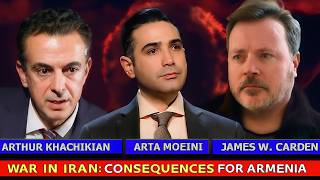
WAR IN IRAN: Consequences for Armenia: Arthur Khachikian with with James Carden and Arta Moeini
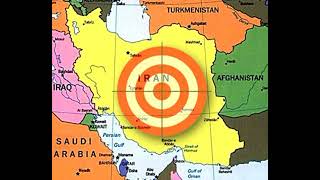
The World on the Brink and the US Foreign Policy of the New Era: Arta Moeini & Arthur Khachikian
First US President HATED Alliances For This Reason | Dr. Arta Moeini & Dr. Chris Mott