The World on the Brink and the US Foreign Policy of the New Era: Arta Moeini & Arthur Khachikian
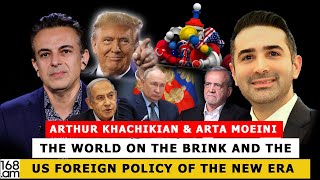
In this extensive YouTube interview, Institute for Peace and Diplomacy research director Dr. Arta Moeini and host Arthur Khachikian discuss the profound transformation of the international system that they label the “Great Transition.” They argue that the post‑World‑War‑II liberal, rules‑based order, underpinned by U.S. unipolar power, has collapsed, giving way to a fluid, regional‑centric, culturally‑realist multipolar world. Moeini critiques the United States’ ideological drift after the Cold War, the “Kool‑Aid” of unipolar hubris, and the loss of classic realist statesmanship, linking these failures to the current wars in Ukraine, the Middle East, and the Caucasus. The conversation moves to concrete policy questions: the impact of the imminent U.S. election on foreign policy, the prospects for a negotiated end to the Ukraine war (including the case for Ukrainian neutrality), the dangers of NATO expansion, and the dynamics of Israel‑Iran confrontation, the Gaza conflict, and the possibility of Iranian nuclear deterrence. They also examine regional power balances in the South‑Caucasus, the role of BRICS, and the broader lesson that great‑power overreach and ideological grandiosity risk a new era of instability. Throughout, Moeini stresses the need for pragmatic, interest‑based, multi‑nodal diplomacy rather than ideological crusades, and warns that institutional inertia and elite capture hinder adaptive policy. The interview blends academic IR theory with real‑time geopolitical analysis, offering a rich set of claims, named actors, and policy prescriptions that can be extracted for a knowledge graph.
Chapters
Well, Dr. Moeini, it's a pleasure to speak with you. Thanks so much for finding a little bit of your time to share your thoughts with us. I understand that you are a research director at the Washington Institute for Peace and Diplomacy. Would you like to introduce yourself for our viewers?
Yeah, I'll just correct that. It's the Institute for Peace and Diplomacy, but it's— I also had the U.S. operations from Washington, and we are active in both United States and Canada for more sensible, more prudent foreign policy in the North Atlantic region, but also especially in North America. Yeah, I think you introduced me correctly. Arta Moeini here, and I am the director of research there, as well as my training, a political scientist. I did my PhD at Georgetown University, and I talk about various issues that hopefully will be of interest Yes, yes, I actually looked at your research interests.
They're very similar to mine. I did my PhD at Stanford. I had the privilege of working with some amazing people back there, and that's actually what I was studying: great power politics, world orders, hegemonic cycles, intervention. The only problem with that is that apparently nobody needed that because the way the world moved, the direction in which world politics moved, it's It's like these people didn't really know anything about IR theory or didn't care to know. Anyway, my name is Arthur Kachikian. It's a last name that's very difficult to pronounce in the United States, so I just go by Arthur to make it easier. It's a pleasure to have you. So I looked a little bit at your research interests. If you don't mind, we could start with the large— the big picture. We are now in a very interesting Period. You know, I teach IR theory and I teach IR history, and sometimes, you know, when we study World War I, World War II, we show— I'm showing my students, you know, August of 1914 and nobody knows what's coming, or 1938 or '39, and we show people going on about their business, on their vacation, nobody knows what's coming. Do we know what's coming? Because we are now witnessing a major— I don't think people understand it's a major, major conflict. That hasn't happened since 1945. This is not Vietnam. This is not Afghanistan. This is not even 20 Afghanistans. It's a huge conflict, the first one since World War II. We're seeing a major shift in the global distribution of power. We just forget it. The '90s, the New World Order, we can just kiss that goodbye. That's right out the window. We live in a new world of power politics. Some people are talking about the emergence of another poll, power shift poll. Where do you see great politics, you know, great power politics going from here?
Well, I, I think we— I mean, those are all great, uh, points, and I agree with you on most of them. We are at an important juncture in history. I call it the Great Transition. We don't know exactly where we are going with this Great Transition because that's what the nature of transitions are. We can't predict the future, As thinkers, analysts, even the greatest thinkers cannot predict how the chips will fall. But I think what we can tell clearly is that the order that we had created after World War II, the order that the United States had created after World War II, the so-called post-war order, the order of, you know, some called the liberal international order, most more recently we call it the rules-based order, that's out of the window. And, um, that order— even though we like to think about rules and orders and international law, I've argued repeatedly that orders depend on power. And that, that order was justified and guaranteed by the structure of unipolarity. The way that the world worked after World War, uh, what— after World War II was bipolar. But then after 1990s, we had a unipolar moment. So both of those orders, both the, uh, we had a continuous order where the bipolar order and the unipolar order were guaranteed by powers that accepted the sort of liberal international system. And I think what we are seeing and what we saw after the euphoric moment of the fall of the Soviet Union was that the United States thought that it can forego the logic that previously held up the liberal international order. It basically bought in to its own program, if you will. It drank its own Kool-Aid. All the writings I'm sure you know from Stanford, and I knew from Hopkins, Fukuyama's famous sort of end of history argument, right? History has ended because we first— and this is very important, I want your listeners to understand— we first limited the world to two powers, based on the fact that, yes, there were two powers that were significant, but we, we said basically the world is going to be one side or another. So that meant that our mentality, our cognition, uh, accepted a binary. And once one side of the binary was removed, we thought that the world is over, or basically the history of the world is over. We have one and all that. And so that gave us, uh, a sort of move, uh, a kind of a hubris to think that, uh, we can now author, uh, the fates of the different peoples of the world, different cultures of the world, and the world itself for eternity. And it only took less than a decade, I would say, for all of those fallacies to come to the fore. And certainly since 2001, uh, we have been seeing the unraveling of the unipolar structure. And so we, we are now Now, at the end of the cycle of unipolar moments, we see the end of unipolarity. And with it, the fact that the United States, that Washington and the Beltway need to share the world with others. Now, what kind of a distribution or redistribution or realignment in terms of power are we going to have? That's up to debate. Some people would call it a multipolar order. Some people want to actually turn China into the only other pole and return to the binary, return to the Cold War logic that they are so accustomed to that they think they have won so they can win it again. Others, you know, like Chas Freeman, have called for a multi-nodal world. I've called for a world that is much more regional and much more cultural. I talk about cultural realism. which means that it's not just that, you know, that the, that the logic of the world, that the system and equilibriums in the world have always been regional, that the idea of anarchy is a bit too overemphasized in realism. Not that it— not that there is a hegemon, but the absolute— the absence of hegemony and, and the hegemony of one power does not mean anarchy by definition. It just means that there might be natural systems that have historically developed that are much more stable within, within various regions. So we can call that, um, again, a multi-nodal system, you know, or we can call it polycentric, various centers of influence and power. And I think in general what we're talking about is a kind of a global cultural and global strategic pluralism. And that kind of pluralistic world, not in the, you know, sense that we usually talk about, the political pluralism, or, you know, which, which has, uh, very different meaning. Uh, the idea— the way that the world works itself, if you want to have actual diversity and plurality, we need to have multiple centers of, uh, of being, multiple ways of being, multiple worlds of being. And I think that is the kind of world that is, uh, despite our resistance, uh, reintroducing itself and making its presence known. And I think many politicians, many policymakers, especially in the global West, have trouble dealing with this new reality. Because again, having drunk their Kool-Aid for so long, they have— it's hard to shift and all of a sudden be adaptable. And the irony is that the more that you refuse to adapt, the more you actually ensure that you will have less of a say in the future order because you will have less power, because you're not doing the things today that would make, let's say, the United States, in my case as an American, more powerful for the next order relative to itself today. And again, if we accept that we will have to share the world and we cannot be the ultimate and the global hegemon, and the idea of globalism the idea of hegemony itself were preposterous notions, were unrealistic, were idealistic notions, then we would have been able to actually be very powerful. Because I think America does have many advantages that other countries don't, especially in this new world order that is being shaped.
I'm loving this conversation, just loving it, because it's— these are the issues I've been grappling with here regarding your reference to Fukuyama back in the '90s. I said, "This is a very funny argument. History not only hasn't ended; it's only beginning right now." To think that we all came to one model, it's extremely naïve to think that. Regarding your metaphor with Kool-Aid, yes, they did drink Kool-Aid. What is amazing is that American elite, the academic elite in the United States, includes some unbelievably intelligent people, unbelievably intelligent people, and yet we have this turn towards this policy. I mean, we know this from IR 101, that number one, power distribution changes. The economic power gets redistributed gradually. Some hegemonies will fall and other hegemonies will rise. I mean, we know about Spain. We know about Portugal. We know about Netherlands. We know about England. We know about Germany. We have seen all of that. And yet no conclusions were drawn from it, that the distribution of power is going to change. And another thing people kind of conveniently forgot You don't corner a great power. You don't corner one of the great powers. Nothing good is going to come out of it. We knew this from France in the 1870s, and then the Franco-Prussian War, World War I. We know that cornering Germany was a very bad idea. And yet we did exactly the same thing with Russia. So why is it that in academia we know how these things work, but somehow the policy made this turn towards explicit domination? Expansion, and look where we are today. I mean, with all my affection for the U.S.— I am part of that society as well— I think America had an amazing potential that could actually make it a leader of the free world. And Russia agreed to it in the '90s. Russia kind of ceded to the United States and said, "Lead us. We want to learn from you." I was there. But why is it that all of that was wasted? I mean, if you look at the last 25 years of our foreign policy, I mean, it's very hard to call it a success. I mean, the footage of people running on a runway in Afghanistan, the victims of Iraq, you know, things that are happening in Syria, Libya, Ukraine now, it's just horrible. It's just like a series of fires that we are instigating and we can't put them out. Why is it that all this knowledge did not get translated into policy recommendations?
Right, that's, that's a million-dollar question, isn't it? I mean, it's, it, and this is why, I mean, I'm, I'm very much, uh, both as an academic, as a thinker, I'm always very resistant to conspiracy theories. I always try to dispel them. But there is a reason that our moment today is filled with conspiracy theories, because people just don't understand how is it that things can go so bad if it's not some sort of grand conspiracy. And I think it's just the inertia of the system. The structure itself is designed to just function and go on irrespective of who individually is in charge. And so it likes compliance. It likes compliant people. And I think, you know, we are seeing this over and over again. I mean, again, this is not specifically even directed to the United States. But, you know, we have a president, Joe Biden, that many think that has not been on top of the game over at least the past 6 months. And that's the Democratic, at least, version of it, right? And yet the system continues, right? And the question is, who makes these decisions? And then we had the similar thing happen with a bit of a less of an importance, I guess, because, you know, in Iran, when the president of Iran, when his chopper sort of fell and he died, there was almost no change in Iranian policy, posture, ways of communication. It was business as usual. And so in Iranian case, you have establishment, you have the Supreme Leader. I don't want to downplay that, but I think it's important to see how the executive branches of various governments have less say structurally because the structure is so embedded in the systems that represent them. Now, That's one part of it. The second part of the answer to me would be that we moved from having sort of giants, having those big personalities and having them be realistic and sensible and prudent and statesmanlike, the sort of the very old understandings of virtue, the classical statesmanship. It's very important. But as we shifted to this new model of government, the sort of the deep state, the Beltway kind of the complex model of governance. We, we, we again, because we like compliance, we also lose those provocative thinkers because they're not going to go along with it. So they're in there. They go on the margins. And yet we get more ideologues that occupy positions of power. And so then as a response, you get more political reaction, you get more populism, you get more anger, you get more frustration, you get more resentment, you get all these feelings that brew up onto the surface. And come on to say, you know what, to hell with them. We want to get rid of the whole thing. And I don't know if it's workable or feasible to get rid of your entire— to basically not have an elite. Elites always exist. The question is what kind of elites and how sensible are those elites? So when we think about going back to the right, you know, go back to my initial remarks right after World War II, once we won that war, we had in America very sensible Cold Warriors, let's say, the original Cold Warriors. They were not ideological. They were very realistic about what they wanted to do. They didn't want to spread democracy or American values all over the world. George Kennan certainly didn't want to do that. Henry Kissinger later didn't want to do that. And there were a host of them. It wasn't just the two, but there were so many of American statesmen who were basically bred in America or outside of America and then moved to America. But they, they were bred at before World War II, which actually shows me how much World War II was destructive for our sort of cognitive sanity, not just in terms of the physical destruction, because people who were educated before it, they continue to have very sensible understandings, realist understandings of the world. The classical realist disposition was lost, uh, in gradually over time, and it wasn't replaced. Now you can also say that, you know, it was up to the realists like Kissinger, like Kennan, like others to breed the next generation instead of ceding the whole ground to the other side. And also, you know, some of them got marginalized. Kissinger had that uncanny ability to be relevant until the very end, but he didn't replace his own legacy. So there's an institutional problem there as well, where the people who were in charge, in a way, who might agree with us, failed us in replacing themselves with the right kind of folks. Um, so the structural reason, institutional reason. And finally, I think— apologies— finally, I think there was an ideological shift. And I think that's, to me, is a very important element of this which doesn't get talked about enough or often. Um, and that is how we as we were saying that we don't want to, you know, we don't want to spread democracy all over the world. Our model is our model. We want to defend certain nodes around the world from the aggressive communist or Marxist posture, which was an ideology. I think, and I've written about this many times before, that America imprinted the ideological model of the Soviets effectively on itself. Not that it became Marxist by any theoretical definition, but in the, in the way that it was thinking, it became equally universalist, equally aggressive, equally globalist. Those are all markers of the Soviet system and the markers of communism. So American elites basically got highly ideological and saw themselves as now spreading good things around the world. They, they became far more— they became, you know, far more Manichean than they were for many times before in their history. I mean, again, Manichaeism exists in various societies, but they proudly became Manichaean in a way. And so I think that ideological shift that was based on the leadership that was bred mostly after World War II, and they saw this binary, they internalized the binary, they internalized the dualism of good and evil in a way. and they had this sort of self-righteousness about it, and then they, they turned ideological. So they are going to be the, the, the right way for everyone to live. And so it's with that kind of a mindset that you get neoconservatism, that you get Francis Fukuyama, and you get— you can, you can trace it all the way to today's, you know, Lindsey Grahams. Um, these are people who are fundamentally disconnected from reality because they're ideological creatures.
—these are excellent points. These are excellent points. I'll just share a couple of points with you, and we'll move on from big theory. But this is extremely interesting. You remember the famous quote by Lord Acton: "Power corrupts; all power corrupts absolutely." So maybe in a way, once the equilibrium was violated, once the Soviet Union collapsed, this feeling of, OK, here is our chance. We can do whatever we want. And it's not just America. Pretty much every other hegemon tried to spread its ideology throughout the world. I mean, even Bolsheviks did that when they came to power, even though they did not become a world hegemon. But this tendency to project your vision on the other countries, on the whole world, and try to spread your idea, this messianic ideology, it's not just American. I mean, it happened in many other cases, but it did happen in this case. I call it the trap of grandeur. You fall into this trap of grandeur. You become grand, and you think that you can do whatever you want until you reach a point where you start crumbling and collapsing because it's imperial overreach. You know this. And maybe another thing you mentioned, you alluded to, was the organizational inertia and maybe also cognitive inertia, that people who were there behind the U.S. foreign policy couldn't just one day forget it all and start embracing Russia. Maybe some of them just could not forget what the feelings that they held for the mistrust that they had for Russia, not to say phobia that they had for Russia. And finally, just as in our domestic policy, our foreign policy is not really a function of what academics would define as your national interest. We know there are interest groups, there are lobbies. Some of them are ethnic lobbies. I mean, there's an Armenian ethnic lobby. There are others. We know very well what I'm talking about. So it's not really a perfectly democratic academic ivory tower process, is it?
No, of course not. Um, I mean, obviously, um, part of the whole understanding that, uh, that also creates that resentment is that we believe that we choose our leaders democratically and then we basically have our voices heard. But, um, a realist would tell you a liberal democracy doesn't work like this. And because we give this projection, or we basically project this image that liberal democracy represents the will of the people, uh And the people see that it doesn't work, they just get resentful and they get angry about the system. And the truth is there's so many things that need to be completely changed or addressed within that system. I mean, when you think about the lobbies of powerful lobbies, when we think about military-industrial complex, when we think about a Congress that is completely outdated to the real needs of Americans. And this is not just an American problem. We see it from political leaders across the West. So there's this sort of like liberal hubris. And then I would just say some of the trap of grandeur, because I mean, the Romans could be happy, a trap of grandeur, the Persians would be having a trap of grandeur, which were not necessarily ideological. I think in this case it's a messiah trap. You know, we want to— it has a religious, uh, uh, zing to it. Uh, it is highly, highly, uh, universalist because it is fundamentally religious in orientation. It's sort of like we are— I mean, the language, right? Good, evil, Axis of Evil in George Bush time. Now it's sort of Putin as the new Hitler, which is preposterous notions. I mean, I fundamentally disagree with the idea that Putin is an imperialist that wants to take over all of Europe. I think it is, as many other realists, including John Mearsheimer and others have noted, he was always trying to defend what was to him a red line. And we just didn't listen to what that red line meant. And this is a— I don't even believe that. And this is very interesting because many of the neocons themselves have this double position. Russia is this huge imperial power that wants to take over the entire Europe, but then at the same time, Russia is this weak power that can't even conquer Ukraine. And as McCain, I think, famously said, and was repeated by Lindsey Graham, is this, you know, gas station. So these kinds of understandings. So it's not I believe that Russia is today a middle power, which is not a bash on Russia. I think most important actors in the next order are major powers, which will be regional powers, meaning that they don't and they cannot exercise power or project force globally, but they are middle powers in the basically middle of the line. They're not small like Ukraine or some other smaller countries like Armenia, but they are not global forces like the United States. And I think when a global power tries to create trouble for the middle powers, there's regional instability. And that could have worked maybe in 1992, but in 2020, on 2022, it didn't work. And 2024, it certainly doesn't work. I think because they are more proximate to the regions, because they have more influence, because they're more culturally embedded, because they are geographically there, because they have more at stake, middle powers are not going to cede ground to global superpowers or global powers, global great powers really, on their own turf. So I think that's one thing to keep in mind. And I think what we are seeing is a series of, you said fires, really a series of flashpoints because in every case, we're seeing this sort of regional dynamic play out. Where the status quo great power being the United States continues to follow a trajectory that it has done for the past 40 years. And the result of that is instability in various regions instead of finding a way to deal and finding a way to talk with various regional powers, middle powers in various regions that could act as that stabilizing anchoring force in various regions. And I think we lost a huge opportunity after the fall of the Soviet Union to, to do that. Yes. But the reason that this happened is because when you spend— the example of history is if we go for— if we just go to war for a couple years, our big— there are efficiency gains in wars, right? We go to war, we do so many things to make sure that we can conduct that war. And that means that we need a much more centralized state. We need a much more powerful state apparatus. And I think what happens is if you are doing a global war, essentially, even if it's a Cold War, if you believe that you are organizing your society, you're doing a whole of society effort and a whole of government effort against an adversary, an enemy in this case, if that's 40 years, um, strengthening or centralizing your state mechanisms. So, uh, so you get a much more totalistic, uh, state, much more controlled, much more controlling, and much more ideological and propagandist, because that's what— that's how wars work. You need propaganda as part of war. So when the war ends, what are people supposed to do? Just, you know, uh get out of the desk and go home and the state dismantles. I don't think things that centralize dismantle other than imploding. So I think we are moving towards seeing the cracks within the system itself. This is not going to happen because of an external enemy.
Right. And going now from the big picture to some specific ways in which US foreign policy may or may not change in, you know, in the nearest future, we're going to see the results of the election, the U.S. elections, in a few days, November 5th, if I'm not mistaken. What are the foreign policy platforms? I mean, if you want to take a gamble, what do you think will happen? And will, for example, if Trump gets elected, do you think any changes will happen? I mean, we're going to become more popular right now, and this is what people want to know. Who's going to get elected, and how is that going to change the U.S. foreign policy? I mean, I have my opinions about it, but please go ahead.
Yeah, I mean, we can have a discussion about that. And I would love to hear your, your take on it. I mean, I would say first of all, that the election is going to be very close. It might, it might not look like it at the end, there might be a wave at the end. And you might see that the Electoral College, which is the way that the US system works, is different states, which there's actually not one election, is elections, a series of elections in multiple states, many of them are basically already decided, they're, they're set on one side or another. We know this based on polling, we know this based on history. And long trends. Uh, there are some swing states. Now, those swing states, uh, are going to decide the election. And, and in those swing states, there will be maybe a final wave, and maybe they'll all pull one way, maybe they'll all be divided, and we'll have a very nerve-wracking few hours as people decide or count the votes. Um, the states are mostly in the Midwest, what they used to call, uh, the blue wall. That's Michigan, Wisconsin, Pennsylvania. And there's some states now in the Sun Belt, but because of the internal changes, many people have moved around, internal immigration. That's Arizona, Nevada, and then Georgia and North Carolina. So if you look at these 7 states, I believe you will get a picture of the election. I think I'm not a gambling man, but if I was to gamble, I think Trump will edge However, the right play here is to take your chips and get out of it and not engage in that. In terms of the consequences of the election, when Donald Trump got elected in 2016, everyone said the whole world is going to come to an end because Trump had said some things that were against the established orthodoxies of Washington. But we have 4 years to judge his foreign policy. And he has even— he went on Joe Rogan podcast this weekend, I think, and basically admitted to some of this, that he had the wrong personnel, that he had what he called the crazy and unhinged John Bolton, that he called it a mistake. Right. So, but again, it's partly because even if someone comes and somehow wins this election, which was really an act of, in a way, divine intervention, if you will, because if we believe in the organizational structural pessimism that I'm actually abiding by here, that things have their own inertia. It's very hard to have someone come from outside with no anything and actually win an election. So it means it shows the depths to me of unhappiness and discontent and disaffection in US society. And this happened also when Brexit happened, right? So this is not only limited again to the US and to Washington, but actually it's an Atlantic phenomenon. So, okay, so what happened? The result is that the American policy and posture actually didn't really change that much over 4 years. Donald Trump tried to do certain things. I mean, he certainly didn't start any new wars. He didn't believe in the ideology of the system. That's, I think, a positive. That's a good point. But he didn't change fundamentally directions of US foreign policy. NATO remained intact. The Ukraine aids continued. The Trump administration gave a lot to Ukraine and prepared the ground for this war. Policy against Iran, the neocons were in charge against Iran and Venezuela. All the old Bush guards were back. So in terms of foreign policy, not much changed. But I think something changed in a sense that when we look at these time periods, we see it as a snapshot. And then once we look, put it together, we see a whole sort of picture. And so I think the trend is positive. People are going to call it an isolationist trend in US foreign policy. They can say it in a positive way, as my colleague Carlos Roa wrote a paper for us that isolationism is here to stay. Trying to recover that term. Charles Kupchan from Georgetown University recently wrote about the deep-rootedness of an idea of America First, or what people call isolationism, in US foreign policy, and actually argued that the Democrats would do well to also adopt their own America First sort of policy that puts national interests first. In general, I think any kind of policy that's interest-focused is better than one that's values-based. Um, because it actually ends up being, at the end of the day, much more moral. It will also end up being, uh, much more rational and sane. Um, so the trend is positive because over from 2016 to now, we are seeing these discussions coming out into the open. When, when in 2016 Trump was talking about it, nobody was talking about it. Now there are a lot of people that have thought seriously about it. There are people, mostly millennials, that are perhaps going to be part of the second Trump administration that would not have a chance in the first administration. There are also the old guard. I'm not— I don't want to downplay that. So we don't know exactly how it's going to shake up. But I can tell you that the trend with the realignment in US politics is that we are going to hopefully get one party that is going to be at least more national interest-based and more America first. And, uh, no, and, and the other side, which is the establishment globalist ideological side, is going to now be concentrated in Democratic Party. We're seeing these shifts with all the former neocons moving, um, to the— it's not the left. I don't buy this Democratic Party being a communist party. It is not. It is the neoliberal establishment party. And that's why all the neoliberal neocons are there now. Dick Cheney, Liz Cheney, all the— I mean, if you're touting the endorsement of Dick Cheney, there is something fundamentally wrong with your party. And again, this is— I'm a nonpartisan. Our organization is nonpartisan. But I do believe that the Democratic Party is now becoming very, very unhinged to its own mission and interests. And this is what I have in common with many people who are on the left. So I think at the end of the day, if we think about all these trends, we're seeing 2016, a shock to the system. In 2020, we had an election in which Joe Biden touted the normalcy of the past system. And because of all the, you know, all the attacks from the media against Trump and all the Trump rhetoric and our crudeness and everything else, we got— people were just— and COVID, people were just— they were like, enough of this. So there was a shift back to the center with Joe Biden, but I think that was a momentary sort of break and respite. And then now we're back to a change election. Now, when someone like Kamala Harris changes her positions from like open borders and amnesty to strong borders and building a wall, as she said to Anderson Cooper and CNN in a recent town hall, it means that, you know, the The language has fundamentally shifted that they need, that they understand that they need to be a change candidate, that sort of the business as usual doesn't work. But then they still represent the business as usual interests and interest groups and the economic interests of the business as usual. So I think not to, not to, you know, go on too long on this, but I think that no matter how this shakes up, the immediate repercussions of this policy will be more of the same. The one area that I see fundamental differences on Ukraine. I think the first priority of a Trump administration is to end the war in Ukraine, and it will do so by accepting some of the realities on the ground in Ukraine. But in terms of a general global US posture, I think a lot of the Manichaean postures will just be shifted onto China as they're already, as it's already happening even under a Democratic administration. So I think in the short term, we'll have very few policy differences, but not to make them insignificant or insubstantial. I think it's a huge positive if the war in Ukraine ends. And then, but in the long term, I think this is going to go, we're going to see two different visions. I think when we, if we, if you're, you know, close and friends in 5, 10 years, and we're talking about an election in '28 or '32, and we're, we're healthy and alive, we'll be talking about two maybe very fundamentally different visions. But we also see by that time, the results of what I was talking about earlier, the implosions within the global system and within the US power and the global West. Its sort of sense of itself, I think, will come to bear. And I think reality at the end of the day is the greatest master, and it tames and it sort of makes you humble.
That's excellent. Thank you very much. Some excellent points there. I agree. I actually agree. I don't think we should expect any fundamental shifts, but I think with Trump coming to power, he may be allowed to actually foster some kind of peaceful resolution in Ukraine, which we all desperately want to see. I mean, The number of casualties is approaching 1 million. This is unbelievable. These numbers are unbelievable, and this should be stopped. And maybe— I mean, yes, just one person, even if he is the president, can't really change everything. There is the foreign policy elite. There are the interest groups. There's the State Department, all sorts of organizations, obvious and not so obvious, so-called deep state. But he may make an attempt. To do that. We'll get to the Middle East in a minute. I know that's where your expertise is very valuable, like in other areas as well, of course. How do we even fathom the resolution of this conflict? Because it's really very difficult to imagine Ukraine is not going to accept giving up huge chunks of its territory. Russia is not going to accept giving up Crimea and Lugansk and Donbas and Zaporizhzhia and a couple of other regions. It's a zero-sum game. It definitely is. And even if there is some kind of a ceasefire, who says that it's not going to flare up again? Ukraine is talking about nuclear weapons right now. The West is saying we're going to allow Ukraine to hit targets deep in Russian territory. Russia is saying you're going to get hit next. This is extremely dangerous, and this is by far more dangerous than 1962, the Cuban Missile Crisis. Is there any understanding of how this —can end? I mean, somewhere between Lviv and Donbas, somewhere there, there's going to be a line where the conflict is going to be frozen. For how long? And how long is it going to last? A year, 2 years? When the conflict started, some people said it's going to last a couple of weeks, a couple of months, and look where we are. Is there any general understanding of how this can be put to an end?
I mean, I don't think there's a general consensus. I think the consensus is shifting towards Towards that there needs to be a resolution. I think that's a positive step in its own right, because for the longest time, if you had talked about negotiations, you were kind of like a traitor, right? You were, you were with Vladimir Putin or other preposterous notions. I don't think anyone that I know was arguing against the war was either Putin stooge or was even favorable to Russia. I think what we were seeing from the very beginning, and I also wrote a lot about this for a long time, was the United States policy was to bruise Russia using Ukraine and NATO expansion. And then it was to bloody Russia's nose on the back of dying Ukrainians. And Ukraine as a small fault line state fell victim to it. So I also have empathy for the Ukrainians to either believe or trust in the US leadership. Because, but again, that's a huge gamble that I don't think any small state, any fault line state should make. You should not try to go and fight with the, you know, the basically what is the regional power in your proximity, your neighbor, when with some sort of ideological nationalistic goals, which were pushed by Western Ukrainians and had frankly disenfranchised the Eastern Ukrainians, the more Russian-friendly Ukrainians. So I think there are internal dynamics in Ukraine that most people are not aware of or doesn't get much attention. I don't think that all Western Ukrainians who are nationalistic about the idea of Ukraine are Nazis. I also don't think that the people who are in the east are just Russian stooges. I think the people have interests and yes, there are extremists on both sides, but then that's something to— that's why another country, a foreign country like the United States should not go in there and try to mess with the regional and domestic equilibrium in various countries with its policy. But I think that this has been US policy for a while. And I think there are people in Washington that will be very happy and claim it to be realistic to just keep this conflict going as it exists. It will spend a lot of, it would cost more money and material costs and damages to Russia. It will bloody continue to simmer and bloody Russia and be a sort of a wound, an open wound on Russia's back. Bleed it dry. On Russia's side. Yeah. But I mean, I think there is a way to come to a table and think through these issues through a diplomatic resolution that understands the actual red lines of various countries involved. And I think the number one from the Russian perspective is that NATO cannot expand onto Ukraine. That has been clear. It has been clear going back to the '90s. It was worn by Kennan and Kissinger at the time. 2008 Bucharest Declaration, which Victoria Nuland was pushing, was a disaster. It has proven a disaster for the world. NATO should have been kept to Europe if it was to survive anyway. And this idea of expansion was highly ideological. It created really an enemy to exist. So he wanted the resident author. So he kind of got that by, you know, you push someone into a corner, it will react and you're like, aha, I got you. You are the enemy I was talking about. So I think, yes, Crimea is gone. But I could see a possibility of a separate entity or a kind of a Kurdistan situation for Eastern Ukraine with the provinces. I could see that happening, but it's unlikely because Russia has gone to the trouble of making them part of the Russian state. But I do think that those discussions could be made to happen if the idea of NATO was off the table as part of a bargaining chip. I think because fundamentally, I do not believe that this was ever about territory. It was about NATO expansion and a deep security risk to Russia because of it. And it was because Some in Russia and Russian nationals especially were very uneasy about Ukrainian nationalists and the way that the Russian-speaking and/or Russian Ukrainians in the east were being systematically marginalized from the Ukrainian political process. I think those two concerns were real concerns, and I think we will do well to acknowledge those concerns and then try to bring people to the table to figure out how to resolve it. Now, On the Ukrainian case, first of all, stopping the bleeding even now is more beneficial and salutary than doing it later. If Boris Johnson, on behalf of the Americans, had not gone to stop the ceasefire talks that were done in Istanbul early in the war, this war would have concluded. And so Ukraine was interested and understood that maybe it's better to leave the fighting and just find an acceptable arrangement. This was before the territories were even ceded and officially part of Russia. And again, Russia would have been willing to accept it at the time. Now maybe Russia has spent too much money and too much, you know, too much treasure. It needs to declare some sort of victory. So it might be harder to achieve that. But I do believe that from the Ukrainian perspective, that war needs to end. And there is a possibility to hold on to the state of Ukraine with or without those territories. But it is important even for that scenario to happen for Ukraine itself to give up on extension to NATO. And I think the examples of neutrality, and neutrality is such a underestimated term and such a vilified term in, uh, in Western capitals. Neutrality is a great thing. Neutral states— Belgium was a neutral state and it created in 1839, right, the Neutrality Act, and it created years and decades of peace in Europe until World War I. Because if you take these, uh, fault line states and you make them neutral off limits strategically, that can actually create stability if people were actually interested in stability. And so I think Ukraine, this cannot end until Ukraine is a neutral state. And if Ukraine is a neutral state, Ukraine can then be allowed to join the EU. And I think that would be something that many Western Ukrainians And especially the Poles who support them want that. And Ukraine can join the EU and, you know, make something better of itself and make a prosperous country for its people. And then maybe it will have to also start cutting out the corruption. But I think neutrality is key to that. And I think NATO being off the table. Is key to that. So without those two tenets, we cannot have any sort of agreement, and the agreement will just be forced because Ukraine is running out of people.
Well, I certainly hope that there is an agreement soon because these numbers are appalling, and we're talking about hundreds of thousands of young men and women being killed. So this should stop. I agree with you.
And also millions more who have left Ukraine. Yes, right. This is a disastrous number of refugees in other parts of Europe. Which is, you know, again, Ukraine is having a huge demographic crisis because of the war, not to mention economic calamity and everything else. I mean, this is just unsustainable. We need to be open to reality. Again, every conversation I feel like goes back to we need to accept reality as it is. A small country cannot go to war with a big country and expect good things to happen to it.
You know, I could not agree more on many of the points you made. Back in late '90s, there was a conference at Stanford, and there was a debate about NATO expansion. And I was a student back then, of course, but I wrote a short article that was published back then at my center with some remarkable people that I worked with. And I actually wrote that NATO expansion will lead to a war in eastern Ukraine. I wrote this in 1997, and it's scary. It's just very— uncanny feeling to see this happen right in front of me these days. I also could not agree more on NATO expansion. I mean, we know from IR theory what happens when you corner a great power. It strikes back. It always does. For some reason, they didn't think of it. And by the way, I spoke about it publicly here, and I was attacked by the Western-sponsored local NGOs for— they immediately declared me a KGB agent because I said that NATO expansion was not a good idea. But anyway, that's how some of these people work. Now, coming back to our region, the Middle East, I mean, we've just seen some very alarming events surrounding Iran. There was an Israeli attack against Iran. From what I understand, it was more or less measured, and there was some kind of an understanding that if it is measured, there will be no response to this. So the nuclear facilities were not targeted. The oil facilities were not targeted. So I have the impression that nobody wants a large war, certainly not before the US election, and maybe not at all. What do you see now unfolding in this region with reference to the relationship between Israel and Iran?
A lot to unpack there, I guess. I agree with you on everything you said. I do believe that the Biden administration, for all of its faults in managing the Israel wars since October 7th. And, you know, as someone who believes that Israel has the right to defend itself, I don't believe that Israel can do everything with impunity because realism, again, sort of, you need to understand if what you're doing is sustainable in the long run. And America is America's weapons and Israel has been causing devastation in various parts of its own region. And I think that has been ill-advised for the long-term future of Israel. Again, this is not to deny that Israel has a security problem and has the right to defend itself. I think we can hold two beliefs that are both true. In this case, I think the Israelis understand as well that the momentum and the politics in the United States is shifting against them and it's shifting against them fast. But they haven't done themselves any favor over the past year. I know a lot of people on the right and there were already a lot of people on the left who do not understand why Israel conducts such brutal wars in ways to make itself secure. Israel is certainly capable enough to go after. It has one of the best intelligence services I know of in Mossad and has shown its prowess. So it could have gone after Hamas leadership and done what it did to kill Haniyeh and done what it did to kill Sinwar by just focusing on that and going after the Hamas leadership with targeted strikes and targeted operations and special ops and so many other things. Instead of, you know, ravaging Gaza. But that's not what they chose to do. And I think that those decisions have consequences for the larger region. And we can get to that in terms of the Iran issue. Now, Israel sees Iran as the head of its— what it calls the head of the octopus, managing all of these different things. The first thing is that Hamas and Iran have always had a very, very uneasy relationship. This is something that I don't think gets enough coverage. Iran and Hamas share the same enemy and have a similar understanding of the two-state solution. They think it doesn't work. Now, because of that, they have to keep up appearances and be friendly at times. But the October 7 attack did not happen with Iranian blessing. Iranians did not know about it. They were caught off guard. This was not a time that they wanted for this war. Now, Iran's relationship with Hezbollah and the Houthis is very different. Houthis is closer to Iran, but again, not under Iranian control. Hezbollah is under, to a large extent, Iranian control. So these are different levels of, you know, relationships, and that's normal. With, you know, America has different relationships with different allies as well. So you have to deal with what you want to do. So in this case, the attacks were the culmination of a series of tit-for-tat and spirals of escalations from one ladder to the next that has gotten us to this point. I am very glad to see that the Biden administration has finally woken up and really given Israel clear red lines in this case. And Iran is powerful enough that Israel had to heed the Biden administration's red lines because it knew that it cannot go to war with Iran alone. Now, because, you know, by the Biden administration can say what it wants against, you know, Israeli operations in Gaza or even Lebanon. But, you know, so long as the weapons come in and for all these inertia and organizational and lobby reasons and so many other things, the weapons will continue to flow to Israel. So Israel could carry that war and ignore the Biden administration. But with Iran, it's a different story, right? So it could not just do what it wanted to do. And its extreme factions, especially on the right, had to be controlled on this response. So I'm glad that the Israeli response and retaliation to the Iranian retaliation against Israeli retaliation to Iranian retaliation of an Israeli attack on Syrian consulate, Iranian consulate in Syria, was measured and prudent. It also means that both sides are going to now claim victory. Iran says that Israeli actions, the Israeli military action was ineffective, that it would cause minimal damage, but so did Israel. When Iran attacked it with the ballistic barrage on October 1st, Israel had to respond because I think Iranian Iranian retaliation was significant, and it showed that Iran is capable of hurting Israel. And Israel and Netanyahu have domestic considerations even more so than the Iranians. So I think this round of spiral, this round of escalations could end here because I think the signals from the Iranians, the way that they are Managing the fallout the way that the Iranian media is claiming that really there's nothing to see here, the minimal damage is to prepare for a lack or for a very minimal, if anything, response. So I think this phase could end here, but I don't think that the fundamental structural problems in the region, especially between Iran and Israel, will go away. And I think there are elements in Israel that will continue to push towards an escalation that will lead to an attack on Iran and Iranian nuclear facilities. And I think one of the, from a realist perspective, the Iranian takeaway from this past year must have been that they need to go nuclear because I think the only way this kind of stabilizes is a kind of a Pakistan-India situation. It's a stable adversarial relationship. There might be skirmishes, but I mean, they also share a border that Iran and Israel don't. So it might actually make it even less of a hot conflict than between India and Pakistan. But I think there are indications that we are moving towards that. Then the other question is, and that I don't know if it can be resolved, it's a Palestinian question. Yes. The Biden administration has a very contradictory position when it comes to, quote unquote, Palestine. What are we going to do with all of these, quote unquote, Palestinians? And I say it as quote unquote because there's no real Palestinian state. And yet we say that we need to have a two-state solution. And yet the very idea and logic of the Abraham Accords was to say that we can find a way to have the Arab world make peace with Israel absent the resolution to the Palestinian issue. And Hamas actually went to war over this issue. Remember the timing. October 7th was planned in, first of all, in response to Abraham Accords. Yes, Hamas is an extremist organization, is a terrorist organization who doesn't like some accords, but mostly it was also because Hamas's resident doctrine is a Palestine state, right? And Saudi-Israeli normalization would have basically made that impossible. So it would have basically sanctioned the biggest, uh, one of the largest certainly Arab countries accepting a peace with Israel that did not include Palestine. Immediately after October 7th, we now see that Saudi Arabia is, uh, very clearly saying to Israel that without a two-state solution, there will be no normalization. And I just cannot see how a two-state solution is possible. So I think the Palestinian issue, the Palestinian question, will be there to stay. And I think it will not have the kind of resolution that we think. It will not be a UN resolution that will create this state. It will not be And I think in that Israel has been very clear. Part of the new Middle East is the absence of a Palestine state. And part of understanding that is to figure out then what to do. Again, I think we should be realists, right? So I think Israel has nuclear weapons and Israel has a very specific understanding of its sort of domestic and regional security. Israel has shifted very much to the right over the past 20, 30 years. So the idea of the two-state solution, the idea that perhaps was negotiated in the '90s with the Oslo Accords and the PLO and all of that, which led to the death of the prime minister of Israel, all of that is off the table. This is a new Israel wanting a new Middle East. And it is also, it has, and then this is my kind of friendly advice or warning to the Israelis because it is ideology kills nations. Ideology is undermining and killing the United States of America. Extreme ideology. And this is a superpower. Yeah. And this is a superpower. So if you allow ideological elements and ideologues to take over your state, you'll be making the days and the years of its future questionable. So I think it's very important for, and there are realists in Israel as well, especially in the IDF, especially in the Mossad, in the most embedded parts of the Israeli state because of why? Because they were in a very hostile environment where it had to be always on their toes and be realistic. But unfortunately, again, blanket US support, I think, has been allowing for the worst elements of the Israeli society to take power. This is because of the blanket security that the United States has brought. So I think, I'm sure that there are Israelis that recognize that, that could be, there are liberal Israelis who hate it, but there are also realist Israelis who recognize this problem. And there are ideological Iranian actors as well, especially which are to the right of the Iranian Supreme Leader. So extremists like each other just because they give each other the excuse to be more aggressive and carry out their own ideological positions. I do believe that Iran, because it is in a region that it doesn't have the blanket protection of anybody, has had to act very, very realistically and prudent. It exercised strategic patience for, for months before it finally responded to a series of Israeli attacks against its positions, the killing of Nasrallah, but certainly the ground invasion of Lebanon and what started with the Haneya killing. In Tehran, which was the violation of Iranian sovereignty at inauguration of the Iranian president, the new president, Peseh Kianzad. So we had a series of escalatory steps that forced Iran to respond. But, you know, had Iran responded even right after the Haniyeh killing for its own sovereignty, perhaps the Israeli actions would have been more tame and the deterrence would have been established. So I think deterrence is a good thing. Deterrence does not mean containment. No country can contain fully another country. And I think we are moving towards a new Middle East that makes the Iranian-Arab relationships much more collaborative. There is a détente happening between Iran and Saudi Arabia. And that has been the biggest shift. That I think is important to see. And if Iran chooses to go nuclear, I don't think there's much that any country can do about it, especially if Saudi Arabia and the Arab states understand that they need some sort of a nuclear deterrent against Israel as well. Now, from the Iranian calculus, this doesn't change much because whether or not Saudi Arabia gets a nuclear weapon or doesn't, Iran doesn't want to— Iran doesn't think there will be any kind of a danger of a nuclear escalation with Saudi Arabia. Iran and Saudi Arabia are closer today than they have been in certainly 15 years. So Saudi Arabia is acting far more rationally and realistically since October 7th. Iran is acting very realistically and rationally so far. And Israel, in its latest attack, showed that it can exercise a measured restraint. So I think those are good signs. I think the Biden administration, however it achieved this, part of it was giving more missiles and more, I mean, the two THAAD systems to Israel. That was part of the deal to bolster Israeli defense security. I think it's a good thing that we don't have a regional war. I think everyone, no matter what your political positions and your allegiances, should accept that no war is always a better outcome. And I do believe that, I think that we're going to stop there in terms of this round of escalation. So let's see how it proceeds after the election. Once that election is there and done, we will see. I think that if Iran doesn't respond and if Israel does leave Lebanon, as the ground forces seem to be wanting to leave now, they didn't accomplish the full dismantling of the Lebanese Hezbollah. We will see. We will see what happens. And I think it is up to the first mover in this new phase will be Israel, I think. And I think Israel wants to keep for itself the option of being the first mover ever since October 7th. And we'll see what that pans out. But it's a very, very dangerous situation because regional wars is around the corner. The global economy could be devastated. The world cannot afford, the United States cannot afford another war. And this, I think, is the greatest blessing that America is weaker so it cannot afford multiple wars. It is running out of ammunition to give to Ukraine. And it is giving whatever else it has to Israel. So we are in a very, very precarious circumstance, but I think that is the nature of what we talked about earlier, the transition into a new world order.
I could not agree more. I think it really is a very explosive situation regarding the possibility of Iran becoming nuclear. That, in my opinion, may invite what it usually invites from the United States and Israel, some kind of a strike to prevent it from becoming nuclear, which in itself could unleash major escalation. Regarding Palestine—and by the way, that could lead also to other countries in the region wanting to become nuclear, like Turkey, like Egypt, like some others. That's not a good solution because you know that my professor, one of my best professors at Stanford, Scott Sagan, wrote a whole book about why it's very dangerous to have this process spread from country to country, because even the USSR and the U.S. were having difficulty avoiding accidental nuclear war. But with having dozens and dozens of nuclear states that do not have the same organizational structure and checks that these countries had, I mean, you may risk it. But, and then the second question is what's going to happen to Palestine? Yes, Israel said it's not ready for a two-state solution. The world wants a two-state solution. They're saying there's no way that's going to happen. In the meanwhile, we're seeing some pretty appalling news reports coming from Gaza. I mean, do you think that the objective is to clear Palestinians out of Gaza? I mean, the UN had some pretty clear definitions of what's happening there in terms of genocide. What is going to happen to Gaza in your opinion?
First of all, what I do is push back against narratives and ideologies. And I think these words, genocide, war crimes, it was used against Putin as well, right? It's constantly used by one side against the other. And part of the changes is that almost Anybody can now call another person, you know, we're having, we're basically having a crisis of authority internationally. Nobody accepts any authority. So anyone can come and say, you know, the other side is engaged in genocide or, you know, and there's not much you can say against it. And the other side is going to say that you are terrorists, right? So again, the language, we are living in an age of hybrid wars where language is weaponized to justify the actions of your side. Now, I do not believe that genocide and these kinds of language are helpful to any diplomatic solution. It actually creates much more of a hunkering down siege mentality on the side that receives it. I do believe that absent, as realists, we don't believe that there is an institutional overarching order, substantive order, and therefore, The United Nations was always carrying water for the United States order, the US-led order. And now that order is falling apart, you're seeing the United States actively veto UN resolutions. So I think the sort of the lack of authority and the delegitimation of the United Nations is part of this process to the great transition. It requires for states to actually deal with one another in accordance to their interests and bilateral relations. So I think that the Gaza situation is very troubling, very problematic, very, very dangerous. And very irresponsible. I do not, and I do think that it is meant to slowly make sure that the entire land belongs under the states and supervision of Israel. That is, you know, that creates a lot of disruption. It creates a lot of immigration. It has created tens of thousands of dead people. But I think this is about control and territory in this case, rather than eliminating a different population. We know this because there are many Arabs that also live since 1948 and that kind of expansion under the Israeli state. So I think for Israeli state, it's not that this is like a racist war. It is to some in the West. Some in the West believe that there are all these Muslims in Europe and they have internalized that situation and therefore they see Israelis as the victim of the brown people around them. That's the European position. I don't think that's actually necessarily the Israeli position. Also, as you know, the Israelis are internally divided as well. I think there's fundamental differences between Israeli Ashkenazis and Israeli Mizrahis and the different kind of, ethnic groups of Israelis that came to Israel after, after 1919. So I don't buy into this colonial, so settler colonialism rhetoric, but at the same time, I do believe that what Israel is doing is fundamentally ill-advised for its own future. So I do think that Israel is putting itself on a path for, for, is acting too hubristically and too provocatively for things to stay the way that they are now. I also understand why Israel is making that decision to act far more aggressively than it was doing before. Part of it is the psychology of October 7th. The other part is that they know that the US supports the sort of carte blanche from the United States, the umbrella support, the security guarantee is coming to an end. If not now, if not in 10 years, very soon by the next generation. This is— the writing is on the wall of this. And I do believe that Israelis are actually very smart. So I think they see this. So from now till the next 5 to 10 years might be the last opportunity Israel gets to get the kind of state that it wants. And it's willing to pay a certain price for that. But the cost might be too heavy. The anger might be too high to sustain Israel. The anger against Israel might be too high. To allow for Israel to then live in peace coming 10 years, even if it conquers all these territories, or even if it sort of integrates these territories into Israeli society and takes the two-state solution off the table. There are things that we can sort of brainstorm and talk about, but I think that as the— there are at least possibilities of— what was it that Trump said? We are working on the outlines of a plan or something like that. At least there are outlines of a plan when it comes to Ukraine. I don't think there's any outline of a plan when it comes to Israel-Palestine issue. And that's partly by design because that will allow the simmering conflict to continue. And that means that Israel can slowly expand its control away from, you know, '67 borders even, and get its security conditions solved. However, I do think that as a result of that, things are changing in the region. We used to have this, you know, Shiite-Sunni cleavage that became very emboldened with the Iranian Revolution of '79. The Iranian Revolution was a fundamentally revolution, you know, by definition, very revolutionary and anti-status quo revisionist move. It was to push aside status quo power structures. It was to push away Westernization in the region and the states that were close with the West. This became very clearly a problem for the country, especially the Arab monarchies around it, because it was a Republican in a way, revolution against monarchial states and against the Western domination of the region. So those two elements meant that there was an immediate enmity between and threat that was felt in Riyadh and in Persian Gulf states and in Jordan and in Egypt, but less so. With the new Iranian state, with the new Iranian government as an Islamic Republic, pushing this again ideology of regional Shiite pushback against Westernization. I think Iran has gotten far more rational since then, because it has had to govern. And the the Arab countries, both as a result of the Israeli-Gaza war on October 7th, but also as a result of what happened, what's happening in Ukraine. I don't think we can separate that. Our understanding that they need to find an arrangement with Iran. Iran is a— Iran and Turkey are the two biggest regional powers. No matter who is in charge, whatever government, whatever state controls the Iranian plateau and controls Eastern Mediterranean are the two forces in that region. You cannot get rid of either of them. And I think the Arab countries have recognized this and are doing the detente with Iran. And also Iran understands that that this is unsustainable to fight wars with everyone. So Iran also wants that, you know, part of the Khamenei model is the Islamic unity. And I think it sees the perfect opportunity because of Israel to push Saudi Arabia to at least a détente, if not a partnership with itself. And I think here we see again, the structural changes, the bad policy by Israel, And also there is this global shifts, the undermining of the US power and presence in the region and the more involvement of China in the region. Now, China is a very different actor than the United States. China is an economic actor that wants to do business and it wants a stable region to do business with both sides. So when it started to talk seriously about all the upshot of of a stable region and all the downsides of Saudi-Iranian rivalry, I think the region listened. So China played a very, very productive role in creating a détente between Iran and Saudi Arabia, but it is the Iranian and the Saudi will and willingness and choice to keep this going forward so long as they have done. And I think I'm if I'm getting my timeline correct, which I think I am, the, the detente between Iran and Saudi Arabia happened almost immediately after Raisi took office. This was before October 7th, and China was crucial in that. But then the events since October 7th have made Iran and Saudi Arabia even more aligned on certain questions. Saudi Arabia has many, you know, at the end of the day, this is Iranian position against Israel, as ideological as it sounds, against colonialism of the West and Westernization and everything else, it's a very leftist argument against Israel. But it is actually not deeply felt on a national level. The Iranian people don't think that Iran should go to war to protect Palestine because these are Persians, Arabs, different people, different histories. It's very different on Arab streets. They're very, very positively angry. And yet their governments have to create distances and have to keep up appearances and be friendly with Israel and be friendly with the United States, while what they believe to be genocide continues to go on. So it's a very, very delicate and different situation between Iran and Saudi Arabia. You have a government and Arab states. You have governments in Jordan and Saudi Arabia and Kuwait and all the others that are, that understand and feel their population's dismay and anger at Israel. And yet they have to keep up diplomatic appearances. And you have an Iranian position, which ultimately is a strategic position, because Iran sees Israel, whether people agree with this or not, that's how the Iranian leadership will continue to see Israel. As the pawn, as the Ukraine of the United States in the region. And so if you see it from that lens, it is unacceptable for Israel to be a base of US operations in the region. And so Iran will do everything to make sure that the United States leaves the region. And it is in the US interest to also leave the region. That's a different question. But Iran will do everything to achieve that because it is a regional power. That wants the region to have its own balance and wants its position in the region. And now the different thing is though that with Arab countries moving towards that direction and also Turkey coming towards that point, which has to, I mean, it is moving from the Western position, even though it's still part of NATO. And it wants to write the greatness of Turkey in the region again. So because of all of this, I think Iran, Turkey, and the Arabs will all find agreements on the question of how to stabilize their own relationships. And I do believe that because of this huge shift, an Iranian choice for some sort of a tactical nuke, it doesn't have to be a huge nuclear arsenal, will actually not be as badly received in the region as it would have been 10 years ago. That's a huge difference. So I do think that we think a lot about nuclear weapons because their devastations are crazy. And no one downplays that. But I think realist theory also proves that nuclear weapons have always been a defensive deterrent, preventing conflict, which is why it's insane that we are trying to go to war with Russia. And it is why when Ukraine gave up its own nukes in the '90s, it allowed for the invasion of Russia to its own territory. So If we understand the idea of nuclear deterrence and the fact that the Israeli security doctrine today is to clear all of the Iranian proxies from its periphery, which means that Iranian deterrence against Israel will basically go away, or at least be reduced to missile war, which is not as good of a deterrence from an Iranian perspective. I think it would make it inevitable that a move like this will happen, even if religiously, you know, the religious figures in Iran think that weapons of mass destruction are against sort of Islamic law. But I think Iran has shown that Islam is always secondary concern to its strategic interests. And it will move towards that direction. Again, there's nothing I want to emphasize, I don't think there's anything that we actually can do against a nuclear power, the same way that we couldn't do it against Pakistan or against different countries, because once they make that decision, if they have the know-how, they can get it. And Iran has the know-how and has built it. So if they destroy this facility, they can build another facility. And they're a week away from acquiring or from gathering enough nuclear material for a small bomb, and they have the tactical means of delivery because of their missile technology. So I think that in a way, my position is that that ship has sailed. So we should also understand how that looks coming out of it. I understand. But I do think that maybe it will create a much more stable region because people have to deal with the reality of what this means and then Nobody wants war. I think that, that point is very, very important. I don't think the Iranians obviously don't want war. The Saudi Arabians don't want war. The Turks don't want war. And I don't think even the Israelis want a regional war and a lot more.
Well, my last question, if I may, is if we bring it to our region, I don't know how much you're focused on Southern Caucasus. You know about difficulty that Armenia was having with its neighbors, with Turkey and Azerbaijan, and by the war in 2020. then the exodus, you know, some people call it, of the Armenian population in the enclave called Nagorno-Karabakh. So there is now an issue of the corridor that Turkey and Azerbaijan want so that the two countries can join. Iran has been very vocal in opposing it, but recently there's been some softening of that note. I wonder if you have any thoughts on that, and how does Iran see its relationship in our region with some of the countries of our region and also with Russia, if you care to elaborate on that. And that's my last question because really it's been a very long interview. Go ahead, please.
I mean, I think Iran, part of the strategic sort of doctrine of Iran is close relations with Armenia. Armenia has been the one country that that Iran likes to see protected. At the same time, as we just discussed, there are all these other chaos going on in the world. So Armenia is not the most important issue from the Iranian strategic doctrine. And, you know, when you're thinking about sort of a possibility of regional war and nuclear escalation and all these other kinds of things, Iran is always also uneasy with Russia. No country has been more inimical to Iranian interests, even more than the British, than Russia, than the Russians are. Two-thirds of Iranian territory was taken over by the Russians in the 19th and 20th century. So that exists. Yet, because Iran is a realist strategic player, and Russia is too, they understand what's happening. That, you know, Turkey, Iran, Russia, China— these are not friends. But yet these are countries that understand that there is an ideological formation that calls all of them, to different measure, you know, pro-dictatorship, authoritarian, evil forces in the world, and itself the liberators and the fighters for, for the forces of light. And language like this So I think from the Iranian perspective, it has to manage relations with both Russia and Turkey. And Turkey has had a lot of very close, obviously, relationship with Azerbaijan. It sees Azerbaijan as sort of part of its own nationalist New Ottoman doctrine. And yet Iran has its own sort of vulnerabilities with its own sort of Azeri population. So it does not want any kind of instability from Turkey, from Azerbaijan. And I think Turkey to a large extent has refused or has refrained from trying to stoke the divisions within Iran because Turkey also understands that, you know, because Iran can do the same with the Kurds in Turkey. So the whole thing, this region is long, as you know, long histories and long complexities and long, that's why these kinds of interdependencies and dynamics create a web of dependencies, and it creates a kind of a weird equilibrium where everyone kind of has to stay bound to certain limits in what they can do. The question, I think, is more so not what Armenia does, but what Azerbaijan does. When it comes to Iranian question. Iran is actively trying to create détente with everybody that is not part of the global West, but also talk to the Americans. So other than the question of Israel, Iran has been on a détente mission, if you will, with all these different countries. Egypt, Saudi Arabia, they are the main Arab rivals. And then you have You know, the last meeting that former Iranian President Raisi had was in Azerbaijan with Aliyev, and he died right after. But Iran is very, very worried about the Azeri willingness to let itself be used as a base of operations for Mossad, for Israeli intelligence and Israeli military. And this is something that Iran cannot abide by. So, but I think that has been communicated rather clearly to Azerbaijan. So Azerbaijan is hedging, but we'll see what it will decide to do. But I think if the way that things are progressing, the way that the issue is going on in Gaza, the way that Israel is conducting its wars there, the reason that the way that there's no ceasefire so far. All of this means that the same kind of constraints that I mentioned for other Arab countries and other Muslim countries also applies to Azerbaijan. But also Azerbaijan's biggest support is Turkey, and Turkey itself is shifting away from Israel. So that will be another complication. So Azerbaijan has to manage all this. Well, Azerbaijan has the ambition of trying to be a multi-aligned state. I don't know how lucky it will be in doing so. I think small states have to understand that they have to, that they cannot be only with one side. That's true, but they have to become neutral. Fault line state, and Azerbaijan is a fault line state as well, like Ukraine. You know, it is a fault line between Russia and Russian influence historically, Iranian influence historically, and Turkish influence historically. It means that the three regions come together, it's a fault line. Countries like this would do well to protect themselves through neutrality and closing down their airspace and their operations. Everyone is happy with them because they're non-affiliated. Non-interventionism should be a guiding lodestar for smaller states, fault-line states like Azerbaijan. I don't know how Aliyev will continue or how he will do to make that possible. But I think the bigger regional trends that might make some sort of understanding between Iran, Russia, and Turkey inevitable. And that will definitely impact Armenia and it will impact Azerbaijan. And I will just, you know, also make a very brief point, I think, about it's not just Azerbaijan and Armenia. It's again a region-wide security architecture that needs to be understood in the wake of all this. And the countries that will be shaping this are the countries that will be the centers of the new order that is coming up. And it is still in the making. So the United States too has to understand what it wants to do in all these various regions. I think the biggest worrying trend in the Caucasus is the same forces, the same operations, the same mindset that led Ukraine to war with Russia now believes that the Caucasus will be the next front of a war versus Russia. And that would mean that Georgia and Armenia might be falling victim next to this kind of influx of Western influence as places against Russia, to open a new front on Russia.
That's what they're saying. That's exactly what they're saying. Sorry to jump in, but that's what Russians are saying. You guys are preparing a second front for us in the Caucasus. The West is trying to turn Georgia and Armenia against them. That's what they're saying. That's why they're emphasizing the 3+3 platform to create a counterweight to that.
Yeah, and again, here, the role of the BRICS, they're just meeting in Kazan, is very important. This is a huge statement of intent by Russia, but it's also America made this possible because it put everyone into an ideological bind. If you're not with us, you're against us. So they're like, okay, well, we're against you. But also it's the whole, most of these countries are economically ambitious, are strategically ambitious. They don't want war. They're all for sovereignty of their respective regions. So I think from the Russian perspective, This is unacceptable, but this is not something new. This is not because US policymakers woke up and they're like, oh, we're losing in Ukraine. Let's open a new front. 2008, again, it extends NATO membership, essentially opens the door to NATO membership of Georgia and Ukraine. And this was the Victoria Nuland posture from a long time ago. Even if she's not in the government, the government functions with the same ideology. So I think it is a very, very dangerous and irresponsible position for the United States to take. I think we'll do better to leave these regions alone, let them become stable based on their own intricacies that we just talked about, right? Their enmities, their rivalries, their historical cleavages. So this means that people like to come, that's how you can have diplomacy and conversation. Because you're not the same, you know that, but you're different, but not enemies. Difference is not enmity. So I think finding a modus vivendi, finding peaceful coexistence in and within regions and outside regions between the great powers in the regions, what we call the middle powers, the regional hegemonies working together to create a much more stable world is beneficial. And I think the United States will benefit from this global stability axis. It's our choice to look at the world as global instability. We can look at it as global stability. We should stand back, step back, and see how most of these regions will both align and also balance against each other without US involvement. And I think our ideological posturing of spreading liberal democracy around the world and dividing the world into our friends and our enemies is very unhelpful and it will create resentment. It might, you know, the United States might be able to change one government here and there. It might create a Maidan in Ukraine or a new Maidan in Armenia or Georgia. But in time, those countries will also rise up against the foreign plots because it ultimately is a foreign plot. And I think what people need to understand is that the values of national interest, of sovereignty, of being autonomous, of having independence is very important to people. And people are willing to do a lot more and bear a lot of cost to achieve both their domestic and political independence and their strategic autonomy. If there are serious countries with serious leaders. And I think that is what Iran, Russia, China, India, Turkey are all showing. Part of it is also bluster, part of it is also propaganda, but there are real reasons and real trend lines to look out for because I think the global West with its globalist cognitive bias, the global nature of its understanding of power, errs and moves towards various types of quagmires and paths to destruction that it can easily avoid by regionalizing its security understanding, understanding that each different region has its own logic, inner logic, and it will reach equilibrium absent our thumb on the scale on the one side or another. And if you're the small state, if you're Armenia, if you're Israel, if you're Ukraine, if you're fault line states, like Azerbaijan, and it doesn't matter if it's America or Russia. If one of them comes and says to you, hey, be all or nothing on our side, bandwagon with us effectively, and that would be better for your future, that is the worst option that a country like this could take because it will bind its fate to another nation where that nation has its own priorities and interests. And at the end of the day, it cannot come to tactical alignments, tactical alliances, impermanent alliances, short-term understandings work for a reason. We have tactical interests for a certain period of time on a certain question. And yet, when that variable changes, when that question changes, so does our alliance, so does our understanding. I think this is something that the United States has fundamentally failed to understand and failed to adapt to. And again, we can, we talked, I think, a lot about what the reasons for that is. But I think that that should be good for now. Thank you so much.
It's been incredible. And thank you so much for giving us so much of your time. Thank you very much, Arta. And I'm looking forward to seeing you at the conference.
Yeah, I'm glad to be part of the Yerevan Dialogue and we can push forward diplomacy and peace in the region, in your region. So I'm very happy to be there and join you.
Thank you. Amen to that. Thank you very much. Have a great day. Thanks.
More from Arta
Dr Arta Moeini: US does Israel's bidding; failure in Iran will finally kill unipolarity. #iranwar

WAR IN IRAN: Consequences for Armenia: Arthur Khachikian with with James Carden and Arta Moeini
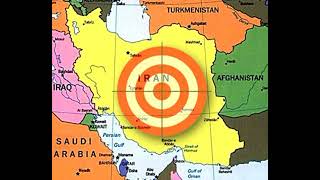
First US President HATED Alliances For This Reason | Dr. Arta Moeini & Dr. Chris Mott