First US President HATED Alliances For This Reason | Dr. Arta Moeini & Dr. Chris Mott
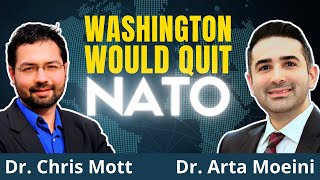
In this interview, Dr. Arta Moeini PhD and Dr. Christopher Mott discuss their recent paper on "Washingtonian realism," arguing that George Washington's pragmatic, regionally‑rooted approach to foreign policy—characterized by interest‑based neutrality, flexibility, and a focus on national unity—offers a template for a new American grand strategy. They contrast this with the later Jeffersonian and Wilsonian idealist strains that pursued world‑transforming missions and permanent alliances. The conversation traces Washington's early experiences as a land surveyor and military officer, his reactions to British and French pressures, the development of the US policy of neutrality (including the 1793 Farewell Address and the Quasi‑War with France), and the role of geography in shaping US strategic choices. They argue that modern US policy has drifted toward globalist, hegemonic ambitions, undermining domestic stability and economic prosperity. The guests propose a return to Washingtonian realism: emphasizing regional interests, strategic autonomy, flexible non‑alignment, support for middle‑power sovereignty, and a realistic assessment of geographic constraints. They suggest this approach can guide a sustainable, interest‑based grand strategy for the United States in a multipolar world.
Chapters
So I think Washingtonian realism is one of the most important things we can rely on to craft a new grand strategy that understands, that's interest-based, that's realist, but doesn't allow for a lot of the aggressive or globalist postures of some people who still call themselves realists but also have a lot of globalist ambitions. In the name of realism. That tradition, I think, allows us to reconfigure our position in the world and make America competitive for the next century as one major power among many instead of an imperial or hegemonic power.
Hello everybody, this is Pascal from Neutrality Studies, and today I have a talk with two academics that I've been looking forward to a lot. I'm speaking to Dr. Arta Moeini PhD and Dr. Christopher Mott. Chris has been on the channel before, he is a great analyst working for the Institute for Peace and Diplomacy. His colleague Arta works for the same think tank as the Director of Research and Head of US Operations. The two recently wrote a phenomenal piece about George Washington's realism and his approach towards neutrality, or let's call it US non-alignment, or early US non-alignment. You can imagine my excitement about two scholars showing in a very well-researched piece that Washington in fact was very much a chief neutralist. So let's talk about US neutralism and restraint in the early days of the Union. Arta, Chris, welcome to the show.
Great to be here.
Thank you for having us.
Your piece got me very excited because you discuss what you call George Washington's realism, although the term was really not around at the time when Washington was around, right? But could you maybe explain what you mean with Washington realism?
Yeah, sure. So first of all, I mean, the place of this piece is, you know, has to be framed in the question of sort of what is realism, which is a question that's a big, big fundamental question in Washington and around the world. A lot of people now consider themselves realists, so I think we need to to define exactly what that realism is and whether or not it has a tradition, if there is an actual culture of realism that we can sort of relate to. And you're absolutely right that realism in the way that we are conceptualizing it and historically, this kind of realism that George Washington embodies is different from the realism of IR theory, is different from a sort of a more calculative and material realism. It is a much more dispositional realism. It is an attitude. It is an understanding that looks at the world in terms of what is possible, what is, rather than what should be. So it does not have the idealistic framings that even some realist theory being effectively conceived in 20th century have. It doesn't have a utilitarian framework in that sense. It's not positivist in that sense. So it has a very different kind of framing. Another reason we were thinking about Washington and Israelism is that, you know, at IPD we recently launched a program called, you know, basically the Washington Center with Washington fellows. Chris, for example, is a Washington fellow with us. And a lot of people would imagine that this is just because of our location in Washington, D.C. And we wanted to basically say that our fellows and our program is dedicated to the question of what Washington as an individual, as a leader, as a statesman represented, and what Washingtonian realism then basically can ground our policies and our thinking for a new kind of grand strategy. So it's two things. It's thinking about the past, but not being stuck in the past, but also understanding that actually in our time this kind of a framework, this Washingtonian realism, is more needed than ever because the time of Washington itself was a time of limitations, was a time of, let's say, polycentrism or multipolarity, whatever your favorite term is. It was not this hegemonic era. And so a lot of his observations are tied to the concept of interest, tied to the concepts of reality and tied to the concepts of regions and what the regional interests and frameworks are. I'll stop there and let Chris jump in with his take on all of this.
Yeah, so what the thinking behind all of this, I think originally, was that George Washington is a perfect example of a kind of historically rooted, regionally rooted realism, as Arta said, that is in the US and North American context, but has been lost, I think, over time, as the US power has grown. And along with that, the kind of luxury beliefs attached to US power, that often in our particular era, are convergent with kind of the unipolar moment, and the inability to have like strategic empathy with other people. And the thinking that as US alliance networks grow, they are permanent in a sense. And they lead to a kind of terraforming of the world as a whole, making things a bit more like the US, making things more stable. They're rooted very heavily in the ideas about democratic peace theory, which I think there's a huge reason to be skeptical of historically, is not, I think, a historically viable theory. And that dates all the way back to this time period that we're talking about. And when looking at the kind of historical records of the time, when the American Republic was so small and weak, and most people thought it would fail, it would, it would fracture immediately into different regions, it's really interesting to see what the adaptations were in the very beginning of the country, and how a country that didn't have the ability to have all these kind of luxury beliefs that it does now, was able to adapt and eventually lay the seeds of its future success. And all of this, when looking at it, is extremely pragmatic. This is all stuff that is basically based off of what now we would consider to be ultimate realism, but at the time was just seen as a sober form of statecraft, but one that didn't have universal principles. It was adjusted based off of the circumstances of the locality, and understanding that other places have circumstances of locality too. They're not all the same. There was no, um, ever a push for other countries to, shall we say, adopt Washingtonian realism. They would have their own versions of it.
I think pragmatism is a very, very important word in in trying to reconstruct how Washington thought about what needs to be done for the young United States. And the beautiful thing about your piece is that you show, despite the fact that, you know, the US was pragmatist in the very beginning, that there always was a second strain. There was always an idealist strain or a strain of 'let's make the world a better place' the way it is ought to be, not the way it is. And you're kind of using Thomas Jefferson for that. And of course, Jefferson was the third president of the United States, but he was also George Washington's Secretary of State, right, at the very beginning. And can you maybe explain these two figures and how they represent two different parts of, like, in the chest of the United States, two different souls? Maybe Arta.
Yeah. So I think this is a very important point that from the very beginning that we're thinking about sort of Washington's foreign policy, we had to contrast it with what really did become dominant. So this is effectively, we are talking about the Founders, we are talking about a specific kind of heritage that does exist in the United States. It's mostly Washington, Hamilton, and the Federalists. But quite early on, this gets taken over by what becomes the dominant sort of almost a theological, ideological, idealistic missionary drive in US politics and US foreign policy specifically, that is spearheaded by kind of, by Jefferson. It is fascinated by the idea of world transformation, by what's happening in Europe at the time, the revolutions of Europe. It has a certain Jacobist even element in ingrained in it. And we would, I think, actually make that thread that these kinds of ideas and the idea of strategic culture is something that I want to sort of highlight because ideas get passed on through generations. And so there is a line between Jeffersonian idealism and Wilsonian idealism and Wilsonian democratism. And then later on, what we see in our time, which Chris already mentioned, let's say democratic peace theory or the world is divided into good and evil and we have to the George W. Bush famous framings of good and evil and manichaeism. So these kinds of views of foreign policy and views of the world that, as you said, something in the heart is ontology really, it's a way of seeing reality and interpreting reality that has existed for a long time in the United States. But I think now more than ever, we live in a precarious environment internationally and domestically that requires the kinds of things that Washington understood outside, or in our case we post-ideological, for them would be pre-ideological thinking, focusing on realism as not just the doctrine but as just the way that things operate and trying to adapt to them, not believing in permanence, in permanence of arrangements and structures and being flexible to change them. So all of these kinds of views are encapsulated by Washington. And it is also a different kind of mindset that I even call, you know, I've called it before and here we called it sort of the importance of character, excellence in statecraft or statesmanship, aristocracy as an individual virtue. And so a lot of these statesmen before the American Revolution, had a certain kind of disposition, a certain kind of character that made them think of the greater good, of the common good, but not of ideals in the way that we think about today. Not dreams of world transformation, but rooting everything in the idea of national interest. Chris?
May I just ask Chris, like, because can you explain Jefferson a little bit more? Because we are talking about the 1780s. We are talking about the French Revolution and the way that this idea was there that now democracy is going to take hold and we'll make everything better and this great new nation on the other side of the Atlantic is now finally getting along. Can you explain Jefferson's motivation a little bit more?
Yeah, I think the comparison is actually really interesting because if— and I'm going to cite here, I'm going to throw out the name of a book that's worth looking at. It's called The Ideology of Democratism. By Emily Finley, who each chapter she goes through a different thinker and kind of transforming liberal thought from an adaptation of individual rights into a messianic complex and how this messianic complex took over what we now call the professional managerial class. And Jefferson gets his own chapter in this book. So for further knowledge, it's worth looking at that. But Jefferson's worldview is very much based off of the idea that humankind is kind of in a progressive linear experience where it's always heading onwards and upwards. This was actually not— while not ubiquitous, this is very common in his nascent political party, which was kind of fittingly called the Democrat-Republican. So it has the name of both of the two major American political parties today. And although there were more, much more nuanced thinkers in this milieu too, definitely think James Madison here is, is a kind of halfway point between Jefferson and the Federalists in many ways. But, um, there's this worldview that says that what the US Revolution is doing is the same thing as what the French Revolution is doing, is the same thing that, uh, perhaps they would even go back and say that, uh, the, uh, parliamentarians in the, uh, previous century in the English Civil War had been doing, and that is making humanity better by political evolution and the idea that the Enlightenment could be a force of change, not just in how we vote or constitutional government, but in how we conceive of kind of humanity's relationship with nature, with the world, etc. And it's interesting to compare this to the people who became the first government, although yes, as you point out, there weren't that many people who had governing experience. So all these people were in the Washington administration originally, because there wasn't a huge talent pool to draw from. But the Federalists themselves, who were blamed by Jefferson for being too pro-British, by the way, they were called Anglo men, which I think is ironic considering the worldview of the Jeffersonians is a bit more kind of like the British Empire, albeit wedded to French kind of avant-garde Jacobinism. But this worldview is very different because in the Federalist worldview. Most of those people were combat veterans. They fought directly in the Revolution, Washington obviously being the most important general, Alexander Hamilton being both his aide-de-camp and originally his artillery captain, famously fired on Princeton University when British troops were in there. Princeton University, by the way, had rejected Alexander Hamilton the decade before. So that's a little piece of academic revenge lore for you. And then you had Henry Knox, who was kind of the famous for bringing artillery over from the captured Fort Ticonderoga to drive the British out of Boston. It was the first big victory in the war. He would go on to be incredibly important in the Washington administration. These were the people that had fought and knew the value of, like, peace directly. They obviously weren't pacifists. They had voluntarily taken up the cause of fighting to get Britain out of the United States— what would become the United States. And the reason they did this, of course, is because they thought that the interests of the people in North America had diverged from the interests of the British Empire. So there wasn't anything universal about this claim. There was also the idea that now that the war is won, war is not great and we shouldn't constantly risk it. We should rebuild. The country was devastated by a lot of the conflict, so it needed a time of peace and prosperity. Now, Compare this to Jefferson. Jefferson had obviously been anti-British and would be virulently anti-British his whole life, but he and many people allied with him were not actually veterans of the war. They didn't have their idealism tempered by the realism that one must have to win a war against the odds. And so I think that they're more pie-in-the-sky ideas. Were more attractive to them because they didn't really care, you know, on some level, if there was immense risk in pursuing them. They didn't see the opportunity that had been given by a period of peace to divorce a bit from endless European war and involvement as a colonial subject, and rather more saw this as an opportunity to join with France, to replace Britain with France effectively, and become part of a transatlantic plan to evolve humanity. And many of Jefferson's writings have this kind of full-blown Jacobin tinge to them, where the assumption is that all of humanity is moving forward on this grand scheme, which actually should sound very familiar to people that have lived through the post-Cold War world. Of course, now we're a bit more used to it. It's not as cutting edge as it used to be. But this is, I think, an intrinsic divide. And it goes to show that Washingtonian realism has an intrinsically geographic element to it that absolutely makes it distinctive and against these kind of crusader mentalities. But the more idealist side that I would say actually predates Jefferson in the American context and probably comes from the Puritans, actually going way back to early New England, this idealist side that's always been there, excuse any geographic limitations on its ambitions and wants instead to create a view view humanity as a kind of canvas of which politics can paint whatever it desires on. And so you see this division, and I think that the, the division, although this is not a universal principle by any means, this division definitely seems to be that the people that were more involved in the conduct of the Revolutionary War itself, or even the French and Indian War before it, the people who had actually fought in that war were much more cautious and much more aware of their limitations. And the people who had been more writing the newspapers and talking about the glorious future that was to come but avoided fighting directly were much more, shall we say, bellicose. A relationship between the press and former military men that actually is quite familiar, I think, to many modern audiences.
It is very familiar. I mean, the way that you trace this out, really makes me wonder whether there has been this constant kind of dual approach in the United States that, you know, and the combination of which then in the end formed the actual policies that we have seen over the last 250 years, which would make a lot of sense to me. But I would like to focus a little bit more on Washington himself Because as you said, the fact that he fought in war and knew what war was seems to have made him more pragmatic, as in what do we need to do in order to succeed as a nation. And that does not necessarily mean that Washington himself was in any form pacifist, right? The point was not to be peaceful overall, it was just not to be involved in wars that are that are stupid. Like, let's do the wars that are important to us, like the wars with the natives, right? And let's do what is important in order to further the interests of the 13 colonies, right? That at this point were still actually very weak. Can you maybe talk about the geography, how you think that geography played very much into Washington's understanding of what needs to be done? Can you explain that a bit more, Arta or Chris, whoever wrote that part?
Chris, you want to take that?
Yeah, sure. So it's really important to keep in mind that Washington had been a land surveyor in his early adulthood and that this played a critical role in, I think, everything that was to come before the military, before political leadership. He really loved land surveying to the point where he actually, when he was traveling just non-professionally around the country, he would just kind of take out his tools and do land surveying as practice. Practice and because it fascinated him. He was obsessed with topography, and of course this made him a land speculator in what was then the kind of new frontier of what we would now consider the Shenandoah Valley and kind of the foothills of the Appalachians. And this gave him a lot of experience dealing with Native Americans, not just because he wanted to steal their land, but also because they had to negotiate a lot of things in a contested frontier. The frontier moved very, very slowly in the 18th century compared to the century. And he had at first very, like, typical prejudices of his day, the experience he would gradually weaken or lessen because of the messy reality of having to deal with various people from different backgrounds. And I think this focus, this very strong land focus particularly, combined with the fact that he actually failed a lot as a military leader early on, particularly in the French and Indian War, which is the section of the Seven Years' War that he arguably started by being a bombastic young man and plundering into an unnecessary firefight with the French garrison outside of Fort Duquesne, which is now Pittsburgh, and which was itself a dispute over who had indirect control. No one directly controlled this territory outside of Native American people, but it was a dispute over who had trading rights and fort-building rights in various places occupied by the Algonquian peoples. And so he actually messed up a lot in his first forays into military experience, but he always showed bravery and courage under fire, and he always learned from his failures. And his background as someone who was into topography is the key reason that he was good at learning from his failures, because once he had his big goof-up at Fort Necessity and kind of unintentionally or intentionally started a war that spun out of control. He was then made a kind of special aide and advisor to the British general, General Braddock, in the 1750s. And when the British sent a giant, overwhelming in terms of numbers, force to Fort Duquesne to take it, Washington advised General Braddock you're not going to have much success fighting this traditional European method of warfare. You're going into a place that is heavily wooded. The terrain is very hilly. Most of the enemy army isn't French. It's actually from various tribes, especially the Shawnee and the kind of then westward migrating Lenape. And they, they're going to fight in a way that fits North America's terrain. And the British Army isn't really quite up for it. And General Braddock's like, oh, what do— who cares? It's just a bunch of savages. We've got the numbers, we've got the training, we'll clear them out. And then what happens is the Battle of Monongahela, which is an enormous defeat. I mean, like a truly, truly massive defeat. A much smaller force, mostly native, some French, just completely destroys the British column. And Braddock dies, Washington seizes command, and he manages to extract the remnants of the forces under fire. They probably all would have been killed if it wasn't for him. And I think that was the beginning of his move away from the British Empire in a lot of ways, because it was the whole idea that, oh my God, I can't believe these arrogant people in London think that they can just import their worldview on governance, on military, everything, and just have it succeed because it's apparently correct. And so it began his process of seeing North America as distinct. It actually began on the battlefield. And then you see his gradual evolution away from the British politically over the course of the, the decade after the war, where he sees the various kind of the Stamp Act, uh, the various taxation, which of course was justified, and, and arguably from the British perspective rightly so, in the fact that colonists gained a lot from the war, Britain paid most of the bill. But this didn't factor into— this didn't factor in that the colonists had actually suffered immensely in the war, and the British had not, aside from their troops. They had also maintained outside of North America. So there's already this division. How do— how does land get used? Who is allied with who locally? and how are London's policies diverging from what's good for the colonists. Without the specter of France around the border as a common enemy, it really began to drive home to many people that they had their own— now the biggest enemy was actually their mother country in a lot of ways, because there were just too many divisions. And the divisions were rooted intrinsically on the interests of North America versus the interests of Europe, and— or the interests of Britain specifically. And the interests of Britain here is to maintain various transatlantic trades, whether it's tobacco, slaves, manufactured goods, what have you, in a kind of controlled way that disproportionately benefits London. Whereas in North America, it was the question of security, ability to opt out of European wars, a local fixation, which as you said is not pacifist. No one here is going to romanticize and say that there wasn't massive land theft going on towards the indigenous population, but it just goes to show that there was a huge divergence of interest, and that divergence of interest was rooted in whether the resources of North America should be used primarily in North America or should be a primary export thing for British imperial goals, which then were expanding around the world. This is of course also of the start of British imperialism in South Asia. So you have this very, I would say, the global perspective represented by Britain and more localist development perspective that says, well, we want to develop too, and we can't if we're a satellite of someone else. And eventually this leads to, in the more romanticized telling, but this becomes important later, this leads to a political dispute about rights, who has rights, who's voting on what policies and whatnot. And Washington as the forefront of this and the military's perspective It makes sense, because he showed that he constantly adapted to changes, especially changes in the material world, right, how to fight in various places. And this would be reflected in the Revolutionary War, where he had an inferior army, both qualitatively and quantitatively. But he had a huge amount of space to work with. He had a huge amount of untrained rabble militia, but they were good in the non-conventional fighting. He had a small group of core Continental regulars who could be good in the open field, but there weren't that many of them. So how do you use this? And of course, there were many times when he was pressured by the Continental Congress in the war to stand and fight when he didn't really want to, or times where early on where he himself made mistakes, like trying to fight on Long Island to defend New York City against a British amphibious invasion. And there's no way he could win because the Navy could land troops wherever, and the troops were better, and they could outflank him. So he had his biggest loss. But after this adjustment period, when he was given more control and congressional, uh, and the Continental Congress realized that, um, the, the army worked better when used unconventionally, Washington was able to promote his own people into greater positions like Nathanael Greene, who's a really fantastic and underrated general in US history, who basically just avoided open warfare as much as possible and then fought, attacked British supply lines, tried to bottle them up, use the interior space of North America to effectively restrict British movement and to defeat them when possible or checkmate them. Very kind of early proto-Vietnamese way, kind of force a greater power to just lose its ability to control the battlefield. And eventually, of course, this creates such a quagmire that France saw the opportunity to jump in. And then that becomes the decisive element in winning the war. Of course, this would set up problems for later, but that's the whole point. I think that key element of Washington's worldview is that everything is temporary. There's no such thing as a permanent, um, Platonic ideal in which policy or war or anything always works. Everything is always shifting and moving. And so to be pragmatic, one has to set their, their goals realistically, and one has to be willing to change when the situation around them changes too.
Arta, I saw you nodding several times. Do you want to add something to this?
There are a few points that I thought it was— I mean, I obviously completely agree with this, but there are a few things that I had to— I was thinking one was this point about the sort of the asymmetric nature of the war with Britain, which shows again, like when you are fighting a different kind of war, it changes your perspectives. Again, your reality, your perception is reality. As well. And so you're doing something, you're actually involved in it, you're actually fighting an existential or a survivalist war, and it makes your aims much more limited. And another point that I wanted to raise is this dichotomy between the global and the globalist perspective versus the localist perspective. And I think that's something that was important then and perhaps even more important today, because a lot of our mentality is tied to thinking about the world in terms of the globe and the global implications. And because of that, we think that unless you're able to, you know, influence or change the global specter, the global terrain, we are not able to actually be influential or we are not doing much. So this idea of like global leadership, for example, is such an important linchpin of, let's say, the Biden foreign policy view, but also other US foreign policy views for a long time. And I think the inherentness of the global in the vocabulary of foreign policy in Washington today reflects this kind of globalism that was inherited from a long time ago, originally British and Puritan, but then was inherited and accepted, as Chris pointed out, through the medium of like the French transformation of the world by a certain group of American elites, mostly Easterners at the time. And they basically then carried this idea forward across generations. And then all the different challenges that the United States had ended up, especially after World War II or in the run-up to World War II and even World War I in the 20th century, was framed within those terms that, you know, America is this kind of global country, has to be a global country, even if its people up until World War II did not want to be such a globally engaged or globally involved country. So that is in terms of policymaking. But then at the same time, one of the major ideas of Washington and Hamilton and the Federalists was that just because we don't want to transform the world, just because we don't want that kind of a globalist control of the world, it doesn't mean that we don't want to talk with the world or engage with the world or have trade with the world because that actually helps us in our own developmental quest. So the idea that, you know, let's say, I guess some of the critics of this kind of realist foreign policy that's locally and regionally based would call someone like Washington an isolationist, but that's completely false because that's actually the kind of interaction, the kind of engagement that America started with and has always been open to. But not having the kind of permanent enmities and permanent friendships with certain countries, permanent structures, and being able to just be flexible in terms of the parameters of those relationships. Where does it benefit you? Where does it stop being beneficial? Where does it harm you? That's something that changes with different contexts, with different periods of times. And so that is the, I think, one of the most important things that we need to understand from Washingtonian realism, the flexibility, but also the the understanding of what it means to be in the world and what it means to— how pathological it can be to expand that being in the world into controlling the world, into having hegemonic or even, you know, a globalist perspective about the world.
What I find so interesting about your piece is that you kind of work that out where this strain of idealism comes from, which I think you put it in the terms of like Washington being more the kind of, okay, let's be a model for the world that can be imitated by those who would like to, versus the Jeffersonian kind of, let's lead the world, let's show them what's— not just show them what's good for them, but let's implement what is good for the world. And this term, you know, this very deceptive term of isolationism is a creation of the Cold War, actually. After the Second World War, that term was made up in order to describe people like Washington and 150 years of tradition of people who followed in his footsteps, who said, let's be modest and let's care about the United States and the US interests instead of going out and being a being a global leader, but like really just— how did Quincy Adams put it? Like, look for monsters abroad?
In search of monsters to destroy. Going in search of— basically, instead of helping liberty along, going abroad in search of monsters to destroy is essentially the point. Yeah.
So how do you— where do you see the inflection point where were like in US leadership, maybe, you know, the Monroe Doctrine is already a very different breed of ideology than what Washington had. Because if we just fast forward to 1793, Washington's farewell speech, he made the point for neutrality and he made it in realist terms. Can you maybe lay these terms out and say like, how did he say like we should mind our own business and be neutral?
I'll maybe start with this question. So I think by 1793, by the Federal Address, in fact, many of the founders, Washington included, had already become disillusioned with some of the— with this American experiment of theirs. They didn't expect it to maybe succeed in that way, but also they didn't expect it to go off rails in certain ways. And so, and it's interesting because I think there are scholars that also believe that Jefferson was also disillusioned with the United States. So I think the only person that continued to believe in the United States as a project was Madison, who was in the middle of the road. But both sides thought that this, something has gone awfully wrong here. And for us, I think the Washingtonian perspective is very important because it highlights certain things. One was from the very beginning there was a nexus between the domestic and the foreign for Washington. And this is not something that you hear much in Washington today. We almost live as if the domestic side and the foreign policy side are two different beasts. The Washingtonians and Washington himself had this understanding that first of all, a lot of things and most things are domestic. And foreign policy gets viewed through the prism of domestic politics. And because of that, both sort of foreign events, but also the nature and the context of your own domestic politics can actually lead you to partisan friendship and polarization. So foreign policy could be a very divisive issue for your body politic. Now, Chris already hinted at a lot of this, but part of this was basically that there were different factions siding effectively with Britain or with France and trying to lead America into one of these different paths instead of holding it as a neutral ground where America is not supposed to be an Anglo country or a French country in that sense, a francophone or anglophone, sorry, francophile or anglophile. But I think, so there's that element. And then there's also the question of how do you, when ideas and ideology sort of takes over, it's very hard to not buy into the sentimentality, to the sensationalism and sentimentality that comes with it. So already in Washington's time, he was seeing this kind of like artificial attachment to either Britain or France, and specifically France. And so the question of why a nation's fortunes, sentiments, favors has to be tied to one country or to another foreign country, and why it has to then engage itself into those struggles is something that was very significant for Washington. But also, you know, it's something that we continue to see all the way up to our time, which we see with different conflicts where people involve themselves, engage themselves in those conflicts, and then they just interpret it as if within their own sort of like political partisanship. So for example, if my side happens to be in favor of Ukraine, then I like Ukraine. If my side happens to be against, you know, so it doesn't have to do even with the political divisions. It's actually more like what are the values that I think the other side represents and are there more values or not? And therefore I, you know, jump in, in sort of a geopolitical contestation, a real political affair in many cases that is very different and far from my life and my interests. And I project that existentiality to the foreign conflict and think that it is as important to me as it is, let's say, for Israelis and Palestinians, or let's say Ukrainians and Russians who are actually fighting these wars. And that is a pathology that I think is already alluded to by Washington by understanding that relationship between the nexus and the relationship, the deep connection, the inherent links between the domestic and the foreign. And how the partisans of a foreign cause in your country, who happen usually to be your elites, lead your population to feel a oneness, an identity with one side or another, and that breaks your body politic apart and does not allow you to then focus on what you really have to focus on, which is your own sort of competitiveness, your own growth, your own people, because a lot of resources and a lot of energies frankly go to things that are not primary and central to your interests.
Chris, I think, uh, in your piece you put this beautiful, uh, um, you explore the fact that the, the first kind of shadow war the United States had was actually with revolutionary France, um, and the, the irony of it all, especially in the democratic peace theory. Can you just give us that bit?
Yeah, yeah. And to tie that to what Arta just said as well, I think it's really important to recognize that when Washington first became president after the Constitution was ratified and we had a fully cohesive government, there originally were no political parties. And the, the policies pursued by Washington and Hamilton, which would eventually become the Federalist Party, were based off of keeping more wealth at home, building up an almost British-style manufacturing system to be independent from Britain at home. And this actually led to a completely devastated country to have as good a banking, financial credit system as an established European power while Washington was still president. This is a remarkable achievement in development, and it goes to show the value of being detached and working on yourself in times of crisis. However, the party system really began to arise for a variety of reasons. Sure, states' rights versus central authority, etc., but But also a key element of it, which Arta alluded to, but, but it's really quite explicit the more you look at it, is foreign policy. Foreign policy divisiveness really led to the rise of what we now know and love as the political partisan system. And the key aspect of that foreign policy was what to do in the continuous, never-ending, round after round wars between Britain and France. France. And no one was really advocating for joining up with Britain. This is kind of a Jeffersonian propaganda myth in a way. But neutrality was, in something that should be familiar to modern people, painted by many people in the press and in certain political factions as being pro-British. If you were not actively pro-France, you were therefore pro-British. Wow, haven't heard that one before. And this—
pick your modern war, pick your modern war and you can apply the same thing to it, right? If you're not what the Washington establishment wants you to be for, then you are definitely the other side. Yeah, go ahead.
Yeah, exactly. And this became more and more of a problem when French privateers began really preying on Caribbean shipping.
Can you explain what privateers are?
Privateers are pirates who are in the unofficial or official employ of the state actor. So they're not pirates that will attack anyone and everyone. Most pirates in history, by the way, are not pirates as we imagine them. Most pirates are privateers, because they would be exterminated immediately if they attacked every single state. You know, they usually attack one or two specific countries at the behest— it may be mercenary, but they're still in alliance with a state. And so in this case, France—
they're the Houthis of today.
Private maritime mercenaries.
Yeah, yeah, exactly. Yeah, they are. They're exactly like mercenaries at sea in a lot of ways. And France had lost its naval supremacy in— well, it never really had naval supremacy, but France had lost a lot of its naval power outside of Europe. It had still yet to lose its European naval power. That would come later in the Napoleonic Wars. But it was still like it was no longer a naval force that was as relevant in the New World as it had been, say, when it played a critical role the Battle of Yorktown. And, uh, so France had gone into privateering— Revolutionary France— as a way to attack the British, quite logically, by the way, uh, to undermine British naval supremacy, to interfere with their trade. Now, this also interfered with US trade and the US ability to be a trading partner with all countries without being a partisan in any of their wars. And, uh, This could of course lead to problems. Sometimes French privateers would land in American ports, which of course, as active participants in the war, is kind of a breach of neutrality. This would further fuel the domestic issues. And while lots of people would say, well, good, you know, like we support them, you know, like screw the British, like, and other people would say, it doesn't matter what you feel, this is going to hurt us and our ability to develop our own economy. And our own set of interests. So domestically, the foreign policy problems of both the British Empire and the French Revolution became a problem. Now, this would eventually mutate with rapidly deteriorating relations with France over the course of Washington's administration. He did not want the relations to deteriorate, by the way, but there was this constant push by the French government to get the US on board. It. And this led to Washington issuing the Neutrality Declaration, which once again was not a Britain declaration. I mean, the idea of accusing any of these people of being pro-British when they had fought against Britain is just ridiculous, but that's how it is. Um, the Neutrality Declaration firmly took the priorities of Washington— and, and Adams inherited this when he became the second president— out of the war entirely and said, you know, we wish you well, we don't like the British either, but this is not in our interest. We're not going to do this. Now, by the time that Adams was fully president, though, this relationship got really, really bad. A lot of the materials going from North America to Caribbean ports were being used in the British war effort. And so French privateers, probably at first on their own accord, but gradually that it was viewed as a way of bullying the U.S. into compliance, French privateers began to attack U.S. ships. In addition to British ships. And this would lead to— there was never an official declaration of war. This is not on the official list of wars the United States has fought, but its first military conflict with a non-native power anyway was this thing that has gone down in history weirdly as the Quasi-War. And the Quasi-War was effectively a naval war, mostly in the Caribbean between the new U.S. Navy. The U.S. Navy did not exist before this war. This is actually the reason the U.S. Navy does exist is because of France. And the U.S. built these things first. Typical frigates. The U.S. did not have the ability to build big ships of the line, which would not have been useful in this war anyway against privateers, but rather smaller frigate-style vessels. They often have like 36 to 48 guns on them. They're single deck. They're very fast, but they're big enough to give battle with anything that isn't a war. Now, this would eventually lead to the US constructing this new type of ship called the super frigate, which is a frigate that can defeat any other frigate. It's bigger than any frigate, but it's still small and light enough to avoid fleet engagements and to catch up and pursue vessels. And this is where the famous USS Constitution comes from, which is the oldest commissioned warship in the world. It's in Boston Harbor. You can visit it. I have. It's very cool. But these ships were built for the Quasi-War, and they did amazingly. They would close with these French privateers and just destroy them. It was the— while the French took a disproportionate amount of the kind of civilian vessels captured, good seas in military engagements, the U.S. actually cleaned France's clock most of the time. And this became a huge problem, the two, especially for Jeffersonian worldview, because you've got the two revolutionary progressive republics that are supposed to be united. And already they're fighting over trade. They're basically fighting over whether the US should trade with Britain or not. And eventually this becomes just— France isn't benefiting from this. US isn't benefiting really either, because their trade goods are being seized. And but it takes until Napoleon rises to power, which is a kind of undemocratic turn, if you will, in the French Revolution, for France to begin actually saying, you know, this policy is dumb. Napoleon hated this policy. And he— he— one of the earliest things he did was get rid of it. He said, no, just reestablish relations with the US, respect their neutrality. This is a really stupid distraction. We have other things to do and we can— it's easier to actually have the US be anti-British if we're friends with them. And he was right, of course. And so this would lead to a restoration of full relations and the end of the quasi-war. But once again, this is one of the first examples one should think of in modern history when people talk about democratic peace theory or values-based alliances. Well, when money is on the line, when your geopolitical survival is on the line, no, interests are always going to come first. And it goes to show how fast things change. US-France relations were so, so strong in the 1780s. They were remarkably romanticized. Benjamin Franklin had like the French elite eating out of his hand, you know, it was— and then you just have, you know, not even 20 years later, this full, complete breakdown to almost total open war. Alexander Hamilton drew up plans to seize New Orleans. And then once again, after this, things right, US becomes more pro-France again because Britain is still a more threatening country, uh, and eventually there would be the War of 1812, which would be concurrent but separate from the, the latter stage of Napoleonic Wars. And so, you know, it just goes to show, particularly for smaller countries, which is something that the US today has very little empathy for, uh, just how careful you have to be about pledging yourself to any kind of permanent ideological magical posture. And this, I think, all of this, though the Quasi-War happened after Washington was president, all of this was happening in real time when he gave the Farewell Address. And I think it's really important to keep in mind that the Farewell Address is rooted in this fear that overly emotionally attachments, either for permanent enemies or permanent friends, hurts domestic politics. Drives up the instability of society and can prevent you from pursuing your own interest. I think this, and also the danger of pro-foreign lobbies in that, in his case it was France. Today we could talk about other countries, but it is a very, it's a very much like, well, someone else might have an interest in talking you into a war and you can't really blame them for that, but it's your interest to have some detachment. And I think something that's really worth— I'll end this point here, but something that's really worth keeping in mind is that it's not just the farewell address that you see this. Washington's personal correspondence, and especially his correspondence with foreign leaders, is just as enlightening in this regard. And the first relationship outside of not being a state yet and having an alliance with France, the first true diplomatic relationship the United States has with a foreign country is with Morocco. Morocco. And if you go and you look at Washington's personal correspondence with the King of Morocco, it's really interesting what he says in a lot of that correspondence. He talks about how they don't have to worry about the United States because the United States is a secular country. It's not going to go on crusade. That's how he opens it up. So we're happy to be friends with Muslim countries because we're not going to convert your religion, unlike the European powers. We have no desire to conquer you, whatever. And then he follows this up with a statement of, we're working on our own development. Peace and diplomacy with everyone benefits us, and that's what we want to do. We don't want to get involved with all these wars far away. And then this is kind of concluded and underscored by saying, and we're pursuing a new form of government that is still totally different. We're trying to kick the king out of our country, you know, whatever, and govern ourselves. But we do not believe that we go around the world doing this to other kings. This is a dispute between the United States and Britain. It is not a dispute between the kings of North Africa or the kings of the rest of Europe. It is not an anti-monarchist crusade. It is simply an independence movement and a new form of government for us in our own context. And this is all, you know, very explicitly stated in his earliest diplomacy with Morocco. So it's always worth looking at stuff like that.
And, you know, it's scary of how reminiscent, like, today's events are with what happened back then, you know, with the way that 20 years ago, you know, Russia was basically willing and ready to integrate, but for some neocon reasons that couldn't happen. And now we are at the brink of a Third World War. After the End of History, right? What is your— the last 5 minutes— what is your learning outcome from having researched Washington? What would you like the modern United States to take away from this learning experience of the last 250 years between Washington's realism and restraint versus Jeffersonian and so on idealism and let's let's carry our values into the world. And let's start with Arta and then Chris, you'll have the last word.
Yeah, so I think first of all, one of the important things from the sort of Washingtonian perspective is the concept of diplomacy. And that in itself, and you know, we are the Institute for Peace and Diplomacy, but the idea that diplomacy requires a certain character, requires you to talk with different groups of people, requires an open-mindedness, requires, you know, and those are the virtues, let's say, that, you know, I think someone like Washington being from a different time, being from almost a pre-ideological time still in the US framing, having cultivated in himself a kind of of statesmanship and aristocratic sort of virtue, understood and wanted to talk to different people, come to terms with them, negotiate with them. So that's one important element. But in general, as a sort of what is Washingtonian realism, I think we can talk about 3 or 4 fundamental things. Washingtonian realism focuses on the importance of national unity, understands how that kind of involvement, engagement that goes to sort of overextension and foreign wars overseas, entanglement abroad breaks your national unity, has consequences for your national unity. It's also the understanding that sovereignty is important. Strategic autonomy is important. And that strategic autonomy and that sovereignty is not just because of some sort of a, again, as Chris mentioned, it's not an anti-monarchical sort of idealism. It's not just an ideology against, let's say, all kings in the world. It's just we want to establish our self-government or our sovereignty, our independence. So this country was created for the sake of emphasizing its independence from other parts of the world, its different way of life that it wanted to create for itself. And with that comes the understanding of the true distinctiveness, the true exceptionality of the United States as a continental state and its important sort of regional bases of power. And so with that, we have to understand what we call the spatial realism. That where you are in the world matters. America is protected, let's say, by waters that surround it. So there are very few conflicts, there are very few events in the world that is truly existential for it. And that's an advantage. It has allowed it therefore to focus, as it did for a long time also in its history, on its own development, on its own sort of economic growth, on its own people, trying to become a better country, a more powerful country. And it did in many ways succeed in that because it was in a way separated. It was an island unto itself for major parts of its history. And lastly, I think it's the question of then what does that imply in terms of like foreign policy? And I think global non-alignment is, it's very interesting where America is now one of the one of the sort of the countries that pushes for blocization of the world, whereas American original founding moments was in the global non-alignment, global non-interference, understanding that we will keep to our region. We are not pacifists. We will do what we have to do to secure our interests in our region, in North America. However, we are not going to We're not going to try to, let's say, interfere and change governments around the world. We're not going to, we don't think that our interests are global in that sense. And with that comes an actual sense of much more, I think, sound understanding of security, not opening up the scope of security to include everything under the sun, but something that's very tied to physical security and the importance of domestic stability and economic prosperity for that security. And therefore the understanding that the world is actually regionally based and not this sort of one thing that now we talk about the fragmentation of the world. I think from the Washingtonian perspective, the world was always a multiplicity of regions rather than, and geographies and peoples rather than just one thing. Under the rubric of the human, which is what Jefferson and many others wanted to have. And it in a way goes back to Duncan Mench talks about the LASP, the liberal Anglo-Saxon Protestant that has always been dominant in the United States. And it precedes, as Chris said, the Jeffersonian moment. So there's always been this sort of like quasi-religious missionary drive in the US public, particularly in the Northeast. And that has been the establishment through the generations. So I think Washingtonian realism asks us to come back and reconsider a lot of our permanent entanglements, permanent relationships, permanent alliances, permanent enmities in the context of a changing world, which moves away from, which is moving away and has already moved away from a unipolar order that America was leading to not a hegemonic— where hegemony, global hegemony, is not only not possible, but to a world in which all these other regions, all these other civilizations, all these other entities are now claiming to have or want more autonomy and independence, creating a much more polycentric and multipolar world. So I think Washingtonian realism is one of the most important things we can rely on to craft craft a new grand strategy that understands, that's interest-based, that's realist, but doesn't allow for a lot of the aggressive or globalist postures of some people who still call themselves realists but also have a lot of globalist ambitions in the name of realism. That tradition, I think, allows us to reconfigure our position in the world and make America competitive for the next century as one major power among many instead of the, you know, an imperial or hegemonic power or a premises power that creates both the power structures but also the value structures of the world in a universalist fashion. So I'll stop there.
Chris, if the United States keeps looking for its its core and its way of life in Kabul and in Baghdad and in all of this global approach to US way of life and to US prosperity, do you think that there's a future for the project that Washington and, and his compatriots started? Or where do you see, like, the, the most realistic way forward for the United States 250 years later?
Well, I think that what Washingtonian realism really shows us is the, the dangers of becoming unmoored from a particular geographic focus. And as the U.S. has pivoted more and more towards attempting to become a truly global empire, it's lost all context of its own self-interest, and the self-interest becomes the empire itself, not the state that is launching it. And I think we have seen that in how, from roughly— I mean, there's some contradictory data here, but it's— the trend is pretty overwhelming. Um, from roughly 1790 to maybe about either the 1960s or the 1970s, the U.S. had the highest standard of living in the world. World. And, uh, now it has one of the low— on the lower end, although in some ways this is exaggerated, but, but it definitely has on the lower end of developed country, uh, livability. Um, income inequality is off the charts. Um, a lot of things have been offshored, which is the opposite of what Washington would have wanted. Uh, and, and a lot of effort and money and resources have gone into this kind of world police thing. The quest for hegemony, I would argue, has not only harmed the average American citizen, um, as well as many countries targeted abroad, it has harmed the geopolitical posture of the United States and sacrificed many of its advantages at the altar of world transformation and, uh, well, and profit-seeking in, in many cases, but for specific industries, not for society at large. And And I think that brings us to what— where do we go from here? And I think it's undeniable that the world has shrunk since the 1790s. It is undeniable that the global balance of power is relevant to the United States. But how to best pursue a global balance of power that prevents the dominance of another country? I think it's actually to give up attempting to dominate it yourself, because first of all, the project has clearly failed. Second of all, this drives other countries into the arms of potential rivals because they're afraid of you and what you might do to them if you walk out of line. So I think the lesson to really be learned from the Washingtonian experience is to also see our early history as, from the US perspective, our early history replicated in many young postcolonial nations today, and understand that it's actually, since we're more distant, than the Eurasian powers that are US rivals. We're more distant than them. And therefore, if we adopted different policies, we would be less threatening because we're further away. So we should support the sovereignty of smaller countries. We should support buffer states and neutral states. We should support the ability for there to be a space for regionally anchored smaller countries to have their own say in world affairs, because that will actually do as much, if not more, to stop other revisionist powers than it will, uh, US quest for hegemony. And, uh, we actually have another piece that Arta and I and two other authors co-authored on the IPD website called the, the, um, Middle Powers in the Multipolar World that is very contemporary and is very much based around this. Like, multipolarity doesn't mean a new Cold War. It doesn't mean US, China, Russia forever. It means all these other countries. It means Brazil and South Africa and Turkey and even Japan and, and whatnot. Like, these are all important now because the overall share of power, whether it's US, China, or whoever, is actually less for the great powers dictating world affairs. So the, the smaller countries that are not too small are actually more strong than they were before. And this actually, in my opinion, benefits the US as a maritime power who benefits from trade and that I would contend does not benefit from endless base construction in Africa or Asia or whatever, um, this actually is very good for a distant maritime power. So I think that the— in a smaller world, Washingtonian realism still holds up. It needs some changes, sure, but it holds up. It just needs to understand that it must respect the sovereignty of other countries, and that in turn those countries will hopefully respect its own sovereignty. And I mean, one thing that we quote in the Washington piece that I would like to say that kind of bulks up this, it's from a private letter he wrote to Alexander Hamilton. And in it he wrote, we will not be dictated to by the politics of any nation under heaven farther than treaties require of us. If we are to be told by a foreign power what we shall do and what we shall not do, We have independence yet to seek. And I think that's a kind of second Declaration of Independence in a way. But I also think that that is an attitude that the US foreign policy establishment should be more friendly to when other countries adopt that attitude as well, because the strengthening of middle powers actually is a great way of upholding world order if you're worried about revisionist great powers. So that's how I would end that point.
And this advice that Chris just read, again, it's applicable to many other countries around the world. I mean, you can read this to European leaders today vis-à-vis their relations with America. You can talk about it to, you know, smaller, even smaller non-middle power, smaller countries that are in the buffer zones and are, you know, having to choose one side or another. To really ask them, isn't it better for you to be neutral instead of choosing one side? Because if you, if you do this, the risk to you is great, and you need to try to find a way to stay out of these conflicts. So I mean, I think examples abound. You can think about, again, a lot of these countries on the, on the regional sort of buffer zones. Let's say, let's say Ukraine, you know, wouldn't have Ukraine been better off if it hadn't sided with either side and was very strong about its neutrality, which is really what even Russia wanted at some point. So the question is sort of like, how do we get countries to realize that neutrality, non-alignment is important and good for them, focusing on their own interests, but also to have great powers and middle powers also realize that neutrality is equally important to them. Yes, Yes, there will be fights and contestations between middle powers, between great powers. That is not something that we can deny. However, if you have the concept of neutrality in global terms, and then as Chris said, focus on your real geographic rootedness and your regional interests specifically, you will have a very different, I mean, the two together will have a are a basis for a grand strategy that could work for various countries and, you know, really advance an interest-based thinking that doesn't turn everything into an existential crisis or an ideological crisis. So, yeah.
I would also just very quickly say that the land you occupy as a part of this geography, the land you occupy is the true determinant of what your options are diplomatically and not what you choose to believe. Believe. And so it makes much more sense to adapt what you believe and how you justify, uh, the, the Rawlsian detra of the state to what your ecological, what your resource-based, uh, and what your defensibility is. So always keep in mind the physical spatial reality that you occupy is going to be the primary determinant in what your foreign relations should look like, and that will enable you to kind of, uh, move past a lot of very temporary faddish kind of ideas of, oh, we should do this, or we should do that, or, you know, whatever, when you might regret it later. But if you always keep in mind what actually is more permanent, which is actual spatial relationship, I think that this serves as a better model than the kind of view of world transformation or, you know, progressing the human race through the policies of a particular The good thing is that Washingtonian realism, and with it this understanding of neutrality, actually grows relatively naturally.
I mean, nobody had to teach Washington that, he understood it himself. And today two-thirds of the world actually understand that themselves. The problem is when ideology supersedes this kind of thinking and manages to crowd it out. That's when the whole Europeans, they go crazy and basically become like willing to sacrifice themselves on the altar of some hypothetical higher cause. But that is always temporary. The question is just, will it fade away before we have Third World War or not? But with that said, I really enjoyed this discussion. Arta Moeini PhD, Chris Mott, thank you very much for your time today.
Thank you.
Thank you, Pascal.
Thank you. Mm-hmm.
More from Arta
Dr Arta Moeini: US does Israel's bidding; failure in Iran will finally kill unipolarity. #iranwar


WAR IN IRAN: Consequences for Armenia: Arthur Khachikian with with James Carden and Arta Moeini
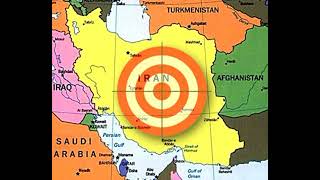

The World on the Brink and the US Foreign Policy of the New Era: Arta Moeini & Arthur Khachikian