WAR IN IRAN: Consequences for Armenia: Arthur Khachikian with with James Carden and Arta Moeini
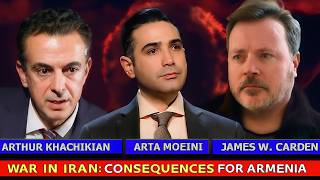
Arthur Khachikian, James Carden, and Arta Moeini discuss how escalating tensions with Iran could destabilize Armenia and the South Caucasus. They argue U.S. sanctions have strengthened Iranian hard-liners, and warn that a new corridor project called TRIP aims to pull Armenia away from Russia while isolating Iran. The panel cautions that miscalculation could trigger a regional war.
Chapters
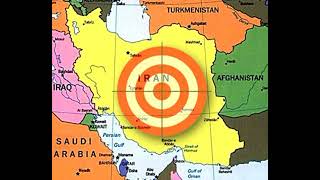
Gentlemen, welcome to our little program. I suppose now we're running our own program. So it's a pleasure to host you. It was great to see you in Yerevan, Armenia a year ago. We had a very nice conference. It was a real pleasure. I'd like to introduce you to our audience. We have with us James Carden, who is the editor of Realist Review in Washington, DC, and we have Arta Moeini PhD, who is a director of the Institute for Peace and Diplomacy in Washington, D.C. Gentlemen, welcome. So other than the world breaking down, the end of the world order, the collapse of the United Nations, the operation in Venezuela, the seizure of Greenland, which one do you want to pick? I think we should pick Iran. I mean, there's a lot happening. You know, the bad news is the world is falling apart. The good news is it's extremely interesting for people who study international relations. So there's a lot happening around Iran. We still don't know, is there going to be an attack? Is there going to be an attack? Are the negotiations underway? Maybe we can start with Iran and then transition to the Caucasus because it's going to have direct implications for what happens in our region. Go ahead.
I guess I'll start.
Please.
Yeah, well, first of all, Arthur, thank you for having us. It was a pleasure to be in Yerevan. It was one of the most memorable academic policy trips that we have had in a while. So thank you for that. I want to, first of all, sort of reframe parts of what you said. The world is not really falling apart. The world is realigning, readjusting to a normal that we lost after the Second World War. So that postwar order, all of its pretenses, all of its illusions, are all falling away and we are seeing a world that's really driven by power. And so, I mean, I actually like Mark Carney's rupture language. So it is a rupture, but it is not a fragmentation in a sense that it was that systematization, that integration was always an illusion. We are going back to a world of regions and regions will take much more of a prominent role in world affairs. And so we'll see sort of a multi-world emerging with that caveat, then we can look at Iran, which has been a historical regional power. And the United States' efforts in regards to Iran for a long time now has been about sort of bringing Iran back to the Western bloc. It's not different from what has happened in smaller states, such as Armenia, such as Georgia, such as Ukraine, that your audience are probably familiar with. But this is a different altogether different beasts. So the challenge of Iran for the West and for the United States has been monumental. And it's also something that I don't see a change in anytime soon. So we can get into the specifics of all this, but that's sort of just a general pattern that I wanted to sort of lay out.
Excellent. James.
Well, I agree with Arta's analysis. I would say that that being the case, then it's incumbent upon American leaders to give up the dream of hegemony and the unipolar fantasy, these fantasies that we've kind of deluded ourselves into believing over the past 35 or so years since the end of the Cold War. The imperative then is to achieve a sort of reasonable balance. And that's something that American policy actually works against at the moment. And we see that all over. The dreams of, you know, American hegemony have not died with Trump. They've been reinvigorated and they have taken on new forms. Trump's foreign policy is kind of a mix of neocolonialism, neoimperialism, with a large dose of, what would you say, naked greed, the enrichment of his inner circle and the like. So there isn't a lot of encouraging news to report. Particularly with regard to, I believe, these negotiations with Iran. People might recall, you gentlemen certainly know this very well, but, you know, the United States was in the middle of negotiations with Iran last June when the Israelis bombed Iran and then dragged us into a confrontation with them. And, you know, so just because the Iranian foreign minister comes out of the meeting in Oman and says, hey, it was a pretty good meeting, I don't take very much from that. I fear that we are— our— the Trump administration is hell-bent on a military clash again with Iran. And Netanyahu's upcoming visit on Wednesday, I think, into Washington is a very bad— is a very bad omen.
Well, yeah, I kind of quickly agree with Arta. The world has always been run by power. Power is the energy that moves the world, just like Liza Minnelli used to sing in a very good movie, Money Makes the World Go Round. We're back in the 1930s, my friends. This is the 1930s. This is multipolarity with these antagonisms, but we have nuclear weapons that prevent a direct confrontation between states. If we turn to Iran, Arta, you've been following these events probably. Do you think that there is any hope to avoid a large-scale attack on Iran and Iranian counterattack that may lead to a huge crisis, a regional war and economic crisis? And it's actually right on Armenia's border.
Yeah. So it's a very complicated scenario. First of all, if you allow me, I would correct the analogy from 1930s back to 1900s. I think we are in a world before World War I and end of the 19th century. We are seeing forces that really haven't had— in a way, history repeats or at least rhymes because a lot of those problems that we had back in the end of the 19th century were not really addressed. And we instead got two world wars and then a whole bunch of idealism that to mask power instead of actually have a realist perspective on how the world functions. But in terms of Iran, it's very complicated because we are certainly on a path to an inevitable large-scale regional war if this pattern continues. I do not believe that this is something that all countries are moving towards with enthusiasm, however. I think that kind of a war from an Israeli perspective is very welcome. And it has been pushing things in a sort of direction to get that kind of a denouement. But it's not clear to me that even Donald Trump, especially Donald Trump, 'cause there are certain people in his administration who might be closer in with the sort Israeli mind or a different kind of hawkish mindset that's not necessarily Donald Trump's. I think Donald Trump thinks, and he has done this, we now have a lot of data points from his first administration all the way to now, he has always surrounded himself with a lot of hawkish rhetoric. He has used John Bolton and Mike Pompeo. He's now using the threat of the Israelis and even now he himself is taking Armada's and putting it on Iranian, close to Iranian waters and Iranian borders. All of this is a part of his sort of coercive diplomacy, which he, as he likes, or people around him like to call it the peace through strength. The idea of the big stick, right? The big stick. And Donald Trump, especially in the second administration, has really internalized that he is like a new Roosevelt, except that Teddy Roosevelt was harboring the beginning, was announcing the beginning of the American Empire. I think, I know this might sound a bit counterintuitive because of all the things that we mentioned earlier, but I think this is the siren of the end of the American Empire. It's the bookend to the Rooseveltian moment because America certainly can't sustain that, this sort of new world in this way. So I think from the Trumpian perspective, what is happening is if we keep pressuring the Iranian regime, they will cave. You know, he doesn't understand that an ideological regime that has been created on the basis of effectively sovereignty and resistance, anti-Westernization and anti-Americanism, and sees that as sort of its sort of ultimate calling card, cannot come to a table and abandon everything and join the American camp. So this has never been about the nuclear issue. It won't be about the missile issue. It's about the fundamental trajectory and orientation of the Islamic Republic. And I don't see that changing from the Islamic Republic's side, even for its own survival, let's say. So, so I think we are moving towards that direction of war because of that kind of miscalculation, because one side that is really egging the US on, the sort of pro-Israeli and hawkish side, keeps saying that Iran is about to fall. Iran has been about to fall according to these people for 30 years. I mean, if you don't even consider the Iran-Iraq War. But what has happened during this time is that Yes, the Iranian people have paid a huge cost for these kinds of, you know, enmity and intervention and different types of hybrid wars that America and the West has run on them. And the Islamic Republic as well has basically, you know, used the people as leverage and as a hostage. But so it has not been good for the people, and the people genuinely Iranians have an organic anger against all of this. And that is true. But at the same time, the very conditions that has created that prevents a change politically in Iran because it has empowered— wars always empower the regime, the government that's in charge. That happened early on in the Islamic Republic's establishment. It moved from basically what I like to call sort of a sovereignist revolution, that the first thing was about independence and self-reliance, to something that became much more Islamist and much more domestically as well focused. It was about export of the revolution. All of that happened during the Iran-Iraq War. So, and every time there is this kind of a foreign tension, it sort of allows the governments to find new solidarity. And all the sanctions and all the pressures has only made the Iranian economy interlinked and intertwined with the Iranian Islamic Republic establishment. So all the rhetoric aside, US policy over the past 47 years, I would argue, has actually helped the Islamic Republic. But it has also weakened Iran. So it's a very weird position to— strange because we think that, you know, we have to always think about what is the end goal of the policy and then see, are those policies actually helping bring that along or not? If it has been about sort of liberalizing the Islamic Republic, well, obviously this has not really worked in that way. And it has also, you know, taken away all the levers of change that a society requires to demand for organic change and therefore create a condition in which the people are sort of in a clash with their own state, their own government, even their own sense of sovereignty and nationalism. And I think that has been one of the hidden goals that kind of fragmentation between the people and the nation itself, irrespective of the government and the state, has been one of the goals. And I would just end on this last point. From the Islamic Republic's perspective though, so I mentioned the American perspective and its contradictory policy, the Israeli policy, which is very different, is about fundamental sort of weakening of Iran and elimination of Iran as a regional power. Finally, the third one, the Iranian position is this: Iran and the West are in a continuous war that hasn't ended. This is the continuation of that war. The 12-day war didn't end. The 12-day war perhaps wasn't even the beginning. It was just a kinetic action of a front. So this consolidated narrative of war means that the Islamic Republic at this point says, we are already at war. We are getting squeezed and pressured. And the goal is to make us feel unstable. So maybe we need this war to change the sort of calculus on the other side. So this creates that very sort of dangerous situation, which also the entire region is now not at ease about because they know that any war with Iran of that scale, not of a tit-for-tat, but an actual war that Iran is probably going to react to in this time. It's going to actually create the kinds of instability that the Arabs in the region, the Turks, none of them can afford. So that's why they're lobbying the Trump administration to try to deflect the situation or de-escalate.
James, I know that you'll have something to add. Please go ahead.
Yeah, so we touched on the kind of parallels between the current situation and the situation that obtained in Europe in the run-up to the First World War. You know, the eminent historian of the Vienna system, Paul Schroeder, said that the main question with regard to the First World War wasn't whether— wasn't why did the war come? It was how did— why did the peace preceding the war hold as long as it did, given the conditions? That's the question that we ought to be thinking about today. Now, with regard to what Arta was saying about Iran, I mean, absolutely could not agree more. Scott Bessant, in a March 25th, 2025 speech, said this: if economic security is national security, the regime in Tehran will have neither. And, you know, the Trump administration's policy going back to the first term, after we pulled out of the JCPOA, has been to slap repeated rounds of sanctions on that country, which has decimated the middle class in that country. So by One statistic I saw between, uh, 2011 and 2019, 9 million Iranians in the middle class were pushed into poverty thanks in large part to these sanctions. Well, if you eviscerate a country's middle class, the middle class is usually the engine of reform in these countries. So if you weaken that and you weaken the impetus for reform, you strengthen the hardliners in, in these countries. So the, the policy has been absolutely counterproductive. And so the economic policy has been counterproductive, and the national security policy has been counterproductive. We wouldn't be sitting here talking about this stuff, and I very seriously doubt we would have 12, you know, battleships in, in, in, um, a, um, the USS Lincoln, um, air strike carrier in the Persian Gulf and the Red Sea if Trump hadn't decided to pull out of the Iranian nuclear agreement in 2018. So this is a crisis, in other words, largely of our own making.
And gentlemen, before we turn over to the caucuses, what are the scenarios? Number one, just as usual, you know, some aerial bombing, taking out some important targets, maybe nuclear objects, maybe trying to decapitate the leadership of Iran, which would be like stage 1, stage 2, much more intensive bombing, like the bombing in Yugoslavia, for example, and stage 3, God forbid, what, using some— I don't think anyone is talking about an actual deployment of American troops in Iran, and thank God they are not. But do you think at some point there will be much more intensive support for domestic unrest in Iran and possibly disintegration of Iran? Are there any plans? Do you think that's the objective, to make Iran fall apart and to work with all these different ethnic minorities, the Azerbaijanis, the Kurds, the Balochis, and all these other ethnic groups? How far will this go?
I mean, Iran is at an inflection point in a very tragic moment of its history because the result of all these things that we discussed is is in a way a sort of cultural civil war within the Iranian people itself. That is in a way a lot of othering. So a very Manichean, even messianic sort of perspective of, well, these people have to go. And then whoever doesn't know how, I mean, the question is how are they going to go? But then whoever sort of asks any questions about how these people are going to go, it becomes sort of you are part of the other side and the regime. So it becomes this kind of like, you are not one of us. And the people around the regime do the same thing. This is the recipe for a civil war. This is how, you know, things, you know, when within families you have crises and you can't have normal sane conversations and there's a lot of, you know, emotion and emotivism and that sort blankets as analysis and as thinking, then you have a crisis. So I think the Iranian sort of political psychology is at a breaking point. And I think that is the context for all of this. It's not just a political issue. It's a historical moment of that significance and consequence. In terms of the actual war, though, I don't see any kind of a large-scale invasion. Even let's say the war happens and the two sides can't de-escalate, I think America is prepared to do large-scale bombing of different sites, particularly military and security sites. Yet I think, again, I actually know that the Trump administration does not underestimate the power of the Iranian Islamic Republic, the Iranian regime. It knows that it is not going to fall with this bombing, but it wants to do it anyway as another yet pressure point, as I mentioned. It doesn't have doesn't have an alternative in a way like it did in Venezuela even. And Iran is not Venezuela. Iran is a different kind of a system that's only close to Soviet Union or China in its political system. It's decentralized. It has a lot of redundancies. Its security forces and its elites are deeply intertwined with Iranian resources and its economy. It's not something that's going to go away when when you decapitate, let's say, Ali Khamenei or any other top military or regime figure. So the result is the regime is going to, the Iranian government and defense forces are going to do whatever they can to raise the cost on US forces in the region and its allies. That could be, again, imagine just sending a few drones to the UAE, the ports, It doesn't even have to hit particular targets for billions of dollars in capital flight to occur and insurance premiums to rise. And the UAE is this kind of like basket of funds that logistically and financially supports the presence of, you know, US bases and everything else. It is the data centers, it is the logistics, the financial sort of hub. So that's just one example, and there are many other things that the Islamic Republic can do. And the result will be chaos, instability, and huge cost. And again, Iran will get bombed and it will pay a very high price, especially the Iranian people. But I don't see any possibility for regime change coming from this. I don't see any possibility for even state collapse coming from this, and especially because I think we have to understand what existential means. These efforts are, you know, especially going after Iranian missile technology and nuclear red lines and everything else, these are against sort of Iranian national sovereignty. And therefore, no matter which government is in charge and which leadership, they will be existential. They want to eliminate Iranian power to defend itself. So by doing this, Iran has every incentive to act as if this is it, almost as Russia did in 2014 and then in 2023. And so, where we are today is very, very complicated because of this. Because again, Iran will act existentially and yet the US has a preference for Iran to change its behavior. But because changing Iranian behavior, it's not existential to US security, the United States will sooner or later budge. And so the question is, and this is the realist calculus, but the question is how long will that budging take? And would that be enough time? So if Iran survives the first 48 to 72 hours of US bombing, then the situation will be very different. And you'll see, I think, maybe a new kind of balance of power after this eventuality. So yeah, it's highly costly, destabilizing, It might go to places that we can't expect today. That's the logic of war. That's why we think that these kinds of unnecessary wars have to be avoided. And from the Iranian people's perspective, again, there are some Iranians who think, oh, okay, the US is going to bomb us and the government is going to fall. That's fantasy. And so once the war starts, there will be a huge toll on the Iranian people itself. It's not going to be carried out like the 12-day war. It's going to be a different kind of war because of the existential nature of this war.
Thank you so much. And turning now, we only have a few minutes, James, turning now to our region, you know, JD Vance is visiting Armenia and Azerbaijan. President Trump said they want to strengthen their strategic partnership with Azerbaijan and provide weapons to Azerbaijan and cooperate with Armenia and invest in Armenia. In your opinion, gentlemen, What are the goals of the United States and of the Trump administration in our region, in Transcaucuses? What is the significance of Azerbaijan and what is the significance of Armenia? What may we expect from this visit and from this project called TRIP, which is in reality a corridor through our territory?
James, I think that the, the Vance visit is mainly about TRIP and getting that started. Vance, in his meeting with Pashinyan only about an hour ago, said that, you know, he felt a real affinity— that's his word— for the Pashinyan administration. I hope that's not really true.
I hope so too.
And I think that Vance, if he is the good devout, pious, believing Christian that he claims to be might raise the issue of Pashinyan's persecution of the Armenian Apostolic Church, the imprisoning of bishops, and the— as well as the hostages that Azerbaijan still holds from the war in Artsakh. With regard to Trippe, I mean, it's really a geopolitical move to take Armenia out of the Eurasian Economic Union to put a barrier between Iran and Russia. And they may well pull it off, but I think it will be to the detriment of the Armenian people. So we'll have to see how the rest of the trip goes. With regard to Azerbaijan, obviously, the interests there are mainly the Israeli interests. The Israelis use Azerbaijan basically as a jumping-off point, a base from which to commence, you know, intelligence operations against Iran. And basically, The American policy is being driven by Israeli interests, not really American interests. And, you know, we'll see more about that when Netanyahu, like I said, visits Washington on Wednesday.
I see Arta Moeini PhD PhD, and we only have 3 more minutes. I see an alliance forming in the Southern Caucasus. Which is Azerbaijan, Israel, Turkey, the US, and Britain. And I do see the strategic objective of bypassing Russia, dividing Russia and Iran, separating them from each other, further weakening and isolating Iran, and then starting a whole sea of troubles for Russia on its southern belt, starting like a southern frontline, just like the Western Frontline from Finland through the Baltics to Poland, all the way to Bulgaria. Now they want to do a southern front. From Turkey to Azerbaijan all the way to Central Asia. I think that's what's happening. In a few minutes, just Arta Moeini PhD, back to you.
I mean, yes, I mean, in one sense, the Trump administration has very clear ideas about sort of strategic realignments. But I think we got to be careful about just saying anything that the Trump administration does is to support Israel. I think it's Obviously a lot of this supports Israel, but the way that the Trump administration looks at the world is about a bunch of resources and trade lines and corridors and making sure that the United States has access to them. One of the problems that they have with, and that's why, by the way, that Trump, and this is what neocons don't understand about Trump. When Trump says these kinds of, when Trump does bluster about Iran, the neocons, Lindsey Graham sort of like, are like, you know, yoo-hoo and the great and, you know, let's go president, let's do regime change. They don't understand that what Trump has always thought is that, you know, in a way, in a strange way, it's kind of Nixonian. Iran has been this sort of center of US policy. It was a linchpin. We lost it in the late '70s, so we should get it back. And he doesn't need regime change to do that. He's like, we're going to pressure them and then we're going to give them a lot of money at the end and we're going to deal with them because he's thinking as a transactionalist. Again, he doesn't understand understand the nature of the Islamic Republic and Ali Khamenei himself, the Supreme Leader, who has a very different, sort of much more ideological view of this. So these two men cannot be more different. And so when it comes to all of these regional alignments, what you're seeing is we will do whatever we can to get these countries aligned with us. So like James mentioned, Will Vance talking about the plight of Christians, no, Because they're only thinking about the economic factor and the strategic factor of this. And same with Iran. Do they care about the protesters? No. I mean, these kinds of human rights, international law, I call them jargon because they were always fake, but we are actually seeing how they're fake in practice. So that in a sense may be liberating for people to wash their eyes of those illusions that actually anything the United States or any other government of power does is for any sort of secondary or tertiary causes other than interest. The problem is, are these interests, economic global competition over economic resources, this kind of competition, is that the core US national interest? And I would argue it's not. We are doing a lot of things to make a lot of people richer, but we're not necessarily protecting core American national interests.
Why?
Because if, excuse me, shit hits the fan, we're not going to go there and defend anybody or do anything. And the courts found that out recently. And so again, I think the entire region also understands this. I think Turkey has done a very sort of remarkable multi-aligned job of trying to be with everyone at the same time, talking to Iran, being part of NATO, Saying bad things about Israel and then selling them gas and oil. You know, this kind of policy, this kind of posture, I think is the new standard. And so you cannot know what these states actually consistently believe until they act. So I think I'll stop there, but it's a very, I guess, cynical view.
As Billy Shakespeare said, hypocrisy, thy name is international politics. James, any concluding words from you? We have 30 seconds.
Yeah, I think that Trump and the people around him are not acting in the American interest. And I think that his stance towards Iran and the meddling in the caucuses in order to provoke Russia or cause Russia problems on its southern border is precisely the opposite policy that Trump campaigned on. So what we're seeing in real time is a betrayal of the America First, uh, foreign policy.
Yes, sadly, yes. Gentlemen, thank you so much for your time. I hope that in the future weeks and months things don't get even more exciting, so then we'll comparing ourselves to, you know, 1914. We— I hope it doesn't get there. You know, we have the nuclear weapons after all. Thank you so much for your insights, and I hope to see you soon in Washington.
More from Arta
Dr Arta Moeini: US does Israel's bidding; failure in Iran will finally kill unipolarity. #iranwar

The World on the Brink and the US Foreign Policy of the New Era: Arta Moeini & Arthur Khachikian

First US President HATED Alliances For This Reason | Dr. Arta Moeini & Dr. Chris Mott