How America Weaponised The West
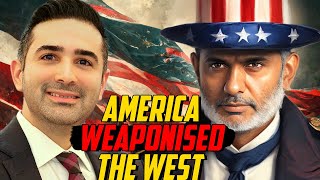
In this Charvak Podcast interview, host Kushal Mehra speaks with Arta Moeini PhD, Research Director of the Institute for Peace and Diplomacy, about her essay “How America Weaponised the West”. Moeini argues that the notion of a unified “West” is an illusion sustained by a NATO‑centric, Anglo‑spheric foreign policy that serves American ontological insecurities rather than genuine regional security needs. She traces the historical roots of this illusion to post‑Cold‑War American exceptionalism, the theological‑like belief in a messianic mission, and the strategic framing of the world in Manichean terms. The conversation expands to a civilizational analysis, splitting the West into three overlapping civilizations – the Anglosphere, Continental Europe, and a broader European‑centric bloc – and shows how Europe’s strategic autonomy is constrained by its dependence on the US. Moeini introduces the concept of ontological security versus physical security, contending that US policy often projects a universalist liberal order to mask deeper identity crises. She discusses the role of middle powers and regional primacy in a multipolar world, using examples such as Hungary, the Visegrád Group, and the EU‑NATO expansion, and warns that enlarging alliances with weak partners can undermine their longevity. The interview critiques the idea that American global hegemony brings stability, highlighting the costs of US interventions (Afghanistan, Iraq, Kosovo) and the destabilising effect of imposing Western values. Finally, Moeini outlines her realist‑philosophical approach, her work on middle powers, and directs listeners to the Institute for Peace and Diplomacy and Agon Magazine for further reading.
Chapters
Namaste everyone, welcome to the Charvak Podcast. This is your host Kushal Mehra. My guest today is Arta Moeini PhD. Arta Moeini PhD is the Research Director of the Institute for Peace and Diplomacy, a research fellow at the Center for the Study of Statesmanship in Washington, DC, as well as an elected member of the Academy of Philosophy and Letters. Arta Moeini PhD is an international political theorist and a revisional scholar of Nietzsche and modernity. Arta, welcome.
Glad to be here, Kushal. Thank you for having me.
So to give everybody a brief background of how I found out about Arta. So I get these weekly emails or every day, I think emails from unheard.com where one of your essays which was written on May 20th, 2023, it was titled How America Weaponized the West. Unity is an illusion designed to prevent a European slip. Came up. I read it and I absolutely loved it and I shared it on social media. And then I started looking for you on social media, whether you exist there or not. And that's when I DM'd you. I really like talking to you and here we are. So why did you write this essay? What was the basic premise? If maybe we can start over there, what was the premise behind this?
So the first sort of— I have been dealing with the question of sort of what the challenge or what the paradigm shift brought by this war in Ukraine has been. That has, to me, the Ukraine war is more than just the local geopolitical conflict because countries around it, especially in Europe and the Western world, treat it and receive it in ways that makes it into an existential conflict and the fate of the world sort of depends on it. And that makes for different kinds of decision-making. Now, for this paper specifically, it was actually inspired by sort of thinking about what is Macron's position and why was there the controversy as it was when he visited China and he tried to make a case for European strategic autonomy. And it got a frenzied backlash, let's say. And it was even in Europe itself, you know, Ursula von der Leyen, she was there as well with him, and she had a very different sort of perspective on China. So there seemed to be a division in sort of European politics as to how to handle China. Now, China is far away from Europe. It's not as central to European psyche as let's say Russia has been. So what is going on there? And a lot of it has to do with the United States and the way that Europe and European leaders think that they need to sort of toe a certain line with the United States to get these sort of security benefits of being part of the Essentially a US-led alliance called NATO. And those are sort of the divisions. And if you look at, then I try to sort of go deeper into what are the drivers of these different positions on China and different positions that one can see behind the background of the Western unity, NATO solidarity, the West is all of a sudden baptised again into the waters of a new righteousness. So when you dig further and you see that the question of strategic autonomy, even though France under Macron or Macron himself sort of casts it as a question about China per se. It's a question that's much deeper. And I think you can see actually that there are different blocs and different kinds of being in the world, to use Heideggerian language, different kinds of ontological security frameworks that exist as the European leaders are thinking about how to deal with the Russia question, the Ukraine question, and the China question. All of it predicated on the big question that is often not mentioned, which is sort of what should be our relationship with the United States? So we can get into it further, of course, but the general premise is that there is not, first of all, the idea of the West itself is an illusion, hasn't existed in that way. And this is both the Westerners from Iran to China to India to Putin, right? That he loves to use the word collective West. Use it, but they have internalised a sort of Western category that, you know, in many ways hasn't existed, you know, since at least the fall of Christendom. So you have a different world today, which is much more regional, not only around the world, which is multipolar now, but in Europe itself. And the different sort of cultural pedigrees, strategic cultures, histories, And perceptions of threat that these different regions have makes for different kinds of understanding of national interests, which means that they will have different kinds of policies and priorities. This should be reasonable to most people, but it creates, when we leave the realm of geopolitics and enter the realm of ideology, bursting the bubble of ideology becomes kind of a hard business. So finally, I would just end this sort of first question by just reiterating the point that both the Western idea of unity, which is predicated on the Western world, that's Europe plus Great Britain, the Anglosphere, United States and Canada, plus some countries such as Japan sometimes are sort of added in as part of the liberal international order. But that kind of the West has a lot of, there are a lot of underlying schisms within that and that's an illusion. And the idea of sort of Russia and Russian invasion was one stimulant, let's say, for recreating a collective paranoia, a collective reanimation of Cold War mentality that was directed towards the Soviet Union in the past. Now it could have galvanised against Putin, against Russia, the personal evil of Putin, and therefore it can allow for a nice binary black and white Manichean framing, which then justifies our unity. And then I would also go further and say not only does the West not exist, but also the entire premise of Even the way that we think about, let's say, the— or Macron wanted to think about all of European security in terms of the EU is increasingly problematic because EU itself is now expanded to include too many countries that might have different understandings when it comes to their strategic priorities. And when you want to set an agenda that has to encompass all of Europe, those different national and regional priorities make sort of having a cohesive, coherent foreign policy strategy for the EU increasingly problematic. So I can stop there, but we can talk about the different regions that is emerging from this, not in the short term, but in the medium term afterwards.
So I actually want to focus and circle back on this. When you talk about that the concept of the West itself is an illusion, fusion. And in your, in your essay, you use a specific word in quotes. You call it a NATO-centric approach. Now, in light of Brexit and many other things, uh, what would— and, and I also want to connect it to another paper that you talk about, the middle powers in the multipolar world, where you talk about civilizational states. And a lot of middle powers tend to be civilizational states where they have a working framework. If I understood your paper right, they have certain values that they get attached to, and their worldview stems from those values, and I kind of understand where you're coming from because India itself claims to be a living, breathing civilization for at least 6,000 years, where India says we are a civilizational state. Now, in that sense, isn't the Western bloc also a civilizational state in many ways, Arta Moeini PhD PhD?
That's a good question. There is I would say, for example, that there certainly has been a civilizational element to the West as such. And that's why I mentioned since Christendom. The problem is that there are really, and even in the middle power paper that we wrote for the Institute for Peace and Diplomacy, there were different sort of, it wasn't you can essentially, at that point, you can start talking about a world civilization. Because if you're, there are different kinds of historical sort of pathways that go into the West. And we have seen, and usually this has been the difference between the Catholic and the Protestant West. Usually it's sort of seen in terms of the Northwest, sorry, North-South alignments in Europe. So we see that the idea of civilizations exists. There is a continental idea, I think, of civilization focused on Western Europe, and that has a different historical, a different historical context, a different embeddedness, a different cultural pedigree than the Anglosphere. And also different from Central and Eastern Europe. So you see essentially what we call the West, I would say it's composed of three civilizations, not one. One is the Anglosphere. I think Anglosphere is very consistent in what it is. There might be some disagreements in terms of political, minor differences in terms of political system, whether we like to have a monarchy or constitutional monarchy or a constitutional republic. But essentially America and Britain are in many ways connected culturally and civilizationally, which actually was one of the instigators of Brexit for some of the advocates of it. So we can put Anglosphere to the side. We can think about continental Europe and Europe in that sense doesn't include Russia and that didn't include most of Eastern Europe. Europe would be sort of the Western Europeans essentially called on Germany and France and Italy to an extent. That's the sort of philosophical milieu that you have where a lot of sort of like continental political philosophy, for example, is thought about and comes to be. And then obviously you have You have Russia as a separate civilizational sphere. And you have sort of— there are sort of borderlands of civilizations. And those actually, if you look at the middle powers paper, those are the interesting areas because all conflicts happen at the borderlands of civilizations. Now, I want to reiterate that this is what I'm sort of presenting here is the picture is different from, let's say, someone like Samuel Huntington. Because although I use the word civilizations and although I am very sort of aware of the dynamics of civilizations and the reality of civilization as a priority, as an entity that takes precedence on the nation-state. Civilizations are not essentialistic. They are not an absolute category that exists from 6,000 years ago the way that they are today. So for example, again, your question of Western civilization, the West has been going through different phases and sometimes new civilizations are birthed or some civilizations collapse into one. But in general, you see patterns. That's the patterns of continuity and sort of a homeodynamic continuity exists within civilizations. And that's not essentially and intrinsically tied to religion. This is one of, I think, Huntington's mistakes in thinking about civilizations. He divided the world into essentially the world's biggest religions. Religions capture only one snapshot of a dynamic and alive culture. And it comes from a certain universalism that's inherent in a lot of Western thinking, even the civilizational brand, which believes that at the end of the day, one thing needs to dominate. Everything happens at the plane of the world, and then we need to dominate that world. So the idea of just modus vivendi of all these civilizations existing and not interfering in the affairs of one another and not actually being premised for and directed and predisposed to world domination because of anarchy, as structural realism tells us. Is I think it's a false notion. Civilizations can exist in fact together. The world of civilizations is not an anarchic world, but it is a multipolar, multiplexed, polycentric world which is not uniform. And that is not the same as anarchy. So I consider myself a realist, but my kind of realism tries to broaden realism outside of some of its utilitarian materialist sort of framings that sees everything as this sort of one system and think about different systems. And essentially civilizational architectures are, we're talking about multiple systems, not one system. So we are so used to talking about the international system. I would like to ask people to think about multiple systems, a multiplex system that exists around various regions anchored on great civilizations that are in ebb and flow. So sometimes they are very powerful. Other times they can almost become too passive or even go out of business entirely and expire. I mean, for example, a lot of the non-Western world during the colonial times was relationally inert. China loves to talk about the two centuries of humiliation. So this is, I think, what we need to focus on and understand that our perspective, our image, our picture that we present about the world is something that is a bit complicated by our original predisposition, cognitive bias, epistemological framing that sees everything as one and wants to create a one-ordered uniform understanding, impose that on top of that world. I'll stop there.
So this is very interesting because as someone who I, I like the fact that you have a very philosophical way of looking at even geopolitics. I think a lot of times geopolitics is laced with, uh, just, uh, now and then issues, and they don't look at the core of, uh, of the nation. So this is what, uh, in Sanskrit we have this word called chitti.
It's the essence.
So the essence of the way— I would not say American foreign policy, I just think it is Western foreign policy. Before America, it was the British foreign policy, and then the American Americans just took it and I think ran it on steroids. And there's a certain way the American mind works.
To say it in civilizational terms, I think you can speak of an Anglo-Spheric foreign policy. Whether it's Britain that was leading in the past or it's the United States that's leading today, the worldview that you're talking about is very Anglo-centric.
So what, what I was trying to say is not just Anglo-centric, it is also monopolistic. It is, it is monopolistic in the sense that it divides the world into the believers and the disbelievers. It's a very unique mind that has created current foreign policy, and which is why I, when we were talking about it offline, I said a lot of American foreign policy or Western foreign policy is actually derived from that very monotheistic, monopolistic, monotheistic blind spot where it looks at the world in a certain way. And then you couple that with the savior complex where, you know, I need to go and save people. I don't know why, but they need to save people. And the frontier mentality. So you have the savior complex, the frontier mentality. So I'll give you a story, right? For a— I'm a kid who was born and raised in a Hindu household. We don't have a proselytizing culture. We don't proselytize. We— is it barred? No. But do we do it? No. So when I went to America and people started trying to save me from going to hell, I found it so weird at a personal level.
I was like, why am I going to hell? I did not even know that. So that's so— and then I started observing American foreign policy or the Anglo-Spheric foreign policy, and it's always around there. They seek a clash, then they try to fix the clash. And it stems from this deep discomfort they have with how can you tolerate that? So do you think what you call the American weaponization, do you think that weaponization stems from that deep difference anxiety that they have?
I would say there is, we know all about the history is filled with lessons about the problems, the pathologies, the dangers of overreach, overextension, hubris, arrogance. And as a society overreaches, it depletes itself, it depletes its spiritual energies, and it sort of ends up forgetting the center, forgetting itself, and it sort of loses in the long run. I would say that the sort of what I call the anglo-spheric sort of model of foreign policy is there is a kind of, especially in the American form, it takes an exceptionalist understanding. And that exceptionalism has, even if everyone who leads foreign policy in the United States or Great Britain today is either agnostic or an atheist or non-believer, there are underlying sort of factors sort of religious sort of psychology that undergirds it. And it sort of comes with, we are the chosen people. And again, this comes from a long, long, many decades of history in a sense that it's embedded into the subliminal forms of the civilization or of the culture. It's not very conscious. I don't doubt the good intentions of many friends and colleagues who believe that they are making the world a better place, but what they are not conscious of is how much they have internalized that sense of an almost Abrahamic sense of mission that is shared in Islam, it's shared certainly in Christianity, a sense of chosenness that is globalized. And so we are the chosen people for the world. We are the, you know, and therefore we represent all that's good and holy. Before it used to be God, now we can just call it democracy, liberalism, freedom. And we are fighting against the other, which in an earlier exceptionalist form looked different, was the uncivilized barbarians of different civilizations, but now looks ideologically different, politically different. It doesn't believe in our same system and enforcing them forcing our view of the world upon them and imagining that we are so enlightened that they are therefore in some ways deplorable or barbaric for not understanding how great our system is and for not internalizing it the way that we have. And so we don't see it, America does not see it as a messianic project or as crusade or as proselytization, but that's what it is. And this is what sort of makes— we talked about, you mentioned how most people don't talk about the philosophical, the psychological, the theological underpinnings of geopolitics. My realism is not unaware of the importance of the material. Of the physical parts of geopolitics. It's just, I believe that geopolitics always is local and regional. When you move beyond the regional and the local, you're now entering the realm of ideology, theology, psychology, and ultimately ontology. So I call ontological security versus physical security. So what does that mean? Our physical security is obvious, which happens at the level of the region, right? For example, there are regional security conflicts between countries in Eastern Europe, such as obviously Ukraine, but also Poland and others with Russia. That's a physical sense of insecurity. Whether or not we believe that Russia will actually invade Poland or not is irrelevant. There's a lot of history and regional sort of pathways that show that this could be very real for them and justifiably so. Then you have to talk about sort of how you perceive your identity, your security identity. Now, For smaller countries in the borderlands like Ukraine, like Baltic States, for example, these are— I'm making examples that are relevant today, but you can find many different examples in different regions of the world as well. Taiwan would be another one. But for these kinds of crossroads states, their sense of what our insecurity is, the physical and the ontological, matches. So they have a very coherent sense of what they need to do. But the further you get from the region and you get to the hyperpower or superpower or great power politics, and a great power is defined by the fact that it can actually exercise power, project force in other regions of the world to counter other civilizations. So Russia, having basically failed in some ways, and even if it ultimately doesn't fail in Ukraine and gets what it wants regionally, Russia has shown itself to not be a global power. Russia is a middle power. It cannot go around the world. It has trouble in Ukraine, so it definitely cannot go in the middle of Africa and wage a war. That's what we mean. But great powers, let's say the United States, even though it's not a superpower anymore, it remains a great power, perhaps a more insecure great power, which becomes hyper-reflexive in some ways. But The United States is a great power because it is interjecting in other regions, interferes in other things, and has turned Ukraine into a proxy war for itself versus Russia. So the question is, is our sense of physical security in America, does that match our ontological insecurity? And that's definitely not the case. America is not threatened by Russia. America's oceans away. We have a stopping power of water. Neither Russia nor China have ever threatened the United States even in its Western Hemisphere, let alone in its closer home. So there is no real fundamental vital national security issue. The term national security, by the way, itself is an ideological term. We can get into that later. But the conception of physical security and interests are not warranted here. So why is the United States so involved in expanding NATO, in sort of interjecting European affairs, in not wanting Europe to pay more share more of a burden of the Western alliance, so-called, but not really wanting Europe to be independent enough to actually wage different kind of foreign policy. So all of these are questionable. Why? There are a lot of reasons for this. We can talk about the ideological drivers of US foreign policy. We can talk about the sense of, again, which you mentioned, the sense of sort of messianism or proselytization. We can talk about just the faulty, I think, offensive realist mindset that at the end of the day, superpowers will fight to dominate the entire world. So we need to effectively preempt the other to do that. That's argument that will probably take America to brink of war with China. So all of those things have been reasons, but I think the ultimate fundamental reason that undergirds this is a sense of deep ontological insecurity about our role in the world. It means that we have generations of elites, of foreign policy practitioners who are embedded into the institutions, that was created by the Cold War. They're bred into that world. They thought history has ended. They thought unipolarity was here to stay. And now that it's almost, I think most would agree that it's proven that we live in a multipolar world, at least unipolarity is over. There is a deep sense of ontological insecurity. There is a deep sense of what is our identity. Ontology is tied with the problem of meaning and identity in the modern world. And the same way that you and I might have the question of what is our identity and what are we doing, nations and civilizations can have identity crises as well. And so the ontological crisis for when a superpower has an ontological crisis, that could be very dangerous for the world.
Fair enough. Now I want to read something from your essay in UnHerd where you say by using NATO enlargement to weaken the old power centers in Europe that might have occasionally stood up to it, such as in the run-up to the invasion of Iraq. Washington ensured a more compliant Europe in the short term. Now, if I was to use this particular quote and I was to use this in the context of the Russia-Ukraine conflict, now, wouldn't you say that if Ukraine was a part of NATO, it would have actually been better off in that sense, that If Russia would have invaded Ukraine when it was a part of NATO, it was basically against the entire Anglosphere and the entire Western bloc, and there would have been a direct conflict and they would have been much better off.
So in that sense, hasn't America making all these other European power centers weaker in that sense has actually benefited them by giving them this guarantee of protection? Because at the end of the day, if they were to individually take on, to use your analogy, a middle power like Russia, they would not be militarily as capable as compared to, let's say, the entire NATO bloc.
Well, I mean, of course that's the case, that if America was to engage in a war with a middle power— America is a powerful state, and that could be— but that could be catastrophic because usually middle powers, sometimes middle powers, but In this case, in case of Russia, they have nuclear weapons, right? So that could be a nuclear Armageddon waiting to happen. So no, I don't think it actually makes countries safer. First of all, middle powers are natural. Middle powers are tied to regions, tied to a geography, to geopolitics of a specific locality, which means that they have lived together all the time. So in our analysis, Germany is a Germany and France are both middle powers and combined they'll be a very powerful middle power, which is whether it's institutionalized in terms of the EU or it's not, it's just a security alliance independent of NATO, it will be powerful enough and it will have nuclear weapons from the French arsenal to actually counter any real threat that's presented to it by Russia. The question is, Did the Europeans actually want to antagonize Russia into a war? Now, they did not. They actually, the middle powers in many ways, they compete, but they also work together because they are effectively in the same kind of gradation of power. So, Germany, benefits from, or benefited until now, from Russian gas. And Russia benefits from selling things to Germany, selling natural resources to Germany. If there was a fundamental inimical relationship between the two, they shouldn't have traded, but they do. And the EU was also really trying its best to even include Think about what happened when the Warsaw Pact sort of disappeared, right? There were efforts to even include, there were suggestions to even include Russia in NATO. So think about how much of, I mean, that proposition is fantasy today. So how far there have we gotten from that picture that existed 30 years ago? So If you have an alliance that is not tied to an actual threat that is fundamental and real and could actually threaten all members of the alliance to a large extent equal in terms of physical security, then you have a very then that alliance is less of a security alliance and more like a multinational organization. And that's what NATO has become. So I do not believe for a second, actually, that would've been a great thought experiment, but had Ukraine somehow already become part of NATO NATO would have been the other argument. There are two scenarios that we can run. One is Russia would not have attacked NATO because it would trigger the entire alliance into action. The other question is whether most of the world will be prepared to go to nuclear war, and make no mistake about it, that would be a nuclear war with Russia over Ukraine. So a lot of, when you enlarge alliances to countries that cannot contribute as much to the alliance security in terms of power and resources and material benefits, then you are actually endangering the viability and the longevity of the alliance itself. Now, what is Ukraine today and what are these small states today deemed to contribute? And this is very sad to say, manpower. They are being butchered in their own country because of policies that to some extent they did not themselves direct. But also they have conflated with the West on this position because they have deep physical insecurity, which is, you know, that comes from their experience. So they're more prone to actually deal, to actually try to create a war that expands so that more powerful countries can get involved in them. And that's why these alliances or these allies, these partners are, I've called them with David Polanski, Trojan allies in a way that they are, their entire existence depends on, and that was another piece actually I did for UnHerd previous to this one, which is their entire existence, and it's quite rational by the way, but their entire existence is predicated, their entire security mindset depends on getting, as you said, NATO and Western powers involved in the war because they're being decimated. In the long term. This is a small country that cannot withstand, as you said, these are real issues. We are not only dealing in the realm of ideology, but ideology can make us forget the huge human cost and toll of this war. And so I think that actually I'm a realist and I think morality should take second stage to realist analysis of foreign policy. But if you are a moralist, it is incumbent upon you to end this war as soon as possible because the ultimate outcome will not change given the historical rigidities that exist in such regional conflicts.
So I have a fundamental question over here.
Somewhere in your essay, again, you say Europe does find, as it struggles to resolve the Russia question, Europe thus finds itself having to re-examine its identity as a distinct cultural and geopolitical realm, recalibrate its proper boundaries, and discover its strategic orientation and voice vis-à-vis a collective West premised on US-led Atlanticism. It is here that the continent's long history might serve as a guide. Again, I find this I might personally agree with this, but I have to see my job in this podcast is to ask you questions that may not necessarily be in agreement with this worldview, because a lot of people might come back to you and say, but the collective West is actually a homogeneous group. While what you're saying is, and which is something that I agree with you, because I can understand the civilizational state perspective as I'm Indian. So I get the civilizational state perspective. So how is the collective European identity distinctly different from a collective Western identity? And how does it benefit Europe by disengaging itself from the collective Western identity, which is kind of led by the Americans?
The proof was in the pudding of your last statement. A European identity so long as it's tied to the Western identity, will be subjected to American primacy and leadership and priorities. So a European identity, which is tied rhetorically, ideologically, and institutionally through NATO and other mechanisms to America, makes it just a cog in the American machine, essentially. Do what we effectively ask or believe should be done. And Europe has a problem then. What is Europe? Does Europe include Russia? Does Europe include Great Britain? Does Europe include— does the European Security Order include Poland? Because originally it didn't, right? Because they were west of the Iron Curtain. The Europe, the Western Europe that Eisenhower and de Gaulle conceived was effectively the Western Europe that was our partner and ally. And realists, classical realists thought that it can be independent and do its own thing because they had still experienced the world where America wasn't, you know, prior to World War II, America was still not telling every country what to do. So they had lived in that world. And so they understood a more, they had a more civilizational understanding of Europe, I would say. I mean, that's a claim that I would make. You know, it's just obviously a speculation, but So yeah, so I do believe that Europe as it's conceived today, it's highly institutionalized, made up of various effectively national districts. And it is not clear exactly what it means and it needs to figure out what it is that it is representing. Now, the problem is that as NATO has expanded, also the EU has expanded east. Now, some of the countries that have come and become members of both NATO and the EU, Hungary, for example, are towing a very intelligent line. They are understanding that they are both as a nation state, but also have a unique background of being a part of the Austro-Hungarian Empire, but also being part of the Soviet bloc for a while. So they know what the two world views have been. And one could argue that Hungary could have been, given its sort of ties with Central and Western Europe, the greatest accolade for the greatest champion of a Western order against Russia and against everybody else, right? But it doesn't do that. Why? Because it requires a certain prudence. Because if there are countries that can actually balance, they can try to balance between these two or three blocs. So Hungary is member, I think is the only country that is a member of all these effectively all these blocs. It has diplomatic relations with Russia and with Putin that doesn't antagonize Russia. It is a member of the Visegrád, which is essentially Poland and Polish-centric. It is also a member of NATO and is a member of the EU. So there are ways to not have, as you said, this kind of monopolistic, once black and white thinking, and all these things can coexist. But I think the Western paradigm as such, and here I'm using the Western in terms of the secularized version of the Christian thinking that permeates it, makes has a Manichaean framing that makes it very difficult to move beyond the other and its position as the enemy. So we need to know where we are. We're either on the side of the good or the evil. We can't be on the side of all goods and all evils. And so it's sort of like, make it clear. Are you with us or against us? As George W. Bush used to say. This is still, we are still living in the world of George W. Bush. Because we never left it. And George W. Bush was living in the world of Reagan because he didn't leave it. Even as geopolitical and structural situations and system, they're changing and shifting. So we live in a very different geopolitical and strategic world. But our sense, our ontological framing of the world around us, our epistemological understanding of IR itself is predicated on creating a world for us that doesn't actually exist. And so we are there to defend the liberal international order. What does that mean? We need to be, I think, more critical and creative. Living in a multipolar world, living in a polycentric world, which is, you know, we are definitely moving in that direction. 85% of the world does not live in the West proper. If you include Japan, that'll be 88%. This is the story of the 21st century will be the story of civilizations, not understood necessarily in Huntingtonian terms. And I would say that even his understanding of clash of civilizations had a nice question mark around it because he too did not want, he was talking, he was urging for prudence. But the the framing of it itself was sort of civilizations all want to dominate, but actually civilizations, I would argue, do not want to dominate. The multipolarity is here to stay and great powers have a choice. They can either deal with all these middle powers and try to create a more stable engagement, a more stable modus vivendi, or they can continue to believe themselves to be the gods of the system and ask others to live in their image, to have their kinds of values and value systems, their belief systems, their political system, which culminates in what we have called the Woke Imperium, which is another manner for American soft imperialism. So all of these things is unsustainable. Now, when it comes to Europe, Europe needs to understand what was its historic role and its historic, what was its history prior to World War II, prior to World War I, with the With the fall of the Soviet Union and the end of the Cold War, there was an opportunity for Europe to try to rediscover that question. But that question has been decentered and pushed aside for many reasons. One of them is the Europeans themselves. I'm not America bashing. I don't think this is all America's fault at all. I think Europeans themselves are to blame. But these are leaders in different political bodies and cultural contexts which internalize certain things. A lot of them are not realists in their orientation, but idealistic or steeped in idealism, a very dreamy understanding of history that believes history has ended or has culminated in a certain thing, which means that Europe Europe is not prepared, but it's not even reflexive enough yet to know what Europe itself means outside of even a European Union in terms of security questions. And that is Macron's position. So the most, let's say, hard-nosed positions on European security comes historically from France, but France has a history of trying to have an independent tack and dominate European security affairs, which now it wants to do through the EU. But it's still, there's sort of the EU and France sort of national interests are sort of like coming together in this sort of amalgamation. But it's not clear that is how other countries in the EU, as the EU has expanded, will see the world. Poland will increasingly want a very different kind of role for itself. And Poland, because of the centrality of NATO in the mindset of all Europeans, Poland gets a lot of support from America, and American-Polish sort of axis helps Poland in the EU, gives it more influence. So there is a lot of these kinds of dynamics. This is not a monolithic picture. And a lot of leaders, both in Europe and in America, like things to just stay as they were. Weren't they simpler? Wasn't Cold War in some ways simpler times? For these people, it was. It was just very stable. We hated them, they hated us. It was perfectly framed for a sort of, as you said, I think, a monotheistic-inspired foreign policy. You just need to have an evil and an other and you can you can organize, you can create a national identity around that. And especially in a world where traditional localized forms of belonging and meaning, what we can call vaccination, that's tied to family, that's tied to locality, that's tied to particularity, all those are either gone or weakening. This sense of a national project around sort of world redemption from some sort of evil satanic threats could be very rewarding psychologically, could be euphoric, it could be an endorphin, but it is not consistent with the changes in the structural system. In the international system and its structure.
There are so many things I have to ask you about this. So 2, 3 things. First of all, let us assume a hypothetical scenario: America is decoupled from Europe, so the collective West identity now has different sub-identities, and those sub-identities are strong. Now, people would say nature abhors vacuum, so even in this collective European identity, somebody is going to take the lead role and they are going to assume other sub-identities, let's say the Germans or the French, might take a far greater role, and it still may not come up in the ideal collective role. Two, nature abhors vacuum. If America vacates this role of the world policeman, somebody's going to come up and take it. And wait till the Russians and the Chinese take it, you are not going to like it.
What do you say to that?
Well, first I'll start with number two, in the sense that, uh, that That proposition that if we are not actively involved in a militaristic posture around the world, that this makes countries go and dominate the world, that is preposterous. I think that is an illusion that comes from the very thing that we have been discussing for the past 50 or so minutes. It is a world-centric view and which de-centers regions and thinks that, for example, if a country, if a civilizational power is trying to effectively work around its own regions and throw its weight around, let's say, even to be more cynical, in that region, that means that it can then come and control the world and the world affairs. That is something that comes from the exceptional history of American rise to power, which had a globalist mission from the beginning. If you do not have a world picture and therefore you don't see everything in global and globalist terms, you're a different kind of understanding about the world. World. So this idea that, you know, we leave Afghanistan, it's going to be dominated, you know, this is not— there are other— and this is the whole point of middle powers. There are all these other regionally tied states that have deep interests in the stability of their own regions. And this is all good and fine because there are not— there's not going to be a physical threat to the United States. We can definitely, we should and should definitely defend ourselves if any country comes even close to Puerto Rico or Hawaii. But this is not what you're talking about. This is this idea of there is this sort of ephemeral thing called the world and it is waiting to be dominated like a maiden by, you know, like Machiavelli has this phrase, right? The fortuna is a woman that allows itself to be dominated by the bull. We have this same kind of picture. It's just the world is the maiden that's waiting to be dominated by our evil twins. This is fantasy. This is the storytelling. This is not how actual foreign policy and geopolitics works. And I will also say, again, I understand where this mentality comes from. It has deep, you know, it has deep theological and also academic backgrounds in sort of in the utilitarian thinking. It's just steeped in Western philosophy. And then, and such a mentality has also then been historically realised through both the bipolar moments and the unipolar moment. So, but I would tell you that this was an aberration, that the moment, 200 years of let's say anglo-spheric domination of world affairs was an aberration. The world actually moves, the equilibrium is a civilisationally complex, regionally oriented world. Now, this takes me to your first question and would perhaps make my realist credentials or realist language sort of come to the fore. The realist fact of the matter is that within these regions, there are going to be sort of, there are going to be regional primacy. There is going to be regional primacy. And what we call middle powers are effectively these regionally first, regionally prime, regional primers, let's say. They are the anchors of the regions. They are civilizationally powerful, which is what allows them to actually have pull. They understand their own history, geography, and everything else, but they're also materially capable, materially, and they have the resources that can actually subdue, if need be, places around them in their immediate surrounding, in their immediate neighborhood, which means that, for example, yes, these civilizational states will have more of a control, more of a say over smaller countries around them. France and Germany will have more pull. Russia will have more pull over Belarus. And we can go further. China will have pull around its immediate neighborhood. Japan Is it also a middle power which will have— It's interesting because it's the only middle power which is an island. But these countries hold primacy in their specific regions that surrounds them. And if they want to move beyond that, so let's say China wants to move beyond its immediacy to the realms of another middle power, getting into conflict, let's say, with Japan. And historically, this happens. Middle powers fight many times. But that's the normal breaking point. That's when they stop. They are able to stop one another. When they are not, things become different because then other countries have to then step in because it makes it very different. So history of, let's say, East Asia shows, for example, that Japan and China have fought many wars and there was historically a lot of enmity between them because of this. Now, if there is any such a problem, then let's say the United States wants to get involved on behalf of Japan, that would be a very different proposition than the United States getting involved on behalf of Taiwan. I want to make that clear. And also, because so far as these countries are middle powers, they are able to have enough of a push and pull to be able to keep each other in balance. There's a balance of power between middle powers. If one country becomes too powerful to be a middle power, that becomes a great power, meaning that it can actually move beyond its regions and has the interest or has the drivers, has that ontological insecurity to use the phrase that I used earlier, to have that ideology essentially, to want to go somewhere else. Because a lot of countries also do not want to go to different regions. If it wants to do that as a great power, it can dominate the immediate middle power around it that's closest to it. But then other middle powers immediately will be very hesitant and come together to defend it. So this is a more classical understanding of balance of power that I'm relying on. Yes, middle powers will come together to to defend themselves from excursions and domination by one middle power going too far into their regions. The past experience, the past 200 years, the aberration of the past 200 years has made things very different, has made it so we forget this. We forget how the system actually works. We forget its sort of internal laws. The natural sort of order of it, and then we think of things that we are trying to impose on it. So the result also has been that smaller nation states that have been created over the past 200 years or have come out of this system as a modern nation state see it to their benefit to fight against the middle powers that surround them because middle powers have historically dominated those small pockets of regions that have existed. So what do they do? They court and create a very, very mutualistic relationship with the great power that tends to want to interject in their other regions, in this case the United States. And so they tend to become that kind of Trojan ally that I spoke about earlier. So it's a very complicated picture according to where you belong in the gradation. And there's a question of power asymmetry. And if you have more power, you get certain benefits, but it does not mean that you can just dominate and become a global hegemon. That is the fantasy that I'm talking about, the global hegemony. You can have regional hegemonies and you have had many of them, but global hegemony, the system itself rejects it in the sense that if you keep moving towards global hegemony, you will break. Even if you are, even in a small, you know, relatively limited setting of, let's say, the Alexander the Great example, who went and came all the way to India. That's a portion of the world. It's not the entire world. But even that kind of hegemony only lasted until, I think, less than 10 years, until Alexander himself died. And then it was divided into the different regions. So the world itself itself actually abhors a global hegemon, not a vacuum. Because a vacuum has never existed so far as we live in the world.
One last question I have to ask this follow-up to your thoughts. So what would you tell those people who say the global hegemon could be problematic, but in the case of the United States of America, it's actually a very good global hegemon? Because it has led to— I'm just stating the argument— more world peace. I'm just stating the argument. It has led to more stability because if you have many middle powers jostling with each other, it could lead to more skirmishes, more regional battles, more regional conflicts. And we just end up in a mess where a lot more people are fighting. Right now, everybody's like, America can interfere and tell everybody to shut up.
That comes from that original sort of ideological posture that we have talked about. It comes from the sense of American exceptionalism, as if somehow our global hegemony would be different from the hegemonies that came before. And that's more religious thought, that's more theology than it is statecraft. The world has not been better off through American interference around the world. It has created multiple, I mean, first of all, America has created multiple wars around the world. And this is something that I think it's not, we cannot easily sugarcoat it, whether it's Afghanistan, Iraq, But also different places, right? I mean, the United States uses its power, its pull to interject in, again, regional affairs in Europe. Think about the wars in Yugoslavia, in intervention in Kosovo, which actually I would call as one of the— I think if you look at the trajectory of Putin's thought, that was the moment that he became radicalised in some ways against the United States. So these things have consequences. And I would also say I am a firm believer that regional civilizational states, even as regional hegemonies, can understand each other. Because they are essentially, they're arm wrestling, but they're coming at it from similar levels of strength. No one can really dominate the other one. So that creates a kind of status quo, right? What changes is when an outside power interjects into their affairs using the either its own military, but now increasingly what it has learned is that it can use in a very cynical way the armies or the population of smaller countries that have deep ontological and physical insecurity in the regions. So what happens if America steps back? Not a vacuum. You can look at this in terms of China, Saudi, and Iranian relations. That was the recent phenomenon. A lot of people would call it sort of example of Chinese moving to sort of global hegemony. That's preposterous. What happened is, as we know, Iran and Saudi Arabia really have had deep historical problems with one another. There have been enemies in many ways in different parts. And that And that became even more powerful with the Iranian Islamic Shiite revolution in '79, which was both a populistic revolution and a Shiite revolution, which meant that it was both anti the monarchical system in Saudi Arabia as well as against the dominant Salafi ideology at the time. So these two countries really are not friends and they despise one another historically. What happened? How is it that they're able to find ways to talk and everything else? Because the reality of power interjected. And as soon as America stopped really pushing one side, basically putting its thumb and finger on one side of the scale, this is a scale, when you're talking about middle powers. When you put your thumb on one side, you mean that you make the other one belligerent and you destabilize the historical geopolitical balance. With America retreating, China had a choice. It could put its finger, let's say, on the Iranian side, but China just wants to do business. It has learned that from America. So it says, how do we do business with one another so that we're all prosperous? This is what actually America's promise used to be, right? And okay, let's just all coexist, find a way to coexist. And both of you countries, both of you two, I mean, you're not great powers like we are, China would say, but both of you have old histories, both of you have lived in this region for a long time, and both of you have a relative power and strength. So let's find a way so that we can coexist. That modus vivendi strategy, that strategic empathy allows for a much more stable Middle East in a way. And also I would say Another thing that is less geopolitical, but not less important, is that America has defended its unique position, its world peace, its beneficent nature by saying that it believes in certain values and that those values are universal. This is increasingly threatening to every part of the world. India, Brazil, Mexico, and its historic junior partners in other places. So for example, Saudi Arabia relied on the United States to strengthen itself against Iran. It was kind of like trying to tip the scale to its favor, right? But it is increasingly getting threatened by the woke ideology that emanates from US State Department. And the United States doesn't need to be that way. Our values, our problems, our internal conflicts are ours. And if we are truly democratic, we would allow for our population to figure it out before saying that every other country has to do certain things, before moving around pushing for gay rights in Japan by the US Embassy. What right does the US Embassy have to push these values on a different civilization? And this is happening with our allies, let alone our enemies. So it will push other countries towards either a marriage of convenience. I mean, Russia and Iran, for example, they're helping each other in Ukraine and Syria. They have been historical enemies as middle powers, or as when Russia became a great power, it was devastating to Iran, right? This is exactly one of those examples. Russia became a great power, Iran did not, and it was devastating. But they are now, so they have this deep historical antipathy. How are they working together? Because they know that there is something bigger at stake because of the universalism of this quote-unquote collective West, even if that universalism emanates from Washington itself and it's just reflected by and rubber-stamped by countries in the Anglo sphere that want to feel as important, such as Canada and Britain, or by the specific sort of liberal internationalist ruling class that has been bred since World War II and during the Cold War in Western Europe. So these are even, you know, it's interesting because a lot of these countries that geopolitically are drawn so much towards the United States, such as Poland, such as Saudi Arabia, such as, you know, the list goes on and on. They're nationalistic because they are modern states and they are very deeply conservative places. They don't like the ideological dimensions of US foreign policy, so they're stuck in the middle. Now it depends. For now, Russia is more of an existential threat to Poland. Poland. So Poland might, and Poland is useful to the United States. So the ideological sort of the war about the right value system gets sidelined. But when things calm down, as in the Perso-Arabic conflict, America and its ideology becomes front and center because there's not an existential war happening effectively between Iran and Saudi Arabia. They were engaged, the two of them, as regional powers in various proxy wars in their own region. So again, what we see globally is always a mirror image of what we see in region. Prominent among middle powers. Global powers, just once they try to interject themselves globally, they basically throw their weight around, no matter the justification, whether it's for Christian causes, for neoconservatism, for woke ideology, it destabilizes the world, it creates a hubristic ruling class, it destabilizes distances the ruling class from its own people. It just becomes unsustainable and it creates real dangers such as a real prospect of a nuclear exchange, a nuclear Armageddon happening over a conflict between Russia and Ukraine that can engulf the entire world. So no, US power has not been a force for good for a long time, since it believed that it can tip the scale and be the global power. And again, this was not, this was not, America today is not the America of George Kennan or even Eisenhower. I mean, Eisenhower notoriously got fooled by the Brits and interfered in the, you know, in various in various other countries, especially in Iran with the coup against Mossadegh. But the belief was that the problem with, let's say, communism, with Marxism, Russian Marxism, was Was this universalism? Was this ideology? Was the fact that it wants to dominate the world and we will help others in a sort of non-aligned movement against the Soviets? But we have become, in practical terms, like the Soviets. We have become a vassal for an ideology. Except we have the world's greatest military. And that is a very frightening prospect, especially as we get more and more insecure about our own role and place in the world. But again, we fought universalism against both, I would argue against both the Nazis who wanted to have a universal kind of empire, if racialized, and also against the Soviets who wanted to have a very ideological and universal kind of empire. So, but we had the antecedents of universalist thinking in our own libraries, in our own books, in our own closets, and that came out and made us see the world in very ideological, highly partisan, highly Manichean terms. And that is not, I think, a sustainable position.
So before we wrap up, Arta, could you, let's say, tell everybody if they wanted to check out more of your work or the work of the Institute for Peace and Diplomacy, what is the best way to do that?
Yeah, so first of all, our website for IPD, Institute for Peace and Diplomacy, is peacediplomacy.org. If you can put that in as well for people to see, is peacediplomacy.org. I would also, you know, and again, we are a restraint-oriented realist think tank in the United States and Canada, which we're thinking about what these ideological drivers of US foreign policy and Anglo-Saxon foreign policy might be. We're thinking about the problems of power. We're thinking about the new world order, the changes in the international system. We think about, we have been working a lot on the issue of multipolarity for 3, 4 years now. And we think about, we take civilization seriously. We take middle power seriously. We think We want to understand what the new world in actual terms looks like. And we take a philosophical even approach to make sure that this should be an interdisciplinary approach. It should not be in our own silos. So I benefit from various different traditions to enrich and take realism to its original footing as it existed in various schools of thought, including in Western schools. Realism precedes the formation of IR. That's one thing I would say. In terms of a lot of the things that we discussed, the religious element, the theological element, the story that America tells itself, I would say that I'm also a founding editor of a magazine called Agon Magazine. That is www.agonmagazine.com. Agonmag.com. And this is sort of a scholarly place for the dissident scholars, for people who want to think provocatively, who want to adopt a radically realist position about the world and see the world as it is and look at the different dimensions of it, not just in terms of foreign policy, but in in terms of how is our world changing. And so I would urge your listeners, your subscribers to check that out and to check out a piece of ours that's coming actually, coming out by a US historian, Michael Vallejos, which is about the American fixation with almost a theological fixation with war and with victory in battle as a cleansing ritual and the role of that kind of monotheistic or let's say universalist exceptionalist thinking in US psychology and US foreign policy thinking. So I think you would benefit a lot based on our conversation from that article as well. That should be out either today or before the weekend. And yes, so that's AgonMag. And I have my Twitter, it's @ArtaMoeini PhD, as you see my name, just the one word, @ArtaMoeini PhD. And you can find me on Twitter and engage in that way.
Great. It was a pleasure talking to you. I thoroughly enjoyed your essay, and then I read your paper too on the middle powers. I can kind of relate to where you come from because I myself am from a background of philosophy.
So I actually enjoy having these discussions because I don't know why philosophy is mocked so much in this world nowadays. Philosophers get mocked a lot in the age of science. People forget philosophy is very important, and many core issues of our existence are on the basis of philosophy. So I had a great time talking to you, and thank you very much for coming.
Thank you so much, Kushal. And yes, I mean, in a world of reductionism, you know, through true philosophy, which is— which should push the boundaries and actually be a holistic, creative affair, is, let's say, frowned upon. But But yeah, I mean, I think we should move away from just formalistic philosophy and think about how philosophy informs real life. But certainly, I think it's very beneficial to do that. And thank you for allowing the opportunity for me to, you know, explore some of these ideas with you.
All right, guys, we'll wrap today's discussion up. So once again, I'll remind everyone in the description of the podcast, it doesn't matter if you're watching this on YouTube or you're you're going to be listening on any of the audio platforms, I will leave the link to Arta's Twitter handle. I'll also leave the links to the website of the Institute of Peace and Diplomacy and Agon Magazine. You can go and check their work out over there. Also, please support the Charvak Podcast by liking this video, leaving a comment, and subscribing to the Charvak Podcast YouTube channel. If you're an audio-only listener, please leave a review or a rating on Spotify, iTunes, Google Podcast. You know where you are. And if you can, please become a member of the Charvak Podcast. This is a member-driven podcast. I don't do ad reads for a reason, guys. I don't want to be anybody's patsy, so I retain my independence. So once again, you can become a member on YouTube, Patreon, Fanmoh, wherever you are, or visit kushalmehra.com and buy the merchandise.
I'll see you guys next time. Until then, namaste, take care. Bye.
More from Arta
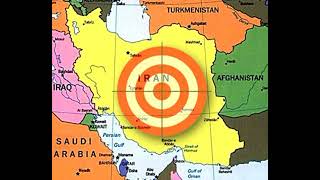
Dr Arta Moeini: US does Israel's bidding; failure in Iran will finally kill unipolarity. #iranwar

WAR IN IRAN: Consequences for Armenia: Arthur Khachikian with with James Carden and Arta Moeini
The World on the Brink and the US Foreign Policy of the New Era: Arta Moeini & Arthur Khachikian
First US President HATED Alliances For This Reason | Dr. Arta Moeini & Dr. Chris Mott