MCC Podcast | Diplomaci Podcast: Realism in International Relations
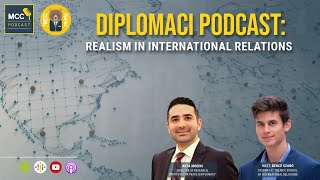
In this episode of the Mátyás Korvinás Collegium (MCC) Diplomacy Podcast, host Bence Szobó interviews US‑trained IR scholar Arta Moeini, PhD. Moeini critiques the dominant US grand strategy of primacy and interventionism, arguing that realism and restraint—grounded in America’s geographic security and domestic interests—should replace the current over‑reach. She explains how US interventions (e.g., in Ukraine) often create unintended destabilising effects, drain resources from domestic needs, and serve elite and military‑industrial interests. The conversation moves to the strategic cultures of the US, Russia, and China, highlighting how Cold‑War‑era mind‑sets still shape policy and how the US may be using Ukraine as a buffer to free resources for a future focus on China. Moeini introduces the concept of a polycentric, regional‑power world, distinguishing “civilizational states” (India, China, Turkey, Iran, France, Russia) from global powers, and calls for US strategic empathy toward these actors. She denounces the US’s ideological‑imperial stance, labeling it a “crusader” or “woke imperium” that forces its values on others, and warns that this hampers genuine pluralism. Finally, she advises the next generation of IR scholars to adopt a “cultural realism” that foregrounds local particularities, historical strategic cultures, and the limits of the modern globalist cognitive bias. The episode ends with a call for a new diplomatic model that respects regional autonomy while recognizing the emerging multipolar reality.
Chapters
You are listening to the podcast of the Mátyás Korvinás Collegium, the largest talent management institute in Hungary. If you want to know more about our mission, please look up our English website at mcc.hu/en or check out our Facebook, Instagram, and Twitter channels. For interesting articles and analysis of our professors, external contributors, and students, look up our knowledge base at korvinak.hu/en.
Welcome, ladies and gentlemen, to the next installment of the Diplomacy Podcast. I'm Bence Szobó, Director of the Project of Diplomacy. And now we have quite a special occasion as the MCC Budapest Peace Forum is just taking place in these days. And in the panel discussions, we have a handful of experts that share their expertise about their respective subjects. And one expert is coming from the US. He holds a BA in political science and Near Eastern studies from the University of California, Berkeley, and has a master's in international relations from Johns Hopkins SAIS. His research subject is something that we should spend a lot of time discussing, but one institute that is worth mentioning is the Institute for Peace and Diplomacy. It is an international affairs think tank committed to advancing realism and restraint in US foreign policy. And we will dive deeper into this subject. But for now, please welcome Arta Moeini. Thank you for being here with us.
Thank you. I'll just add that I do have a PhD from Georgetown University, and I have been working in the international relations field in terms of think tanks for 4 or 5 years now. So, yeah. So what's the first question?
The first question would be this. Realism and restraint in US foreign policy. What do we mean by that?
And so realism and restraint is a big, is a big idea, but it's not a new idea. It comes from an old way of thinking about what the role of the United States should be in the world. And it's definitely not the mainstream position in the United States. The mainstream position is a more what we call premises They want the primacy of the United States in global affairs to continue. It's maintaining the unipolar moment as long as possible, is interventionism in different places in the name of US interests and US security interests, what's called national security. But it's a very broad view of national security that turns the world into the basically the sphere of influence of the United States. Now realism and restraint starts from a very different sort of perspective. It's a different kind of grand strategy. It says that the United States is in many ways exceptional because, not because of its certain ideals that all the world has to implement, but because of a geographical position. It's protected. It is— there's a staying power of water, and that has allowed the United States the unique opportunity to develop economically and politically and otherwise and be safe. Now, what the problem is or arises from when we think about sort of why does the United States then go into all these different theaters, regional theaters, and interject itself into them? And from the perspective of, you know, Realism, that reflects an idealistic position by the United States. It's based on trying to, again, implement some ideals upon the world, but it also is an overactive position in the world. So restraint position wants to get you back from overreach, from overextension, from entanglements in wars and foreign situations that are either peripheral or not important to the, to the personal and public interest of the United States, even if some specific group of elites might benefit from it, even if the military-industrial complex and some people in Congress might benefit from that kind of a footing. So realism and restraint is all about trying to understand that just because you have a very strong military, it doesn't mean that you want to interpose in all these different regions and do all these different things and be the global policeman. You're also not— it should also— we should also say that, you know, it's sort of a crusadist mentality where you go around the world and try to proselytize your values, your belief system, your political system, and you morally lecture others on how to behave and how to live. That was an example, as John Mearsheimer says, of a sort of liberal delusion. And that has left us worse. America's primary concerns and conflicts are now domestic because we have basically taken our eye off the ball and we have not focused on the many plethora of problems that we have at home because we are so outwardly directed. And that's what most academically-minded people who use the word global and globalism, that's what they mean by it. They don't mean the conspiracy of there is, let's say, some sort of a global elite sitting there behind closed doors and determining the course of the world, the world government. That's not, that's not the meaning here. The meaning of globalism is that sort of there are these ideas, there are these values, there are these things that are supranational. There are these things that are not at the level of the particular. They're universal. And this kind of universalist setting means that you do things, you go to wars that are not warranted for your safety and interest. And actually, that kind of that kind of what they call the advocates of primacy, value-based foreign policy to protect the rules-based order, which only the United States can sometimes violate if it chooses to, like in Iraq and Afghanistan. Those kinds of things actually make us weaker in the long term. So a more responsible, prudent kind of statecraft and policy is one that says, okay, it's not about not ever going to war. If there is an actual threat to the United States on our land, you go to war. But you don't go to war across all these different regions and theaters and deploy troops everywhere just to project force, because as you're projecting force, your internal dynamic of power is decreasing. So there's a difference, as you know, maybe if you know German, power and force. And this is not part of the traditional realism and restraint, but I will say it, is For some of your audience that might also notice the difference between Macht and Kraft. And so the idea of the United States is so much focused on Kraft that it misses Macht. And Macht is something that's internally sort of cultivated. So it comes through whether it's education, taking care of your own people, all those kinds of things. And we spend trillions of dollars and expand our state to carry on with all these military interventions and interfere in all these different places. And the argument is that not only does it not make the world safer, because obviously we're causing dislocations and disjunctions in the world, we're distor— we have a distorting effect where different countries either rely on us or don't, and they can go to war and do things that otherwise they would not have done, such as in Ukraine. Ukraine would have maybe, as we heard today, would have been maybe prepared to talk peace with Russia 3 weeks into the war. But it was the United States pressure and also the very fact of the United States telling that it will provide non-ending support effectively at that time that made Ukraine sustain this war effort, which has effectively decimated that country. So it's not a moral position, but it's projected as a moral position. So it doesn't help the world, but it also doesn't help America specifically. And if you're talking about the politics of the United States, if you're talking about the interests of the people of the United States, which are different from the leaders of the United States, you know, when you spend trillions of dollars on the military and you can't, you don't have enough for infrastructure and roads and taking care of your own citizens and all that stuff and the inflationary effects of all that. All this makes a difference in the long term and you're losing your own power base to— for overprojection abroad.
And two theaters that are very interesting for me is first the Chinese theater and the— and the Pacific region, but also the Ukrainian one. Do you see that the heightened or increased US intervention in the Russo-Ukrainian War is basically to put an end to the Cold War once and for all? Because if they— if the US has managed to create a Ukraine that can be a strong buffer zone against Russia, then the entire US military attention could be diverted or directed to China. Can that be one reason why the US is so involved in assisting Ukraine?
Some people would tell you that, you know, we have to always give lessons to others in the sense that we need to do all we can to punish Russia, to humiliate Russia so that no other country ever does something like this again. That's preposterous. I do think that the Russian-Ukrainian war is— there is there is blame to go around. Yes, Russia invaded, but also it wasn't unprovoked. We can't— we can't say both sides of the issue. Um, but from the perspective of the United States, you're supposed to say the mantra: this war was unprovoked, we didn't do anything for 20 years, 30 years, nothing happened with NATO, there's nothing here, there's no there there. Um, and all of a sudden, uh, Russia just went insane because Putin is apparently insane and attacked Ukraine. First of all, even this narrative itself, like Ukraine, as you know, the war in Ukraine didn't start in 2022. The war in Ukraine even started from Yanukovych from 2014. It started from a frozen conflict that left hanging because we didn't allow it to actually conclude effectively. And at some point, Russia decided that it, that it needs to deal with it with the Americans and the Europeans are irrelevant because they couldn't deliver on their promises. And so And whether or not you agree with this or not, Putin seems to believe at this point that the only language that America understands is basically force, to say that we are not bluffing effectively. That's the Russian position. Now, from the American perspective, I think it's very different. I think Americans, the people who are in power today, and you, we were discussing how maybe some of this discussion might have something to do with the future generation of IR scholars. Or practitioners. It's very important, I think, for the audience to understand that the experiences of a generation makes its worldview. So a lot of the people that came are in power today are effectively members of the boomer generation, and they internalize the Cold War. That's all they know. They lived through the Cold War. They saw the world in terms of good and bad, and The US was victorious, so the US was the paragon of goodness. So it's just preposterous for them, for anyone to suggest that the US is to blame for anything that can go wrong in the world. So that version of events, uh, which also goes with Fukuyama's end of history, the preposterous notion of end of history— we have never had end of history, we will never have end of history. Um, that's one of the teachings of realism. History moves on, time goes on, there is no perfect Right, these are things for storybooks, not for foreign policy. Now, a group of, you know, US, and I would say greater than that, liberal internationalist transatlantic kind of foreign policy establishment— we can call them the Atlanticists because they also exist in Britain, they also exist in parts of Germany, they also exist in Australia. So that their mentality is set to the Cold War. So whether they know this or not, they, they use this meta-framework of analysis which comes from the Cold War. So everything requires a Cold War stance. It's sort of a circle that never ends. So if you're a cynic, you would say that they actually want to create a new Cold war. And it doesn't matter if it's Russia, if it's China, or if it's somewhere else. Some would say that the whole war on terrorism that happened under George W. Bush was another version of trying to create an us versus them situation, because if you have an us versus them, you're able to justify the trillion dollars of budgets of military and everything else that goes with it. Your position, your rank, you know, for example, How many people are getting, you know, not just their livelihood, not in terms of monetary gains, but also the prestige. And this is a very important thing, their prestige from having a position with NATO, being a deputy allied commander of something. That's a big position. Now imagine NATO goes away. All of these institutions, once they are created, it's very hard for them to go away, even when their, their use has been expunged by their, their usefulness has been expired by turn of events. NATO was an alliance, was a military alliance specifically created to counter Russian expansionism, or really Soviet expansionism as an ideology. But in the process, America internalized many aspects of an ideological footing, seeing the world in terms of we are going to dominate the future and the end and all that stuff. We are— we represent the, the, the mantle of justice. And NATO is our force for the good. And so NATO can do anything, can go to war in Kosovo, it can go to— now it has an outpost in Japan. What does NATO have to do with Japan, right? So that once you have an institution like that, it sort of expands almost like cancer into all these different areas, because the whole goal of it is it doesn't actually have a concrete reason, because a concrete reason, which was countering Soviet expansion, has gone away. And, and, and a sane situation, the same world, would have gotten rid of NATO, which would have allowed for a European security arrangement to actually come to be. But we wanted to infantilize Europe, and Europeans themselves didn't actually push back to have that independent security footing. And which means that the entire order is completely NATO-centric, which means it's US-centric. And US-centric means that there's a sort of weird dynamic where we end up sort of like asking European allies to pay more for defence about an existential threat that many Western Europeans don't feel. Western European peoples have stopped even talking about the war in some ways because it's sort of like, like in cities of Germany and France, especially Germany, like you see, like people are just like, are, have tuned off the war. But it's obviously a big deal in Poland. It's a bigger deal in, you know, in countries that are closer to the conflict, which makes sense, right? Right? But my point effectively is that the United States has no vital national interest in Ukraine. None. Um, and our presence, our, our pushing this, it's for reasons that are highly, um, ontological. They are effectively abstract. It doesn't make them irrational. It just— we have to find a different lens for analysis. And this is what I try to do in my analysis of realism. Realism is not just how much tanks you have and how, you know, and if you are the greatest number of tanks and weapons and every advanced weapon systems, then everything is fine. It also means how you see the world, what's your psychology, what's your strategic culture. You have to broaden it into all these different categories. And when you think about it like that, the strategic culture of US policymakers is about making new bipolar orders. Unipolarity was good, but they realized unipolarity is not sustainable. For their interest in some ways.
This is one thing that I wanted to touch upon as a final question, because during the discussion you coined the term a polycentric world. So basically, with the conclusion of the Cold War, the unipolar world was existent for a couple of periods of time. But now we live in a world of regional powers. Do you see that the US in the future will try to utilise more and more regional powers or tries to maintain its dominant position to influencing the global scene?
So, I mean, again, I think I'm glad you brought this up because it's actually how I wanted to finish this, the— my sort of ending on the second question, which ends up with this question. My— what America should do is to understand that there are regional powers or civilizational states. These are, these are countries that have a lot of pride. They want respect. They want to have a seat at the table. It doesn't mean that all of the hundreds of countries that exist in the world have the equal say. But these specific countries, which I have called previously middle powers and civilizational states— India, China— China is also a great power, but India, Turkey, Iran, to an extent France— these are countries that— and Russia, I think, is the strongest of the middle powers with nuclear weapons. These are countries that care a lot about their civilizational impetus. And they have a special region that they want to have influence over, but they're not global powers. They cannot, like for example, it would be preposterous for Turkey to do anything in Brazil, right? But Brazil will be in Latin America, the regional dominant power in many ways, and Turkey will try to dominate the Near East, Iran in the Middle East, towards Central Asia. These are countries that have these different things, and sometimes these middle powers are also a civilization of states, have history, historically fought wars and clashes together. So, um, that's, uh, I'm not gonna, uh, sort of paper that over, but that historical order of civilizations is much more stable because countries know that this is our limit. They know how much they can push. Global powers, because they have higher power relative to the regional powers, can do much more, and so they go and interfere in these regions, uh, instead of accepting their, their, uh, that, that, you know, uh, we can let these regions be and they will take care of their own stability and their own security. So my position is that America should come to terms with this new reality, uh, exercise strategic empathy and understand that different countries have different interests, different civilizations will not back down of their interests, and they are— they will not become like America is. They will not accept American values. That is a red line for them. Saudi Arabia, it came up in the session. Why did Saudi Arabia go and talk with Iran? Well, there are reasons that are political, but there are also cultural and civilizational reasons. America pushes, let's say, gay rights and these kinds of values internationally. Saudi Arabia, even though it really needs the United States, does not want to become like the United States. At least it doesn't want to become like the United States overnight. So it resists that. And, and so as the United States doubled down on its role as the woke imperium, uh, countries are frustrated and want some way of dealing with this new reality. And so, uh, China does provide for saying that, okay, let's all get along, uh, because we can all do business. Because China is about, at this point, all about— they've internalized an American creed of making money in a way that America has kind of lost. America sanctions the entire world, making the entire world poorer, which gives itself a relative advantage, right? As your prime— as your prime minister, Peter Sijarto, mentioned, European competitiveness is much lower. But China says, let's all grow together. That was the American promise. If we work together, we can all grow together. Now America says sanctions for the rest of the world, but I'm going to be protectionist about my things. And that's actually— it means that America kind of might sustain its level, but the rest of the world is relatively weaker, so it keeps the position. But with the— with that other model, you have more economic incentives for other countries to do things, with the huge added benefit of not having to lose your culture in the process. Now, what I— what I say this is, is to say that this polycentric order, which is more regional, means that either we as Americans appreciate and understand this and try to use a new diplomatic model based on it, where we bring together all these and for coexistence, a model of coexistence, or— and that I don't think is likely because I think in the short term, possibly medium term, the United States is doubled down on recreating a bipolar moment. Russia was the first move towards that. It's not the only move because we will soon pivot to China. So that because Russia is not a great power, it's hard to sustain, but China is a near peer. And so if you're able to— the thinking within some goes that if China becomes this, uh, our new Soviet Union adversary, right, our new rogue state that's, that's, you know, going to dominate the world, even though China has had no indications of wanting to ideologically dominate the world like the Soviet Union. China, I would argue, is not a communist state. It's a national developmentalist one, but we can talk about that later. But the point is that that duality, that dichotomy, that Manichean way of China versus the US, that bipolar order, is something that the US leaders currently, the elite, the ruling class, are comfortable with.
With.
They are not comfortable with the world that is multi-dimensional, multiplex, civilizational, uh, polycentric, where they have to like accommodate the different, uh, or at least, uh, talk open dialogue and have non-interference with the different ways that other countries want to live their life. And America is a country whose power, or sense of power, is deeply now tied and connected with its sort of missionary status in the world of like promoting democracy and being the good guys and all these kinds of religious mindsets, effectively theological crusadist mindsets. It's become an ideological nation, ideological empire. And an ideological empire is different. It doesn't want to actually go and physically get territory in different places, but it will try to force as much as possible to make the others like itself. And if you refuse to become like it, if you can't, if it can't clone itself on you, it will call you wicked and evil and vilify you and try to create a bipolar situation where you are— it's us versus them. So that othering, that either you are my clone and I will get a sort of homogeneous kind of world order, homogeneity, as we can say, or you're the other. And then it's me versus you. So, but in both cases, it's either black and white or all, all black or all white. So, uh, it doesn't allow for the, um, multiplicity of colors and difference and genuine pluralism. So all the talk about diversity and inclusion is all effectively, uh, a false flag. That because genuine plurality and diversity happens at the level of civilizations, and we cannot tolerate different civilizations.
I mean, I would have left it at this note, but this is a question that buzzed my mind for a long time. With this new duality in world order, or even multipolarity in this new world order, what is one thing that the next generation of international relations experts or students should pay attention to? Because on one hand, you have a US with its ideologically driven perspective, but also a protectionist point of view. You have China trying to influence everyone on an economical level. What should IR students be focusing on?
They should, I would say that they should try to understand that the very conception of a world, of the globe, it's a modern concept that we need to, we need to try to shed this what I call globalist cognitive bias. Where we think that there is a world that's all interdependent and everything is like, it's basically a united mental map. It's like all, like, as we see the, you know, Earth when we are in the picture of Earth from the moon. Have you seen that? It's like one nice picture, everything is like together, there's the Earth, right? That picture has done a lot of damage to us because we think that there is the world and we need to either dominate it or do things to it, or, you know, there's this one thing. We don't live in the world, we live in places in the world. We are rooted in the locations in which we live. We have different practices and customs and everything else. And it means that if you want to be in IR, if you want— IR as a field was created under this modern cognitive bias of global attention, global hysteria, let's say. And again, you can definitely be diplomatic. And the entire world, for the entire history of it, was actually talking to itself, to different different states when we're talking and everything else. It's just the conception of we are global citizens first, we are in the globe first, and then we happen to be here. That's, that's what's changed. So I would say that we need to broaden the understanding of realism to understand the importance of culture, particularity, and rootedness. A new kind of realism that I call cultural realism, that goes, that harkens back to— I assume that most of your listeners are are, uh, they come from the sort of Western academia. I think it harkens back to Western political thought prior to the, you know, the 20th century, 19th century kind of, uh, positivism and global thinking, um, and scientism dominating our academia. There's a tradition of political thought in realism. Machiavelli in some ways heard there, definitely Nietzsche. These are thinkers in the Western canon that have a very different understanding of realism, that understands, for example, that psychology, uh, that ontology, that, that how you see and perceive yourself, how all those things are very important to how you conduct policy. We have, uh, we have to break out from this kind of like, oh, this is constructivist or this is realist, because realism genuinely has to understand the motivations behind actions as part of those actions. Um, so a broadened horizon for realism and understanding that things happen at the local level and particularity is more important than universality. I would, I would leave it there.
And I think it's a very good point to leave it at there. Mr. Moeini PhD, thank you very much for taking your time with us.
Thank you for listening to this MCC podcast episode. For further media content, please look up our English website at mcc.hu/en or look for us on Facebook, Instagram, and Twitter. If you want to read more by our professors, external contributors, and students, check out our knowledge base at korvenek.hu/en.
More from Arta
Dr Arta Moeini: US does Israel's bidding; failure in Iran will finally kill unipolarity. #iranwar
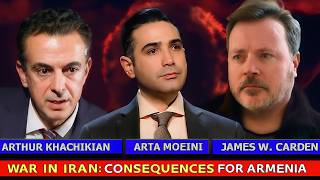
WAR IN IRAN: Consequences for Armenia: Arthur Khachikian with with James Carden and Arta Moeini
The World on the Brink and the US Foreign Policy of the New Era: Arta Moeini & Arthur Khachikian
First US President HATED Alliances For This Reason | Dr. Arta Moeini & Dr. Chris Mott