From Setback to Comeback Finding Clarity and Success in your Job Search
Michelle Perchuk, an executive recruiter and career coach, walks through her Plan A methodology for job searching. She covers identifying your dream job, building relevant skills, optimizing your resume and LinkedIn profile, and networking effectively to avoid common pitfalls like job scams and over-relying on job boards.
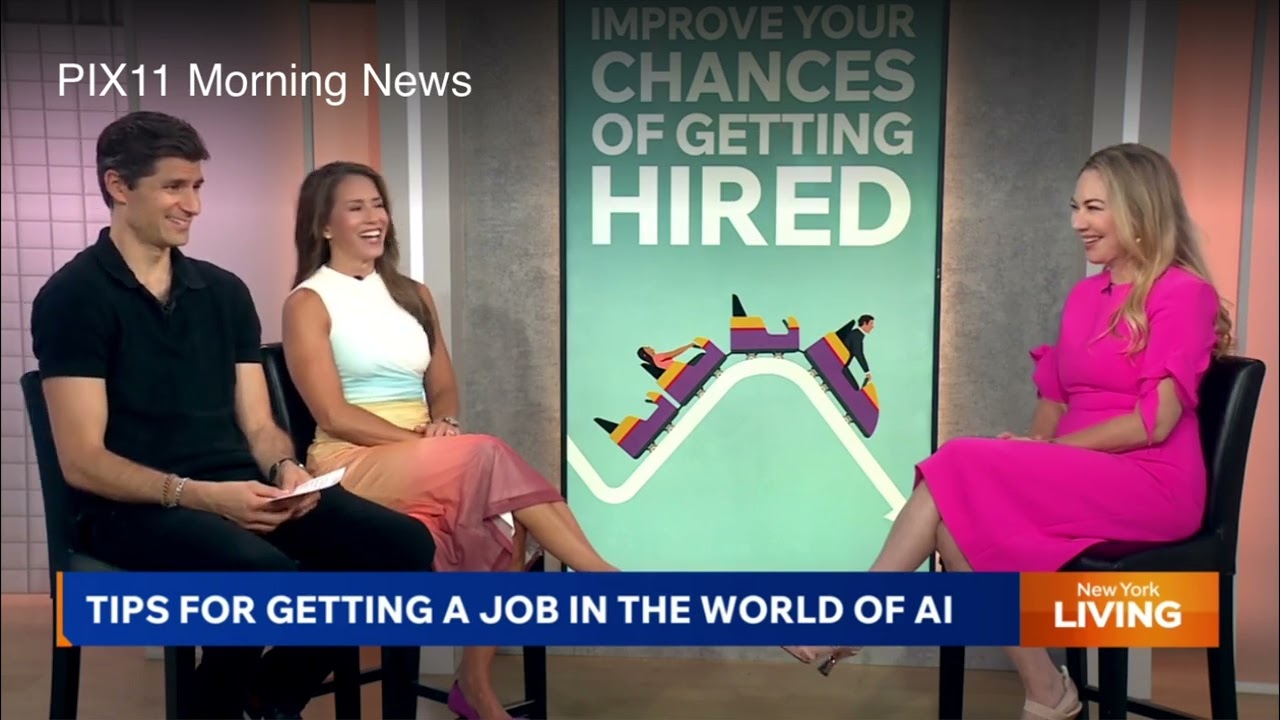
When you are looking for jobs virtually online, on job boards, on any kind of forums, you're opening up yourself to vulnerabilities. One of the first things that I tell people is remove your address because someone can get your resume and rob you. Unfortunately, this is the world that we live in, that personal identity is something very valuable and something very, very precious. So when I start working with job seekers, they usually come to me with all kinds of crazy stories of how they've been duped, how they interviewed two, three times and then the client went silent, how they even started a job. And then a week later the HR manager would tell them, I'm sorry, we lost budget and we have to let you go. I mean, how horrible would that be if you resigned from a job to take something, or if you took yourself off the market to take something and this happened to you? So how do we become educated consumers when we're looking for the most important thing in our life, our career, the job that allows us to support our families and ourselves, A place where we spend most of our hours, whether virtually or in an office. We have to protect our professional life as much as possible. And in order to do that very well, we need to know what we're looking for. Most people, when they start job seeking, they're like, oh, I'll look at this, I'll look at this, I'll look at this. There's desperation. It's like in dating, people will date anybody. Why don't you just establish your standards of what you're looking for and then just be focused on that. And don't think you're going to find that online. You're going to find that doing something that you love in church, in synagogue, doing charity work, doing community gardening. So knowing all these things from our everyday life, we all know that in order to find something that we're passionate about and something that where we could show up authentically, we first need to know what we're looking for. If you don't know what you're looking for, you're never going to find it. So I've put together something for us this afternoon. It's a very high level mini presentation about a system that I devised after being in executive recruiting for 17 years. My system is called plan. It's a misspelling of the English word plan because I cannot trademark the word plan. My plan is spelled with a double A in it. And I went a step further and I called my methodology plan A. Because if I'm your career coach, you never need a plan. B, you're always going to land your dream job. You don't need to go to the boards. You don't need to talk to those crazy recruiters. Not all recruiters are crazy. There are some good ones, but there's been a demise in that industry, and it's horrible. So let's take a look at the. Michael is clapping. Thank you, Michael. Let's take a look at how we can gain career clarity. Even before we set out on that job search, Anschuma had a brilliant vision. When she said we need to put the right address into the gps. That was wonderful. Thank you, Anshuma. We do need to put the right address into the gps. If we don't know what we're looking for, we're going to talk to every single person that's going to reach out to us, every single email, every single recruiter. We're going to be on a roller coaster. Oh, let me apply quickly. We're going to start ignoring our families because we're just going to be in the state of constant inflammation and agitation to find a job. So let's reset. Let me give you a framework that will help you understand what you're looking for. It's called Plan A. You're going to get quite a few resources from me later after this webinar, which will help you with this. But let me just walk you through the steps because this is something very new to many of you. So once again, we need to know what we're looking for before we set out on a job hunt. Okay. Very often to my clients, I always tell them to our first session, bring me a few dream jobs. You want to be a CEO of a company? Bring me their dream job description. We need to understand where we want to go before we even start, because a lot of people will add a lot of chatter around you if you're not clear on your vision. So you will get the Plan A guide. Let me just break down what Plan A stands for. It's a plan for a plan that's logical. I know most of you are thinking that, but each one of those letters stands for something. P stands for passion. L stands for learning. The learning that we need to do in order to obtain our dream job. A stands for acknowledging it's not going to be easy. This is the mindset work the next. A is for actions and assets. Those are all the cool things like your Resume, your. Your LinkedIn profile, your cover letter, and your professional story. N stands for. I know we're going to be a little bit tight on time. So I'm not going to pause to ask questions. Many of you are probably guessing that AND stands for networking, and the last A stands for accountability. You could all say that you're going to do this, but if you're not going to keep yourself accountable that every single day, you will restart the day again. So at the end of my presentation, you will be getting a one pager, which you could use for your accountability planning and your goal tracking. Okay, so let's take a deep dive. What is peace? No, no, no. Thank you. We need to take a deep dive and establish what we're passionate about. Now, combining your professional life and your personal life can be a little tough. But if you are a VP of engineering and you're passionate about aerospace, then why not go and be a VP of engineering at an airline? They definitely need your help these days. Okay. Why not take things that you're passionate about and combine that with what your professional life is so that once you get there, you will flourish. You, you will belong, you will be authentic. And you can definitely answer the question to the hiring manager, why do you want to work here? Because as a kid, I was building planes. We need to start making these connections, because what's going to continue happening is people are going to just take jobs for the sake of taking jobs. They're going to be incompetent in those jobs, and they're not going to bring their A game to those jobs. And we're going to have mistakes. And when humans make mistakes, AI rises. So all of these things that I'm talking about, they have really deep, deep meaning. And I wish we had more time to take a deeper dive. But I just want to give you as many tools today as possible. Let's get to the L. Once we have identified our dream job, let's say VP of engineering at an airline company, what learning do you need to do in order to land that job? Have you been a VP of engineering or maybe you were a manager of engineering and you want to step up in that game? What certification can you keep your eye on right now? There are plenty of free certifications out there today. Many of my clients come to me with these amazing certifications that they took. I compile a list. You could do research. You could get certifications that don't cost a lot of money. LinkedIn has many assessments built in. Go and take those assessments. They're amazing. They will help you show up on legit recruiter searches. Okay. Most importantly, many of the things that I'm going to be Talking about today are innovative. You're getting 25 years in recruiting jam packed into an hour, okay? But in order for a lot of these things to land well, you need to open up your mind. Most adults need to unlearn things first before they start learning things again. So I hope that that is something that you could just think about as I continue with my presentation. Next slide, please. For job seekers. Sometimes it feels like an elephant is sitting on your chest when you're looking for a job, when you think that you're going to get that offer and it goes to an internal candidate. I mean, the stories just go on and on and on. But like Albert Einstein said, in the middle of difficulty lies opportunity. Acknowledge that in order to land your dream job, you will need to leave your comfort zone. You will need to adjust your mindset, because nobody gets lucky. As I like to say, easy come, easy go. If you step into that incredible role that you got because a recruiter called you and everything worked out well, it's usually a scam. Like Roman said, you need to do the due diligence. You need to go through the difficulties. You really need to peel the layers of the onion and go deep and ask them questions as they're interviewing you to make sure that if you go into this role, you're going to be successful and you're not making a mistake. So a job search is difficult. It feels difficult to most people. It's very scary. It doesn't need to be very scary if you have the tools. Some of the tools I'll be sharing with you today. But it does feel heavy. So my job today is to just lighten that up. Next slide, please. This is my favorite quote of all time. If you want to walk fast, if you want to go fast, you walk alone. If you want to go far, you walk with people. Now, why am I saying this quote? It's from a very famous book called the Boy who Harnessed the Wind. It was a movie. It's a phenomenal, phenomenal story. But what this quote shows is that in order for us to get ahead in our job search and our careers, we need other people. For those of you who think, oh, I don't need anybody, oh, I got this covered. I'm going to go on job boards. I'm going to find my dream job. It's worked like that for me in the past. I got called for this job, and I landed at Amazon. Well, you know what? Things happen, but that's not the norm. So my expertise comes. How do you create your own Job. How do you get it from outside of the recruiting world, which is a rat race, and the job boards, which is filled with scams, as Roman said. How do we do that? Jobs on boards. I've been doing this for a long time. I remember when Monster first came out, it was like, oh, my God, it's a job board. Most jobs on the boards are crumbs that other people don't want. They already went through their internal network. They already went through their employee referrals. They already went from their database, and they cannot find anybody, so they just throw it on the board. Those jobs may not even be real. They may just want to be populating their ats. For those of you who don't know, it's an applicant tracking system. It's basically a database. Recruiters want your information, companies want your information. Everybody wants your information. So the best. The best thing is don't even go there. Let's go to our network. This is the most precious thing that you have. And if you don't have a big network, no problem. I could show you how to activate your network. I could show you how to get a new network. Everything is network. So I. When I talk about network, I talk about three groups of people. People you know, people you don't know, and people you should know and need to know. And those people are the people that have the hidden jobs. Your next door neighbor can potentially have gone to Harvard with a CIO of a company that just had a VP of engineering get hit by a bus, and there you are talking to him, and he's going to make that referral. You think you're going to get that job on a job board? Something for us to think about. Okay, next slide, please. So you're going to tell me right now, Michelle, you talk a good game. You're a New Yorker. You talk fast. You want to sell us something? That is not my intention. Okay. I am here to give you a strategy that you could start implementing right after this call. You could re listen to this recording and really pick up these nuggets. And obviously, you're going to get a lot of resources and some incentives from me, which we'll see at the end of the webinar. So let's talk about the strategy. In order to find that dream job, we need to know what we're looking for. So you need to identify what your dream job is or identify two or three. Okay. The idea is not to rewrite your resume to meet that dream job right away. The idea is not to rewrite your resume at all. I know people that are constantly rewriting resumes. The only thing that you should be rewriting on your resume is the objective. And you're getting a free resume template later, which you will see. How I do My resumes. The objective is supposed to jive with the title that you're applying for or that you're interviewing for. But you are not to be rewriting your resume. Your resume has to be connected to your dream job and it has to be reverse engineered for from your dream job. A resume is not a chronological order of everything that you have done since high school. Okay? Rewriting resumes, applying online, talking to recruiters, all of that causes a lot of stress. People fall sick. People don't know how they're going to get out of this rat race. It is just a horrible thing to be part of. So my recommendation is don't do it and then you won't be scammed. Like Roman says, if you identify your dream job and focus on the objective, you will start exploring opportunities in industries and in companies that you're interested in. You will stop second guessing yourself. Next slide please. So I mentioned reverse engineering. This is what I have developed over years in being an executive search over years of being a career coach. You need to reverse engineer your career and everything you have done in your career to fit your dream job. I have a client now who is a VP of marketing at a big a car manufacturer and she's looking for another role. And she also has a franchise business that she has run successfully for the past seven years. She was completely over the moon when I pointed out to her that she must include her own business on her resume for one reason and one reason only that she is a VP of marketing. She's running a business. She knows how to time manage. She's entrepreneurial. She knows what it is to run a small business. She knows what it is to manage the finances of the small business. These are all incredible tools that she could bring to, let's say a recently acquired startup by a big parent company. Because we reverse engineered her resume and put in this business that she's been running. She has now opened up her opportunities by 4x5x. And here's something else. Most people focus on filling a job. I am VP of marketing. I'm going to fill a job that they have open. That is the wrong approach. That is the wrong mindset. You need as a job seeker. You need to focus on solving a problem. What does it cost an organization to not have a VP of marketing? That Knows AI. Somebody in the room that I'm referring to that knows AI, knows how to combine marketing and latest AI to give a company 100x of what their investment is. So when you network with people and, and you talk to people, you focus on the problem you're going to solve, not the job you're going to fill, which already shows you that a recruiter is not the right person to talk to. Okay. You're not going to talk to the manager of McDonald's about a Michelin Star meal. When we are reverse engineering your resume, we need to focus on all of the experience that you have had that is directly connected to the role. And guess what? If you need to avoid certain things on your resume and not include a lot of it, go ahead. You're not going to get arrested. If a pesky recruiter gets on the phone with you and says, oh, these dates are out of order, hang up right away. I actually have a framework which if people want it, you could contact me on LinkedIn. I'll get it. I have a framework called Juul J J E W E L which tells you exactly how to talk to recruiters. If they pass the jewel system, you can talk to them. And if they don't, goodbye. Block them. When you talk to people in your network, people that you meet at a Starbucks, anybody, you need to have a clear bio. I call it the three chapters. I'll explain in a minute. Or many of you may call it an elevator pitch. Okay. It's so important to have your bio ready to go when my clients prepare their bios. I call it the three chapters of my life. What got you interested in whatever you're doing and all of the jobs that you have done or cherry pick the ones that you want up until the point of your most recent job. Chapter two always starts with most recently at if you were laid off or currently at if you're still there. Chapter three is connected to the job that you want in the future. So that's all about the impact you want to create. First of all, when my clients mention I'm going to tell you about myself in three chapters, oh my God. They are forever remembered as the applicant that had the three chapters. They won't even remember your name, but they will remember the three chapters. So you're already unique. You're creative, you're driving with passion. They're going to remember it forever. So all of you, all of you, all of you know how important it is to be unique. Right through the interview process. I had a client who Actually got hired because of his three chapters. He was a very stern German gentleman, and he never thought that that was the reason why he got the job until a year later at a company retreat, the chairman of the board came up to him and said, martin, you know why we hired you? Because of the three chapters. So three chapters is something very unique, very exclusive that I only do. And it was designed to keep yourself above the competition and to. And to be human during the interview process. Because when clients, when. When my clients get asked the interviews, tell me about yourself. Oh, my God. You get everything. And the blood test. So it's important to rehearse it, write it out, make sure it's authentic, include a little bit of your personality in there, and be real. At the end of the day, clients want to hire people that they like. Okay? So this three chapters is a huge game changer. And like I mentioned, your third chapter has to be about the impact you want to create in the business that you're in. Next slide, please. Mindset. We already had a brilliant mini coaching session by Anshuma about mindset. She spoke about affirmations. Let me just add a little bit to that. That's career oriented. Having writing out 50 affirmations of why you do what you do very well and looking at it before an interview or a networking call is a very important tip. 50 affirmations, why you're awesome, why you did what you did, why you're the first person that has a college degree in your family, why you, at the age of 29, made already 100k things like that. Okay? Because when you're feeling good about yourself, you can suck. This is logic. Okay, I go even a little bit further. Maybe we can put in the chat with the three chapters are about just to anchor it, build stars. Stars are situation, task, action, steps and results. Roi. Go back in your career. If you're working right now, go into your current role. Identify some stars that you could bring out during an interview or networking call. As evidence, focus on my formula. The three Cs, the two Ts and one L, they stand for these six adjectives. These are not adjectives I picked out of Webster's Dictionary. This is In March of 2020, when the world was crumbling. Michelle chose not to listen to the news, but she went and audited 2,000 executive jobs and picked out six common denominators that are necessary because people started talking about transferable skills. Here's my formula. Three Cs, two Ts, one L. Put in your phone. You always remember these six adjectives. Take these six adjectives and build your stars. Tell me, how did you show your creativity through a situation that you just faced at work? What was the task you needed to do? What was the action steps that you took and what was the ROI to the company? Have these six adjectives that you can start building your stars on. Okay, next slide please. Developing your assets. This is a key component of a job seeker. And having all of your ducks in a row. Okay, we're going to spend a little bit of time on the, on this slide. Resume. You're going to get a resume template after this webinar. A resume needs to have a clear objective. If you don't have an objective on your resume, the legit recruiter or the hiring manager that got your resume from somebody else will not know what is it that you want to do. Many people think objective is very old fashioned. Guess what? Old fashioned things work. So let's make it easy for people to hire you. Let's make it easy for people to understand you. Let's not make it hard for them to get what you're trying to do in your career. Put an objective on there. You're not going to get arrested. If you have an objective. You're going to get a clear and intentional template of a resume. After this webinar, you could also get it on my website. You just get the framework, the skeleton, and then we have to put the meat on it. The resumes that get my attention and always got my attention and I have probably seen around 150,000 resumes in my lifetime and I read them, okay, 17 years as an executive recruiter. The resumes that got my attention were the ones that had a mission statement and volunteering experience. All of my clients have those. They showed the human aspect of you. They also show some that some crazy resume writer in New Zealand didn't write your resume or an AI bot or whatever it is. It shows that you're real. And in today's day, in today's age, when hiring managers hire for a culture fit, guess what? If you have no volunteering experience, you're not a culture fit. That's the name of the game. I had a young lady I worked with, she's actually girlfriend of my, of my stepson. She had 17 interviews. And then he begged me to work with her and I told her, do me a favor, you want to work in the cosmetics industry, you're in marketing. What volunteering have you done? I mean, there's a lot of stuff that goes on with like chemicals and pets and all that. Why don't you put some volunteering experience on your resume? Not only did she get an interview on the next application that she had, she got that job. So volunteering is extremely important. Optimizing your LinkedIn profile. So if a resume is an X ray, LinkedIn is an MRI. It goes deeper. So optimize your LinkedIn profile. Make sure that some things on the profile stand out. Number one tip. This tip is worth millions. Under your name, there are two or three lines where you can put your tagline. Do not put your current title. Put things that you stand for. Use words like empowering, advocating, developing, designing. I mean use chat, GPT, Brainstorm. This could be the heart, the thesis statement of your three chapter. If you are in a brain fog, go look at mine. My tagline is a little bit on the long side. Yours doesn't have to be. And you can include your title, but don't let that be the first thing my LinkedIn tagline says. I'm the coach you call when you hear the word layoff from that sentence. Everybody knows, even a five year old, what I do and what I stand for. So make sure that you have a clear tagline. Not because you want to be found on searches by some fake recruiters, but because when a stranger lands on your page, they need to know why they have to know you. And if you're a VP of engineering, so is everybody else. Okay, you need to be clear in your subject matter expertise so that people will know why they need to press the connect button. Okay. When I work with clients, not only do they get a comprehensive resume, which my resumes are kind of long, someone told you your resume has to be one page, walk away from that person. If they told you your resume needs to be any amount of pages, don't listen to them. A resume will be as long as it needs to be. Because you're not applying online and robots are not reading it, a real person is reading it. And what we could also do is we could also create a one pager for you. It's like a tasting menu. That's something that you could use if you're really networking a lot and you want people to have an asset that's easily shareable. I create a one pager for you that really highlights everything that you stand for. Okay, next slide please. Networking. I'm sure everybody's very curious about this. Okay, so as I had said before, this is not a huge part of getting your dream role. This is the entire part. No one gets Their dream role on a job board. Nobody gets their dream role from a recruiter. They just happens to call you. You get a dream role when you are networking and talking to people and you're intentional. And if a recruiter slides in someplace because they have a niche business like I used to have, then that's fine. There are some really good recruiting firms out there. I've been compiling a list. But you don't fall into a dream job. Like I mentioned before, the jobs on the boards are jobs that nobody wants, where they're having problems recruiting people because there's either the wrong culture, they're not paying well enough, or they're just collecting resumes. We already discussed this. Focus on solving problems and get jobs created for you. If you're talking to somebody about a problem and you demonstrate to them that you could solve this problem and they are high enough on the food chain, they will create the role for you. They will fire people. They will free up budget. They will go to the board of directors and say, I need to bring Roman in no matter what, because he has demonstrated to me that he could do this job and he could fix this problem for us. When you're networking with people on LinkedIn, you need to do it with intention. You need to have a really powerful story, and you definitely do not need to tell them, can you help me get a job? When the people. When people hear the word job, they go into a shell and they hide like a turtle from you, because people have their lives, and you being unemployed is not their problem. So do not mention the word job to anybody. Lead with your expertise. Lead with your third chapter. Lead with the impact you want to create in the world, in the business world, and let them tell you, oh, you know what, My friend, my. My. My roommate from Princeton actually just got a new role, and he may need somebody like you. Now, if you would have said to this person, you know anybody that's looking for a job? They say, oh, yeah, I know somebody that's looking for a gardener. So let's start rewriting this internal dialogue of how we are conversing with people, especially when we're unemployed. Nobody knows you're unemployed until you tell them. The minute you say, I'm looking for a job, you sabotaging your success. I could be a jokester at times. Not the only jokester in the room. I always say that the girl that has a date to the prom always gets a couple of other people to ask her. But the girl that has no dates has no one asking her that's just the way things work. So how do we take this knowledge and bring it into what we're doing on LinkedIn? Because this is the modern world and this is where most of the networking will take place, but it doesn't have to be. It could also be with virtual networking events, physical networking events. Thank God those are back. Okay, so in order to be effective in networking, you need to have a target list of companies. And it cannot be every single company in the world. It has to be connected back to your dream job and your passion. So if you're into aviation, list out every single airline company and all the vendors that cater to the airline company. Stay in that realm. Follow Those companies on LinkedIn, sort your contact, see who is there and consistently reach out to people at those companies. Go from top down or from bottom up. Build your connection list in those companies because you need to know about them and they need to know about you. It's very important as you're navigating through LinkedIn to have a couple of really key components on your profile done, and that is recommendations and introductions. When you're talking to people on LinkedIn, when you're connecting with new people, it's important for them to see that you're highly recommended. Because if you're talking to them and you're asking them for an introduction, they need to see that you're a highly reputable person. They're not just going to make an introduction for you just for the heck of it. So make sure that you're in the habit of every time you work with somebody new or every time you get a new manager, you get an updated recommendation. And not everyone always looks when they get a recommendation request. So send a separate email as you're navigating through LinkedIn. Do not ask to talk to people about jobs. I'm going to highlight this once again. Do not ask people to go on their internal website to see what jobs are open. They're going to tell you, yes, I'm going to do it and they're not going to do it. Okay, Request to talk to them, set up exploratory conversations, lead with your expertise and don't ask for any favors. I have a very interesting quote I always use. A lot of my quotes are mine and I always like to tell people, don't ask for a favor. Look to give away a favor. When you're looking to share your expertise, you're sharing, you're giving a favor. Asking somebody to go on internal job board and look for a job and recommend you that's asking for a favorite. Okay. And Schuma is asking that a lot of people are adding the Open to work frame on LinkedIn. Should they stop doing that? Absolutely. Absolutely. That Open to work frame was invented during the pandemic to really have people get hired out of empathy. You don't want anybody to hire you because they feel bad for you. The Open to Work frame screams desperation. And because you're looking to work, that's nobody's problem but yours. Okay? And who knows, maybe some of those crazy recruiters are actually looking at people who are open to work because you're, like, vulnerable and they could really attack you. So I would really remove that. Next slide, please. I'm all. I am all about daily routines and I'm all about outcomes. I could be telling you a bunch of stuff this afternoon, but I am all about outcomes. So everything that I'm saying leads to outcomes. Let's take a look at some outcomes that can be possible for you. If you reach out to 20 people a day, 10 will connect by default. Out of those 10, if you message them with intention, one will agree to talk to you. There are 25 days in a month. On an average, that's 25 meaningful conversations in a month. If you are disciplined and you do this every day, that is 75 conversations in three months. If you have 75 meaningful conversations in three months, I will bet you that one amazing career opportunity is waiting for you in those 75 conversations. This is real. This is what I have guided people to do over the past eight years. I had to calculate for a minute, and this works. This works. This is a very conservative sample. Some people it works for in the first month. Okay, next slide, please. So we could be talking about this for 24 hours a day. You could get the best possible strategy there is. All the tips, all the secrets, all the worksheets, all the templates, handbooks, ebooks, whatever. If you're not accountable to yourself, if you know you can't be accountable to yourself, get accountability partner. Get a coach. Don't work with people who are loved ones and friends because they will not be able to tell you the truth. Work with somebody that can give you critical feedback, constructive feedback. Reach out to somebody in your alumni network. This could be a nice conversation opener with somebody that you're talking to or. Or that you're networking with. Find an accountability partner. If you can't find one, hire one. You need to get somebody to keep you accountable. You need to have somebody that you're going to report to. And that you're going to be using as a sounding board. When you get this, you're going to be able to download an opportunity tracker. I don't know, is this clickable? No, it's not, but we're including the link. That is fantastic. Okay, so you're going to get a one page accountability tracker that you could use for tracking your goals, tracking your career opportunities and so forth.
More from Michelle

ABC7 Eyewitness News Mornings @10 segment ("A.I. Job Scams," 7 On Your Side with Nina Pineda).


Executive Career Coaching Success Story | David Auslander’s MTV Coaching Testimonial

Networking, AI & Landing Your Dream Job with a Former Wall Street Headhunter | S1 E17
Why Executive Career Coaching Works | Stephen Bush’s MTV Coaching Testimonial
Executive Career Coaching Testimonial: Stephen Bush’s Experience with MTV Coaching