Breaking the Code of Immuno-Metabolic Disorders Bridget Briggs, MD
Dr. Bridget Briggs argues the U.S. health system wastes 90% of spending on chronic disease instead of prevention. She proposes replacing expensive blood tests with wearables like Oura rings and continuous glucose monitors to track real-time changes from lifestyle and supplements. A case study shows how this approach improved inflammation and symptoms in a perimenopausal woman.
Chapters
Okay, well guys, it's just before lunch, so I'm glad I didn't get you after lunch because, you know, I speak super fast. I'm gonna try to behave myself. Chris, you're in direct competition with me now, dude, because you can really hold a pace. I am a family medicine doctor, and so I got a second to speak to Mark. I went and did my master's at USC because I think in 24 years of practicing medicine, it's has never been harder. I just flunked my Medicare audit. You know, I have all of these things that I have to achieve in order to keep billing Medicare. And so if any of you are primary care doctors, if you're not part of an ACO, please come talk to me because I think ACO medicine is gonna be the survival of the fittest. I'm part of an ACO that is kind of new and novel, but we get actually paid 115% of Medicare. And this is the population that I think that we are seeing with the highest burden of chronic disease And the thing that I'm seeing is when I wanna do preventative medicine, nothing is covered, right? So how can I be a good clinician and do appropriate lab and screening unless I'm asking people to do all these expensive labs? So Eric, Chris, thank you so much for such a simple test and such— I'm so excited to implement this. Dr. Bland, like, wow, like fantastic tool. So on that note, let's jump right into breaking the code of unimetabolic disorders and using wearables and biometrics to really help us assess balance. I have no problem convincing my patients to put on a wearable because when you look at the cost of these blood tests, they're so astronomical. It's literally cheaper to go Amazon.com, pick up an Oura Ring, pick up a Garmin, and then I can do this day-to-day assessment with my patients to kind of understand if our interventions are actually making meaningful changes. So the neuroendocrine immune axis is at the core of immunometabolic disorders, and this determines our resilience to disease and our ability to recover. Things that I learned in my master's program— thank God I'm done, Jeff, the torture's done, it was very painful. I am a Trojan now, and I started off as a Bruin, so I'm a little bit mixed up, like, where my loyalties lie. But things that I learned very tragically— yes, chronic disease plagues 60% of the adult population, 40% of us have 2 or more. We spend 90% of our healthcare dollar on chronic disease. We're very reactionary, we're not proactive. And if 90% of the healthcare dollar is spent on chronic disease, isn't prevention where we need to be focused? And this means we need to start measuring systems. So wearables are a great, fantastic way, and relatively inexpensive— so is the CPC for that matter— to understand what's going on that's changing the United States. Guys, we are doing dismal. We are voted the 69th country in terms of health. We flunk almost every health metric compared to every other country. Our life expectancy and our Neonatal mortality and infant mortality far exceeds other wealthy countries. So we spend more, 18% of our GDP on healthcare, twice as much as other countries, and we have some of the worst outcomes. We're not getting the bang for the buck. When you fractionate who's spending, or who are we spending this money on, 5% of the population is using 50% of the healthcare dollar. That's shocking. If you really heard what I just said, those of us that are in the last 50% are spending 3% of the healthcare dollar. That means we are not focusing on prevention. The 50% of the population is not getting the attention that we need. When I have healthy seniors, I want to praise them. I want to show them their report card that they're doing really well. But they come in with lab bills of $384 just for ordering a BNP, a heart failure test. If you got edema in your legs, do you want to know if it's heart failure or is it just bad varicose veins? But I don't have the privilege of doing these tests because they're so expensive and my seniors can't afford it. More importantly, we're not able to really look at the root cause of disease or imbalances with a lot of these reactionary blood tests, right? So although you and I are very aware of the core root causes and you and I can help to implement these changes, I need a wearable to show that to the patient. So chronic disease isn't just medical, guys. It affects every domain of life. And if we look at the landscape of America, if you're a primary care doctor and you're billing insurance, the number one chief complaint that comes into the clinic is something GI, right? Everyone's got a GI issue, and we're gonna get into that, the reasons why. Sleep disorder, everybody has a sleep disorder. Everybody's asking for a drug for this and a drug for that. I wanna ask ourselves why. Carrie, you did a great job, you made me giggle so hard. You said 10% of the population has autoimmune disease. This is an article in 2025, but I do think Carrie's more accurate than this data. That said 5% of the population has autoimmune diseases. I would say 50% of every patient that comes into my clinic has TPO antibodies, 50%. So how they document this, I don't understand. But what's tragic is this is the biggest biological pharmaceutical expense. Do you understand the cost of biologic drugs? Now, this has been recently surpassed by our GLP medications, but these are years that people take these biologic drugs, these disease-modifying agents, right? And oftentimes women are more likely to be the victim of an autoimmune disease, and often our autoimmune patients have 2 or more. Neurological disorders— 60% of Americans have reported a neurological imbalance. Tragically, 10% of our children either have ADHD or learning disabilities. This is not just an aging disease, guys. This is a pandemic. Autism is now 1 in 22 children by the age of 8 according to our 2022 statistics. And the trajectory of pharmaceutical expenditures right now, we are scheduled to become bankrupt, guys. I am doing Medicare right now. I am telling you Medicare has given us a 5% cut in reimbursement for the last 3 years. If you are not practicing HMO and PPO and ACO medicine, you cannot survive. Only 8% of physicians in this country own their own practice. I'm probably the dinosaur in the room. I don't know that any of our children, if they step into medicine, they're gonna have to work for corporate America. And you lose the ability to provide personal health healthcare when you're regulated by Kaiser. Am I right? Okay. So something's got to change. I am the medical director of our ACO right now in terms of educating the doctors. How do we save healthcare? It begins with prevention, right? We've got to stop medicating end-stage diseases. That's where 5% of the population is consuming the healthcare dollar. And we've got to spend money on prevention. So I wanted to take that to Congress, but thank God we have Mark. So let's ask ourselves, how can we understand the neuroendocrine system and help to regulate the system early on before there is disease. I wish my specialists understood this. My patients go to the neurologist, he shows up and he's like, "The neurologist I saw for Alzheimer's asked me to take this monoclonal antibody to slow down the progression of my Alzheimer's. Dale spent some time with me yesterday." Thank you, Dale, I love you. "Helping me know how to counsel my patient, I got a curbside consult. That neurologist never talked about lifestyle medicine. That doctor never talked about GLP." That is significantly cheaper than taking a monoclonal antibody that can be at depending on your ApoE genotype, as we covered that. Like, that was such a powerful meeting last night, integrating and talking to fellow doctors on the stage here. That gives me even that ability to integrate. I'm not a specialist, but at times I feel like I have to trump a specialist, and it's very intimidating to tell your patients something that is exactly opposite than their specialist said. So the neuroendocrine immune system is a super complex system that really is the fabulous system that's cross-talking and regulating your nervous system, your endocrine system, and your immune system, right? They're never not talking. They're always correlated. I don't know why specialists don't get this, right? If my patient has a GI imbalance and they also have arthritis, they don't have two different diseases, guys. It's systemic inflammation with immune complexes stuck in their joint, right? So we just don't teach this type of medicine, and I want this to be implemented into our medical schools, and I want our our children that are becoming doctors. I have my son taking the MCAT any day. I'm super excited. I hope that I'm going to be like the Pearlmutters with a kid on stage someday. I really do. I want to, you know, be a male/female. My daughter's also in college and she's pre-med. So I'm like trying to make little mini Briggses and mini yous, you know, to enlighten the world. But I want our specialists— our children don't want to go into family medicine anymore, guys. The incidence of people entering into primary care is tragically diminish because this is a hard job. It is so defeating and it's so hard. I went and got a master's program and I walked away feeling so defeated. Like Mark said, there's so many avenues of roadblock. I just don't know how this message is gonna get out if we don't take our young doctors-to-be and change the way they think. So this particular system is so interesting because, guys, it's no small wonder to us in this room that your nervous system, your endocrine system, and your immune system is communicating because they use similar ligands and receptors. Right? Like, we think that the brain is only gonna respond to neurotransmitters. No, the brain cells are responding to interleukins and cytokines, immune messengers. And because every hormone node in the body, we think of it as an endocrine regulating system, it's actually regulating your immunity, right? We know that the presence of estrogen is naturally anti-inflammatory. Men, you know that. When you start to feel andropause, they start to get some of the same symptoms that women report in menopause, like joint pain, brain fog. The endocrine system is tightly connected to our immune system, and this, through this fabulous intercommunication between our brain and the autonomic nervous system, is basically the ability to control inflammation, right? We know that inflammation is necessary. We have a sympathetic nervous system. It's designed to create fire, like saber-toothed tiger— there's a threat. It's fast onset of action, but it also needs to be turned off efficiently and fairly quickly, or we end up having the danger of an over-inflammatory state. Now, the central nervous system, we modulate this in medicine all the time. Like, when you really start thinking about all your autoimmune medications, right, all these drugs, beta blockers that we're using to turn off a sympathetic tone, but we're rarely looking at these therapeutic treatments— beta blockers, propranolol, metoprolol— Clonidine that's used in ADHD for children. Are we recognizing if I modulate the sympathetic nervous system, I'm also modulating the parasympathetic nervous system? If you don't understand that these two systems are codependent, you may create harm without recognizing that. So yes, we use therapeutic remedies, alpha blockers, beta blockers from psychiatric problems. Like when people have an MAO-B genotype, they rev in amines. Right? They tend to have very high catecholamines and histamine. They tend to have a very high sympathetic tone. I love propranolol. It's lipophilic. It crosses the blood-brain barrier. It takes that excessive sympathetic, sympathetic tone down. But I have also had patients on a beta blocker that all of a sudden I've activated all kinds of gastroparesis and gut motility problems. If you don't understand the interaction between sympathetic and parasympathetic, you're gonna stack on drugs, or you inherit patients that are on 5 drugs and they're complaining about all these symptoms, and you you don't even know to start removing drugs, right? So it is important that we embrace the interaction between these two nervous systems. And yes, we see beta-blockades and alpha-blockades are used in brain disorders, cardiac disorders, histaminergic disorders, but they are not without potential side effects. And I do it, but I'm aware of my side effects. Your vagus nerve is the longest nerve in the entire body. It is the bidirectional pathway or bridge between your central nervous system the distal body, and activating what we call the anti-inflammatory reflex. Now this involves your afferent arm and your efferent arm of this— of the vagus nerve, right? So your vagus, it's got all of this communication from all these different distant organs, right? It's taking in an accumulation of messages from all these organs. It could be the brain itself, it could be your gut, it could be your endocrine hormones, hormones, and it's communicating a message to the nucleus tractus solitarius. That's like the vagal command zone. That's where the vagus is going to integrate all of this information. It's going to send branches to the hypothalamus that's going to activate your endocrine system, and ultimately it's going to cause my brain to make a response. And usually, because the vagus nerve is again affecting every organ, it's important that we understand that vagal tone is like the critical element of your inflam— inflammation tone. Right, if I don't have good vagal tone, all of these systems, guys, from depression to dysmotility disorders to cardiac dysrhythmias, all of these end organs begin to suffer. So this is where knowing every organ, what the vagal tone does to restore balance, is key so that when you're doing an intervention, you don't ever forget to support the vagus. So as we're looking at the vagus, there are two neurotransmitters that are really important. When we talk about the central nervous system, the nucleus tractus solitarius gathering this information, the response is going to happen through the efferent arm back to lymphoid tissues specifically. And these lymphoid tissues, through the release of acetylcholine, is going to activate a very special receptor called the alpha-7 acetylcholine receptor, nicotinic acetylcholine receptor. This receptor, which is nicotine-dependent, okay, so we're going to talk about where this particular acetylcholine binding can be modulated with ingredients. Okay, so the bridge between the parasympathetic system and the sympathetic nervous system is through the neurotransmitter norepinephrine. So you guys have these patients, right? You do a cortisol rhythm, they're flat, right? You do a urinary DUTCH and what do you see? Very, very low catecholamines. When individuals have a low sympathetic tone, guys, they end up with low norepi. And if somebody has low norepi, they cannot activate their vagal anti-inflammatory reflex. Do you understand? So when you're modulating excessive beta blockers and things like that, you could be causing this problem. Do you understand? You can actually lead to a cascade of the inability to turn off inflammation if we're affecting the binding of norepi, or if we don't support adrenal support with adaptogens and what have you. So the anti-inflammatory reflex, again, is dependent on norepi and acetylcholine. And the communication from all these different organs that basically activate a healthy vagal tone that is the sole purpose of turning off inflammation. Okay, so vagal dysfunction is a core problem of all chronic disease, right? Anybody with a chronic disease, I want you to ask yourself, do you see signs and symptoms of lack of vagal tone, and are you supporting their vagus? And we've heard all kinds of great devices that support vagus tone, but we're going to review many different ways because there's not any two patients that want the same remedy. All of these conditions have deeply embedded— like POTS, dysautonomia, things like that— this, this is deeply embedded in a sick vagus nerve. It doesn't mean it's the only problem, guys, but it's a problem that I think our specialists don't recognize and they don't modulate. So let's talk a little bit about our lymphoid immune tissue and how it crosstalks with systems like our enteric nervous system and then our brain. Every tissue, not just your gut, your sinuses, your mucosa membranes, your vagina, your uterus, all of these tissues have their own lymphoid tissue, right? And so the vagus nerve is going to be giving afferents and efferents back and forth to your lymphoid tissue because remember, this is where the intersection of the outside world comes with your human body. And because this lymphoid tissue is so specialized and so sophisticated at protecting the triggers of local inflammation and ideally knocking it out before it goes systemically. This is where supporting good, healthy lymphoid tissues is also very important, and healthy vagus does this. So our lymphoid tissues are taking in messages from dendritic cells and antigens, cytokines, and it's coming up with a— what do I do with this information? It's going to steer your T helper cells to make a definition. Am I going to go Th1 dominant? Am I going to activate Th2? And so we're learning, Chris, that Th1-Th2 balance is the key, right? That we need to be able to float back and forth. But there is something critical about Th1 balance. And if the lever gets pulled too hard to the right, and if the lever gets pulled too hard to the left, this is the difference between inability to knock out an infection, or an ability to activate an autoimmune disease, or becoming atopic. OK. So there are two forms of Th1 and Th2. One is more cell-mediated. The other is more antibody-mediated. They're both critical in our ability to control infections and to control autoimmunity. The key to remember is if you have an autoimmune patient and you're, you're busy medicating their autoimmunity but you do not pan-culture them and look for a chronic infection or a chronic stimuli, like let's say it's mold exposure, the danger of not being able to resolve an autoimmune condition is so much more if there's an insidious hit that's still continual. So don't forget to pan culture. Now there's a fabulous video on University of California TV, if any of you do YouTube. This is a video called The Human Microbiome. And what I loved about this video, not only can I recommend it to my patients when they don't understand the importance of microbial diversity, is UCSF is finding the why. You all in this room have seen kids, grandkids, patients that all of a sudden have peanut allergies, they can't sit this table. You know, we see eosinophilia esophagitis in these children. They're allergic to every food that they eat, right? Why is that happening? Because I don't know, like, I'm 55, I never grew up with a kid that I couldn't sit next to because they had to be away from all peanuts. I never saw autistic kids growing up. Like, where is this disease origin coming from? So UCSF, which uses a lot of the research from the Human Microbiome Project, is looking at these cell models to basically repeat like teaching mice to become atop— atopic, teaching mice to develop essentially autoimmunity. And at the core, which is no big surprise to any of you, is America lacks the microbiome diversity that we see in other countries. If you look at people that live on two different continents, they all have— all have very diverse microbiomes, but their microbiomes are very sophisticated at breaking down complex carbs. In America, we have limited diversity, and it's really sophisticated at breaking down simple carbs. But this particular simple carbohydrate advanced microbial balance leads to a very high inflammatory tone, okay? And what we know, that when you have a baby before the age of 3, you have about 3 years to do what's called the colony-forming effect. The colony-forming effect says the more antigens, the more times I put that baby on the ground, that baby puts her fingers in her mouth, the more cats and dogs and ducks and the farm effect, that they get exposed to more antigens, the more they tolerate future antigen as they age. So this is totally not America with, you know, you can't even— Medicare will not pass my audit if I don't have alcohol to put my hand in before I go to every patient room. Like, our society is not embracing this. I did a great talk with Chris at A4M in Boston where we talked about what is going on in pregnancy right now with you know, groupie strep, we're gonna give you antibiotics, you know, at the time of labor. Like, we're literally finding zones of vulnerability with this microbiome with things that we're doing in pregnancy long before this baby entered life, right? So we have to understand that antigenic tolerance is going to be a window of vulnerability between the first 3 years of life. Two, when women go through menopause, the tragedy is we lose the diversity of our microbiome, right? We lose the microbiome diversity in the vagina, This is where we get urinary tract infections. We lose the diversity in our intestines. We lose mucin too, which is critical in developing very specialized bacteria like Akkermansia. So what we need to do is understand the importance of hormone therapy in any female long before she's bone dry, guys. Like, we should not be suffering. And I'm definitely going through that fun little phase of my life. And women, it's so challenging, but don't wait till your patient's bone dry, absolutely tortured, has the worst bone density. Like, do early intervention. You can use your phytoestrogens. But microbial diversity is probably the biggest battle that we're dealing with with the younger generations. So whether we're looking at the enteric immune system, the endocrine system, and the nervous system, the gut has its own little brain, which is why we call it the second brain, right? And so the gut central neuroendocrine axis is, first of all, probably the largest driver of inflammation. Because first of all, think about the length of the gut. It's the length of a football field if we take it out, right? It's the biggest surface area for— sensing through GALT. It's the largest hormone secretor and serotonin secretor in the human body. It is the first barrier and area to determine self versus foe. And again, it has direct interplay with the vagus nerve and eventually the central nervous system. We have very specialized barriers, we have very specialized lymphoid tissues, we have very specialized antigen sampling cells. So gut health, barrier health, methylation, cell division— this the fastest-growing cells of the human body, right? Skin, hair, nails, gut. If we don't have healthy barriers and if we're not supporting very basic ingredients with cell division, this is where we can have compromised barriers. As we dive into the hormones, there's a symphony of hormones that interact in very specific timing and pace when the macronutrients arrive at the right consistency. This means, guys, that the hormones Hormones respond after they sense the macro in the meal. When we talk about the macros, the 30-30-40, like the macros matter. The, the type of macro matters, but the fat, carb, protein determines the amount of incretin hormones that are secreted. And who hasn't seen the miracles of these incretin hormones, right? I mean, what— I think, Dr. Austin, you said 12% of the population has tried a GLP because these guys are miracle makers. But they're bankrupting America. We cannot all take a GLP. So the, the central nervous system is in crosstalk with the enteric nervous system, both through the sympathetic and the parasympathetic branches as well. And as we're in playing all of these ingredients between eating food and our gut sensing the macro and then secreting the appropriate symphony of hormones like those incretin hormones, the question that everybody always has is, well, shoot, if I take a GLP prescription, isn't that going to drop my, my blood sugar and I'm going to get hypoglycemia? That is not how these natural molecules work. They don't cause hypoglycemia because when I sense my meal, I secrete the right amount of incretin that's relative to what that meal required, and it signals to the pancreas to make the appropriate amount of insulin, and it downregulates my liver from overproducing sugar, and it literally is a symphony of perfect music because That's what our bodies are designed to do. Now, microbial byproducts— we've learned a little bit about short-chain fatty acids and the miracle that they are, not only as Miracle-Gro in the gut, regenerating my, my enterocytes, being absorbed through the lymphatics, preventing fatty liver, right? But girls, when you go through menopause, do you know how drastically this changes? Okay, so if you don't understand the order of effect, why is menopause such a drastic disorganizer of health because it changes our microbiome, guys. It changes the short-chain fatty acids you can produce. This is why a drastic amount of women develop fatty liver in menopause. 65% of women develop cardiometabolic disease if they're not treated with HRT. So there's timings of vulnerability that we need to be very mindful. And there's also microbial byproducts that are harmful, right? Lipopolysaccharide. So guys, We can all go to McDonald's, hopefully not very often, eat a saturated fatty meal, and every one of us are gonna get this transient endotoxemia. But healthy people have better barriers, they have less LPS absorption, they have healthier Kupffer cells in the liver to absorb that, they have better lipopolysaccharide binding proteins, and they have really good cholesterol. Because what do you think one of the main purposes of lipids are? Have you ever seen an autopsy where they say they saw chlamydia? Or H. pylori in the plaque of the heart? This is because LDL and HDL form a bond. They bind to infections and they help you clear it. So what are you doing when you give people really, really heavy statin drugs and you knock out any HDL and LDL? Like, we have to start asking ourselves big questions like this. What's happening to their immune system? And as our gut is tasting foods and as we see the balance of transient— is perprandial endotoxemia, healthy people do better than those with diabetes and fatty liver and things like that because they're compromised, first of all, at the layer of the gut, and then they have already an overdrive, this systemic inflammation. So now while our local immune system in the gut is responding lipopolysaccharide, it's binding to your toll-like receptors, it's creating a localized inflammation, there's also things that knock that out. So it's not a surprise to me, knowing this physiology, when I give somebody a GLP drug that has psoriasis, they're like, "Hey, Dr. Briggs, look at my psoriasis plaque, it all went away." Because GLPs start to inhibit the toll-like receptor 4. I mean, these are some of the most restoring agents to balance the neuroendocrine immune system at every layer of depth. So I have a girl that walked into the clinic, she'd been to in and out of 8 different emergency rooms, she's been in and out of the specialist for neurology for chronic headache for 3 years, and she had intracranial hypertension. And they told her, "Well, you're fat. Go lose weight." And she's like, "How exactly would I lose weight? I can't even stand." I— she was miserable. I said, "Let's give you a shot of Ozempic. Come back on Friday and let's see what happens." She texted me. I gave her my personal number. She haunts me every day now, God. She really does. She's become my best friend. Biggest mistake, but anyway. I've learned so much from having this, you know, a little bit tight relationship with this patient because Because within 2 hours her headache was gone. Now she had had a lumbar puncture in the hospital and her opening pressures were 38. So when I tell you her head was killing her, it was legit. After I gave her the shot of Ozempic, and I was trying to get the insurance to cover it, her opening pressures went down to 18. Did I cure her? No. But I dramatically reduced the inflammation inside of her brain. I took an Alzheimer's gentleman that could only ask his daughter for "Can I have my Vicodin? Can I have my Vicodin?" He was wetting his pants. I gave him 1 week's worth of Ozempic, and the woman called me. She's like, "This is not my dad. He doesn't pee his pants, and he's actually communicating," which there was no communication before that. Are we surprised that local inflammation also influences central inflammation? Now, one of the things I did read which was really striking to me is the brain makes its own GLP-1, guys. So apparently it's not all gut. But there is a lot of crosstalk locally. GLP knocks out toll receptor-like-4 activity in the gut. It improves your barriers. It improves your immune cell talk, Th1, Th17 balance. It improves your barriers. It improves the cell health, apoptotic effects of the cell, and not to mention all the beautiful metabolic regulation that we see from GLPs. Now, most importantly, ladies, GLP has a synergistic balance with your GLP. So not everybody is all of a sudden GLP deficient, guys. What about these obesogens, Dr. Lustig, that you talked about? These endocrine disruptors, right? They formulate estrogen-like activity like BPA at the cellular level. They may be modulating our GLP because we gotta ask ourselves, why is everybody on a GLP? It's really a little scary if you think about it. Well, one of the things that we know, that in mice, for example, if you take out their ovaries, they no longer respond to their GLP. In fact, GLP is ER-alpha receptor dependent, and this is in men as well. True, women get better reactions to GLPs than men because we have more estrogen apparently, but even andropausal men that lose their estrogen stop responding well to their GLP prescriptions, okay? So there's this beautiful crosstalk with your vagus nerve as well. And so this is a big stimulator of that anti-inflammatory reflex, right? So what are our modulators of the neuroendocrine immune axis? We talked about our beta blockers. There There are herbs that do the same thing. Quercetin is probably one of the most powerful natural beta blockers. It actually downregulates the beta receptor, which makes it not only great for histamine but also sympathetic overdrive. Remember that your vagus nerve is one of the highest firing nerves. It requires an immense ability to synthesize ATP from the mitochondria. This means it's heavily dependent on NAD and CoQ10, so supporting mitochondrial health is very important. This is why NAD has beautiful capacity, and anybody with neuroinflammation, to really restore healthy nervous system, to knock out microglial overactivation. It activates SIRT1 and SIRT3. So NAD is a power nutrient, guys. Again, living in California is such a fantastic place to work because our governor, not my fan, he's knocked out all sterile injectables. So all of our compounding pharmacists that used to make methylfolate for me and injectable methyl B12 and injectable NAD, we have to lie, we have to order things to Oklahoma and ship it to California California, and it's just, it's really hard to do preventative functional medicine the way our California is going. So if any of you have any power to modulate our governor, please do. Because I clearly don't. So whether you're doing IV NAD, whether you're doing injectable NAD, whether you're doing NAD or precursor, guys, this stuff is magic. I've given you several protocols because you don't need to give the same protocol to every person. So I'm not gonna belabor this. I think that you should know there's a completionary fee and maintenance But look on the bottom, I'm like, please monitor your Oura Rings, your Garmins, your HRV, your stress levels, your body battery, because you want to know, does the patient feel better, but how much better? Did your sleep score get better? Did it go from a 40 to an 80? That's power, guys. So this is where your wearables become so useful when you're trying to get a subjective report from your patient. Like, how's your Vagus doing today? Um, I think I'm a 9, and I was a 3. I, I can't get that data. I need numbers. So any of your patients that you think they're not resting and they're not repairing, right, they're not getting over long COVID syndrome, they're not recovering from chronic mono, please use some of your NAD. There are other cofactors that you can do to boost both through the direct pathway and the indirect pathway. So this is where nicotine patches— I don't know if any of you played with nicotine. I, I talked to Yeah, one of the gentlemen was trying to get his life insurance policy and they found nicotine in his blood. Okay, be careful that you warn everybody, like do all your life insurance stuff because it will surface even if it's just chewing nicotine gum. This is not long-term smoking, guys. We're not talking about, you know, tobacco. We're talking about nicotine patches for to really revamp that vagus nerve. Choline does that as well. I like, you know, no barbiturate, but also like citicholine and Alpha-GPC, and then omegas and polyphenols and HRV retraining. These are all great indirect ways. I gave you tons of references for NAD. Infrared, we have our sunlight out there, guys. When your patients just can't tolerate that, oral sensitive, injectable sensitive, they can't take or tolerate any supplement, and far infrared is magic. It's almost the same power. Anytime you support detoxification, you're helping the vagus, guys. We sweat, we breathe, we eat, we pee, we poop, Maximize it all, okay? Help your patients understand the importance of detoxification. Endorphins is your body's gift. They're your natural opioids. Tap into endorphins, guys. Teach your patients. These balance everything— our mood, inflammation. They're anti-inflammatory, and they boost your autonomic tone. That means they're going to lower inflammation. So where do endorphins work? They lower cortisol, right? They help with moods. They're, they're made when we exercise. Now, natural endorphins are the biggest boosters of immunity, but at times our patients are limited into boosting their own, right? So when you have your autoimmune patients and they're trying to follow the anti-inflammatory diet and they fall short, they're trying to laugh, giggle, hum, I mean, exercise. Think about being in so much pain. Are you gonna go run on the treadmill? You're not. So this is where food helps. There are foods that boost your endorphins. We all know that. There's herbs that boost endorphins. We all know those. There are non-dietary activities that boost your endorphins— giggle, laugh, massage, all of that. Here's your references. But my favorite is going to be LDN. And Dr. Vijani, you're a core regulator here. You wrote a fantastic article on all the different mechanisms of low-dose naltrexone. But guys, this is an endorphin. And I am so sad that actually in the pharmaceutical, if I go to my computer, I can write LDN and it's now a drug. But there's not a single pharmacy that carries it. So we're still using compounding pharmacies, right? So when you're writing LDN, remember this is gonna block the opioid receptor initially. The second thing is it's gonna stimulate your own endorphins to go up. It's gonna modulate your toll receptors, gonna modulate your barriers, and it's gonna boost your vagal tone. This is a tricky one, guys. So if you've ever used liquid LDN, it's a bit of a trick because some people have really vivid dreams when they use LDN, and they're like, oh, I can't take it. So if you do a liquid, you know, sometimes I'll do like 1.5 in the morning or 2 1.5s in the morning and 1.5 at night. So I'm not messing up their dreams. And because I'm tracking through their Garmin and what have you, their sleep scores, it's important we're not creating imbalance. Every patient who is taking LDN needs to be on a gluten-free, dairy-free diet because remember, gluten and dairy break down into opiate-like peptides as well, right? So they need to be told this is the effectivity of the drug. Determines that you need to be gluten-free, dairy-free. Lots more references. So again, there are other modalities for vagal, you know, healing and all that, and I've listed all these mechanisms. You can play with them. Here's your herbs. I think these are things you guys already know, but I wanted to make sure that we mentioned them. Now let's dive into biometrics because this has changed my practice. A, I did this in part because nobody can afford their, you know, $900 blood tests. Estradiol is $250. Testosterone is $250. I treat menopause all day long. These people walk in, they're like, "Love my bioidenticals, but have you seen my bill, Dr. Briggs?" And I'm like, "Oh my gosh." Like, and I— when I'm calibrating hormones, guys, like, I need to follow blood, I need to do DUTCH, I need to look at detoxification. I don't want to create harm, but I've had to scale back on a lot of blood tests. But I've really dove really hard into biometrics, and the exciting thing is there's a biometric for everybody, right? There's a wearable for everybody. Some of us like rings, some of us like like watches. There's every variety out there. Some of them blend with Android phones, some of them blend well with your Apple phone. So they're becoming tools that are changing the way that patients interact and become more compliant. There's wearables for your blood pressure, there's wearables— my son has epilepsy. My girlfriend lost her son in college to epilepsy. He died upstairs and his roommates were downstairs. Nobody knew that he had an epileptic attack. Okay, yeah, heartbreaking, right? Guys, we're entering the generation that if you If you know your patient has nighttime epilepsy, look in Brace 2. It's phenomenal. My son has an ataxia. You know that my son had brain cancer when he was 4. And so they have a wearable now that you can dial, and it stops their ataxia. He literally just got fired as a security guard from the hospital because he couldn't restrain people. You know, as a security guard, if you have a manic patient and he's just like— he just couldn't do it. So it's exciting that it doesn't matter what the deficiency is. Guys, there's a wearable. There's going to be something exciting. If you're a fitness trainer or you want to know what's going on with your blood glucose, there's an option. If you want to know about your sleep, if you want to know about O2 sats, let's say you don't want to go do a sleep study, guys, we can do it at home now. This is so fun. And more importantly, I'm not going to put you on a CPAP machine if you don't need it. I might modulate your GLP and I might modulate your vagus, but I'm going to do my very best to not turn you into Darth Vader. So enjoy the fact that, you know, your patients come in and they know more about wearables than you do, so you better buy one. Put it on, at least sample it, return it to Amazon.com before the 30th day or you can't return it. You know, but again, like my husband bought me an Oura Ring and a Garmin on the same day and I'm like, what are you doing? They do the same thing. I don't ever wear my Oura. I might, I want to see it. I want to say, da da da da, Dr. Briggs, do you want your morning report? And it tells me my sleep score and it tells me my HRV and it tells me my body battery. And I'm like, menopause is hell. It's not looking good, but what are you going to do? I mean, sometimes girls, we're just going to get through it. So train your patients. What are your biometrics? What they can look at. You need to focus on one or two, like just HRV. You know, you don't want to overwhelm your patient. Some of them love the color graph, they love to dive in. So there's Garmin At-a-Glance, shows up on my cell phone, so I like to show that to my patient. But my watch can take one simple biometric and we can teach them to focus on the one that's relevant. I had a lady that was on a beta blocker and she kept feeling syncopal She had a wearable. I'm like, let's follow, bring this in for the next 2 weeks and let's see your continual heart rate monitor. And we found that she was throwing bradycardia episodes from her beta blocker. It wasn't always too strong, but I just cut the beta blocker in half. Dramatic improvement for a cute little 88-year-old that I wasn't going to teach every wearable to, right? Like, let's be reality— reality or realistic. HRV is probably our most powerful tool to assess our vagus nerve and our immune system. So there's a right amount. We don't want it to be too low on the left, and we don't want to be our HRV too high on the right. So this is where— this is a personal measurement, guys. Your HRV is unique to you based on your age, based on your sex, based on your activity level. And so when you put in all your data, whether it's your Oura Ring or it's your Garmin or your Whoop, it's gonna take that data and it's gonna kind of define what your goal HRV is. And you become your own test specimen, guys. Things that you do— Eric and I traveled to Taiwan. I was like, I'm dying, my HRV is 14. Eric, I'm literally dying, I'm gonna be dead before I get on the plane back home. And I'm like, well, I'd never been that far. I didn't really know how bad your HRV can tank based on circadian sleep, but it was a rewarding learning experience. So we have goal ranges for young people. This is so interesting. My daughter was pregnant when we were in Taiwan. I took her, that was kind of fun, Jeff. You know, taking a kid to Taiwan. She hated Taiwan. She hated the food. She was miserable. She was 5 weeks pregnant. Her heart rate variability was horrible. And she's like a total jock. And she's like, "Mom, I'm dying." I'm like, "No, it's called pregnancy. Your HRV is just reacting. It's not Taiwan, I promise." Well, it might have been a little bit of both, but anyway. So this is a fabulous marker. Train your patients. Guys, ChatGPT will give your patient the simplest explanation of what HRV is. What I love about ChatGPT, it also, you can take any Garmin measurement and it'll tell you based on the Garmin measurement, it calculates ABC. So you don't have to sit there and belabor and explain every marker. It's just a little bit too much for a 15-minute appointment to earn $68. Just saying. Okay. Fitness Age. This one is fabulous. Number one, you know, if I don't go do hot yoga for 2 weeks, my watch goes, it vibrates by the way. It goes, you just gained a half a year. Let me tell you, that is nothing to celebrate. It does make me say, oh my gosh, I got to get to the gym as soon as this talk is over. Tomorrow morning I will be back, I promise. But it does help you when you lose a half a year, you get really excited, it makes you want to go back to your gym and do your training. Respiratory patients, O2 patients, this is really good because at nighttime when people are having desats, these measurements are 24 hours a day. I'm not sure if Apple is, guys. I have an Apple but But Liru was trying to help me understand the difference between the Apple's. The only problem with the Apple is you just have to charge it every 24 hours. So I think a lot of people don't wear it at night. OK. I'm getting my 10-minute warning. So HRV, I think this is the key marker to watch people during vulnerable hormone stages—pregnancy, menopause, perimenopause. Men, I do a lot of testosterone replacement in men. This is your marker for, are you doing benefits? Are they improving? Stress can also be estimated from HRV. So one of the things I like to look is the patient's stress level. If you're revving in the 60s every day and you're teaching second grade, I'm really worried about you and those kids. I'm just saying, you know what I mean? Like, stress should be something that we're learning to modulate and we're learning to control. So, you know, if you look on the left, 17 looks like a pretty good day. It looks pretty blue. I like numbers, guys. Okay, a 37, a more stressful day. I giggle. I do better at work than I do at home. My kids are highly stressful. It's a lot about control, isn't it? Like, and I don't even have little kids, guys. I have teenagers. Like, they're really painful. So other things I like to look at is like, if you look in the middle one, you see how blue is at nighttime and then the red spikes are the midday? Like, sometimes I have these patients that have like red all night. Like, they're not getting good sleep because their body isn't like a sympathetic overdrive even when they're sleeping. I had one patient that brought in her sleep score and her stress score, and it was so interesting because she took Xanax for a week and all of a sudden her sleep score went to heaven and then her stress score went to heaven. I'm like, well darn, I don't want to give her a Xanax, but it's like, how do you argue with that? You know what I mean? Like, at times my natural functional medicine brain would have been like, no, but at the end of the day, her outcomes really determined. She got her Xanax. Sorry, she did. So Body Battery, I wish I could tell you that I always get 100 and that at the end of the day I had 24 Body Batteries left over. But I'm going to tell you that was after a cold plunge that my daughter suckered me into in Idaho when it was 32 degrees outside. And she lied and told me the cold bath was 50 degrees. But this is where like vagal tone is so interesting. Like when you really have sick vagal tone, try some drastic things that you may not normally have done. Uh-oh, there we go. So Body Battery is calculated for you on your Garmin using a lot of things like sleep and reset, exertion, poor recovery. It's kind of like your gas gauge. Of course, you get all your metrics for your heart rate. What I like about the Garmin is if I drink red wine, guys, don't ask me why, I go tachycardic every time I drink red wine. It's telling me immunologically my body doesn't I don't like something in red wine. I could take a shot of tequila. By the way, I've learned this with my glucose monitor. If you want to go eat frozen yogurt, you have to take a shot of tequila. And then you don't get a blood sugar spike. You learn crazy things with continual blood glucose monitors. I'm not making everybody a drunk. I'm just telling you, you learn what alcohol your body likes and what it doesn't like. So the Garmin is a great way to look at all these other measures between fitness, recovery. It's not just your heart rate. Sleep metrics on your watch, you can see it in the morning, but you can also see— your sleep coach will tell you what's not restoring. If you're not getting restorative sleep or you're not getting deep sleep or you're not getting REM. I see patients that have like zero REM. I'm like, you need to go to ear, nose, and throat. Go look for obstruction. Do you have an adenoid or something that's obstructing? Like, this is disturbing to me. I don't care if you're sleeping 10 hours. What are the sleep measures look like? So sleep, guys, this is so deep. You can dive as deep and you can be as shallow as you want. This is the functionality of how entities like Apple and Garmin give you a sleep score. And at the end of the day, sleep is the foundation of health. I always say to everybody, the moment they come in, I'm fat, I'm tired, I'm fatigued, what's your sleep like? Okay, get that from me, come back in 2 weeks. Like, that's where it starts. You have to sleep. You have to rest, recover, ruminate. Like, this is all those circadian hormones that are made at 2:00 in the morning. So the impact of poor sleep is devastating. Freestyle Libre, guys, for any of you that use either the Dexcom or the Libres, this is $35 at Costco. You should be giving this as a prescription to all patients. You wear it for 9 months, you're gonna absolutely think you have diabetes, and then you begin to realize, oh, you mean if I do eat frozen yogurt I get a spike? Mmm. Wetzel pretzel? Yeah, me and wetzel pretzel don't go together very well. I'm not buying it. I just ate one of the kids and I was like, yeah, never doing that again. So you learn real life what's going on, and this is tissue level. You're not dying. It doesn't mean you have raging diabetes, but you do begin to see things about your macros. There's a woman, she's named the Glucose Goddess. She's on Instagram. Follow her. Tell your patients to follow her. She wrote the book called The Glucose Revolution. This is a great book to help people understand how to use a monitor without thinking they're dying. Okay, and this gives so much more information. In the middle you can see a A GMI on this person would give me the equivalent of their A1C. So I can modulate people's blood glucose by teaching them about their macros and what have you. And even though your A1C may not tell you these big spikes are happening, in real life they become aware of the spikes and the dips, right? Hypoglycemia is a problem. It changes your DNA. It's an epigenetic modifier. It's scary. Okay, we know about our advanced scales. This is my favorite scale. It's called The Posture. It's on Amazon for $88. This is the best in-body at-home you can fathom. We don't have the patient do it every day, just maybe Monday and Friday. We don't want them to perseverate. But if you're a guy, you get a picture of a guy. They break it down. Where's your muscle? Where's your fat? Is it visceral? What's your intracellular, extracellular water? What's your protein, your skeletal muscle? I mean, this is fabulous way for your patient as they're doing intervention Let's say they're taking a GLP drug. Let's say they're taking dihydromyrcetin or they're taking yerba mate, which are GLP modulators. This is how they can literally see, does it work? What about metformin? Does it work? Is my fat mass going down? Is my skeletal muscle going up? So this creates the most compliant patients, guys. When you can see in real life, you don't have to come to my clinic and have an InBody every month. Alana's my PA over there. I make her do 100 100% of the weight loss because it's so exhausting. It's just so exhausting. But everybody's interested in healthy biometrics. So these are examples. And at the end of the day, I believe that wearables are going to change functional medicine into being more proactive, right? Less reactionary and more proactive. We are all doing our traditional biomarkers. You know that. But this is going to add a different dimension to your markers. Like I said, A1C can often be normal. But when you put a monitor on somebody, you start to see blood sugar vulnerabilities. I think— I don't remember who talked about— oh, I know. The 2-hour GTT, guys. When I was first out in medicine— and granted, I'm a transplanted OB-GYN, so we did 2-hour GTTs— we found diabetes way earlier than when you're waiting for that A1c. Do you understand? So this is— I like another way to not have to do a 2-hour GTT is a glucometer. So wearables are going to transform our patients. And let's go through a case vignette, and then we'll close the day. This is a patient who came. Carrie, you gave a postmenopausal female. I want to talk about a perimenopausal female. This is your traditional 50-year-old girl. She's lived a healthy lifestyle. She knows how to eat well. She takes her vitamins, her supplements, her ingredients, and all of a sudden nothing's going in the right direction, right? Stress is a co-player for all of us. And at the end of the day, we do her basic labs and we do our good duty as a primary care doctor, and we see, okay, labs are suboptimal. The wheels haven't fallen off the bus, she's just knowing like, things are not flowing for me. I'm killing it to try to be that good patient, to take my supplements, to get my sleep, to do my workouts, to do my cold plunges, and the cholesterol is surging. She's got some insulin, minor problems, but not over the top, right? And we see some inflammation, we see some problems with melatonin, but what at the end of the day, this is perimenopause, guys. And every day you do your blood, you look different. So one day your LH and your FSH and your estradiol look good and you're like, oh, you're not perimenopausal. And the next time you look Guess what? It looks wrong. So labs have variants that you can't rely on. So what we did is we immediately prescribed a Garmin, we prescribed an InBody, we gave her a blood glucose monitor, and we started to see the blood sugar spikes going in different directions. We started seeing problems with her vagal tone, her HRV, her stress. And then we began to, you know, look at the biometrics like the posture scale. We go in there, we do your traditional supplementation, your progesterone, supporting melatonin and adrenals. Like, you guys do all that, but the best part was to have the integration of the data to empower her to know how to really do the fine-tuning that needed to happen. And because she's educated and she knows what to do, this was a very easy task. I want to say that the one thing we learned by looking at her posture data— this is her, you know, biometrics— was she had phenomenal muscles. She had a good metabolic rate, guys. Endocrine was causing problems with fat deposition, right? Because what is estrogen? It's a fat producer. It puts it all in our tummy. It does not allow us to lose weight. Come on, think about pregnancy, ladies. Most of us gain weight. If you don't, I'm really worried about you. So when you've got these really weird estrogen-progesterone ratios, do everything right, you just want to pull out your hair. It's just not going in the right direction. Well, guess what, guys? We were able to quickly see With the appropriate lifestyle modification, supporting detoxification, and looking at graphs over time, total empowerment to see the empower. And again, our major focus was detox. Our major, major focus was detox for a good percentage. And we got about— you see this, the score 74, 76? I think we started at a score of 73, then we went to a 74, then we went to 76. We got to basically able to see the health of all of her tissues. And then in about 5 months, we were down about 15 pounds. I think 13 pounds of fat was lost, 3% body fat was lost. She lost age, visceral fat went down by 3 points. Like, so impressive, guys, so impressive to watch. Nothing magic, just really educating the patient with what's going on on a day-to-day basis. And then we We talked, ah, okay, well, there's still some variable stuff going on with your HRV. There's still some, you know, sleep stuff. It's better, but we're not perfect. So we decided, hmm, there's a little bit of metabolic resistance going on, so maybe we should do a little tirzepatide. And with just a little bit of tirzepatide and helping to drop that inflammation, I want you to know that everything, everything restored itself. So at the end of the day, I believe that these biometrics Bridget Briggs, whether you're looking at a fibromyalgia patient, if you added GLP, you're going to help them greatly. But when you look at HRV and you look at sleep scores, this is where the magic opens up in terms of your knowledge to see the impact of some of these agents. It's— time is up, so I'm going to end this by saying wearable integration with precision nutraceuticals and hormone balance can be a fantastic way to restore neuroendocrine immune imbalances. This is gonna require assess, modulate, and monitor wearables, and the integration of AI is gonna really add another dimension. So we're already there, and this is definitely an evolving frontier. I'm not the girl to go over that, but I am here to say that precision medicine with AI and wearables is gonna drive outcomes. And then I'll end this with an imagine note. Imagine if we have this impact that we change the outlook of prevention by doing early disease detection, could we save the healthcare dollar? Right? Like, I just want to get reimbursed when I see a patient, you know? But yes, I mean, I want healthier people all in all. So to me, it all begins with one man, Dr. Bland, who imagined. And he stimulated a bunch of us to imagine even more. And another man, Dr. Hyman, to take it to people that I think have the power to make changes. And I'm hoping at the end of the day our children— and I'm a grandma now, which is so crazy— that we're going to have healthy kids for the future. And thank you for having me.
More from Bridget

Healthcare Uncut #2 | Dr. Bridget Briggs | Doctor. Mother. Cancer. Inside the ACA Era

The Intestinal Microbiome, Menopause and Weight Gain: An Epigenetic Factor? | Bridget Briggs
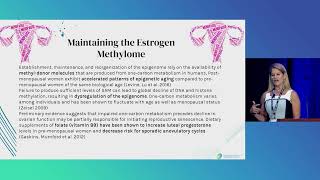

TLC 2023 The Intersection of the Immune, Nervous & Endocrine Systems w/ Metabolism | Bridget Briggs
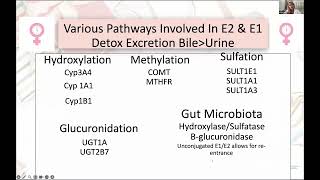
Optimizing Menopause: Understanding the Role of HRT & Natural Remedies for Health Optimization


The Secret to a Clinician's Success Begins with a Healthy Gut: Bridget Briggs, MD