Clinical Importance in the Management of the Methylomb | Bridget Briggs, MD
In this extensive presentation Dr. Bridget Briggs (MD) explores the concept of the "estrogen methylome"—the network of DNA methylation, microbiome activity, and hormonal metabolism that influences women’s health across the lifespan. She critiques the vague term "methylome," then pivots to the estrogen‑specific methylome, describing how epigenetic clocks, senescence markers, and microbiome‑derived clocks reveal accelerated aging, especially around menopause. The talk weaves together evidence that DNA methylation patterns (CpG sites) predict atherosclerosis, cardiovascular risk, and pain outcomes, and that environmental disruptors (BPA, endocrine‑disrupting chemicals) and chronic stress can cause hypomethylation. Dr. Briggs outlines the bidirectional relationship between estrogen, progesterone, and the gut microbiota, emphasizing the role of sulfation, glucuronidation, and sulfatase‑producing bacteria in estrogen recycling (the estrobolome). She details how genetic polymorphisms (MTHFR, COMT, SULT, CBS, MAO‑A/B, etc.) shape individual pathways for methylation, sulfation, and trans‑sulfuration, influencing susceptibility to PCOS, infertility, early menopause, and hormone‑related cancers. Practical clinical tools are presented: targeted labs (estrone‑sulfate, total estrogen panels, homocysteine, SAM/SAH ratio, short‑chain fatty acids, stool beta‑glucuronidase, Genesys stool, NutraEval), and interventions such as methyl donors (methylfolate, methyl B12, SAMe, methionine), sulfur‑modulating minerals (molybdenum, manganese), microbiome‑focused therapies (probiotics, calcium D‑glucarate, Xifaxan), and hormone strategies (bioidentical estrogen, progesterone, testosterone) tailored to the patient’s genetic and metabolic profile. Throughout, Dr. Briggs stresses precision medicine—using genotype and metabolomic data to avoid blanket supplementation, to balance methylation versus sulfation, and to prevent adverse effects like estrogen toxicity or over‑sulfuration. The talk concludes with anecdotal success stories illustrating how targeted methylation support can improve fertility, reduce pain, and stabilize chronic disease, while acknowledging the limits of current evidence.
Chapters
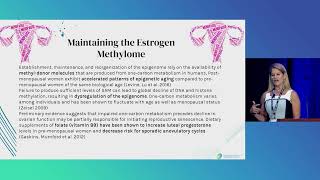
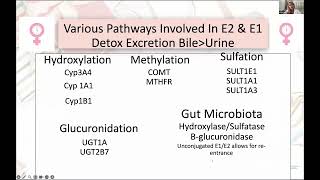
Thank you, Dr. Bland. Thank you, Dr. Lee. That was so interesting, having a child with cancer. I'm gonna really go home and really digest that. That was awesome. Okay, so you know I speak really fast. I apologize ahead of time. These are like really robust subjects. So Dr. Bland asked me to speak about, you know, managing the clinical methylome, and I looked up the definition of methylome and it doesn't exist. So I'm a bit of a rebel, and I wanted to kind of actually do a little bit of a swap of the topic and actually bring out more information regarding the estrogen methylome. So we've heard all kinds of fun things today about clocks. We've heard Dr. Li talk about how he actually uses it in the clinic, which I think is brilliant. I always think about my DNA methylation. Clocks about kind of really looking at the primary, secondary, and tertiary structural of the DNA stability. We've not only seen clocks being used to predict aging but also how to improve anti-aging. These are great little biomarkers. For example, in looking at our atherosclerotic patients, we can look at CpG-specific methylation patterns and kind of analyze, you know, somebody that doesn't have high cholesterol, we can actually see that they they have some of these interesting biomarkers that can explain acceleration of aging. And then there are newer entities coming out according to Dr. Lopez and Uthine looking not only at the clocks but looking at things like senescence, like we just heard about, immunosenescence and genomic instability and mitochondrial dysfunction. And so one of the things that I loved when I was looking at these clocks is how come nobody put menopause on there? I was a little bit perturbed because I feel like this is a big acceleration for women. And you know, there's all these great ways ways to decelerate your epigenetic aging, and there's ways that we see are connected to acceleration. But I think in women's health, we can definitively see that there's this acceleration of epigenetic aging at the time of menopause. And I love that there's all kinds of information presenting in terms of the utilization of pharmaceutical agents like metformin and helping to delay epigenetic aging, and resveratrol and sirtuins. We looked at polyphenols today. But today I want to focus on the microbiome connection to estrogen and the bidirectional relationship once again, and how methyl groups are going to be a core part of supporting good DNA methylation. And estrogen's changes and fluctuations alter your, your methylome. So emerging evidence suggests that the gut microbiome changes along with our age, and this is going to play a role in our biology age of our gut as well. And so now we have these new microbiome clocks, which I thought were really interesting, whether we're looking at biodiversity clocks, taxonomic clocks, functional clocks, but the microbiome is being an implemented element here. And so long before we reach the age of menopause, guys, whether we're looking at our cute little towhead kids and asking where my little, you know, teenager, my 18-year-old doesn't have blonde hair anymore, that's methylation. Right? And when you look at your cute husbands and, you know, you married them with a big head of hair and then you look around and like, where does hair go? And it's not the same color. Guys, these are just— we're all experiencing alterations in our methylome on a day-to-day basis. We heard a little bit of the castration studies today, that if you castrate a male sheep, guess what? You change their epigenetic aging and they age along with us women. So across mammalian species, women or females outlive men. So there's power in estrogen. And we're all aware of food sensitivities, but what's really interesting is there's an emergence as the epigenome is being constantly challenged by things that create an imbalance in methylation, like BPA. We're not just seeing food allergies in kids, but guys, we're seeing brand new food sensitivities presenting in our seniors, our geriatrics. And we've seen data on chronic stress and how that alters the methylation and your neurochemistry. This is the first time when I read this study, I'm like, "Wow, there really is a reason to treat people with chronic stress," because SSRIs actually— this antidepressant effect, like Dr. Bland led to— some of this is they're working on immunoinflammatory pathways that are actually protecting your methylome. We've heard lots about endocrine-disrupting chemicals. And the different windows of vulnerability from pediatrics to women in their perimenopausal phases. You're gonna learn how disrupting these chemicals are and how they compete for methylation and sulfation. And they alter some of our blood work. So we're gonna look at that today. And interesting caveats like the utilization of resveratrol as an antidepressant. How could that be? Because it's actually modulating inflammatory pathways in the microbiome and having the same efficacy as an antidepressant. So we're seeing inflammation is a core connection to the methylome, inflammation, cognitive pathway changes, and connections to estrogen. Now for women, we're born with a finite number of eggs, and those oocytes enter into prophase I, and it's arrested in meiosis. And then you go through puberty, and your ovaries and your eggs begin to wake up, right, until we go through ovarian senescence. And we're finding that infertility is a huge problem. 1 in 4 women have not achieved pregnancy in a year, and that is the definition of infertility. And the incidence of IVF used to be 11%, it's up to 34%. Couples as a whole are dealing with the impact of the alteration of the methylome and its inability to maintain good, healthy fertility. We're seeing earlier senescent. I'm seeing women in the clinic that are fully menopausal at age 42, age 43. When you see somebody that's in their late 50s and they're still ovulating, I am so impressed. This is the difference between our epigenetic estrogen methylome. OK. Here's new data on predicting who has atherosclerosis. I can look at methylation patterns, CpG methylation patterns. And without even looking at your cholesterol, we can predict who is going to have atherosclerosis. This is a huge study coming out of Scripps clinic in San Diego where they literally download your DNA from your 23andMe data and they give you your, your risk factors for where your cardiovascular risk can be found. Not only at your genetic SNPs, but also what's happening at the methylome. We definitely heard all kinds of things about cancer and the methylome. Interesting data on pain control. When you support methylation, we actually see better control of pain. BPA is a known environmental hypomethylator. The BPA studies right now are so connected to what's going on in pediatrics. I just would love to see the data on how these become disruptors in perimenopausal, menopausal women, and in the brain cognitive function of our seniors. Post-COVID, we saw this ginormous presentation of psychiatric illnesses, right? We had 9 pediatric suicide attempts in 1 day at Riverside County Hospital. And this is where chronic stress alters your methylome, can lead to a chronic state of hypomethylation, and create long-standing psychiatric imbalances or trigger. And of interest is those people that carry some of these genetic SNPs that we're going to look at today. There are people that are genetically vulnerable, especially those that carry genetic SNPs that revolve around dopamine, things that revolve around MTHFR, that single-carbon pathway, because they're so connected to neurotransmitter synthesis. So today I wanted to really focus on how to help our patients maintain their very best estrogen methylation. And the establishment and the maintenance and the reorganization of the epigenome relies, first of all, on the bioavailability of your methyl groups, right? Also the ability of the microbiota to produce single-carbon methyl groups for methylation. And that if there is a dysregulation of the epigenome, this is associated with aging. And here's a study that looked at if you just implement methylfolate, you can actually increase the luteal phase production of progesterone and increase— or prevent, excuse me, anovulatory cycles, which is a huge component in the years prior to menopause, anovulatory cycles. Remember, progesterone is a protective hormone. It's a maturation hormone. It's an anti-cancer hormone. Estrogen is a proliferative hormone. So we spent a lot of time today talking about estrogen, but progesterone has its own very special important niche. So what's interesting is if we look here that epigenetic data shows us that long before a woman loses her period, she actually steps into the state of hypomethylation. And the brain is actually experiencing the first signs of hypomethylation. So if we look at the hypothalamus of a woman, we begin to look at altered CpG islands that are related to basically cognitive function and also the hypothalamus communicating to the pituitary and then how it interacts at stimulating the ovaries. So women begin to have anovulatory cycles. First. This menopause has been shown to accelerate your epigenetic aging, and you can see women who have gone through menopause much earlier, like at age 42, they have a much older epigenetic age. There's some data that methionine can help to effectively reverse this process. Now, Dr. Bland blew my bubble yesterday at dinner because I was all excited about thinking I've been taking SAMe for 17 years, and he's like, oh, Bridget Briggs, so sorry, I I don't even know if I can say it right, but he said that rats have a very different sulfur pathway metabolism, so we may not be able to extrapolate the data on methionine in terms of our epigenetic aging. But for now, can we just pretend that there's probably some benefit to our epigenetic aging by taking methyl groups? And of course, SAMe is noted to be the master methylator of the human body. Here's a really interesting study that these authors thought, well, maybe the metabolism of your one-carbon groups could alter or have an impact on how quickly a woman or a rat goes through ovarian senescence. So in these particular studies, there was data previously that methionine can help to, you know, give you longer fertility. And so they found in these studies that— let me go back one more time— that these rats, if they were giving them methionine at At 10 months, 86% of the rats that were still taking methionine were still ovulating with regular ovarian cycles as compared to only 25% or 26% of the rats not taking methionine were still ovulating at 10 months. So I mean, it's probably like equivalent to when their ovarian failure would be. So there is some evidence, at least in the rodent model, that methylation can help at least extend the number of years of having a cycle. Neuroendocrine aging precedes ovarian failure. So we've talked about, again, the hypothalamus and global methylation, and then begins the pathway towards the menopausal transition. Earlier today we talked a little bit about these methyl groups and how important they are as donors for estrogen metabolism and detoxification. But what's very interesting is cholinergic signals, right? Choline is the big the backbone of acetylcholine, right? And so women have a drastic reduction of choline synthesis because of altered methylation. So phosphatidylethanolamine methyltransferase is the enzyme that is responsible in some part for the de novo synthesis of choline. And PEMT is an enzyme that once again binds estrogen, and estrogen— in the presence of estrogen signals a de novo synthesis of choline. So studies show that menopausal women are very at risk for not being able to synthesize sufficient choline, which choline, again, is the backbone not only for your acetylcholine, but again, a lot of the transmembrane, right? The lipid membranes of your myelin sheath and your neurofunction and what have you. So there are foods that have lots of choline in it. Here's a study looking at the dietary intervention modifying using B12 and B9 altering the methylome or epigenetic clocks. And they looked at specific people that carried the MTHFR polymorphism. Polymorphism, but again, they could extend, elongate their methylation clocks or epigenetic clocks by implementing single-carbon donators like your B9 and your B12. So we wanna look at who is genetically at risk, right? Who are these people that carry genetic SNPs in methylation? And looking at trying to do an intervention to support their methylation or to know what labs to do to give us the clue that they may be an at-risk patient population. So when you look at individuals who have fatty liver disease, which we already said earlier today, there's a 3-time increase in the development of fatty liver disease at the time of menopause. If you look at serum glutathione and some of these other methyl donors, you're gonna see that oftentimes fatty liver disease is associated with low choline and low glutathione. And what's interesting is the breakdown of choline. If you were to give people choline, and we're talking a lot about these new specialty diets that everybody's promoting, like high animal protein diets, that if you give choline, choline can break down into TMAO, right, which is the concern about taking like high-dose L-carnitine and choline, that elevated TMAO has been linked to accelerated atherosclerosis. And this is the importance of when you're giving ingredients like choline that you couple that with a high plant-based diet because again, high plant-based consumers cannot produce TMAO, right? And there are labs that will measure this for you. So here's an article looking at one carbon metabolites like literally affecting your telomere length. Here's an article on oral contraceptives are significant inhibitors of good healthy methylation. Here's an article on hyperhomocysteinemia, right? This is linked to all kinds of degenerative diseases. And it should be measured not just in coronary patients, guys, but really these authors said that this number should actually be measured in the blood by all peri- and postmenopausal women because we should according to this data, have a dysfunctional regulation of homocysteine potentially. This is a challenging blood test because many of you that see patients like I do, homocysteine is not considered to be a covered test. And a lot of people, especially your Medicare patients, might be upset that you're measuring their homocysteine. So it's important that we have the ability to communicate with them what this biomarker can tell you. It can be a sign of hypomethylation. Here's an article looking at why does menopause associate with hypertension. The presence of estrogen helps to prevent or to activate scavenging of your reactive oxygen species, right? So estrogen replacement actually improves that. And estrogen deficiency, you get a higher ROS imbalance. And the intake of folic acid and B6 can help actually to reduce this. And here's a study that you can see the linear decrease in stroke risk as was found by implicating the diagnosis and giving them B9 and B6. Ironically, B12 did not show any benefit in reducing stroke risk and hypertension. So what are the effects of menopausal hormone therapy on a woman's estrogen methylome? So we see here, this is dependent on the time that you give estrogen. So if you get— we talked about this at the first talk and some of the— communication during the break is, what do we do with a woman who's in the first 10 years of menopause as compared to the woman that's outside of the first 10 years of menopause? It's not what is their stated age, it's when did she go through menopause. Because in these studies, what they're finding out is sometimes the replacement of estrogen supports methylation, and in some CpG islands, it under-methylates. Like, it seems to know the balance of the anti-aging phenomenon, what should be methylated and what shouldn't. But when you look at postmenopausal women that are past 10 years, you see a different pattern. You don't see the same pattern that you see in the women in the first 10 years of menopause. So that's not to say that they're not candidates, but there was a lot of questions during break. So what would you do with a, you know, 65-year-old who's been in menopause for a season? Would you still give her estrogen support? We have to look at the global picture. We have to look at calcium scores. We have to look at markers like oxidized LDL because we want to make sure that estrogen is creating the best estrogen methylone, right? Not something that may be hypermethylating like a tumor suppressor gene or something. So here's articles on methylation nutrients in menopause. So postmenopausal women are again much more likely to develop symptoms of choline deficiency. So more data. Methylation genes, nutrition, and colorectal cancer, they are linked. So if we look at several genetic polymorphisms in the folic acid pathway, many of these dysfunctional SNPs, that alter methylation have been linked to colorectal cancer, and implementation of good healthy methylation support can help diminish colorectal cancer incidence. So what is the impact of the methyl estrobolome on estrogen methylation? And who is at risk for poor estrogen methylation? So I want you to think of all the, you know, primary care patients that you see that, you know, I've been in primary care for 22 years and as an OB-GYN If I saw a PCOS patient, it was rare. If we even saw infertility, it was not common. Today, I have PCOS coming into my clinic every single day, and they're not the same phenotype. They're not necessarily people that are very, very round with central obesity. We're seeing all kinds of different types of PCOS, right? I think we saw some data coming out of China, same thing, very different type of phenotype. You know, you're not seeing the high androgens necessarily and the central obesity. We're seeing different forms of PCOS than we've ever seen before, and a lot of that has to do with the alteration of the estriolone, the way that bacteria— and we've learned a lot today about different forms of microbiome and how they detoxify estrogen, whether some of them are dominant in glucuronidation or glucuronidase clipping or sulfatase. So we're going to get into the sulfur detoxification pathways, which are deeply embedded in appropriate methylation. So whether I'm looking at, you know, physical exams like women with geographical tongue and they have cherry hemangiomas, I understand that they have a problem with methylation. If I'm looking at my sulfur-dominant hormone patients, individuals with really high DHAS or estrone sulfate, they have a burden of sulfur. So looking at who's at risk or what interventions have been done to these women, like breast implant sickness patients, people that have been on weight loss drugs, how weight loss drugs alter your methylome, how SIBO patients, antibiotic utilization patients, these are the people that I want you to wonder what is going on with their estrogen metabolites and learn to draw the right estrogen blood panel and androgen panels and androstenedione panels so that you can assess who is at risk for an inappropriate epigenetic aging from estrogen imbalance. So there are various pathways that are involved in estrogen detoxification. Whether I'm looking at my CYPs like CYP3A4, 1A1, 1B1, there's like your front door of estrogen detoxification that are heavily involved in hydroxylation, right? It's really backdoor detoxification whether I'm looking at methylation, sulfation, glucuronidation. Our bodies have the ability to tap into different doors depending on genetic SNPs. And also, if I have a genetic SNP in one door that's slow, can you understand that I'm going to upregulate another door as it a dependent door for estrogen detoxification. So we're gonna look at genetic SNPs that have to do with inappropriate sulfation or hypersulfation, glucuronidation, methylation, and then we've focused a lot of our talk earlier today in the gut microbiota, right? Their ability to do glucuronidase clipping, right, and enterohepatic recirculation, and then we're gonna look at sulfatase as well. So this is the infamous nutritional influence on estrogen metabolism. Here's your genetic SNPs. They're all testable very easily. I love 23andMe. I have Myriad Genomics. We use various companies to run our genetic SNPs. I genetically SNP test everybody. We're looking for people's genetic susceptibilities, and then we're measuring their blood markers to see who really truly needs help in, in nutritional support or nutrient support. So we don't treat everybody based on genetic SNPs. We're looking at metabolomics in the blood to find out who needs support. And then we embed in that this beautiful graph that take home and chew on it. I have it laminated in every single exam room. So when I'm pulling out my blood panels and I'm circling down here, where are my sulfated hormones? DHEA sulfate, estrone sulfate being heavily metabolized through my salt doors. So I can see who's under-sulfated and who's over-sulfated. I'm going to look at genetic SNPs, for example, in MTHFR right here. So I'm going to say, oh, do they have high homocysteine? Do they have a deficiency of methionine? I'm going to look at biomarkers. Do they produce SAMe? What's their SAM/SAW ratio, right? So I'm measuring this entire graph. Genova is wonderful. Their NutriEval almost does this entire graph to its entirety. It's very expensive. I've learned to be a primary care doctor tapping into Quest and being able to figure this out. Through standard labs that are covered by insurance, which is challenging because I have 15 minutes per patient. Like, I'm moving and shaking, so I do not have this depth of conversation with the patient. Now, deeply embedded in that graph is our ability to help our women express their very best estrogen methylone. And so as we're learning to measure this very important blood marker, estrone sulfate— if you talk to breast cancer surgeons, that are telling everybody hormones are so bad and they cause cancer. I'm like, well, do you ever measure in your breast cancer patients estrogen levels like estrone sulfate? They're like, I've never heard of that. And I'm telling you, this is a very important biomarker because we can measure stool beta-glucuronidase, right? But we cannot measure sulfatase. It's really hard for us to figure out what's going on with sulfatase activity and sulfur imbalance in the GI tract. So we've seen lots of data on the beta-glucuronidase and the clipping of these bonds that are not ovarian, right? These are non-ovarian estrone that go down the GI tract. They're conjugated to glucuronidation. And then they get clipped, and the glucuronidation takes off, and the estrogen reenters into the bloodstream. And these are estrogen disruptors, guys. And so sometimes when you draw the blood and you see SHBG is like 200, but you measure estradiol, and you're like, how is that possible? How does she have this super high sex hormone binding globulin? Something's got to be in there, right? So some of these are the estrogen metabolites that you and I can't see with just running an estradiol. So when I draw hormone labs, I run estrone sulfate, estrone, estradiol, total estrogen. I'm looking at androstenedione, 17-hydroxyprogesterone. Like, I'm looking at the gamut. And we're gonna look at the beta-glucuronidase. I can correct that by using calcium D-glucarate. I can help correct this by using probiotics, guys. But the sulfation pathways are very unique. And Dr. Stone, I always bombard his brain and, I pick his nutritional mind because I feel like this is a pathway that's very hard for me to understand. I see the imbalance in the clinic and I see the, you know, all the things that constitute sulfur dominance, whether it's tendinitis, bursitis, plantar fasciitis. These are the patients, you give them hormone and all of a sudden the men taking testosterone shots or pellets, they're like, "Arthralgias, they're tight." This is a buildup of sulfur. And so this is to bring you into the understanding that the microbiome is very interesting because there are sulfur-producing bacteria and then so they produce sulfenic acid, right? So when you measure a SIBO breath test, you know, you can either measure methane or hydrogen ions. So some of these are byproducts of sulfenic acid. And there are sulfur-producing bacteria in the gut that produce these sulfatases, and they can clip off some of these conjugated estrone sulfates, thyroid sulfate, and these hormones reenter into your body, and they're hormone disruptors, and they create a predominance of sulfur in the body. Now I don't want to give sulfur a totally bad name because sulfur is a very important product in the human body for structure and strength and curvature, right? So we can see people that have low sulfur balance and we can see people that have too much sulfur balance, but there are specific bacteria that live in the GI tract and they're sulfur-dependent for their growth and their ability to thrive. And they take sulfur into their cell through these transportation systems, and so the stacking of Hormones sometimes begins at the time of menopause with the change in the microbiome, right, to the loss of estrogen and then this higher concentration of non-ovarian estrogens, which if they're sulfated like estrone sulfate are partially— 50% of them are actually released through the bile acids in the GI tract. And if you have dysfunctional biota, the estrogen gets clipped. It gets reentered into your body. And you get this estrogen dominant woman who's on hormone therapy. And you know you've seen it. If you're giving bioidentical hormones and these people, they get really sick on hormones. You see it in men's health, and you see it in women's health. So excess bacterial production of hydrogen sulfide has been linked to intestinal inflammation. Now, we're going to see some interesting data because without hydrogen sulfide, bad things happen too. So we need it, but we just don't want too much sulfur byproducts. So here's your SULT1E1 gene, also called phenylsulfatransferase. There are several SULT enzymes, like SULT2A1, that are often polymorphic in your individuals that have polycystic ovarian syndrome. So we can already predict who's going to have an issue. 15 minutes left. Wow. OK, we're definitely not going to get through this talk. So what does a menopausal gut look like? Well, the good news is I can look at your short-chain fatty acids. I can look at your beneficial DNA. PCR test, the problem is I can't see your sulfur imbalance. Right? If I look at women on hormone therapy, I might run a Genesys stool, which is covered by insurance. And if none of you have ever used Genesys stool, dive into it because it's actually a covered test so that I don't have to spend $900 on some of these fancy labs. And if you look at this individual, she is on hormone therapy, bias progesterone, testosterone, 1.25 of the 50/50 blend of progesterone 25 and some testosterone. 0.1 mL in the vagina, phenomenal absorptive surface. And this gal, who her estradiol is only 49, that's a really good treatment dose of estradiol. But look what's happening. She is completely stacking estrone sulfate. You see that? Oh, you can't because I'm pointing at the wrong one. Sorry about that. There's the estrone sulfate. And so you can see her total estrogen is high. Her estradiol is good. So these are these mystery patients that they've got dysbiosis of the gut. They've got a change in the sulfatase pathways going on. So estrone sulfate, great article why this test is not being utilized and we need to embrace this test. It is tightly related to prostate cancer, breast cancer. Guys, this is a marker for anybody that you're concerned has an inappropriate estrobolome, estrobolome, the metabolism, the removal of estrogen byproducts. And this is a really important graph because there is data that says BPA is sulfated and some of these metabolites like the phthalates, dioxins get a partial metabolite and they get stuck in your thyroid. So this is the connection to sulfate. Thyroid gets sulfated, xenobiotics get sulfated. So some of this imbalance may be the environment, guys, right? What do we see about PCOS girls? They have 8 times higher BPA in their blood, right? So they have imbalances in sulfur, you know, metabolites in their body. They may be genetically susceptible because SULT2A1 gene polymorphisms. They may not be able to methylate, so they may overburden the sulfur door. Does that make sense? It doesn't mean— we don't all get the same syndrome for the same reason. We all have genetic SNPs that may predispose us to metabolize down one pathway or another, but we also have the environment that is highly stressing our global ability to appropriately sulfate. So have you ever taken a thyroid patient, you put them on Armour Thyroid, and about 3 to 4 months into it they're like, "Oh my gosh, I am so tight. My muscles are tight. I am a rock." This is the stacking of sulfur. And you will see as we jump into the CBSers, the cysteine beta synthase polymorphic individuals, that's what they start to sound like. They're tight. They have an excessive buildup of sulfur. Sulfur makes things curl. It gives you tendinopathy. It gives you plantar fasciitis. It gives you the tennis elbow. It makes your muscles tight. An overgrowth of sulfur makes everything spin in tight. It's your scoliosis, right? It's your curly hair that you get in menopause. Have you ever seen women with straight hair, all of a sudden they go through puberty, Where they go through menopause and they start getting sulfur hair? So when you clean out that door and your patient's mad at you that you made them have straight hair, it's because you did a good job. You just have to warn them, I might change your hair. And so as we're looking at, again, the connection to the birth control pills and how you're starting to imitate these imbalances that you see in menopause, I want you to pay attention to specific genotypes that we already know. COMTs have impaired methylation, right? They're not going to have a good— estrobolone. They're not gonna have a good estrogen methylone. They don't detoxify catecholamines well and they don't methylate phase 2 detoxification of estrogen. So what do they do? They burden the sulfur door. And so this is what you have. This comp Val 158, she has an excessive burden going down the transsulfuration pathway. And you can see she's not on any hormones. Her estradiol is 19, but look at her estrone. It's 432, and her estrone sulfate, it was high. It's on the bottom down there. I can't read it, I'm sorry. And this is prior to hormones. And if you don't give a comped hormone, she does not get better. These are your fibromyalgia, your chronic fatigue. These are the wheels fell off the cart. They are very difficult to treat patients. They go through menopause horribly. So you have to sprinkle estrogen in, and then you have to support detoxification. So here's her— she now has an estradiol of 44. That's not much. And look what happened to her estrone sulfate— 4,496. I literally made her estrogen toxic. And so we have to know how to reregulate. I have to give some estradiol, but I have to clean out the sulfur door. And so one of the most powerful ways to clean out the sulfur door, first of all, is fix the microbiome, give the right probiotics, and Give the right phytoestrogens and use molybdenum. Molybdenum modulates the sodium sulfate door on the kidneys and the intestines, and it helps to eliminate the stacking of sulfur. So if you draw estrone sulfate, 4,500, in one month you'll cut it in half. And if you look at total estrogens and you, you use methylation support and sulfation support, and you can drop those numbers by 50%. So when you give hormones, if you don't get the appropriate metabolites, you're gonna miss who's getting estrogen toxic because they have an altered either microbiome or because they have an altered liver phase 1 or phase 2. So here's all kinds of research documenting that we need to pay attention to glucuronidase and sulfatase. You can't just do glucuronidase. Like, we were kind of raised in functional medicine, look at glucuronidase. No one ever talked about sulfatase. I have to keep jumping, where's Dr. Stone? Dr. Stone, I have another sulfur question. I think he's so smart. Sick of me asking sulfur questions. Okay. Because I see the imbalance. And there's a bidirectional relationship between our estrogen and progesterone because I think estrogen gets all the attention. But guys, progesterone is metabolized through sulfation. Progesterone is very balancing of the microbiome. It's very balancing of the methylome, if you want to call it. And so this is where so many patients who are not candidates for estrogen, they are still really good candidates for bioidentical progesterone, right? It's very balancing of these even environmental estrogens that have the potential to bind to the estrogen alpha receptor, the beta receptor, and cause proliferation. Progesterone is a maturation hormone. It's very protective, and it has beautiful impact in neurocognition. It's GABAminergic. It's calming. It helps you to sleep. It benefits your cortisol pathway, right? So it helps to pull you out of that like excessive adrenal fatigue. So sulfatases have not been completely evaluated. There's not great data on this, guys. I can't pretend to be the expert here, but they're involved in xenobiotic burdens and detoxification. Sorry, I'm coughing. So these sulfatase pathways, what's really interesting is if you look at the data on hydrogen sulfide, it's actually kind of a good guy. It's like a gas. It's like nitric oxide. It's everything about vasodilation, and people with really high homocysteine and really low hydrogen sulfide, that's a problem. Like, the functionality of hydrogen sulfide in its good form is pelvic blood flow, uterine artery blood flow. It has beautiful impact in lowering blood pressure. So if we jump into our CBS doors, right? So whether you're an individual who has a cysteine beta synthase genetic polymorphism, like you're, you're C6, your C9 TTs, these are the individuals that have a very strong European gene tendency. This CBS door is 40 times faster than everybody else. So when you measure cysteine and cysteine and taurine, they're high, right? On your NutraEval, taurine is super high. Cysteine is super high. These are sulfur amino acids, guys. So they have lots of musculoskeletal problems, lots lots of tendon problems, and gut, which is why you start to see some of the anxiety, the GERD, the phase 2 detoxification, poor digestion, because the gut is all about pH balance. The gut does not want to have high hydrogen ions, right? The stomach is acidic, but the small bowels are not acidic, right? They're more alkaline. So they get all kinds of digestion problems. And so in the little purple graph, you start to see like there's some manganese and there's some molybdenum. Molybdenum activates your suwax enzyme, and it's written like a triangle for detox, like dumping, and looking at your biomarkers like estrone sulfate and DHA sulfate and knowing that if you draw repeat blood, did it normalize by cleaning out that gear? And that's the beauty of your minerals like molybdenum. The beauty of manganese is sulfur-producing bacteria also release ammonia. Have you ever wondered what the functionality of Xifaxan is? Do you know Xifaxan is not an antibiotic that kills good bacteria? It inhibits protein synthesis. So it's a really, really safe antibiotic for SIBO. And it's very, very therapeutic, isn't it? And if you ask them, "What's the mechanism of action?" They don't know. All they know is it inhibits protein synthesis, which means it drops ammonia. And we're gonna look at the Biotrin gear. For every molecule of ammonia that is produced and released by protein-synthesizing bacteria— ammonia is what gives you your brain fog, right? Postprandial brain fog. Biotin is depleted by ammonia, but manganese will rescue. So manganese helps to process the ammonia byproduct. And there's an interplay between these methyl donors, right? Whether it's methylfolate, methyl B12, whether it's choline, trimethylglycine, these donors are important in estrogen detoxification, right? We need methyl groups for phase 2 to estrogen detox. But when you give them, as we've looked at many of these pathways, there are other metabolic doors that you're turning on. We're like spinning gears in a clock, right? So if I add methyl groups, this methionine gear is going to be spinning. And the interesting thing about the methionine gear is it's a sensor gear. It knows when the need of the body is transsulfuration, SAMe will come down and bind CBS and activate your transsulfuration pathway so you can produce your sulfur groups for hormone detoxification. And when the need for the body is methylation, SAMe will actually bind to the MTHFR pathway and turn off the CBS pathway to activate methylation. So methionine is a toggling gear that has the ability to inherently know what to support. So if we see this excessive buildup of sulfur metabolites in the body, we see that drugs that are used to treat things like ulcerative colitis, they actually inhibit sulfide production. So we can definitively understand that curatively, if we balance sulfur in the intestine, we're gonna get a lot of colonic inflammation that's gonna subside. Here's an article on sulfatase-promoting bacteria can break down mucin. So we've heard a lot about our mucin barriers today. So what's really interesting is sulfatase-producing bacteria clicks— clips sulfur off. So you have these like glucose or sugar moieties in the intestine that are there creating this biofilm, this biomatrix membrane so that you can't get bacterial translocation, right? But if you have an overproduction of sulfatase-producing bacteria, they keep clipping these sulfur bonds off the sugars, and then you start to get translocation and lipopolysaccharide and endotoxemia and what have you. So hydrogen sulfide is good. It reduces hypertension. When you have a deficiency of hydrogen sulfide, you have more hypertension. When we look at homocysteine, people that have high, high homocysteine, they have low hydrogen sulfide. And this actually creates an imbalance in collagen and elastin, which is why— what do you see when people have impaired methylation? Cherry hemangiomas, spider veins, right? You see alterations in the aortic arch, right? So high homocysteine means they're not making enough hydrogen sulfide. So when you actually give them B6, you support their production of hydrogen sulfide. And hydrogen sulfide, as we've learned, it's like a U-shaped curve. We don't want too much sulfur, we don't want too little. So if you look at homocysteine is metabolized into hydrogen sulfide, and this requires methyl donors. So if there's a delay and you add SAMe or methionine or B6, what you see is you improve the production of hydrogen sulfide. So again, these various pathways that are involved in estrogen detox. Some of it is hydroxylation, phase 1. Some of it's gonna be methylation, like your big enzyme COMT. And some of it is gonna be through sulfation. And some people polymorphically may be slow at COMT, and they may upregulate sulfur. And so using your blood test to be able to appropriately check, whether it's a stool study for your glucuronidation balance, or whether it's a blood test for estrogen sulfate, there are genetically at-risk individuals that to know their genotypes helps you know how to survey them, right, how to watch their blood test. And to print these graphs out and to keep them in the clinic can help you circle amino acids, taurine, cysteine, methionine. And this can help us with expressing our patients' best DNA, helping them to understand their genetic polymorphisms and how it can relay why their hormones are out of balance, right? So our You know, traditional Western-based medicine, we are not necessarily taught genotype testing. We're taught protocol-driven. You have heartburn? It's not hydrogen sulfide. It's you have too much hydrochloric acid. Your pump is sick. Let's give you a proton pump inhibitor. Wrong. If you're an overproducer of hydrogen sulfide, you may need to be on a sulfur— a low-sulfur diet. You may do better with an antihistamine like a Pepcid AC rather than a proton pump inhibitor. Do you understand? We may be able to remove some of that excess sulfur in the body by giving molybdenum, 300 milligrams twice a day. You can cut sulfur imbalance, bloating, gas, indigestion, 2 weeks. They're like, "Why does my gut feel so much better?" Because you're helping to balance the sulfur in the right places, right? You're dumping excessive buildup with molybdenum. So methylation is key, right? Because methylation is connected to your transsulfuration pathway, and because methylation is related to not only every one of these metabolic pathways, but detoxification in orange is what we're talking about with estrogen balance. And if our girls have errors in methylation, they're gonna have all kinds of problems in multiple pathways of the body, which is why when we look at a postmenopausal woman, we've talked about diabetes, we've talked about heart disease, we talked about hypertension. And if you're going to go in there and replace hormone therapy or you're gonna use phytoestrogens to try to help them to feel better, We have to be able to do the right blood test to make sure you didn't make them sick or that did you support their gut, right? And many of these patients are walking in and they're on several medications that are demethylators. And you need to know what medicines are harmful. Fenofibrates for hypertriglyceridemia, guys, they raise your homocysteine by 44%. So if you're doing a good blood test, you're watching your cardiac markers, you're watching your oxidized LDL, you're watching your Lp-PLA2, You're gonna be able to see that your patients that are walking in, you're trying to do hormone detoxification, look at those markers like global methylation markers by Dr. Zeta. These blood tests can give you the clue not just to how to help her get through menopause well, but how not to develop cardiovascular disease, how not to get diabetes, right? These are your genetic SNPs. They show up on almost every main genetic study. Know your minerals like manganese, know your minerals like molybdenum. They're easy. They're over-the-counter. Like, they don't need a special prescription to take minerals that are alkalinizers and help them clean out the sulfur door. COMPs, please be careful of COMPs. I can spot a COMP within 5 minutes in my clinic. Some of you bright people out here, you're already COMPs, right? They're high in their catecholamines. They're bright brains. They have— they're wired, they're tired, they're a worrier, they're a warrior. This is your really special genotype that does not detoxify estrogen well. They are methyl sensitive, guys. You can't throw all these methyl groups on them. They're methyl sensitive, right? They don't break down the catecholamines if you over-methylate them. But these are the people that flunk these studies, guys. They have really bad SAMe. You understand? Like when you measure their SAMe, can you see this poor comp girl? She has such low SAMe. Do you see that? Sam E. is down here, and look at her saw. She is exhausted. She cannot detoxify her postmenopausal hormones. You need to be able to implement tiny bits of Sam E. Not every day because they stack it, but sometimes the tiniest methyl group is a game changer for her. She's like, "I feel like somebody gave me amphetamines. I feel so much better." And then guess what? She can detoxify her estrogen because in the other graph she had really bad estrogen. But they're methyl sensitive, so I can't keep giving them methyl donors, which is why you and I recognize today there are other ingredients out there like choline, right? That is not a methyl donor. It is a methyl donor, but it's not a methylfolate and a methyl B12. It's not an energy-giving one. So special methyl donors are important. Knowing the utilization of B12, you're not always going to give methyl B12. You can use hydroxy B12, you can use adenal B12, Knowing your genotype tells us who to proceed cautiously with. MAOA and MAO-B are on the X chromosome. MAOA is your serotonin reuptake— your serotonin digester, right? It breaks down serotonin. MAOA binds to estrogen. MAOA, if it's fast, it eats up all your serotonin. So you're depressed. These are the non-drug, you know, you give them SSRIs, they don't respond. These are the girls that get really sick in menopause and in low estrogen states, right? So the presence of estrogen preserves your serotonin. Low estrogen means you don't have serotonin. These are the people that are the genetically unique SNPs. MAO-B, again, X chromosome. Women, if you're in this room and you're an MAO-B, every one of your boys have OCD just like you. Type A, highly motivated. Organizer, can't regulate your stress, can't break down adrenaline, Type A personality. These are the girls that do terrible in menopause unless you give them some estrogen. Why? Because you're gonna support their serotonin. Does that make sense? And because serotonin fluctuates along with our estrogen. So estrogen directly impacts your MAO activity, both your MAOA and your MAOB. So know who's genetically at risk. Look at your genotypes. Testosterone and progesterone equally beneficial at supporting inhibition of MAOA activity, balancing your serotonin. So these are our metabolic gears. They all are relevant. You cannot introduce a methyl group without potentially spinning other gears, and that could be a good thing and that could be a bad thing. You can't treat estrogen without addressing both methylation and sulfation. It's impossible, 'cause if you put it in, you've got to make sure that they can detoxify it. Make sense? And even in your nutrigenomic approach, you got to be able to do the right labs and the right genetics before you start slamming people with a magical formula that works for all girls, because it doesn't. We're all genetically unique. We come with our little grouping of polymorphisms and the environment that we're living in and the diet that we're consuming. And so this is just another testing tool. It's not— genetics isn't necessarily the answer. It's a testing tool that empowers you as a provider to practice precision point medicine. And who needs genomic testing? Well, in my clinic, you've usually been to 11 doctors before you show up, so pretty much everybody gets it. But I'm really good at this now. I can pretty much predict. She's an MAO-B. He's a COMT. I can almost predict. I can begin to save money and not do an excessive amount of testing because you get really good at this the longer you do it. So compromised gears, I would say, are more the phenotype today. Look beyond MTHFR, guys. It's not just about methylfolate. Like, in my early years, I thought that was the end-all be-all, and I made a lot of people sick. I really did. Right, Nikki? Ha! I'm like, it's the answer for everybody. There are so many core SNPs that are relevant. We looked at all kinds of data today. Research is looking at the integration of our SNPs and how they create a very specific phenotype, and we can find phenotypes that match. My PCOS girls kind of match. My comp girls, they kind of match. Do you see what I'm saying? My MAO-B guys, I'm married to one, like type A. I married Superman, but man, that guy cannot break down adrenaline. He's flushed, high adrenaline. He's a CBSer, he's super gutty. Like, I do begin to hear your stories and I can almost always predict what your genotype is. At the last A4M talk that we did, it was on pediatrics, the very first pediatric A4M talk. It was so exciting and everybody brought their kids up to me. "Here's my kid's genotype." I said, "Don't show it to me. Do they have ABCD?" They're like, "Yeah, you just explained my kid." Genetics is powerful. It's really powerful. Like, it's really hard to escape your genotype. We all try to integrate our genotype into the lifestyle that we're living in. We try to— I married my husband, and I was like a big broccoli girl, 'cause I have no sulfur in my body. And he's like, "Bleh, bleh, bleh." I'm like, "You better eat this. You're gonna die. Like, these are anti-cancer." Then I ran his genotype. I'm like, Oh babe, like you can't eat those foods like I do. And he's like, "I was telling you that." Like your body's giving you the signals, you know, but we're just not always listening. But when I put him on the molybdenum and the manganese, I learned to clean out his sulfur door and now we can eat alike. Not exactly, he doesn't eat exactly what I do, but knowing your genetic polymorphisms, knowing the metabolic pathways that may be disrupted, going beyond MTHFR. And I'll end with I told you you don't have enough time for all this. Heartburn, good. Sulfur, sulfur. You guys can have fun looking through all these. But at the end of the day, happy stories always leave a good impression. So whether you're looking at a beautiful Mormon family that their whole family desire is to build family, it just took a little methylation to make a full house. Whether it was little baby Clara that keeps inspiring me, whether it's my son Nolan that keeps inspiring me, whether it's this 10-year-old little boy from a fire department, firefighter, excuse me, who, here's his penmanship, you know, prior to methyl groups, here's his penmanship on methyl group. That was 6 months later, guys. Like, methyl groups have the power to make change. I've never cured cancer on a methyl group. Nolan still has 4 brain tumors. But I can tell you, they sit there and they're in control. They're not growing. And whether it's baby Jackson Briggs that I met wine tasting one day, my husband said, "We are not talking about vitamins and nutrition, we're going on a date." Okay, fine, whatever. And first thing he did to go get us a glass of wine is he brought this cute little couple, the Clark family, and said, "You gotta meet my wife." Baby Jackson was conceived within 4 weeks of taking Metanx, methyl B12, methylfolate, okay. And this is us, this is my family. I, once again, always end my talks and start my talks by saying, "Thank you, Dr. Bland." I don't think I would have had 5 kids if I had just been the disaster mom with a kid on chemo radiation and brain surgery after brain surgery. You know, the story is nothing stopped those cancers from growing till I bumped into Dr. Bland and he said this word methylation. I was like, what is that? I never heard of it. And so he still has 4 tumors. That's the little guy in the front, and he's alive today. And he and Dr. Bland inspire me to make a difference in all of our patients. And thank you for listening.
More from Bridget

Healthcare Uncut #2 | Dr. Bridget Briggs | Doctor. Mother. Cancer. Inside the ACA Era

The Intestinal Microbiome, Menopause and Weight Gain: An Epigenetic Factor? | Bridget Briggs

TLC 2023 The Intersection of the Immune, Nervous & Endocrine Systems w/ Metabolism | Bridget Briggs
Optimizing Menopause: Understanding the Role of HRT & Natural Remedies for Health Optimization

The Secret to a Clinician's Success Begins with a Healthy Gut: Bridget Briggs, MD