The Power of Methylation with Dr. Bridget Briggs, MD
In this 90‑minute Hawthorne University webinar, Dr. Bridget Briggs, MD, explains how methylation—a key biochemical process that transfers one‑carbon groups—affects metabolic health and disease risk. She outlines how genetic variations (especially SNPs such as MTHFR, COMT, and others) can create methylation bottlenecks, leading to metabolic imbalance, inflammation, and neuro‑cognitive issues. The presentation walks through practical ways to assess methylation status, including urine, blood, and saliva panels, and interprets common result patterns. Dr. Briggs then provides evidence‑based nutritional and lifestyle strategies—targeted B‑vitamins, methyl donors, diet, stress management, and sleep—to restore optimal methylation function. She emphasizes personalized care, showing how specific SNP profiles guide supplement selection and dosage. The webinar concludes with a Q&A, gratitude from the host, and announcements about future Hawthorne webinars, surveys, and alumni interviews, encouraging participants to engage further and apply the methylation concepts to improve health outcomes.
Chapters
I want to welcome you to Hawthorne University and I surely thank you so much for joining us as we continue our holistic health and nutrition webinars for 2021. Today we're going to welcome Dr. Bridget Briggs presenting the power of methylation. Dr. Briggs says that the power of methylation to restore metabolic imbalance is just coming to the surface of our awareness. We live in a world that stresses our global methylation ballots by exposure to environmental toxins and hormone disruptors, stressors and nutritional imbalances. Gosh, it's so sad, but really true. So in this webinar we're going to explain the impact of methylation on clinical outcomes, how to test for imbalances, and how to recommend nutritional and lifestyle support to restore health. We'll certainly illustrate the significance of 10 single nucleotide polymorphisms on global methylation and how clinical patterns are affected by each single nucleotide polymorphism. So I just want to thank you so much, Dr. Briggs. This is a fantastic topic. Thank you for bringing it to us at Hawthorne.
Thank you so much for having me, Paula. I'm really excited.
I'm glad. I want to let some people know about you that haven't possibly met you yet, so I'm going to go through your bio first.
Okay.
Dr. Briggs is board certified family medicine provider who graduated from USCD School of Medicine and did her internship in obstetrics and gynecology and completed her residency in family medicine in 2001. She followed the traditional practice of Western based medicine until her son was diagnosed with brain cancer at age 4. While caring for her son, she quickly realized that Western based medicine lacked the functional and integrative medicine offered. The long road to taking care of her son with cancer enticed her to get board certified in integrative and functional medicine via the AIHM and ifm. Today she practices functional medicine in an insurance based setting specializing in personal medicine using nutrigenomics, advanced nutritional testing, bioidentical hormones, advanced lipids, weight management and healthy gut restoration. Today her son is 20 years and is a daily reminder of the power of implementing personalized medicine in the management of many diseases. It's really a powerful story, Dr. Briggs, and I'm so pleased to hear of such an outcome and the segue of you in your professional direction going more integrative and functional.
Thank you.
I want to let everybody know that we're going to be recording this. It's being recorded now and it'll be available for replay on our website in just a few days. We'll likely go 90 minutes for this presentation. We'll follow it with questions and answers. So at any time, please write your questions or your comments into the webinar question panel, and we'll certainly respond to your questions or comments after the presentation. And we often post to the webinar chat box during the webinar too, when there's something relevant to share. So keep your eyes on that. And one last thing is that there's a survey to fill out after the webinar ends. We certainly appreciate taking the time for that. Paula. I'm your host, Paula Bartholomew. I'm one of the founders of Hawthorne. I'm here with James Bernard, Nelly behind the scenes, who's engineering. So now, with all that said, it's time for Dr. Briggs again. Thank you for being with us, Dr. Briggs. And when you're ready, I'm going to turn it over to you.
Okay, Paula, thank you for the gracious introduction. It's crazy that it's been 16 years since I began this journey with my son Nolan, and now I'm this many years into private practice, which is, you know, following traditional family medicine. We haven't been ever raised in epigenetics and looking at genetic polymorphism. So this is such an empowering subject. Methylation is just one example of how nutrigenomics and genetics have really opened up our eyes to, you know, linkages between disease states and presentations and how many of these genetic backgrounds can be modified epigenetically by changing our diets, our lifestyles, using supplementation and all of that. So today I'm really excited to bring to you my version of the power of methylation through personalized medicine and epigenetics. I have no relevant relationships or commercial interests whatsoever other than I am the medical director of epigeneticsrx.com which is just really a teaching platform just for the simple subject of methylation. So today's learning objectives, I'm hoping everybody, by the end of our lecture here, 90 minutes, will be able to recognize the significance of epigenetics and how it can impact some of our patient outcomes, to be able to recognize the significance and the interplay of several core SNPs and kind of really how they come together, how they interact as a unit. So rather than treating a single genotype, but looking at a spectrum of genes and how they can create balance or imbalance in methylation, we're going to look at implementation of genetic testing in our practice, and we're going to look at treatment solutions for our patients. Okay, so first of all, let's look at genetics, this is a new element, a new tool. And in traditional western based medicine we can say, well, is this the new key to really understanding disease? So we definitely have had some limitations in traditional western based medicine, right? It's very one dimensional. Genomics can add such a new dimension of understanding medicine as we know it today. Problems, you know, implementing genomics is it's still really new. We have different companies that offer genetic testing. Sometimes there's errors in the company. So we want to review safe and effective strategies, how to not only find good testing units but then implementation of good clinical practices. Now in traditional medicine we all know it's very protocol driven, it's not personalized, it's not precise, it can be solution based, but it doesn't create a solution for all people. And the standard of care as a physician is we are instructed to use basically medications to use acute and chronically in disease management. And we're taught it's really prevention is really about using a drug early on. So if we look at statins for example, despite the fact that there really aren't solid studies under the age of 45 or over the age of 75, but we kind of enmesh everybody into this little pot and say oh, we need to use statin therapy to bring down high cholesterol because we're trying to prevent heart disease. This doesn't enable us to practice personalized medicine. Understanding genomic individuality. So you know, our patients can inherit genetic tendencies to maybe not clear LDL quickly. Our patients can inherit genetic tendencies to be hyper absorbers of fat such as in your APOE genotype. And so genomics as we know it today has really helped open up our eyes into the understanding of how nutrigenomics, lifestyle medicine, toxigenomics and epigenetic influences have a role on disease state and progression. And lastly, our patients are frustrated, right? They have their computers, they use their search engines to look at disease states. They often know a lot of information and it's not good enough just to pass a drug without explanation of how did the disease occur, what things that they can do in their lives to take control and to modify it. And then they want to know how much of it is their fault and how much of it is genetically linked. So I love the application of clinical genomics as well as metabolomics to excess balance. And really what that means is as a family medicine doctor, board certified, I can't walk around, you know, putting energy arms in the air and say I feel like this supplement is good. For you, and this one's bad for you. It really needs to be evidence based because obviously we're in a standard of medicine that were regulated by the medical board, for example, of California. So the nutrigenomic approach to treatment is at the top, the least frequently used is going to be a prescription, and at the bottom, it's, let's make an assessment, let's evaluate genetics. And most importantly is lab tests, right? So can I find antecedents and triggers, Can I find genetic tendencies? And can I find evidence early on that the patient is progressing in a direction that may lead to chronic disease? Our intervention is always food is medicine first, right? So we try to find the perfect diet or lifestyle that may control the disease progression. And we prefer supplements before prescriptions. So the goal is to help our patients express their very best DNA. And that really is the idea of epigenetic modification. So we can't change our genes, but the environment that we bathe our genes in can shape what genes are kept on or are turned off. This is where methylation becomes such an impactful part of genomics, because methylation really affects every single gene. Every single gene in the body can be brought out of balance or in balance based on its methylation status. So, so methylation is just one of many genomic studies out there. But what's unique to methylation is again, it controls the epigenome. Now, the epigenome is the idea that if I methylate the promoter region of a gene, I can turn the gene expression off. If I demethylate the promoter region, I can turn gene expression on. So methylation, simply adding a carbon and three hydrogens, has the capacity, like a light switch, to turn reactions on and off. And that's what makes methylation so important. Imbalances can affect so many different health conditions because there's a ricochet effect or a domino effect when negative reactions are turned on, right? And similarly, there's great balance that occurs when you add methyl groups to a person's body who is demethylated because it corrects genomic instability. So today we're going to look at effective tools in treating methylation imbalances. So where is methylation actually used in the human body? Well, it's critical in embryological development. And this is why all pregnant women, we give them special folic acid, much higher concentrations in pregnancy than any other time, because that embryo is going to be opening and replicating numerous cells of the body at very time specific zones. And when that cell division has reached its finite need for cell Replication, the cell division needs to be turned off. And so like we said, methylation has the power of turning genomic replication on and off. So here, embryological development, for it to be healthy, for cell division to be ordered and the development of the baby to be structured and ordered requires healthy methylation. It is also very involved in phase two detoxification in the liver. So when we look at methylation, it's critical in detoxification of hormones like estrogen. It's critical in the detoxification of catecholamines such as dopamine and adrenaline. So it has a very big role in phase two of the liver. It's also involved in the regulation of enzyme production. Okay, so we're going to look at several metabolic pathways today. We're going to bring up, you know, metabolic pathways of biopterin synthesis. We're going to look at the transulfuration pathway, we're going to look at the Krebs cycle. So, yeah, it's going to be painful. We're going to look at some biochemistry. So don't, don't get bummed. I'll walk you through it. And it's painful for all of us. The next thing is it's really important for something called genomic imprinting, right? So genomic imprinting happens the moment that a fetus is in the uterine cavity of the mummy. And then when that baby is born, based on the stress levels and the environmental issues at hand, there's genomic imprinting laying down pathways and patterns on that infant's DNA that can shape its moods, its stress responses. So genomic imprinting is also very important. And then lastly, preservation and repair of our chromosome stability, right, DNA can go under injury through UV radiation or cell death. And then we need to be able to repair our chromosomes. So literally, methylation is occurring a billion times per second in your body. It is important that we keep methylation optimized. Now, I love the University of Utah because they have a website called learngenetics.com and if you go to the little area of their site that's called epigenetics, they have these great little models that patients can play with to better understand our ability to control gene replication. So in these models of the green algae, we see that if we add methyl groups, which is, you see, here's your DNA, and you see all these little green methyl groups sprinkled all over the double stranded DNA. What it does is it will turn off gene replication or the replication for this algae protein. So there's no mRNA and there's very little green fluorescent protein lighting up. So we see protein synthesis is diminished when there's a lot of methyl groups. Now let's contrast that to the removal of a methyl group. So if we deplete the methyl groups and we see this double stranded DNA and we see down below lots of new mRNA and then we see tons of green fluorescent protein lighting up the petri dish, showing that if you demethylate this particular protein, you increase the synthesis of this protein that leads the cell to light up green. So we can ask ourselves, okay, well, can this really be done in actual life? And yes, scientists have proven we can do this. So for example, if we add same, which is actually called aldomet, to the petri dish, it turns, it adds methyl groups and it turns gene replication off. So same big thing to remember is the master methyl donor, very powerful valproic acid is a very common anti seizure medicine that is used in neurology and it's sometimes used as an antidepressant or a mood stabilizer. And it is a very, very powerful demethylator. Okay. So it's going to strip methyl groups off the DNA and it's going to lead to cell replication, protein synthesis, and you see lots of the green algae. So yes, this can be done in real life. And we have a better understanding today. This gene control has been linked to cancer. It's a little bit more complicated when we're looking at cancer, of course, because normal regulated cell growth is really what it's about. And there are times like, let's say if I have an injury, I cut myself, I'm going to need those cells to replicate new epithelial cells, new epithelial buds to grow and heal my skin. But then I need to be able to turn that off. So the addition and subtraction of methyl groups is like that light switch. Now cancer, on the other hand, is absolute uncontrolled cell growth, right? So if the protein is a tumor suppressor gene that's heavily methylated, can you understand that? I need my tumor suppressor enzymes to suppress tumors. So I wouldn't want to methylate something that is protective against cancer. I would want to methylate an oncogene. So methylation is very precise in the human body. And what scientists have shown is if you take colorectal cancer cells and you put it in a petri dish and if you add same, it turns off cell division. Similarly, if you add green tea extract to the same median, it's a demethylator and it actually activates Tumor suppressor replication and inhibits cell division of the cancer. So methylation is not so black and white. I hope we all got that. So let's look here at that imprinting. So epigenetic modification occurring while a newborn pup's DNA is being shaped by removing tags from a glucocorticoid receptor gene. So what do we see if we see a nurturing mother who nurtures her pups versus a non nurturing mom? And this would be a mouse that is licked and groomed and nursed by its mother. And then it would formulate calm babies that become calm adults. And a non nurturing mom who's ignoring her pups formulates what we call anxious adult mice. So we can see that we can change gene expression even by the way a pup is nurtured, because the more that a pup is licked, the more these methyl groups, excuse me, are removed. And then the pup will start to express this glucocorticoid receptor that enables the pup to be tame and calm. And similarly, if the pup is not licked, so that would be in this particular situation where the methyl groups are all over the DNA. The baby pup is not nurtured by its mom. We do not unravel these methyl tags and open up the genetic expression of the GR gene. And we need the expression of the GR gene because it works in the hippocampus around stress so that we can control our perception and our response to stress. So this glucocorticoid receptor helps to shut down the stress response. The quicker a baby produces this protein, the more adaptive the baby pup is to the stressful environment that the pup is around. And again, this is interplaying with pituitary gland and the hypothalamus gland as well as the hippocampus. So interesting is we can take these little pups and you can inject them full of methyl tags. So remember I told you that the most common methyl tag is same, but it's also methylfolate as well as trimethylglycine. And if you take this very relaxed, highly nurtured pup and you methylate it, you can actually make it amped and anxious and trepid. So we have the capacity as providers and as individuals to change our epigenetic methylation tags simply by either ingesting or being around something that is either a hypermethylator or a demethylator. And we're going to look at that today in clinical scenarios, how we can either create imbalance, not ideal. We don't want to create hypermethylation but we have done it. I've done it as well as how can I restore methylation balance. So let's review this again. This is really a different kind of inheritance, right? This is not a gene mutation. This is the body's global balance of methylation. And again, a pup that is raised by an anxious, low nurturing mother who's not going to lick the pup, is not going to demethylate the pup and the GR protein will not be expressed. And the contra is when a pup is licked and nurtured by the mother that that pup becomes mellow and calm. Basically, antepartum bonding is a different form of genetics, right? It's going to affect methylation patterns. For example, here, the GR gene, which can have long term personality subtypes. And in psychiatry this is really important. You know, we've seen some of the monkey studies where if a monkey is put in a cage and it's not near its mother, it becomes a very aggressive adult. But this may be the model for it how, you know, just bonding and you know, human touch or mouse touch, rat touch, whatever you want to call it, can affect the personality very early of a pup into an adult. And then the methylation patterns can be added even after the fact, despite antepartum bonding, we can add or subtract methylation patterns which may help to restore being mellow and calm and appropriate interaction to stress and reaction to stress. So let's look again. The prenatal methylation of the epigenome, what is that? So if we take a pregnant agouti mouse, the agouti gene is a gene that if it's mutated, we know that it can cause altered fur color. So kind of more orange, we know that they have more cardiovascular disease, more cancer and more obesity. Okay, if they have an intact agouti gene, then they look like the traditional rat. So here all progeny, if you take the agouti mouse and you give it methylfolate in the water the entire time that the mama mouse is pregnant, 100% of her progeny, it will suppress the expression of the Guti gene. And so her baby pups come out normal skin color, no diabetes and no obesity. And this is the difference. So on the left you would see the mother, but because she's been fed methyl groups that have changed the epigenome of the babies that also carry the agouti mutation. Right? But they do not express it. So this is called modification of the epigenome. So here we see the agouti gene, which causes obese, cancer prone, diabetic mice can be modified by adding these methyl groups when she's pregnant. Do you understand? This is when she's pregnant. So this leads us down, I think, into the deeper understanding of what is going on with autism. So if I'm only looking at a child with autism and I'm trying to study this child's genes, like, is there a gene for autism? Just like is there a gene for diabetes? We have never found any specific evidence of a gene that you can inherit that would increase the likelihood that you would get autism. Correct. But perhaps we need to consider the epigenome number one at the time the baby is born. So how the mother bonds with her infant as well as what is the mother's diet like or exposure like while she's pregnant, because she's shaping the fetus's gene expression. Right. The epigenome of her fetus long before the baby's born. And this is important because as we look for triggers like immunizations, you know, the CDC will say vaccines do not cause autism, but that's just too simplistic of a manner to look at this. We really need to look uphill at mom's genome and her epigenome while she was raising the baby. And don't forget, what were her gonads like at the time before she got pregnant. So these two mice are genetically absolutely identical. But you can see a normal mouse diet led to a different phenotype than a diet that was supported with choline, methylfolate, betaine and methyl B12. So all of these mothers, when they were pregnant were fed bpa. So BPA is a very powerful demethylator. And there is mounds of research looking at BPA's connection to the rise of autism. And so imagine, you know, I'm 51 at this point, and so I think about being in high school and I remember for the first time seeing big 2 liter bottles of Pepsi that were plastic. And really growing up, I saw everything in glass. Like peanut butter was in a glass jar, mayonnaise was in a glass jar. And then some time after the 1970s, the 1980s, pretty soon we were inundated with BPA as a part of all the food sources, all the food containers, including all the baby formulas, all the binkies, all the baby toys. And when we can really appreciate BPA changes, the epigenetic expression of these two mice. Remember, they are genetically identical. But this mouse, when the mother was pregnant, she was fed BPA enriched water. And this mouse, when she was pregnant, was fed BPA enriched water. But they then added all of these methyl groups, and it protected this mouse from epigenetically expressing the agouti gene. So let's go up one more generation. Do grandparents count? Well, we see they do. And this is some of that epigenome methylation patterns that are inherited from our grandparents. So in the Dutch famine, we saw grandparents who were raised in a food shortage. If they had grandkids that were raised in a time that food was in surplus, their grandkids lived shorter lifespans contradict that or contrary that to kids that their grandparents were raised in food shortage, and then the grandkids, too, were not given a surplus of food. They had exaggerated lifespans. So methylation is not just a single epigenetic experience, because we see bonding connections, we see epigenetic modifications of the genome, and we see inheritance epigenetic patterns that are passed to our children and our grandchildren. Now, this is not just happening in humans, guys. This is also happening in the insect world. So one thing that we know is the queen bee is genetically identical to the drones. The only difference is the queen bee is given the royal bee jelly to eat. If you eat the royal bee jelly because it's full of methyl groups, what you begin to do is silent genes that would lead to being a drone. And the silencing of drone genes creates the queen bee. So this epigenetic inheritance pattern is largely shaped by at least three generations, right? The mother fetus and the reproductive cells of the fetus. Now, guys, we in medicine are altering methylation patterns all the time. So I remember when my son was diagnosed with seizures, and the very first drug they wanted to put him on was valproic acid. And I was like, no, he cannot take valproic acid. That is a demethylator. And that would open up his brain cancer, right? Because he has four brain tumors in his brain. And by methylating him, we were able to turn off any cell division of the four tumors. So they just sit there. They just don't grow. But then he started developing seizures. So the first thing they wanted to do is add valproic acid. And I said, no. Now, most neurologists out there have no foggy idea that valproic acid is a demethylator. Not every seizure drug out there intervenes in the same mechanism. But specifically, Nolan's been put on lamictal, and so this seems to work more safely with his methylation balance. When we treat people with cholesterol drugs like fenofibrates, these are very common prescription drugs used for high triglycerides. They can raise homocysteine by 44%. They're very powerful demethylators. Niacin as well, again, very well researched in cardiovascular medicine, has, you know, incredible outcomes. And shrinkage of plaque, increasing hdl. But it is a demethylator. And when we add demethylators, we have to remember to restore methylation balance whenever we have to. Many anti cancer therapies and anti rheumatological drugs use, use demethylation as a part of their mechanism of action. So, for example, methotrexate, right? Poisons, dihydrofolic acid reductase, which is called dhfr. And so it's going to lead to a depletion of folinic acid, which will deplete methylfolate. So physicians are using prescriptions and we're altering methylation patterns sometimes without recognizing what we're doing. We are not taught the pharmacogenetics of the way, you know, drugs interact with genetic SNPs or single nucleotide polymorphisms. But hopefully in school someday this will be more deeply appreciated. So now let's look at the environmental influences on methylation. So we see prescriptions do it. What about alcohol? Alcohol, as we know, is, you know, it requires a lot of methylation for detoxification, calcification, and the more alcohol consumption a person does, then this can lead to a depletion of methyl groups, especially same in the human body. And it's been linked to leaky gut. Alcoholism has been linked to hyper estrogen accumulation, which makes sense when we get deeper into our talk, because methyl groups are required for estrogen detoxification. So there's a reason in alcoholics we see the big bulbous nose and the hypervascular kind of telongectasias that we see around their face and kind of their sarcopenia. Many of these symptoms of alcoholism are related to demethylation. Interestingly enough, as we talked about seizure disordered, one of the things that this paper helps us to understand is that seizures have a connection to DNA methylation in the brain. And DNA methylation in the brain has also been linked to psychiatric illnesses and neurological conditions like epilepsy. There is something called the methylation hypothesis of epileptogenesis, which suggests that seizures by themselves can induce epigenetic DNA modification or therefore depletion methyl groups. And when we look here at global, DNA methylation is decreased when people smoke. Okay, so why is it that smoking has such a preponderance to increase almost every form of cancer? Well, we talked about how important methylation balance is, especially in silencing oncogenes. Now this paper talked about methylation is important not only when the mother is smoking because she's literally demethylating her newborn. So they found this by looking at umbilical studies of methylation status in mothers who smoke. So it's the baby's genome is being made vulnerable. Arsenic again as well as mercury are both well known toxic genetic elements that affect the epigenome. Interestingly enough, in this article we see high fat diets alter methylation and lead to gene expression of dopamine and opioid related genes. So this is interesting because methylation, the ability to keep methyl groups around, helps you metabolize your dopamine and convert it to noradrenaline as well as epinephrine. So when we consume a high, you know, bad fat diet, not a good fat, not your good mufa pufas, but the bad fats alter methylation status. Here's a study looking at DNA methylation alteration in kids that are just abused. So this is the human connection, the psychological connection about methylation, methylation patterns being changed for long periods of time due to chronic stress. Here's an article on, you know, the polymorphism in MAOB, which I call MAOB, genetic SNPs, really your OCD gene. Okay, so if you ever want to find out somebody who's really susceptible to obsessive compulsive syndrome and ptsd, it's individuals who carry this MAOB polymorphism as well as the MAOA polymorphism, because the MAOB enzyme is what breaks down dopamine and adrenaline and noradrenaline. So if you demethylate this gene, we affect the adrenaline and noradrenaline and epinephrine in the body. Here's an interesting article on the latent effects of early life exposure to obesogen endocrine disrupting chemicals. So remember what those are. Those are things like BPA and phthalates and dioxins. And we see the linkage to completely altering methylation patterns like of your PPAR receptors. And this is where if you alter the methylation of your PPAR receptors, PPAR is critical in the ability of a cell to absorb free fatty acids, right for your cells to feed and. And PPAR anomalies are linked to obesity. So we can literally affect obesity levels in children if they sit in a demethylation state for too long. So there's lots of conditions that have been linked to methylation imbalances such as cancer and diabetes. And Heart disease, Alzheimer's, autoimmune diseases, and many other chronic diseases. And the link is, because methylation is so critically involved in the production of energy, such as ATP, it's critically connected to the Krebs cycle. And using glucose and protein and fat for food sources to enter into the mitochondria, methylation is involved in the breaking down of histamine. The breakdown of histamine is from a transfer of a methyl group onto histamine, neutralizing it. So methylation is related to making melatonin for sleep as well as serotonin. Methylation is critical in your mitochondria because the mitochondria cannot make adequate ATP without healthy methylation. And the connection there is CoQ10, CoQ10 is made directly through same gut barrier health. You will see as you're studying people who have leaky gut, that so many individuals out there who have impaired gut barrier simply have impaired methylation and simple replenishment of methyl B12 and methylfolate just regenerates their gut barrier and all their food sensitivities diminish. It is critical in producing antioxidants. It produces the most important molecule in cardiovascular health, which is nitric oxide. It's connected to thyroid, adrenal and sex hormone cycles, detoxification, as we mentioned earlier. And lastly, the balance between your sympathetic and your parasympathetic nervous system. So we have excitatory nervous system. That's your sympathetic, right? Your fight or flight, your go, go, go, your adrenaline, your noradrenaline, your histamine. Those are all your sympathetic nervous system. And then you have your calming, autonomic parasympathetic nervous system. That's really about like autonomic balance regulation, sleep, bowel movements, all of that. So we need this balance between our sympathetic and our parasympathetic nervous system, and that resides in the balance of methylation. So I joke, like everybody knows about the MTHFR gene mutation or the snp. You know, many people say, oh, I'm, you know, a heterozygote C6777T. Oh, I am a compound heterozygote C6.7 7T with the A129AC. But the key is they're all a little different in the amount of producing concentrations of methyl groups that they can do. So the MTHFR Homozygote has a 40% function. So they produce, you know, 60%, but they have a loss of 40%. So they're impaired, but they can be very balanced, unless something kicks them off of balance. Does that make sense? The Homozygote who has two mutations has a 70% depletion or loss of function. So they are only going to work at a 30%. And the compound heterozygotes, they're a 50% loss of function. So they make about 50% of the methylation they need. All of these individuals can sit comfortable unless something triggers or sets things to move out of balance. So many people that have These polymorphisms called SNPs, they don't even know it until something triggers it. So this is first of all the most frequent type of mutation in the human genome. I hate calling it a mutation because people think like, oh, Teenage Mutant Ninja Turtle mutation. No, it's a polymorphism. It's a variant in the population. It's not a broken enzyme. It's just either a slow enzyme or a fast moving enzyme. But nestled here in the middle of these five metabolic gears is the folate gear. And what's important is once we understand how the folate gear plays a role on the ability of the other gears to stay balanced, then we're better at understanding why methylation is so critical. So let's briefly look at this. Okay, Each enzyme, this is mthfr. Each enzyme produces something. If I go back here and I look at my original red gear, nestled in the gear is the MTHFR enzyme. It's going to convert folate through the enzyme to methylfolate. And then methylfolate is like the first runner in a baton race. The baton is going to be the methyl group. So mthfr, polymorphic individuals have a depletion, they don't produce enough methylfolate. But this is the first runner in the baton race. So if you can't get enough runners to run your race, these other five metabolic gears are going to have problems. Okay? This is why we link the folate gear to all the other gears in the body. Now, methylfolate, methylated. That's why we call it methylfolate. It's gonna run up like a gear into the next gear. It's gonna bump into these two enzymes called MTRR and mtr. They stand for methionine synthase and methionine synthase reductase. And really what they do is they grab that methyl group, they pass it to B12, then B12 passes the methyl group to homocysteine and it converts it to methionine. Okay, so again, we're running this baton race. Now, methionine, which is just homocysteine, methylated will turn into something called same. And same is the global methylator in the entire body. It does everything. And we're going to look at what it does. But obviously if same passes the methyl group to another reaction, like let's say it passes it to your DNA, it's going to break down into the remnant, which is S adenylhomocysteine. And then S adenylhomocysteine breaks down into homocysteine. And many of you have heard about how toxic homocysteine is, how it can create destruction to the health of the artery and the connective tissue inside the artery. Homocysteine has been linked to Alzheimer's and an increase in cardiovascular disease, but it is a temporary intermediate. It's not supposed to sit there for any duration of time because it should be rapidly converted in the liver through the BHMT enzyme, right back into methionine. Or it can go downhill and enter into the transulfuration pathway through this enzyme called cysta beta synthase. Okay, so homocysteine buildups can happen. If my methylation gear, my folate gear, and my MTR MTR gear aren't working, if my betaine hydroxymethyltransferase enzyme here won't pull it upward back into methionine, and if it won't pull down, heal and enter into the transferation gear. The point is, the human body knows how to toggle the gears back and forth to support the pathway that it needs to support. Okay? While folic acid is also producing biopterin from neopterine. So methylfolate pathway leads to this beautiful protein called biopterin. Biopterin helps to produce both your inhibitory neurotransmitters like serotonin, but it's critical in the production of dopamine, noradrenaline and epinephrine. So this is where the prescription deplin, which is 15 milligrams of methylfolate, can treat drug non responsive depression because it dramatically increases all neurotransmitter production just by using high dose methylfolate. Similarly, biopterin, which is a new drug that has come out in cardiology, is a great way to instigate the production of nitric oxide. So in people that have nitric oxide deficiencies and they get cardiac disease, disease. I think the drug is called Qlon Qvan. It is a replacement biopterin. But biopterin is made by folate, right? Methylfolate. So methylfolate produces biopterin and then biopterin produces nitric oxide for Cardiovascular health. And this little blue gear is accepting some of these organic acids from your Krebs cycle. So it's important in the recycling of the Kreb cycle. So we did the painful biochem. You don't have to memorize what I just said, but we're going to look at the function of the core enzyme. So the MTHFR enzyme, for which, you know, 40% of Americans have a genetic polymorphism, this is the enzyme that solely produces methylfolate. Okay? It's a unidirectional enzyme. It only goes one direction. That enzyme only produces methylfolate. It bumps into these other two enzymes, MTR and MTRR, which is really how folate and B12 are interconnected. And this is why I say I never give methylfolate without giving methyl B12, because these two B vitamins are like sisters. They share many of the same roles in global methylation. So when the MTHFR enzyme produces methylfolate, it's going to bump into these two little enzymes, MTR and MTRR, to basically recycle homocysteine back to methionine using B12 as an intermediate. And that intermediate will become methyl B12 for a second, passing the methyl group back to methionine from homocysteine. And then MTRR is like a recharger, kind of like resets the zero ground energy and kind of recharges the enzyme mtr. So these people who have these polymorphisms, this enzyme is a fast enzyme and they need a lot of B12, a lot. Their favorite word is I'm tired. And they soar when you give them B12. Now, we talked about the methionine gear has this little unique enzyme called betaine hydroxymethyltransferase. And it is exactly what it sounds like it's going to use. Betaine. Another word for betaine is trimethylglycine. Trimethyl means it has three methyl groups. Trimethylglycine or betaine, as you all know, which is the same thing as stomach acid, can pass a methyl group to homocysteine, converting it into methionine. So again, this is an enzyme that's involved only in the liver, but it's a great non folic acid dependent enzyme that can reduce homocysteine right back into methionine, which becomes our same. Now, we talked about the CBS enzyme because this is the one that's going to pull homocysteine down into the transulfuration pathway, which requires B6. And this is where all of your Strong sulfur containing amino acids are going to come from. Sulfur is critical in the human body. It's naturally an antibiotic. It creates the strength of hair and other proteins and joints and tendons. It leads to hydration of joints and cartilage as well. So the CBS enzyme is critical because it enables us to produce our critical transulfuration enzymes that contain sulfur in them, like glutathione, the master antioxidant in the body. So we've looked at these enzymes and there's some other ones I want you to know about, like vdr. A VDR genetic SNP is an enzyme that has a hard time keeping vitamin D bound to its receptors. So they can have problems with bone minerals, immune function and dopamine synthesis. So VDR polymorphisms, they need a lot of sunshine, they need to be around, you know, sun, they don't do well in dark environments, and they need to take a lot of vitamin D. The COMT mutation, I can tell you this is a fun one. They always find me. These individuals have a lot of common symptoms. COMT variants can be fast, they can be slow, they can be intermediate. But ultimately, this enzyme does two jobs. First, it's going to break down your catecholamines. Those are dopamine, adrenaline and noradrenaline. But its second job is the breaking down of estrogen. So you can kind of see how if you have a polymorphism in the COMT enzyme, you can have problems with estrogen balance. And I call it excitotoxicity. Getting too excited, too stressed, too amped, too nervous or wired and tired all at the same time. So we're going to look at that polymorphism in a little bit, and then you can look at people who have the MAOA polymorphism. And this is the enzyme that inactivates amines, but has its largest role in the breaking down of serotonin. So this is critical in serotonin balance. MAOBs are like a mini COMT. They tend to have to be OCD, they tend to have more PTSD, they tend to be more amine sensitive. This enzyme is largely responsible for breaking down biogenic amines. So amines in the diet. So that would be like tyramine foods, histamine foods, phenylethylamine foods. But it's also involved in the breaking down of histamine and adrenaline and dopamine. So if you have a polymorphism here, you can be very, like excitotoxic, very OCD type A, high heart rate, high blood pressure, as you can imagine. And Then we're going to look at nitric oxide polymorphisms, where people have a hard time producing enough nitric oxide. So they may present more like Raynaud's, you know, purple fingers or toes or little blue nose, early hypertension and early heart disease. So today it's really about just briefly kind of taking a glimpse at these metabolic pathways, understanding that each of these little metabolic gears is involved in the production factory of something. Folic acid is nestled in the middle, so the better you can understand the methylation status of a person. This will give you the idea. If this folate gear is balanced, then they're going to make good biopterin, which means they're gonna make good neurotransmitters, both serotonin, as well as your excitatory dopamine and adrenaline and noradrenaline. And if they're making good biopterin, they're gonna make good nitric oxide, which is easy to have people spit on a nitric oxide salivary test and to measure if they have low nitric oxide. And again, because healthy nitric oxide means it's receiving good Krebs cycle organic acids, that the utilization of fuel is appropriate. Now go back to the right. So here's my folate gear. It's nestled to spin my methionine gear. When I think about the main purpose of my methionine gear, I think of it like this. Methionine has to decide for the human body. If the need for methylation is high, then the methionine gear is going to spin to the left to keep recycling folate. Methylfolate B12. Methyl B12. In this toggling of the red gear, it leads the green gear to make Sammy. Sammy. Sammy Sami is the global methyl donor throughout the whole body. But when the need for the body is to produce sulfur through the transurfuration pathway, this is when my body needs to make antioxidants like glutathione. This may be when my body needs to detoxify a heavy metal that, let's say I came into contact with, like, too much lead or too much mercury. Let's say I need to detoxify my estrogen through sulfation. So the transurfuration pathway has a need to. When we need to make antioxidants, when we need to detoxify things like bile acids or estrogen. And the transferation pathway is needed when we need to make things strong, like sulfur bonds for strong nails and strong hair and what have you. Now, the idea is that if there's a mutation. You can have a compromised gear. And if you have a compromised gear, there's a ricochet effect. So the metabolic gears nearby greatly diminish. And so we can start seeing, you know, mood problems. If the biopterin gear is low, I can see nitric oxide deficiency. So blood pressure problems and blood flow problems in the green or the blue gear. Similarly, in the green gear, I can see problems with not being able to synthesize enough sulfur groups and not being able to produce enough same. So maybe stress. Too much adrenaline. Too much more adrenaline, because the green gear is going to be critical in producing ways to break down adrenaline in the sympathetic nervous system. Now, let's look at gears as a whole. So we're going to start all over. I'm going to re go through the biochemistry, because at the end of the day, what you'll have to do is go back through this slide deck and try to remember all the abbreviations and how they flow. So we have to be a little bit redundant, and I apologize ahead of time. But the function of the folate gear is to produce folate into methylfolate. Simple red gear makes methylfolate. It's going to provide the substrate for what we call the transmethylation cycle. Meaning the way to keep the baton rays going means passing the methyl group from A to B to C. And so when you look here, if we blow up this folate gear and we create the genetic mutation here in mthfr, what are some of the problems that I might see? Well, folate enters the body through green leafy vegetables, and there's an enzyme, dhfr, that converts it to something called thf, which is called folinic acid. Folinic acid is linked to the production of your DNA bases, like your pyrimidines, as well as your purines. So folic acid, as you know, is critical in DNA synthesis and repair. Now, when the body uses the folic acid and it makes pyrimidines and it makes purines, it can also break down into this product called 5, 10 methyltetrahydrofolate. And then it bumps into the MTHFR enzyme and it produces the balancing methylfolate. Okay, so it's production up here, like DNA synthesis, and then the methylfolate is like, turn it off. This is the off switch. Up here is the on switch. Now, why is that important to remember? Because the methylfolate here, yes. It's going to trigger neurotransmitter synthesis because it's going to activate biopterin the next gear over on the left. But the other thing that it's going to do is it's going to activate the green gear on the right, which is going to turn on the yellow gear to make glutathione. And it's going to work on the green gear that's going to get rid of high homocysteine. But if this folate gear is not working, we can see anxiety, heart disease, cognitive problems, depression, fatigue, fibromyalgia, hormone imbalance, insomnia, migraines, and then up here we can start to see autoimmune diseases. Okay, so what do we use as the number one drug in rheumatoid arthritis? We use methyltrexate. That poisons the DHFR enzyme. So you cannot make base pairs for pyrimidines and purines. So it turns DNA synthesis off. Right. So we play with folic acid as a way to switch the gears to on and off, depending on what our goal is. So there are related gears that are nestled right in the middle of this folate gear. And so the key is to remember that methylfolate is the enzyme responsible for, for the final and irreversible step of the conversion of folate to methylfolate. Right. Or folinic acid to methylfolate. And it depletes the level of methylfolate when you don't have either enough dietary greens if you've got too much stress going on nearby gears. So supplementation of methylfolate can enhance the production of brain things like serotonin, catecholamines. And this is why, once again, if somebody has an MTHFR mutation, they can have problems in like, hair, nail skin. So if you ever see the nails of somebody that has impaired methylation, they tend to have like, instead of half moon nails, all healthy and, you know, smooth, they tend to have like rigidy nails that go up and down. And they're not healthy, they break easily, they rip easily because their cell division is atypical. You can see that they have more geographical tongue, they have more fisher tongue. You can see that healthy skin division can be impaired with like cherry hemangiomas. They can have epicanthal folds, but look at cell replication, things that grow in, turn over quickly. It's really pretty. The markers are like the geographical tongue, the leaky gut, the poor nails, the poor hair, all of that. Okay? Now it doesn't mean that you can't grow hair, but sometimes the quality of the nail or the quality of the hair is atypical. Okay? It will affect Neurotransmitter production, it can affect glutathione and it can affect the ability to get rid of homocysteine and related gears. So I remember when I first did my MTHFR enzyme, I was a compound heterozygote, so I have a C and an A. But I did check my homocysteine, it was 17. And of course I always had migraines and the nitric oxide study. I put the nitric oxide sample on my tongue, it was super low. And I always had headaches from serotonin deficiencies. So I was like the perfect example of somebody with impaired methylation. By taking methyl groups, both methyl B12 and methylfolate, I'm supporting both the methylfolate gear, but also this intersection between the MTR and the mtrr. So I like both. And I always take more methyl B12 than I do methylfolate because methyl B12 can pull you right out of a deficiency of methylfolate. So high dependency on methyl B12 is always nice. Now this is just a summary. MTHFR produces methylfolate, which eventually produces the mastylmethylate or same. Both of these can be taken orally, right? So you can prescribe methylfolate and you can prescribe same. If you feel like somebody has an MTHFR deficient enzyme, next your MTR is working along with your mtrr. These two are like sisters, they go together. They're all about getting rid of homocysteine. We know that homocysteine is bad. It's linked to Alzheimer's and heart disease. It's going to donate the methyl group from the methyl B12, it's going to stick it on homocysteine and it naturally becomes methionine. And that's important because These enzymes, the MTR, MTRR enzyme, are B12 dependent. If you don't have B12, the enzyme does not work. So this is where we have to give both the methylfolate and the B12, ideally methyl B12. So if they have imbalances, they may complain of migraines, they may have estrogen dominance like fibroids or fibrocystic breast. They may have depression and anxiety, cardiac dysfunction because of low nitric oxide or high homocysteine and fatigue. So what would you give this individual? So let's say you came in and the person has an MTHFR polymorphism. What I might prescribe might be a methylated B12 sublingual. I might do a combination of a methyl B12 and a methylfolate and I always like to add a little B2 and B3. Now I'm going to show you why I like B12, B9, B2, and B3 later on. But remember, B2 and B3 are not only really important in the mitochondria. So if you remember the five proteins that are involved in the mitochondria, one is CoQ10, one is B2, and one is B3. And then we have our other cytochrome proteins. But B2, B3, and CoQ10 are critical in methylation. So this is why, you know, not just using only methylfolate, but ideally creating a balance between vitamin B2 supporting the MTH of our enzyme and vitamin B3 supporting the MTH of our enzyme. So this combination of Bs dramatically improves the production of methylfolate. Now people can ask me why, and I say because the MTHFR enzyme, it actually kind of mimics like a teeter totter. And if you've ever ridden on a teeter totter, you have to have two kids sitting on the teeter totter to make the teeter totter go up and down and be fun. Well, those two kids, those cofactors are B2 and B3. When B2 and B3 bind, the MTHFR enzyme converts the 510 methylene tetrahydrofolate to 5 methylfolate. These enzymes, if you just use like 400 milligrams a day of B2, it can support an unhealthy production, methylfolate. But we use both to support turning this MTHFR enzyme to be its most effective self. Now, what about B12? Because some people say, well, is everybody supposed to take the same type of B12? And we know, like, the most enriched source of B12 out there in the community is cyanocobalamin. This has the cyanide, you know, element to it. So it's not my favorite. More utilizable forms of B12 or cobalamin are hydroxy methyl and adenol. And this is interpersonal. So some people are overstimulated with methylcobalamin, they actually get amped, energized, can't sleep at night. Adenocobalamin is really critical in mitochondrial energy production. So when people have really mitochondrial fatigue symptoms, they do their very best on adenocobalamin. And hydroxycobalamin is just neutral. It can either be converted to a methyl form or converted to an adenylam form. So I really like hydroxycobalamin in individuals that I think may be methyl sensitive, where maybe overstimulated with too much methyl B12. So majority of us, we like methyl B12, especially if fatigue is an element. Methyl sensitive people may feel overstimulated, amped, nervous. This is especially common in your comt val mutations. Right? These are the people that are wired and tired. We talked about them earlier. They don't break down dopamine, so if you give them too much energy, they can't break it down. So they feel like hyped up. They do better on like hydroxy B12 either orally or shots. Okay. And then they do better on folinic acid, sometimes not methylfolate. So we can change the form of B12 and folic acid depending on the sensitivity that a patient has. But Adenal B12, as I mentioned, is really, really ideal in people with mitochondrial fatigue. Now let's look at the methionine gear because we've kind of covered the folate gear. Now I want to go through the little gear that's nestled right next to it. And this one's easier. You've already looked at these two enzymes, MTR and mtrr. But the primary goal of this transmethylation gear is to bring homocysteine back to methionine. That's by sticking this sticker, the methyl group on homocysteine from the B12, it becomes methionine. Methionine is an essential amino acid. We must eat it and then it forms same. And same is going to do a million things in the human body, but we need to associate same as the master methylator. So it's going to control your genome, it's going to help make CoQ10, it's going to help in speech development. It's going to activate the transluceration gear. It does a million activities, so enabling the body to produce same is the key. And then the breakdown of same is it turns into homocysteine. It also breaks down into something called adenosine. And if you remember, we played with coffee because it blocks the adenosine receptors and it makes you feel awake. Right. Remember, adenosine is important in the production of nitric oxide. So right now we're going to focus mostly on same helping to methylate the human body. And as it breaks down, it leads to homocysteine. So a buildup of homocysteine is bad for your brain, is bad for your heart. We need to be able to. Sami needs to be able to bind to the CBS enzyme and say, hey. The need for the body is to activate the transferation pathway like make glutathione. So same will actually trigger CBS and kind of turn off mthfr. So some of these end products are on and off switch as well so that the body can toggle and decide if the need for methylation is on, it's going to toggle to the left. If the need for methylation is needed to activate the transferation pathway, it's going to toggle to the right. Deep in the liver and only in the liver is this little BHMT enzyme that can quickly convert homocysteine back to methionine. Not using any folic acid, not using any B12, but really just stomach acid. So BHMT is trimethylglycine. That's what it is. And it just adds a methyl group and it turns right back into methionine. So again, it's going to balance transmethylation and transulfuration, which is the yellow gear that's down below. And it's gonna maintain the balance between same and the breakdown product, which is saw. Right. So we need more SAM and less saw, meaning I have more active methyl donors ready and willing to work when I need it. The long route is called this all the way around route which uses folate. And then the short route is this one, homocysteine to methionine using bhmt, that is only in the liver and nowhere else. Now, I told you I wanted to tell you what same does. So it's critical in the production of choline. Choline is a part of the nervous system. Choline is part of making bile acids for gallbladder or bile acid synthesis for fat absorption. Same produces creatine, which we know bodybuilders use for healthy muscle. It produces CoQ10, which is again in the mitochondria. And it's very important in energy production. It produces carnitine, which is shuttling of fats into the cell for fuel. It produces melatonin for healthy sleep. It then converts dopamine to noradrenaline. It methylates the DNA and it snips and prunes our myelin sheath. Okay, so the BHMT enzyme is only in the liver. This little short route from homocysteine back, it rescues us so that the liver never succumbs to methylfolate deficiencies. That's the key to it. And you can have deficiencies in the bhmt, which is going to stress your folic acid balance. Right. A BHMT mutant needs more methylfolate than the next person because their normal short route doesn't work well. Choline and trimethylglycine are beautiful methyl donors. So BHMT mutants, that's the short route. If it slows down, remember, it's going to make phase two detoxification slow. They're going to need more methylfolate. So use the methylfolate and the methyl B12 to use the long route. It can help you also upregulate the transferation pathway. So how would I know if I have an imbalance in global methylation? Well, it might have high homocysteine. I might have more irritable bowel. I might have more fatigue. So what can I give people in this gear that have polymorphisms? Well, we've talked about the importance of B12, especially if they can tolerate methyl B12 and methylfolate, zinc, betaine, trimethylglycine and choline. So these are all nice donors to help with the interplay of these two gears. And if these gears are in balance, then we don't see some of these autoimmune problems, the anxiety, diabetes, and homocysteine and stress. So donating methyl groups can keep these gears in balance. Now, can you measure same? The answer is yes, you can measure SAM as well as its metabolite, which is SAW s adenal homocysteine. And Dr. Zdata does a great test. I want to say it's $150, but it's a great way to say, hey, does this patient have enough methylation global balance that they can Synthesize choline, creatine, CoQ10, carnitine, melatonin, noradrenaline, methylate your DNA and maintain myelin. Now, what about hormones? So we talked about methylation in the center of this graph is critical in estrogen detoxification. And for that matter, I want you to think that it has a role in even testosterone detoxification because all hormones came out of the building block of cholesterol. Once my body makes testosterone, it can aromatize it in the ovary to estrogen. And then estrogen has three possible doors that it can travel to be detoxified through. So we can look at Cytochrome 3A4, Cytochrome 1, A1 or 1B1. And the first three doors are just about adding water. So most of those happen very easily. But phase two, you need to add methyl groups. Now let's go back down the graph methylation came from. Same was produced when homocysteine received the methyl group from B12 became methionine and then became same. So here we have this Deep understanding that estrogen balance and testosterone balance requires healthy phase 2 methylation to create 2 methoxyesterone or 4 methoxiesterone. And this is how you can excrete it through your pee or your urine. So methylation balance is needed for hormone balance. Now, remember that estrogen can convert to estrone and get methylated, right? But estrone can equally be sulfated. So estrone sulfate is an easy blood test that I measure to see if my methylation door clogged. So let's say my methylation door is pokey. Then down here on the right, you may say, wow, I'm going to use my sulfation support, so I may use sulfate donors. So glucosamine sulfate, chondroitin sulfate, MSM sulfate, sulfation donors can help with estrogen detoxification. Really? I use molybdenum and manganese to really help sulfate. But I can check my estrone sulfate, and if this number is super high, I know that my patient having a hard time doing estrogen detoxification, she's probably not methylating, so she will send too much traffic to estrogen sulfate. And this is found in high concentrations in breast cancer. So there's a lot of estrogen metabolites. But this brings in the importance of the function, the transferation gear, because I need the sulfate group to stick on my estrogen, right? I actually need the sulfate group to detoxify estrogen, thyroid and other hormones, including bile acids. So the transurpuration gear, which is activated when homocysteine is converted by CBS to cystathinine and cysteine, it's going to therefore make glutathione, these healthy sulfate groups that we talked about for the estrogen, right? I need this sulfate group for breaking down dhea. I need the sulfate group to break down estrogen, and I need the sulfate group to break down thyroid. So sulfate groups also help to break down cholesterol and break down bile acids. So this gear is important in detox. Metallothyonine is how you break down heavy metals and then hormones, catecholamines and cholesterol. So if this gear is busted, you tend to have high cholesterol, you have high catecholamines, your hormones are too high, you get gallbladder problems, you get heavy metal problems, and you don't see sulfate hormones. Well, now the green gear is your methionine gear. It's going to activate the transferation gear, right? So the green gear flowing actively causes same to bind to cbs and then you make cystathinine cysteine. This is how we convert sulfites through the suox enzyme to sulfates. And this sulfate molecule will be used as a sticker to put on estrogen or to put on thyroid for detoxification. Sending the trash out the garbage, which is poop and pee, right? So if you're allergic to sulfites, if you're sulfite sensitive, you can get anxiety, gerd, irritable bowel, joint pain, Achilles, you know, plantar fasciitis, tendinitis, bursitis, difficulty breaking down alcohol, and all kinds of digestion problems. When there's too much sulfur production, people get curly hair, they get big long longitudinal lines in their nails. They can have problems in the healthy conversion of cysteine to glutathione. And then because cysteine produces choline for gallbladder like deoxycholic acid, they can have all kinds of gallbladder problems in fatty liver. So again, understanding that a snp, a single nucleotide polymorphism in the CBS enzyme, means this enzyme is too fast. This means this person drives the traffic down the transferation pathway too aggressively. They make too much cysteine, too much taurine, too many sulfites. And they're bloated and gassy and irritable and anxious and insomnia and curly hair and bad detoxifiers. Okay, so SNPs, polymorphisms. I'm married to one. Very common in like Irish and British and Scottish people. They have an upregulated enzyme, they make too much sulfur. They tend to have low homocysteine. Right. They suck it right down the transurvuration door. Their blood, cystic theanine and taurine and ammonia levels are high. They can have foggy brain. And so the metabolites create this sulfur intolerance. So a lot of these people say they're allergic to sulfa drugs. They can't take Bactrim, they can't drink champagne because of sulfite, so they get sulfide sensitivities. They get too much ammonia and brain fog. The ammonia can drain their biopterin. So they kind of moody and cranky and gallbladder problems. And they're very itchy, they're very histaminergic. And the biggest thing is they can't lay down and go to bed at night because they're, they're excitatory neurotransmitters especially histamine are just on supercharge and they get cholesterol and blood pressure problems. So these imbalances can Be fixed. Okay, this little irritable bowel, heartburn, joint tendon pain, poor digestion, anxiety, insomnia can be so relieved one by manganese and molybdenum. Okay, so manganese at 10 milligrams twice a day, or molybdenum at 300 micrograms twice a day, just opens up those doors and cleans out all of that sulfur imbalance. And then they do well with B6, but not too much. And phosphatidylserine really calms them down. And some of them benefit from just a tiny bit of samine. So now we're going to go to the left, which is the biopterin gear. And the biopterin gear is spun when folic acid is spinning on the right side. Biopterin is made when neopterin converts into biopterin when the folate gear is spinning. And that's going to convert tryptophan to 5 hydroxytryptophan and phenylalanine and tyrosine to dopamine. Okay, so this is where biopterin BH4 is critical in the production of both inhibitory and excitatory neurotransmitters. And this is again why Deplin, the drug, helps these people that can't respond to any antidepressant. And you give them 15 milligrams of straight methylfolate, and guess what? All of a sudden their depression is gone. It's because it increases neopterine conversion to biopterin, and then it does neurotransmitter synthesis. But we said biopterin is also needed for nitric oxide. It's also needed to clear all that ammonia in the gut. So if you have too much protein ingestion and you make too much ammonia byproduct, it will deplete biopterin. And that's the gut brain connection to my. My brain doesn't feel good when my gut's not working well. So it's folate gear dependent. Now I'm going to look at a couple other neurotransmitters that are involved, because here we looked at serotonin, but what breaks down serotonin? Maoa. And here's dopamine. But what breaks down dopamine? It's COMT and maob. So we can't just look at production. But I got to know, like, how do I break it down? Because too many neurotransmitters, if they're excitatory, can make me feel amped, anxious, wired, tired, worrier warrior. And that's where we can see, you know, if you have an MAOA polymorphism, this is involved in the breaking down of amines like serotonin. And if you have an aggressively active enzyme, it breaks down your serotonin too quickly. So they do really well on 5 HTP and the MAOB enzyme. Both of these are on the X chromosome. They're passed to every male child from the mother. So if, let's say mom has an MAOB mutation, mom, if she's a double mutation, is wired, tired, ocd, you know, tends to have more ptsd, all that kind of stuff. And at the end of the day, they are overcharged with too many excitatory neurotransmitters. So the key is, you know, block some of that adrenaline and take them off a lot of their excitatory neurotransmitters. So that would be foods that have like, tyramines or histamines or phenylethylamines. So some of those excitatory like MSG foods, they don't do well with. So an MAOA snp. Remember, males only get one of these because it's on the X chromosome. So if you only carry one gene and it rapidly breaks down your serotonin, you're gonna get low serotonin problems like stress, headaches, gut motility problems. So, like irritable bowel and things like that. And they do really well on 5 HTP. Okay, so this is the common SNP, the RS6323. The combination of SNPs is the problem. So let's say I chew my serotonin too quickly because I'm an maoa. And then I get too much dopamine buildup because COMT is low. Can you imagine how excitotoxic that person would be? Right? Too much dopamine and not enough serotonin. The teeter totter is totally lopsided. They're wired and tired. They're a worrier, they're a warrior. They're like, you know, zero to hero, out of control. They need to have their excitatory neurotransmitters balance and they need to have their serotonin neurotransmitters raised. So look at our MAO BS again. You know, I always laugh because your boys, all OCD moms, tend to have these, you know, OCD little boys because again, they get their X chromosome from mom. But, you know, these are the people that fixate on things. They don't have to be super clean. But the MAO B enzyme is slow at breaking down ami. So changing the diet is huge for them. Putting them on a low amine diet and addressing too much histamine is really, really therapeutic for them. And like I said, because it creates really high adrenaline and dopamine levels, they tend to be very excitotoxic already. So they don't do well on a lot of methyl Bs that overexcite them. And this is the reminder that you have to look at genes in a series, not just one gene at a time. I can't just look at MTHFR and say, oh, let me just give this a bunch of methylfolate, because if that makes a lot of adrenaline, I might really accelerate someone's excitotoxic, you know, OCD tendencies. Next slide. So this the vitamin D receptor. I joke. People who have this mutation, they almost always know they crave sunshine. They want to open up the windows. They don't want to be in the dungeon. They want to be in a room that is like their eyes always want to see sunshine. They're very susceptible to very low dopamine levels. They're very susceptible to, like, living in Washington where there's not a lot of sun, things like that. These people have a receptor problem. So it's not that they don't have vitamin D in the blood. It's that the receptor doesn't bind the vitamin D very well. So they can get lots of bone problems, osteopenia, osteoporosis, immune function, cancer, fatigue, cognitive decline, and Alzheimer's. So, yes, we do support vitamin D in these people, but also sunshine and production on their own. This, the COMT enzyme, we've touched on this, the VAL158. These people have too much dopamine, too much adrenaline. The biggest problem child is dopamine. So they'll tell you their favorite words are, I'm tired. But they're actually wired. They're a worrier and a warrior, so they're very excitotoxic. Just remember, these people are methyl sensitive, okay? This enzyme can be slow. The Val 158s have a very slow enzyme and it means that they have a lot of dopamine. That's very different than the low COMT mutation they have. They have a high COMT activity, breaks down dopamine too quickly. A low COMT activity has too much dopamine. So remember, there's two variants here. There's one that's the couch potato. I have no motivation. I don't want to get off the couch. And then there's one that can't sit still, can't sit down and eat, is a shaker, is a mover. And they get very excitotoxic. And they have a tendency to have, like, very high estrogen levels because that enzyme breaks down estrogen. So now we're looking at our gears together again. Right, guys, we're looking at here's my green gear and my red gear and my orange gear, and looking at how they're going to work towards healthy neurotransmitter production and breakdown. And if I have imbalances, then I get this, like, severe depression that doesn't respond to any antidepressant, or I get the severe depletion of nitric oxide, and I get all these cardiac problems or brain problems or irritable bowel problems. So each of these gears has a great way you can support it. Most of them begin with just focusing on methyl groups or a lighter version of a folic acid, like a folinic acid or B12, but maybe a hydroxy B12. And by lightly intervening, you can really help to spin each of these gears. Like, activating methylfolate is going to spin my biopterine gear, which will increase my nitric oxide gear, and I'm going to make more nitric oxide. And it is arginine dependent, and it is biopterin dependent, but the methylfolate increases that. So even if your patients inherit any of these three genetic SNPs, where they don't make a lot of nitric oxide, let's say they have more Raynaud's, more blue toes, blue nose, blue lips. Remember, adding methylfolate can be very therapeutic to help to increase the nitric oxide. So slow enzyme, you can speed it up by adding arginine support. Be careful about too much arginine support because it can deplete lysine and break you out with cold sores. So I like this product called Neo40. But these people who have impaired nitric oxide, they end up with Raynaud's. Vascular flow problems, brain fog, irritable bowel. But again, most of these can be fixed by supporting global methylation, which can be a good, healthy B vitamin. I encourage you to use nitric oxide strips. They're an easy tool in clinic or in practice. And let's say I put a nitric oxide strip under your tongue, and it's low. I might just methylate you to see if supporting the red gear activated all the nearby gears. If I look at blood ammonia and I see my serum NH4 is high, I would add some molybdenum and manganese. And what that would do is, is clean out my yellow gear. So any gear that's clogged, you can support each of the gears by kind of helping with detoxification. And these little tricks are just great to keep on hand as you're learning how to support your gears. So today it was the idea of just trying to better understand that we can have inherited genetic polymorphisms that can lead to expressions of imbalance, cognitive neurochemical imbalance, even cardiovascular imbalance, but by testing genetic SNPs. And my favorite company that I use is just good old fashioned 23andMe. And the raw data can be requested from 23andMe. And then there are several sites that you can just download the raw data and get the interpretation of these 10 enzymes. I can go right into 23andMe and just pull up the RS numbers and look it up myself. But we do use a lot of the Sterling app, which is mthfrsupport.com to do the interpretation or like just a printout of the, the mutations. But for me, you know, going to a deep explanation to the patient sometimes is just above their head. But for you, as you're trying to understand, let's say why somebody has brain fog, or why does somebody have heartburn, or why does somebody have unresponsive depression, or why is somebody always like excitotoxic? These genetic connections can help you understand their behavior. And some of these supplements can help you restore balance. And they're all very benign, they're easy to introduce, they're easily found over the counter. And you should go slow. You should never just slam anybody with a high dose of anyone's supplement. And to understand that there is a ricochet or domino effect, if I intervene in any one of those gears, I may activate another gear. So I always remember the patient that I gave her methylfolate and she said it gives her abdominal cramps. I'm like, well, methylfolate can't do that. Because I didn't understand that methylfolate had anything to do with gut and serotonin. You know, I just didn't get it. So as you go through your clinical practice and your interventions, you begin to understand the interconnection of all these metabolic gears can show you how one nutrient like a methylfolate or A methyl B12 can have confounding impacts in many metabolic gears of the body and restore crazy imbalances that you never, never really saw as coming your direction. So I'm hoping that as any of you play with some of these PowerPoints, and you jump back in to some of those slides. If you have any questions, you'll feel comfortable emailing me. I'd be more than happy to help you. I know that everybody's at a different phase of learning and this was very biochemically deep. And, you know, some of us, it stretches our brains. But I am always here to answer any of your questions. So if there are any questions at this point. I know, Polly, you said you'd guide me through helping to answer them.
I sure will. Dr. Bridget, thank you so much. What a brilliant presentation. Say, I've listened to so much content and presentations and readings on methylation and this by far tops them all. So thank you so much.
Thank you.
Yeah, and fabulous diagrams throughout. So I think that a cheat sheet would be helpful for a lot of people, for all of these abbreviations, just to keep things track.
Oh, I would be more than happy to show you. I can create a little cheat sheet for you.
Fabulous. Well, if you get that for me, then we can tag it to the recorded. Everybody has it for the replay and things like that too.
That's a good idea. I never thought about that.
Helps the newbies so much. And yeah, you know, there's a lot of biochemistry in this, but that's. That's what methylation is, so better learn it. So I think as I was listening to this, I thought about the time of COVID so much. And how so many conditions have accelerated and been amplified because of epigenetics and the increase in alcohol, the increase in processed food, the increase of just grazing, eating, shopping the refrigerator over and over again as people are homebound. And then it made me think of the keto diet and the influence on high fat diets, on this people that are combining high fat diets and high alcohol diets and the influence on all this genetic expression. So gave a lot of pause.
Well, what's been really interesting in the clinic is, is we've seen a really interesting connection to the autoimmune patients because remember that Covid seems to amplify more of a T cell response, both your C3s and your C4, your complement, TH1, TH2. And oddly, we really thought the most vulnerable people were going to be our autoimmune patients. I was so concerned about them taking immunosuppressant drugs like methotrexate and plaquenil. And the irony is our autoimmune patients have done outstanding. And it may simply be remember that up high in that folic acid gear is kind of that proactive over surge of purine and pyrimidine synthesis. So they're faster at manifesting a reaction. Do you see what I'm saying? Like their T cells are too dominant, they're too strong, which is why they attack themselves. And so it was interesting where normally, you know, you want to see global methylation imbalance so that you come out of infections easier, but I didn't. Everybody, I methylated everybody in the beginning of COVID of course, and gave everybody high dose vitamin D and high dose zinc. But we have a population of over 10,000 patients in our clinic and I've had two deaths. One was a 95 year old who decided not to follow the Z pac plaque recommendation that was given to her by her provider. And one was a police officer. You know, the very beginning of COVID that was very unhealthy, not taking his medicine. But the moment we understood that this was a pandemic and that immune protection was critical and good nitric oxide production and, you know, we saw the hypercoagulability conditions happening, we made sure to focus a great deal on looking at global methylation panels and making sure that everybody had enough methylation support that they could pop out of it. But we have not had a sick clinic. And so I don't know if I'm in a bubble in Temecula. Do you know what I mean? Like, it's really hard to know because my clinic and this little city that I live in, they're very functional, medicine oriented. They're all big vitamin gurus and very into health. So you know what I think I thought would come our direction with severe illness? We just didn't see.
It's terrific. Yeah, Comes with education and personalized medicine.
Yes. It's a privilege to be able to have a panel of patients that expect personalized medicine. They expect you to look at their genotype and say, okay, how am I going to respond to this pandemic? It's hilarious. But they're very knowledgeable. Each of their own individual risk factors entering into a pandemic and what they needed to modify. So I, you know, it's been an interesting year, over a year, I guess. But we will see with the vaccines because I'm the most concerned at this point with upregulation of these T cells, either while somebody got Covid or somebody taking the vaccine, because we would expect an onslaught of autoimmunity. But too frequently I can pull people right out of their autoimmune burden if I pull them down that, that transmethylation panel so that they're not turning on DNA synthesis too much. Does that make sense? Like, we have seen rheumatoid arthritis patients in agony and we just methylate them and they're all off every autoimmune drug. And I think really is because they've restored methylation balance. It's not a cure all, that's for sure. And I'm certainly not saying that. But methylation balance will help almost any chronic disease find its best state or its best balance.
You know, we've got a graduate of our doctoral program on, and she's also a licensed clinical shop social worker. And one of her questions in the beginning was asking you to address mental health in any capacity regarding methylation that might help her integrate it in her practice. And I think you covered a great deal throughout the lecture. But is there anything that you would add to that?
The most powerful tool that I have in the clinic in terms of mental health is the genetic panel. Whether I'm dealing with bipolar, well, I'm. Whether I'm dealing with schizophrenia, whether I'm dealing with just depression or bipolar I or ii, or you name it. Understanding global methylation is always where I start. So even if the patient is on a mood stabilizer, let's say like a bipolar patient taking lamictal. Lamictal will play an impact on methylation. It's the nature of the beast. But you will get your best bipolar control when you restore methylation balance. I can't take the drug away, you know what I'm saying? Because for, you know, mental health, they may require a lamictal or whatever, but I understand that there's a side effect to that drug, and so restoring it can be measured by the doctor's data. Global methylation panel. And anybody practicing mental health, that is a cornerstone of practicing good mental health is not only looking at neurotransmitters, because in the old days, we could do urinary neurotransmitters, and we could see which ones were high and which ones were low, and it mapped out to their genotype every time. It was fascinating to see people who said they didn't believe in urine neurotransmitter testing, but when we ran their genetics, we could exactly predict what neurotransmitter would be high and which one would be low, assuming they weren't medicated. But your genotype will give you your prevalence, whether you're low in serotonin or too much dopamine, and it steers you down the pathway of even controlling their Diets like, like, like I said, if I have an MAO B patient, I know they're going to have ocd. I know they're going to be type A. I know they're going to be wired and an overreactor. And I know to be careful about those excitatory foods like any of the histamine foods. Avocados and pork and citrus and raspberries and blueberries. Even though they'll sound like really healthy foods, I don't promote them on a daily basis. For somebody who I know is OCD and amine intoler, especially not histaminergic food, you can't believe the patients come back and say I'm sleeping better. I'm not laying there for three hours trying to fall asleep. That's just too many amines. So it's hard for us to understand that foods have amines in them, but so do catecholamines and monoamines. So I would say my favorite practice right now is psychiatry. And, and as a family medicine doctor, you do a lot of social health and counseling. But for every person that you can sit there and counsel for 20 minutes about a situation, I can get the same outcome by balancing their neurochemistry in five minutes by understanding genetics and what neurotransmitter may need to be tweaked. I love counseling and I love all of that. But you can't out a chemical imbalance. You really can't. You can wrestle with it. Do you know what I mean? But if you can restore neurochemical balance, they're not fighting their anxiety all the time. Like people get double minded in their brain thinking like why am I struggling with this? Why am I, you know, always anxious? And then when you open up their genetics and you're like, oh well, you have this, this gene polymorphism first of all, the healing, being able to embrace themselves and say, you mean I'm not crazy? You mean I am not doing this to myself. I'm born this way. And then it equips them to understand like why I make them go to the gym on a regular basis and express their adrenaline because it's better for their neurochem. It's not all about a drug. Sometimes it's knowing the lifestyle factor that is critical in rebalancing the neuro chem. So what a fun field your grad student is in. How fun. Such an empowering place to be.
Yes. And to be able to make such a difference. And one of the things that came up through the talk repeatedly is sleep and Issues with sleep with these polymorphisms. And you had talked about high dose methylfolate influencing serotonin and dopamine doing that with B12 together, what would you consider high dose in this situation?
That's such a great question. Because when we look at the prescriptions out there, Paula, like deplin comes as 7.5 and 15 milligrams of methylfolate. That supersedes any over the counter supplementation that we have access to as providers. If you really kind of look at the formulas that are out there through your big companies, Metagenic, Zymogen, pure encapsulations, all of that. Right. So, so in really risky, you know, when you're, when you're talking about, is it scary to use 4,000, you know, micrograms of methylfolate? No, that's like half of the 7.5 of Deplin. It's really understanding this that there are people that are methyl sensitive. And a little bit of methylation goes a long way in somebody who's methyl sensitive. But that's totally the opposite to somebody who's called a methyl craver. So a straight methyl craver, you can give me methyl groups all day long. There is no such thing as a toxic amount. But my comt daughter, you give her one shot of methyl B12 and she is, you know, high and amped and anxious and doesn't feel good and panicky and she's like, that was the worst thing ever. And that's, you know, 1,000 micrograms of methylated B12. So. So levels that I use on a daily basis in my clinic, I always keep methyl B12 dominant and I always keep methyl B12 at somewhere about half the dose of my methyl B12. Because I learned clinically that too much methylfolate with not enough B12 causes high homocysteine. And that's a no. No. Right. We don't want to increase cardiovascular nitric oxide deficiencies, any of that. So most of your formulas out there, the closest I've seen is like a one to one ratio. But even that I don't like one to one ratios. I always keep the B12, like 5,000 and 2,000 folic acid. That's usually the blend that I will use. Even if I use that twice a day or three times a day if somebody's a methyl craver. But I use, the ratio of the B12 should be approximately twice the methylfolate.
Okay, that sure helps. You know, the supplementation is such a tricky thing. People come in with bags of their supplements that they've been taking some have dust on them. Some of them are really. But still it's, you know, what people are self medicating with, with supplementation. And then as practitioners, what we're recommending is we just have to take such care. And how to determine an appropriate dose for that specific person.
Well, I find too often, Paula. For example, I had a boy that came to see me, and he was on the spectrum. He was diagnosed with, you know, autism or Asperger's. And I ran a food allergy. He was allergic to everything. And so I could have gone down the avenue of give him a gut, you know, the five R's of gut healing. Give him a probiotic, give him this, take him off gluten. I mean, I could have just done the whole gamut to him. And I've had him in my clinic for about 12 years now, and I've watched this young man by simply giving him one supplement, which was methyl folate. That's all I gave him. I repeated his food allergy test in three months by healing his gut barrier just with giving him methylfolate in three months, the only three food sensitivities was gluten and dairy and egg. That was it. He has remained on that same cocktail. He went through this big surge in puberty. It wasn't enough. All of a sudden he started getting his leaky gut again. I had up his methylfolate, and his mother's always trying to, like, save money to drop the fee, you know, drop the cost. And as you know, he's like six foot now. And every time she tries to drop that dose, he gets a leaky gut again. He starts reacting to all of these foods, and he can speak to me in 100% normal sentences. Hi, Dr. Briggs. How are you? He's still a little bit cognitively different, but when his gut is healthy, his brain is healthy. It's fascinating how one ingredient can be so cognitively impactful without making it this big fancy 5R of the gut. Not saying I don't believe in the five Rs, but I begin with cinching the gut and making it healthy first. And the gut is the second brain.
Yes. Makes sense. Okay, a couple more questions back to Covid. Question. Are you proposing that someone who had a hard time with COVID perhaps has a methylation issue?
I definitely am always worried about somebody who has impaired methylation. They don't come out of it as quickly because the appropriate activation of the cytokines that you need to get in there and create the, you know, Cytokine sickness syndrome, to go kill the bug, the virus. Right. When you have appropriate methylation, it shuts it down really fast. So it's in a controlled immunological reaction. If you don't come out of it quickly, it doesn't mean you absolutely have impaired methylation. But I know that Covid did impair your methylation for a fact. Does that make sense? So even if it's not your genetic, people don't have impaired methylation always because it's genetics. Sometimes it's the medicines they've been taking, the stress they've been walking in. But if I methylate you, which I'm a, I always try to use injectables, methyl B12 methylfolate, which recently have been removed from the market. And in the days that I could give a shot and have the patient tell me, within 24 hours, it was like, bam, immediately better. So now we have to use it orally and that's harder. So we don't get the same immediate response. But every. No, it's not as powerful. It's very unfortunate. But regardless, if you have Covid, you should support methylation. Absolutely. Because you're going to reground their immune system back into shutting down any of those inflammatory cascades. Even autoimmunity. You want to shut it down as quickly as you possibly can.
Yes, yes.
The big concern is going to be autoimmunity after Covid, we will only be able to watch and see. But they're concerned about the vaccine increasing autoimmunity and the actual virus having an impact on a rise of autoimmunity.
Okay. Another whole topic on vaccinations. It would be timely right now. Yeah. You know, here's a question here. Do you think that any of these polymorphisms would affect COVID 19 vaccinations, causing more side effects?
Well, it would be no different if you took the vaccine and had a vaccine reaction, or if you had Covid and you had a bad Covid reaction. So anybody who has impaired methylation, you have an unsophisticated immune system. We know that because to precisely control cell division when it's time to activate your immune cells and when it's time to put them to bed, like making appropriate resolvins to resolve the immune system, you have to have good methylation balance. So whether it's a bad reaction to Covid or it's a bad reaction to the vaccine, you have to be worried that there is that autoimmune TH1, TH2 imbalance in the immune system. And that can be related to methylation. No matter what. Restoring methylation would be protective.
Brings up a question about increase in autoimmune here post Covid, and that the concern about vaccine. What's your source for a concern of vaccine increasing autoimmune?
So there was just an article that came out. I'm not going to be able to quote it because I talked to you about watching that VU Media series. And so they have a lot of epidemiologists from John Hopkins right now. They're saying, you know, although we support the vaccine, you know, John Hopkins is not saying they don't support the vaccine, but there is a growing body of rheumatologists and immunologists concerned about the spectrum in the past of big pandemics occurring and then a surge of autoimmunity that occurs post pandemics. So, you know, we saw some of the data that came out of the CDC during COVID last year. They looked at the rise of autism, especially in New Jersey, and went up to one in 22 boys. And there was the link between adding the quadrivalent vaccine in New Jersey. So rather than the triple protein flu vaccine that has been the traditional flu vaccine, some states really got on board with doing the quadrivalent vaccine. And we saw in one of the research studies by the Department of Defense that when people took the quadrivalent vaccine, if they did get the swine flu, they did 30 something, 33% or 39% worse by having the quadrivalent vaccine. So there was something about that extra protein that had to do with overcharging the immune system. So the concern is the vaccines or Covid, both the same because these are new proteins entering into the body. And because it's T cell mediated, it's largely T cell regulatory mediated, which is why kids do so great with COVID because they're very T cell dominant, Right. And as we age, our T cell dominance goes down, but by abnormally triggering that pathway. This is why more little kids get like type 1 diabetes after, like a viral illness. The concern is, will it? We don't know, but it's the concern. Will there be a rise based on historical evidence of things that have happened in the past?
Hmm. So big decisions are on vaccinations for people or really attending to your methylation.
And this is where, you know, in the state of California, we are required to vaccinate our kids. We are not given a choice or they cannot go to public school. But I carry same trimethylglycine in little packets made by Zymogen. And I don't vaccinate the kids without opening up one of the packages and putting it on the kid's tongue because I want to support methylation. If I'm going to insult the immune system, I want to empower that immune system to get re regulated again. And you know, I think about my own daughter who is a comt and she had her wisdom teeth taken out and all she did is, you know, they do the local numbing. I don't know if they knock you out. Maybe they do knock you out. I don't really know. But they gave her some kind of like a sedative. And she took about eight hours to get out of that terror that she was in coming out of that anesthetic. And just recently I had to take her to get a biopsy in her eye. She had a tumor behind her eye. And I gave her some Sami trimethylglycine right before she went back to the surgery. And. And of course my daughter told the truth. And they said, when's the last time you had anything by mouth? She goes, oh, my mom just gave me the stuff under my tongue. And so the anesthesiologist came right out and said, I'm canceling your daughter's surgery. There's nothing by mouth. And I opened up her genetics. I said, she has a comt polymorphism. She cannot metabolize this drug. I gave her some methylation under her tongue. She did not swallow it. He grabbed my paper, went in the back, looked up the pharmacogenetics of it, walked back out. And he said, good thing for you I have a PhD in pharmacogenetics and I'm going to do the surgery on your daughter. She woke up a little giddy. By the time we drove home two hours, she was completely normal. Carissa balanced. That is the power of methylation. You know, you're going to trigger it either with the drug, there's going to be some toxic experience, whether it's the drug itself, whether it's going to be an immune hit. But at the moment, you can empower the immune system to either detoxify through the liver or shut down the inflammatory response. And it was night and day different between the two surgeries simply by giving some methyl donors. So I'm not anti vaccines. There are people that are high risk. They're over the age of 65. It is a lot to think about. It's a serious virus, but I wouldn't vaccinate anybody without supporting remethylation balance at the moment of that vaccine.
Okay, great advice. Thank you so much. Dr. Bridget, I'm looking at the time. We're running up about close to two hours now. I'm conscious of time for you and our attendees and all of that. And we're at the end of the questions. So if there's anything else that you want to add in summer, otherwise I'll go to closing comments.
No, I just want to thank you for having me, Paula.
It's been such a pleasure, really. I hope you'll come back.
Thank you.
I want to let everybody know, remind you that the webinar was recorded and it'll be available on Hawthorne's website under Archived Webinars in just a few days. You'll find a treasure trove of additional archived webinars there to explore as well and a reminder that there's a survey they fill out right after the webinar ends. And I can only say it helps us so much to have your feedback and any comments about this presentation. So I appreciate you taking the time for that very much. And we have a very exciting year planned for our now once monthly Tuesday webinars. And our next one will be April 2nd. I'm sorry, April 20th with Beth O'. Hara. She's an expert. She's going to be presenting on mold and mycotoxins. And we'll keep you posted with more details about that and our next all about alumni. This is our graduate interview platform where I get to speak to our graduates. And tomorrow, March 3rd at 12 noon Pacific time, I'm going to speak with our doctoral graduate, Ruth Foster, and she's going to be presenting on her postgraduate activities and accomplishments from and challenges. So I can only say this is really a good one to tune in for. So we hope to find you there. And I think that's it for now. This is enough to say I conclude this presentation for today and thank you, James, for all your back end help. And thank you again, Dr. Briggs. It was really a privilege to have you here and I want to thank everybody for sharing this educational experience with us. I want to wish you all the best of health and and I sure look forward to learning more together at Hawthorne's webinars and our All About Alumn series and certainly in the classroom. And until then, I'm going to continue to attend to my methylation because I think I'll add some compassion and kindness in that too, because what we practice goes stronger. So join me in this and hopefully we'll all improve our health outcomes. Thanks everybody for being with us. Thanks again, Dr. Briggs.
Thank you. Have a good evening.
Take care, everybody.
More from Bridget

Healthcare Uncut #2 | Dr. Bridget Briggs | Doctor. Mother. Cancer. Inside the ACA Era


The Intestinal Microbiome, Menopause and Weight Gain: An Epigenetic Factor? | Bridget Briggs
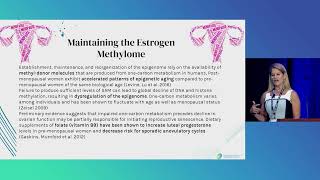

TLC 2023 The Intersection of the Immune, Nervous & Endocrine Systems w/ Metabolism | Bridget Briggs
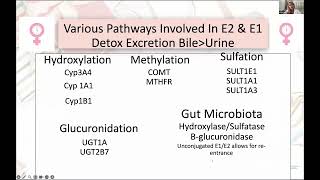
Optimizing Menopause: Understanding the Role of HRT & Natural Remedies for Health Optimization

The Secret to a Clinician's Success Begins with a Healthy Gut: Bridget Briggs, MD