Day 2 Panel Discussion
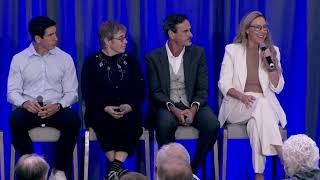
Dr. Dale Bredesen, Dr. Bridget Briggs, Jeff Grossman, and other clinicians discuss precision medicine for Alzheimer's and neurodegeneration. Early detection tools like blood-based SNAP panels and smell signatures can catch disease before symptoms. The Bredesen protocol is expanding to Parkinson's and other conditions, with AI and epigenetics reshaping how doctors diagnose and treat these diseases.
Chapters
Well, I'm going to ask a question first. I'm going to ask a question. So I know this is probably an unanswerable question, but it bugs me every day. Why do you think, Dale, there has been such an absence of recognition of your work, which really was the start of this whole field? I mean, I can see other people getting into it. We got the Finnish study. We've got all these people. We got the men's study. We got this and that. But at least it would seem that you should always be acknowledged because you were the first to mark. So what is this? What's going on here?
I think it's because I didn't do it the right way. What I should have done at the beginning is go to the powers that be in this area, the Alzheimer's Association, someone like that, or go to Eli Lilly or someone like that and say, we'd like to do this. Would you bless it? Let's do it together, that sort of thing. We just came out and said, in fact, I remember I was at David Perlmutter's conference in Miami several years ago, and David was talking, and I was looking, and we were just, I was just writing the first paper and trying to get this out. I thought, when we can get this out, you know, everyone's going to join together, we're all going to now make it better. No, that's, there's, I think the issue is if it's going to impact drug sales, if it's going to impact the ability of the Alzheimer's Association to raise funds, if it's going to go outside what they have blessed, then you're gonna get pushed back. And I think, you know, this is the history of medicine. We all know this. It'll come around. That's why I think it's important for us all to publish our papers to show, you know, peer review. Now the problem, of course, is the peer review is unfair. Like, you know, we don't like this. We had— we sent in the PCA paper for review a few months ago, and we said, you know, it hasn't been clear what causes PCA. And they said, what do you mean? Alzheimer's causes it. Well, yeah, that's just a name. So, so I think it'll happen. I think you just have to, you know, keep taking the arrows out of your back and just not worry about it.
You're a good man for arrow healing, that's for sure. You know, it's interesting. I'll just say in parenthetical, so many, many years ago, I had the privilege of being at McGill and in the laboratories of Hans Selye. And you probably recall the father of stresses as it was defined, appropriating that term from physics over into biology or physiology. And so I was speaking to one of the faculty there, and I was saying, so you know what, it's always struck me that Hans Selye should have won a Nobel Prize, don't you think, for these discoveries? And he said, well, yes, everybody thinks that that's in the field today. But the problem was that he could not get people to publish this work because it was so heretical to the way people were thinking. This is the early days of the discovery of hormones, and the whole field of endocrinology was really in its infancy. And he was a global thinker, and he was a great communicator, both in French and English. But he didn't play the role of saying, OK, I have the patience to this day with the powers that be, and I'm going to just keep putting it through the the old peer review pipeline until someone finally gets enlightened. And so he wrote a book, right, that went to the general public. And that was the death of his professional career. They said that he broke the guild, basically. And once he went directly to consumers, it made him unpublishable, or let's call it less a candidate for a Nobel Prize.
And so here's the interesting thing. So I thought about this, like, why not go to these various groups? The problem is they put up the guardrails and they say, well, we won't allow you to say something. When, when I published a paper on inhalational Alzheimer's, you could see mycotoxins are clearly one of the contributors. And there's a PR group at the Buck Institute. I was still there where I met you at the Buck Institute. And the PR group, which puts stuff out on the wire and gets people to be aware of all the things going on at the Buck Institute, said we will not put anything about inhalational Alzheimer's. It's too radical. It's too crazy. No one believes this. And so, okay, I think that's the problem. So you run into these problems where you just have to say, okay, no one's gonna bless this. Let's just put it out there. And that is where, thankfully, there are things like, you know, the web. And thank goodness. Now you can put things out, preprints, you can write a book. So I think that's the way to start. Start this. And of course you're gonna get a lot of pushback.
Well, thank you. Okay, what I think might be useful, 'cause we have so much power here in this panel, don't we? I mean, this is like superstar panel like we've had earlier. So maybe I could just ask each of you, if you were caught in a street corner saying you were at this meeting and what were you trying to get across at the meeting and you had just a few seconds to say it, what would it be? Eric, we'll start with you.
Oh, shoot.
I think what I would say— am I on here?
Can you hear me?
Yeah.
Okay, I'll put it a little closer. That's better. I think I would say that I want to share with you how to take a CBC and interpret it in a way that will make sense to you and will be really quick and have clinical utility and in a way that you've never seen before. And when you do that and you start keeping track of that on a regular basis with your patients, you're going to start seeing how lifestyle interventions play more of an impact than you thought previously, because patients' symptoms may deceive you. Why do I say that? Because people get stuck in believing that they have certain symptoms, and sometimes they don't want to let go of them because it becomes their identity. And often you'll see this when you have them fill out an MSQ and they think they're filling it out the same way they did before and it comes back and their MSQ score is actually a little bit lower. Well, this gives you an objective way of measuring changes that are relatively quick in their results from interventions that you're making. I think that's what I would say.
Very nice. Bridget Briggs.
I like what Eric said. And I would say my, my goal for my patient is patient empowerment. And I think we can't rely on our specialists and Western-based medicine doctors to help tell the patients before they have a chronic disease that there are changes that are happening. And because labs and everything are so expensive, I encourage— the more we embrace wearables and AI, which is the trend, I think we're going to teach our patients to prevent disease because they're going to be more aware. Of the here and the now.
Thank you, Matt.
Yeah, I want to take 60 seconds first just to say to Dr. Bredesen, you're the reason I left academic medicine, went into precision medicine. I read your book in 2018 as my grandmother was suffering and dying of Alzheimer's disease, and I watched the traditional system— I was going to say treat her, not treat her— and I just said enough is enough, and I left. I followed your protocol for my mother, who's ApoE4. She lost 50 pounds, reversed her insulin resistance, told me she feels 20 years younger. And so I just want to say thank you for my mother.
And let me just follow up to say epigenetics, what you presented this morning, is what's going to give us better outcomes. So I think that, you know, that's the future.
Yeah, thank you. And so thank you for my mother. Thank you all the patients. Treated, and thank you from myself personally. The thing that I would want to get across is just very straightforward. I think epigenetics and artificial intelligence, the combination of those two, is going to— not is going to— is transforming diagnostics. So I'll just say, get ready and get excited.
It's coming. You got us excited, no question about it. Anna?
I have two microphones here, so—
Take your pick.
I can be twice as loud. I've been thinking a lot about paradigm change, and we use this word very casually these days, but the philosopher of science Thomas Kuhn was the person who introduced it. And in his theory of paradigm change, something that's really important is the anomaly, because the anomaly appears in a system and cannot be explained by a system of explanation. And things remain anomalies until there's a breaking point, right? And he described paradigm shifts really as a kind of gestalt switch whereby the anomalies are the things that are explained by the shift. And once the shift has happened, you You can't see it the old way anymore. So I've just been thinking a lot about paradigm shifts and what looks like anomalies and therefore is being gatekept in extreme ways within normal science. So this sort of procedure of pushing and pushing until the anomaly becomes legible within a new paradigm. As a sociologist and a historian, that's what I would see as happening in this meeting.
Hey, hey. Yes. So, you know, I think when you were speaking, I just had a flashback to the whole concept of genetics as I learned that over time. That it's this natural selection continuous process happening kind of arithmetically. And now we find that's not true, that evolution has fits and starts and it's not continuous. And so you say, well, culturally are we going through more than just an epigenetic change now? Are we actually in a rapid change in which the neuronal patterning might be changing at a very dramatic rate to keep up with the changing environment? That's a hopeful thought. Chris.
So I'm going to choose to make my person a medical student that I teach, just because there's a very specific reason for this. But what I would say is take the blinders off to the past. What our little experience in the last 10 months that you challenged us with, Jeff, in the CBC, is to literally not accept what we've always seen as the only way to see. And this 10 months has shown me something incredibly powerful, that if we keep looking at what's in front of us, what we seem to be a static reality that the CBC is something we've known about forever, and it was set, this is it. No longer is it it. Now we have a whole new way of looking at it, and hopefully other people are going to keep looking at it, keep looking at it, keep looking at it. We're going to gain more and more data that's valuable for all of us. And then for the average person I would run into, I'd say when you go into the medical sphere— again, I'm in the traditional sphere— bring an advocate with you. Bring somebody who is not blinded You know, I go back to before I went to Arizona and I was very blinded in the way I saw things. And Andy Weil took the blinders off and I saw this whole new beautiful world. And then meeting you guys, it was like, now it's way off. So I want everyone that I run into to say, hey, don't look at what you see today as what is real. There's a lot more out there. And like Dr. Bredesen showing and so many of the people up here, that's what I want to get across. Blinders got to come off.
Thank you. Absolutely. Denise.
Okay, wow. So what I would love people to know here, and I guess my, my message is that, you know, we have so many tools to understand ourselves at a deeper level— our genetics, the epigenetics, blood biomarkers. But it's not just about the genes, as I said, it's the interaction with our environment. We are dependent on our environment for those genes to be expressed in a healthy way, to show so that we do have healthy cells, healthy organs, healthy systems. And when you change your environment, because that is possible, as I said, there's that interaction, you can turn your state of health, that phenotype, if you are in dysfunction or disease, into health. So I'm not claiming that everyone can be cured from a chronic disease, but you can definitely move to a more healthy state. And even better, which what we're talking about, if you get onto this early and you're not waiting until you have a chronic condition, you start doing things, these things early, you are optimizing your health, your energy, so that you can be the person you're meant to be. You know, we're all here for something, a purpose, and when you are in that space, you can contribute. You've got the ideas, the energy to be that person, and of course, more healthy years to do all the wonderful things you are here on the planet for.
Beautiful. Thank you, thank you, beautiful. Okay, now we had a question here that I usurped, I believe. Anybody question? Okay, please, questions. Yes, please.
For Dr. Grossman, for the— can we use a similar model for Parkinson's, I wonder?
Yes, I mean, that's the whole idea.
So let me just repeat the question for those who didn't hear. Can we use the reticence procedure for Parkinson's, was the question, in case you didn't hear.
Yeah, so it has to be adapted for each of the different things. Okay, so we've started with a couple— we've got a couple of patients with macular degeneration that have had an adaptation for that. We've had some good luck with Lewy body disease and some improvements there. Parkinson's is a little different than all the others because there is a fairly good medical therapy for Parkinson's. It doesn't change the disease. In fact, it may make it a little worse in the long run, but it is symptomatic improvement. So that's certainly been there for a while. But yes, the difference there is it's a different Achilles heel. It is now about mitochondrial complex 1. So yes, mitochondrial support, all the things that— there are so many experts here in this area. It also has some piece obviously of pro-inflammatory. There is increased risk from all these different, as you know, organic toxins. So some nice work in recent books like The Parkinson's Plan, you know, from Ray Dorsey from Rochester, and they've pointed out, you know, all these different pollutants that people often don't realize that they're exposed to. Again, I think early detection is going to be so critical because by the time you get the symptoms of Parkinson's you've lost about 80% of the dopaminergic input to your striatum. That's the problem. So I— again, epigenetics are gonna tell us, hey, you're headed for Parkinson's. For all of these, we want early detection, we want prevention. We don't want you to have to the point where you've lost 80% of the input. So the bottom line is yes, but there's not nearly as much data as we have for Alzheimer's.
Just real quick, so Dale, is there a imaging tests that we— they're looking at from maybe a functional MRI standpoint, or are we going to lean more into epigenetics in terms of predicting this early, right? Because there's probably changes at the substantia nigra that are, that are happening before symptoms are starting, right? And that's the ideal time to start to reverse that and get the oxidative stress to start moving down. Is there something we can be looking at?
So there, again, there may be things already So Dr. Vishu Lingappa, who founded a company called Prosetta, was a brilliant professor at UCSF for years, has identified signatures in blood for ALS. And they've got something coming for Parkinson's as well, which I think is gonna be very helpful. Of course, you've probably heard about the woman who can smell Parkinson's. And so now they've turned this into LC-MS. So you can now do, you know, you can now do a mass spec And she picks this up with her nose 10 years before symptoms. It's really striking. Since there's only one of her, you know, you want to use the mass spec. I've been waiting for that to appear. It should— it's coming from University of Manchester. And it, you know, I'm hoping it'll be out soon. But I also suspect that very soon— do you guys have already have a signature for Parkinson's?
We're working with some collaborators right now. And the question is how far, how far before before the symptoms, you can actually pick up that epigenetic signal. So that's what we're working on.
Earlier the better.
Yeah.
But this is, again, a call to research. Anyone that has big data sets or of those types of patients, we'd love to analyze them because the bigger data we have, the more predictive and earlier we can predict it.
So let me ask the audience a question here. How many of you had dogs? OK, have you ever noticed that your dog Can smell an injury in you? This is a whole field. If you haven't Googled this or you haven't ChatGPTed it, you ought to. They're the best diagnosticians. They can pick up malignancies. They can pick up metabolic diseases. It's not just ketones. We're not just talking about ketoacidosis. They can pick up all sorts of biomolecules at very low threshold of concentration. So a lot of work is going on about how to appropriate that dog sensitivity and put it into human assessment. And maybe epigenetics will be such a sensitive tool. Please, Robert.
[SPEAKING CHINESE] We need an early warning system. And we've just started an Alzheimer's prevention company Dale knows about called Snap Recall. And there's a reason for that. The SNAP is not just because— oh, not SNAP, but it's Synapse Associated Protein 25kD, which is actually one of the proteins that Howard Federoff and I worked on back in 1988, so we called the company that. We have a panel of 24 phospholipids that are all synapse-associated phospholipids that don't belong in the blood. The only place they belong is in the brain.
When you can measure in the blood is because of synaptolysis.
And we can measure those changes 3 years before any change in cognitive function. So we do have an early warning system. And I'm hoping to be able to talk about that next year.
Awesome. Awesome. Thank you. Very, very interesting. Please.
Do any of y'all use the Alzheimer's link panel for spread through Cyrex?
Because I use it a lot.
And it shows a lot of early markers for Alzheimer's.
—so I love the Cyrex 2, 3, 4, 5, 12, and 20. I love them all. And the lymphocyte map that we are hearing about, we're going to start using. I think that's fantastic. And I've really enjoyed the presentations by Elroy and Ari. This is fantastic. The LINC one, I have to say, just this is my own failure, I haven't been good at interpreting that yet. I haven't known where to put it in the overall, whereas the other ones, it's very clear. We're looking for specific pathogens, we're looking for specific metals, and we're looking for leaky gut. So actually, I would love to have more discussion with Ari about, you know, how do we use that information to get better outcomes for our patients. But we use all these others.
Okay, I'm going to throw a wild card out just a second. I get my privilege here. I got a question. And so this is, this is my factoid question of all of you. So how important do you think the clonal hematopoiesis of indeterminate potential work is going to be in understanding the origin of immunometabolic disorders? There are many, many people in the field now that are saying that— important.
That Chip— I concur.
A paradigm change.
8 out of 10. It's a great question. So this is not my area of expertise, but we do have a bioinformatician on our team who is working specifically on that. So after this, I'd love to connect them with you because that's their area of expertise. So we actually think it's very important. When I say we, I mean our scientists. I don't know enough about it. I wish I could comment on it more.
So I— for those of you who have been coming to this meeting for a few years, you might recall we had Siddhartha come and speak to us from when he was at Harvard before he made the transition to Stanford. And I think everybody just sat there with their eyes like, what the heck is really going on? Because he was the guy that was the principal researcher in the study published in the New England Journal of Medicine that year showing that clonal hematopoiesis of indeterminate potential, CHIPs, C-H-I-P, were— we know was a myeloplastic determinant for malignancy. But he found, their group found, that it was also very predictive of cardiovascular disease. And now it's predictive of diabetes, and it's predictive of autoimmune disease. So something is going on at the bone marrow, right, with these clonal hematopoietic mutants that accumulate with age. But then, you probably know at Brigham and Women's, JoAnn Manson went on, and she also have lectured at this meeting a few years ago, showing in the WHI, the Women's Health Initiative study, that those women who successfully went into a lifestyle intervention program had a reduction in their chips. So there is a really interesting story that's emerging, I think, around this. Because if you think the progenitor cells for all of the immune system is at the bone marrow, and these are accumulating with age, this might be one of the other intervention points upstream, really root cause, for all these downstream immunological, immunosenescent-related functions. So just to throw that out. Next question. Please.
Could you comment on the EVOKE trial, and do you think there's a role for using GLPs for neuroinflammation?
GLPs for neuroinflammation. Would you like to take that, Dale?
Sure. You mean the ongoing trial? Yeah, so that's going to finish in a couple of weeks. So great point about GLP-1s, and of course Bridget Briggs was really has really had great results with these and was talking about some of those. Amazing. So I always think that physiologically relevant things come first, you know, finding what's causing this and then addressing that. GLP-1s are highly non-physiological in that they're pushing this for much longer than you would normally have it. So if you can't do the physiological approach, then yes, I think there's an absolute role for them. And I've been wondering, should we be doing for people who are overweight or— so either people who are overweight to do like 3 to 6 months and then are we going to be able to get them off without having them gain everything back and have problems? At least to get started, it might be very helpful, in part because of the change in cravings and things like that. I also like— have you seen the stuff with Noom and microdosing? So I think there's a future in microdosing of many of these things. And I'm, I'm actually thinking, you know, should we be looking at all the things that drive cognitive decline and then
More from Bridget
Healthcare Uncut #2 | Dr. Bridget Briggs | Doctor. Mother. Cancer. Inside the ACA Era
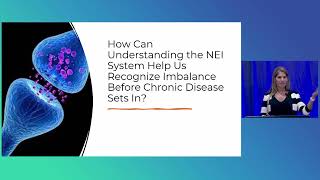
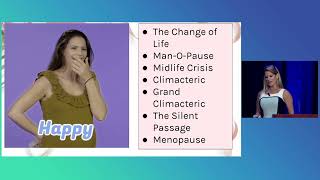
The Intestinal Microbiome, Menopause and Weight Gain: An Epigenetic Factor? | Bridget Briggs

TLC 2023 The Intersection of the Immune, Nervous & Endocrine Systems w/ Metabolism | Bridget Briggs
Optimizing Menopause: Understanding the Role of HRT & Natural Remedies for Health Optimization
The Secret to a Clinician's Success Begins with a Healthy Gut: Bridget Briggs, MD