Healthcare Uncut #2 | Dr. Bridget Briggs | Doctor. Mother. Cancer. Inside the ACA Era
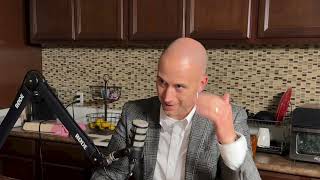
In this in‑depth interview, Dr. Bridget Briggs shares her unconventional path from aspiring teacher to OB‑GYN, then to family medicine after her father‑in‑law’s death and her son Nolan’s brain cancer diagnosis. The experience reshaped her empathy for patients and highlighted the need for doctors to truly listen. Dr. Briggs explains why Western medical training often focuses on treating disease rather than preventing it, and contrasts that with integrative and functional medicine approaches that target the origins of illness—particularly the microbiome and diet. She details her additional training (integrative medicine board certification, functional medicine fellowship, a master’s in health‑care administration) and how she has woven nutrition, biometric tools, and lifestyle counseling into her primary‑care practice. To offset low primary‑care reimbursement, she added aesthetic services, hormone therapy, and fertility care, describing the business realities of running a family‑medicine clinic. The conversation expands to health‑policy critiques, including the Affordable Care Act’s impact, international models (Singapore, Japan, the UK), and ideas for incentivizing prevention, reforming medical‑school debt, providing physician retirement benefits, and the (prohibited) unionization of doctors. Dr. Briggs concludes with advice for aspiring physicians: passion, emotional endurance, and a heart for patients are more vital than raw intellect.
Chapters
See, this is what I love about these kind of interviews, is because I'm not from here, I don't know the demographic very well. So I'd love to hear from your perspective the difference between Hemet and Temecula. But first, tell me a little bit about you. It's a pleasure to meet you. I'm so grateful for you welcoming me in here. Your office is beautiful. But tell me, how did you get into medicine?
It's funny, I went to college thinking I was going to be a teacher and thought, I love to teach. It's just such a fulfilling energy to just give to people. And found a natural passion for psychobiology and the sciences. It just was natural. And then I thought, you know, shoot, I want to go to medical school. And they said, why don't you just be a nurse? I was like, oh, no, I want to teach. So, you know, I left because a teacher is exactly what the doctor does. We're teaching people about their bodies and related to science. And so, yeah, I just, I love teaching.
Where'd you go to? Where'd you get your undergraduate at?
Ucla.
Okay, Are you from la?
I'm from la. Hundred percent Burbank.
And then where'd you go to medical school?
UCSD School of Medicine, San Diego. I don't drift too far.
Yeah. And then what, what led you down the primary care route?
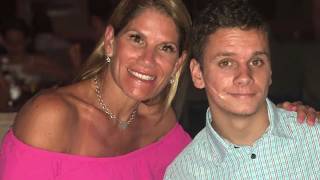
Actually, I started off as an OB GYN and transferred. My father in law got sick with cancer, so I was in Vegas doing ob, wanted to come home, didn't realize that he was going to pass as quickly as he did. So I real quick matched into family medicine to come back to California and unfortunately he passed. So right in like the end of first year of residency, so dove quickly into family medicine with the full gear to go back to OB gyn and then found that this was a good space. I ended up with a little boy with brain cancer. And so, yeah, it was.
Is he okay?
Yeah, he's fine. He's 24. He was diagnosed at age 4 and. And so it changed my trajectory as a specialist into family medicine and I don't regret it. I actually did all of my own OB training or deliveries here in the Valley. Even as a family medicine doctor, they still embraced it in our little small town. And then I think as Nolan progressed and things got a little bit more serious, I backed off. But I still do all endocrine and OB to the point in the clinic. I don't deliver babies anymore, but so. So yeah.
Wow. So you've seen the spectrum as A parent?
Yes.
And as a provider? Yes. What do you feel? You know, many folks in the healthcare industry might feel it from the provider aspect. I'm in administration, so I see it from a completely different one. We're far removed from the intimacy of the patient doctor relationship. What is that like as a parent and a physician to go through such a trying time?
It was interesting because growing up, I actually never went to the doctor. I mean, I didn't have a family that we just didn't. We didn't do that. We weren't raised that. You go to the doctor every year and you practice preventative medicine. We had a doctor, but I never met my doctor. So I didn't go to college thinking be a doctor. As a medical student and as a resident, you do not connect what it is to walk the pathway of a patient. You have no idea. There's a lack of sensibility and understanding of how delicate it is for a patient to navigate. It's very easy just to think it's simplistic when you become the mom of a patient. It's twofold because I had the fund of knowledge to understand medicine, but getting a doctor to understand a mother's instinct and validate me. And so it actually took me two years to get my son diagnosed with brain cancer. And I was the one who diagnosed my own kid. After struggling going to pediatrics, going to specialist, urology endocrinologist, I visited Rady's multiple times. And I think there was an attitude towards the doctor. Mom. Munchausers, you're creating a problem. Really, it was really sad. And we had a lot of those battles along the way because it's hard to be a doctor and have to integrate into medicine too, because people treat you differently. So it made me very compassionate towards the walk of a patient and especially parents, extremely difficult to know that your children are vulnerable and hope to goodness that you find a provider that's a good listener because kids can't speak for themselves. As a family medicine doctor, the beauty is most of your parents can speak for themselves. I've learned to be a good listener to children and integrate with the language of the parent. But when we do all ages, from the young, youngest to the old even, we have to speak for our parents sometimes as we're taking care of our adult parents. So you have to be a good listener to be a good doctor. You have to give time for that patient and the family member to speak. You're not the only speaker in the room, and too frequently that is the problem in Western based medicine, we're not good listeners. We let the MA take the full history. We walk in, I know the problem and I know the fix. And it's a common complaint. Patients come in and they're like, this doctor didn't even want to hear what I had to say. So they end up here in our clinic saying, wow, you actually let me speak and ask me a medical history. But I think that's because I walked the pathway. Chemotherapy for five years. Like, you have a lot of hiccups along the road. And to find a provider that will stop and listen and care is really hard. I'm the clinician and it's hard for people as a patient to understand what's going on behind the scenes. There's so many levels of complexity as a provider, and we have to think so aggressively with so much foresight and so many tangential spaces that the trajectory of this patient can go that there's more going on in our minds than the patient will ever appreciate. You know, And I see it from both angles. It's a tough world for everybody.
Wow. Well, thank you for sharing and I'm glad to hear your son's doing well.
He is.
I could only imagine the perspective that would give you as a provider to take that kind of empathy exam room and to be able to slow down and listen. Because you're right, that is a sentiment many patients feel is. And now with the chart, many patients feel like the doctor's head is down and they're just trying to navigate the chart. Right. Especially those who didn't go through medical school residency on EPIC or whatever. The EMR of the day is that perspective. Taking that into the exam room is really. It's eye opening for me as an administrator. Right. Hearing these stories is a big part of why I want to have these discussions. Because I think every provider I've spoken with has a bleeding heart. They got into it for a reason, a passion behind it. And then of course, you go through the rigor of trying to understand the complexity of human nature that is science around is continuing always to evolve and we come up with more understanding and the knowledge deepens. And so there's a lot of rigor there. And then meeting that patient in the space when could be life changing news. So anyway, thank you for sharing that. That's pretty interesting. So what led you down the path of kind of going into preventative medicine? You talked a little bit yesterday about going back to school to get a master's. Tell me more about that.
So it really started with Having sick kid and recognizing the limitations that Western based medicine is very disease state awareness is body organ driven and we don't treat the body as a whole. And that is just not culturally what you see in other types of medicine, Chinese medicine, Indian type of medicine. And so I think I became more aware of treating the body as a whole, which made family medicine very natural. And walking through the journey of helping Nolan to find health food is medicine. And we rarely focus on food and dietary choices for patients. But that really drives the immune system's capacity to be successful at addressing whatever we're doing. So I Google, because I grew up in a home that we didn't have junk food. I mean, we were taught, you know, healthy food. And we were all a little bitter as kids about like, why don't we get Oreos and Captain Crunch? But my mom raised us to believe that, you know, we need to eat clean. And I think it was because we were poor, to be honest. I think it had really nothing to do with science. But, you know, when you grow up in that type of a, it wasn't that hard to not eat all the junk food. When my son had cancer, I would walk the wards of the hospital and all these kids would be on chemo and the moms would walk up to me saying, how come your kid has a full head of hair? Like, how come he doesn't look sick like all these other kids? And I'm like, yeah, your kid looks pretty bad. But like, we weren't down at Ronald McDonald's. We were eating strawberries and eating all the plant based foods and juicing every day. And so I went to get my first board certification at Scripps Integrative Medicine. I did. I was one of the first graduating classes of the American Board of Integrative Holistic Medicine. And then the first graduating class of the Institute of Functional Medicine. That's a very rigorous three year long secondary fellowship in integrative medicine. Dr. Jeffrey Bland literally paid my whole way. I mean, by that point, I'm struggling as a primary care doctor, trying to get my practice up and running. I've got five kids. It was a crazy life. Yeah. And he's like, bridget, I want to help you. So I actually gave me the opportunity to take over his speaking circuit. And I'm like, he's a PhD, I'm an MD. I don't know any of this biochemistry. But it really helped me dive deep into lifestyle medicine. And so he gave me an interest point. I got my education and then I had this fund of Knowledge about lifestyle medicine and integrational medicine, applied it in the clinic. Fantastic outcomes, really inbred patient compliance and control. I think everybody wants to be healthy, but without some kind of give me some of the control factor, just don't throw me a drug. What was really exciting is I saw really good outcomes, but it was so hard. In primary care you're trying to do this very kind of specialist driven type of medicine. And so then I went to USC and I did my master's in healthcare administration because I wanted to know how can we help doctors implement whole body medicine or precision medicine to really change the curve towards chronic disease. So it's an exciting place to have knowledge, but then integrating it is where I'm really excited to be adding secrets to the clinic to give some strategies to be successful. So yeah, it's fun.
That's quite an experience. Let's unpack that. Many folks may not understand the difference between functional medicine, integrative medicine and then even, you know, the path of going to medical school and then kind of the routes after that. So if you don't mind, just break down what's generally speaking taught in medical school and then what's the difference between integrative and functional medicine?
Oh great. So that's so true. I'm so glad you asked that question because it's funny how many people don't even know the difference between college, which is four years, medical school is another four years. Then we all go to residency. So when people say, oh, you're a gp. We don't have gps in America. You know, like gps don't go to residency. So you choose your residency. They're usually three to four years. Family medicine is three, OB GYN is four. I did a blend of both. And then after that people sometimes go on to the next specialty. So this is where, you know, internal medicine doctor might go on to do urology. Right. So internal medicine might go do gastroenterology. So they are a actual, not just a primary care doctor with an internal medicine specialty or a family medicine specialty, they're going to go on to their next degree. In addition to that, you can have your primary care degree and then go on to take on additional specialties. So some people do sleep, some people do geriatric medicine. So those are all additional fellowships. So for me, I ended up choosing after a year of OB and then three years of family medicine, I chose the degree of integrative medicine. There's kind of an overlap of integrational medicine and functional medicine. We use them interchangeably and ultimately what it is is kind of looking at the origin of disease. Where does disease come from? Does it come from a dysfunctional microbiome? Well, what alters your microbiome? The foods we eat or the foods we are not feeding our gut biome? And then how does that originate into imbalances that can elicit ulcerative colitis or Crohn's disease? And then by understanding the origin of disease, rather than just using a biologic drug to treat ulcerative colitis, we're going to like, hey, let's study the microbiome. Let's look at things that alter the microbiome. So in traditional medicine, we do feces transfers, right? We actually take fecal transfers and we take it from a healthy individual to a sick individual and we transform the microbiome. So this is western based medicine, but more kind of on the outskirts. It's not as easily embraced. So it's the same really, but it's more focused again on the origin of disease and can we prevent it and treat it at where it began?
Two things I want to, I want to dial into a little bit, the first of which is we hear, I don't know, maybe it's just my feed on, you know, all the social platforms, but many influencers talk about the microbiome. Microbiome. We hear microbiome all the time. To the, to the average person, what exactly is microbiome?
Well, you know, inside our intestines we have trillions of bacteria, but not just bacteria, we have viruses, we have intracellular pathogens, we have yeast, we have a host of little creatures that live inside us. And they actually shape your immune system. They're critical. They digest food that you partially digest. They produce byproducts like short chain fatty acids that control brain derived growth factors. You grow a brain, they shape your tolerance immunity so you don't develop food allergies or autoimmune diseases. So the microbiome is its own little world. And we have seen an altered microbiome in Americans because we eat such processed foods and we have such a focus on sterility, right? So when we look at the microbiome of an American versus people from other countries, they have a diverse microbiome and we have a limited microbiome. And this is an area at UCSF where they're really looking at focal points of changing the microbiome to do disease prevention such as autism. Right? So this is a very exciting time since the human microbiome research and what we know now to look what's There, the pathogens, what we thought were bad, are actually elements that need to be there and we need to protect our microbiome. So this is a hot topic.
It is a hot topic. And it's interesting because you hear a lot about prebiotics, probiotics. Obviously there's supplements for both. But it's an interesting concept because I think the influencer will say, take my supplement. Right. Whereas the. Maybe the integrative medicine physician or doctor or practitioner might say, eat whole foods and vegetables, get fiber. Right. Get a very wide range of raw organic material, if you will, to be inside of your gut to help produce that.
Right, exactly. We believe that food is medicine. And yeah, I know that we are the vitamin generation because we lack so many things in the grocery stores that are everything's in a package in a box. But culturally, I spent some time in Taiwan last year where they serve you 8 servings, and you're like, how do these people eat this much food? But every serving is so organic and natural. I mean, it's like sea cucumbers and fungus and weird stuff, abalone. I'm like, oh, my goodness, I don't know if I can eat that. This. But that's just not our culture, you know? So I'm hoping we're going to move the needle in a better ability to embrace strange fruits, vegetables, things that we haven't normally put into our bodies. Those are prebiotics. It's kind of like I always say to patients, when I look at my flowers that I get every day for, or excuse me, every year for Mother's Day, they begin to windle, they begin to look not so healthy. Well, I take my miracle grow and I put some miracle grow on my flowers, and within three days, they just become vibrant and beautiful. So that is what food is to the microbiome. It's what creates this beautiful garden of a diversity of the microbiome. But if we poison it with processed or bad miracle grow, we kill it off.
Interesting concept. That kind of leads into the other question that I wanted to ask, and you had said integrative medicine is really more focused on kind of the onset, if you will, of disease. And maybe to the average listener, the average patient, they might say, isn't that why I'm going to the doctor in the first place, is to try to figure out why I feel this way? Right. It's symptomatic of some kind. And I think for the most part, we feel like when we go to the doctor, we're hoping that they're going to Help us figure out how it started, why it started and to fix it. Why does there seem to be a disconnect between maybe what's taught in medical school and then layering on that additional integrative or functional medicine aspect?
It's the way we're taught. So this is the deficiency that we're waking up. Western based medical schools teach, if I have heartburn, the intervention is a protonix anexium, the purple pill. We might look for H. Pylori, do you know what I mean? But we don't think like, is this person having an extra histaminergic reaction to histamine? Dominant types of foods like pork and citrus, does this person have sulfur sensitivities where broccoli, cobbler, cabbage and kale have more sulfur? People from Europe do not eat sulfur foods. That's not organic to Europe. It's a cold area. They don't grow green leafy vegetables. We ship everything into America like there's no such thing as seasoned. And what we don't understand is the lifestyle, even the seasonal implication of the foods that should be here. And so I believe integrative medicine is looking at the origin of the imbalance because we're not looking for the drug to treat it. It's step backwards to say, well, what's the why? So I joke. Sherlock Holmes says why. If we ask why, we're not medicating it, we're searching it out.
Why do you think Western medicine teaches.
I'm going to turn that off.
That's okay.
Sorry.
Don't be. I appreciate your time. Do you need to go home before we go to the meeting?
I'm good.
Okay.
Because it just keeps talking. It's like Tyler's home. I'm sorry. Sorry about that.
No, that's totally fine. So why do you think it is that Western medical schools teach kind of the identify and treat, maybe with a. Know what you would want to call it, a pharmaceutical, if you will, or some type of a drug, as opposed to going backwards and going, let's, let's change the food, maybe the activity or what have you. Why do you think that is the approach?
I think it's such a great question. I just think it's our heritage. It's kind of like the way that we study disease and the way we find intervention is a lot of the. The innovation of medicine has given us this like human genome, like the microbiome genome. We've discovered things after the fact where other protocols already started. And we are very pharmaceutical political driven country. It's A big part of financial stability. It's what makes America so innovative. We make a majority of the drugs in the world, and we sell these at pennies to every other country where we heighten that cost. And we drive healthcare dollars in America that other countries are not facing. So I wish we could do it differently. You know, I think that if we took more of a origin of disease approach, we would see a lot less people on medications. We would see a great diminishment in chronic disease. And that was kind did that master's feeling like, where's Congress? Because I want to be sitting on the board of Congress. And we've got leaders like Dr. Mark Hyman that's really trying to, you know, push Congress to understanding. We got to make some changes, and we have to really open our minds to the chemical. Like, we are the chemical era. Like, you think about since World War II and all the new chemicals that have been surrounding us, like, there's no side effects of that. And we have data coming from epigenetic doctors like Dr. Sinclair and Dr. Durdle that are showing us the damage of plastics. You know, so it's so embedded in our culture. How do we take it out now? Like, what happens when you start making everything glass? So you go to Australia, you cannot find anything in Tupperware. It's glass this, glass that. Even your yogurt at the grocery store, it's in a glass jar. But that's a $7 little tiny mini yogurt. And so it's cost and sacrifice that we really have to ask ourselves, are we willing to do that? I am. But that's easy to, you know, if you've got a financial, stable job. But what about the people that don't have that? So it's tough.
That is tough. That's, you know, the cost conversation is one that I have often, especially when it comes to just generally speaking, fruits and vegetables, lean meats, what have you, and packaged foods, subsidized foods. Often the narrative is like, well, we can't afford to eat healthy now. Maybe we can't afford to eat an organic yogurt in a glass jar. Maybe that's true. But can we afford. Can the average person, if you will, afford fruits and vegetables at your local name, the supermarket, that's the least expensive, Right. And per calorie, we can. Right. The cost per calorie of a packaged food that's highly processed, whatever your favorite oil that you don't like is in it, versus, you know, leafy green vegetables, lean meats, what have you the cost is relatively the same. If not, sometimes the whole food is less expensive. And so that's sometimes a very difficult conversation to get to folks who've been wrapped around the politics, I think, and the messaging that it's too healthy, it's too expensive to eat healthy.
It's legit.
Which I think is a lie.
It is a lie. It is a lie. And we had a nanny for 18 years that was from Argentina and she's raised on raw ingredients. She absolutely, when it comes to her homemade cooking, it's all scratch. And just watching her, because I've been raised in America. Come on. La Captain Crunch. I want Captain Crunch. Do I have to eat like, I don't know, oatmeal? Because my mother always gave us oatmeal and we'd cry like Captain Crunch, you know, and, you know, it's, it's so true what you said. It's just, I think we get ingrained into this is how we eat and we don't want anybody to tell us I can't have something. But it is not more expensive. You know, I mean, she was raised in poverty and it could have had anything in my house, anything she wanted. And yet she always chose the plant based ingredient.
Yeah, I hear that story over and over again. You hear people the adage, oh, I went to Europe and ate bread for a week and didn't gain a pound. And then folks who come to America for a week and eat basically the same type of food gain weight because of inflammation or what have you. And it's like chemicals, you know, the highly processed food seems to have a definite impact. Let's transition a little bit because I'd love to hear a bit more about how you integrate not just integrative medicine and functional medicine into your practice, but how you still offer some type of women's health and then even layer on different, I would say, aspects of healthcare like managed care and aco you do aesthetics, treatment, all those. How do you find time or a way to blend those different aspects of medicine and integrate them into your practice?
I think that's the fun part of being family medicine is you get to touch every age group, you get to touch every disease state. There's not an organ or a specialty that you're not somehow involved in. So as, you know, an original surgeon. I'm sorry, but I want to cut, I want to slice, I want to dice, I want to stick a needle in you. That's just who I am. Esthetics was just like appeasing that surgical need to fix things with my hands, you know, starting in family medicine. It's funny, I had a rep come see me, and she waited in the lobby for three hours. She had an appointment with me to ask me to, you know, consider using functional medicine, nutrients, vitamins, and selling it in the clinic. And I was with a diabetic. New onset, did not believe in medications, did not believe in cholesterol drugs. I mean, I sat there for three hours with this guy trying to convince him to take western based drugs. And he's like, I don't believe in it. And I mean, look at. We've got the Internet. People can Google this. They can look at all the side effects of every drug, and there's a resistance today to just don't medicate me. And so she sat there for three hours. I mean, the lobby was dark. And she said, her name is Nikki Fox. Her birthday's tomorrow. Own minds today. So it's so funny. We're gonna go celebrate our birthdays. She's like, Dr. Briggs, I feel like I can really change your practice. And I don't know if you'd be willing to go to this weekend course. It's on lifestyle medicine. But it was a course that taught me how to incorporate lifestyle medicine, which the foundation of lifestyle medicine or functional medicine is Food two is looking at the origin of disease. And so they kind of helped me create a platform, like a framework to know how to do it. And that means collaborating with other people. So we would have a nutritionalist in our clinic. And so if I said, hey, listen, I want to. I want to look at what's going on with your diabetes, I could say she's in the same clinic with me. I need you to go see Nikki or whoever the nutritionalist was at the time. And so it kind of started with a little bit of, like, lots of failures and mistakes. And then a framework that enabled me to learn how to add that nutritional piece as well as biometrics. So, you know when people say I want to lose weight, and they're like, I've done everything and nothing's working. When I stand, I'm on a body composition machine, and I'm like, okay, guess what? You don't think you're losing weight because you're gaining muscle and you're losing body fat. So you're actually changing your body composition. And all of a sudden this person is empowered. And so it requires special tools in the clinic. You know, they're an expense. And we've done like $25 for you to stand on the body composition machine. Like, nothing crazy, but, like, help me spend, you know, off this $10,000 machine that now they have at every gym. But in the days they didn't have these little, you know, fancy machines, now they can put them for $88 in your house called the posture scale and see it all. So we've come so far. You know what I mean? Like, all of our Garmin watches. I mean, there's no biometric. These people, everybody wants to be involved. So I think a. As a clinician, as a family medicine doctor, we're. We're the low man on the totem pole. We do not get paid well. We do probably more specialty care than anyone does. We have to do all the checks and balances on every specialist out there and do so much paper trail. Like, I didn't get a copy of this, and I didn't get it. Like, we spent a lot of wasted time that are not payable hours. So most of us are hurting. Most of us need to find more strategies to earn money. Our reimbursements are down. And so as a woman's doctor, it was so natural to bring in cosmetics, hydrafacials, lasers. You met my PA, Alana. She's drop dead gorgeous. She has a strong affinity for women. Want to not only, you know, feel good in the inside, but we want to feel good on the outside. And what was really exciting is the 2022 update that said hormones decrease all morbidity and all mortality. So again, I've been in this valley for 25 years. I prescribed bioidentical hormones for every female. That was a good candidate. Always topical, not oral. But I never got paid a dime, you know, so I wasn't paid like an ob. And so I created a program, got an app, and just a very reasonable 500 a year to manage and create a hormone cocktail that's precise for you and precise for your husband. And I do so much infertility. I have a little baby boy named Jackson Briggs. I mean, they're on baby number three right now. So we love fertility. The fun thing about functional medicine is you literally watch people get younger, healthier, and more fit. And they just keep expanding your practice to do things that breed that, you know, cosmetic medicine, laser. I mean, who doesn't want to drop 20 pounds and get a little skin tightening?
Hey, yes, I'm on that with you. You know, what's interesting is for the longest time, I didn't think too much of it. We have three kids, you know, and after my. My daughter, my youngest One was born. She's 10 now. You know, my wife said, hey, can we, you know, get a. What do they call a mommy makeover? And I'm thinking, yeah, sure, right. Like you went through that. Three. Three kids, no problem. I. For her, I was thinking of it, sure. And I started losing my hair, and I'm like, huh, I guess I am. I do have a little vanity in there. Right. And not, I don't think in a bad way. I think it helps you. Right. When you can take care of yourself or whatever that is. And I think that plays a large impact on mental health, too. Right. You look good, you feel good, you're confident. You can step into whatever environment, whether that's a business in your community, if you're in politics, whatever it is, you can step in there feeling good. I think that goes a very long way. So kudos to you for figuring out a way to integrate all that.
Yeah. And the functional medicine doctor, we don't want to wait till you lose your hair.
Right.
Does that make sense? So we're think. We think differently. We're like doing your endocrine labs every year to make sure you're fit, healthy, you're not making too much dihydroxy testosterone. And then we're like doing interventions that are prostate to block the 5 alpha reductase enzyme. Like, we're there to do things early so that we don't have saggy skin if we drop 20 pounds. You know what I mean? So it's fun because you're walking the journey for a while and you're seeing really good outcomes and you've got, like, all these buddies that, like, send you all these birthday flowers and like, you know, they just make you feel like you're somebody special.
That's so cool. If you had to give one piece of advice to somebody in your shoes, maybe when you were entering college or entering the medical field, what. What would you advise?
It's interesting because I do have five kids, and Christian, my middle son, is taking the MCAT in April. And it's really interesting. It's so competitive out there, and I think there's a lot of very capable individuals. You don't have to be the sharpest tool in the shed. You don't have to be the best intellect. You just have to want it that badly. And where there's a will, there's a way. I see so many young people, they start off pre med and they dwindle, and we've got some brainiacs walking down the. The med school hallways, but they have a human disconnect. You know, sometimes the smartest people aren't the ones that I want to be my doctor. You know what I mean? I want the people with a heart because it's hard. This is a hard path, but it's a very rewarding path. And you have to have endurance. And most doctors do. We. You don't go through residency and lack endurance. But I'm not talking about physical endurance. I'm talking about emotional endurance. Because the field is changing, you know, and you don't always get the validation from the political side of the world. You know, it's. It's funny. Like, doctors are really on the cutting board for. Those are thieves. You're stealing. You're working it like we're just trying to survive. We're not given a lot of affirmation. There's not a lot of fields. They get up to a 3 to 5% cut in reimbursements every year. And then a governor would stand up there and say, minimum wage for everybody in medicine needs to get up to $25 an hour. I don't know where these people think the money's gonna come from. I think 8% of physicians own their practice. 8%?
Wow.
Okay. It's a scary venture to do this on your own. Most of us are not risk takers. You know, we're not business people. We're doing this because we truly love people. But, you know, I think the Mercedes dealership guy said he made $250,000 a year. I'm like, wow, that's nuts. Like, I just can't even fathom what our society values. And people have chat GPT and they can look up anything, and they walk in and they're like, this is what I have, and this is what I want you to do. And you're like, I'm a jack in the box doc now, so be careful. Be careful. The. The strength you have to walk with, you have to have a lot of ability to handle being bruised and beaten up a bit emotionally. And have a strong sense of belief in yourself and the purpose that you walk with. Because it takes a big heart to do this job. And then it's so fun.
Yeah.
Wow.
That's great advice. I didn't realize that only 8% of. Is that in general or is that primary care?
Nope, in general. In The United States, 8% of physicians own their own practice. That is dwindling quickly.
What a change. At one point in time, it had to have been almost 100%.
Oh, yeah.
some point, right?
Yeah. The Affordable Care act is the hardest hit to American medicine. And there's such a misunderstanding of. This was a temporary assignment from the federal government to get each state capable of setting up appropriate competition. It was designed that we would actually have better rates because with enough competition in medicine, everybody would control the rates better. And it was a big flop. And I feel like there's still hope. You know, I just feel like we need some innovative people up in Congress that have walked the same road that I have as a patient. Do you know what I mean? Like, have some compassion, because we don't want anyone to suffer. We're not here to leave anyone behind. But, you know, in Singapore, it's really interesting, they're voted the sixth healthiest nation on the map. America's voted 68. And what's really interesting, their health care system was originated in 1965. Our Medicare was originated in 1965. Because people think, I'm entitled to this. I've been paying through Medicare my whole life. No, you haven't. You're full of crap. But what's interesting is 10% of their paycheck is immediately taken out for their health, their health care fund. And their health care fund is their fund. So they use it very wisely.
It's an individual fund.
It's their individual fund. There is baseline healthcare. Like, almost like we would all get, like, hospitalized care or, like. Yeah. And so all the doctors, they all train with the government, and it's all paid for. And a majority of residents stay in the federal medical industry to take care, and doctors can go private. So what I love about that is people are heavily invested in staying healthy. They walk everywhere. They have very low incidence of chronic disease. They're an Asian culture. So they have specific diseases that are very different than us. But having said that, their foundation is really clean. It's very incentivizing. We don't do that in America. We don't incentivize you. We don't reward. If you do well, your employer sometimes will give you $300 off.
Right.
Have you seen that?
Yeah.
But we should be rewarding people that are walking healthy, you know, and giving them cheaper plans. Just like, if you're a good driver, I should get a better plan. If I don't have car accidents, I'm with you.
I think the incentive model needs to be flipped. Japan has a good model. They noticed 15, 20 years ago that their population was becoming more and more obese. Recognized. Well, we need to do something about it. How do we change that? For one it's just in their culture, they like it to be safe for the kids to walk to school. Right. It's a part of community. It's a part of how they live. So one, kids need to be able to walk to and from school without concern of parents. They need to have that happen. Then they integrated making whole foods part of their K12, if you will, educational process. So now you get 12 years of indoctrination of how to make healthy foods. They all rotate making the food, it's whole foods, not processed. And so when they get out, you have some movement, you have healthier foods, leads to microbiome and immunity and things of that nature. But they've also developed a sense of what it means to make food and to move, which I think is brilliant. Would love to see something like that here. But to your point on incentives, the Affordable Care act and other things, we seem to feel like we have. I, this is my personal opinion. I don't think we have a healthcare problem. I don't think our providers have an issue. I don't think our hospitals have an issue. Are there issues that can be resolved, like an engineering problem? Yes, we can make things better. We shouldn't have as much sepsis, probably, as we do in hospitals. We should probably figure out better ways of incentivizing people, patients and physicians so that there's greater access to care for the basic things. Okay, fine. But what I think we're doing is we have a free enterprise, which is good. Right? Capitalism, I think, in our country has been a great thing. Competition is a great thing. The market can decide. But what comes with that is now we have all these people who are morbidly obese, diabetic, type 2 diabetic, what have you. And now we ask the health care system to solve a systemic societal issue. What happens at home, what happens at school, what happens in, in your own workplace, not here in the clinic, but at your workplace? How do you manage your stress? Well, now it's your problem, physician. It's your problem. Hospital patient just got discharged. We're going to keep you on the hook for 30 days even though you're not at home with that patient tracking them to make sure that they're getting, you know, taking their medication, getting in for the appointment or what have you. So I think as a society, we have a problem that impacts our health. And now we like to point the finger at the healthcare system and say, oh, well, how come your outcomes aren't so good? It's like, well, if you take away the top 10 chronic diseases, you'd wipe out almost $5 trillion worth of cost. Chronic diseases, primarily ones that we have, Cardiovascular related, type 2 diabetic, can be reversed, prevented by a lot of the things that you suggested so far. Right. So I think if we change the incentives for the individual, then the outcomes will come. Why is it that cigarettes are taxed to the wazoo, but junk food for the most part, and some changes are happening, but junk food's not and it's even subsidized. We wonder why folks who in our country are on the lower socioeconomic status, but they get access to the worst foods, have the worst health outcomes. We incentivize Big Agra to create these products. If we created subsidies for health foods, they'd be selling that in food deserts instead of gas station food.
I think the other thing that was striking that I learned in my class was 5% of the population is using 50% of the healthcare dollar. Okay, so we're really not focused on that last 5%. How did they become those last 5%? We don't say no. We give anybody and everybody anything they think they deserve or we think they deserve. And you should, you know, look at the European way they practice medicine. They look at what's called your hallies and your dallies and they look at your concentration or consecutive years predicted to live versus the number of chronic diseases that you have. And they're going to limit the amount of things that you're offered because of the value to your life based on how many years you have. So you could be within two months of death and they're going to still load you with everything to try to save your life. And this is where we talked about incentivization. When you take people that have worked hard to stay healthy, they're going to have much more favorable hollies and dallies and we should offer good quality, comprehensive approaches to these individuals. But when you have three or four chronic diseases and your chances of survival through this cancer or this chemotherapy or this surgery is nil. Why don't we stop saying yes and analyzing where the siphon of funds are going and then take those funds and move the needle towards prevention. Like where do these diseases come from? Or screenings. Like there's a brand new screening test called S.H.I.E.L.D. it's a blood test for eight cancers including colon cancer. So instead of doing a colonoscopy, which is sedation, it's cost in a surgical suite unit. There are complications that can happen. I can draw your blood. Yet it's really hard to get insurance to cover these preventative steps that are way cheaper than a colonoscopy.
Why do you think that is? That's a very interesting concept. Why is it so much. Why is it harder to get the preventative tests covered yet? We'll do exactly what you said. We'll put, we'll put everything we can into life extension. At the very last part, why is that?
I think that prevention just doesn't hold a priority spot in America, but in other countries it does. And so I think that maybe they don't want to find diseases. What are you like, hoping that we're not going to find the disease in the first stage? So you think that's going to cause more health care dollars or is all the money being promoted for this like amazing biologic drug that you're going to be stuck on forever if you have ulcerative colitis? Because I mean, this is a pharmaceutically driven, economically dependent country. So I just hope Congress will wake up and ask these really important questions because if somebody doesn't, we are doomed. Medicare is going bankrupt. I mean, it's a, it's a drive down that is so accelerated that if somebody doesn't put an end to it and change the model, we're all. I mean, by the time I get to 65, I'm scared. I mean, you're going to be eligible by the time you're 85, the way
it's going, you know, if we even live that long. Yeah, I live that long. No, this is such a great point. I think I want to ask you something. I want to lead into it so we hear, you know, depending on what news source you turn on. You here. Healthcare for all right, Single payer. We should all have access to good health care. And I think there's a lot of isms in that meaning. Yes, I think we all agree that it's in our country we should provide a stable base for people to have children, to provide good preventative medicine for their children to manage diseases, if you will, early on. But I think what a lot of people mean is I want an unlimited platinum black card access to healthcare and I want, as you mentioned earlier, my chatgpt care when I need it. Now I think people treat healthcare and their insurance like a Netflix subscription as opposed to a discount card, which is really what is intended.
That's good.
Right? And so that kind of leads me to. There's really no definition of what healthcare is. What in your words, what is healthcare? How would you define healthcare?
I mean, healthcare. I don't know, I can define it in my words. Yeah, I mean I can tell you it should be the application of preventative screening to make sure that I don't get a chronic disease and that should I drift towards imbalance, you have access to some type of a medical provider to help steer me back into alignment. That should be health care. The, the interesting thing, I think the flaw in American medicine is the fact that your provider pays pre tax your health care premium. It's part of your salary, but you don't know it. So because you don't feel like you ever got that money in your pocket, you don't feel the sting of how much you're really investing of your own money because you're, you're, your boss is not giving you a raise or if he's giving you a raise or she's giving you a raise, it's far less than what you actually could have had had health care premiums not been this expensive. So I think that the number one shame is that the federal government, if they didn't do it that way, if they gave us our money, just like when I buy my car insurance, give me my money and let me feel the sting, how much did that cost me? Because I don't have an employer paying into that. So we have a disconnect. We don't know the value of healthcare. I don't think that we, we don't know what healthcare is. We don't know the value of healthcare as an individual. As an individual, as an employer. What we've done is I've capped, I will give you this many hundreds of dollars per year. How sick you want to get is up to you. But your healthcare is going to cost you more money because you're out seeding what I'm willing to give you, that is a more reasonable strategy. I think in our society that with employers being taught cap it don't pay for everything. But see they get all kinds of incentive deductions too. So do you know how much more money the federal government would have if we had to pay taxes on the full amount of money? Do you understand? Like that would help us with so many healthcare debts that we already have. It's just two is I wish doctors should not have to pay $500,000 to go to medical school. You know what I mean? And if the government made all county hospitals access for all and it was always subsidized by the residents that are training there and we didn't have to go spend $500,000 when we're making $32,000 a year in your senior year as a resident. Can you imagine?
Yeah.
This is what other countries do. They, a lot of kids, like in England, they go to college and med school in one and it's all paid for by the government. Do you know what I mean? So it's like there's so many creative ways that we could help the doctors not be so better and have to like all these, do all these other creative things to make. I'm gonna run the sniff and I'm gonna run the home health and like, why can't we just be doctors, you know, patients. It's, you know, there's so many options out there. But, you know, who are we?
Well, no, I think, I think the concepts are great. I think in America we need to hear more of these different types of concepts that other countries do, both on the tax side and on the individual responsibility side. You know, I've had, I've had people make comments on some of my content and say like, oh well, you don't think folks who don't have as much money deserve to have a cake for their birthday? I don't think it's a question of deserve. I think it's if we're going to live a lifestyle. And this is, this gets a lot, a lot of heat, right? Trigger warning, fat phobia, all this kind of stuff. I think there's some level of benign denial that obesity and metabolic diseases lead to poor outcomes and high dollar health care spend. There's a lot of, and I understand when it comes to the mental health around body positivity and some of those aspects, but I think it's counter to science, right, that if you have metabolic disease, you're gonna have very high medical spend, very high cost, specifically towards the end of life. Now if people did have to pay their own, if they had 10% of their income went into their own bucket and that's all they got. Now what happens when that bucket runs out because they've used it?
You're on county system.
You're on a county system.
You're on the county system.
Go wait in line, right? And then how does that translate to somebody who maybe is on chemo, right? Like maybe you take a disease that doesn't necessarily, and we could probably go down the nuance of cancer and stuff like that, but you have somebody who's, there's diseases that are predictable by lifestyle, then you have some that are just genetics or some type of random variation that leads us down that path. Is there a way we can Kind of blend those two. So somebody who is maybe fighting a cancer that is treatable, but maybe they've used. They've tapped out all of their, you know, their personal health care dollars, figure out a way of subsidizing that.
Well, again, my understanding in England is every single person has access to universal health care, but you can have a secondary, almost like a PPO that you pay into. So I met a gal that had breast cancer, and she was on vacation in Cancun, and I was like, so how'd that go for you? Like, did you go county, or did you use your PPO version? And she goes, oh, my, County. They're fantastic. She goes, you know, I. If we had a bad universal system, I might only go use our, you know, ppo. But there are some of us that I will pay more money to have a ppo. I have a kid with brain cancer. I want to go where I want to go. I want to choose the doctor that I choose. There are other, you know, people that would rather just have the safety net and not go spend a lot of their funds towards that. So we should have the right to choose. But at the end of the day, I should have the value that I pay for the medi cal patient. And my nanny, who lived with us for 18 years, ended up getting medi Cal for free. The day she got medi Cal, she was bringing home two walkers. I mean, she was, like, tapping into things that I was like, papala, I'm. I'm your doctor. Like, there's nothing. I do everything for you. I've always taken care of you. Like, why are you. She was at this clinic every single day a week. She was meeting a cardiologist and a neurologist, and I'm like, this is just. Like, this is what we saw with the Affordable Care Act. We provided access to all of America, and healthcare did not get one bit healthier. Do you understand? Health care expenditure went up by fourfold, but no one got healthier. So giving things away for free or at a discounted cost does not create value. When we pay for something, when we bleed sweat and tears, it has value. That's why the boss gives a gift. And it's not valued. So that's why it's used as a. What do you call it? Like, a Netflix?
Yeah. Subscription.
Yeah. Like, I. I deserve it. People feel entitled. And I was doing yoga one day, and the girl said, like, to always give, like, a chi word before yoga begins. And she's like, I want you all to be like, I deserve Happiness. And it just irked me. And at the end I walked out and I said, having five kids who, their favorite word is to say I deserve. This is a young person's mentality. I would rather you say I choose happiness. You know, you get what you choose, you strive for what you desire and you believe in and you're willing to work hard for. You deserve nothing. So I don't like that word.
Yeah, no, that's. I think that's well said. Yeah. And then getting back to the reimbursement part. See, there's one side where we want to cover. People want to have some type of basic healthcare coverage for folks with a limit. And then how do we tackle the provider reimbursement side? So you said primary care docs get dumped on. They do the most work, the most specialty care, lowest reimbursement, biggest headache. You know, how do we marry the two? Right. Where we want to provide greater access to the patient that will likely see the primary care doctor way more often and encourage a greater reimbursement. Because I can tell you personally, I want my doctors well paid and I want them to feel good about what they do and to be, to be well paid for it. As opposed to the Mercedes Benz car dealer, right, who's doing his job. Hey, capitalism, go make some money, no problem. But in what world is it that our doctors have to fight tooth and nail for that type of reimbursement after spending $500,000 on school? How do we marry the two? How do we marry the access and a greater reimbursement for the docs?
Two things. Again, I always study like other forms of medicine in other countries because what works in one place may not necessarily work here. But again, I met a British medical student and he was so interesting because they have a totally different system. And he said the primary care doctors are the breadwinners.
No kidding.
Yeah, because our specialists don't necessarily take home in the biggest piece of the of the pie. And I thought, how about they know, why would you ever want to be a specialist? And he said, well, that's the point. America has no primary care. There's a massive deficiency. So what we have to do is find, you know, secondary primary care doctors. We have to hire three mid levels for one primary care doctor to handle the load of patients because I can't afford to have a lot of MDs on my payroll. Right. So why is that? Because primary care is not prioritized. It is not reimbursed as an important field. And so nobody wants to go into primary care. So thus is the terrible element of primary care has no prevention because there aren't enough of us. We're not valued. I was told by a patient yesterday I was trying to write a cholesterol drug, embedoic acid and she said tricare says she has to go to the cardiologist to get the drug. She needs a specialist to write Tricare. Tricare. Because I'm an idiot as a primary care doctor even though I have a master's in lipidology, but I was not qualified to write an oral cholesterol drug.
Said the insurance. Yeah.
And I'm like okay. Because I get. We're like a nobody. We're the dumb one on the totem pole. That is the devalued understanding of primary care as the, the shaping form for healthy Americans. We dictate. I almost never refer out. If you get a referral out of me it's for something I couldn't do like an echocardiogr or a colonoscopy. I am a broad spectrum primary care doctor trained at one of the best facilities, ucsd. I would challenge anybody to find a better medical school. I'm so very blessed to have gone there. I didn't deserve it but that's where God put me and I'm so grateful to have been there. But at the end of the day we should be the place that all the resources are funneled into and we should be doing a good job to prevent the referral to this specialist. But that's just not the way in America.
Yeah, yeah, no kidding. Interesting. I think we could do something about medical school too, right? I mean if, if we propose, maybe it's even just incentivizing for primary care. Right? Like forgiveness. Not you got to work for a federally qualified health center or non profit for 10 years to get your medical school fees waived. That tie people down to practice medicine that they often don't want to. Many people enjoy it so that's great. But I also know many providers that are just like hey, I'm just going to work here until I get my debt forgiven instead of going out in the field and you know, practicing what they're passionate about or going and making headway, you know, in the type that they want. So how do you feel about the new food pyramid? You've seen it?
I love it. Oh my goodness, we were all just drooling over it. It was so exciting. The other thing I really, really wish, I really want someone to think like this is doctors don't have a retirement Fund teachers do, firefighters do, police do. Like, we work to the death. Like, literally watch when these doctors are retiring. There is a time where you just need to give up your stethoscope. Understand that keeping up with the amazing, innovative science in America is just beyond you. Or you better be in school 24, seven. Like, I tried it. Like, I'm never not getting some kind of a degree, and I'm still always behind the eight ball, you know what I mean? But it's like, nobody protects us. Nobody thinks that we're giving to society. Like the police, like the firefighters and the teachers. You know what I mean? So how many more doctors would maybe choose a primary care field if there was a benefit? Like, but you get to retire, you know? So we talked about the golden handcuffs yesterday at Kaiser. The way they get these doctors in there is they get retirement. And it's a scary thought to think about. Like, what do I do someday when I don't have five kids on my payroll?
Right?
And will there ever be time to prepare for retirement? You know, so that's another thing that I think America could potentially look at. Getting people to go this direction could be an incentive. Like, give us a retirement.
Yeah, yeah. Special fund, separate fund. Do you think providers would ever unionize?
We're not allowed to. It's forbidden.
Forbidden.
I didn't know that doctors are not allowed to unionize.
You're not allowed to unionize.
That's why we never have. Nurses can. And look what happens when nurses. It's a nightmare. So for that reason, it's not allowed in any physician. You cannot unionize. And I'm glad we can't. I don't want to be a part of a union. Do you know what I mean? I want to be a part of a collective agency of bleeding hearts that want to give to the community and to people, which I think are our police and our firefighters and our teachers. They get beat up over years. And, you know, some people don't think that that values, like, our retirement. I'm like, why not? You know what I mean? You want to put your life in at risk? I don't know who's calling, but. Sorry.
All right. We probably. I think we gotta get. We gotta get going anyway, so. Yeah, I really appreciate you making time. It's been a privilege and a blessing to me to get to meet and to know you and to present with you and to hear a lot of the great things you have to say. So.
So that was so fun. Thank you. I appreciate it.
We'll take it to the next one.
Yeah. Sweet. Thank you.
Awesome stuff. I didn't know you had a lot of unionized.
No.
Okay.
More from Bridget
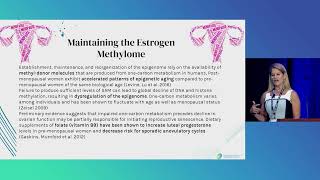
The Intestinal Microbiome, Menopause and Weight Gain: An Epigenetic Factor? | Bridget Briggs
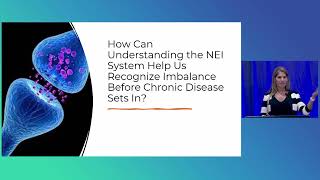
TLC 2023 The Intersection of the Immune, Nervous & Endocrine Systems w/ Metabolism | Bridget Briggs
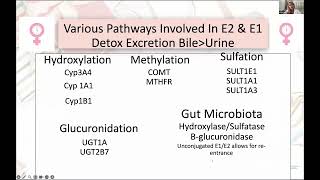
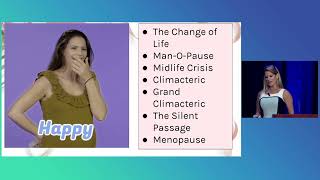
Optimizing Menopause: Understanding the Role of HRT & Natural Remedies for Health Optimization
The Secret to a Clinician's Success Begins with a Healthy Gut: Bridget Briggs, MD