Optimizing Menopause: Understanding the Role of HRT & Natural Remedies for Health Optimization
Dr. Bridget Briggs and Dr. Melissa Carrillo cover menopause management through hormone therapy and supplements. They discuss the 2017 NAMS guidelines, bioidentical hormones, genetic testing like DUTCH and CYP1B1, and specific formulas for vasomotor symptoms, bone health, and gut function. The webinar emphasizes individualized treatment and retesting to optimize outcomes.
Chapters
Welcome everybody to our very exciting event. My name is Nicole Fox and I am the director of programs over at the Personalized Lifestyle Medicine Institute. I would like to welcome you to a 2-week event that we are having right now that is starting that is sponsored by two of our executive partners, Dutch Test and Metagenics. So tonight's event is Optimizing Menopause: Understanding the Role of Hormone Replacement Therapy and Natural Remedies for Symptom Relief and Long-Term Health Optimization. We're really excited about this event, um, and our speakers, which I will get into in a minute. But we also have an event next week that's going to be part 2 to this. So If you have not already gotten yourself registered for next week's event, um, you do need to register separately, and you can do that through our webpage. So next week's event is addressing hormonal imbalances in the menstruating female using natural remedies. So about this evening, we have 3 amazing speakers. We are going to be kicking off, um, our event with Dr. Bridget Briggs, MD. If you have never heard her before, you are going to have a fulfilling educational experience this evening. She's one of my personal favorites to listen to. She's full of inspiration as well as knowledge. A little bit about her is Dr. Bridget Briggs is a medical doctor and has been empowering patients to live inspired, healthy lives for over 20 years. Her integrative approach and profound knowledge of genetics, epigenetics, nutrigenomics, and biochemistry has paved the way for her advanced methods in precise personalized preventative medicine. Bridget Briggs, MD, PhD, is a board-certified family medicine physician who is at the forefront of emerging science of genetics and how a patient's DNA can be altered to prevent disease or treat current ailments with a personalized treatment plan. She specializes in functional medicine, bioidentical hormones, lipidology, women's health, pediatrics, geriatrics, detoxification, nutritional and dietary support. Her expertise in genetic testing and interpret— and interpretations allows her to develop a precise treatment approach leading to improvement in all areas of disease ranging from chronic migraines, fatigue, anxiety, depression, autism, GERD, IBS, SIBO, and many other health issues. So it is with great pleasure that I get to pass over the platform to Dr. Bridget Briggs.
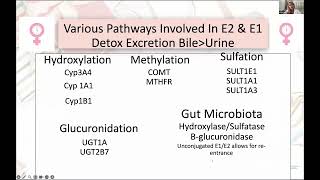
Well, thank you for having me, Nikki. It's super exciting to be here with you guys. There is not a topic that I enjoy speaking more about than hormones. I started off my adventures into medicine as an OB-GYN, and then midway through my residency, I changed into family medicine. So I have a passion for women's health, and it's really exciting to get to share some of my experience in women's health. Miss Nicole, I want to make sure that— I think you've passed the baton to me, so I'm going to go ahead and put my slideshow up. I'm not sure if I need to share my screen, so give me a second, guys, as I share my lovely messy screen with you all. And then I am going to open up from the very beginning. Tonight's talk again is going to be on menopause and hormone replacement and natural remedies as well. And I laugh a little bit. I think our group decided because menopause is such a dramatic transition in women's health, we decided to open up today talking about probably the most eventful moment in our lives, which is the menopausal transition. But I'm really excited about next week as well because long before we women enter into this menopausal torture zone. We are the fertile females dealing with babies and developing families and experiencing many of the earlier life changes. So real quickly, let's dive in and just review some of the female life cycles and changes that occur in sex steroid hormones. So, you know, when we have our little— our children and our babies, you know, long before they've ever had their first, you know, sex steroid hormone production. The cutesy little kids, you know, we see rapidly when puberty develops, there's this massive change in the, the sexual development of our teens. And almost overnight, your little preteen, your tweenie, is now a woman. And so these fluctuations that occur at the time of puberty are really accelerated and dramatic hormonal changes that are occurring that can be responsible for a lot of the mood irritability connections and inflammatory connections. I'm going to talk a lot about that next week, as I have teenagers, which are just so lovely to deal with. But, you know, sexual maturity really is fine-tuned by your late 20s. And the average age of women having babies is, you know, right there in your 30s. And then towards your mid-40s, we start to see this, you know, deceleration with anovulatory cycles and things like that of these fertile female hormones. And so when we're talking about Oh my goodness, as I'm trying to move this, sorry. Here we go. The fluctuations of hormones. When we talk about the average age of menopause, we're really quickly discerning that this average age is variant, right? They may say the average age of menopause is 52, but really the menopausal transition is a 5-year-long phase of hormonal changes. And, you know, in the fertile phase of development, we have primarily 17-beta estradiol that again peaks in your 20s And then in menopause, those fertile estrogens really change. Women are not dry as a bone. They're not without estrogen. In fact, the primary estrogen that is produced in menopause is very similar to the primary estrogen in men, which is called estrone. And what's interesting about estrone, it is 7 times less potent than estradiol, and it is strongly related to the amount of adiposity or fat cells that a woman has because estrone is primarily produced not in the ovary, but actually in the adipose tissue. So there's actually 4 circulating types of estrogen. I love this one because we call them E1, E2, E3, and E4. And you can see embedded into the name is estrone, estrone is 1, and estradiol is di meaning 2, and estri, tri meaning 3, and then estratetrol is 4. E4 is primarily produced by the fetal liver and it's really only found in pregnancy. And again, your estradiol is more a pregnancy-induced estrogen. We're going to talk about those again next week. But between, you know, our fertile women, our key most important estrogen is E2. And in menopause, the dominant estrogen is going to be estrone, which is E1. To remember is estrogen is actually synthesized from cholesterol in the granulosa cells of the ovaries. And so any of you clinicians who have seen, you know, this rapid rise in cholesterol once a woman stops having ovulatory cycles. That's because the Lego piece that produces estrogen, it comes from LDL or basically cholesterol. So this is an important thing to remember when you see women that say they've always had normal cholesterol and then all of a sudden they have high cholesterol. The answer isn't to immediately put these women on statin drugs, but I want you to take a step back and analyze what's going on with their periods and their hormonal cycles. And do they actually need hormonal therapy or some hormonal manipulation. Again, there are various pathways involved in the detoxification of estradiol and estrone. I've listed some of them here, but we're going to cover that more in depth next week. But today I wanted to focus on the gut microbiome. And I feel like there's so much going on in research today about the microbiome, and very little is conveyed into traditional practitioners what what really is occurring in the microbiome is so tightly connected to some of the menopausal symptoms and the complaints and the weight gain and the insulin resistance that women are verbally declaring, my body's changing, I'm having bloating, I'm not sleeping, I'm having migraines. But none of us have really been taught how the gut microbiome is deeply connected to that. So, you know, I love this graph that talks about cholesterol being the synthesis factory of the, the estrogens and the 3 major stages of phase 1 detoxification involving CYP3A4, CYP1A1, excuse me, and CYP1B1. And then of course in phase 2 detoxification, this is where we're gonna learn about, you know, the importance of methylation. I know Mark, you're gonna do an amazing job reviewing how to, you know, study and evaluate appropriate methylation. And then excretion, which is also gonna involve sulfation. And we're gonna spend a lot of time today talking about glucuronidation and glucosidase. Now, today I want to remind everybody that, guys, we can test for this. This is not like a voodoo, I feel kind of a thing. I'm a lover of blood. I love serum and I love urine metabolites to get a better understanding of detoxification. We are all taking care of women with, you know, individual detoxification pathways that may be fast or slow. And so as we're looking at, you know, hormonal manipulation and hormonal balance, we need to better understand not only genotype, type metabolites or genetic SNPs that people may inherit, but how to study and evaluate how when we manipulate a hormone, you know, using detoxification like EstroFactors, or if we're implementing hormone therapy like bioidentical hormones, we can draw the blood and we can also look at urinary metabolites. And so I put this graph up to really give everybody the big global picture. So, you know, so many times We forget that in fertile women, it's important that we're looking at apples versus apples. So you try to always order a day 21 hormonal pathway. And when you do that, you're going to look here in the left-hand corner. I like to look at estradiol on day 21. If they're becoming more irregular periods, you know, you're going to have less accuracy with day 21, but that's okay. I look at E1, which is estrone. And down here at the bottom, I want you to look at how I measure estrone. Sulfate. So estrone sulfate is a detoxified or a neutralized estrogen, but it has some great phenomenal research, um, as a metabolite that's important to watch in women's health. And it has a connectivity to like breast cancer and things like that. So once again, I'm not looking at just kind of the, the estrogen being produced, but also the metabolites that are being detoxified, like estrone sulfate or total estrogens to kind of analyze if this woman is estrogen dominant, is she estrogen deficient. I like to do serum progesterone levels. In your fertile females, you're looking for a progesterone level over 5 means they're ovulating. Super fertile women have progesterone levels over 10. I've seen progesterone levels up to 20 and 22. So, um, and progesterone is a nice prescription to use in women that are going through perimenopausal changes or women that have mood issues, depression, irregular cycles, um, and You know, progesterone is so easy because guys, you don't even need to have a license to write progesterone. There's topical progesterones easily available at health food stores and on Amazon. Um, but I like to use prescriptions. I like to know the exact dosages that my patients are on. And then I think that it's really important to highlight the importance of following thyroid function and cortisol and pregnenolone and DHEA and things like that. So when I do a hormone panel, whether it's a serum panel or whether it's urinary panel, this is an example of urinary panels. I I think it's important to look at not only your fertility hormones, your thyroid hormones, but also your adrenal hormones. Um, some of the benefits to the Dutch test, which is once again a urinary test, is we get these additional benefits of looking at the catecholamines, like reflections of dopamine or norepinephrine and epinephrine and what have you, which is fantastic. And then we've got some details as well that Mark's gonna go through later on where we can kind of look at like, uh, stressors on oxidative pathways and things like that. So, um, the other thing that we need to remember that estrogen is just not about fertility, guys. It has so many different roles in the woman's body. Um, women spend 1/3 of their lives in menopause. So when women come in and the wheels are falling off the cart, guys, I want you to remember that multiple organs suffer in an estrogen deficient state. So we see brain developmental changes, memory changes, neurodegeneration. We see bone loss. We see lipid changes, fatty liver problems, metabolic homeostasis changes at the time of estrogen deficiency, and the link to, once again, immune dysfunction like autoimmunity and cardiovascular disease. The menopausal transition for most women, they, they think it's an all or none thing. So it's actually a 5-year-long period, but we really talk about that 12 months from a woman's final menstrual cycle. When she goes 12 months, that is the true definition of menopause. And you usually begin to see a heightened level of LH and FSH. You may see variant levels of estradiol, total estrogens, and progesterone, because again, it may be, um, reflective of— she's still making estrogen. Just because a woman isn't ovulating doesn't mean she's estrogen deficient. So you'll see really different, uh, levels of hormone values depending on where a woman is in this transition. And because it's non- common for a woman to go 3 months without a period and then she'll have 3 periods and she'll go 6 months without a period and she may have 2 periods. So, you know, you don't always know in terms of where she is in the stage of the transition of menopause, but be really open to anything goes at this phase. But what are the menopausal consequences? Very few women are walking in the door saying, you mean my gut bacteria are making me fat, bloated, moody, sweaty, forgetful, and bitchy? I mean, women don't make that connection. I don't think most doctors do. But menopause is this subsequent hormone deficiency phase that starts to cause metabolic dysfunction, obesity, diabetes, fatty liver. Men and women that are in this or live amongst this, we don't know if we're happy, sad, we can't deal with anything. This is almost a cruel joke to women, whether we call it the change of life, the menopause, the midlife crisis, the climacteric, grand climacteric. I mean, This passage is not easy in women, and we need a lot of tolerance. Women, we don't feel pretty. None of our clothes fit. Women say they eat nothing and they still gain weight. You can never find the right temperature. But we're sleeping next to our, you know, handsome husbands. We're freezing them out. Next is the woman sitting in front of the fan where she's roasting, and it's the dead of winter. And, you know, marital bliss is something of the past. Women don't handle stress. Men, you're still focusing on all the right positions, and women are focusing on how to get away from you. This is a tragic story, but, you know, a study released in 2017 found over 60% of divorces occurred during this menopausal phase or menopausal transition, and most of them are initiated by women. So we don't even know ourselves. So many women say, oh, Dr. Briggs, I'm not in menopause anymore. I'm finished with that. Here's the bad news. You're not finished with that. Women spend one-third of their vibes in menopause, a state of anovulation, right? So the 7 stages of menopause— itchy, bitchy, sweaty, sleepy, bloated, forgetful, psycho— they're here to stay if we don't do some type of intervention. Women, you know, we kind of identify with this, you know, menopausal fairy. She comes to steal your figure, your sleep, your mood, your patience, your eyesight. She eats your brains and she leaves you with a lousy mustache, a muffin top, flashes, itchy skin, 10 million moods, and a dodgy memory, and an excessive need for coffee, wine, and carbs, and naps. So we go to the mirror and we think we're going to see our old selves on the left. And in reality, we see a woman that has a muffin top and we don't recognize ourselves. And these are not happy women, guys. Uh, we have an acceleration of our epigenetic clocks. Um, the aging process can be literally over a year. You won't recognize the same woman and she doesn't recognize herself. And it's not just the outside appearance, guys. I mean, the aging process, the, the aging of the internal GI tract is aging just like the external skin. And we're going to look at aging and transition is different even in races. It's, it's really interesting to see, you know, you may look at your girlfriend who may be Asian and she's just aging one way and complaining the symptomatology and other girlfriend may be Hispanic or African American, and they're just breezing through it and they've never had a hot flash in their life. So not all women have the same transitional symptomatology. But there are traditional symptoms that are associated with the midlife aging process. And the key is many people think, oh, just get through it, you're fine. We, we see tons of, you know, references to the Women's Health Initiative study and hormones are bad and they're controversial. And so women, you just need figure out how to deal with your moods, depression, you know, you cough and you pee and you can't sleep and you have no cognitive function, memory. But even the American Academy of Cardiology has said that the number and severity of hot flashes matters, guys. It directly correlates with a woman's cardiovascular risk. The neurologists now consider menopause untreated as an Alzheimer's fifth risk equivalent. And more importantly, in obese women, there's a study in obese Black women, they transition to menopause very differently. In fact, what's really interesting is obese women, not only do they have a very different microbiome than thin women prior to menopause, but they, they honestly go through a different microbiome change if they go into menopause already with obesity and insulin resistance. So Across the board, regardless of insulin sensitivity, you know, there is dramatic changes that occur in the microbiome at the time of menopause. And the microbiome, if we lose what's called our beta diversity and we lose some of this healthy microbiome and develop higher concentrations or an imbalance in what we call the Firmicutes-Bacteroidetes ratio, we start to see that this change in the microbiome is related to almost every cardiometabolic, inflammatory, neurocognitive disease out there. So there's some evidence that there's some social influences and environmental influences that are out there that may create different microbiomes in different races. But regardless, it's very important that we're coaching women in the years prior to the menopause transition to do their very best to stay slender, to adapt healthy lifestyles, eating, exercise, because all of these have been shown to not only enhance the ability of women to go through transition, but to diminish the risk of developing so many of the itis, right, the diseases that occur. So let's spend just a couple of minutes looking at the pre- and the postmenopausal microbiome. At the time of puberty, a girl's microbiome completely changes. It just grows like wildfire. The diversity, especially the beta diversity, just expands. So we don't at all have a gut like a man. Okay. They have an androgenic gut and women have a female gut that has been characterized or laid labeled as estrabalone, okay, which is a term describing really the aggregate of enteric bacterial genes whose products are capable of metabolizing estrogen. So bacteria in your gut are deeply involved when we're trying to excrete our estrogens. They interact, they deconjugate some of these estrogens that are trying to be eliminated for re-entrance. And some of these changes are linked to some of the metabolic problems, the adiposity problems, fatty liver, and what have you. So what do we know? There is a bidirectional relationship between estrogen and your gut microbiome. And the gut microbiome in turn regulates the health of the gut, the inflammatory immune system, um, and regulates really estrogen balance. So this bidirectional relationship has been linked to a higher risk of cardiometabolic disease in menopausal women that have less diverse microbiome. Um, and you know, anything that changes your microbiome along the pathway towards menopause, like long-term use of birth control pills and excessive use of antibiotics. So anything prior to the menopausal transition that creates an unhealthy microbiome can increase the consequences of menopause and the loss of diversity. So we're all aware of the mood changes, the coronary vasomotor dysregulation that occurs, the bone loss, the sleep disturbance. We've talked about the lipid changes. 65% of women start developing prediabetes, which is huge at the time of the transition. But women can come in with really bizarre symptoms like burning mouth, or mons, where women start to complain of like deep, deep, like finger-like nodular projections, painful projections in the breast tissue. Women can experience an increase in autoimmunity and joint pain, just global inflammation because the presence of estrogen is so naturally anti-inflammatory. So all kinds of studies have proven that in menopause, estrogen levels are actually very similar to a man. So, so testosterone levels for that matter. I mean, you— we women have testosterone just like men have estrogen, and hormones directly impact the microbiome. Here's a great study kind of looking at the presence of estrogen and progesterone help to limit intestinal permeability. So literally, like plasma progesterone levels, like in pregnancy, are inversely correlated with lipopolysaccharide found in the blood, meaning they help to prevent, um, breakdown of the mucus barrier, breakdown of the intestinal epithelial cells. Estrogen is an antioxidant. Um, specifically the, the best receptor is for gut health is the beta receptor, and it's very dominant in the gut. And when beta receptors are triggered, we see less autoimmunity. And So when you actually look at individuals that have like inflammatory bowel disease, like Crohn's disease, you actually see dysregulation of that beta receptor, the, the estradiol beta receptor. So hormones play a very important role in the barrier health of your gut and the layers of defense. And not only that, but they prevent translocation. So if there's an infection and you start to see lipopolysaccharide or infections or inflammatory oxidative debris, that enters in the blood, this is more the case. The risk is more the case in an estrogen deficient state. And so guys, we have to step back and think about not just the menopausal transition being a vulnerable state, but remember things like giving girls birth control pills, giving people NuvaRings, giving people Mirena IUDs. Anytime we, we lower the global estrogen level and the progesterone level, we create a potential potential risk zone, which is again the intestinal epithelial cells. So let's study a little bit about what happens when you do an oophorectomy, or you take out in a rat the ovaries. And surgical menopause is not at all like natural menopause. And the thing to remember about that is with surgical menopause and you taking out the ovaries, the ovaries have hormone production, right? They have the ability to produce androstenedione, which is a precursor hormone that interacts not only with gut and microbiome, but as a precursor hormone to make things like estrone later on. So menopause-associated risk factors such as gut ecology are altered if you make these rats exercise. It's incredible. So take out their ovaries, you see this total breakdown of their gut. But if you make these rats do this aerobic exercise, it seems to have protection. And they realize that some of this protection is is that exercising seems to increase very specific short-chain fatty acids made by good bacteria. And the primary one that we, we've seen a lot of evidence in terms of like healthy gut colonocytes and what have you is butyric acid. So increased aerobic capacity may prevent or delay some of the menopause-associated lipid accumulation, some of the weight gain, some of the adipose tissue proliferation, triglyceride deposition that you see again in ovariectomized rats or in humans that have had ovaries taken out. And we see some evidence here that the authors observed that the ratio between the Firmicutes and the Bacteroidetes, it literally is associated with a lean phenotype when the ratio is lower. So microbiome and the composition of the microbiome microbiome matters in terms of weight balance. Here's a really interesting study looking at curcumin and its ability to support— supporting weight loss, especially when these rats are exercising. Really important factor in women's health, guys, is we care about our skin, right? And we all see right away the skin changes, the droop, the laxity goes away, the collagen changes. But I think what nobody really thinks about is there are similar changes happening at the gut microbiome when estrogen begins to diminish and when there's the loss of progesterone due to anovulatory cycles. And so this study was really interesting because not only did they look at plant estrogens, okay, so if you ingested more plant estrogens, you not only help the gut microbiome, but you actually help the aging of your external skin. Um, diets matter, right? So when women are starting to go through the change and everybody's like, help me, me, Dr. Briggs, I'm gaining weight. I can't lose weight. I'm starving myself. I'm exercising. Um, and nothing's working. This study showed that, um, there is a huge problem with these keto diet diets or these carnivore diets if they lack the really healthy high fiber phytoestrogens that are mandatory to feed your good bacteria. So a diet rich in fat or excessive fat or excessive protein has been found to be associated with higher beta-glucuronidase activity, okay, which is again, um, gonna allow for estrogen or estrone re-entrance into the body. It's associated with a dysfunctional microbiome. And if you compare that to a high fiber dense diet, the total opposite. So phytoestrogens and potent serums can actually enhance the diversity of the gut microbiome. And I want you to focus on this was a, a Dermal Health paper that was looking really at how when we are focusing on healthy gut, we have good, healthy external skin. And so there's a lot more to healthy skin, ladies, like, you know, half your plate in fruits and vegetables, a high phytonutrient-dense rainbow diet, plenty of water. But even water matters, right? Like alkaline water or electrolyte-enriched water keeps the turgor in your skin. But physical activity, maintaining your healthy body weight, sleeping de-stressing, and then other things that we're going to talk about, like ingredients that can be very important with aging of the external skin, but always embracing the moment that, that is helping to develop and maintain a good healthy microbiome and a good healthy intestinal wall. So how do estrogens impact the microbial production of short-chain fatty acids? Um, I feel like short-chain fatty acids have had just a really highlight towards our attention in the last few years because there's a lot of evidence that the ability for short-chain fatty acids production from good healthy bacteria is kind of like reflected when there's a good Firmicutes-Bacteroidetes ratio. And estrogen metabolism, you know, seems to be directly impacted by the type of microbiome. So here's a study that said short-chain fatty acid-producing bacteria, especially the good ones like the butyric acid-producing ones actually produce an anti-inflammatory impact and they alter regulatory T cells, which are really important, not only in like allergies and autoimmunity, but these short-chain fatty acids that again are produced when bacteria ferment the high-fiber foods, the high plant-based diet foods that you eat. And these short-chain fatty acids not only fuel your colonocytes, but they help to convert primary to secondary bile acids, and that helps with, uh, colonization resistance to pathogens and things like that. And again, in women that have a dominant beta-glucuronidase microbiome, this is where they deconjugate the estrogens and you get this estrogen re-entrance, which seems to correlate with the insulin resistance and the menopausal weight gain and things like that. So anything that improves Our microbiome's ability to produce short-chain fatty acids helps with intestinal barrier integrity, mucus production. It's anti-inflammatory. We know that it reduces colon cancer. It helps to make our own Ozempic, right? GLP-1 and peptide YY is— everybody's coming into the clinic trying to get some gliptide. We have the ability, guys, our bacteria has the ability to produce short-chain fatty acids that act like GLP stimulators. And then, of course, they do this great symphony of hormonal malou to tell our beta cells to make the right amount of insulin. And never forget the power of the microbiome. It is critical that people remember that a majority of the serotonin in the human body comes from the enterochromaffin cells of the intestine, and a great deal of GABA does too. So the 3 major short-chain fatty acids that are manipulated or produced primarily by friendly bacteria bacteria are going to be acetate, propionate, and butyrate. But butyrate is going to be the one we're going to spend a lot of time on because it has an immense amount of positive impact in healthy gut, healthy liver, healthy brain. So short-chain fatty acids such as butyric acid not only act like Miracle-Gro in the gut of the lawn of your gut or the individual enterocytes, they get absorbed absorbed through the lymphatic system and they actually feed the hepatocytes. So they act like fuel to keep a healthy liver. They help to prevent fatty liver infiltration and they can cross the blood-brain barrier. So they have a great deal of involvement in producing brain-derived growth factor and helping to keep our brains with neuroplasticity and kind of come against some of the things that happen with menopause. So again, those neuroendocrine cells of the intestines. They produce a lot of hormones. They're directly involved in the systemic circulation or the vagal pathways. So a lot of these, you know, hormones like serotonin and GABA, they're neurotransmitters, but they're hormones because they cross the gut and they go into circulation and they have distant impacts. We see short-chain fatty acids help to activate brown adipose tissue. There's some research about short-chain fatty acids having the capacity to grow muscle. And then not only do they have blood-brain barrier impact and neuroinflammatories, they're neuroanti-inflammatories, but they play an important role on moods, cognition, and pathophysiology of brain disorders. So why is that important? Because when you do a stool study on a menopausal woman, guys, she has a very different gut. Her stool studies look very different than when she's fertile. And so if you measure things like her beneficial bacteria, like you see here, She has low beneficial bacteria. She can be seen to have low butyric acid or just low global short-chain fatty acids. And then I want you to look up here how she has a high excessive concentration of beta-glucuronidase, which again is produced by unfavorable bacteria. So when we're addressing menopause, um, we need to remember to focus on healthy gut and how does estrogen intervention, therapy, or manipulation interact between the microbiome and the obesity connection. So we understand, of course, that, you know, between the ages of 40 and 59, literally 65% of women have the prevalence of obesity in America. And by the age of 60, almost 75% of women deal with obesity. In fact, menopausal women are 3 times more likely to develop metabolic syndrome and obesity. And guys, most the time, They're not making huge mistakes. They're not eating McDonald's. They— many of our patients are doing everything right, but they're going through the estrogen deficiency transition. And so we need to empower women to really understand what's going on in their bodies, take the blame off, remove the scarlet letters, and help them understand that although some of this is out of their control, menopause is going to happen to every girl. Like, none of us are going to escape it, but we have the power to go in there and, and balance estrogen and progesterone and support healthy metabolism. Obesity and the menopausal change may lead to shared dysbiosis. So the thing to remember is obese women have dysbiosis, right? And menopause creates dysbiosis. So you've got to remember there's a deep correlation when women are going through both. They're obese and they're going through menopause. The risk for developing estrogen-like cancers is dramatically higher in obese women. And so obesity, you know, is something that it can make a very unpopular conversation to have with women. But if we really put it in the right scope of, you know, cancer prevention, breast cancer prevention, endometrial cancer prevention, colon cancer prevention, I think women are more motivated activated to deal with this long before they go through true menopause. We already know, like, the hypertension connection, the cardiovascular connection, the microvascular connection. Those are things that we call the silent killers because we can't feel them. Remember, women, they don't always know when their blood pressure is rising, and they'll walk into the clinic and they'll say, oh, I never have high blood pressure. I've always had low blood pressure. But I want you to remember, the menopausal transition is a different woman, right? So what's going on with her microvascular health pre- and post-menopause? It's different. And same thing with her lipids. This is a great article on the gut microbiome steroid sexual dimorphism and its impact on gonadal steroids that influence obesity and menopause. So obesity has the effect of literally erasing the sexual differences that are found between an androgenic gut and a female gut. And so we've seen evidence that even the arginine biosynthesis pathway, which is really the pathway of, like, hypertension and things like that. And in postmenopausal women, their microbiome and their arginine biosynthesis pathways look alike. They look like men's microbiome and hypertension and cardiovascular disease. Remember, women join the death curve of men at the time of menopause because we begin to see microbiome changes are mimicking what you really see in a man. And in obese women, they're already there. Okay. So this activation of the parasympathetic nervous system, which, you know, next turns on like increased glucose production and increased insulin production and insulin resistance and altered ghrelin secretion. And women that are hyper—
having—
dealing with hyperphagia and obesity, this sequela is deeply connected to the woman who is already obese. And already changed her microbiome is at a distinct disadvantage long before she goes into menopause. And actually, these patients have been shown to have a much higher concentration of the short-chain fatty acid called acetate as compared to, you know, women that have a higher concentration of butyric acid. Here's really interesting, again, more interesting information on high-fat diets. Again, so these keto diets, women that are not eating any carbohydrates. And so this study showed that chronic exposure to these high fatty diets, it literally changes once again the microbiota-brain-beta cell axis, promoting obesity and fatty liver, and is doing that through alterations of the acetate short-chain fatty acid. So one, remember, microbiome breaks down your plants and produces short-chain fatty acids. If a dysfunctional gut produces excess acetate, that's where we see it's connected to the insulin resistance and the impaired glucose glucose. Because if you vagotomize rats and you inhibit acetate from going into the bloodstream, we don't see that the high-fat diet has any connection to the insulin resistance and the fatty liver. So this tells you really how powerful these short-chain fatty acids are and how the microbiome, you know, yes, feeding our microbiome good food matters, but hormones drive changes in the microbiome. Microbiome. So lastly, you know, touching on that is— and I don't know if I missed the slide or whatever, but many women that are going through the change, they're so worried about weight gain, they're drinking their diet sodas and they're taking their Splenda and they're adding that to their coffees and their teas. And evidence has shown that these artificial sweeteners make you fatter because once again, they grow a dysfunctional microbiome. So what's fascinating is you can go in there and support diets that release higher butyric acid. You can give people butyric acid. And this has been a common thing that's done to people with inflammatory bowel disease, IBS, dysbiosis, patients that have had resections, like short bowel resections, but especially post-chemotherapy patients. When they've had prolonged cases of chemotherapy and they have a dilapidated, broken-down gut, many times post-chemotherapy, we can use dosages of 150 to 300 milligrams a day of butyric acid. And it's like Miracle-Gro, guys. Your gut lining just proliferates and gets healthy and can sustain a good, healthy microbiome. Butyric acid is therapeutic in people that have non-alcoholic fatty liver disease. So if estrogen deficiency increases non-alcoholic fatty liver disease, which we know that it does, because it's found 3 times more likely in menopausal women as compared to premenopausal women. Of course, it's also found in obesity, right? Because we've talked about obesity is correlated with dysfunctional microbiome. Menopause creates a dysfunctional microbiome. So you can see how the linkage between one of the fastest growing diseases in America— what is it? Nonalcoholic fatty liver disease. But hormonal therapy does seem to help prevent prevent or arrest non-alcoholic fatty liver disease. And why this is so important, guys, is out there they'll tell you there is nothing you can do for fatty liver disease. You know, put people on a low glycemic diet. Now here we are making the mistakes of eating keto, right? And making an unfavorable microbiome. But in estrogen-deficient mice who do develop severe non-alcoholic fatty liver disease, if they do a fecal transplant, it attenuates. Attenuates the, um, the alcohol— non-alcoholic fatty liver disease that was induced by estrogen-deficient mice, right? So first they take out the ovaries, they give them surgical menopause, and then they develop severe fatty liver. But if they do a fecal transplant, lo and behold, it helps to abate that or attenuate that. So in this study, they show that butyric acid, if you supplement supplement over-ectomized rats with butyric acid, not with estrogen. So just initially, just supplement with butyric acid. Lo and behold, it helps to ameliorate or get rid of exacerbations of fatty liver. So it's because, once again, it's working on intestinal epithelial tight junctions. We talked about being like a Miracle-Gro in the gut. Um, here's some really interesting data that healthy gut, because of healthy estrogens, produces nice concentrations of butyric acid, which can also be supplemented in people that have sarcopenia, which, guys, what happens in menopause? I mean, when women go through estrogen deficiency, we see that on average people can lose 5 to 6% of their muscle mass per year. And you know that when you give estrogen therapy, you help to prevent that. But what if you can't give hormone therapy? Phytoestrogens can help. Here's a study looking at just supplementing butyric acid helps to, to regenerate skeletal muscle in people that have sarcopenia and helps to alleviate the loss of skeletal muscle. So here's a, just a patient example of what happens in a fertile woman who you make look like a menopausal woman, right? So birth control pills, think about some of these are 10 micrograms or low, low, low estrogen. Okay, so can you see that Um, the putrefactive short-chain fatty acids in the left side are low. You can see the butyric acid is low. The beneficial short-chain fatty acids are low. Guys, this poor girl, this young girl looks like almost exactly like a menopausal gut. Um, and then on the right, you start to see once again when the colonocyte is unhealthy, we don't have enough short-chain fatty acids. It's no big wonder that seeing like secretory IgA, high anti-gliadin antibodies. You see the immune system is upregulated because they're missing that Miracle-Gro, that really healthy concentration of short-chain fatty acid. So real quickly, before we jump ahead of or move past butyric acid, I always giggle because we do prescribe butyric acid in the clinic that, you know, patients that have like GI complaints or what have you, or cognitive decline. And whenever you open up a bottle of butyric acid, I tell people, do you actually know where butyric acid comes from? Because it comes from that smell in vomit, right? It's the smell that you smell when in the anal glands of dogs. It's not a fantastic smell, guys. So the one that we carry literally smells like vanilla vomit. So I always tell people, don't sniff it. It doesn't smell fantastic. And it does fantastic things for the human body, but it's a lot more pleasant to give women estrogen estrogen, if applicable, then to make people swallow butyric acid. So it's, it's a great tool. But guys, today is really all about why I believe hormone balance is so important. Um, I want to quickly talk about bile acids and the estrogen connection because we all recognize, you know, women in our 40s, they call us fat female fertile in 40s. There's a huge connection between, you know, high estrogen levels and an excessive amount of bile acid production and gallbladder disease women's health. So the bile acids are generally used like soap, right? So they help with emulsification of fat. They help us to absorb a portion of our, you know, essential fats in our diets. We get our fat-soluble vitamins and things like that. But they're actually natural antibiotics in the human gut. So we don't want low bile acids and we don't want excessive bile acids. So hormone balance is really important because it directly correlates with healthy production of bile acids and your bile Bile acids are absorbed in the terminal ileum. Um, and that's when they're conjugated from the primary to the secondary bile acids. And that's dependent once again on healthy estrogen, healthy microbiome enables the short-chain fatty acids that are produced by the bacteria to help with the conversion of the, the primary to the secondary bile acid. So once again, we're getting back to the basics. Healthy gut means healthy estrogen means healthy microbiome. Biome, which means healthy short-chain fatty acids and healthy bile acids. So gallbladder resections matter, guys. Um, you can start to see all kinds of inability to absorb or convert primary to secondary bile acids. Um, and low bile acids once again are something you can test for in these advanced stool studies. And there's a big connection between like immune inflammation, zonulin, which is a marker for leaky gut, and abnormally abnormally high bile acids. Both of them can affect— remember I said it's like a natural antibiotic, so they can affect the healthy gut. So I think this patient on the right, abnormally excessively high fecal bile acids. And then once again, high calprotectin, inflammation, leaky gut. This study is called GENESIS, and it's covered by insurance, so I really like it. Again, let's dive back into surgical menopause because it's a great tool to better understand what happens to women in estrogen-deficient states. So in this article, Dynamic Alteration of the Gut Microbiome Associated with Obesity and Intestinal Inflammation in Ovarectomy Mice, meaning dynamic changes occur to the microbiome within 4 weeks of taking out the ovaries, right? And if you've ever spoken to a woman that's had a hysterectomy, if they go in there and they replace her estrogen right away, less GI symptomatology. But if they don't, if they do surgical menopause and she wakes up right away, bloated gas, indigestion. So the interesting thing is that in this study, we see that butyric acid does help to increase the health of the gut, the regeneration of the gut, especially when you combine that with estrogen therapy. If you take out the ovaries of these rats, But menopause significantly impaired spatial learning and memory in the aging process in the age-matched oophorectomized rats as compared to the ones that didn't. And estrogen therapy alone does not take away all of these cognitive changes that occur when you take out an ovary. Why does this matter? When I was doing OB/GYN, guys, we took out women's ovaries all the time. We're like, we're gonna do a hysterectomy, we're gonna take your ovaries, you don't need them, you're done having babies, like, we can just reduce your incidence of getting ovarian cancer because we really didn't think that the ovaries did anything. But lo and behold, there is such a better understanding of hysterectomies change your methylation pathways. This is an article that talked about altering your formate pools, which are like the pool of folic acid inside the cell that has to do with that single carbon molecule that basically enables you to produce methyl groups for estrogen detox. And the global methylation pathways were that we're not going to talk about, but ovaries matter. This is an article looking at menopause and estrogen therapy modulates the gut microbiome. So when you give estrogen, you protect the microbiome, you support the microbiome. Hormone therapy may attenuate menopausal-associated weight gain, adipose accumulation. And this is in the NAMS 2017 update, guys. So we had an update in 2017. 2017 that talked about not only weight gain and adipose accumulation, but they talked about cognitive changes, right? So that's not new stuff. And remember we said the one of the 5 leading causes of Alzheimer's, menopause untreated. Okay, neurology, neurologists know that when women come in with cognitive changes, it is important to address what's going on with menopause. So estrogen is known to modulate the microbiome.
Microbiome.
And in turn, this gut microbiome modulates the estrabolin, right, which once again affects the re-entrance of these estrogens. So estrone doesn't have the same impact as estradiol. Here's a study that showed the earlier a woman goes through menopause or even menopause transition, the faster accelerated biological aging occurs. So that's scary, guys, when women are spending a third of their lives in menopause. You know, we're hoping that we're going to get women to 52, but If women have an oophorectomy before the age of 46, it doubles their risk for cognitive decline. And so women know, they're like, this is not my brain. I have brain fog. The oophorectomies are not benign, but the earlier the oophorectomy, the more deleterious the risk is for cognitive impairment. Here's a great study looking at estrogen's impact on duodenal microbiome. Okay, so hormone therapy significantly improved the microbiome and improved estrogen metabolism, glucose metabolism, as compared to women that were not taking estrogen and progesterone. So the, the duodenal microbiome seems to be very responsive to estrogen, and alterations of estrogen changes that duodenal microbiome. This article, once again, Surgical Medicine, menopause is not completely reversed by taking estrogen. So we really want to ask ourselves before we do hysterectomies, do we find that there's a higher risk? Remember that ovarian cancer comes from the fimbria. So we no longer believe that ovarian cancer comes from the ovary. So when women take out the fimbria, we're not as concerned, but we'd like to see the ovaries left alone, if possible. Here's the impact of postmenopausal hormone therapy on duodenal microbiome. And hormone therapy may significantly reduce all-cause morbidity, all-cause mortality, and cardiac mortality, with these effects being more pronounced in younger women that go through hormone therapy initiators. Now, in women that go through menopause and they get past the age of 60, we don't have as much data from the Women's Health Initiative study. Looking at progressive studies out of the NAMS research, 2017 and the 2022 update, we don't have as much data saying, oh, we're doing all this protective stuff. So we need to have other therapeutic remedies for menopause besides just giving estrogen. Yes, NAMS, the 2022 update, I want to say this is an 18-page article that says hormone therapy remains the most effective treatment for vasomotor symptoms and the genital urinary symptomatology that occurs with menopause and bone loss and fracture. Okay. And the risk of hormone therapy does differ depending on the type, the dose, the duration, the route, the timing, and whether a progestin, which we don't use, is used. Because remember, in the Women's Health Initiative study, the research led to the conclusion that the progestin, the progestin arm was the culprit, which is a non-bioidentical progesterone. So they agree treatment should be individualized. It's not the only way to go, but for women that are under the age of 60, and within the 10— first 10 years of menopause. And as long as they have no contraindications, the benefit-risk ratio is favorable to treat some of these vader motor symptoms and prevent bone loss and cognitive decline, right? But again, women past the age of 60, we don't have that same level of evidence. Um, here's some excerpts from the NAMS update that says the risk of breast cancer related to hormone therapy is literally less than in women drinking 2 glasses of red wine a day. Okay. So really for everybody that quotes how risky hormone therapy is and then they're taking their 2 glasses of red wine a day, I want you to be able to pull this out, pull it on your cell phone and show it to the patients that give hormone therapy such a bad rap. And there's so many women that come into the clinic because the incidence of breast cancer is 1 in 7 women. So, so many, well, I have a family history, Dr. Briggs, I can't take that. And so again, in the right side it says a preponderance of shows that breast cancer is not an additive risk, right? So you can't say, oh, my age, my family history of breast, my genetic risk. There's not an additive risk for the development of breast cancer. So those are not reasons to withhold hormone therapy. And again, I encourage everybody, read everything. The 18 pages are very empowering. So hormone replacement has been shown to decrease all morbidity and all mortality if administered within the first 10 years of menopause, straight out of the NAMS update. What do hormone replacement options look like? Guys, there are all different styles of practitioners and we all have our favorites. I've given you some of my favorites. A lot of my women want to stay with what's covered by their insurance, so they may want a Vivelle Dot at 0.05, 0.075, 0.1. They change the patch twice a week. It's very malleable, guys. You can cut the patch in half for women that have breast tenderness. If they're getting used to it, if they're having a little bit of breakthrough bleeding, I always add my bioidentical natural progesterone or the prescription Prometrium, which is once again bioidentical. Vivelle Dot is bioidentical. I only use bioidentical hormone therapy. Um, our compounding pharmacists, they're very helpful in the fact that they'll allow us to compound topical hormones. I do everything in my power to stay away from oral estrogens if I can because of the hypercoagulability cascade. Topical estrogens are not known to activate the hypercoagulability cascade. So I try to always go topical when possible. So I love my Biast, either the 80/20 or the 50/50 dose. And I usually put about 25 milligrams of progesterone and 0.1% testosterone. And I do a 0.1 ml per vagina every night before bed. Many of our women like, you know, the pumps and the clickers and I don't want to sit here every day and rub this stuff all over the place. And it's really hard to get to therapeutic ranges, I find, and, and get consistently, consistently normal ranges by massive creams because of tissue saturation. But to each their own. You know, you can decide what your favorite is. It's super exciting to know that there is the first all-time ever bioidentical by Juva, which is an oral bioidentical estrogen and progesterone that is again written to the compounding pharmacy, but it is a manufactured product now. There are practitioners, Yale, Harvard, they love to use oral estradiol 0.5, 1, plus or minus progesterone. Again, I always add progesterone and we covered why progesterone is so good for the health and for GABA and serotonin and it's anti-inflammatory. So I have no understanding why people withhold progesterone. There are women that they've had breast cancer, they're not candidates for either systemic estrogen, but in conjunction with their oncologist, um, many of them are able to take E3 Estriol with testosterone suppositories or topical, um, 3 times a week for vaginal atrophy and health. And because all of this helps to address so many of the problems at the get-go, from the changes in the microbiome and the cardiometabolic changes and the alterations of bile acids and skin health and vaginal health, guys, it's— this is always the first place that I go. Now, there's a special place for women in that transition, right? They're in that 1-year transition. They haven't gone a year without a period. They're having the hot flashes, the mood swings, the vaginal dryness, the lack of libido. Estravera, which is Siberian rhubarb, is phenomenal. It is absolutely fantastic. Women— Metagenics, in fact, has a 90-day guarantee. It is a very high affinity for the beta receptor. There's been toxicology study, mutagenesis studies on this product to make sure there's there's no contraindication to using it. Again, it's derived from Siberian rhubarb, which is widely used in Europe and has been studied in 70 gynecological centers in Europe. It's prescription in Europe. So many of my perimenopausal and my menopausal women stay on estradiol, um, sometimes once a day, sometimes twice a day, depending on how much hormonal support that they need. But again, it has really no binding to the alpha receptor. It's all beta receptor, which again, when you really learn about how many beta receptors are in the gut, it's so gut protective. Um, there are a lot of other powerful phytoestrogens that come in different cocktails, and I've listed some of them here. Um, it is important that we emphasize hormone therapy can be preventative, but so can lifestyle medicine, guys. You know, it's important to get your women moving and eating clean. And so it's not just give a hormone and goodbye, it's the whole gamut. It's, you know, these studies looking at lifestyle intervention with participants that if they stayed more physically active and they went through the transition and they didn't take hormones, there was a dramatic difference between how each woman transitioned if she was already practicing very strict preventative weight gain protocols with healthy plant-based diets and high fiber diets. We've all heard about, you know, some of these phytoestrogens like flaxseeds and concentrations of ALA that they help to reduce weight gain and they help to reduce some of the low estrogen symptomatology. And you start to see lipid changes dramatically improve when we're using flaxseeds. And this article is also using mulberry extracts. We talked earlier, earlier about turmeric. Hops is a very powerful product as well. Metagenics carries a host of really powerful derivatives of hops, which has great studies on weight gain, adiposity, intestinal function, microbiome. And I love this study because it looked at, again, ovariectomized mice who are the most at risk and implementing oral estradiol with or without HOPs. And we saw very similar results, guys, using HOPs as you saw with estrogen replacement. And I love that they followed Akkermansia, which is a really hot topic probiotic right now. This article highlights the importance of looking at pre and pro and symbiotics for weight loss. I know, Melissa, you're going to cover some really powerful probiotics made by Metagenics. So gut probiotics and prebiotics really matter when we're looking at, you know, preventing fat weight gain. There's an article here on amylose maize as a powerful prebiotic. Metagenics has their own Pentaxis options. So the benefits of hormone therapy are real, guys, but we need to know our other tools in our tool belt. Other things that benefit bone health, like I love Ostera by Metagenics. I put all my peri-postmenopausal women on Ostera, which again is a hops derivative and it grows bones. I could tell you stories of people at Cedars Hospital and UCLA. They can't believe like bone densities of -3.2 in a year and a half go down to -2.1 using Ostera with vitamin D and exercise and gluten-free. So not every girl is going to take estrogen, guys, but we We need to know what our tools are in our belt and how to approach each of the problems like hormone therapy and sleep habits. So menopausal hormone therapy appears to restore sleep health and facilitate metabolic health. But again, we have benison, which is melatonin, um, and we have sericin, which is 5-HTP. So anytime we're working on sleep health, we're dramatically helping lower inflammatory conditions. What about progesterone, guys? I mean, there's lots of women that take progesterone for years, bioidentical progesterone. They don't want to take estrogen. They may take progesterone with estravera. Again, really fantastic, powerful outcome studies on progesterone reducing depression, anxiety. It changes the microbiome composition. I mean, who would have thought that progesterone makes a healthy gut? Who would have thought that progesterone dramatically increases brain-derived growth factor gene expression? And these are in overactive optimized mice. This would be your high-risk population, right? Women that for whatever reason may have had a cancer and maybe they can't take an estrogen, but maybe they can take a bioidentical progesterone. Something to always consult with their oncologist. Um, this is that study on sweeteners, guys, are so bad. So when we're staying with, you know, bioidentical natural sweeteners like you see in monk sugar, which are heavily used by Metagenics, we don't see some of this problem. But these like Splenda, these saccharin, the sucralose guys, stay away from them. Warn your patients. They change the microbiome. They lower fecal butyrate. So Mediterranean diet is always the promoted fave, right? So Western diets, lower butyric acid. Mediterranean diets, elevated. Great article here on like even pectin alleviating some of those menopausal symptoms. So again, so some some of those girls, not a candidate for estrogen. Coffee is my favorite food in the whole wide world. I love this study that showed two groups of coffee-derived polyphenols that are found in coffee were directly associated with, you know, increasing those Bacteroidetes groups and appears to be associated with changes in some intestinal microbiome that help with staying thin and body composition and microbiome composition. Here's a great study on eating high phytoestrogen diet. And I've given you a list in one of my other slides for next week of like, what are these phytoestrogens and some of the research on the power of these phytoestrogens and helping to modulate sleep, stress, and exercise. One of my favorite plant-based proteins is DIM, diindolylmethane, which is in Metagenics EstroFactors. It has a favorable impact on supporting the 2-hydroxy— 2-methyl pathway and kind of reducing the 4-hydroxy, 4-methyl pathway. So it kind of upregulates what we call the good door. So it's very good in these women that are right before the menopausal phase and they're super estrogen dominant and they're growing fibroids overnight and they're really symptomatic with heavy, painful periods. You know, EstroFactors is like a beautiful blend of a lot of these phytoestrogens with DIM. I want to make a shout out for choline, guys, because when women have a lot of estrogen, we make a lot of choline. And we know that, like, in prenatal vitamins, we always support giving women choline, which is important not only in aging, it's a powerful methyl donor. It's critical in brain health. It's a, a factor in the production of bile acids, right? Deoxycholic acid. And so studies show that choline support along with DHA can be an alternative for estrogen replacement therapy in women that have learning problems, memory deficits. It's a, it's a phenomenal neuroprotector as well as supplement for menopausal symptoms. So in conclusion, menopause associations, whether we're looking at one, the altered microbiome, developing more of an androgenic microbiome or an obesogenic microbiome, hormones play a role here. If we see an altered Firmicutes-Bacteroidetes ratio, we need to address hormones as we're trying to correct the microbiome. Looking at foods that help to produce favorable short-chain fatty acids and looking at foods that may overproduce acetate like carnivorous diets or keto diets. So, you know, correcting, you know, pattern, dietary patterns makes a difference. If estrone is the dominant estrogen in menopause, when we give bioidentical hormones, we do not give estrone. Matter of fact, we would try to promote more E3 and E2, and this would help to change the microbiome and lessen the amount of beta-glucuronidation occurring. But calcium D-glucarate is a powerful way to kind of help lower the amount of bacteria that produce this, um, problem enzyme as well for recirculation. Um, an increase in neuroendocrine-driven inflammation drives this sympathetic nervous system where women are in anxious fight or flight, they can't sleep. And so hormone therapies always lower that sympathetic overdrive. And so does just progesterone. And then so does many of those phytoestrogens that we talked about. Be very careful in your women that gone through early menopause or have had their ovaries removed. Remember, they're going to be androgen deficient. They're not going to make androgen, androgen, um, testosterone support intravaginally can be very important. But remember, they have a totally different microbiome and they have different itises. They're inflamed. So what are the supportive options? I'm a big believer in bioidentical hormone therapies when it's relevant. And if women are in the first 10 years of menopause, this decreases all morbidity and mortality in the update. Estradiol therapy supports many of the gut and inflammatory issues, as well as the cardiovascular complaints that are occurring, the cognitive complaints, the bone health. Estrogen and butyric acid or butyrate help to protect your gut and prevent fatty liver. They lower inflammation. They promote healthy brain and cognitive function. And then your plethora of phytoestrogens are so important in supporting symptomatology, I love estrovera, but that should be combined with that healthy, high plant-based, low-fat diet, high in fiber, potent exercise, coffee when option, plant-based anti-inflammatory herbs like turmeric, symbiotics whenever possible, and then hop derivatives and fenugreek and DIM. And all of these can help your women to really go through the transition and spend again the next one-third of their lives ideally in a healthier state of menopause. And that concludes my part of the talk.
Thank you, Dr. Briggs. Amazing. As you can see, she's a wealth of knowledge and why she is one of our favorite speakers at the PLMI. So thanks for being with us. Um, Dr. Briggs will be back in an hour on for a panel discussion. So there's a lot of questions that are coming through. Um, so we have not seen the last of Dr. Briggs yet. Um, so Dr. Briggs, I'll have you go ahead and stop your video And I will introduce our next speaker. I'm very excited about this one as well. Um, for those of you who don't know him, Mark Newman is, um, going to be speaking for us next. He, um, is with Dutch. Mark is recognized expert and international speaker in the field of hormone testing. Mark has spent nearly 25 years developing and directing the 24-hour urine organic acid and salivary hormone testing. His unique experience led him to pursue a revolutionary way to test hormones. So Mark began his own labs, which is now Precision Analytical Inc., which has been— he's created the most comprehensive functional hormone test available, which is test—
is the DUTCH Test.
Excuse me. His vision for a better way to test hormones drove Mark to co-write multiple peer-reviewed research papers which prove the effectiveness and accuracy of dried urine testing to comprehensively evaluate hormone health. So he's committed with his team, um, he's a wealth of knowledge, um, we're so excited and grateful for Dutch Test as one of our executive partners, and I'm very excited to listen to this next talk, um, by Mark. Thank you, Mark.
Thanks, Nicole. And I want to let you all know that the first question we'll be asking in Q&A will be, Dr. Briggs, for the patients that are 60 and are 10 years past menopause, what are you actually doing? Are you putting them on hormones? Are you not? Uh, for women that have been on hormones for those 10 years and are now 60, that I think is a— we've had a ton of people ask that. So I just want to let you guys know, relax, and we will get you a good answer to that question because Dr. Briggs, um, is, is the right person to ask. So the right thing to ask me is about lab testing. So I spent my whole career, um, developing laboratory testing and really trying to figure out how we leverage tests well. I've really come to like the words meaningful differentiation. To me, that's what laboratory testing should offer you, is estrogen deficiency, estrogen sufficiency. Can we tell the difference well? And it depends on which tools we use. Uh, you have states of function, states of dysfunction, and there are laboratory tests that can speak to that. We want to really present for you both the tests that we do, which is the Dutch test, as well as information on serum testing, saliva testing, like when do we want to leverage those so that you're pulling out the right tool from your toolbox at the right time. Um, if Dutch seems like a weird name to you, there's the acronym dried urine test for comprehensive hormones. So reproductive, uh, and adrenal hormones is where I've spent my entire career. It in terms of how to monitor them, the interpretation, the proper application of that, both with and without HRT. So we're gonna talk about that, um, here briefly. Um, one thing that is unique about our test, um, is really the level of validation. So serum correlation, 24-hour urine correlation. We're using a series of dried samples throughout the day so that we can look at hormones that change throughout the day from the individual samples like cortisol, melatonin, but also look at a, a 24-hour power value for things like estradiol and testosterone. And so we've validated those things, uh, clinically, analytically, and then we're putting that, that into the peer-reviewed literature so you can really have a lot of confidence in what we're doing. And then that pushes into the clinical picture, looking at different profiles for people that have PCOS and their androgen metabolites, looking at HRT and the correlation to try to make sure We have a, a lot of confidence for you in where to leverage our test and where there are better options. And we're gonna talk a little bit about that. Now, before we get into HRT, we gotta make sure we know how to monitor hormones before HRT. So what's a good way to look at monitoring just baseline? I'm not on hormones. Like how do I get a good look at my hormones? And when you look at really the history of functional endocrinology, endocrinology, uh, you know, serum testing is always going to be a tool that you use. It's a perfectly fine way to look at estradiol, testosterone, DHEA, progesterone. Uh, one, uh, thing I think is really important for you when you're looking at estrogen and testosterone is please always use LC-MS, um, when you're looking at those in postmenopausal women. If I had a little more time, I would show you the data. It's a pretty compelling case, um, but I think pretty clear that the big advantage in terms of accuracy for those. Now, where serum falls short is when we get to cortisol. And that's why historically in functional medicine, people have used combinations of serum and saliva testing, because— I'm not going to go into the justification for it, but it's, it's not that controversial of a statement— that serum cortisol is just not that useful. We want to look at free cortisol over time. Saliva is a pretty good way to do that. So what we wanted to do is get a more comprehensive way to look at hormones in just one test. So the first thing that we asked ourselves is, why not just use saliva? If I can look at cortisol, all of these other hormones like estradiol and testosterone can also be measured in saliva. Why not do that? And the issue there is that the commercially available assays for testosterone and especially estradiol suffer from poor accuracy because there's about 1,000 times less hormone in saliva than in urine. When you get to the lower level hormones like estradiol, it's a real problem. And this is the biggest thing that will catch you when you're using saliva is it's the least accurate way to ask the question, is my patient estrogen deficient? And that is a huge question that we need to be able to ask someone both if they are or, or not on therapy. Let me just show you this briefly. If you look at the form most common ways that you can test in saliva estradiol, and you normalize the values for the ranges. This is a really practical way to see what I'm talking about here. Postmenopausal ranges in purple, luteal ranges in green. If you compare that to what we do in urine and you normalize those on the same scale and you look at an LC-MS serum assay, what you see is there's a really big gap. And this is biology. There's a huge difference between the amount amount of estradiol that a woman makes in the luteal phase and what a postmenopausal woman makes. Now, what, what I like to point out that's really important is this range right here. This is a space in saliva where you can have a number that is normal, healthy, and expected for a premenopausal woman who's fertile and everything's fine, right? That same value is normal, healthy, and expected for a postmenopausal woman whose ovaries are no longer making estrogen. And we know that's not reality. So the problem is just that the levels are so low, it's really hard to tease apart the postmenopausal range from the luteal range. And so a phrase that we use a lot is mind the gap, that the gap between the postmenopausal range and the luteal range is really significant because signifies the, the method's ability to differentiate sufficiency from deficiency. Because even within the postmenopausal range, a woman who's up here in the top part of that postmenopausal range and a woman who's in the, the bottom part or even below the postmenopausal range, in terms of risk of like bone loss, huge difference. If you try to ask that same question from a method where the postmenopausal range, if you look at this one in particular is actually higher than the premenopausal range. It just isn't a quality enough analytical method. And this is why we have, have not commercialized our saliva assay for the reproductive hormones because they just lack accuracy. So we use saliva where it's best, which is cortisol. So we have a separate test that looks at cortisol in saliva and then all the urine metabolites. That's our DUTCH+. But our main test that people have really come to know and trust is the Dutch Complete. So what we did is we showed that there's good correlation. We published the correlation between urine and serum for the sex hormones, and then also the correlation for those cortisol patterns between urine and saliva. So now we have one nice base to test out of, which is a urine profile. The reason that that's so nice and attractive is because I get all those sex hormones and the cortisol, and then we can start adding into that story. Estrogen metabolites, androgen metabolites like DHT production, cortisol metabolites. We've got B6 deficiency, B12 deficiency, glutathione deficiency markers, which fold into the hormone story. Oxidative stress, melatonin. That's our Dutch Complete. So it's a lot of information on your reproductive and adrenal hormones. And we've even recently added a biotin deficiency marker, neuroinflammation marker, And Bridget Briggs did a fantastic job, a fantastic job of talking about the connection between gut health and hormone health. And so we've added an old school marker for gut health, which is indican, which I don't have time to get into a lot today, but, but is a really interesting tie-in with the hormones because, and we've actually shown statistically that when indican is higher, estradiol is higher because you're not able to clear out the estrogen. The way that you're supposed to. And what is really great about this test is that you just get a lot of information. So with something like PCOS, you're going to see a lot of these light up in different ways that's informative. Uh, with breast cancer risk, you know, estrogen production matters, estrogen phase 1 and methylation, which we'll, we'll talk about here in a minute, progesterone, uh, people with flat cortisol patterns who get breast cancer don't do as well as those who don't. So there's connection there. Oxidative stress marker, that particular marker that we're measuring in that particular sample has been shown to be higher in breast cancer cases. Melatonin production, that particular exact marker that we're measuring in the waking sample, which is a great reflection of overnight production of melatonin, has been shown to be lower in women who get breast cancer. So there's a lot of information to inform a lot of different hormonally related issues as you're exploring all of these things with your patients. Now, unfolding that story so that it speaks to you is a little bit complicated. So we have created a Dutch interpretive guide, uh, which is available electronically or by print, that can really help you break this down. We've also got— this is something I would— if you're newer to hormones or you really want to help unpack this for yourself, we've got a Mastering Functional Hormone Testing online training course, which really goes into the nuts and bolts of hormones and how to read the Dutch test. So, um, that's something that you can be aware of. So this is not your only tool, of course. This is just a tool in your toolbox. Serum testing is a part of, uh, and will always be a part of evaluating hormones. A urine test can be a really powerful tool both without hormones and for HRT monitoring. In looking at the data the last 10 years, my position position would be that the Dutch test data, uh, particularly that we're publishing, proves it to be a great primary test for transdermal estrogen and more of a complementary test for testosterone therapy. Serum is more primary for your testosterone therapy. But it's also important that we remember that there isn't a single lab test that's going to work in all situations, and there are HRT situations where the lab testing isn't that helpful. And that's really what our education, and, and part of this talk is meant to unwrap for you a little bit, is making sure that we're using the right test in the right situation to help us out. So this is the combination of my 20 years of digging into this question: what's your hormone, what's your route of administration, and is the lab testing useful for feedback for a particular scenario? The Dutch test, serum testing— I'll touch on saliva testing. To just kind of summarize it as briefly as I can, I don't think there's a single situation where the data supports saliva testing being useful more so than either a good urine or a good serum test. And there are definitely situations with creams and gels where the saliva data is really at odds with the clinical data. There's not time to really get into to that in this talk, although we'll touch on that just briefly later on. Now this is just straight out of Bridget Briggs' lecture. This is, this is something that's really common, these combinations. She uses these types of combinations, I think for good reason, because there's good evidence. Practically it works well and you'll find good solutions for any of these scenarios. These particular scenarios all tend to work really well with the Dutch test, with the lone exception of vaginal progesterone, which I'll also touch on here in a minute. And I thought the best way to just kind of walk through this would be to walk through a case study that happens to be one of Bridget Briggs' patients, and she could add some clarity if we need it at the end if there are questions. This is a 72-year-old woman. So I guess now we know that Bridget Briggs does use some hormones, and people past 60. She's on oral progesterone, she's on an E2 patch, vaginal E3, testosterone. She's got low thyroid, so she's taken some T3, T4. She's on melatonin. She's got fatigue symptoms of low T, some symptoms of both high and low estrogen, which makes it definitely worth monitoring. I didn't put here, but she's also taken some oral DHEA. So this is a pretty interesting case, uh, different routes of administration. All of this folds in pretty well the Dutch test. Serum testing would also be useful for most of the things that are shown here. So this is what the summary page looks like for the Dutch test. So what we want to do is look at these hormones and then each of them unfolds into the metabolite story, both of which the hormone and the metabolites are really useful. Now, um, let's start with progesterone. I just want to talk briefly about this because it's a great example example of where lab testing has limitations. So do we need to monitor oral progesterone? Well, some HRT questions aren't really answered by labs, and one of those is this: does, uh, the lab test represent what's going on with endometrial progesterone? Well, when you're talking about someone not on hormones, absolutely. The serum value is going to give you good information on progesterone systemically, including including the endometrium, including the uterus, right? But saliva and urine testing has been shown to correlate to serum. So this can all work. But when you put someone on vaginal progesterone, absolutely not.
Why?
Because you put progesterone in the upper third of the vagina. There is special blood flow that picks it up and takes it to the uterus at about 10 times higher than what's circulating systemically. Is there a lab test that speaks for that?
No.
You use the studies that show you what doses work, and the lab testing is Not super useful. With oral progesterone, do I know what's going on in the endometrium because of the labs? No. Let me show you the data for saliva and serum. So this is the up and down pattern for saliva and serum. If you take 100 milligrams of oral progesterone, when do you take it? You take it at bedtime. So you go to sleep, about 2 hours later your value peaks, it comes back down, you get out of bed, you collect your saliva sample, or you go to the lab and you draw a lab. Is Is that a useful value? No. In fact, it's better to not test than to chase these values. There's no reason to push those values into a normal range. Is there something wrong with serum and saliva for progesterone? No, but it's a— the wrong tool to use for monitoring oral progesterone. That's just a simple conclusion that's supported by the data. We don't want to do that. Now, what about urine testing? Urine testing is completely different for oral progesterone than serum or saliva. What we get with progesterone in urine is we get these metabolites. So we get to ask a question, not what's going on in the endometrium. It doesn't give us insight into that, but we do get to ask, where's the gut pushing progesterone? Is it going towards the alpha? So you can see that little A right there, alpha metabolites. That's a neighbor to allopregnanolone, which gives you the sedating effects. So the patient on the right is pushing more down the alpha pathway. You see that the beta pathway is less favored here. And on this patient, they're pushing it more towards the beta pathway, less towards the alpha. So this patient is not making as much allopregnanolone as somebody else might. So let's look at Bridget Briggs' actual patient's progesterone story. So this is not that interesting. These two are— we don't really care where they are in the range. This is an oral progesterone. Your own range and it shows you that it's a little bit below the range because her dose isn't that high. But what we're really looking at is relative metabolism. In this particular case, I just want to know, is she favoring the alpha pathway? She's not. Okay, so if she's not sleeping well, which this particular patient said she wasn't, I want to look at her dose. You know, you could increase that to create more of those alpha metabolites if it's not a high dose? I think in this case it was 100 milligrams, so you could increase that. What's her dose? What is her alpha metabolism profile, which is, is created by the gut situation? If she's not sleeping, what about her cortisol? What about melatonin? Well, we can look at her cortisol. We can see at bedtime it's not high. In fact, it's pretty low throughout the day. A waking urine sample has collected overnight, which shows me the cortisol while you're sleeping, and it's on lower side. So there's not a cortisol issue. She's taking medication for sleep. She's already taking melatonin. So these are the types of questions we get to ask with this testing. And for oral progesterone, it's somewhat helpful, but as you can see there highlighted, no lab test reflects the effects on the endometrium. Better for you to know that and not go around wasting your money on lab testing that just doesn't answer that question. How about her androgen story? I'm gonna go through this quickly. We've got a lot more information to kind of unpack this stuff. What do I care about? I care how much DHEA, androstenedione, how much adrenal androgen she's making. I care how much testosterone she has, and I care about her 5-alpha metabolism because that's turns into DHT. So when I look at the summary page, I can see her testosterone's a little on the low side, her DHEA is a little on the low side, and I know she's on testosterone and DHEA. That's interesting. Now, those then unfold into some of the metabolites. So one of the things we'll notice is she's taking testosterone for vaginal atrophy. So the, the vaginal testosterone, she's putting testosterone right in that localized situation. There's going to be a lot more testosterone there. What this is helping us to understand is whether it's going systemic, and it's pretty low. So she's probably not getting a lot of systemic testosterone. Testosterone from, um, from the vaginal testosterone. And then there's a story that will unfold, will unpack next week about these metabolites of testosterone that add to that story. Um, today we'll just kind of skip over that. But another question that we get to ask is, is she 5-alpha dominant? Now watch here. So if she looked like that where the alpha is high and the beta is low, she doesn't, she looks like this. But if she looked like that, you would say, wow, she's alpha dominant. What does that mean? Testosterone is going to go alpha, it's going to make DHT, and her testosterone is going to pack more of a punch. So since she's on DHEA, since she's on testosterone, we've got to be conscious of that. In her case, it's kind of boring. She just has metabolism just like the progesterone that doesn't have a huge preferential pattern. But when it does, which happens in a lot of women, you got to watch that. Now, the area where we really excel, of according to the data, is transdermal estrogen also vaginal estrogen? And that's where serum struggles. Why? This is the main thing that makes serum struggle. If there's a significant up and down pattern throughout the day, then it doesn't work as well. Transdermal estrogen, for example, has been shown to go high, low, high, low. It depends on when you test and you never really know. So it's not the best option. This is our data we published at NAMS on vaginal estradiol. So you can see our postmenopausal menopausal norms. Our premenopausal range looks like that. And at just 0.04, wow, does that absorb well. She's clear out of the postmenopausal range with just 0.04. At 0.2, she's in the luteal range. So this is a really good way to ask the question, how much systemic estrogen do I get if I'm taking it vaginally? Now, for this particular patient, what do we want to look at? We want to look at phase 1, phase 2, gut elimination, but also individualizing the therapy just based on her dosing. So if we look at her estradiol, it's at 3.2. So now we can look at not just estradiol, but estrone and estriol. Remember, she's on a patch, she's on vaginal estriol, and the estrone is a lot lower than the other hormones, which is a nice benefit of taking transdermal, um, estrogen because it doesn't create as progesterone. So the vaginal E3 is high because that— so that tells you she's getting systemic E3. Whether that's good, bad, or otherwise is something you can discuss, but that shows you the systemic E3. The E2 patch, that is a hefty dose of E2. Does she, does she have more than she needs? Well, let's look at that in the context of the data. So we published our estradiol patch data. Here it is, different doses, postmenopausal, menopausal. And here she is going from a postmenopausal norm clear up to 3.2. Now she's on a 0.075. That's a big patch dose. Normally they end up right there. That's the average woman. And she's just a little bit higher than that. So pretty, pretty much as expected. Why so much estrogen? Well, this is individualized therapy and this patient has really poor bone mineral density. So Bridget Briggs, MD, being a smart doctor, has said, I I don't need just the average dose of this patch. I need some extra. And this is going to help her see that, yeah, she's getting a lot of estrogen from that. Which leads to this question of just generally, what should our target be? Because the confusion over this question has led to a lot of issues in people misreading laboratory testing. The studies are clear. In the average woman, you do not need luteal levels. So we tend to push women outside the postmenopausal menopausal norm and up to the premenopausal norm, the lower end of it, unless you want to be a little bit more aggressive, which Bridget Briggs did in this case. But when you get into that little sweet spot, depending on how I— high up into that you push, that's a pretty nice conservative target value, uh, with Dutch, which correlates to about 20 to 60 using serum. The benefit over serum is it's a collection over time, and then we get to add metabolites. We're running a little bit behind, so I want to just go quickly through this. This is estrogen cream data. So you can see postmenopausal norms, premenopausal norms, and then you can see gels, creams, and patches. And I don't really have time to tell this story, but I will tell you that studying that dose right there for me really settles the saliva debate with monitoring therapy. Saliva has special access to fat-stored hormones. That means when you put on creams and gels— well, when it's put on transdermally— you get a lot of estrogen in the saliva. That dose right there of gels and patches gives you about the same value. Gels and patches, you get about the same clinical effect. So there are— those have been studied for bone, vaginal atrophy, hot flashes. The thing that's so compelling about this data is that the serum urine data end up very similar for that dose of cream and that dose of patch. It's a 0.05 patch, 0.75 gel. But the 0.75 of that specific gel product will send the saliva values up to upwards of 100 times higher. It'll go way up and come back down, but it's going to stay way up there, which greatly exceeds the known clinical effect of products. Now I've spoken to that issue a ton. There's a lot of stuff on our website about it. So if we want to get into that more in the Q&A, we can. I don't want to get stuck on it, but the saliva values give you higher responses with creams and gels. It is in contradiction to all of the clinical data. So that can be a little bit controversial depending on the group. We could talk about that more, but I don't want to get stuck on that because we still need to look at phase 1 metabolism and methylation. Okay, so phase 1 metabolism. So let's cover up our estriol and our methylation and just look at this. You've got 3 doors to go in, right? 3, 3 channels here for metabolism. 2-hydroxy, 4-hydroxy, 16-hydroxy. We use this pie chart to show you a 3-way ratio. Essentially, a normal woman makes 70% the 2-hydroxy, which is more favorable, 10% 4-hydroxy. So she's quite a bit bit higher on that, and 20% 16. So this particular woman has lower levels of the 2-hydroxy and higher levels of the 4-hydroxy. That's not good phase 1 metabolism. We want to see it preferred down that 2-hydroxy pathway. Now there's a genetic component to this that we'll talk about next week. I don't want to get stuck on that now, but there's some really interesting, um, things to talk about with those specific genes that promote those pathways. But what I wanted to show you just very practically is on the left you can see a group of 68 women that are not on DIM or any of those associated products. And on the right are the same exact women after taking DIM. Dutch test before, Dutch test after. And there are probably a lot of them also taking things like calcium D-glucurate. But what you can see is, wow, did it pull down E1 and E2. It pulled down 16-hydroxy E1 and the 2-hydroxy goes up. So you're modifying estrogen exposure and estrogen metabolism by using those products. We could spend some time discussing this. I don't want to get— spend too much time on this, but this is a really key component of why we would use a urine test is you not only get to see that the estradiol is running high in these women, but you get to see why. And in some of those cases, is if they're not pushing down that 2-hydroxy pathway, then you know that DIM is going to be really effective for adjusting phase 1 metabolism. Now, if you look at the 4-hydroxy estrogen, that's the one that can damage DNA. Well then, how do we get rid of it? Well, glutathione is important. This patient's on NAC for that reason. And methylation is really important. If you methylate it, it doesn't hurt you, right? So if you look at 2-hydroxy, it's methylated the same way, and that's the best way to monitor methylation. So if you look at this, you can see the conversion. It's just 2-hydroxy gets converted to 2-methoxy. Normally this number is about half. So 2.4 normally gives me 1.2. Hey, I got 1.5. That's a little better. That's why she's higher on methylation. She methylates well. Why? Well, I don't know what her genetics are, but I do know that there is methylation support on bored. And this is a really good thing for this woman. Why? Because she doesn't have great phase 1. So having good phase 2 is really important. And this relationship right here, conversion of 2-hydroxy to 2-methoxy, we have proven and shown that actually correlates with genetic defects in COMT. I have a genetic defect for COMT and I do not methylate my estrogens well. So I have to support that for myself. And then lastly, How do we get rid of it? And Bridget did a great job of, of touching on this. So I'll be real brief just to say we do have one marker that speaks of gut elimination and that is indican. So indican gets higher, estrogen gets higher cuz you just aren't eliminating it. It's not a super specific marker for a particular gut problem, but when you have gut issues, it tends to go high. Bridget Briggs probably does much more sophisticated assessment of gut health as well. But you can see here we've got markers for B12, B6, those are both involved in estrogen. Estrogen metabolism, glutathione, melatonin, oxidative stress. And if you look at this woman, she's taking, uh, some methyl support, SAMe methyl support, uh, iodine affects estrogen metabolism, NAC affects estrogen metabolism. So Bridget Briggs has done a great job of helping this woman avoid the pathways that run you into trouble, but she hasn't yet impacted Phase 1 for this particular woman. That's probably something she might consider because those 2-hydroxy estrogens just aren't that high for this particular patient. So why do I think Dutch is a great option for estrogen replacement therapy? I wouldn't have said this when we started the lab. I did not say this until we tested hundreds of thousands of patients, looked at the estrogen data, and what we found is the results scale up linearly with the dose. That's not true of for topical progesterone. It's not useful for monitoring that, but it is for estrogen. It parallels clinical impact. We have peer-reviewed evidence. It accounts for that up and down pattern that really is a problem with serum for creams and gels. Useful feedback for oral progesterone. It works on patches. It works on creams, gels, vaginal. We have a special method that removes the contamination potential for vaginal. Um, it includes the metabolites, which are great, but also other markers that are related. So it's a really nice option specifically for estrogen replacement. And also nice to know that we are, so far as I know, the only functional lab that has shown serum correlation. You might be surprised to know there is not a single saliva lab for estradiol that is commercially available with published serum correlation. So that's really important to us that we support these things that you lean on with peer-reviewed evidence. I think we're outta time, so I'm gonna stay off her cortisol story. Her cortisol story is her cortisol's low. You can really dig into cortisol in the Dutch test and it's really interesting. This is an HRT lecture, so I'll just say her pattern said maybe think about something like Adroset. She had a slight favoring of de— of deactivated form, which is cortisone. So you might even think about throwing some Licorice Plus in there. You can see that on the summary page. Low free cortisol, low metabolites, which there's a whole story there that, um, that we're not going to get into today. Um, there's a more in-depth story that you can look at, um, that we'll just skip over for now. And again, there's a really nice rich story that's told here. That's part of what we offer you is the ability to dig in and learn and learn how to master hormones generally but also, um, the utility of the Dutch test and with HRT. Um, so if you're interested in that, sign up, um, with us and we would love to start that journey with you. Uh, Dutch doesn't work for everything, but for the HRT options where it does work, like as I said before, when you're looking just at testosterone and dosing, I think serum is your primary test, uh, for a lot of what you're doing with your ladies. You're women, I think Dutch is a really, really nice option. And so we'll get to some of the questions that you guys have already asked about this in a little bit. I know that was a lot of information kind of jam-packed in there. You know, again, this is not a comprehensive talk. You know, Bridget Briggs talked about a lot of different things that you might want to pick out and, and, um, and get more educated on. It's the same thing with the testing. There are a lot of different layers to that. Um, and, and that's what we are here also to, uh, help you with over time, is to learn which tools work well when, um, and when the Dutch test can be used, and then how to unpack all of that great information so that it can influence, um, your treatment in ways that'll really help your confidence and success rate with your patients. So I am going to pause there, but I will be back for the Q&A. You guys are asking some good questions. We'll get to some of those. We may run short on time, but we've got another session coming next week, so I'm going to stop and we can hand things over to Melissa.
Perfect.
Thank you, Mark. Great information. So I'm very excited to introduce to you our third and final speaker of the evening. So Melissa, um, Dr. Melissa Carrillo, um, completed her doctorate in naturopathic medicine at National University of Health Sciences in Chicago, Chicago, Illinois. She completed her MS in biology at the University of Ottawa with the emphasis of genetic and molecular evolution. Melissa put much focus on biological medicine and its treatment of chronic disease as well as healthy age management. Her practice interests include endocrinology, chronic infection, and blending naturopathic medicine with Sports Medicine. She is also currently working as a clinical affairs liaison at Medigenics and is an amazing speaker and a wealth of knowledge. So I welcome her to our platform.
Thanks, I'm excited to be here. Um, as Mark said, I kind of have to speed through my slides too because there's so much awesome information that was presented. Um, really my job tonight is to tie a lot of what Mark said and Dr. Briggs said to Medigenics products. So, you know, tonight I am going to focus more on a lot of the pathophysiology associated with menopause. And this is a really nice diagram looking at that at the cellular level, and then how risk factors interact with the pathophysiology of menopause. So I'm going to focus more on like that cellular, that body level and formulas that we can use in that area. I'll touch on one or to formulas for the risk factor area. But really, that's my plug for, you know, the attendees to come back next week, because a lot of the formulas we'll go through will really just fill and complete the protocols associated with a lot of what Dr. Briggs said, and then also with the DUTCH test. So without further ado, let's just get started. So like I said, I'm going to focus more on the pathophysiology of menopause formulas tonight. And again, this is review, but obviously, we're going to spend some time on some major organ systems that we know we need to support in women going through perimenopause, the transition to menopause, and then beyond. So really focus on the central nervous system, skin changes, your general health, cardiovascular health, and then bone changes. So we'll start with the central nervous system, really because this one I think impacts women quite a bit. It's, you know, the symptomology associated with the central nervous system, it's mostly vasomotor. And we have a hard time supporting patients in this area. If we are using remedies, it's mostly going to support those symptoms, but maybe not all the other, you know, 30+ symptoms that come along with menopause. So you're, you are going to see this slide pop up a few times through the presentation. Because I am going to flip between some science associated with the formulas at Metagenics and then also the products in general. I think it's important to talk about the science because I need all of you to know why Metagenics is the leader in this industry and continues to be, and how these formulas were put together because a lot of the research speaks volumes and I think it's a little bit misunderstood when people just look at the label. So the first formula is Astra Vera. Bridget Briggs did put a little plug in for this formula, but this is ERR731. It's a plant-based formula. It's hormone-free and it's clinically proven to relieve 12 of the most common symptoms of menopause by up to 83%. So we'll see a few graphs in the next slides, but, you know, just pause and kind of like think about that, right? Like at least 12 symptoms. So most of the natural therapies or even HRT that you're, you're giving patients may help 3, 4 symptoms, but 12 is almost unheard of. And this could be in as little as 4 weeks. The ingredient that makes Astra Vera Astra Vera is, is an extract from Siberian rhubarb. So it's Rumhroponticum, and the constituents are riponticin and then deoxyripondicin. And so this is just a slide showing you that ER-731 is selective for the beta estrogen receptor. So it definitely does have some alpha receptor activity, but majority of the binding is to the beta receptor. And this is important because most of the other polyphenol phytoestrogen compounds that are out there, red clover, soy, they will also bind to the alpha and beta receptor, but there's much more activity at the alpha receptor. And remember that that alpha receptor is not favorable, right? The beta receptor is what we want to be binding to, is more anti-inflammatory, antiproliferative, protective over the alpha receptor. It's more the brake system. We have a lot of great studies supporting the use of ERR731. It's been used for over 3 decades in Germany and almost 2 decades in the United States. This is a long-term use study of ERR731. So they basically followed women for 108 weeks. The first 12 weeks was using placebo versus ER-731, so randomized placebo-controlled. And you can see that it's like the red-pink color is the placebo group for the first 12 weeks. And then the blue is representing those that took ER-730— 731. And you notice obviously dramatic decrease in symptoms for those patients that were taking the AstraZeneca. The ER-731. At the 12-week mark, essentially, that's when they started to follow patients up to the 108-week mark. And so those that were previously taking placebo were given Estrivera. And then as you can tell by the graph in front of you that their symptoms started to improve as well. So a lot more relief of the symptomology associated with menopause. And then this is looking at the data just from a different direction, right? We're seeing all 11 symptom categories that are on that Menopause Rating Scale. And you can see that there are improvements from baseline, which is pink, to follow-up after 3 months in the light blue, and then the dark blue after 6 months. And again, you know, just like, this is amazing if you actually stop and take a peek at it, right? It's more than just hot flashes and sweating. Sleep has improved, urinary tract symptoms, right? So so dryness, incontinence, um, you know, the anxiety. I mean, how many of your patients are probably on some kind of prescription, uh, for anxiety or mood, maybe depression? So this is— it's amazing data. And the safety profile associated with ER-731, also amazing. So rare reports of any, um, adverse reactions. If there have been any reports, it's mostly hypersensitivity so rash, skin irritation, hives. And as clinicians, most of you know, it would be really hard to even say for certain that those came from ER-731, basically because patients are probably on other therapies and/or medications at the same time as taking this. When we look at the post-marketing data, this just gives you another idea of how, how safe of a remedy it could be. So Approximately 13 million tablets of, uh, AstraZeneca have been sold in the U.S., uh, since it's been launched, um, in 2009, and only 79 consumer complaints have been reported. And like I mentioned, it's mostly, uh, very low on the adverse event scale. It's something like a hypersensitivity or a rash. Okay, so we'll move on to skin changes and urogenital health. Um, so this one's really interesting to me too because I think that we forget, or, or maybe we didn't know, but I think it's mostly we forget that there's estrogen receptors also in the kidney and the bladder, right? So it's not only going to be this dryness and irritation because of a decrease in collagen synthesis, but we're also going to see this incontinence associated with the urogenital tract because of this lack of estrogen, right? So the formula that we're going to talk about here is UltraFlora Women's. So this is a probiotic. It is basically taken to promote balanced vaginal flora at 1 capsule per day. There's 2 strains in particular that are used here. It's the Lactobacillus rhamnosus GR-1 and then Lactobacillus reuteri RC-14. So both strains have obviously some very specific unique characteristics associated with them, you know, to allow to kill and and flourish in the urogenital tract. But it's not just about killing off the bad bacteria, right, via bactericidal compounds or biosurfactants. The other great thing about this formula is that it's going to replenish the urogenital tract as well. So this would be different than other remedies you may or may not have tried. Cranberry extract, there's others out there on the market that people will use. But essentially, those are more geared towards the killing process than replenishing. And here, we're doing a two-prong attack approach. Again, there is quite a bit of research associated with this formula. I encourage you, if you have a Metagenics rep, to reach out and ask for the research if you're interested in learning a little bit more about it. But we have research looking at antibiotics versus these strains, these strains in combination with antibiotics. We are looking at long— long-term studies, and then also how antibiotic resistance matches up against the probiotics. So lots of good research. There's one in particular here you're seeing, it's looking at this formula versus antibiotics in postmenopausal women who have recurrent UTIs. So again, not only are we seeing that decrease in collagen, but we're also seeing that the bacteria— there's a lack of lack of food for the bacteria, right, as estrogen decreases. So what we're going to see here is a lot more bad bacteria being able to flourish, and so we're going to have recurrent UTIs. And for someone who, you know, most of their life hasn't had a recurrent UTI, hasn't had a UTI at all, and then has recurrent UTIs, it could be, you know, something new, obviously, but they don't like it, right? I've seen a lot of patients that there's a big amount emotional stress that comes with the recurrent UTIs. It's itchy for them, it's painful, right, and it's painful in areas that they essentially can't reach. So this is a really great formula. The data you're looking at here is actually survey data by Medigenics for patients who have trialed UltraFlora Women's and then continue to use it. And you can see here that of the women who experienced urinary tract or vaginal health concerns that use the estrovera, 88% continued with UltraFlora Women's for more than 120 days. And of the 80% of those women, they all experienced a health benefit. So again, you can notice changes within the first 2 weeks. And that's just that 1 capsule a day. I know there's quite a few practitioners out there that maybe even double up on the dose if they know that it's an acute situation. Okay, we're going to move to cardiovascular health. Again, as Dr. Briggs mentioned, you know, mechanism-wise, pathophysiology-wise, with the cardiovascular system, we're going to see an increase in cholesterol, LDL. We're going to see a decrease in nitric oxide, right? So this is going to lead to endothelial dysfunction. And then, you know, possibly with time, atherosclerosis. Again, as estrogen decreases, we're going to increase those inflammatory markers. So this is an area of a lot of risks associated with it. And so we're going to talk about PhytoMulti. I love PhytoMulti. For most of you that know me, heard me talk before, I think every human should be on this multivitamin. It's probably the most researched multivitamin, and I'm going to tell you a little bit about the research tonight. But You know, it's more than just that multi-mineral multivitamin. We have a proprietary blend of phytonutrients that are amazing. Most of the ingredients are going to, you know, dip into every organ system of the body and really help support that system. So the first study that was done on this formula is a Comet assay, and this is really to look at how how this product protects our DNA, protects our cells, right? So what we're seeing here on the left side of the screen is really just human immune cells and the control cells. The second panel, we're looking at these cells, these human immune cells being induced to peroxide, so induced to some kind of oxidative stress. And you could see that there's some radioactive isotope associated with peroxide-induced to the untreated cells. So essentially, it means there's been damage to that cell. In the last column, you could see that this is the same immune cells, but they were pretreated with the proprietary Phenonutrient Blend. And this is just the phytonutrients. This is not the entire PhytoMulti complex. But as you can see, there's no damage at all to the cells. So what does this mean? This means that taking Phytomulti on a regular basis is going to help us protect ourselves, right? It's money in the bank. It means that more stressors that we're induced to, you know, be it something as horrible as cancer or maybe just something as like a common cold, either way we have some protection associated with ourselves. We can take some hits, right? This is going to help build build our resilience and, and really help our immune system be protected from any free radical damage or oxidative stress. We also have a total ORAC that's been completed on the formula, so the entire formula, so not just the phytonutrients. And you can see that just taking 1 tablet of Phyto Multi a day, you're going to get over 12,000 on the ORAC ORAC scale versus 2 tablets, you're going to get over 2,500. So an ORAC is the oxygen radical absorbance capacity. So it's, you know, it's antioxidant power. How much free radical absorbance can it take? How much can it gobble up of these free radicals? And so if you, you know, go to the NIH website or look at the FDA, what they recommend is that most individuals consume foods that are going to have them reach at least 3,000 to 5,000 on the ORAC scale per day. So basically taking 1 or 2 tablets of Phytomulti, you're going well beyond what's recommended. I will tell you, this is a very powerful formula. And I think that a lot of individuals steer away from taking it because of that. You know, they may have taken 1 or 2 tablets and they feel nauseous, and no one likes to feel nauseous. Obviously. But, you know, to me, that speaks volumes. That tells me that my patient's vitality and the resilience needs to be, to be supported. And so I encourage them to take more, you know, or continue to take it. Perhaps their bodies aren't up to take 2 tablets, go down to 1 tablet a day. But, you know, we can see from the research, and I can tell you over time, that that patient will be able to easily take the 2 tablets without food if they need to and not feel nauseated. Okay, so the next formulas we're going to look at are omega-3 supplementation. I don't think omega-3s really need any like specific, um, you know, hit on my part or to talk about them. Everyone knows about omega-3s, right? We know about EPA/DHA. We know that it's not only good for inflammation, which is important in this case with menopause, but also supporting brain neurons, Schwann cells, cell membrane support, etc., etc. The SPMs might be new for some of you— Specialized Promoting Resolving Mediators. And Specialized Promoting Resolving Mediators are working on the inflammation resolution stage of the body versus EPA/DHA, which is working on initiation. And again, you know, I think I'm going to just echo a lot of what like Mark said, there's so much information here tonight, and I think like every few slides we go through, we can literally have an hour talk. And this is one of them on, on specialized pro-resolving mediators, because they're amazing, and the research that keeps flowing in about them is amazing. But what I would tell you is, again, this is working on the resolution phase versus the initiation phase. So initiation phase is really that, that phase that we're getting the swelling, the neutrophils coming in to kill and get rid of whatever the stressor or the pathogen is in the body. The resolution phase is really just supporting that body's return to homeostasis. So really just cleaning up the debris, whatever was left over from, um, you know, the killing spree from the neutrophils. So we're really working on resolving that tissue back to healthy where it started. And so again, I'm not going to go into great detail about our EPA/DHA formulas. Obviously, the higher the dose, the capsule, the soft gel is going to be larger. But if you are recommending 3 to 5 grams of fish oil a day, you know, you might want to give the bigger capsules so that they don't have to take as many. What I will put a plug in though is that as practitioners, learn to read the labels because a lot of times, you know, if a company is touting that the EPA/DHA formula has 1 gram of fish oil per capsule, you want to make sure that that's 1 gram of the EPA/DHA and not a total 1 gram including the other 3 omega acids, other omega-3 fatty acids, because your patient is going to fall short on their amount for the day. SPM-Active is our Specialized Pro-Resolving Mediators. Again, the label might look funny to some of you because you've never seen this before. So essentially, they're downstream metabolites of EPA/DHA. It's what we hope our body would turn or use some of that EPA/DHA into should we need to resolve any inflammation at hand. And so that's what the 18-HEP and the 17-HDHA is and the 14-HDHA. These are all downstream metabolites of EPA and DHA. Um, okay. And lastly, we're going to look at bone changes. So again, this is obviously going to be, um, really important for women as a lot of them are going to be osteoporotic, maybe even just osteopenia. Um, but as Bridget Briggs, MD, MD, MD mentioned, uh, you know, there's some great formulas out there where we can get changes on DEXA scans, um, over time. And so just remember that, um, there's a difference between that bone mineral density and then bone matrix. The bone mineral density is really that function, um, of the mineralization, the bone mass, and it requires more than just calcium, right? It's minerals, vitamin D, and then that healthy lifestyle throughout your life, right? We want to try and minimize the amount of inflammation, among other things, that are going to leach calcium from the bones. Because we know calcium is a mineral that's very hard for individuals to absorb to begin with. And that's because there's constant stressors in the body. The bone matrix is really a measure of that functional status of the matrix, right? So it's the architecture that the building blocks to which that bone and the minerals are going to the building block of the bone that the minerals will attach to. And we know that after menopause, even beginning into perimenopause, we need a different approach to target the bone matrix because this is really going to be important for bone strength later on for women. So bone remodeling, again, we need a different way to look at this matrix because we need to also support the strength and the density of the bone. Not just that mineralization and the bone mass. So, you know, just a little reminder from medical school or basic sciences, first couple years, that the osteoclasts are going to be that bone resorption cells. Osteoblasts are going to be the builders, right? They're the bone formation. And then the osteocytes are going to remodel and monitor the cells. But what we see again after menopause, like after 50, bone matrix declines before bone density. So we're really relying on how much bone we've built in our youth to take us through. And we're just seeing more and more that this is just not the case, right? Because a lot of individuals are exposed to many stressors. This is going to increase inflammation. We have a decrease in estrogen for these women in particular. So more inflammation at hand, and that's just going to constantly leach calcium from the bones. So we, we see that this is just not good enough anymore. We're really not supporting supporting the bones as we should be. And so essentially, what can we do about this, right? So, um, the first formula I'll go through is the Bone Builder formulas. So again, we have a whole suite of Bone Builder formulas at Metagenics, but in particular, um, I'll talk about Bone Builder Prime tonight. Bone Builder formulas all have MCHC, the microcrystalline hydroxyapatite concentrate, um, it's from young bovine, is bone origin. Bone is essentially like crushed bone, and it contains more than just calcium and additional minerals, but it contains collagen as well, type 1 and type 2, but also growth factors. So, you know, much of what I'll go through in the next few slides, even if, you know, calcium citrate is your calcium of choice, that's fine, but we still need to consider what else we're going to do to decrease inflammation and really build the matrix, build the strength of, of the bone and not just replenish calcium all the time. So Bone Builder Prime is a really specific formula in that not only does it have the MCHC, but it also has the hyperflavone. And the hyperflavone is important because what it's going to do is really decrease the osteoclastic activity, right? So again, if we're constantly leaching bone because of inflammatory markers, you know, essentially that bone building process is not going to be able to keep up. And when it does, it's going to be a lot of weak bone that's present. So we really need to quiet the inflammatory markers as much as we can. Um, for anyone that was at IFM, the annual, um, meeting, which I think was a few weeks ago now, um, we're seeing more and more dentists come out to these meetings, right? There was a speaker, a few speakers few dentists. But this is also something that, you know, I think with time we'll see them talk about, but MCHC in their formulas or to use for patients with teeth or a lot of cavitations. Because, you know, essentially these women will also have a lot of dental, you know, problems as they age, as their bones are weak, right? And it's going to come out in their, in their teeth. So none the number of implants and/or crowns that patients need will increase with time. So think about MCHC here because it's just— it's more natural, right? It's— we want to try and just like BHRT, we want to try and get as close to human as possible. Um, and this is, like I said, it comes from right from bovine bones. Osteera is the second formula to use. So it's great to use these both in combination. So we have the Bone Builder Prime, which is basically going to deliver a lot of the nutrients, help with the, um, that matrix. But then we have Ostera, which in addition to the iproflavone is going to decrease inflammatory markers. Um, and again, this is key, right? We need to support the matrix, the strength, and the function. Um, not just the density of the bone. And so again, the idea is And the idea is that at different mechanisms, with different mechanisms hitting different biochemical pathways, we're trying to quiet the osteoclasts, right? We're trying to lower a lot of the activity they're doing so that the bone builders, the osteoblasts, and the bone remodeling can take place and really be good, solid bone making versus— Essentially, they're, they're always trying to keep up if we have so much inflammation. So we really are trying to do this through a few mechanisms. The first one is vitamin D. Again, that needs no intro. We know this is going to help with the absorption of calcium, support bone remodeling. Berberine and the hops are both going to work on decreasing inflammation, just at different pathways. So they're going to work with kinase modulation and decrease to increase the signals that get through the cell to the nucleus and really just tell the body, you know what, it's okay, we're going to get this under control, no need to send out inflammatory markers constantly. And then vitamin K to promote metabolism of bone proteins and really just support that bone mass. So again, both formulas are meant to be used in combination. But again, if I cannot convince you to use MCHC, you're just going to use your calcium citrate, no big deal, but Ostera should be used in combination with that for sure. Vitamin D, again, this is a formula that needs no introduction. Medigenics has a whole suite of formulas, different delivery forms, um, you know, there's a spray, there's chewable, there's liquid, different dosages as per the labs. You know, as a clinician, choose whatever dose is appropriate. Um, there's so many things vitamin D is good for, I don't even think I think I need to touch on it. Oh, so I just want to mention that most of those, again, were at the cellular body level. I'm going to touch on just two formulas that really represent a lot of what Bridget talked about tonight, um, and that is going to be in the risk factor area. But then again, come back next week so that everything will be tied together in this diagram. Okay, so the first one was Ultra GI Replenish, and this is really designed to support patients with altered gut function. It's going to promote growth of healthy gut bacteria. We're going to replenish a lot of nutrients for those that might have gastrointestinal disease states or conditions like IBD, IBS, celiac disease. It contains over 20 vitamins and minerals. There is medium-chain triglycerides. There's a proprietary pea and rice blend. There's added amino acids there that essential, but also a proprietary prebiotic blend. And that's what I just want to touch on a little bit more to really reiterate a lot of what Dr. Bridget Briggs, MD, talked about. So the formula contains isomaltoligosaccharides. This is a common fiber source. Obviously, a lot of you already know about this. It stimulates the growth of Bifidobacteria, which are very beneficial, short-chain fatty acid production, inhibits growth of unwanted organisms. The 2'-FL, the 2'-fucosyl lactose, is not as well known. This is a human milk oligosaccharide, and it's also very bifidogenic. So we're going to get a big production of short-chain fatty acids here, but also a big production of bifidogenic bacteria in the gut. And we know that they are very selective once they are present. They're very selective for the microbiome or whatever milieu they are present in and will overtake a lot of bad bacteria quickly. We also see a really important ingredient. It's a dipeptide form of L-glutamine. It's L-alanyl-L-glutamine. And the idea behind it is to really to increase the absorption of glutamine. So we're basically getting double the glutamine through the cell wall, so very quickly increasing and the doses that get into the cell. We know that L-glutamine again is preferred substrate for colonocytes. L-glutamine is going to maintain integrity of the mucosa. It will limit the translocation of bacteria into circulation. It kind of works hand in hand with L-alanine because the alanine is going to increase potassium in the cell, which is water, right? It's going to help water get into the cell. And then the L-glutamine, once, um, you know, metabolize into ammonia is going to also help with water balance, which will maintain the pH of the cell. This is really a small open-label clinical study that was done in combination, Metagenics and the Naturopathic School in Oregon, National, and it was looking at patients again that had some kind of GI dysfunction. They had a lot of GI symptoms And we could see that basically baseline to 6 weeks— so obviously baseline's gray, 6 weeks is blue— we see tremendous increase in short-chain fatty acids and butyrate production when they take 2 scoops twice a day. We also saw a huge increase in Bifidobacterium. Again, this is super beneficial and very selective once it's present in the milieu. It reduced, obviously, a lot of the intestinal microbiota that was harmful. And then UltraFlora Control. So this is a very specific probiotic as well. The strain here is the Bifidobacterium lactis B420, shown to help everything that Dr. Briggs said a lot of patients come in as chief complaints, right? Uh, body fat, body weight, waist circumference, abdominal fat. UltraFlora Control is going to help support all of these areas and promote short fatty acid production. Again, you know, probiotics in general, but, um, Bifidobacteria especially would be something to choose, uh, maybe over a Lactobacillus if we're trying to work on weight, BMI, uh, insulin resistance, everything that goes along with metabolic syndrome. And that's because probiotics can promote GLP-1 in many pathways. Um, top 3 that come up a lot in research are what's listed on the slide. So short-chain fatty acid production by fermenting dietary fiber from the diet, indirectly stimulating GLP-1 through indigestible polysaccharides, and then transforming bile acids from primary to secondary bile acids downstream will secrete GLP-1, um, because there's a P protein in between there, um, that gets stimulated. So you want to try and use use a formula and a probiotic in combination that's not only going to support butyrate and short-chain fatty acid production, but also that's very bifidogenic. And I think that's the end of my slides. So hopefully we caught up on time. If Dr. Briggs and Mark could come back online, show your face, I think that we will answer any questions that— Thank you, Dr. Carullo.
Yeah, so Bridget comes back, and I I will hide myself. Mark, you're muted.
Unmute myself. Come on, rookie. Hey, thank you to both of you. That was great information. We got a lot of questions, and as always, when we add introductions and all that, we run a little bit long, so we won't have time for tons of questions. We want to respect people's times, but I want I'm going to just give the floor to Dr. Briggs so she can ask everyone's favorite question, which I preempted her before my lecture. So do you want to speak to that, Bridget?
Yeah. So guys, first of all, in the 2017 update by NAMS, it was the first time that we actually heard that we no longer thought it was protective to give women hormones for 5 years and then take it away. Because if you remember, In the 2002 study, Women's Health Initiative study, they say take everybody's hormones away, which we did. And then women lost their mind and had all kinds of problems. And so they came back and they said, well, it was okay to do hormone therapy if you did it for 5 years. But then we were told that it was, you know, limited benefit, limited time. And then in 2017, they corrected that. So here's the summary. Once you start hormones, I don't give it to you for 10 and take it away. Two, I try to get my women on hormones right from the get-go. I make them go one year without any hormones, you know, when they go through one year with no period, and I support them with estrovera because it's phenomenal. There's a percentage of women that take estrovera and take bioidentical hormone, and a lot of these women are the women that have a lot of cortisol issues in the middle of the night, a lot of the awakenings. Um, Mark, they may have some of that rapid metabolism stuff, you know what I mean? Um, and so I love estrovera with or without hormones. I let those women kind of self-direct. I never hesitate when a woman is past the age of 60 who says, I've already been in menopause for 10 years, but I have this sequela of problems. So it's a woman coming to me, not me saying, hey, you're 60, let's give you hormones. If she's already 10 years into menopause and she doesn't have any complaints, I'm not going to go muck up the waters, right? But a woman comes in, she's had cognitive decline, she's having metabolic syndrome, she's having obesity issues, she can't lose weight. I am notorious to offer the risks and the benefits. I have them read the NAMS update. They understand very thoroughly we cannot tell you that we're doing great risk reduction, but never does NAMS say don't do it. So that's the key. Okay, so it's really information. And women that are really struggling, these are the women that if you can bring them back into balance, balance. The cognitive part is really huge. And we saw a lot of this post-COVID. You saw women that literally, they were menopausal, not on any hormone therapy, already had a little bit of cognitive change, got this huge surge in inflammation, and they couldn't reregulate their brains. And so we put them on hormones and got rid of the oxidative balance, and they captured some of their neurocognitive. This is a very important part to add butyric acid to because butyric Acid has direct compelling evidence to increase brain-derived growth factors. So guys, at the end of the day, it's what are we looking at? What are we treating? Since menopause hit one of the 5 causes and links to cognitive decline and Alzheimer's, I would say those are the women post the age of 60 that I see. If they're losing their brain, guys, what are you the most concerned with? I am not the girl that does hormone therapy after breast cancer. I mean, I've had oncology their oncologist gave me the green light. Like, if they had cervical cancer, I don't give hormone therapy. Post-breast cancer, I've had women come in saying, I don't care, I want it, this is my life. I really push estravera, and I don't mind using progesterone as long as I consent and reconsent and inform their oncologist. But I don't look at 60 as a cutoff, like, you absolutely can't have hormones, but I'm just not pushing it unless the woman is saying, I have deficits.
Great. Thank you. Um, just tied into that, a question that came across a couple of times also. Um, do you give estrovera and HRT in combination? Are you more picking a lane?
So I always start with estrovera and I'll happily use it anytime women are in that 5, 5 years of transition. I usually start with like EstroFactors and EstroBalance because a lot of times these women are really estrogen dominant. So I bring the estrogen down while I raise the progesterone. So I use a lot of bioidentical progesterone. I do it every single day, the entire month, take it away on their period, let them clean out, go back on their oral progesterone. So we're trying to help, you know, women transition smoothly, protect their gut. I read a paper that showed that women who took progesterone, it delayed the onset of menopause menopause and extended your fecundity, which I thought was very powerful. Methylation research has also been shown to do the same. So transitioning, you methylate, you use estradiol and progesterone early on, estrogen dominant, estro factors to bring it down. When they're truly 1 year without a period, I just add bioidentical hormones and I let them kind of overlap and then tailor off the Astra Vera. Rarely you see a girl that she's attached to it, she loves it, she swears by it. I'm like, you can take it.
Gotcha. Okay. Related question that I think would be good to hear from both of you. If someone's really pushing down that catechol 4-hydroxy pathway, how are you supporting detox of that, getting rid of it?
That's where DUTCH is just so important. And whenever you're looking at somebody that has impaired methyl right? So you know you're going to activate alternative pathways because you have a clogged door. So you have those genotypes like the COMTs that you— they're just methyl sensitive, right? No matter what you do, if you try to add methyl B12, methylfolate, they get excitotoxic. They can't break down the dopamine. So there's some really strong literature, Mark, that talks about testosterone opens up more COMT enzymes. So it actually— you produce more COMT enzymes and you help to methylate them by adding a little bit of testosterone. And that's what you saw me do with Margaret, because Margaret has pokey methylation. So I've been able to support methylation by giving her a little bit of intravaginal testosterone. And I use a lot of resveratrol. I use a lot of turmeric. So when you look at the ingredients in Estro Factors, it supports the good door and helps to turn away the 4-hydroxy door. Resveratrol is very powerful to do that, which again is in the of red grapes, Pinot. But supporting methylation and something we really didn't talk about, but we're going to talk about it next week is sulfation, guys. If you learn how to draw estrone sulfate and DHEA sulfate, you'll see women who have impaired methylation have an over predominance of hormones that are going down the transsulfuration pathway with the EST enzyme or phenylsulfonase glutatase, and so they'll have really high estrone sulfate. So when you methylate them, it takes the pressure off the sulfation door. But there's a little trick in the kidneys where if you add molybdenum— moly. Okay. Molybdenum opens up the sodium sulfate door, and the patient will just actively eliminate massive sulfate groups, which is eliminating estrone sulfate in the urine. And they can smell it. They're like, oh my gosh, I smell like I'm eating broccoli. And then if you check their estrone sulfate, you can cut it in half in a month just by giving about 600 mcg of molybdenum. It's very powerful. So support sulfation. Don't forget about calcium D-glucurate and methylation, of course. And then watching your DUTCH because your DUTCH will tell you how the breaks and the gases are going.
Gotcha. Awesome. Melissa, any specific products you like to throw Basically, Dr. Briggs metabolizes—
yeah, she's bang on. And we're going to talk about all the formulas next week. We're going to look at EstroFactors, we're going to look at GlutaClear, we're going to look at MethylCare. But, you know, in a nutshell, a lot of these formulas and how they've been formulated is to act on multiple mechanisms associated with the same pathway. And I think that's important because a lot of us sometimes will give one ingredient formulas And like Bridget said, we're just like pushing certain areas and tapping on certain areas when really there's a lot of feedback loops and we really need to support the whole system and then let the body like do what it needs to do.
Yeah.
So we'll go into detail about all of those pathways next week, learn the products that support them. But I agree with her multi-pronged approach and not only test but retest. I think a lot of us don't retest enough because we need We need to make sure that the products and our protocols are working.
Yeah, absolutely. I think the multi-pronged thing works in reverse as well, in that if you look at the genetic studies, it's not one SNP that's, that's jacking up your breast cancer risk. It's the CYP1B1 that pushes it 3 times more towards 4-hydroxy, and then the COMT, which keeps it from methylating, and then the phase 2 SNP to go with it. You put those 3 together and that's where you get that real big increase in breast cancer risk. And then supporting glutathione help as well on that phase 2 part of getting rid of those. Related question, BRCA or somebody with CYP1B1, if you have either of those, HRT, in any of those cases, would you say I'm not doing HRT because of that?
If I was treating a BRCA patient and they had the prophylactic breast removal, ovary removal, that's a totally different picture. You know what I mean? I'm not as afraid to balance her hormones. But if she's BRCA, I won't give her hormones with all of her parts. I'm not doing it. I'm not afraid of your CYP1B1. There's so many of us that have CYP1B1, but that's just so easy to test for. You're just watching your metabolites, you're watching your total estrogen, you're watching your estrone sulfate. And as long as I can sprinkle and push pathways very gently and enhance detoxification, I'm not afraid of a CYP1B1. There are so many people that carry CYP1B1.
Yeah, I think it's an important distinction that the CYP1B1 nudges you, right? But BRCA shoves you towards that cancer risk. So if you've got estrogen-sensitive tissue still, that's a whole different beast than just having a SNP like 1B1 or something like that. I think that's—
I really am a big a proponent of going for those beta receptor phytonutrients. You know what I mean? Like, I— this is where I love açaí vera because I've been really diving into the, the estrogen beta receptor and how protective and anti-inflammatory it is. So, you know, we'll talk more about that next week too.
Okay. Um, let me see if I can sneak in a couple other real practical questions. You've got someone on vaginal HRT and their husband would still like some intercourse occasionally. Uh, how do counsel people who are taking vaginal estrogen in particular when they're sexually active?
So the way I do it is I tell my women, I do 0.1 mL dosages. It comes out like the tiniest little syringe. It is a microdot, guys. It is a wipe deep into the vagina. Wait at least 15 to 20 minutes. Have intercourse with your husband. I've never seen a man turn into a woman yet. Never had a man walk in with high estrogen levels. Okay, I have on the other hand seen men with their topical testosterone, women like watching pornos and like definitely behaving like a teenager, 17-year-old. So estrogen is not as affecting as testosterone, so this does not apply the other direction.
Okay, um, good to know. Um, we got time for one more. All right, how about someone with a TBI, pituitary dysfunction, something in that category, and hormone imbalance. What are you seeing in those folks?
I, I think that's a really common occurrence right there. I think whoever asked that question, you're absolutely so brilliant to think outside the box because you're thinking this brain and you're forgetting the whole microbiome and the enterchromaffin cells and, and the, the gut connection to the brain. So by protecting that gut, which I already went through a huge lecture today talking about hormone balance is critical in maintaining a healthy microbiome. And what's funny is if you go into the male research, it's almost the same as the female research. Like, andropause is as dangerous for the male gut as menopause is for the female gut. And when you have pituitary injuries or you have Sheehan syndrome and you see men that are on like 100% pituitary hormone replacement, they have massive gut dysbiosis, they have metabolic syndrome. So I think that it starts with healthy gut hormone therapy. You have to— obviously that, that comes with the PBI or pituitary injury, but then you have to go into your whole gut protocols, right?
Yeah. And hormone profiling, I think, can be particularly powerful in that case, because if, if your pituitary is off, you know, that could, that could, uh, present itself in a lot of different ways, um, you know, in terms of your hormones and, and all of that. So Well, fantastic. Well, I don't know if Nicole, if you want to jump back on now that we're kind of out of time, but thank you to both of you for joining us. I'll turn it over to Nicole to land the plane here, and we'll see, hopefully see most of you next week again, and we'll continue this conversation on the other side of menopause.
Perfect.
Thank you so much, Mark, and thank you to all of our speakers. You guys have done such a brilliant job this evening, and there was so much great information. We will, um, be sending out this recording to anybody who is registered tomorrow. So I know if you want— a lot of people are asking about it, and there is the link to get all of the slides. So feel free to download the slides. And then, um, as everyone mentioned, please go ahead and register for next week so that you also are, um, able to get into the room for our final part of this presentation. And the biggest thing I just wanna say is thank you to Dutch and to Metagenics for sponsoring this event. It's because of our executive partners that we are able to bring this type of education to you for free. So just want to thank our partners and our speakers for doing such a fabulous job, and we look forward to seeing you next week. Bye everybody, have a great evening.
More from Bridget

Healthcare Uncut #2 | Dr. Bridget Briggs | Doctor. Mother. Cancer. Inside the ACA Era


The Intestinal Microbiome, Menopause and Weight Gain: An Epigenetic Factor? | Bridget Briggs
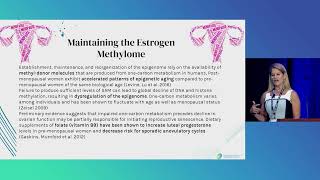

TLC 2023 The Intersection of the Immune, Nervous & Endocrine Systems w/ Metabolism | Bridget Briggs


The Secret to a Clinician's Success Begins with a Healthy Gut: Bridget Briggs, MD