The Intestinal Microbiome, Menopause and Weight Gain: An Epigenetic Factor? | Bridget Briggs
In this hour‑long presentation Dr. Bridget Briggs (MD) weaves together her personal journey from OB/GYN to family‑medicine functional‑medicine practitioner with a deep dive into how estrogen and the menopausal transition reshape the gut microbiome (the estrobolome) and drive metabolic, hepatic, cardiovascular, and neurocognitive changes. She outlines the hormone‑sensitive windows of microbiome development—from infancy through puberty to menopause—explaining how loss of estrogen reduces microbial diversity, shifts the Firmicutes/Bacteroidetes ratio, lowers short‑chain fatty acids (SCFA) and bile acids, and promotes leaky gut, obesity, fatty‑liver disease, insulin resistance, and mood disturbances. The talk connects these microbial shifts to one‑carbon metabolism, methylation capacity, choline/folate deficiencies, and epigenetic dysregulation, highlighting racial/ethnic differences in microbiome diversity and disease risk. Dr. Briggs reviews evidence that surgical menopause accelerates these changes and that bioidentical hormone therapy, plant‑based/phytoestrogen‑rich diets, SCFA (especially butyrate) supplementation, and lifestyle interventions can partially restore microbial balance, improve lipid panels, and mitigate cognitive decline. She also addresses common patient misconceptions, the NAMS 2022 hormone‑therapy guidelines, and the broader cultural narrative around menopause (“manopause”, weight‑gain anxiety). The presentation ends with a call for clinicians to assess estrogen status, microbiome health, and methylation markers early in the menopausal transition and to use targeted dietary and hormonal strategies rather than relying solely on statins or weight‑loss drugs.
Chapters
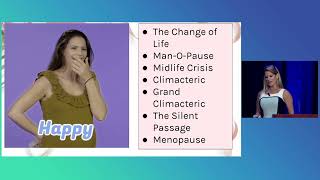
Okay, well, today's a big topic, so I am going to probably speaking like a fire hose in your face, so forgive me ahead of time because this was easily probably an hour-long talk. So we may bridge this morning talk into our afternoon talk. So let's dive in. I always bring my children with me wherever I go. Many of you know that Nolan in the back there to the, to the right is my son who started my venture in functional medicine when he was diagnosed with brain cancer at age 4. So behind every functional medicine doctor is usually a good story, what launched our careers. I started off as an OB/GYN. I love kids. I like happy medicine. You know, OB tends to be very happy. Nolan changed that career for me, so I am now a family medicine doctor, and I have a background in hormones. So this was a really fun subject because I'm 52, And any of us that are approaching the age of menopause, this was a really interesting, fun topic to dive into. I see clinical patterns in the clinic, but sometimes I don't always know why I see what I see. So this talk, thank you, Jeff, I feel like I learned a lot about patterns and the biochemistry behind the patterns. So we've heard a lot about the microbiome. I love little mnemonics like this is from the ancient Greek. Micro means small and biomes mean life. That's a bit different. The microbiome is the entire area with microbiota and the environment that everything is being produced between our short-chain fatty acids and our bile acids and all the metabolites. And deep into that microbiome is going to be this beautiful little molecule called estrogen and her impact on your microbiome. So we've definitely seen today that there's a lot of diseases that are connected to the microbiome, correct? Whether they be healthy, metabolically balanced individual, or they're a lack thereof with obesity and diabetes. And of course, the Microbiome Project has left us with these great tools that have enabled us to have a better connectivity to disease states and what might be going on at the level of the microbiome. So whether we're looking at the shaping of the microbiome from birth and how it changes at the time of puberty, and again, importantly, how it changes at menopause, we see that this flora, this microbiota, is actually hormone sensitive. Of interest is really main stages of development. So we have about until the age of 3 where children develop and really fine-tune their microbiome. They have a lack of diversity early on. And we've seen that as actually protective. And rapid diversity may not be protective in infants. But the good news is by age 3, the children are outgrowing all their strawberry allergies, right? And then really the development of that gut is for just gaining nutrients. And then we see this big surge at puberty where there's a sexual difference in the microbiome between a guy and a girl based on our hormones. And so we do also develop a lower diversity at the time of menopause when we lose estrogen. Now, new data, especially in pediatrics, has showed us, wow, if we use antibiotics, we can affect windows of development, lowering their IQ and affecting their cognition. Really what we're curious about at this end of life is how does antibiotic use in the future change your development risk factors towards Alzheimer's or other neurocognitive disorders. So we've learned a lot by just studying germ-free mice, right? They're fun. You can take a mouse, you can change their microbiota, and you can kind of look at new metabolic imbalances that occur. And so we've been able to see these windows of influences are really interesting, especially when we're looking at hormones and this interaction between the microbiome, the the gut-brain axis, and the role of hormones in balancing this enteric nervous system and our central nervous system. This is, for me, the first time I've had a deeper understanding of why we women are more the moody people, and how the shifting of your hormones, even on a month-to-month basis, where you are in your cycle, literally changes the microbiome and the connection to, for example, your serotonin. So we all know that serotonin is primarily produced in the gut. It's not necessarily our brain. Well, there's a very tight connection between a woman's estrogen balance and her ability to produce serotonin. So when we look at some of your digestive enzymes like MAOA, MAOA has a binding site for estrogen, and MAOA enzymes break down your serotonin. So if you have a problem in the production of your serotonin and you're polymorphic in the MAOA enzyme, this is the connection to gut microbiota, production of serotonin, and allowing it to live. It's once again estrogen-dependent, as well as a healthy microbiome. So there is a thing called the microgendarum, meaning a guy's gut and a girl's gut, we're different. And this is also deeply linked to why our immune systems are different, why women enter into puberty with a more pro-inflammatory condition, why there's a connection to autoimmunity. More women have autoimmunity, and it's associated with oftentimes changes of estrogen, whether it's postpartum whether it's perimenopause, you're gonna see this gut microbiome and this connection between estrogen and this balance, or lack thereof, of inflammation. And why we can't look at women and group them into big studies that incorporate men and think that we're gonna get the same outcomes, which is why so much of the microbiota studies are confusing. You know, one minute you're like, this family is good, next minute this family's bad, but really we're looking at data that says, Even studying a woman in different stages of her estrogen life cycle may create a different microbiome. So the microbiome is tightly connected to our immune system. And this immune system is sex-specific different. And honestly, there's data that women outlive men. And it's not just because of estrogen. But it's greatly related to this more up-driven pro-inflammatory system, such that if you looked at the incidence of death during COVID 65% of the deaths were men. So we have an immune advantage despite the fact that we do have this resounding kind of inflammatory condition, which once again seems to be deeply connected to the presence of estrogen. So at the heart of it all begins with your diet. And we've heard a lot about healthy diets and phytoestrogens and polyphenols and things like that. But it begins with a healthy lumen and a good microbiome. And this is definitely affected by looking at different diets. As a woman, as a woman doctor, I feel like the favorite complaint in clinic is, how do I lose weight? How do I lose weight? And there's fad diets, right? You see the keto diet. You see the carnivore diet. And that the base healthy diet is a plant-based diet, right? So I have to constantly reconnect with my patients and say, these keto diets— this is evidence that keto diets and high protein diets change your microbiome. So yes, you may lose weight immediately. But in the long term, guess what? This unfavorable microbiome means they can't maintain the weight loss. So this is data why the polyphenols increase our bifido and our lactobacilli and why the high fiber foods. It's creating this more beneficial ratio between your bacteroides and your Firmicutes. Now deep into, you know, my heart is methyl groups because I believe that, thanks to Dr. Bland and bumping into him, I think in 2005, he introduced me into methylation, and it's my passion. And Nolan is alive today, age 21, because at the base of controlling your DNA, right, the primary, secondary, and tertiary structure, the stability of your DNA, is our abilities to first of all assimilate methyl groups, choosing the right diets. And those of us that are polymorphic in our ability to, to regulate methyl groups throughout the body, we are at higher risk. So some of our methyl groups are diet dependent. For example, we cannot produce enough choline. And women, we are incredibly vulnerable to choline deficiencies. So a lot of your methyl groups like choline and trimethylglycine and betaine and methylfolate and methyl B12, it starts first of all with the appropriate diet. And there's a reason in pregnancy that women are given a little bit of extra folic acid and know that they put choline in your prenatal vitamin because there's a connection between neurodevelopment. But also there's a big connection to the development of your gut. Some of the fastest-growing cells of the body— skin, hair, nails, gut. These are the skins that we can begin to look at when people have an unfavorable gut replication. They have a leaky gut. So the microbiome also helps us to produce B vitamins, right? So this is our one-carbon metabolism that becomes very important. And choline not only is important in brain function, but it's a free methyl donor, especially in individuals that— let's say you're methyl sensitive and you can't tolerate methylfolate and methyl B12. So we're gonna look a little bit about the estrogen connection to choline deficiencies. Here's a child that I met at age 12 who on the first multiple food sensitivities, a little bit hard to appreciate 'cause the copy is dark. Basically, he was allergic to everything he ate. And the only thing that I gave this Japanese family who was very anti-vitamins was methylfolate. And immediately upon repeat food sensitivities, all we did is regenerate healthy gut flora. So the epithelial lining is, again, the fastest growing cells, and the membrane itself needs to be healthy. Now what's interesting is there's a shift in menopause where the formate metabolism, which is really the interaction between folic acid, the microbiome, and our abilities to use formate in the production of neurotransmitters and to start the one carbon metabolism, this comes to a 50% striking halt. At the time of menopause, where actually it's like a funnel stopgate that's plugged, where formate increases by 50%, which means an implication of a delayed in the utilization of formate as a Lego piece for methylation. So estrogen is associated with the state of hypomethylation. So let's look at the female cycle and our changes in sex steroids. So we see children, really males and female gut, they're really not different because there's not a big hormone component. At the time of puberty, there's a surge. We see some of the, you know, neuro-immune kind of changes where you start to see some of our teenagers are developing like Crohn's ulcerative colitis, but you start to see the behavioral changes, right? So this is an estrogen connection to the alterations in the microbiome. Two, you see the highest concentration of estrogen is really in her late 20s, and a majority of fertility is around age 30. Where you get these breaks between high estrogen dominant phases and then you get these 2-year breaks if you're pregnant and breastfeeding. And then we see this decline of hormones really in the menopausal transitional zone. So that's not the day you stop your period. There's about a 5-year period before women actually stop their period that we all recognize hormone fluctuations, we're fighting the weight gain issues. So this is predictable based on— sex steroid hormones. And there really are 3 specific hormones that are notoriously important in women's health. There's E1, E2, E3, right? Estrone, estradiol, and estriol. Estradiol is your fertility hormone. It's the dominant hormone in the fertile years. Estrone is the dominant hormone in menopause. And estriol is the dominant hormone in pregnancy. So estrone is 7 times less potent than estradiol. So there's your reason women love their estrone. Estradiol. Estrogen works in almost every single cell of the body. It's linked to almost every metabolic dysfunction when we don't have estrogen. And if we look at women in the menopausal transitional years, these are tough times. They're already in the clinic, they're already complaining, they're having changes in their period, they're having changes in sleep, moods, right? They're fighting the donut in the belly and they're frustrated. And we're not being taught how to get in there and help these women to not be obese and not to have metabolic imbalances because if they go through the transition, and they're already out of balance, it's very hard to reel it in. So this is what we feel like, you know, "You mean my gut bacteria are causing me to be fat, bloated, moody, hot, sweaty, forgetful, and bitchy? Why my labs look like crap and I've never had this problem? If you live with her, one minute she's laughing, she's crying, she's got a million emotions all within 5 minutes." And they've coined this transition, all these horrible names. My favorite is manopause. Why did they call it manopause? We're women. It's like it was for you. You guys needed this. You needed to understand how this felt. We've already done it with having babies, and we've already had, you know, PMS between, you know, every cycle. So this is just an unfair, not gracious place to be where your pants don't quite fit any longer even though you really haven't gone up on the scale, okay? And you can't find the right temperature. It might be freezing outside, it might be hot outside. You definitely can't sleep in the bed with your husband any longer because he He's dying and you just can't even find the right position to cool off all the places that need to be cooled off. And marital bliss is a time of the past. Kids are out of the house, 101 positions and she's like 102 excuses, right? And your wife is not dealing with stress very well. She doesn't recognize it. I love when your students come in, how's your day at school, guys? I hate my teacher. What? I thought you used to love your teacher. Well, everybody says she's going through menopause. Do you know, like, the kids feel it, the teachers feel it. I get the teachers that come in and say, "I've got 10 other clients for you because they see me now on bioidentical hormones and they remember what I was last year." This is not a pretty zone for so many people. So the average age of divorce, do you know that between the ages of 40 and 50, most divorces are instigated by women? Yeah, and we barely even understand the why. You just aren't cute anymore, you're not attracted to us anymore, you smell Smell bad, right? And your kids do too. And you go through these 7 stages of like, whore. And you know the beautiful menopause fairy? She doesn't bring cute little things like dollars under your pillow. She brings you everything that you don't want to look like, smell like, act like. I mean, she's just not kind. And your once beautiful figure isn't so beautiful anymore. In fact, it's all in your belly. And you swear you've been working out and it doesn't work anymore. And you swear you don't eat and guess what? You still gain weight. And our epigenetic clocks are going really fast to the right despite our every effort to go to the left with eating right and exercising. So the menopausal transition, according to the Swan study, it's not even the same between races and ethnicity, right? Like, haven't you seen, like, some cultures, they just fly through it, they never had a hot flash? And you're like, what are they doing right that we're not doing at the same time? So, you know, here's a study that even some of these menopausal— Symptoms that you have, some of them are transitory, but some of them never go away. And what I laugh is women say, "Well, I'm doing it all right and it doesn't work." And you literally look at their food plans and you're sitting there and you're, you're watching their workout exercise, you know, diaries, and you're like, literally, they are doing it all right and it's not working. Well, the problem is some of these women already have dysbiotic gut. Some of them already have obesigen issues, even if they're skinny fat. That their microbiome is already unfavorable. And when we look here, you know, at the incidence of Black women with obesity and diabetes and what have you, they go through menopause very differently. And they have very different alpha diversities and beta diversities. And if it's diet, hormones, lifestyle, I mean, I think some of this really needs to be deeply understood and analyzed. And so if you look at white women, when they go through menopause, they get a lot more central obesity, as compared to different races may have more even development of body fat weight gain. So let's look at the pre- and the postmenopausal gut. A female microbiome is shaped at the time of puberty, and the loss of endogenous estrogen immediately leads to a change in that microbiome, an alteration in the balance between your Firmicutes and your Bacteroidetes. And this is connected to fatty liver disease, insulin resistance, that overnight shift in her cardiovascular lipid profile. It's fascinating. And so, you know, rather than throwing a statin drug on and a Zetia and Red Yeast Rice or bergamot, I encourage other primary care doctors, the med students that we change, can you please get her into hormone balance and repeat her lipid panel? Because it will change overnight, 4 weeks. This is not something that is not fixable by understanding estrogen balance and microbiome balance. So the estrobolome is really the term encoded for enteric pathogens or bacteria that help to metabolize our estrogen because a big portion of estrogen detoxification is going to go through the gut, right? And the bacteria have the capacity to clip the conjugated estrogen, and you can get estrogen reentrance into the body. And many times those estrogens are non-ovarian estrogens, so they're not good. So there's this bidirectional relationship between your estrogen and your gut microbiome. And a healthy microbiome generally implies a better estrogen balance. So a postmenopausal gut almost immediately starts to develop an androide gut. And what we see is women start to develop the higher cardiovascular risks. And our androide gut, which looks like the man's gut, is associated with that spike in LDL, the spike in triglycerides, the loss of the HDL, the metabolic adiposity in the tummy. So as women are experiencing the memory changes, the anxiety, the mood, the coronary vasomotor symptomatology, the unfavorable lipid profile, this is all rapidly happening at the time of menopause. Now, menopause is defined as one year without a period. One year. Because it's not like I went through, you know, my last period yesterday and I'm ready to start hormone therapy. We really need to be looking at the transitional zone that's 5 years before the last period. Cycle. So estrogen levels at the time of menopause literally look like a man's estrogen level. If you do male panels and you do female panels and you look at our estradiols, they're not that different. If you look at the metabolite estrone sulfate, they're not that different. They are not ovarian. Now, what's estrogen's role in the gut? It's critical. It's a growth hormone. There are estrogen beta receptors in the intestines. The estrogen leads to this healthy epithelial barrier. If you do an ovariectomy, right away you start to see a leaky gut. Lipopolysaccharide is found in the gut. So the membrane of the gut is estrogen-dependent. In conditions like ulcerative colitis and Crohn's disease, they actually see a decrease in the mRNA synthesis of the estrogen receptor. So there's probably a connection. Once again, at these transitional zone, you know, these teenagers that are diagnosed with ulcerative colitis, there's often this puberty estrogen connection to the autoimmunity. Now here was a study where they did an ovariectomy, and then they looked at, well, what if we gave them this really high-intense exercise capacity in rodents? Could we help to prevent this unfavorable shift in the Firmicoid bacteroides ratio? And it did help, but it's not 100%, right? And this is why girls say, I'm exercising, I'm doing everything, but it still doesn't work. I'm still fighting the bulge, the weight gain. And what do we care about, girls? We care about our skin. What's the next procedure? What's the next cream? We spend how many dollars on maintaining our beautiful skin? And there's a connection between the skin microbiome imbalance and the timing of— if you look at men on the bottom here, like, you guys just barely age. Your skin ages beautifully. And look at ours. You see at age 52, the surge and the alterations of our collagen and our elastins. That is an estrogen connection. So how do we intervene? Well, there's great evidence that phytoestrogens are very powerful, these selective estrogen receptor modulators that can help not only protect your gut microbiome, but also your skin. Again, when we look at the data on these keto diets and these high protein diets, completely unfavorable for healthy gut and healthy skin. So these are the ones that increase the conjugation of the estrobolone, which is a higher concentration of bacteria that produce the— the beta-glucuronidase and the sulfatases that we're going to dive into. So plant-based diets are ideal long before you're menopausal, right? Long before the transitional zone is, is really creating that best microbiome before you go through the change. So here's some good suggestions how to have healthy skin and a gut. So estrogens impact our microbial production of short-chain fatty acids. So obesity and the menopausal change, they lead to shared dysbiosis, right? So whether you are obese before you go through the change, there's a great deal of evidence that they are similar in their imbalance between Firmicutes and Bacteroidetes. And what's interesting is the higher the body weight, the more imbalance in the Firmicutes and the Bacteroidetes. So concentration, you know, slightly overweight, more obese, morbidly obese, it matters. It's a greater shift in the microbiome. So what are these little short-chain fatty acids that are being produced by these healthy bacteria? Well, they have a very important role in our T-cell regulation. They have a big natural anti-inflammatory property. They help to produce energy for the colonocytes. They help to change our primary to secondary bile acids. So they're a big part of a lot of important metabolomes that are speaking in the gut that also speak through this the body, the hepatocytes, and the brain. So short-chain fatty acids improve gut health through a number of local effects, including those that affect the intestinal barrier, affecting the mucin barrier. They actually are like your natural Ozempic shots and your Victoza, right? One of the greatest, most famous, you know, diabetic drugs right now, and weight loss drugs like Saxenda, Wegovy. Guys, your short-chain fatty acids have the same impact. They improve GLP production and peptide YY. They appropriately signal to the pancreas to make the appropriate amount of insulin and to turn off gluconeogenesis. And these 3 short-chain fatty acids are the, the 3 core— acetate, propionate, and butyrate. They're very important as energy sources for the colonocytes. Most of them do get absorbed through the colonocyte, but some of them, after they help with the colonocyte's metabolic needs, get absorbed through the portal circulation. And when they get absorbed through the portal circulation, they now go to the liver and they become fuel for your liver. So when we start to see like fatty liver infiltration, we're gonna start to see connections here to alterations in your short-chain fatty acids. And even some of them get through the blood-brain barrier, and this is where Dr. Perlmutter was giving us some cues about, you know, acetate and imbalances in some of our short-chain fatty acids. For example, deficiencies in butyrate and how it can alter even cognitive pathways and neurogenesis. They're deeply connected to the concentration of brain-derived growth factor, right? So high concentrations of butyrate, for example, is associated with higher concentrations of brain-derived growth factor. Lastly, there's evidence to show that short-chain fatty acids interact with our DNA and helping to block deacetylation of our histones and things like that. So again, there's a very strong influence between short-chain fatty acids and not only in the gut, again, in the liver. But here's some beautiful evidence about their role, again, in the brain and the central nervous system. So what does a menopausal gut look like? This is not uncommon. You measure, you know, Bacteroidetes-Firmicutes ratios are imbalanced. You start to see beta-glucuronidase is excessively high. They have low short-chain fatty acids. They have low butyrate. And this is connected to, once again, the obesity that every woman is complaining about as she's going through the changes of estrogen. So the prevalence of obesity in America is a huge problem. If you look at women between the ages of 40 and 59, 65% of them are obese. And it climbs to 73% over the age of 60. So that means this is an uphill battle for women, much more so than it is men. And in menopause, women are 3 times more likely to develop obesity with metabolic syndrome. They're also 3 times more likely to develop fatty liver disease. Now gut dysbiosis is probably a core connection here, and this risk seems to be related to the imbalance in the Firmicutes and the Bacteroidetes and some of the alterations in, again, short-chain fatty acids and metabolites that are related to the presence of estrogen as well as the health of the flora itself. And then we're going to bring in methylation. So changes observed in obesity are also associated with the same changes that you see in menopause. And obesity and the menopausal change are additive. So if you have obesity and you go through menopause, this is an additive phase of dysmetabolism, prediabetes, the weight gain, the hypertension, and the whole cascade. And then what does obesity link to? Everything bad, right? Cancer, hypertension, cardiovascular disease. How many of the women with, you know, going through the change have endometriosis or metamenorrhagia, right? So this is, these high estrogen phases and especially where so much of the estrogen is coming from the adipocyte, these are very different estrogens. They're not ovarian estrogens. They're reabsorption estrogens reentering through the enterohepatic cycle. And so obesity is a problem because excess body fat makes too much estrogen. And estrogen dominance is connected to cancers. So the microbiome diversity, again, in a woman and a man is completely abated. It's negated if you're obese. Even before menopause, the differences are completely negated. But what's also very interesting is women have an upregulated arginine biosynthesis pathway. So there's a reason women have less hypertension. And there's a reason that there's a big shift if you lose some of this arginine biosynthesis favoring higher nitric oxide production, you start to see the components of more severe hypertension and the vasomotor problems and some of the vascular problems with the spider veins and things like that. So obesity is actually found to have a higher concentration of individuals that secrete short-chain fatty acids. And these short-chain fatty acids, once again, are also connected to an overstimulation of the parasympathetic nervous system. So if you look at— you look at high-fat diets that increase acetate production, or if you take rodents and you literally do an infusion of acetate, you start to see the whole obesity, high triglycerides. You start to see once again the, the cardiometabolic imbalance that occurs just by seeing the impact of this specific short-chain fatty acid. And this is just really connecting those 3 short-chain fatty acids, their interaction not only at the gut level but at the liver level and then also at the brain. So short-chain fatty acids are huge. And they're some of my favorite supplements to give to people as they're beginning to fight the hormone dysregulation. So butyric acid is wonderful. It's an easy supplement to implement. It's heavily studied, for example, like post-radiation gut, or, you know, ulcerative colitis, or inflammatory bowel disease, and things like that. Butyrate has been connected to— deficiencies of butyrate are connected to non-alcoholic fatty liver disease. Which as we recognize is one of the fastest-growing diseases in America today. And this is 3 times more highly likely in a woman's life in menopause or in hormone dysregulated conditions such as PCOS girls, right? So you're going to start to see that you're seeing NAFLD in people that have gut issues or estrogen issues. Even men, guys, measure guys' estrogen level and you'll see this huge connection to these non-ovarian estrogens and the connection to NAFLD. So what's interesting is if you do an ovariectomy in a rodent, you literally cause a severe non-alcoholic fatty liver disease right away. And if you do a transplant, you can negate it of a healthy fertile gut. And if you give butyrate, it can decrease non-alcoholic fatty liver disease. And if you just give estrogen, you can inhibit it. So we have different modalities What's interesting is low butyrate does a lot of other things, like it affects intestinal junctions, the cell walls, it alters by fatty acid synthesis and metabolism. So butyrate has very complicated roles. I'm not the microbiome expert, so again, I had fun reading these studies, but I'm sure, Dr. Patrice, this is probably much deeper than I can even begin to fathom. I like tools, and so at the end of the day, you know, things that you tell your patients— butyrate has got some really interesting research in helping to prevent your skeletal muscle sarcopenia, right? So what are we looking like? We women are trying to maintain our muscle mass, right? So this is— butyrate's got some synthesis benefits. And it's not uncommon, guys, we got to look not just at girls that are in menopause, but what about girls that you put in menopause? When you put a girl on a low-dose birth control pill, like a 14, 15 microgram Nuvaring, look at her gut. It's awful. She looks just like a menopausal gut. Low butyrate, she has low bile acid, she has low short-chain fatty acids. You literally gave her a metabolic gut. So what are the impacts of estrogen on bile acids? I always remember being in residency, surgical field, get called to the emergency room. Somebody's in the ER, fat female, fertile 40. Why do they say that about us? It makes me mad. I take it as a personal insult. It's because in high estrogen, you make a lot of bile acids. And you get a lot of gallbladder dysregulation. So go to the other side, guys. What about when you're in menopause? You see a deficiency of bile acids. Bile acids are very important. They work along with some of your short-chain fatty acids. So they're a big part of not only absorption of your fat-soluble vitamins and your, your fatty nutrients, but it has a lot to do with like a natural antibiotic effect. So preventing overgrowth of bad bacteria. A dysbiotic gut can be even from people that have had cholecystectomies, right? If you lose your gallbladder and you have dysregulation of bile acid synthesis and release at the right time, you literally begin to see a dramatic change in the microbiome. So this is an element that is very— a big portion in women because you see many of your gallbladder resection patients, or the time that the gallbladder starts to act up, is at the time of hormone changes. And so a lack of bile acids can be seen once again in your stool studies. So here's an individual who's menopausal. She has low bile acid and she has concomitant leaky gut with high zonulin. Again, here's another individual, postmenopausal, looks like the same picture, right? Positive zonulin, low bile acids. So you will see these patterns again and again, and then you go in there, you do an intervention, and you're trying to improve these clinical pictures. Here's somebody with the opposite. So she is a fertile female with excessive bile acids in her stool, positive zonulin, positive calprotectin. So you can see different patterns. So surgical menopause is interesting because, gosh, I remember as an OB, you know, running around the hallways, you're like, what are we gonna do today? Okay, total abdominal hysterectomy. Why? She's only 40. She doesn't need that. She could get ovarian cancer. What? Oh, okay, God just gave it to us without a reason, so like if we're done with our babies, just chop it out like your appendix, like it has no reason? Well, guess what, guys, really bad news. We now know, whoopsie, we were wrong. So, you know, the dynamic changes that occur after an ovariectomy, it's drastic. So not only do women have all the neurocognitive inflammatory changes, but we literally begin to see it It totally dramatically alters the microbiome. It alters short-chain fatty acids. It alters your bile acids. It's connected to all the obesogenic cofactors that we're gonna look at today. But it's an interesting thing to stare at because if you do a surgical oophorectomy and you go in there and you add back estrogen or you add back butyric acid or you add back things that balance your bile acids, you get a lot of answers to, you know, some of the metabolic imbalances that occur when a woman goes into surgical menopause. So if you do estrogen re-add-back therapy, you begin to see, wow, the isobutyrate goes up beautifully. Fascinating. You begin to see— remember we talked about the formate imbalance? And formate begins to stack in the body like the sieve is clogged to methylation. And then if you add back estrogen, immediately the excess formate begins to balance, and you start to see hypomethylation begins to restore itself. And then you see that these, these These studies looking at ovaries, if you replace estrogen, you still never get the same microbiome back. Like once you take it out, you never get back normal. So it's not completely correctable. Surgical menopause and estrogen therapy modulate gut microbiome, obesity markers, and memory. So this is the connection to— I saw a study just recently that looked at women that have an oophorectomy before the age of 45 have a 50% increase in Alzheimer's. Like, that's hard to get back, guys. This is scary. But hormone therapy can attenuate some of the menopausal weight gain, the adiposity, the visceral, and some of the cognitive, but not 100%. And if you look at the incidence of cognitive risk, the odds ratio is 2.2. And this is short-term memory, long-term memory. And we know it. Like, the women come in the menopause, they're like, I have brain fog. I'm like, what's brain fog? Can somebody tell me the definition of brain fog? They're like, when you walk in a room and you don't remember what you went in there for, you get in your car, you're being like, shoot, where am I driving again? These are not safe moments. You don't feel safe. So the NAMS update 2022, guys, if you haven't printed it, I carry it in my clinic. I pass it to my girls who all are afraid that breast cancer is going to be their destiny if they take hormones. Hormone therapy still remains the most effective treatment for vasomotor symptoms. And the genital urinary syndromes that occur, as well as bone loss. And if you keep reading deeply, it says if you grab girls in the first 10 years of menopause and you do hormone therapy, you can prevent many of the syndromes that we're going to talk about today and have spoken about. And women over the age of 60 or who've been over 10 years in menopause, including women that went through menopause at 42, if they're already 10 years into it, the risk ratio isn't as favorable cardiovascular benefits and things like that. We're not seeing the same data. So you need to really weigh your risks and your, your benefits to see, you know, cardiovascular risk. But guys, if you haven't read the update, this is convincing evidence according to NAMS that the risk of breast cancer is no higher than drinking 2 glasses of red wine a day. Because when my girls are going through menopause, they drink red wine to go to sleep. This is their natural GABA. Like, this is good for me. It's a phytonutrient. Dr. Bridget Briggs is It's full of resveratrol. I'm like, how about hormones? Oh no, no, I don't wanna get breast cancer. It says right there, a preponderance of data does not show an additive effect underlining breast cancer risk. Not your family history, not genetic risk of breast cancer, benign breast disease. Look just below that, insufficient data are available to assess the risk of breast cancer with newer therapies, but observational evidence suggests that hormone therapy use does not further increase risk of breast cancer. Cancer in women at high risk of breast cancer because of family history. The fear needs to be removed. How many slides we saw this weekend were saying, well, you know, hormones are risky, hormones are risky. Guys, menopause is risky. Untreated menopause is not without its risk. I wish somebody would teach women that. Again, NAMS 2022, hormone therapy may be significantly capable of reducing all-cause morbidity, all-cause mortality, cardiac mortality. These effects being more pronounced in younger women. So we need to grab them early. And you need to watch your women that are being put in estrogen states, like women that have a progestin-secreting IUD. Measure their estrogen. It's unmeasurable. That's scary, guys, because they're knowing that they don't feel right. But we're like, oh, only 0.05% of the Mirena IUD is absorbed, so you're safe. Look what happened with the birth control pills. We're manipulating women's hormones all the time in the clinic like we're doing no harm, no foul. Maybe not so much. And guys, I'm just as guilty. I'm reading this research, really thinking, rethinking some of my interventions that I've been doing for so many years as a— I'm a family medicine doctor. I do women. 70% of the utilizers of healthcare are the women. And they're all talking about their hormones. So I'm as guilty as the next person. Hormones improve your fasting glucose almost immediately. If you look at literal biopsies of the duodenum, this was a fascinating study. So these authors had a really interesting component to the research because they said doing stool studies, looking at your fecal DNA and things like that, it's not the same thing as if you dive into the duodenum and you look at the, the flora of the duodenum right then and there and how quickly it changes with like an ooh, ooh, for ectomy, and how quickly it rebalances with giving estrogen support. So I thought that was kind of a cool study. So what are your therapeutic remedies? I don't know how many minutes I have. I'm diving into someone else's talk. So I'm going to take a break. And then I may not get into all the remedies, but I really hope you guys will look at all these fun remedies because I don't want to leave you behind thinking the only pattern is hormone therapy, although I'm a big believer in hormone therapy, bioidentical. But I think there's lots of data here to show Mediterranean diets, and pectin, and chitosan, and drinking coffee, my favorite food in the whole wide world. There's beautiful reasons that we can go in there with plant-based ingredients and help to restore our women's metabolic balance and hormone balance. Thank you.
More from Bridget

Healthcare Uncut #2 | Dr. Bridget Briggs | Doctor. Mother. Cancer. Inside the ACA Era


TLC 2023 The Intersection of the Immune, Nervous & Endocrine Systems w/ Metabolism | Bridget Briggs
Optimizing Menopause: Understanding the Role of HRT & Natural Remedies for Health Optimization


The Secret to a Clinician's Success Begins with a Healthy Gut: Bridget Briggs, MD