TLC 2023 The Intersection of the Immune, Nervous & Endocrine Systems w/ Metabolism | Bridget Briggs
Dr. Bridget Briggs explains how the vagus nerve acts as a brake on inflammation and why chronic stress disrupts the immune, nervous, and endocrine systems. She teaches practical techniques like breathing and humming to enhance vagal tone, discusses how estrogen affects inflammation differently in men and women, and advocates for phytochemicals like reishi and quercetin over relying solely on pharmaceuticals.
Chapters
So good morning. Um, all right, so I have a lot of slides today, so hopefully you guys are all geared up with your caffeine. Um, this was a fun topic. You know, you kind of get assigned your topic. So I am a clinician, I'm a family medicine doctor. I've got the backbone of being an OB-GYN that transplanted into family medicine. But what's funny is I kind of started my practice more in the field of neuro My undergraduate major was psychobiology, so I love brain. And then of course I end up with a son with brain cancer. So I've done a lot of research in terms of brain when you're always trying to help your own family, right, with neurodevelopment. He was diagnosed at age 4. So we know that in life connections maintain homeostasis, and as we've learned a lot this weekend, neuroendocrine immunity is a big part of our bodies finding balance, and especially when we're dealing with diseases like cancer. So, um, from the Latin word, uh, homeo means similar and stasis meaning condition, our bodies are always trying to maintain balance. And it's happening at all times of the day. We don't even recognize, uh, when we take a deep breath, our vagus nerve is trying to get some relief, right? When we're hyperventilating a little bit and we're trying to balance our blood's pH your body is fantastic autonomically doing balance when you don't even recognize it. And at times, you know, we're being exposed to pathogens and viruses and things that are oncogen stimulators, and we don't recognize it because your body is chronically fighting pathogens and tumors, and it's really good at what it does. And this greatly involves this sophisticated system between your brain and your lymphoid systems and your gut and all these different accesses that are responding to stress, infections, inflammation, and adaptation. We learned a lot during COVID I especially, especially taking care of pediatric patients where we would see people that would get sick, really sick from COVID when you thought that they were just the average Jane and Joe, pretty healthy. And then we saw people that were really ill people that bounced back from COVID like nobody's business. Like, things don't always make sense. Sometimes this sophisticated balancing nervous system that runs through your vagus nerve is very powerful, acting as brakes or bringing back balance and homeostasis. And so, you know, I've really come to appreciate the importance of training our patients to keep this vagus nerve as a main focal point of helping this, like, triad of the neuroendocrine, metabolic, and immune system truly help to maintain acceleration and brakes at all times. We recognize when this system becomes out of balance, this is when we start to see things like autoimmunity, right? Or patients that have viral reactivation like mono or shingles or what have you. And so during COVID treatments, I cannot tell you how many, uh, shingles patients we saw. We would see patients get the COVID vaccine and and we would see the worst cases of shingles because we were affecting the body's natural adaptation, right? We were influencing the body's ability to accelerate and put the brakes on and create this neuroendocrine immune balance by what we thought was potentially protective, right? Like a vaccine. It's really helped us to understand, you know, inflammation, it is your friend, but it is also your a foe if it's not brought into balance. And again, you know, I'm a crazy mom. I've got 5 kids. I know that you guys can relate to this. I mean, it's oftentimes behind the scenes. You're running around, you're going to this dance show, you're running to medical clinics, and you're chronically telling these crazy kids, hey, slow down, go to bed, stop eating junk food. The 16-year-old has a car. She walks in the door, she's got In-N-Out Burger in her hands, and they're going to Cane's. I'm like, "Stop, that's not healthy, you're calling me fat." No, our teenagers don't recognize food is medicine, right? They don't get the whole polyphenol story. They just think we as parents, we're being a nag, like this is, you know, let me do my thing. Be a better mom, be a better dad, so you're trying to race through life and throw your different hats on and be that clinician, tell your patients the right story, and then you go home and you're like, trying to be the, you know, super parent. And, you know, this is the end of the year. I am a doctor, but I've got these 5 kids and they're dancers and I'm a professional Uber driver at night. I'm driving them all over the place and trying to like get to where I'm at. I'm always late and I'm saying, "Kids, stop. You're gonna get sick." And I'm like, I'm a terrible example. The tree— the apple doesn't fall from the tree. But I spent a lot of money and a lot of time to give them their golden moment because we parents are really backwards. Aren't we? Like, we were the kids, we rode our bikes to gymnastics meets, and my parents said, how'd you do? First place, thank you very much. And they weren't there. But we all live vicariously through these little kids. And we can tell our patients, don't do this. But are we walking the walk in our kids? I have to say, my kids are probably the worst examples. I mean, I'll get into arguments with them all the time, like, give me that junk food, give me this. And then they're like, well, why are you drinking Starbucks, Mom? Well, coffee's a superfood. What are you talking about? You know, like, they're not fooled by us. This is the end of our school year, end of our dance season. And, you know, I'm sitting here and this moment almost didn't happen. And for any of you dads that are soccer dads and you're on the soccer team and you're teaching, you know, your grandkids, okay, this day almost didn't happen. And at the end of the day, this is the only day we care about. Is like, can we get on stage and play with these kids and actually like be involved in a little moment of their life? Because when they're 25 and they're 30, they're gonna be like, remember when we danced together, Dad? And it's not like he's a fantastic dancer, but this daddy wanted to be on stage and have that memory with his daughter. But you're gonna see, they're gonna blow each other kisses and they're gonna shoot their guns out because moments before this girl completed 15 dances, The dance instructor, the owner of the dance company, said, "Get your daughter off my stage and go home." And I'm— this lady does not like me either. Her message was, "You leave and you leave now," because moments before, or I should say the night before, this is what Brooklyn looked like. And yes, they know I'm a doctor. And they're like, "There's no way that kid is not going to infect every other kid on stage and she is not performing tomorrow." And this was after 10 days of performance. But aren't we really good as clinicians to know how to manipulate the innate and the adaptive immune system? Aren't we good? And I did not want to miss that moment. And so I cleaned her all up. And you saw her on stage. She did not look bad. But what they saw the night before, they're like, "Absolutely, get your kid off the stage and leave." Now thank God I couldn't find her, so I didn't get in trouble. And she went to the owner of the dance company and said, "I am not leaving." And she didn't. And we got this beautiful moment to, you know, if she ever saw that picture, she would freak out that I just showed you her face. But I pulled— oopsie, sorry, answering service. Oh my. Okay, someone's probably going to get a phone call in an hour. Sorry about that. I pulled every tool belt that I knew from Arnica to Belladonna to Maristika to reishi mushrooms, one every hour on the hour because she's like, "I'm going, Mom." And I'm like, "Lay down." It's like you tell them the right message, but they don't listen. But you know what? Because we understand the beautiful ability for us to manipulate the adaptive and the innate immune system, I knew that adaptive immune system was not gonna kick in super fast, right? We've got this vast array of stem cells from the lymphoid progenitor cells and breaking down into your myeloid cells and your lymphatic cells. There's way more cells on the innate immune system. Really, if you think about it, those are like your paramedics, right? Your first responders. They're the first person to show up at the patient's house. Just joking, right? Put them in the ambulance and get them over to the hospital. But we've got a lot of these guys, and they're highly manipulatable. And we can suppress them by stress and infections. And so Brooklyn was just doing too much, up at 7:00 in the morning, staying at the dance studio, doing all the reception or the regional shows for everybody else's kid, but My show was that Saturday. Like the one that I wanted to go to was the one that now she's down for the count. Okay. But pulling out all the tools and teaching this little body system to adapt and to, you know, power up with reishi spores. And I don't know if you guys ever use reishi, but those things are magic. And those anti-inflammatories, you better believe I pulled out a booty shot of steroids in her butt and she bawled her little head off, you know? But I'm like, how badly do you want it? And the next night, we took a flight to Cancun for 7 days. And we had not been on a family vacation since before COVID And I had my little booty shots all ready to go. And she's like, "Mom." But within 24 hours of some of those anti-inflammatories wearing off, that throat was getting like so swollen until I'm laughing because the day before I got here, I had a little teenager that showed up and the mom's like, "I need a 504 note. This kid can't go to school. This kid is gonna be pulled out of school." persistently in and out of school because my kid is so sick. And she shows me this picture with this, you know, big swollen face just like Brooklyn and the big lymph nodes. And I'm like, ma'am, we're not gonna put your kid on a 504 and give him permission to never go to school. We're gonna teach your son how to use immunomodulation and how if he does have a weaker immune system, he may need to take Immucor one a day. And if he needs to use things that are anti-inflammatory, your turmeric and your gingers, and we're gonna talk about all kinds of fun phytochemicals that are anti-inflammatory, but we're not gonna, equip our children to be excused from going to school. We're going to equip our immune system to be strong. And that's what we did. So remember, inflammation, it is your friend to a point until it's not, right? Until it leads to chronic disease. And it's supposed to be short. Well, for Brooklyn's case, thank God it was short. But it lingered. Do you know what I'm saying? And so we weren't done with one little booty shot of a steroid, right? It lingered for days. And she had her array in Cancún. This is every hour on the hour and put this little homeopathy thing under your tongue. And she's like, this is ridiculous, Mom. I'm like, this is what you get when you don't listen. Sleep, drink, stop eating in and out and these crappy foods. But they're still not ready to listen. My 24-year-old, I'm so proud of her. She's pregnant right now. I'm gonna be a grandma. And she literally, I know, it's so exciting. She'll literally text me every day like, Mom, what do you think about this? What do you think about this ingredient? What do you think about this prenatal? They get there. They get there. You know what I mean? But the little ones, they just fight you. The cell phones, the neck, the hunching. Wait, I'm like, Bria, put your neck back. You're going to get cramping of your vagus nerve. And she's like, ugh. The famous ugh. That's all I get. I have zero value in my own home. But I believe we're going to get there. We're going to. So what's so crazy is your immune cells, have receptors. This is nuts. I mean, you know, Dr. Bland, you just give me these little talks to do, and I have to go do all this research. And I'm learning. I'm like, I'm no mastermind here. Like, okay, like, yeah, it makes sense. Like, your little dendritic cells, your little macrophages, they have hormones, right? Which makes sense. Like, you're called to the hospital, someone's got an acute appendicitis, and you go to the ladies' bench. She goes, I started my period. I'm like, oh, okay, well— She goes, I'm not due. I'm like, I know, I know. There's this hormone connection to your immune system. And the wheels fell off the bus. But it's OK. Expect it. When your immune system's acting up, your endocrine system may do the same. Well, at the base of all of these receptors, what's so interesting is we talked about— what did you call them? Not probiotics, but postbiotics, right? So yeah, we're learning all these crazy things. Here's these little postbiotics, like short-chain fatty acids that basically heal the plant and do everything great and regenerate your colon. Monocytes, and they talk to your brain, and they knock out Alzheimer's, and— but through endocrine pathways, right? So like, it's super important that we understand how important estrogen is in the gut, because the estrogen is talking to the gut and talking to the food that we eat, like phytoestrogens, right? That they're telling our bodies what estrogen receptors to bind, whether we bind the alpha receptor, whether we bind the beta receptor, and the outcome is either fantastic or not so pretty. So my favorite tool in the clinic right now is I've begun to practice not just prescribing butyric acid, but let's help the body produce our own butyric acid. And running a good stool study to show the patient, like, yes, you can bring in a bag of 50 supplements and swallow 50 supplements. I don't have time for that. You know, they're, "Here's my grocery bag, can we lay it all out?" Why don't we talk about food as medicine first? Why don't we talk about how to create your own butyrate, which is great in diabetes prevention, it's great in obesity? Like, every patient that walks in the door wants to spend 15 minutes on weight loss. "Can I please have my GLP, semaglutide prescription? 'Cause I'm gonna go to the before and after clinic and get it if you won't give me my own." I'm like, why don't we learn how to make our own GLP? It's a very powerful hormone or neuropeptide. So your innate immune system, it's fast, it's fantastic, but it's not very specific, right? And it, it's along the borders of your body— your sinuses, your GI tract— like they're the first responders. And in individuals that have maybe a weak humoral immune system, you can help them with their cellular immunity. So if your patient has chronic viral replication, activate their natural killer cells. It's one of the best tricks. In my chronic mono patients, I have them take reishi spores on a regular basis to build the, the part of their immune system that isn't affected by the EBV virus, correct? So these— the problem with the innate immune system, there's no memory, right? So it is necessary that we tap into the adaptive immune system because it takes a long time to get going, right? But it's very specific, and what's wonderful is it has longevity. It has memory. So the two systems work together. One's fast and one's long, so for longevity. And in medicine, we're constantly tapping into this knowledge base. Every single year, someone's coming out with a new drug. You know, if it's a nonsteroidal anti-inflammatory, oh, this is a better one. It's Mobic. Oh, you know, Celebrex, whoopsie, we found like Vioxx has some major side effects. Well, we have these great immunosuppressive drugs. Well, if I'm having a liver transplant or if I'm having some kind of an organ transplant, you might have to put me on these really serious immunosuppressive drugs. I'm a migrainer. Many of you know I was walking around yesterday trying to knock out a migraine. We have monoclonal antibodies. Ubrelvy, it's my favorite drug. It's in my purse. It's in my nightstand. But I don't want to be living on Qlipta every day, which is a CGRP inhibitor. I mean, guys, like, there's a million drugs out there, but do we want to be taking these drugs in an acute debilitating migraine? I'm gonna, but I'm gonna take my methyl B12 and my methylfolate, and I'm gonna take my riboflavin because I want to do prevention. So we in medicine are not learning in medical school, like Dr. Perlmutter said, about all these beautiful natural chemicals that are naturally anti-inflammatory. And yeah, you better believe tons of these have the backbone of phenols or benzene like Deanna talked about. But all of these are very powerful anti-inflammatories. Most of them we can cook with. Most of them are spices. It doesn't have to be— people are like, "Well, how many fruits and vegetables do I need to eat a day?" 15. What? I mean, guys, your palm is not very big. I can mow through some red peppers, yellow peppers, and some hummus. How fast can you eat your cucumbers? But they'll go and take these bags of supplements. I'm like, cook with your spices, right? They really enhance the flavors. Now, this neuroendocrine immune axis is heavily controlled by a lot of hormones, but also these neuropeptides. And these axes of communication are communicating in pathways that we're just beginning to appreciate, whether we're looking at— your adrenals, we know about. Your spleen, yes, we know about. Your lymphoid systems, but there are connections to your thymus and there's connections to your ovaries. Like, this body is— it's so funny how we learn medicine. Like, go to the cardiologist because we're gonna go study your heart, and then go to the GI doctor, but it's like all interconnected, right? It's one big system, but we are not trained as such in Western-based medicine. So we're learning about these different axes, like the hypothalamus-pituitary- adrenal axis, the hypothalamic-pituitary-thyroid axis, the gonadal axis, and all of these accesses are in chronic crosstalk. But at the core of this communication is the immune system. And at the core of this is stress is constantly talking to your immune system to tell your immune system whether to put on the accelerator or put on the brake. And deeply embedded in that is the autonomic nervous system. Which is pretty quiet. It's pretty silent. Like, you don't even appreciate when you're really getting some autonomic signals because a lot of it's involuntary, right? And so as we're realizing the connection to the central nervous system and the peripheral nervous system and the autonomic nervous system, more and more symptoms are coming into the clinic that we've— you know, a patient comes in like, I have swallowing difficulties, I can't I can't swallow. Well, go to the GI doctor. You need to probably have an EGD. But as we're beginning to understand vagal nerve dysfunction— I'm bloated, and I have constipation, and I can't digest. Oh, I have irritable bowel constipation. Like, we put all these funky labels, but do we ever talk about, is it low vagal tone? Because they have had a chronic inflammatory trigger going on too long that the body is losing the nice regulation of the immune system. So the central nervous system, you know, is your brain and your spinal cord, right? And then the central nervous system breaks down to the peripheral nervous system, which again is your, you know, your autonomic nervous system and your sympathetic nervous system. And again, remember in the motor systems, some of it's voluntary and sometimes it's involuntary. So there's a lot of this that we don't think that we can manipulate or we don't know to manipulate. And we're gonna talk a little bit about, you know, vagal nerve training, you know, and devices. I don't know if any of you have made it to the booths, but there are devices out there with vagal activity, like sharpening your patient's vagal tone if their vagus is not performing and adapting and performing that anti-inflammatory reflex that that vagal autonomic nervous system is in charge of. So again, we have these regulatory networks, we have all of these immune cells that actually have receptors for receiving the information of what's going on. So your immune cells respond to neuropeptides. Your immune cells respond to cytokines, interleukins, hormones like growth hormone and prolactin. And we used to think, oh, the stress response was just the brain and my adrenals, right? I mean, we kind of ended it there. And so measure the salivary cortisol and give them a little DHEA and pregnenolone. And then voilà. It's not like stress is going to go away. But yeah, I've done blood. Like, I'm a big hormone, you know, person. And you're measuring like, this lady's prolactin is really high. It's like 50. I bet she has a prolactin-secreting tumor. And we need to do an MRI with the pituitary view because, oh my gosh. And then you do an MRI. And you're like, I didn't want to get in trouble from, you know, my insurance, you know, because I missed the prolactin-secreting tumor. But what do I do with this lady with this really high prolactin? Well, gosh darn, prolactin's adaptive. Prolactin responds to inflammation just like growth hormone does. So we're having a better understanding of why some of these neuromarkers like hormones— growth hormone deficiencies, why is that so bad? Why is prolactin deficiency so bad? Why do we use these hormones like oxytocin, and why do they have these impact in neuroendocrine and immune balance. So we have patients that have had, you know, removals of their pituitaries, right? They have zero pituitary hormones, and the insurance will say they don't need growth hormone, we're not going to give it to them. But this is the data that shows why we need to be mindful of why growth hormone is important, because it's deeply involved in controlling immunity. It's also deeply involved in thymus gland development, right? Remember, your thymus Thymus gland, your mother thymus is heavily involved in almost crosstalk between the dendritic cells in the gut. Your gut is constantly sampling the food that you eat with these dendrites, and they bring in these little particles of antigens, and they show those food particles off to your mother thymus. And if your mother thymus says, that's fine, we don't make inflammatory reactions, we don't develop food allergies, but that's having a sophisticated thymus gland. And we're learning even pediatrics. I travel to Boston next weekend. I'm so excited to join the A4M group with Dr. Song. Pediatric food allergies are just off the chart. I went to school. I didn't ever see a kid next to me that couldn't eat peanuts. You know, where you can't eat this next to the kid. You can't bring this to the school. What is that? And some of the research is saying, gosh, man, the dirtier their gut, These farm kids that grow up on farms and pregnant women that work on farms, you know, their kids have like no food allergies whatsoever. Like, we need to be exposing our bodies to antigens very, very early. And like, don't feed your kid this until they're like 1 and don't— okay, we're learning that this thymus gland is there developing either healthy interaction between your dendrites or they become unhealthy dendrites. Do you understand? Your dendritic cells can be immunoreactive or tolerogenic. And a lot of this is deeply embedded in hormones and stress. And we're gonna talk about epigenetics and bonding and all of that and how that can set this kid into the world in a good way or set them into a direction of immunogenicity because of mom's stress during the pregnancy. So the impact of stress, I mean, we saw this with COVID you know, I'm on COVID shot number 4, okay? And you're like, but I'm checking your antibodies and they have like zero antibodies. So they're not making reactions to the vaccine. Did you guys read about this new syndrome called IgG4 syndrome? Anybody hear of that? IgG4 syndrome is a brand new condition where you take too many vaccines and guess what happens? You just fire up IgG4. Remember, IgG4 is like tolerance, right? When you measure your food allergies and you see people have good, healthy IgG4, that gives them immune tolerance so they can eat foods that are a little immune triggering without a horrific reaction. Well, we're finding now with— here's your COVID vaccine and your shingles vaccine— and that these people are getting psycho high levels. Just do an IgG and then fractionate your IgG 1, 2, 3, and 4. They have very, very high IgG 4. So ability to fight a wound infection, ability to make a normal reaction to a pathogen, this is our ability to regulate stress. I hope this is gonna play because it's really not gonna play. I'm kind of bummed. But if you guys remember that video, it's really funny. Like, you know, Lucille Ball, she's sitting there and they're like, "Ethel, we got this." Like, you wrap the candy and it's going down. And the lady says, "If you let one of those pathogens go, you are fired," right? I joke the chocolate's like a pathogen. And you really can't, right? You can't let one pathogen just take off and go crazy. And so it starts kind of slow. It's like life, you know, we're knocking out those pathogens one by one until the line is just going too fast, right? And then they're shoving in these chocolates in their mouth and they think like, "We got this, we got this," and they're throwing it in their hats. And the lady comes in and she's like, "Good job, ladies. Speed it up." I mean, isn't that what we do in life? It's like you're trying to hang in there. You're trying not to let life get— oh gosh, I mean, that was like the best video. I'm so bummed you can't see it. I don't know how to say it, but whatever. So stress is— it's just a response of the body to any demand that you impose upon it. I don't care if you're working out too much and you're not, you know, going into sauna afterwards and doing your detox and do your little meditation and doing your hydration, but your body is responding to that stress. And a lot of it is behind the scenes and you don't recognize it. So, you know, you may have a little accelerated heart rate, I love, you know, Dr. Bland's like, put on your O-ring, or put on your Apple Watch and look at your heart rate variability. Guys, it's very interesting. I mean, most of us are like, Bridget Briggs is so healthy, they don't ever let the drug reps bring in junk food. If you walk in with Coke, you're dead, you're never invited again. Because I'm like, come on, I'm a primary care doctor, like bringing pizza and junk all the time, like don't even. I felt like the lady in the Lucille thing, go faster, right? So You know, I did my heart rate variability. I'm in Taiwan. I had to do 4 talks in Taiwan. That was a lot. It was like 2 weeks ago or something. So the PowerPoints are just like— I'm so ADD. But anyway, the point is I'm here with Dr. Lundquist, and he's like, hey, Briggs, what's your heart rate variability? I'm like, you can measure that? He's like, yeah, like, turn it on your phone. I'm like, oh gosh, I'm dying. Eric, I'm dying. I'm dying. I'm dying. Like, take a peek, guys. I think I'm really healthy. Not so much. Heart rate variability says I am not healthy. So are you addressing your heart rate variability? Are you in adaptation? And maybe you think you're a superstar, but maybe we are— you saw my family pictures, like crazy. Like, I don't rest, I don't ruminate. It takes more than just waiting for the fire, because long before the fire is this system that says, I am activating your cortisol, I'm activating your adrenaline. And I am like the adrenaline seeker. Where's the coffee? Where's the stimulant? Like everybody else last night is like, where's my glass of wine? I'm like, where's the coffee? I have to have a coffee with a glass of wine. I need a stimulant at all times. I'm like, red alert, guys. Like, focus. If you're like looking for the calming agent, you're revving high, right? When you're really revving low and you're looking for a stimulant, isn't that a sign of adrenal fatigue? People are asking me, Bridget Briggs, how's your adrenals? Uh, well, my heart rate variability doesn't look so good. So it probably doesn't mean fantastic HPA axis. Remember, this is a fantastic study if you guys ever want to go to it. This was hilarious. Stress adapts. OK, it's really interesting. So I read this study about med students and taking exams. And you know, it's really sad. Like, I was that med student that like, med school was hard for me, guys. Like, I was probably lucky to get in, you know? And like, before school, I'd be writing Bible verses all over the mirror. Like, for God has not given me a spirit of fear, but of love, power, and sound mind. Okay. Like, I was that person that took those exams and I was like, thank God I'm in a school that's pass/no pass. Okay. Like, I struggled with stress. Well, they look at all, they love to torture med students. Let me tell you. Like, they love to draw your adrenaline, your cortisol, your epinephrine, your norepinephrine levels. And guess what? Like, there are major stress episodes of your life, but the one I had the funnest time reading about is marriage. Okay. So in this study, they were looking at the difference between, like, ACTH and cortisol levels when you're a newlywed. And I can identify with that. You know, I'm a strong-headed woman. You know, it's said that if you're married and you guys are like the control is pretty equal, you both get high adrenaline, high cortisol, ACTH. It's pretty equal. Now, it is true if you're married and like he's above her, he's not doing as bad, but her adrenaline, everything like that, you know, running around taking care of all these kids, little toddlers, and he's okay. So pretty maladaptive. But the best part is when you're married for a long time, there's a big division. And you guys gotta recognize this. Like, you're talking to your husband, he's not even looking at you. You're like, "I really wanna talk about this moment here. Like, you're getting a little gut. You got some visceral fat going on, and I really wanna talk about being healthier." And he's like, "Yeah, yeah, okay, mm-hmm, yeah." Well, when they measure the difference between their adrenals their cortisol, okay, like, he's pretty mellow at this point. You know how like old guys get nice? Women, guess what? We get wicked. We don't get better. We get the nasty wife, the wicked wife. I mean, it was pretty funny. It's just a fantastic article about some people adapt to stress and they pick the mountain they want to die on. And some of us just want to just beat our heads into that mountain until we die. So, you know women are the more emotional being? So we need to focus on choosing those mountains we want to die on in the war because we want to age beautifully and be double 7 digits like Dr. Bland and Susan, right? And not be the women— it's more women that come to my clinic and the wheels fall off the cart. It's not the men, guys. It's the husbands that show up. It's because the wife made the appointment. I'm like, how are you doing, sir? Do you need anything? Nope. Does anything hurt? No. Do you want any medicines? Exactly what you gave me last year. Like, we women are like, well, I read this study, and you know, I don't believe in this, and I'm not going to do my mammogram. And I'm like, oh my goodness, like, women are a lot of work. And it shows in our HPA axis, guys. Like, our HPA axis is not pretty. And we should be getting more mellow and learning to adapt. I'm not saying you women in here are like that. I know that we've got all these tools, but tap into them, use them, because this sympathetic nervous system is pretty powerful. And it's really interesting that the sympathetic nervous system— you know, I remember years ago I was watching Dr. Bland's CDs on like the beginning of autoimmune disease happens 10 years ahead of time. And do you remember those little CDs that you used to have? Okay. And you know, he used to talk about like Noradrenaline is so important because noradrenaline is a part of the catecholamine that activates your immune system. And I'm like, that's really weird. Like, your adrenal glands are telling you to have an immune system. And if you don't eat up the noradrenaline, you get an autoimmune disease. I'm like, okay. I mean, I held on to that for like, I don't know, 20 years or whatever. Okay. Well, here's what's really interesting is this sympathetic nervous system is using neurotransmitters like acetylcholine. It's using efferent pathways from the brain. It's interventing into things like your spleen that is involved in receptors, acetylcholine release, that actually use noradrenaline to quiet your immune system, to put it to sleep, to balance it. So there's an important role between that vagus nerve and your sympathetic fibers in restoring balance. And we know that our patients that rev high— tachycardia, nervousness, jittery. I joke there's genotypes for this, guys, like MAO-Bs. Any of you in this room are an MAO-B? I call it the OCD gene, right? They, they rev high, they're fight or flight, they don't break down adrenaline, they don't break down catecholamines well. But specifically, when you look at their global sympathetic overdrive and their amount of epinephrine that's found in the urine, they're high. Well, when you use beta blockers— and remember, we have beta-1 receptors and beta-2 receptors. We also have alpha-1 and alpha-2 receptors. It's like the most calming anxiolytic preventer. They can breathe better. They can perform. But the studies are showing they're anti-inflammatory. They knock out cytokines. They're controlling the immune system. And we talked a lot about quercetin today. And what's crazy, the amount of research Just brand new studies coming out on the power of quercetin as a natural beta blocker. Right? And it's inhibiting inflammation. It's knocking out cytokines. It's calming. It's antiarrhythmic. I mean, quercetin is a very powerful natural beta blocker without having to take all the side effects of— yeah, you give somebody propranolol, but then their asthma is acting up. Remember, you've got to deal with the side effects of these drugs. But quercetin is not just an amazing flavonoid and polyphenol, but it's actually got some pretty impressive cardiac research. But there are lots of things in nature that act like natural beta blockers. And we can eat these, and we can train our patients rather than 20 supplements. In those 15 fruits and vegetables a day, did you get any of these powerful ingredients? In our local health food store, you can buy these big brown jars that are like this big, and you can go up and fill up the juice bar with anything you want for $25. I'm like, if you can't eat 15 fruits and vegetables a day, can you go juice and get a big spectrum of polynutrients, phytonutrients, in a daily juice? Now, this circle of immunity and neuropeptides and hormones that are talking to our immune system, there's hormones in here and neuropeptides in here like VIP. I'm like, VIP, what does VIP do? Like, there's such complexity of networks going on, and all of these are helping your central nervous system and the peripheral nervous system control the immune imbalance or restore homeostasis until there's dysregulation. And we talked a lot about patients. Dr. Elroy talked about imbalanced patients, and you and I are seeing these at the end stage, right? Like We've got the bombs that went off and we're here trying to restore balance. But if we don't pay attention to a lot of those studies, like looking at Th17, you know what I mean? And if we don't recognize this is a viral hit, is it a fungal hit? Like, you've got to go to the source of the problem before the central nervous system is going to restore, right? You've got to figure out what created the imbalance. Is it stress? Is it an infection? Is it a pathogen? Is it leaky gut? And that's the challenge. I'm sorry, guys, but I see 18 patients a day. I take insurance. I'm not a concierge practice. Trying to get through all of this stuff in a 15-minute appointment is challenging. And it takes a lot more appointments than just one. Some of you get to do 8 patients a day. That's not my life. So talking about stress sometimes is one entire appointment. That seems ridiculous. Like, well, she didn't give me a drug. She didn't give me a supplement. She didn't give me anything to do. I just taught you self-awareness. What's going on with your immune system? This graph makes me laugh because have you seen those goats that if you scare them, they like fall over and like they act like they're dead? Okay. Like, have any of you ever been in one of those scenes? Like something really bad happened and you just like froze? Okay. That's at the top. I have a couple of those memories in my life. I remember like being a kid, I peed my pants. It's like, what is that? Like freeze. Those are moments we don't forget, right? Just a couple times you're just like, well, those are really traumatic moments. Most of us would love to be resonating in the green, right? Family bonding, eating, sleeping, everything's green and wonderful. And we actually kind of like sometimes to jump into that little yellow zone, right? Caution. You watch a scary movie. Is that fun? For some people, that's traumatic. My 14-year-old, "Nothing scary, Mom." Like, no. Others like adrenaline, let me jump off and go paragliding. You know, like some people need a little bit of that, but when you get too high up in that yellow zone, guys, these are the danger zones, right? Like your body's saying, "I want out." You're doing avoidance, you're resisting, you're going to defense, you're going to protection. Okay. So these catecholamines are very powerful. So much of the time, you and I are going through situations where we're going up and down that graph between the green and the yellow and the red. And you're firing up your sympathetic immune system or nervous system, which is activating, again, all of these fibers in the gut. Like, what is irritable bowel? Well, is it you're just stressed out, or is this an imbalance between the brakes and the gas pedal, right? We treat irritable bowel like here's Linzess and here's Verberzi— that's traditional medicine. And our acupuncturists, they're hitting vagal nerve points and oh my irritable bowel is gone because it's a catecholamine imbalance. We're learning again that growth hormone and prolactin, I mean these help you sustain antibody production right? They're making sure that if you did get a pathogen like a mono or you got a pathogen like, um, I don't know, whatever, like mycoplasma, you know, these intracellular infections that you have sustained immune resistance that you don't keep getting these pathogens. So people that come in and they're like, I'm sick all the time, my kid is sick all the time, well, do they have problems with an up-driven sympathetic nervous system? Do they have suppressed hypothalamic-pituitary axis that they're sick all the time because they're not having natural hormone secretion because they're in a sympathetic overdrive. So estrogen, of course, is my favorite molecule, and you all know that, you know, to me it all begins with hormones. And men, don't think for a minute just because we're talking estrogen you don't have it, because you do. And we know that hormones like testosterone and estrogen speak to your gut. But what's really interesting is there are It's not just one receptor for estrogen. There's alpha receptors, there's beta receptors. And each of those receptors have a very specific point in a different cell of your body, whether you were talking about the alpha receptor in the gut or the beta receptor in the gut. That receptor has a very specific job where these two estrogen receptors balance each other. It's like yin and yang, right? And if you look at conditions where there's an imbalance in estrogen receptors, for example, Lupus patients, when you look at mRNA in their blood, they have too much mRNA for estrogen receptor alpha. And when you do knockout mice and you knock out an estrogen receptor, their lupus goes away. So we have impacts of chemicals, right, that affect xenoestrogen, xenobiotics. They affect our receptors. Well, estrogen and different stages of estrogen are in part of brain development, cognitive function, memory. And certain receptors have specific elements of the brain that they're working on. Estrogen receptor beta seems to be very important serotonin balance and tryptophan regulation and IDO, right? Deanna talked a little bit about, again, serotonin. Dr. Bland talked about serotonin. 80% of the serotonin comes from your gut, actually. And it seems to be deeply connected to estrogen receptors. Men and women have estrogen receptors. And it— these two receptors also seem to play a role between Th1 dominance and Th2 dominance. And we talked a little bit about the microgenerome last year, right? How a woman's gut looks very different than a guy's gut. And andropause and menopause changes the microbiome. It changes the gut. And when you change the gut flora and when you have different types of bacteria, you get a pro-inflammatory state. And Dr. Bredesen is going to talk about brain function. And we know that one of the 5 leading causes of Alzheimer's and cognitive decline is menopause untreated. And last year, 2022 update, the NAMS, North American Menopausal Society, said estrogen decreases all morbidity and all mortality, has a very strong cardioprotective role and a neuroprotective role. So inflammation takes off in menopause. So there are sex-based differences in our immune We all know that. Like, even from puberty and on, if you look at the amount of humoral immune cells in the blood, women have much higher immune cells altogether. And for women, these estrogens play a big role in metabolism, satiety, appetite, being thin. And so we see estrogen deficiency disorders, and we see estrogen dominant disorders. So estrogen dominance is associated with dysmetabolism, inflammation, and obesity. But low estrogen is the same. So there is a sweet spot. And I spend a lot of time working on hormone balance with my patients, right? In my fertile women, I'm using EstroFactors. I'm used to using Estrovera in my patients that are perimenopausal, which is like a plant estrogen that binds to your beta receptor. I spend a lot of time helping women find hormone balance because estrogen's related to your metabolism. And perimenopause is literally a phase that none of us escape, right? We're all going to go through this dramatic change between fertile to these seasons where you're not ovulating. This is really when the aging process really accelerates for women. And this is this pro-inflammatory condition where that sympathetic nervous system is really irritated. It's agitated, right? And the ER beta, if we don't get enough estrogen beta, we're going to see this inflammasome trigger, this inflammatory burden in women's bodies. And this inflammation is probably deeply seated in obesity. They say that 70% of women by the age 69 are obese. What is that? It's estrogen deficiency, right? And this means that there's this inflammatory condition. And it's no big surprise that estrogen therapy— what does it do? It protects your cardiovascular status. Because it's anti-inflammatory. And I want to say that women don't think that estrogen is inflammatory. Women complain, "I can't wait till I'm in menopause. I can't wait till I'm done with it." You know, because you have your period and you have cramps and, you know, they have breast tenderness and they just associate like estrogen is the bad guy. No, guys, estrogen is the good guy. But it's about balance, about not dominant and not deficient. So estrogen aberrant signaling, when people have aberrant beta receptors, this is where you start to see, positive inflammatory problems, neurocognitive problems, aging of the brain problems. And when we look at things that modulate the beta receptor, like lignans and silmarin, we actually see, like, microscopic colitis in the gut goes away. So estrogens are anti-inflammatory. They're protective. But specifically, like, this is estrovera. It's ER731. This is Siberian rhubarb. In studies, 12-week-long studies, if you take Hamdy depression scores and anxiety scores and look at hot flashes and what have you, in 12 weeks, women vote this estrogen receptor agonist to be 72% effective at decreasing menopausal, perimenopausal symptoms. And it's a plant. It's a very powerful phytonutrient that restores estrogen balance. And guys, there's lots of plants that do this. Same, right? There's lots of options here. When we're looking at, you know, maybe somebody gets bloating on estrovera, there are other plants that you can use— maca, chaste berry, right? There are things that women have found. They'll say, well, I use this little, you know, estrogen modulator and I feel fantastic. Well, I believe that. So estrogen dominance, we know, is also a pro-inflammatory state of a woman's life. This puts a lock on weight loss. It's associated with high cortisol levels and blood pressure and insulin resistance. And as Mark noted, your fat cells can produce cortisol, right? Your estrogen can have an upregulation going on with the 11-hydroxysteroid dehydrogenase— excuse me. And it's hard for us to recognize that your little adipocytes can produce cortisol. It's not all adrenal, right? And so this is where Looking at your DUTCH and looking at not just the estrogen pathway and the cortisol pathway, but looking at the catecholamine metabolites in the DUTCH gives me an understanding of a sympathetic overdrive. We talked about obesity and estrogen and the gut. One of the things that I think is really interesting is women have this natural ability to outlive men. And our aging process is very protective in the presence of estrogen. And the aging process accelerates. Rats without estrogen. But in men, it's the opposite. In fact, if you castrate male sheep, it's anti-aging. It's really— the other thing that's really interesting, if you castrate men or female rats or male rats, they grow a thymus. So there's a big connection between your hormones and longevity and immunity. And estrogens and progesterones are deeply involved in the gut immunity because The gut-brain axis is a big part of inflammation and immune balance, right? So estrogen, the neuroendocrine immune connection, begins with healthy hormones for men and women. And men have a little bit different balance. So I want you to focus not just on estrogen and menopause, but I look at men with andropause. It's popular for our men to come in and they're on testosterone and One of the things that I thought was really interesting that came up in the literature is when men take finasteride, which is a 5-alpha— 5-HT receptor blocker, right? So they don't convert testosterone to dihydroxytestosterone. There was a great decrease in the incidence of prostate cancer in Men's Health. But when they got prostate cancer, they got it very aggressively, stage 4. Well, I read a study fairly recently that showed that when the male pathway is activated and dihydroxytestosterone is produced, it now breaks down into a metabolite that can bind the ER beta receptor, which prevents prostate hypertrophy. It's anti-inflammatory. So men have modulation of the estrogen beta receptor, just like women. It's a derivative of dihydroxytestosterone. So again, neuroendocrine immune balance. So there are gender bases— you know, differences in our immunity. Some of it's because we have X chromosomes, and most of your immune cells or immune genes are on the X chromosome, which is interesting. But between the two sexes, we women are the more complex immune, right? And we have to embrace that, and we have to work harder on— remember the marriage story? Why is it that the men peter out? They choose the hill they want to die on. And then what do we— we're like, fight, fight, fight, go, go, go. What is the infamous story for women's health? Well, I'm taking care of everybody else. We're the forever caretaker, right? The grandparents— I'm at my daughter's house, and I'm watching my grandkids. You know, poor grandma's trying to just age beautifully, and hang out, and enjoy the sunset, and put her feet in the sand. And then yet, she's just raising somebody else's kids. The women nature is mother everybody, right? And so because we are the more complex immune individual, and because we feel stress a little bit more. Deeply embedded in that is teaching our patients to find that vagal nerve balance, right? Teaching us to tap into that silent part of your nervous system. Um, if you haven't visited the GammaCore website, go play with that little device that activates your vagus nerve. Learn about the Chinese medicine routes of deep breathing, humming. Do you know how magical humming is for activating your vagus nerve? It's impressive. There's a lot of things that we can teach our patients how to restore the balance between the sympathetic and the parasympathetic nervous system by just focusing on the vagus nerve. And with that, I want to thank you for your attention.
More from Bridget

Healthcare Uncut #2 | Dr. Bridget Briggs | Doctor. Mother. Cancer. Inside the ACA Era

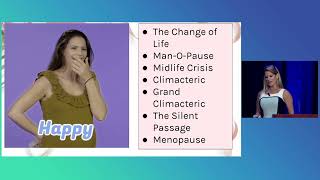
The Intestinal Microbiome, Menopause and Weight Gain: An Epigenetic Factor? | Bridget Briggs
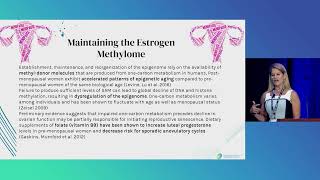
Optimizing Menopause: Understanding the Role of HRT & Natural Remedies for Health Optimization


The Secret to a Clinician's Success Begins with a Healthy Gut: Bridget Briggs, MD