Let's chat and design

Charles Postiaux walks through his design workflow, from redesign videos that blend product reviews with explorations to using AI tools like Claude and Figma plugins to speed up iteration. He discusses pricing strategy, the difference between B2B and B2C design thinking, and how to tie design decisions to business outcomes.
Chapters
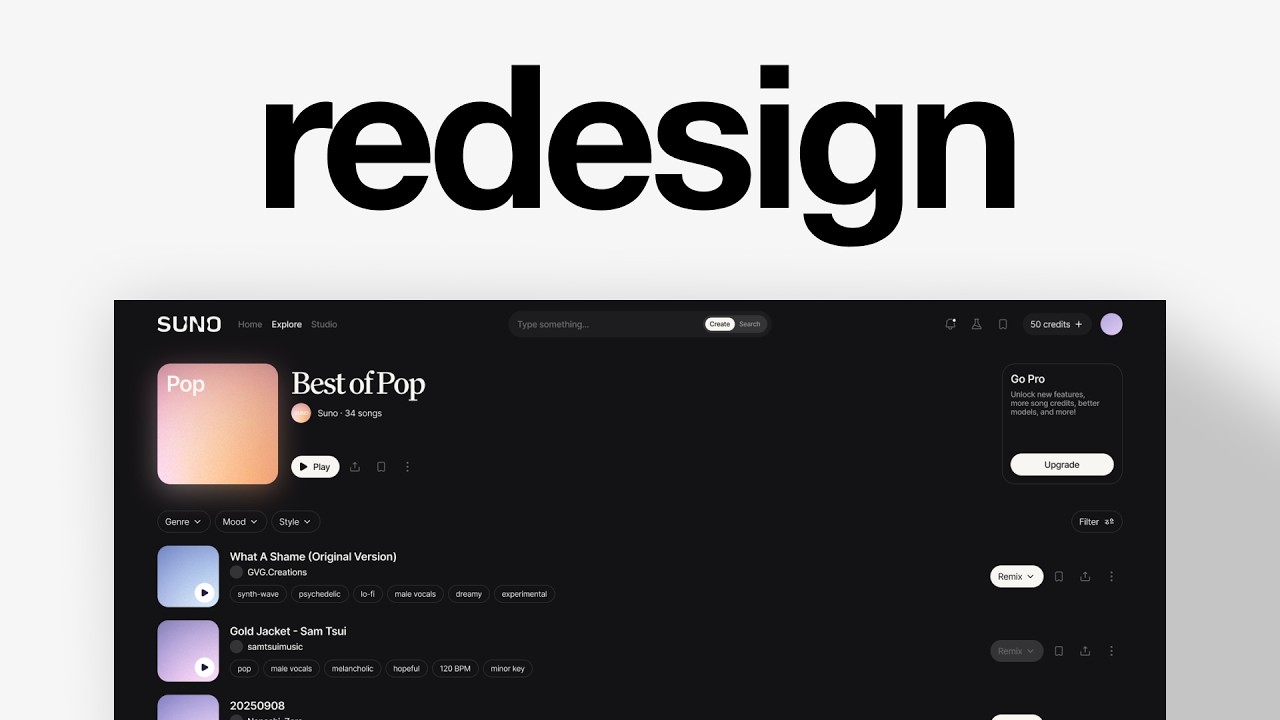
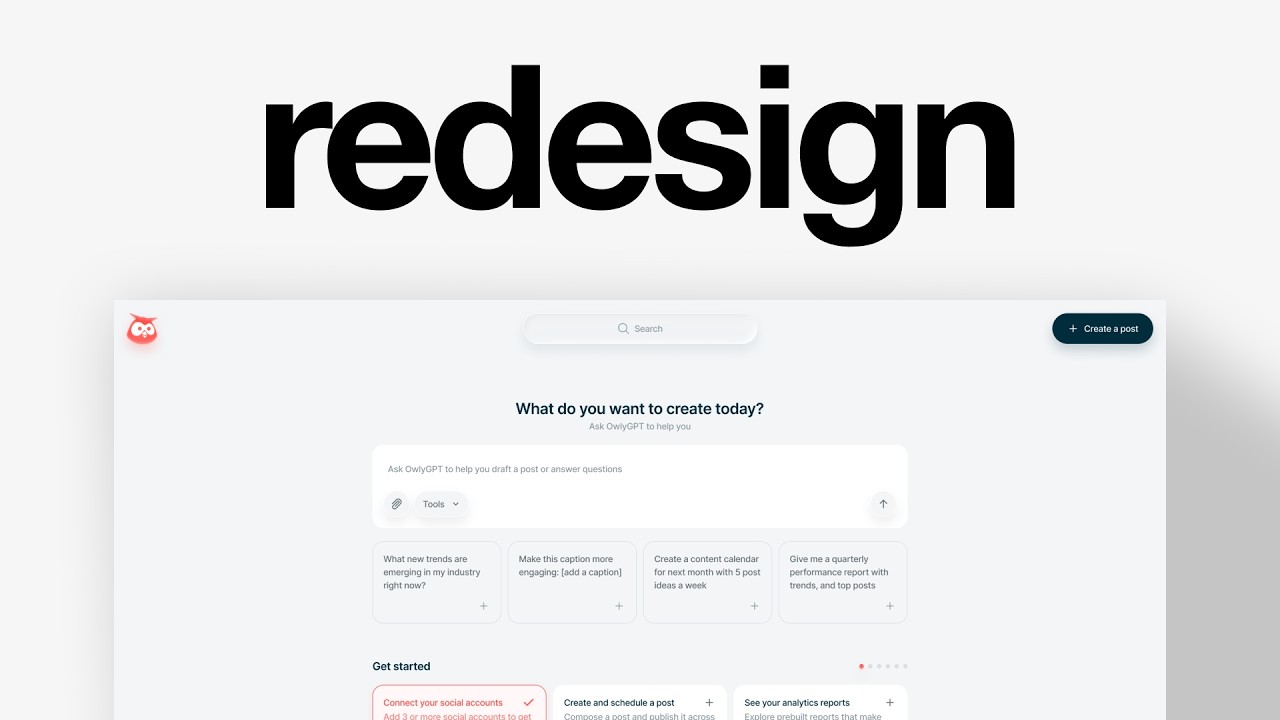
All right, everyone. Happy Saturday. Is it working? Everything is working well. You can hear me well. Not too much, not too little. The right balance. The first stream. With the new camera as well. It should be better, especially in 4K like this. Hey Cody, was just watching the redesign. Oh, enjoy the redesign. Have you guys watched the new video? I hope you've enjoyed it. I messed around a little with the thumbnails. I tried different thumbnail ideas, not the best. I think people recognize that like special thumbnail, you know, with like the big redesign and then you have the redesign image underneath. I think it's like almost a branded feature now, a branded visual. So I think I will just stick with that for now. But you will see how it performs. Pretty interested. So far it has not performed super well. So we'll see because it could be like a really nice— I think it combines everything I usually talk about, like some review videos on the channel and then some redesign videos. I think it combines both of them together and that makes a really nice high-value video in my opinion. But if people don't like it, then that's okay. Hello sir, welcome to the live stream. Happy to have you here. Beautiful. Beautiful. It was really rainy and cloudy this morning, but right now it's a beautiful Saturday. So that feels good. I didn't do a livestream on Wednesday, so I wanted to do a little one right now. It's the end of my morning, worked a bit on content, so I thought, you know, why not make a little livestream as well? Could be fun. Chat with you guys. And it sets the weekend right as well. I hope you're having a good Saturday and a good weekend overall ahead of you. I think for some of you it's already Saturday evening, and for some maybe Saturday morning. So we have a very international crew, international little little group. So I think that's super nice. But yeah, I'm happy with the. I'm personally happy with the video. I've already the reason for next Friday. I mean, technically it's the. Friday coming up, but for next week is already done. It's already edited. It's going to be a sponsored video as well. So that's going to be really nice. I still have to work on that a bit and refine stuff, but otherwise it's, uh, yeah, pretty happy with that. Hyped about it. I really like the, the redesign. I will maybe give you a little spoil, uh, on Monday, like usual, you know, like, uh, on the community post to let you know about the, the redesign. It was a pretty nice redesign. I mean, I think it has my, my style into it like the other ones. It was like 2 hours of redesign, so pretty nice. It was really smooth. I don't know if it's because I designed a lot more with a project or not, but I don't know. It was pretty nice. Now it's like, but yeah, Wednesday I had to record this reason video. I had to work on design projects as well and then do the business, do some team management. So it was a lot. And then I wanted to try yesterday also to do a livestream instead. Like, you know, end of Friday I did that last week, I think. But I slept like 4 hours last, not today, but like on Friday. So I had no energy after work to do anything else. No, it's good. I'm all good. So that's perfect. Hey, Avinash, can we try a complex or unusual flow redesign? Do you have any examples of that? Because I think usually I like the idea of having like complex ones, but the complex ones also take a lot of time. And what I land on as like a first or second exploration, which is usually the time I have to do those like redesign videos. It's not, maybe not the best or cleanest one. So it depends. And also, are people going to watch versus a classic redesign video? I don't know. I've realized that usually people, I mean, it depends, but the easy video, like simple, you explain some stuff, some high-level information is really nice. For people to watch. It's also great to get new viewers. Like, for example, the redesign video I do for like product redesign, not like review and redesign like I did for this Friday video from yesterday, it has usually like 80 to 90% new viewers. So that it's a really good way to get extra, you know, extra subscribers, extra viewers, people who don't know about my stuff. So Usually the more complex stuff, the complex videos, the more strategic deep dive videos, they are mainly from subscribers. So if I had a million subscribers, that would be great. But since I'm still trying to grow, it may be something that I do once in a while. Like for example, I'm trying maybe once every 2 weeks to do that. Can you redesign a medical app thing? Those got a reputation of being crappy because of the amount of information that needs to be displayed. Yeah. Technical, technical, medical, it's usually not the best. The thing is, I'm trying usually to go on Mobbin, and I don't know if they have, uh, they have those, but I could still look into it. I think I'm— I might not fully rely on their, you know, like they have like updated or new product that they showcase every week. But I might try to specifically explore some categories or explore some specific screens and then identify interesting ones. So that could be one. The only thing is it's really difficult. The complex medical screens. And obviously I'm going to simplify the navigation. I'm going to simplify what you see on the screen and people are going to say in the comments, but actually you cannot see everything right now, so it's not really good. But how about those edge cases? That's okay. It's part of the deal of making content and having like an opinion about it and a concept as well. A concept is going to go into one specific direction. It's going to ignore a lot of other things. That's kind of like the price to pay. Done anything in logistics space and how do you see it? The logistics space, I've never done. I could have worked at some point in like logistics. There was one project or one company, a French company that I could have worked with. It didn't You know, didn't end up in anything, but could have been cool. I really like that's one of the things I enjoy also working as like you know with a studio as a freelancer is just being able to work on a ton of different projects learning from the best. It's it's super cool. I like that. I had a question. Yeah, go ahead, Nagarjun. Hello, Ingrid. Welcome to the livestream. Happy to have you here. Yep, actually my work consists of port terminals related application as well. I think this is where you can show the thought process and how not every app is not for consumers. I feel like there— that's something I've been thinking about because I've talked— I've been talking with a company about like consumer apps and my experience in that, and I, I think of myself more as a B2B designer Or like technical designer to some extent. I'm not going to, you know, and it's interesting because ultimately people using the products, yes, it's for businesses, but ultimately it's people using the products. Maybe now it's also AI using the products, but it's mainly people. And so even if it's not consumer-facing, it technically still is a consumer app. It's just for a different context. So I think that's just an interesting way of thinking that it shouldn't be just, you know, B2C or B2B. It should always be about the consumer, no matter the— I don't really know, like the environment or the type of app they're using. But I think that could be really cool to try that. I'm also like, I don't want to just— that's something some of you guys mentioned as well before is I always redesign kind of like the same things, and it's maybe also some laziness from my part where it's like, ah, I have to do a new redesign. I prefer to go smoothly, make— have like some complexity but still familiar and easy to do. So for me, it's, uh, I enjoy doing the, the kind of simpler, simpler ones, but I think it's a great challenge to, to work on that. Right now it's a little difficult. If I have more time, I think that could be nice. It's not mostly more time, it's more like creative energy. I spend a long time working on projects. And so if there is one opportunity that looks good, I think it's definitely like something I'd like to explore as well. But yeah. What do you term as technical designer? What's the thought process behind it? Technical designer mean as a role, or in what context technical designer? Because for me, when you just say technical designer, it means usually someone who's like a design engineer. And to some extent nowadays, you don't even need to be like an engineer meaning coding stuff. You can also be a technical engineer in the way that— or a technical designer, or even like a design engineer because of AI and how you can Create prototypes, real prototypes of design and flows that you work on. And that's actually something I'm learning right now. I've tried someone recommended before that I use Paper, the design tool Paper, because it has you can connect it right away to Cloud, Cloud AI, and then you could also with Cloud, Cloud Code or Cloud AI, you could connect the two and it could design for you and you could explore some stuff like that. And that's a really cool thing. I'm still like very. Early in that journey, but there's a lot of opportunities down there. So I'm improving my AI design process. Something people have asked me every livestream almost, like, what's my design process? How do I use AI in my process? And I think I'm still exploring that. I'm still learning that, but I think it can be valuable to some extent. I think it's not as easy as just like a plug-and-play kind of thing. It's not magical. Like, it's not because you have one screen that you can build a whole flow and product from it. You still need a lot of structure and elements. That's why as designers, it's an amazing opportunity because it has never been easier to create stuff with AI because we have the context and we understand like user experiences, flows, user journeys, features, edge cases. And so that's a really good There's something there. I'm applying for junior product designer roles and want to know how interactions differ between SaaS and mobile. How do they shift when moving between the two? What should I focus on when adapting? Interactions differ. I mean, usually mobile— I'm not a super mobile expert, and especially for consumer apps. It's mostly for me like, uh, B2B, or also just, you know, having a mobile version of what— of a web app that I'm working on. But I think that it differs a little bit simply because you have so much less screen real estate that you need to make the one key action on the screen super obvious. It's not about, you know, like in web app, I see so many web apps with like huge navigations with a ton of features everywhere, a ton of information all at once. They have no sense of hierarchy and what's important to show first. But on mobile, you need to be really critical about it. You need to have a really strong opinion about what the user journey is, what the navigation is, because you cannot stack 10,000 options. You have to like maybe 3 to 5 different tabs on mobile. And then you also have just what's going on on that specific screen. So I think that's the main differentiator. Ultimately, I would say, in my opinion, that SaaS needs to be like mobile in that sense. You need to have a clean, simple navigation, very clean, again, simple, easy-to-use design layout interface. So that's my belief on that, but a lot of products don't do it. But that's what I would go with on that difference or how they actually are not that different ultimately. But if you adapt, that's the problem usually is if the, for example, you work on like a web app project, it's very crowded, that's what the client wants, and then you need to turn it into mobile, that's where it becomes complicated. And that's where you need to make some sacrifices and make it look probably uglier. That's part of the job sometimes. What do you think about the new way design is going, build now and design later idea? Be against that. I would think the opposite— design now and build later, or build at the same time. Because when you think about design, design is not just about making rectangles. It's, it's not just pixels. It's a lot of thought, strategy, and reflection, which AI does not have. Even to some extent, engineers don't have that. Engineers, you can give them the best possible, like, handoff version of your designs, even with Figma now, like Figma Dev. You have everything laid out and they're still going to not care about it. What they care about is the code. That's why they are engineers. It makes sense. And so design is the thought process and why this option, why not that option. And so AI is going to give you an average, going to give you like an average of what you're asking for and what it can find around that. So it's your job then to decide why this navigation, why not that? Why do we put the tabs here and not there? Why this button and not this one? So I think you, and that's why I'm saying like AI is a really good tool, but it should be within your process. It should not be the process. Maybe later it's going to evolve, but for now that's kind of the situation on that. And I'm still early on that. I'm, you know, maybe next week or in 2 weeks or in a month, I'm going to have a different take on this. But all I care about is like, how do I improve my portfolio? How do I— not my portfolio, my process. How do I make it better? And how do I become more valuable? Because you can imagine, like, if I go from just designing screens, static screens, and having some prototypes on Figma, and I go from this to having like an actual usable product from the design I've done without them having to hire an engineer or having to do anything else, I become a lot more valuable. I also have this big question. Not a lot of people speak about it. What's the canvas size do you work on? In our company, our people will use 1920 resolution, also 1380. The 1380, so I would say that it's a I usually go with 1920 by 1200. That's like my go-to when I do redesign videos. And even when I start like iterating on new designs, that's what I always go with. Then something to make a design responsive will be 1440 by 920. I'm not sure, I need to double-check that, but I think that's, I think that's the design. So 1440, it's going to look— yeah, 1440 by 900. So it's going to look different, but that's the point, is how do we make, how do we make a design responsive? So ultimately the size does not really matter so much, it's just how responsive it's going to be, because it can look good on like 1920, but then as soon as you shrink it down, which is Normal because people have different screen sizes, and like sometimes it's on laptop, sometimes it's on on a big screen. So it needs to be responsive and look great no matter the size. So that's challenge. But I agree that people don't talk about it so much. I think it's they don't talk about it so much because nobody really knows. Hey Info Savior, just at designing. Do you have any beginner advice? I would say for now. Focus on having a good design taste. So like, what— like, look at a ton of designs. You can go on Cosmos, you can go on Mobbin, or whatever other platform you, you want. Just define what good product design is. Like, define it visually, conceptually. So look at a lot of great designs, and first of all, just do that as a routine. And also deep dive Get interested into why you feel that way, why they're good. If it's the feature, if it's the layout, if it's the navigation. And you need to do this a lot. Like not just for a week, not just an hour, like many, many hours and many, many weeks to do that. Because it's going to give you a ton of context. Now don't just fall into the habit of taking the lazy path of, okay, I've done it for 20 minutes today, I'm good and I will get better as a designer. Then it's practice. It's a lot of practice. And I would recommend If you can work under someone who's more experienced than you. Now you're still learning design, so I would say just have fun and create ideas, whatever it is. Try like mobile, try desktop, just explore and have fun and build your little process. It doesn't have to be the best process, the most optimized one, but you know, have that structure, that process, because it's only because of the context and the process that you have that you can then apply new new kind of information that you learn, either from, you know, again, trying, learning from others, or having like that senior designer working above you and then giving you like his or her insights. And at the same time, you learning from, from them about it. That's what I've done when I started out. And I was every after work, I would just copy everything that they've done. And I would just take the time at night to like analyze why they did it this way and how they did it. Is product company experience essential for mastering product design? Mastering product design, when should I switch to be independent? I would say switch to be independent when you have people wanting to work with you specifically. Don't do it just because you think the upsides are so good. There's always a price to pay. There are always downsides. That's people, usually people are blinded by the good stuff that they can get out of it or by the top 1% and they don't think about the 99 other percent of people struggling or still like being in the trenches doing the work. That's the biggest thing. Like if nobody asks to work with you on like a freelancer level or like as an independent, not in a recurring, like not in a predictable way, don't do it. Or do it for fun, like on the weekend, build your little, like your little studio, your little independent website. But don't just quit your job for that. Do a smooth transition between the two. It's like when you literally have so much you have to say no to people on a regular basis that you're like, okay, maybe I should do it. When I say build, I mean prototype to bring out your idea or thought process. Yeah, I think building with AI is really cool like that. It's like the prototype, but it's not so easy in the sense that the AI is going to make mistakes again because it doesn't think rationally like we do about And so it's going to be mostly about, like, you need to really have your whole process, your whole, like, flow laid out with, like, a design system with components so that it can use those to build, like, the prototype and make sure that it all works together. It's not going to magically, like, create new screens the way you want it to be. Do you have a daily schedule or do you just do whatever you feel like? I'd like to say do whatever I feel like, which is ultimately somewhat true on like a very long-term macro view. But I have a very systematic, repetitive daily schedule, just like most people I can imagine, where I usually wake up at about the same time. I usually do about the same things every day. It's, yeah, I think it's, you know, even when I talk to people who have a job that they have to go to, like to the office, And I'm more like, well, I can work pretty much whenever I want. I can have the schedule that I want. It's true, but at the same time, we all have a routine. And I think having limits to what you do in your day is the easiest way to have freedom. When you have freedom, you can literally do anything, and that becomes so overwhelming that you end up doing nothing really, or wasting so much time on nothing. So I like to have a daily schedule. I like to have my routine and This way I stay consistent. And that's what matters because you should not think about the day as being built from yesterday. It should be like today is the only day. You start again from zero. And so you have to prove yourself again. You have to do the work again. And that's how pretty much it compounds. And it's going to be really long. Like whatever your goal is going to take a really long time to get. It's going to make require a lot of efforts. And so you have to have somewhat of a routine and data that you enjoy working on. If it's boring and you hate it, then you can only go so far before you crash out. How would you go about designing a multi-platform product? Imagine separate products for user groups that all coexist together. A multi-platform product with different— I mean, it makes sense. It works for, like, for example, Booking.com. They have something like that, right? They have different, almost, they have the same design system, but the design system is divided into different categories depending on if it's for business, if it's for leisure, if it's like mobile and desktop, they have also different design systems. So it works. And also, like, I can imagine, for example, energy, like an energy company, they have the consumer-facing part of the product. It's like I can track my energy consumption and how much I have to pay. And then you also have the energy provider part of it, or if they create their own energy, you also have need to track all of that. So it's all going to be about the design system and the brand. I would still start small because imagine like if you— and obviously there will be someone or a team focused just on the design system, but I think it all comes down to that because you need to keep that same experience, that same culture in the how you build a product and how you craft like an experience that stays aligned through the consumer and the professional. It's, uh, it's not easy. It's really not easy. But that's why you, you need to spend a long time on why, on the strategy, on understanding like what's the goal of this. Because if you just get into work, if you just design something, it's 100% going to look very different. What time do you usually start stream? I would love to attend future lives too. Well, this is more like, usually it's on Wednesday. My time in France is going to be 3 PM. That's usually when I do livestream, but I think it's 3 PM. But it depends on the schedule. It depends if I have projects or meetings at that time. It depends if I'm busy. Like, if I'm too busy, I will just not do it. To be honest, I will focus on like making money and working on projects. It's still fun, right? Like that's why, and you know, that's why I'm doing like on Saturday. Like for example, sometimes I will do it on Friday night if I finish the call and I'm like, okay, I have energy, I have time, I can do a little call with you guys. Or like today, feeling good, nice weather, and I didn't do a livestream, so I can also do it. So make sure to Subscribe and get the notifications and activate the bell because this way you will you know get notified if it happens. Have you encountered clients that appreciate and expect 2004 style apps and feel new trends are quite bland and colorless? I think to be fair, most people don't have good design taste. That's just. Why they— I just like when you look sometimes at people with like a car and you look at the color of the car, it looks absolutely terrible, or even the brand of like the model of the car. It's like, why would they pick this one? It's the ugliest out of every option the brand has. It's because they don't have good taste, and that's completely normal, and that's fine, and that's actually okay for us because then we can come in and say, okay, we can level that up. And that's why we have interior designers, architects, is because most people are not good at this. And so obviously some clients will also have very poor taste. The only thing— I mean, not the only thing, but the core thing the client has that you don't have is their knowledge and experience about the users and the product's features. That's just— they are like the source of reference for that. But in terms of style, that's Why they would pay me or why they would pay agencies and designers to work on those is because they believe that they can better represent their product. But it's obviously expected to have people with very poor design style. And you can even have like super big companies with really bad— like Salesforce, for example. Like it's a massive company and that's what they probably are. Like if you watch the redesign videos, that's probably why they They lose so much, like their stock is like just dropping, and it's because the product is not that great. But they have so many people for in the sales team with like really tight sales scripts and really tight processes to sell to people that they still are a leader. Hey, now, now, now, only dev. Is that how you pronounce it? I'm happy you've made it to the stream. I think this time is pretty good also because it's not too late for people in like the Eastern— I mean, I'm literally in the middle. So it's like you have the, like, the US and South America on, on earlier in the morning, and then you have like India, Asia in the afternoon, late afternoon, evening right now. So I think it's a pretty good balance between the two. Is Mobbin the best platform to learn best UX patterns? How do you redesign How you do reason is incredible. I would love have such thinking to simplify. Also, your opinion on built for for Mars platform for insights to use. Okay, I didn't understand the last part of the message, but I appreciate the kind comment. For Mobin being the best UX platform, they don't per se like there's no wireframe. There is no you know it's literally just the product screenshots. In my opinion, I think this is great because you can have like full flows and you can break it down. I'm not sponsored, by the way. I'm just— I like the product. I like the product. I like the design. Um, there are other competitors. I don't know them, but there are other competitors. You can also just do it yourself if you don't want to pay for anything. You can just create an account on the product, screenshot it, and that's it. But I think just UX patterns is literally just looking at a lot of different— like, it's pattern recognition. You look at a ton of different products, different flows, and that's how you understand, okay, that's— I'm noticing some patterns here. I'm noticing what the trend is for navigation, what the trend is for like breadcrumbs, for like tabs, for tables. And that's how you can build your taste and have better, uh, better skills in the sense that you design a lot faster, better, better interfaces. That's why people pay more for senior designers. It's because they could like Their taste and their pattern recognition is a lot more developed, and so in that sense they pay more but they get better results faster. Do you comb your hair? Asking because I have similar hair and I do comb. I don't comb. I just like shower and then I just dry my hair and I just do that and that's it. I'm very happy with that. I don't need to do anything specific, so that's cool. Hey, Maninder, happy to have you here. How should I start using AI in my design process? There's a lot of confusing content on YouTube, so I'd love your guidance and where to begin. Yeah, it's the problem. Like, there's so much content on like X, on YouTube, it's just AI design killers, or like design AI is replacing design. I think design is replacing AI. AI is replacing a lot of like engineer blockers for designers in the sense that you can get to 80% of like an actual usable product with AI without any designers. So for me, that's like a really big upside. You still need them. Like they're like engineering and development is so much more than just being able to create code. It's just like really good for us as designers because we have a lot of context and strategy in the designs. And now with AI, we also have the opportunity to build them. So that's just perfect. But my process, I'm still working on that. So I would say, Maynard, that work in progress, maybe in a week or 2 weeks or 3 weeks, I will have a much better explanation or answer for it. I would still say that you can use, like, for example, You could use Paper and connect it with Claude Code, which is like an MCP server. And this way, the benefits with Paper is that you can ask for it to design stuff. With Figma, it also works, but Figma uses a ton of tokens. So you just run out of your daily use in just 10 minutes. So don't do that. And then you have to connect it with ideally A design system. It doesn't have to be super complex or anything, but you could use like ShadeCN, for example. You drop ShadeCN like components and the design system into paper, and then you ask the AI to use that to design screens. And so you need to be iterative on that. You need to also be patient and specific on what you want, what you want to explore, the different options. But that's kind of like how you would iterate a lot more on this. I still personally like to do it manually. I think the AI is still at the stage where it does very average stuff. It's still really good because you don't need to redo the components over and over again. It already knows the components, it already knows the layout. And so it's more about, okay, iterate on that specific grid, iterate on that specific layout, iterate on that specific navigation, and it keeps everything else for context. Whereas if you do it yourself, you have to Copy paste and adapt everything over and over again. So that's a big time saver when you want to iterate. I'm still learning how to like hand off or create real products or real prototypes from design. I'm still not there yet, so I don't want to talk too much about it. But please guys, if something sounds too good to be true, it's probably not true. So don't just believe everything people say to hype you up or like to get hype and. Money from it. It's, it's, there's no shortcuts. There's no shortcuts to design a product. There's no shortcuts to like change the world and replace everybody. Uh, yeah, it's, it's a great part of your process. That's why you need a really strong process. You need to know what your process is. It's, it can help fasten a lot of things, but it's not going to do everything. Or not, it can do everything, but not the right way. Beautiful Mars is UX insights. Oh, I've heard of that. I think they have an API, you know, that you could use to get design and that could you connect with like cloud. So I think that's right. That's the platform. Honestly, I would try it. Like I've never used that, but if there are like nice UX insights, I think that could be good. I'm going to hunt your stream from now on. Appreciate it. You can also watch all the replays. Like, you have a ton of replays. I've accepted the last one, but I've added chapters as well. So if you like care about specific things, specific questions, then you can easily go through the streams or the replays and then identify whatever you, you care about. Hey Charles. Hadrian, nice to have you on the stream. An idea to improve your workflow when recreating the screen from Mobbin. Paper has a tool that recreates an app instantly with layers. Yeah, I've been trying to use that and to use Paper as well. It has, so far it has not done the best job. So I don't know if it's just me not prompting it the right way or not providing enough. And also, how do we, I still don't know. I think there's a way maybe with HTML to design, but I think I still don't know how to, oh yeah, actually I need to do that. I think that's how it works. Like to go from Paper design to Figma designs. That's like my also blockers, but I think HTML to design is like a good way to do that. So I need to explore that next week. But that would be like a really good segment for, because I've tried with Figma Make, it was okay. But actually I never thought about it, but it could be like a really good segment for the redesign videos. So thank you for the suggestion, Adrian. Hey, welcome from— happy to have you here from South Africa. That's so cool. I think you're maybe the first one from South Africa. I don't know how to say your name. Ngwenya, is that right? Yeah, no problem, Maninder. Happy to help. Any thoughts about Kanye's new album? I have no thoughts on that because I have not heard of it. They have good case studies. Yeah, I've heard of someone else recommended that, so I will definitely check it out. And I think that's ultimately like a really good habit to have as designers too. You would need to be flexible because, how to say that, like we should not be tool dependent. We should be process dependent. Even to some extent, we should not even be process dependent because the process is going to evolve based on the tool that we use. But the goal is, the lesson is that We need to be flexible. Like new tools are going to appear, new processes are going to evolve, and so it's all about staying, staying, I don't know, almost like moving like water. You know, like we adapt depending on the on the layout, on the ground. So it's pretty much the same here. We need to adapt on what new tools appear and what like that's what I'm doing right now. I'm trying to also. I'm not seeing stuff that I don't do. Like I'm literally learning how to use like AI and paper and how to connect everything together, how to build new prototypes, design faster. So it has, like you need to take time for it. It requires a lot of effort. Sometimes it's also hard to find that information and that knowledge, but it's still a great, great habit to have. And I think the only way you can be left behind as a designer, if you stay stuck in time, if you just, keep the same process over and over again. And to some extent, that's nice because it's so easy when you have the same process. Like, it would be so good just to stay in the industry that is stuck in time and you don't do— you don't have to do anything else differently. And I think a lot of jobs are like that. I don't know, but probably not in design. And I think that's also why we can get paid so much money. Is because it's new, because it's difficult, and it requires us to stay at the top of the of the industry and what's going on. But it's also difficult. It's yeah, it's never that easy. It's never as easy as we think. Great first attempt at my surname. I I try my best, and also have the French accent. So like when I try to pronounce your name, it's going to look. Weird, but yeah, I'm trying. But yeah, I'm really happy with that. Have you guys watched the redesign video that I did like from yesterday? I hope you've enjoyed it. It was a different take, not like it's like a little mix of reviewing a flow and then redesigning some core screens and explaining the rationale behind it. That's actually something really interesting. I've I thought about it and happened to me. It's you need to really know, like you need to have a really strong rational, and you need to really know your projects. It's not just because it looked good or because it was fun. It can be to some extent, like the surface level feeling could be that, but then you need to be able to dive deeper into it and explain why you've made those decision, why it happened, what you worked on specifically. It's going to be really useful when you create, like, sometimes I cannot speak. When you write/create your case studies, when you write and you work on your portfolio, when you also talk about it to leads or for a job, because it's going to happen, right? When you, in your interview process, maybe not the first interview, but maybe the second or third, you're going to have to either talk about your case studies and your work, Or explain your thought process and think out loud. And so that's why it's really good to work on, like, for example, passion redesigns, because in that sense, you have the— you have everything to do that. You have everything to understand what the process is, what the design is about, what's your strategy and rationale behind it. So that's really good. But at the same time, really like passion religion or like something you do on the weekend is also maybe something like in your mind that's going to be, oh, it's just for fun. It's a hobby. I don't need to care so much about the meaning behind it. Kind of like what I'm doing with, to some extent, what I'm doing with redesign videos. It's my like first, second try on like a redesign. Like I only do like 2 or 3 different variations sometimes when I record. And so It's only like very high surface level. It— when I work on real projects, it's like every day for multiple weeks that we just iterate over and over and over again until we find something. So it's very high surface level. But when you— that's why when you work on like real projects or even fake projects, but you need to keep that same mindset of people are going to ask about it. They're going to want to know like the in details why you've done those decisions, why you had this process. You know why this option here? Like what was the context of this? So either write it down or like just do it so much that you cannot stop. Like you cannot forget about it. But super super important to have that. Hey, Charles from Morocco. Love your redesign videos. Just want to ask how you're going with your LinkedIn post strategies as designer because I am thinking to start posting on LinkedIn. It's going okay. I think right now I had a copywriter, didn't go so well. Now I've switched to Claude, just dropping like the benefit for me at least is that I have videos, I have livestream. And so I just download all the transcripts and just feed it to Claude. And then I'm like, okay, this is kind of like my writing, speaking style. That's how I present stuff. That's what I talk about. And so then it's a lot easier for the AI to summarize, be like, okay, these are the content pillars. This is what you want to talk about. And to be pretty close to me, and so then I can just refine, redesign, rewrite some stuff. But it's okay. I think I'm not there yet, to be fair, and I think it's also maybe like a format format problem. I just write stuff. I don't even add an image, or sometimes no image, no videos. So it could be that for now. I'm just trying to be like, okay, let's just. Put some stuff out there consistently. I think that's a big lesson or like a big first step. Be consistent, even if it's small, even if it's a little routine, just stay consistent on that. And then once I have some more data and I can try different ideas, different takes on that, maybe it's a format, maybe it's a post type, and then I can see. Oh, to be fair, I think something I've realized was actually real estate. When you think about real estate, even if an apartment or a house is overpriced, And you might need to lower down. You will get the lesson soon, but you need to lower down the price of whatever you're selling. You don't need 10 customers. You don't need 10 people buying your house. You just need one of them. One. That's it. So if for one of them the price is fair, the price is good, and they buy it, you're good. Even if it's overpriced, it doesn't matter. And so for LinkedIn or for content in general, Whether you have 10 impressions or 10 million impressions, all you need is one. One client, one lead, one job opportunity, whatever. Now ideally you get a recurring consistent amount of those, but that's also the, the upside is even if you don't have a ton of impressions, a ton of followers, it's okay because you just need that one right person seeing yourself at the right moment where they need someone like you. And you've got it. It's easier for a job because the job is like maybe once every 2, 3 years versus a client where you probably need some recurring form of clients and leads every week, every month, however you need it. And ideally, another suggestion or opinion on this, it's easier to resell clients that have enjoyed working with you than to find new clients. So try to keep the clients for as long as you can rather than always looking for new ones. I'll be sure to watch more of your videos today. Not sure if you have anywhere you have case studies tied into your designs in your videos. Uh, I have— I think I have some case study videos on the YouTube channel. You can also look at my, uh, website. It's in the link in the description, the first link there. There are some case studies in there, so I hope with the two together it can have some like, you know, utility and value. What is the checklist to keep when I design such landing page? Is having motion design like illustration is necessary or expected if I'm designing for that niche? It depends on like the landing page, it depends on the client and product. You might also have— you might also need some brand guidelines depending on like You cannot just do any style I can imagine, but I would say it's pretty needed, required, even for products. Like some products have like nice icons, nice custom like illustrations. That's where also AI can be helpful because it can emulate to some extent that kind of visual style. And you, you don't probably don't need, maybe not for like cheap projects or like for wireframes and concepts. You don't need to hire someone, you can just ask the AI to do it. So, but I still think for landing pages you need some, like, some kind of visuals. And more than visuals, you need like a story to tell, you need a brand direction, right? And so every element, every design element is going to be around that story you want to tell. I just came across your channel, absolutely gonna embed this weekend. That's a lot of value from what I see in your studio portfolio. Awesome. I'm happy you liked it, TXM. And welcome to the channel. Welcome to the livestream. Super pumped to have you here. I hope you find a lot of value in the content. I'm trying, you know, weekly to give as much value as I can in a way that's sustainable for me. I'm not at the level yet where I can just make like hours, 1 hour like engaging video content. Hopefully it's nice, you can learn a lot of stuff from it. But yeah, I hope you guys are having a good weekend, having a good Saturday, or have had, depending on if it's too— if it's already like dark outside. You can rest well, spend some time outside with your family, your friends, do some activity, you know, like we are designers, we sit On like a chair at a desk all day long, so it's nice to like close the screen, go for a little walk, or just exercise a bit. Make sure to drink enough water as well. This is like a health segment in the livestream. Indeed, very valuable. Will keep coming for more. Nice. Happy about that. Drink some water. But it's super important because otherwise we're going to have really bad health problems down the line. Like, we don't see it right now, but just like success, bad health habits compound and they compound very, very fast. And usually the outcome is not that great. So let's make sure to stay healthy. Little reminder. Touch grass. Exactly, that's right. It's actually like touching grass is, or like having like greenery around you is such an underappreciated or undervalued like advice. Just even if it's a plant, even if it's like a little park somewhere, just being able to see some nature feels like really good. So if you can, if you have that around You know, consider it. It would be nice. I try to do that. I try to like have a little walk every day, hit the gym a few times a week. It's not magical. It's not always great, but I think it's a good investment. It's usually free to walk, so it's also a pretty— it's a pretty fair deal to stay alive longer and enjoy your life. And so it's good to like, you know, I think in design, the problem sometimes with projects is we stay like super focused on like that one specific core thing and we ignore everything else. And so walking sometimes, like getting the fresh air, just going to help like think through stuff a lot better and almost like take a step back from what we're doing and really think, oh, okay, that's, you know, I didn't think about it that way. Also good to work with different designers. Oh nice, and Gwenya, welcome! Become— I, I really hope I'm not butchering, but welcome to, uh, the Pro Designers. Thank you for being a member of the YouTube channel and supporting the channel. It means a lot. Enjoy all the like extra content for, for members. If you have any questions in those specific videos, just leave a comment there. I will reply as much as possible. Yeah, but thank you so much and enjoy the free bonuses. There are a lot of free bonuses still. I think some of them are going to stop at the end of the month, so enjoy all of them when you can. What design system do you use? I'm thinking of buying Untitled UI as I'm studying their free one to learn UI design. Should I buy as a beginner to learn? I would say design systems, like every project should have its own design system. So don't expect to buy a design system and then you can reuse it for every project. That's not how it's going to work. People are not paying you to do the exact same thing, to templatize your process and apply the same thing for every project. They're paying you for you to design something unique that they value and they want, and then you create a design system from it. Now, where that can be helpful is For again, like jamming and conceptualizing new ideas, iterating a lot when you're at that early stage of the product. And you even with, like I said, with AI, you can connect it and it's like use this design system, this design library, this content, these components to iterate and find those layout ideas. But that's about it. That's how far you can go with it. So it depends on your goals, it depends on what you expect from it. Now you can let me know and I will tell you if it's like good or not. I'm not against or, uh, for buying a Zen system. I don't really have any— I don't have any horse in this race. Is that an expression? But hopefully you get my point. 1% really helps. I go to the park sometime and when I come back it's a different me. Yeah, absolutely. Like, that's Really, really good to do that. I don't know. Yeah, it's good to be healthy whether you're a designer or not, but it's super important to invest in your health. And by investing, it just means spending time outside walking. I like the Salesforce reason, but I lost the pipeline feel on the lead status component. Yeah, it was a really tough one to It was not, I mean, this section took me a while to design something that made sense. I just didn't want that taking the whole width of the screen. It felt too much. And I think ultimately what I would've done if it were a real project, I would've still kept that little arrow, just like you mentioned, like the previous design directly shows the next step. I think I would've kept that arrow design, but just have maybe a different aesthetic to it and maybe keep that size like I did on the redesign. I think it makes sense to keep it a little tighter and more like wrapped around the text. But I would have added that little arrow to really show like literally this is what you can move to the next step. But yeah, I appreciate the input of that. That's a really nice input. Like I would love every like opinion comment on my channel, on my videos to be like what you just said. Because it's like, it's nice, it's positive, And it's still insightful. Like, you know, that could have been interesting to do something like different on this instead of just, this is trash. Now hopefully, like, luckily I don't have a lot of people like that. It's part of doing videos and having an opinion on stuff. But yeah, I really appreciate that comment. That's really nice. You commented it as well. I don't remember. I'm not sure, but still, I appreciate that. Hey, TXM also became a Pro Designer and YouTube members as well. I hope you will enjoy all the content. Like I just said, uh, previously, like, you can just enjoy all the free stuff, get the, the feature, like, the benefits as well. Um, if you have any questions in any of the, like, members video, just let me know. Like, just write a comment there and I will get back to you as well. Yeah, I hope you get a ton of value from it. Wow, I should, I should maybe livestream more on Saturday. It's a really good day. We get a lot of comments, a lot of chats, uh, a lot of members. That's super cool. Oh yeah, I completely forgot about that. Uh, thank you for that. Do we actually get Figma files from memberships? Yes, that's actually like the core part of the being a pro member, like being a member of the YouTube channel is like you can get access to all the Figma files from all of the redesign That I've done on the channel. Now that's pretty much the that's the the headline. I don't know why I didn't think about it, but yeah, you literally get all the Figma files, even for like those like little you know like website hero section redesign, the onboarding flow redesign, all of that is accessible. And it's also I also changed the the library link every month so that it's only for people actually like paying for it, not just you. You pay for it once and then you get access to it forever. People paying for it get access to all of it. So it stays between us. In that case, it's a bargain. Oh, thank you. I didn't pay you. You can also— you can still precise it. I did not send you any money to say that. But yes, thank you. It is a bargain. I agree with you 100%. It's a really good deal. And you still get access to If you don't, if you know him, like Alex Hormozi, he has like Money Model book. You also get like a free copy minus the shipping fee and like the, like whatever, like the export fee or whatever. You also get Spotify Premium until the end of the month if you want to be a member. If you've never had Spotify Premium and you want to try it, you get 3 months for free. You get pretty much like $60 of value without the Figma files. For five dollars. Wow! Hey, Antenas. Very happy to have you here on the stream. Welcome, welcome. Okay, that was like the that was the ad segment. Not planned, but yeah. Thank you guys for mentioning it. You guys have done my my my weekend like. I was normal mood this morning, worked out a bit, got ready, made— worked a bit on content. I was like, let's do a little livestream, you know, it could be fun to chat with you guys. Haven't had the opportunity, uh, on Wednesday usually when I do the streams. Incredible livestream, probably one of the best. So thank you guys for being here, that's so cool. And also the new camera, that's literally— maybe it's the new camera You know, bonus effect. I don't know. It's like a little a little buff on the livestream. But I hope you guys you know enjoyed this livestream. I hope you watched the last video that I dropped yesterday. It's not getting the most love. So if you liked it, you can leave a little like there. Leave a little comment. That's always appreciated. I will get back to you there if you have any questions, any insights. Like Ma Beng said, like. A little something like this is always appreciated and means a lot to me because, you know, at the end of the day, even a member, like, it's for fun. I enjoy all of that. So it's, you know, I appreciate it. Not the camera, it's the value. Maybe I'm delusional. Maybe I think the camera— I just want to, like, rationalize the money I've spent on buying a new camera. Just like, actually, maybe it's a camera buff. The money is well spent. I'm getting some members. Perfect. But hopefully, yeah, it's the value and you— I will try to give you as much value as possible so you could stay for as long as possible. And ultimately, that's a great learning for your design services. If you're a designer selling design services, it's like, how do I keep providing so much value that people just don't want to leave? Actually have that. It's like leverage. Like you become so big, and by so big I mean like so valuable in the, uh, like you make a ton of money for them. That's pretty much what valuable means, is just what they pay you for is completely offset by how much money you make them because of your design services. Like how you become so valuable that they just never want to take another designer, they never want to drop you even if you increase your price. That's a really good like mindset to keep. It's also getting really interested to watch you design. Yeah, I mean, luckily that's pretty much how all I do now is, uh, design videos is the, I think, the most valuable one for you guys to watch. It's great to get new viewers as well on the channel. And, uh, it's also fun for me. It's like a little warmup. I do this for like 2 hours, 3 hours, and then I can get to like design projects. But you can see, like, I design a lot. If you want to get good, you just have to spend a ton of time on that. It's, uh, there's no, again, shortcut. AI is not going to make you a good designer. You need to be a good designer to better use AI. That's, uh, how I would view it. So how do we access Figma files after membership? I am in game right now. I'm gonna get membership in a bit. I hope you're winning. I hope the game is good. Uh, pretty much they're like, you, as soon as you sign up, I don't know exactly how it works, but as soon as you sign up, you have like, you can actually like view the benefits and you can have like a, you have a link and also post a link for members-only, uh, posts in the community tab. And you get the link, you just scroll down, you see like, this is the link for the library for like March, and I'm going to switch it soon for April. And that's it. You just click the link. You get like a library with all the files and you download whatever you want because maybe you don't really care about all of the files. Maybe you liked one specific redesign that you really want to know how I did it or the breakdown through it. Also, like, I literally just— it's not just the design, it's like everything. I've like the whole iteration process with the references and like the layout, how I've thought about it. You get everything from it and you can just, you know, Download that, download the Figma file, you drag and drop it into Figma, and you're good, and you have it. It's also great because then you get the reference on like if you have project designs that are similar, you think about the navigation that's like, oh, he actually designed something like this for one of those redesigns that I want to reuse for a project. Or you can just download it and grab it and, and use it as like a good like foundation. That's why I'm like, I love like using Mobbin, for example, again, not sponsored, because it's just so good. I can just start with a foundation of actual products. And from that, it gives already, it gives me already like references and ideas on how do I expand on those. So you start with a very similar reference design that other products have. And then from that, you eat, I mean, that's how my— that's my process. Maybe it's not right for you, you just iterate with whatever works for you. But as soon as like you have those references, this foundation, you iterate a ton, you jam, you, you think about, oh, actually that's not going to work because of this and that. So let me adapt to the different one. And then, oh, I thought about this product that also does this. So then you combine those together. And after a few weeks, you end up with a product that's truly unique to like the brand that they have and the client is super happy. Mobbing is great. Yeah. Really good product, man. I wish they would pay me to say that. Come on! But yeah, it's a really nice, nice resource. And that's it. Not an ad. No, I should maybe. I should maybe add like a little text. You know, like right here, right here. I should add a little not sponsored, not an ad, honest opinion. Uh, but yeah, so cool. And yeah, next Friday is another redesign video. I actually have a blooper, but I, I cannot share like videos on the community post. So yeah, but I will add the blooper at the end of the video. It's going to be a sponsored video as well, so really nice. We're happy with that. It's going to be a nice little video. Make sure to click on the link if you care. Of the sponsor, don't just do it to do it. That's not really legal. But yeah, I hope you will enjoy the redesign for next Friday. It's almost done. The editing is pretty much done. Thank you to my assistant, the best. I've really hit the jackpot on like who I've hired for that. She's great. And yeah, that's pretty much pretty much it. You can watch all the replays of the live stream if you want. It's all free. Enjoy them. Enjoy to a chapter so you can just review any of them. For new members, watch all of the videos, enjoy all the Figma files, all the extra values that I share. And I think that's pretty much it. If you have not watched the Friday video, make sure to, you know, watch it. It would mean a lot to me leaving a little like, sharing a little bit, giving a little hype to it. A little comment is always nice. How do you determine the style to use for a product? I know there are very common industry patterns, but say I want a more futuristic approach to a conventional system. How do I anchor myself not to go wayward and stick to the plan? That's the problem sometimes. It's like it depends on the client, right? If it's a client that's like, do whatever you want, which is my favorite type of clients. It's a lot easier to do that. And it comes from iteration a lot too. It's like you might start very extreme or very soft in that exploration, and then you iterate, and through iterations you get closer to that goal. So it just takes a lot of time and also a lot of definition. Like, what does it mean? What does it mean to be futuristic? What are the elements of having it futuristic? How do we go from what we have to that? Right? So it's a lot of definition. A lot of strategy around it. So you want— I want, like, as if I were to, like, be a client for that, I would expect— I wouldn't expect you to, like, get there right away. But it's good to either go very extreme and then, okay, let's tune it down a little bit, or let's go very soft and then, okay, let's tune it up. If it's not something the client wants, if it's your personal, like, preference, then that's where you need to make some personal sacrifices and just be, okay, let's reduce that. Or you could even like design concept, you could pitch it on like, this is why I think it's going to be better in terms of making money for the business. It's always related to money, right? Like, you don't design for fun when you're paid. Like, people expect to get a return on investment. Case study designing e-commerce in a minimalistic approach. Uh, do you think like the thing here is Do you think futuristic is going to help the e-commerce sell better? If you connect it to that and you can define why it can sell better in terms of principles, then you've got something. It's like maybe it's going to stand out in the market. Maybe it's going to be easier to sell or to advertise. Maybe it's going to stay top of mind for customers. Maybe it can have a more premium feel. And so this way we can increase the price. Right? Like, always linked it to like something tangible and business-focused. If you just say futuristic because it looks cooler or unique, it's like, okay, and? Another example is how GQ and AP did a collab recently. The landing page on GQ was mind-blowing with interaction and all, but on AP website, they stuck with the conventional. Yeah, and both are going to make a lot of money, right? So like ultimately the design is not going to matter so much because they already have like a super big brand. The brand is going to make the selling. So that's why sometimes I look at some like websites and it looks, it looks amazing, but is it going to help sell more? It's probably not. But the fact that it looks amazing is a great branding strategy. And so you might lose that conversion rates, that well-optimized conversion rates, but you might gain in long-term brand credibility and people knowing about your stuff, getting free advertisement almost. So that's the strategy. And you could, for example, that could be your pitch as well. It's futuristic, it's going to help with Again, like branding, standing out in a crowded market. We might sacrifice some conversion rates in the short term, but long term is going to make a much healthier brand with a strategy that the whole company can align behind. Yesterday's video is in my queue. Awesome. I hope you're going to enjoy the video this weekend. Could be pretty cool. Thank you for that. Cool or unique is not always the best. Will it sell though? Exactly. That's right. That's pretty much all that matters. And cool or unique could sell as well. It just depends how it's done. It might not be the product, it might not be the website, it could just be the brand. So that's another element of the whole product ecosystem, which is just the company. And that can come from many, many different ways. So yeah, it's not because it looks cool that it It works well. Like a lot of things, we expect when something looks cool and aesthetic and unique, we expect it to work better. But no need to reinvent the wheel on many things. Now, I'm not trying to like, you know, be a downer and be like, just design like identical to every other product. It's good to stand out and have some unique experience and taste in that. But let's also stay grounded on this. And you know, once you have that foundation, once you have that that, okay, this is great, you can push for something different. Like, you could say, okay, I have the product well, let's try some concepts, some vision of like, let's push for it. But always like connect it to something, not just because again it looks cool or unique. Like, connect it. Again, we're paid as designers to be strategic, and that's what design is. It's like to make decisions and to have a rationale behind why option A, not option B. So make sure to always have that, especially in case studies and portfolio when people are going to ask, like people interviewing you, looking at your portfolio and your work, they're going to ask, why did you do this this way? Or why was this project made for that? But that's about it for this livestream. I really hoped, I really hope you liked it. You've enjoyed it. It was really fun for me. I really enjoyed it. It was so cool. And yeah, I hope you have a great weekend. Again, make sure to like get some time outside, walk, spend time with family, with friends. It's always nice to have a little community like we are doing right now. Actually, we've done it. It's actually— it's done. And yeah, rest as well. It's good to rest. The best champions in the world, the best athletes rest as well a lot. They don't just perform. So You need some time as well to relax a little bit, take a breath, and that's about it. I'm sorry, Ashto, that's the end of the stream. So next week you will have to wait a little bit. Yeah, TXM, see you soon. Have a great rest of your day and weekend.