Chris Maddern, CTO of OpenSea, on 11AM w/ Seed Club
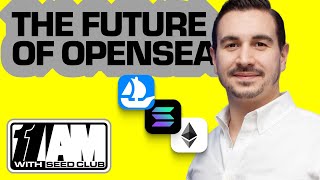
Transcript of a live YouTube conversation (11AM w/ Seed Club) with Chris Maddern (CTO, OpenSea), Josh, and Speaker B (recorded Nov 4, 2025). Maddern describes OpenSea's strategic focus in 2025–2026: returning to on-chain market innovation (OS2), building OpenSea Mobile to onboard large mobile-first cohorts, and positioning OpenSea as a general-purpose, permissionless marketplace for NFTs and other on-chain cultural assets. The conversation also explores social discovery, small-group community dynamics (Telegram/Slack), shortcomings of current token launch/social mechanics, and growth-incentive tradeoffs between organic usage and farming/momentum-driven volume.
Chapters
Gmgm.
We're live. We are live. Welcome. I only know you by your pfp, so this is exciting for the face reveal for me.
You know, I actually think we have met once. Okay. I sat beside you at dinner at Basecamp last year.
No doubt.
Yeah.
Because I think we had you on our old show Internet Explorers, but maybe I was hosting with Derek at that point.
Yes.
Yeah, definitely.
There you go. Awesome.
Awesome. All right, well, I feel like an idiot now, but that's what I'm like. Hey, bud, see you again.
You know, it's always the safer thing to say.
Yeah, all right, man. Well, I mean, like a million things to check. Check in with you on. I think.
I think, you know, there is there. We talked about OpenSea in a bunch of different contexts over the last little while. You know, maybe the first sort of narrative was like, is Opensea done for, like, are NFTs gonna come back? And then I think, I think your company was acquired. I think we saw a pretty big change in focus over at OpenSea and then Real big excitement to pick up on trading. And then I think we've sort of seen that fall off a little bit as sort of the rewards were moving on. And so I guess I'm really curious at the high level, how should we conceptualize the opportunity that OpenSea is running at today in 2025, moving into 2026?
Yeah, great question. We're back in a big way and I think very much when Devin came and talked to me and told me but what he wanted OpenSea to become, it was a really, really easy decision to be part of that journey and take over the team and get building OpenSea is, you know, OpenSea is many things to many people. OpenSea obviously helped shape the course of an entire asset class. Like NFTs were largely brought to market by OpenSea. And it's how many people know OpenSea. It's also made OpenSea one of the best known crypto brands in the world, albeit everyone knows us for the picture of the monkey. But actually being known is one of the most important things when it comes to consumer education about new types of things.
So as we think about OpenSea going forward, it really is about getting back to our on chain innovation roots and realizing the opportunity for culture, assets and all assets. NFTs were really just the first example of the human want to represent our culture in markets. And NFTs were the first way to do that. It was really, really exciting. And now you see all these other ways that are really interesting too. So you see it in prediction markets. You actually see it in meme coins. There was a time where you could tell the news by the pump Fund homepage, because today's runner was always the thing that related to. That's this human want that we have to represent our attention, our interests and the culture around us in markets. Our mandate kind of getting back to this, like we want to represent and create the greatest home for everything on chain is bringing all of that together. That's today partially represented in OS2, which is this new product platform that we launched. But there's a lot more to come. OpenSea Mobile, I think as an industry, crypto is just enormously underinvested in mobile. Mobile is going to be where consumer behavior changes over the next decade. There's no desktop browser revolution of 2025. Mobile is going to be the platform where this happens. It's going to be simpler than it feels today. And I truly believe, we believe that there are hundreds of millions of people today who have crypto. They don't really have crypto. They hold balances and centralized exchanges. All they can do is buy, sell, hold. And we believe that these people are going to want to come on chain, they're going to want to do more with their crypto and there's going to be a small number of trusted brands that they can do that with and that ultimately on chain volumes and on chain markets are going to way outpace off chain markets in terms of growth and development. And so we're coming at this from an on chain market first. Build the best place to participate in any of those, whether it be NFTs that we're still really excited about, or other culture assets or just more broadly crypto assets on chain.
We had Drew Austin from Redbeard Ventures on, I think last week, who's, I think, as big of an NFT bull as you could be. And I think he shared some frustration that maybe OpenSea bailed on NFTs too early or at least didn't lean in very hard and kind of innovate. I think he mentioned leaning into collectibles or acquiring something like Courtyard as an example of that. How do you think about, I guess does that fit feel like what you guys actually did, or how do you conceptualize NFTs as a part of this opportunity?
I actually think that.
Lots of people have lots of opinions. It's always fun when it's your friends who are throwing the bombs. Drew's a good friend.
I actually think that the reason not to do that has nothing to do with NFTs and rather because I don't believe in a vertically integrated blob company on chain. Our job is to be a general purpose, decentralized discovery and transacting platform. I don't want to go compete with all of those people and either buy them or build internally. We certainly have the resources if we wanted to. Our job is to create a home for discovery and transacting of those things. And so a huge amount of Courtyard's volume comes on OpenSea because we're the best general purpose marketplace for NFTs. The same is true today for many of the culture tokens. So punk strategy and the other strategy tokens, for a while the only place you could trade them was on OpenSea and a lot of the volume was concentrated with us. I think the question is what is our role in these different markets? And I think any company that says the answer is we want to do everything and bring it in house, firstly you're not going to be successful because people are going to go build better versions of those things. But secondly, it just seems against the ethos of onchain. We actually want to help Courtyard succeed. We don't want to take them out of the market or build a competitor. And again, we certainly could. It just doesn't seem like the right thing to do.
So I'm curious who the avatar or the customer, like how do you think about who you're trying to serve here? So I'm trying to really get a sense of the category. And yeah, I think in some of our previous conversations about OpenSea, I think this idea of there being, you know, the big brand huge, and there being a huge opportunity to go after maybe a slightly older cultural participant here than maybe what Pump or FOMO is going after. But I'm not sure I'm confident in that. So I'm curious, who are you designing this for?
This is the flip side of the coin that we were just talking about, which is as a general purpose marketplace and actually truly the only source of liquidity for a huge number of assets, you at some point end up having to serve everybody.
And as a multifaceted, multi sided marketplace, and now multi asset class marketplace, you have lots of different kind of competing consumers and interests. And so the way that we're thinking about that is if you think about the marketplace at the core, you have liquidity, discovering transactions, that stuff we need to build for everybody. We want for OpenSea to be the deepest liquidity across all of the assets so that people can be successful. And so fundamentally you make something There is a place it can be traded. It's completely permissionless. Absolutely. Any NFT by default is indexed on OpenSea. Any token by default is indexed on OpenSea and is immediately transactable. Then you get to the products that sit on top of it. Today our web product is still kind of what I'd call semi Pro. Definitely targeted less at that glitchy 12 second position length pump fund trader, although we are starting to see some use in that area and more towards folks that are taking longer term positions across NFTs, across tokens, those things. Then we're also building the mobile product and that's actually an opportunity to build for a slightly different consumer. It will definitely serve those people too. But the mobile product is the place that we believe our next 90 million users are going to come. Like if you think well we have 100 million users, I think 90 million of them will come from mobile first. And so the question is what is the thing that brings those people into our world? Like gets you to move your first crypto from a centralized exchange into a non custodial deposit account and then like how do you start self directedly exploring the world of on chain? And that's very much kind of a core use case that we're thinking about for the mobile product.
How big of a focus is maybe social functionality or kind of layering on a social network on top of the utility products you've built?
Yeah, I have nothing to share at this time.
Okay, perfect, there we go.
But no nice.
Discovery of things is social.
And it is going to happen on the device that we have with us all of the time. And so it is a deeply held belief and if you use rally like you'll have seen we had like a very big leaning on social discovery.
I believe it's an important part of the equation.
I mean we've, I don't know if we've actually talked about this on the show Josh, but I think are very intrigued by the social interactions that are being popularized by various apps right now. So FOMO being this sort of like trade notification forecaster being, you know more of a feed and sort of an emergence asset social context I think Phantom again with some experimenting a little bit with Chad and then also sort of and I guess we have, we'll have Kyle on later which is kind of again this sort of.
Social object is the trade and the P and L off of it. I'm curious if you have thoughts on like who's getting it most. Right? I mean you've been in this for a very long time and thought probably far more deeply than Josh or I have.
I don't have a good answer to who's getting it most right in large part because I actually don't think any of us are particularly getting it right. I actually don't think we got it particularly right at rally. I think when you think about social networks and graph theory, there's a few different ways that you can build a network. Like one is public, social, connection based, create an entity, um, that's sort of the unit of social content that gets distributed. And there you have this massive cold start problem for most people where you just need this like enormous critical mass of things to make it interesting. A lot of people try and bootstrap that with the permissionlessness of onchain. I don't think anyone's gotten it right at making it interesting enough yet. And in large part because the other part of onchain is somewhat anonymous, pseudo anonymous like so a lot of the time you actually can't find the most interesting people unless they opt in. The other is for simplicity, something more like a Reddit or even a Telegram where you create this closed group thing where the critical mass problem is much, much, much, much smaller. It allows you to be a lot freer with content. Like you don't need this kind of strictness of the feed style where you get just post, post, post single unit of content. And what I find most interesting is we're all building these speed based discovery things because that's what we saw hit in web two. This kind of like crazy breakout, critical mass breakout of the gravity of self compression state. However, if you actually look at user behavior in crypto, it's all small group and it's all people in telegrams, people in Slack, people in whatever, coaching each other, teaching each other, sharing information. And I actually think in many ways the person who's got it most right is Telegram and they didn't even try. And the question is, how do you bridge those two things? I think small group things that bring the trades into it are really interesting. I think Vector might have done something in that area. I forget if they did or not.
Ultimately I think the most successful products bring into a product and supercharge a human behavior that's already happening or wanted to happen and just wasn't platformed. And when you think about humans who learn new things, humans like learning new things with support groups. That's how we learn things. We learn from our friends. We're willing to follow them in a way that we're not Other people. The counter model is the influencer thing where people do also learn and follow the behavior of super influencers. I think the thing that wins will either follow this kind of community, small group ethos or we'll find a way to successfully platform the few thousand people that we really want to follow. But that will require a slightly new type of asset that makes it safe and interesting to do that. Because right now essentially what that would turn into is a pump and dump group where insert influencer name here dumps on all of us. I don't think we have the right mechanics for token launch pads yet and we don't have this kind of like long term build together, get value together creation mechanism that exists. That's actually another place I'm really, really interested to explore. As we look towards the end of the year and next year we just need more co aligned ways of creating digital assets together that aren't designed to exist 12 minutes, but like years.
I mean, I think as we were saying, Josh, everybody sees this sort of set of opportunities and yet it still feels wide open to me because I agree with you, I don't think the launch mechanisms today are the ones that are going to persist. I don't think the social interactions today, you know, fomo, great app, but it's a great way to lose money because you know, you're, you're, you're guaranteed late already as soon as you get the notification. I mean, or maybe I'm just really shitty at using it.
Well, I think it's also a nature of the types of assets we have, right? Like so much of the stuff getting traded is just, you know, attention kind of vapor token. So that's what you see being traded on fomo and then you're copy trading and everyone's rotating. I think to Chris's point, like I think this all starts at having good assets, right?
Like today, today it's essentially a Keynesian beauty market. You're betting on what you think is going to go up based on what other people do. There's actually like no fundamental opinion involved except that like you cannot reasonably bet on something and say I think this is a good product or I think this is a good community. I think it's going to trend up over time because there's no mechanism that's actually going to enforce that thing going up over time because it is good or it is a good product or those things. So yeah, we're missing. It's also just a shit market. Like there are, there are times where literally anything you buy will go up and then everyone is a genius trader. And there are other times where anything you buy, unless you happen to be on the right side of a cabal like pump, will go down. And we are currently in the latter.
I don't know. I feel like I'm in a cabal and I'm still going down. So what's going on here? What's going on here?
Need a better cabal?
I do. Dude, you need to keep rotating your cabals, otherwise you're. You're going to be left behind.
Interesting.
Chris, can you maybe, maybe. Last question before we let you go. Can you just comment on or give us an overview of kind of the growth incentive programs you guys are running? And I think ultimately what I'm really interested in is how you guys think about kind of converting that into retained usage and not just kind of attracting fleeting, you know, mercenary users.
Yeah, we think about that a lot. There's probably quite a lot of this that I can't talk about. But I think what I can say is that is definitely how we're thinking about it. Like, our goal is we think we're building one of the best products that's going to exist in crypto. And I think in certain places we already have. In other places, we're still working on it.
And I think people should want to use it. And so it's incumbent upon us to use this opportunity to get people to try the product and to create incentives to move volume that people actually want to do to the product. And then you've got to balance that with essentially not becoming a farming outlet. And actually, for the first time, we're reasonably happy with that balance. Today we're actually seeing overwhelmingly mostly organic behavior.
But that can change quite a lot quite quickly. And so it is something that we're really thinking about, we're really thinking about how to make sure that we're rewarding the right users and all that good stuff.
Yeah, all these big unsolved challenges. How do you layer in incentives? How do you launch tokens effectively? How do you bring social into it? Again, very exciting time to be building here. And I'll say. I mean, the impact that I think you have had on OpenSea, even in just the way that that brand shows up on the timeline, has been massive. I know you probably get a pile of shit. I mean, I'm even looking at the chat here right now, which is tame.
I was not.
Yeah, no, it's, it's not bad. It's not bad. But, you know, like, even, even a fairly innocuous comment not related to OpenSea. Just like one of my more popular reply to tweets is actually just because you replied and then somebody jumped a whole wave of people jumping beneath it. But oh yeah, I do think that people have thoughts.
Yeah.
Yeah.
I mean I think it's the exciting part of crypto, frankly, is these new games to be figured out. And I mean huge pot of gold on the other end if you can go figure it out. So appreciate you hopping on man. Really. At least enjoy watching from afar to see how you guys are navigating this and sounds like you guys have some really interesting things on the docket for the end of this year and early next year. So wish you all the best and bring them to the world.
The team is cooking. Thank you for having me. And thank you for raising the level of discourse in crypto. I'm a watcher and I think you guys do a great job at keeping it sensible and thoughtful.
Love to hear it.
Appreciate it man.
Thanks dude. Talk soon.
More from Chris

Ship or Die Accelerate 2025: Why Everyone Should Refocus on Mobile (Chris Maddern, Johann Kerbrat)
Breakpoint 2024: Product Keynote: Rally: Your Social Wallet (Chris Maddern, Christine Hall)
Digitized | Spotlight Ep. 1: Floor - The NFT Everything App w/ Chris Maddern and Christine Hall
How We Can Build Products that are Designed for the Next Billion Users - Talk at NFT.NYC 2022