Making NFTs Accessible With Chris & Christine From Floor | OBI #6
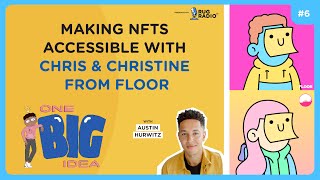
Chris Maddern and Christine Brown built Floor to make NFTs easier to understand. They used an early NFT mint to find testers, then grew through Discord and community curation. The app focuses on portfolio tracking and discovery, with users opening it frequently and staying engaged.
Questions this video answers
November 16, 2022
500 NFTs
A little over $200,000 (as stated)
12,000 token holders
Average user opens the app 12 times per day
Chapters
Sam.
Hello, everyone. Welcome to this week's edition of One Big Idea. I am joined by Chris and Christine of the Floor app and I'm very excited because I am a proud Floor App holder. This has been a long time coming and proud and grateful to call you both friends. So thank you so much for joining. I would love both of you to give a little introduction of yourselves and then we'll dive into what Floor is and take it from there.
You go first.
We're both very polite.
I went first on stage today. So, yeah, I'm Christine, one of the co founders of the Flora and Flora is on a mission to make NFTs more understandable and accessible in the world. I joined Chris. I think he'll tell you the story of how Floor kind of came to be earlier this year. Before this, I was running the crypto business at Robinhood for a few years and really saw what it looks like for millions of people to kind of come into a new financial asset for the first time. A lot of folks discovered crypto through Robinhood, through Dogecoin and like entered the crypto ecosystem. And I became fascinated with helping kind of turn that into a utility. Like, how do you kind of move beyond just speculation and trading and kind of like spot assets into something that incorporates identity and utility and community? Which is when I started poking around and saw what Chris was building through the community and have been building with him ever since.
And Chris.
Yeah, over to me and first, thanks for having us, Austin. I never cease to be amazed by the awesome things that members of our community are doing. Like, these are just really amazing. Yes. I'm Chris, one of the other co founders of Floor, and As Christine said, NFTs are just way harder than they should be. And we believe in and see the power that this new kind of not only asset class, but means of kind of digital ownership, what it can do for the world. And we really want to make it simpler for more people in a broader cross section of the world to get involved in that, understand that, and be part of what we think is going to be a really important part of kind of the next decade of the next version of the Internet.
I love it and I'd love for you, Chris, to give kind of the overview of how you started FloorApp. I remember when, like going to your Twitter profile page and seeing the quote of there isn't a good NFT portfolio tracker, which I think is still there. There isn't a good NFT portfolio tracker. So I'm making one. And this was September 2021, right before NFT NYC free. You kind of walk us back through that time period.
Yeah, I think like almost all good things, it was pretty much by accident and it was sort of out of necessity. So I was personally going on my NFT journey. I was trying to figure out, you know, what I had, why I should care about it, what was happening with it, and I just personally found it very hard. I'm a computer scientist. I've been in crypto for four or five years. At the time I was like, if I find this really hard, everyone else must find this really hard. So, so I decided I'd try to kind of put that together with the fact that I'm an engineer, but basically hadn't really been able to code professionally in four or five years because as you build businesses, you get further and further away from the direct hands on product and engineering work. So I was like, maybe I can get that kind of itch scratched for building something while also trying to explore this space a little bit more deeply. And so put that tweet out that you mentioned and was just kind of blown away by the response. I think the broad theme of Floor is I've just constantly been blown away by how much people care and how much people are willing to invest their own time and energy in things that they think are cool and how much we've been able to align that around this token, this idea of shared community through an nft. So after that tweet, I think a million people saw it, thousands of people engaged with it, and thousands of people DMED and said, how do I get the beta? Yeah, I was like, there isn't really a beta yet. There's not anything. Like there's an idea. And so that kind of drove that first decision of, okay, there should be a beta, like we should go and make something. There's enough people who care about this. Spent the next, call it a week building something and then needed to figure out who the first 50 people to try it out would be and put that out. Got again thousands of replies. And that was when kind of had that inductive leap of maybe we make an nft. And if you want to come along on this journey, get the nft. We'll bring you together into one place and we'll try and do this thing together. So put out this NFT. Ended up sending 500 of them in a very short period of time, which brought in about, I think a little over $200,000, which was kind of the first. Oh, cool. This is no longer Like a burn for me. Like, I don't have to pay the AWS bill myself. Like I don't have to pay contractors myself. So it was like a nice kind of bootstrap for the project. And at the time I thought of it as testers. I thought of it as people who were going to help us test the product. And what I didn't realize was that these people were going to be way more than that and that they were going to be a part of the product, they were going to be a part of what it became. And honestly, at the beginning it was literally just me. They're the only reason that we actually continued and, and kept going because they liked it and they wanted this thing and this thing and like someone else had this idea and like it was a group of people to build with when, like for those first few weeks it was literally just me that was actually building stuff. It really was an amazing, amazing journey. Like, fast forward. Today there's 12,000 token holders. Thousands of them still talk to us, whether that's in the discord, whether that's in app chat support, and let us know what this thing should be for them. And as we think about going from tens of thousands, hundreds of thousands, to hopefully one day, millions, I'm really interested in how you can evolve and scale this idea of not just a product where you can create content, but rather a product that you can actually mutate yourself, that you can be part of defining what it should do next. And I think that's one of the things that we got really wrong in Web two that we can get really right in Web three.
I'd love to hear you talk through the decision of deter, like deciding to token gate an app. It was the first time, I don't know that I've seen it since, honestly, a token gated app experience. It was the first time in my experience in NFTs where I bought something for access instead of speculation and knowing that like you and you have delivered value on it, that more or less, if you just went into participating in the partnerships, you probably got your mint price back and then some. But the thoughtful intention of building that out very slowly and convincing people to pay for it. What was that experience like in the beginning days?
Yeah, when I made the first token, I expected to sell three. Candidly, I did not expect to be successful. And I think people bought them for a number of different reasons. There was the people who really wanted to try the product, they actually felt the problem. And I think this whole thing is like a mixture of time, place. And like, the problem is real. Like, it is really, really hard to get into NFTs and to kind of understand what you have. And so when people started buying them, my next reaction was, oh, shit, should I be doing this? Like, am I going to be able to, like, deliver on what people are like, are hoping? I really want to make sure I understand what it is they want to get out of this, like, why they're buying and how I make sure that at the end of it they're like, wow, what a great experience. And not, oh, this guy on the Internet took like 0.2 eth from me and did nothing. And very much like having them in the discord was a big driver for what we built. And just like continued engagement, that feeling of commitment to someone who was not just like a person who used your app, but who was like a customer, someone who'd like, actually spent their money, was a big part of what drove me to make sure that we did turn this into something like just like having any investor or any shareholder or any community member or anyone who like, does frankly anything for you. You want to make sure that you do right by them. And I wanted to make sure that we delivered. And that meant actually going and talking to them about what they did care about, like why they did want to be there. And I think that helped us get this kind of community oriented way of building.
Yeah, yeah. I would love to hear you both talk a bit about the community that has developed around the Floor app. Because there's nothing that would have said at the outset that people paying for access to an application would lead to a community, but it very much is a community. You guys do events all over the world, you have your podcast, you're constantly bringing people together where part of the way that we even got connected to do this is I had met someone in your community pet, who was helping me with production, who actually set me up up with this podcasting studio in London. And so it's very much this community that helps one another. How have you gone about fostering that? Where does it sit within how you think about building floor over time? Christine, I'll have you answer that.
Yeah, I love that question. Because community is actually the reason why Chris and I first started talking when I was at Robinhood. We were starting to build our wallet transfer product. Right. How do you take assets off the platform into your own wallet and use them in a broader ecosystem? And as you kind of creep into web 3, I was pushing really hard, like we should be building with a community like Web3 is all about community access, community influence. Like, that's not how we're doing it. We're not doing it natively. And went out and looked for the best example of who was building with the community today that could give us a playbook or make us smarter about how to do that. And came across floor. I'd been following you on Twitter, so I saw that first tweet. I think everyone saw that first tweet. But you invited me into the discord. And I remember legitimately rolling my eyes at someone telling me like, oh yeah, hop into the discord. Because I was in so many discords at that point. And they were all awful, right? It was like too much noise, too many people, not enough actual signal and not enough organic engagement, peer to peer. Right. It's, I think still today a lot of discords are kind of announcement channels for projects to ask of things or tell things. It's not, you know, organic. Kind of like the individual users of that product or that community helping each other. But he prodded me and was like, no, no, no, really go into the discord. And it is a magic corner of the Internet. Like, it sounds really cheesy, but I remember getting in there and just like watching and being like, oh, this isn't just, you know, Chris or folks who are working on the project, like giving regular updates. It's a two way street. And individual members of the community are helping each other and learning things from each other.
Fostering that. I think how I've seen us do it is primarily through. Through setting it as an example. Right. Like you can't expect people to help each other if you're not also going to lean in and help them as well. So we spend a lot of time identifying folks in our community who are doing things that are really interesting and saying like, hey, how can we help you? How can we reach out and include that in what we're doing or connect you with people that we know or find the right kind of place for you to kind of steer? Because I think if we do that, then they'll do that for the next person who will do that for the next person and kind of pay it forward.
Yeah. How do you see us fostering community?
I think you hit it.
I also think we can't underestimate the extent to which I think we got a little bit lucky. I think in building anything, you end up having to be lucky to be successful. We've definitely gotten lucky in a bunch of different ways. But I think one of the ways that we got lucky is I think in our first hundred users, almost all of those people are still active today and they're just really good humans. I don't think we had anyone come into the discord who said anything negative until we were 500 people in the Discord. And it's really hard to establish and change things, but actually as long as you've got corpus, it's a lot easier to keep things. And so with that kind of core, first hundred people who I think were awesome and really engaged, I think it's been more tending and watering and encouraging versus having to shift and get to a place of kind of positive community. And I agree with your definition. I think it's way more important, the relationship the average community member has with another community member than that that they have with us. Like, that's just so much more powerful, so much more ingraining. Like there's only so many of us and we only have so much time and like, you know, who wants to hear me talk more? Doesn't sound fun at all.
But there, there is something to the fact, you mentioned earlier this idea of being centered around a real problem that people could rally behind and were willing to, to put their hard earned money to have it solved for them. And they really became, I remember those early days the community were the evangelists trying to tell anyone who would listen. I had multiple friends tokens because they were all dealing with the same issue of I want a way to visualize how I'm performing. And it turned into so much more than that around how you make NFTs accessible. One thing that I thought was really important early on was how you continually validated participation. The fact that you had a roadmap on a Trello board that people could like. People talk about building in public and they think that's like putting out a tweet. You actually had your roadmap in an accessible place that anyone could see at any time and know exactly what the priorities were, how you were moving through them. It gave us, I think, as a holder, a lot of confidence in how you were looking to navigate and also validated our participation. When we had feedback, we knew that it would be received, it would be read and it would be iterated on if it made sense. So I definitely think there was a lot of that, of everyone just being very mission aligned and not focused on speculation, but very much focused on, we all have this problem and we'd like to see it solved. Moving from that, one of the things I think is really interesting you put on your website that the average user opens the app 12 times a day. Very fascinating for me because I think a lot of products are trying to create sticky experiences. How do you think about stickiness and engagement as a metric and how do you build for that?
So for us, like that's a little bit of a vanity metric in some ways. It's, it's a great metric and it's one of the metrics that made us. You take it from project to company because, you know, things just don't have those metrics. There are two numbers about flaw that are insane. One is our retention. So like a little over, I think 6, 70 something percent of people who've ever opened the Floor app opened it this month. So like we just have insane retention of users. And then the other is the average user is just like coming back multiple times a day and it speaks to kind of the problem. And I've always said in building a mobile product, you need to figure out what that hook is that keeps bringing users back. And like in mobile apps you're basically on the home screen or you're dead. Like they're just, you need to have that, you know, you come back multiple times a day hook for attention. And for us that's still portfolio tracking. People want to know like, you'd open Coinbase or Robinhood. Am I up, am I down?
I think what that's given us is this really unique position of attention.
In a world where, particularly during the bear market, users are increasingly not checking more than a few discords because this is one place that you can get kind of information for all of your projects. They are continuing to come back and check the Floor app. And so this is a place I think we can help creators and projects a lot because we want to be the front door, we don't want to be everything, we don't want to build all of the things that you're going to need. But when you think about NFTs and you're out and about, we want to be that thing that you open and use it as your jumping in point to whatever else you're looking for. Maybe that's other products, maybe that's marketplaces, maybe that's like discords or chats for individual projects. But floor should be the place that you discover what it is you should be doing next. So like, oh, I'm a doodles holder and something just happened in doodles. So I'm going to go check that out today.
Can you define that a bit further of like, what features do you see as effectively what you're describing as an NFT homepage. And so not only do you want to be able to track how you're performing, but you want to know the latest news you may want to buy. Which was a question we got from someone in the audience of is this a place in the future where people will actually be able to buy NFTs or look at different marketplaces? How do you think about what the product scope looks like for the home of NFTs?
I do think it's a lot of things, right? It's understanding and knowledge. So what do I have in my wallets today? How are they performing and what is the most important thing that I need to know about all of them right now? I think that getting that right is incredibly important because there's so much noise in this space and so giving users the flexibility and granularity and tools to actually say, like, this is what I'm interested in participating in and this is what I want to be hearing about. And then having different levels of notifications for those users, like from passive information to push notifications. Say you want to know when this thing moves this much. Like, we can tell you that to actually like making transactions, being able to see what's available across platforms, across marketplaces, and actually go and buy and make entry or exit positions. I think what is really interesting here is that the space, what makes it hard at the end of the day is fragmentation, right? There's opensea, there's luxrare, now there's Blur, there's eth, there's Solana, there's Tezos, there's the next chain. And even your wallets should hopefully be fragmented, right? You have a vault wallet, you have a hot wallet. Like you're doing things across multiple spaces. If we get it right, we are the place that ties all those things together to kind of make a single picture of what's going on in the ecosystem for you, for, like, what's in your wallet, for what you want to know, for like, what you should be.
Interested in, I'm going to slightly push on it. So there is a difference between being the place to know these things and then being able to actually action them. And so I do think, like, a lot of people would be curious to know, do you guys think about being able to action and purchase NFTs and do those things?
So, like, are we going to be a marketplace, right? I think in the short term, no. I think like, you never want to say never, and who knows? But in the short term, Being able to help people understand where there is liquidity, where the market is, and get there easily and quickly is kind of our first step. We actually do have listings very recently in the app, so you can go and you can say, okay, doodles is something I'm very interested in. Let me go look at what is being bought and sold and what's available at what floor price today. I do think that eventually, if we do have a user base that's large enough allowing users to actually engage with one another directly and kind of meet in the middle like. Sure, that that could be an interesting thing to explore right now. It's not on the short term roadmap.
I think put another way, I don't think we're going to rebuild almost anything that exists in the ecosystem in a way that looks familiar to the way those things look today. So OpenSea actually one of the hardest parts of NFTs right now. If you have ETH, it's not actually buying something on OpenSea. OpenSea is actually like quite easy to use to talk about that fragmentation. There's also huge fragmentation of pricing data and listing data and why that price is that price. So what's actually happening, what the news is. And so I think there's kind of two pillars of things we'll do. One is attack new hard problems that aren't solved in the space today by connecting things together in interesting ways. And then the other is rethinking some of the things that exist a little bit. And I think there's like a couple pillars there. Liquidity could be one in time. And in particular, I think the story today for you have a thing I want and I'd like to discuss it is particularly poor wallet and custody is another one today that's just incredibly challenging to get on board to the space. And I, I think the solutions to those problems that would be flory, which is a very different to the things that exist out in the world today. Because going all the way back, I think there's this matrix of how you think about NFTs and then how far along you are in the journey. Some people are here for the asset class, other people are here for the utility and the interesting things that they can do. And then some people are new and some people are very experienced and I think the things that they're looking for are quite different, most likely.
How do you think about prioritizing those? Because you just nailed the fact that there are a variety of different Personas that you could be prioritizing and ultimately the different Products that you would create would look very different for someone that is like a base user versus a power user.
And it's even more complex because those are the users that are here today.
Right.
And that's a very small percentage of people that we actually hope one day will use floor and be using NFTs. So it's like, okay, you have this matrix of users in the ecosystem today. How do you build for them? But also what about the next 10 million users that come in? What are they going to want, what are they going to need? What's going to be way different for them to get involved than this core set of users today? And how do you make sure that those two things are interoperable?
Yeah. So how do you think about that?
This is actually one of the hardest things about building in any emerging space, which is you have to build for a customer that exists. Like we build for the next 10 million users today, we probably go out of business before they come here. However, if you don't, when the 10 million users come, the market passes you by. So the unfortunate answer is you have to do a little bit of both. Long term the strategy of the business is very clear, which is we want to build for the educating and onboarding market. There's an enormous corpus of overlap, I'd say like 70% overlap between those things today in the 30% that's where we try and measure very carefully. And today we do build for folks who are in the space. We want to make sure we're useful to our customers who today are early adopters. They're people who are in NFTs in like 2021, 2022, which makes them early adopters. We're constantly thinking about how do we build long term features and build like value, network effects and content that allows us to build those things that onboard more people. So I think I'm proud to say you could put anyone at floor here and ask them kind of what we want to do long term and they probably have the same answer. Yeah, prioritizing in the short term is very tricky and like a day to day discussion for sure.
Under understood.
Wanted to move to a different section here. So I've been obsessed with this idea like Bezos talks about focus on what your beer like makes your beer taste better. And I think what's really interesting with you guys is that and they have just a little bit of context behind that. The idea he had this at like the first AWS reinvent and it was basically trying to get people to use cloud services because it's like, why would you invest in this if you're a small mom and pop company? Just have us do it and then you can focus on like, what makes your product so great for floor. What's so fascinating is like, when your mission statement is to make NFTs more accessible, a lot of things can make your beer taste better. So in terms of that, where do you see like your core focus needing to be right now? Is it because you're adding like a lot of features, which is really exciting and I'd love to talk through some of those, both on the portfolio side and on the content side? But how do you think about what you take on directly with your team, which while growing is still relatively small, versus how do you partner and bring on other experiences that way?
Yeah, no, that's a perfect question and one that I don't think we have a perfect answer to, but have day to day kind of conversations and decisions around it. I'll use our Discover Content as an example. So we recently launched a new tab in the app which is Discover, and it lets you kind of go beyond the portfolio that you have today and kind of see and understand a broader ecosystem outside of your assets. And for a really long time, well, long for Web3World, I think like two or three weeks, it was just the highest movers and the top volume of the day. Like you could see a list of what was actually moving and where was liquidity going in the space. And then a few weeks ago we launched a new content type which is curated content. And there's a world where we could say we have people in our company who are content creators and we have a really good view and perspective and vantage point to be able to put content together and put it out there in the world. But that's not our superpower and it's not going to be what makes us 100x more impactful a year from now. So instead we should leverage and lean on other folks in the space who have amazing content. We should go out to our community and say, there are content creators here. How do we surface your information? How do we make that more accessible to a wider audience? I think where we have a special sauce where beer tastes the best is that we're product builders. This is a space full of utility tools and wallets and protocols, and you have folks who are like relentlessly thinking about a user experience and what users need and building a product that kind of meets those needs where they are without making you go like 10 steps into the stack. So starting with saying, okay, this is a product that should accomplish one specific thing, which is being your home for NFTs. And when you go one layer deeper and say, okay, that home for NFT should have content that is relevant to a collection that you're holding, we don't need to make that content, we can just surface it and curate it and have our community, which is the benefit of building with a community, be the ones that are really leaning in and helping make that great.
Yeah, I think the community, but also partners like, I think as we think about the Web3 ecosystem, I think the benefit of a lot of that kind of protocol building that goes on is some interoperability and we're building on top a lot of that stuff, but hoping to be able to find kind of protocol level opportunities to work with other people who are doing curation and piping around information and content. And I wouldn't be surprised inside of the next quarter to see a half dozen other companies kind of content and potentially some functionality surface inside of the Floor app, which alpha.
That was alpha right there.
I'm really excited about this. Yeah, like we've always said, we didn't want to build everything from scratch. We don't want to create all the content. We want to work with our community. We want to platform people, we want to give them a voice. We want to give these people who've been with us since the beginning and like share valuable information with each other in the discord, a voice to an increasingly large user base. But we also want to like celebrate the work that other companies are doing and, and for us, get efficiencies of realizing that work without having to go and do it ourselves 100%.
Well, I know we are coming up on time. Before I let you both go, we have one thing that we ask everyone that comes on to one big idea, which is what is your one big idea for the audience that you would take away from this episode?
So my one big idea from this. And so when I say go first, I just meant audibly think.
I think the thing that we're always trying to do and encourage is we all win when more people come to this space. And that means two things. That means being a welcoming and inclusive space. And I think we typically do that really, really poorly as a space. We have lots of jargon, we have lots of fomo, lots of hype. But then on the other side, to anyone who's thinking about what to do in Web three, we need to make genuinely useful products in order for 10 million, 100 million people to come into Web3, there has to be a reason for them to want to do it. And that reason has to be stronger than how hard it is to overcome the obstacles. And so if you're thinking about when are there going to be 100 million people in Web3, the answer is when it's useful to 100 million people to be in Web3. Let's just focus on figuring out what those things are. I think that's the way that we can all most contribute to the space and do it while making it more welcoming, more inclusive and more friendly. And that's the stuff I'm excited to see.
Christine, my one big idea and I think I've shared this before, so it's not a unique idea, but one of the things that really got me interested in web3 is kind of the inversion of power structure and systems. Right. So it came from Robinhood which has very traditional investing. And when you look at a securities model, when you think of like trust and safety and information and discovery and understanding and all the things that like we're trying to figure out today, it's a very centralized, top down model. Morgan Stanley and Goldman Sachs are telling you every quarter, here's an earnings report, here's how we keep these projects accountable, companies accountable, and here's what our price target is, here's whether we think it's a buy or sell right now. And that is a huge indicator for folks who are participating in that market of like, okay, here's how I go and spend my dollars, here's how I invest or divest. And I think the superpower that Web3 has is if we get it right, that can be bottoms up. So building with a community is like a first step and that's one way to do it. Another way is to kind of empower and leverage that community to be able to give signal to the new people coming into the space to actually say, hey, this project is free minting. Do we trust it? Are we also minting, what do you think of the project founders? Do we know them? Have they been doxxed? Right. And that doesn't have to come from one central authority. Like if we get this right, it's not Chris and I at floor saying flor has a check mark and here's a process for getting your check mark. It's a community that is actually going in and giving signal and saying, we understand this. Here's what we're doing, here's where we're putting our currency.
Yeah, it's like the wisdom of the commons. Yeah, Terrified commons.
And I think that that's what really drew me into the space and what drew me to floor because I saw this community that was so vibrant that was doing that together in a discord and being able to build a product around that and like give people the space to do that in a more scalable way for millions of people. I think that's going to be like what turns everything on its head.
Well, that is a perfect place to end it. Chris, Christine, thank you both so much for coming on and yeah, we'll see you guys next time.
Thanks for having us.
Thank you.
Thanks for listening to this week's edition of One Big Idea. As a thank you, head to OneBigIdea XYZ to claim your free OG status. NFT. I'll be closing off minting after this initial run of episodes so be sure to grab yours before they are gone. Thanks again and I'll see you next time.
More from Chris
Ship or Die Accelerate 2025: Why Everyone Should Refocus on Mobile (Chris Maddern, Johann Kerbrat)
Breakpoint 2024: Product Keynote: Rally: Your Social Wallet (Chris Maddern, Christine Hall)
Digitized | Spotlight Ep. 1: Floor - The NFT Everything App w/ Chris Maddern and Christine Hall
How We Can Build Products that are Designed for the Next Billion Users - Talk at NFT.NYC 2022