Digitized | Spotlight Ep. 1: Floor - The NFT Everything App w/ Chris Maddern and Christine Hall
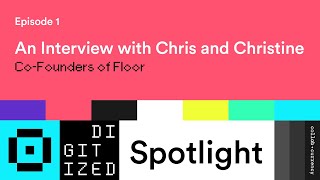
Chris Maddern and Christine Hall built Floor, a mobile app for NFTs that launched with a token-gated waitlist. They discuss why they chose native app over web, how they're building community with creators, and where NFTs fit in as identity and membership tools.
Questions this video answers
September 13, 2023.
Floor is available in the App Store and Play Store; using the code "digitized" in the app skips the waitlist.
Chapters
Foreign.
Your lens into the best builders in consumer crypto. I'm Amanda.
And I'm Winnie. On this series, we'll explore some of the latest trends, emerging consumer crypto together and chat with those building at the forefront. In our first episode today, we dive into what everyone in Web3 is talking about, mobile apps. From the merging mobile app stack with progressive web apps to community building, going to be unpacking a lot of design choices that consumer crypto founders have to face.
Today we're excited to bring on Chris and Christine, the co founders of Floor, your everything app for NFTs and one of my personal favorite crypto mobile apps.
Hi Chris and Christine, we're so excited to have you on our first episode of Digitize Spotlight. So to kick things off, can you each introduce yourself and what you're building at?
For sure I can go first. Hi. Thank you for having us on. Number one, we're really excited to be here. My name is Chris Madden, co founder and CEO over at Floor. We believe that Web3 should be for everyone and we're working to make it simpler, safer and more understandable for as many people as we physically can.
And I'm Christine, also co founder and COO here at Floor. And like Robinhood did for stock trading or Venmo did for peer to peer payments, we you want to take something that feels hard and make it approachable, fun and have it live in your pocket, go with you where you go, and make it just part of your everyday life.
That's awesome. Chris, I have a question for you. I heard you started building floor in 2021 based on your own experience of trying to really understand NFTs. Since then, a lot has clearly happened in both the broader crypto market, but also with how NFTs have evolved. How has your vision for Floor evolved over the last two years?
Gosh, yeah, it's been a really fun journey. So as you alluded to, Floor started out of just, oh my God, can it really be this hard? And like Christine mentioned, I think both Christine and I have spent our careers trying to make things simpler than they actually are and certainly simpler than they can feel. And for me, that started with us financial payments at Venmo. For Christine, buying crypto at Robinhood. And NFTs were this thing and then kind of grew to understand it as Web3 more broadly, where I was captivated by what it could be. And even as we were building Floor and we got this community of thousands of people who rallied around this cause, that became more than the sum of its Parts because kind of this tokenized community let us do that. I thought there was this opportunity to try and bring that same simplicity, make it simpler than it is today for Web3, starting with the thing that was the problem today, which was just tracking all the stuff you had. I think as we got further and as I got further down the rabbit hole and realized just how big I think this thing can become, that was when my mindset shifted from this being a project and a hobby to I think someone's going to build the leading consumer onboarding platform. And I think, you know, no one's better positioned and you know, I hope doesn't have a better plan for that than, than us. And so let's, let's go do that and let's bring as many people to Web three as we can.
Yeah, I love that. Two people who've built something in traditional consumer fintech, so definitely makes sense.
And Chris, building on what you were saying about making NFTs more access accessible and understandable, the app you guys chose to start as token gated and currently you still need a code to join. So curious about this go to market approach and how you've been able to grow such a large community from there.
Yeah, gosh, we actually get this question quite a lot and it's evolved over time. So I remember the question that we used to get a lot last year was why did you take venture funding? And I think the answer is somewhat the same, which is starting to grow outside of that original route while kind of paying homage to it. We started out where being an app user cost you 500 bucks. And yeah sure, you're not going to make Web3 more accessible to everybody $500 tickets at a time, but it was a way to gain insights, relevance and build for a user base that's really here. And so just like they say, being too early is the same as being wrong. You have to be building for a real problem and a real audience that exists today in order to get customers, in order to build traction, in order to get users for the stuff that you're building. And so we've tried to kind of evolve at the cusp of what we think solves real problems for users today and is compelling to the audience that exists here while ensuring that we're building the pillars and foundation of what we think will be what we need in order to onboard folks as the edges of web 3 continue to expand. And so for us that meant first token gating, really focusing on measuring your NFTs as financial speculation investment over Time we've removed the token gate. Venture funding was what allowed us to do that because we could pay for our operations outside of kind of selling tickets at the door and started broadening outside of just measurement to discovery, helping you find your next nft, which is obviously a big part of what it would mean to onboard to the environment, but as well as kind of things like wallet things like in app purchases for direct action inside of the app. Like these are all pillars of things that we think are going to be super important as we get ready to onboard creators, brands and users at real scale.
Bit of alpha. I don't think we're going to be invite gated for too much longer. We have some active tracks right now that are kind of working out what the whole story is and how we make that make sense for everyone. But I suspect we will not be invite gated for too much longer.
If you were to launch today the same app, would you have the same strategy of being invite gated and token gated in today's market?
It's a great question. Probably, probably not. I think we're in a really, really fortunate position. I think we kind of lucked out for this bear where we started small enough that we could still grow a lot, but big enough and with enough traction that we weren't starting from zero where we realized the venture capital as well as realizing that initial capital from token sales. I don't think the go to market's viable. But also I don't think someone else starting in a world where we exist right now, I don't know that the product strategy is viable either. I think it would be really hard to compete with us today from where that is. And there just isn't the interest from the market in deploying lots of capital to building something like it, whether that's through tokens or through venture. So probably a very different strategy, but I don't actually know what that strategy would be hard be it would be hard to do today.
Yeah, no.
That leads me to my next question.
Amanda and I were just talking about this weekend. I think we read that today NFT transaction volume this week it's low it's been in two years. Many blue chip products are trading at like a fraction of their all time highs. Some are saying NFTs are quote unquote dead. What is your take on kind of the current state of NFT market and like where we're heading in the coming years and what do you think this like next generation of NFTs really looks like?
Yeah, NFTs are dead. Long live NFTs. Right. I think that's the quote that like I love to live by. I think the premise of the question really comes from a focus of what NFTs were in the previous cycle. Right. And anyone who's listening in is probably like pretty deep in crypto. You know, we exist in cycles. The last cycle for NFTs was hyper financialized, you know, the focus of speculation. Being able to buy something, you know, a day later, a week later, it's worth much more. Trading and flipping was like a huge part of the culture. A lot of what people call blue chips are coming out of that era.
I think that is a use case for tokenized ownership. I don't think it's the use case that we're necessarily betting on other things that we're excited about and that like use cases that we'll see more adoption probably, you know, includes digital portable identity gaming, our membership co creation. I think all of those things, you know, you're not going to be able to buy one day and it's going to go up 300% the next day. You know, you're going to use the blockchain to be able to say I have ownership of this thing and I potentially want to keep this thing for as long as I can.
And in that view I think NFTs will be much, much more quote unquote alive when there's 100 million people using something that costs them $1 to $5 than 100,000 people using something that cost them 50 grand.
Totally. And like how has, how will Floor specifically cater to some of those additional use cases around identity co creation gaming? All of which I love and we all spend a lot of time in. But yeah, specifically how does the app.
How will that evolve? Yeah, we're dabbling with some of that right now. We recently launched a creator series called Icons where users can buy.
Accessibly priced additions from iconic creators in the space. You know it's a, it's accessible and approachable not only in the price but also in the on ramp so you don't have to go and sign a transaction on mobile. Something that you know, a lot of people don't feel safe doing in the space. You know, soon hopefully we'll have a wallet out in market so you can actually go from downloading the app to acquiring something on the blockchain without having to, you know, acquire eth on a centralized exchange, get it to a non custodial wallet, set up a non custodial wallet. It's something that like my mom could do. And I think in that world we've really started dabbling with even completely different views of the app. Right. So that portfolio and the idea of price and price discovery isn't the forefront. It is understanding and collecting another piece of art and viewing that art in a different way. So I do think you'll see product iterations and product evolution from Floor specifically as we do start centering around assets, that the financialization of them isn't kind of the most important thing.
Yeah, that makes a ton of sense and leads into kind of a next question I had, which is other than. And you've named some of these use cases that kind of need to be created and infrastructure that needs to be built. What do you see as the main barriers to adoption of consumer crypto based mobile apps?
Yeah, it's up and down the stack. I think Christine hit some of the more kind of financial ones where onboarding cash is hard, particularly if you live in New York. That's such a disaster all the way through to getting that safely into the right wallet to make the right transaction. But I actually think many of the barriers are much more philosophical than they are practical. I think it starts way before anyone starts thinking about onboarding any money. It starts with, is this for me? Is this a thing that I'm interested in? Is this a thing that I'm welcome in? Is this a place that's safe for me? And so I think all the way out, like way before anyone's got their hands on a keyboard, it's creating the story about why they should want to participate here. If Web3 is just a version of the Internet where you get to participate financially as well as as a user and a consumer of the product, you know, why is that something you should want to do? Why is that safe? How do we put the barriers up? And so as you start thinking about a wallet for something like Floor that's deeply integrated into specific use cases, you know, we don't want to be metamask. We don't want to create a general purpose wallet that lets you sign transactions. We want to make something that helps you do the things that you want to do day to day in a way that maybe that means you can't do a bunch of other stuff that, that you might want to do. But a product without an opinion is just a tool and we want to build products that keep the bumpers up and help you be successful at the things that we think you should want to do. Hopefully we're right about what we think you should want to do. And we can help more people to do those things. And we think if we choose the right things and we foster the right things, then we can help more people get into Web3. We can build a better Web3. There isn't a great Web3 that's there today that we just need to onboard a hundred million people to. It's about shaping what that web3 is. It's about one where creation and discovery are inherently social, where we are creating and we are both giving and participating as a byproduct of what we're doing every single day together on the Internet. And we want to build the place that makes it easy to do that, but maybe makes it hard to go and I don't know, sign some random contract that mint some degen shit into your wallet. Like that's not necessarily what we're going to be focusing on.
I had a quick question. I mean obviously with everything around friend text launch a few weeks ago, there's been a lot of talk recently about progressive web apps, which for the audience is basically websites that can be pinned to the home screen providing almost like a mobile app like experience with notification. I saw that Floor obviously chose to go the traditional route with Apple and Google listing and you guys made a conscious decision to absorb that 30% take rate deal with some of the app store limitations restrictions. We love to understand kind of the logic decision behind that. What led you to launch Floor as a mobile app and did you ever consider launching as a progressive web app limitations there that you considered?
Yeah, we didn't really consider it for a few reasons. One, PWAs have come a long way in the last two years and obviously we started before that. Even when you think about tools and technology choices, there's a wide range of different ways of building an app ranging from just build a website and have it be on mobile to build something that's natively augmented with pwa, to build a react native app to build natively with the tools and technology of the platform and we went all the way to the other side. So Floor is a native Swift app and native Kotlin app on Android and we did that for a few reasons. One, I think that they're nicer just like from a personal level. I personally anytime I use something that isn't the little product and designer inside of me dies a little bit. But there's lots of more practical considerations today. I think for anyone who's thinking about building something progressive web app is a really interesting potential technology to think about building with I do think that there are limitations in experience and then there's also fundamentally in mobile what matters is are you on the home screen and are you front of mind? And today PWAs have made a big step forward, but particularly in the Apple ecosystem, anything that isn't reviewed by their App Store is constantly being kind of pushed one step behind. Whether that's additional restrictions and visibility on notifications, whether that's additional rules and like blacklisting, disallowment of individuals from kind of a centralized registry. There's lots of things.
I would be surprised to see PWA say on equal footing with apps on the iOS side. I think on the Android side it's a lot like, it's a lot more even.
Yeah. Do you think it's more like maybe as new consumer apps start, the first hundred k users experiment quickly, iterate quickly, they can launch as a PWA at first and then as they have more users and they understand them better, kind of have more time to launch a more mobile native app. You kind of see that route being more popular.
Yeah. I think one thing that I hope we see more from in the Web three space over the next few years are people investing in building native apps that go through the App Store because I think it will generate demand and it will build a consumer and user base that say we want to participate in Web3, we want to participate in NFTs and that can drive App Store policies. Like what we have found over the last year and a half, I think we've been on like in the App Store, not just on test flight for about a year, is that the reviewers do really deeply understand the space, they are ramping up and like becoming very familiar with Web3 and having builders who are here for the long term and who are making really like consumer grade apps, like they should be talking to Apple, they should be helping kind of push forward the policies and the way that they think. And the more people we have doing that, the better.
Yeah, that makes sense. One question is like, I think we did a survey among college students who use crypto and the results were kind of interesting. Between mobile and desktop we saw that overwhelmingly more people preferred social interactions to be on mobile. But desktop is pretty split for financial. For NFTs it's interesting because there's an inherent social element as well as financial. Do you think the way people buy and sell NFTs will be more mobile in the future or more desktop?
I think not even close.
By six orders of magnitude mobile. I remember back in the mobile commerce days you could See, the same thing, people tend to prefer to make higher value, lower confidence, higher decision factor decisions on desktop computers and everything else on mobile if they physically can. And you know, at the beginning, NFTs were low confidence, high value, like what the heck's going on? Where's my Fox app? Kind of decisions. And increasingly they'll become less and less so, as you said, they're more and more embedded every day in the social fabric of what you're doing. Things like friend tech are early examples. Like, I'm personally bearish on friend tech for the long run. I don't think putting numbers by people is likely to become the way that Web3 gets mass adoption. Fundamentally, they've given something people to do that's very low friction, very easy to onboard, kind of fun to do. People will favor doing that stuff in their pocket. And moreover, pretty much everything meaningful that's happened either culturally or financially over the last decade has happened in your pocket. It feels like a toy sometimes at the beginning, but I think starting a cultural revolution from a desktop computer today is probably quite hard.
Yeah.
It gets back to Chris, what you were saying about tools versus products that I think so far today we have a bunch of tools in the space and to use those tools you need a lot of space, you need a lot of focus. You need to be sitting down and researching and reading the transactions that you're signing. And there's a trust and safety issue. I think most people who have been in web3 for over a year have been rugged at least once.
Right.
They have a story of, oh gosh, I signed something or I went, I clicked on a website that I shouldn't have clicked on. And that I think is the underlying fundamental problem where if we build products and wallets within those products that do specific things and have those guardrails for you, you're going to be able to actually have a lot of confidence transacting on mobile. You're not going to need an entire.
Large screen to research the exact thing that you're doing. You're going to go in with confidence and know exactly what's going to come out the other side and be able to have fun doing it.
Yeah.
No, I mean completely.
The answer completely resonates with what I've.
Seen and experienced myself. Shifting topics here, Christine. So you are a generative art creator yourself. Been publishing some of your awesome creations on Twitter. Would love to hear more about what you've been creating and how this has influenced your approach to leading floor.
Yeah, it's interesting. When I started down that journey. It really was not at all for, you know, a feedback loop or to kind of get deeper into the space. It candidly came from just wanting an outlet for some of my unused programming skills. So we're very lucky that our founding team all have background in computer science. You know, Chris, although he's our CEO, like, built the first version of the app. I got my master's in computer science. So did our cto. But when you have three people that can all build, that doesn't mean that all three people should build. So I found myself, you know, really contributing in ways that weren't code related and then on the side saying, like, oh, I have this set of skills that I don't want to put on a shelf. I don't want it to gather dust, and I want to do something creative with it. If I don't have to do it for my job, I can do it for fun.
And I just fell down a generative art rabbit hole. Someone showed me a piece of generative art on Tezos one day, and I was like, I can't believe that code made that. And so tried my own hand at it. And I think, unexpectedly, what was just something that I tinkered with on the weekends has become something that has helped me really understand a totally different use case in the space, something that I wouldn't have, like, naturally gravitated towards as a collector and as a purchaser in NFTs. And that has opened up a huge different set of exciting things that we're bringing into the app now. I think it's influenced. We were running this creator program, and we're sourcing artists and having them come launch art on our platform. And I think that it's built a lot of empathy, you know, for me to understand what it's like to be an artist in this space and how difficult it is to both create art and have to market yourself and have to, like, manage, you know, expectations and that dollar value that sits next to the things that you produce.
So I think that has been the biggest kind of value add and something that has been really exciting. Like, I've gotten to meet 10amazing artists as part of this, like, first Genesis Icons series that we're doing. And. And I think. And I hope I show up a little bit better, because I've been on the other side of the table as well.
Yeah, no, I mean, that makes a ton of sense. And I've also been following Icons as your kind of creator launchpad. I'm curious. So you. You've ventured into like you started off as NFT tracking and then you ventured in co commerce, this creator program. And you've also launched usernames, there's social features, now there's discover. Like where is this all going? It seems like an NFT super app is sort of forming here.
NFT super app. There you go. Should update the website. So I think that when something's early and hard to understand and decentralization naturally lends itself to fragmentation, which lends itself to like this ecosystem that's just like really hard to wrap your, wrap your hands around. And so for us that means, you know, we're in your pocket. You know, as we said in mobile, the only thing that matters is are you on the home screen? Like do you have that front of mind attention? And so we want to be that front door that users open every morning when they wake up and jump into Web3. And that is inherently kind of a wide feature set with depth in a few places. And so for us right now we started deep and narrow, which was we're the best way to measure your NFTs on your foot. It's where we started. And we've gradually been widening and we've been widening through two things. We've been widening by building ourselves and curating internally, but also increasingly starting to partner, starting to build on some protocols that exist out there. And when you think about Floor at its natural conclusion, it essentially is kind of like you might see financial composition a lot of the rest of crypto, it's kind of social composition where we build on top of all of the other stuff that exists out of there to bring it together. We may not be the entire solution to your problem in NFT lending or in, you know, liquidity in the marketplace or whatever that is, but we are going to be the place that you discover that and we are going to be the place that you come back to next time you want to do something. We are going to be the simplest way to get onboarded and start to understand what you might even want to think about exploring. And so yeah, very much at the front kind of why. Let's help make sure we can help get you into your next web3 journey. But then in a lot of places we'll be composing other things. We'll be sending you off to partners like we can't build everything ourselves.
To close this out. Let's do a few rapid fire questions. Maybe we'll start first with Christine and then Chris for each of these NFT project that let you down the rabbit hole.
Yeah, that would be Amber Vittoria's Alphabet collection. I think it was like August 2021. I was leading the crypto team at Robinhood at the time and we were trying to get deeper into Web3. And I'd been following Amber. She's a New York based artist or was a New York based artist. And I saw she was tweeting about NFTs and I was like, oh, I should, I should check this out.
Chris.
I'm trying to remember what it was called. There was this project, I think it was by some guys, I can't remember if they were in Spain, called the Etherians. It was just like really kind of cool, cute looking art and the team were really nice. And that was my first token gated discord and the first time I had any utility behind an NFT and that it definitely was like part of the like, oh, interesting. So this is like a thing that exists in my browser, my little Fox app extension thing. But also it like lets me go into this chat room that's kind of interesting. It was kind of part of the piecing it all together.
Love that. And last one, favorite type or use case for NFT.
Right now, I think it has to be generative art. For me, the idea that the, the seed from the transaction hash actually shapes the piece of art that you get and that.
99 out of 100 times you're going to see that art before the artist who actually created it will. It's just like that dynamic between collector and artist I think is fascinating. The embed of technology is fascinating. I am in full generative art fangirl mode these days, as Chris hears a lot of.
Yeah, I think outside of art, zooming out of NFTs, Web3 is a toolkit for a more participatory Internet. And NFTs play one piece of that and tokens play another. And I really believe in a world where the average community is composed of NFTs that govern membership and entitlement, and tokens govern participation, rewards, all of those things. And so anything that's moving us closer towards NFTs as being used for what I think in the long term they should. They're all tools, use them for whatever you want. But I think a world where we use NFTs both as the instruments for speculation, participation and rewards, but also use them as membership and entitlement, it just really muddies the whole thing. And so I really like to see the separation of those two tools that we have for maybe kind of what they're better suited for. And I'm really excited to see more communities using both of these tools together to create really rewarding places to be and products to participate in.
So Chris and Christine, this has been a lot of fun and really excited that you guys are our first guests on Digitized Spotlight. So to end this off, where can listeners find you and learn more about Floor?
Well, you can find Floor in the App Store or the Play Store. If you download the app and use the code digitized, you can skip the wait list to try out.
Let us know what you think. Another great way to reach us is if you go into the settings page of the app and hit chat with the team. Usually that is Chris or I or two folks on our team, Corwin and Neil, who hear every single piece of feedback. So that's one way I'm Hristinehall on Twitter.
And I'm Chris Maddern on Twitter. Great to hear from you.
Thanks for coming on Chris and Christine.
Thank you for having us. This was fun and congratulations on the new show.
Thanks for tuning in everyone. Hope you enjoyed our conversation with Chris and Christine. I love how they're bringing honestly the best of consumer from their previous experiences at Venmo and Robinhood to improve the overall user experience for NFTs.
Yeah, I love how user friendly their app is. If you'd like to join us on Flirt, they gave us the access code digitized and follow us as we chat with more founders building at the intersection.
Of consumer and crypto.
Bye bye.
More from Chris

Ship or Die Accelerate 2025: Why Everyone Should Refocus on Mobile (Chris Maddern, Johann Kerbrat)
Breakpoint 2024: Product Keynote: Rally: Your Social Wallet (Chris Maddern, Christine Hall)
How We Can Build Products that are Designed for the Next Billion Users - Talk at NFT.NYC 2022